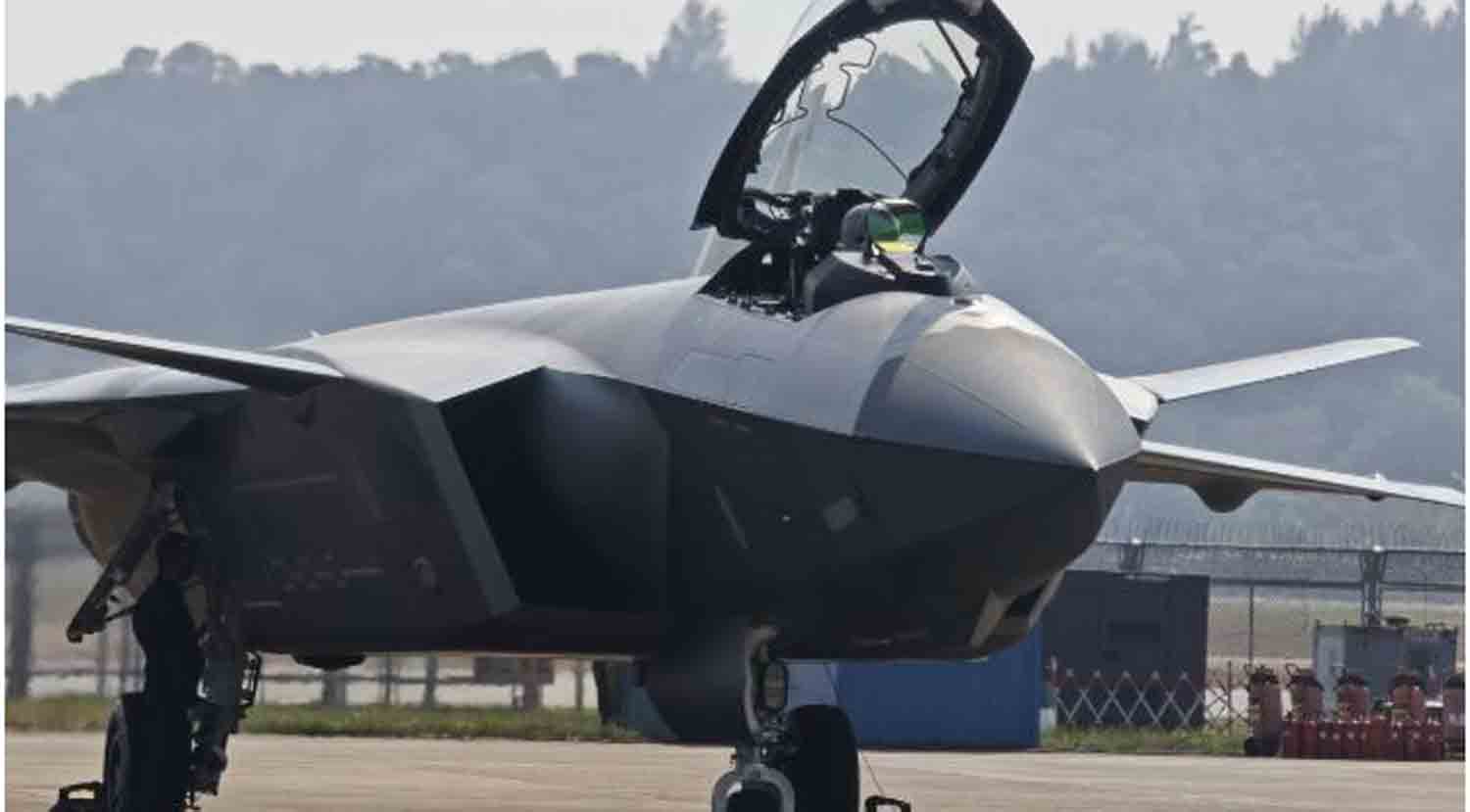
Commercial satellite imagery has uncovered what defense analysts describe as the largest “Red Sword” exercise in the history of the People’s Liberation Army Air Force (PLAAF). Conducted in late 2025 across remote western China, the massive drill involved more than 200 combat and support aircraft operating from eight separate air bases across a 1,200-nautical-mile corridor.
The scale, duration, and geographic spread of Red Sword 2025 have drawn global attention, with analysts suggesting the exercise surpassed comparable recent U.S. air combat drills in size and operational dispersion.
Satellite Imagery Reveals Massive Air Deployment
The findings were first detailed in February 2026 by Air & Space Forces Magazine, based on analysis from retired U.S. Navy intelligence officer J. Michael Dahm.
Key discoveries from satellite providers such as Planet and Google Earth include:
- Activity beginning in October 2025.
- A five-week operational window.
- Over 100 aircraft massed at Dingxin Air Base in the Gobi Desert during peak operations.
- 194 visible aircraft across eight bases — with total numbers likely exceeding 200 and possibly reaching 250.
Dingxin Air Base is often compared to the U.S. Air Force’s Nellis Air Force Base due to its advanced training role and expansive airspace.
The exercise stretched across sparsely populated regions in Xinjiang and Qinghai provinces, enabling large-scale, realistic combat simulations far from public scrutiny.
Advanced Aircraft and Integrated Combat Tactics

Red Sword 2025 featured China’s most advanced operational platforms:
- Chengdu J-20 fifth-generation stealth fighters
- Shenyang J-16
- Chengdu J-10
- Xian H-6
- Shaanxi Y-20
- KJ-500 airborne early warning aircraft
Satellite imagery showed mixed formations of J-10, J-16, and J-20 aircraft deployed together at forward airfields — a potential indicator of advanced fourth- and fifth-generation fighter integration.
Analysts suggest two possible interpretations:
- Dissimilar air combat training between different aircraft types.
- Development of integrated tactics combining stealth fighters with advanced fourth-generation platforms for coordinated operations.
Support aircraft such as KJ-500 AEW&C systems and Y-20 transports point to a growing emphasis on networked, expeditionary warfare across vast distances.
Industrial Expansion: China’s Rapid Fighter Production Surge
Beyond training, analysts highlight China’s accelerating aerospace manufacturing capacity.
The Aviation Industry Corporation of China (AVIC) has reportedly added approximately 8 million square feet of new manufacturing space since 2021 — exceeding the footprint of the U.S. F-35 production complex in Fort Worth, Texas.
Estimates suggest China could produce 250–300 fourth- and fifth-generation fighters annually beginning in 2026.
Satellite imagery from a separate, highly secretive PLAAF test base revealed:
- 60,000 square feet of new hangar construction.
- 300,000 square feet of additional facilities built within six months.
- Openly parked prototypes believed to be next-generation fighters, reportedly designated J-36 and J-50.
If accurate, these developments indicate accelerated progress toward sixth-generation air combat capabilities.
Comparison with U.S. Air Exercises
For comparison, the most recent large-scale U.S. exercise — combining Red Flag and Bamboo Eagle in early 2026 — involved roughly 150 aircraft over three weeks across a 1,000-mile area.
Red Sword 2025 exceeded those figures in:
- Aircraft numbers.
- Geographic dispersion.
- Duration.
- Operational isolation in austere terrain.
While U.S. exercises remain technologically advanced, the PLAAF’s ability to mobilize more than 200 aircraft across eight dispersed bases reflects growing operational maturity.
Strategic Implications Beyond Taiwan
Unlike highly publicized drills near Taiwan, Red Sword exercises receive minimal official Chinese media coverage. Analysts believe this suggests a focus on realistic, high-intensity combat preparation rather than signaling.
Experts caution that the scale of Red Sword 2025 indicates ambitions extending beyond a Taiwan Strait contingency. Large-force integration across remote western theaters may prepare China for multi-directional regional operations.
The combination of:
- Rapid aircraft production,
- Expanding industrial infrastructure,
- Advanced stealth integration,
- Long-range networked operations,
positions the PLAAF as an increasingly capable global air power.
Conclusion
Red Sword 2025 marks a pivotal milestone in China’s air force modernization. Satellite imagery reveals not only the largest exercise in PLAAF history but also evidence of integrated tactics and industrial growth that could reshape regional and global airpower dynamics.
For the United States and its allies, the exercise offers a clear signal: China is not just producing advanced aircraft at scale — it is training to deploy them in large, coordinated operations across immense distances.