Saturday, April 11, 2026
Home Blog Page 30

Pakistan’s Rising Geopolitical Role: Connecting South Asia, Central Asia, and U.S. Strategic Interests

0
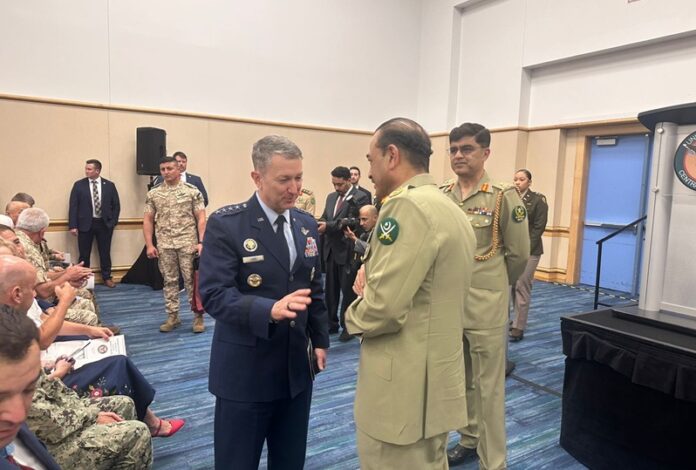
COAS Aim Munir met with Chairman Joint Chiefs of Staff, General Dan Caine.

To analyze the regional situation and connect the events involving Pakistan’s Chief of Army Staff (COAS) Field Marshal Syed Asim Munir’s White House visit in June 2025, the C5+1 nations’ army chiefs meeting at GHQ Rawalpindi, the Armenia-Azerbaijan peace agreement, and Munir’s subsequent U.S. visit in August 2025, we need to consider the geopolitical, military, and diplomatic implications.

These events reflect Pakistan’s growing strategic relevance, U.S. foreign policy priorities, and shifting regional dynamics in South Asia, Central Asia, and the Caucasus.

1. Asim Munir’s White House Visit (June 2025)

Field Marshal Asim Munir’s meeting with U.S. President Donald Trump at the White House on June 18, 2025, was a significant diplomatic event, marking the first time in decades that a Pakistani military leader met a U.S. president without civilian leadership present. The closed-door meeting focused on regional security, counterterrorism, Pakistan-India tensions, and the Iran-Israel conflict. Key points include:

Context and Symbolism: The White House setting, rather than the Pentagon, signaled U.S. recognition of Pakistan’s military as a central power in its foreign policy, reflecting pragmatic engagement with Pakistan’s institutional realities. Trump praised Munir for his role in de-escalating India-Pakistan tensions. Munir’s reported suggestion that Trump be nominated for a Nobel Peace Prize for averting escalation underscores Pakistan’s diplomatic alignment with U.S. interests.

Discussion Points: The agenda included counterterrorism cooperation (e.g., Pakistan’s capture of Mohammad Sharifullah, a planner of the 2021 Kabul airport bombing), Pakistan’s stance on the Iran-Israel war, and potential trade deals, including access to Pakistan’s oil reserves. Trump’s imposition of a 19% tariff on Pakistani goods (down from 29%) suggests economic negotiations were also in play.

Regional Implications: The visit highlighted Pakistan’s role as a regional stabilizer, particularly in managing tensions with India and navigating ties with Iran and China. Munir’s balanced stance—supporting Iran but endorsing U.S.-led de-escalation—reflects Pakistan’s delicate diplomatic tightrope. The absence of civilian leaders underscored the military’s dominance in Pakistan’s foreign policy, a point of contention domestically but a pragmatic choice for U.S. engagement.

2. C5+1 Nations’ Army Chiefs Meeting at GHQ Rawalpindi

The C5+1 framework includes the five Central Asian states (Kazakhstan, Uzbekistan, Turkmenistan, Kyrgyzstan, Tajikistan) plus the United States. A meeting of their army chiefs at Pakistan’s General Headquarters (GHQ) in Rawalpindi, indicates Pakistan’s growing engagement with Central Asia and the U.S. in a military context. This event occurred in the context of broader regional security discussions, around the same period as General Michael Kurilla’s visit to Pakistan, where he received the Nishan-e-Imtiaz.

Strategic Significance: The C5+1 meeting at GHQ reflects Pakistan’s strategic positioning as a bridge between South Asia, Central Asia, and the U.S. Central Asia is critical for energy resources, trade routes (e.g., China-Pakistan Economic Corridor), and counterterrorism efforts, particularly against groups like Daesh-Khorasan. Pakistan’s hosting of such a meeting underscores its military’s role in regional security coordination, leveraging its geographic proximity and historical ties with Central Asian states.

U.S.-Pakistan Military Ties: General Kurilla’s description of Pakistan as a “phenomenal partner” in counterterrorism during a U.S. Congress hearing in June 2025 highlights the deepening U.S.-Pakistan military collaboration. The C5+1 meeting likely focused on shared security challenges, such as terrorism and regional stability, aligning with U.S. Central Command’s (CENTCOM) priorities in the region.

Regional Implications: The meeting signals Pakistan’s ambition to expand its influence in Central Asia, potentially as a counterbalance to India’s growing ties with the region (e.g., through the Shanghai Cooperation Organisation). It also reflects U.S. efforts to counter Chinese and Russian influence in Central Asia by engaging Pakistan as a regional partner.

3. Armenia-Azerbaijan Peace Agreement (August 2025)

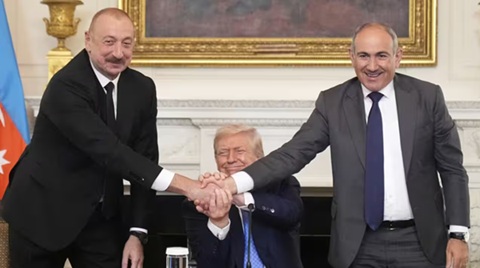
On August 8, 2025, U.S. President Trump hosted a trilateral summit with Azerbaijan’s President Ilham Aliyev and Armenia’s Prime Minister Nikol Pashinyan, resulting in a historic peace agreement to resolve their 35-year conflict. The accord, described as a U.S.-brokered deal, aimed to end hostilities and foster regional stability in the Caucasus.

U.S. Role: The agreement reflects Trump’s emphasis on positioning himself as a “President of peace,” as stated by Secretary of State Rubio. The U.S. leveraged its diplomatic influence to mediate, potentially to counter Russian and Turkish dominance in the Caucasus and secure a geopolitical win.

Regional Implications: The peace deal stabilizes the South Caucasus, a critical region for energy pipelines (e.g., Baku-Tbilisi-Ceyhan) and trade routes connecting Europe and Asia. It reduces the risk of conflict spillovers affecting neighboring regions, including Central Asia and South Asia, where Pakistan has interests.

4. Asim Munir’s Second U.S. Visit (August 2025)

Munir’s second visit to the U.S. in less than two months, reported on August 7–10, 2025, involved attending the CENTCOM change-of-command ceremony in Tampa, where General Michael Kurilla retired and Admiral Brad Cooper assumed command. Munir also met General Dan Caine, Chairman of the Joint Chiefs of Staff, and engaged with the Pakistani diaspora.

Purpose and Activities: Munir praised Kurilla’s contributions to U.S.-Pakistan military ties and expressed confidence in continued collaboration with Cooper. Discussions with Caine focused on mutual professional interests and regional security, with Munir inviting Caine to Pakistan. His diaspora engagement emphasized Pakistan’s economic potential and encouraged investment.

Geopolitical Context: The visit followed heightened India-U.S. tensions over trade tariffs and India’s rejection of foreign influence in its Pakistan ceasefire. Munir’s frequent U.S. engagements suggest Pakistan is capitalizing on these tensions to strengthen its strategic partnership with Washington, positioning itself as a reliable ally in a volatile region.

Regional Implications: The visit reinforces Pakistan’s role in U.S. strategic calculations, particularly in counterterrorism and regional stability. Munir’s meetings with defense chiefs from friendly nations indicate broader coalition-building efforts.

Connecting the Dots: Regional Situation Analysis

These events collectively highlight Pakistan’s pivotal role in a complex geopolitical landscape, with implications for South Asia, Central Asia, and the broader U.S. foreign policy framework:

1. Pakistan’s Strategic Positioning:

– Munir’s White House visit and subsequent U.S. trip underscore Pakistan’s military as a primary interlocutor in U.S.-Pakistan relations, reflecting Washington’s pragmatic engagement with Rawalpindi over Islamabad. This dynamic strengthens Pakistan’s leverage in regional security but raises concerns about civil-military imbalances domestically.

– The C5+1 meeting at GHQ positions Pakistan as a key player in Central Asian security, aligning with U.S. efforts to counter China and Russia. Pakistan’s military diplomacy complements its economic ambitions, such as the China-Pakistan Economic Corridor (CPEC), while expanding its regional influence.

– Munir’s balanced stance on Iran and India reflects Pakistan’s attempt to navigate competing alliances, maintaining ties with the U.S., China, and Iran while managing tensions with India.

2. U.S. Foreign Policy Priorities:

– The U.S. is leveraging Pakistan’s military to address regional challenges, including counterterrorism, India-Pakistan tensions, and the Iran-Israel conflict. Munir’s capture of Sharifullah and cooperation with CENTCOM strengthens Pakistan’s case for renewed U.S. military aid.

– The Armenia-Azerbaijan peace deal demonstrates Trump’s focus on high-profile diplomatic wins, potentially to offset tensions with allies like India over trade policies. Pakistan’s alignment with U.S. mediation efforts (e.g., on Iran) aligns with this broader strategy.

The C5+1 engagement reflects U.S. efforts to secure influence in Central Asia, using Pakistan as a partner to counterbalance China’s Belt and Road Initiative and Russia’s regional dominance.

3. South Asia and India-Pakistan Dynamics:

– India’s Operation Sindoor and the subsequent ceasefire, attributed by Trump to Munir’s restraint, highlight Pakistan’s role in preventing escalation. However, India’s insistence on bilateral resolution and rejection of foreign mediation (e.g., by Trump) underscores ongoing tensions.

– The U.S.’s engagement with Munir, especially amid strained India-U.S. relations over trade tariffs, suggests Washington is hedging its bets by strengthening ties with Pakistan to balance India’s regional influence.

– Pakistan’s military diplomacy, including the C5+1 meeting, may also aim to counter India’s growing ties with Central Asian states, positioning Pakistan as a regional security hub.

4. Central Asia and Caucasus Linkages:

– The Armenia-Azerbaijan peace deal stabilizes a region critical for energy and trade routes, indirectly benefiting Pakistan’s ambitions to connect South and Central Asia via CPEC.

– The C5+1 meeting at GHQ aligns with U.S. and Pakistani interests in securing Central Asia against terrorism and geopolitical competition, reinforcing Pakistan’s role as a connector between regions.

5. Counterterrorism and Regional Stability:

– Pakistan’s cooperation with the U.S. on counterterrorism, exemplified by the Sharifullah capture, strengthens its strategic partnership with Washington. This aligns with the C5+1 framework’s focus on regional security, particularly against groups like Daesh-Khorasan.

– Munir’s diaspora engagement emphasizes economic stability, which is critical for Pakistan to sustain its military and diplomatic initiatives amid domestic challenges.

Critical Perspective

While the U.S. engagement with Munir reflects strategic pragmatism, it risks reinforcing Pakistan’s military dominance over civilian governance, potentially undermining democratic institutions. The narrative of Trump brokering an India-Pakistan ceasefire is contested by India, which insists on bilateral resolution, suggesting U.S. claims may be exaggerated for diplomatic leverage.

The Armenia-Azerbaijan deal, while a U.S. success, may face implementation challenges given historical animosities and external influences (e.g., Russia, Turkey).

Pakistan’s growing role in Central Asia via C5+1 is promising but constrained by its domestic instability and economic challenges, which could limit its regional ambitions.

Conclusion

The interconnected events—Munir’s White House visit, the C5+1 meeting, the Armenia-Azerbaijan peace agreement, and Munir’s second U.S. visit—illustrate Pakistan’s rising strategic importance in a volatile region.

The U.S. is leveraging Pakistan’s military to address counterterrorism, regional stability, and geopolitical competition, while Pakistan is positioning itself as a bridge between South Asia, Central Asia, and global powers.

However, tensions with India, domestic civil-military dynamics, and the complexities of Central Asian and Caucasian geopolitics pose challenges. These developments reflect a broader U.S. strategy to secure influence in critical regions, with Pakistan as a key, albeit complex, partner.
Zangezur corridor is now called the Trump route. Have the Caucasus nations given in? Is Iran isolated now?

0

The claim that the “USA has taken control of the Zangezur Corridor” and that “the Caucasus have fallen and Iran is now isolated” is partially supported but requires nuance based on the recent White House peace agreement signed on August 8, 2025, between Armenia and Azerbaijan.

White House Peace Agreement Overview

On August 8, 2025, Armenian Prime Minister Nikol Pashinyan and Azerbaijani President Ilham Aliyev signed a U.S.-brokered peace agreement at the White House, facilitated by President Donald Trump. The agreement aims to end nearly four decades of conflict over Nagorno-Karabakh and normalize relations between Armenia and Azerbaijan.

Key components include:

Establishment of the Trump Route for International Peace and Prosperity (TRIPP): This multimodal transit corridor, previously referred to as the Zangezur Corridor, connects mainland Azerbaijan to its Nakhchivan exclave through Armenia’s Syunik province. The U.S. has been granted exclusive development rights for 99 years, with plans for rail, oil, gas, and fiber optic lines.

Bilateral Agreements with the U.S.: Both nations signed separate deals with the U.S. to enhance cooperation in energy, technology, and economic sectors, strengthening U.S. influence in the South Caucasus.

Dissolution of the OSCE Minsk Group: The agreement includes a joint request to disband the Minsk Group, previously co-chaired by Russia, France, and the U.S., signaling a shift away from Russian mediation.

Geopolitical Shift: The deal capitalizes on Russia’s waning influence post-2022 Ukraine invasion, positioning the U.S. as a key player in the region while reducing Moscow’s and Tehran’s clout.

Analysis of the Claim

“USA has taken control of the Zangezur Corridor”: Verification

The U.S. has not “taken control” in a military or sovereign sense but has secured exclusive development rights for the Zangezur Corridor, now rebranded as the Trump Route, for 99 years. Armenia retains sovereignty over the territory, but the U.S. will oversee infrastructure development through a subleased consortium, with negotiations involving American firms starting soon after the signing.

Implications

This arrangement gives the U.S. significant economic and strategic leverage in the South Caucasus, a critical trade and energy hub. It allows American companies to develop infrastructure, potentially boosting U.S. commercial interests and influence in a region historically dominated by Russia and Iran. However, Armenia’s insistence on maintaining sovereignty and Azerbaijan’s preference for direct access without third-party control suggest limits to U.S. authority. The term “control” in the claim overstates the reality, as the U.S. role is primarily developmental, not administrative or military.

Critical Perspective

The rebranding as the “Trump Route” and the 99-year lease have sparked debate. Critics, particularly in Armenia, argue it compromises sovereignty, while Azerbaijan views it as a diplomatic victory. The U.S. presence could deter Russian or Iranian interference but risks escalating tensions if perceived as overreach.

“The Caucasus have fallen”

Verification: The phrase “the Caucasus have fallen” is hyperbolic and misleading. The peace agreement marks a significant step toward resolving the Armenia-Azerbaijan conflict, but it does not imply the entire Caucasus region—comprising Armenia, Azerbaijan, Georgia, and parts of Russia—has been subsumed or lost to any single power. The agreement strengthens U.S. influence but does not equate to regional domination. Georgia remains independent, and Russia retains a military presence in Armenia (e.g., the Gyumri base).

Implications: The agreement shifts the regional balance by reducing Russia’s mediation role and enhancing U.S. and Turkish influence, particularly through Azerbaijan’s alignment with Turkey. However, Russia and Iran continue to exert leverage—Russia through its military and economic ties with Armenia, and Iran through its trade and border proximity. The Caucasus remains a contested space with multiple stakeholders, not a region that has “fallen.”

Critical Perspective: The narrative of a “fallen” Caucasus may reflect sentiment on platforms like X, where dramatic claims amplify geopolitical shifts. However, it oversimplifies a complex region where local actors and external powers (Turkey, EU, China) still compete. The agreement’s success depends on implementation, which faces challenges like Armenian domestic opposition and Russian-Iranian counteractions.

“Iran is now isolated”

Verification: Iran is not fully isolated but faces increased geopolitical pressure. The peace agreement and U.S. oversight of the Trump Route threaten Iran’s regional influence by potentially bypassing its trade routes to the Caucasus and Europe. Iran has expressed strong opposition, with officials warning of a “harsh response” to changes in regional borders or external interference. Its concerns stem from the corridor’s potential to strengthen U.S. and Turkish presence near its borders, possibly encouraging separatist sentiments among Iran’s Azeri population.

Implications: Iran’s trade with Armenia and its strategic partnership with Russia provide avenues to counter U.S. gains. For example, Iran’s planned visit to Armenia in August 2025 signals efforts to bolster bilateral ties. Russia and Iran could collaborate to hinder the corridor’s progress, possibly through economic pressure or military signaling near Armenia’s borders. However, the U.S.-brokered deal positions Iran as a relative loser compared to the West, Turkey, and Azerbaijan.

Critical Perspective: Isolation is an exaggeration. Iran remains a key player in the Caucasus, with economic and diplomatic tools to maintain influence. Its opposition to the corridor reflects strategic anxiety rather than complete marginalization. The agreement’s long-term impact on Iran depends on whether the U.S. can sustain its regional presence and whether Armenia balances its Western pivot with relations with Tehran.

Broader Geopolitical Context

U.S. Strategic Gains: The agreement aligns with the U.S. goal of countering Russia and China in the South Caucasus, a critical link in the Middle Corridor trade route from China to Europe. By securing development rights, the U.S. enhances its access to energy and trade networks, supporting allies like Turkey while sidelining adversaries.

Armenian and Azerbaijani Perspectives: Armenia gains security and economic benefits but risks domestic backlash over sovereignty concerns and the lack of provisions for Nagorno-Karabakh refugees or POWs. Azerbaijan consolidates its 2023 military gains in Karabakh and strengthens ties with Turkey and the U.S., enhancing its regional clout.

Regional Reactions: Russia’s influence is diminished but not eliminated, given its military presence in Armenia. Turkey benefits from enhanced connectivity to Azerbaijan and Central Asia. The EU has welcomed the deal, citing years of prior mediation efforts.

Risks and Challenges: The agreement’s implementation faces hurdles, including Armenian opposition, potential Russian-Iranian disruptions, and unresolved issues like Nagorno-Karabakh’s displaced population. Protests in Armenia and Iran’s military posturing near the border are indicators to watch.

Conclusion

The claim is partially accurate but overstated:

  • The U.S. has secured significant influence over the Zangezur Corridor through development rights, not outright control, with Armenia retaining sovereignty.
  • The Caucasus have not “fallen”; the region remains a contested space with U.S. gains offset by Russian and Iranian leverage.
  • Iran faces strategic setbacks but is not isolated, maintaining active diplomacy and regional ties.

The White House peace agreement marks a pivotal shift in the South Caucasus, strengthening U.S. influence and reshaping regional dynamics. However, its success hinges on implementation and managing opposition from Armenia’s domestic critics, Russia, and Iran.

Israel’s far-right national security minister visited the Al-Aqsa Mosque and claimed to have prayed there

0

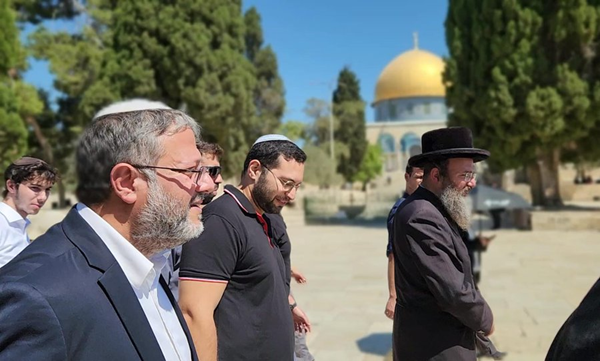
Itamar Ben-Gvir, Israel’s far-right National Security Minister, visited the contentious Al-Aqsa mosque compound in Jerusalem on Sunday, where he stated that he prayed, thereby challenging the regulations governing one of the most sensitive locations in the Middle East.

According to a fragile, decades-old “status quo” agreement with Muslim authorities, the Al-Aqsa compound is managed by a Jordanian religious foundation, allowing Jews to visit but prohibiting them from praying there.

Following Ben-Gvir’s visit, Prime Minister Benjamin Netanyahu issued a statement affirming that Israel’s policy of upholding the status quo at the compound “has not changed and will not change.”

Videos released by a small Jewish organization known as the Temple Mount Administration depicted Ben-Gvir leading a group through the compound. Other videos circulating online seemed to show him praying.

The Waqf, the organization that oversees the complex situated on a hillside in Jerusalem’s walled Old City, reported that Ben-Gvir was among approximately 1,250 individuals who ascended the site, claiming that they prayed, shouted, and danced.

Israel’s official stance acknowledges the regulations that restrict non-Muslim prayer at the compound, which is regarded as Islam’s third holiest site and the most sacred site in Judaism.

Ben-Gvir has previously visited the site, advocating for the allowance of Jewish prayer there. In a statement, he mentioned that he prayed for Israel’s triumph over the Palestinian militant group Hamas in the ongoing conflict in Gaza and for the safe return of Israeli hostages held by militants. He reiterated his demand for Israel to take control of the entire enclave.

Proposals suggesting that Israel might change the rules at the Al-Aqsa compound have previously incited outrage in the Muslim world and led to violence. However, there were no immediate reports of violence on Sunday.


what could be achieved during President Pezeshkian’s visit to Pakistan?

0
The visit of Iranian President Dr. Masoud Pezeshkian to Pakistan on August 2-3, 2025, is a significant diplomatic event aimed at strengthening bilateral ties between the two neighboring countries. This visit, his first to Pakistan since assuming office, follows a history of high-level engagements, including former President Ebrahim Raisi’s trip in April 2024 and Prime Minister Shehbaz Sharif’s visit to Tehran in May 2025. Below is an analysis of the importance of this visit and potential achievements, with a focus on regional security, including the situation in Khyber Pakhtunkhwa (KP) and the Pakistan-Afghanistan border.

Strengthening Bilateral Relations:

    • Historical and Cultural Ties: Iran and Pakistan share a 900-km border and deep cultural, religious, and historical connections, including shared Sufi traditions, celebration of Nowruz, and the influence of figures like Allama Iqbal, whose mausoleum Pezeshkian visited in Lahore. These ties provide a foundation for enhanced cooperation.
    • Post-Conflict Reconciliation: The visit comes after a period of strained relations due to cross-border missile strikes in January 2024, targeting militant groups like Jaish al-Adl and the Baloch Liberation Army. Both nations are keen to move past these tensions and build trust.
    • Regional Stability: Amid recent Iran-Israel escalations and Pakistan’s support for Iran during the June 2025 conflict, the visit reinforces Pakistan’s role as a diplomatic ally advocating for de-escalation and regional peace. Pakistan’s condemnation of Israeli and U.S. attacks on Iranian nuclear facilities underscores this alignment.
         Security Cooperation and Regional Challenges:
      • Counterterrorism and Border Security: Both countries face threats from militant groups like the TTP, Jaish al-Adl, and Baloch separatists operating in the restive Balochistan and Sistan-Baluchestan regions. The visit provides an opportunity to deepen security cooperation, especially given the volatile situation along the Pakistan-Afghanistan border, where TTP attacks have surged in KP. Joint strategies to address cross-border militancy could stabilize areas like North Waziristan and Kurram.
      • Afghanistan as a Mutual Concern: With Afghanistan as a shared neighbor, Iran and Pakistan have an interest in stabilizing the region to curb extremism and facilitate trade. The visit could advance discussions on coordinated approaches to Afghan stability, especially given recent clashes at the Pakistan-Afghanistan border (e.g., Torkham in March 2025).

        Economic and Trade Ambitions:

        • Trade Target of $10 Billion: Both leaders aim to increase bilateral trade from $3 billion to $10 billion annually, focusing on energy, border trade, and infrastructure. The stalled Iran-Pakistan gas pipeline, delayed due to U.S. sanctions, is a key agenda item, with discussions on bypassing sanctions to meet Pakistan’s energy needs.
        • Regional Connectivity: Iran seeks to integrate into the China-Pakistan Economic Corridor (CPEC) and extend connectivity to Europe via the Belt and Road Initiative, leveraging Pakistan’s strategic position. This could enhance trade routes through KP and Balochistan, despite security challenges.
           Geopolitical Positioning:
          • Countering External Pressures: Pakistan’s support for Iran during the 2025 Iran-Israel conflict, including its role as a non-permanent UNSC member, strengthens their strategic partnership against Western sanctions and Israeli aggression. The visit reinforces solidarity on issues like Palestine.
          • Balancing Relations: Pakistan navigates a delicate balance between its ties with Iran and its historical alignment with Saudi Arabia and the U.S. The visit signals Pakistan’s intent to diversify its foreign policy without alienating other allies.

            Potential Achievements

  1. Security Agreements:

    • Counterterrorism Collaboration: The visit could lead to agreements on intelligence sharing and joint operations to combat TTP, Jaish al-Adl, and Baloch separatists. This is critical for stabilizing KP and the Pakistan-Afghanistan border, where recent operations (e.g., April 2025 in North Waziristan) highlight ongoing threats.
    • Border Management: Enhanced cooperation on border security could reduce incidents like the March 2025 Torkham clash, ensuring smoother trade and reducing militant infiltration. Discussions may include mechanisms to prevent unauthorized border posts, as seen in Kurram-Khost conflicts.
  2. Economic and Energy Cooperation:

    • Gas Pipeline Progress: Agreements to advance the Iran-Pakistan gas pipeline, possibly through sanction waivers or alternative financing, could address Pakistan’s energy crisis, particularly in border regions like Balochistan.
    • Trade and Infrastructure: Signing of economic agreements, as seen in Raisi’s 2024 visit (eight cooperation documents), could boost cross-border trade markets like Mand-Pishin and facilitate Iran’s integration into CPEC.
        Cultural and People-to-People Ties:
      • Cultural Exchanges: The visit emphasizes cultural diplomacy, with Pezeshkian’s tribute to Allama Iqbal symbolizing shared heritage. Agreements on tourism and cultural exchanges could strengthen public ties, particularly for Pakistan’s Shia community visiting Iran.
      • Educational and Business Engagement: Meetings with Pakistani elites and businessmen may lead to initiatives like joint research centers or trade expos, building on Iran’s cultural consulates in Pakistan.
  3. Regional Diplomacy:

    • Afghanistan Strategy: The visit could lay the groundwork for a coordinated Iran-Pakistan approach to Afghanistan, addressing TTP safe havens and promoting economic integration to reduce conflict spillovers into KP.
    • Mediation and De-escalation: Pakistan’s role as a mediator in Iran’s conflicts with Israel and the U.S. could be formalized, enhancing its diplomatic stature and fostering regional stability.

Relevance to Khyber Pakhtunkhwa and Pakistan-Afghanistan Border

  • Security Spillovers: Strengthened Iran-Pakistan security cooperation could indirectly support Pakistan’s counterterrorism efforts in KP, where TTP attacks have intensified. Joint intelligence sharing with Iran could help track cross-border militant movements, especially if Afghan-based TTP operatives use routes near Iran’s border.
  • Trade Routes: Enhanced economic ties, including CPEC integration, could stabilize KP by boosting trade through border markets, reducing reliance on conflict-prone areas like Torkham. However, ongoing violence in KP (e.g., the July 2025 North Waziristan attack) underscores the need for robust security measures to protect these initiatives.
  • Diplomatic Leverage: Improved relations with Iran could give Pakistan more leverage to negotiate with Afghanistan on border issues, potentially reducing clashes like those in Kurram and fostering a regional framework for peace.

Challenges and Considerations

  • U.S. Sanctions: Progress on the gas pipeline and trade faces hurdles due to U.S. sanctions on Iran, requiring creative diplomatic solutions.
  • Baloch Militancy: Continued attacks by Baloch separatists in both countries could undermine trust unless addressed collaboratively.
  • Afghan Tensions: The volatile Pakistan-Afghanistan border situation, with TTP’s resurgence and Afghan Taliban’s alleged complicity, complicates regional security discussions. Pakistan and Iran must align their Afghanistan policies to avoid conflicting interests.
The visit of President Pezeshkian to Pakistan is a pivotal opportunity to deepen bilateral ties, address shared security challenges, and boost economic cooperation. Achievements could include agreements on counterterrorism, progress on the gas pipeline, and enhanced CPEC integration, all of which could indirectly stabilize regions like Khyber Pakhtunkhwa and the Pakistan-Afghanistan border by fostering economic growth and regional security.
However, success depends on navigating geopolitical constraints, managing militant threats, and aligning strategies on Afghanistan. The visit underscores a mutual commitment to transform historical ties into practical, forward-looking partnerships.

Military operations are evident in Khyber Pakhtunkhwa

0

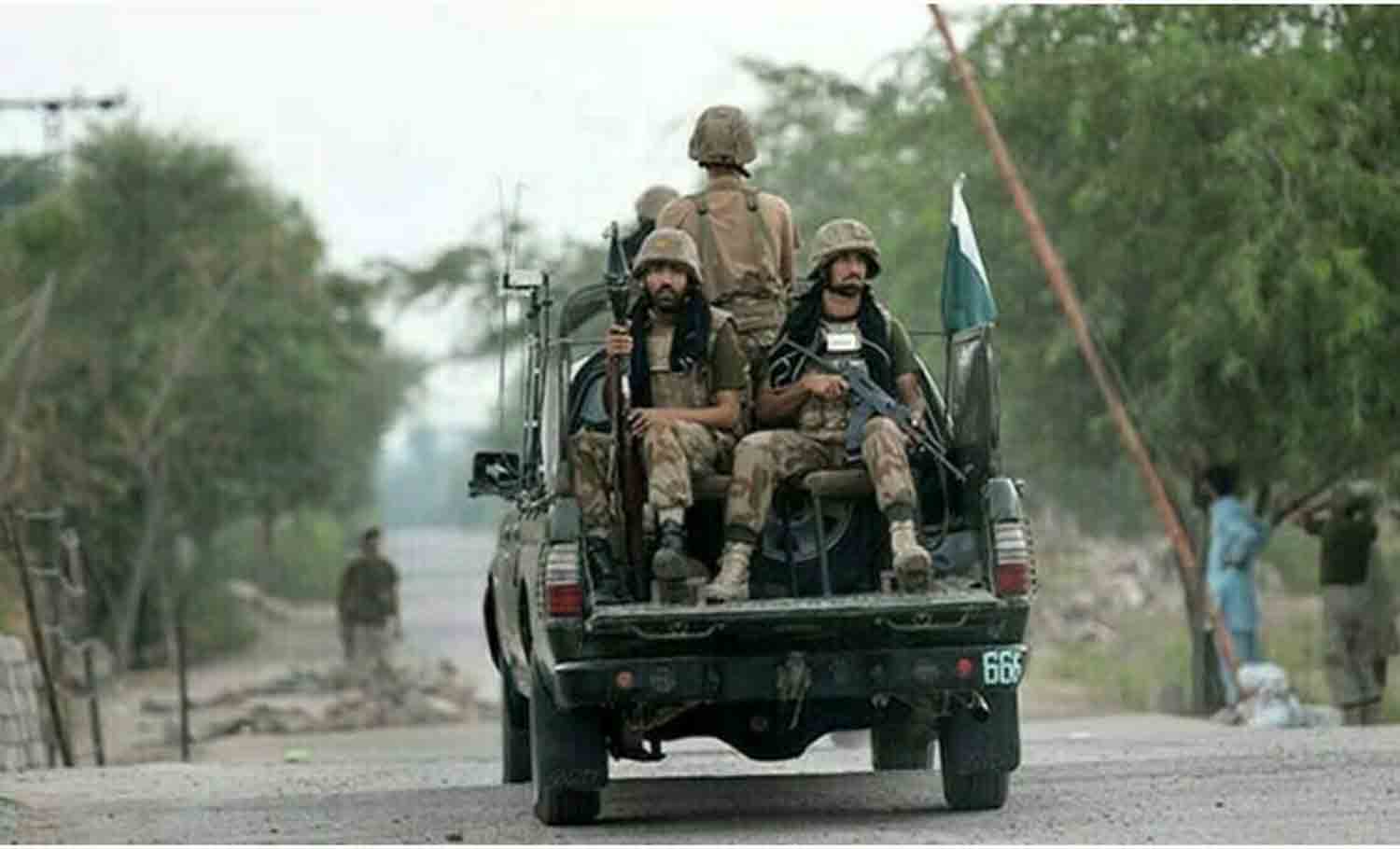
The security situation in Khyber Pakhtunkhwa (KP) and along the Pakistan-Afghanistan border remains volatile, characterized by frequent militant attacks, cross-border clashes, and ongoing military operations. Below is a detailed analysis based on recent developments:

Security Situation in Khyber Pakhtunkhwa and Pakistan-Afghanistan Border

  1. Militant Attacks and Insurgency:

    • Khyber Pakhtunkhwa, particularly districts like North Waziristan, South Waziristan, Bannu, and Dera Ismail Khan, has seen a surge in militant activities since the Afghan Taliban’s return to power in 2021. The Pakistani Taliban (Tehrik-e-Taliban Pakistan, TTP) and its affiliates are primarily responsible for these attacks. For instance, a suicide attack in North Waziristan in July 2025 killed 16 Pakistani soldiers, with the TTP claiming responsibility.
    • In February 2025, five soldiers were wounded in an attack in Bannu district, highlighting the persistent threat in KP.
    • Violence in Pakistan’s border areas spiked in 2024, with last year being the deadliest in a decade, driven by TTP and other militant groups operating from Afghan soil, a charge denied by the Afghan Taliban.
  2. Cross-Border Clashes:

    • The Pakistan-Afghanistan border, particularly at key crossings like Torkham and Ghulam Khan, has been a flashpoint for tensions. In March 2025, clashes at Torkham resulted in one Afghan security personnel killed and two injured, with both sides trading blame for initiating the violence. The conflict was sparked by Pakistan’s objection to Afghanistan constructing a new border post.
    • In September 2024, heavy fighting broke out in the Kurram-Khost border area, involving heavy weaponry. The clashes were triggered by an Afghan attempt to build a security outpost, which Pakistan opposed, citing mutual agreements.
    • Pakistani airstrikes in Afghanistan’s Paktika province in December 2024 marked a resurgence of hostilities after a brief de-escalation in March 2024. These airstrikes targeted suspected militant hideouts but further strained bilateral relations.
  3. Border Closures and Economic Impact:

    • Frequent border closures due to security concerns have disrupted trade and travel. The Torkham crossing was closed for 11 days in March 2025, stranding 5,000 trucks and causing $15 million in losses for Pakistani traders and $500,000 daily losses for Afghan traders.
    • The Ghulam Khan border was closed in June 2025 following a suicide attack on a Pakistani army convoy in North Waziristan, further impacting trade routes critical for Afghanistan’s economy.
  4. Militant Infiltration and Pakistani Response:

    • Pakistan’s military has reported significant engagements with militants attempting to cross from Afghanistan. In April 2025, 54 militants were killed in a single operation in North Waziristan, one of the deadliest such incidents in recent years.
    • Another operation in April 2025 saw 71 insurgents, identified as TTP members, killed in Hassan Khel, North Waziristan, with a large cache of weapons recovered. Pakistan claimed these militants were acting under “foreign masters,” indirectly implicating India.
    • In July 2025, 30 fighters were killed in North Waziristan as they attempted to infiltrate, with the military praising its troops for preventing a “potential catastrophe.”
  5. Geopolitical Tensions:

    • Pakistan accuses Afghanistan of allowing TTP militants to use its territory for attacks, a claim the Taliban denies. Islamabad has also alleged that India supports these groups to destabilize Pakistan, particularly amid tensions in Kashmir.
    • The Afghan Taliban’s restrictions on information sharing and their deployment of reinforcements, artillery, and tanks to border areas indicate heightened alertness, further complicating de-escalation efforts.
    • Diplomatic efforts, such as Pakistani Foreign Minister Ishaq Dar’s visit to Kabul in April 2025, aimed to reset ties but have not yielded lasting stability.

Evidence of Military Operations

  • Active Military Engagements: The Pakistani military is actively engaged in counterterrorism operations in KP and along the border. Operations in April and July 2025, which killed 54 and 30 militants respectively, demonstrate sustained efforts to curb cross-border infiltration.
  • Airstrikes in Afghanistan: Pakistan’s airstrikes in Paktika province in December 2024 indicate a willingness to conduct cross-border operations to target TTP hideouts, despite the risk of escalating tensions with Afghanistan.
  • Border Security Measures: Pakistani forces are deployed at key border crossings like Torkham and Kurram, engaging in firefights to counter Afghan provocations or militant incursions. The military’s response to Afghanistan’s border post construction in 2024-2025 shows a proactive stance.
  • Counterinsurgency Operations: The killing of 71 TTP militants in April 2025 in North Waziristan, along with the recovery of weapons and explosives, points to intelligence-driven operations aimed at disrupting militant networks.

Critical analyses

  • Root Causes: The resurgence of the TTP since 2021 is linked to the Afghan Taliban’s control of Afghanistan, which has emboldened militants. Pakistan’s porous border and historical safe havens for militants in Afghanistan exacerbate the issue.
  • Bilateral Distrust: Mutual accusations—Pakistan blaming Afghanistan for harboring militants and Afghanistan accusing Pakistan of unprovoked aggression—have eroded trust, making diplomatic resolutions elusive.
  • Economic and Humanitarian Fallout: Border closures and clashes disrupt trade, exacerbating Afghanistan’s humanitarian crisis and causing economic losses in Pakistan. The expulsion of undocumented Afghans by Pakistan in 2025 has added to regional instability, with returnees facing challenges in Afghanistan’s fragile economy.
  • External Actors: Pakistan’s claims of Indian involvement. The presence of US and Chinese interests (e.g., CPEC and US military bases) adds a layer of complexity, as militant attacks threaten these projects.

The security situation in Khyber Pakhtunkhwa and along the Pakistan-Afghanistan border is highly unstable, driven by TTP militancy, cross-border clashes, and geopolitical tensions. Military operations are evident, with Pakistan conducting frequent counterterrorism missions, border engagements, and occasional airstrikes in Afghanistan. These efforts have disrupted militant activities but have not stemmed the tide of violence, which continues to strain bilateral relations and regional stability. Both sides need to prioritize dialogue and address mutual security concerns to prevent further escalation, though distrust and external pressures pose significant challenges.

Pakistan introduces Z-10ME attack helicopters manufactured in China

0

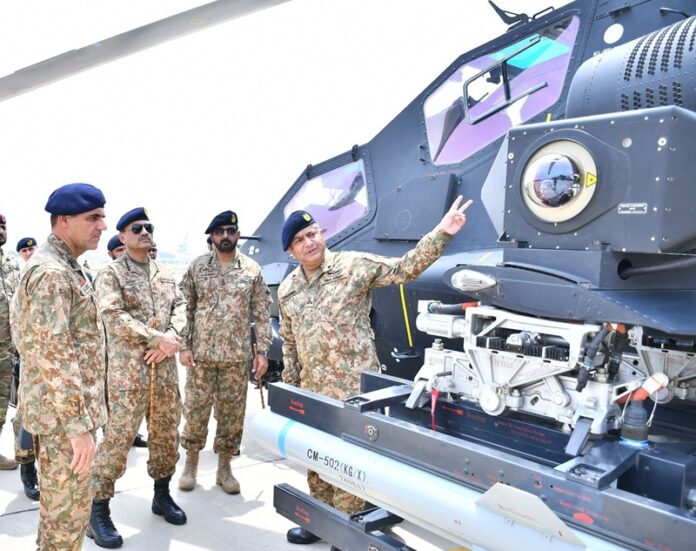
The Pakistan Army has officially welcomed its initial set of Chinese-manufactured Z-10ME attack helicopters during a ceremony at the Multan Army Aviation Base. Chief of Army Staff General Syed Asim Munir presided over the event and conducted a personal inspection of one of the newly received helicopters. Throughout the ceremony, he was observed warmly interacting with Chinese personnel involved in the initiative.

The event was attended by government officials, senior military leaders, and representatives from the Chinese defense sector. The helicopter is armed with CM-502 air-to-surface missiles, TY-90 air-to-air missiles mounted on one side of the fuselage, and a 70mm guided rocket launcher.

Beyond its armament, the Z-10ME is equipped with a Directed Infrared Countermeasure (DIRCM) system, designed to enhance its survivability against infrared-guided missiles in combat scenarios.

Manufactured by China’s state-owned aviation industry and provided through military cooperation agreements, this variant is focused on export and is an upgraded version of the original Z-10. It has been enhanced with features suited for hot and high-altitude conditions as well as low-level survivability.

Chinese defense industry officials have stated that the Z-10ME was specifically adapted for international clients, incorporating improvements in armor, sensors, and electronic warfare capabilities. The helicopter is intended for close air support, armed reconnaissance, and anti-armor missions.

The introduction of the Z-10ME occurs at a time when the Pakistan Army Aviation Corps is aiming to broaden and modernize its attack helicopter fleet, following prolonged delays in other procurement initiatives. Previous attempts to secure Turkish-built T129 ATAK helicopters faced challenges due to export restrictions concerning U.S.-made engines.

The Pakistan Army has utilized a range of rotary-wing aircraft for many years; however, the Z-10ME signifies a transition to a more specialized attack helicopter configuration, featuring integrated sensors and precision-guided munitions. Its DIRCM system, along with contemporary missile armament, establishes it as a forward-deployed resource adept at functioning in contested airspace.

The Emerging U.S.-India Rift in 2025 – Causes, Developments, and Implications

0
Indian Prime Minister Narendra Modi speaks to U.S. President Donald Trump during a meeting at Hyderabad House in New Delhi, India.

In 2025, U.S.-India relations, long viewed as a burgeoning strategic partnership, are showing signs of strain, particularly following recent developments tied to U.S. President Donald Trump’s trade policies and geopolitical pressures. While the partnership has deepened significantly since the early 2000s, driven by shared interests in countering China and fostering economic ties, recent events—most notably Trump’s tariff threats and India’s continued purchase of Russian oil—have sparked tensions.

What Happened: Key Developments in 2025

  1. Trump’s Tariff Threats and Ultimatums:

    • On August 1, 2025, President Trump announced a 25% tariff on Indian goods, part of a broader policy targeting countries that continue to purchase Russian oil despite U.S. calls for a ceasefire in the Russia-Ukraine conflict. This followed Trump’s 10-day ultimatum to Russia, which also implicated nations like India for sustaining Russia’s war economy through energy imports.
    • Indian officials, as reported by The New York Times on August 2, 2025, firmly stated that India would not alter its policy of buying Russian oil, driven by economic necessity and strategic autonomy. Two senior officials confirmed no directive was issued to oil companies to reduce Russian imports, signaling defiance against U.S. pressure.
  2. India-Pakistan Conflict and U.S. Mediation:

    • The May 2025 India-Pakistan conflict, sparked by a terrorist attack in Kashmir and escalated by India’s Operation Sindoor, highlighted U.S. efforts to mediate. Trump offered trade concessions as an “off-ramp” for de-escalation, threatening to halt trade with both nations if tensions persisted.
    • While the U.S. publicly endorsed India’s priorities, its continued Major Non-NATO Ally (MNNA) status for Pakistan has frustrated New Delhi, which perceives this as a contradictory U.S. policy favoring a regional rival.
  3. Sikh Assassination Plot Fallout:

    • In November 2023, a U.S. Department of Justice indictment revealed an alleged Indian government agent’s involvement in a plot to assassinate a Sikh separatist on U.S. soil. India’s cooperation with U.S. authorities mitigated immediate fallout, but the incident raised concerns about India’s reliability as a partner, particularly on shared democratic values.
  4. Economic and Trade Frictions:

    • Trump’s tariffs follow a history of trade disputes, including the 2019 U.S. decision to terminate India’s Generalized System of Preferences (GSP) status, prompting Indian retaliatory tariffs on U.S. goods like almonds and steel.
    • In March 2025, New Delhi began negotiating a bilateral trade agreement to offset the impact of Trump’s tariffs, but progress remains slow, with India’s protectionist policies and regulatory hurdles frustrating U.S. businesses.

      Why the Rift Emerged: Underlying Causes

  1. Divergent Geopolitical Priorities:

    • India’s Strategic Autonomy: India’s foreign policy emphasizes strategic autonomy, rooted in its Cold War-era non-alignment. Its refusal to align fully with U.S. sanctions against Russia, particularly on oil purchases, reflects this stance. India’s purchase of discounted Russian oil, now Russia’s top export destination, meets its growing energy needs while countering U.S.-led sanctions under the Countering America’s Adversaries Through Sanctions Act (CAATSA).
    • U.S. Focus on Russia-Ukraine: Trump’s aggressive push for a Ukraine ceasefire, including threats against nations like India, clashes with New Delhi’s pragmatic approach to maintaining ties with Russia, a long-standing defense and energy partner. This misalignment has led to U.S. perceptions of India as an unreliable ally in countering Russia.
  2. Economic and Trade Tensions:
    • Protectionism vs. Open Markets: India’s high tariffs, foreign investment restrictions, and slow pace of economic reforms have long frustrated U.S. businesses. The scrapping of GSP status in 2019 and India’s retaliatory tariffs deepened trade frictions. Trump’s 2025 tariffs exacerbate these issues, reflecting impatience with India’s regulatory environment.
    • Competing Manufacturing Goals: Both nations prioritize domestic manufacturing, with India’s Production Linked Incentive (PLI) programs and Trump’s “America First” policies creating competition rather than synergy. Aligning these strategies could yield mutual gains, but current tensions hinder progress.
  3. Democratic Values and Trust Deficit:

    • Concerns Over India’s Domestic Policies: The U.S. has expressed unease over Prime Minister Narendra Modi’s Hindu nationalist policies, particularly the 2019 revocation of Jammu and Kashmir’s semi-autonomous status and the Citizenship Amendment Act, which critics argue discriminate against Muslims. These moves challenge the narrative of shared democratic values, a cornerstone of the U.S.-India partnership.
    • Sikh Assassination Plot: The 2023 assassination attempt on a Sikh activist in the U.S. raised questions about India’s commitment to democratic norms, despite New Delhi’s cooperation in the investigation. This incident has fueled skepticism among U.S. policymakers about India’s reliability.
  4. Regional Dynamics and U.S.-Pakistan Relations:

    • U.S. Balancing Act in South Asia: The U.S.’s continued MNNA status for Pakistan, despite deteriorating U.S.-Pakistan ties, frustrates India. The May 2025 conflict underscored this tension, as India perceives U.S. mediation as insufficiently supportive of its goals.
    • China as a Common Threat: While countering China aligns U.S. and Indian interests, India’s growing geopolitical leverage, including its role in ASEAN and the Indo-Pacific, complicates U.S. expectations. India’s participation in BRICS and the Shanghai Cooperation Organization, alongside Russia and China, signals its reluctance to fully align with Western blocs.

Implications for U.S.-India Relations

  1. Strategic Partnership at Risk:

    • The U.S.-India partnership, strengthened through initiatives like the 2005 Civil Nuclear Deal and defense co-production agreements (e.g., Stryker combat vehicles), faces uncertainty if trade and geopolitical frictions persist.
    • India’s strategic importance in countering China in the Indo-Pacific makes a complete rupture unlikely, but unresolved tensions could limit cooperation in critical areas like defense and technology.
  2. Economic Fallout:

    • Trump’s tariffs threaten India’s export-driven sectors, such as IT services and textiles, which accounted for $48.6 billion in U.S. imports in 2017. India’s retaliatory measures could further strain bilateral trade, already at $115 billion in 2019.

      Slow progress in trade negotiations risks alienating U.S. businesses, which seek greater market access in India’s $3 trillion economy.

  3. Regional Stability and South Asia:
    • The rift could embolden regional rivals like China, which may exploit U.S.-India tensions to deepen its influence in South Asia. India’s recent border disengagement with China (2024) reduces immediate tensions but does not guarantee long-term stability.
    • Pakistan may leverage U.S. pressure on India to strengthen its own position, complicating Washington’s efforts to stabilize South Asia.
  4. Global South Leadership:

    • India’s defiance of U.S. pressure aligns with its bid to lead the Global South, as seen in its G20 presidency and climate policy stances. This could position India as a counterweight to Western influence but risks isolating it from key allies like the U.S.

The U.S.-India rift in 2025 stems from a combination of Trump’s aggressive trade and geopolitical policies, India’s commitment to strategic autonomy, and lingering trust deficits over democratic values and regional priorities. While the partnership has made significant strides since the Cold War-era distrust, recent developments—tariffs, Russian oil purchases, and the India-Pakistan conflict—highlight its fragility.

U.S.-Russia Tensions Escalate as Trump Orders Nuclear Submarines Closer to Russia

0
Tensions between the United States and Russia have reached a new high following U.S. President Donald Trump’s announcement on August 1, 2025, that he ordered two nuclear submarines to be repositioned “in the appropriate regions” in response to provocative statements by former Russian President Dmitry Medvedev. This move, described as a precautionary measure to protect American interests, has sparked global concern about the potential for nuclear escalation amid the ongoing Russia-Ukraine conflict and broader geopolitical frictions.
Background: A War of Words
The latest escalation stems from a heated exchange between Trump and Medvedev, now deputy chairman of Russia’s Security Council, over U.S. demands for Russia to agree to a ceasefire in Ukraine. On July 28, Trump issued a 10-day ultimatum for Russia to halt its military operations in Ukraine or face severe economic sanctions, including tariffs. This followed an earlier 50-day deadline that was met with defiance from Moscow. Medvedev responded on social media, warning that Trump’s ultimatums were “a threat and a step towards war” and invoking Russia’s Cold War-era “Dead Hand” system—a semi-automatic nuclear retaliation mechanism designed to launch strikes even if Russia’s leadership is incapacitated.

Trump, incensed by Medvedev’s rhetoric, posted on Truth Social: “Based on the highly provocative statements of the Former President of Russia, Dmitry Medvedev… I have ordered two Nuclear Submarines to be positioned in the appropriate regions, just in case these foolish and inflammatory statements are more than just that. Words are very important, and can often lead to unintended consequences.” He later told reporters, “A threat was made by a former president of Russia, and we’re going to protect our people,” confirming to Newsmax that the submarines were moving “closer to Russia.”

The Submarine Deployment: Symbolic or Strategic?

The U.S. Navy operates 14 Ohio-class ballistic missile submarines (SSBNs), each capable of carrying up to 20 Trident II D5 missiles with multiple thermonuclear warheads, and four converted Ohio-class guided-missile submarines (SSGNs) armed with Tomahawk cruise missiles. At any given time, 8 to 10 Ohio-class submarines are deployed globally as part of the U.S. nuclear triad, maintaining a constant deterrence posture. Security experts, including Hans Kristensen of the Federation of American Scientists, have noted that these submarines are already positioned to strike Russia if needed, suggesting Trump’s order may be more rhetorical than operational. “The subs are always there all the time and don’t need to be moved into position,” Kristensen said.

The Pentagon and U.S. Navy have declined to comment on the specifics of the deployment, citing the highly classified nature of submarine operations. It remains unclear whether Trump’s order involves nuclear-armed SSBNs or conventionally armed SSGNs, or if any actual repositioning occurred. A senior Western military officer told The New York Times that the stealthy nature of submarine operations allows Trump to make such declarations without verifiable action, leaving Russia to guess the U.S.’s intent.

Russia’s response has been muted but defiant. Senior Russian lawmaker Viktor Vodolatsky claimed that Russia’s submarine fleet, estimated at 64 vessels including 16 nuclear-powered SSBNs, far outnumbers the U.S. presence in global waters and that American submarines are already “in the crosshairs” of Russian forces. However, the Kremlin, Russian Foreign Ministry, and Defense Ministry have issued no official statements, suggesting either a cautious approach or a dismissal of Trump’s move as posturing. Russian analyst Fyodor Lukyanov described Trump’s statement as an emotional reaction unlikely to translate into immediate military action.

Geopolitical Context: A Broader Pressure Campaign

Trump’s submarine deployment comes amid growing frustration with Russian President Vladimir Putin’s refusal to negotiate an end to the Ukraine war, now in its fourth year. Trump has oscillated between praising Putin as someone he can “get along with” and issuing ultimatums, including threats of secondary sanctions on countries like India, which continue to purchase Russian oil despite U.S. pressure. India’s defiance, with officials stating on August 2 that they will not alter their energy imports, underscores the challenges Trump faces in enforcing his foreign policy objectives.

The move also aligns with Trump’s broader strategy to reassert U.S. dominance through military and economic measures. Alongside the submarine order, Trump has imposed tariffs on Canada and threatened similar measures against India and other BRICS nations, tying trade policy to geopolitical behavior. NATO allies, already on edge due to Russia’s record drone attacks on Ukraine in July, are closely monitoring the situation, with some expressing concern that Trump’s rhetoric risks escalating tensions without achieving diplomatic breakthroughs.

Risks of Nuclear Escalation

While analysts like Evelyn Farkas of the McCain Institute downplay the immediate risk of nuclear conflict, calling Trump’s move “signaling” rather than a prelude to confrontation, the deployment has raised alarms about miscalculation. Trump’s reference to nuclear submarines, combined with his claim that the U.S. is “fully prepared for a nuclear war,” evokes Cold War-era brinkmanship. Medvedev’s mention of the “Dead Hand” system, designed to ensure a retaliatory strike, further heightens the stakes. Russian Foreign Minister Sergei Lavrov, however, emphasized Moscow’s agreement with the U.S. that direct military confrontation must be avoided, suggesting a desire to de-escalate rhetorically.

The U.S. and Russia possess the world’s largest nuclear arsenals, with Russia’s submarine fleet including modernized Yasen-class and Borei-class vessels capable of carrying Kalibr and Bulava missiles. Both nations’ submarines are designed for stealth and deterrence, operating in strategic regions like the Atlantic, Pacific, and Arctic. The presence of Russian submarines off the U.S. East Coast, as reported in June 2024, indicates that Moscow is equally capable of projecting power close to U.S. shores.

Global and Domestic Reactions
Global markets reacted nervously to Trump’s announcement, with Moscow’s stock exchange falling sharply on August 1. NATO allies have urged restraint, while India’s continued oil purchases from Russia highlight the limits of U.S. economic leverage. Domestically, Trump’s critics argue that his provocative rhetoric risks trapping the U.S. in a cycle of escalation, while supporters view it as a necessary show of strength against Russian aggression.

A Dangerous Game of Brinkmanship

Trump’s decision to reposition nuclear submarines, whether symbolic or substantive, marks a significant escalation in U.S.-Russia tensions. While the move may be intended to pressure Russia into negotiations over Ukraine, it risks misinterpretation in a climate of heightened mistrust. With both nations wielding formidable nuclear capabilities, the exchange of threats between Trump and Medvedev underscores the fragility of global security. As the August 8 ceasefire deadline approaches, the international community watches anxiously, hoping that diplomacy prevails over dangerous posturing.

The world now awaits Russia’s next move and whether Trump’s gamble will lead to de-escalation or further inflame a volatile geopolitical landscape.

What is the timeframe for India to acquire the S-500 missile defense system from Russia?

0
S-400 air defense systems

New Delhi is reportedly interested in acquiring Russia’s next-generation S-500 Prometheus system, even as it has increased its existing fleet of S-400 Triumf batteries.

However, India‘s intention to obtain the S-500 hinges on the approval of Russia’s top military and political authorities – as immediate delivery seems unlikely due to the system’s strategic significance and limited operational availability.

India may need to wait several more years to secure the S-500 – export restrictions highlight the sensitive nature of the system’s role within Russia’s nuclear command and control framework.

So far, Moscow has not confirmed whether the S-500 will be supplied to foreign clients – a deliberate ambiguity that raises concerns for potential buyers like India, China, and possibly Turkey regarding their future air and missile defense strategies.

For New Delhi, the S-500 is intended to address the gap created by the delay in its Kusha project, which is a long-range indigenous layered air defense system.

The Defence Research and Development Organisation (DRDO) project aims to create a long-range surface-to-air missile system.

The goal is to develop a new family of missiles capable of countering next-generation threats, including stealth aircraft, supersonic cruise missiles, manoeuvrable re-entry vehicles, and hypersonic glide vehicles.

Project Kusha is designed to fill the performance gap between India’s medium-range air defense systems, such as the MR-SAM (with an 80 km engagement range), and the S-400 Triumf (with a 400 km range), ensuring strategic self-reliance in the face of geopolitical pressures on the supply chain.

Under this project, three missile variants are being developed: the M1 with a range of 150 km, the M2 with a range of 250 km, and the M3 with a potential range of 350–400 km — essentially aiming to create an indigenous alternative to the S-400 and, in the future, the S-500.

Nevertheless, Project Kusha is still years away from being deployed on the front lines, with India’s current reality being that proven Russian hardware is in use.

The US$5.4 billion S-400 agreement, finalized during the BRICS summit in New Delhi in October 2018, reinforced Russia’s role as India’s ally in strategic air defense technology. The signing event, conducted by Prime Minister Narendra Modi and President Vladimir Putin, symbolized a strengthening security partnership that resisted Washington’s influence under the CAATSA sanctions framework.

According to the initial agreement, India committed to purchasing five S-400 squadrons, with the first unit delivered in December 2021 and stationed at Pathankot Air Base in Punjab. The second squadron was delivered in July 2022 and deployed in Sikkim. The third squadron commenced operations in the Rajasthan-Gujarat area in February 2023.

With three squadrons now fully operational, the remaining two will be supplied in phases by 2026. Priced between USD 500 million and USD 800 million per squadron, the S-400 is regarded as the most economical option in its category, often compared to the US THAAD and Patriot PAC-3 systems.

US officials have consistently cautioned about possible CAATSA repercussions for India’s S-400 agreement, yet these warnings have not been enforced.

By enhancing its defense capabilities with the S-400 and potentially the S-500, India aims to counter the threats from its two nuclear-armed neighbors, Pakistan and China. The regional strategic landscape becomes increasingly complex with the introduction of China’s next-generation air defense systems, such as the HQ-19, which matches the S-500’s anti-missile functions.

In this challenging context, India’s decision to strengthen its defense collaboration with Russia, along with accelerating domestic development under Project Kusha, illustrates the geopolitical reality that future conflicts will challenge not only aircraft and bombers but also the speed, precision, and depth of multi-layered kill chains and integrated command.

Indian policymakers must consider the long-term advantages of obtaining the S-500—a system designed to intercept ballistic missiles at ranges of up to 600 kilometers and altitudes of 200 kilometers—against the challenging realities of export limitations and the possible reactions from rival suppliers.

As the competition for anti-access/area denial (A2/AD) supremacy escalates throughout Asia, the critical issue is not if India will enhance its multi-tiered air defense system—but rather how it will navigate the complexities of Russian equipment, Western influences, and domestic technological advancements.

Iran May Opt for the Combat-Tested J-10C Fighters Instead of the Su-35 Agreement with Moscow

0
J-10C “Vigorous Dragon”

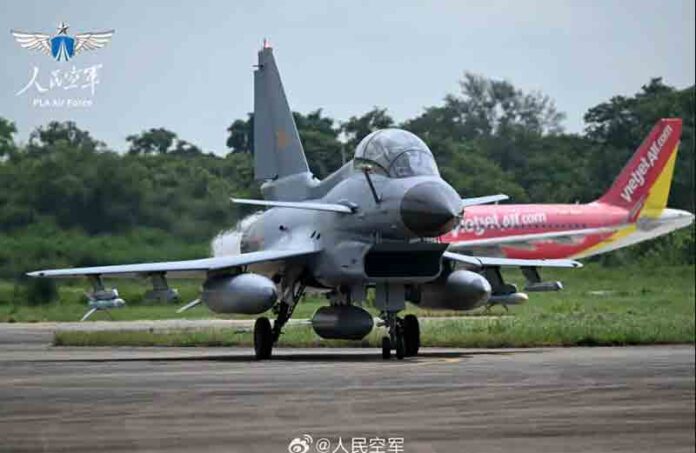
In a strategic shift that could alter the aerial dynamics in the Middle East, Iran is reportedly considering the purchase of the Chinese-manufactured J-10C “Vigorous Dragon,” a highly advanced 4.5-generation multirole fighter jet that has already earned the nickname “Rafale Killer” in defense discussions within the region.

This increasing interest follows widely reported assertions that Pakistan’s J-10C fighters, equipped with PL-15E beyond-visual-range (BVR) air-to-air missiles, successfully downed three Indian Air Force Rafales during a four-day aerial engagement last month—a claim that, if verified, would significantly disrupt the regional airpower balance.

The recent visit of Iranian Defence Minister Aziz Nasirzadeh to Qingdao, China, for the Shanghai Cooperation Organisation (SCO) summit—an alliance led by Russia and China—has coincided with heightened speculation regarding Tehran’s evolving procurement strategy.

The SCO, often perceived as a Eurasian counterbalance to NATO, comprises key regional military players including India, Pakistan, Kazakhstan, Kyrgyzstan, Tajikistan, Uzbekistan, and Belarus, making it a significant platform for discreet defense diplomacy.

Delays in efforts to acquire the Russian-made Su-35

Iran’s interest in the J-10C is reportedly driven by growing dissatisfaction over ongoing delays in its efforts to acquire the Russian-made Su-35 “Flanker-E,” a 4.5-generation heavyweight fighter initially ordered by Egypt but redirected after Cairo canceled the deal under U.S. pressure.

In light of an increasingly unstable strategic landscape following a 12-day high-intensity conflict with Israel, Iranian military strategists are believed to be assessing the J-10C as a viable and combat-tested alternative should the Su-35 acquisition continue to face setbacks.

Iran’s air force, which remains heavily dependent on aging platforms like the F-4 Phantom and MiG-29—many of which are over fifty years old—urgently requires modern fighter jets to bridge its significant airpower gap with regional rivals such as Israel and Saudi Arabia.

The J-10C has established an impressive battlefield reputation during the recent India-Pakistan conflict, as noted by defense analysts, which has elevated the Chinese fighter to the forefront of Tehran’s options. Armed with the PL-15E, China’s advanced BVR missile, the J-10C utilized by the Pakistan Air Force (PAF) reportedly shot down not only three Rafales but also a Su-30MKI, a MiG-29, and a Mirage 2000—an extraordinary achievement if confirmed.

Although these assertions are disputed by Indian sources, they have captivated global military observers and enhanced the J-10C’s standing in combat against Western aircraft. Developed by Chengdu Aircraft Corporation (CAC), the J-10C is now under significant scrutiny, particularly following its showcase at the 2025 Langkawi International Maritime and Aerospace Exhibition (LIMA) in Malaysia.

At LIMA 2025, the J-10CE—an export version of the J-10C—attracted considerable attention and media coverage at the China pavilion, with state-affiliated Global Times reporting that international delegates and military analysts gathered to observe the jet’s capabilities up close. “The J-10CE fighter aircraft, which is the export variant of the J-10C, was the main attraction at the China booth (at LIMA 2025) after achieving success in real combat,” the Chinese media outlet stated, highlighting the model’s increasing reputation.

Since its official entry into the People’s Liberation Army Air Force (PLAAF) in 2006, the J-10 series has transformed into one of China’s key air combat assets, with around 220 J-10C units in operation as of mid-2025.

Representing the pinnacle of the J-10 series, the J-10C incorporates a robust indigenous WS-10B turbofan engine, complete digital fly-by-wire control, and a state-of-the-art avionics suite—providing improved maneuverability and combat readiness across various mission profiles.

Unlike its predecessors, the J-10C is equipped with an active electronically scanned array (AESA) radar, significantly enhancing its situational awareness and target acquisition capabilities in contested environments.

Aerodynamically, it boasts a canard-delta configuration that allows for exceptional agility in both dogfighting and high-altitude interception roles, further solidifying its status among the most proficient non-stealth fighters globally.

Military analysts often draw comparisons between the performance envelope of the J-10C and that of the American F-16, although some contend it displays “Lavi DNA”—a reference to the Israeli Lavi program from which it purportedly derives certain design principles.

Pakistan’s acquisition of the J-10C, confirmed in 2022, was specifically aimed at air superiority roles, benefiting from the integration of the PL-15—an air-to-air missile co-developed with Russian expertise, designed to compete with the American AIM-120 AMRAAM.

With a reported engagement range of 200 to 300 km in its domestic variant and approximately 145 km for the export-configured PL-15E, the missile provides the J-10C with a significant edge in first-launch scenarios, particularly in beyond-visual-range (BVR) engagements.

PL-15E direct rival to the AIM-120C-7

China’s defense industry has positioned the PL-15E as a direct rival to the AIM-120C-7 and even the newer D variant, offering cost-effective lethality with strong export potential to nations such as Iran, Egypt, and potentially buyers in Southeast Asia.

These developments further highlight China’s increasing ambition to lead the global fighter export market, posing a challenge to the aerospace dominance of the U.S., France, and Russia, especially in emerging markets.

Iran, which reportedly finalized its plan to acquire Su-35s from Russia in late 2023 via the state-affiliated Tasnim news agency, has since encountered new uncertainties as Moscow’s delivery schedules remain unclear.

Egypt’s initial Su-35 agreement, valued at over USD 2 billion (approximately RM9.4 billion), fell apart due to Washington’s Countering America’s Adversaries Through Sanctions Act (CAATSA), leaving dozens of completed jets in a state of geopolitical uncertainty.

Russia is said to have re-offered these aircraft to Iran in return for Tehran’s increasing military assistance in Ukraine, which has included thousands of Shahed-136 suicide drones and, more recently, ballistic missiles targeting Ukrainian infrastructure.

While the Su-35 appears to be an appealing option on paper—boasting Irbis-E radar, 3D thrust-vectoring, and robust AL-41F1S engines—its delivery risks and political implications have made the J-10C more attractive to Tehran’s decision-makers.

Chinese defense exports advantage

Additionally, Chinese defense exports encounter fewer diplomatic obstacles compared to Russian equipment, facilitating quicker and more discreet procurement processes, particularly in light of tightening Western sanctions.

If Iran proceeds with a formal J-10C acquisition, it would be a significant shift in the nation’s defense procurement strategy, bringing it closer to China’s military-industrial complex and indicating a reduced reliance on Russian aerospace technology.

Such a decision would not only enhance the credibility of China’s defense sector but also strengthen Beijing’s defense relationships in the Gulf—introducing a new aspect to its strategic encirclement of Western-aligned military alliances in the region.

As regional tensions escalate—from Israeli airstrikes to American sanctions—Iran’s shift towards the J-10C could transform its air deterrence strategy, possibly intensifying an arms race throughout the Middle East.

While Tehran considers its options amid Russian delays and Chinese dependability, the decision between the Su-35 and the J-10C could significantly influence the Islamic Republic’s airpower direction for the next twenty years.

It remains uncertain whether China’s “Rafale Killer” will ultimately serve as the new primary fighter for the Islamic Republic of Iran Air Force (IRIAF)—however, one fact is evident: the global arms market is observing closely.

A new wave of Iranian missiles and reports of Netanyahu’s home being targeted

0
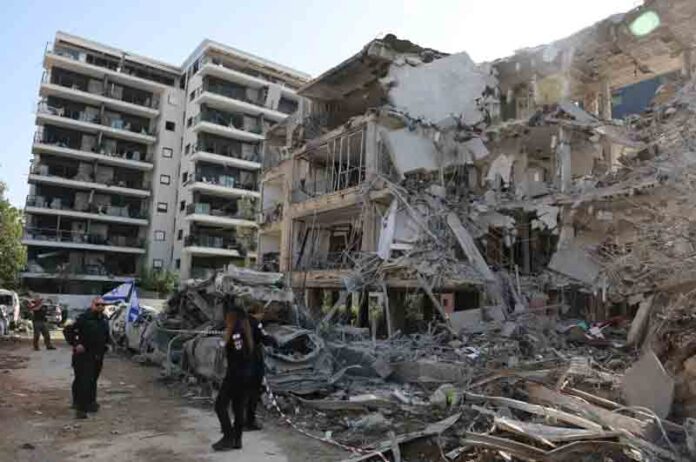
The recent Iranian missile attack resulted in deaths, injuries, and significant damage to a number of buildings.

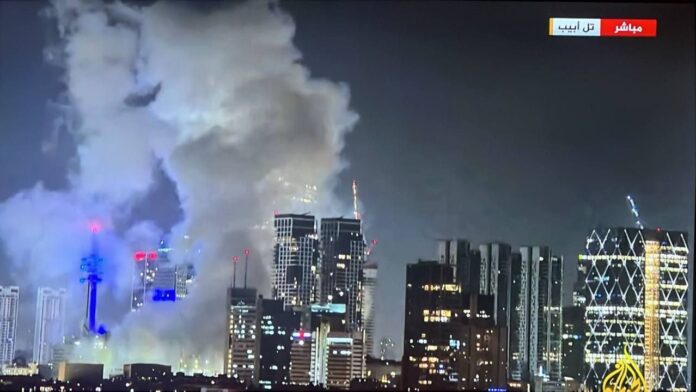
On Sunday afternoon, the Israeli military announced that it had detected 50 rockets launched from Iran aimed at Haifa and Tel Aviv in central Israel, with most being intercepted. According to Israeli media, one of the rockets landed on a house in Lebanon.

Iran’s Tasnim news agency also confirmed the initiation of a “new wave” of missile attacks on Israel. The Israeli Home Front Command reported that sirens were activated across Israel, including in settlements in the West Bank, the Golan Heights, the Galilee, and the Haifa region.

Residents in the northern and central parts of the country were advised to remain close to protected areas. The Israeli military stated that air defense systems are actively working to counter the threat from the latest Iranian missile barrage. Reports from Israeli media indicated that the Iranian strikes targeted a power station in Hadera and the residence of Prime Minister Benjamin Netanyahu’s family in Caesarea, located north of Tel Aviv.

Additionally, Israel’s Channel 12 reported a fire outbreak in the southern Golan Heights due to interceptions of Iranian missiles. Another rocket attack occurred last night, impacting locations within Israel and causing significant damage to Bat Yam, south of Tel Aviv, which was struck by numerous rockets. The attack resulted in the deaths of seven Israelis and injuries to 200 others.

Israeli authorities have classified Bat Yam as a site of extensive casualties and destruction, with approximately 35 individuals reported missing following the Iranian missile strike. Israeli public radio also noted that many homes and buildings in Bat Yam suffered damage from the missile strikes.

The Israeli Home Front Command remarked that the previous night was particularly challenging for Israel, with rescue teams actively searching for survivors beneath the rubble in Bat Yam.

Two previous attacks

The day prior, Israel experienced two waves of Iranian missile attacks, leading to considerable destruction and loss of life in areas such as Tel Aviv and Haifa. Iranian sources indicated that the missiles employed were tactical and fitted with high-explosive warheads.

The initial assault struck Israeli cities with 40 rockets, whereas the subsequent one hit Tel Aviv, Rehovot, and Bat Yam, located south of Tel Aviv, deploying 50 rockets.

Early on Friday, Israel—backed by implicit support from the US—initiated a large-scale offensive against Iran, referred to as “Operation Rising Lion.” This operation aimed at nuclear sites and missile installations across multiple regions, and it resulted in the assassination of key military figures and nuclear experts.

That night, Iran commenced its retaliation with a series of ballistic missile and drone attacks, leading to fatalities and numerous injuries, alongside considerable damage to infrastructure and vehicles.

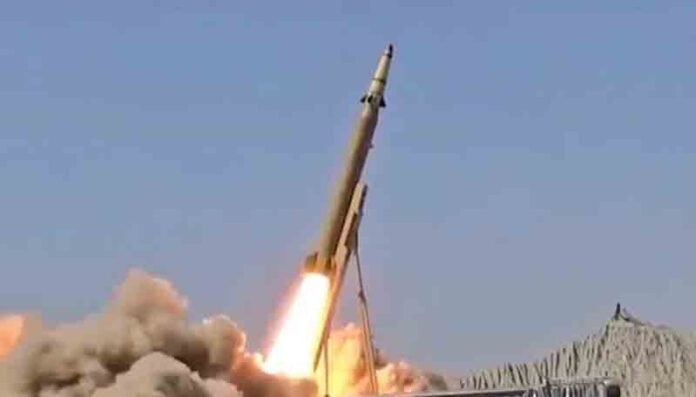
Qassem Basir Missile Enters Combat: Iran Aims at Israel with Advanced Precision Weapon

0
Qassem Basir missile, Iran

In a moment of historic importance and increasing strategic instability, Iran has officially confirmed the combat deployment of its most sophisticated precision-guided ballistic missile to date, the Qassem Basir, which made its operational debut during a significant missile offensive aimed at Israeli territory over the weekend.

This unprecedented announcement, verified by the Iranian state-affiliated FARS News Agency, follows the recent public unveiling of the missile and indicates a swift shift from prototype to battlefield readiness, underscoring Iran’s aspirations to alter the military equilibrium in the Middle East.

As per Iranian sources, the Qassem Basir was launched against several strategic targets in Tel Aviv and Bat Yam, with Tehran asserting that the strikes caused substantial damage and numerous casualties. Israeli military officials have since confirmed that personnel from the Home Front Command’s elite Search and Rescue Brigade are actively working in the Bat Yam impact area, where the missile struck near Tel Aviv.

The Israeli Defence Forces (IDF) reported that the assault resulted in four deaths and over 100 injuries, while around 20 individuals are still unaccounted for, as rescue efforts escalate amid scenes of destruction. Military experts view the deployment of the Qassem Basir as a calculated escalation in Iran’s developing deterrence and counter-intervention strategy, strategically timed to assess the effectiveness of Western and Israeli missile defense systems during a time of regional turmoil.

With a stated operational range of 1,200 kilometers, the Qassem Basir utilizes a dual-stage solid-fuel propulsion system and an advanced maneuverable reentry vehicle (MaRV), allowing it to accurately target high-value installations while evading traditional interception paths.

“Iran’s deployment of the Qassem Basir signifies not merely a tactical maneuver, but conveys a strategic message—it is a missile engineered to bypass layered Western missile defense systems with remarkable reliability,” stated a senior missile warfare expert in the region.

Nonetheless, Israeli military officials challenge Tehran’s assertions, claiming that the missiles fired lacked maneuverability, which contradicts Iran’s depiction of the Qassem Basir as a nimble and evasive reentry system. The missile’s public debut last month was accompanied by state television footage that displayed live-fire tests conducted under electronic warfare scenarios, featuring visuals of precise strikes on simulated battlefield targets in challenging terrain—meant to serve as a clear illustration of its real-world combat effectiveness.

An advanced successor to the Shahid Haj Qassem missile introduced in 2020, the Qassem Basir incorporates next-generation improvements, such as electro-optical infrared terminal seekers, inertial navigation systems, and resistance to electronic interference, enabling it to function effectively in high-intensity conflict areas where GPS signals may be compromised.

Iran’s Defence Minister, General Aziz Nasirzadeh, emphasized the missile’s durability and survivability against advanced defense systems, asserting, “Qassem Basir will be impervious to the American THAAD and Patriot air defense systems, as well as the Israeli regime’s multi-layered Arrow systems.” To grasp the missile’s intended function, it is crucial to contextualize the systems it was designed to counter.

The Terminal High Altitude Area Defense (THAAD), created by the United States, is a sophisticated exo-atmospheric interceptor aimed at neutralizing medium-range ballistic threats during their terminal phase through a hit-to-kill approach.

The widely utilized Patriot missile defense system, which is also manufactured in the United States, provides protection at low to mid altitudes against tactical ballistic and cruise missiles. However, it has encountered challenges when facing newer threats that exhibit high maneuverability.

In contrast, Israel’s Arrow missile defense system, developed in collaboration with the United States, forms the foundation of its strategic air defense. The Arrow-2 and Arrow-3 interceptors are specifically designed to target long-range missiles at elevated altitudes—yet critics caution about possible weaknesses in scenarios involving saturation or deceptive strikes. The MaRV configuration of the Qassem Basir is engineered to perform non-linear trajectories and evasive maneuvers during reentry, adding a new level of complexity that greatly diminishes the chances of successful interception.

A senior defense analyst in Tehran remarked, “The missile’s agility and guidance system enable it to alter its path mid-flight, effectively making traditional interception methods outdated,” and further highlighted its resilience to “intense electronic interference during testing.”

Equipped with a 500-kilogram high-explosive warhead, the missile is designed to destroy fortified infrastructure. Its mobile launch system, often camouflaged as civilian vehicles, contributes significantly to operational stealth and enhances first-strike survivability. The modular design and solid-fuel readiness of the Qassem Basir facilitate rapid production and saturation deployment, empowering Iranian forces to potentially overwhelm even sophisticated multi-layered defense systems through sheer volume and speed.

These capabilities are thought to have been shaped by operational insights gained during Iran’s True Promise 1 and 2 missile offensives against Israeli targets in 2024, which revealed considerable flaws in detection-to-intercept timelines.

General Nasirzadeh has referred to the missile as a “strategic equalizer,” intended to shift Iran’s military strategy from a reactive stance to a proactive precision-strike approach, which can threaten adversaries deep within their defensive positions.

The missile’s name carries significant political and ideological implications. By naming it after Major General Qassem Soleimani, the former Quds Force commander who was killed in a U.S. drone strike near Baghdad in 2020, Iran is instilling a narrative of revenge, martyrdom, and resistance into the core of its most sophisticated strike system.

With Iran now showcasing a credible ability to launch precision-guided missiles specifically designed to counter systems like THAAD, Patriot, and Arrow, defense strategists in Washington, Tel Aviv, and Riyadh will need to reevaluate their existing strategies, readiness, and the vulnerability of critical assets.

While independent verification of the missile’s combat effectiveness is still limited, the strategic consequences of its deployment are clear—Iran has entered a new phase of missile warfare characterized by stealth, precision, maneuverability, and tactics focused on overwhelming force. As geopolitical tensions escalate and the threat of high-level regional conflict rises, the Qassem Basir has evolved from merely a prototype on a launch pad to a tangible battlefield reality with worldwide implications, altering the dynamics of modern deterrence and changing the nature of future conflicts in the Middle East.

Iran launches missiles at Israel as a reaction to the assaults

0

Explosions echoed over Tel Aviv and Jerusalem as sirens blared throughout Israel on Friday night, following what the military spokesman described as missile launches from Iran. According to Iran’s state news agency IRNA, hundreds of ballistic missiles were fired in response to Israel‘s most significant attacks on Iran, which targeted the vast underground nuclear facility at Natanz and eliminated its top military leaders. There were no immediate reports of casualties.

Israel announced that these strikes marked the beginning of “Operation Rising Lion.” Iran’s Supreme Leader Ayatollah Ali Khamenei accused Israel of instigating the strikes and provoking a war. U.S. President Donald Trump stated that it was not too late for Tehran to stop the bombing campaign by negotiating a deal regarding its nuclear program.

As night fell on Friday, Iranian media reported explosions in the northern and southern outskirts of Tehran and at Fordow, located near the sacred city of Qom, a second nuclear facility that had been untouched in the initial wave of attacks. Air defenses were activated throughout Tehran, and explosions were audible in Isfahan. Israel’s military confirmed it was targeting Iranian missile and drone launch sites and had also struck another nuclear facility in Isfahan.

Israeli Prime Minister Benjamin Netanyahu declared that the Israeli campaign aimed to eliminate an existential threat posed by Iran, referencing the failure to prevent the Holocaust during World War Two. He stated that Israel’s operation “will continue for as many days as necessary to eradicate this threat,” during a televised address. “Generations from now, history will note that our generation stood firm, acted decisively, and secured our shared future.”

In a phone interview with Reuters, Trump remarked that it was uncertain whether Iran’s nuclear program had endured. He mentioned that nuclear discussions between Tehran and the United States, planned for Sunday, were still on the agenda, although he was unsure if they would occur.

“We were aware of everything,” Trump remarked regarding the Israeli assault plans. “I endeavored to prevent humiliation and death for Iran. I made significant efforts to save them because I would have loved to see a deal come to fruition,” Trump stated. “They still have the opportunity to negotiate a deal; it’s not too late.”

Earlier, Trump shared on Truth Social: “Iran must reach an agreement before there is nothing remaining.” Tzachi Hanegbi, Israel’s National Security Adviser, indicated that military action alone would not eliminate Iran’s nuclear program, but could “establish the conditions for a long-term agreement, spearheaded by the United States” to eradicate it.

Decapitation

Two regional sources reported that at least 20 Iranian military leaders were killed, a shocking decapitation reminiscent of Israeli strikes that quickly dismantled the leadership of Lebanon’s once-dreaded Hezbollah militia last year.

Iran also reported the deaths of six of its leading nuclear scientists. Among the generals killed on Friday were the chief of staff of the armed forces, Major General Mohammad Bagheri, and the chief of the Revolutionary Guards, Hossein Salami. Major General Mohammad Pakpour, who was rapidly promoted to succeed Salami as the Guards commander, pledged retaliation in a letter to the Supreme Leader that was broadcast on state television: “The gates of hell will open to the child-killing regime.”

Iranian media displayed images of ruined apartment buildings, reporting that nearly 80 civilians lost their lives in assaults aimed at nuclear scientists while they were in their beds, and over 300 individuals were injured. Iran’s capacity to retaliate using weapons launched by its regional proxies has significantly diminished over the past year, following the fall of its ally Bashar al-Assad in Syria and the severe weakening of Hezbollah in Lebanon and Hamas in Gaza.

Israel announced that a missile launched from Yemen – where the Houthi militia remains one of the few Iranian-aligned factions capable of targeting Israel – had struck Hebron in the occupied West Bank. The Palestinian Red Crescent reported that three Palestinian children sustained injuries from shrapnel in that area.

Israel claimed that Iran had sent approximately 100 drones towards Israeli territory on Friday, a statement Iran refuted, and there were no indications that any drones reached Israeli objectives.

The United Nations Security Council was scheduled to convene on Friday at Tehran’s request. In a letter to the Council, Iran asserted that it would respond decisively and proportionately to Israel’s actions, which it labeled as “unlawful” and “cowardly.”

The price of crude oil surged amid concerns of broader retaliatory strikes in a key oil-producing area, although there were no reports of damage to oil production or storage facilities. OPEC indicated that the escalation did not warrant any immediate adjustments to oil supply.

Mossad operating deep within Iran

An Israeli security source revealed that Mossad commandos had been operating deep within the Islamic Republic prior to the attack, and that the Israeli intelligence agency and military had conducted a series of covert operations targeting Iran’s strategic missile capabilities. The source also noted that Israel had set up a drone attack base near Tehran. The military reported that it had targeted Iran’s air defenses, destroying “dozens of radars and surface-to-air missile launchers.”

Israeli officials indicated that it might take some time to assess the extent of the damage to the underground nuclear facility at Natanz, where Iran has enriched uranium to levels that Western nations have long claimed are appropriate for weaponization rather than civilian purposes.

Iran has consistently maintained that its nuclear program is solely for civilian use. This week, the U.N. nuclear watchdog determined that Iran was in breach of its commitments under the global non-proliferation treaty. Tehran had been in discussions with the Trump administration regarding an agreement to limit its nuclear program, aiming to replace the deal that Trump withdrew from in 2018. Tehran has turned down the most recent U.S. proposal.

Israel targets key military and nuclear figures, killing three of Iran’s top leaders

0
Hossein Salami, Ali Shamkhani and Mohammad Bagheri

Iran’s top military official, the leader of the elite Revolutionary Guards Corps, along with a former national security chief, have all perished in Israel’s unprecedented Operation Rising Lion.

Their deaths are likely to create significant upheaval within the nation’s military framework and could severely limit the Islamic Republic’s capacity to retaliate against Israeli assaults. Here’s what you should know about the three individuals.

Major General Hossein Salami

As the leader of the clandestine Islamic Revolutionary Guard Corps (IRGC), Major General Hossein Salami was among the most influential figures in Iran, overseeing its most formidable military branch and reporting directly to Supreme Leader Ayatollah Ali Khamenei. Born in 1960, as noted in a US sanctions document, Salami has been at the helm of the IRGC since 2019.

This role placed him in charge of one of the Iranian state’s most powerful instruments, which has played a crucial role in suppressing dissent domestically and extending Iran’s influence internationally. Analysts indicate that the IRGC finances and supports an extensive network of militias throughout the region, which it employs to target US and other military forces across the Middle East.

Additionally, the IRGC is thought to supply resources and assistance to Yemen’s Houthis, allowing the group to attack international shipping in the Red Sea and launch missiles and drones at Israel. Salami was leading the IRGC during Iran’s launch of hundreds of drones and missiles aimed at Israel in April and October of the previous year, marking the first direct assaults by Iran on Israeli soil.

In footage broadcast by Iranian state media in January, Salami was shown inspecting what was reported to be an underground military facility involved in those strikes. Dressed in a green military uniform and sporting a short beard, Salami saluted soldiers within the expansive underground complex and walked over flags of the United States and Israel laid on the ground. The facility was reportedly producing “new special missiles,” according to the semi-official Iranian media outlet Mehr News.

Salami was in charge when the IRGC shot down a Ukrainian passenger plane shortly after its departure from Tehran’s international airport, resulting in the deaths of all 176 individuals aboard. An unnamed commander of the IRGC who operated the Tor M1 surface-to-air missile system that brought down the aircraft received a 13-year prison sentence, as reported by Iran’s Mehr news agency.

CNN security analyst Beth Sanner remarked that removing Salami would be comparable to eliminating the US chairman of the joint chiefs of staff: “You can imagine what Americans would do,” she stated.

Major General Mohammad Bagheri

Since 2016, Mohammad Bagheri has held the position of chief of staff of Iran’s armed forces, which the IISS estimates could mobilize over 500,000 active personnel. The General Staff is described as “the most senior military body in Iran, which implements policy and monitors and coordinates activities within the armed forces,” according to a US Treasury document detailing sanctions against Bagheri in 2019.

Bagheri was sanctioned alongside nine others closely associated with Ayatollah Khamenei “who have for decades oppressed the Iranian people, exported terrorism, and advanced destabilizing policies around the world,” the document indicated. Images released by Iran’s Tasnim news agency depicted him allegedly meeting with Iranian troops engaged in combat alongside government forces in Syria in 2017. In April, Bagheri met with Saudi Defense Minister Prince Khalid bin Salman Al Saud in Tehran, marking a rare visit by a senior Saudi royal to the Islamic Republic.

The following month, Reuters reported that during the meeting, the Saudi defense minister issued a warning to Bagheri: he should take President Donald Trump’s proposal for a nuclear agreement seriously, as it offers a means to mitigate the risk of conflict with Israel.

Ali Shamkhani

Ali Shamkhani was a close advisor to Iran’s Supreme Leader Ayatollah Ali Khamenei and represented Tehran in negotiations that resulted in a significant agreement to restore diplomatic relations with the adversary Saudi Arabia. The Iranian state television network IRINN confirmed his passing following Israel’s unprecedented attacks on Friday.

Shamkhani held the position of the country’s top national security official for a decade starting in 2013 and previously occupied several key roles, including within the Islamic Revolutionary Guard Corps (IRGC) and the defense ministry. He was recognized as a rising figure in Iranian diplomacy, well-known in foreign policy circles in Washington and Europe.

Shamkhani represented Iran in talks facilitated by China with Saudi officials, which culminated in the two nations agreeing to re-establish diplomatic relations after years of animosity. However, he was unexpectedly replaced in mid-2023. Experts describe the former national security chief as ambitious, with a broad portfolio. He ran for president in 2001 and held significant positions in the IRGC and the defense ministry. At that time, some analysts speculated that Khamenei might have considered him overly ambitious.

Nevertheless, he continued to be a close advisor to the supreme leader and provided counsel as Iran re-engaged in nuclear discussions with the administration of US President Donald Trump.

In April, just days before negotiations with the US, he cautioned that Tehran could expel UN nuclear inspectors and halt cooperation with the International Atomic Energy Agency (IAEA) if it perceived a threat.

China is set to provide Pakistan with DF-17 hypersonic missiles, altering strategic dynamics

0

In a development that could fundamentally change the strategic dynamics of South Asia, reports indicate that Pakistan is in the initial stages of negotiations with China to obtain advanced hypersonic missile technology, particularly the DF-17 system equipped with the DF-ZF Hypersonic Glide Vehicle (HGV).

Indian defense sources assert that Islamabad’s quest for this cutting-edge capability is motivated by the necessity to counter India’s increasingly robust multi-layered missile defense network.

The acquisition of hypersonic glide vehicle technology—capable of bypassing even the most advanced missile defense systems—could provide Pakistan with a significant advantage in both strategic deterrence and rapid precision strike capabilities.

It is believed that Pakistan is considering two possible paths: a direct transfer of China’s DF-ZF HGV technology or a collaborative development agreement based on the existing intelligence-sharing and defense cooperation framework between Beijing and Islamabad.

Given the strength of China-Pakistan military relations and Beijing’s long-standing readiness to transfer sensitive technologies to its closest regional ally, the realization of this missile deal seems to be merely a matter of time.

China currently represents about 81 percent of Pakistan’s total arms imports over the last five years, reinforcing its role as Islamabad’s main weapons supplier and strategic support in light of India’s expanding power projection.

Recently, Chinese defense sources revealed that a comprehensive military aid package has been proposed to Pakistan, which includes the J-35A fifth-generation stealth fighter, the HQ-19 long-range missile defense system, and the KJ-500 airborne early warning and control aircraft.

The announcement of this package, which came shortly after the resurgence of tensions between Pakistan and India, underscores China’s growing influence in altering the regional power dynamics through military-industrial diplomacy.

“The Chinese military assistance package to Pakistan signifies a significant diplomatic and defense milestone under the leadership of Prime Minister Shehbaz Sharif,” stated an official government release. “High-tech military assets will dramatically enhance the capabilities of the Pakistan Air Force and air defense systems in line with the current high-level warfare standards,” the statement continued.

Data from the Stockholm International Peace Research Institute (SIPRI) indicates that China’s arms exports to Pakistan exceeded US$5.28 billion (RM23.2 billion) from 2018 to 2023, accounting for 63 percent of its total arms exports globally during that timeframe. This represents a seven percent increase compared to the previous five-year period (2015–2020), when 74 percent of Pakistan’s arms imports were sourced from China, highlighting the increasingly defense-oriented nature of their bilateral relations.

Should it come to fruition, Pakistan’s acquisition of the DF-17—capable of deploying a hypersonic glide vehicle at speeds ranging from Mach 5 to Mach 10—would significantly disrupt the existing deterrence equilibrium between Islamabad and New Delhi. The missile’s range of 2,000–2,500 km would put nearly all of India’s strategic command centers, nuclear facilities, and critical urban targets within minutes of a launch from Pakistan.

Such a capability would greatly reduce India’s dependence on static air and missile defenses, including the Russian-made S-400 Triumf, as well as domestic systems like the Barak-8 and Akash.

From a geopolitical standpoint, the transfer of DF-17 to Pakistan would enable China to further entrench itself in South Asia’s strategic framework, utilizing its advanced weapon systems to shift the regional power balance in favor of Islamabad. The system’s capacity to execute pre-emptive strikes against India’s mobile assets—including Agni-series ballistic missile platforms and Rafale fighter squadrons—would expand Pakistan’s strike options in high-tempo conflict situations.

Furthermore, acquiring such a capability would compel India to hasten its own hypersonic weapons initiatives, including reviving the stalled BrahMos-II project or enhancing hypersonic research collaborations with the United States and Russia.

Regionally, the addition of hypersonic weapons to Pakistan’s arsenal would intensify the arms race and create new urgency in Indian military planning, especially for contingency operations in Kashmir and along the Punjab border.

Western military analysts have cautioned that the DF-17 could allow Pakistan to implement a “decapitation strike” strategy—crippling India’s command-and-control infrastructure before any retaliatory measures could be organized, raising the risk of accidental nuclear escalation. Even in conventional warfare, the DF-17 represents a significant threat; its agility and speed could disable radar nodes and point-defense systems in mere seconds, paving the way for subsequent air and ground assaults.

If adapted for use on naval or mobile road-based platforms, the DF-17 could provide Pakistan with a versatile, mobile hypersonic strike capability that would be exceptionally challenging for Indian or American surveillance systems to detect or intercept.

In strategic terms, acquiring the DF-17 would advance Pakistan’s military strategy into the domain of fifth-generation strike warfare, where speed, accuracy, and first-strike survivability are crucial to the modern battlefield dynamics.

A Hypersonic Glide Vehicle (HGV) is a sophisticated re-entry warhead that detaches from a ballistic missile at high altitudes and glides through the atmosphere at hypersonic speeds—exceeding Mach 5—while performing lateral and evasive maneuvers to evade missile defense systems.

In contrast to conventional ballistic missiles that follow predictable parabolic trajectories, HGVs re-enter the atmosphere on flatter, low-altitude paths, making them significantly harder for radar systems and interceptors to track and neutralize.

Once propelled into the upper atmosphere by a launch vehicle, the HGV separates before achieving orbital velocity, then glides at high speeds through the upper atmosphere, descending towards its target with minimal radar detection.

This combination of extreme velocity and low flight profile renders current air defense systems—including THAAD, Patriot, Aegis, and S-400—largely ineffective, as they are designed to counter predictable, high-altitude ballistic threats.

China’s DF-ZF, Russia’s Avangard, and the U.S. Common Hypersonic Glide Body (C-HGB) represent the most notable operational and developmental instances of this technology.

China’s DF-17 has been recognized as the first hypersonic missile system in the world to be deployed, featuring a glide vehicle that can hit targets located over 2,500 km away while retaining its manoeuvrability during descent.

Russia’s Avangard, which is mounted on the RS-28 Sarmat ICBM, is said to achieve speeds of Mach 27, a velocity that Moscow asserts makes it entirely immune to Western defense systems—a statement supported by President Vladimir Putin himself.

In the meantime, the U.S. is progressing with the development of its own C-HGB, although this program has faced several delays in testing and has yet to be deployed in operational units.

From a doctrinal perspective, the rise of Hypersonic Glide Vehicles (HGVs) signifies a shift in strategic warfare—marking the beginning of the Prompt Global Strike era, where critical enemy targets can be eliminated with minimal or no warning.

Strategists caution that HGVs shorten decision-making timelines during crises, particularly in sensitive areas like Taiwan, the Korean Peninsula, or South Asia, where miscalculations could result in rapid escalation.

India, recognizing the strategic gap, is investing in its own hypersonic initiatives—such as the Shaurya tactical missile and collaborative projects like BrahMos-II—while also exploring partnerships with Japan, Australia, and the U.S.

Countries that deploy operational HGVs acquire a significant asymmetric advantage, enabling them to strike deep into enemy territory without relying on conventional ballistic missiles or strategic bombers.

However, the spread of HGV technologies to unstable regions—such as the Middle East or the Korean Peninsula—has raised concerns about destabilization, especially as nations like Iran and North Korea attempt to gain access through covert methods or illegal transfers.

HGVs, capable of delivering both nuclear and high-explosive conventional payloads, are not merely fast weapons—they are tools of strategic supremacy, transforming deterrence theory and altering the dynamics of escalation control.

Israel claims it is “intercepting” Iranian drones beyond its borders

0
A projectile is seen in the sky after Iran fired a salvo of ballistic missiles, amid cross-border hostilities between Hezbollah and Israel, as seen from Tel Aviv, Israel.

Israel’s military has commenced shooting down drones originating from Iran, as reported by a military official. “The IDF has started intercepting UAVs launched from Iran, beyond Israeli borders,” an IDF representative informed the media on Friday.

Earlier, IDF spokesperson Effie Defrin indicated that Iran has sent over 100 drones towards Israeli territory, marking the initial signs of retaliation against Israel’s unprecedented strikes on Iran.

flights suspended

Emirates, a leading airline in the United Arab Emirates, has suspended flights to and from various Middle Eastern nations as Iran retaliates with drone attacks following Israel’s early morning offensive.

Emirates flights to Iraq, Jordan, Lebanon, and Iran have been canceled for both Friday and Saturday. The airline has advised affected customers to reach out to their travel agents or local Emirates offices for flight rebooking.

Bushehr nuclear facility was not targeted

The UN’s nuclear regulatory body, the International Atomic Energy Agency (IAEA), has stated that Iran’s Bushehr nuclear facility was not targeted during Israel‘s airstrikes, based on information from Iranian officials.

This facility is Iran’s first nuclear energy plant. The IAEA also reported that no increase in radiation levels has been detected at the Natanz nuclear site, which is Iran’s largest uranium enrichment facility, according to officials.

Both Israel, the IAEA, and Iranian state media had previously confirmed that the airstrikes impacted the Natanz facility, situated approximately 150 miles south of Tehran. This site is home to the country’s advanced nuclear program.

Analysts suggest that the facility is utilized for the development and assembly of centrifuges for uranium enrichment, a crucial technology that converts uranium into nuclear fuel. Footage and images from the area depicted significant smoke plumes rising from the Natanz site.

Khamenei vows ‘harsh retribution’ after Israeli strikes kill commanders and scientists

0

In an official statement, Ayatollah Ali Khamenei promised “severe punishment” for Israel following the regime’s assassination of at least four Iranian military officials and nuclear scientists during strikes that targeted Tehran in the early hours of Friday.

Among the deceased are Major General Hossein Salami, the commander of Iran’s Islamic Revolution Guard Corps (IRGC); Major General Gholam Ali Rashid, who leads the Khatam al-Anbiya Central Headquarters; Fereydoun Abbasi, a nuclear scientist and former head of Iran’s nuclear program; and another notable nuclear scientist, Mohammad Mehdi Tehranchi.

Khamenei remarked, “In the early hours of this morning, the Zionist regime raised its filthy, blood-stained hand to commit a crime against our beloved country, exposing its malignant nature more than ever by targeting residential areas. This regime must expect severe punishment.”

He added, “The powerful hand of the Armed Forces of the Islamic Republic of Iran will not allow this to go unpunished. In the enemy’s assaults, several commanders and scientists were martyred. Their successors and colleagues will, God willing, promptly assume their responsibilities. With this act, the Zionist regime has set itself up for a bitter and painful fate, which it will undoubtedly face.”

Israel strikes Iranian nuclear sites and missile production facilities; Tehran promises retaliation

0
Firefighters work at the scene of a damaged building in the aftermath of Israeli strikes, in Tehran

On Friday, Israel initiated extensive strikes against Iran, claiming to have targeted nuclear facilities, ballistic missile production sites, and military leaders, marking the beginning of a sustained operation aimed at preventing Tehran from developing an atomic weapon.

Reports from Iranian media and witnesses indicated explosions at the main uranium enrichment site in Natanz, while Israel declared a state of emergency in preparation for potential retaliatory missile and drone attacks.

The elite Revolutionary Guards corps of Iran announced the death of its top commander, Hossein Salami, and state media reported that the unit’s headquarters in Tehran had been struck.

Additionally, it was reported that several children lost their lives in an attack on a residential neighborhood in the capital.

Israeli Prime Minister Benjamin Netanyahu stated in a recorded video message, “We are at a decisive moment in Israel’s history. Moments ago, Israel launched Operation Rising Lion, a targeted military initiative to counter the Iranian threat to Israel’s very existence. This operation will persist for as long as necessary to eliminate this threat.”

In response, Iran’s Supreme Leader Ayatollah Ali Khamenei declared that Israel had “unleashed its wicked and bloody” actions in a crime against Iran, warning that it would face “a bitter fate.”

An Israeli military official reported that Israel was targeting “dozens” of nuclear and military sites, including the Natanz facility in central Iran, and noted that Iran possessed sufficient material to produce 15 nuclear bombs within a matter of days.

The United States stated it was not involved in the operation, which heightens the risk of renewed tensions in the Middle East, a significant oil-producing region.

In addition to the extensive air strikes, Israel’s Mossad intelligence agency conducted a series of covert sabotage missions within Iran, as reported by Axios, citing a senior Israeli official. These operations aimed to undermine Iran’s strategic missile installations and its air defense systems.

Iranian state media has reported that at least two nuclear scientists, Fereydoun Abbasi and Mohammad Mehdi Tehranchi, were killed in Israeli airstrikes in Tehran.

Tel Aviv’s Ben Gurion Airport has been closed until further notice, and Israel’s air defense units are on high alert for potential retaliatory strikes from Iran.

“In light of the pre-emptive strike by the State of Israel against Iran, a missile and UAV (drone) attack on the State of Israel and its civilian population is anticipated in the near future,” stated Defence Minister Israel Katz. Israeli military Chief of Staff Eyal Zamir mentioned that tens of thousands of soldiers have been mobilized and are “prepared across all borders.” “We are currently engaged in a historic campaign unlike any other. This operation is crucial to avert an existential threat posed by an enemy determined to annihilate us,” he added. Israeli Minister Gideon Saar is conducting a “marathon of calls” with international counterparts concerning Israel’s assault on Iran, as noted by the foreign ministry in a statement.

U.S. President Donald Trump stated that Iran must not possess a nuclear bomb and expressed that the United States aims to return to negotiations, during an interview with Fox News following the commencement of Israeli air strikes on Iran.

“We will see,” Fox News reporter Jennifer Griffin quoted Trump in a post on X. The White House announced that Trump would hold a meeting of the National Security Council on Friday morning. On Thursday, he mentioned that an Israeli strike on Iran “could very well happen” but emphasized his desire for a peaceful resolution.

According to a U.S. official who spoke to Reuters, the U.S. military is preparing for a wide range of scenarios in the Middle East, including the potential need to assist in evacuating American civilians.

The spokesperson for Iran’s armed forces warned that Israel and its primary ally, the United States, would face a “heavy price” for the attack, accusing Washington of backing the operation. While the U.S. attempted to distance itself from Israel’s military actions, an Israeli official informed public broadcaster Kan that Israel had coordinated with Washington regarding Iran.

U.S. Secretary of State Marco Rubio asserted that the United States was not involved in the strikes and that Tel Aviv acted independently for self-defense. “We are not involved in strikes against Iran, and our main priority is to protect American forces in the region,” Rubio stated. “Let me be clear: Iran should not target U.S. interests or personnel,” he added. The State Department released an advisory instructing all U.S. government employees in Israel and their family members to “shelter in place until further notice.”

The attacks led to significant declines in stock prices during Asian trading on Friday, primarily driven by a selloff in U.S. futures. Meanwhile, oil prices surged as investors sought refuge in safe havens like gold and the Swiss franc.

U.N. Secretary-General Antonio Guterres denounced any military escalation in the Middle East, as stated by deputy U.N. spokesperson Farhan Haq. “The Secretary-General urges both parties to exercise maximum restraint, avoiding at all costs a slide into deeper conflict, a scenario that the region can ill afford,” Haq remarked.

U.S. and Iranian officials were set to engage in a sixth round of discussions regarding Tehran’s increasing uranium enrichment program in Oman on Sunday, according to representatives from both nations and their Omani mediators. A U.S. official confirmed that these discussions were still on track to take place despite the Israeli assault.

The Israeli military announced on Friday that it had to take action based on new intelligence indicating that Iran was “approaching the point of no return” in its nuclear weapon development. “In recent months, this program has accelerated significantly, bringing the regime much closer to acquiring a nuclear weapon,” the statement read, without revealing the alleged evidence.

A source familiar with U.S. intelligence reports indicated that there had been no recent alteration in the U.S. intelligence evaluation, which maintains that Iran is not constructing a nuclear weapon and that Khamenei has not authorized the resumption of the nuclear weapons program that was halted in 2003.

Iran tests a missile with a two-ton warhead, showcasing improved long-range strike capabilities

0

In a striking demonstration of its growing strategic strike capabilities, Iran has successfully executed a high-impact missile test featuring a domestically produced two-tonne warhead. This development could potentially alter regional deterrence dynamics and create waves throughout global defense establishments.

The announcement was made by Iranian Defense Minister Brigadier General Aziz Nasirzadeh, who informed reporters in Tehran that this test represents a significant advancement in the Islamic Republic’s indigenous missile development initiatives. “We have made substantial progress in defense matters,” Nasirzadeh remarked, emphasizing that Iran’s armed forces are fully prepared and possess the advantage in any possible military engagement.

The minister also cautioned that any act of aggression from the United States would elicit a rapid and severe response, reinforcing Iran’s readiness to inflict considerable losses on American forces present in the region. During a cabinet meeting, Nasirzadeh reiterated, “Iran’s armed forces are fully prepared and have the advantage in any conflict,” further asserting that Tehran’s deterrent stance is stronger than ever.

He also dismissed recent provocative remarks from U.S. military officials, stating, “Occasionally, it is suggested that if negotiations fail, it will result in conflict. On behalf of the Iranian nation, I assert that if a conflict is forced upon us, we will target our designated objectives, the enemy will incur heavy losses, and America must withdraw from the region.” The successful missile test, which involved the use of a two-tonne warhead, showcases Iran’s proficiency in various advanced military technologies, including sophisticated propulsion, aerodynamics, and structural engineering—essential elements for long-range, high-payload missile systems.

The test underscores the evolution of Iran’s missile strategy, which increasingly emphasizes precision-strike capabilities that can penetrate fortified military structures and surpass regional missile defense systems.

Abbas Kharabaf, a defense and aerospace specialist who has been closely observing Iran’s missile advancements, informed the Tehran Times that “ensuring structural integrity while carrying a 2-ton payload at hypersonic speeds necessitates advancements in materials science, aerodynamics, and propulsion.”

He further stated that this achievement indicates a developing Iranian aerospace industry, highlighting that the heavy warhead can be utilized on Iran’s operational medium- and long-range ballistic missile systems, including the Khorramshahr and Emad platforms. Both systems have operational ranges that extend to Israel, U.S. military installations in the Gulf, and potentially parts of southern Europe, making the two-ton payload capability a significant strategic advantage.

Kharabaf disclosed that the newly tested warhead incorporates a triconic (three-cone) aerodynamic configuration, which greatly diminishes radar cross-section and improves survivability against advanced missile defense systems like THAAD and the Israeli Arrow system. He also pointed out the warhead’s incorporation of advanced thermal shielding, allowing it to withstand hypersonic atmospheric reentry, while its maneuverable reentry vehicle (MaRV) capability enables trajectory adjustments during the terminal phase, enhancing strike precision and complicating interception efforts.

These technological features imply that the warhead is intended for counterforce operations, capable of targeting fortified military assets such as underground command-and-control centers, aircraft shelters, ballistic missile silos, fuel storage facilities, and reinforced airbases.

“The strategic importance is rooted in the blend of speed, accuracy, and payload,” Kharabaf stated, further noting, “This advancement is not merely about a single weapon—it signifies Iran’s intent to position itself as a formidable entity in the realm of advanced missile technology.”

The timing of this announcement is especially crucial as the area experiences increased geopolitical tensions, highlighted by ongoing Israeli operations in Syria, renewed conflicts in the Strait of Hormuz, and a firmer U.S. approach towards Iranian influence in the region. The missile test may also act as a strategic signal to the Gulf Cooperation Council (GCC) nations, particularly Saudi Arabia and the UAE, which have recently bolstered military collaboration with Israel and the United States under the security framework of the Abraham Accords.

Iran’s advancements in missile technology, including its recent test of a two-tonne warhead, demonstrate a persistent effort to transition from asymmetrical retaliation tactics to a credible, high-impact deterrent strategy centered on strategic-range precision firepower. While Western nations continue to express concerns regarding Iran’s missile initiatives, Tehran perceives these tests as vital for maintaining its sovereignty in a region increasingly influenced by foreign military presence and complex missile defense systems.

With this achievement, Iran becomes part of a select group of countries capable of deploying heavy-payload maneuverable reentry vehicles, a capability that significantly complicates adversary air defense strategies and introduces a new layer to Tehran’s military deterrence strategy. As discussions surrounding the nuclear agreement remain at a standstill and tensions rise across various flashpoints from Syria to the Gulf, the latest test highlights Iran’s determination to cultivate an independent, technologically sophisticated, and regionally dominant missile capability.

The recent successful test of a missile equipped with a two-tonne warhead, as reported by Iran, has raised considerable concern among global defense analysts. Experts caution that such a payload has the potential to inflict devastating kinetic and strategic impacts on contemporary battlefields.

A missile with a 2,000 kg warhead is capable of destroying hardened military installations, fortified airbases, and underground command centers. It serves not only as a weapon but also as a message of deterrence, escalation, and deep-strike capability. In military parlance, a conventional high-explosive warhead of this size can generate a blast radius sufficient to collapse reinforced concrete structures within a 30 to 50-meter range, with significant secondary damage extending well beyond 100 meters, contingent on the altitude and angle of detonation.

The destructive capacity is particularly pertinent against deeply buried targets such as aircraft shelters, fuel depots, ammunition bunkers, and subterranean military headquarters, many of which are engineered to withstand standard munitions. When combined with a long-range ballistic or hypersonic missile, such a warhead evolves into a strategic asset, enabling the launching nation to incapacitate critical enemy infrastructure far beyond its own borders.

In addition to physical destruction, the psychological and operational shockwave is equally formidable. Military leaders must now face the unsettling truth that no facility—regardless of how deeply buried or heavily fortified—is immune to a two-tonne payload delivered at hypersonic velocities. This capability compels adversaries to fundamentally reassess their deployment strategies, fortification measures, and the overall survivability of their high-value assets.

Furthermore, if the warhead features maneuverable reentry vehicle (MaRV) capabilities, as claimed by Iranian experts, it becomes significantly harder to intercept using current-generation air defence systems such as THAAD, Patriot PAC-3, or Israel’s Arrow-3.
This not only weakens the effectiveness of layered missile defence but also increases the cost of maintaining credible deterrence against such threats.
From a geostrategic standpoint, the ability to deliver such a high-mass warhead across continental distances shifts the regional power balance.
Missiles equipped with two-tonne warheads—especially when deployed on platforms like Iran’s Khorramshahr or Emad—can reach targets across the Middle East, South Asia, and even parts of Europe.
If nuclear warhead miniaturization is considered—a capability well within the carrying capacity of a two-tonne payload—the implications spiral into global arms control territory, triggering concerns of escalation and potential arms races among rival powers.
Military analysts point to the classic formula: speed + precision + payload = strategic impact—a combination that such missiles now offer to their operators.
Whether designed as a bunker-busting strike weapon or a psychological deterrent, a missile equipped with a two-tonne warhead signifies more than mere brute force; it embodies long-range precision dominance in contemporary warfare.
As tensions persist in areas such as the Gulf, Levant, and South Asia, the deployment or even testing of these systems will inevitably attract significant scrutiny from both adversaries and international arms control organizations.
In the changing landscape of high-intensity warfare, the two-tonne warhead has transcended its status as a Cold War artifact—it has become a pivotal tool for power projection.

Australia hopes the U.S. will move forward with the Biden administration’s submarine agreement after its review

0
Australian Deputy Prime Minister and Defence Minister Richard Marles

On Thursday, Australia‘s Defence Minister Richard Marles expressed his confidence that the AUKUS submarine agreement with the U.S. and Britain would move forward, stating that his government would collaborate closely with the U.S. during the formal review conducted by the Trump administration.

In 2023, Australia pledged to invest A$368 billion ($239 billion) over thirty years in AUKUS, marking the nation’s largest defence initiative with the United States and Britain to develop and acquire nuclear-powered submarines.

A Pentagon representative indicated that the administration was assessing AUKUS to ensure it aligns with the President’s America First policy, just before anticipated discussions between President Donald Trump and Australian Prime Minister Anthony Albanese.

In an interview with the Australian Broadcasting Corporation, Marles noted that AUKUS serves the strategic interests of all three nations and that the new review of the agreement established in 2021 under President Joe Biden was expected. “I am very confident this is going to happen,” he remarked regarding AUKUS, which would provide Australia with nuclear-powered submarines. “This is a multi-decade plan. There will be governments that come and go, and I believe that whenever a new government is in place, a review of this nature will be conducted,” Marles stated during the ABC interview.

Albanese is anticipated to meet Trump for the first time next week during the G7 meeting in Canada, where security allies will deliberate on a request from Washington for Australia to raise its defence spending from 2% to 3.5% of its gross domestic product. Albanese has indicated that defence spending would increase to 2.3% but has refrained from committing to the U.S. target. On Thursday, the opposition Liberal party urged Albanese to enhance defence spending.

Under AUKUS, Australia was set to make a $2 billion payment in 2025 to the U.S. to assist in bolstering its submarine shipyards and accelerating the lagging production rates of Virginia-class submarines, facilitating the sale of up to three U.S. submarines to Australia starting in 2032. The initial $500 million payment was made when Marles met with his U.S. counterpart Pete Hegseth in February.

The Pentagon’s leading policy adviser, Elbridge Colby, who has previously voiced concerns about the U.S. potentially losing submarines to Australia at a crucial time for military deterrence against China, will play a significant role in the review, assessing the production rate of Virginia-class submarines, according to Marles.

“It is crucial that those production and sustainment rates are enhanced,” he remarked. AUKUS is expected to expand the U.S. and Australian defence industries and create thousands of manufacturing jobs, Marles stated in a press release.

John Lee, an Australian Indo-Pacific specialist at Washington’s conservative Hudson Institute think tank, remarked that the Pentagon review was “primarily an audit of American capability” and whether it can afford to sell up to five nuclear-powered submarines while failing to meet its own production targets.

“In relation to this, Lee mentioned that Australia’s low defence spending and the uncertainty regarding its role in a Taiwan contingency are contributing factors. John Hamre, president of the Center for Strategic and International Studies (CSIS) and a former senior Pentagon official, stated during a Lowy Institute seminar in Sydney on Thursday that there is a belief in Washington that ‘the Albanese government has been supportive of AUKUS but not fully committed to it,’ with defence spending being a significant aspect of this.

According to the multi-stage agreement, four U.S.-commanded Virginia submarines are set to be stationed at a Western Australian navy base on the Indian Ocean starting in 2027, which a senior U.S. Navy commander informed Congress in April provides the U.S. with a ‘direct route to the South China Sea.’ Albanese aims to acquire three Virginia submarines from 2032 to ensure that Australia’s submarine force is under its own command.

Additionally, Britain and Australia will collaborate to construct a new AUKUS-class submarine, anticipated to enter service by 2040. Following a recent defence review, Britain announced plans to increase its spending on the attack submarine fleet as part of AUKUS.

Former Prime Minister Scott Morrison, who negotiated the AUKUS agreement with Biden, remarked on Thursday that Australia should ‘reassert its case’ for the treaty. AUKUS aims to enhance submarine production among the three partners and is ‘primarily focused on reinforcing collective deterrence, especially in the Indo-Pacific against potential threats,’ he noted on LinkedIn.