Friday, June 5, 2026
Home Blog Page 150

North Korean leader’s sister strongly criticized the presence of US nuclear submarine in a South Korean port

0
Kim Yo Jong, sister of North Korea's leader Kim Jong Un

Kim Yo Jong, the influential sister of North Korean leader Kim Jong Un, condemned the docking of a U.S. nuclear submarine at the South Korean port of Busan, as reported by state media KCNA on Tuesday. She characterized this event as evidence of U.S. intentions to “deploy its nuclear strategic assets, demonstrate its power, and escalate threats,” according to KCNA.

The USS Vermont arrived at the naval base in Busan on Monday for resupply and crew rest, as noted by Yonhap news agency, citing the South Korean navy.

Kim’s comments followed a meeting on Monday involving the foreign ministers of South Korea, the United States, and Japan, which took place on the sidelines of the U.N. General Assembly.

They expressed concerns regarding North Korea’s recent disclosure of its uranium enrichment capabilities and ongoing “illicit” military collaboration with Russia, and they agreed to pursue a trilateral summit within the year, as stated by South Korea’s foreign ministry.

Asked if Russia could change nuclear testing stance Kremlin says: Listen to Putin on Ukraine

0
Russian President Vladimir Putin chairs a meeting

The Kremlin stated on Tuesday that individuals should revisit a warning from President Vladimir Putin, who indicated that the West would be engaging in direct conflict with Russia if Ukraine were permitted to launch strikes on Russian territory using Western-supplied long-range missiles. This remark was made during a conference call when questioned about whether allowing Kyiv to conduct such strikes could lead Moscow to reconsider its approach to nuclear testing.

Putin’s chief advisor on arms control mentioned on Monday that Russia would not conduct nuclear tests as long as the United States abstains from doing so, following speculation that the Kremlin might lift its post-Soviet moratorium on nuclear testing.

Kremlin spokesman Dmitry Peskov emphasized, “I urge you to revisit and review the statements made by the president regarding the potential authorization for the use of Western weaponry deep within Russian territory,” in response to inquiries about whether the stance articulated by Ryabkov could be altered.

The remarks made by the president during his address in St. Petersburg clearly articulate the stance of the Russian Federation.

On September 12, Putin stated:
“If this decision regarding missiles is made, it will signify nothing less than the direct involvement of NATO nations, including the United States and European countries, in the conflict in Ukraine. This would represent their direct participation, fundamentally altering the nature of the conflict.”

He indicated that Russia would be compelled to implement what he referred to as “appropriate decisions” in response to these new threats.

While he did not specify what these measures might entail, he has previously mentioned the possibility of supplying Russian weaponry to adversaries of the West for strikes against Western targets abroad. In June, he also discussed the potential deployment of conventional missiles within range of the United States and its European allies.

As the largest nuclear power globally, Russia is currently reassessing its nuclear doctrine, particularly the conditions under which it would consider using nuclear weapons.


Russia and China deploy warships to Okhotsk Sea for military exercises

0

A contingent of warships from Russia’s Pacific Fleet, along with vessels from the Chinese Navy, has entered the Sea of Okhotsk in the western Pacific for joint naval exercises, as reported by Russia’s Interfax agency on Tuesday, referencing the Pacific Fleet’s press service.

According to Interfax, the detachment engaged in various activities during their maritime operations, including coordinated maneuvers, countering simulated unmanned vessels, and conducting reconnaissance and surface monitoring with the assistance of deck helicopters.

On Saturday, Russia announced the commencement of the joint naval exercise “Beibu/Interaction – 2024,” which will feature anti-aircraft and anti-submarine capabilities. The drills involve significant Russian assets, including the large anti-submarine destroyers Admiral Panteleyev and Admiral Tributs, as well as corvettes MPK-82 and MPK-107.

China’s participation includes the destroyers Xining and Wuxi, the frigate Linyi, and the integrated supply ship Taihu, as noted by the agency.

The vessels will engage in artillery exercises and utilize anti-submarine and anti-aircraft weapon systems as part of a coordinated strategy, according to Interfax.

The Sea of Okhotsk, situated in the western Pacific Ocean, lies between Russia’s Kamchatka Peninsula to the east, the Kuril Islands to the southeast, and Japan’s Hokkaido Island to the south.

Decisive actions of the US can speed up the end of war in Ukraine, President Zelensky says

0
Ukraine's President Volodymyr Zelenskiy appears at a joint press conference

Decisive measures taken by the United States at this juncture could accelerate the conclusion of the Russian conflict in Ukraine next year, stated President Volodymyr Zelenskiy on Monday. He conveyed to ABC News that Ukraine is “closer to the end of the war.”

“As we approach the year’s end, we have a significant opportunity to enhance collaboration between Ukraine and the United States,” Zelenskiy remarked in a post on his Telegram messaging app following a meeting with a bipartisan U.S. Congressional delegation.

“Taking decisive action now could expedite the rightful conclusion of Russian aggression against Ukraine in the coming year.”

Zelenskiy is currently in the United States for the U.N. General Assembly and will later head to Washington to present his “victory plan,” aiming to shape White House policy regarding the war, irrespective of the outcome of the U.S. elections on November 5.

On Monday, Republican presidential candidate Donald Trump, who asserts he could resolve the conflict within days if elected, made unsubstantiated claims that Zelenskiy preferred a Democratic victory in November.

The presidential office in Kyiv has not yet provided a response to a request for comment; however, Zelenskiy has expressed his readiness to collaborate with any individual in the White House. In an interview with ABC News, he emphasized the importance of ongoing support from Washington and other allies for Ukraine.

The United States and its partners have implemented a multi-billion dollar aid initiative for Ukraine and have enacted multiple rounds of sanctions against Moscow. “I believe we are nearer to peace than we realize,” he stated. “We are closer to concluding the war.”

The comprehensive invasion of Ukraine by Russia, referred to as a “special military operation” by Moscow, commenced in February 2022. This conflict has resulted in the deaths of thousands, displaced millions, and reduced numerous Ukrainian towns and cities to ruins.

In an interview with ABC, the Ukrainian president emphasized that Ukraine can only compel Russian President Vladimir Putin to “stop the war” from a position of strength. While Zelenskiy has been largely reticent about his “victory plan,” he has indicated that it will serve as a “bridge” to a second peace summit led by Ukraine, which Kyiv aims to host and extend an invitation to Russia later this year.

Andriy Yermak, the chief of staff to the Ukrainian president, stated in New York on Monday that the plan includes expedited NATO membership for Ukraine, a move that Moscow has firmly opposed. Putin has asserted that peace negotiations can only commence if Kyiv relinquishes significant portions of eastern and southern Ukraine to Russia and abandons its aspirations for NATO membership. Zelenskiy has consistently called for the withdrawal of all Russian forces and the restoration of Ukraine’s post-Soviet borders.

Currently, Russia occupies approximately 20% of Ukrainian territory and has been making advances in the east, capturing a series of settlements in its effort to control the entire Donbas region. In a strategic counteroffensive, Ukrainian forces launched an attack into Russia’s western Kursk region on August 6 and continue to hold several villages on Russian territory.

Zelenskiy remarked to ABC News that the Kursk operation revealed vulnerabilities in Putin’s stance, despite the ongoing Russian military advances in Donbas. “He is very afraid,” he stated. “Why? Because his people have seen that he cannot defend – that he cannot protect all his territory.”

Ukraine and its Western allies contend that Russia is conducting an imperial-style war, while Putin characterizes the invasion of Ukraine as a defensive action against a hostile and aggressive West.


Tayyip Erdogan urges the United States to lift sanctions

0

Turkish President Tayyip Erdogan has urged the United States to lift sanctions that restrict certain defense purchases by Turkey, as well as other unilateral measures that impede the NATO allies’ ability to achieve long-term bilateral trade objectives.

Relations between the two nations have been strained in recent years due to various issues, including differing policies in the eastern Mediterranean, Syria, and Gaza, as well as Turkey’s acquisition of Russian S-400 air defense systems. This purchase led to U.S. sanctions and Turkey’s exclusion from the F-35 fighter jet program in 2019.

Subsequently, Turkey sought to acquire 40 Block-70 F-16 fighter jets and 79 modernization kits from the U.S. This deal was approved following Turkey’s support for Sweden’s NATO application, which contributed to an improvement in bilateral relations. Both Ankara and Washington aim to increase their bilateral trade from approximately $30 billion in 2023 to a target of $100 billion.

During his visit to New York for the U.N. General Assembly, Erdogan addressed Turkish and American business leaders, expressing confidence that the trade goal is achievable. However, he noted that collaboration in the defense sector has not reached its full potential due to ongoing restrictions.

Erdogan stated on Monday that unilateral measures such as additional tariffs on iron, steel, and aluminum, as well as probes and the sanctions imposed under the Countering America’s Adversaries Through Sanctions Act (CAATSA), should be discontinued. He expressed optimism regarding the F-16 modernization project, anticipating the permanent removal of export restrictions in this area.

He highlighted Turkey’s strategic position in supply chains, using the collaboration on the production and procurement of 155mm ammunition—crucial in the Ukraine-Russia conflict—as a key example.

While Turkey supports Ukraine, it has opposed the sanctions, asserting that they will not be bypassed on Turkish territory. In addition to the F-16s, Turkey has shown interest in acquiring Eurofighter Typhoon jets from Germany, Britain, and Spain, although it has raised concerns about the slow progress due to Germany’s hesitance.

Erdogan’s office reported that he met with German Chancellor Olaf Scholz in New York on Monday, where he expressed Turkey’s willingness to enhance cooperation across various sectors and explore joint opportunities that would be mutually beneficial.

China is the biggest source of foreign technology in Russian weapons, Ukraine alleges

0
Members of police demining unit remove a warhead from a Russian kamikaze unmanned aerial vehicle landed by a radio electronic warfare during one of latest drone strikes, amid Russia's attack on Ukraine.

Approximately 60% of the foreign components utilized in Russian weaponry on the Ukrainian battlefield are sourced from China, as reported by Ukraine’s presidential adviser Vladyslav Vlasiuk on Tuesday.

“When assessing the various types of weapons and their foreign-made parts, around 60% can be traced back to China. We have engaged in extensive discussions with several manufacturers regarding this issue,” Vlasiuk stated.

“I would identify the People’s Republic of China as the primary concern.”

He also noted that significant components for surveillance systems, drones, and missiles have been sourced from the United States, the Netherlands, Japan, Switzerland, and other Western nations.

Since launching a full-scale invasion of Ukraine in 2022, Russia has managed to sustain its military capabilities with Western microchips and semiconductors, despite facing extensive sanctions from the West.

Why is West Africa becoming a hot spot of terrorism?

0
Why is West Africa becoming a hot spot of terrorism?

Weeks after infiltrating Mali’s capital unnoticed, the jihadis launched their attack just before dawn prayers. They targeted an elite police training academy, resulting in the deaths of numerous students, and proceeded to storm Bamako’s airport, where they set the presidential jet ablaze.

The assault on September 17 marked the most audacious attack in a Sahel capital since 2016, highlighting the capabilities of jihadist groups affiliated with al Qaeda or the Islamic State. These groups, which have primarily conducted rural insurgencies leading to the deaths of thousands and the displacement of millions in Burkina Faso, Mali, and Niger, demonstrated their ability to strike at the center of power.

While conflicts in Ukraine, the Middle East, and Sudan dominate global news, the ongoing turmoil in the Sahel is contributing to a significant increase in migration towards Europe. This surge occurs amid a rise in anti-immigrant sentiments and tightening borders in several EU countries. The U.N.’s International Organization for Migration (IOM) reports that the route from West African coastal nations to Spain’s Canary Islands has seen the most significant increase in migration numbers this year.

Data from the International Organization for Migration indicates that the number of migrants arriving in Europe from Sahel nations—specifically Burkina Faso, Chad, Mali, Mauritania, Niger, Nigeria, and Senegal—has surged by 62%, reaching 17,300 in the first half of 2024, compared to 10,700 during the same period last year. This increase has been attributed by both the United Nations and the IOM to ongoing conflicts and the impacts of climate change.

Fifteen diplomats and experts informed Reuters that the extensive areas controlled by jihadist groups pose a significant risk of becoming training sites and launching points for further attacks on major urban centers like Bamako, as well as on neighboring countries and Western interests in the region and beyond.

The severe impact of jihadist violence, particularly on government forces, has been a critical factor in the series of military coups that have occurred since 2020, targeting Western-supported governments in Burkina Faso, Mali, and Niger, which are central to the Sahel region. The military regimes that have taken over have shifted their reliance from French and U.S. military support to Russian assistance, primarily from the Wagner Group, yet they continue to face territorial losses.

Caleb Weiss, an editor at the Long War Journal and a specialist in jihadist movements, expressed skepticism about the longevity of the regimes in Mali, Niger, and Burkina Faso. “I don’t believe these governments can sustain themselves indefinitely. Sooner or later, one will collapse or lose significant territory, which has already occurred in Burkina Faso,” he stated. He warned that this could lead to the emergence of a jihadi state or multiple such entities in the Sahel region.

Western nations that previously committed resources to combat jihadist threats now find their operational capacity severely diminished, particularly after Niger’s junta expelled U.S. forces from a major drone base in Agadez last year. U.S. military personnel and the CIA had utilized drones for tracking jihadists and collaborated with allies like France, which conducted airstrikes against these militants, as well as with West African military forces.

However, tensions arose when U.S. officials refused to share intelligence with Niger’s coup leaders and cautioned against their engagement with Russian entities, leading to their expulsion. The U.S. is currently seeking alternative locations to reposition its assets.

Wassim Nasr, a senior research fellow at The Soufan Center in New York, noted that no other entities have stepped in to provide effective air surveillance or support, allowing jihadists to operate with relative freedom across these three nations. A Reuters analysis of data from the Armed Conflict Location & Event Data (ACLED) revealed that violent incidents involving jihadist groups in Burkina Faso, Mali, and Niger have nearly doubled since 2021. This year alone has seen an average of 224 attacks per month, a significant increase from 128 in 2021.

Insa Moussa Ba Sane, the regional migration and displacement coordinator for the International Federation of the Red Cross, highlighted that conflict is a primary driver of increased migration from the West African coast, with a notable rise in the number of women and families observed along migration routes.

Conflicts are fundamentally intertwined with the challenges posed by climate change, leading to increased violence and a significant migration from rural to urban areas, he explained. In Burkina Faso, which is among the most severely impacted regions, jihadists linked to al Qaeda killed hundreds of civilians in a single day on August 24 in Barsalogho, located two hours from the capital, Ouagadougou.

According to the Institute for Economics and Peace (IEP) in Sydney, Burkina Faso has reached the top of its Global Terrorism Index for the first time this year, with a staggering 68% increase in fatalities, totaling 1,907—representing a quarter of all terrorism-related deaths globally. The United Nations has reported that approximately half of Burkina Faso is now outside government control, contributing to escalating displacement rates.

“The two major veteran terrorist groups are expanding their influence. The threat is becoming more widespread,” stated Seidik Abba, president of the CIRES think tank in Paris, referring to al Qaeda and the Islamic State. A U.N. expert panel monitoring these organizations estimates that JNIM, the al Qaeda-affiliated group most active in the Sahel, has between 5,000 and 6,000 fighters, while 2,000 to 3,000 militants are associated with the Islamic State.

“Their stated objective is to impose Islamic governance,” noted Nasr from The Soufan Center. Jihadists employ a combination of coercion and the provision of essential services, such as local courts, to establish their governance systems in rural areas that have long felt neglected by ineffective and corrupt central authorities.

“Join us. We will spare your family. We will assist you and provide financial support,” recounted a man from Mali, reflecting on his experiences as a teenager with jihadists who attacked his village. “But they are untrustworthy, as they kill your friends right before your eyes.” The young man escaped to the Canary Islands last year before relocating to Barcelona, choosing to remain anonymous due to concerns for the safety of family members still in Mali.

Jihadi groups are active in various regions, occasionally engaging in conflicts with one another, although they have also formed localized non-aggression agreements, according to reports from U.N. experts. These groups receive financial backing, training, and strategic direction from their global leaders, while also imposing taxes in the territories they control and capturing weapons following confrontations with government forces, the reports indicate.

European nations are split on their approach to the ongoing conflict. Southern European countries, which bear the brunt of migrant arrivals, prefer to maintain dialogue with the ruling juntas, whereas others oppose this due to concerns regarding human rights and democratic principles, as noted by nine diplomats in the area. An African diplomat emphasized the necessity for the EU to stay involved, as the migration issue is unlikely to resolve itself.

Even if a consensus were reached among European nations, they would still face challenges due to insufficient military capabilities and strained political ties, as Sahelian countries are resistant to Western involvement, according to the diplomats. General Ron Smits, head of the Dutch Special Forces, remarked, “We do not have any influence in those countries on extremist groups.”

Western powers are also apprehensive about the possibility of the Sahel evolving into a stronghold for global jihad, reminiscent of Afghanistan or Libya in previous decades. General Michael Langley, head of U.S. Africa Command, stated that “all these violent extremist organizations do have aspirations of attacking the United States.” However, other officials and analysts contend that these groups have not expressed intentions to target Europe or the U.S. thus far.

Will Linder, a former CIA officer who now leads a risk consultancy, pointed out that the recent attacks in Bamako and Barsalogho illustrate the inadequacy of the juntas’ security measures in Mali and Burkina Faso. He asserted, “The leadership of both countries really need new strategies for countering their jihadist insurgencies.”

Iran’s president cautions a broader regional conflict could lead to consequences that are ‘irreversible’

0

Israel is attempting to escalate tensions in the Middle East by provoking Iran to engage in the ongoing conflict with Hezbollah, which is supported by Tehran, according to Iran’s president. He cautioned that such actions could lead to “irreversible” consequences.

Masoud Pezeshkian made these remarks to journalists upon his arrival in New York for the United Nations General Assembly. He stated, “We do not wish to be the cause of instability in the Middle East, as the repercussions would be irreversible.”

He emphasized, “We desire peace and do not seek war. It is Israel that aims to instigate this widespread conflict.” Pezeshkian, a moderate politician elected in July with a commitment to a pragmatic foreign policy, criticized the international community for its silence regarding what he termed “Israel’s genocide” in Gaza.

His appeal for a dialogue-based resolution to the Middle East conflict followed a significant escalation, as Israel conducted a series of air strikes against Hezbollah, marking the deadliest day in Lebanon in nearly a year of hostilities involving the group backed by Tehran.

Pezeshkian stated, “We will support any group that is standing up for its rights and self-defense,” when questioned about Iran’s potential involvement in the Israel-Hezbollah conflict. He did not provide further details.

Josep Borrell, the European Union’s foreign policy chief, who is also in New York, characterized the situation as approaching a full-scale war. He called on global leaders to take all necessary actions to prevent escalation, emphasizing, “Now is the time to act here in New York.”

The ongoing exchanges of fire between Israeli forces and Hezbollah have led to the displacement of tens of thousands from communities on both sides of the border. Israel has expressed a preference for a diplomatic resolution that would see Hezbollah retreat further from the border.

Conversely, Hezbollah, which claims to seek to avoid a broader conflict, asserts that the fighting will only cease with an end to the war in Gaza. Efforts for a ceasefire in Gaza remain stalled after months of unsuccessful negotiations facilitated by Qatar, Egypt, and the United States.

Iran’s regional strategy is primarily shaped by the elite Revolutionary Guards, who are accountable solely to Supreme Leader Ayatollah Ali Khamenei, the nation’s highest authority. Since assuming office last month, Pezeshkian has consistently reiterated Iran’s opposition to Israel and its backing of resistance movements throughout the region.

When questioned about potential retaliation for the assassination of Hamas leader Ismail Haniyeh on Iranian territory in late July, Pezeshkian stated, “We will respond at the appropriate time and place, in an appropriate manner.” The killing of Haniyeh, which both Tehran and Hamas attribute to Israel, has heightened concerns of a direct confrontation between Tehran and its longstanding adversary, Israel, particularly in light of the ongoing conflict in Gaza and escalating tensions in Lebanon.

The Revolutionary Guards and Khamenei have promised “severe” retribution for Haniyeh’s assassination, which occurred during his visit to Tehran. However, Tehran has refrained from immediate retaliation against Israel, which has neither confirmed nor denied its involvement in the incident.

In August, three senior Iranian officials informed Reuters that Tehran has been engaged in extensive discussions with Western nations and the United States to carefully plan its response to Israel regarding Haniyeh’s death.

Pezeshkian remarked, “We were informed that a ceasefire agreement between Israel and Iran-backed Hamas would be reached within a week, but that week has yet to arrive, and instead, Israel has continued to escalate its attacks.”

Senior U.N. officials on Gaza: ‘These acts of violence must cease’

0
Children at tent camp for displaced people in Gaza

United Nations officials expressed urgent calls on Monday for an immediate cessation of the severe human suffering and humanitarian crisis in the Gaza Strip, nearly a year into the conflict between Israel and Hamas.

In a statement endorsed by the leaders of various U.N. agencies, including UNICEF and the World Food Programme, as well as other humanitarian organizations, they declared, “These atrocities must come to an end,” coinciding with the gathering of global leaders in New York for the annual U.N. General Assembly.

They emphasized the necessity for humanitarian workers to have safe and unrestricted access to those in need, stating, “We cannot fulfill our responsibilities amidst such overwhelming need and persistent violence.”

The U.N. has consistently raised concerns regarding the challenges faced in delivering aid to Gaza during the ongoing conflict and the difficulties in distribution amid what they describe as “total lawlessness” in the besieged region. Tragically, nearly 300 humanitarian aid workers have lost their lives, with over two-thirds being U.N. personnel.

The United Nations officials reported that the threat of famine continues, with 2.1 million residents urgently requiring food and livelihood support due to ongoing restrictions on humanitarian access. They noted that the healthcare system has been severely impacted, with over 500 documented attacks on medical facilities in Gaza.

The conflict in the Palestinian territory escalated on October 7, 2023, when Hamas militants infiltrated Israeli communities, resulting in approximately 1,200 fatalities and around 250 individuals taken hostage to Gaza, as per Israeli reports.

In response, the Israeli military has conducted extensive operations in the Palestinian enclave, displacing nearly all of its 2.3 million inhabitants and leading to widespread hunger and disease, with Palestinian health authorities reporting over 41,000 deaths, without differentiating between combatants and civilians.

The Israeli military asserts that it implements measures to minimize civilian casualties, claiming that at least one-third of the reported Palestinian deaths are militants. They accuse Hamas of employing Palestinian civilians as human shields, a claim that Hamas refutes.

US will deploy additional troops to the Middle East, Pentagon says

0
Smoke billows over southern Lebanon following Israeli strikes.

The Pentagon announced on Monday that the United States will deploy a limited number of additional troops to the Middle East in response to rising tensions between Israel and Hezbollah in Lebanon. Specific details regarding the number of troops and their mission were not disclosed.

Air Force Major General Patrick Ryder, a spokesperson for the Pentagon, stated, “In light of the current situation, we are sending a small contingent of U.S. military personnel to reinforce our existing forces in the region.”

Following nearly a year of conflict with Hamas in Gaza, Israel is now redirecting its attention to its northern border, where Hezbollah has been launching rockets into Israeli territory in solidarity with Hamas.

On Monday, the Israeli military conducted extensive strikes against Hezbollah positions in southern Lebanon, the eastern Bekaa Valley, and northern areas near Syria. An Israeli airstrike in the evening targeted senior Hezbollah figure Ali Karaki, who leads operations on the southern front, according to a security source cited by Reuters.

The Biden administration is focused on limiting the conflict to Gaza and has consistently advocated for a diplomatic resolution to the crisis along the Israel-Lebanon border. This diplomatic approach has been emphasized by U.S. Defense Secretary Lloyd Austin during his regular communications with Israeli Defense Minister Yoav Gallant.

Experts express concerns about Iran’s potential involvement if Hezbollah’s position in Lebanon is jeopardized, suggesting that U.S. forces could also become targets across the Middle East in the event of a regional escalation.

During a recent call on Sunday, Austin reiterated that external parties should refrain from intervening in the conflict.

“The Secretary emphasized that the United States is prepared to safeguard its forces and personnel while remaining resolute in deterring any regional actors from taking advantage of the situation or escalating the conflict,” the Pentagon stated.

The U.S. military assets available for this purpose include the Abraham Lincoln aircraft carrier strike group, along with fighter jets and air defense systems.

Ryder stated, “Our current capabilities in the region surpass what we had on April 14th, the day Iran launched its drone and missile assault on Israel.” He emphasized that the collective strength of these forces offers us various options to safeguard our personnel in the event of an attack. Ryder noted that Iran’s assault involved over 300 missiles and drones, which resulted in only limited damage within Israel, largely due to successful air defense interventions from the United States, Britain, and other regional allies. This incident marked Iran’s inaugural direct strike against Israel.

Netanyahu commits altering the power dynamics in the northern region

0
Smoke billows over southern Lebanon, amid ongoing cross-border hostilities between Hezbollah and Israeli forces

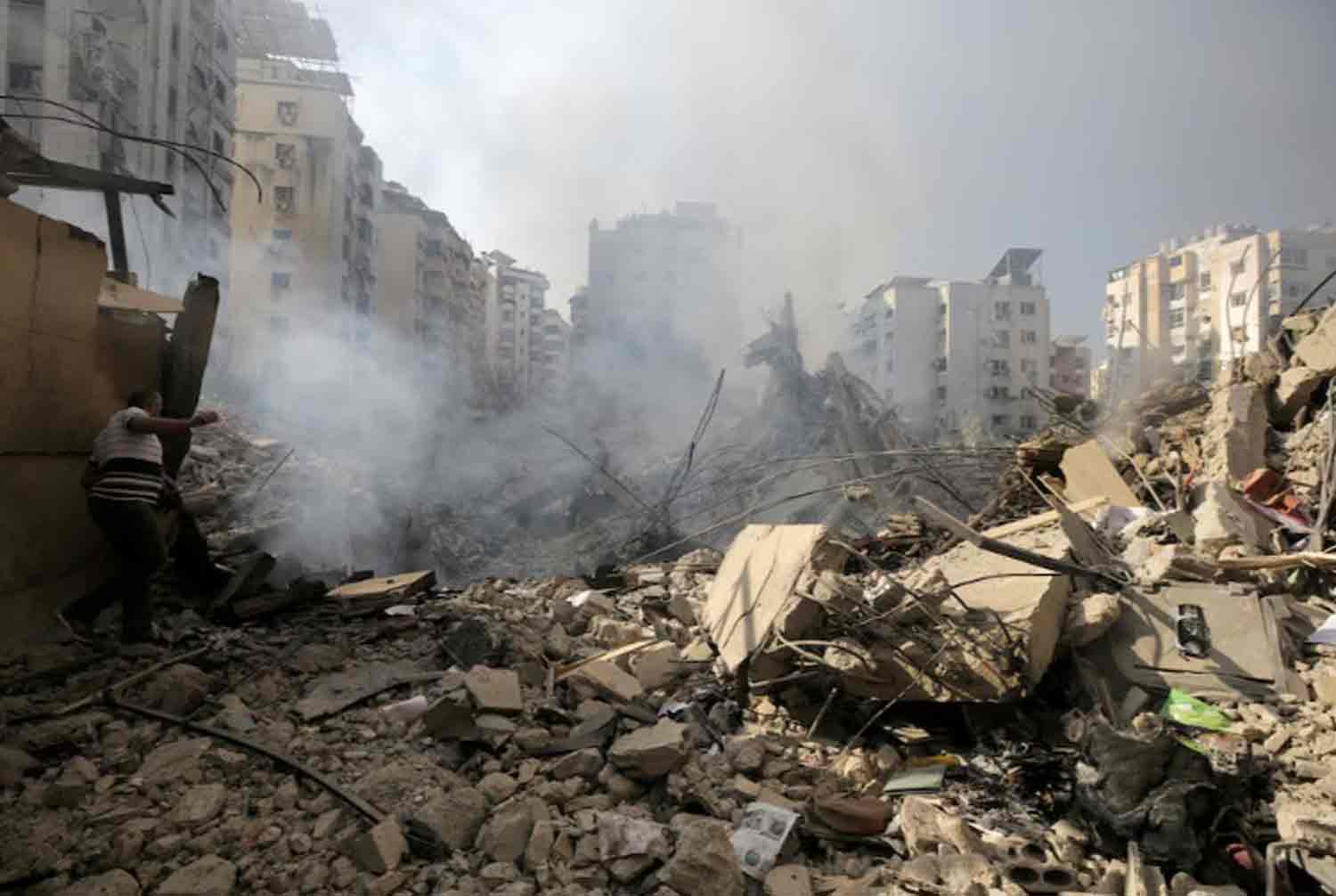
Israel announced that it conducted airstrikes targeting hundreds of Hezbollah positions on Monday, resulting in the deaths of at least 274 individuals, marking the deadliest day in Lebanon in decades, according to Lebanese officials. This escalation intensifies nearly a year of ongoing conflict with its Iran-backed adversary. Following significant cross-border exchanges of fire, Israel urged residents in Lebanon to evacuate areas identified as sites for weapon storage by the militant group.

After nearly a year of conflict with Hamas along its southern border, Israel is now redirecting its attention to the northern front, where Hezbollah has been launching rockets into Israeli territory in solidarity with Hamas. On Monday, Israel’s military executed extensive strikes against Hezbollah in southern Lebanon, the eastern Bekaa Valley, and northern regions near Syria. Lebanon’s health minister reported that the airstrikes resulted in 274 fatalities, including 21 children and 39 women, with 1,024 individuals injured, marking the highest death toll since the conclusion of the civil war from 1975 to 1990.

Prime Minister Benjamin Netanyahu stated that Israel is experiencing “complicated days” as it intensifies its military operations in southern Lebanon, urging Israelis to maintain unity during this ongoing campaign.

“I committed to altering the security dynamics and the power equilibrium in the north, and that is precisely what we are executing,” he conveyed in a message following a situational briefing at military headquarters in Tel Aviv.

Earlier, Defence Minister Yoav Gallant indicated that military actions would persist until the objective of safely returning northern residents to their homes is achieved, suggesting a protracted conflict ahead, especially as Hezbollah has pledged to continue fighting until a ceasefire is established in Gaza.

The Israeli military reported that it had targeted approximately 800 sites associated with Hezbollah in southern Lebanon and the Bekaa Valley. “Among the targeted sites were structures where Hezbollah concealed rockets, missiles, launchers, UAVs, and other terrorist infrastructure,” the military stated.

Reuters has not been able to independently verify Israel’s claims regarding Hezbollah’s alleged storage of weapons in residential areas. Hezbollah has refrained from commenting on these allegations but has asserted that it does not position military assets near civilian populations.

In retaliation to the airstrikes, Hezbollah announced that it had launched numerous missiles at a military installation in northern Israel.

Warning sirens were activated in the northern region of the occupied West Bank on Monday as Hezbollah’s rocket fire spread further south from the border areas in northern Israel, which have experienced the most intense attacks in the recent conflict. Alarms were also triggered in various locations across northern Israel, including the port city of Haifa, as reported by the military.

Further assaults from Lebanon are anticipated. Israeli aircraft are reportedly preparing to target Hezbollah’s strategic weaponry concealed within residential areas in Lebanon’s Bekaa Valley, according to an Israeli military spokesperson, who urged civilians to evacuate without delay.

“The current scenes from southern Lebanon show secondary explosions of Hezbollah munitions detonating within homes. Every residence we are targeting contains weapons—rockets, missiles, and unmanned aerial vehicles intended for the purpose of harming Israeli civilians,” stated Rear Admiral Daniel Hagari in a televised address.

The strikes have intensified pressure on Hezbollah, which recently faced an unprecedented attack, as described by its Secretary General Hassan Nasrallah, following the detonation of thousands of pagers and walkie-talkies utilized by its members. This operation has been largely attributed to Israel, although the country has neither confirmed nor denied its involvement.

In a significant setback, an Israeli airstrike on Friday in Beirut’s southern suburb resulted in the deaths of 45 individuals, including senior Hezbollah commanders, according to the Lebanese health ministry. Hezbollah confirmed that 16 of its members were among the deceased, including prominent leader Ibrahim Aqil and another commander, Ahmed Wahbi.

The ongoing conflict has heightened concerns that the United States, a close ally of Israel, and Iran may become embroiled in a broader Middle Eastern war. One individual sustained minor injuries from shrapnel during a rocket barrage in northern Israel, as reported by the Israeli ambulance service.

Imad Kreidieh, the head of Lebanese telecommunications company Ogero, informed Reuters on Monday that over 80,000 automated calls urging residents to evacuate their areas were detected on the network, though not all were responded to.

Lebanon’s Interior Minister Bassam al-Mawlawi has designated schools in Beirut, Tripoli, and southern regions as shelters due to significant citizen displacement, according to his office. Evacuation alerts have been reported as far as Beirut, the capital. Information Minister Ziad Makary stated that his ministry received an evacuation order but clarified that they would not comply, describing the situation as a “psychological war” in comments to Reuters.

Amid a severe financial crisis, Lebanon is ill-prepared to endure another conflict similar to the 2006 war, which saw extensive Israeli bombardment and substantial damage to the nation’s infrastructure during its confrontation with Hezbollah.

In the Sassine district of eastern Beirut, state employee Joseph Ghafary expressed concerns that Hezbollah might retaliate against Israeli attacks, potentially leading to a full-scale war. “If Hezbollah undertakes a significant operation, Israel will respond with even greater force. We cannot withstand that,” he remarked.

Shop owner Mohammed Sibai from the Hamra neighborhood shared his perspective with Reuters, viewing the recent increase in strikes as indicative of an impending war. “If they desire war, what can we do? It has been forced upon us. We are powerless to change it,” he stated.

Israeli airstrike targeted senior Hezbollah figure Ali Karaki

0

An Israeli airstrike on Monday evening in the southern suburbs of Beirut aimed at senior Hezbollah figure Ali Karaki and Talal Hamia, according to a security source cited by Reuters.

The source indicated that the outcome for Karaki remains uncertain.

Both officers already sit on the Jihad Council, Hezbollah’s top military body.

Karaki leads Hezbollah’s southern command, overseeing the group’s military operations in southern Lebanon, while Hamia heads Unit 910, which manages Hezbollah’s foreign operations and is tasked with conducting attacks outside the country.

The Jihad Council was initially thought to consist of seven members, but it has since been reduced to five due to the deaths of Aqil, who directed Hezbollah operations and the Radwan Force, and Fuad Shukr, the military chief of Hezbollah, both of whom were killed in July.

Russia states it will refrain from testing nuclear weapons as long as the US does the same

0
Sarmat intercontinental ballistic missile russia

Russia will refrain from conducting nuclear tests as long as the United States does the same, according to President Vladimir Putin’s chief advisor on arms control. This statement comes amid growing speculation that the Kremlin may reconsider its post-Soviet nuclear test moratorium. As the U.S. and its European allies deliberate on granting Ukraine the capability to launch strikes deep into Russian territory using Western missiles, discussions about the possibility of Russia resuming nuclear testing have intensified.

Recently, the Russian state newspaper Rossiyskaya Gazeta featured an interview with Andrei Sinitsyn, the head of Russia’s nuclear test facility at Novaya Zemlya, who indicated that the site is prepared for a return to full-scale testing. Putin, who holds the ultimate authority over the world’s largest nuclear arsenal, has stated that any decision to resume nuclear testing in Russia would be contingent upon similar actions by the United States, emphasizing that he sees no necessity to employ such weapons to achieve victory in the conflict in Ukraine.

Deputy Foreign Minister Sergei Ryabkov, responsible for Russian arms control policy, addressed the rumors regarding a potential nuclear test as a response to missile strikes within Russia. He stated to Russian news agencies, “Nothing has changed.” He emphasized that while the Russian Federation’s president has outlined the possibility of conducting such tests, they would refrain from doing so if the United States avoids similar actions.

Ryabkov noted that preparations at the Novaya Zemlya nuclear test site are being made to ensure it is “fully ready,” a move he attributed to the United States enhancing its own testing capabilities. According to CNN, all three nations—Russia, the United States, and China—have recently developed new facilities and tunnels at their nuclear test sites.

Since the dissolution of the Soviet Union, Russia has not performed any nuclear tests, with the last Soviet test occurring in 1990 and the last U.S. test in 1992. This century, only North Korea has conducted nuclear explosion tests.

Ryabkov expressed concern over reports indicating that the United States has no immediate intentions to withdraw a mid-range missile system stationed in the Philippines. He noted that Russia is contemplating its response, which may include military considerations.

NUCLEAR TEST?
The ongoing conflict in Ukraine, now in its second and a half year, has led to the most significant tension between Russia and the West since the 1962 Cuban Missile Crisis, a period recognized as the closest the two Cold War superpowers came to a deliberate nuclear conflict.

Following the Cuban crisis, U.S. President John F. Kennedy and Soviet leader Nikita Khrushchev discussed the possibility of establishing a nuclear testing ban.

In 2023, Russian President Vladimir Putin officially withdrew Russia’s ratification of the Comprehensive Nuclear Test Ban Treaty (CTBT), aligning Russia’s stance with that of the United States.

The potential resumption of nuclear testing could signal the beginning of a new and unstable nuclear era, coinciding with efforts by Russia, the United States, and China to modernize their nuclear arsenals.

Washington identifies Russia and China as its primary nation-state adversaries, while Beijing and Moscow, having strengthened their alliance during the Ukraine conflict, view the United States as a waning superpower that has contributed to global instability.

The Soviet Union surprised the West by detonating its first nuclear bomb in 1949 in Kazakhstan. The United States initiated the nuclear age in July 1945 with a 20-kiloton bomb test at Alamogordo, New Mexico, followed by the atomic bombings of Hiroshima and Nagasaki a month later, which brought World War II to a close.

For many scientists and activists, the extensive nuclear testing conducted during the Cold War exemplified the dangers of nuclear brinkmanship, which poses a threat to humanity and could render parts of the planet uninhabitable for millennia.

Qatari ship Al Khor visits Karachi for naval exercises

0
Qatar Ship al khor visit Karachi port, Pakistan

The Al Khor vessel of the Qatar Amiri Navy made a visit to Karachi, where it received a warm reception from the officers and personnel of the Pakistan Navy upon its arrival.

As reported by a spokesperson for the Pakistan Navy, the commanding officer of the Qatari ship took the opportunity to visit Mazar-e-Quaid and held a meeting with Vice Admiral Faisal Abbasi, the Commander of the Pakistan Fleet.

During their discussion, the commanding officer expressed appreciation for the Pakistan Navy’s contributions to regional peace and security.

The talks also focused on mutual interests and enhancing bilateral cooperation. Throughout its visit, the Qatari ship is set to engage in the Asad al-Bahr exercise, along with joint training and exchanges.

This significant visit underscores the robust diplomatic ties between Pakistan and Qatar and serves as a platform for further strengthening defense and cooperative relations.

Egyptian vessel transported more weapons to Somalia, officials say

1
A general view shows the Mogadishu Sea Port after an Egyptian warship docked to deliver a second major cache of weaponry in Mogadishu

An Egyptian naval vessel has transported a significant shipment of armaments to Somalia, which includes anti-aircraft artillery and other weaponry, according to statements from port and military officials on Monday. This action is expected to heighten tensions between Somalia and Egypt, as well as with Ethiopia.

This year, the relationship between Egypt and Somalia has strengthened due to their mutual distrust of Ethiopia, leading Cairo to dispatch multiple flights of arms to Mogadishu, the capital of Somalia, following the signing of a joint security agreement in August.

Mogadishu expressed its displeasure with Ethiopia after the latter reached a preliminary agreement in January with the self-declared region of Somaliland to lease land for a port, potentially paving the way for Somaliland’s recognition as independent from Somalia.

Egypt has been in conflict with Ethiopia for several years over the construction of a large hydroelectric dam on the Nile River’s headwaters and has criticized the Somaliland agreement.

The unloading of the weapons from the Egyptian warship commenced on Sunday, as reported by a diplomat. Security personnel cordoned off the quayside and adjacent roads on both Sunday and Monday while convoys transported the armaments to a defense ministry facility and nearby military installations, according to accounts from two port workers and two military officials.

Nasra Bashir Ali, an official in the office of Somali Prime Minister Hamza Abdi Barre, shared a photograph on her X account showing Defence Minister Abdulkadir Mohamed Nur observing the unloading of a ship. Egyptian authorities either refrained from commenting or did not respond promptly to inquiries.

Reports from Egyptian media on Sunday indicated that the Egyptian embassy in Mogadishu had advised its citizens against traveling to Somaliland due to the area’s security concerns. Ethiopia currently has approximately 3,000 soldiers in Somalia as part of the African Union peacekeeping mission (ATMIS) combating Islamist militants, with an additional 5,000 to 7,000 troops stationed in other regions under a bilateral agreement.

Somalia has labeled the Somaliland arrangement as a violation of its sovereignty and demands the withdrawal of all Ethiopian troops by the end of the year unless Addis Ababa nullifies the agreement.

Additionally, Egypt has expressed its willingness to send troops for a new peacekeeping initiative in Somalia, as stated by the African Union in July, although Cairo has not publicly addressed the issue. Ethiopia’s government has not yet responded to Reuters’ request for comment but has previously asserted that it cannot remain passive while “other actors” take steps to destabilize the region.

Israel targeted more than 300 Hezbollah positions, resulting in at least 180 fatalities

0
Smoke billows over southern Lebanon following Israeli strikes.

Israel conducted airstrikes on numerous Hezbollah positions on Monday, resulting in at least 180 fatalities, according to Lebanese health officials. This marks the deadliest day in Lebanon amid nearly a year of ongoing conflict. Following intense cross-border exchanges, Israel urged residents to evacuate areas identified as sites for Hezbollah’s weapon storage.

With nearly a year of warfare against Hamas in Gaza, Israel is now redirecting its attention to its northern border, where Hezbollah, supported by Iran, has been launching rockets into Israel in solidarity with Hamas.

Israeli Defence Minister Yoav Gallant stated in a video released by his office that operations will persist until the safety of northern residents is ensured, indicating a protracted conflict ahead, as Hezbollah has pledged to continue fighting until a ceasefire is established in Gaza.

“These are times when the Israeli public must demonstrate patience,” he remarked, following military actions targeting Hezbollah in southern Lebanon, the eastern Bekaa Valley, and northern regions near Syria.

Lebanon’s health ministry reported that at least 180 individuals, including women, children, and medical personnel, have lost their lives, with over 400 others injured due to Israeli airstrikes on Monday. Israeli army spokesperson Avichay Adraee announced on X that more than 300 Hezbollah positions had been targeted, following prior warnings of imminent airstrikes on residences in Lebanon where “Hezbollah concealed weapons.” In retaliation, Hezbollah confirmed it had fired rockets at Israeli military installations. Further attacks are anticipated, with Israeli aircraft preparing to strike Hezbollah’s strategic weaponry located in homes within Lebanon’s Bekaa Valley. The Israeli military spokesperson urged civilians to evacuate immediately.

Rear Admiral Daniel Hagari stated in a televised address, “The current scenes from southern Lebanon show secondary explosions of Hezbollah munitions detonating within residences. Every house we target contains weapons—rockets, missiles, and unmanned aerial vehicles intended to harm Israeli civilians.” The airstrikes have escalated pressure on Hezbollah, which recently experienced an unprecedented attack, as described by its Secretary General Hassan Nasrallah, when thousands of pagers and walkie-talkies used by its members malfunctioned. This incident has been largely attributed to Israel, although the country has neither confirmed nor denied its involvement. Additionally, an Israeli airstrike on Friday in Beirut’s southern suburb aimed at high-ranking Hezbollah officials resulted in the deaths of 45 individuals, according to the Lebanese health ministry.

Hezbollah reported that 16 of its members were among those killed, including prominent leader Ibrahim Aqil and another commander, Ahmed Wahbi. According to the Israeli ambulance service, one individual sustained minor injuries from shrapnel during the recent rocket attacks on northern Israel.

Imad Kreidieh, the head of the Lebanese telecommunications company Ogero, informed Reuters on Monday that over 80,000 automated evacuation calls were detected on the network, although not all were answered. He characterized these calls as “psychological warfare aimed at creating chaos and disorder.” Evacuation alerts reached as far as Beirut, the capital of Lebanon.

Lebanon’s information minister, Ziad Makary, stated that his ministry received an evacuation order for their building but clarified that they would not comply, labeling it as part of a psychological campaign. In the Sassine district of eastern Beirut, state employee Joseph Ghafary expressed concern that Hezbollah might retaliate against Israel’s increased attacks, potentially leading to a full-scale war. He remarked, “If Hezbollah undertakes a significant operation, Israel will respond with even greater force. We cannot endure this situation.”

Mohammed Sibai, a shopkeeper in the Hamra neighborhood of Beirut, described the current escalation as “the beginning of the war,” adding, “If they desire war, what can we do? It has been forced upon us, and we are powerless to change it.”

When questioned by reporters about the possibility of an Israeli ground invasion of Lebanon, Hagari stated earlier, “We will take all necessary actions” to ensure the safe return of evacuated residents in northern Israel, which is a top priority for the Israeli government. During a media briefing, Hagari also presented aerial footage purportedly showing Hezbollah operatives attempting to launch cruise missiles from a civilian residence in Lebanon, followed by an Israeli strike just before the launch.

“Hezbollah is endangering you. Endangering you and your families,” Hagari said.

India has invited political opponents of Myanmar’s ruling junta for a seminar

0

India has extended invitations to political and military adversaries of Myanmar’s ruling junta for a seminar scheduled to take place in New Delhi, according to sources. This action marks a notable shift for the South Asian nation, which has historically maintained relations with the military leaders that Western countries have largely isolated.

The ongoing civil conflict in Myanmar, which erupted following the military’s ousting of an elected civilian government in a coup in February 2021, poses a potential threat to India’s extensive 1,650-km (1,025-mile) border with Myanmar, as well as to several critical infrastructure projects in the region.

A representative from an armed group, along with two sources familiar with the situation, indicated that the parallel National Unity Government (NUG) and ethnic minority insurgents from the Chin, Rakhine, and Kachin states, which share borders with India, have been invited to participate in the mid-November seminar.

The event is set to be organized by the Indian Council of World Affairs (ICWA), a government-funded body that includes India’s Foreign Minister S. Jaishankar among its council members, as reported by two additional sources who requested anonymity due to the sensitive nature of the information.

It remains uncertain whether Myanmar’s military government will receive an invitation to the upcoming event focused on “Constitutionalism and Federalism,” according to sources who did not provide additional information.

Following the 2021 coup, widespread protests in Myanmar escalated into a nationwide rebellion, with an armed resistance movement collaborating with established ethnic armies to gain control over significant territories from the military. The junta has consistently refused to engage in dialogue with these rebels, labeling them as “terrorists.”

Regarding the seminar, Sui Khar, vice chairman of the Chin National Front, one of the ethnic rebel groups, stated, “We are going to send representatives.” He added, “This will be the first time, I believe, that India will formally engage with non-state actors. This represents a positive and constructive approach.”

Attempts to reach a spokesperson for Myanmar’s military for comments were unsuccessful, and the Indian government, along with the ICWA, has not yet responded to inquiries.

The other invited armed groups include the Arakan Army, which holds significant territory in Rakhine near the Bangladesh border, and the Kachin Independence Army (KIA), recognized as one of Myanmar’s most formidable rebel factions, according to sources. A representative for the president of the shadow National Unity Government (NUG) declined to provide comments regarding the seminar. Both the Arakan Army and KIA have not responded to requests for their input.

While Western nations have condemned the junta and imposed various sanctions, India has maintained its engagement with the military leaders through visits to Naypyitaw by government and defense officials. India has shown hesitance to publicly criticize the junta, fearing that such actions might drive the generals closer to their rival, China. Furthermore, New Delhi has not engaged formally with the junta’s adversaries.

The objectives of the seminar and the rationale behind India’s involvement remain unclear. In June, Foreign Minister Jaishankar expressed concerns regarding border instability and the potential security threats to Indian projects in Myanmar, stating that India was “open to engaging all stakeholders in addressing this situation” during discussions with his Myanmar counterpart.

India is actively involved in the $400 million Kaladan port and highway project in western Myanmar, in addition to funding approximately $250 million for another road initiative aimed at connecting its landlocked northeastern states with Thailand through Myanmar.

The seminar initiative coincides with a peace effort by the ASEAN group of Southeast Asian nations, which has seen limited progress since its introduction in April 2021, as some ASEAN members have expressed frustration over the junta’s unwillingness to engage in talks. Last year, former ASEAN chair Indonesia reported receiving positive indications regarding preliminary discussions from key parties in the conflict, yet no significant advancements have been observed.

The upcoming November meeting is expected to mark New Delhi’s most substantial attempt to engage with Myanmar’s “pro-democracy side” since the coup in 2021, according to Angshuman Choudhury, a researcher based in Singapore who closely monitors India-Myanmar relations.

It is essential to determine whether the intention is to attain particular foreign policy objectives or merely to convey a message to the Myanmar military to withdraw, he stated. “India continues to be apprehensive regarding the security and stability of its borders.”

Israeli airstrikes in Lebanon have resulted in a minimum of 50 fatalities and approximately 300 individuals injured

1

Lebanon’s health ministry has confirmed that Israeli airstrikes on Monday resulted in the deaths of at least 50 individuals, with over 300 others injured, including children, women, and medical personnel in southern Lebanon.

The Israeli military advised residents in Lebanon to evacuate their homes as airstrikes caused significant casualties among the Lebanese population due to intense bombardment.

According to Lebanese broadcaster al-Manar, airstrikes targeted the outskirts of various towns and villages in the southern region and the Bekaa Valley in the east.

Al-Mayadeen reported that strikes in southern Lebanon resulted in at least four fatalities and more than 26 injuries.

Additionally, state media indicated that a rocket struck an uninhabited mountainside east of Jbeil, a historic coastal town north of Beirut, also known as Byblos.

The Lebanese health ministry further reported that an Israeli strike in the Hermel region, located in the northeast, resulted in one death and six injuries.

Lebanon’s Health Ministry has called on hospitals in the southern regions of Nabatiyeh and Baalbek-Hermel to halt all non-essential surgeries in order to focus on treating individuals injured due to the ongoing increase in Israeli military actions against Lebanon.

The Israeli military reports that it has conducted more than 300 air strikes targeting what it asserts are Hezbollah positions in Lebanon.

The Israeli military announced on Monday that it has instructed residents of southern Lebanon to evacuate their homes, indicating that it plans to conduct “extensive strikes” against Hezbollah.

Israeli army spokesperson Avichay Adraee stated that attacks on residential areas and other sites in Lebanon are “imminent.”

According to a Reuters reporter, residents in southern Lebanon are receiving calls from a Lebanese number instructing them to move at least one kilometer away from locations identified by Israel as Hezbollah targets.

Additionally, residents of Beirut are reportedly receiving text messages, allegedly from the Israeli army, urging them to evacuate their areas promptly, as reported by Lebanon’s National News Agency (NNA).

Minister of Information Ziad Makary has also received a voicemail advising the evacuation of his building, according to the agency.

Lt General Asim Malik designated as the new head of ISI

0

Lieutenant General Muhammad Asim Malik has been designated as the new head of the Inter-Services Intelligence.

He is set to take on his responsibilities starting September 30.

At present, he holds the position of Adjutant General at the General Headquarters in Rawalpindi.

Lt. General Malik has previously led an infantry division in Balochistan and an infantry brigade in Waziristan.

Additionally, he was awarded the sword of honour upon completing his military course.

Russia’s RS-28 Sarmat ballistic missile failed during a test

0
Sarmat intercontinental ballistic missile russia

A recent assessment by arms experts, supported by satellite imagery, suggests that a Russian RS-28 Sarmat intercontinental ballistic missile may have experienced a failure during a test earlier this month. Maxar satellite images taken on September 21 reveal a crater approximately 60 meters (200 feet) wide at the launch silo located at the Plesetsk Cosmodrome in northern Russia, along with damage in the vicinity that was not present in earlier images from the same month.

The satellite imagery does not clarify whether the liquid-fueled Sarmat encountered issues during the launch or if an accident occurred during the defueling process. Pavel Podvig, a Geneva-based analyst who oversees the Russian Nuclear Forces project, commented, “All signs point to a failed test. There is a significant hole in the ground. A serious incident occurred with the missile and the silo.”

The Russian defense ministry has not responded to inquiries regarding this incident and has not issued any statements about upcoming Sarmat tests in recent days.

The RS-28 Sarmat, referred to as Satan II, measures 35 meters in length and boasts an impressive range of 18,000 kilometers (11,000 miles). With a launch weight exceeding 208 tonnes, it is capable of carrying up to 16 multiple independently targetable re-entry vehicle nuclear warheads, along with several Avangard hypersonic glide vehicles, as reported by Russian media.