Sunday, April 12, 2026
Home Blog Page 40

Rubio emphasizes the urgency of reaching a peace agreement between Russia and Ukraine

0
U.S. Secretary of State Marco Rubio at the State Department in Washington, U.S.

U.S. Secretary of State Marco Rubio emphasized on Sunday the urgent need for a peace agreement between Russia and Ukraine, stating that the Trump administration will spend the upcoming week evaluating its role as a mediator. He remarked, ‘This must occur promptly. We cannot keep allocating time and resources to this initiative if it is not going to yield results,’ during an appearance on NBC’s ‘Meet the Press.’

Rubio noted that this week is crucial for deciding whether to continue this effort or shift focus to other matters. His comments followed a meeting between President Donald Trump and Ukrainian President Volodymyr Zelenskiy in Rome, which took place during Pope Francis’s funeral, aimed at revitalizing stalled negotiations to end the conflict.

Zelenskiy expressed hope that the meeting could be historic if it leads to the desired peace, while a White House spokesperson described it as ‘very productive.’ Rubio mentioned that the U.S. has refrained from imposing sanctions on Russia to facilitate diplomatic efforts but cautioned that Trump has alternatives for addressing any party that obstructs a peace agreement.

‘If it fails to materialize, we have measures in place for those we hold accountable for resisting peace,’ the Secretary of State stated. ‘However, we prefer to avoid that scenario, as it may hinder diplomatic avenues.’

Meanwhile, U.S. Senate Minority Leader Chuck Schumer expressed concerns on Sunday that Trump might yield to Putin’s demands. ‘To simply abandon Ukraine, after all their sacrifices and the significant loss of life, while the entire West unites against Putin, would be a moral catastrophe,’ Schumer remarked on CNN’s ‘State of the Union.’ He warned that aligning with Russia could fracture alliances with Europe and empower dictators globally.


Greenland and Denmark enhance their partnership in light of Trump’s interest in US governance

0
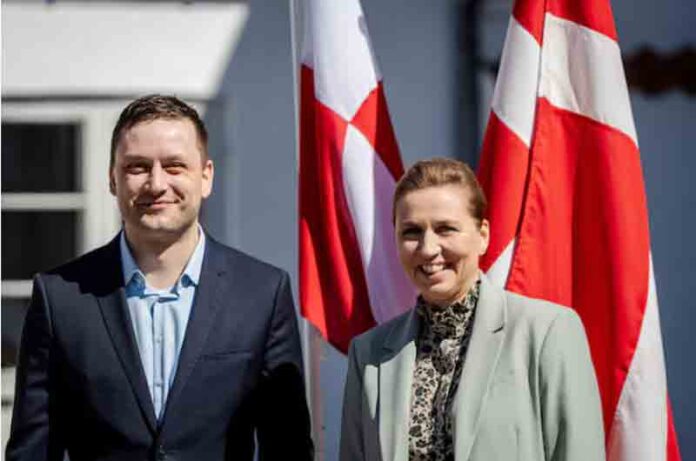
Prime Minister Mette Frederiksen receives Greenland's Prime Minister Jens-Frederik Nielsen ahead of a meeting at Marienborg in Kongens Lyngby, Denmark.

On Sunday, Greenland and Denmark reached an agreement to enhance their relationship in light of U.S. President Donald Trump‘s interest in acquiring the strategically significant Arctic island, as stated by their leaders following discussions in Copenhagen.

Greenland’s newly appointed Prime Minister Jens-Frederik Nielsen arrived in the Danish capital on Saturday for a three-day visit, symbolizing unity between the mineral-rich island, which is a semi-autonomous territory of Denmark, and Denmark itself.

‘We find ourselves in a foreign policy context that necessitates closer collaboration,’ Nielsen remarked during a joint press conference with Danish Prime Minister Mette Frederiksen. This visit comes after months of tension stemming from Trump’s persistent assertions that Greenland should be part of the United States.

Both leaders have emphasized that only the people of Greenland can determine the territory’s future. Nevertheless, they are navigating a sensitive balance between firmly rejecting U.S. aspirations for annexation and preserving amicable relations with their longstanding ally.

‘We are prepared for a robust partnership with the U.S. and further development, but we demand respect… We will never be a commodity that can be purchased by anyone,’ Nielsen stated.

He also mentioned that the ongoing expansion of the U.S. consulate in Nuuk, Greenland’s capital, which was agreed upon prior to Trump’s presidency, has raised concerns among the Greenlandic populace.

When asked if he had communicated with the U.S. administration since taking office earlier this month, Nielsen neither confirmed nor denied the inquiry. The improving relations between Nuuk and Copenhagen follow Greenland’s former prime minister’s December accusation against Denmark for a historical ‘genocide’ in Greenland and a subsequent push for independence in January.

Frederiksen indicated that Denmark is prepared to invest more in Greenland and to provide financial support as Greenland assumes greater responsibility for its domestic affairs, which she referred to as a ‘modernization’ of their relationship.

Denmark has urged for enhanced Arctic defense cooperation with the United States, with both Nielsen and Frederiksen expressing their commitment on Sunday to bolster defense efforts in the area. Additionally, Denmark’s King Frederik is set to visit Greenland on Monday as a further demonstration of support.

In his first 100 days, President Trump is reshaping the global landscape with an America First strategy

0
U.S. President Donald Trump gestures beside U.S. first lady Melania Trump as they leave the U.S. Capitol building on the inauguration day of Donald Trump's second presidential term in Washington, U.S.

He has initiated an unprecedented global tariff conflict and significantly reduced U.S. foreign aid. He has criticized NATO allies while aligning with Russia’s perspective on its invasion of Ukraine. Additionally, he has proposed the annexation of Greenland, the reclamation of the Panama Canal, and the incorporation of Canada as the 51st state. In the tumultuous first 100 days since President Donald Trump resumed office, he has conducted an often erratic campaign that has disrupted elements of the rules-based international order established by Washington in the aftermath of World War II.

‘Trump is far more radical now than he was eight years ago,’ remarked Elliott Abrams, a conservative who served under Presidents Ronald Reagan and George W. Bush and was appointed U.S. special envoy on Iran and Venezuela during Trump’s first term. ‘I have been taken aback.’ Trump’s second-term ‘America First’ policy has estranged allies and empowered adversaries, raising questions about the extent of his ambitions. His actions, combined with this uncertainty, have unsettled some governments, prompting responses that may be challenging to reverse, even if a more conventional U.S. president is elected in 2028.

This situation unfolds against a backdrop of what critics of the Republican president perceive as signs of democratic decline at home, which have sparked international concerns. These signs include verbal assaults on judges, a campaign of pressure against universities, and the relocation of migrants to a notorious prison in El Salvador as part of a broader deportation initiative.

‘What we are witnessing is a significant upheaval in global affairs,’ stated Dennis Ross, a former Middle East negotiator for both Democratic and Republican administrations. ‘At this juncture, no one can definitively interpret the current events or predict what will follow.’

This evaluation of Trump’s disruption of the global system is based on interviews conducted by Reuters with over a dozen current and former government officials, foreign diplomats, and independent analysts in Washington and other capitals worldwide.

Many believe that although some of the damage may be enduring, the situation could still be salvageable if Trump moderates his stance. He has already reversed his position on certain matters, such as the timing and intensity of his tariffs.

However, there is little expectation for a significant change from Trump, leading many nations to anticipate lasting adjustments in their relations with the U.S. to protect themselves from his unpredictable policy decisions. The repercussions have already started. For example, some European allies are seeking to enhance their own defense capabilities to lessen their dependence on U.S. military supplies.

In South Korea, discussions have intensified regarding the development of an independent nuclear arsenal. Additionally, there is growing speculation that worsening relations might drive U.S. allies to strengthen economic ties with China. The White House dismisses claims that Trump has undermined U.S. credibility, instead pointing to the need to rectify what it describes as former President Joe Biden’s ineffective leadership on the global stage.

White House National Security Council spokesman Brian Hughes stated, ‘President Trump is taking decisive action to tackle challenges by bringing both Ukraine and Russia to the negotiating table to resolve their conflict, curbing the flow of fentanyl, and protecting American workers by holding China accountable, as well as compelling Iran to negotiate through Maximum Pressure.’

He also mentioned that Trump is ‘making the Houthis accountable for their terrorism and securing our southern border that was open to invasion for four years.’ According to a Reuters/Ipsos poll released on March 13, more than half of Americans, including one in four Republicans, believe Trump is ‘too closely aligned’ with Russia, and there is little public support for the expansionist agenda he has proposed.

High stakes

Experts warn that the future of a global system, established over the last eighty years primarily under U.S. leadership, is at risk. This system is founded on principles of free trade, the rule of law, and respect for territorial integrity. However, under Trump’s administration, which has shown disdain for multilateral organizations and often approaches global issues from a transactional perspective akin to that of a former real estate developer, this established order is facing significant disruption.

Trump has accused trading partners of exploiting the U.S. for decades and has initiated a broad tariffs policy that has unsettled financial markets, diminished the dollar’s value, and raised alarms about a potential slowdown in global economic growth and an increased risk of recession. He has described the tariffs as essential ‘medicine,’ yet his goals remain ambiguous, even as his administration seeks to negotiate individual agreements with numerous countries.

Concurrently, he has nearly reversed U.S. policy regarding Russia’s ongoing conflict in Ukraine and engaged in a heated exchange with Ukrainian President Volodymyr Zelenskiy in late February. His administration has shown a tendency to favor Moscow, raising concerns that he may compel NATO-supported Ukraine to concede territory while he seeks to enhance relations with Russian President Vladimir Putin.

The administration’s dismissive attitude towards Europe and NATO—historically the cornerstone of transatlantic security, yet criticized by Trump and his team for allegedly taking advantage of the U.S.—has generated significant anxiety. Following his election victory in February, German Chancellor Friedrich Merz voiced worries about European relations with the United States, suggesting that it would be challenging if those who advocate for ‘America First’ were to adopt the motto ‘America Alone.’ ‘This truly is five minutes to midnight for Europe,’ Merz remarked.

In a significant setback for Washington’s international reputation, Trump has adopted expansionist language that modern presidents have typically avoided. Analysts warn that this rhetoric could provide China with a rationale for invading self-governed Taiwan. His brash demeanor has led him to assert that the U.S. will ‘acquire’ Greenland, a semi-autonomous territory of Denmark. He has provoked Canada by suggesting it lacks purpose and should merge with the U.S.

Additionally, he has threatened to reclaim the Panama Canal, which was returned to Panama in 1999. Trump has also proposed that the U.S. take control of war-torn Gaza and develop it into a resort akin to the Riviera. Some experts believe he may be attempting to revive a Cold War-like global order where major powers divide regions of influence.

However, he has not provided specifics on how the U.S. might gain additional territory, leading some to speculate that he is adopting exaggerated positions as negotiation tactics. Nevertheless, certain nations are taking his statements seriously. Danish Prime Minister Mette Frederiksen expressed concern during a news conference in Greenland in early April, stating, ‘When you demand to take over a part of the Kingdom of Denmark’s territory, and we are confronted with pressure and threats from our closest ally, what are we to believe about the country we have respected for so long? This concerns the world order we have collectively built across the Atlantic over generations.’

Navigating Trump 2.0

Other nations are starting to adjust their strategies. The European Union, which Trump has unfoundedly accused of being established to undermine the U.S., is readying a series of retaliatory tariffs should negotiations falter. Countries like Germany and France are considering increasing their military expenditures, a demand from Trump that may lead them to invest more in their own defense sectors and reduce arms purchases from the U.S. With the longstanding relationship with the U.S. now under strain, Canada is looking to enhance its economic and security ties with Europe.

This shift occurs in the context of Canada’s upcoming national elections, which are heavily influenced by voter discontent with Trump’s actions, sparking a nationalist sentiment and raising doubts about the U.S. as a dependable ally. Similarly, South Korea has been unsettled by Trump’s policies, including threats to withdraw U.S. troops, yet it remains committed to collaborating with Trump to maintain an alliance deemed essential against the nuclear threat from North Korea.

Japan, another U.S. ally, is also feeling the pressure, having been caught off guard by the extent of Trump’s tariffs and is now urgently seeking ways to respond, according to a senior official close to Prime Minister Shigeru Ishiba.

A significant concern is whether some governments will discreetly seek closer trade relations with China, the primary target of Trump’s tariffs. In early April, Spanish Prime Minister Pedro Sanchez met with President Xi Jinping in Beijing, and China has recently indicated discussions with the EU aimed at enhancing economic cooperation.

Beijing is positioning itself as a potential ally for countries feeling pressured by Trump’s trade policies, despite its own history of sometimes aggressive international practices, and is also attempting to fill the gap left by reductions in U.S. humanitarian aid.

Aaron David Miller, a seasoned former U.S. diplomat who served under both Republican and Democratic administrations, stated that there is still an opportunity for Trump to alter his foreign policy approach. This is particularly relevant if he begins to feel pressure from Republican colleagues who are concerned about economic implications as they aim to maintain their majority in Congress during the upcoming mid-term elections.

Should Trump remain steadfast, the next president may attempt to restore Washington’s position as a stabilizing force in global affairs, although significant challenges lie ahead.

‘The situation has not yet reached an irreversible state,’ Miller, now a senior fellow at the Carnegie Endowment for International Peace in Washington, remarked. ‘However, the extent of the damage to our relationships with allies and the potential advantages for adversaries is likely immeasurable.’

Russia praises North Korea’s support in the liberation of the Kursk Region

0
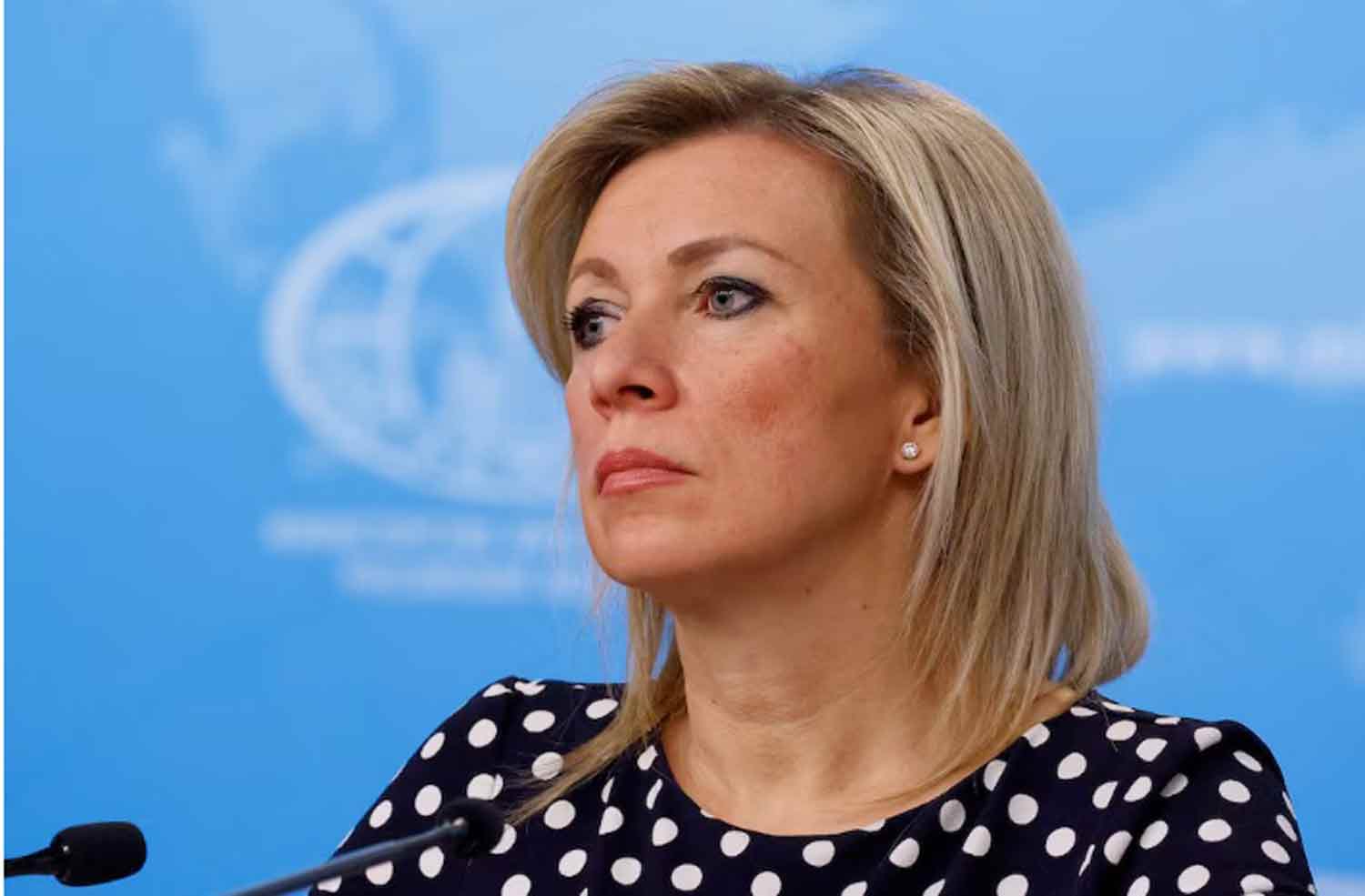
Spokeswoman of Russia's Foreign Ministry Maria Zakharova

North Korea has demonstrated strong support for Russia by sending its troops to assist in repelling the Ukrainian advance into Russia‘s Kursk Region, as stated by Foreign Ministry spokeswoman Maria Zakharova.

The long-speculated presence of North Korean forces in the region was officially acknowledged earlier today during a televised discussion between Russian President Vladimir Putin and General Valery Gerasimov, the chief of the General Staff.

The deployment of North Korean troops was made possible under the Comprehensive Strategic Partnership Agreement between Moscow and Pyongyang, which took effect last December. This treaty includes provisions for mutual military support ‘by all means available’ in the event of an attack, as noted by Zakharova.

She remarked, ‘The solidarity exhibited by our Korean allies reflects the high, essentially allied nature of our relationship. We are optimistic that our partnership will continue to grow and evolve.’

General Gerasimov commended the DPRK troops for their ‘high professionalism, courage, and heroism in battle,’ highlighting their ‘resilience’ and their role in liberating the area around Sudzha, previously held by Ukrainian forces.

Kiev and its Western allies had long claimed that North Korean troops were engaged in the conflict in the Kursk Region, which was invaded by Ukrainian forces last August.

Until Saturday, both Pyongyang and Moscow had neither confirmed nor denied these allegations, while the Russian president had previously stated that it was up to the two countries to decide how to fulfill their commitments under the partnership agreement.

Estonia surprises with a large RDX facility for NATO munitions

0
82mm-shells

In the serene coastal town of Pärnu, Estonia, a small Baltic nation is taking a significant step that could transform the landscape of European defense. On April 25, 2025, the Estonian government revealed its plans to create a state-owned enterprise, Hexest AS, aimed at constructing a military explosives facility near Pärnu, with the capacity to produce 600 tons of RDX explosives each year.

This powerful explosive, essential for filling artillery shells, has the potential to generate enough material for the production of up to 100,000 155mm artillery rounds annually, marking a substantial enhancement to Europe’s ammunition supply in light of ongoing conflicts and evolving geopolitical dynamics. This initiative, motivated by Estonia’s ambition to strengthen its defense capabilities and assist European allies, emerges at a time when the continent is striving for self-sufficiency in defense manufacturing.

The impetus for this move? A renewed call for autonomy, influenced by U.S. President Donald Trump’s policies, which indicated a decrease in American military support to Europe and Ukraine compared to the administration of President Joe Biden. Estonia’s endeavor is not merely a reaction to current demands but a calculated measure to ensure that Europe can maintain its independence.

RDX, or Research Department Explosive, also referred to as hexogen, is a white crystalline compound valued for its stability, potency, and rapid detonation. Developed during World War II, it has become a fundamental component of modern munitions due to its capacity to deliver immense force in a compact form. In artillery applications, RDX is the primary explosive filler in 155mm shells, the NATO-standard rounds utilized by howitzers such as the American M777, the French CAESAR, and the German PzH 2000. Each 155mm shell generally requires between 6 and 10 kilograms of RDX, depending on the shell’s design and intended application, whether it be high-explosive, extended-range, or precision-guided.

Estonia’s factory, equipped with 600 tons of RDX, has the potential to manufacture between 60,000 and 100,000 artillery shells each year, or approximately 1 million 81mm mortar shells. This figure is particularly significant in the context of contemporary warfare. For example, in Ukraine, artillery units are estimated to fire between 60,000 and 200,000 155mm rounds monthly to counter Russian advances, underscoring the relentless demand for ammunition.

Although Estonia’s production may not fully satisfy Ukraine’s requirements, it represents a substantial effort to enhance European production capabilities. The importance of RDX is paramount; it surpasses older explosives like TNT with a detonation velocity of about 8,750 meters per second, making it exceptionally effective for artillery shells. Its chemical stability ensures safe storage and transport, while its adaptability allows for use in various applications, from mortar rounds to missile warheads.

However, the production of RDX is complex, necessitating precise chemical synthesis involving nitric acid, hexamine, and strict safety measures to avert accidental detonations. Historically, Europe has depended on limited domestic production and imports from nations such as China and India, which has exposed vulnerabilities due to global supply chain disruptions and geopolitical tensions.

By opting to produce RDX domestically using oil shale as a raw material, Estonia is directly addressing this dependency. The factory is anticipated to commence operations in 2028, aiming to not only supply Estonian ammunition manufacturers but also to provide raw materials to European allies, thereby bolstering the continent’s defense industrial base.

The 155mm artillery shell, which will primarily benefit from Estonia’s RDX production, is a crucial component of modern warfare. These shells, approximately 23 inches long and weighing around 100 pounds, are launched from towed and self-propelled howitzers, delivering explosive payloads over distances ranging from 15 to 25 miles, depending on the artillery piece and charge.

The standard M795 high-explosive round, extensively utilized by NATO forces, contains approximately 23 pounds of explosive filler, primarily RDX-based, and can generate a lethal radius of up to 150 feet upon impact. Enhanced versions, such as the M982 Excalibur, feature GPS guidance for precise targeting, although they also require similar quantities of RDX.

In contrast to Russia’s 152mm shells, which are predominant in their artillery inventory, the 155mm rounds provide superior range and compatibility with Western systems, a crucial aspect as Ukraine shifts from Soviet-era to NATO-standard equipment. For instance, the Russian D-30 howitzer has a maximum range of about 15 miles, while the M777 can achieve 19 miles with standard rounds and exceed 25 miles with rocket-assisted projectiles.

This advantage in range and accuracy highlights the high demand for 155mm shells. Estonia’s decision occurs amid significant shifts in European defense policy. Following Russia’s invasion of Ukraine in February 2022, Europe has been working to replenish depleted stockpiles and increase production.

The conflict revealed a harsh truth: years of underinvestment in defense capabilities left the continent ill-equipped for extended, high-intensity warfare. NATO estimates indicate that Europe can now manufacture nearly two million 155mm shells each year, a notable rise from pre-war production levels, yet still inadequate to satisfy current needs.

Rheinmetall, the largest ammunition producer in Europe, is leading this initiative, with new facilities in Germany, Hungary, and Lithuania expected to produce hundreds of thousands of shells by 2027. In Germany, Rheinmetall’s Unterluess facility is projected to generate 1,900 tons of RDX annually, along with 200,000 155mm shells by 2026.

Estonia’s initiative is notable for its ambition and responsiveness. With a population of only 1.3 million, Estonia consistently achieves NATO’s 2% defense spending goal and has become a prominent contributor of military aid to Ukraine, donating over 1% of its GDP since 2022. The motivation behind Estonia’s factory project is closely linked to U.S. policy during President Trump’s administration. Throughout his first and current terms, Trump has urged NATO allies to boost defense expenditures, occasionally proposing targets as high as 5% of GDP. His administration’s recent indications of reduced military support for Ukraine, marking a significant shift from the Biden administration’s strong backing, have compelled Europe to reassess its dependence on American military resources.

In February 2025, Rheinmetall’s CEO, Armin Papperger, emphasized the critical nature of this transition, pointing out that no European nation currently fulfills NATO’s requirement for a 30-day combat stockpile. ‘We have provided Ukraine with nearly everything,’ he remarked, highlighting the exhaustion of European military reserves. Estonia’s project exemplifies a wider trend where smaller NATO countries, especially in the Baltics, are taking decisive action while larger nations like Germany and France struggle with bureaucratic hurdles.

For instance, Lithuania has collaborated with Rheinmetall and Ukraine to establish an RDX factory, set to commence construction in 2025, while Poland has increased its ammunition production to bolster both its military and Ukraine’s efforts. The Pärnu factory also has important regional consequences. Situated merely 120 miles from the Russian border, Pärnu is a charming resort town celebrated for its beaches and spas, rather than its industrial capabilities. The choice to convert it into a center for explosives manufacturing demonstrates Estonia’s readiness to embrace risks in response to Russian threats.

Moscow has consistently regarded the Baltic states as a potential flashpoint, and the establishment of the factory may escalate tensions. Although there has been no official response from Russia regarding this announcement, the Kremlin’s history of hybrid warfare—including cyberattacks and sabotage—indicates that it is unlikely to overlook Estonia’s actions.

In January 2025, NATO’s Deputy Assistant Secretary-General James Appathurai confirmed that Russia had attempted sabotage against European defense companies, including an alleged assassination plot targeting the CEO of Rheinmetall. Estonia, due to its geographical closeness to Russia and its outspoken support for Ukraine, is familiar with such pressures, having experienced cyberattacks and border provocations in recent years.

Economically, the factory is set to transform Pärnu and its surroundings. With an estimated cost of €120–130 million, the project is anticipated to generate hundreds of jobs and draw investment from European defense firms. Posts on X have indicated interest from Indian companies, which already produce 155mm shells, in collaborating with Estonia’s defense industry park. This could establish Pärnu as a regional hub for ammunition manufacturing, promoting competition within the EU.

It remains uncertain whether Estonia will export RDX to its allies or focus on its own ammunition production, but this choice will have significant implications. Selling RDX could provide financial benefits and strengthen relationships with NATO allies, yet it may also strain connections with larger EU nations that are protective of their defense sectors.

On the other hand, prioritizing domestic production could bolster Estonia’s strategic independence, a key concern for a country situated on NATO’s eastern border. Historically, Estonia’s proactive approach stems from its past as a former Soviet republic. Occupied by the Soviet Union from 1940 to 1991, Estonia regained its independence and joined NATO in 2004, motivated by a desire to safeguard its sovereignty. The 2007 Bronze Soldier crisis, during which Russian-backed cyberattacks disrupted Estonian infrastructure, solidified the nation’s commitment to resilience.

Currently, Estonia’s defense strategy focuses on swift adaptation and technological advancements, ranging from cyber defense to the production of explosives. The Pärnu factory builds upon this foundation, establishing Estonia as a benchmark for smaller nations aiming to excel beyond their limitations.

The wider context of European rearmament showcases both achievements and obstacles. While companies like Rheinmetall are increasing production, the EU encounters difficulties in coordinating efforts and obtaining raw materials. The European Commission’s initiative to prohibit new contracts for Russian fossil fuels, as reported by Reuters in April 2025, seeks to lessen dependency but complicates energy-intensive sectors such as explosives manufacturing.

Concurrently, Ukraine’s announcement in September 2024 regarding its production of 155mm shells illustrates how the war is fostering innovation. However, Europe’s capacity to maintain this progress depends on political commitment and financial support. German Defense Minister Boris Pistorius has criticized the NATO 2% spending target as inadequate, advocating for reforms to EU debt regulations to enhance military budgets.

The realization of such changes remains uncertain, especially as national interests frequently overshadow collective objectives. Although Estonia’s factory is relatively small, it represents a significant shift. It challenges the belief that only major powers can lead defense innovation and highlights the critical need for self-sufficiency in a time of unpredictable alliances.

The annual production of 600 tons of RDX may seem minimal compared to global demands, yet it signifies a conscious decision to take action rather than remain passive.

For the U.S. audience, this narrative underscores the far-reaching impacts of American policy: by reducing its involvement, the U.S. is encouraging allies to take initiative, with varying outcomes.

The lingering question is whether Europe’s diverse initiatives will unify into genuine autonomy or if bureaucratic stagnation and regional conflicts will leave it exposed. From the shores of Pärnu, Estonia is betting on the former, and its determination may motivate others to follow suit.

Recent US-Iran talks to resolve the nuclear conflict ended in Oman

0

Recent indirect negotiations between Iran and the United States aimed at resolving a long-standing nuclear conflict have concluded in Oman, according to Iranian state media. U.S. President Donald Trump has expressed optimism about reaching a new agreement that would prevent Iran from developing nuclear weapons.

Iranian Foreign Minister Abbas Araqchi and Trump’s Middle East envoy Steve Witkoff engaged in discussions in Muscat, facilitated by Omani mediators, for approximately six hours, following a productive second round of talks in Rome the previous week.

Omani Foreign Minister Badr Albusaidi announced that discussions would resume next week, with a high-level meeting tentatively scheduled for May 3. Prior to this meeting, expert-level indirect negotiations were held in Muscat to establish a framework for a potential nuclear agreement.

State television reported that these expert negotiations have progressed to detailed specifics and mutual demands, with delegations returning to their respective capitals for further consultations. An Iranian official, who was informed about the discussions, described the expert-level negotiations as challenging, complex, and serious, without providing further details.

Trump has dedicated the early part of his second term to negotiating resolutions for some of the world’s most significant conflicts, including Russia’s invasion of Ukraine, Israel’s actions in Gaza, and the contentious issue of Iran’s nuclear program.

Meanwhile, Iran has indicated its desire for sanctions relief as its economy continues to struggle, particularly following over a year of military challenges from its regional adversary, Israel. Foreign Ministry spokesman Esmaeil Baghaei stated that Iran remains committed to its principled position on ending unjust sanctions and is prepared to build trust regarding the peaceful intentions of its nuclear program.

In a recent interview with Time magazine, Trump remarked, ‘I think we’re going to make a deal with Iran,’ while also reiterating the possibility of military action against Iran should diplomatic efforts fail.

Maximum pressure

Shortly after Araqchi and Witkoff initiated indirect discussions, Iranian state media reported a significant explosion at Shahid Rajaee port, located near Bandar Abbas in southern Iran, resulting in at least four fatalities and hundreds of injuries. The reports indicated that inadequate chemical storage might have been a contributing factor.

Although both Tehran and Washington have expressed their commitment to diplomacy, they remain significantly divided over a longstanding dispute that has persisted for over twenty years. Since February, Trump has reinstated a ‘maximum pressure’ strategy against Tehran, having abandoned the 2015 nuclear agreement between Iran and six global powers in 2018 during his first term, which led to the reimposition of severe sanctions on Iran.

Since 2019, Iran has violated the nuclear limitations set by the pact, notably by significantly increasing its uranium enrichment to nearly 60% purity, approaching the approximately 90% threshold considered weapons-grade, as reported by the U.N. nuclear watchdog. U.S. Secretary of State Marco Rubio stated this week that Iran must completely halt its uranium enrichment under any agreement and import any enriched uranium necessary for its only operational nuclear power plant, Bushehr.

Iranian officials have indicated a willingness to negotiate certain restrictions on their nuclear activities in exchange for the lifting of sanctions; however, they have made it clear that ceasing their enrichment program or relinquishing their stockpile of enriched uranium are among the ‘red lines’ that cannot be compromised in negotiations.

Furthermore, European nations have advised U.S. negotiators that a comprehensive agreement should include measures to prevent Iran from obtaining or finalizing the capability to mount a nuclear warhead on a ballistic missile, according to several European diplomats.

Tehran maintains that its defense capabilities, including its missile program, are non-negotiable, asserting that its missile program does not pose a threat to neighboring countries. An Iranian official familiar with the discussions noted on Friday that Tehran views its missile program as a more significant hurdle in the negotiations.

Turkey begins production of COBRA II for Romania

0
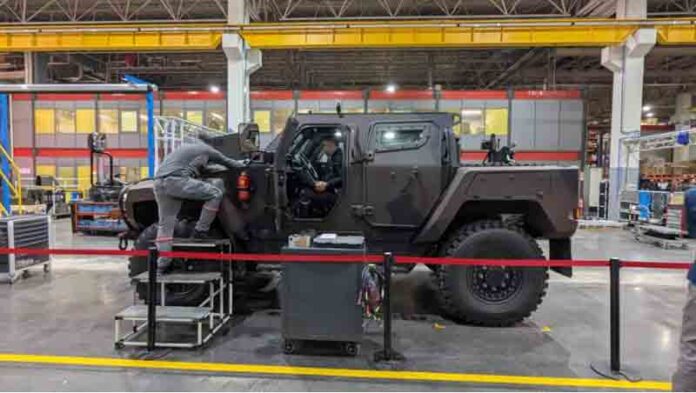
Turkish COBRA II armored vehicle

Otokar, a Turkish defense manufacturer, has commenced the production of the initial batch of COBRA II armored vehicles for Romania. The first 278 units of the COBRA II 4×4 Tactical Wheeled Light Armored Vehicles will be produced in Turkey, while the remaining 781 will be manufactured in Romania as part of a localization agreement aimed at bolstering the country’s defense industry.

The entire contract encompasses 1,059 vehicles along with integrated logistical support services, valued at approximately 32 billion Turkish lira. In a recent announcement, Otokar revealed the formation of a joint venture with Romanian defense firm Automecanica S.A.

This new entity, named Otokar Land Systems SRL, will manage local production, engineering, marketing, and after-sales services in Romania. Both parties will hold equal shares in the venture, which aims to promote technology transfer and enhance Romania’s defense manufacturing capabilities.

The contract, worth around 857 million euros, was finalized in November 2024, with the first Romanian-manufactured vehicles expected to be delivered in the fourth quarter of 2025.

Deliveries will occur in phases over a five-year timeline, as stated by the companies. The COBRA II, produced by Otokar, is a versatile armored vehicle intended for various military operations, such as reconnaissance, surveillance, and troop transport, recognized for its mobility and modular design that allows adaptation to different combat scenarios.

U.S. plans to increase GMLRS rocket production to boost long-range fire capabilities

0
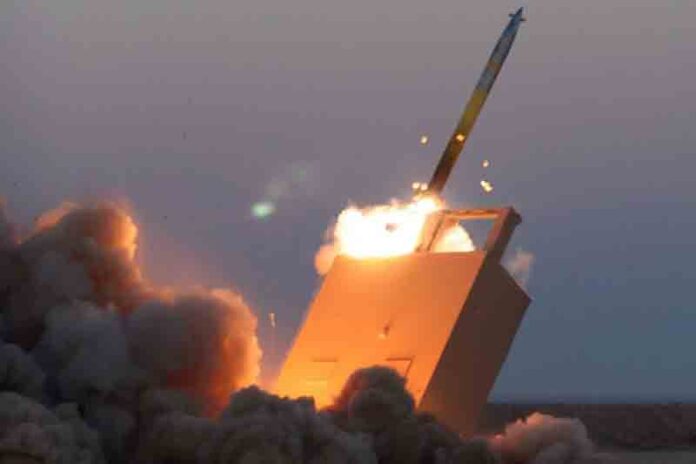
The Guided Multiple Launch Rocket System (GMLRS) is a precision-guided artillery rocket designed for long-range strikes, capable of hitting targets up to 150 km away with high accuracy and devastating effect.

The U.S. Government has released a new solicitation for white papers from industry partners detailing their capabilities, relevant experience, and technical strategies for the mass production of all variants of the Guided Multiple Launch Rocket System (GMLRS). As stated in the announcement dated April 24, 2025, the U.S. Army aims to increase production to an impressive 19,002 rockets per year, with initial deliveries expected by February 2030.

The U.S. Army Contracting Command – Redstone Arsenal has issued this Sources Sought Notice to perform thorough market research. The objective is to identify manufacturers equipped with the capacity, expertise, and resources necessary to fulfill the extensive production needs of the Strategic and Operational Rockets and Missiles (STORM) Project Office.

The future contract’s scope goes beyond mere production; it encompasses rocket manufacturing for all GMLRS variants, the establishment of tooling and production lines, the execution of engineering change proposals (ECPs), and comprehensive support activities to ensure sustainment and operational readiness. This broad scope reflects the Army’s commitment not only to replenish but also to significantly enhance its rocket artillery capabilities in response to evolving strategic requirements.

The Guided Multiple Launch Rocket System (GMLRS) represents a sophisticated family of precision surface-to-surface artillery rockets, specifically designed for deployment by Field Artillery units utilizing M270-series Multiple Launch Rocket System (MLRS) tracked launchers and M142 High Mobility Artillery Rocket System (HIMARS) wheeled launchers. This system employs an advanced inertial navigation system (INS) integrated with a GPS receiver, achieving remarkable accuracy with a typical circular error probable (CEP) of under 10 meters.

The standard GMLRS rocket has a length of approximately 3.94 meters and a diameter of 0.227 meters, with a total launch weight nearing 300 kilograms. Each rocket is capable of engaging targets at distances ranging from 15 to 84 kilometers, while the Extended Range (ER) variant extends this capability to over 150 kilometers.

The GMLRS Unitary variant features a 90-kilogram class high-explosive, point-detonating warhead, optimized for precision strikes against high-value targets, thereby minimizing the risk of collateral damage in complex operational environments.

In contrast, the Alternative Warhead (AW) variant replaces conventional submunitions with 160,000 pre-formed tungsten penetrators, providing wide-area effects that adhere to international cluster munitions regulations. Additionally, the GMLRS Extended Range (ER) version incorporates enhanced rocket motor technologies and re-engineered airframes, allowing the U.S. Army to target strategic objectives from even greater distances while ensuring precision and lethality.

The United States is actively working to significantly enhance various critical aspects of GMLRS production. The ongoing and potential future conflicts, particularly in support of European and Indo-Pacific allies, highlight the necessity for swift, adaptable, and long-range artillery capabilities.

Recent conflicts, especially in Ukraine, have showcased the effectiveness of rocket artillery systems like HIMARS with GMLRS rockets, which have successfully disrupted enemy logistics and command structures through precise deep-strike operations.

Additionally, the U.S. Army aims to maintain superiority over peer competitors such as China and Russia, both of whom have heavily invested in their long-range fire capabilities. Furthermore, the substantial aid provided to partner nations has led to a significant reduction in existing GMLRS stockpiles, creating an urgent need to replenish and expand these inventories.

The goal of achieving a production rate of 19,002 rockets annually will enable the U.S. Army to sustain high levels of operational readiness, fulfill its global obligations, and establish strategic reserves for extended high-intensity conflicts. With initial deliveries anticipated in February 2030, this procurement strategy represents a proactive approach to adapting to emerging threats and ensuring that artillery forces remain pivotal in future multi-domain operations.


China expedites the delivery of PL-15 missiles to Pakistan in response to rising tensions with India

0
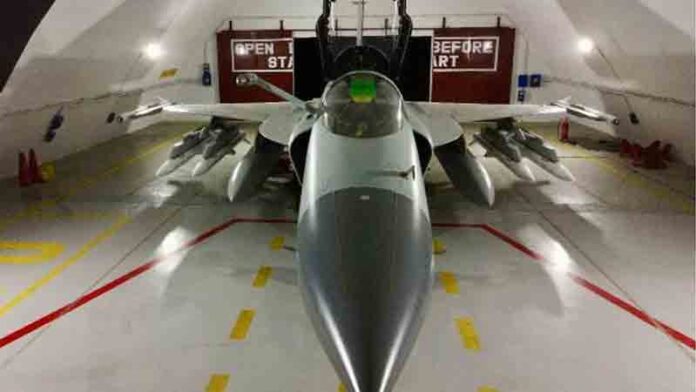
JF-17 fighter equipped with PL-15 very long-range air-to-air missiles

In a region where nuclear capabilities and advanced air forces dictate the balance of power, a single shipment of sophisticated weaponry can alter the situation dramatically. Recently, reports emerged on the social media platform X from an account called The STRATCOM Bureau, alleging that China has urgently supplied PL-15 very long-range air-to-air missiles to Pakistan for its JF-17 fighter jets.

This purported transfer, said to be a reaction to rising tensions between Pakistan and India, highlights China’s increasing role as a rapid and strategic ally in South Asia. Although these claims have not been confirmed by official sources, they reflect a larger trend of Beijing’s capacity to enhance its partners with essential military assets at critical junctures.

Such capabilities could transform regional relations and pose challenges to global powers. The STRATCOM Bureau’s post on X, which featured a photo allegedly depicting a Pakistani JF-17 equipped with the PL-15 missile, characterized the delivery as a swift reaction to escalating regional tensions. The account indicated that the missiles were sourced from the internal reserves of China’s People’s Liberation Army Air Force, rather than the export variant PL-15E, implying a transfer of high-performance weaponry typically reserved for China’s own military.

The post lauded China as a ‘gold standard’ ally, emphasizing the rapidity and strategic significance of the action. While claims from social media warrant careful examination, they resonate with China’s overarching strategy of utilizing its military-industrial complex to assist allies like Pakistan, especially during crises.

China’s capability to rapidly supply advanced weaponry showcases a highly developed logistical and industrial system that few other countries can rival. Unlike conventional arms exports, which typically require extensive negotiations and lengthy production periods, this reported delivery indicates a pre-established collaboration between Beijing and Islamabad, facilitating almost immediate assistance.

For comparison, the United States exhibited similar responsiveness at the onset of the Russia-Ukraine conflict in 2022, swiftly delivering Javelin anti-tank missiles to Kyiv within days of requests. However, China’s actions remain less prominent in Western discussions, though they are equally important.

The Chinese defense sector, supported by state-owned conglomerates such as the Aviation Industry Corporation of China, has enhanced production capabilities and optimized supply chains, enabling it to meet the demands of allies with exceptional efficiency. This proficiency positions China as a significant contender in the global arms landscape, challenging the supremacy of traditional suppliers like the U.S. and Russia.

The PL-15 missile, central to this reported delivery, is a key element of contemporary air combat, engineered to target adversaries at extensive ranges. Developed by the China Airborne Missile Academy in Luoyang, the PL-15 is an active radar-guided missile with an estimated range of 120 to 190 miles, utilizing a dual-pulse solid-propellant rocket motor.

Its active electronically scanned array radar seeker, combined with a two-way datalink, enables accurate targeting and mid-course adjustments, making it a flexible weapon against agile fighters, bombers, and high-value assets such as airborne early warning and control aircraft.

The missile’s shortened fins allow it to be housed within the internal weapon bays of stealth aircraft such as China’s J-20. Its compatibility with the JF-17 Block III, which features the sophisticated KLJ-7A AESA radar, significantly boosts Pakistan’s capacity for long-range operations.

The PL-15 is reported to have a range and agility that either matches or exceeds that of Western counterparts like the U.S. AIM-120D AMRAAM, which has a range of around 100 miles, and is on par with the European MBDA Meteor, recognized for its ramjet technology and extensive no-escape zone.

For Pakistan, incorporating the PL-15 into its JF-17 fleet marks a substantial enhancement in aerial combat capabilities. The JF-17 Thunder, a lightweight, single-engine multirole fighter developed collaboratively by Pakistan’s Aeronautical Complex and China’s Chengdu Aircraft Corporation, serves as a cornerstone of the Pakistan Air Force, with over 130 units operational.

The Block III variant, launched in 2020, boasts cutting-edge avionics, a three-axis fly-by-wire system, and the previously mentioned KLJ-7A radar, capable of tracking 15 targets at once and engaging four. With the PL-15 onboard, the JF-17 can now pose a threat to critical Indian assets, including AWACS systems and refueling tankers, from considerable distances, compelling India to reassess its air defense strategies.

This capability is especially vital in South Asia, where air dominance frequently influences the results of conflicts along the disputed Line of Control in Kashmir. To grasp the strategic ramifications, it is essential to compare the PL-15 with India’s air-to-air missile inventory. India’s main beyond-visual-range missile, the Astra Mk-1, has a range of about 68 miles, which is considerably less than that of the PL-15.

The Astra Mk-2, which is still in development, is designed to achieve a range of 100 miles, although it is not yet operational. India has also deployed the MBDA Meteor missile on its Rafale aircraft, which has a range of approximately 120 miles and is known for its extensive no-escape zone due to its ramjet technology.

Despite the Meteor’s impressive capabilities, the PL-15’s greater range could provide Pakistan with a strategic advantage by allowing it to engage targets before Indian aircraft can react.

If the STRATCOM Bureau’s assertion regarding non-export PL-15s is correct, Pakistan may possess missiles with performance surpassing the PL-15E’s estimated 90-mile range, potentially shifting the balance of power. This situation may prompt India to expedite its missile development initiatives or pursue additional foreign acquisitions, such as Russia’s R-37M, which has a range of up to 250 miles.

The reported missile delivery occurs amid escalating tensions between India and Pakistan, particularly concerning the contested Kashmir region.In response, India canceled visas for Pakistani citizens and expelled diplomats, while Pakistan retaliated by closing its airspace to Indian flights and suspending bilateral trade.

These actions are reminiscent of previous conflicts, such as the 2019 Balakot crisis, when Indian airstrikes in Pakistan led to a brief but intense aerial confrontation. During that episode, a Pakistani JF-17 allegedly utilized an older PL-12 missile to shoot down an Indian MiG-21, although India contested this claim, presenting evidence of U.S.-made AIM-120 missiles being fired by Pakistani F-16s.

Although the current situation has not escalated to outright war, it has heightened concerns about further military posturing, with both countries maintaining strong air forces prepared for quick responses.

The historical rivalry between India and Pakistan has fueled an arms race in South Asia, as both countries strive for technological equality. Pakistan’s dependence on Chinese military equipment, such as the JF-17 and the PL-15, reflects India’s strategy of diversifying its suppliers, which includes Russian Su-30MKI fighters and French Rafale jets.

China’s role as Pakistan’s main arms provider has been established for decades, with the JF-17 program being a testament to this collaboration. Since its inaugural flight in 2003, the JF-17 has transformed from a simple substitute for outdated Mirage III and F-7 aircraft into a formidable asset for contemporary warfare. Its cost-effectiveness, with Block III units priced around $32 million compared to the over $80 million cost of India’s Rafale, makes it a viable choice for Pakistan’s financially conscious military.

The addition of the PL-15 further boosts this cost-efficiency, offering near-elite capabilities at a significantly lower price. China’s rationale for this reported delivery goes beyond its partnership with Pakistan; it also stems from its own tensions with India, especially along the Line of Actual Control in the Himalayas, where border skirmishes in 2020 and 2022 highlighted ongoing conflicts.

By supplying Pakistan with advanced weaponry, China indirectly exerts pressure on India from a secondary front, diverting New Delhi’s resources and focus. This strategy aligns with China’s broader objective of countering India’s increasing influence in the Indo-Pacific region, where New Delhi has fortified relationships with the U.S., Japan, and Australia through initiatives like the Quad.

If confirmed, the PL-15 delivery underscores China’s capacity to influence regional security dynamics, not through direct confrontation but by strategically supporting its allies.

The global consequences of China’s actions are profound. The United States, which has historically led the arms export sector, is now facing heightened competition from China, whose weaponry is typically more affordable and comes with fewer political conditions. The development of the PL-15 has already prompted the U.S. to enhance its countermeasures, leading to the initiation of the AIM-260 Joint Advanced Tactical Missile program in 2017, intended to succeed the AIM-120 AMRAAM.

Anticipated to be operational by the mid-2020s, the AIM-260 is designed to match or surpass the PL-15 in range and performance, illustrating the far-reaching effects of China’s advancements. Likewise, Russia, another key arms supplier, has experienced a decline in its influence as China secures markets in Asia and Africa, with nations such as Nigeria and Myanmar also utilizing JF-17s armed with Chinese missiles.

From an operational standpoint, the PL-15 bolsters Pakistan’s capacity to execute air denial operations, potentially hindering India’s air capabilities during conflicts. By targeting critical assets from a distance, Pakistan could compel India to deploy its AWACS and tankers farther from the front lines, diminishing their operational efficiency.

This development could significantly impact the tactical dynamics in Kashmir, where air dominance is essential for swift responses to cross-border incidents. Nevertheless, the effectiveness of the PL-15 will hinge on Pakistan’s ability to integrate it properly, necessitating a strong training and maintenance framework.

Previous reports have pointed out issues with the JF-17 fleet, particularly concerning the reliability of the Russian RD-93 turbofan engine, although Pakistan has since obtained direct supplies from Russia to mitigate these problems.

The assertion by the STRATCOM Bureau that this represents the first public evidence of the PL-15 on a JF-17 adds both interest and ambiguity. While platforms like X provide valuable real-time insights, they are also susceptible to exaggeration and misinformation. In the absence of official confirmation from either Pakistan or China, the extent and timing of the delivery remain uncertain.

Nevertheless, the image posted on X, depicting a JF-17 equipped with what seems to be a PL-15, has ignited discussions among defense analysts, who highlight the missile’s unique cropped fins and elongated body. If verified, this image would signify a significant advancement in Pakistan’s air force modernization, building on its involvement in multinational exercises such as Victory Spear 2025 in Saudi Arabia, where the JF-17 Block III demonstrated its capabilities alongside Western aircraft like the F-15 and Rafale.

Looking forward, the reported delivery prompts inquiries about the future of security in South Asia. Will China persist in its strategy of rapid arms transfers to strengthen allies in contested areas, from Pakistan to Myanmar? How will India react, considering its dependence on a combination of domestic, Russian, and Western systems? The Astra Mk-2 and potential acquisitions like the R-37M could help restore balance, but development timelines and budget limitations may hinder these initiatives.

Additionally, the threat of escalation remains significant. Pakistan’s improved capabilities could embolden it in future confrontations, while India’s countermeasures might further escalate the arms race. The lack of official confirmation regarding the PL-15 delivery highlights the difficulties of navigating open-source intelligence, where unverified assertions can influence perceptions as much as established facts. In an era where air power increasingly dictates military supremacy, China’s alleged delivery of PL-15 missiles to Pakistan serves as a stark reminder of its expanding influence.

By equipping its ally with a weapon that competes with the finest in Western arsenals, Beijing is not only supporting Pakistan but also signaling its ambition to alter global security dynamics.

This situation underscores the necessity for the U.S. and its allies to adjust to a multipolar arms market, where factors like speed, cost-effectiveness, and strategic coherence are just as important as technological dominance.

Strike Iran or engage with the Ayatollah: Trump considers contrasting strategies before nuclear negotiations

0

US President Donald Trump is open to meeting with Iran‘s supreme leader or president if a nuclear agreement is achieved, but he is equally prepared to take military action against the Islamic Republic if negotiations fail.

In an interview with Time Magazine, conducted on Tuesday and published on Friday—just before the US begins its third round of talks with Iran in Oman—Trump revealed the starkly contrasting scenarios he is considering. He seemed to confirm reports that Israel proposed a preemptive strike on Iran’s nuclear program to the US instead of pursuing diplomatic solutions, although he clarified that the portrayal of the discussions, with the US preventing an Israeli attack, was somewhat inaccurate.

‘I didn’t stop them,’ Trump stated. ‘But I didn’t make it easy for them, because I believe we can reach an agreement without resorting to military action,’ he continued. ‘Ultimately, I would leave that decision to them, but I expressed a strong preference for a deal over military strikes,’ he added.

Nevertheless, Trump indicated that he ‘might proceed very willingly if a deal cannot be reached.’ ‘If we fail to secure an agreement, I will be at the forefront of military action,’ Trump told Time Magazine.

Following a conversation with Israeli Prime Minister Benjamin Netanyahu on Tuesday, Trump issued a statement affirming that he and Netanyahu were in complete agreement regarding Iran. However, reports from Israeli media have hinted at underlying tensions.

On Friday, Channel 12 news in Israel reported that the country views the nuclear negotiations as being ‘very, very advanced’ and expressed concerns that the US might agree to a ‘bad deal’ with Iran.

While the Trump administration has fully supported Israel’s military actions in Gaza, it has already rejected an Israeli request for an increased US troop presence in northeast Syria.

US military resources in the region

Trump’s recent interview with Time Magazine highlights his unpredictable nature, which he claims is essential for effective negotiations.

In fact, Trump has been deploying US military resources to the region as part of a strategy to signal to Tehran that the US is ready for potential military action.

The United States has deployed B-2 bombers to the Diego Garcia base in the Indian Ocean and has also sent two aircraft carriers to the area. Concurrently, the US has intensified its airstrikes against the Houthis in Yemen, a Shia militant group supported by Iran, which has been attacking commercial vessels in the Red Sea associated with Israel, the US, and Europe, claiming to do so in solidarity with the Palestinians in Gaza.

Analysts and diplomats suggest that the increased US military action is a direct message to Tehran. Recently, US forces targeted the Ras Isa oil terminal on Yemen’s western coast, resulting in the deaths of at least 74 individuals.

Additionally, the Wall Street Journal has reported that Yemeni factions opposed to the Houthis and supported by the UAE are contemplating a new offensive against Houthi positions, taking advantage of the US airstrikes.

However, the US is encountering pushback from Gulf allies regarding strikes on Iran, as Gulf monarchs have barred the US from utilizing their bases or airspace for such operations. Furthermore, President Trump’s planned visit to the Middle East from May 13-16 adds uncertainty to the timing of any potential military actions.

Trump is attempting to reconcile his assertive foreign policy stance with the isolationist sentiments he expressed during his campaign, vowing to conclude conflicts in the Middle East and Europe. This has led to some confusion.

Trump team changes its stance on nuclear enrichment

Notably, some of Trump’s staunch media supporters, such as conservative talk show host Tucker Carlson, strongly oppose military action against Iran. Recently, Carlson featured an interview with a former senior Department of Defense official, who he claimed was dismissed for being an impediment to US military action against Iran. Carlson stated earlier in April, ‘It’s evident that now is the worst time for the United States to engage in a military strike on Iran. We cannot afford it. Thousands of American lives would be lost, and we would ultimately lose the ensuing war. Nothing could be more detrimental to our nation.’

Additionally, senior officials within the Trump administration have provided varying perspectives on re-engaging with Iran. Steve Witkoff, Trump’s envoy for the Middle East and a key global troubleshooter, suggested earlier this month that the US might permit Iran to enrich uranium at low levels.

However, after facing criticism from pro-Israel factions, he reversed his stance, asserting that Tehran ‘must cease and completely eliminate’ its nuclear enrichment program.

This week, US Secretary of State Marco Rubio indicated that the US could consider re-entering an agreement that allows Iran to maintain a civilian nuclear program, provided it halts enrichment and sources it from abroad.

Rubio remarked in a podcast with the Free Press, ‘There’s a pathway to a civil, peaceful nuclear program if they desire one. However, if they continue to enrich, they would be the only nation in the world without a ‘weapons program’ yet still engaging in enrichment, which presents a significant issue.’

Countries such as Japan, Germany, and the Netherlands engage in uranium enrichment without pursuing a weapons program. The agreement referenced by the Trump administration resembles one established between the UAE and the US, which allows access to civilian nuclear technology.

Talks in Oman

However, experts believe it is improbable that Iran, with its population of 90 million, would consent to such terms. In a speech he was scheduled to deliver at the Carnegie International Nuclear Policy Conference, which was ultimately cancelled, Iran’s Foreign Minister Abbas Araghchi emphasized that Iran should not be regarded as an exception within the global non-proliferation framework.

He asserted the importance of recognizing Iran’s rights as a signatory to the NPT, including the right to produce fuel for its nuclear power facilities. This statement was shared on X and pertains to the long-standing Treaty on the Non-Proliferation of Nuclear Weapons (NPT).

In 2018, Trump exited the nuclear agreement that had been signed by the Obama administration three years prior, which had lifted sanctions on Iran in exchange for limitations on its nuclear activities. Following Trump’s withdrawal, Tehran adhered to the agreement for one year before reducing its compliance and increasing uranium enrichment.

Currently, Iran enriches uranium to 60 percent, significantly exceeding the 3.67 percent cap established in the 2015 agreement, yet still below the 90 percent level necessary for weapons-grade material. Israel has expressed a preference for the complete dismantling of Iran’s nuclear program rather than conducting preemptive strikes.

Tulsi Gabbard, who serves as Trump’s director of national intelligence, is a prominent voice opposing a nuclear strike, particularly from the isolationist faction of the Trump administration. During a congressional hearing last month, which drew criticism from the pro-Israel lobby, Gabbard reiterated that US intelligence agencies do not believe Iran is in the process of developing a nuclear weapon.

She noted that ‘Supreme Leader Khamenei has not authorized the nuclear weapons program that was suspended in 2003.’ US officials have previously indicated that Iran could potentially enrich sufficient uranium for a nuclear weapon in approximately two weeks if it chose to do so.

The upcoming discussions in Oman are anticipated to be of a technical nature, with Witkoff expected to participate and Araghchi leading the Iranian delegation. Michael Anton, the State Department’s policy planning chief, will supervise the US technical team.

Trump believes India and Pakistan will eventually resolve their tensions

0
U.S. President Donald Trump speaks, on the day of Tulsi Gabbard's swearing in ceremony as Director of National Intelligence, in the Oval Office at the White House in Washington, D.C.

US President Donald Trump stated on Friday that India and Pakistan will resolve their issues independently, amidst rising tensions following a deadly attack in Kashmir, the most severe in nearly twenty years.

Speaking to reporters aboard Air Force One, Trump acknowledged the historical conflicts in the contested border area and mentioned his familiarity with the leaders of both nations, although he refrained from commenting on whether he would reach out to them.

‘They’ll find a way to resolve it,’ he remarked during his flight. ‘There has always been significant tension between Pakistan and India.’

The attack on Tuesday resulted in the deaths of 26 individuals at a tourist location in Kashmir, where they were shot in a meadow. India has attributed the attack to elements from Pakistan, a claim that Islamabad disputes.

Both nations lay claim to Kashmir and have engaged in two wars over the territory. Following the attack, relations between India and Pakistan have worsened, with India suspending a vital water-sharing agreement and Pakistan closing its airspace to Indian flights.

Their trade relations are also under threat. On Friday, Indian stock markets experienced a decline due to concerns over escalating tensions as authorities searched for militants in the area, although they later regained some of the lost ground.


South Asia at a Critical Juncture: Unveiling the Military Dynamics Between India and Pakistan in 2025

0
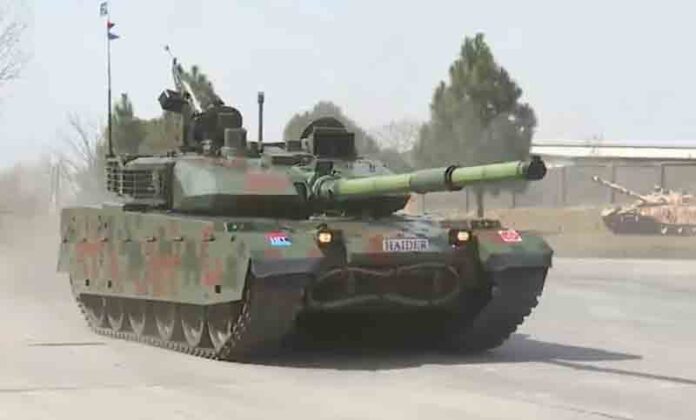
Pakistan’s main battle tank, “Haider"

The comparison of military capabilities between India and Pakistan in 2025 illustrates a multifaceted relationship involving personnel, equipment, financial resources, nuclear arsenals, and strategic military doctrines.

Both countries, enduring adversaries with a history of conflict since their 1947 partition, possess substantial military forces influenced by their geopolitical situations. The following is a comprehensive analysis of critical areas, based on available data and a thorough evaluation of their military strengths.

Overall Military Ranking and Power Index According to the Global Firepower Index (GFP) 2025, which assesses 145 countries using over 60 criteria (including manpower, equipment, finances, and geography), India and Pakistan are ranked as follows:

India: 4th in the world with a Power Index (PwrIndx) score of 0.1184 (where lower scores signify stronger military capabilities).

Pakistan: 12th in the world with a PwrIndx score of 0.2513.

Analysis: India’s superior ranking is indicative of its larger population, greater defense expenditure, and more comprehensive military resources. Conversely, Pakistan, while possessing a capable military, encounters limitations due to its smaller economy and dependence on foreign suppliers, notably China.

Pakistan’s strategic emphasis on countering India enables it to sustain a competitive advantage in certain domains. Manpower plays a vital role in conventional warfare, particularly for both India and Pakistan, due to their substantial populations and dependence on ground forces.

India boasts a population of approximately 1.4 billion, ranking second globally, with around 662 million available manpower. Annually, about 23.96 million individuals reach military age, the highest in the world. The active military personnel number around 1.46 million, placing India second globally, while reserve personnel total approximately 1.16 million, ranking seventh. Additionally, India has about 2.53 million paramilitary forces, making its total military strength around 5.1 million, which includes active, reserve, and paramilitary forces.

In contrast, Pakistan has a population of about 252 million, ranking fifth globally, with around 108 million available manpower. Each year, approximately 4.79 million individuals reach military age, ranking third globally. Pakistan’s active personnel count is around 654,000, placing it seventh globally, with reserve personnel numbering about 650,000. Although paramilitary forces are not explicitly quantified in the Global Firepower index, they are significant, including the Rangers and Frontier Corps.

Overall, India’s manpower advantage is substantial, with more than double the active personnel and considerably larger reserve and paramilitary forces.

India’s substantial population offers a vast pool of potential military recruits, with nearly five times as many individuals reaching military age each year compared to Pakistan.

In contrast, Pakistan relies on a significant portion of its population committed to military service and utilizes irregular forces, such as the ‘Mujahids,’ coordinated by the Inter-Services Intelligence (ISI) to enhance its conventional military capabilities.

Defense Budget

Military expenditure is indicative of a country’s capacity to sustain and modernize its armed forces.

India:

Defense Budget (2025-26): Approximately $79 billion (Rs 6.8 lakh crore), reflecting a 9.5% increase from the previous year.
Global Ranking: Among the top three military spenders, following the US and China.
Percentage of GDP: Approximately 2.1% (based on 2018 data, likely similar in 2025).

Pakistan:

Defense Budget (2025-26): Estimated at $10-12 billion (Rs 2,281 billion PKR).
Global Ranking: Not classified in the top tier, limited by economic constraints.
Percentage of GDP: Approximately 3.6% (based on 2018 data, likely higher due to economic downturn).
Foreign Military Assistance: Received around $100 million in 2018, mainly from the US and China.
Analysis: India’s defense budget is roughly 6-8 times larger than that of Pakistan, allowing for greater investment in advanced technologies, infrastructure, and modernization of forces (such as Rafale jets and S-400 systems). Conversely, Pakistan’s smaller budget is under significant pressure, with considerable funds allocated to maintaining a large standing army and its nuclear arsenal.

Pakistan’s economic challenges and dependence on foreign assistance hinder its ability to compete with India’s scale, although support from China enhances its military capabilities.

Ground forces

Ground forces play a crucial role in the India-Pakistan conflicts due to their extensive 3,323 km border and a history of conventional warfare (1947, 1965, 1971, 1999).

India

India possesses approximately 4,614 tanks, ranking 6th globally, with key platforms including the T-90S Bhishma, indigenous Arjun Mk1A, and T-72 Ajeya. Its armored vehicle fleet consists of around 151,248 units, featuring platforms like BMP-2 Sarath IFVs and Mahindra Armado ALSV.

The artillery comprises about 9,719 pieces, including 155mm howitzers and rocket systems, with notable systems such as the indigenous Dhanush, M777 Ultra-Light Howitzer, and Pinaka MBRL.

India’s special forces, including Para SF, Ghatak Force, and MARCOS, are recognized for their rigorous training standards.

Additionally, military engineering capabilities are strengthened by the Border Roads Organisation (BRO) and the Corps of Engineers.

Pakistan

Pakistan’s military capabilities include approximately 3,742 tanks, featuring key platforms such as the indigenous Al-Zarrar, Type-59/69, Russian T-80UD, and Chinese VT-4.

The country has an estimated 50,000 armored vehicles, including APCs and IFVs, with notable models like the M113 APCs, Al-Fahd IFVs, and M1224 MaxxPro MRAPs.

In terms of artillery, Pakistan possesses around 4,472 pieces, which includes 375 self-propelled howitzers, with key systems like the M109A5, SH-15 (Chinese), and A-100 MBRL.

The Special Services Group (SSG), SSG Navy, and Special Service Wing represent Pakistan’s special forces, which, while respected, are smaller in scale compared to India’s forces.

The Corps of Engineers provides military engineering support, though it is less extensive than India’s Border Roads Organisation (BRO).

Analysis: Overall, India maintains a significant numerical superiority in tanks, armored vehicles, and artillery, boasting a 3:1 advantage in armored vehicles and double the artillery pieces.

India’s modern platforms, such as the T-90S and Pinaka, are bolstered by domestic production.

While Pakistan’s tank fleet remains competitive, particularly with the modern capabilities of the Chinese VT-4, it also excels in infantry fighting vehicles with a variety of platforms like the M113 and Al-Fahd.

Although Pakistan’s artillery is not as extensive, it includes powerful systems. Both nations have elite special forces, but India’s larger scale and broader operational experience, particularly in counterinsurgency operations in Kashmir, provide it with a strategic advantage.

Air Force

Air Forces play a vital role in contemporary warfare, where air dominance is essential for swift responses and accurate strikes.

India

India boasts approximately 2,229 aircraft, ranking 4th globally, with around 513-606 fighter jets distributed across 31 squadrons. Key aircraft include the Sukhoi Su-30MKI, Rafale, indigenous Tejas Mk1, MiG-29, and Mirage 2000.

The helicopter fleet comprises attack models like the Apache AH-64E, transport helicopters such as the Chinook, and various utility platforms.

Support capabilities feature 4 airborne early warning and control (AEW&C) systems and Ilyushin Il-78 tankers. Ongoing modernization efforts include the acquisition of Tejas Mk1A and the planned retirement of older MiG-21s by 2030.

In terms of air defense, India has enhanced its long-range capabilities with the S-400 systems, deliveries of which commenced in 2020.

Pakistan

In contrast, Pakistan operates around 1,399-1,434 aircraft, with approximately 328-387 being fighter jets. Their key platforms include the F-16 Fighting Falcon, Chinese JF-17 Thunder, and Mirage III/V.

Pakistan has a greater number of attack helicopters than India, including the AH-1F Cobras. Their support aircraft consist of 7 AEW&C systems, which provide superior ISR capabilities compared to India.

Modernization efforts in Pakistan involve upgrading F-16s with Turkish Roketsan missiles and testing CZ Bren and FN-SCAR. For air defense, Pakistan utilizes the HQ-9 system, which is less advanced than India’s S-400.

Analysis: India possesses a larger and more varied air force, featuring double the number of aircraft and a wider array of modern fighters such as the Rafale and Su-30MKI. However, its squadron count, approximately 31, falls short of the target of 42 due to delays in procurement and the phase-out of MiG-21s.

In contrast, Pakistan’s smaller air force is undergoing modernization, with JF-17s as its core and upgraded F-16s improving its precision strike capabilities. While it has an edge in AEW&C systems that enhance situational awareness, it is behind in advanced air defense and overall fleet size.

Naval force

Regarding naval forces, both nations have crucial maritime interests in the Indian Ocean and Arabian Sea.

India

India boasts a fleet of around 294 vessels, including 2 aircraft carriers (INS Vikramaditya and INS Vikrant), 18 submarines (including the nuclear-powered INS Arihant), 13 destroyers, 14 frigates, numerous corvettes, and 106 patrol vessels, supported by 75 combat-capable aircraft and a personnel strength of approximately 67,700.

Pakistan

Conversely, Pakistan’s fleet consists of about 121 vessels, with no aircraft carriers, limiting its capabilities to a green-water navy. It has 8 submarines (Agosta-class and Chinese Yuan-class), 9 frigates, 17 patrol vessels, 8 combat-capable aircraft, and a personnel count of around 23,800.

Analysis: Overall, India’s navy is considerably larger and more capable, with its aircraft carriers facilitating power projection throughout the Indian Ocean.

India’s nuclear submarines and large surface fleet offer significant strategic advantages. In contrast, Pakistan’s smaller navy is primarily focused on coastal defense and regional operations, with its submarines threatening Indian shipping routes.

The lack of aircraft carriers and limited naval aviation capabilities hinder Pakistan’s ability to project power at sea.

Nuclear capabilities

Both countries possess nuclear weapons, which influence their deterrence strategies. India has approximately 130-140 warheads and employs delivery systems such as Agni-III/V ballistic missiles, Mirage 2000, Rafale aircraft, and the INS Arihant for sea-based deterrence.

Its nuclear doctrine is based on a No First Use (NFU) policy, promising massive retaliation in response to a nuclear attack.

Pakistan, with around 140-150 warheads, has a slight numerical advantage and utilizes delivery systems like Shaheen-II/III ballistic missiles, F-16s, and Babur cruise missiles, with naval capabilities under development.

Its doctrine emphasizes full-spectrum deterrence, including tactical nuclear weapons to counter India’s conventional military superiority, exemplified by the Nasr missile designed for battlefield deployment.

This slight advantage in warhead count and tactical capabilities is intended to counterbalance India’s conventional military strength, particularly in light of India’s.

This situation creates a paradox of stability and instability, where Pakistan intensifies subconventional conflicts, such as terrorism, while under the protection of its nuclear capabilities.

Strategic and Operational Considerations

India

Doctrine: Prioritizes conventional superiority and deterrence against both Pakistan and China. The ‘Cold Start’ doctrine anticipates swift, limited incursions to penalize Pakistan without provoking nuclear escalation.

Modernization: Committed to enhancing advanced systems (S-400, Rafale, T-90S, indigenous Tejas, drones).

Challenges: Bureaucratic hurdles, sluggish procurement processes, and a focus on counterinsurgency have weakened conventional war preparedness. The aging fleet (MiG-21s) and squadron shortages remain issues.

Alliances: Strong relationships with Russia, France, Israel, and the US improve access to technology. Participation in exercises like RIMPAC enhances interoperability.

Pakistan

Doctrine: Focuses on asymmetric warfare (e.g., proxy groups, ISI-supported militants) and nuclear deterrence to offset India’s conventional advantages.

Modernization: Dependent on Chinese systems (JF-17, VT-4, HQ-9), with upgrades from Turkey and the US (F-16s).

Challenges: Economic limitations restrict fuel and equipment upkeep, resulting in canceled drills in 2023. Tensions with Afghanistan divert resources.

Alliances: Strong connections with China (e.g., Shaheen exercises) and limited US support (MNNA status) strengthen capabilities.

Analysis: India’s expansive strategic focus (China and Pakistan) stretches its resources but propels modernization. Pakistan’s concentrated focus on India allows for efficient resource allocation, yet economic difficulties and border conflicts with Afghanistan undermine its position.

Historical Overview and Military Engagements

1947-48 saw a deadlock over Kashmir, with India securing the majority of the region.

In 1965, both nations declared tactical victories, resulting in an inconclusive outcome. The 1971 conflict culminated in a significant Indian triumph, which facilitated the formation of Bangladesh and the capitulation of approximately 93,000 Pakistani soldiers.

The Kargil conflict in 1999 highlighted India’s ability to reclaim territory, showcasing its conventional military strength despite Pakistan’s nuclear advancements in 1998.

The 2019 Balakot airstrikes, conducted by India in response to the Pulwama attack, indicated a readiness to escalate tensions, although Pakistan minimized the repercussions. Key Takeaways: India’s superior military size and strategic advantages have historically positioned it favorably in extended conflicts, while Pakistan’s dependence on irregular warfare and nuclear deterrence constrains its capacity for conventional warfare but allows for engagement in low-intensity conflicts.

A Comprehensive Assessment

India possesses significant advantages in terms of manpower, budget, and conventional military capabilities; however, Pakistan’s military should not be overlooked. Its nuclear stockpile, tactical weaponry, and asymmetric strategies, such as terrorism supported by the ISI, provide a formidable deterrent.

India’s efforts to modernize are hindered by bureaucratic challenges and the need to address threats from both China and Pakistan, while Pakistan faces economic difficulties and outdated equipment, like Type-59 tanks and G3 rifles, which limit its conventional military strength.

Key Insights

India’s Advantages: Larger military forces, advanced military technology, a blue-water navy, and international partnerships.

India’s Disadvantages: Gradual modernization, an aging air force, and a primary focus on counterinsurgency operations.

Pakistan’s Advantages: Nuclear capabilities, expertise in asymmetric warfare, and support from China.

Pakistan’s Disadvantages: Economic limitations, smaller conventional military forces, and ongoing regional conflicts.

Possible Conflict Scenarios: In a conventional military engagement, India’s superior numbers and technology would likely lead to success in an extended conflict; however, Pakistan’s nuclear capabilities and use of proxy warfare could either escalate tensions or lead to a stalemate.

Conclusion

By 2025, India’s military capabilities will greatly surpass those of Pakistan in terms of personnel, budget, and the strength of its air, naval, and land forces, positioning India as the 4th strongest military globally, while Pakistan ranks 12th.

Nevertheless, Pakistan’s nuclear arsenal, unconventional tactics, and support from China keep it as a significant threat. The military dynamics of both countries are influenced by their ongoing rivalry, with India aiming for wider strategic goals and Pakistan concentrating on countering Indian influence.

Although the power balance leans towards India, any potential conflict could escalate quickly due to the presence of nuclear weapons and regional instability.

It is important to note that this analysis is based on publicly available information and may not reflect classified military capabilities or current developments.

United States has authorized a $46 million sale of Javelin missiles to Ireland

0
Javelin anti-tank missiles

The U.S. State Department has authorized a potential Foreign Military Sale to Ireland, which includes FGM-148 Javelin missiles, Lightweight Command Launch Units (LwCLUs), and related support, totaling around $46 million, as announced by the Defense Security Cooperation Agency (DSCA).

The DSCA reported that Ireland has requested thirty-six LwCLUs to complement a previous Foreign Military Sales (FMS) agreement that involved forty-four FGM-148 Javelin missiles. The earlier sale, priced at $8.7 million, was below the congressional notification threshold.

This new notification increases the total to forty-four Javelin missiles and thirty-six LwCLUs, along with additional items such as missile containers, Enhanced Producibility Basic Skills Trainers, U.S. Government technical assistance, and other logistical support.

The DSCA indicated that the proposed sale will bolster U.S. foreign policy and national security goals by strengthening Ireland’s defense capabilities, enabling the country to maintain its contributions to United Nations peacekeeping efforts and NATO’s Partnership for Peace initiative.

The agency stated, ‘This proposed sale will enhance Ireland’s ability to develop its long-term defense capacity to safeguard its sovereignty and territorial integrity in line with its national defense needs.’

Furthermore, the DSCA noted that Ireland will seamlessly integrate the new equipment into its military forces, and the sale will not disrupt the regional military balance. The primary contractors for this transaction will be the Javelin Joint Venture, comprising Lockheed Martin in Orlando, Florida, and RTX Corporation in Tucson, Arizona. Currently, no offset agreements have been proposed, but any such arrangements would be negotiated between Ireland and the contractors.

The DSCA has verified that executing the sale will not necessitate the addition of U.S. Government or contractor personnel in Ireland, and that U.S. defense readiness will not be impacted by this transaction.

The Javelin missile system, produced collaboratively by Lockheed Martin and RTX Corporation, is a portable, shoulder-mounted weapon intended for targeting armored vehicles, fortifications, and low-flying helicopters. It has been extensively utilized by U.S. forces and allies in recent military engagements.

France is training its military in drone tactics inspired by Ukraine

0
11th Parachute Brigade undertook an intensive training program at its Tactical Drone Training Center (Centre d’Entraînement Tactique Drone, CETD) in Caylus, France.

French paratroopers are enhancing their tactical drone capabilities by applying insights gained from the use of First-Person View (FPV) drones in Ukraine against Russian forces, as announced by the French military.

In April, the 11th Parachute Brigade engaged in a rigorous training program at its Tactical Drone Training Center (Centre d’Entraînement Tactique Drone, CETD) located in Caylus, France. The brigade stated that this initiative signifies a transition towards mastering lightweight, agile, and accurate FPV drones that can assist in both reconnaissance and offensive missions.

‘In a combat landscape that is continuously changing, technology has emerged as a formidable weapon,’ the brigade noted in a release. The program aims to equip paratroopers with the expertise to operate FPV drones in intricate operational settings, reflecting tactics observed during Ukraine’s resistance to Russian aggression.

Throughout the training, participants were assessed on various essential skills, such as infiltration, stealth positioning, precise target identification, and engagement with enemy forces.

The exercises underscored the importance of coordination between FPV operators and stabilized drone pilots, mirroring the integrated use of different drone types seen in contemporary warfare.

The brigade emphasized the incorporation of offensive drone strategies, particularly simulating bomb drops on fortified enemy positions.

‘This segment of the training evaluated the students’ ability to coordinate drone strikes while ensuring accuracy and discretion in hostile environments,’ the statement concluded.

The emphasis of the French military on FPV drones reflects a broader trend among global armed forces adapting to the swift increase of unmanned aerial systems (UAS) in combat areas.

The extensive deployment of FPV drones by Ukraine to combat Russian armored units and fortifications has drawn significant international interest, leading military organizations throughout Europe and NATO to reevaluate their drone strategies.

Putin focuses on artificial intelligence and laser technology for future military strategies

0
Russian President Vladimir Putin chairs a meeting

President Vladimir Putin has mandated extensive revisions to Russia‘s military strategy and production focus, prioritizing the rapid advancement of unmanned systems, artificial intelligence, and laser technologies. This directive came after a significant meeting of the Russian military-industrial commission on April 23, which assessed the future trajectory of the nation’s armed forces, as reported by Komsomolskaya Pravda.

Putin noted that the defense sector is functioning at maximum capacity, successfully completing nearly all state defense orders from the previous year and surpassing certain goals. The president highlighted that over 4,000 armored vehicles, including tanks and personnel carriers, as well as 180 aircraft and helicopters, were supplied to the military in the last year.

Frontline units are reportedly receiving approximately 4,000 First-Person View (FPV) drones each day. However, Putin acknowledged a continuing deficit of drones on the battlefield, stating, ‘Our servicemen on the front line are eagerly awaiting these drones. They have become a decisive factor in today’s warfare.’

He underscored that the insights gained from the ongoing military operations, termed a ‘special military operation’ by Moscow, are fostering advancements in Russian military technology. ‘We are witnessing significant breakthroughs in military equipment,’ he remarked, noting that some innovations are ‘unique’ and ‘first of their kind globally.’

The president of Russia has initiated a comprehensive review of military training programs, mandating updates to the curricula at military academies and officer training schools. He emphasized the necessity for a complete revision of army field manuals, spanning from platoon to corps and combined-arms levels, to align with the significant shifts in battlefield strategies, particularly the reduced emphasis on tank assaults and the increasing prominence of drone warfare.

Looking to the future, Putin has instructed defense strategists to anticipate the evolution of warfare over the next five, ten, and fifteen years. He remarked, ‘Military evolution is accelerating.’ Additionally, he highlighted the critical role of space-based assets, advocating for the establishment of a satellite network capable of delivering encrypted communications, reconnaissance, and early-warning functions in contested areas.

‘Satellites are now central to all warfare,’ he stated. Regarding the development of advanced weaponry, Putin has prioritized the rapid advancement of robotic systems, unmanned maritime vehicles, and laser-based air defense technologies.

‘Light travels at unmatched speed,’ he noted, implying that laser weapons could become fundamental to Russia’s future air defense capabilities. He concluded by mentioning undisclosed ‘ace card’ systems currently being developed at Russian research institutions and design bureaus, urging, ‘We must carefully evaluate these projects and avoid premature abandonment.’

NATO Advances with the Implementation of a Drone Barrier on the Eastern Flank to Deter Russia

0

On April 23, 2025, Newsweek published an article detailing the advancements of a significant defense initiative along NATO‘s eastern border, known as the ‘Drone Wall.’ This ambitious project aims to establish a continuous network of surveillance drones and counter-drone systems spanning nearly 3,000 kilometers from Norway to Poland.

In light of Russia’s military actions in Ukraine and the increasing threat of hybrid warfare in the area, this initiative represents one of the most extensive and costly security undertakings ever proposed in Europe. Spearheaded by Germany and backed by six NATO allies—Estonia, Latvia, Lithuania, Finland, Poland, and Norway—the Drone Wall is more than just a symbolic effort.

It is intended to function as a fully operational system, comprising multiple layers that feature AI-driven reconnaissance drones, ground sensors, mobile counter-drone units, and satellite surveillance capabilities. Its goal is to identify and neutralize threats in real time, including drone intrusions, GPS interference, and covert cross-border operations, while equipping NATO forces with timely and precise intelligence in their most vulnerable regions.

Martin Karkour, Chief Sales Officer at Quantum Systems—one of the primary German firms involved—stated, ‘This is not a symbolic wall. This is a real one.’ He emphasized that the necessary technology is already in place, and the project’s progression now hinges on political coordination at the EU or NATO level.

Quantum Systems is currently producing several hundred drones each month, including the Vector and Trinity Pro models, both designed for extended surveillance missions in challenging environments.

Friedrich Merz, the new chancellor of Germany, has prioritized defense by removing limits on military expenditure and extending robust support to local defense companies. This strategic change is part of a wider movement in Europe, where nations are striving to enhance their strategic independence in light of increasing doubts about U.S. security assurances, especially with Donald Trump’s return to the presidency and his ongoing demands for NATO allies to boost their defense spending.

The Baltic states, positioned at the forefront of the conflict with Russia, are pivotal in the initial stages of this initiative. In Estonia, the Estonian Defence Industry Cluster is overseeing the project, uniting various local defense technology enterprises. Notably, DefSecIntel Solutions has created the Erishield system, a comprehensive solution that combines AI, sophisticated sensors, and mobile counter-drone units to identify and neutralize threatening UAVs. Estonia has committed €12 million over three years to back this initiative.

Other firms, including Rantelon, Marduk Technologies, and Hevi Optronics, are also involved, working to ensure complete situational awareness along NATO’s eastern frontier, which encompasses the detection of smuggling activities and threats from aerial surveillance or sabotage.

Agnė Bilotaitė, the Lithuanian Minister of the Interior, characterized the Drone Wall as an innovative approach to border security, emphasizing its role in safeguarding against provocations from hostile nations. Finland and Norway are also involved, particularly in the northern sections of the border, where extreme weather necessitates robust technological solutions.

In Poland, efforts have commenced under the Shield-East initiative, which aims to establish 700 kilometers of fortified surveillance infrastructure. This initiative represents one of the initial tangible actions of a larger project, awaiting further political consensus at the NATO level to enhance and synchronize the overall system. Often dubbed the ‘world’s most expensive technological wall,’ this endeavor is viewed as a significant reaction to the changing landscape of military threats, where drones, electronic disruptions, and hybrid tactics increasingly influence security dynamics.

The leaders of the Drone Wall project aim not only to strengthen NATO’s defensive capabilities but also to demonstrate Europe’s ability to create and implement integrated, sovereign technological solutions.

The Drone Wall signifies much more than a mere response to the conflict in Ukraine. It embodies a significant strategic transformation in European defense policies, integrating technological advancements, multinational collaboration, and a renewed focus on strategic independence in response to an adversary that continues to navigate the ambiguous realms of contemporary warfare.

In addition to this aerial and digital strategy, traditional defensive measures are also being put in place: the Baltic states have initiated the construction of over 1,000 concrete bunkers, alongside trenches, anti-tank barriers, minefields, and ammunition storage facilities along their borders with Russia and Belarus.

This initiative, referred to as the Baltic Defense Line, seeks to enhance the technological aspect of the Drone Wall with a solid ground-based defense framework. Collectively, these systems have the potential to transform the long-term security landscape of NATO’s eastern border.

More F-35A Stealth Fighters have been deployed to Japan to strengthen U.S. military presence in the Indo-Pacific

0
The F-35A Lightning II, dubbed a “Frankenjet” and assigned to the 388th Fighter Wing, returns to Hill Air Force Base, Utah.

The U.S. Air Force has further strengthened its strategic military presence in the Indo-Pacific region with the deployment of F-35A Lightning II stealth fighters at Kadena Air Base in Okinawa, Japan.

On April 24, 2025, F-35As from the 421st Expeditionary Fighter Squadron (EFS) based at Hill Air Force Base in Utah arrived at Kadena, marking the latest phase of rotational deployments designed to maintain forward-deployed combat airpower in the area.

This deployment is supported by additional F-35As from the 355th EFS at Eielson Air Force Base in Alaska, along with F-15E Strike Eagles from the 336th EFS at Seymour Johnson AFB in North Carolina.

All units are collaborating with Kadena’s 18th Wing Operations and Maintenance Groups to ensure high readiness and operational effectiveness. Kadena Air Base is pivotal as the hub of American airpower in the Western Pacific, often called the ‘Keystone of the Pacific.’

It is the largest U.S. Air Force installation in Asia and acts as a forward base for rapid air response during crises or conflicts. Strategically positioned in Okinawa, Kadena allows the U.S. military to maintain a forward presence, swiftly address regional threats, and project combat airpower across the East China Sea, Taiwan Strait, and the wider Indo-Pacific region.

The base is integral to the Agile Combat Employment (ACE) strategy, which focuses on dispersed operations, rapid mobility, and resilience in contested environments, ensuring that U.S. air assets remain effective even in the face of threats.

The deployment of fifth-generation F-35A fighters at Kadena enhances the combat capabilities of U.S. forces in the region and serves as a powerful deterrent to potential threats. As the most advanced multirole fighter in the U.S. Air Force, the F-35A excels in precision strikes and achieving air superiority in contested environments.

Its stealth features, sophisticated sensor systems, and exceptional situational awareness give pilots a significant advantage, allowing them to identify and neutralize threats before being detected. Coupled with the F-15E’s established long-range strike abilities, the current fighter lineup strengthens both offensive and defensive operations.

These ongoing deployments demonstrate the U.S. Department of Defense’s enduring commitment to a credible and adaptable military presence in the Indo-Pacific. As the security landscape becomes increasingly intricate, especially with rising tensions in Taiwan and the South China Sea, the regular rotation of aircraft ensures the U.S. Air Force is prepared for rapid response and power projection.

This also reassures regional partners like Japan, South Korea, and the Philippines of America’s dedication to maintaining a rules-based international order. Furthermore, Kadena’s consistent operational activity marks a shift in U.S. airpower strategy in the area. With the phased retirement of older F-15C/D Eagles that were permanently based there, the U.S. Air Force is transitioning to a rotational deployment model while preparing for the full integration of the F-15EX Eagle II. This modernization initiative not only enhances survivability and combat effectiveness but also aligns with the changing demands of high-intensity conflict situations.

The stationing of F-35As and accompanying fighter aircraft at Kadena Air Base clearly illustrates the United States’ long-term strategic priorities in the Indo-Pacific region. This move strengthens a reliable deterrence framework, boosts the preparedness of deployed forces, and showcases the U.S. military’s capacity to swiftly expand operations in support of regional security and alliance obligations.

With the Indo-Pacific being a central arena for geopolitical rivalry, Kadena Air Base remains an essential platform for American power projection and a testament to a consistent military presence.

Greece may acquire Brazilian C-390 transport planes to substitute its US-manufactured C-130 Hercules

0
C-390 Millennium

On April 22, 2025, OnAlert reported that the Brazilian Embraer C-390 Millennium has officially been added to Greece’s Long-Term Defence Procurement Program as a potential replacement for the aging US-made C-130 Hercules aircraft used by the Hellenic Air Force (HAF). The Air Force General Staff has proposed the initial purchase of at least three C-390s, with the possibility of acquiring more in later phases.

This procurement plan is part of a 12-year defense strategy, but its execution is not expected until the end of the decade, as current priorities focus on upgrading 38 F-16 Block 50 fighters to the Viper configuration. In the meantime, Greece plans to sustain operational capabilities with a limited number of existing C-130s and the C-27J Spartan fleet, which is also set for upgrades, alongside a new five-year Follow-On Support contract planned for 2026.

Despite ongoing efforts by the HAF, the Hellenic Aerospace Industry (EAB), and the 356th Tactical Transport Squadron ‘Hercules,’ the availability rates for the C-130 remain low, with only four aircraft operational as of early 2025, and a fifth expected to return to service soon.

Greece had previously requested decommissioned C-130s from the United States, but these were found unsuitable due to high restoration costs. A new request has been submitted for operational surplus aircraft, with some anticipated to be available in 2025.

Interest in the C-390 Millennium has grown since 2023, with Embraer showcasing the aircraft to the HAF on January 25, June 26, and November 22 of that year, including static displays and flight evaluations at Elefsis Air Base. Greek personnel participated in familiarization flights and cargo loading demonstrations.

On February 20, 2025, senior Greek officials attended another static presentation at Elefsis, followed by briefings on the aircraft’s technical specifications and options.

The C-390 Millennium is a twin-engine tactical transport aircraft powered by jets, featuring a cargo hold that measures 18.5 meters in length, 3.45 meters in width, and 2.95 meters in height. It boasts a maximum payload capacity of 26,000 kilograms, capable of carrying up to 80 fully equipped soldiers, 74 stretchers, or vehicles such as two M113 armored personnel carriers or one Sikorsky H-60 helicopter.

The aircraft is driven by two IAE V2500-E5 turbofan engines, each generating 31,330 pounds of thrust, which are also utilized in the Airbus A320 commercial fleet, with over 7,200 units manufactured worldwide. This shared engine design is anticipated to reduce maintenance expenses and streamline logistics.

In terms of performance, the C-390 achieves a maximum speed of 988 km/h and a cruise speed of Mach 0.8. It can cover a distance of 5,500 kilometers with a 15-ton payload and operates at a service ceiling of 36,000 feet. In contrast, the C-130J has a maximum speed of 670 km/h, a range of 3,300 kilometers with a similar payload, and a ceiling of 29,000 feet.

The C-390’s cargo bay is designed without internal landing gear sponsons, unlike the C-130, which limits usable internal width in certain configurations. The external design of the landing gear compartments in the C-390 allows for a wider and taller cargo hold, facilitating the transport of larger equipment.

The aircraft is capable of performing various missions, including cargo and troop transport, aeromedical evacuation, aerial refueling, and firefighting. It features Rockwell Collins Pro Line Fusion avionics, fly-by-wire flight controls, directional infrared countermeasures, and continuously computed drop point systems.

The aircraft can be rapidly configured for different missions using modular kits. It has received initial certification under civil aviation regulations (14 CFR Part 25), followed by military certification, and is capable of operating from semi-prepared or damaged runways.

Greece is among several NATO and European nations evaluating or opting for the C-390. Confirmed buyers include Brazil, Portugal, Hungary, the Netherlands, Austria, the Czech Republic, Slovakia, Sweden, and South Korea. Morocco has received one aircraft for assessment.

Slovakia made its selection in December 2024, with deliveries planned for 2025 and later. Sweden confirmed the acquisition of four aircraft in April 2025 after a selection process that commenced in November 2024. Other nations currently negotiating or showing interest include Poland, Finland, Türkiye, Saudi Arabia, South Africa, Angola, India, Egypt, Colombia, Chile, the United Arab Emirates, and Rwanda.

Recently, Sweden, Austria, and the Netherlands agreed to a joint procurement for NATO special missions involving nine modified C-390 aircraft. Portugal, which joined the program in 2010 and received its first unit in October 2022, is involved in developing a new ISR (Intelligence, Surveillance, Reconnaissance) variant called C-390 IVR. This version will feature synthetic aperture radar, electro-optical and infrared sensors, advanced communication systems, and external payload hardpoints, designed with a modular roll-on/roll-off configuration to ensure versatility across missions. These advancements were revealed at the LAAD 2025 defense exhibition, where formal cooperation agreements between Embraer and the Portuguese Air Force were established.

The Brazilian Air Force has utilized the aircraft for various purposes, including humanitarian missions in Lebanon, Haiti, and Ukraine; disaster relief efforts during the COVID-19 pandemic; supply flights to Antarctica; and international exercises like Salitre IV and Culminating in the United States.

The operational fleet boasts readiness levels exceeding 93% and mission success rates surpassing 99%. Each unit is estimated to cost around €80 million, with operational expenses lower than those of the C-130J due to engine commonality and adherence to commercial maintenance standards.

Currently, 35 aircraft have been ordered by different nations, with negotiations for up to 120 additional units ongoing. Greece is among the potential buyers, considering six aircraft. Although the Ministry of National Defence has yet to make a final decision, the C-390 Millennium is one of the top two candidates being assessed, alongside either new or used C-130Js.

No official procurement agreements have been finalized, and timelines are contingent on budget approvals. Greece’s transport aviation requirements encompass not only tactical lift capabilities but also support for medical evacuations and firefighting missions, all of which the C-390 can fulfill.

The aircraft was presented to Greek officials as early as November 2023 as part of a strategy to replace the C-130 fleet. Embraer’s outreach to Greece is part of a larger marketing initiative in Europe, bolstered by partnerships with European industry stakeholders and national governments.

F-35B Jets Ensure Air Superiority on HMS Prince of Wales

0

In a significant reaffirmation of the United Kingdom’s global defense strategy, Operation HIGHMAST was initiated on April 23, 2025. This extensive multinational operation is led by the British Royal Navy’s flagship, HMS Prince of Wales. A key element of this Carrier Strike Group (CSG) is the deployment of the UK’s most advanced stealth fighters, the F-35B Lightning IIs, from the Royal Air Force’s 617 Squadron and the Royal Navy’s 809 Naval Air Squadron.

This development represents a crucial advancement in British expeditionary capabilities, where air superiority is essential for the effectiveness and survival of a contemporary naval force.

The U.S. F-35B, a short take-off and vertical landing (STOVL) variant of the fifth-generation Joint Strike Fighter, is tailored for carrier operations. Its ability to launch from ski-jump ramps and land vertically enables it to operate from the flight decks of the UK’s Queen Elizabeth-class carriers—HMS Queen Elizabeth and HMS Prince of Wales—without requiring catapults or arresting gear.

The HMS Prince of Wales is designed to support up to 36 F-35B Lightning II jets during high-tempo missions, although typical deployments range from 12 to 24 aircraft based on mission needs and availability. In combat scenarios, the F-35B offers unmatched multirole flexibility to the Carrier Strike Group, combining stealth technology with supersonic capabilities, advanced sensors, and highly integrated data fusion.

For strike missions, the F-35B can carry internal munitions for stealth operations, such as two 500 lb Paveway IV laser-guided bombs and two AIM-120 AMRAAM air-to-air missiles in its internal bays, ensuring a minimal radar profile. When stealth is less of a concern, it can carry a wider array of munitions on external hardpoints, allowing it to function effectively as a bomb truck or close air support platform.

The F-35B is equipped with capabilities that enable it to perform various combat roles. It can engage enemy aircraft in beyond-visual-range scenarios, strike fortified ground targets with high precision, neutralize enemy air defenses, and gather essential intelligence, surveillance, and reconnaissance data. With armaments such as the AIM-120 AMRAAM and AIM-9X Sidewinder air-to-air missiles, precision-guided munitions like the Paveway IV and JDAM, and future upgrades including stand-off weapons like the SPEAR 3, the F-35B offers comprehensive combat solutions.

Additionally, an optional GAU-22/A 25mm cannon pod can be attached for strafing and close support missions. The fighter’s integration of advanced sensors, including the AN/APG-81 AESA radar, Electro-Optical Targeting System (EOTS), and Distributed Aperture System (DAS), provides unparalleled situational awareness. Its sophisticated electronic warfare suite allows it to detect, jam, and evade threats, while its sensor fusion capability turns the aircraft into a mobile command-and-control center.

This positions the F-35B as not just a weapon, but a force multiplier on the battlefield—capable of gathering and sharing intelligence with allied forces across maritime, terrestrial, and aerial domains. The reintroduction of carrier-based fixed-wing aviation into the British Royal Navy through the F-35B initiative is the culmination of over twenty years of strategic planning and investment.

The UK became a Tier 1 partner in the F-35 Joint Strike Fighter program in 2001, contributing more than £2 billion to its development. The choice to acquire the STOVL variant was in line with the design of the Queen Elizabeth-class carriers and reinstated a capability that was lost following the retirement of the Sea Harrier and Harrier GR9.

Initial deliveries of the aircraft commenced in 2012, and by 2018, 617 Squadron—the renowned “Dambusters”—achieved initial operational capability. In 2023, the Royal Navy reactivated 809 Naval Air Squadron, further enhancing the fleet’s preparedness for full carrier-based operations.

Operation HIGHMAST represents the most ambitious test of the UK’s revitalized carrier strike capability to date. As the British Navy’s HMS Prince of Wales navigates through critical strategic areas, its F-35B fleet will engage in joint exercises, deterrence missions, and combat drills in collaboration with allied air and naval forces.

This deployment underscores the UK’s dedication to NATO and its partners in the Indo-Pacific, showcasing the ability to project air power from the sea both independently and in cooperation across global arenas.

In a time when peer threats are becoming more sophisticated and the tempo of conflict is quickening, the integration of the F-35B into a versatile maritime platform like the HMS Prince of Wales provides Britain with the necessary flexibility, reach, and precision to deter threats and respond effectively to crises.

As the F-35Bs take to the skies from the deck of a British carrier once again, they signify not just a resurgence of power but the beginning of a new chapter in British naval aviation.


Hegseth allegedly maintained an unsecured internet connection in his office for Signal

0
U.S. Defense Secretary Pete Hegseth

Defense Secretary Pete Hegseth utilized an unsecured internet connection that circumvented the Pentagon’s security measures in his office to access the Signal messaging app on a personal computer, according to two sources familiar with the situation who spoke to The Associated Press.

This revelation about the unsecured connection highlights concerns that sensitive defense information may have been vulnerable to hacking or surveillance. Referred to as a ‘dirty’ internet line in the IT sector, it connects directly to the public internet, lacking the security filters and protocols that the Pentagon’s secure connections provide.

While other Pentagon offices have employed such lines, particularly to access information or websites that are typically restricted, the primary benefit is that the user remains anonymous, not appearing among the numerous IP addresses assigned to the Defense Department, as explained by a senior U.S. official knowledgeable about military network security.

However, this also increases the risk of exposure to hacking and surveillance. Furthermore, a ‘dirty’ line, similar to any public internet connection, may not comply with the recordkeeping requirements mandated by federal law, the official noted. All three sources requested anonymity to discuss this sensitive issue.

Hegseth never utilized Signal on his government computer

According to two individuals knowledgeable about the situation, Hegseth configured the Signal app in his office, which has become controversial after it was revealed that he shared sensitive information regarding a military airstrike in two group chats, each containing over a dozen participants.

One chat included his wife and brother, while the other involved top national security officials from President Donald Trump’s administration. When questioned about Hegseth’s use of Signal in his office, a chief Pentagon spokesperson, Sean Parnell, stated that the defense secretary’s communication methods are classified.

Parnell clarified, however, that the Secretary has never utilized Signal on his government computer. This incident adds to the ongoing scrutiny faced by the Pentagon, as Hegseth is under fire from both Democratic and Republican lawmakers regarding his management of sensitive data.

Additionally, he has either dismissed or reassigned several close advisors, further consolidating his inner circle amidst the recent upheaval following the dismissal of multiple senior military personnel.

Despite the controversies, Trump and other officials have expressed their unwavering support for Hegseth, attributing the leaks to disgruntled staff, with Trump labeling the reports as ‘fake news.’ Vice President JD Vance also voiced his complete confidence in Hegseth, affirming that the president and the entire team share this sentiment.

Pentagon secure communication methods

The Pentagon employs various secure communication methods for Hegseth and other military officials. The Non-classified Internet Protocol Router Network is designed for the lowest levels of sensitive information, allowing limited internet access while maintaining robust cybersecurity measures that a ‘dirty’ line lacks; however, it is not suitable for secret information.

The Secure Internet Protocol Router Network is designated for secret-level classified data. For top-secret and secret compartmentalized information, known as TS/SCI, the Joint Worldwide Intelligence Communications System is utilized.

Initially, Hegseth accessed Wi-Fi in the back area of his office for his devices, but later requested a dedicated line at his desk to use his personal computer.

At times, his desk was surrounded by three computers: one for personal use, another for classified data, and a third for sensitive defense information, as noted by both individuals.

Due to the risk of electronic surveillance, it is prohibited to have such devices within the defense secretary’s office. Key offices at the Pentagon are equipped with cabinets or drawers where staff and visitors must store their devices.

Concerns Regarding Signal Usage

Signal is a commercially available application that is not sanctioned for handling sensitive or classified information. Although it employs encryption, it remains vulnerable to hacking. While Signal provides greater security than conventional text messaging, it does not ensure complete safety.

Officials must also verify that their devices and connections are secure, according to Theresa Payton, who served as the White House chief information officer under President George W. Bush and is currently the CEO of Fortalice Solutions, a cybersecurity firm. The communications of high-ranking government officials are particularly attractive targets for adversaries such as Russia and China, Payton noted.

Earlier this year, the National Security Agency issued a warning regarding the potential for foreign hackers to attempt to exploit Signal to target government officials. Google has also cautioned users about the risks posed by Russia-aligned hackers targeting Signal users.

The Defense Department’s acting inspector general is investigating Hegseth’s use of Signal at the request of the bipartisan leadership of the Senate Armed Services Committee. Hegseth obtained information regarding the strike on Yemen’s Houthi militants last month from a secure communications channel utilized by U.S. Central Command.

He has strongly denied sharing ‘war plans’ or classified information. However, the details he shared in chats — including precise launch and bomb drop times — would have been classified and could have endangered service members, according to multiple current and former military and defense officials. The airstrike details were communicated before the pilots had launched or safely returned from their mission.