Sunday, April 12, 2026
Home Blog Page 49

Rising Tensions Between Israel and Turkey Regarding Air Bases in Syria

0

Israeli military officials are expressing concerns regarding Turkey‘s potential establishment of a presence at air bases in Syria, as reported by a senior official from the Israeli Defense Forces (IDF) to The War Zone. This statement comes amid Ankara’s discussions for a security agreement with the new government in Damascus, raising alarms about a possible conflict between Israel and Turkey.

The source, who requested anonymity to discuss sensitive military issues, stated, “The creation of a Turkish Air Force base in Palmyra, Syria, could escalate regional tensions and heighten the risk of conflict with Israel. Given Israel’s ongoing efforts to thwart hostile military entrenchment in Syria, any notable Turkish military presence, particularly in strategic areas like Palmyra, could be viewed as a threat to Israeli security interests.”

The official acknowledged that while the likelihood of a direct confrontation between Israel and Turkey is currently low, the situation in the already unstable region could change rapidly. He also mentioned that Israel had recently targeted some of these bases.

“Israel has conducted airstrikes against military infrastructure in the area, including the T-4 airbase near Palmyra,” he noted. “Although there have been no direct clashes between Israeli and Turkish forces thus far, the situation remains delicate and warrants careful observation.”

According to the Times of Israel, the strikes aimed at “remaining strategic military capabilities” at the two locations. The publication further reported that “the airstrikes were executed after the Israeli Air Intelligence Group—part of the Israeli Air Force’s intelligence unit—monitored weapons and other strategic assets at the two military sites in central Syria over the recent period.” The damage inflicted was described as “extensive,” effectively neutralizing capabilities that are crucial for maintaining Israel’s aerial dominance in the region.

Turkey is reportedly starting to establish a military presence in northern Syria, as reported by the Syrian North Press Agency.

According to the publication, “Turkish forces have initiated the construction of a military base within the Menagh Military Airbase in the northern Aleppo countryside, northwest Syria, in recent days,” citing an unnamed source. “They have begun transporting large concrete slabs and logistical supplies using heavy transport vehicles to Menagh Military Airbase, located about six kilometers south of Azaz, with the aim of setting up an air defense center.”

Turkey aims to transform the airbase “into a fully operational air defense facility, which includes the refurbishment of helicopter landing pads, as part of its strategy to enhance its military footprint in northern Syria,” the North Press Agency reported.

There are also reports suggesting that Turkey is constructing another base in northwestern Syria, close to the town of Manbij.

The relationship between Israel and Turkey has been inconsistent over the years. A potential thaw in relations that began in September 2023 quickly deteriorated due to Israel’s conflict with Hamas. The increasing tensions between the two nations are occurring as both are attempting to assert control over territory in Syria following the downfall of long-time leader Bashar Al Assad in December. The new government formed by Hay’at Tahrir al-Sham (HTS), which received significant backing from Turkey in its opposition to Assad, has not yet achieved complete dominance over the region. In this power vacuum, both Jerusalem and Ankara are striving to expand their influence.

Israel has been expanding its territorial control in the southern region, while Turkey is working to enhance its military presence in the northern, western, and now central parts of the country. Ankara is already supporting various militant factions in Syria that are engaged in conflict with the U.S.-backed Syrian Defense Forces and has conducted airstrikes targeting these groups.

Earlier this month, Turkish President Recep Tayyip Erdogan issued a warning, indirectly referencing Israel, against any intervention in Syria.

“Those who aim to exploit Syria’s instability will not prevail,” Erdogan stated. “We will not permit them to fragment Syria as they envision.”

In the meantime, Israeli Prime Minister Benjamin Netanyahu convened a cabinet meeting earlier this week to address the escalating tensions with Turkey. The Israeli leader aimed to frame a confrontation with Ankara as unavoidable.

In January, an advisory committee to the Israeli government cautioned that Israel should brace for a potential direct clash with Turkey, as reported by The Jerusalem Post. This committee was formed to evaluate defense budgets and strategies.

The committee warned that “Turkey’s aspirations to revive its Ottoman-era influence could heighten tensions with Israel, potentially leading to conflict,” the publication noted.

Compounding these issues is the fact that both Netanyahu and Erdogan are under significant domestic pressure. Netanyahu is currently on trial for corruption, while protests have erupted in Turkey following Erdogan’s imprisonment of the popular mayor of Istanbul, who is his main rival for the 2028 election.

“A senior IDF official suggested that Erdogan might escalate tensions with Israel to garner domestic support,” echoing similar concerns regarding Netanyahu.

Any direct confrontation with Turkey would further burden Israel’s military capabilities.

Alongside its efforts to expand its foothold in southern Syria, Israel has resumed hostilities against Hamas in Gaza following a temporary halt in the conflict that began on October 7, 2023. Recently, the Israel Defense Forces (IDF) targeted the Israeli Air Force (IAF) in Beirut for the first time since the ceasefire. The nation is currently facing attacks from Houthi missiles and has endured hundreds of missile and drone strikes from Iran during assaults in October and April.

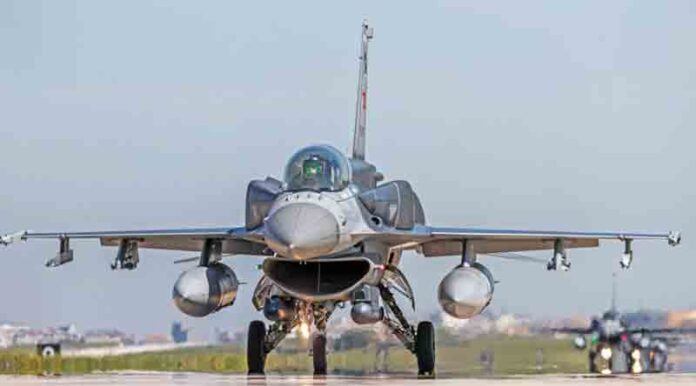
While Turkey’s military arsenal is significant, it does not match Israel’s capabilities. Turkey’s inventory includes upgraded F-16C/D fighter jets, advanced drones, effective air defense systems, modern tanks, and long-range artillery. If Turkey establishes operational bases in Syria, its warplanes would be positioned closer to Israel. The introduction of air defenses could create a more challenging environment for the Israeli Air Force in Syrian airspace. These bases, equipped with aircraft and air defense systems, could hinder Israel’s efforts to neutralize the military capabilities of the new Syrian regime.

Moreover, a substantial Turkish presence at these bases would enhance their ability to exert control over extensive areas of Syria. In addition to serving as launch points for aerial operations, these air bases would function as troop garrisons and support proxies independently of ground transportation routes.

A Turkish military expansion in Syria could also complicate U.S. aerial operations, which include airstrikes against ISIS targets and substantial support for the Kurdish-led Syrian Democratic Forces (SDF). The SDF operates in regions of Syria with minimal influence from HTS, and an increased Turkish military presence could bolster Turkey’s allies in those areas.

Nevertheless, in a direct conflict, Turkey would face significant disadvantages. Israel possesses a more advanced Air Force, superior air defense systems, and a highly skilled, technologically advanced military. Additionally, Israel benefits from unwavering support from the U.S., which supplies billions in military aid, weapons, and intelligence to the nation.

Even an indirect confrontation with Turkey could exacerbate Israel’s challenges.

The Alma Research and Education Center in Israel recently pointed out that, similar to the time of significant Russian military presence in Syria, Turkey could adopt various retaliatory strategies beyond merely sending aircraft against Israeli forces. These strategies might involve supplying the Syrians with intelligence on Israeli plans, disclosing information about Israeli operations, and providing advanced conventional weaponry to Syria, particularly in the form of air defense systems, missiles, drones, and more.

Despite the escalating rhetoric, an IDF official indicated that several factors might mitigate the chances of conflict.

The tensions between Israel and Turkey place a crucial U.S. ally in opposition to a NATO member. If a conflict were to arise between Israel and Turkey, it would create a challenging situation for the U.S., which would have to balance its support for both nations. Currently, President Donald Trump has expressed unwavering support for Israel, which could complicate matters for Turkey if a still unlikely clash were to escalate into a broader conflict. A direct confrontation could also jeopardize Turkey’s relationships with other Western allies, the official noted.

Nevertheless, the IDF official remains apprehensive about the future, particularly due to Erdogan’s precarious hold on power.

“I personally believe we are edging closer to conflict, especially with the rise of a radical jihadist regime in Syria and the strong possibility that Erdogan, concerned about his regime’s stability, may opt for escalation despite conflicting interests,” the official remarked. “For him, it could become a ‘do or die’ situation.”

“In summary, there is now a lack of certainty regarding regional stability in the Middle East, or perhaps anywhere else in the world,” he added. “We must continuously monitor the situation and identify, based on security interests, the warning signs that could trigger such an escalation. This vigilance is crucial to avoid being caught unprepared.”

Russia sends Su-57 Felon aircraft to Brazil’s defense exhibition in Rio

0
Su-57 achieved takeoff in slightly more than 11 to 12 seconds from a compact runway.

Beginning April 1st, Rosoboronexport, the Russian state-owned arms export agency, will take part in the LAAD 2025 defense and aviation exhibition in Rio de Janeiro, Brazil, where it will present a range of cutting-edge military equipment. The showcased items will include the Su-57 fifth-generation fighter jet, a variety of helicopters, the T-90MS main battle tank, the BMPT tank support vehicle, the S-400 air defense system, Igla portable air defense systems, and naval assets such as the Project 22160 patrol ship.

As one of the leading defense technology events in Latin America, this exhibition offers Rosoboronexport an opportunity to display its latest products and seek potential industrial collaborations within the region. The agency has expressed a desire to enhance its presence in Latin America, prompting discussions about the viability and consequences of these aspirations.

Rosoboronexport, a division of the Rostec State Corporation, serves as Russia’s exclusive intermediary for the export and import of military and dual-use goods. Its participation in LAAD 2025 highlights a strategic initiative to strengthen relationships with Latin American countries, where Russian military equipment has established a significant presence over recent decades.

The Su-57, a stealth fighter aimed at rivaling American models like the F-35, is expected to attract considerable interest, alongside the S-400, a long-range air defense system that remains a key component of Russia’s export offerings.

The T-90MS, an enhanced version of the proven T-90 tank, and the BMPT, often referred to as the Terminator for its support role in armored operations, demonstrate Russia’s focus on advancing ground forces technology. Additionally, the inclusion of naval platforms like the Project 22160 ship signifies an effort to cater to nations with maritime security requirements.

The agency’s involvement comes at a time when Latin America is increasingly recognized as a promising market for defense exports. As reported by the Russian news agency TASS, Rosoboronexport has expressed its readiness to explore “new industrial cooperation projects” that align with contemporary market demands.

This has sparked discussions about the potential establishment of production facilities in the region, which could alter the landscape of the global arms trade. Although no formal agreements have been announced, this concept is consistent with Russia’s previous initiatives to localize production in allied nations, a strategy that aims to lower costs and enhance bilateral relationships.

Historically, Russia has engaged in military-technical partnerships with various Latin American countries. Brazil, the venue for LAAD 2025, has been a collaborator since 1994, when it entered into a contract for Igla MANPADS, which are portable air defense systems designed to target low-flying aircraft.

A notable development occurred in 2008 with an intergovernmental agreement that facilitated the delivery of Mi-35M helicopters, along with the establishment of a service center in Brazil for maintenance purposes.

“We have significant potential to further strengthen our cooperation with Brazil,” stated Sergey Ladygin, Deputy General Director of ROE, during a previous LAAD event in 2015, as noted on the company’s official website. This perspective seems to remain relevant, as the agency is now looking to expand its industrial collaboration.

In addition to Brazil, nations such as Venezuela and Peru have also been significant clients. Venezuela, in particular, has procured a considerable amount of Russian military equipment, including T-72 tanks and S-300 air defense systems, reflecting its close ties with Moscow. Meanwhile, Peru operates a fleet of Mi-8 and Mi-17 helicopters, showcasing the resilience of Soviet-era designs that Russia continues to upgrade.

These partnerships lay the groundwork for Rosoboronexport’s goals, yet the idea of local production adds a layer of complexity. Setting up manufacturing facilities would necessitate substantial investment, political cooperation, and a stable economic climate—elements that differ significantly throughout the region.

The concept of weapon production in Latin America is not entirely new. Rosoboronexport has engaged in similar ventures in other countries, particularly in India, where it has worked on projects such as the BrahMos missile system in collaboration with India’s Defense Research and Development Organization.

In a statement from February 2025 reported by TASS, CEO Alexander Mikheev highlighted that contracts totaling $50 billion have been established with India since 2005, with Russia holding a 30% share of the Indian arms market.

This co-production model could potentially serve as a framework for Latin America, although the region’s limited defense budgets and varied political environments pose distinct challenges.

Experts recognize both potential benefits and hurdles in this strategy. “Latin America has an increasing demand for advanced defense systems, but the critical issue is whether these nations can invest in the necessary production infrastructure,” remarked Maria Gonzalez, a defense industry analyst at the Washington-based Center for Strategic Studies.

She identified Brazil’s aerospace industry, spearheaded by firms like Embraer, as a possible collaborator for Russian technology transfers, but warned that economic limitations and U.S. influence in the region could hinder such agreements.

The United States plays a significant role in the arms market of the Western Hemisphere, providing military equipment such as Black Hawk helicopters and F-16 jets to nations like Colombia and Chile, often linking these sales to broader security collaborations.

At LAAD 2025, attendees will witness a showcase of Russia’s technological advancements. The Su-57, featuring cutting-edge avionics and stealth capabilities, is presented as a competitor to the F-35, although its production numbers are considerably lower than those of its American rival.

Lockheed Martin, the producer of the F-35, announced that it had delivered over 900 units by early 2025, based on company reports. In contrast, the Stockholm International Peace Research Institute estimates that fewer than 30 Su-57s are currently operational.

The S-400 system, with a range of up to 400 kilometers, has been utilized in conflicts such as Syria, where it has received accolades for its performance, but it has also faced criticism due to its high costs and maintenance requirements.

The T-90MS, an upgraded version of the T-90 series, features enhanced armor and fire control systems, positioning it as a competitor to Western tanks like the M1 Abrams, which the U.S. has supplied to allies in the Middle East and Eastern Europe.

The BMPT, designed for tank protection in urban warfare, occupies a specialized role that few other systems address directly, although its effectiveness is contingent on the specific military strategies of potential buyers. The Igla MANPADS, a lightweight, shoulder-fired missile system, serves as a budget-friendly alternative to the U.S.-made Stinger, which gained attention during the conflict in Ukraine.

The Project 22160 patrol ship, featuring a modular design and drone capabilities, is aimed at navies in search of adaptable, mid-sized vessels, positioning it in competition with European manufacturers such as France’s Naval Group.

Rosoboronexport’s expansion into Latin America also has significant geopolitical implications. Russia’s military exports often function as a diplomatic strategy to counterbalance Western influence in areas dominated by the U.S. “This is as much about politics as it is about economics,” stated James Carter, a former Pentagon official now affiliated with the Atlantic Council.

He pointed out that while Russia’s arms sales to Latin America reached $2.5 billion in 2020, based on Rosoboronexport’s data, this figure represents only a small portion of the global market, where the U.S. led with $138 billion in exports that same year, according to the U.S. State Department. Nevertheless, even slight increases could enhance Russia’s influence in the region.

For Latin American nations, the attractiveness of Russian military equipment stems from its cost-effectiveness and dependability. The Mi-171Sh helicopter, for example, is well-suited for the challenging landscapes of the Andes or the Amazon, where American alternatives may come with higher costs or more stringent usage restrictions.

However, any shift towards local production would require more than just interest from buyers. “You need skilled labor, supply chains, and political will,” Gonzalez noted. “Brazil may have the necessary capacity, but smaller countries like Bolivia or Ecuador would face challenges.”

The exhibition in Rio de Janeiro will also act as a platform for Rosoboronexport to convey its message. The agency has highlighted that the systems on display, including the Su-57 and S-400, have been “upgraded based on feedback from the military” involved in Russia’s current operations, referencing the conflict in Ukraine, as reported by TASS.

This battle-tested branding may appeal to potential customers, but it also risks distancing those hesitant to connect with Moscow due to ongoing international sanctions.

As LAAD 2025 progresses, attention will shift beyond the equipment on display to the conversations taking place in the background. The delegation from Rosoboronexport is anticipated to engage with representatives from Brazil and other regional stakeholders to explore collaborative opportunities.

The outcome of these discussions remains uncertain; however, the agency’s order portfolio—valued at $57 billion across 44 countries as of late 2024, according to Mikheev—indicates it possesses the means to pursue ambitious objectives.

At this stage, the event represents a strategic move in Russia’s effort to enhance its presence in Latin America, advancing one weapon system at a time. The upcoming months will determine whether this exhibition leads to contracts, manufacturing facilities, or merely a more prominent position in a competitive market.

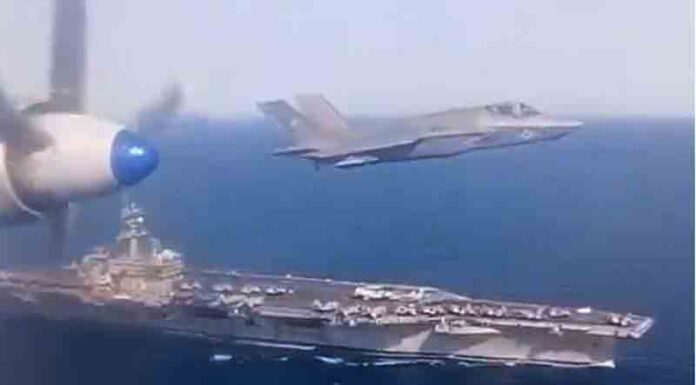
US Navy’s F-35C and Russia’s Il-38N engage in a remarkable aerial confrontation captured on film

0
US Navy’s F-35C and Russian Il-38N face off in stunning footage

A remarkable incident recently took place in the expansive Pacific Ocean, where a U.S. Navy F-35C Lightning II, recognized as one of the most sophisticated fighter jets in the U.S. military, flew in close proximity to a Russian Ilyushin Il-38N, a maritime patrol and anti-submarine aircraft.

This dramatic encounter, recorded on video and widely circulated on social media platforms such as X, occurred at a low altitude, with the formidable silhouette of the USS Carl Vinson, a Nimitz-class aircraft carrier, visible beneath them.

The unusual military interaction between these two global powers has garnered significant attention from both analysts and the public, providing insight into the ongoing strategic dynamics in international waters.

The footage, which offers a Russian viewpoint, depicts the Il-38N accompanied by the sleek, stealthy F-35C, with an additional U.S. fighter, the F/A-18F Super Hornet, also reported to be in the area.

A representative from the U.S. Pacific Fleet confirmed to Newsweek that this interaction occurred while the USS Carl Vinson was operating in the Pacific, highlighting that a Russian aircraft was intercepted and escorted in a manner considered “safe and professional.”

While the specific date and exact location of the incident have not been disclosed, posts on X and subsequent reports indicate that it likely happened in the days leading up to this week. The Russian Defense Ministry has yet to issue an official statement, leaving the narrative primarily shaped by U.S. accounts and the widely shared footage.

This encounter is part of a larger trend of military interactions between the United States and Russia, especially in areas where their interests overlap. The Pacific Ocean, a vital region for both nations, has witnessed similar incidents in recent years as each side keeps a close watch on the other’s naval activities.

According to Pentagon announcements last week, the USS Carl Vinson, which carries Carrier Air Wing 2, had been operating in the Western Pacific before its redeployment towards the Middle East.

Earlier this month, a Russian-language Telegram channel reported that the Il-38 aircraft of the Pacific Fleet were engaged in routine combat training exercises over the Sea of Japan, indicating the operational backdrop that may have contributed to this midair encounter.

The aircraft involved highlight a stark contrast in technology and strategy. The F-35C, a fifth-generation fighter designed for carrier operations, exemplifies the forefront of U.S. military aviation.

Manufactured by Lockheed Martin, it features stealth technology, sophisticated sensors, and precision strike capabilities, making it a vital element of American naval power projection. In contrast, the Il-38N is a modernized variant of a Soviet-era aircraft from the 1960s, developed by Ilyushin.

Primarily designed for anti-submarine warfare, it comes equipped with enhanced detection systems and can deploy mines or torpedoes, although it does not match the speed and maneuverability of a fighter jet. The sight of these two aircraft in the air highlights the differing strategies for air and naval supremacy adopted by Washington and Moscow.

Military analysts regard such intercepts as common yet important. David Ochmanek, a senior analyst at the RAND Corporation with extensive experience in defense policy, noted that these interactions serve two main purposes: safeguarding naval assets and collecting intelligence.

“When a foreign aircraft approaches a carrier strike group, the standard protocol is to deploy fighters to identify and monitor it,” he stated. “Both parties are assessing each other’s response times and capabilities while simultaneously signaling their presence.” In this instance, the involvement of both an F-35C and an F/A-18F indicates a comprehensive U.S. response, combining stealth technology with the established versatility of the Super Hornet.

The recent low-altitude flyby of the Il-38N near the USS Carl Vinson could be seen as a calculated demonstration of capabilities from the Russian side. Given the aircraft’s function in maritime surveillance, it was likely outfitted to gather intelligence on the movements of the carrier group, a tactic often employed in the context of great power rivalry.

The Aviationist, a well-regarded aerospace publication, highlighted last year that the upgrades to the Il-38N enhance its value for reconnaissance missions, allowing it to operate in contested airspace for extended periods to monitor and report activities.

It remains uncertain whether this particular mission was strategically timed with the Carl Vinson’s movements or if it was a spontaneous opportunity. However, the close proximity indicates the heightened vigilance both militaries have regarding each other’s activities.

Such encounters have characterized U.S.-Russian relations since the Cold War, when Soviet Tu-95 bombers routinely tested NATO defenses, leading to the scrambling of American interceptors. The Pacific region has continued to be a focal point, with NORAD documenting numerous instances of Russian aircraft entering the Alaska Air Defense Identification Zone in recent years.

In September, a Russian Su-35 came alarmingly close—within 50 feet—of a U.S. F-16 near Alaska, an event deemed “unsafe and unprofessional” by U.S. officials. In contrast, the Pacific Fleet’s characterization of the recent encounter as professional indicates a shared understanding of engagement protocols, despite ongoing tensions.

The larger geopolitical landscape further complicates this situation. The USS Carl Vinson’s redeployment to the Middle East coincides with increasing U.S. military actions against Houthi targets in Yemen, aimed at securing maritime routes in the Red Sea. At the same time, Russia has been strengthening its relationship with China, as demonstrated by joint bomber patrols near Alaska last July, which were intercepted by U.S. and Canadian aircraft.

This unprecedented collaboration marks a significant change in the dynamics of the Pacific, with Moscow and Beijing increasingly aligning against Western interests. Although the recent incident involved only Russian and U.S. forces, it underscores the idea that the region continues to serve as a battleground for superpower strategies.

Public response, amplified by the video’s circulation on X, has varied from intrigue to apprehension. Ryan Chan, a contributor for Newsweek who first reported the story, identified the Instagram account “ryans_warbirds” as the original source of the footage, which is believed to have been recorded by a sailor from the Carl Vinson.

The striking visuals of the clip—depicting the Russian aircraft overshadowed by the carrier and flanked by U.S. jets—have ignited conversations about military preparedness and the potential for escalation. Nevertheless, both military forces seem to regard these encounters as routine, a sentiment reflected in the Pacific Fleet’s measured response.

For the sailors on the Carl Vinson, such interactions are part of their daily operations. The carrier, which hosts nine aviation squadrons and over 5,000 personnel, serves as a formidable platform for projecting power and deterring threats. Its air wing, including the F-35C, undergoes extensive training for scenarios like this to ensure that intercepts are executed effectively.

Captain John Miller, a retired naval aviator who piloted F/A-18s in the 1990s, reminisced about similar missions. “You’re always alert, but the aim is to maintain control,” he stated. “The other side is aware that we’re monitoring them, and we know they’re keeping an eye on us. It’s a coordinated effort.”

Comparisons to other recent events illustrate the variability of these encounters. The close call in Alaska last fall faced significant backlash, while a July interception of Russian and Chinese bombers was deemed routine by NORAD. This week’s incident occupies a middle ground—visually striking yet officially classified as uneventful.

The distinction may stem from how actions are carried out: a low pass near a carrier is daring but not necessarily aggressive, in contrast to a near-collision in open airspace. Nevertheless, each incident erodes the trust between the two military forces, a concern highlighted by analysts who caution against potential miscalculations amid strained diplomatic relations.

As the Carl Vinson makes its way toward the Middle East and the Russian Pacific Fleet continues its training exercises, the Pacific Ocean serves as a backdrop for this subtle rivalry. The video, now ingrained in public awareness, underscores the stakes at play—technological capabilities, territorial dominance, and the fragile equilibrium of deterrence.

Neither party has indicated a desire to escalate tensions, and Moscow’s lack of an immediate response implies that this incident will likely be recorded as just another instance of routine military interactions. However, for observers from a distance, it offers a brief glimpse into a realm where power is gauged not only by rhetoric but also by the sound of engines cutting through open waters.

The final aspect of this scenario is the silence that often follows such occurrences. There were no reported injuries, no shots fired, and no diplomatic protests raised—at least for now. The U.S. Navy has already redirected its attention to its upcoming mission, while Russia’s Il-38N probably returned to its base with data for its commanders to analyze.

What remains is the striking image: two aircraft from opposing nations flying in formation against the backdrop of a carrier, encapsulating both tension and professionalism. In the unpredictable waters of the Pacific, this scene may soon be repeated.

Vance asserts that Denmark has not secured Greenland from threats posed by Russia and China

0
U.S. Vice President JD Vance, flanked by Secretary of Energy Chris Wright and National Security Advisor Mike Waltz, speaks at the U.S. military's Pituffik Space Base in Greenland.

U.S. Vice President JD Vance criticized Denmark on Friday for its inadequate efforts to ensure the safety of Greenland, proposing that the United States could provide better protection for the semi-autonomous Danish territory, which President Donald Trump has previously expressed interest in acquiring.

During his visit to the U.S. military base at Pituffik in northern Greenland, Vance stated that while there are no immediate plans to increase the U.S. military presence on the ground, investments will be made in resources such as additional naval vessels.

He affirmed the importance of respecting Greenland’s sovereignty but implied that the territory would recognize the advantages of collaborating with the U.S., a statement that the Danish prime minister deemed unjust. “Denmark has not kept pace or allocated the necessary resources to maintain this base, support our troops, and, in my opinion, protect the people of Greenland from aggressive actions by Russia, China, and other countries,” Vance remarked, without providing specifics on the alleged threats.

Trump has often asserted that acquiring the island is crucial for U.S. security, as Denmark has governed Greenland since 1721.

Vance’s pointed criticisms of Denmark—a long-standing U.S. ally and NATO member—highlight the Trump administration’s disregard for traditional alliances. He has been particularly outspoken, previously addressing European officials on issues of free speech and illegal immigration during a recent trip, and later accusing Ukrainian President Volodymyr Zelenskiy of lacking appreciation for Trump during a tense White House meeting.

In Greenland, Vance noted that Russia, China, and other nations are showing significant interest in Arctic shipping routes, naval pathways, and regional minerals. He emphasized that the U.S. would enhance its investment in resources, including naval ships and military icebreakers, to establish a stronger presence in the area.

As concerns grew among Greenlanders regarding the visit, Vance assured them that the people of Greenland would have “self-determination” and that the U.S. would honor their sovereignty. “I believe they will ultimately collaborate with the United States,” Vance stated. “We can enhance their security significantly. We could provide much greater protection, and I think they would also experience improved economic conditions.”

His comments followed the announcement of a new broad government coalition in Nuuk, which aims to maintain current ties with Denmark. Greenland’s newly appointed Prime Minister, Jens-Frederik Nielsen, remarked that the U.S. visit indicated a “lack of respect,” while Danish leaders reaffirmed their support for Greenland.

“For many years, we have stood alongside the Americans in challenging situations. Thus, the vice president’s characterization of Denmark is not accurate,” Danish Prime Minister Mette Frederiksen stated to the Danish news agency Ritzau.

Danish Foreign Minister Lars Lokke Rasmussen acknowledged Vance’s point about insufficient efforts but expressed frustration, noting that the U.S. has also fallen short. He highlighted that currently, the U.S. maintains a base with 200 soldiers in Greenland, whereas during the Cold War, there were 17 military installations housing 10,000 soldiers.

While Vance’s visit was ongoing, Trump informed reporters at the White House that the U.S. requires Greenland to ensure “the peace of the entire world.”

Greenland is crucial for international security, and we cannot afford to overlook its importance. As Trump stated, “We must have Greenland. It’s not a matter of whether we can do without it; we simply cannot.” He emphasized that the waters around Greenland are frequented by “Chinese and Russian ships,” and the U.S. will not depend on Denmark or any other nation to manage this issue.

Vance arrived at the remote base, located 750 miles (1,200 km) north of the Arctic Circle, where he expressed gratitude to the U.S. armed forces for their service. The temperature at Pituffik was recorded at minus 3 degrees Fahrenheit (-19 C). He was joined on this trip by his wife Usha, national security adviser Mike Waltz, and Energy Secretary Chris Wright.

According to a 1951 agreement, the U.S. has the right to access its base at any time, provided it informs Greenland and Copenhagen. Pituffik is strategically positioned along the shortest route between Europe and North America, making it essential for the U.S. ballistic missile warning system.

The island, whose capital is closer to New York than to Copenhagen, is rich in minerals, oil, and natural gas. However, development has been sluggish, and U.S. investment in the mining sector has been minimal, with most companies operating there being Australian, Canadian, or British. A White House official noted that Greenland possesses a significant supply of rare earth minerals that could drive the next generation of the U.S. economy.

The current issue at hand is how far Trump is prepared to advance his proposal regarding the acquisition of the island, according to Andreas Oesthagen, a senior researcher specializing in Arctic politics and security at the Fridtjof Nansen Institute in Oslo.

He informed Reuters that it remains improbable for the United States to resort to military action. However, he expressed concern that President Trump and Vice President Vance are likely to continue employing alternative forms of pressure, including vague statements, unofficial visits to Greenland, and economic strategies.

Surveys indicate that nearly all residents of Greenland are against the idea of joining the United States. Large-scale protests have erupted, with demonstrators donning “Make America Go Away” hats and carrying “Yankees Go Home” signs, marking some of the most significant demonstrations in Greenland’s history.

On Thursday, citizens in Nuuk placed Greenlandic flags in the snow alongside a cardboard sign that read “Our Land. Our Future.”

On Friday, Nielsen called for political solidarity. His pro-business party, the Democrats, which advocates for a gradual move towards independence from Denmark, emerged as the leading party in the March 11 election.

“During this challenging time for our people, we must unite,” Nielsen stated at a press conference.

Su-24M tactical bombers strike over 50 targets in the Baltic – What are Putin’s intentions?

0
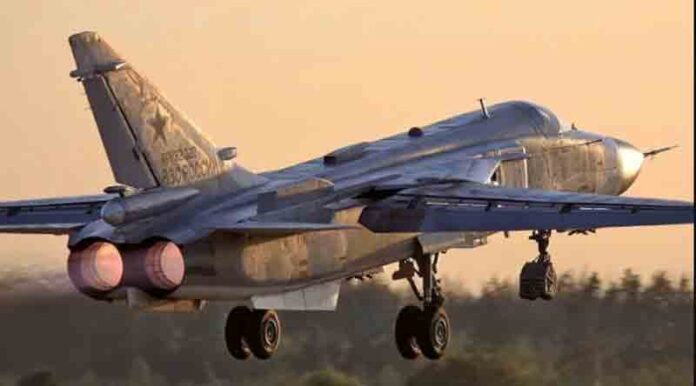
Su-24M tactical bombers, Russia.

This week, crews operating Su-24M tactical bombers from the Russian Baltic Fleet’s naval aviation conducted a flight-tactical exercise in the vicinity of Kaliningrad, focusing on precision strikes against simulated enemy targets.

The Russian Ministry of Defense announced the drills, which were covered by the state-run TASS news agency. The exercises aimed at neutralizing military-industrial sites, airfields, vital economic infrastructure, troop concentrations, command centers, and convoys of military equipment.

Approximately 10 aircraft and 50 personnel from the fleet’s mixed aviation regiment took part, targeting over 50 objectives using unguided air-to-air missiles and bombs.

Conducted in the Baltic Sea region, the exercise sought to enhance crew coordination and tactical proficiency, drawing lessons from Russia’s ongoing military engagements. This training highlights Moscow’s commitment to strengthening its defensive capabilities in a strategically important area adjacent to NATO countries.

The Su-24M, a Soviet-era frontline bomber featuring variable-sweep wings, continues to be a vital asset for the Baltic Fleet, primarily stationed in Kaliningrad—an enclave situated between Poland and Lithuania—and near St. Petersburg.

During the exercise, pilots engaged in low-altitude maneuvers, air combat strategies, reconnaissance, and strikes using onboard munitions, simulating a modern combined-arms battlefield. TASS reported that the drills also involved providing fire support to ground units of the Baltic Fleet, illustrating the integration of air and land forces in modern warfare.

The fleet’s press office highlighted that the training exercises were informed by experiences from Russia’s “special military operation,” a term referring to its actions in Ukraine, emphasizing their relevance to real-world scenarios. While no specific enemy was identified, the context and scale imply a response to perceived threats in the Baltic area.

Kaliningrad’s strategic location enhances the importance of these drills. Nestled between NATO allies Poland and Lithuania, this exclave functions as a forward operating base for Russia, accommodating a diverse array of air, naval, and missile forces.

The Baltic Sea, a relatively small region bordered by Estonia, Latvia, Lithuania, Poland, Denmark, Germany, and the recently joined NATO member Finland, has historically been a hotspot for tensions between East and West.

The Su-24M crews’ emphasis on targeting critical infrastructure and military installations reflects Russia’s overarching deterrence strategy, aimed at safeguarding its western borders from potential threats. Although the exercise involved around 10 aircraft, it was modest in size yet significant in its complexity, assessing the fleet’s capability to implement a coordinated tactical strategy under simulated combat scenarios.

The background of the Su-24M adds context to its current function. Developed in the 1970s, this aircraft was intended for deep-strike missions against NATO forces during the Cold War, with a capacity to carry up to 8 tons of munitions, including bombs, rockets, and early precision-guided weapons.

Despite its age, enhancements such as upgraded navigation and targeting systems have maintained its operational relevance, boasting a combat radius of approximately 600 kilometers—sufficient to reach targets across the Baltic states or into Poland from Kaliningrad. Its low-altitude flight capability, often below radar detection, improves its chances of evading air defenses, a tactic likely refined during the recent exercises.

Russia has extensively utilized the Su-24 in both Syria and Ukraine, targeting military and civilian infrastructure, which has provided crews with valuable practical experience that is now being incorporated into their training programs.

Defense analysts interpret this military activity as a message directed at NATO’s eastern flank. Estonia, Latvia, and Lithuania—former Soviet republics that are now NATO allies—are within striking range of Kaliningrad, as is Poland, a crucial component of the alliance’s regional strategy.

Since 2014, NATO has enhanced its presence in these nations through the Enhanced Forward Presence initiative, deploying multinational battlegroups led by the U.S., UK, Germany, and Canada. The Baltic states, which have limited air capabilities, depend significantly on NATO air policing operations conducted from bases such as Ämari in Estonia and Šiauliai in Lithuania.

A retired U.S. Air Force officer, speaking to Defense News, remarked that the Su-24M’s capabilities are suited for missions aimed at disrupting such operations, potentially targeting runways or radar installations during a crisis. “It’s a blunt tool, but it gets the job done,” he stated.

The congested airspace over the Baltic Sea adds further complexity. NATO frequently conducts exercises in this area, including the annual BALTOPS naval drills, which involve ships and aircraft from various member nations, including Denmark and Germany. In response, Russia conducts its own exercises, often flying near NATO airspace to assess response times.

The Su-24M has been involved in notable incidents, such as in 2016 when two bombers flew dangerously close to the USS Donald Cook over the Baltic Sea, leading to U.S. condemnation. While the latest exercise may not be overtly provocative, it aligns with a pattern of asserting dominance in the region.

A Russian naval officer, speaking anonymously to TASS, characterized the training as “a routine step to maintain readiness,” minimizing any suggestion of escalatory intentions.

Comparisons with Western aircraft reveal both the advantages and drawbacks of the Su-24M. When compared to the U.S. F-16 and the UK’s Tornado GR4—both of which are either retired or being phased out—the Su-24M does not possess stealth capabilities but makes up for it with superior speed and payload capacity.

The F-16 boasts a combat radius exceeding 500 kilometers and is equipped with precision-guided munitions, making it highly versatile. In contrast, the Su-24M relies on its significant firepower and ability to operate at low altitudes. However, contemporary NATO defense systems, such as the Patriot PAC-3 and Norway’s NASAMS, could pose a threat to its survivability, particularly due to its outdated electronic countermeasures.

Nonetheless, the Su-24M’s capacity for rapid strikes from Kaliningrad ensures its continued relevance, especially against less fortified targets like infrastructure or troop concentrations, as demonstrated in recent drills.

The focus on crew coordination during these exercises aligns with broader shifts in Russian military strategy. Insights gained from the conflict in Ukraine, where air support has been crucial yet often hindered by Ukrainian air defenses, seem to shape the training approach.

A press release from the Baltic Fleet, reported by TASS, emphasized the importance of collaboration between air and ground forces, reflecting the hybrid warfare tactics observed in Eastern Europe. Pilots engaged in evasive maneuvers and target identification, essential skills for operating in contested airspace where NATO aircraft like the Eurofighter Typhoon or F-35 could quickly engage.

A European defense analyst, speaking to Jane’s Defence Weekly, noted that Russia is attempting to mitigate the Su-24M’s age through enhanced pilot training. “They’re maximizing every capability from an aging platform,” he remarked.

Responses from the region vary. Lithuania’s defense ministry provided a brief statement to Reuters acknowledging the exercise but refrained from speculating on its purpose, simply noting that NATO is vigilant regarding Russian activities.

Estonia and Latvia, which frequently experience Russian overflights, have not made public comments, although their dependence on NATO for deterrence is evident.

Poland has significantly enhanced its air defense capabilities in recent years by deploying U.S.-provided HIMARS and Patriot systems, a strategic response to the military assets stationed in Kaliningrad. A spokesperson for the Polish military conveyed to the PAP news agency, “We’re prepared for any scenario,” underscoring Warsaw’s readiness.

Discussions on social media platforms like X reveal varying public perceptions. Some users dismissed the military drills as standard procedure, with one commenting, “Same old Kaliningrad playbook—nothing new here.” Conversely, others interpreted the maneuvers as a show of strength against NATO, with one post stating, “Su-24s buzzing the Baltics again? Russia’s not subtle.”

The absence of significant escalation—unlike previous events—resulted in a relatively low level of online engagement, although military enthusiasts continued to express interest in the Su-24M’s activities. Without official statements from NATO, the immediate implications of the exercise remain uncertain, but its timing amidst ongoing tensions between East and West ensures it will attract attention.

The operational record of the Su-24M in the Baltic region is not without blemishes. In 2014, a training flight near Kaliningrad ended in tragedy when a crash claimed the lives of both crew members, raising concerns about the aircraft’s maintenance and reliability.

Since then, modernization initiatives have enhanced the fleet, although precise figures regarding operational units remain ambiguous. Estimates from the International Institute for Strategic Studies indicate that Russia has approximately 100 Su-24s across various military branches, with a small number allocated to the Baltic region.

The recent exercise, which successfully targeted over 50 objectives, indicates that the aircraft are still operational. However, their effectiveness against advanced defense systems is a topic of debate. A 2023 report from the Center for Naval Analyses highlighted that while the Su-24M can still pose a threat to unprotected targets, its role as a primary strike aircraft is diminishing.

Looking forward, the Baltic Fleet’s dependence on the Su-24M may evolve as Russia begins to deploy newer aircraft such as the Su-34 or Su-57. However, budget limitations and production setbacks have hindered this transition.

Currently, the Su-24M functions as a reliable asset, serving as a link between Soviet-era capabilities and contemporary requirements. Its involvement in recent exercises highlights a practical strategy—leveraging existing resources to assert influence in a region where NATO’s presence is expanding.

The drills’ emphasis on economic targets suggests a disruptive strategy, aiming to cause significant damage in a potential conflict without the need for cutting-edge technology.

As the activities conclude near Kaliningrad, the Baltic Fleet’s capabilities continue to attract attention from both Russia and its neighboring countries. While the exercise may not dramatically shift the status quo, it reaffirms Moscow’s dedication to safeguarding its western territory.

The impact on the balance of power in the Baltic Sea will largely depend on NATO’s reactions and Russia’s subsequent actions. For the time being, the Su-24M crews have enhanced their proficiency, leaving the strategic landscape of the region as precarious as ever.

Turkish F-16 fighter jets are utilizing tablets to operate domestically produced weaponry

0
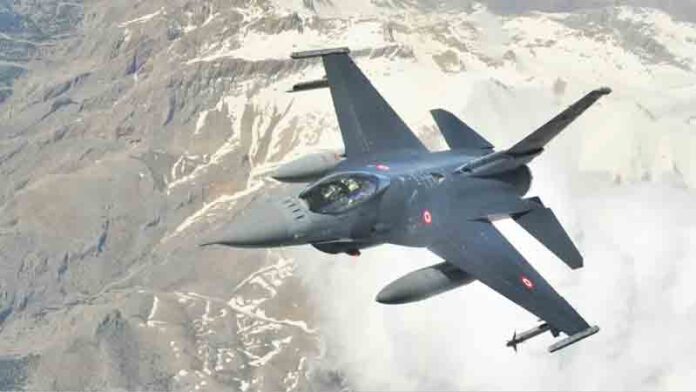
A Turkish Air Force F-16C approaches the tanker on a training mission.

Turkey has started incorporating tablet computers into the cockpits of its F-16 fighter jets to facilitate the swift integration of newly developed domestic weapons. This initiative draws interesting comparisons to Ukraine’s use of similar devices, which enable its Soviet-era aircraft to deploy Western air-to-ground munitions—more details on this can be found here.

A recent video showcasing a test launch of the domestically produced SOM-J standoff missile features a tablet positioned in the cockpit of an F-16. This tablet is affixed to the Input Control Panel (ICP), situated on the central console beneath the head-up display. The ICP is responsible for selecting weapons, navigation parameters, and radio communications, among other tasks. Additionally, the pilot utilizes another tablet on their lap, a trend that is becoming increasingly prevalent, enhancing the information accessible through the aircraft’s mission systems and reducing reliance on bulky paper manuals in the cockpit.

In this scenario, the tablet is part of the UBAS, or Aircraft Independent Firing System. Utilizing Turkish-developed software, the UBAS offers a weapons interface for Turkish-manufactured munitions, such as the SOM-J. It is reported that UBAS is installed in Turkey’s upgraded F-16C/D Block 40 aircraft, although it is not compatible with older models. The exact number of aircraft equipped with this technology remains uncertain, and it is likely that it is primarily used for testing purposes before being integrated into Turkish-built aircraft and drones. However, given the availability of this capability, it would be unexpected if it were not more broadly implemented across Turkish F-16s.

The SOM-J missile was developed by Turkey’s Roketsan, building on the design of the Stand-Off Missile (SOM) utilized by the F-4E and F-16 aircraft. It was intended for internal integration with the F-35, although Turkey was removed from the Joint Strike Fighter program, the development of the SOM-J persisted. This missile boasts a range of at least 170 miles and employs a GPS/inertial navigation system (INS) for guidance, complemented by an imaging infrared seeker for its terminal phase. The SOM-J measures approximately 12.8 feet in length and weighs around 1,190 pounds.

There is a growing trend of using tablet-based solutions to adapt new weapons for existing aircraft platforms.

In Ukraine’s situation, which we have previously analyzed, the Soviet-era fighter jets lack the necessary data bus interfaces to ensure smooth compatibility with Western weapons systems.

Last year, U.S. Undersecretary of Defense for Acquisition and Sustainment, Dr. William LaPlante, stated:

“There’s also a series of … we call it ‘air-to-ground,’ it’s what we call it euphemistically … think about the aircraft that the Ukrainians have, and not even the F-16, but they have a lot of the Russian and Soviet-era aircraft. Working with the Ukrainians, we’ve been able to take many Western weapons and get them to work on their aircraft, where it’s basically controlled by an iPad by the pilot. And they’re flying it in conflict like a week after we get it to him.”

In addition to utilizing tablets in the cockpit, Ukrainian aircraft are equipped with specialized pylons designed to carry Western-made munitions. More information on this topic can be found here.

Conversely, Turkey faces the challenge of integrating new domestically produced weapons onto its older U.S.-made F-16s.

Turkey’s situation regarding upgrades to its F-16 fleet is quite unique, stemming from the occasionally tense relationship between Ankara and Washington.

With the third largest F-16 fleet globally, Turkey’s Vipers have been extensively deployed in combat operations. As a replacement for these aircraft is not imminent, Turkey has initiated several upgrades to its F-16s, including a service-life extension carried out by the domestic company Turkish Aerospace, previously known as Turkish Aerospace Industries (TAI).

While Turkey operates Block 30, 40, and 50 variants, it appears that the UBAS system is currently limited to the Block 40/50 jets that underwent modernization through the Common Configuration Implementation Program (CCIP), which was finalized in 2015.

The CCIP upgrade included the mechanically scanned AN/APG-68(V)9 multi-mode radar, a new mission computer, color cockpit displays, an enhanced horizontal situation indicator, the Joint Helmet Mounted Cueing System (JHMCS), Link 16 datalink capabilities with the Multifunctional Information Distribution System to improve pilot situational awareness and communication, a new air-to-air interrogator, and compatibility with various new targeting systems and munitions, such as the AIM-9X air-to-air missile and the Sniper targeting pod.

Thanks to the UBAS system, these aircraft can now also carry a variety of Turkish-made munitions, which can be integrated without modifying the F-16’s software, which is updated through proprietary ‘tapes.’ Even without access to the software, Turkey can incorporate new weapons onto the jets using UBAS.

The system has demonstrated its capability for deploying the SOM-J, and it is likely compatible with other domestically produced munitions. This may encompass the HGK 500-pound INS/GPS-guided bomb, the KGK glide bombs available in 500-pound and 1,000-pound variants, and the LGK-82, which is Turkey’s own version of the 500-pound GBU-12 laser-guided bomb. Additionally, Turkey is integrating locally manufactured air-to-air missiles onto its F-16s, although these do not seem to utilize the UBAS interface.

For Turkey, the ability to independently integrate such weapons onto the F-16s, without reliance on the original manufacturer or other U.S. companies, holds significant importance.

The relationship between the United States and Turkey has been strained in recent years, which has had a notable impact on the Turkish Armed Forces.

As previously noted, Turkey’s decision to purchase Russian S-400 air defense systems resulted in its removal from the F-35 program and led to sanctions against the Turkish Presidency of Defense Industries.

Furthermore, Turkey’s military intervention in Syria in 2019 sparked demands from influential members of Congress for a comprehensive arms embargo, along with various sanctions against Turkey.

These tensions have raised concerns about the potential disruption of U.S. arms supplies to Turkey, including spare parts and support for its F-16 fleet.

In anticipation of possible U.S. sanctions, Turkey reportedly began accumulating spare parts for its F-16s in 2019.

At that time, Joseph Trevithick of TWZ remarked:

“Having spare parts on hand is particularly vital for the F-16s, which represent the Turkish Air Force’s most numerous and advanced combat aircraft and will remain so for the foreseeable future, especially given the lack of F-35 deliveries. Without these reserves, the Vipers could quickly become inoperable, placing Turkey in a precarious situation.”

Turkey has continued to advance its F-16 refurbishment and enhancement programs, which have gained significance following the loss of the F-35 contract and the aging of the F-4E fleet, with only one squadron still operational in the country.

While there is considerable attention on Turkish Aerospace’s indigenous TF Kaan next-generation fighter, its entry into service is not expected until at least the 2030s. Additionally, there are ongoing concerns regarding its dependence on U.S.-sourced technology, particularly concerning the engines.

Conversely, there have been indications that the strained U.S.-Turkish relationship is improving, even during the previous Biden administration.

In early 2024, then-President Biden expressed his desire for Congress to expedite the approval of F-16 sales to Turkey, potentially paving the way for Ankara’s long-delayed acquisition of additional aircraft. This development followed Turkey’s approval for Sweden to join NATO, a condition that had been seen as essential for the F-16 deal to proceed.

However, as of now, no new F-16 sales have been finalized, making the need to extend the operational life of the existing Vipers increasingly urgent. Given that some of these jets may remain in service until 2050 or later, their capability to utilize new weaponry is highly advantageous. Furthermore, the ability to source munitions from local industry is vital, as it reduces Turkey’s dependence on foreign suppliers who may be less inclined to provide arms based on the prevailing political climate.

In addition to being utilized in the cockpits of Turkish F-16s, the UBAS system has also been integrated into Soviet-era Su-25 Frogfoot attack aircraft operated by Azerbaijan, as part of a Turkish modernization initiative.

The initial phase of this upgrade, referred to as Merhale-1, equips the Su-25 with the UBAS system, enabling it to deploy Turkish-manufactured KGK-82/83 and TEBER-82 precision-guided munitions, along with SOM-B1 standoff missiles.

These armaments can be utilized by the Frogfoot without necessitating additional avionics upgrades. However, it is important to highlight that the second phase of the upgrade, Merhale-2, introduces enhancements such as a new mission computer, advanced radios, communication systems, inertial navigation systems (INS), and more.

The situation in Azerbaijan illustrates Turkey’s distinctive position, bolstered by its rapidly expanding defense aerospace industry, particularly in munitions and drone technology—an area that was not as developed in the past. If UBAS facilitates the integration of various weapons on U.S.-made fighter jets, it would represent a significant advancement on multiple fronts. This could be particularly impactful for exports, providing foreign operators with a swift and efficient means to incorporate Turkish armaments onto their U.S.-manufactured aircraft.

Overall, these advancements in Turkey highlight the increasing importance of tablets as a crucial interface between aircraft and diverse weapon systems. Tablets are also emerging as essential tools for managing Collaborative Combat Aircraft (CCA) drones and other unmanned platforms, at least in their initial stages. Furthermore, they are becoming integral to various training applications.

Consequently, tablets are demonstrating their value in enhancing older platforms with a range of new capabilities in a cost-effective and timely manner.

U.S. is pushing for a wider minerals agreement with Ukraine, sources say

0
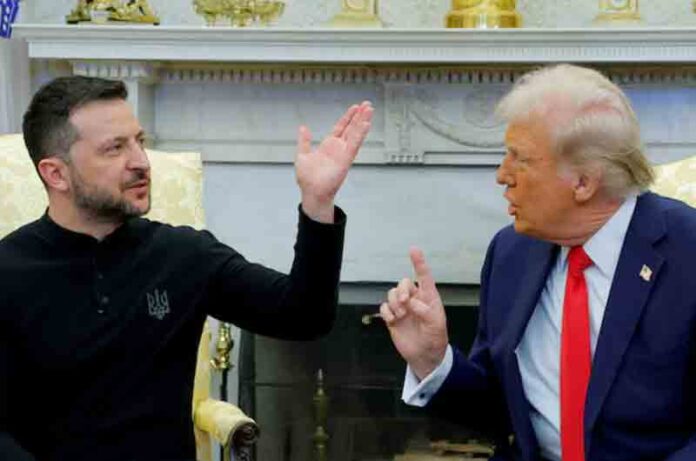
U.S. President Donald Trump meets with Ukrainian President Volodymyr Zelenskiy at the White House in Washington, D.C., U.S.

The Trump administration has put forward a new, broader minerals agreement with Ukraine, as reported by three individuals familiar with the ongoing discussions and a summary of a draft proposal acquired by Reuters. According to these sources, the U.S. has modified its initial proposal, which does not provide Ukraine with any future security assurances. Instead, it mandates that Ukraine allocate all revenue generated from natural resources managed by both state and private entities throughout its territory into a joint investment fund.

The conditions proposed by Washington significantly exceed those that were under consideration prior to the contentious Oval Office meeting last month between U.S. President Donald Trump and Ukrainian President Volodymyr Zelenskiy. Treasury Secretary Scott Bessent is leading the negotiations on behalf of the United States, as noted by one of the sources. Bessent has not yet responded to requests for comments.

The summary indicates that the proposal does not include any mention of the U.S. acquiring ownership of Ukraine’s nuclear power facilities, a topic that Trump had previously discussed.

Trump has asserted that a minerals agreement would facilitate a peace deal by providing the U.S. with a financial interest in Ukraine’s future. He views this as a means for America to recoup some of the tens of billions of dollars it has extended to Ukraine in financial and military assistance since Russia’s invasion three years ago.

National Security Council spokesperson James Hewitt refrained from confirming the specifics of the latest proposal but stated that the agreement would enhance the U.S.-Ukraine relationship. “The mineral deal presents Ukraine with the chance to establish a lasting economic partnership with the United States, which is fundamental for long-term security and peace,” Hewitt remarked.

Ukraine’s foreign ministry has not yet provided a response to a request for comment. An earlier iteration of the agreement suggested the establishment of a joint investment fund, with Ukraine contributing 50% of the future profits from the extraction of state-owned natural resources. It also outlined a collaborative approach for the U.S. and Ukraine to develop the country’s mineral resources.

On Tuesday, President Zelenskiy informed reporters that the U.S. had proposed a significant new agreement, and Ukrainian officials were in the process of reviewing its details. He mentioned on Thursday that the U.S. is “constantly” altering the terms of the proposed minerals deal, but he emphasized that he did not want Washington to perceive Kyiv as opposed to the agreement.

In a recent interview with Fox News, Bessent stated that the U.S. had provided a finalized document for the economic partnership and expressed hope for comprehensive discussions, potentially leading to signatures next week.

The revised proposal indicates that the U.S. would have the first right to purchase resources extracted under the agreement and would recover all funds provided to Ukraine since 2022, along with a 4% annual interest rate, before Ukraine can access the profits from the fund, as outlined in the summary. The Financial Times was the first to report on this updated proposal.

If finalized, the joint investment fund would be governed by a board consisting of five members—three appointed by the U.S. and two by Ukraine. The generated funds would be converted into foreign currency and transferred abroad, according to the summary. The fund’s management would fall under the U.S. International Development Finance Corporation (DFC). A separate source familiar with the negotiations indicated that there had been talks about the DFC overseeing the fund’s administration.

Australia invests billions in missile acquisition amid worldwide shortages

0
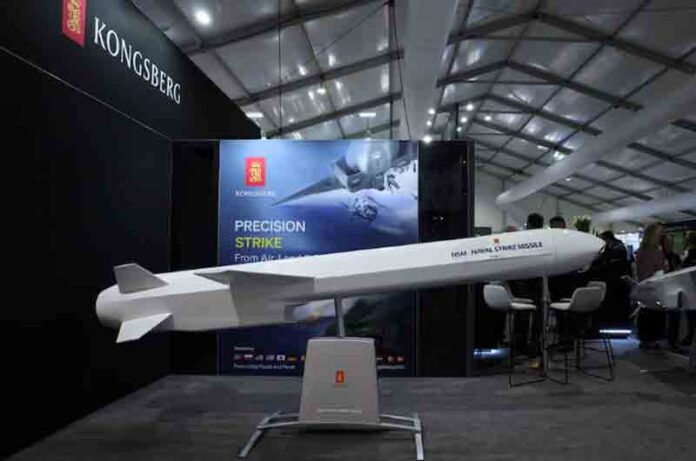
Kongsberg's NSM Naval Strike Missile is displayed at the Australian International Airshow in Avalon, Australia.

The ongoing conflict in Ukraine and the rise in European defense expenditures are expected to hinder Australia‘s ambitions to develop its own missile component capabilities, even as the nation moves forward with a multibillion-dollar initiative to procure long-range strike missiles. Last year, Prime Minister Anthony Albanese committed A$74 billion (approximately $46.68 billion) for missile procurement, which includes A$21 billion dedicated to establishing a Guided Weapons and Explosive Ordnance Enterprise within Australia. This investment is part of the Labor government’s strategy to adapt the country’s defense posture in response to China’s military expansion.

To mitigate potential global supply chain challenges, Australia has placed numerous orders with U.S. and European defense firms, such as Lockheed Martin, Kongsberg, and Raytheon. Tim Cahill, President of Lockheed Martin’s Missiles and Fire Control division, indicated that the company is engaged in talks with Australia regarding both “long-term and short-term solutions” for hypersonic missiles, which are intended to bolster the defense of Australia’s northern borders. “Long-range strike and hypersonics—rapid long-range strikes that are highly survivable—are clearly a priority,” Cahill stated during an interview at this week’s Avalon Air Show.

At the event in Victoria, defense industry leaders noted that global shortages of missile components, coupled with high demand and the necessity to enhance the capabilities of Australian suppliers, would result in a gradual integration of local components into domestic production. Kongsberg of Norway aims to establish a unified supply chain across Europe, the United States, and the Indo-Pacific region as new manufacturing facilities in Australia and the U.S. become operational, with workloads shared among these sites, according to Oyvind Kolset, Executive Vice President of Missiles & Space. “The demand is exceptionally high right now, and it is challenging to scale up production at our current pace, but we have been preparing for this for several years,” Kolset remarked, referencing missile production efforts related to the Ukraine conflict.

Kongsberg Australia’s general manager, John Fry, announced that the company has engaged 10 Australian suppliers for potential future installations of its Naval Strike Missile on Australian frigates. He noted that certain components of the missile supply chain necessitate more industrial capacity than what is currently available in Australia. Kolset added, “Producing the missile from the ground up with our current capabilities is not feasible. This is also true for Norway, as we depend on suppliers from the U.S. and Europe.”

In a related development, Lockheed Martin anticipates manufacturing Guided Multiple Launch Rocket Systems (GMLRS) in Australia this year. However, Cahill pointed out that the supply of solid rocket motors required for GMLRS in the U.S. is “insufficient,” highlighting global shortages. He emphasized the strategic significance of Australia’s Guided Weapons and Explosive Ordnance Enterprise, which will enable high-capacity production outside the U.S. for the first time.

While 60 local companies have been identified as potential suppliers, Cahill indicated that the integration of Australian content will be gradual. Lockheed Martin has already delivered the first two of the 42 High Mobility Artillery Rocket Systems (HIMARS) launcher vehicles ordered by Australia, despite ongoing demand in Ukraine. Australia has stated that army regiments equipped with HIMARS can be airlifted by C-17 aircraft to neighboring island nations with defense agreements in the event of regional conflicts.

By the end of the year, Australia plans to select a second order of land-based missile systems, with HIMARS and Kongsberg’s Naval Strike Missile mounted on an Australian-made Bushmaster truck being considered. Kolset mentioned that the United States Marine Corps is already deploying its system in the region, stating, “This is their highest priority program.”

Russian news agencies report that Putin has proposed a temporary administration for Ukraine

0
Russian President Vladimir Putin attends a press conference

Russian President Vladimir Putin proposed that Ukraine might be placed under a temporary administration to facilitate new elections and the signing of essential agreements aimed at resolving the ongoing conflict, according to reports from Russian news agencies on Friday morning.

Speaking in Murmansk, a northern port city, Putin expressed his belief that U.S. President Donald Trump, who has fostered better relations with Russia, genuinely desires to bring an end to the conflict that has persisted for over three years.

He noted that Russia is making steady progress toward achieving its objectives in the war. Putin’s remarks regarding a temporary administration seemed to reflect his longstanding view that the current Ukrainian leadership is not a legitimate negotiating partner, particularly since President Volodymyr Zelenskiy is set to remain in office beyond his mandate, which expires in May 2024.

“In principle, a temporary administration could be established in Ukraine under the auspices of the U.N., the United States, European nations, and our partners,” Putin was reported to have said during discussions with seamen at the port.

“This would enable democratic elections and the establishment of a competent government that has the people’s trust, paving the way for negotiations regarding a peace treaty.” He noted that Trump’s willingness to engage in direct talks with Russia, unlike his predecessor Joe Biden, who avoided such interactions, indicated the new president’s desire for peace.

“In my view, the newly elected U.S. president genuinely seeks to end the conflict for various reasons,” the reports quoted him as stating. Putin emphasized that Russia supports “peaceful resolutions to any conflict, including this one, through non-violent means, but not at our expense.”

“During the ongoing military engagement, our forces are maintaining the strategic advantage,” he stated. He noted that Russia is “steadily and resolutely” progressing towards its objectives.

Putin also expressed Russia’s willingness to collaborate with various nations, including North Korea, to facilitate an end to the conflict in Ukraine.

According to Western and Ukrainian reports, over 11,000 North Korean soldiers have been deployed to support Russian forces in the Kursk region, although Moscow has not verified this information.

US senators have officially requested a formal investigation into the war plan discussed on Signal chat

0
U.S. Senator Jack Reed (D-RI), Chairman of the Senate Armed Services Committee, speaks during a news briefing, amid Russia's attack on Ukraine, in Kyiv, Ukraine.

On Thursday, the leaders of the U.S. Senate Armed Services Committee announced that they have requested the Defense Department to investigate discussions among Trump administration officials regarding sensitive attack strategies communicated via the Signal messaging app. This inquiry will also include recommendations for addressing any identified issues.

In a letter addressed to Steven Stebbins, the acting Inspector General of the department, Republican Senator Roger Wicker, who chairs the committee, along with Senator Jack Reed, the ranking Democrat, called for an investigation into the circumstances surrounding the Signal chat. They emphasized the need to evaluate department policies and compliance regarding the sharing of sensitive information.

Stebbins’ office has not yet provided a response to requests for comments. Wicker mentioned on Wednesday that he and Reed intended to send the letter following concerns raised by critics about the potential risk to U.S. troops if the information discussed in the chat were to be compromised.

Additionally, Wicker and Reed requested a review of the Defense Department’s classification and declassification policies, as well as an examination of any differences in the policies of the White House, Pentagon, and various intelligence agencies. They also sought to determine whether any individuals had transferred classified information, including operational details, from classified to unclassified systems, and if so, the manner in which this occurred.

Once the review is complete, they stated in their letter, dated Wednesday, that the Armed Services Committee would collaborate with Stebbins to arrange a briefing. While no Republican members of Congress have called for resignations, some members of Trump’s party have joined Democrats in expressing concern over the Signal chat, which discussed the planned assassination of a Houthi militant in Yemen on March 15.

CABINET SECRETARIES, VP, INTELLIGENCE CHIEFS IN DISCUSSION

The discussion featured National Security Adviser Mike Waltz, Vice President JD Vance, Director of National Intelligence Tulsi Gabbard, CIA Director John Ratcliffe, and Defense Secretary Pete Hegseth, who was unaware that Jeffrey Goldberg, editor-in-chief of the Atlantic, was unintentionally included in the conversation.

A significant number of Democrats have demanded the resignations of Hegseth and other participants in the discussion. As administration officials have addressed the situation, sometimes attempting to minimize its significance, they have concentrated on whether any shared information was classified and which agency might have classified it. They have also maintained that the conversation did not involve “war plans,” despite the messages detailing the timing of the planned attack and the equipment, including aircraft, that would be utilized.

“I am shocked by the serious security breach involving senior administration officials,” stated Republican Senator Lisa Murkowski on X.com. “Their negligence regarding strict security protocols and secure communication channels could have jeopardized a critical operation and endangered our servicemembers. I hope this incident serves as a crucial reminder that operational security must be prioritized by everyone—especially our leaders,” she added.

The Defense Department’s inspector general, a nonpartisan official responsible for identifying waste, fraud, and abuse, is among several officials dismissed by Trump since he began his second term in January. Trump has yet to appoint a permanent successor.

UK’s Starmer accuses Russia of obstructing progress on the Ukraine agreement through delays

0
British Prime Minister Keir Starmer

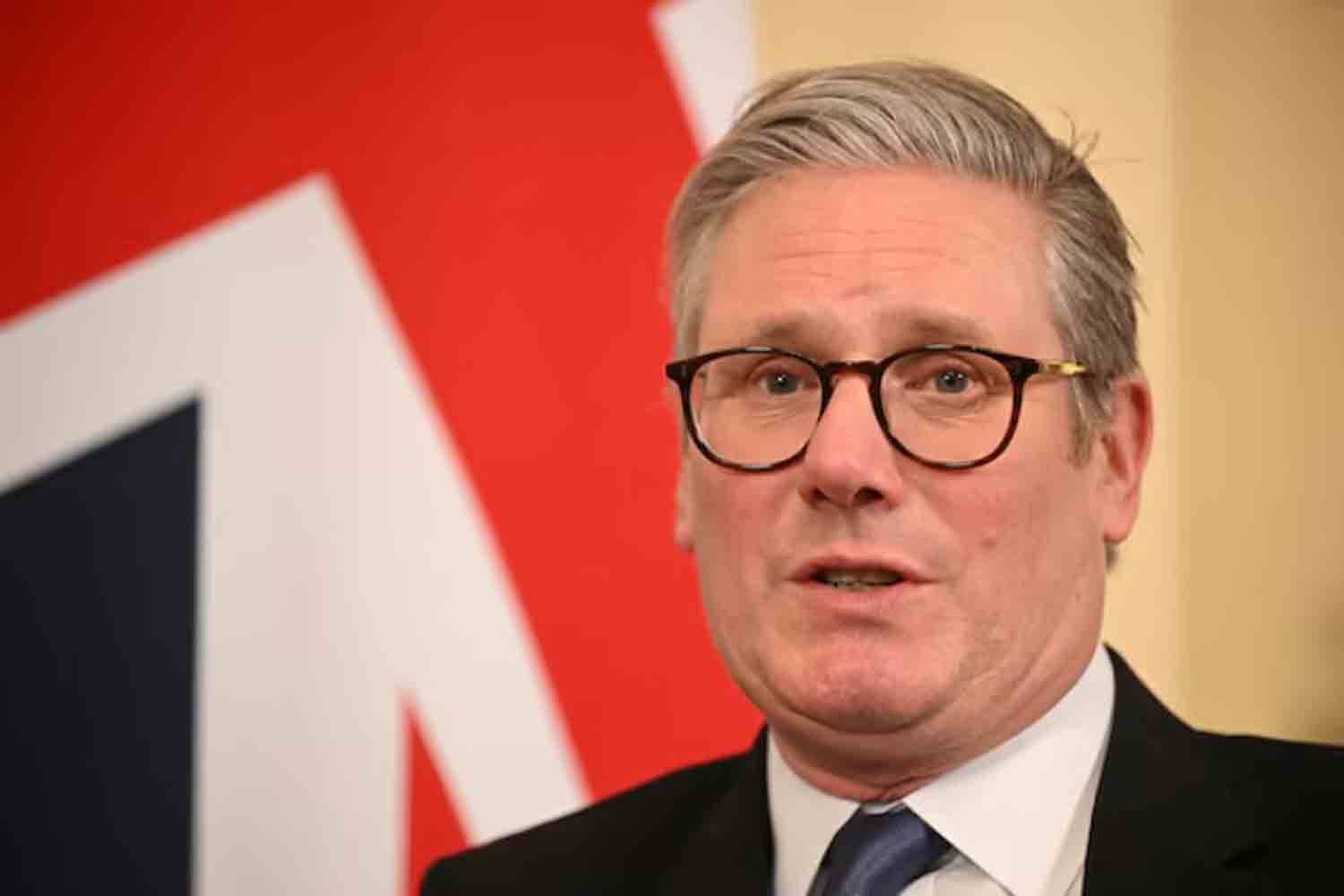
British Prime Minister Keir Starmer stated on Thursday that Russia is hindering progress toward a peace agreement in Ukraine, following discussions with Western allies in Paris. He emphasized that this is not the appropriate moment to ease sanctions on Moscow.

During the meeting, Starmer engaged with Ukrainian President Volodymyr Zelenskiy and leaders from the ‘coalition of the willing,’ a group dedicated to developing a support strategy for Ukraine in the event of a peace settlement with Russia.

“Today in Paris, we reached a consensus that the Russians are stalling,” Starmer remarked at a press conference.

“They are engaging in tactics to delay,” he added. “While I don’t want to impose a strict deadline, we need to see progress in days and weeks, not in prolonged months.”

Starmer also mentioned that European allies are prepared to assist in implementing any peace agreement, regardless of its specific details. He concluded by stating that the leaders present shared a clear understanding that now is not the time to lift sanctions against Russia; in fact, the opposite is true.

French, German, Korean, Turkish firms eye ammunition JV with Poland, minister says

0
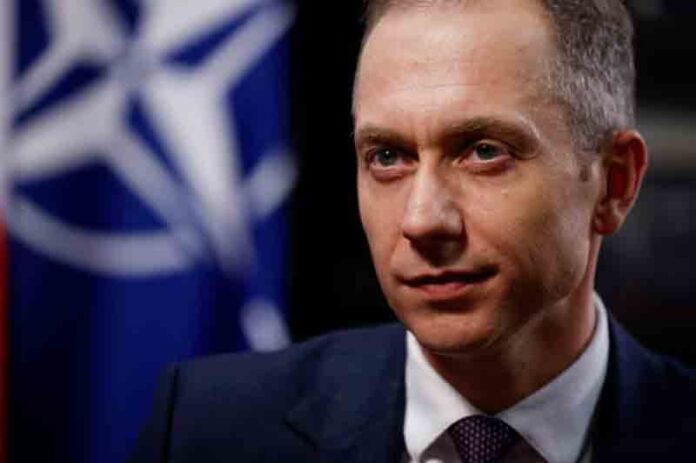
Polish Deputy Defence Minister Cezary Tomczyk looks on during an interview with Reuters in Warsaw, Poland.

Companies from Germany, South Korea, Turkey, and France are competing to establish a joint venture for ammunition manufacturing with Poland, which is expected to be finalized within the next 3 to 4 months. This initiative could pave the way for strategic intergovernmental collaboration, as noted by Deputy Defense Minister Cezary Tomczyk in an interview with Reuters.

In response to U.S. President Donald Trump’s indication that America’s commitment to European security is diminishing, Poland is spearheading a European effort to enhance its military capabilities, particularly in light of Russia’s ongoing conflict with Ukraine.

Poland has allocated $750 million to the state-owned Polish Armaments Group (PGZ) to increase its production capacity. Tomczyk emphasized that Poland intends to acquire the technology and licenses for the ammunition produced by the joint venture, which will include 155mm artillery shells. A total of six companies have submitted proposals, and Tomczyk anticipates that the ministry will narrow the options down to three for further negotiations.

The demand for 155mm artillery shells has surged since Russia’s large-scale invasion of Ukraine, leading to a depletion of European stockpiles as allies have supplied munitions to Kyiv.

PGZ aims to enhance its annual production capacity of 155mm shells, which is currently inadequate, to 150,000 units within the next two to three years. Last week, executives from the Turkish state-owned defense firm MKE visited Warsaw with a proposal that includes a complete transfer of technology for 155mm ammunition production, which the Polish defense ministry stated aligns with current requirements.

In a recent interview, Tomczyk mentioned that another factor in selecting a partner would be the potential for a broader intergovernmental defense cooperation agreement beyond just ammunition. He indicated that Germany, France, Sweden, and Britain have expressed interest in such a partnership.

He stated, “This viewpoint is particularly intriguing, as it allows us to explore the acquisition of multiple capabilities in a consolidated manner while also securing a robust political agreement.”

On Tuesday, Poland announced its plan to dedicate 30 billion zloty ($7.71 billion) from post-pandemic European Union recovery funds to defense initiatives. Additionally, the country anticipates significant advantages if the proposed 150 billion euro rearmament fund from Brussels receives approval. ($1 = 3.8899 zlotys)

European leaders reach a consensus on strengthening Ukraine but have differing views on the future of a ‘reassurance force’

0
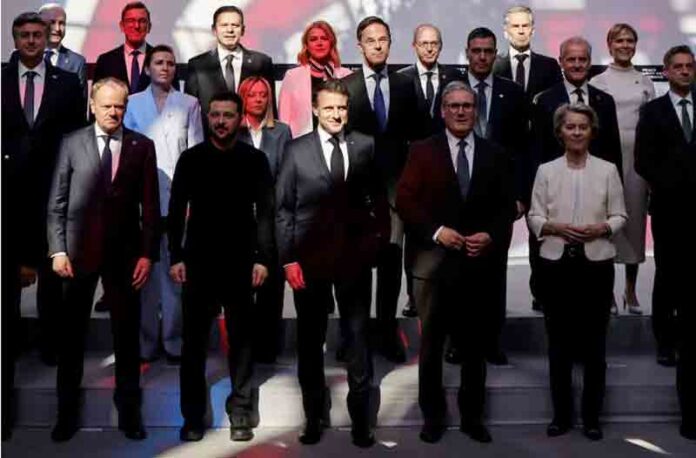
Poland's Prime Minister Donald Tusk, Ukraine's President Volodymyr Zelensky, France's President Emmanuel Macron, Britain's Prime Minister Keir Starmer and European Commission President Ursula Von der Leyen pose for a family picture during a meeting as part of a summit for "Coalition of the Willing" at Elysee Palace in Paris, France.

European leaders reiterated their ongoing commitment to Ukraine during a summit in Paris on Thursday, yet they seemed to make limited headway regarding their potential role in providing security guarantees should a peace agreement be reached with Moscow. This marked the third gathering of what France and Britain have termed the “coalition of the willing,” highlighting concerns among European nations that the U.S. may no longer serve as a reliable source of support for Ukraine in its ongoing conflict with Russia, which has persisted for three years.

U.S. President Donald Trump, who has been in office since January 20, has expressed a desire to facilitate a quick resolution to the war. However, a series of bilateral discussions between the U.S. and the conflicting parties have not yet resulted in a significant reduction in hostilities. British Prime Minister Keir Starmer noted that leaders acknowledged the necessity for increased support for Ukraine to ensure it is in the best possible position for any peace negotiations, although he did not provide further details. He also expressed a desire to see a peace agreement emerge “in days and weeks, not months.”

European initiatives to establish security arrangements for Ukraine are shifting away from troop deployments towards alternative solutions, as they encounter political and logistical challenges, along with the likelihood of opposition from Russia and the U.S. Nevertheless, co-host French President Emmanuel Macron stated that several countries had agreed to explore a Franco-British proposal for what he termed a “reassurance force,” which would be activated in the event of a peace deal to deter any future aggression from Russia. “It was not unanimous today, as we all know, and we don’t need unanimity,” Macron remarked at a press conference. He added that military delegations would be traveling to Ukraine in the coming days to begin outlining the long-term vision for a robust Ukrainian military.

Europe faces pressure from Trump to assume a larger share of the security responsibilities in its region, but the continent’s sluggish economic growth and high debt levels have complicated this endeavor.

Macron communicated with Trump prior to the meeting, according to the French presidency. Although the United States was not in attendance, French officials indicated that the results of the discussions would be communicated to Washington.

The suggested “reassurance force” to be deployed in Ukraine is intended to provide security assurances and deter any future aggression from Russia, though there are currently few indications that the United States will extend its support.

NO SUPPORT FOR SANCTIONS RELIEF

At the summit, there was a strong consensus that easing sanctions on Russia too soon would be a strategic mistake—a condition that Moscow has stipulated for a ceasefire agreement in the Black Sea. “It was made abundantly clear that Russia is attempting to stall and engage in manipulative tactics, and we must be unequivocal about that,” Starmer stated after the meeting, alongside Ukrainian President Volodymyr Zelenskiy.

He further emphasized, “There is complete agreement that now is not the time to lift sanctions; on the contrary, we must maintain them.” Zelenskiy, who earlier this month consented to advance ceasefire discussions to facilitate the resumption of U.S. aid and intelligence sharing that had been temporarily halted by Trump, asserted that stronger sanctions against Russia are necessary. France committed to providing 2 billion euros in new military assistance to Ukraine ahead of the assembly of approximately 30 leaders.

On Thursday, Russian Foreign Ministry spokeswoman Maria Zakharova accused France and Britain of plotting a “military intervention in Ukraine” disguised as a peacekeeping operation, warning that such actions could provoke a direct military confrontation between Russia and NATO.

Italian Foreign Minister Antonio Tajani emphasized the varying perspectives among Ukraine’s allies, reaffirming his nation’s stance against deploying any military force. He stated late Wednesday, “We will not send troops on a mission unless they are part of the United Nations; this is our sole condition for deploying military personnel in Ukraine.”

Poland has already declared it will not send troops to Ukraine, and Czech Prime Minister Petr Fiala remarked on Thursday that it is “premature” to consider sending European forces until the terms of a ceasefire are established.

Allies of Ukraine convene with a focus on providing new assistance and security guarantees

0
Ukrainian servicemen carry the coffin of the Hospitallers Medical Battalion volunteer and soldier Oleksandr 'Bohush' Oliynyk at a cemetery, amid Russia's attack on Ukraine, in Kyiv, Ukraine.

Approximately 30 leaders are set to convene in Paris on Thursday to engage with Ukrainian President Volodymyr Zelenskiy regarding the enhancement of military assistance, the evaluation of ceasefire initiatives, and the potential roles they could assume if a peace agreement is reached with Russia.

This third summit, referred to by France as the coalition of the “willing and able,” will include prominent figures such as Polish Prime Minister Donald Tusk, NATO Secretary General Mark Rutte, Italian Prime Minister Giorgia Meloni, and Turkish Vice President Cevdet Yılmaz.

President Emmanuel Macron emphasized the primary focus of the discussions will be on immediate support for Ukraine, stating that it is essential to sustain their resistance. During a press conference with Zelenskiy on Wednesday evening, Macron pledged an additional 2 billion euros in military aid from France, while Zelenskiy indicated that other allies might announce their own aid packages during the summit.

The summit aims to establish a European role in any negotiations aimed at resolving the conflict. Although the United States will not be represented, French officials have assured that the outcomes will be communicated to the U.S. administration.

The agenda will center on bolstering Ukraine’s military capabilities to prevent future assaults and monitoring limited ceasefires concerning maritime targets and energy infrastructure, as discussed in recent U.S.-led talks in Saudi Arabia. European leaders, spearheaded by Macron and British Prime Minister Keir Starmer, are transitioning from troop deployment to exploring alternative security arrangements due to political and logistical challenges, as well as potential opposition from Russia and the United States, according to officials who spoke to Reuters.

A concept paper for the summit, reviewed by Reuters, suggests the establishment of a reassurance force in Ukraine, positioned away from the front lines, as part of a future peace agreement and with U.S. support. This reassurance force would aim to provide security guarantees and deter any future aggression from Russia.

Macron stated, “The goal is to enable Ukraine to maintain control of the situation and withstand Russian aggression, while also establishing credible foundations for lasting peace.” Zelenskiy expressed his hope for greater clarity regarding which nations would ultimately commit to such a force. “We anticipate new and decisive actions.

It is essential to advance discussions on security guarantees and the presence of partner contingents in Ukraine,” he remarked. “We will assess what can and cannot be accomplished. The situation is complex, and I believe it is still premature.” Highlighting the challenges, both Ukraine and Russia accused each other on Wednesday of violating a truce concerning energy strikes that was facilitated by the United States.

Additionally, the European Union announced it would not comply with the conditions set by Russia for a proposed ceasefire in the Black Sea.

FSB reports that Ukrainian intelligence is posing as RAND employees to recruit Russians

0

On Thursday, Russia’s FSB security service alleged that Ukrainian intelligence agencies attempted to recruit Russian nationals and gather military intelligence by masquerading as employees of the U.S. non-profit think tank RAND Corporation.

According to the state news agency RIA, “The FSB has obtained information indicating that representatives of the Ukrainian special services are using the guise of the prominent American RAND Corporation to conduct recruitment activities within the Russian Federation and to acquire limited details regarding the Russian Federation’s special military operation in Ukraine.”

RAND is already classified as an “undesirable organization” in Russia. There has been no immediate reply from Ukraine.

Zelensky expresses his hope that the United States will remain resolute in response to Russian demands

0
Ukraine's President Volodymyr Zelenskiy speaks with U.S. President Donald Trump via a phone line, amid Russia's attack on Ukraine, in Kyiv.

Ukrainian President Volodymyr Zelensky expressed his hope that the United States will remain resolute against Russian demands to lift sanctions as a prerequisite for a ceasefire in the Black Sea region.

Moscow announced that a maritime truce, intended to ensure safe passage for commercial vessels, would only take effect once Western sanctions on Russia‘s food and fertilizer exports are removed.

Zelensky made these remarks during a panel discussion in Paris with European journalists.

When inquired whether the US would withstand Russian pressure, he replied, “I hope so. God bless, they will. But we’ll see.”

On Tuesday, the White House confirmed that Russian and Ukrainian representatives had reached an agreement for a ceasefire in the Black Sea following three days of separate discussions with American officials in Saudi Arabia.

However, shortly after, the Kremlin issued a statement outlining its own set of conditions.

These conditions include the lifting of Western sanctions on financial institutions involved in agricultural trade and restoring their access to the Swift international payment system, which enables secure financial transactions.

Trump indicated that the US government was “looking at” Moscow’s request to remove the restrictions, while the EU stated on Wednesday that it would not consider lifting sanctions until there is an “unconditional” withdrawal of Russian forces from Ukraine’s internationally recognized borders.

During the panel in Paris, Zelensky expressed his gratitude for the bipartisan support from the US but voiced concerns that some individuals might be “influenced by Russian narratives.”

“We cannot accept those narratives,” he asserted.

When asked whether US President Donald Trump had a closer relationship with him or with Russian President Vladimir Putin, Zelensky admitted uncertainty.

“I don’t know—it’s hard for me to say,” he stated. “I have no insight into his relationships or the number of conversations he has had.”

The Ukrainian president was questioned about remarks made by Trump envoy Steve Witkoff, who recently dismissed Europe’s attempts to form a “coalition of the willing” to support Ukraine during an interview.

In his reply, Zelensky stated that he would refrain from making “hasty conclusions.”

He pointed out that Witkoff, who has a background in real estate, lacked the necessary experience in this context.

“As far as I know, he is quite adept at buying and selling property, but that is a different matter,” he remarked.

Zelensky also emphasized that Europe had “significantly strengthened itself” throughout the war.

When the BBC inquired about how he would be remembered in history—whether as the leader who saved Ukraine or the one who allowed it to fall—he responded, “I cannot predict what history will say about me. That is not my aim.”

His focus, he explained, is on defending Ukraine and ensuring that his children can “walk their streets without fear.”

“I will do everything in my power for as long as I live to defend Ukraine,” he asserted.

Regarding Ukraine’s potential NATO membership, Zelensky expressed that his “battle-hardened” nation would enhance the alliance, although he acknowledged that the Trump administration had previously dismissed the idea of Kyiv joining.

The interview occurred shortly after Zelensky’s meeting with French President Emmanuel Macron in Paris, where the Eiffel Tower was illuminated in the colors of the Ukrainian flag in his honor.

Ukraine’s president has returned to Europe to galvanize his allies and emphasize the seriousness of the threat posed by Putin.

While they are now responding—some might say urgently—they have previously depended on the United States to provide substantial military support.

In light of recent comments from Trump, Europeans have come to understand that American support may not be guaranteed in the future, prompting them to reconsider their stance.

President Zelensky’s task is to persuade them to commit real financial resources rather than merely expressing goodwill.

His discussions with Macron have already yielded positive results, as the French president announced a new military aid package worth €2 billion ($2.2 billion; £1.6 billion) for the embattled nation.

In response to the Kremlin’s demand to lift sanctions, Macron stated that Moscow cannot “dictate the conditions” for peace and emphasized that it is premature to consider easing European sanctions on Russia.

This comes ahead of a meeting of European leaders in Paris on Thursday, co-hosted by Macron and British Prime Minister Sir Keir Starmer, to address the ongoing conflict in Ukraine.

The “coalition of the willing,” which does not include the US, is working to establish an agreement on the support that European and other nations could provide to uphold a potential ceasefire, should one be reached.

Sir Keir is expected to inform the gathering that “Europe is stepping up to fulfill its role in defending Ukraine’s future.”

“Now Putin needs to demonstrate his willingness to cooperate,” he will assert.

conflict in the Democratic Republic of Congo strains China’s diplomatic balance

0
Rwandan security officers escort members of the Armed Forces of the Democratic Republic of the Congo (FARDC), who surrendered in Goma, eastern Democratic Republic of Congo, following fighting between M23 rebels and the FARDC, in Gisenyi, Rwanda.

China’s initiatives to establish significant business interests throughout Africa have been paired with a deliberate strategy of maintaining neutrality. However, the ongoing conflict in the eastern Democratic Republic of Congo has prompted a change in this stance.

Rwanda has faced widespread allegations of exacerbating the violence in this mineral-rich area, and recently, Beijing, which maintains strong ties with both the DR Congo and Rwanda, has begun to voice its concerns.

China is now attempting to navigate a delicate diplomatic balance, striving to preserve positive relations with both nations while continuing its business operations and securing essential minerals.

How does China’s reaction to this conflict differ?

Historically, China has been cautious about taking sides in African conflicts to prevent jeopardizing its vast commercial interests.

Until now, it has refrained from criticizing African governments that support factions involved in conflicts.

For instance, China has remained largely silent regarding the series of coups in West Africa’s Sahel region since 2020, only urging leaders to prioritize the welfare of their citizens.

According to Prof. Zhou Yuyuan, an expert in African development and security at the Shanghai Institutes for International Studies (SIIS), Beijing has consistently adhered to a policy of non-interference in the internal matters of other states.

As a result, it typically avoids suggesting solutions to conflicts, instead advocating for diplomatic or political initiatives led by international organizations like the UN or the African Union.

The conflict involving the Rwandan-backed M23 rebels in eastern DR Congo resurfaced in 2021. The group, led by ethnic Tutsis, claims to have taken up arms to defend the rights of their minority community, citing the Congolese government’s failure to uphold a previous peace agreement.

Initially, China limited its response to criticizing unspecified “foreign forces” for aiding the M23 fighters. However, in recent weeks, it has deviated from this approach by explicitly naming Rwanda.

This shift comes in the wake of significant territorial gains by the M23, which has seized the crucial cities of Goma and Bukavu since January.

In February, China’s ambassador to the UN expressed hope that Rwanda would cease its military support for the M23 and withdraw its forces from DRC territory.

Professor Zhou observes that while this statement is noteworthy, the language used remains relatively restrained. He points out that China expressed a “hope” for Rwanda to halt its support but stopped short of issuing a condemnation.

Shortly thereafter, China supported a UN Security Council resolution that explicitly demands the Rwanda Defence Forces to “cease support to the M23 and immediately withdraw from DRC territory without preconditions.”

What has prompted China to change its stance?

Prof. Zhou suggests that China’s recent comments may have been influenced by reports from UN experts, which have presented compelling evidence of Rwanda‘s backing for the M23 group.

“This is a fundamental agreement within the UN Security Council,” he noted.

“The issue has persisted for a considerable time, and everyone is aware of the underlying situation. There is no longer a need for secrecy.”

China’s mission to the UN and its embassy in London did not provide a response when inquired about the reasons behind China’s criticism of Rwanda.

However, China’s significant interest in the Democratic Republic of Congo’s (DRC) abundant mineral resources could be a contributing factor.

The conflict in eastern DRC has primarily been centered in the North Kivu and South Kivu provinces, where numerous gold mines operated by Chinese companies are located.

The impact of the fighting on these mines remains uncertain.

Additionally, the M23 has taken control of areas that contain coltan ore mines, which are crucial for China as it imports this resource in substantial quantities.

Tantalum, a metal derived from coltan, is essential for various products, including vehicles and everyday electronics like televisions and mobile phones, with the DRC supplying 40% of the global demand.

A UN expert group reported in December 2024 that the M23 rebel group had been smuggling coltan from the Democratic Republic of Congo (DR Congo) into Rwanda. The report also highlighted a 50% increase in Rwanda’s coltan exports between 2022 and 2023.

Despite Rwanda having its own coltan mines, analysts suggest that these operations alone cannot explain such a significant rise in production.

It remains uncertain whether the quantity or pricing of coltan imported by China has been impacted.

Cobalt, another mineral sourced from DR Congo, is essential for the lithium battery sector. However, China’s cobalt mining activities are mainly concentrated in the southern regions of DR Congo, far from the conflict-affected areas in the east.

Numerous Chinese firms, many of which are state-owned, are engaged in constructing infrastructure such as roads, telecommunications, and hydropower facilities in DR Congo. So far, these operations appear to have experienced minimal disruption.

Is China providing military assistance to Rwanda or DR Congo?

China supplies arms to both nations.

Over the past twenty years, the Rwandan military has acquired Chinese armored vehicles, artillery, and anti-tank missiles, as reported by the Stockholm International Peace Research Institute (Sipri).

In 2024, China assigned a military attaché to Rwanda for the first time.

While UN experts allege that the Rwandan military has equipped the M23, it is unclear if the rebel group is utilizing any Chinese-supplied weapons.

The Congolese armed forces have procured Chinese armored personnel carriers and drones, along with tanks purchased in 1976, which were still operational as recently as 2022.

Reports indicate that at least some of the drones have been deployed in combat against the M23.

Have China’s relationships with either nation been influenced?

The Rwandan embassy in Beijing stated that its relationship with China remains “excellent and productive,” and Rwanda refrains from commenting on China’s remarks regarding the conflict in eastern DR Congo.

In early February, the Chinese ambassador to DR Congo, Zhao Bin, met with Congolese Senate President Sama Lukonde, although no specifics about their discussion were disclosed.

China’s economic involvement in both countries is extensive, as they are integral to China’s Belt and Road Initiative, which aims to enhance global connectivity through investments and infrastructure development.

In Rwanda, China has invested in various projects, including stadiums, schools, and highways. Additionally, Chinese loans are supporting infrastructure initiatives, such as a $40 million (£31 million) loan confirmed in January for a dam and irrigation system.

For many years, China has been the primary source of imported goods for Rwanda.

Regarding China’s economic relationship with DR Congo, data from the UN Comtrade Database indicates that China has consistently been DR Congo’s leading trading partner.

China has made significant efforts to gain access to DR Congo’s mineral resources, providing $3.2 billion (£2.5 billion) in loans from 2005 to 2022, primarily for road and bridge construction and enhancing the country’s electricity grid, as reported by the Chinese Loans to Africa Database at Boston University.

Moreover, China has financed and constructed other major infrastructure projects in DR Congo, including hydropower plants and a dry port.

These investments may imply that it is in China’s long-term interest to seek a swift resolution to the ongoing conflict.

B-2 Stealth Bombers Gather at Diego Garcia as a Display of Power – Is Iran the Intended Target?

0
B-2 Spirit

In a significant display of military capability and strategic communication, a large group of U.S. Air Force B-2 Spirit stealth bombers and aerial refueling tankers has been observed making its way to Diego Garcia, a remote British-controlled atoll in the Indian Ocean that has long been a critical launch point for America’s key military operations in the Middle East and beyond.

This notable deployment coincides with an escalation of U.S. air operations against Houthi militants in Yemen, amid rising tensions between Washington and Tehran.

The Trump administration has intensified its rhetoric towards Iran, issuing warnings regarding its support for the Houthis and its ongoing efforts to develop nuclear capabilities, which remain a significant threat to regional stability. The Houthis have reported that at least 53 people lost their lives in the most recent wave of American airstrikes.

In retaliation, U.S. officials have made it clear that military operations will continue until Houthi assaults on commercial shipping in the Red Sea come to a complete halt, directly addressing recent drone and missile attacks that have disrupted global shipping routes and drawn widespread international criticism.

Satellite imagery has verified a marked increase in U.S. aerial operations at Diego Garcia, with the arrival of at least seven B-2 Spirit stealth bombers, three C-17A Globemaster III strategic airlifters, and ten KC-135 aerial refueling tankers within the last 48 hours.

This significant deployment indicates not only an increase in operational activity but also the possible initiation of a new phase in the campaign within this theatre—or potentially across multiple theatres of engagement.

Diego Garcia, strategically located in the heart of the Indian Ocean, plays a crucial role in the United States’ global military strategy. Leased from the United Kingdom, this island has evolved into a vital forward operating base (FOB) for U.S. forces, providing a secure and sovereign launch point for extensive air and naval operations that reach the Middle East, East Africa, South Asia, and Southeast Asia.

The military infrastructure on the island features a long runway capable of accommodating strategic bombers such as the B-52 and B-2, a deep-water naval port that supports aircraft carriers, submarines, and auxiliary vessels, as well as extensive munitions depots prepared for prolonged conflict scenarios. Additionally, it houses classified satellite communication systems, a global surveillance network, and one of the most fortified command-and-control (C2) centers for U.S. operations in the Indo-Pacific region.

The early indicators of this military build-up were highlighted by open-source intelligence (OSINT) analyst “IntelFrog,” who utilized publicly accessible flight tracking data on platform X (formerly Twitter) to detect an unusual surge in military aircraft movements.

IntelFrog observed that 18 KC-135 Stratotankers had departed from key Pacific locations—Travis AFB (California), Daniel K. Inouye International Airport (Hawaii), and Andersen AFB (Guam)—before proceeding westward.

Flying under the sequential RCH0## callsigns, the tankers were soon accompanied by a continuous flow of C-17A Globemaster III aircraft. This organized deployment pattern indicates a large-scale logistics operation, likely involving the transportation of strike personnel, munitions reserves, and essential support equipment necessary for prolonged long-range bomber missions.

Subsequent monitoring by IntelFrog confirmed the arrival or movement of at least seven B-2 Spirits, marking one of the largest known deployments of this aircraft type outside the continental United States. The concentration of stealth bombers at a single location is remarkable, considering the aircraft’s typical strategic dispersal and significant maintenance requirements.

The B-2 Spirit, regarded as the pinnacle of American stealth aviation, is engineered to penetrate advanced integrated air defense systems (IADS) with minimal risk. Its unique flying-wing configuration, radar-absorbing materials, and precision strike capabilities make it the preferred choice for targeting strategic, high-value objectives in contested environments. Generally, it is reserved for missions of national importance, including nuclear deterrence, deep-penetration strikes, or preemptive actions in high-risk areas.

The deployment of B-2 Spirits to Diego Garcia strongly indicates that U.S. military planners are either preparing for a potential escalation in the Middle East or positioning airpower as part of a comprehensive regional deterrence strategy. In parallel, U.S. Secretary of Defense Pete Hegseth has extended the deployment of the USS Harry S. Truman carrier strike group in the Middle East and has ordered a second carrier group, led by the USS Carl Vinson, to bolster operations in the region.

Naval reinforcements are being complemented by the introduction of fifth-generation F-35A Joint Strike Fighters, as evidenced by ATC recordings and flight tracking data, enhancing the multi-domain combat capabilities of the expanding American military presence.

For U.S. military strategists, Diego Garcia is an invaluable strategic asset.

It is positioned beyond the reach of numerous regional threats while remaining within the operational range of B-2 and B-52 bombers, enabling them to conduct precision strikes across a volatile region that spans from the Horn of Africa to the Persian Gulf and the South China Sea.

Historically, this atoll has played a crucial role in some of the most significant military operations in recent U.S. history, including B-1 and B-52 missions during the Gulf War, as well as strike operations in Iraq and Afghanistan.

Its isolated location, secure facilities, and unparalleled reach make it one of America’s most valuable overseas installations.

While the U.S. Department of Defense has not officially disclosed the specific goals of this latest deployment increase, the timing, scale, and nature of the assets involved suggest that a new and expanded phase of military operations may be commencing—not only targeting the Houthis but potentially with a wider strategic objective in mind.

The B-2 Spirit, which can fly over 11,000 kilometers without refueling, is capable of delivering up to 18 tons of munitions, including nuclear weapons and precision-guided ordnance.

Its low visibility and extended strike capabilities provide it with a distinctive function in high-stakes missions, enabling the United States to exert significant military influence worldwide from secure and sovereign bases such as Diego Garcia.

As geopolitical tensions rise and competition among major powers transforms the security dynamics in the Indo-Pacific and the Middle East, the airspace over Diego Garcia could once again serve as the launch point for a new era of American strategic airpower.

State Department announced that the new Russian ambassador to the U.S. will present credentials on Thursday

0
Alexander Darchiev

Russia’s newly appointed ambassador to the United States will informally present his credentials to the Trump administration on Thursday, as announced by the U.S. State Department on Wednesday. Alexander Darchiev, who has recently taken on this role, is scheduled to present his credentials at 2:15 PM Eastern Time (1815 GMT), according to the department’s public agenda.

The State Department indicated that Louis L. Bono, the Senior Bureau official for the Bureau of European and Eurasian Affairs, will be in attendance.

Since the departure of the previous ambassador in October, Moscow has been without an ambassador in the U.S. Darchiev has extensive experience, having served two significant terms at Russia’s embassy in Washington and holding the position of ambassador to Canada from 2014 to 2021. In recent years, he has been recognized for his strong public criticisms of the United States and the West, similar to other senior Russian diplomats.

Darchiev’s appointment occurs at a time when both Russia and the United States are seeking to repair their strained relations and work towards resolving the conflict in Ukraine. U.S. President Donald Trump has expressed a desire to meet with Russian President Vladimir Putin soon, marking the first encounter between the leaders of the two nations since 2021.

Confirmed: Ukraine’s F-16s are conducting ELINT missions targeting Russia

0

In a recent 12-minute interview, a Ukrainian F-16 pilot disclosed that F-16 fighter jets, provided by Western nations, are actively participating in electronic intelligence (ELINT) missions over Ukraine. The pilot, whose name was withheld for security reasons, also indicated that these aircraft are engaged in combat operations and are offering escort support to other Ukrainian aircraft amid the ongoing conflict with Russia.

The interview, shared on X by the account @Osinttechnical, provides a rare insight into how Ukraine is leveraging these advanced jets, which were supplied by NATO countries to enhance its air force capabilities.

This development represents a crucial advancement in Ukraine’s strategy to counter Russian aerial and electronic superiority, prompting discussions about the adaptability of the F-16 platform and its significance in a conflict that has now entered its third year.

The pilot’s remarks come at a time when Ukraine is increasingly dependent on Western military assistance to maintain its defense against Russian aggression. The F-16, a multirole fighter developed by Lockheed Martin, has been a long-desired asset for Kyiv, which faces a powerful opponent equipped with advanced air defense systems and electronic warfare technologies.

According to the pilot, the jets are not only involved in direct combat but are also collecting vital electronic intelligence, which entails intercepting and analyzing signals from enemy radar, communications, and other electronic systems. This dual function highlights the evolving nature of Ukraine’s air strategy as it aims to optimize the use of its limited resources.

ELINT, or electronic intelligence, involves gathering data on electronic emissions, typically from radar or communication systems, to assess an adversary’s capabilities and intentions. In the context of Ukraine’s F-16 operations, this suggests that the jets are likely being utilized to detect and identify Russian air defense systems, such as the S-400, which pose a significant threat to Ukrainian aircraft.

By analyzing the frequencies, locations, and operational behaviors of these systems, Ukrainian forces can enhance their mission planning, evade detection, or effectively target these defenses for neutralization. The pilot’s reference to ELINT missions indicates that the F-16s are likely outfitted with specialized sensors or pods designed to capture and analyze these signals, thereby improving situational awareness on the battlefield.

Although the F-16 is celebrated for its adaptability as a fighter jet, it is not primarily intended for ELINT operations. Typically, missions of this nature are assigned to aircraft such as the U.S. Air Force’s RC-135 or the Navy’s EP-3, which are equipped with dedicated electronic surveillance systems.

For Ukraine’s F-16s to engage in ELINT activities, they would need supplementary equipment, probably in the form of external pods attached beneath the wings. One potential system is the AN/ALQ-131, an electronic countermeasures pod that can be modified for signal collection, as highlighted in a recent report on X.

While this pod is mainly utilized for jamming enemy radar, it could be adapted to perform limited ELINT functions, although it does not possess the extensive capabilities of specialized reconnaissance aircraft. Other possible systems might include advanced targeting pods with signal intelligence capabilities, though specific information regarding the configurations of Ukraine’s F-16s remains confidential.

The task of executing ELINT missions with F-16s is further complicated by the presence of Russia’s sophisticated air defense systems. Platforms like the S-400 and S-300 are capable of detecting aircraft from considerable distances and engaging them with precision-guided missiles, compelling Ukrainian pilots to navigate a high-risk operational environment.

The pilot did not provide details on how the F-16s manage to bypass these defenses, but experts propose that a mix of low-altitude maneuvers, electronic countermeasures, and real-time intelligence collaboration with Western allies may be involved.

The jets’ capability to escort other Ukrainian aircraft, such as Su-27s or MiG-29s, further suggests a coordinated strategy, where the F-16s offer both protection and reconnaissance assistance to these less advanced platforms.

Incorporating ELINT capabilities into Ukraine’s F-16 fleet underscores the resourcefulness needed in a conflict where assets are limited. Unlike NATO air forces, which can depend on a wide range of specialized aircraft, Ukraine must optimize its smaller fleet to perform various functions.

However, this adaptation comes with compromises. Fitting an F-16 with an ELINT pod may diminish its ability to carry weapons or additional fuel, which could restrict its operational range or combat capabilities.

Additionally, the jet’s relatively compact size and single-engine configuration make it less ideal for extended reconnaissance missions compared to larger, dedicated aircraft. Nevertheless, the pilot’s remarks indicate that Ukraine has managed to utilize the F-16’s versatility to address its pressing requirements.

The process of delivering F-16s to Ukraine has been gradual, with several Western nations stepping forward to bolster Kyiv’s air force. The Netherlands and Denmark were among the first to commit their aircraft, with the Dutch agreeing to provide 24 F-16s and the Danes offering 19, as stated by their respective governments last year.

Norway has joined the initiative by agreeing to supply six aircraft, while Belgium has committed to delivering an undisclosed number by the end of this year, as reported by CNN in February. Although France is not providing F-16s, it has contributed Mirage 2000-5 jets, with the first set arriving earlier this year, as confirmed by French Defense Minister Sébastien Lecornu.

In total, Ukraine has either received or been promised approximately 60 F-16s, although not all of them are currently operational, with further deliveries anticipated in the coming months.

Training has been a vital aspect of this initiative, with Ukrainian pilots participating in rigorous programs in the United Kingdom, France, and the United States. Newsweek reported last month that NATO facilities, including one in England’s Midlands, have been instructing Ukrainian personnel on F-16 operations, encompassing everything from fundamental flight techniques to advanced combat strategies.

The pilot interviewed likely gained from this training, which has allowed Ukraine to utilize the jets effectively despite the steep learning curve. However, the precise number of F-16s in active service remains uncertain, with some reports indicating losses—Flight Global noted that two jets were destroyed earlier this year—while others suggest that the fleet is still expanding.

The deployment of F-16s for electronic intelligence (ELINT) and combat missions illustrates the evolving dynamics of the conflict, where technology and adaptability are crucial. Russia’s air defenses have compelled Ukraine to reassess conventional air operations, leading to a significant reliance on drones and electronic warfare to mitigate its numerical and firepower disadvantages.

The F-16s, even in small numbers, offer a significant advantage, enabling Ukraine to challenge airspace that was once under the control of Russian forces. The pilot’s mention of escort missions suggests a transition towards integrated operations, where these jets safeguard older Soviet-era aircraft still operational in Ukraine, thereby improving their chances of survival against Russian interceptors like the Su-35.

Experts have pointed out that although the F-16’s role in electronic intelligence (ELINT) is atypical, it fits well with Ukraine’s approach of utilizing every resource at its disposal. “The F-16 was never designed to serve as an ELINT platform, but in a situation of necessity, you make use of what you have,” stated Peter Layton, a former officer of the Royal Australian Air Force and defense analyst, in a recent article for The Interpreter.

Layton highlighted that while the jets’ primary strength lies in their combat functions, their capability to collect intelligence could also play a crucial role in undermining Russian operations. This perspective is supported by military analysts who observe that Ukraine’s air force is transforming into a hybrid entity, merging Western technology with Soviet-era strategies.

The wider context of Western assistance adds complexity to the situation. The provision of F-16s has been a controversial topic, with delays and political discussions hindering progress. Although the United States is not directly supplying the aircraft, it has authorized their transfer from European allies and has offered training and logistical support, as reported by Reuters earlier this year.

Nevertheless, recent strains in the relationship between Washington and Kyiv, including a temporary pause in intelligence sharing earlier this month, have sparked worries about the dependability of U.S. support under the current administration. Despite these obstacles, the F-16s now in Ukraine signify a concrete commitment from NATO nations to bolster Kyiv’s military efforts.

As the conflict persists, the function of Ukraine’s F-16s is expected to further develop. The pilot’s interview offers insight into their current operations, yet uncertainties linger regarding their long-term effects. Can a limited number of modified jets alter the dynamics against Russia’s more extensive and established air force?

The answer hinges on various elements beyond the aircraft themselves—training, maintenance, and ongoing support from the West will all be crucial. At present, the F-16s are demonstrating their value in Ukrainian airspace, serving not only as combat aircraft but also as essential assets for intelligence gathering and coordination.

The final aspect of this situation involves the additional aircraft that are yet to arrive. With numerous F-16s promised but not yet in service, Ukraine’s air force remains in a transitional phase. The Netherlands has signaled that more jets will be delivered shortly, while Norway’s contributions are anticipated to enhance the fleet later this year.

These reinforcements could broaden the range of electronic intelligence and combat operations, providing Ukraine with a more formidable position in a conflict that shows no signs of resolution. The pilot’s remarks from the interview resonate as a reminder of the high stakes involved and the creativity needed to navigate them.