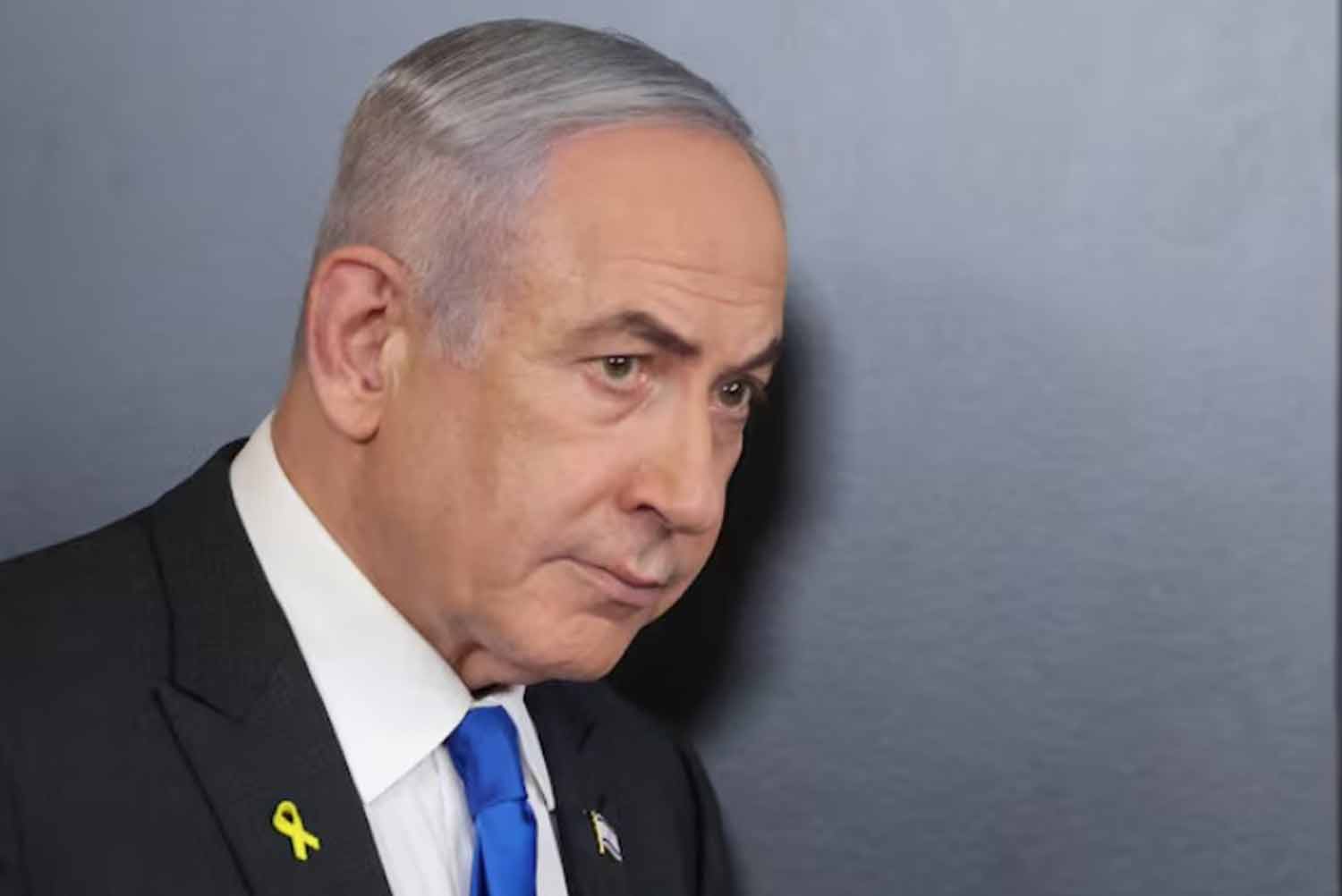
A rare and unusually blunt statement from Israeli Prime Minister Benjamin Netanyahu’s office has laid bare a deepening rift with the Trump administration—this time over who will govern Gaza once the fighting subsides.
In a sharply worded response, Netanyahu’s office said the announcement of a Gaza Executive Committee operating under a Peace Conference framework was made without coordination with Israel and directly contradicts Israeli policy. The prime minister has now instructed Israel’s foreign minister to raise the matter formally with the U.S. secretary of state, underscoring the seriousness of the dispute.
The language is striking not just for its tone, but for its target.
#BREAKING A rare and unusually blunt statement from Netanyahu’s office exposes a clear rift with the Trump administration over who will govern Gaza.
Prime Minister’s Office:
“The announcement regarding the composition of the Gaza Executive Committee, operating under the Peace…— גיא עזריאל Guy Azriel (@GuyAz) January 17, 2026
Israeli leaders traditionally handle disagreements with Washington—especially with a Republican administration led by Donald Trump—behind closed doors. Publicly contradicting the White House signals that tensions over Gaza’s post-war governance have reached a politically sensitive breaking point.
What Triggered the Clash
At the center of the dispute is a U.S.-backed diplomatic initiative that appears to outline a transitional governing body for Gaza, reportedly linked to a broader peace conference mechanism. While details remain limited, the move suggests Washington is attempting to shape Gaza’s administrative future through an internationalized framework rather than leaving decisions solely in Israel’s hands.
For Netanyahu’s government, this crosses a red line.
Israel’s stated position has consistently rejected any post-war arrangement that could reintroduce Hamas influence, impose international trusteeship without Israeli consent, or create a political pathway that constrains Israel’s military freedom of action. Any governance model discussed without Israeli coordination is therefore seen not as diplomacy, but as strategic overreach.
Why This Matters Politically
The dispute exposes diverging priorities between Israel and the Trump administration despite their broader ideological alignment.
Washington appears focused on stabilizing Gaza quickly to prevent regional escalation, humanitarian collapse, and mounting international pressure—especially from Arab partners and European allies. Israel, by contrast, prioritizes long-term security control, deterrence, and preventing Gaza from becoming a renewed launchpad for attacks.
Netanyahu’s unusually direct response suggests concern that U.S. initiatives could lock Israel into a post-war framework it neither designed nor fully controls.
It also reflects domestic political pressures. Any perception that Israel is being sidelined in decisions about Gaza’s future could be politically damaging for Netanyahu, particularly among right-wing coalition partners who oppose external involvement in Palestinian governance.
A Shift in the Relationship?
The episode does not indicate a full rupture—but it does highlight transactional limits in the Israel-U.S. relationship.
Even under a Trump administration generally sympathetic to Israel, Gaza remains a point of friction where American diplomatic imperatives collide with Israeli security doctrine. By instructing the foreign minister to escalate the issue directly to the U.S. secretary of state, Netanyahu is signaling that Israel expects recalibration—or at least explicit consultation.
Whether Washington adjusts course or presses ahead will shape not only Gaza’s future governance, but the tone of U.S.–Israel coordination in the next phase of the conflict.
The Bigger Picture
This clash underscores a broader reality: the “day after Gaza” question is no longer theoretical. As military operations grind on, diplomatic maneuvering over governance, legitimacy, and control is accelerating—and not always in lockstep among allies.
Netanyahu’s statement serves as a warning shot. Israel may be willing to coordinate with partners, but it will resist any externally imposed political architecture for Gaza that bypasses Israeli consent.
In a region already strained by war, this public disagreement adds another layer of uncertainty—one that could complicate ceasefire talks, reconstruction planning, and broader regional diplomacy in the months ahead.