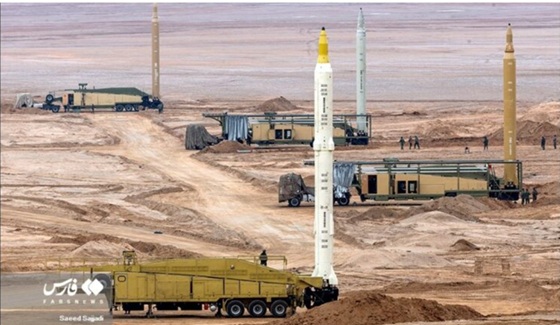
President Donald Trump is continuing to press senior aides for what he calls “decisive” military options against Iran, even after stepping back from launching strikes last week, according to a detailed report by The Wall Street Journal (WSJ). The renewed deliberations come as the United States rapidly bolsters its military presence in the Middle East amid an intensifying Iranian crackdown on anti-government protests that US officials say has killed thousands.
According to WSJ, the Pentagon and White House are refining a range of military scenarios for Trump, ranging from limited strikes on Islamic Revolutionary Guard Corps (IRGC) facilities to far more ambitious options that could seek to weaken—or even topple—the Iranian regime. While no final decision has been made, officials cited by the newspaper say Trump has not ruled out military action as punishment for Tehran’s violent suppression of protesters.
US Military Buildup Signals Readiness
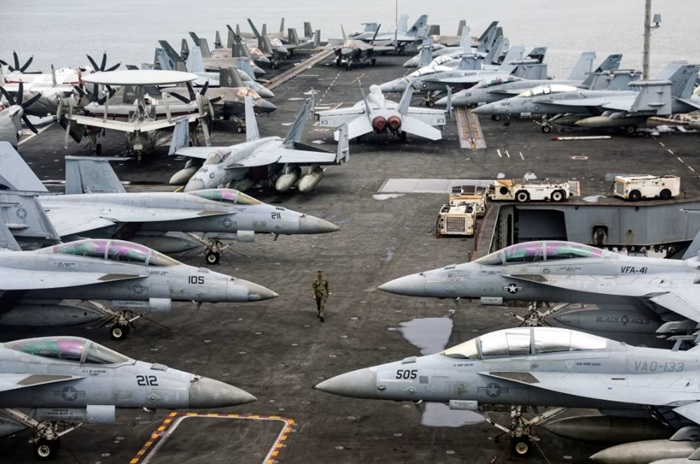
The discussions are unfolding alongside a visible US military buildup in the region. The Wall Street Journal reports that US F-15E fighter jets have arrived in Jordan, while the aircraft carrier USS Abraham Lincoln and its strike group—equipped with F-35 fighters, destroyers, and electronic-warfare aircraft—are moving toward the Persian Gulf.
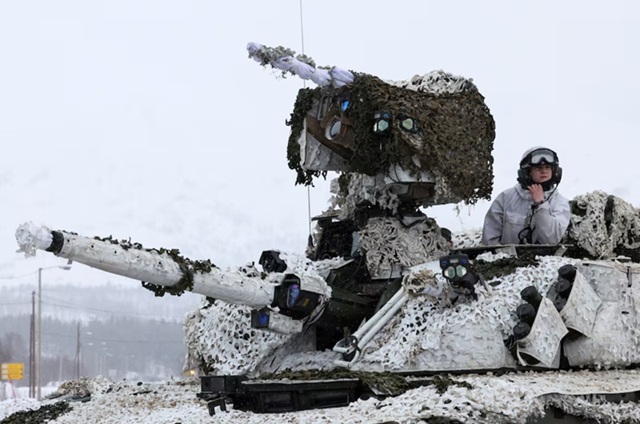
US officials told WSJ that additional Patriot and THAAD missile-defense systems are also being deployed to counter the risk of Iranian retaliation. The arrival of these assets would give Trump a broader menu of strike options should he authorize military action.
Protest Death Toll Far Higher Than Acknowledged
The urgency of the internal debate is being driven in part by grim assessments of Iran’s internal crackdown. While public estimates have ranged between 2,000 and 3,000 deaths, US officials believe the toll is significantly higher. Citing United Nations assessments, US Ambassador to the UN Mike Waltz said Iranian authorities may have killed up to 18,000 people, according to the WSJ report.
Trump hinted at the leverage Washington believes it holds, telling reporters that Iranian authorities recently backed away from plans to execute hundreds of detainees after US warnings. “We’re just going to have to see what happens with Iran,” he said.
Regime Change vs Limited Strikes
A central question confronting the administration, analysts told The Wall Street Journal, is whether US airpower alone could realistically force political change in Iran. Former Air Force Lieutenant General David Deptula cautioned that while airstrikes might deter some regime behavior, meaningful regime change would require “significant air and ground operations.”
Other experts were even more skeptical. Ramzy Mardini, a geopolitical risk analyst cited by WSJ, warned that a “decapitation strategy” could create chaos without a viable alternative authority. “Who secures nuclear sites? Who polices the streets?” he asked, underscoring the absence of an organized opposition capable of governing Iran.
Saudi Arabia, Israel Factor Into US Calculations
Diplomatic coordination is also underway. WSJ notes that Secretary of State and National Security Adviser Marco Rubio recently discussed Iran with Saudi Foreign Minister Prince Faisal bin Farhan Al Saud, whose cooperation would be critical for any sustained US air campaign.
Israel, meanwhile, has expressed concern about its ability to withstand Iranian retaliation after depleting much of its missile-interceptor stockpile during last year’s conflict with Tehran, according to officials cited in the report.
Mixed Signals From Trump
Despite past pledges to avoid “regime change” wars, Trump has sent conflicting signals. While he has expressed doubts that Iranians would rally behind exiled figures such as Reza Pahlavi, he later openly called for new leadership in Tehran, criticizing Supreme Leader Ayatollah Ali Khamenei for the bloodshed.
Tehran has responded with stark warnings. Iranian President Masoud Pezeshkian said that any US attack on Iran’s leadership would be considered an act of all-out war against the Iranian nation.
As The Wall Street Journal concludes, the administration remains divided between escalating military pressure and relying on sanctions and covert support for protesters—leaving the region on edge as Trump weighs what a truly “decisive” move would mean.