The Pentagon has ordered the deployment of a Marine Expeditionary Unit (MEU) to the Middle East as tensions surge around the Strait of Hormuz, where Iran has intensified attacks on commercial shipping following recent U.S.–Israeli strikes.
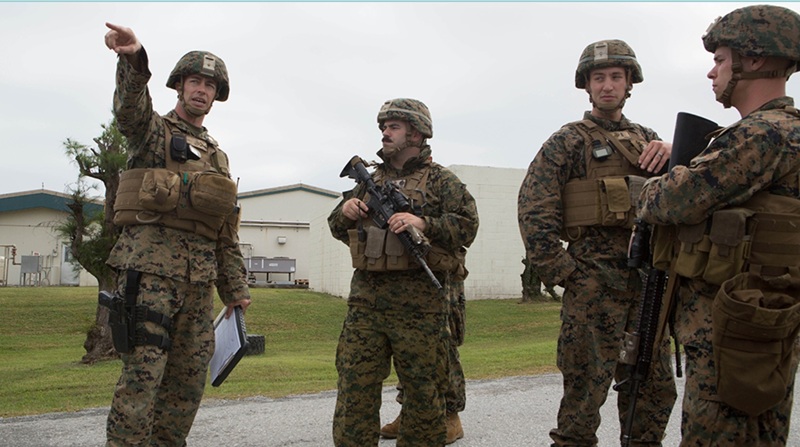
According to defense officials, Defense Secretary Pete Hegseth approved an urgent request from U.S. Central Command (CENTCOM) to deploy the Japan-based 31st Marine Expeditionary Unit, a rapid-response force designed for maritime security and crisis operations.
31st MEU Deployment Details
The 31st MEU consists of approximately 2,200 Marines deployed aboard three U.S. Navy amphibious ships, including the USS Tripoli amphibious assault ship.
Some reports indicate the full amphibious ready group and supporting elements could bring the total personnel involved in the deployment to around 5,000, although the core Marine combat element typically ranges between 2,200 and 2,500 troops.
Marine Expeditionary Units are designed for rapid deployment and can conduct a wide range of missions including amphibious assaults, crisis response, and maritime security operations.
Escalation in the Strait of Hormuz
The deployment comes amid a sharp escalation in Iranian activity around the strategic waterway. Since the launch of Operation Epic Fury on February 28, Iran has intensified attacks on commercial shipping transiting the Strait of Hormuz.
Key developments reported so far include:
- At least 13 commercial vessels struck by projectiles.
- Six seafarers killed during attacks.
- One of the targeted vessels reportedly sailed under the U.S. flag.
Shipping traffic through the strait has dramatically declined as a result of the escalating conflict. Maritime monitoring data indicates daily traffic has dropped from roughly 100 vessels per day before the conflict to single digits in recent days. Oil tanker movements alone have reportedly fallen by about 80 percent.
U.S. forces operating in the region have already destroyed 16 Iranian vessels believed to be laying naval mines near the critical shipping corridor.
Iran’s new supreme leader, Mojtaba Khamenei, has vowed to keep the chokepoint closed, declaring ships linked to the United States or Israel as “legitimate targets.”
As a result, only a limited number of ships are still moving through the area, often with transponders switched off in so-called “dark” transits to avoid detection.
Impact on Global Energy Markets
The Strait of Hormuz is one of the world’s most critical energy chokepoints, carrying approximately 20 percent of global oil and liquefied natural gas (LNG) shipments.
The escalating conflict has already begun affecting global energy markets. Brent crude prices have climbed above $94 per barrel, reflecting growing fears that a prolonged disruption in the strait could severely impact global oil supplies.
Capabilities of the Marine Expeditionary Unit
The 31st MEU brings a versatile mix of military capabilities designed for rapid response operations.
Its deployment includes:
- Amphibious assault ships capable of launching Marines directly onto shorelines.
- Ground combat units equipped for expeditionary warfare.
- Aviation elements, including F-35 fighter jets and MV-22 Osprey tilt-rotor aircraft.
- Logistics and support units for sustained operations.
These capabilities allow the force to conduct missions ranging from tanker escort operations and maritime security patrols to rapid amphibious deployments if required.
However, U.S. officials emphasize that the deployment is not intended for a ground invasion of Iran. Instead, it provides commanders with flexible options to protect shipping lanes and respond to potential Iranian actions in the region.
Broader U.S. Strategy: Operation Epic Escort
The Marine deployment is part of a broader U.S. strategy aimed at stabilizing maritime traffic through the Strait of Hormuz.
Military planners are reportedly developing options under what has been described as “Operation Epic Escort,” which could involve escorting commercial tankers through the strait if ordered by the White House.
According to Joint Chiefs Chairman Gen. Dan Caine, potential escort operations may include:
- Naval escorts for commercial vessels
- Air cover for shipping convoys
- Unmanned surveillance and protection assets
- Mine countermeasure operations
At present, no escort missions have officially begun.
Defense Secretary Hegseth stated that Iranian naval forces have already suffered significant losses, saying approximately 50 Iranian boats have been destroyed in U.S. strikes.
Despite this, the Pentagon continues to reinforce the region as a precaution while tensions remain high.
A Signal of Escalation Preparedness
The deployment of the 31st Marine Expeditionary Unit signals that Washington is preparing for further escalation in the Gulf.
With shipping traffic severely disrupted and global oil markets reacting sharply, the United States appears to be positioning forces to ensure that the Strait of Hormuz — one of the world’s most important energy corridors — can be reopened if necessary.
Meanwhile, ongoing U.S. and Israeli airstrikes against Iranian targets continue to intensify, with U.S. officials warning that upcoming strikes could be among the most intense of the campaign so far.
The situation remains fluid, and defense analysts are closely watching whether the arriving Marine forces will integrate with existing U.S. carrier strike groups or become involved in future tanker escort operations in the region.