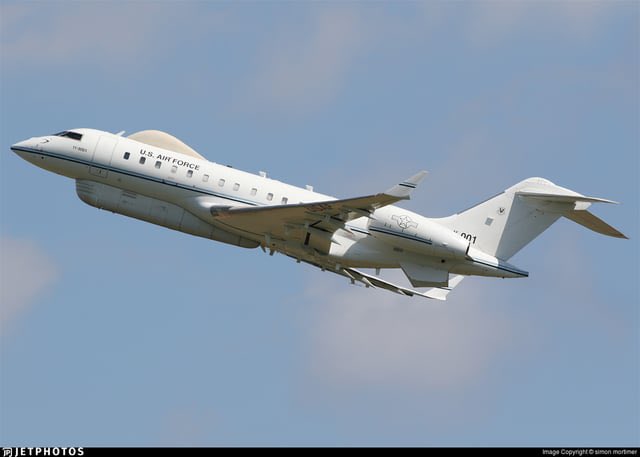
A key U.S. military communications aircraft was detected operating over the western Mediterranean on Tuesday, adding to a series of movements that analysts say could indicate advanced command-and-control preparations amid escalating tensions with Iran.
According to open-source flight tracking data, a U.S. Air Force E-11A aircraft, operating under the callsign BLKWF01, was observed flying at high altitude in international airspace. The aircraft is widely known for its role as an airborne communications relay, often described as “Wi-Fi in the sky.”
What Is the E-11A and Why It Matters
The E-11A Battlefield Airborne Communications Node (BACN) is a highly specialized platform designed to connect aircraft, naval vessels, drones, and ground forces by bridging incompatible radios and data networks. Operating at very high altitudes, the aircraft enables real-time voice, video, and data sharing in environments where direct communication is impossible due to terrain, distance, or electronic interference.
Military experts note that the E-11A does not conduct strikes or intelligence collection itself. Instead, it serves as a critical enabler for complex operations, ensuring uninterrupted coordination across multiple domains — air, sea, land, space, and cyber.
Its presence is typically associated with large-scale exercises, coalition operations, or high-readiness military postures.
Why the Mediterranean Flight Is Being Noted
The aircraft’s appearance comes as the United States continues to reinforce its military posture across Europe and the Middle East. While the Pentagon has not commented on the specific mission of BLKWF01, analysts say the E-11A is usually deployed when operational connectivity becomes mission-critical, particularly in scenarios involving multiple strike platforms or coalition partners.
The western Mediterranean has long served as a transit and coordination corridor for U.S. and NATO forces moving toward the Middle East, making the flight strategically noteworthy even in the absence of official confirmation of future action.
Context: Rising US-Iran Tensions
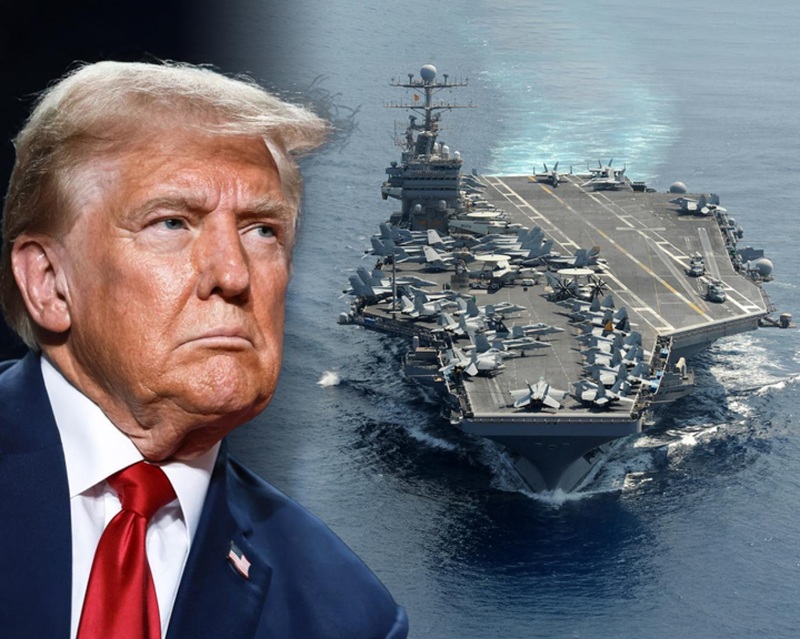
The flight coincides with heightened rhetoric from Washington over Iran’s nuclear program and regional activities, alongside the deployment of major U.S. naval assets, including aircraft carrier strike groups.
Defense analysts caution that the presence of enabling assets such as the E-11A does not automatically signal an imminent strike, but it does suggest advanced readiness and contingency planning, particularly for operations requiring seamless coordination across dispersed forces.
A Critical Piece of Modern Warfare
Often overlooked compared to fighter jets or aircraft carriers, airborne communications platforms like the E-11A are considered indispensable in modern warfare. Without them, complex joint operations — especially those involving stealth aircraft, unmanned systems, and long-range naval assets — would face serious coordination challenges.
In recent conflicts, similar aircraft have played a decisive role in ensuring command continuity even in heavily contested or electronically degraded environments.
What Comes Next
US officials have consistently stated that diplomacy remains the preferred path in dealing with Iran, while maintaining that all options remain on the table. For now, the Pentagon has not issued any public statements linking the E-11A flight to specific operational plans.
However, analysts say the movement of high-value enablers like the E-11A is closely watched because such assets typically appear late in the preparation cycle, when military planners are ensuring that every layer of command and control is in place.