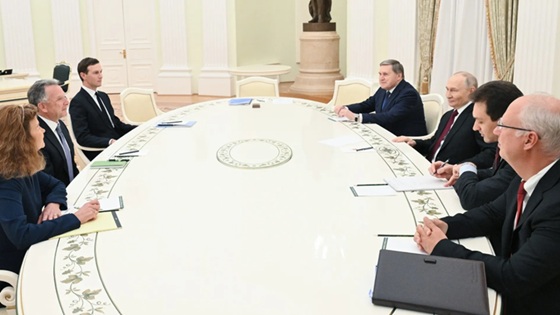
In a luxury Radisson hotel overlooking the frozen avenues of Moscow, two of Syria’s most notorious power brokers—Major General Kamal Hassan and billionaire Rami Makhlouf—are quietly drafting the blueprint of a new conflict. Once pillars of Bashar al-Assad’s authoritarian state, both men now live in gilded exile, stripped of the authority they enjoyed for decades. Yet the trappings of exile have not cooled their ambitions. Their eyes remain fixed on Syria’s coastal heartland, where they hope to rebuild an empire from the ashes of Assad’s fallen regime.
This is the story of a war the world assumed was over—yet one that may be preparing to return.
A New Battlefield Born in Exile
In his Moscow hotel suite, Rami Makhlouf—the tycoon who once controlled vast sectors of Syria’s economy—spends his days between prayer, writing, and phone calls to field commanders scattered across Syria, Lebanon, and the Gulf. On his desk lie three thick manuscripts on Islamic interpretation, drafted during years of isolation under house arrest in Damascus.
Makhlouf now describes himself as a man chosen for a divine mission.
“God gave me wealth and influence so I may lead my people in the final battle,” he told associates in voice messages circulated among Alawite networks.
Across town, in a quiet suburb, Kamal Hassan, Assad’s ruthless former military intelligence chief, lives in a three-story villa. His voice notes to old operatives sound like commands to a defeated army he still believes he can resurrect:
“Be patient, my people. Do not lay down your arms. The time will come.”
Both men share the same wound—loss of power—and the same dream: to carve out a new Alawite power base along the Syrian coast.
The 14 Underground Command Centers: Assad’s Last Legacy
In the final months of Bashar al-Assad’s rule, his security apparatus carved out 14 subterranean command bunkers beneath Tartous, Latakia, and other coastal towns. Conceived as last-resort fortresses in the event of Damascus’ fall, these bunkers now lie at the heart of a silent struggle.
Hassan and Makhlouf both want control of them.
Whichever man wins that contest will command the weapons stockpiles, the encrypted communications systems, and the hardened networks of officers who once defended the regime’s most strategic territory.
The question is no longer whether a new conflict is being prepared, but who will own it.
Two Rivals, One Goal: Rebuild Power from the Ruins
Kamal Hassan
- Former head of Military Intelligence
- Claims loyalty of nearly 12,000 fighters
- Has spent roughly $1.5 million funding militias since March
- Employs 30 former state hackers to sabotage the new government
- Sees himself as the rightful custodian of Alawite “honor”
Rami Makhlouf
- Once controlled over a third of Syria’s economy
- Claims a force of 54,053 fighters, including 18,000 officers
- Pays fighters $20–$30 per month, distributing millions through intermediaries
- Frames his return as part of a prophetic end-times battle
- Smuggles weapons and funds through networks in Lebanon, Russia, and the UAE
The two men detest each other but are bound by a shared desperation:
Neither can return to Syria without seizing power by force.
The Wild Card: Maher al-Assad
Perhaps the most pivotal figure in this unfolding drama is Maher al-Assad, the former commander of the 4th Armored Division and Bashar’s powerful younger brother.
He, too, is now in Moscow.
Despite exile, Maher still commands the loyalty of thousands of elite veterans across Syria. His business empire—protected through shell companies—remains largely intact.
Multiple former officers say the same thing:
“If Maher gives the order, thousands will mobilize overnight.”
Hassan and Makhlouf both want him.
Neither can control him.
And Maher has not yet chosen sides.
The New Syrian Government Strikes Back
In Damascus, the newly established government of President Ahmed al-Sharaa is well aware of the danger brewing abroad.
To counter the plot, it has deployed a man uniquely suited to the mission—Khaled al-Ahmad, Sharaa’s childhood friend and a former loyalist who defected in Assad’s final months.
Al-Ahmad’s task is surgical:
- Meet secretly with former Alawite officers
- Convince communities that their future lies with the new state, not exiled warlords
- Undercut the sectarian narrative weaponized by Hassan and Makhlouf
The governor of Tartous, Ahmed al-Shami, confirmed the government is tracking the plotters closely:
“They lack tools, they lack capacity, and most importantly—they lack trust among the people.”
A Coast on Edge: Fear, Fatigue, and Daily Killings
In March, after a failed uprising in a coastal Alawite town, pro-government forces killed nearly 1,500 civilians.
Since then, kidnappings and targeted killings occur almost daily.
Ordinary Alawites—who suffered immensely under Assad’s rule despite being portrayed as its beneficiaries—are exhausted. They fear another war yet feel unprotected by the new government.
A former intelligence officer now living in Lebanon described the mindset driving militias toward renewed conflict:
“Our dignity can only be restored through blood. Maybe thousands will die, but sacrifices must be made.”
It’s the rhetoric of men who have lost everything—except their appetite for war.
Russia’s Changing Calculus: From Kingmaker to Distant Landlord
For years, Russia acted as Assad’s military backbone.
Today, Moscow’s priority is simpler: protect its coastal bases and avoid another messy Syrian conflict.
Russian officials have met separately with Hassan and Makhlouf, but have offered no support. Instead, they appear to be grooming General Ahmed al-Mulla, a senior Syrian officer with long-standing Russian citizenship, as a potential mediator—or spoiler.
President al-Sharaa raised the issue directly with Moscow during his October visit.
The message from Russia was clear:
No new war. No new Assad.
Money: The One Resource Both Plotters Are Running Out Of
Makhlouf’s assets are frozen under international sanctions.
Hassan’s personal networks provide limited funding.
Their fighters are poorly paid, poorly equipped, and increasingly skeptical.
Commanders on the ground admit openly:
“They pay us, we take it. But no one is ready to fight for them.”
Without a financial lifeline—or Maher al-Assad—neither man can launch a full-scale coastal revolt.
Is a New Uprising Likely?
Given the current dynamics:
- Low public appetite for renewed conflict
- Bitter rivalry between Hassan and Makhlouf
- Russia’s refusal to back either side
- Government countermeasures already underway
- Exhaustion among Alawite communities
A large-scale uprising appears unlikely in the short term.
But the danger has not passed.
If Maher al-Assad throws his weight behind either man—or if coastal insecurity deepens—Syria could slip once again into a devastating sectarian war.
Conclusion: The Most Dangerous Silence Is the One Before a Storm
The world may believe Syria’s war has ended.
But in Moscow’s hidden suites and Syria’s tense coastlines, powerful exiles are preparing for a conflict the region cannot afford.
A regime has fallen.
A state is rebuilding.
And amid the ruins, the ghosts of Syria’s past are trying to rise again.