Thursday, April 9, 2026
Home Blog Page 21

Germany and India Near $8 Billion Submarine Deal to Boost Naval Power

0

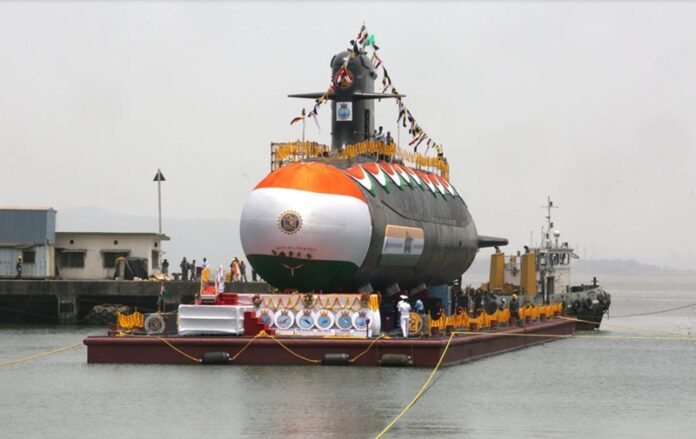
Germany and India are on the brink of sealing a major defense agreement worth at least $8 billion for advanced submarines, Bloomberg News reported, marking one of the largest defense contracts between the two strategic partners and a significant milestone for India’s naval modernization efforts.

Under the deal, Germany is expected to supply conventionally powered attack submarines—likely variants of its highly capable designs—to the Indian Navy under India’s Project-75(I) submarine acquisition initiative, which aims to boost maritime deterrence in the Indo-Pacific.

Background: Project-75(I) and Strategic Shift

Project-75(I) is a long-running Indian defense program to replace aging submarines and expand underwater capabilities, originally conceived in the 1990s to procure six diesel-electric attack submarines with advanced features like air-independent propulsion (AIP).
Germany’s TKMS (ThyssenKrupp Marine Systems) has been a frontrunner in negotiations, having previously signed a memorandum of understanding with India’s Mazagon Dock Shipbuilders as early as 2023 to jointly pursue submarine construction.

The prospective $8 billion agreement surpasses earlier estimates—such as a $5.2 billion proposal discussed in 2023—reflecting enhanced technology transfer, localized production and broader capabilities tailored to India’s evolving defense needs.

Strategic and Geopolitical Importance

Defense analysts say the deal strengthens India’s naval deterrence against regional challenges, particularly amid rising Chinese maritime activity in the Indian Ocean Region (IOR). The submarines will bolster India’s ability to conduct anti-submarine warfare (ASW), intelligence gathering, and power projection beyond its shores.

For Germany, the agreement represents a major expansion of its defense exports to Asia, reinforcing Indo-German strategic ties beyond economic cooperation into key security domains.

Production, Technology and Delivery Outlook

Beyond acquisition, the deal is expected to include provisions for technology sharing, joint manufacturing and long-term support, with Indian shipyards playing a central role in production. This aligns with New Delhi’s “Make in India” initiative aimed at building domestic defense industry capabilities.

Negotiations reportedly are being finalized and could culminate in formal contract signing during high-level diplomatic engagements this year, with delivery schedules initially projected over several subsequent years following construction and testing.

Regional and Global Implications

The potential submarine deal signals a deepening of India’s defense partnerships with Western allies, diversifying away from traditional suppliers while acquiring advanced maritime capabilities suited for contemporary security environments.

For New Delhi, strengthening its submarine fleet is not only a tactical imperative but also a strategic message of self-reliance and regional security leadership. For Berlin, the agreement underscores its intent to play a more influential role in Indo-Pacific security frameworks.
Army Chief Asim Munir Reviews Combat Readiness, Modern Training and Healthcare at Lahore Garrison

0
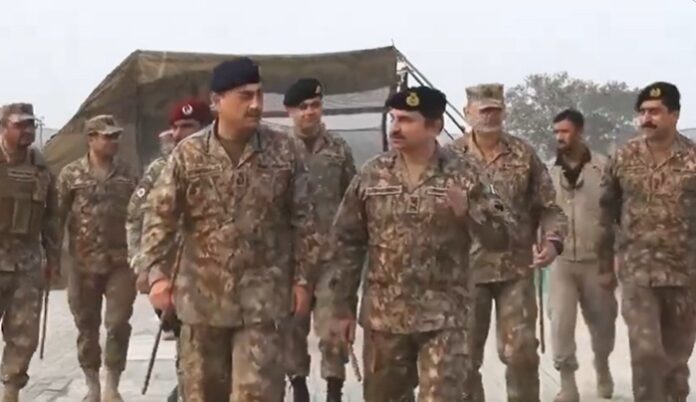
Field Marshal Syed Asim Munir, visited Lahore Garrison.

Syed Asim Munir, Field Marshal and Chief of Army Staff (COAS) as well as Chief of Defence Forces (CDF) of Pakistan, visited Lahore Garrison on Wednesday, where he reviewed the formation’s operational preparedness, training standards and modernization initiatives, according to a statement issued by the Inter-Services Public Relations (ISPR).

Upon arrival, the army chief was received by the Commander Lahore Corps, who briefed him on key operational responsibilities and readiness measures in view of evolving internal and external security challenges.

Focus on Modern Warfare and Innovation

During the visit, Field Marshal Asim Munir observed a specialized field training exercise designed to demonstrate the integration of modern technologies, battlefield digitization and adaptive tactics. The exercise highlighted the Pakistan Army’s emphasis on preparing for future, technology-driven conflict environments, including hybrid and asymmetric threats.

ISPR said the demonstration reflected the Army’s continued shift toward innovation, agility and rapid decision-making, enabling formations to remain effective across diverse operational scenarios.

Troop Welfare and Morale

The COAS & CDF also inspected sports and recreational facilities at Lahore Garrison, underscoring the importance of physical fitness, morale and mental resilience in sustaining long-term combat effectiveness. He noted that welfare initiatives play a critical role in maintaining a motivated and mission-ready force.

Visit to CMH Lahore

In a separate engagement, the army chief visited a High Care Center at CMH Lahore, where he commended medical staff and hospital administration for establishing a state-of-the-art healthcare facility. He praised the Armed Forces’ medical services for their professionalism and ability to provide advanced treatment to troops and their families.

Zero-Tolerance on National Security

Image

Addressing officers at the garrison, Field Marshal Asim Munir reiterated the Pakistan Army’s zero-tolerance policy toward any threat to national security. He emphasized that the armed forces remain fully committed to confronting multi-dimensional challenges with professionalism, unity and determination.

Reaffirming the Army’s core mission, he stated that the Pakistan Armed Forces will continue to safeguard Pakistan’s sovereignty, territorial integrity and internal stability, while fostering a culture rooted in discipline, excellence and selfless service to the nation.

Strategic Context

The visit comes amid Pakistan Army’s ongoing focus on training reforms, force modernization and enhanced preparedness, as the regional security environment grows increasingly complex. Analysts say such visits signal the military leadership’s priority on readiness, innovation and troop welfare alongside traditional combat roles.

US Attempts to Seize Venezuela-Linked Oil Tanker in Atlantic Amid Russian Naval Presence

0
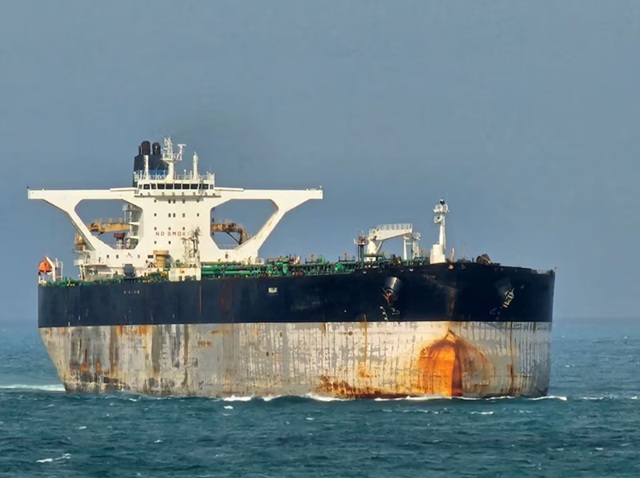
The vessel tanker Bella 1 at Singapore Strait, after U.S. officials say the U.S. Coast Guard pursued an oil tanker in international waters near Venezuela, in this picture taken from social media.

The United States is attempting to seize a Venezuela-linked oil tanker after a pursuit of more than two weeks across the Atlantic Ocean, U.S. officials told Reuters on Wednesday, in a high-stakes enforcement action that could heighten tensions with Russia.

The tanker, originally named Bella-1 and now operating under the name Marinera with a Russian flag, slipped through a U.S. maritime “blockade” of sanctioned vessels and rebuffed earlier efforts by the U.S. Coast Guard to board it near Venezuelan waters.

Image

Blockade and Ongoing Enforcement

The operation is being carried out jointly by the U.S. Coast Guard and U.S. military forces as part of a broader crackdown on tankers suspected of transporting Venezuelan crude in violation of U.S. sanctions imposed as part of former President Donald Trump’s pressure campaign against the Maduro regime.

Sources say the tanker has been under surveillance since an attempted interception in late December. Despite being sanctioned and targeted by the U.S., the vessel changed course, raised a Russian flag, and began what U.S. officials describe as an effort to evade blockade enforcement.

Russian Naval Escort Raises Geopolitical Stakes

U.S. officials reported that Russian naval forces, including a submarine, were in the vicinity at the time of the operation, raising concerns about a potential geopolitical standoff at sea. Russia is believed to be escorting or safeguarding the tanker, which underscores how complex the situation has become amid worsening U.S.–Russia relations.

This is not the first enforcement action under the U.S. blockade: the Coast Guard has intercepted other Venezuela-linked tankers in Latin American waters in recent weeks, part of an expanded effort to choke off oil revenues that Washington says support illicit activities and help the Maduro government sustain itself.

Strategic and Legal Dimensions

The tanker’s efforts to evade boarding follow a broader U.S. naval blockade of sanctioned vessels initiated in December 2025, under the so-called “Operation Southern Spear,” part of a strategy to disrupt oil exports tied to Venezuela.

Under U.S. sanctions policy, vessels involved in transporting illicit or sanctioned crude oil can be subject to boarding and seizure in certain circumstances. The U.S. has sanctioned multiple companies and tankers since mid-2024, alleging links to prohibited operations involving Venezuelan and Iranian oil.

Diplomatic Aftermath

While U.S. officials have not detailed the legal or diplomatic justifications in public, the presence of Russian naval assets suggests Moscow may view the action as a provocative challenge to its interests. Russia has previously lodged protests over U.S. interdictions and reflagging of tankers seeking to avoid detention.

Analysts say the operation illustrates the expanding scope of the U.S. campaign to isolate the Maduro government economically and strategically, even as it risks direct confrontation with Russia on international waters.

Russia Proposed Venezuela-for-Ukraine Deal to Trump in 2019, Fiona Hill Reveals

0

Russian officials in 2019 privately signaled to the Trump administration that the Kremlin might back away from supporting Nicolás Maduro in Venezuela if the United States would tacitly allow Russia to operate freely in Ukraine, according to former U.S. national security adviser.

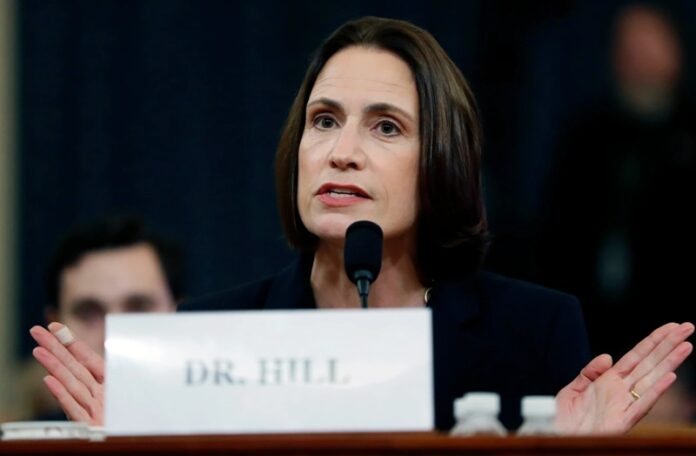
The revelation comes from testimony by Fiona Hill, who served as senior Russia and Europe adviser to President Donald Trump. Hill made the disclosures during a 2019 congressional hearing, and her comments have resurfaced this week following Washington’s stealth operation that ousted Maduro from power in Venezuela.

Hill told lawmakers that Russian officials repeatedly hinted at a “very strange swap” arrangement linking Venezuela and Ukraine, suggesting that Moscow would reduce its support for Maduro if the U.S. would similarly refrain from countering Russian influence over Ukraine. Although no formal proposal was ever put on the table, Hill said the idea was conveyed through informal diplomatic signals and sympathetic Russian media commentary referencing policies like the 19th-century Monroe Doctrine.

At the time, Hill was dispatched on behalf of the White House to Moscow to make clear that “Ukraine and Venezuela are not related to each other” in U.S. policy. The U.S. government was then publicly aligned with Western allies in supporting Venezuelan opposition leader Juan Guaidó as interim president.

Context: Why It Matters Now

The resurfacing of Hill’s 2019 testimony comes amid intense global debate over Washington’s recent intervention in Venezuela’s leadership. In 2026, U.S. forces captured Maduro and the Biden administration has framed the action as lawful and justified. Russian officials have condemned the move as “aggression,” though President Vladimir Putin has not publicly commented.

Critics argue that America’s actions in Venezuela complicate the moral high ground Washington has claimed in condemning Russia’s military operations in Ukraine. Hill stressed that if major powers can assert their interests in other nations under broad legal or political pretexts, it weakens the distinction between legitimate diplomacy and power politics.

“The Kremlin will be ‘thrilled’ with the idea that large countries … get spheres of influence because it proves ‘might makes right,’” Hill told The Associated Press.

Historical and Strategic Underpinnings

The Monroe Doctrine — invoked by both U.S. and Russian commentators at the time — was originally a 19th-century U.S. policy opposing European interference in the Western Hemisphere in exchange for a commitment not to meddle in Europe. Russian outreach in 2019 used this framework to argue for a reciprocal understanding: let the U.S. operate in Latin America and Russia in Eastern Europe.

Although the idea never became official policy, Hill’s account highlights the back-channel negotiations and geopolitical maneuvering that often occur behind the scenes in great power politics.

Five Chinese Mining Workers Killed in Afghanistan’s Takhar, Facility Torched

0

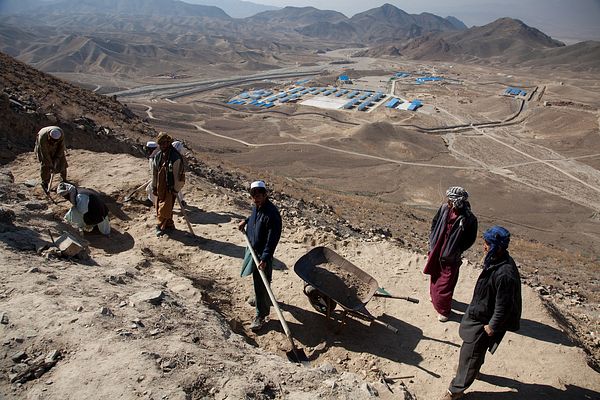
At least five Chinese nationals working for Dayulong Zeren Mining have been killed in a violent attack in Chah Ab, located in Takhar, according to regional sources. Several other foreign workers were reportedly abducted, while the company’s processing facility was set ablaze and equipment destroyed.


The attack is believed to have targeted Chinese personnel involved in mineral extraction activities in the area. Local sources said armed assailants stormed the site, killing workers on the spot before setting fire to the processing unit and fleeing with hostages. There was no immediate official statement from Afghanistan’s de facto authorities, and the identities and motivations of the attackers remain unclear.

Image

Growing Risks for Chinese Projects

The incident underscores persistent security risks facing Chinese nationals and investments in Afghanistan, particularly in remote, mineral-rich northern provinces. Since the Taliban’s return to power in 2021, Beijing has cautiously expanded its economic footprint in Afghanistan, focusing on mining, infrastructure and energy projects, while urging Kabul to guarantee security for Chinese citizens.

However, attacks on Chinese interests have occurred repeatedly despite assurances.

Past Incidents Targeting Chinese Nationals

  • In December 2022, a suicide bombing targeted a hotel in Kabul popular with Chinese businesspeople, killing several civilians and injuring Chinese nationals.
  • In 2023, Chinese engineers working on infrastructure-related projects faced armed attacks and kidnappings in different parts of the country.
  • Militants linked to the so-called Islamic State Khorasan Province (ISKP) have previously explicitly threatened Chinese interests, accusing Beijing of exploiting Muslim lands and resources.

While it remains unclear whether ISKP or local armed groups were responsible for the Takhar attack, analysts note that Chinese mining operations have increasingly become high-value targets due to their economic and symbolic significance.

Image

Strategic and Economic Context

Afghanistan is believed to possess vast untapped mineral reserves, including copper, gold, lithium and rare earth elements—resources critical to global supply chains and China’s industrial strategy. Chinese firms, often operating under difficult security conditions, have sought early entry into these sectors.

The killing of Chinese nationals and destruction of mining infrastructure is likely to complicate Beijing’s engagement strategy, potentially forcing China to reconsider the scale, pace, and security arrangements of its Afghan investments.

Regional Implications

Security experts warn that continued attacks on foreign workers could further isolate Afghanistan economically, discouraging external investment at a time when the country faces deep financial distress. For China, the incident highlights the gap between political assurances from Kabul and realities on the ground.

Beijing is expected to raise the issue through diplomatic channels and press Afghan authorities for swift action, recovery of abducted workers, and enhanced protection for Chinese projects.

Saudi, Pakistani Air Chiefs Discuss Expanding Military and Air Force Cooperation

0

Saudi Arabia’s top air force commander met Pakistan’s air chief in the Kingdom to explore ways to expand and deepen military cooperation between the two long-standing defense partners, Saudi Arabia’s Ministry of Defense said on Wednesday.

The talks brought together Turki bin Bandar bin Abdulaziz, Commander of the Royal Saudi Air Force, and Zaheer Ahmad Babar Sidhu, Chief of the Air Staff of the Pakistan Air Force.

According to the Saudi defense ministry, the two air chiefs discussed opportunities to enhance cooperation across multiple military domains, reflecting the evolving security environment in the Gulf and South Asia.

Modernization and Strategic Alignment

Air Marshal Turki bin Bandar, a senior member of the Saudi royal family, has led the Royal Saudi Air Force since 2018 and oversees its modernization, operational readiness, and regional engagement. Pakistan’s Air Chief Marshal Zaheer Ahmad Babar Sidhu, whose tenure was extended in December 2025, is set to lead the Pakistan Air Force until March 2028.

The meeting comes as Saudi Arabia continues to invest heavily in advanced air and missile defense systems, while Pakistan intensifies defense diplomacy with Gulf partners amid shifting regional dynamics.

Long-Standing Defense Partnership

Saudi Arabia and Pakistan maintain close military ties, including training exchanges, joint exercises, and technical cooperation—particularly in air force operations. Pakistani military personnel have historically served in advisory and training roles in the Kingdom, underscoring the depth of bilateral defense cooperation.

The Pakistan Air Force is widely regarded as one of the most professional air forces in the region and has regularly participated in multinational air exercises hosted by Saudi Arabia. The Royal Saudi Air Force, meanwhile, plays a central role in the Kingdom’s broader defense strategy, including aerial surveillance, air defense, and joint operational preparedness.

Both countries describe their military relationship as a cornerstone of their wider strategic partnership, which also encompasses economic cooperation, labor ties, and regional diplomatic coordination.

Israel Sees Venezuela Precedent as Potential Pathway for US Action on Iran Protests

0

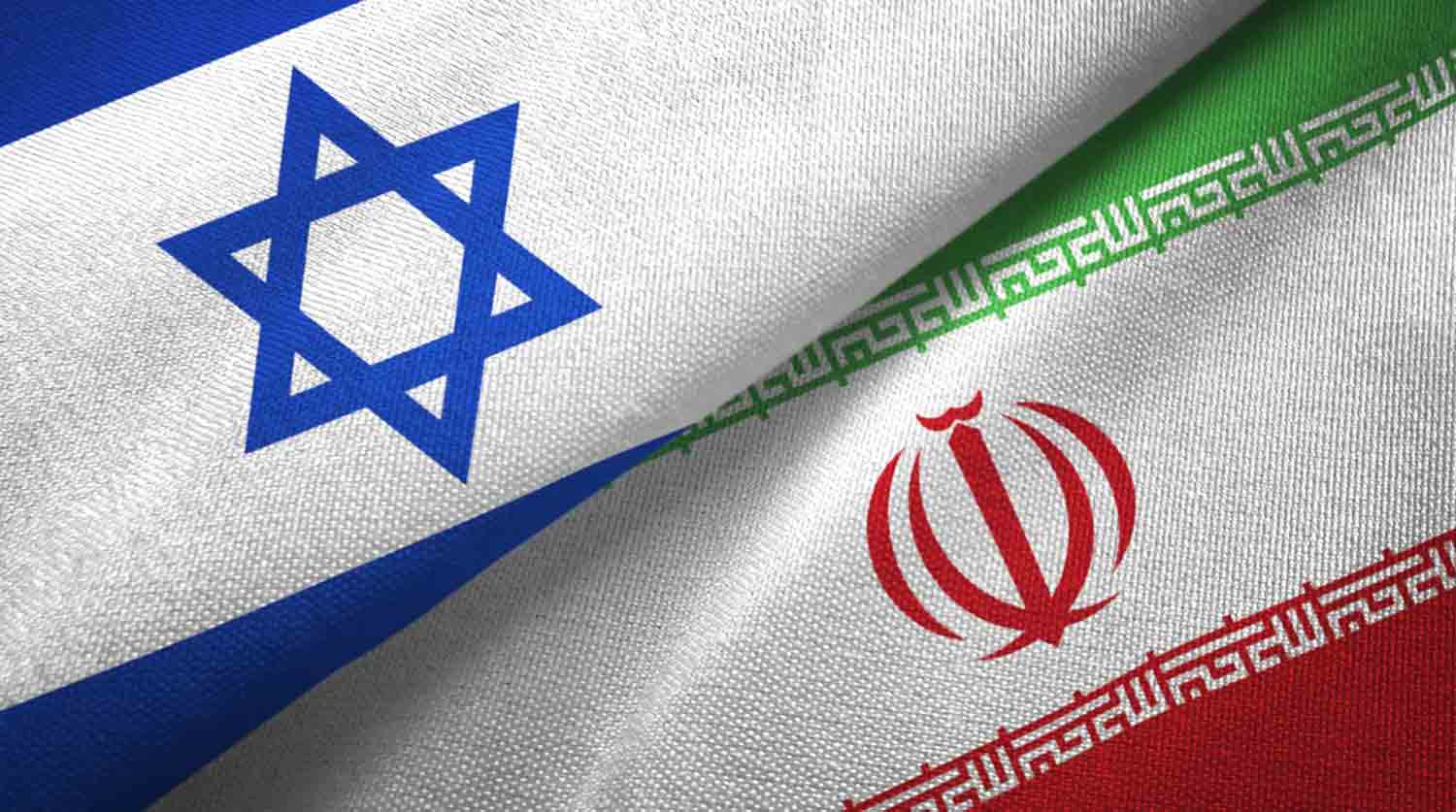
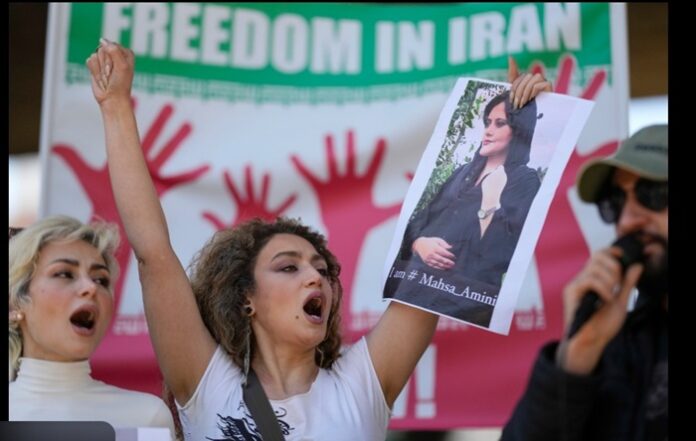
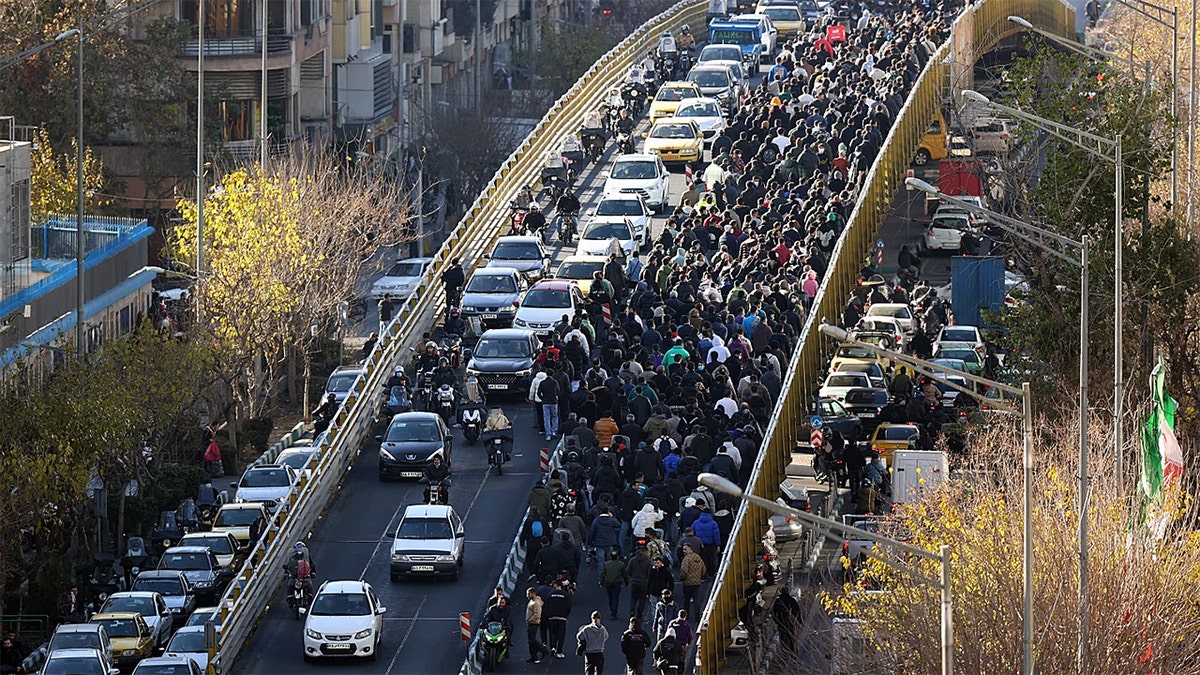
The Jerusalem Post reports that there are growing indications Washington is considering some form of intervention in Iran as nationwide protests continue to challenge the Iranian leadership, a development that has drawn close attention in Israel and across the Middle East.

According to the report, Israel was caught off guard by the recent U.S. intervention in Venezuela, particularly the speed and decisiveness with which Washington acted. Israeli analysts now assess that the Venezuela operation may have lowered the political and strategic threshold for similar U.S. actions elsewhere — including Iran.

Image

Venezuela as a Strategic Precedent

Israeli security assessments cited by the Jerusalem Post suggest that the Venezuela intervention demonstrated a new American willingness to act unilaterally when Washington perceives a convergence of national security, counter-narcotics, and regional stability interests.

In Israeli strategic thinking, Venezuela served as a test case:

  • rapid execution
  • limited on-the-ground footprint
  • strong political messaging
  • framing the action as law enforcement and security enforcement rather than regime change

This model, analysts say, could be adapted to Iran—not necessarily through a full-scale military invasion, but via targeted actions designed to accelerate internal pressure on the regime.

What ‘Intervention’ Could Mean

The Jerusalem Post emphasizes that intervention does not automatically imply military invasion. Instead, U.S. options under discussion are understood to span a wide spectrum:

  • Expanded covert and cyber operations targeting Iranian security and surveillance networks
  • Information and psychological operations to amplify protest messaging and weaken regime cohesion
  • Legal and financial warfare, including aggressive sanctions enforcement and asset seizures
  • Targeted kinetic actions, such as arrests, interdictions, or strikes against specific regime-linked nodes, framed under counterterrorism or nonproliferation authorities

Israeli officials believe Washington is deliberately maintaining strategic ambiguity to avoid triggering premature escalation.

Israel’s Calculus

Image

From Israel’s perspective, any U.S. move on Iran carries profound implications. Israeli security planners reportedly see the current protests as the most serious internal challenge to the Iranian system since 2022, with economic collapse, currency devaluation, and elite fragmentation intensifying public anger.

The Jerusalem Post notes that Israeli leaders are assessing whether U.S. action—if it comes—would aim to:

  • weaken Iran’s regional proxy networks
  • disrupt nuclear and missile programs
  • or catalyze a broader political transition

Israel is said to favor maximum pressure without uncontrolled war, preferring calibrated U.S. involvement that avoids a regional explosion.

Caution Inside Washington

Despite speculation, the report stresses that no final decision has been made in Washington. Senior U.S. officials remain wary of the risks of escalation, particularly given Iran’s capacity to retaliate through regional allies and asymmetric means.

However, the political context has shifted. The combination of:

  • sustained protests inside Iran
  • perceived regime vulnerability
  • and the precedent set in Venezuela

has, in Israeli eyes, expanded the menu of U.S. policy options in ways that would have been unthinkable just months ago.

Regional Implications

If the United States were to intervene — overtly or covertly — it would mark a fundamental shift in Middle East power dynamics, potentially emboldening Iranian protesters while raising the stakes across the region.

For Israel, the key concern is control and sequencing: intervention that weakens Tehran without triggering a multi-front war involving Hezbollah, Syria, or Iraq.

Analysis

The Jerusalem Post’s reporting reflects a broader reassessment underway among U.S. allies: that Venezuela was not an isolated episode, but a signal of a more assertive American posture toward regimes Washington deems hostile.

Whether Iran becomes the next arena will depend on the durability of protests, the cohesion of Iran’s security forces, and Washington’s tolerance for risk. What is clear, Israeli analysts argue, is that the Venezuela operation has changed the strategic conversation — and Iran is now firmly part of it.

India Contacted Senior Trump Officials on Operation Sindoor Ceasefire Day, FARA Filings Show

0
Indian Prime Minister Narendra Modi speaks to U.S. President Donald Trump during a meeting at Hyderabad House in New Delhi, India.

New disclosures under the U.S. Foreign Agents Registration Act (FARA) reveal that the Indian Embassy in Washington reached out to three senior officials in the Trump administration on May 10, the same day a ceasefire was announced during “Operation Sindoor.” The contacts focused on “media coverage” of the conflict, according to filings submitted by a U.S. lobbying firm to the Department of Justice.

The filing shows outreach to Susie Wiles, Jamieson Greer, and Ricky Gill. While the document does not specify whether the calls occurred before or after the ceasefire took effect, the timing underscores intense, same-day engagement with the White House, the U.S. Trade Representative’s office, and the National Security Council.

Image

What the filings detail

The disclosures—part of around 60 entries uploaded in December 2025 to the Department of Justice’s FARA database—were made by a U.S. lobby firm retained by the Indian Embassy. The entries log calls and outreach to senior U.S. officials on May 10 and describe the purpose as discussing media coverage related to Operation Sindoor.

Although FARA filings typically record contacts and stated purposes rather than outcomes, the concentration of outreach on a single, high-stakes day suggests a coordinated effort to manage narratives and brief U.S. decision-makers during a fast-moving crisis.

Trade and security lanes converge

The inclusion of the U.S. Trade Representative alongside White House and NSC officials highlights how trade and security tracks intersected during the episode. India has been navigating sensitive trade discussions with Washington while also managing regional security dynamics, and the filings point to an attempt to keep economic channels open even as crisis diplomacy intensified.

What remains unclear

The filings do not indicate:

  • Whether the calls were pre- or post-ceasefire;
  • Whether meetings were granted or what guidance, if any, followed;
  • The substance of the media-coverage discussions beyond the stated purpose.

FARA disclosures are not required to include call transcripts or outcomes, leaving key details opaque.

Why it matters

The episode illustrates how New Delhi leverages Washington’s lobbying ecosystem—including firms with access to senior U.S. officials—to synchronize public messaging, trade engagement, and security coordination during moments of escalation. It also underscores the scrutiny that accompanies such efforts, as FARA filings make the timing and targets of outreach public.


US Explores COFA-Style Deal With Greenland, Challenging Denmark’s Role and NATO Unity

0

The United States is quietly exploring a Compact of Free Association (COFA)-style agreement with Greenland, a move that could dramatically reshape Arctic geopolitics, strain NATO cohesion and sideline Denmark’s long-standing sovereignty over the vast Arctic territory, according to reporting by The Economist and European media outlets.

Under the proposed framework, Washington would offer direct financial assistance, infrastructure investment and economic support to Greenland in exchange for assuming responsibility for its defence and foreign affairs, while allowing Nuuk to retain control over internal governance. The model closely mirrors existing U.S. COFA agreements with Micronesia, the Marshall Islands and Palau, which grant the U.S. military broad access rights while restricting rival powers—most notably China—from operating there.

Image

Bypassing Denmark

Crucially, the proposal could be presented directly to Greenland’s authorities, effectively bypassing Copenhagen. Greenland, an autonomous territory of Denmark with a population of about 57,000—predominantly Inuit, has exercised self-rule over domestic affairs since 2009 but continues to rely on Denmark for defence and foreign policy.

Analysts say such a deal would represent a de facto transfer of sovereignty over strategic domains to Washington, granting the U.S. veto power over resource extraction deals, including rare-earth mining projects vital to global technology and green-energy supply chains.

Strategic Value and Existing US Footprint

The U.S. already maintains a powerful military presence at Pituffik Space Base (formerly Thule Air Base) under a 1951 defence treaty with Denmark, enabling missile-warning systems, space surveillance and Arctic monitoring. A COFA arrangement would deepen that footprint, placing Greenland squarely within the U.S. security architecture.

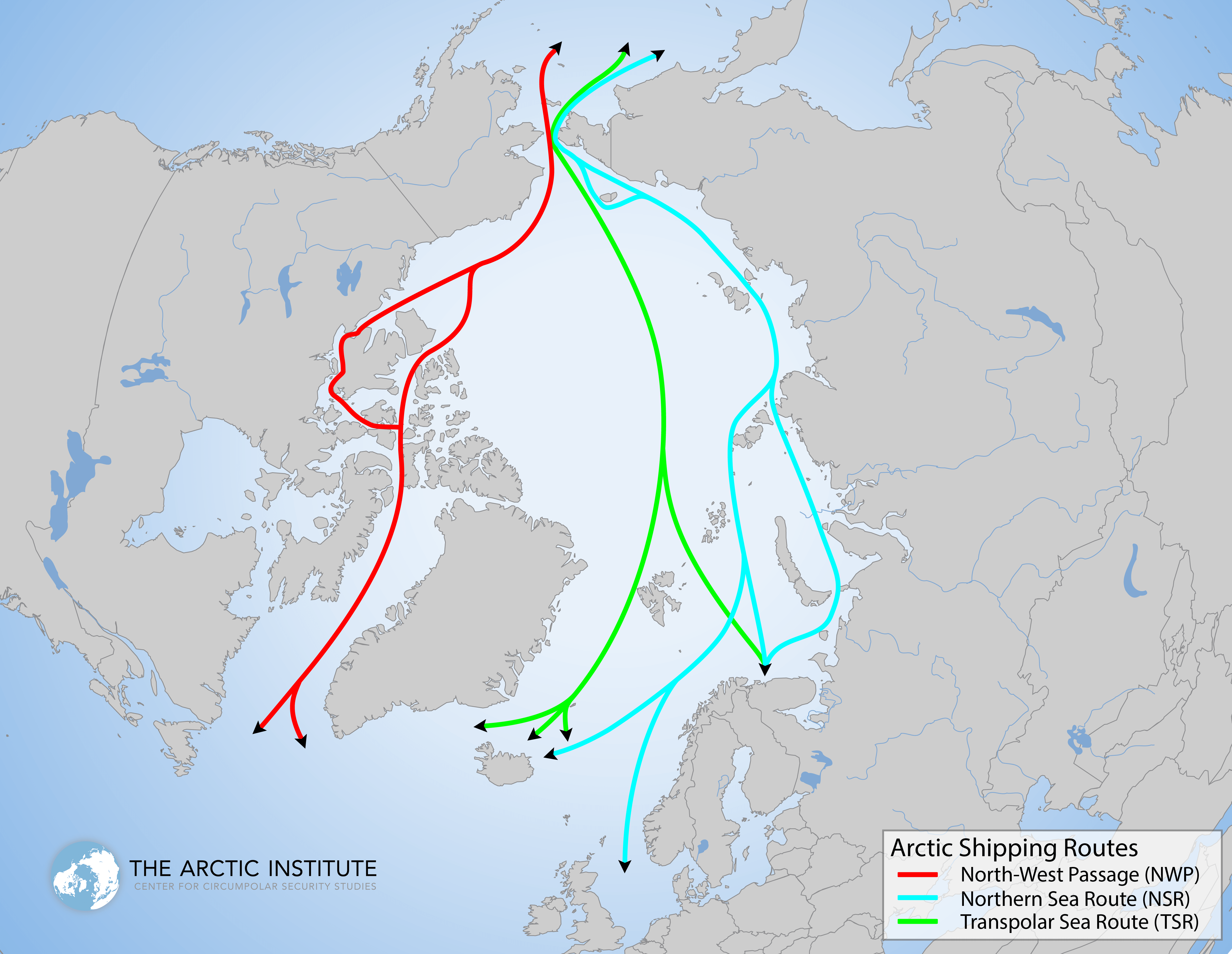
Greenland’s strategic value has grown sharply as melting Arctic ice opens new shipping routes, including the Northwest Passage, which could cut global transit times by up to 40 percent. The island is also believed to hold 10–20 percent of the world’s rare-earth reserves, resources critical for semiconductors, batteries and defence technologies.

Trump’s Renewed Push

Former U.S. President Donald Trump has revived his long-standing interest in Greenland since returning to office, framing the issue as a matter of U.S. national security. Trump first floated the idea of buying Greenland in 2019—a proposal Denmark dismissed as “absurd”—but has reiterated the concept in 2025–26, arguing that Danish control is outdated amid intensifying Arctic competition.

Senior aides, including Stephen Miller, have described Denmark’s role as “colonial” and declined to rule out coercive measures, though invasion scenarios are widely viewed as impractical given Greenland’s terrain—80 percent ice-covered—and Denmark’s NATO membership.

European Alarm and NATO Risks

Danish Prime Minister Mette Frederiksen has issued stark warnings, saying any U.S. military move against Greenland would “dismantle NATO” and upend transatlantic security arrangements built since World War II. Greenland’s prime minister has likewise rejected what he called Trump’s “fantasies.”

European leaders, including Poland’s Donald Tusk, have voiced solidarity with Denmark. Invoking NATO’s Article 5 against the United States would be unprecedented and could effectively dissolve the alliance, forcing Europe into rapid remilitarisation.

Image


Public Opinion and Economic Leverage

While 74 percent of Greenlanders oppose U.S. annexation, according to a 2023 poll, analysts caution that economic incentives could sway opinion. Greenland’s GDP is roughly $3 billion, and Denmark provides annual subsidies of about $600 million, making Nuuk economically vulnerable to external offers.

Critics describe the U.S. strategy as a “land grab” that exploits these vulnerabilities to erode Danish sovereignty, while proponents argue it is necessary to counter Chinese and Russian encroachment in the Arctic.

Timeline and Political Signalling

Reports in Politico suggest Washington could attempt to secure decisive influence over Greenland within months, with symbolic milestones such as July 4, 2026, circulating in U.S. policy circles. European media speculate about accelerated timelines—some citing “20-day escalation windows”—heightening anxiety across NATO capitals.

Analysis

Rather than a sudden takeover, analysts say the strategy reflects a dual-track approach: intensifying political friction between Greenland and Denmark while opening direct negotiations with Nuuk. If realised, a COFA-style deal would mark the most significant shift in Arctic governance in decades—reshaping power balances, testing NATO unity and redefining sovereignty in an era of climate-driven competition.

Pakistan, Bangladesh Air Chiefs Discuss Training, Radar Integration and Possible JF-17 Deal

0
Air Chief Marshal Hasan Mahmood Khan, Chief of the Air Staff, Bangladesh Air Force called on Air Chief Marshal Zaheer Ahmed Baber Sidhu

Pakistan and Bangladesh have taken fresh steps to expand bilateral air force cooperation, as a high-level defence delegation led by Hasan Mahmood Khan, Chief of the Air Staff of the Bangladesh Air Force, held talks with Zaheer Ahmed Baber Sidhu, Chief of the Air Staff of the Pakistan Air Force (PAF), at Air Headquarters in Islamabad.

According to a statement issued by Inter-Services Public Relations (ISPR), the meeting focused on strengthening operational cooperation and institutional synergy, with particular emphasis on training, capacity building, and collaboration in advanced aerospace technologies.

Training, Aircraft and Operational Support

The visiting Bangladeshi Air Chief was accorded a Guard of Honour on arrival. During the talks, Air Chief Marshal Zaheer Ahmed Baber Sidhu briefed his counterpart on the PAF’s recent operational and technological advancements, reaffirming Pakistan’s commitment to support the Bangladesh Air Force through a comprehensive training framework.

This framework spans basic to advanced flying training, as well as specialised courses across Pakistan Air Force institutions. The PAF chief also assured fast-tracked delivery of Super Mushshak trainer aircraft, alongside a complete training, maintenance and long-term support ecosystem to ensure sustained operational readiness.

Interest in Radar Integration and JF-17 Thunder

Image

Air Chief Marshal Hasan Mahmood Khan praised the Pakistan Air Force’s combat record and operational experience, expressing interest in leveraging PAF expertise to address Bangladesh Air Force requirements. Discussions included maintenance support for Bangladesh’s aging aircraft fleet and cooperation on the integration of air-defence radar systems to enhance airspace surveillance and early warning capability.

Sources confirmed that detailed deliberations were also held on the potential procurement of JF-17 Thunder multi-role fighter aircraft, reflecting Bangladesh’s interest in cost-effective platforms with modern avionics and weapons integration.

Visit to Key PAF Facilities

During the visit, the Bangladeshi delegation toured several key Pakistan Air Force facilities, including the National ISR & Integrated Air Operations Centre, PAF Cyber Command, and the National Aerospace Science & Technology Park. The delegation was briefed on Pakistan’s growing capabilities in intelligence, surveillance and reconnaissance (ISR), cyber operations, space, electronic warfare, and unmanned systems.

Strategic Significance

The visit underscored the strong historical defence ties between Pakistan and Bangladesh and highlighted a shared intent to elevate cooperation into a long-term strategic partnership. Analysts say enhanced training collaboration, aircraft support, and possible fighter acquisition could significantly strengthen Bangladesh Air Force capabilities while reinforcing Pakistan’s role as a regional defence partner.

Pentagon Initiates Action to Downgrade Senator Mark Kelly’s Military Retirement Over ‘Seditious’ Statements

0

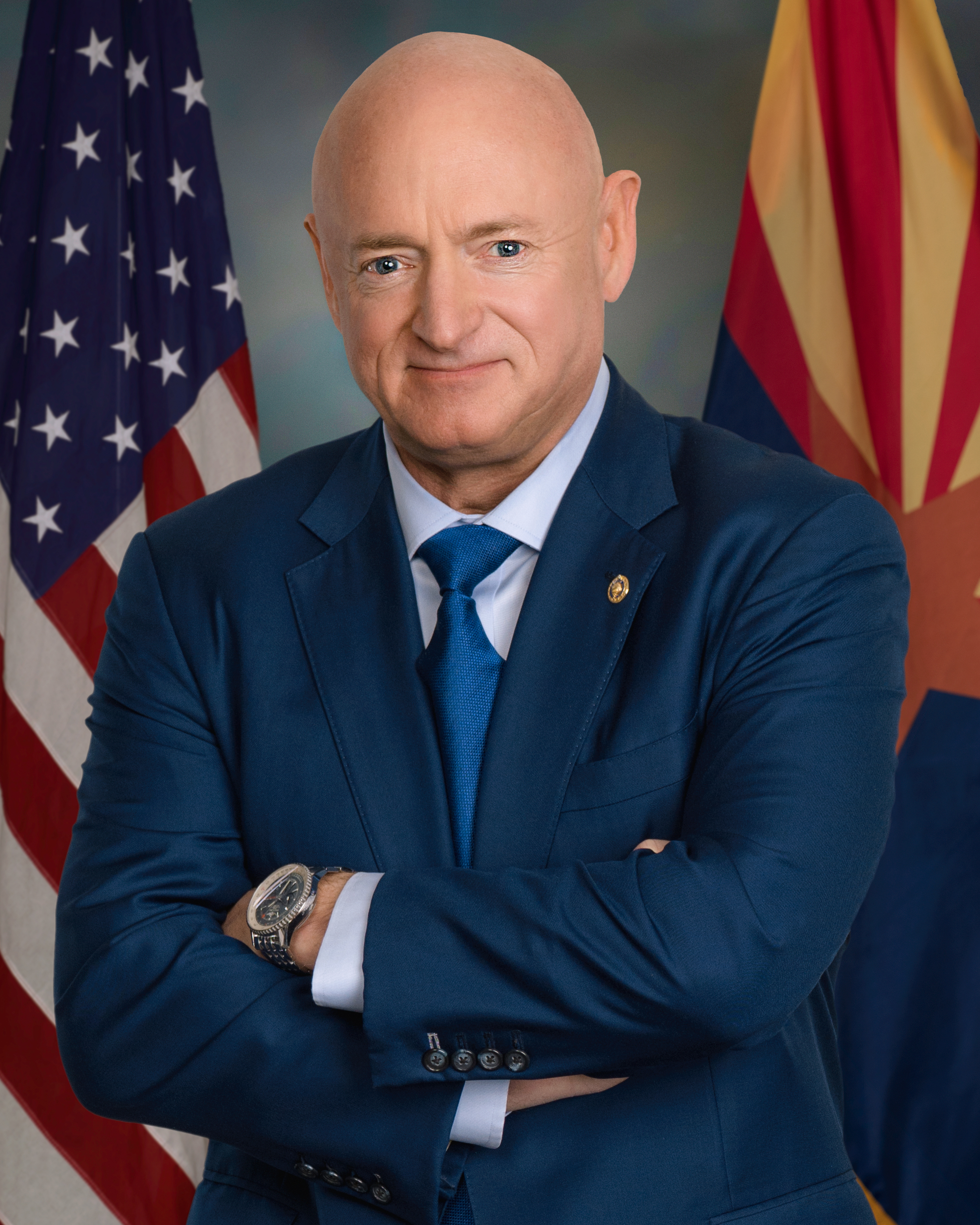
The Pentagon has launched administrative disciplinary proceedings against Senator Mark Kelly, accusing the retired Navy captain of “seditious conduct” for public statements that allegedly undermined military discipline and encouraged service members to disobey lawful orders.

Image

In a sharply worded statement, the department said the action stems from remarks made by Kelly between June and December 2025, during which he described lawful U.S. military operations as illegal and publicly urged members of the Armed Forces to refuse certain orders. Officials argue this conduct violated Articles 133 and 134 of the Uniform Code of Military Justice (UCMJ)—provisions that continue to apply to retired officers receiving military pay.

Retirement Rank and Pay at Risk

Under 10 U.S.C. § 1370(f), the Department of War has initiated a retirement grade determination, a process that could result in Kelly’s retired rank being reduced. Any downgrade would trigger a corresponding cut in his military pension, a move that underscores the seriousness of the allegations.

The department confirmed that the Secretary of War has also issued a formal Letter of Censure, detailing what officials describe as a “pattern of reckless misconduct.” The censure will be placed permanently in Kelly’s official military personnel file.

Kelly has been formally notified and given 30 days to respond. The review process is expected to conclude within 45 days, according to the statement.

Background: A Rare Civil–Military Clash

The controversy traces back to a video released six weeks ago by Kelly and five other members of Congress. The Department of War characterized the video as “reckless and seditious,” arguing it was intended to erode good order and discipline within the ranks at a time of heightened global tensions.

While Kelly now serves as an elected lawmaker, the department emphasized that retired officers receiving pay remain subject to military law.

“Captain Kelly’s status as a sitting United States Senator does not exempt him from accountability,” the statement said, warning that further violations could prompt additional action.

Legal and Political Implications

The case raises complex questions about the boundary between free political speech and military discipline, particularly when retired officers enter public office. Legal experts note that while prosecutions under the UCMJ against retirees are rare, administrative actions—such as rank reductions—are legally permissible and historically grounded.

Politically, the move is likely to intensify debate in Washington over civil–military relations, congressional oversight of military operations, and the limits of dissent by former uniformed officers.

What Comes Next

If the retirement grade determination proceeds as outlined, Kelly could face a permanent loss of rank and income, setting a precedent that could resonate across the armed forces and Capitol Hill alike. The outcome may also influence how retired military officers engage in public criticism of active operations in the future.

Graham’s ‘Make Iran Great Again’ Remark Signals Sharpening U.S. Strategy Amid Protests

0

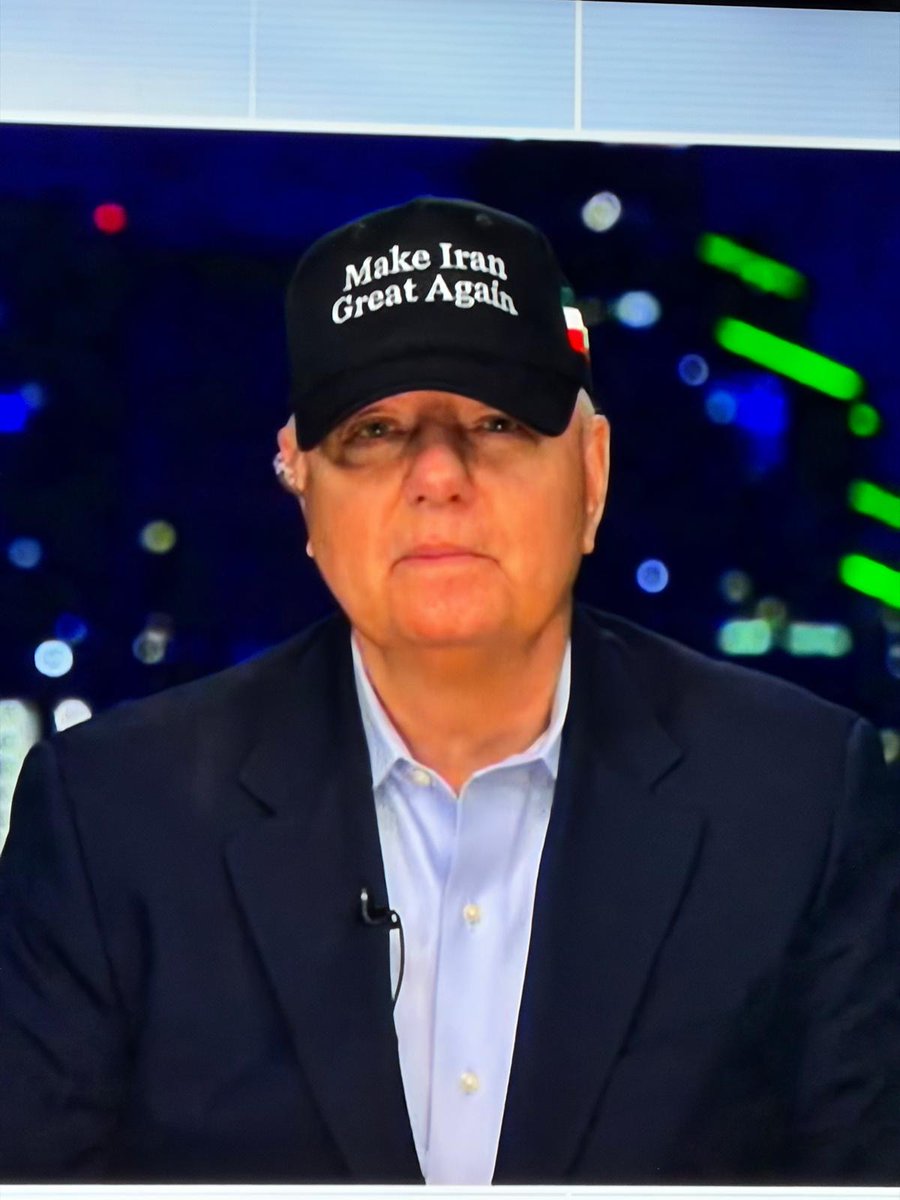
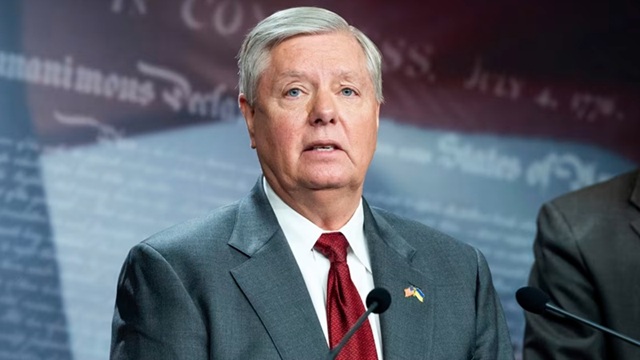
U.S. Senator Lindsey Graham has ignited fresh debate over Washington’s intentions toward Iran after appearing in a red “Make Iran Great Again” cap and declaring:

“I pray and hope that 2026 will be the year that we make Iran great again.”

While framed as rhetoric, Graham’s comment comes at a sensitive moment—amid renewed protests inside Iran and a broader shift in U.S. policy under President Donald Trump toward assertive action in the Middle East and the Western Hemisphere alike.

Image


Context: Protests and Pressure

Iran has witnessed sporadic but widening demonstrations in recent weeks, driven by economic distress, currency weakness, and long-standing political grievances. While Iranian authorities portray the unrest as foreign-instigated, Western officials have increasingly highlighted human rights concerns and framed the protests as evidence of deep internal dissatisfaction.

Against this backdrop, Graham’s statement is being read less as symbolism and more as a signal of political intent—suggesting that Washington sees 2026 as a potential inflection point for Iran’s trajectory.

What Does ‘Make Iran Great Again’ Mean?

Image

U.S. officials and analysts describe a multi-layered approach rather than a single policy lever:

  1. Sustained Economic Pressure
    Washington is expected to maintain sanctions pressure targeting Iran’s oil revenues, shipping networks, and financial channels, while tightening enforcement against sanctions evasion.
  2. Support for Civil Society and Information Access
    The U.S. has expanded messaging in Persian, emphasized internet access, and increased public diplomacy aimed at Iranian audiences—framing change as Iranian-led, not externally imposed.
  3. Regional Containment
    U.S. policy continues to prioritize curbing Iran’s regional footprint—particularly the activities of allied groups—while strengthening security cooperation with regional partners.
  4. Diplomacy Without Concessions
    While Washington leaves the door open to talks, officials stress that negotiations would be conditional on verifiable changes, not sanctions relief upfront.

No Invasion, But No Illusions

Graham and other U.S. lawmakers have been explicit that military invasion is not the goal. Instead, the strategy relies on pressure, isolation, and leverage—aimed at creating conditions in which Iran’s leadership faces rising internal and external costs.

The phrase “Make Iran Great Again,” critics argue, echoes past U.S. rhetoric associated with regime change. Supporters counter that it reflects solidarity with the Iranian people, not a blueprint for occupation.

Reactions and Risks

Iranian officials have dismissed such statements as proof of U.S. hostility and interference. State media warn that external pressure could harden positions and justify crackdowns. Meanwhile, regional observers caution that escalatory rhetoric, even absent military action, can fuel miscalculation.

Yet within Washington, Graham’s comment aligns with a broader belief that incremental pressure is converging with internal unrest—a combination some policymakers view as historically consequential.

Analysis

Graham’s remark underscores a shift from managing Iran to actively shaping outcomes—at least rhetorically. Whether this translates into tangible change depends on variables beyond Washington’s control: the durability of protests, elite cohesion in Tehran, and regional dynamics.

For now, the message is clear: the U.S. intends to keep Iran at the center of its strategic agenda in 2026, betting that pressure plus persistence will eventually redefine the country’s path—without firing a shot.

Venezuela Operation’s Real Target Was Cuba, Not China, Analysts Say

0

The U.S. operation in Venezuela has widely been framed as a move to counter China’s influence in Latin America. But senior policy watchers and regional specialists argue the primary strategic target was Cuba, not Beijing. The operation, they say, is designed to dismantle a decades-old power architecture that quietly bound Caracas to Havana—and to sever the energy lifeline that has sustained Cuba’s economy.

A central architect of the approach is believed to be U.S. Secretary of State Marco Rubio, a seasoned Latin America hand with deep familiarity with Cuba’s security footprint. Analysts note that while China’s presence in Venezuela mattered, Washington’s more urgent objective was to neutralize Cuban operational control inside Venezuela.

Image


Cuba’s Deep Grip on Venezuela

For more than 20 years, Venezuela has operated under intensive Cuban influence, beginning after Hugo Chávez sought Havana’s help following a failed coup and doubts about his own military’s loyalty. Thousands of Cuban personnel—doctors, technicians, trainers, and intelligence officers—were embedded across Venezuelan institutions.

Their role extended to military oversight, surveillance systems, sensitive databases, and presidential security, creating what insiders describe as a “coup-proof” system. In return, Venezuela supplied Cuba with heavily discounted oil—at times up to 100,000 barrels per day—forming the backbone of Cuba’s energy and financial stability.


Maduro’s Removal: Symbolic, Not Structural

The capture of Nicolás Maduro removed a visible figurehead, not the underlying system. The Cuban network on the ground remains the real source of regime continuity, which explains the immediate defiance from interim authorities and calls for Maduro’s return.

Rather than install a new government outright, Washington has opted for logistical and economic leverage: controlling coastal ports, enforcing maritime and air interdiction, and potentially establishing secure “green zones” around key terminals. This approach can halt oil and goods flows to Cuba without occupying the oil fields themselves.


Oil—But Not a Gulf War Play

Image

References to “oil” should not be read as a rush to extract. Building extraction capacity would take years. The near-term objective is to choke Cuba’s energy and finances, aligning with a Western Hemisphere security doctrine that treats Havana as a long-standing strategic challenge.


Why China Wasn’t the Main Target

China’s footprint in Venezuela was real, but not core to Beijing’s global priorities. Washington can disrupt shipments at ports without seizing infrastructure, effectively resetting the China-Venezuela relationship. U.S. officials have signaled that China can still buy Venezuelan oil—as a customer, at market prices, not as an owner-operator—while the U.S. gains leverage by controlling the storefront.

This indirect approach avoids escalation after a bruising trade war, while preserving a bargaining chip should tensions rise again.


Russia, Guyana, and Migration

Russia is more deeply embedded than China, with contractors and security ties that complicate any settlement. That track may unfold separately. Meanwhile, Guyana’s newly discovered offshore fields—operated by ExxonMobil—are now less vulnerable to Venezuelan claims.

Domestically, the operation also serves U.S. migration policy. Control over ports or designated zones could provide a legal pathway to repatriate Venezuelan migrants to U.S.-administered areas, easing pressure at the border.


Analysis

Taken together, the operation aims to weaken Cuba’s state capacity, reframe China as a buyer rather than a stakeholder, keep Russia off-balance, and restore U.S. leverage in Latin America. If additional steps against Cuba follow, it will confirm that Venezuela was the arena—not the prize—in a broader regional strategy.

Graham Says Maduro Was Offered Exile in Türkiye Before Arrest, but Rejected Deal

0

U.S. Senator Lindsey Graham has claimed that Venezuela’s former president Nicolás Maduro was offered a chance to leave power and go into exile in Türkiye before being captured and flown to New York, suggesting that back-channel negotiations took place ahead of Washington’s dramatic operation.

“Maduro could be in Türkiye today, but he’s in New York,” Graham said, adding that U.S. officials had “given him a way out” that he chose to reject. “You better take the offer,” the senator warned, saying Maduro had “nobody to blame but himself.”


The remarks have intensified debate over whether the United States pursued a last-minute diplomatic exit for Maduro before opting for direct action.

Was There an Exile Deal on the Table?

According to Graham’s statement and accounts from officials familiar with the matter, Maduro was presented with an option to step down peacefully and leave Venezuela, avoiding arrest and prosecution. Türkiye reportedly emerged as a potential destination, seen as a country with which Caracas maintained working relations and where Maduro might have found temporary refuge.

While neither Washington nor Ankara has publicly confirmed a formal agreement, Graham’s comments strongly suggest that an informal or conditional offer was conveyed to Maduro in the final stages before the operation.

Did Negotiations Take Place?

Multiple signals indicate that quiet contacts and exploratory talks were underway:

  • Exit and transition: The core proposal reportedly centered on Maduro relinquishing power and leaving the country, allowing for a managed political transition in Caracas.
  • Economic and oil-related assurances: There are indications that Maduro sought guarantees linked to Venezuela’s oil sector and sanctions relief, proposals U.S. officials reportedly viewed as insufficient.
  • Security and prosecution: The option on offer appears to have been framed as a final opportunity to avoid immediate arrest rather than a full legal amnesty.

Ultimately, U.S. officials say Maduro defied President Donald Trump’s ultimatum, prompting the decision to proceed with the capture.

Türkiye’s Role: Mediator or Destination?

It remains unclear whether Türkiye actively participated as a mediator or was simply identified as a possible destination for exile. Ankara has maintained diplomatic ties with Caracas in recent years and has previously positioned itself as open to dialogue in regional crises.

Turkish officials have so far avoided detailed public comment, calling instead for stability and restraint, leaving open questions about how far Ankara was willing to go in facilitating any arrangement.

Why Graham’s Statement Matters

Graham’s blunt language appears intended not only to justify the operation against Maduro, but also to send a signal to other leaders under U.S. pressure: accept a negotiated exit when offered, or risk arrest.

“Maduro chose to defy Trump and the U.S. military,” Graham said. “Now he’s in jail.”

Analysis

If confirmed, the alleged Türkiye exit offer would indicate that Washington exhausted a final diplomatic option before resorting to force. It also sets a potential precedent: future U.S. interventions could be paired with last-minute exile offers as a way to reduce resistance—followed by swift action if rejected.

For Türkiye, the episode may raise questions about its emerging role as a possible refuge or diplomatic channel in high-stakes international crises. For global politics more broadly, it underscores how exile deals, once common during the Cold War, may be re-entering modern power politics.

Rubio Says U.S. ‘Not at War With Venezuela’ as He Defends Maduro Capture and Ongoing Pressure

0
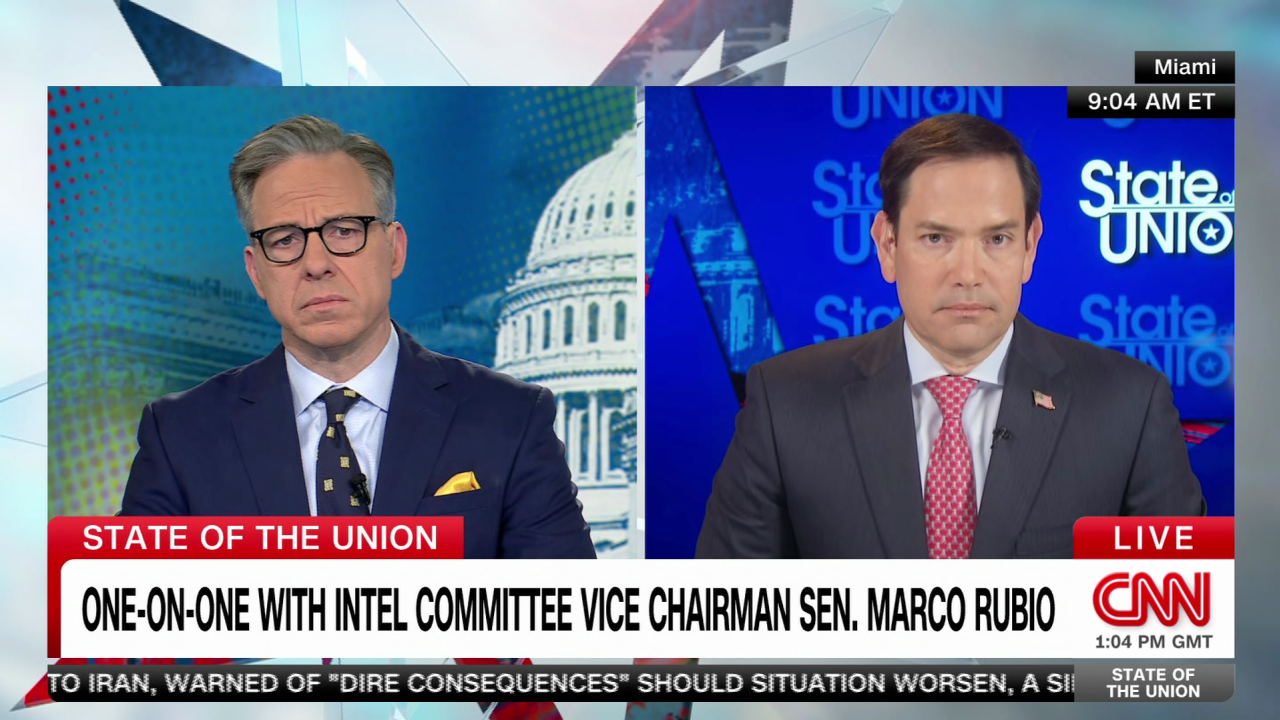
U.S. Secretary of State Marco Rubio at the State Department in Washington, U.S.

U.S. Secretary of State Marco Rubio has mounted a robust defense of the Trump administration’s controversial operation in Venezuela, saying Washington acted decisively to eliminate a major security threat and prevent the Western Hemisphere from becoming a sanctuary for drug traffickers and hostile foreign actors.

Appearing on multiple U.S. television news programs, Rubio said the operation that led to the capture of indicted narcoterrorist Nicolás Maduro was limited in scope, legally justified, and squarely focused on U.S. national security interests.

“There’s not a war against Venezuela,” Rubio said. “We are at war against drug trafficking organizations — not a war against Venezuela.”

Image

‘Decisive Action,’ Not an Invasion

Rubio rejected claims that the operation amounted to a military invasion, stressing that U.S. forces were on Venezuelan soil for only a brief period.

“We don’t have U.S. forces on the ground in Venezuela,” he said. “They were on the ground for about two hours when they went to capture Maduro. This was not an extended military operation.”

The secretary of state added that the action did not require prior congressional approval, arguing it fell within the president’s constitutional authority and existing legal frameworks. He said Congress would be notified where required, but warned against what he described as paralysis driven by comparisons to past U.S. interventions in the Middle East.
“This is not Libya. This is not Iraq. This is not Afghanistan,” Rubio said. “This is the Western Hemisphere.”

Western Hemisphere Red Line

Rubio said President Donald Trump has drawn a clear red line against allowing U.S. adversaries to operate freely in the Americas.

“This is where we live,” Rubio said. “We’re not going to allow the Western Hemisphere to be a base of operation for adversaries, competitors, and rivals of the United States.”

He specifically cited concerns about Iranian influence, Hezbollah activity, and the use of Venezuela’s oil sector to finance groups hostile to U.S. interests.

“No more drug trafficking. No more Iran. No more Hezbollah presence there,” Rubio said. “No more using the oil industry to enrich our adversaries around the world.”

Pressure to Continue

Rubio made clear that Maduro’s capture does not mark the end of U.S. pressure on Venezuela. He said Washington would judge the situation not by rhetoric but by tangible outcomes.

“What we are going to react to is very simple: what do you do?” Rubio said. “Do the drugs stop coming? Is Iran expelled? Are Hezbollah and Iran no longer able to operate from Venezuela?”

Until those conditions are met, Rubio said Venezuela would continue to face what he described as an “oil quarantine,” along with aggressive maritime interdictions targeting sanctioned vessels and drug trafficking routes.

“We will continue to seize boats, target drug shipments, and potentially take other actions until the issues are addressed,” he said.

‘Illegitimate President’

Image

Rubio also pushed back strongly against media references to Maduro as Venezuela’s president, insisting he never held legitimate authority.

“Maduro is not just an indicted drug trafficker; he was an illegitimate president,” Rubio said. “He was not the head of state.”

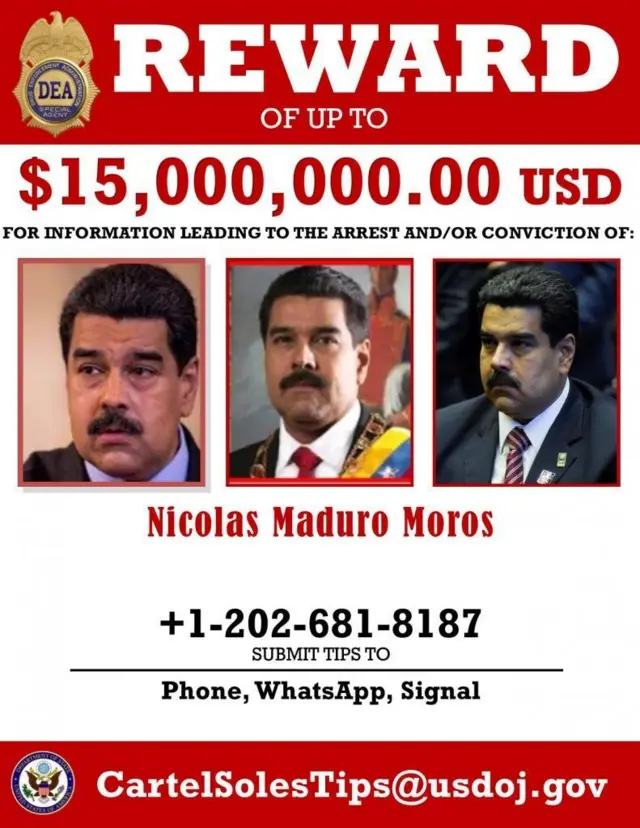
He contrasted the Trump administration’s approach with previous U.S. policy, noting that earlier governments had offered rewards for Maduro’s arrest but failed to act.

“There was a $25 million reward for his capture before,” Rubio said. “The difference is President Trump did something about it.”

Analysis

Rubio’s media blitz reflects an administration seeking to normalize an extraordinary action by reframing it as law enforcement plus national security, rather than regime change. By emphasizing drugs, oil, and foreign adversaries, Washington is signaling that future U.S. engagement in Latin America will be guided less by democracy promotion and more by hard security outcomes.

The message to allies and rivals alike is clear: under President Trump, the United States is prepared to use force swiftly and unilaterally in the Western Hemisphere — and intends to keep pressure on until concrete changes are delivered.

Trump Warns India on Russian Oil, Signals Tariffs Despite Modi’s Outreach to U.S.

0

U.S. President Donald Trump has issued a blunt warning to India over its continued oil trade with Russia, openly suggesting that Washington could raise tariffs “very quickly” despite what he described as efforts by New Delhi to placate U.S. concerns.

Speaking aboard Air Force One, Trump said India had reduced some Russian oil purchases largely to accommodate his position, praising Prime Minister Narendra Modi personally while keeping economic pressure firmly on the table.

“They wanted to make me happy, basically… Prime Minister Modi is a very good man. He’s a good guy. He knew I was not happy,” Trump said.
“They do trade, and we can raise tariffs on them very quickly.”

The remarks underscore a transactional approach to U.S.–India relations, where strategic partnership coexists with hard-edged trade threats—particularly as Washington intensifies pressure on countries maintaining economic ties with Moscow.

Image

India’s Russian Oil Dilemma

Since the Ukraine war, India has emerged as one of the largest buyers of discounted Russian crude, arguing that affordable energy is critical for its fast-growing economy and domestic stability. New Delhi has consistently maintained that its energy purchases are guided by national interest, not geopolitics.

However, Trump’s comments suggest that India’s partial reduction in Russian oil imports is being interpreted in Washington not as a policy shift, but as a tactical concession aimed at easing U.S. pressure.

This view was reinforced by U.S. Senator Lindsey Graham, who said Indian diplomats have been actively lobbying the Trump administration.

“I was at the Indian Ambassador’s house a month ago, and all he wanted to talk about was how India is buying less Russian oil,” Graham said.
“He asked me to tell the President to relieve the 25% tariff.”

Indian Efforts to Appease Washington

Over recent months, India has taken several steps aimed at reassuring the United States:

  • Signaling reduced dependence on Russian crude in diplomatic engagements
  • Expanding energy cooperation with the U.S. and Middle Eastern suppliers
  • Emphasizing India’s role as a strategic partner in the Indo-Pacific

Indian officials have also highlighted broader cooperation with Washington on defense, technology, and supply chains, hoping to insulate the relationship from sanctions-driven trade disputes.

Yet Trump’s rhetoric indicates that personal diplomacy and goodwill may not translate into lasting economic relief.

Image

Tariffs as Leverage

Trump’s warning that tariffs could be raised “very quickly” points to a familiar tactic from his earlier presidency: using trade penalties as leverage to enforce foreign policy compliance.

Analysts say India faces a difficult balancing act:

  • Too much compliance risks undermining its strategic autonomy and relations with Russia.
  • Too little could invite punitive tariffs that hurt exports and investor confidence.

The reference to a 25% tariff has raised concerns in Indian business circles, particularly in sectors such as steel, pharmaceuticals, and manufactured goods that rely heavily on U.S. market access.

Strategic Context

The episode highlights a broader shift in U.S. foreign policy under Trump, where alliances are increasingly conditional and performance-based. Even close partners are expected to align with Washington’s economic and geopolitical priorities—or face consequences.

For India, the stakes are high. As it seeks to position itself as a global manufacturing hub and a counterweight to China, sustained trade friction with the United States could complicate long-term economic ambitions.

Analysis

Trump’s praise of Modi, coupled with overt tariff threats, reflects a dual-track strategy: personal warmth, institutional pressure. While India appears willing to make limited adjustments to avoid confrontation, the comments suggest Washington views such moves as insufficient without deeper alignment.

The coming months will test whether India’s diplomatic outreach can soften U.S. trade policy—or whether tariffs will become the primary tool shaping the next phase of U.S.–India relations.

After Maduro’s Removal, Venezuela’s Chavista Inner Circle Faces Power Struggle

0

The removal of Nicolás Maduro has plunged Venezuela’s long-ruling “Chavista” movement into its most serious internal test in nearly three decades, raising urgent questions about whether the tightly controlled power structure can survive without the man who held it together.

Image

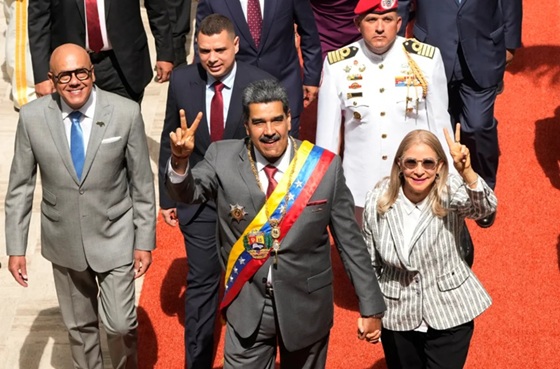
Maduro, who governed the oil-rich nation for 27 years of Chavista rule following the legacy of Hugo Chávez, was captured by U.S. forces and transferred to New York to face trial alongside his wife, Cilia Flores. Their removal has disrupted what diplomats in Caracas describe as a “club of five”—a small circle of leftist power brokers who collectively ran the country.

At the center of that group were Maduro and Flores, alongside three other dominant figures: former vice president Delcy Rodríguez, her brother Jorge Rodríguez, and hardline Interior Minister Diosdado Cabello.

“They all had a voice, but Maduro was the one who kept the balance,” a diplomatic source in Caracas said. “Now that he’s gone, everything is uncertain.”

Maduro’s Cult of Power

Personally chosen by Chávez before his death in 2013, Maduro was often underestimated by critics but proved adept at neutralizing rivals and maintaining control. He cultivated a carefully crafted image—broadcasting near-daily rallies, dancing to techno music, and chanting slogans like “No war, yes peace!” even as U.S. pressure mounted.

State propaganda elevated him to near-mythical status through murals, songs, films and the animated cartoon Super Moustache, portraying Maduro as a superhero fighting imperialism alongside “Super Cilita,” a character inspired by Flores. The loyalty of the armed forces, led by Defence Minister Vladimir Padrino López, was central to his survival.

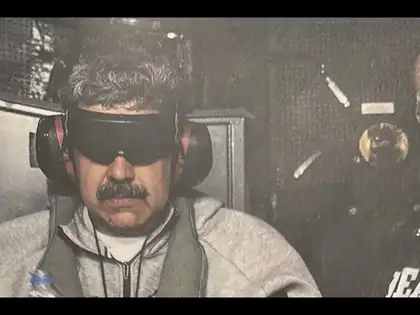
That image shattered with photographs of a handcuffed and blindfolded Maduro being flown to the United States—images that quickly circulated worldwide.

Who Holds Power Now?

Image

Following Maduro’s capture, Delcy Rodríguez was installed as interim leader, signaling continuity but also exposing underlying tensions. On Sunday, she struck a notably pragmatic tone, calling for a “balanced and respectful relationship” with Washington—an abrupt shift from years of confrontation.

Rodríguez and her brother Jorge have long been seen as the regime’s strategic operators. As vice president, Delcy oversaw the economy and oil sector, while Jorge managed high-stakes negotiations with the opposition and foreign governments. Analysts credit the siblings with orchestrating internal purges, including the downfall of former oil minister Tareck El Aissami, who was jailed in 2023.

Cabello: The Wild Card

Standing apart is Diosdado Cabello, widely feared and regarded as the most radical figure within Chavismo. Under his watch as interior minister, thousands were detained following protests over Maduro’s disputed 2024 re-election, effectively silencing the opposition.

Cabello, a longtime Chávez ally and former coup participant, briefly served as president during the failed 2002 ouster of Chávez and remains the second-most powerful figure in the ruling Socialist Party. U.S. courts have now named him among those wanted for trial, offering a $25 million reward for his capture.

After maintaining a low profile immediately following Maduro’s arrest, Cabello reappeared alongside Delcy Rodríguez at her first cabinet meeting as acting president—an image meant to project unity but underscoring the fragile balance within the ruling elite.

Image

Analysis

With Maduro gone, Venezuela’s ruling system is entering a volatile phase. The question is whether the Rodríguez siblings’ pragmatism can coexist with Cabello’s hardline instincts—or whether internal rivalries will fracture the Chavista project.

For now, survival appears to be the priority. But without the central figure who arbitrated disputes and commanded loyalty, Venezuela’s post-Maduro era may expose deep cracks in a movement that has dominated the country for nearly three decades.

Denmark Warns U.S. Over Greenland as Trump Says America ‘Absolutely’ Needs Arctic Territory

0
The Greenland Flag is pictured in Nuuk, Greenland.

Denmark has sharply warned the United States to stop what it described as “threatening” rhetoric toward Greenland, after U.S. President Donald Trump said he “absolutely” needs the Arctic territory, reigniting fears of American expansionism just days after Washington’s military operation in Venezuela.

The diplomatic dispute escalated after Trump, speaking to The Atlantic, reiterated that Greenland is vital to U.S. national security, comments that came amid heightened international unease following the U.S. seizure of Venezuelan President Nicolás Maduro and Washington’s declaration that it would temporarily “run” Venezuela and access its oil resources.

Denmark’s Prime Minister Mette Frederiksen responded forcefully, calling Trump’s remarks unacceptable.

“I have to say this very clearly to the United States: it is absolutely absurd to suggest that the U.S. should take control of Greenland,” Frederiksen said, urging Washington to stop “threatening its historical ally.”

Greenland in the Spotlight After Venezuela

The U.S. intervention in Venezuela has unsettled European allies, reviving long-standing concerns that Trump’s repeated interest in annexing Greenland could move beyond rhetoric. Trump has argued that Greenland’s strategic Arctic location and vast reserves of critical minerals make it essential for U.S. defense and technological security.

Asked whether the Venezuela operation set a precedent for Greenland, Trump offered an ambiguous response, saying others would “have to view it themselves,” while insisting:

“We do need Greenland, absolutely. We need it for defense.”

Social Media Sparks Diplomatic Backlash

Tensions were further inflamed after Katie Miller, wife of Trump’s deputy chief of staff Stephen Miller, posted an image of Greenland colored like the U.S. flag on social media with the caption “SOON.”

Greenland’s Prime Minister Jens-Frederik Nielsen condemned the post as “disrespectful,” stressing that Greenland’s future cannot be decided by symbolic gestures or online posts.

“Our country is not for sale,” Nielsen said, adding that relations between nations must be built on international law and mutual respect.

Allies Push Back

Denmark’s ambassador to the United States, Jesper Moeller Soerensen, also weighed in, demanding full respect for Denmark’s territorial integrity and reminding Washington that Copenhagen— a NATO member—has significantly increased its Arctic security cooperation with the U.S.

European officials have privately expressed alarm that Trump’s Greenland rhetoric, combined with the Venezuela intervention, signals a broader shift toward coercive geopolitics driven by resource access and strategic positioning.

Why Greenland Matters

Greenland sits at the heart of the Arctic, a region increasingly shaped by climate change, new shipping routes, military competition, and access to rare earth minerals critical for defense and high-tech industries. The U.S. already maintains military facilities there, but Trump has repeatedly argued that Danish control is insufficient to meet American security needs.

Analysis

Trump’s renewed push for Greenland comes at a moment when global trust in U.S. restraint is already under strain. For allies in Europe, the concern is not only territorial ambition, but the precedent it sets—particularly after the dramatic use of force in Venezuela.

While Denmark and Greenland have firmly rejected any notion of annexation, the episode underscores growing anxiety among U.S. partners about the future direction of American foreign policy and respect for international norms.

China, Pakistan Move to Fast-Track CPEC 2.0 With Focus on Trade, Industry and Financial Stability

0
Chinese Foreign Minister Wang Yi, also a member of the Political Bureau of the Communist Party of China Central Committee, holds the Seventh Round of China-Pakistan Foreign Ministers' Strategic Dialogue with Pakistani Deputy Prime Minister and Foreign Minister Mohammad Ishaq Dar in Beijing, capital of China, Jan. 4, 2026.

China and Pakistan on Sunday agreed to fast-track economic cooperation under an upgraded China-Pakistan Economic Corridor (CPEC 2.0), with a renewed focus on trade, investment, industrial development and financial stability, following the Seventh Round of the China-Pakistan Foreign Ministers’ Strategic Dialogue held in Beijing.

The talks were co-chaired by Chinese Foreign Minister Wang Yi and Pakistan’s Deputy Prime Minister and Foreign Minister Mohammad Ishaq Dar, during Dar’s January 3–5 visit to China .

Image

Both sides described economic cooperation as the central pillar of their “all-weather strategic cooperative partnership,” agreeing to better align national development strategies and expand long-term growth drivers for Pakistan’s economy.

CPEC 2.0: From Infrastructure to Productivity

A key outcome of the dialogue was consensus on launching CPEC Phase 2, shifting emphasis from large infrastructure to productive sectors, including:

  • Industry and Special Economic Zones (SEZs)
  • Agriculture modernization and value chains
  • Mining and resource development
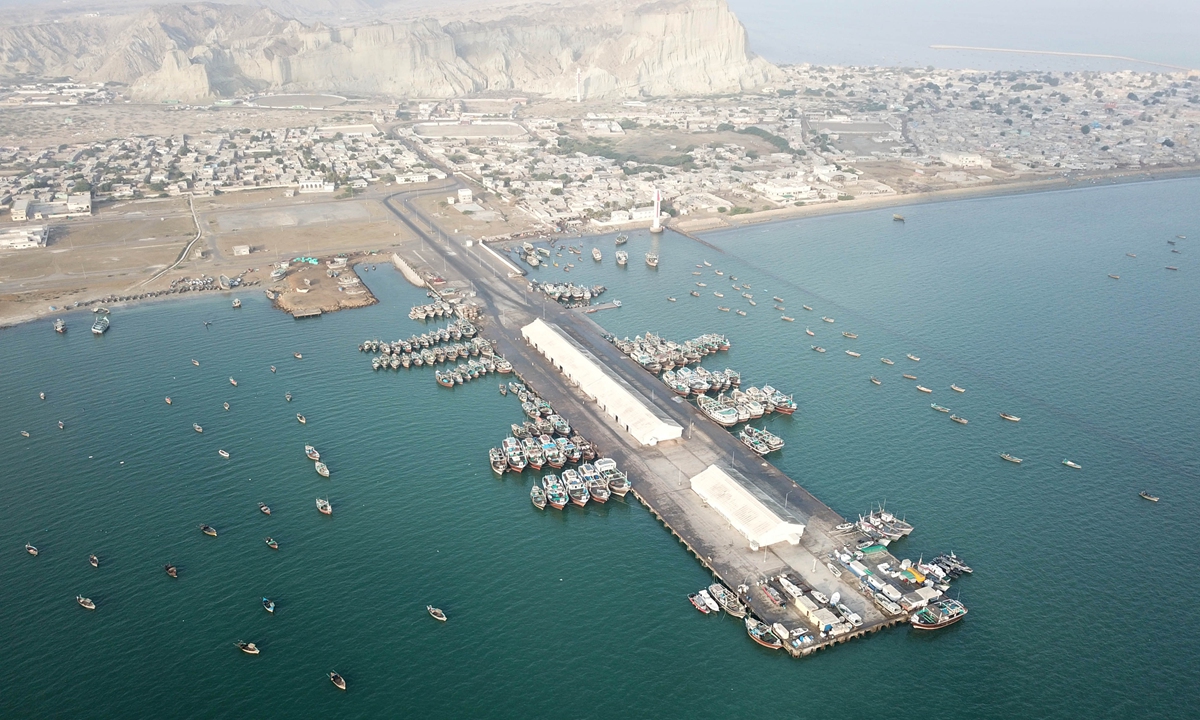
  • Gwadar Port operations and logistics

The two sides agreed that Gwadar Port should evolve into a regional trade and transshipment hub, supporting Pakistan’s exports and regional connectivity. Ensuring uninterrupted connectivity via the Karakoram Highway and leveraging the year-round opening of the Khunjerab Pass were identified as critical to boosting bilateral trade flows .

Trade, Investment and Technology Cooperation

China and Pakistan committed to deepening cooperation in:

  • Trade facilitation and market access
  • Chinese investment in Pakistani manufacturing
  • Information technology and digital economy
  • Science, technology and cybersecurity
  • Technical and vocational education

Officials said the goal is to enhance Pakistan’s export capacity, industrial competitiveness and employment generation, while providing Chinese enterprises with new production and supply-chain opportunities.

Both sides also welcomed third-party participation in CPEC, signaling openness to regional and global investors under mutually agreed frameworks .

Image

Financial Sector Support and Macroeconomic Stability

The dialogue placed notable emphasis on financial and banking cooperation, with both countries agreeing to strengthen coordination at regional and international financial forums. Pakistan acknowledged China’s continued support for its fiscal and financial sectors, which Chinese officials described as essential for sustaining Pakistan’s macroeconomic stability and long-term growth trajectory .

China also welcomed Pakistan’s National Economic Transformation Plan (URAAN Pakistan 2024–2029), describing it as a foundation for inclusive growth and people-centered development.

Why It Matters

The renewed economic push comes at a time when Pakistan is seeking to stabilize its economy, expand exports and attract foreign investment, while China is recalibrating Belt and Road projects toward higher-quality, commercially viable outcomes.

Analysts say the emphasis on industry, agriculture and finance indicates a shift from debt-heavy infrastructure toward sustainable economic integration, potentially redefining CPEC’s role in Pakistan’s development model.

Outlook

With 2026 marking the 75th anniversary of China-Pakistan diplomatic relations, both sides signaled that economic cooperation will remain the backbone of bilateral ties. The next round of the Strategic Dialogue will be held in Islamabad next year, where progress on CPEC 2.0 implementation is expected to dominate the agenda .


World Reacts to U.S. Venezuela Operation: Russia, China Push Back as America Redefines Its Global Role

0
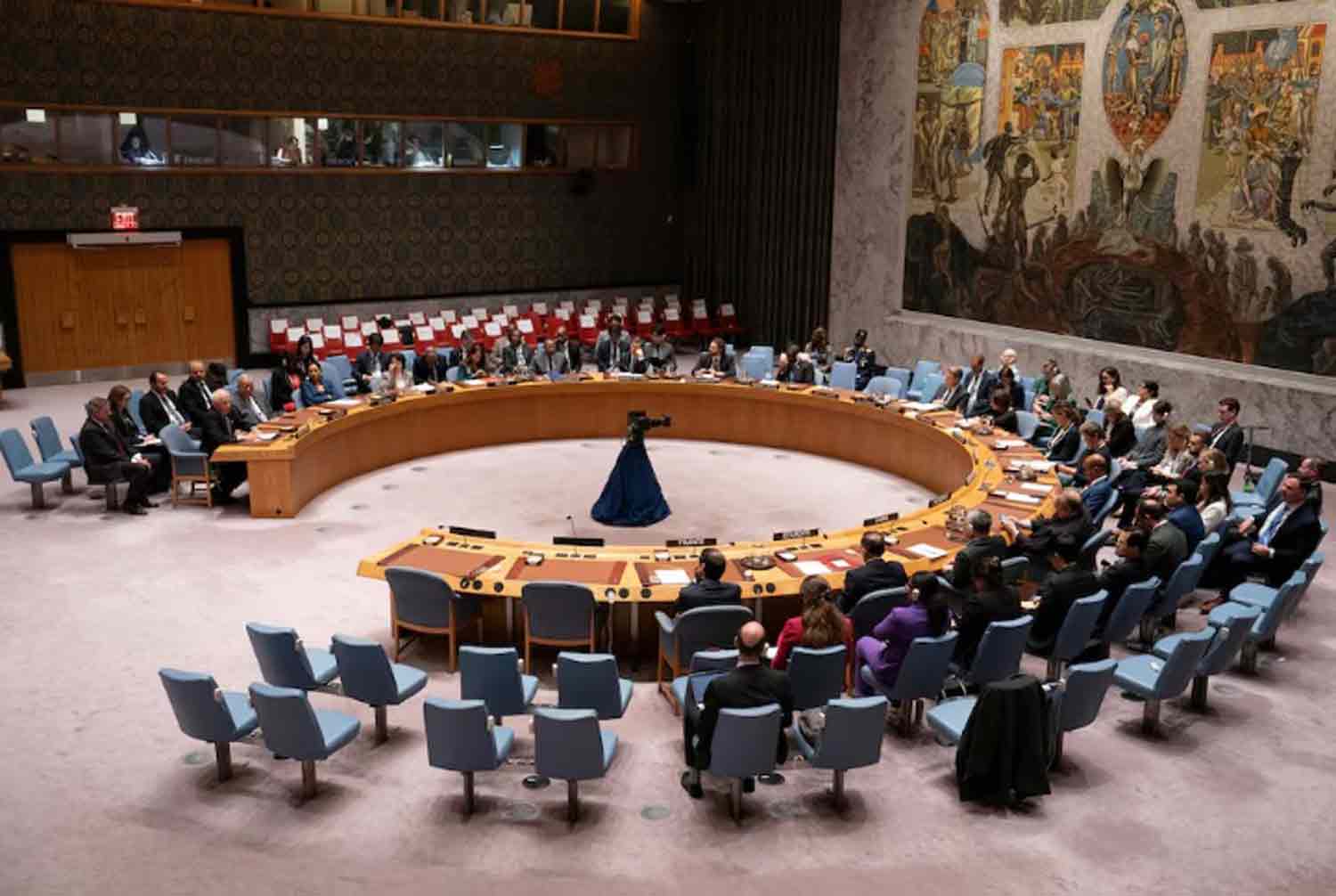
The United Nations Security Council meets on the escalation in fighting in Lebanon between Israel and Hezbollah during the United Nations General Assembly at U.N. headquarters in New York.

The U.S. operation in Venezuela has triggered one of the most consequential global reactions to American power in years. By removing Venezuelan President Nicolás Maduro and asserting temporary control over the country’s transition, Washington has crossed a threshold that many governments believed belonged to an earlier era of interventionist foreign policy.

While reactions from the world’s major powers have been swift and vocal, the real story lies in the gap between strong rhetoric and limited concrete retaliation—a dynamic that will shape U.S. foreign policy and global power politics in the years ahead.

Russia: Sharp Condemnation, Limited Capacity to Escalate

Russia was among the first major powers to denounce the U.S. action, calling it a blatant violation of international law and Venezuelan sovereignty. Moscow framed the operation as proof that Washington still practices regime change when it suits its interests.

Yet despite the strong language, Russia’s practical response has so far been restrained. With strategic focus and military resources tied down elsewhere, Moscow has limited room to confront the United States directly in the Western Hemisphere. Instead, Russia is likely to capitalize politically, using the Venezuela case to justify its own actions globally and weaken U.S. moral authority in international forums.

In essence, Russia’s response has been loud diplomatically but cautious operationally.

China: Strong Political Pushback, Calculated Strategic Restraint

China’s reaction has been unusually direct. Beijing condemned the operation as destabilizing and warned against undermining international norms. Unlike Russia, China has substantial economic and strategic stakes in Latin America, including long-term investments and energy interests in Venezuela.

However, China’s response is best understood as defensive rather than confrontational. Beijing is expected to protect its citizens, assets, and diplomatic influence while avoiding any military or coercive counter-move. The priority for China is precedent: the fear that unilateral regime removal could normalize great-power intervention under security or anti-crime pretexts.

The Venezuela operation strengthens Beijing’s long-standing narrative that the U.S. selectively applies international law—an argument China may increasingly deploy in global diplomacy.

Europe and Traditional U.S. Partners: Legal Alarm Without Alignment

European governments and close U.S. partners reacted with visible discomfort. While many have been critical of Maduro’s rule, they emphasized sovereignty, due process, and multilateral mechanisms rather than endorsing the U.S. action.

This cautious response reflects a deeper concern: if the United States acts unilaterally, allies risk being associated with precedents they cannot control. The result has been diplomatic distancing rather than outright confrontation—a sign that Washington’s coalition-based leadership model is under strain.

The United Nations and the Limits of Multilateralism

At the United Nations, the operation was widely described as a dangerous precedent. Emergency discussions underscored fears that the seizure of a sitting head of state could erode the foundations of international law.

Yet the UN’s response also revealed its limitations. With permanent members divided, meaningful enforcement action remains unlikely. The institution has become a stage for narrative competition rather than a mechanism for reversal.

Was the Global Response Strong or Weak?

Strong in principle, weak in practice.

Major powers voiced clear opposition, and the legal critique was widespread. However, there has been no coordinated sanctions regime, diplomatic isolation campaign, or collective countermeasure against Washington. This imbalance reflects both U.S. power and the absence of a unified alternative leadership bloc.

The result is a world where norms are challenged rhetorically but enforced selectively.

Impact on U.S. Foreign Policy and Global Role

1. A Shift Toward Unilateral Enforcement

The operation signals a move away from coalition-led legitimacy toward direct power projection, where Washington acts first and seeks justification later.

2. Erosion of Moral Authority

Even when rivals do not retaliate materially, U.S. credibility as a defender of international norms is weakened—making future diplomacy harder and more transactional.

3. Strengthening Rival Narratives

Russia and China now possess a powerful example to argue that global politics is governed by force and spheres of influence, not rules.

4. Long-Term Consequences in Latin America

The operation has revived deep regional anxieties about sovereignty and intervention, potentially accelerating diplomatic hedging and deeper engagement with non-U.S. partners.

5. Domestic and Strategic Risk

If temporary control becomes prolonged or unstable, the U.S. could face mission creep, domestic political backlash, and strategic distraction from other global priorities.

Conclusion

The Venezuela operation marks a turning point in U.S. global behavior. The world’s response—forceful in words but limited in action—reveals both America’s enduring power and the fragility of the international order that once constrained it.

For Washington, the challenge ahead is clear: whether this display of dominance becomes a one-off exception or the foundation of a new, more unilateral U.S. foreign policy doctrine.