Saturday, June 6, 2026
Home Blog Page 20

Taliban Claim Drone Attacks on Islamabad: Most Intercepted by Pakistan Air Defenses

0
𝗧𝗮𝗹𝗶𝗯𝗮𝗻 𝗞𝗮𝗺𝗶𝗸𝗮𝘇𝗲 𝗗𝗿𝗼𝗻𝗲𝘀 𝗗𝗲𝘁𝗼𝗻𝗮𝘁𝗲 𝗶𝗻 𝗣𝗮𝗸𝗶𝘀𝘁𝗮𝗻

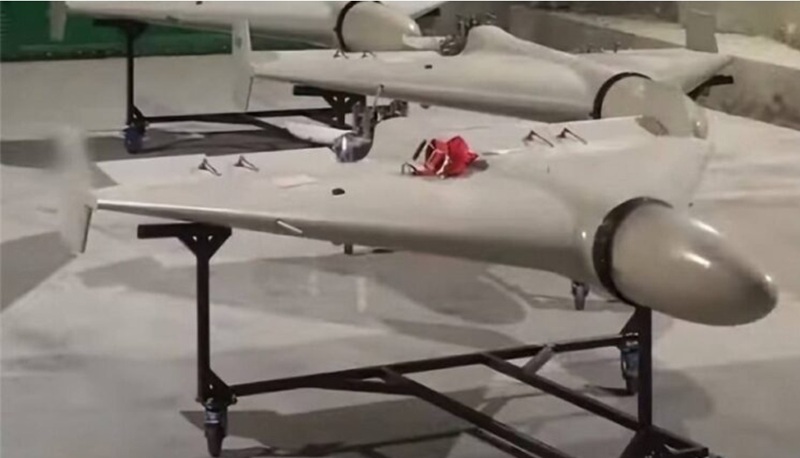
Concerns about the Afghan Taliban’s expanding drone capabilities intensified after the group claimed responsibility for drone attacks targeting Islamabad, Abbottabad, Nowshera, and Swabi. Pakistani security sources say most of the drones were intercepted and shot down by the Pakistan Army’s air defense systems, while one drone crash-landed in Swabi, causing minor property damage but no major casualties.

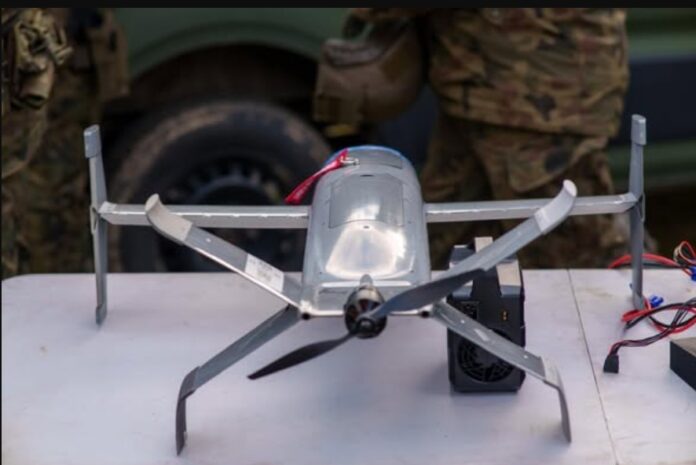
The incident has renewed attention on earlier reports suggesting the Taliban have been developing a cross-border kamikaze drone program using former Western military bases in Afghanistan.

Latest Developments: Four Cities Targeted

According to security officials:

  • The Taliban claimed drone strikes on Islamabad, Abbottabad, Nowshera, and Swabi.
  • Pakistan’s air defense systems intercepted and destroyed most incoming drones.
  • One drone fell in Swabi, causing limited material damage.
  • No significant civilian casualties have been reported.

If verified, the attempted attacks would mark a significant escalation in the use of drone warfare across the Pakistan–Afghanistan frontier.

Former Western Bases Allegedly Repurposed for Drone Development

Previous media investigations reported that:

  • A former British Special Air Service (SAS) base in Logar province is being used as a drone testing site.
  • Camp Phoenix, a former major U.S. logistics and training hub near Kabul, is allegedly being repurposed for drone manufacturing.
  • After the 2021 Western withdrawal, Taliban engineers reportedly gained access to abandoned military hardware and infrastructure.

These facilities are said to form the backbone of a developing domestic drone program.

Which Drone Systems Are Being Replicated?

Reports indicate Taliban engineers may be attempting to replicate advanced unmanned systems such as:

  • MQ-9 Reaper
  • Shahed 136

Potential Capabilities:

  • Long-range flight capacity
  • Explosive payload delivery
  • Target surveillance before impact
  • Kamikaze-style strike functionality

The Shahed-136, in particular, is a relatively low-cost loitering munition capable of traveling long distances before detonating on impact — a model that has been widely used in modern conflicts.

Foreign Technical Assistance Alleged

Intelligence sources cited in prior reports claim the Taliban may have received technical expertise from:

  • Turkey
  • China
  • Russia
  • Belarus
  • Bangladesh

Drone components are reportedly sourced from China and Turkey, and a Russian specialist is said to be assisting engineers. Additionally, one engineer allegedly linked to al-Qaeda is believed to be involved in the program, raising further security concerns.

Strategic Implications for Pakistan and the Region

If the Taliban have indeed developed operational cross-border drone capabilities, the implications are significant:

  • Increased risk of low-cost urban attacks.
  • Greater strain on air defense systems.
  • Escalation of cross-border tensions.
  • A shift toward asymmetric aerial warfare.

Pakistan’s rapid interception of most drones suggests defensive readiness, but the Swabi incident highlights that the threat may not be fully neutralized.

Conclusion

The Taliban’s claim of drone strikes on Islamabad and other Pakistani cities underscores the evolving nature of regional security threats. While Pakistan successfully intercepted most of the drones, the incident reflects the growing role of unmanned systems in modern conflict.

As drone technology becomes more accessible and adaptable, the strategic landscape across South Asia may face a new phase of security challenges requiring updated defensive doctrines and regional countermeasures.

Pakistan Slams Netanyahu’s ‘Hexagon’ and Modi–Israel Axis as Recipe for Regional Destabilization

0

Pakistan has forcefully denounced Israeli Prime Minister Benjamin Netanyahu’s proposal for a so-called “hexagon of alliances,” warning that the plan—coupled with Indian Prime Minister Narendra Modi’s expanding defense partnership with Israel—amounts to dangerous bloc politics that could inflame sectarian tensions, accelerate an arms race, and destabilize an already volatile region.

Islamabad argues the initiative is less about cooperation and more about consolidating hard-power alignments that risk deepening fault lines across South Asia and the Middle East.

The ‘Hexagon’ Proposal: Confrontation Disguised as Cooperation

Image

Netanyahu’s outline of a six-nation bloc—potentially including Israel, India, Greece, Cyprus, and unnamed Arab, African, and Asian states—was framed as a coalition against “radical” adversaries.

Critics see it differently:

  • Sectarian rhetoric referencing “radical Shia” and “radical Sunni” axes risks inflaming divisions in an already fractured region.
  • Formalizing such a bloc could trigger counter-alliances, escalating geopolitical polarization.
  • The initiative appears designed to project strategic leverage rather than reduce tensions.

Analysts warn that bloc-building in fragile environments rarely produces stability; it more often entrenches zero-sum rivalries and militarized posturing.

Modi’s Israel Push: Strategic Cooperation or Calculated Escalation?

Image

Modi’s high-profile visit to Israel reinforced India’s already robust defense partnership with Tel Aviv. India remains Israel’s largest arms buyer, with cooperation spanning:

  • Missile defense systems
  • Armed and surveillance drones
  • Electronic warfare platforms
  • Precision-guided munitions

From Islamabad’s perspective, this expanding military alignment is not benign. Pakistani officials have repeatedly noted that certain Israeli-origin systems were deployed in past crises involving Pakistan.

Critics argue that:

  • The India–Israel axis risks accelerating South Asia’s arms race.
  • It reinforces preemptive and hardline security doctrines.
  • It sidelines diplomatic engagement in favor of militarized deterrence.

Rather than contributing to regional calm, the deepening partnership is seen as hardening strategic divides.

Pakistan’s Response: Political Condemnation and Security Alert

Pakistan’s Senate unanimously rejected Netanyahu’s remarks, labeling them divisive and destabilizing. Foreign Office spokesperson Tahir Andrabi warned that attempts to fracture Muslim unity along sectarian lines represent a “nefarious design.”

Islamabad emphasized that it remains fully alert to the security implications of India–Israel defense cooperation and maintains robust preparedness to counter any threat to its sovereignty.

Officials argue that the emerging alignment, combined with assertive military signaling, contributes to a security environment driven by suspicion and confrontation rather than dialogue.

Expanding Strategic Arc: Mediterranean to South Asia

The inclusion of Greece and Cyprus suggests ambitions that extend beyond the Middle East. By linking Eastern Mediterranean states with South Asia, the proposed bloc attempts to create a cross-regional security axis.

However, analysts caution that:

  • Expanding military blocs into multiple theaters increases the risk of strategic overreach.
  • It complicates diplomatic balances with states outside the alignment.
  • It amplifies polarization in a multipolar global environment already under strain.

Such geometric alliance-building may appear sophisticated on paper, but critics argue it risks exporting instability across interconnected regions.

Escalation Risks and Long-Term Consequences

Observers warn that:

  • Arms build-ups can become self-reinforcing cycles.
  • Sectarian narratives can inflame domestic and regional tensions.
  • Hard-power alliances without inclusive diplomacy may entrench confrontation.

Pakistan’s leadership views the so-called “hexagon” and Modi’s expanding military engagement with Israel as a deliberate shift toward bloc politics—one that may yield short-term leverage but long-term instability.

Conclusion

Pakistan’s strong condemnation reflects deep concern that Netanyahu’s “hexagon of alliances” and Modi’s assertive defense diplomacy are pushing the region toward sharper polarization. Critics argue that militarized bloc formation in a fragile geopolitical landscape risks compounding mistrust and increasing the probability of confrontation.

As alliances harden and rhetoric intensifies, the question facing the region is whether strategic competition can be managed—or whether escalating bloc politics will define the next chapter of Middle Eastern and South Asian security.

China’s Largest Red Sword Exercise Revealed: Over 200 PLAAF Aircraft Deployed Across 1,200 Miles

0

Commercial satellite imagery has uncovered what defense analysts describe as the largest “Red Sword” exercise in the history of the People’s Liberation Army Air Force (PLAAF). Conducted in late 2025 across remote western China, the massive drill involved more than 200 combat and support aircraft operating from eight separate air bases across a 1,200-nautical-mile corridor.

The scale, duration, and geographic spread of Red Sword 2025 have drawn global attention, with analysts suggesting the exercise surpassed comparable recent U.S. air combat drills in size and operational dispersion.

Satellite Imagery Reveals Massive Air Deployment

Image

The findings were first detailed in February 2026 by Air & Space Forces Magazine, based on analysis from retired U.S. Navy intelligence officer J. Michael Dahm.

Key discoveries from satellite providers such as Planet and Google Earth include:

  • Activity beginning in October 2025.
  • A five-week operational window.
  • Over 100 aircraft massed at Dingxin Air Base in the Gobi Desert during peak operations.
  • 194 visible aircraft across eight bases — with total numbers likely exceeding 200 and possibly reaching 250.

Dingxin Air Base is often compared to the U.S. Air Force’s Nellis Air Force Base due to its advanced training role and expansive airspace.

The exercise stretched across sparsely populated regions in Xinjiang and Qinghai provinces, enabling large-scale, realistic combat simulations far from public scrutiny.

Advanced Aircraft and Integrated Combat Tactics

Image

Red Sword 2025 featured China’s most advanced operational platforms:

  • Chengdu J-20 fifth-generation stealth fighters
  • Shenyang J-16
  • Chengdu J-10
  • Xian H-6
  • Shaanxi Y-20
  • KJ-500 airborne early warning aircraft

Satellite imagery showed mixed formations of J-10, J-16, and J-20 aircraft deployed together at forward airfields — a potential indicator of advanced fourth- and fifth-generation fighter integration.

Analysts suggest two possible interpretations:

  1. Dissimilar air combat training between different aircraft types.
  2. Development of integrated tactics combining stealth fighters with advanced fourth-generation platforms for coordinated operations.

Support aircraft such as KJ-500 AEW&C systems and Y-20 transports point to a growing emphasis on networked, expeditionary warfare across vast distances.

Industrial Expansion: China’s Rapid Fighter Production Surge

Beyond training, analysts highlight China’s accelerating aerospace manufacturing capacity.

The Aviation Industry Corporation of China (AVIC) has reportedly added approximately 8 million square feet of new manufacturing space since 2021 — exceeding the footprint of the U.S. F-35 production complex in Fort Worth, Texas.

Estimates suggest China could produce 250–300 fourth- and fifth-generation fighters annually beginning in 2026.

Satellite imagery from a separate, highly secretive PLAAF test base revealed:

  • 60,000 square feet of new hangar construction.
  • 300,000 square feet of additional facilities built within six months.
  • Openly parked prototypes believed to be next-generation fighters, reportedly designated J-36 and J-50.

If accurate, these developments indicate accelerated progress toward sixth-generation air combat capabilities.

Comparison with U.S. Air Exercises

For comparison, the most recent large-scale U.S. exercise — combining Red Flag and Bamboo Eagle in early 2026 — involved roughly 150 aircraft over three weeks across a 1,000-mile area.

Red Sword 2025 exceeded those figures in:

  • Aircraft numbers.
  • Geographic dispersion.
  • Duration.
  • Operational isolation in austere terrain.

While U.S. exercises remain technologically advanced, the PLAAF’s ability to mobilize more than 200 aircraft across eight dispersed bases reflects growing operational maturity.

Strategic Implications Beyond Taiwan

Unlike highly publicized drills near Taiwan, Red Sword exercises receive minimal official Chinese media coverage. Analysts believe this suggests a focus on realistic, high-intensity combat preparation rather than signaling.

Experts caution that the scale of Red Sword 2025 indicates ambitions extending beyond a Taiwan Strait contingency. Large-force integration across remote western theaters may prepare China for multi-directional regional operations.

The combination of:

  • Rapid aircraft production,
  • Expanding industrial infrastructure,
  • Advanced stealth integration,
  • Long-range networked operations,

positions the PLAAF as an increasingly capable global air power.

Conclusion

Red Sword 2025 marks a pivotal milestone in China’s air force modernization. Satellite imagery reveals not only the largest exercise in PLAAF history but also evidence of integrated tactics and industrial growth that could reshape regional and global airpower dynamics.

For the United States and its allies, the exercise offers a clear signal: China is not just producing advanced aircraft at scale — it is training to deploy them in large, coordinated operations across immense distances.

Trump Briefed on Iran Strike Options as Geneva Talks Show Progress but Deep Divisions Remain

0

The crisis between the United States and Iran has entered a decisive phase. President Trump was briefed Thursday by the top U.S. military commander in the Middle East on potential military options against Tehran, even as nuclear negotiations concluded in Geneva with mixed signals of progress.

The convergence of high-level military planning, fragile diplomacy, and new battlefield technology suggests Washington is preparing for multiple scenarios — from renewed negotiations to potential military action.

CENTCOM Briefs Trump on Military Options

Image

According to U.S. officials, Brad Cooper, commander of United States Central Command (CENTCOM), presented President Donald Trump with military strike options against Iran.

Key details of the briefing:

  • It marked Cooper’s first in-person crisis briefing to Trump since tensions escalated last December.
  • Dan Caine, Chairman of the Joint Chiefs of Staff, also attended.
  • The meeting occurred as the third round of U.S.–Iran nuclear talks concluded in Geneva.
  • The White House has not publicly detailed the options discussed.

Sources described the session as a potential “last window” for diplomacy before a final decision.

Geneva Nuclear Talks: Progress on Tone, Gaps on Substance

Image

The latest negotiations in Geneva were described as the most serious and longest round yet.

Abbas Araghchi stated that the talks produced “understandings on some issues” while gaps remain on others. Another round is scheduled for next week, including technical discussions in Vienna.

Meanwhile:

  • JD Vance emphasized that while strikes are being considered, there is “no chance” of a prolonged U.S. war.
  • U.S. officials characterized the talks as “positive,” but major disputes remain over uranium enrichment, facility dismantlement, and long-term restrictions.

Diplomats note that both statements — “good progress” and “far apart” — can coexist. The tone may have improved, but fundamental policy differences remain unresolved.

Massive U.S. Military Build-Up in the Middle East

President Trump has reportedly ordered a significant U.S. force buildup in the region. Carrier strike groups, air assets, and precision-strike platforms have been repositioned to provide operational flexibility.

Military analysts suggest that Washington is positioning itself to:

  • Deter Iranian retaliation.
  • Maintain pressure during negotiations.
  • Preserve rapid-strike capability if diplomacy collapses.

The timing of decisions — reportedly expected before U.S. financial markets close — underscores the administration’s awareness of global economic ripple effects.

Pentagon’s Munitions Math and the Rise of “Scorpion Strike”

Image

One of the most significant developments is the operational deployment of “Task Force Scorpion Strike,” reportedly America’s first kamikaze drone unit.

The drone system, known as LUCAS, was reverse-engineered from Iran’s Shahed-136 loitering munition — the same drone widely used by Russia in Ukraine.

Defense sources indicate:

  • Unit cost: Approximately $35,000 per drone.
  • Capabilities include autonomous targeting, GPS-denied navigation, and swarming.
  • Designed to address precision munition shortages.

Reports have highlighted a strategic concern: U.S. stockpiles of high-end precision munitions may only sustain 7–10 days of intensive strikes. For context:

  • Tomahawk missiles cost roughly $2 million each.
  • JDAM kits range from $25,000–$40,000.

In contrast, swarming loitering drones offer a cost-effective alternative for extended campaigns.

Military planners increasingly view attritable drone systems as a solution to sustaining high-tempo operations without exhausting expensive missile inventories.

Strategic Implications: Diplomacy or Escalation?

The situation now hinges on several factors:

  1. Whether the next round of talks narrows gaps on enrichment and inspections.
  2. Iran’s response to U.S. military positioning.
  3. The credibility of deterrence through new drone capabilities.
  4. Market sensitivity to potential conflict announcements.

If diplomacy fails, analysts believe Washington could pursue limited, precision-focused strikes rather than a prolonged ground war — consistent with Vice President Vance’s remarks.

However, even limited operations carry risks of regional escalation involving proxy forces and missile retaliation.

Conclusion

The United States stands at a crossroads with Iran. High-level military briefings, an expanded force posture in the Middle East, and the operational deployment of cost-effective drone swarms signal preparation for potential action. Simultaneously, Geneva talks continue, offering a narrow diplomatic off-ramp.

Whether the next phase brings a breakthrough agreement or calibrated military strikes will likely be determined within days — not weeks.

Pakistan–Afghanistan Border Crisis 2026: Airstrikes on Kabul, Shawal Post Seized, Taliban Claims Retaliation

0
Pakistan airstrikes Kabul

Tensions between Pakistan and Afghanistan have escalated sharply following intense cross-border clashes, airstrikes, and competing claims of retaliation. Pakistani security sources describe the situation as a response to “unprovoked aggression” by the Afghan Taliban regime, while Taliban officials claim they have launched extensive retaliatory operations along the border.

The unfolding crisis marks one of the most serious flare-ups between Islamabad and Kabul in recent years.

Border Fighting Intensifies: Mohmand, Bajaur and Shawal Sectors

According to Pakistani intelligence sources:

  • Afghan Taliban forces allegedly initiated unprovoked firing in the Mohmand sector.
  • Pakistani forces launched a counter-operation, forcing Taliban fighters to abandon several forward posts.
  • An infiltration attempt near Bajaur was foiled, and one suspect was reportedly captured alive.
  • A Taliban post near the Shawal sector, across from North Waziristan in Paktika, was seized after Taliban troops allegedly fled.

Security officials state that Pakistani forces remain on high alert along the western frontier, consolidating positions after securing key border posts.

Pakistan Airstrikes Target Kabul, Kandahar, Paktika and Nangarhar

Pakistani sources report that precision air operations were conducted by the Pakistan Air Force and coordinated with the Pakistan Army.

Claimed targets include:

  • Brigade-level headquarters in Kabul.
  • Ammunition depots and logistics bases in Kandahar.
  • Corps-level facilities in Paktika.
  • Militant hideouts in Nangarhar.

Security sources say major ammunition stockpiles were destroyed following precise intelligence identification. Independent confirmation from Afghan authorities remains limited.

Taliban Claims Retaliatory Operations from Helmand and Kandahar

In response, Zabihullah Mujahid, spokesperson of the Taliban, announced on social platform X that “extensive retaliatory operations” had begun.

According to his statement:

  • Taliban forces targeted Pakistani military positions along the border.
  • Operations were launched from Helmand and Kandahar fronts.
  • The actions were described as retaliation for Pakistani airstrikes in Kabul and other provinces.

However, Pakistani security sources maintain that no confirmed large-scale Taliban counter-operations have been observed from Kandahar so far, despite Taliban claims.

Infiltration Attempt Foiled in Bajaur

Pakistani officials report that an infiltration attempt by militants referred to as “Fitna al-Khawarij” was thwarted near the Bajaur sector. One individual, identified as Abdullah, was captured while allegedly attempting to cross into Pakistan.

Islamabad has repeatedly accused Afghan authorities of failing to prevent cross-border movement of militants linked to Tehreek-e-Taliban Pakistan (TTP), a claim Kabul has denied.

Information War and Media Controversy

The crisis has also triggered an online information battle. Sky News faced backlash from Pakistani social media users after claims suggesting an Afghanistan Air Force attack on Pakistan.

Security analysts point out that Afghanistan currently lacks a fully operational air force structure capable of sustained cross-border air operations, leading many to question the accuracy of such reports.

Strategic and Regional Implications

The escalating conflict raises serious concerns:

  • Risk of sustained artillery and air exchanges.
  • Potential civilian displacement in frontier regions.
  • Disruption of trade routes and border crossings.
  • Increased militant activity amid instability.
  • Diplomatic breakdown between Islamabad and Kabul.

Since the return of the Taliban to power in 2021, cross-border tensions have repeatedly flared over disputes related to the Durand Line, militant sanctuaries, and border fencing.

Conclusion

The seizure of a Taliban post near Shawal, reported airstrikes on Kabul and Kandahar, and Taliban claims of retaliation from Helmand and Kandahar signal a dangerous phase in Pakistan–Afghanistan relations. While both sides project confidence in their operations, independent verification remains limited, and the risk of further escalation persists.

The coming days will determine whether diplomatic engagement prevails or whether the region witnesses a prolonged cross-border confrontation.

Iran Floats U.S. Investment Incentives as Nuclear Talks Resume, Testing Trump’s Deal-Making Instincts

0
Iran's President Masoud Pezeshkian

Iran is signaling potential U.S. investment opportunities in its oil, gas, and mining sectors as high-stakes nuclear negotiations resume in Geneva, a move widely seen as an attempt to appeal to President Donald Trump’s transactional approach to diplomacy.

According to reporting by the Financial Times, Iranian officials believe the prospect of significant commercial returns could help break the diplomatic deadlock and steer talks away from escalation. The outreach comes as Washington and Tehran enter a critical phase of negotiations aimed at curbing Iran’s nuclear activities and avoiding open conflict.

What Iran Is Offering—and Why Now

Sources familiar with the discussions say Tehran has explored the idea of opening oil and gas development, mining rights, and access to critical minerals to U.S. companies. While no formal proposal has been submitted to Washington, the messaging appears designed to test whether economic incentives could soften U.S. positions.

The timing is deliberate. Talks resumed amid rising military tensions, fresh U.S. sanctions targeting Iran’s alleged “shadow fleet,” and warnings from Tehran about potential retaliation if attacked. Against this backdrop, Iran is attempting to broaden the agenda beyond nuclear compliance to include economic upside.

Image

The Geneva Talks: High Stakes, Narrow Margins

The current round in Geneva brings together Iran’s top diplomat Abbas Araghchi and U.S. envoys, as both sides assess whether diplomacy can still deliver results. U.S. officials insist that no commercial offers have been discussed and reiterate a firm red line: Iran must not acquire a nuclear weapon or the capacity to build one.

Iran, for its part, says it has conveyed proposals through mediators to gauge U.S. seriousness. Iranian state media framed the initiative as a test of Washington’s commitment to diplomacy, arguing that rejection would confirm U.S. bad faith.

Sanctions vs. Incentives: A Dual-Track Strategy

Washington’s recent sanctions—targeting dozens of individuals and entities linked to petroleum sales, missiles, and weapons production—underscore a pressure-first approach. Tehran’s investment signaling suggests a dual-track strategy: resist pressure while offering incentives that could reshape U.S. calculations.

Analysts note parallels with U.S. rhetoric about reopening Venezuela’s energy sector to American firms, a case Tehran appears to be studying closely. The message is clear: economic engagement could follow de-escalation and compliance.

Missile Claims and Nuclear Assurances

As talks proceed, Iran continues to reject U.S. claims about long-range missile ambitions, insisting its missile program is defensive. Iranian leaders have also reiterated that Tehran will not pursue nuclear weapons, citing longstanding religious decrees banning weapons of mass destruction.

Analysis: Can Economics Move the Needle?

Whether investment incentives can influence U.S. policy remains uncertain. For Washington, the credibility of any deal hinges on verifiable limits to Iran’s nuclear program. For Tehran, economic relief and market access are essential to stabilizing its economy and avoiding conflict.

The core question is sequencing: Will the U.S. demand nuclear concessions first, or can parallel economic discussions create momentum? As Geneva talks resume, both sides appear to be probing for leverage—testing whether diplomacy can still outpace escalation.

Prolonged Iran Conflict Could Push U.S. Missile Defenses to the Brink, Pentagon and Lawmakers Warn

0

Growing concern is emerging inside Washington that a prolonged military confrontation with Iran could dangerously strain U.S. weapons stockpiles, particularly high-end air and missile defense interceptors, leaving American forces and allies more exposed in future crises.

According to a detailed report by Politico, senior Pentagon officials and members of Congress are warning that sustained Iranian retaliation could rapidly deplete U.S. missile defenses at a time when American forces are already stretched across multiple theaters .

Missile Defense Shortages Are No Longer Theoretical

Since January, Gen. Dan Caine, chairman of the Joint Chiefs of Staff, has privately raised alarms about shortages of air defense interceptors. Those concerns have intensified as the United States carries out its largest Middle East military buildup since the Iraq War .

Recent U.S. operations—ranging from strikes on Iranian targets to campaigns against the Houthis in Yemen—have consumed large numbers of:

  • Standard Missile-3 (SM-3) interceptors
  • Terminal High Altitude Area Defense (THAAD) missiles
  • Patriot air defense interceptors

These systems are not easily replaced. Production cycles are long, complex, and already operating near capacity.

Image

Iran Factor: Sustained Retaliation Changes the Math

U.S. officials fear that continued Iranian missile responses, rather than a short exchange, would force American forces to burn through interceptors faster than industry can replenish them. Tens of thousands of U.S. troops stationed across the Middle East rely on these defenses for survival against Iranian ballistic and cruise missile attacks .

As one official put it bluntly:

“Do we have enough interceptors to sustain a retaliation? That’s the real question.”

The absence of a clearly defined political objective—whether containment, deterrence, or regime change—only deepens the risk of open-ended consumption of scarce munitions.

Ripple Effects: Ukraine and NATO Feel the Strain

The shortage is already affecting U.S. allies. NATO countries attempting to purchase Patriot systems for Ukraine are facing delays as U.S. inventories tighten. Some U.S. defense officials warn that Middle East escalation could further reduce Washington’s ability to support Ukraine’s air defense needs against Russian missile attacks .

Senator Richard Blumenthal noted that shifting Patriot systems from the Middle East to Ukraine has now become far more difficult, given growing threats to U.S. bases and embassies in the region .

How Deep Is the Stockpile Problem?

The Pentagon does not disclose exact inventory levels, but independent analysis paints a worrying picture. The Center for Strategic and International Studies estimates that the United States has already expended:

  • Up to 20% of its projected 2025 SM-3 interceptor inventory
  • Between 20% and 50% of its THAAD missile stockpile

These figures suggest that U.S. air defenses are being consumed at a pace that assumes short conflicts—not prolonged regional wars.

Image

Strategic Trade-Offs: China Looms in the Background

Missile defense is not the only concern. Experts warn that the U.S. is also expending large numbers of Tomahawk cruise missiles, which would be critical in any future confrontation with China.

Tom Karako, director of the Missile Defense Project at CSIS, cautioned that wasting high-end precision weapons on lower-priority targets weakens long-term deterrence:

“It’s a tragedy to expend a Tomahawk when a gravity bomb will do.”

Pentagon Pushback—and Political Reality

The Pentagon has publicly dismissed fears of depletion, with spokesperson Sean Parnell stating that the U.S. military has everything it needs to execute presidential orders .

Republican Congressman Ken Calvert, who oversees defense spending, also downplayed the short-term risk, pointing to newly authorized multiyear contracts aimed at boosting interceptor production through expanded factory shifts.

Still, even supporters of Pentagon reassurances concede that munitions scarcity is real, widely known, and strategically consequential.

Strategic Bottom Line

The Politico report highlights a deeper issue: U.S. military power is optimized for short, decisive engagements—not sustained multi-front conflicts. A prolonged Iran confrontation risks forcing Washington into painful trade-offs between:

  • Protecting U.S. forces in the Middle East
  • Supporting allies like Ukraine
  • Preserving deterrence against China

As global flashpoints multiply, the question is no longer whether U.S. stockpiles can support one war—but whether they can support several at once.

Inside the Multibillion-Dollar Arms Deals Behind Modi’s High-Stakes Israel Visit

0
Indian Prime Minister Narendra Modi is warmly received by Israeli Prime Minister Benjamin Netanyahu and his wife upon arrival in Israel.

Indian Prime Minister Narendra Modi’s visit to Israel is being widely seen as far more than a diplomatic engagement. According to Indian media and defence analysts, the visit is anchored in potential arms deals estimated at up to $10 billion, with a sharp focus on air defence, missile interception, and counter-drone technologies.

The urgency behind these negotiations, officials suggest, is rooted in India’s recent military experience with Pakistan, which exposed critical gaps in New Delhi’s ability to counter drones, missiles, and precision-guided munitions in a fast-escalating conflict scenario.

Why air defence tops India’s wishlist

Indian defence planners are increasingly prioritising layered air defence systems capable of addressing modern threats such as:

  • Armed and reconnaissance drones

  • Cruise and ballistic missiles

  • Rocket and artillery attacks

  • Swarm-drone tactics seen in recent regional conflicts

Israel’s combat-tested systems are regarded as among the most effective in this domain, making it a natural partner as India accelerates military modernisation.

Key Israeli systems under discussion

While no official list has been released, defence reporting indicates India’s interest centres on several Israeli platforms:

  • Iron Dome – Short-range interception system effective against rockets and UAVs

  • David’s Sling – Designed to counter medium-range missiles and cruise threats

  • Arrow Missile Defense System – Long-range ballistic missile interception

  • Iron Beam – Laser-based solution offering low-cost drone and rocket interception

Indian officials are particularly interested in technology transfer and local manufacturing, allowing these systems to be adapted for India’s unique geography and threat environment.

The Pakistan factor: a strategic wake-up call

Indian media frequently reference a brief but intense military confrontation with Pakistan in 2025, often described as a “mini-war,” as a turning point. During this episode:

  • Drone incursions and missile threats highlighted weaknesses in India’s air defence coverage

  • Rapid escalation underscored the need for quick-reaction, multi-layered interception systems

  • Israeli air defence performance in real-world conflicts drew attention in Indian strategic circles

As one Indian defence analyst put it, “India woke up to the reality that future wars will be fought in the air and with unmanned systems first.”

Beyond purchases: joint production and technology transfer

A central theme of Modi’s Israel visit is long-term defence cooperation, not just arms sales. Expected discussion points include:

  • Joint ventures between Indian and Israeli defence firms

  • Local manufacturing aligned with India’s Atmanirbhar Bharat (self-reliance) policy

  • Shared research on counter-drone warfare, sensors, and battlefield AI

Such cooperation would help India reduce dependence on traditional suppliers while boosting domestic defence capacity.

Geopolitical implications

These prospective deals signal broader shifts:

  • India continues to diversify defence partners beyond Russia and the West

  • Israel strengthens its footprint in South Asian security architecture

  • Both countries align more closely on emerging threats like drones, missile proliferation, and hybrid warfare

For regional observers, the scale of the proposed agreements underscores how South Asia’s security calculus is rapidly evolving.

Conclusion

The multibillion-dollar arms discussions surrounding Prime Minister Narendra Modi’s Israel visit reflect a strategic recalibration in India’s defence posture. Driven by lessons from recent conflict and the growing threat of drones and missiles, New Delhi is looking to Israel for proven, scalable air defence solutions—and for a partnership that goes beyond procurement to shared innovation and production.

If finalised, these deals could reshape India’s air defence architecture for decades and mark one of the most significant defence cooperation milestones in India–Israel relations.

Turkey Reviews Contingency Plans as Iran–U.S. Tensions Rise, Rules Out Any Violation of Iranian Sovereignty

0

Turkey is quietly evaluating a range of contingency measures amid rising tensions between Iran and the United States, according to a Turkish diplomatic source cited by Reuters. The assessment comes as Washington increases its military presence in the Middle East and Tehran issues warnings of retaliation if attacked.

Earlier this month, Iran and the United States resumed negotiations, raising cautious hopes for diplomacy. Iran has warned that U.S. bases across the region could be targeted in the event of an attack, though Tehran’s top diplomat recently stated that an agreement remains “within reach” if diplomacy is prioritized.

Turkey’s Position: Prepared, But Opposed to War

As a NATO member sharing a long eastern border with Iran, Turkey finds itself directly exposed to any regional escalation. Ankara has repeatedly stressed that it opposes military intervention against Iran and does not want further destabilization in the Middle East.

A senior Turkish diplomatic source said Ankara is examining every possible scenario that could arise if tensions worsen.

“Naturally, all aspects of the measures that could be taken in the event of a negative development are being evaluated,” the source said.

The official added that Turkish authorities are working on steps to ensure the safety of Turkish citizens, while clearly ruling out any action that would infringe on Iran’s territorial integrity.

“Any steps that would violate Iran’s sovereignty are out of the question,” the source emphasized.

Diplomacy Over Escalation

Turkey has maintained active diplomatic contact with both Washington and Tehran in recent weeks, urging restraint and calling for disputes to be resolved through dialogue rather than force. Ankara sees diplomacy as the only viable path to avoid wider regional instability.

Notably, the source declined to provide details on what specific measures Turkey is reviewing, underscoring Ankara’s cautious and deliberately ambiguous posture.

Image

Disinformation Claims Rejected

Separately, Turkey’s presidential office for countering disinformation dismissed recent media reports claiming that Ankara was planning to enter Iranian territory to prevent a possible influx of refugees. Officials described those reports as false and misleading.

A Balancing Act on Turkey’s Eastern Border

Turkey’s approach reflects a careful balancing act: preparing for worst-case scenarios while publicly rejecting military involvement. With negotiations between Iran and the United States ongoing, Ankara appears intent on safeguarding its own security interests without becoming a direct party to any potential conflict.

Why Iran’s Strategic Behavior Has Changed After the June Israeli Strike

0
Khorramshahr-4 Ballistic Missile

Iran is no longer the same strategic actor it was before the June Israeli strike.
The confrontation has left lasting effects on Tehran’s threat perception, decision-making process, and military posture. What has changed is not just Iran’s tactics, but the way the Iranian system now interprets risk, deterrence, and survival.

Before June, Iran believed it could balance confrontation with diplomacy. After the strike, that assumption has weakened. The cumulative pressure of military action, internal strain, and regional instability has reshaped Tehran’s strategic outlook.

Key Strategic Shifts in Iran Since June

Diplomacy No Longer Seen as a Shield
Iran has absorbed a critical lesson: negotiations do not guarantee protection. Diplomatic engagement is no longer viewed as an implicit deterrent against military action by Israel or the United States. This realization narrows Iran’s perceived options and increases reliance on hard power.

Greater Focus on Concealment and Fortification
Tehran has intensified efforts to harden and disperse strategic assets. Underground facilities, redundancy, and survivability now dominate planning. The priority is not expansion, but endurance under sustained pressure.

Doubts About Limited Responses
Symbolic or carefully calibrated retaliation is increasingly viewed as ineffective. Iranian planners appear less confident that restrained responses can restore deterrence, particularly against U.S. power projection in the region.

Stronger Regime Survival Mindset
The Iranian leadership seems to believe it is operating under existential pressure. When a system shifts into survival mode, escalation thresholds tend to fall. Decisions become faster, risk tolerance increases, and responses may turn sharper.

Rising Confidence in Missile Deterrence
Iran has drawn confidence from the psychological and strategic impact of its missile arsenal. The ability to impose costs on Israel and U.S. regional assets now plays a larger role in Tehran’s deterrence calculations.

Rapid Lessons-Learned Cycle
Iran is actively refining its command continuity, decision resilience, and force employment based on previous engagements. Institutional learning has accelerated, particularly around crisis management and leadership dispersion.

Conflict Framed as Part of a Larger War
Tehran does not see recent events as isolated. Instead, they are framed as an extension of the “12-Day War” and subsequent internal unrest. From Iran’s perspective, this represents a coordinated Western campaign — a view that raises the likelihood of forceful action to demonstrate resolve.

High Probability of Regional, Horizontal Escalation
If confrontation widens, Iran is likely to open multiple fronts to dilute U.S. focus. Yemen stands out as the most immediate arena. The Houthis have already shown the ability to threaten maritime routes and U.S.-linked assets, making their activation highly likely. Iraq also remains vulnerable, with Iran-aligned militias capable of rapid escalation. This strategy aligns with the regional confrontation model long articulated by علی خامنہ ای.

What This Means Going Forward

Iran remains weaker by conventional military standards. But its objective is not battlefield dominance — it is avoiding strategic defeat. That distinction matters. When deterrence credibility is perceived to be on the line, even weaker actors may choose disproportionate escalation.

Iran today is more prepared, more pressured, and more inclined to believe that decisive action — not restraint — is the only path to restoring deterrence.
That shift raises the risk profile of any future confrontation across the Middle East.

Why Narendra Modi’s Israel Visit Defines the Real Iran Strike Timeline

0

Most analysts tracking a potential Israeli strike on Iran are focused on the obvious markers: deadlines, Geneva talks, aircraft carrier movements, and diplomatic statements. But none of those variables explain the real timing constraint shaping events right now.

The most important variable is Narendra Modi.

On February 25, India’s prime minister arrives in Israel for a two-day state visit. He is scheduled to meet Benjamin Netanyahu, address the Knesset, and visit Yad Vashem. Modi represents 1.4 billion people and the world’s fifth-largest economy. His physical presence fundamentally alters the strike calculus.

The much-discussed 48-hour deadline regarding Iran’s nuclear posture expires the same day Modi lands. That coincidence is not incidental — it is determinative.

Why No Strike Happens While Modi Is in Israel

No state launches a regional war — one that could trigger Iranian ballistic missile retaliation — while the leader of the world’s largest democracy is standing inside its parliament.

Security protocols alone would prevent it. The diplomatic fallout from endangering a visiting head of government during a military operation initiated by the host country would be catastrophic. It would fracture the very alliance architecture Israel is trying to construct.

Netanyahu himself framed Modi’s visit as part of a broader “hexagon of alliances” designed to counter radical regional actors — explicitly including Iran. You do not dismantle that hexagon while assembling it.

As long as Modi is on Israeli soil, a strike is effectively off the table.

The Real Strike Window Opens After Departure

This shifts the earliest realistic strike window to the evening of February 26 — after Modi departs Israeli airspace.

That date matters for another reason: it coincides with the resumption of nuclear discussions in Geneva.

The sequencing is deliberate.

  • February 25: The deadline expires — nothing happens.
  • February 26: Modi departs; Geneva talks resume.
  • If Iran arrives without meaningful concessions — particularly on zero enrichment — the failure is documented in real time.
  • The diplomatic off-ramp has been publicly offered and publicly rejected.

At that point, the legal and political predicate for military action is established in front of the global press corps.

Why March 2 Matters: Purim and Strategic Signaling

The timeline then converges on March 2 — Purim.

Purim commemorates deliverance from a Persian plot to destroy the Jewish people. Several analysts have flagged the date as a possible strike window, not because of mysticism, but because symbolism matters in strategic messaging.

A strike on or around Purim would be unmistakable, intentional, and deeply legible — to allies, adversaries, and domestic audiences alike.

That creates a coherent seven-day sequence:

  • Tuesday: Deadline expires.
  • Wednesday: Modi provides diplomatic cover.
  • Wednesday evening: Geneva documents diplomatic failure.
  • Thursday–Sunday: Final authorization and force preparation.
  • Monday: Purim.

India’s Iran Evacuation Advisory Changes the Picture

India’s sudden advisory instructing its citizens to leave Iran immediately adds another critical layer.

This was not a routine warning to “exercise caution.” It was a directive to leave.

India knows precisely when its prime minister exits Israeli airspace. And India understands what the strategic window after that departure looks like.

This suggests New Delhi is not a passive observer — it is an informed stakeholder preparing for escalation.

Modi’s Visit Is Not Incidental — It Is Instrumental

Modi is not visiting Israel despite the crisis. He is visiting because of it.

Netanyahu is consolidating alliance legitimacy before executing a decision of historic consequence. When strikes come, Israel will be able to point to the fact that, forty-eight hours earlier, the leader of the world’s largest democracy was standing inside the Knesset endorsing security partnerships.

That is not symbolic diplomacy. It is pre-strike legitimacy construction.

What Markets and Analysts Are Missing

Markets are watching deadlines. Analysts are parsing statements. Commentators are counting ships.

They should be watching departures.

The clock does not start when deadlines expire.
The clock starts when Modi’s plane leaves Israeli airspace.

And India has already told its citizens to get out of Iran before it does.

Iran Nears Deal With China for Supersonic CM-302 Missiles as U.S. Warships Mass in Region

0
CM-302 supersonic anti-ship cruise missile

According to Reuters, Iran is close to finalising a deal with China to acquire the Chinese-made CM-302 supersonic anti-ship cruise missile, a development that comes amid a significant build-up of U.S. naval forces near the Iranian coastline.

Multiple sources familiar with the negotiations say the agreement is in its final stages, although a delivery timeline has yet to be confirmed. Talks that began at least two years ago accelerated sharply following the 12-day conflict between Israel and Iran in June, underscoring how recent regional warfare has reshaped Tehran’s defence priorities.

A Major Leap in Iran’s Naval Strike Capability

The CM-302 is a supersonic anti-ship cruise missile with an estimated range of around 290 kilometres. Designed to fly at very low altitudes and high speeds, the missile is intended to evade modern ship-borne air defence systems, making interception extremely difficult.

Defence analysts say the introduction of such missiles would significantly enhance Iran’s anti-access/area-denial (A2/AD) posture in the Persian Gulf and the Gulf of Oman—key maritime chokepoints through which a large share of global energy supplies transit.

“It’s a complete game-changer if Iran acquires supersonic anti-ship capability,” said Danny Citrinowicz, a former Israeli intelligence officer and senior researcher at Israel’s Institute for National Security Studies. “These missiles are extremely difficult to intercept and pose a serious threat to naval assets.”

Senior Iranian Officials Reportedly Involved

As negotiations entered their final phase last summer, senior Iranian defence and government officials reportedly travelled to China. Among them was Massoud Oraei, Iran’s deputy defence minister, whose visit has not previously been publicly reported, according to security officials cited by Reuters.

If completed, the CM-302 transfer would represent one of the most advanced weapons systems China has supplied to Iran in decades.

Sanctions, Embargoes, and Strategic Defiance

The potential deal would defy United Nations arms restrictions that were first imposed on Iran in 2006, suspended under the 2015 nuclear agreement, and then reimposed in September last year. Analysts say the sale highlights the growing willingness of Beijing to challenge Western-led sanctions regimes when its strategic interests are at stake.

The move also reflects deepening military and political coordination between China, Iran, and Russia—countries that already conduct annual joint naval exercises and increasingly align on opposition to U.S. influence in the Middle East.

Last year, the U.S. Treasury Department sanctioned several Chinese entities for allegedly supplying chemical precursors to Iran’s Islamic Revolutionary Guard Corps for missile development. Beijing rejected the accusations, insisting it strictly enforces export controls on dual-use technologies.

U.S. Naval Build-Up Raises Stakes

The missile negotiations come as the United States assembles a powerful naval armada within striking distance of Iran. This includes the aircraft carrier USS Abraham Lincoln and its strike group, alongside the USS Gerald R. Ford and its escorts. Together, the two carrier groups can deploy more than 5,000 personnel and approximately 150 aircraft.

Military experts note that the CM-302 is marketed by China’s state-owned China Aerospace Science and Industry Corporation as capable of sinking large surface combatants, including aircraft carriers and destroyers. The missile can be launched from ships, aircraft, or mobile ground platforms, and can also be configured for land-attack missions.

Broader China–Iran Defence Cooperation

Beyond the CM-302, sources say Iran is also discussing the acquisition of additional Chinese systems, including man-portable air defence systems (MANPADS), surface-to-air missiles, anti-ballistic technologies, and even anti-satellite capabilities.

During a military parade in Beijing last September attended by Iranian President Masoud Pezeshkian, Xi Jinping publicly stated that China supports Iran in safeguarding its sovereignty and national dignity. Shortly thereafter, China joined Russia and Iran in formally opposing the reimposition of UN sanctions.

“Iran has effectively become a geopolitical battlefield between the United States on one side and China and Russia on the other,” said one official briefed on the missile talks.

Rebuilding an Arsenal After War

According to Pieter Wezeman of the Stockholm International Peace Research Institute, the CM-302 acquisition would significantly replenish an Iranian arsenal depleted by last year’s fighting and years of sanctions pressure.

China was a major arms supplier to Iran during the 1980s, but large-scale transfers declined by the late 1990s. A renewed flow of advanced Chinese weapons would signal a major shift in regional power dynamics and further complicate U.S. efforts to contain Iran’s missile and nuclear programmes.

US F-16CJ Wild Weasel Jets Seen Crossing Atlantic With ‘Angry Kitten’ EW Pods Amid Iran Tensions

0
F-16CJ Vipers With Angry Kitten Electronic Warfare Pods

New imagery circulating in mid-February 2026 shows a formation of Block 52 F-16CJ “Wild Weasel” fighters from the South Carolina Air National Guard transiting eastward across the North Atlantic, apparently en route to the U.S. Central Command (CENTCOM) area of responsibility. Photographs and videos posted by aviation photographer Kurt Mendonça and shared by the X account @blocksixtynine indicate that each aircraft was carrying an Angry Kitten electronic warfare (EW) pod, a detail that has drawn attention from defense analysts.

The movement comes as the United States continues to reinforce airpower in and around the Middle East amid heightened tensions with Iran. While fighter deployments to the region are not unusual, the appearance of SEAD-optimized F-16CJs equipped with adaptive EW pods suggests something more specific than routine reinforcement.

The Block 52 F-16CJ is purpose-built for the Suppression and Destruction of Enemy Air Defenses (SEAD/DEAD) mission. In this configuration, the aircraft integrates specialized radar warning systems, electronic warfare suites, and the ability to employ AGM-88-series anti-radiation missiles against hostile emitters. Unlike general-purpose fighter deployments, Wild Weasel aircraft are intended to operate against integrated air defense systems (IADS), often during the opening phases of high-intensity air campaigns.

What distinguishes this deployment is the Angry Kitten pod visible on every jet. Developed by the Georgia Tech Research Institute, Angry Kitten is a Digital Radio Frequency Memory (DRFM)-based electronic warfare system. It can capture radar signals and retransmit them in altered forms, enabling a range of jamming and deception techniques, including false target generation and radar gate pull-off effects.

Originally designed as a training and test system to replicate adversary electronic attacks, Angry Kitten has evolved into a software-defined, rapidly reprogrammable EW pod. U.S. sources have previously described it as a “cognitive” system, capable of adapting to unfamiliar or changing radar waveforms. Its presence on operational F-16CJs headed toward a potential combat theater suggests it is now being treated as a frontline survivability and electronic attack capability, rather than a range-only asset.

In operational terms, this matters in the context of Iran’s layered air defense network, which combines long-range surface-to-air missile systems, medium-range platforms, legacy radars, and mobile units designed for emission control and rapid relocation. Such an environment complicates traditional SEAD tactics, particularly against frequency-agile radars and pop-up threats. A DRFM-based pod that can quickly respond to unfamiliar emitter behavior significantly improves the survivability of fourth-generation aircraft during early campaign phases.

Previous reporting by Army Recognition has noted that these F-16CJ units are primarily tasked with the Wild Weasel mission and appear oriented toward potential SEAD operations in the Middle East. Within a larger force package, Angry Kitten-equipped Vipers could function as forward electronic attack nodes, pushing jamming effects closer to high-value emitters while supporting strike, escort, and standoff jamming platforms. Likely mission profiles include pre-strike shaping, escort SEAD, and reactive engagements against newly activated air defense systems.

More broadly, the deployment reflects a U.S. Air Force shift toward distributed and modular electronic warfare. Rather than relying solely on a small number of dedicated electronic attack aircraft, EW capabilities are increasingly being spread across tactical fighters via pods that can be updated between sorties. This approach allows rapid adjustment of the electronic order of battle as intelligence evolves, particularly in fast-moving crisis scenarios.

The sight of South Carolina Air National Guard F-16CJs crossing the Atlantic with Angry Kitten pods is therefore unlikely to be a routine rotation. It highlights how legacy fourth-generation fighters are being adapted to remain relevant against modern air defenses through advanced electronic warfare and networked SEAD concepts. If tensions with Iran escalate further, these aircraft would be well positioned to play a leading role in efforts to suppress and degrade Iranian air defenses during the opening stages of any air campaign.

Somalia Eyes JF-17 Block III Fighters in Bid to Rebuild Air Power After 30 Years

0
Pakistan’s JF-17 Simulator Transfer to Bangladesh Signals Strategic Shift

Somalia is engaged in advanced negotiations to acquire up to 24 JF-17 Thunder multirole fighter jets from Pakistan, marking what would be the country’s most consequential defence procurement since the Cold War era .

The discussions centre on the Block III variant and are understood to be part of a multi-phase package valued at around $900 million—a scale that would fundamentally alter Somalia’s military posture and signal a return of sovereign air combat capability after more than 30 years of absence.

From Collapse to Reconstitution

Somalia once fielded one of sub-Saharan Africa’s more capable air forces, operating Soviet MiG-21s and British Hawker Hunters. That force disintegrated following the 1991 collapse of the state, leaving airbases derelict and combat aircraft grounded indefinitely .

Since then, Mogadishu has relied almost entirely on foreign partners—most notably the United States and Turkey—for aerial surveillance, drone strikes, and precision support in its long campaign against Al-Shabaab. The pursuit of fast jets therefore represents a strategic shift from dependency toward autonomy.

Why the JF-17

Jointly developed by the Pakistan Aeronautical Complex and China’s AVIC Chengdu, the JF-17 is positioned as a cost-effective alternative to Western fighters. With unit costs estimated between $30–40 million, it undercuts platforms such as the F-16 while still offering supersonic speed, multirole flexibility, and modern sensors.

The Block III configuration adds an AESA radar, improved avionics, and enhanced precision-strike capability—features that would allow Somalia to conduct air defence, ground attack, and maritime patrol missions across its vast territory and 3,300-kilometre coastline .

A Window Opened by Diplomacy

The talks follow a pivotal development: the United Nations Security Council decision in December 2023 to lift a decades-old arms embargo on Somalia’s federal government. That move unlocked access to advanced weapons systems and created momentum for broader military modernisation .

The timing also coincides with the transition from the ATMIS peacekeeping mission to the new AUSSOM stabilisation force, increasing pressure on Somali national forces to assume responsibility for territorial control—including airspace security.

Financing and Regional Politics

At nearly $1 billion, the proposed programme would dwarf Somalia’s annual security budget, which has hovered around $170 million. Analysts therefore widely expect external backing, particularly from Saudi Arabia and Turkey, both of which have expanded their strategic footprints in Mogadishu through defence agreements and training missions .

These partnerships have deepened amid rising geopolitical tensions in the Horn of Africa, including disputes involving Ethiopia and Somaliland, reinforcing Mogadishu’s incentive to strengthen its independent military capabilities.

Capability Is More Than Aircraft

Experts caution that acquiring fighter jets alone will not restore air power. Sustained operations require trained pilots, maintenance crews, hardened airbases, secure supply chains, and reliable munitions stocks. Early foreign operators of the JF-17 have faced maintenance challenges—lessons Somalia would need to absorb quickly.

Still, even a limited fast-jet capability could constrain militant movement, enhance maritime domain awareness, and give Somalia tools it has lacked for a generation. More broadly, the JF-17 negotiations signal renewed strategic agency for a state long shaped by external intervention.

If finalised and successfully implemented, the deal would not merely add aircraft to an inventory—it would mark Somalia’s re-entry into the ranks of African states capable of controlling their own skies.

Bomber Bases, Tankers, and Timing: How U.S. Strike Preparations Around Iran Are Taking Shape

0

Recent media reporting suggests the UK Government has raised objections to U.S. strike aircraft launching from RAF Fairford or from Diego Garcia Airbase for potential operations involving Iran. While such concerns could complicate planning, defense analysts assess the issue as largely logistical rather than strategic.

From an operational standpoint, forward basing in the UK or the Indian Ocean would significantly reduce flight distances for U.S. bombers compared with sorties launched directly from the continental United States. Shorter routes mean fewer aerial refueling events, reduced strain on crews and airframes, and faster turnarounds. By contrast, strikes flown from CONUS require extensive tanker support and meticulous coordination across multiple air corridors.

Image

Tanker Activity Tells Its Own Story

Open-source tracking and regional reporting pointing to 50-plus aerial refueling tankers positioned along potential transatlantic and Mediterranean routes suggest that U.S. planners are prepared to execute long-range missions from home bases if access to forward locations remains constrained. Such preparations are resource-intensive and typically indicate readiness rather than routine training.

In quiet-credibility terms, this posture signals optionality: Washington retains the ability to proceed regardless of basing politics, albeit at higher logistical cost.

Decision Authority and the Question of Timing

The question of “when” remains inherently limited to a narrow circle—principally the White House and a small group within the Pentagon. Historically, the final decision on timing reflects not only military readiness but diplomatic calculations, intelligence confidence, and escalation management.

What can be assessed externally is preparedness. With a U.S. carrier strike group centered on the USS Gerald R. Ford now operating in the Mediterranean Sea and sailing east, the overall force posture suggests the next one to two weeks represent a plausible window—should political authorization be granted.

Image

Readiness Without Announcement

Taken together, tanker deployments, bomber routing options, and naval positioning point to a familiar U.S. approach: build unmistakable readiness while preserving ambiguity. Whether operations proceed from forward bases or directly from U.S. soil, the infrastructure appears largely in place.

As with past crises, the decisive signal is unlikely to come from public statements, but from a convergence of quiet movements—many of which now appear to be underway.

F-47 NGAD Fighter: What RTX’s CGI Reveal Tells Us About America’s Sixth-Generation Jet

0
F-47 NGAD Fighter

A newly released promotional video from RTX offers a stylized CGI glimpse of the U.S. Air Force’s next-generation fighter, commonly referred to as the F-47, developed under the Next Generation Air Dominance (NGAD) initiative. While the visuals stop short of technical disclosure, the timing and framing provide quiet signals about how the program is maturing.

Industrial Roles Are Crystallizing

The NGAD effort has moved from concept competition into execution. Boeing is understood to have secured the primary airframe contract in 2025, positioning the company at the center of the F-47’s design and integration work. RTX’s appearance—through a carefully produced CGI segment—underscores its role as a key systems contributor rather than the prime.

On propulsion, RTX subsidiary Pratt & Whitney is associated with the adaptive-cycle engine track under NGAP, with the XA103 often cited by analysts as a likely candidate. Adaptive engines promise a step-change in range, thermal management, and power generation—critical for sixth-generation sensors and electronic warfare loads.

What the CGI Suggests

The F-47 depiction reinforces several long-standing NGAD themes without confirming specifics:

  • Extreme low observability through blended shaping and minimized control-surface exposure
  • Long-range, high-endurance operations, consistent with Pacific theater requirements
  • High-speed performance, with Mach 2+ frequently referenced in open assessments
  • Manned–unmanned teaming, showing the fighter operating as a command node for autonomous “loyal wingman” drones

Notably absent are weapon bays, sensor apertures, or detailed exhaust treatments—an intentional omission consistent with the Air Force’s strategy of keeping signatures and architectures classified.

Timeline: Ambition with Caution

Open reporting points to a first-flight objective around 2028, though officials have repeatedly emphasized flexibility over fixed milestones. NGAD is structured as a family of systems, and incremental fielding—rather than a single, dramatic debut—remains the prevailing expectation.

The Air Force has also signaled that digital engineering and rapid prototyping are central to NGAD, suggesting that multiple demonstrators may precede any operational F-47 configuration.

Strategic Context

RTX’s controlled reveal fits a broader pattern: industry acknowledging progress without exposing design truths. As peer competitors invest heavily in counter-stealth, long-range missiles, and advanced air defenses, the F-47 is intended less as a traditional fighter replacement and more as an air dominance quarterback—networked, adaptive, and survivable deep inside contested airspace.

For now, the CGI serves its purpose: confirming momentum, clarifying industrial roles, and reminding observers that the next phase of air combat is being shaped quietly—long before it is seen.

RQ-180 ‘White Bat’: Why the U.S. May Rely on Its Most Secret Drone to Monitor Iran

0
RQ-180 White Bat

The United States may consider deploying its ultra-secretive RQ-180 White Bat in any future contingency involving Iran, primarily for deep-penetration reconnaissance and intelligence collection, according to defense-watcher assessments and regional signaling patterns.

Although Washington has not confirmed any such deployment, the RQ-180’s mission profile aligns closely with current U.S. requirements: discreetly monitoring sensitive military, missile, and nuclear-related infrastructure in heavily defended airspace without triggering escalation.

A Platform Built for Silent Access

The RQ-180 is widely regarded as one of the most advanced unmanned aircraft ever developed. Believed to be produced in very limited numbers, the drone is designed for long-endurance, high-altitude missions over contested environments. Its flying-wing configuration, often compared to the B-2 Spirit, emphasizes low observability across radar, infrared, and electronic spectra.

Unlike armed drones, the RQ-180 is assessed to be a pure intelligence platform. Its payload is thought to include advanced synthetic aperture radar (SAR), electronic intelligence (ELINT) systems, and multi-spectral sensors capable of persistent surveillance over hundreds of kilometers.

Why Iran Fits the RQ-180 Mission Set

Iran’s layered air-defense network, which includes Russian-origin systems and indigenous radars, presents a complex surveillance challenge. Conventional ISR aircraft or satellites can leave detectable signatures or predictable collection patterns. A stealth UAV such as the RQ-180 allows U.S. planners to gather time-sensitive intelligence—missile movements, air-defense readiness, or infrastructure changes—without overtly signaling intent.

Defense analysts note that such deployments are often precursors to decision-making rather than indicators of imminent strikes. In past crises, the United States has relied on stealth ISR assets to reduce uncertainty, avoid miscalculation, and provide policymakers with verified, real-time assessments.

Strategic Signaling Without Public Footprints

The potential use of the RQ-180 would fit a broader U.S. approach of maintaining intelligence dominance while keeping public and diplomatic footprints minimal. Unlike carrier deployments or bomber task forces, stealth ISR operations remain invisible by design, allowing Washington to retain escalation control.

While speculation around the RQ-180 remains unavoidable due to its classified status, its very existence underscores a key reality: in any future U.S.–Iran crisis, the first phase is likely to be fought quietly—through sensors, data links, and unseen aircraft operating far above public awareness.

Iran, Israel, and U.S. Forces Prepare for Escalation as Nuclear Talks Near Breakdown

0
Satellite images show Iran repairing and fortifying military and nuclear sites amid US tensions

Signals from Washington, Tehran, and regional militaries increasingly suggest that the diplomatic track between the United States and Iran is nearing exhaustion, even as both sides prepare for the possibility of open conflict. According to reporting cited by The Wall Street Journal, Iranian officials privately acknowledge that the gap between U.S. demands and what Tehran is prepared to accept remains “unbridgeable,” raising the likelihood that negotiations could collapse.

Iran prepares for disruption at the top

Iranian leaders appear to be planning for a scenario in which U.S. or Israeli strikes target senior command structures. The Islamic Revolutionary Guard Corps (IRGC) has announced steps to revive its so-called “mosaic defense” doctrine, a decentralized command system designed to allow local commanders to operate independently if national leadership is disrupted. The approach aims to preserve operational continuity during sustained air and missile attacks.

Alongside doctrinal shifts, Iran is hardening key military and nuclear sites. Satellite imagery indicates renewed fortification work at locations linked to uranium conversion and enrichment, including reinforced tunnel systems and sealed entrances. Missile bases in central and southern Iran are also undergoing repairs following damage sustained during the June 2025 conflict.

Israel on peak alert

Israeli defense officials assess that conditions for a potential U.S. strike on Iran are increasingly favorable, while simultaneously warning of the risk of miscalculation. In response, Israel has elevated its national alert posture over the past 24 hours, activating emergency preparedness measures and distributing public guidance on shelters and life-saving procedures.

The timing of Israel’s political-security cabinet meeting has reportedly been adjusted to reduce the risk that Tehran misreads internal deliberations as an imminent decision point. Israeli officials have signaled that Israel would not hesitate to join a U.S. operation even if Iran does not strike first, underscoring the level of readiness across Israel’s defense establishment.

U.S. force posture signals intent

U.S. military movements in and around the Middle East continue to point toward preparation for high-intensity operations. A significant portion of recently deployed F-16 Fighting Falcon aircraft are reported to be F-16CJ “Wild Weasel” variants, optimized for suppressing enemy air defenses. These aircraft carry HARM targeting systems and anti-radiation missiles, enabling them to detect, jam, and destroy radar-guided surface-to-air systems.

At sea, the USS Abraham Lincoln is operating relatively close to Oman’s coast, reinforcing U.S. naval presence near the Strait of Hormuz. The concentration of suppression, strike, and command-and-control assets suggests planning for a campaign that would prioritize degrading Iranian air defenses early.

Regional naval activity and external actors

The strategic environment is further complicated by Russian and Iranian naval coordination. The Russian Steregushchiy-class corvette Stoikiy has entered the Strait of Hormuz and docked at Bandar Abbas ahead of planned exercises with Iranian naval forces in the Gulf of Oman. While officially framed as scheduled drills, the timing adds another layer of signaling amid heightened tensions.

Iran has also reportedly urged allied groups, including Hezbollah, to prepare for potential escalation should hostilities erupt. Israeli officials, however, have warned that any such involvement would trigger a far harsher response than in previous confrontations. Preparations are also underway for possible action by the Houthis and other Iran-aligned actors.

Airspace controls and warning signs

Iran has issued temporary flight restrictions and NOTAM warnings covering southern and central airspace, extending toward the Strait of Hormuz, citing planned rocket activity. Such measures typically accompany missile tests or major exercises, but in the current context they reinforce perceptions that Tehran is actively preparing for a broader contingency.

Assessment

Taken together, these developments point to a narrowing margin for diplomacy. Iran’s move toward decentralized command structures, Israel’s elevated alert status, U.S. deployment of specialized air-defense suppression assets, and the visible naval buildup around the Strait of Hormuz all suggest that regional actors are positioning for a scenario in which deterrence fails.

While none of these steps alone confirm that conflict is imminent, their convergence increases the risk that miscalculation—rather than deliberate choice—could ignite a wider confrontation with consequences far beyond Iran and Israel.

U.S. War With Iran May Be Closer Than It Appears as Military Build-Up Accelerates

0
U.S. Air Force F-35 and F-22 Stealth Fighters

The United States appears closer to a large-scale military confrontation with Iran than is widely understood, according to reporting by Axios and multiple officials familiar with internal deliberations. While no formal decision has been announced, the scale of current military movements and diplomatic signaling suggests preparations consistent with a sustained regional campaign rather than a limited strike.

Why this moment matters

Officials warn that a U.S. operation against Iran would likely unfold over weeks, involving extensive air and naval power. The scope under discussion is described as significantly broader than recent precision actions and potentially more consequential than last year’s Israeli-led conflict, which later drew in U.S. forces to target hardened Iranian nuclear facilities.

Such a war would have far-reaching implications for Middle East stability and for the remaining years of Donald Trump’s presidency. Despite these stakes, the issue has attracted limited public debate as attention in Washington remains focused elsewhere.

From near-strike to dual-track pressure

The administration reportedly came close to authorizing military action earlier this year following violent crackdowns inside Iran. When that opportunity passed, officials shifted to a dual-track strategy: renewed nuclear diplomacy paired with a rapidly expanding military buildup.

By delaying action while assembling overwhelming force, expectations have risen for what any future operation would look like. U.S. officials now privately acknowledge that prospects for a negotiated deal remain uncertain.

Diplomacy continues, but gaps persist

Senior U.S. envoys recently held several hours of talks in Geneva with Iranian Foreign Minister Abbas Araghchi. Public statements from both sides described the discussions as constructive, yet American officials stress that key differences remain unresolved.

Vice President Vance has said the president still prefers a diplomatic outcome, but emphasized that Washington’s core red lines have not been accepted by Tehran. He added that diplomacy could soon reach its limits if progress stalls.

A rapidly expanding military posture

Alongside negotiations, U.S. force posture has grown markedly. Current deployments include two aircraft carriers, roughly a dozen warships, hundreds of combat aircraft, and multiple air and missile defense systems, with additional assets still moving into the region.

Officials say more than 150 U.S. military cargo flights have already delivered weapons and ammunition to Middle Eastern bases. In just the past day, around 50 additional fighter jets—including F-35s, F-22s, and F-16s—have begun repositioning toward the theater.

Pressure to act is building

After years of confrontation with Iran, officials caution that public fatigue may mask how quickly events could escalate. Internally, advisers argue that the scale of the military buildup makes de-escalation difficult without major Iranian concessions on its nuclear program.

Those close to the decision-making process say the deployments are not intended as a bluff. While outcomes remain unpredictable, they note that the probability of kinetic action rises sharply if talks fail.

Timing: days or weeks?

Israeli officials are reportedly preparing for a scenario in which hostilities could begin within days, reflecting a preference for a maximalist approach targeting Iran’s leadership alongside its nuclear and missile capabilities. Some U.S. officials suggest Washington may require more time, while others believe the timeline could compress rapidly.

One adviser characterized the mood as increasingly impatient, warning that unless negotiations produce tangible results soon, military action is becoming more likely.

A familiar countdown

Iran has been asked to return with a detailed proposal within two weeks. Observers note the similarity to last year, when a comparable decision window preceded the launch of Operation Midnight Hammer just days later.

Bottom line

There is little indication of an imminent diplomatic breakthrough with Iran. At the same time, the scale and speed of U.S. military deployments suggest preparations for a major conflict are well advanced. Whether diplomacy can slow or reverse that momentum remains uncertain—but the window appears to be narrowing.

Bayraktar TB3 UCAV Operates From TCG ANADOLU in Harsh Baltic Winter During NATO Steadfast Dart 2026

0
Bayraktar TB3 unmanned combat aerial vehicles

Turkish Bayraktar TB3 unmanned combat aerial vehicles (UCAVs) have demonstrated notable cold-weather and maritime operating capability during Steadfast Dart 2026, successfully flying missions over the Baltic Sea in conditions that grounded other aircraft participating in the exercise.

According to information released around the drills, the TB3 operated from the Turkish Navy’s amphibious assault ship TCG ANADOLU, conducting autonomous takeoffs and landings in temperatures around –5°C, amid heavy snowfall and strong winds. These conditions reportedly prevented several manned and unmanned aircraft from flying, leaving the TB3 as the only platform able to sustain operations during the worst weather phases.

A test of expeditionary drone operations

Steadfast Dart 2026 is designed to stress NATO forces under high-intensity and degraded conditions, including severe weather, contested logistics, and joint maritime–land operations. Within that context, the TB3’s performance offered a practical demonstration of how ship-based unmanned systems can extend situational awareness and strike options when traditional aviation assets are constrained.

Operating from a short-deck naval platform in winter maritime conditions places high demands on flight control software, sensors, datalinks, and airframe resilience—areas where the TB3 appears to have met operational thresholds during the exercise.

Why the TB3 stands out

Developed by Baykar, the TB3 is a navalized evolution of the widely used Bayraktar TB2. It features folding wings for shipboard storage, reinforced landing gear, and design adaptations intended for short takeoff and recovery from vessels such as TCG ANADOLU without catapults or arrestor wires.

Its ability to conduct fully autonomous launch and recovery in adverse weather highlights the maturation of Turkey’s unmanned aviation ecosystem, particularly in maritime and expeditionary roles that NATO members are increasingly prioritizing.

Implications for NATO operations

The Baltic Sea scenario is especially relevant for NATO, where weather, limited basing options, and dense air-defense environments complicate manned aviation operations. A ship-based UCAV that can continue flying when conditions ground crewed aircraft provides commanders with persistent intelligence, surveillance, and reconnaissance (ISR), and potentially precision-strike capability, without exposing pilots or relying on shore-based runways.

The TB3’s performance also underscores the growing role of unmanned systems as force multipliers rather than niche enablers—able to sustain tempo when weather, risk, or logistics restrict conventional platforms.

A broader signal

Beyond the technical achievement, the TB3’s winter operations during Steadfast Dart 2026 carry strategic signaling value. They highlight Turkey’s expanding contribution to NATO’s emerging concepts around distributed maritime operations, drone-centric ISR, and resilience in degraded environments.

As NATO adapts to scenarios involving harsh climates and contested access, the exercise suggests that navalized UCAVs like the TB3 could become integral to alliance operations—particularly in regions such as the Baltic, Black Sea, and High North.