Sunday, April 12, 2026
Home Blog Page 33

Flawless Kill Chain: U.S. Analyst Asserts Pakistan’s Coordinated Assault Brought Down Indian Fighter Jets

0
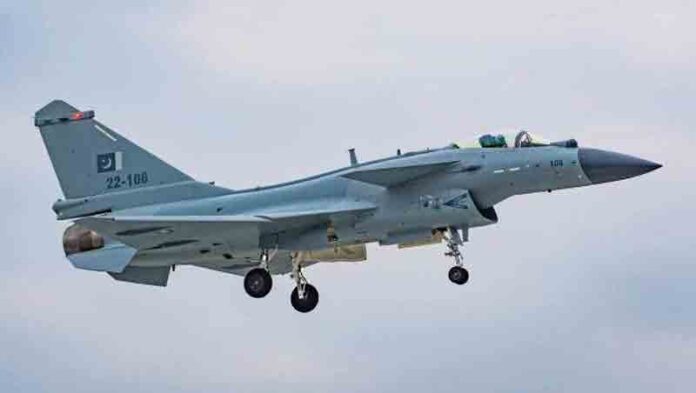
Pakistani Air Force's Chengdu J-10C fighter

In a significant development that has sent shockwaves through strategic discussions in South Asia, a prominent American aerospace expert has pointed out that Pakistan‘s effective integration of Chinese-supplied weaponry and radar systems is a key element in its recent air dominance over India.

Michael Dahm, a Senior Fellow at the Mitchell Institute for Aerospace Studies, remarked in an interview with Air & Space Forces Magazine that Pakistan’s capability to create a cohesive ‘kill chain’ in combat scenarios has become a pivotal aspect of its air warfare strategy. Dahm stated, ‘Pakistan can seamlessly integrate ground-based radars with fighter jets and airborne early warning aircraft,’ highlighting the increasing operational sophistication of the Pakistan Air Force (PAF).

He further elaborated, ‘The Pakistani Air Force executed… ‘A’ launched by ‘B’ and directed by ‘C’, successfully striking its target,’ referring to a comprehensive report from May 12 by China Space News, which is closely linked to China’s defense industry. Dahm clarified that the effectiveness of this kill chain is not merely about comparing platforms but rather about the seamless integration of each component—from sensor to shooter—into a networked, real-time engagement system. In today’s fast-paced conflict scenarios, where every millisecond can influence the outcome of a mission, the kill chain concept—encompassing the entire cycle of detection, identification, tracking, targeting, engagement, and damage assessment—has become essential to modern military operations.

The entire kill chain is now underpinned by an extensive framework of ISR (Intelligence, Surveillance, and Reconnaissance) resources, satellite communications, high-speed data networks, and increasingly autonomous fire-control systems powered by artificial intelligence.

In the context of the Pakistan-India conflict, Dahm suggests that the process likely initiated with a ground radar or air defense system identifying an Indian Air Force aircraft entering disputed airspace. This radar information was then relayed to a forward-deployed J-10C, Pakistan’s latest 4.5-generation multirole fighter obtained from China, which swiftly launched a long-range beyond-visual-range (BVR) missile at the target. The missile’s midcourse guidance was reportedly managed by an airborne early warning and control (AEW&C) platform—most likely the KJ-500—utilizing encrypted data links to refine the missile’s trajectory for optimal kill probability. “It was a long-range, Beyond Visual Range shot, likely employing the export variant PL-15E,” Dahm noted, referencing one of China’s most advanced air-to-air missile systems, now in service with both China and Pakistan.

Pakistani defense sources indicate that one J-10C is thought to have successfully shot down an Indian Air Force Rafale from a distance of 182 kilometers using a PL-15 missile—an achievement some defense analysts have labeled the longest recorded air-to-air kill in military aviation history. While independent confirmation of the kill distance is still pending, the PL-15 missile—developed by the China Airborne Missile Academy (CAMA)—has proven to be a strategic equalizer against Western counterparts like the AIM-120D AMRAAM and the European Meteor. Featuring a dual-pulse motor and an active radar seeker, the PL-15 can engage agile airborne targets at ranges exceeding 200 kilometers, firmly establishing it in the elite class of long-range BVR munitions.

The operational framework exhibited by Pakistan reflects the U.S. military’s Combined Joint All-Domain Command and Control (CJADC2) doctrine, which is an advanced warfare strategy aimed at integrating land, air, sea, space, and cyber capabilities into a cohesive decision-making network.

Dahm remarked that as more details about the specific engagement emerge, it could shed light on Pakistan’s success in systems integration, particularly in contrast to India’s more fragmented strategy. He also pointed out that Pakistan has likely adapted some of its Chinese-supplied AEW&C aircraft for specialized electronic warfare (EW) roles, although it remains uncertain if electromagnetic manipulation influenced the recent engagement.

Dahm warned against oversimplified comparisons between Chinese and Western technologies, suggesting that such comparisons may not yield significant insights. Instead, he argued that the focus should be on the systems of systems, training, and tactics—elements that are often challenging to quantify. He stressed that organizational unity and tactical doctrine frequently hold greater importance than mere technical specifications.

Additionally, Dahm noted the structural challenges faced by the Indian Air Force (IAF), which, despite having a larger number of aircraft, operates a diverse fleet with technologies from France, Russia, Israel, and domestic sources, each featuring distinct data architectures, communication protocols, and EW systems.

The IAF’s primary arsenal consists of French Rafales, Russian Su-30MKIs and MiG-29s, Anglo-French Jaguars, Indian-manufactured Tejas fighters, and Mirage 2000s, all of which feature incompatible avionics and fire-control systems. This lack of standardization hinders real-time data sharing, sensor integration, and cross-platform targeting, which are essential for an effective kill chain in contemporary air combat. Basic tactical datalinks are also non-standard, necessitating third-party integration modules for real-time communication between Russian Su-30MKIs and French Rafales, leading to delays and vulnerabilities in critical operations. The presence of varied missile systems—AIM-132 ASRAAM, R-77, Meteor, Astra—complicates logistics and targeting further, requiring distinct maintenance, storage, and command protocols.

This diversity, once seen as a safeguard against over-reliance, is increasingly becoming a structural disadvantage in a landscape where speed, automation, and interoperability are paramount. India’s air doctrine still lacks a fully digitized combat cloud framework, making it challenging to coordinate multi-platform, multi-domain operations with the same efficiency and accuracy as rivals like Pakistan or China.

In contrast, Pakistan has embraced a more cohesive and integrated approach, centering its air combat strategy around platforms primarily sourced from China and the U.S., resulting in minimal compatibility issues. The JF-17 Thunder and J-10C utilize Chinese-made AESA radars, electronic warfare systems, and datalinks that facilitate seamless information exchange with KJ-500 AEW&C platforms and ground-based radar networks. This uniformity enables Pakistan to maintain an efficient ‘sensor-to-shooter’ loop with minimal latency—detection via radar, cueing by AEW&C, and immediate engagement by fighters, all interconnected within the same electronic warfare and data-sharing framework.

This model not only enhances response times but also improves the survivability and situational awareness of frontline pilots and commanders. Systems designed in China, such as the PL-15, are seamlessly integrated into this framework, allowing for data relays, midcourse guidance, and kill assessments to occur within a unified digital environment—reducing the risk of spoofing, jamming, or data loss between platforms.

Pakistan’s commitment to a cohesive kill chain doctrine was clearly demonstrated in the recent air battle under examination, which showcased the coordinated use of ground radars, AWACS, beyond-visual-range missiles, and strategic targeting of high-value enemy assets from a distance. With China serving as both supplier and systems architect, Pakistan gains access to comprehensive military packages that include software, hardware, training, and tactical doctrine as a cohesive unit.

This approach sharply contrasts with India’s fragmented defense procurement strategy, where platforms are frequently acquired independently, leading to delays, budget overruns, and operational mismatches. In the context of fifth-generation warfare, where success relies on speed, automation, and data integration, Pakistan’s kill chain-focused model provides a significant advantage in potential future aerial conflicts in South Asia.
How did Trump catch the President of South Africa off guard during their meeting?

0
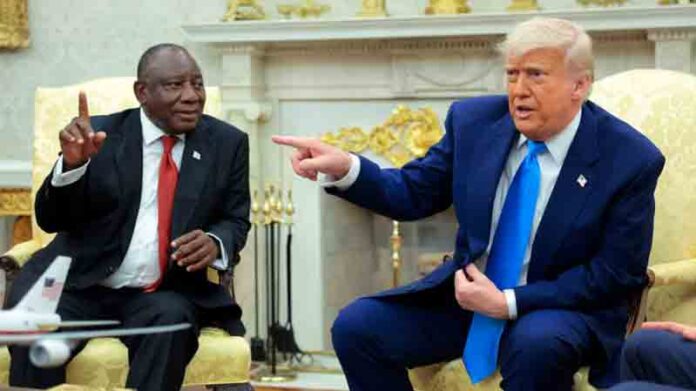
President Donald Trump, right, speaks during a meeting with South African President Cyril Ramaphosa in the Oval Office on May 21, 2025.

Just before President Donald Trump welcomed his South African counterpart into the Oval Office on Wednesday, White House staff were seen transporting two large televisions down the driveway and into the West Wing. President Cyril Ramaphosa was unprepared for what was about to unfold.

Trump dimmed the lights and initiated what could be described as an ambush, presenting a video he claimed demonstrated his unfounded assertion that White South Africans are facing persecution and ‘genocide.’ A visibly taken aback Ramaphosa, who had just been engaging in light conversation with Trump about golf, remained silent. As a seasoned diplomat and former chief negotiator for Nelson Mandela during the transition away from White minority rule, Ramaphosa struggled to mask his unease.

The encounter was clearly premeditated, with Trump’s team providing printed articles for him to display to the cameras, which he claimed supported his allegations of White ‘genocide.’ It seemed almost certain that Trump would seize the opportunity to promote these fringe theories — which he has been vocal about for months — regarding the supposed seizure of land and mass killings of White farmers in South Africa. Just the previous week, 59 White South Africans had arrived in the United States after being granted refugee status by the White House.

Since assuming office in January, Trump has not shied away from transforming his meetings into platforms for public confrontation. However, the multimedia spectacle he orchestrated surpassed anything he has previously executed in the Oval Office. Even his heated exchange with Ukrainian President Volodymyr Zelensky in February, which some critics viewed as a premeditated setup, lacked visual support.

A White House official indicated that Trump intended Wednesday’s event to highlight an issue that the administration believes the media has overlooked. Trump claimed to have received feedback from ‘thousands’ regarding the matter.

Despite Ramaphosa’s composed efforts to clarify his country’s circumstances and address Trump’s accusations, Trump seemed unfazed. ‘Death, death, death, horrible death,’ he exclaimed, while flipping through printed articles. It was clear during the unfolding events that Trump and his team had meticulously prepared in advance to substantiate the unfounded claims of White victimization.

Aides noted that they expected this topic to dominate the Oval Office discussion and were aware of Ramaphosa’s intention to correct Trump’s erroneous beliefs before his trip to Washington. This prompted the White House to arrive at the meeting equipped with materials and to showcase a video featuring the fiery opposition leader Julius Malema calling for violence against White farmers. Shortly after the video concluded, the White House shared a copy on its official social media platforms. The articles Trump brandished during the meeting were systematically disseminated online by his aides.

Trump’s supporters praised the confrontation on social media, interpreting it as another instance of the president demanding accountability from global leaders. The strategic release of information indicated Trump’s eagerness to leverage the meeting to promote their narrative of victimization, despite Ramaphosa’s intention to focus on trade and geopolitical matters. No amount of diplomacy or gestures from the South African president—such as inviting two professional golfers to his delegation or praising Trump for the decor of the Oval Office—could prevent the unexpected turn of events.

‘What you witnessed in the speeches does not reflect government policy. We have a multiparty democracy in South Africa that permits diverse opinions,’ Ramaphosa stated following the video. ‘Our government policy is entirely opposed to what he was asserting.’

Trump’s preoccupation with the supposed mistreatment of White South Africans is not a recent development; he expressed a desire to assist White farmers displaced from their properties during his first term. However, his public assertions of oppression and ‘genocide’ have intensified significantly in the early months of his second term. The White House has expedited the processing of Afrikaner refugees while halting refugee applications from other groups.

Earlier this year, the US also suspended aid to South Africa and expelled its ambassador. In many respects, Trump’s critique of South Africa’s laws—designed to address the injustices of apartheid—aligns with his campaign against diversity initiatives in the United States, which, like some of the South African regulations he opposes, aim to rectify historical racial inequalities. His stance has received backing from South African-born billionaire Elon Musk, who was one of Trump’s key advisors during the initial phase of his new administration.

Musk has mostly distanced himself from his efforts to reform the federal government in order to concentrate on his business pursuits. However, he made a return to the White House on Wednesday for a meeting with Ramaphosa, positioning himself behind one of the gold sofas as the contentious discussions took place. Musk had previously accused South Africa of hindering the operation of his Starlink internet service due to non-compliance with Black ownership regulations.

In anticipation of Wednesday’s meeting, South African government officials were preparing to propose a workaround that would enable Musk’s venture to function within the country. This move was perceived as an effort to foster goodwill with the US administration prior to the discussions. Nevertheless, it appeared to have little effect on easing tensions.

During the Oval Office proceedings, Trump seemed disinterested in allowing Musk to speak, stating, ‘Elon’s from South Africa, and I don’t want to talk to him about that. I don’t think it’s fair to him.’

US officials suggest Israel may be planning an attack on Iranian nuclear sites

0

Recent intelligence reports indicate that the United States has acquired information suggesting Israel is preparing to target Iranian nuclear sites, despite the Trump administration’s ongoing diplomatic efforts with Tehran, according to several US officials who spoke to CNN.

Such an action would represent a significant departure from President Donald Trump’s stance, officials noted. It could also potentially escalate tensions into a wider regional conflict in the Middle East, which the US has been trying to prevent since the outbreak of hostilities in Gaza in 2023.

Officials warn that it remains uncertain whether Israeli leaders have reached a definitive conclusion, and there is considerable disagreement within the US government regarding the probability of Israel taking action. The decision on whether and how Israel might proceed is likely contingent on its assessment of US negotiations with Tehran concerning its nuclear ambitions.

However, one source familiar with US intelligence remarked, ‘The likelihood of an Israeli strike on an Iranian nuclear facility has increased significantly in recent months.’ Furthermore, the possibility of a US-Iran agreement brokered by Trump that does not eliminate all of Iran’s uranium enhances the chances of such a strike occurring.

The growing concerns are fueled not only by public and private statements from high-ranking Israeli officials indicating that such a move is under consideration but also by intercepted communications and observations of Israeli military activities that may imply an impending strike, according to multiple intelligence sources. Among the military preparations noted by the US are the deployment of air munitions and the conclusion of an air exercise, as reported by two of the sources.

However, these same indicators may also indicate Israel’s attempt to compel Iran to relinquish critical aspects of its nuclear program by warning of potential repercussions if it fails to comply—highlighting the intricate challenges the White House is currently facing.

President Trump has openly threatened military action against Iran should his administration’s attempts to negotiate a new nuclear agreement aimed at curbing or eliminating Tehran’s nuclear ambitions prove unsuccessful. Nevertheless, Trump has also established a timeframe for diplomatic engagement.

In a correspondence to Iran’s Supreme Leader Ayatollah Ali Khamenei in mid-March, Trump imposed a 60-day deadline for these negotiations to yield results, according to a source familiar with the matter. It has now surpassed 60 days since that letter was sent, and 38 days since the initial round of discussions commenced.

A senior Western diplomat who met with the president earlier this month indicated that Trump conveyed the US would allow only a few weeks for these negotiations to succeed before considering military action. Currently, however, the White House’s stance remains one of diplomacy.

This situation has placed Israel in a difficult position, as noted by Jonathan Panikoff, a former senior intelligence official with expertise in the region. Prime Minister Benjamin Netanyahu faces the dual challenge of preventing a US-Iran agreement that Israel deems unsatisfactory while also maintaining a good relationship with Trump, who has already diverged from Netanyahu on significant security matters in the area. Panikoff remarked that ultimately, Israeli decision-making will hinge on US policy choices and actions, as well as the agreements President Trump reaches or does not reach with Iran, adding that he does not believe Netanyahu would risk completely jeopardizing the US-Israel relationship by launching a strike without at least implicit US consent.

The United States is enhancing its intelligence gathering efforts in preparation to support Israel should its leaders opt for military action, according to a senior US official. However, a source familiar with the Trump administration’s perspective indicated that the US is unlikely to assist Israel in conducting strikes on Iranian nuclear facilities at this time, unless there is a significant provocation from Tehran.

Israel lacks the capability to eliminate Iran’s nuclear program independently, as it requires American support for midair refueling and specialized munitions to penetrate deep underground sites, a necessity corroborated by previous US intelligence assessments. An Israeli source informed CNN that Israel is ready to undertake military operations independently if the US were to pursue what this source termed a ‘bad deal’ with Iran that Israel cannot accept. ‘It seems more probable they would strike to disrupt the deal if they believe Trump is inclined to accept a ‘bad deal’,’ remarked another individual familiar with US intelligence. ‘The Israelis have been quite clear in signaling this to us, both publicly and privately.’

A US intelligence report from February indicated that Israel could deploy military aircraft or long-range missiles to exploit Iran’s air defense systems. However, the same report noted that such strikes would only marginally hinder the Iranian nuclear program and would not serve as a comprehensive solution. ‘This presents a significant challenge for Netanyahu,’ stated Panikoff.

Currently, US negotiations with Iran are stalled over a demand that Tehran cease uranium enrichment, a process that can facilitate weaponization but is also essential for civilian nuclear power generation. Special envoy Steve Witkoff, who is leading the US delegation, told ABC News over the weekend that Washington ‘cannot permit even 1% of an enrichment capability’ in any agreement.

On Tuesday, Khamenei expressed skepticism about the possibility of reaching an agreement with the United States regarding Tehran’s nuclear program, labeling the US demand for Iran to cease uranium enrichment as a significant error. Iran maintains that it is entitled to enrich uranium under the United Nations’ Treaty on Nuclear Non-Proliferation and asserts that it will not abandon this right under any circumstances.

According to Witkoff, another round of discussions may occur in Europe this week. Both the US and Iran have presented proposals; however, after over a month of negotiations facilitated by Oman, there is currently no US proposal approved by Trump, as reported by sources.

In February, US intelligence agencies warned that Israel is likely to target facilities critical to Iran’s nuclear program this year, as previously reported by CNN. A US official remarked that Israel has consistently held the view that military action is the only viable means to halt Iran’s military nuclear ambitions.

Trump reveals US plans to deploy space weapons under the ‘Golden Dome’ initiative

0
U.S. President Donald Trump speaks, on the day of Tulsi Gabbard's swearing in ceremony as Director of National Intelligence, in the Oval Office at the White House in Washington, D.C.

President Donald Trump and Secretary of Defense Pete Hegseth have unveiled their most definitive strategy for the ‘Golden Dome‘ missile defense initiative, which will involve deploying weapons in space for the first time.

During a press conference at the White House on Tuesday, Trump announced that he had ‘officially chosen a framework’ for the system, aimed at neutralizing ‘hypersonic missiles, ballistic missiles, and advanced cruise missiles.’ ‘I promised the American people that I would establish a state-of-the-art missile defense shield to safeguard our nation from the dangers of foreign missile threats,’ Trump stated to reporters in the Oval Office.

He further explained that the Golden Dome system would incorporate ‘space-based sensors and interceptors.’ ‘Once fully operational, the Golden Dome will have the capability to intercept missiles even if they are launched from the opposite side of the globe or from space,’ Trump added. ‘We will possess the most advanced system ever created.’

This announcement follows less than four months after Trump signed an executive order initiating the program’s development. General Michael Guetlein, currently the vice chief of space operations at Space Force, is set to oversee the initiative.

At the event, Hegseth praised the plan as a ‘transformative development’ and a ‘long-term investment in the security of America and its citizens.’

The White House has yet to provide additional information regarding the missile defense system, while the Pentagon continues to assess its capabilities and requirements. Earlier this month, the Congressional Budget Office projected that the space-based elements of the Golden Dome could reach a cost of $542 billion over the next two decades. It emphasized that a significant number of sensors and interceptors would be essential for the effectiveness of a space-based system, especially as foreign military capabilities, such as those of North Korea, become more advanced.

However, on Tuesday, Trump presented a significantly lower estimate and timeline. He stated, ‘It should be fully operational before the end of my term. So, we’ll have it done in about three years,’ estimating the total cost to be around $175 billion, with plans to utilize existing defense resources for the system’s development. Nevertheless, funding for the initiative has not yet been secured.

During the news conference on Tuesday, Trump confirmed his request for $25 billion for the system as part of a tax cut bill currently under consideration in Congress, although this amount may be reduced due to ongoing discussions.

The overall cost of the project is expected to vary, with the Associated Press reporting that an unnamed government official indicated Trump had received three different versions of the plan, labeled as ‘medium’, ‘high’, and ‘extra high’.

The tiers were linked to the number of satellites, sensors, and interceptors planned for deployment in the program. According to reports, Trump opted for the ‘high’ tier, which has an estimated initial cost between $30 billion and $100 billion.

Concerns regarding the feasibility of a space-based defense system

While outlining his vision for the Golden Dome on Tuesday, Trump referenced various influences, including Israel’s ‘Iron Dome’ missile defense system, partially funded by the US. He also acknowledged the contributions of the late President Ronald Reagan, who was in office during the Cold War in the 1980s. Reagan proposed a nuclear defense strategy in 1983 as part of his Strategic Defense Initiative, which included space-based technologies.

Trump stated, ‘We will truly be completing the job that President Reagan started 40 years ago, forever ending the missile threat to the American homeland.’ However, concerns remain regarding the feasibility of a space-based defense system, its costs, and the potential for a new arms race.

Democrats have raised questions about Elon Musk’s SpaceX, a leading contender among tech firms aiming to develop essential components of the system. A coalition of 42 Democratic lawmakers has requested an investigation into Musk’s involvement in the bidding process, citing his role as a special adviser to Trump and his significant campaign contributions. ‘If Mr. Musk were to exert undue influence over the Golden Dome contract, it would exemplify a troubling pattern of disregarding conflict of interest regulations,’ the Democrats stated in their letter, urging the investigation.

On Tuesday, Trump did not answer directly when asked about the companies participating in the Golden Dome project. Instead, he emphasized that the system would benefit industries in states such as Alaska, Indiana, Florida, and Georgia, adding, ‘Canada has reached out to us, expressing interest in being involved. We will be in discussions with them.’

RSS, India’s original ruling party, has faced four bans, with decision-making authority resting with Mohan Bhagwat

0

Currently, India is under the complete influence of the RSS, with Narendra Modi serving as the nominal Prime Minister, while the true power lies with RSS Chief Mohan Bhagwat. The BJP, acting as the political arm of the RSS, has undermined the secular foundations of India.

Historically, the RSS has faced bans in India, having been prohibited at least four times in its century-long existence. The first ban occurred in 1947 when the British government identified the RSS as a societal threat, although they later rescinded the ban due to the rising tide of the freedom movement. The second ban was implemented following the assassination of Mahatma Gandhi, as documented in the Government of India’s gazette notification from 1948, during which Vallabhbhai Patel served as the Home Minister who enforced the ban on the RSS.

The RSS faced its third ban when Indira Gandhi declared a state of emergency in India in 1975. During this period, the organization was accused of inciting violence, leading to its prohibition. At that time, the RSS was deeply concerned about its political identity, which prompted the establishment of the BJP, attracting several radical Hindu leaders. Notably, India’s Home Minister Amit Shah and Defense Minister Rajnath Singh have been associated with the BJP since its inception.

The RSS encountered its fourth ban following the demolition of the Babri Masjid by extremist Hindu groups. Each of these bans was attributed to the RSS’s anti-state activities and its potential to disrupt societal peace. While the Congress government imposed restrictions on the RSS, the BJP administration has allowed it greater freedom, even reversing the ban on government employees joining the RSS that was enacted by Indira Gandhi in 1966.

Current reports suggest that the RSS has significantly failed to achieve its goals of a Akhand Bharat and the dismantled India’s secular framework, resulting in considerable diplomatic challenges for the country due to the RSS’s extremist policies.

Western intelligence rushes to exploit the discovery of China’s PL-15 missile debris in India

0

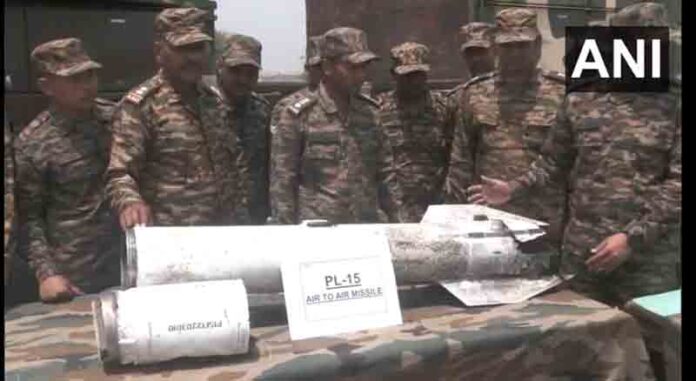
In a significant development that may reshape global air combat strategies, several European countries and their Western allies have shown considerable interest in collaborating with India to analyze debris from the Chinese-manufactured PL-15 missile, which has been recovered from various sites within Indian territory.

The PL-15 is currently China’s most sophisticated beyond-visual-range (BVR) air-to-air missile and is known to be utilized by the Pakistan Air Force (PAF) on frontline aircraft such as the Chengdu J-10C and the jointly developed JF-17 Thunder. These fighter jets played a crucial role in the recent high-intensity air conflict between Pakistan and India, marking one of the initial operational deployments of the PL-15 in a near-peer engagement context. Official claims from the PAF indicate that its J-10C multirole fighters effectively utilized the PL-15, reportedly downing six Indian Air Force (IAF) aircraft during the conflict. Among the aircraft claimed to have been neutralized were three Dassault Rafales, one Su-30MKI, one MiG-29, and one Mirage 2000, showcasing a diverse and formidable representation of India’s modern combat aviation capabilities.

Additionally, the PAF’s JF-17 Block III variants are also believed to be equipped with the PL-15, significantly enhancing Pakistan’s BVR engagement capabilities and its ability to conduct precision strikes from extended ranges. The apparent operational success of the PL-15 has thrust it into the global spotlight, prompting defense analysts, military officials, and think tanks to urgently evaluate the missile’s real-world effectiveness and its implications for regional air superiority.

While the PL-15 missiles are touted for their effectiveness, not all have successfully hit their targets, with reports indicating that some failed to detonate or veered off course, enabling Indian forces to recover parts in relatively good condition. Indian media reports that debris, including crucial electronic components, was found in the village of Kamahi Devi in Punjab’s Hoshiarpur district, with further sites currently being examined.

These missile fragments have attracted significant interest from foreign intelligence agencies, with numerous Western organizations seeking to analyze the debris for forensic and reverse engineering purposes. Sources from India’s defense media indicate that several members of the ‘Five Eyes’ intelligence alliance—comprising the United States, United Kingdom, Canada, Australia, and New Zealand—have shown interest in closely examining the recovered PL-15 components.

Additionally, strategic nations like France and Japan are reportedly engaged in discreet discussions with New Delhi to gain collaborative access to the missile debris for independent evaluation. For Western analysts, the chance to study an operationally deployed PL-15 presents a unique opportunity to gain insights into China’s rapidly advancing missile technology, especially as this system begins to compete with the U.S.-made AIM-120D AMRAAM and the European MBDA Meteor in terms of performance.

The PL-15 missile signifies a major advancement in Chinese aerospace capabilities, achieving speeds of Mach 4 and capable of targeting airborne threats at ranges of up to 300 kilometers—far exceeding conventional beyond-visual-range (BVR) capabilities. The presence of PL-15 missile debris in India has significant strategic ramifications and provides valuable intelligence-gathering prospects for foreign intelligence agencies, particularly those from Western nations.

Western intelligence agencies, including the U.S. DIA, NSA, CIA, and their defense contractors, would focus on the forensic analysis of the PL-15’s electronic systems, propulsion, guidance components, and datalink modules. Analyzing debris from sensors, RF seekers, or the two-way datalink antenna could uncover details about the signal processing architecture, encryption methods, or radar seeker bandwidths. This information would enable NATO and allied air forces to refine their Electronic Countermeasure (ECM) strategies to effectively jam or deceive the PL-15’s seeker or disrupt its guidance during actual air combat.

By studying the missile’s radar seeker, intelligence agencies can ascertain the specific radar frequencies and tracking patterns of the PL-15. This data contributes to the threat libraries utilized by Western fighter jets, such as the F-35, Eurofighter, and Rafale, allowing their onboard Radar Warning Receivers (RWRs) and Electronic Warfare (EW) systems to more effectively identify and counter PL-15 threats.

Additionally, it improves the accuracy of simulations in training and testing environments, such as the Red Flag exercises at Nellis AFB. If the PL-15 debris is traced back to a Pakistani JF-17 or J-10C, it would confirm China’s export of a long-range active radar-guided missile that was previously thought to be exclusive to the People’s Liberation Army Air Force (PLAAF). This revelation would alter the evaluations made by Western defense ministries and Five Eyes intelligence partners concerning the spread of advanced Chinese weaponry in South Asia and beyond, potentially accelerating arms control discussions or prompting diplomatic efforts to restrict future missile transfers.

Analyzing debris is essential for confirming or disproving China’s claims regarding missile performance, such as the purported range of the PL-15 exceeding 300km, its ramjet engine, or its sophisticated anti-stealth features. This analysis is vital since China seldom conducts transparent public missile tests, making the remnants found in the field rare indicators of their actual capabilities. The results could significantly impact how Western air forces strategize for Beyond Visual Range (BVR) engagements with potential People’s Liberation Army Air Force (PLAAF) or Pakistan Air Force (PAF) aircraft in conflict situations.

Given China’s dependence on Russian radar seekers, propulsion technologies, and collaborative ventures in avionics, intelligence agencies will closely examine the debris for any Russian-sourced components. This scrutiny is particularly critical in light of Western sanctions against Moscow, as evidence of Chinese-Russian defense cooperation could bolster the enforcement of these sanctions and enhance military-industrial monitoring.

The confirmed deployment and use of the PL-15 in Indian airspace has raised alarms within Western strategic circles, leading to urgent reassessments of BVR threat doctrines in areas where Chinese weapons are distributed.

Analyzing the composition and technology of the PL-15 missile can assist Western defense companies like Raytheon, MBDA, Lockheed Martin, or BAE Systems in developing counter-missile systems, decoys, or advanced beyond-visual-range missiles with enhanced capabilities. This information would also benefit countries aiming to upgrade their air defense systems, including India, which may seek to improve the effectiveness of its Netra AEW&Cs, Rafales, or S-400s in response to this threat.

For Western intelligence agencies, the recovery and examination of PL-15 debris within India represents a significant and strategic intelligence opportunity, providing insight into China’s most advanced air-to-air missile, potentially deployed by its ally Pakistan in real-world scenarios.

Beyond immediate tactical advantages, this incident enables the West to reassess its military strategies, electronic warfare capabilities, and geopolitical stance in the Indo-Pacific and South Asia, where the reality of Chinese weaponry in the hands of third parties becomes increasingly concerning.

The PL-15, developed by the China Airborne Missile Academy (CAMA), is specifically designed to target high-value aerial assets such as airborne early warning and control (AEW&C) systems and force-multiplier aircraft operating within complex air defense frameworks. Its extended range offers operators a formidable stand-off capability, allowing them to disrupt enemy air formations before they can effectively coordinate or respond, thereby altering the tactical dynamics for regional air forces.

Regional security analysts assert that Pakistan’s introduction of the missile significantly shifts the aerial power dynamics in South Asia, enhancing Islamabad’s deterrent capabilities and first-strike options in potential conflicts with India. The missile’s advanced features include an AESA (Active Electronically Scanned Array) radar seeker, which allows for autonomous target tracking in challenging electromagnetic environments.

Additionally, its robust two-way datalink enables real-time mid-course updates from the launch aircraft, facilitating dynamic re-targeting as battlefield conditions evolve. Powered by a dual-pulse solid-fuel rocket motor, the missile maintains high-speed performance throughout its flight, increasing its effectiveness against agile, high-performance targets, including fifth-generation stealth aircraft.

The miniaturized high-frequency AESA radar seeker enhances the missile’s resilience to jamming and decoys, allowing it to operate independently after launch. The two-way datalink also provides battlefield flexibility, enabling pilots to adjust the missile’s course or abort the mission if necessary. Measuring approximately four meters in length and weighing around 200 kilograms, the PL-15 is designed for compatibility with various Chinese-origin platforms and may also be available to export customers aligned with Beijing. Its operational use has positioned the PL-15 as a formidable competitor to Western beyond-visual-range (BVR) systems, marking its entry into a select group of missiles known for true long-range effectiveness.

Its deployment under Pakistan’s military command has raised concerns among military strategists in the Indo-Pacific, who now face the task of countering a rapidly exportable Chinese missile that has already demonstrated its capabilities.

India’s Rafale Challenge: France Denies Access to Source Code as Indo-Pacific Tensions Escalate

0
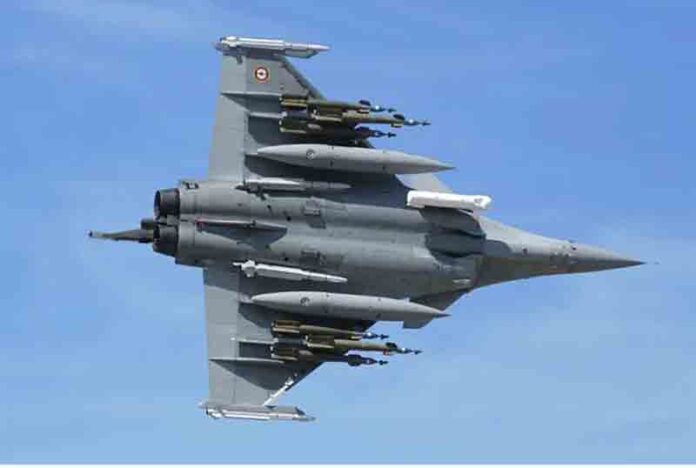
Rafale fighter

France’s unwavering decision to deny India access to the Rafale fighter jet’s source code has rekindled strategic frictions, highlighting the challenges of acquiring advanced weaponry when digital sovereignty is not guaranteed. Despite ongoing diplomatic efforts from New Delhi, Dassault Aviation has not agreed to release the essential software that controls the Rafale’s mission systems, weapon integration, and avionics.

India aims to integrate indigenous armaments such as the Astra beyond-visual-range air-to-air missile, Rudram anti-radiation missile, and various smart munitions into the Rafale framework to boost combat independence and lessen dependence on foreign suppliers. This initiative is a key element of India’s ‘Atmanirbhar Bharat’ (Self-Reliant India) vision, which seeks to establish a future where domestic research and development and manufacturing support the nation’s airpower capabilities.

The Rafale, a twin-engine 4.5-generation multirole fighter, is driven by two Snecma M88-2 afterburning turbofan engines and can supercruise at Mach 1.4 without afterburner, providing a high thrust-to-weight ratio and extended operational range. It is equipped with the Thales RBE2-AA Active Electronically Scanned Array (AESA) radar, capable of tracking up to 40 targets and engaging 8 simultaneously at distances over 100 km, making it one of the most sophisticated radar systems available. Additionally, the aircraft incorporates the Spectra electronic warfare suite, which features radar warning receivers, jammers, and infrared missile warning sensors that can identify and counter modern threats through both active and passive measures.

India’s Rafale fleet is enhanced with Helmet Mounted Display Systems (HMDS), Thales Front Sector Optronics (FSO), Infrared Search and Track (IRST), and sophisticated data links for real-time network-centric operations. The Rafale’s combat capabilities include the integration of the Meteor Beyond Visual Range (BVR) missile, which has a no-escape zone exceeding 60 km, the SCALP-EG long-range cruise missile for precision strikes up to 500 km, and the Hammer (AASM) modular air-to-ground precision munitions.

India secured 36 Rafale jets through a €7.8 billion (RM37.5 billion) contract signed in September 2016, with the first jet delivered on 29 July 2020 and the last one arriving on 15 December 2022. The Rafales are currently operational at Ambala Airbase, strategically located near Pakistan, and Hasimara Airbase, close to the Chinese border, both selected for their significance in India’s two-front war strategy.

To bolster maritime strike capabilities, India finalized a US$7.4 billion (RM33.3 billion) deal in April 2025 for 26 Rafale-M fighters, the naval variant, intended for deployment on INS Vikrant and INS Vikramaditya. These carrier-based aircraft will replace the aging MiG-29K fleet, providing India with advanced fourth-plus-generation maritime airpower at sea, which is vital given China’s growing carrier presence in the Indian Ocean. Although there is collaboration on integrating certain Indian-developed munitions such as Astra Mk1 and the Smart Anti-Airfield Weapon (SAAW), France’s reluctance to share the core source code of the Rafale remains a significant barrier to deeper defense cooperation.

The source code in question regulates essential components, such as the Modular Mission Computer (MMC) and the radar-electronic interface necessary for effective weapons integration. Without access to this digital framework, India encounters a capability limitation, unable to independently modify the Rafale for changing operational needs or to carry out software-defined enhancements without French consent.

A senior official from the Indian Air Force, who is knowledgeable about the situation, stated, ‘The lack of access to the source code poses a major challenge to India’s wider defense modernization efforts.’ This issue has sparked a national dialogue about technological independence, drawing uncomfortable comparisons to previous experiences with the Mirage 2000 fleet, where restricted code access impeded local upgrades. ‘Although France has proposed limited cooperation through joint technical teams and constrained software kits, India’s request for complete access underscores its aim to lessen dependence on foreign suppliers and strengthen its defense capabilities autonomously.’

Military strategists contend that access to the code would enable India to swiftly adjust mission parameters, incorporate domestically developed AI-driven subsystems, and optimize logistics without external reliance. Conversely, France maintains that the source code—developed over many years at significant financial investment—is a strategic industrial asset that should not be subject to foreign interference.

The French defense community is concerned that granting access could create a troubling precedent for other Rafale users, such as Egypt, Qatar, and possibly Indonesia, who might seek similar concessions. Additionally, there are genuine worries that access to the source code could introduce security risks, including the potential for reverse engineering, cyber attacks, or unauthorized transfer of French technologies to competing nations.

Additionally, France argues that unauthorized alterations by external parties could jeopardize the integrity of aircraft, safety certifications, and post-sale support agreements, thereby threatening the entire Rafale export initiative. While there are limited workaround options available—such as the integration of Indian munitions through external pods or utilizing fire-and-forget capabilities—these solutions are less than ideal and hinder the complete utilization of Rafale’s sensor-fusion and network-centric warfare capabilities.

Despite the ongoing challenges, the defense relationship between India and France remains strong and continues to grow, highlighted by the April 2025 Rafale-M agreement, which reflects ongoing mutual confidence in sharing advanced technologies, albeit not without limitations. Indian officials assert that the long-term solution lies in the development of indigenous 5th-generation fighters like the AMCA and the enhancement of the Tejas Mk2 program—aircraft designed to ensure full sovereign control over mission systems.

Nevertheless, as global warfare transitions into a software-defined battlefield, the dispute over the Rafale source code serves as a poignant reminder that even the most sophisticated jets are only as sovereign as the software they operate on. While France is resolute in safeguarding the Rafale’s digital core, there are significant precedents where aircraft manufacturers have provided full or partial access to source codes or mission-critical software, particularly to trusted strategic allies.

For example, the United States granted Israel exceptional access to the F-35’s software framework, enabling the Israeli Air Force (IAF) to implement its own command, control, communications, and electronic warfare systems on the “Adir” variant of the stealth fighter. This level of autonomy allows Israel to utilize the F-35 as a sovereign weapons platform, incorporating locally developed air-to-ground munitions and proprietary cyber and electronic warfare systems, while preserving its qualitative military advantage in the region. Likewise, Russia has, in certain instances, provided extensive technical documentation and system access to close partners like India under the Su-30MKI program.

India has been permitted to tailor the Su-30MKI with homegrown technologies, including radar warning receivers developed by DRDO, Astra missiles, and locally produced mission computers. This level of customization has not been afforded by France for the Rafale.

In contrast, South Korea has benefited from a substantial technical transfer in its collaboration with Lockheed Martin on the KF-21 Boramae project, which included access to design blueprints, software integration assistance, and developmental cooperation, although the complete F-35 source code remains under strict control.

Similarly, Sweden’s Saab has proposed full technology transfer and source code access to nations like Brazil in its pursuit of international Gripen sales, enabling Brazil to manufacture and modify the Gripen-E domestically through a collaborative development and production approach.

These instances illustrate that, with appropriate strategic alignment and trust, access to fighter aircraft source code—despite its sensitive nature—is not without precedent. Currently, India’s defense establishment is questioning why such access is granted to certain allies while being denied to them, which is also a crucial strategic partner of the West in the Indo-Pacific region. This perceived double standard has intensified the ongoing discourse in India regarding genuine technological sovereignty in advanced defense procurement.

China speeds up J-35A stealth jet deliveries to Pakistan, with first flights anticipated by Q1 2026

0
J-35A stealth aircraft

In a significant development that may alter the balance of airpower in South Asia, reports indicate that Beijing is expediting the delivery of its advanced stealth fighter, the J-35A, to its longstanding ally Pakistan. Islamabad is now anticipated to receive its initial shipment as soon as the first quarter of 2026.

Senior officials from the Pakistan Air Force (PAF) have indicated that China has accelerated the transfer of the Shenyang Aircraft Corporation’s fifth-generation fighter by six months. This adjustment in the timeline is largely seen as a reaction to escalating regional tensions and a strategic move to enhance Pakistan’s aerial defense capabilities.

According to sources, with the revised delivery schedule, Pakistan is set to receive its first batch of these advanced stealth fighters in early 2026, rather than the previously planned late 2026. This change highlights the urgency of the defense collaboration between the two nations. Although these developments have not yet been officially confirmed by Islamabad, the PAF, or SAC, the increasing reports suggest that Pakistan is on the verge of a significant upgrade in its air combat capabilities.

Initial reports from late 2024 had disclosed Pakistan’s intention to acquire 40 J-35A stealth fighters, marking the first known export of a fifth-generation fighter from China, a significant achievement for Beijing as it seeks to establish itself as a leading global defense exporter. The announcement of this deal closely followed a notable visit to Islamabad by General Zhang Youxia, Vice Chairman of China’s Central Military Commission, who engaged in private discussions with Pakistan Army Chief General Asim Munir.

In April, speculation intensified when PAF Chief Air Chief Marshal Zaheer Ahmad Babar visited Beijing, where official Chinese media later confirmed his meeting with Defence Minister Dong Jun on April 8.

According to Global Times, the discussion centered on enhancing strategic military collaboration between the two nations, set against a backdrop of increasingly intricate regional security challenges, including India’s airpower modernization and the shifting Indo-Pacific landscape.

If the J-35A is delivered as planned, it could shift the regional airpower dynamics in favor of Pakistan, particularly as India continues to depend on older platforms like the Su-30MKI and the newer, yet non-stealth Rafale, which do not possess the fifth-generation capabilities of China’s latest fighter.

The Pakistan Air Force indicated its interest in acquiring the J-35A as early as 2024, a decision seen as part of Islamabad’s broader strategy to achieve air parity with India’s quantitative and qualitative advantages.

In a notable statement that year, Air Chief Marshal Zaheer remarked, ‘Discussions have occurred regarding the procurement of the J-35A, which will soon be integrated into the Pakistan Air Force.’ Subsequent reports from Pakistani media have suggested that a group of PAF pilots has already been sent to China for operational conversion training on the J-35A platform, providing concrete evidence of Pakistan’s progress towards fifth-generation airpower capabilities.

The J-35A is central to China’s strategy to undermine U.S. and allied air superiority by deploying adaptable, stealth-capable fighters designed for advanced warfare in contested electromagnetic environments.

Designed as a single-seat, twin-engine stealth fighter, the J-35A integrates cutting-edge avionics, a low-observable structure, and real-time battlefield connectivity, positioning it at the forefront of Beijing’s ambition for multi-domain dominance. It is crafted to function as a networked battlespace coordinator, identifying enemy targets, relaying targeting information to other systems like surface-to-air missile batteries, and directing long-range munitions to neutralize threats such as stealth fighters and low-RCS cruise missiles.

This development signifies a strategic shift in Chinese military aviation, focused on deploying a cost-effective yet formidable fleet to eventually succeed aging legacy aircraft like the J-7, J-8, and earlier J-10 models. Alongside the land-based J-35A, the J-35 carrier variant is designed for operations on PLA Navy aircraft carriers, showcasing the aircraft’s adaptability within China’s integrated military framework.

The J-35A emphasizes agility, radar avoidance, and operational range across theaters. Its sleek fuselage, carefully shaped surfaces, and distinctive V-tail design minimize radar visibility and aerodynamic resistance, improving both stealth capabilities and maneuverability. In contrast to the forward-canard J-20, the J-35A employs a traditional horizontal stabilizer configuration with angled vertical stabilizers, achieving a balance between stealth design and aerodynamic performance.

The twin-engine design offers both thrust redundancy and improved acceleration, presenting advantages over single-engine models such as the F-35, although it results in slight increases in radar signature due to its larger airframe. Stealth capabilities are enhanced through the extensive application of radar-absorbent materials (RAM), serrated skin panel interfaces, and a low-observable exhaust system that minimizes both infrared and radar visibility. The J-35A can maintain its low radar cross-section (RCS) profile while carrying long-range air-to-air missiles like the PL-17, which are intended for neutralizing high-value targets deep within contested airspace.

Its avionics feature a state-of-the-art Active Electronically Scanned Array (AESA) radar, chin-mounted electro-optical/infrared sensors similar to the F-35’s EOTS, and distributed aperture systems that ensure comprehensive situational awareness. The cockpit is equipped with a wide-angle holographic heads-up display (HUD), likely supplemented by helmet-mounted displays, and a fully integrated glass avionics suite that supports seamless data fusion and multi-domain combat operations.

Modi has led India into a state of diplomatic isolation

0

India is currently experiencing significant diplomatic isolation amid the Pahalgam false flag operation and its conflict with Pakistan. The state of India‘s diplomatic relations has deteriorated to unprecedented lows, affecting ties with nations across Europe, the US, and the Middle East.

Aside from Israel, India has not garnered any official support from other countries in its accusations and military actions against Pakistan following the Pahalgam incident. For the first time, India has struggled to rally global support, including from the United Nations, in its claims against Pakistan regarding terrorism allegations.

Reports from New Delhi indicate that shortly after Pakistan’s retaliatory strike, Indian Foreign Minister Jaishankar reached out to US Secretary of State Marco Rubio, urging Pakistan to cease its actions. Rubio responded by stating that he had already communicated with Pakistan twice and had relayed an offer for a transparent investigation into the Pahalgam incident, but India proceeded with its attack without heeding US advice, prompting Pakistan’s response. Jaishankar expressed concern that continued operation would lead to significant losses for India and a loss of dignity.

Sources indicate that Rubio did not provide a positive response during their initial conversation, leading Prime Minister Narendra Modi to directly request President Donald Trump for an immediate ceasefire. Trump stipulated that he would announce a ceasefire only if he could persuade Pakistan, thereby preventing India from further provocation.

India faced additional setbacks in this regard. A review of Modi’s diplomatic efforts revealed that he undertook 157 foreign visits to 73 countries over 11 years, incurring expenses of 8,400 crore Indian rupees.

Modi has made the highest number of visits, totaling ten to the US, eight to France, and seven each to Japan, Russia, and the United Arab Emirates. Despite significant efforts to foster global connections and the Prime Minister’s personal involvement in diplomacy, India’s perceived isolation during critical times, such as war, is a topic of widespread discussion.

Currently, both the Indian opposition and the general populace are questioning the effectiveness of 11 years of diplomatic efforts, wondering what value has been gained from such substantial investments. This diplomatic isolation is further highlighted by Donald Trump’s remarks during his Middle East visit, where he urged India to shift its focus from conflict with Pakistan to enhancing trade.

Trump urged Apple CEO Tim Cook to cease smartphone production in India, which is perceived as a diplomatic setback for the country. This situation exemplifies India’s diplomatic isolation; when India initiated a boycott against Turkey for its support of Pakistan, Trump intervened by announcing missile supplies to Turkey, signaling to India the need to act responsibly on the global stage.

Analysts suggest that while India aimed to diplomatically isolate Pakistan, it inadvertently found itself in a similar predicament. The trap set for Pakistan has ensnared India instead, with Israel being its only overt ally, while Afghanistan provides covert support. Meanwhile, the global community largely aligns with Pakistan’s stance.

Fatah Strikes: Pakistan’s Revolutionary Precision Missiles Disrupt India’s Strategic Landscape

0

In the final moments before a tentative ceasefire was established, temporarily halting the ongoing hostilities between the nuclear-capable nations of Pakistan and India, Islamabad introduced some of its most sophisticated and disruptive battlefield technologies—capabilities that have reverberated through Indian military leadership.

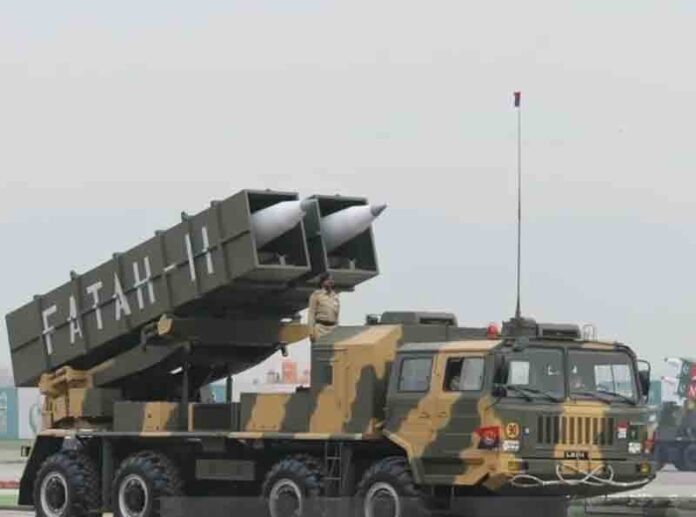
Central to this escalation were the Fatah-1 and Fatah-II Guided Multiple Launch Rocket Systems (GMLRS), developed by Pakistan’s National Engineering and Scientific Commission (NESCOM) and marketed internationally by the state-owned defense firm Global Industrial & Defence Solutions (GIDS). These systems signify Pakistan’s strategic advancement into high-precision, long-range strike capabilities—comparable to the U.S.-manufactured M142 HIMARS—but specifically designed for the South Asian context, aimed at both tactical interdiction and significant disruption of enemy infrastructure.

Created for deterrence and to achieve offensive balance in a region characterized by persistent tensions, the Fatah-series is perceived as a countermeasure to India’s growing arsenal of cruise missiles, surface-to-surface munitions, and comprehensive air defense systems.

The deployment of Fatah-1 and Fatah-II in active conflict scenarios represents a pivotal moment in South Asia’s developing precision-guided munitions (PGM) competition, marking a shift from traditional artillery bombardments to precise, high-impact operations. Observing the Pakistani military launch guided rockets from Fatah-series systems towards Indian territory starkly illustrates how the Indo-Pak conflict has evolved beyond mere border clashes, now encompassing long-range, standoff strike warfare.

Reports suggest that Fatah-II was specifically developed as a countermeasure to India’s Cold Start Doctrine (CSD), which is a limited warfare strategy aimed at facilitating swift conventional incursions into Pakistani territory before international intervention can occur. Pakistani military strategists contend that Fatah-II undermines this doctrine by threatening critical Indian command, control, and logistical centers situated deep behind the front lines, thus impairing India’s capacity to mobilize quickly without facing repercussions.

For the first time in the history of conflicts in the subcontinent, Indian rear-echelon military facilities, such as air bases, ammunition storage sites, and logistics centers, are now directly threatened by Pakistan’s conventional artillery systems. In response to Indian cruise missile attacks utilizing BrahMos and SCALP EG munitions on six vital Pakistani airbases—including Noor Khan, Mureed, and Shorkot—Islamabad reportedly retaliated with precise rocket barrages employing both Fatah-I and Fatah-II systems.

Some reports indicate that at least one Fatah-II rocket, which has a range of up to 400 km, was launched at a military installation in New Delhi, although the suppression of information by Indian authorities has hindered independent damage assessments.

Both Fatah-1 and Fatah-II are equipped with sophisticated inertial and satellite navigation systems (INS/GPS), allowing them to accurately target high-value assets, including enemy radar installations, command centers, and fortified shelters. A regional defense analyst remarked, ‘These systems, from Fatah-I to the upcoming Fatah-II, are designed for both tactical and strategic uses, facilitating deep strikes into enemy territory.’

The deployment of these systems is a key element of Pakistan’s comprehensive strategy for achieving self-sufficiency in defense technology, with GIDS playing a crucial role in converting research into operational weapon systems. Both rocket systems are essential to a broader modernization initiative aimed at evolving Pakistan’s traditional artillery forces—historically dependent on unguided munitions—into a precision-strike capability suited for a network-centric warfare context.

The shift from older systems like the Yarmouk-series to the precision-guided Fatah-series signifies a strategic transition towards standoff strike warfare, allowing Pakistan to target critical enemy assets from beyond the reach of conventional air defense systems such as Barak-8 and Akash.

Defense analysts assert that the Fatah-series represents a significant advancement in the artillery capabilities of the Pakistan Army, enabling it to deter high-value incursions and project conventional force at operational ranges that were previously unattainable. A senior defense researcher stated, ‘The Fatah system illustrates Pakistan’s strategic shift from merely countering conventional forces to adopting precision-strike capabilities that can impose significant costs on enemy command and logistics.’ He highlighted that long-range precision strikes not only improve battlefield survivability but also exert psychological pressure by threatening vital infrastructure beyond the frontline.

Another expert remarked, ‘The shift from unguided artillery to precision GMLRS conveys a strategic message—the next conflict will focus on decisive strikes rather than sheer volume of fire.’ The enhanced range and accuracy of the Fatah-II, in particular, could potentially render India’s static air defense systems ineffective or necessitate a substantial reallocation of resources to safeguard inland bases that were once deemed secure.

Pakistan’s investment in the Fatah-series signifies a strategic transition towards advanced battlefield capabilities, allowing for precision strikes at greater distances without escalating to ballistic missile confrontations. These systems serve not only as deterrents but also as active combat instruments, transforming the traditional power dynamics between Islamabad and New Delhi by establishing high-precision standoff artillery as a key component in future conflicts.

The Fatah-series has significantly redefined Pakistan’s conventional deterrence strategy, creating overlapping areas of influence over vital Indian military assets while remaining below thresholds that could provoke nuclear responses.

Furthermore, the incorporation of GMLRS into Pakistan’s military doctrine indicates a future where conventional precision warfare may prevail in Indo-Pakistani conflict scenarios, altering the strategies both nations employ for preemptive or retaliatory actions.

In response to India’s increasingly sophisticated missile defense systems, the Fatah-series offers a cost-effective, high-impact alternative that complicates New Delhi’s strategic planning and necessitates a redistribution of air defense assets deep within Indian territory.

Sixth Kill Confirmed: Pakistan Shoots Down Indian Mirage 2000 Amid Rising Casualties

0

Pakistan has announced the destruction of a sixth Indian Air Force (IAF) fighter jet, specifically a Mirage 2000, during a fierce aerial confrontation on the night of May 6-7 near Pampore, east of Srinagar in the disputed Kashmir region.

This declaration, made by Prime Minister Shahbaz Sharif during his visit to the Pakistan Air Force (PAF) base in Kamra, signifies a notable success for the Pakistan Air Force, raising the total number of Indian aircraft reportedly downed to six, which includes three of India’s advanced Rafale jets. Previously, Islamabad had reported the downing of five IAF aircraft in the early phases of the conflict, consisting of three Rafales, one MiG-29, and a Su-30MKI, all crucial elements of India’s air power.

Prime Minister Sharif stated, ‘The confirmed downing of a sixth IAF jet, a Mirage 2000 near Pampore on the night of May 6/7, once again highlights the superior combat capabilities of the Pakistan Air Force and the steadfast determination of our Armed Forces to protect the homeland at all costs.’ While the Prime Minister did not specify the aircraft or missile system responsible for this latest downing, defense analysts suggest that the operation was likely carried out by a PAF J-10C using a Chinese-made PL-15 Beyond Visual Range (BVR) missile, similar to the tactics employed in the reported takedown of the three Indian Rafales.

The J-10C, an advanced multirole fighter developed by Chengdu Aircraft Corporation, is equipped with AESA radar and stealth features, serving as a key component of Pakistan’s advanced BVR interception capabilities alongside its indigenous JF-17 ‘Thunder.’ The JF-17 Block III variant, also utilized in the current conflict, is capable of deploying PL-15E missiles, reflecting Pakistan’s increasing focus on self-sufficient, network-centric combat aviation.

The Mirage 2000 and Rafale, both developed by Dassault Aviation, serve as essential assets for the Indian Air Force (IAF). Their reported destruction significantly undermines New Delhi’s conventional deterrent capabilities, both psychologically and operationally.

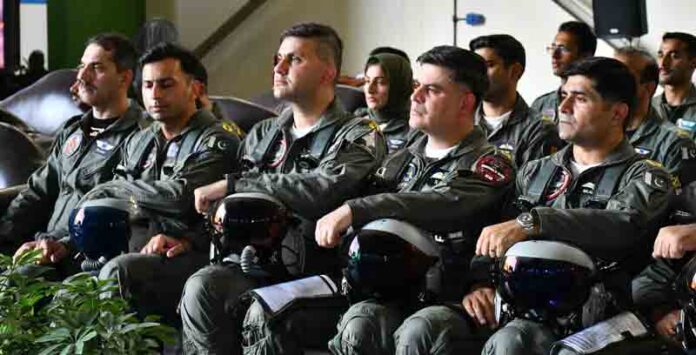
During a visit to the base, Prime Minister Sharif met with Pakistan Air Force (PAF) pilots who were credited with downing all six Indian aircraft, which included three Rafales, one MiG-29, one Su-30MKI, and the most recent, a Mirage 2000.

To this point, India has not provided any formal response to Pakistan’s assertions regarding the downing of the Mirage 2000 over Pampore, despite increasing international scrutiny and emerging digital forensic evidence. Even with the accumulation of imagery and open-source verification suggesting multiple losses, Indian defense officials have refrained from publicly acknowledging the claimed six aircraft losses. When asked about the status of the three downed Rafales, IAF senior commander Air Marshal A.K. Bharti responded, “We are in a wartime scenario; losses are part of the battle,” a statement interpreted by many analysts as an implicit acknowledgment.

For regional military observers, the ambiguity of Bharti’s statement further bolsters the credibility of Pakistan’s account of the shootdowns. In a press briefing during the early stages of the conflict, Pakistan’s Foreign Minister Ishaq Dar asserted that PAF fighters had engaged a significant Indian aerial deployment of 75 to 80 aircraft, marking it as the largest air combat exchange in South Asian history. Dar claimed that all five (now six) aircraft initially reported downed by Pakistan, including three Rafales, were neutralized using long-range PL-15E missiles launched from the PAF’s J-10C fleet.

The PL-15E, which is China’s most advanced air-to-air missile available for export, features a dual-pulse motor, achieves speeds over Mach 4, and is equipped with an AESA radar seeker, providing it with significant advantages in high-speed beyond-visual-range engagements.

Designed specifically to counter adversaries utilizing advanced AEW&C support and stealth technology, the PL-15 has emerged as a vital component of the airpower strategies of China and its allies, including the Pakistan Air Force.

Recent independent confirmations of Pakistan’s assertions have started to appear from international sources. According to U.S. officials familiar with the situation, ‘Pakistan’s J-10C fighters were credited with downing at least two Indian Air Force aircraft,’ as reported by Reuters. Additional validation came from CNN’s seasoned national security correspondent Jim Sciutto, who referenced French intelligence indicating that at least one Indian Rafale was shot down during these confrontations.

If confirmed, this would represent the first verified combat loss of a Rafale globally, significantly changing the narrative surrounding the aircraft’s perceived invincibility and ushering in a new era in contemporary air combat. India initially procured the Mirage 2000 from Dassault Aviation in the 1980s to enhance its strategic strike capabilities, with the aircraft demonstrating its effectiveness during the 1999 Kargil War in precision bombing operations in the Himalayas. The Indian Air Force currently operates approximately 50 Mirage 2000s across various models, including the single-seat 2000H and twin-seat 2000TH variants, primarily stationed at Gwalior Air Force Station in Madhya Pradesh. The elite Squadrons No. 1 ‘Tigers’ and No. 7 ‘Battle Axes’ are tasked with operating these legacy aircraft, which have received significant upgrades in avionics and weapon systems.

India’s Mirage 2000 aircraft have been upgraded with advanced electronic warfare capabilities, modern glass cockpits, and integration with MICA radar-guided beyond visual range missiles and AS-30L precision air-to-ground munitions, ensuring their effectiveness in contemporary aerial missions. Equipped with a single SNECMA M53-P2 engine that produces 95 kN of thrust with afterburner, the Mirage 2000 can exceed speeds of Mach 2.2 and has a combat radius of around 1,550 km, which can be increased with external fuel tanks or aerial refueling. With two DEFA 30mm cannons and the ability to carry a variety of air-to-air and air-to-surface weapons, the Mirage 2000 continues to be a versatile and formidable multirole fighter even after more than forty years of service.

However, if Pakistan’s assertion is proven true, the loss of a Mirage 2000, along with several Rafales, could indicate a significant change in the regional air power dynamics and highlight the growing threat posed by Chinese-supplied platforms and armaments to Western-supplied systems in South Asia.

Rafale Downed at 182km: Pakistan’s J-10C Deploys China’s PL-15 for a Record Kill

0
Pakistani Air Force's Chengdu J-10C fighter

In what is being described as a pivotal moment in contemporary aerial combat, a Pakistan Air Force (PAF) J-10C allegedly shot down an Indian Air Force (IAF) Rafale from an impressive distance of 182 kilometers using the Chinese-made PL-15 Beyond Visual Range (BVR) air-to-air missile, as reported by sources.

If confirmed, this claim would establish a new world record for the longest air-to-air missile kill in aviation history, generating considerable interest among military and strategic analysts, although independent verification of the precise distance is currently lacking.

Earlier reports had indicated that a Russian Su-35S fighter jet successfully downed a Ukrainian MiG-29 at a range of 213 kilometers using the long-range hypersonic R-37M air-to-air missile, which is believed to have a maximum engagement range of up to 400 kilometers.

The PL-15, developed by the China Airborne Missile Academy (CAMA) under the Aviation Industry Corporation of China (AVIC), is regarded as one of the most advanced BVR air-to-air missiles globally, competing with the American AIM-120D AMRAAM and the European MBDA METEOR in terms of range and electronic countermeasures capabilities.

The PAF’s J-10C, produced by Chengdu Aircraft Industry Corporation (CAIG), is a 4.5-generation multirole fighter that plays a vital role in Pakistan’s airpower modernization efforts, particularly aimed at countering India’s Rafale fleet. During the reported incident, the Pakistani J-10C is said to have operated entirely within Pakistan’s sovereign airspace while launching the PL-15 missile that successfully targeted the IAF Rafale across the Line of Control during the initial exchanges of the India-Pakistan aerial conflict.

In the early days of the conflict between the two nuclear-capable South Asian nations, defense analysts referred to it as ‘the largest air battle in modern history,’ with approximately 125 fighter jets from both air forces engaging in simultaneous combat missions. As reported by CNN, this extraordinary aerial confrontation took place while both Indian and Pakistani aircraft operated within their own airspace, utilizing beyond visual range (BVR) tactics instead of conventional close-range dogfights.

A Pakistani security source stated that ‘fighter aircraft from both sides engaged each other in airspace separated by up to 160 kilometers, with missiles being launched well beyond visual range.’ The engagements were characterized by long-range precision strikes, with both nations employing AESA (Active Electronically Scanned Array) radars, electronic warfare capabilities, and high-speed BVR missiles, focusing on radar locks and electronic signatures rather than visual identification.

Pakistan’s Foreign Minister Ishaq Dar revealed that during the initial phase of the conflict, PAF fighters faced a contingent of 75 to 80 Indian jets in what he termed ‘the largest aerial confrontation in recorded history.’ He added, ‘We successfully downed five of those Indian fighter aircraft,’. Previous reports indicated that Pakistani jets, including the J-10C and JF-17 ‘Thunder,’ were armed solely with the PL-15E, a downgraded export version of the missile with a maximum effective range of 140 kilometers.

If the reported engagement distance of 182 kilometers is accurate, it strongly indicates that China has covertly provided Pakistan with the full-range domestic variant of the PL-15 missile. This variant is believed to have a strike range of up to 300 kilometers and is typically reserved for the Chinese People’s Liberation Army Air Force (PLAAF). The domestic PL-15 is operationally integrated with advanced Chinese aircraft, including the stealthy fifth-generation J-20 ‘Mighty Dragon.’

However, recent reports suggest that the J-20 is starting to deploy an even more advanced air-to-air missile, the PL-17, which is thought to have an engagement range of up to 400 kilometers. The transfer of these sophisticated missiles to Pakistan seems to be part of Beijing’s strategic response to escalating tensions in the region, particularly following the recent conflict in Pahalgam, Jammu and Kashmir, which brought India and Pakistan close to war.

Just days ago, Foreign Minister Ishaq Dar confirmed that all five Indian Air Force aircraft downed by the Pakistan Air Force—three of which were Rafales—were engaged using the PL-15E missile from PAF J-10C fighters. Designed to reach speeds of Mach 4 and equipped with an AESA radar seeker, the PL-15 was specifically developed for beyond-visual-range (BVR) dominance, allowing its operator to strike first in contested airspace before the adversary can detect the launch platform.

Engineered for optimal lethality in the Beyond Visual Range (BVR) arena, the PL-15 equips both Chinese and now Pakistani aircraft with a vital strategic advantage, potentially altering the dynamics of air superiority in Asia. Numerous Western sources have supported Pakistan’s assertions, lending considerable credibility to its battlefield claims. Senior U.S. officials reportedly informed Reuters that ‘PAF J-10C fighters were responsible for downing at least two Indian Air Force jets,’ confirming the deployment of PL-15E missiles during the conflict.

It is reported that each of the five Indian aircraft was downed using PL-15E missiles, which have a maximum export range of 145 kilometers, although a record strike at 182 kilometers suggests otherwise. Jim Sciutto, CNN’s Chief National Security Correspondent, also verified through the social media platform X that French intelligence had confirmed the loss of at least one IAF Rafale during the engagement. If validated, this would represent the first operational loss of a Rafale fighter jet in any military conflict worldwide, undermining the aircraft’s previously impeccable combat record.

Despite increasing visual and electronic evidence, the Indian government and military persist in denying the loss of five fighter jets, including three Rafales, to Pakistan’s air-to-air missile attacks. When asked about the status of the missing Rafales, Air Marshal A.K. Bharti of the Indian Air Force responded enigmatically, ‘We are in a wartime scenario; losses are part of combat,’ without providing further details. For defense analysts, this vague response seems to indirectly validate what official statements refuse to accept—that India indeed lost five combat aircraft, including its esteemed Rafales.

The Pakistan Air Force reported that two aircraft, a MiG-29 and a Su-30MKI, were allegedly shot down, both of which are integral to India’s primary air defense capabilities. The PAF’s J-10C fighters were first delivered on March 4, 2022, with the initial six units arriving at Minhas Airbase in Kamra. They were officially integrated into the No. 15 ‘Cobras’ Squadron on March 11, 2022. This acquisition was largely seen as a strategic counter to India’s introduction of the Rafale, indicating Pakistan’s aim to sustain strategic balance in South Asia.

The J-10C, classified as a 4.5-generation fighter, is outfitted with state-of-the-art AESA radar, sophisticated electronic warfare systems, and is compatible with long-range munitions like the PL-15, rendering it a significant asset in contemporary aerial warfare.

Pakistan initially revealed plans to procure 25 J-10C aircraft in December 2021, with deliveries aligned with the Republic Day festivities on March 23, 2022. Since then, the nation has broadened its J-10C fleet and is currently engaged in advanced negotiations to secure up to 60 aircraft in total, a development that will greatly enhance the PAF’s deterrent capabilities and long-range air dominance in light of the region’s swiftly changing security landscape.

Trump announces that the US is nearing a nuclear agreement with Iran

0
U.S. President Donald Trump speaks, on the day of Tulsi Gabbard's swearing in ceremony as Director of National Intelligence, in the Oval Office at the White House in Washington, D.C.

On Thursday, President Donald Trump announced that the United States is nearing a nuclear agreement with Iran, indicating that Tehran has tentatively accepted the terms.

During a Gulf tour, Trump stated, ‘We are engaged in serious negotiations with Iran aimed at achieving long-term peace.’ He added, ‘We are close to potentially finalizing a deal without resorting to other measures… There are two approaches to this situation: a favorable one and a violent one, and I prefer to avoid the latter.’

However, an Iranian source involved in the discussions noted that significant differences remain in the negotiations with the U.S. Oil prices dropped by approximately $2 on Thursday amid hopes for a U.S.-Iran nuclear deal that could lead to the easing of sanctions. Recent talks between Iranian and U.S. negotiators regarding Tehran’s nuclear program concluded in Oman on Sunday, with further discussions anticipated, as Iran publicly maintained its stance on continuing uranium enrichment.

The Trump administration presented Iran with a nuclear deal proposal during the fourth round of negotiations on Sunday, according to a U.S. official and two other sources familiar with the situation. Nevertheless, a senior Iranian official stated that Tehran had not received any new proposal from the United States to resolve the long-standing nuclear conflict, emphasizing that Iran would not compromise on its right to enrich uranium domestically. While both Tehran and Washington have expressed a preference for diplomatic solutions, they remain at odds over several critical issues that negotiators must navigate to achieve a new agreement and prevent potential military conflict.

In a recent NBC News interview, an adviser to Iran’s Supreme Leader Ayatollah Ali Khamenei indicated that Iran is open to a deal with the U.S. in exchange for the removal of economic sanctions.

Ali Shamkhani, an adviser, stated that Iran is committed to never developing nuclear weapons and eliminating its stockpiles of highly enriched uranium. Iran will agree to enrich uranium solely to the lower levels necessary for civilian purposes and will permit international inspectors to oversee this process, according to NBC.

However, a senior Iranian official informed Reuters that the concept of sending enriched uranium above 5% is not new and has consistently been part of negotiations with the U.S. This official emphasized that it is a complex and technical matter that hinges on the other party’s willingness to effectively and verifiably lift sanctions on Iran.

red lines

Iranian authorities have repeatedly asserted that one of Tehran’s red lines is to reduce its highly enriched uranium stockpile to levels below those stipulated in the 2015 nuclear agreement with six world powers, which was abandoned by Trump in 2018.

U.S. officials have publicly insisted that Iran must cease uranium enrichment, a position that Iranian officials have labeled a ‘red line,’ asserting their right as a member of the Non-Proliferation Treaty (NPT).

Nevertheless, they have shown a readiness to lower the enrichment levels. Iranian authorities have indicated that the clerical establishment is willing to accept certain limitations on uranium enrichment, but in exchange, Tehran demands the removal of severe sanctions imposed since 2018 and solid guarantees that Trump will not withdraw from a nuclear agreement again.

Sources close to the negotiation team have indicated that while Iran is ready to make what it considers concessions, the challenge lies in America’s reluctance to lift significant sanctions in return.

Regarding the reduction of enriched uranium in storage, Iranian sources mentioned that Tehran seeks to have it removed in several phases, which America does not agree to. Additionally, there is a disagreement over the destination for the highly enriched uranium, the source added.

What events at the Prime Minister’s House during Operation Sindoor posed a threat to Modi’s political standing?

0

The strategy for a false flag operation in Pahalgam, which involves planning, execution, and subsequently blaming Pakistan to justify a war, is reportedly orchestrated by Prime Minister Narendra Modi along with a select few cabinet members.

However, credible sources from New Delhi suggest that Modi’s involvement is merely superficial, likening him to a puppet. It is indeed unusual to label the Prime Minister as a puppet in the world’s largest democracy, yet sources indicate that the true masterminds behind this plan are the Indian extremist group Rashtriya Swayamsevak Sangh (RSS) and its leader Mohan Bhagwat.

Sources have indicated that the ruling party of India, the Bharatiya Janata Party (BJP), serves as the political representation of the RSS, an extremist organization that developed the Hindutva ideology. The RSS is responsible for shaping the BJP’s policies and acts as a supervisory body overseeing everything from government formation to policy decisions. Should the RSS withdraw its support, the BJP would struggle to maintain power. Reports suggest that from orchestrating the Pahalgam false flag operation to executing aggressive actions against Pakistan, the directives from RSS chief Mohan Bhagwat were adhered to. During this period, Prime Minister Narendra Modi was described as a ‘hostage’ to these influences. It was noted that prior to meetings of the Indian Cabinet’s Security Committee or Modi’s discussions with military leaders, Bhagwat would provide him with guidance.

Additionally, a source from New Delhi alleged that Bhagwat was residing at the Prime Minister’s House on Sivan Kalyan Road throughout this time, although his ongoing presence has not been independently confirmed in relation to Defense Talks.

According to sources, when Pakistan retaliated against India’s assault on May 10, asserting its right to self-defense, the situation escalated beyond the control of the Indian government. Modi urgently convened a meeting with Mohan Bhagwat, expressing concerns that prolonged conflict could lead to significant damage. Following this discussion, Bhagwat advised Modi to promptly reach out to the United States for assistance in achieving a ceasefire. Reports indicate that the abrupt ceasefire, following bold declarations, caused unease among BJP voters, including even the party’s staunch supporters who identified as Modi loyalists, leading to feelings of disillusionment. Bhagwat tasked Modi with resuming hostilities, instructing him to terminate the ceasefire by May 12.

Sources revealed that during a subsequent meeting with military leaders, Air Chief Amarpreet Singh expressed astonishment, informing Modi that his forces were ill-equipped to counter Pakistan’s electronic warfare, warning that escalating tensions could result in severe losses for the Indian Air Force. Furthermore, after this meeting with the military chiefs, Modi convened a session with his political cabinet, where Amit Shah and Rajnath Singh cautioned that the ceasefire had been brokered by the US President, and violating it could provoke Trump, potentially leading to diplomatic isolation and catastrophic consequences of war.

According to sources, when Narendra Modi communicated the views of the Sarvoz Chiefs and the political committee to Mohan Bhagwat, it led to Bhagwat’s anger, prompting him to depart for the RSS annual meeting. Since that incident, there has been a lack of communication between the two. Narendra Modi is facing significant criticism during the ongoing RSS meeting, which will last until May 17. The atmosphere within the RSS indicates that Narendra Modi’s political career may be nearing its conclusion.

What led India to retract its claims regarding the assault on Pakistan’s nuclear sites?

0

India has been actively promoting the targeting of purported nuclear weapons storage sites in the Kirana Hills of Pakistan‘s Sargodha district. Meanwhile, Indian extremists have been disseminating false information on social media, portraying it as a significant victory for India. These social media posts have circulated fabricated images of the Kirana Hills, alleging that the nuclear storage facilities there were damaged and that radiation was being released.

The propagandists have also asserted that Pakistan was compelled to declare a ceasefire following the damage to its nuclear assets in Kirana and sought assistance from the United States. However, as this propaganda has backfired, the Indian Air Force has had to categorically refute these claims. The impetus for curtailing the propaganda on India’s part stems from the perception that such assertions render India an irresponsible nation, jeopardizing global peace and security.

During a briefing amidst the conflict, an Indian Air Force spokesperson addressed inquiries regarding these claims, stating that no such attack had occurred, yet he also remarked that they were unaware of any nuclear weapons storage in the Kirana Hills, thanking the reporter for the information.

This statement further fueled the propaganda, leading social media users to interpret it as validation. Subsequently, the Indian Army and government opted for silence, viewing the propaganda as strategically advantageous, but the backlash on the international stage was severe, resulting in India’s humiliation.

India disseminated this assertion extensively, with various media outlets reporting on it. An Indian journalist contributed to the Eurasian Times, alleging that India intentionally struck the installation with a BrahMos missile, resulting in a successful attack. The article stated that a highly significant site had been removed from existence.

The International Atomic Energy Agency (IAEA), responsible for nuclear oversight, has refuted this misinformation. On Wednesday, the IAEA stated that there was no radiation leak or release from any nuclear facility in Pakistan, nor was there any radioactive event as suggested on social media.

Fredrik Dahl from the IAEA press office commented: ‘We are aware of the reports. According to the information available to the IAEA, there has been no radiation leak or release from any nuclear facility in Pakistan.’

The IAEA’s Incident and Emergency Centre, created in 2005, acts as the central point for coordinating international support in emergency preparedness and response to radiation-related incidents and emergencies, irrespective of their cause or severity.


Rafale Under Scrutiny: Indonesia Reviews Billion-Dollar Deal for French Jet’s Combat Credibility

0
Rafale fighter

Indonesia’s leading defense officials are reportedly evaluating the combat effectiveness of the French-manufactured Rafale fighter jet in light of serious allegations that three Indian Air Force Rafales were shot down by Pakistan‘s J-10C jets during the initial phases of the recent India-Pakistan aerial conflict.

Although Indonesia’s procurement of 42 Rafales from Dassault Aviation, valued at US$8.1 billion, is regarded as one of the most ambitious airpower modernization initiatives in Southeast Asia, Jakarta’s cautious approach indicates a growing concern regarding the aircraft’s untested combat performance in high-intensity conflict scenarios.

Dave Laksono, a senior member of Commission I of Indonesia’s DPR (House of Representatives), which oversees defense and foreign affairs, acknowledged the evolving situation but called for strategic restraint in forming conclusions. He stated, ‘Unverified claims in conflict zones cannot serve as the sole basis for evaluating the effectiveness or failure of a specific weapons system,’ reflecting concerns about the uncertainties of war and the information asymmetry that often complicates early reports.

Laksono further pointed out that even the most advanced aircraft can be susceptible under certain combat conditions, noting that top-tier jets like the F-16, F/A-18, and F-22 have faced incidents of being shot down or crashing due to specific tactical circumstances. Thus, he argued that the Rafale’s performance should not be judged based on a single, unverified incident.

Nevertheless, the Indonesian lawmaker acknowledged that the reported downing of three Rafales by Pakistan Air Force J-10C fighters utilizing PL-15E beyond-visual-range missiles offers ‘valid and constructive’ reasons for operational reassessment.

If proven true, the claims regarding the Rafale shootdown by Pakistan’s J-10C would represent the first verified combat losses of Rafale fighters since their entry into global air forces, marking a notable shift considering the aircraft’s increasing adoption in countries like India, Egypt, the UAE, and Croatia.

In February 2024, the Chief of Staff of the Indonesian Air Force, Air Chief Marshal Mohamad Tonny Harjono, announced that the initial delivery of six Rafales is set to commence in February 2026. As reported by the state news agency ANTARA, the first delivery will consist of three Rafales between February and March, followed by an additional three within the subsequent three months, reflecting Indonesia’s commitment to enhancing its multirole airpower capabilities. These aircraft will be based at two strategically important airbases—Roesmin Nurjadin in Pekanbaru, Riau, and Supadio Air Base in Pontianak, West Kalimantan—both of which are well-situated for Indonesia’s extensive maritime boundaries and potential South China Sea operations.

The original contract signed in 2022 encompasses 42 Rafale fighters, including both single and twin-seat variants, equipped for comprehensive air superiority, precision strikes, nuclear deterrence, and reconnaissance, which aligns with Indonesia’s strategy of flexible response and strategic deterrence.

The reported losses of Rafale jets made international headlines after Pakistan’s Foreign Minister Ishaq Dar announced that five Indian aircraft, including three Rafales, a MiG-29, and a Su-30MKI, were neutralized by Pakistan’s J-10C fleet armed with long-range PL-15E air-to-air missiles. Dar stated, ‘The much-publicized Rafales performed poorly, and Indian pilots evidently lacked the necessary skills,’ directly questioning India’s airpower credibility.

Concurrently, senior CNN correspondent Jim Sciutto revealed that French intelligence sources have verified that at least one Indian Rafale was shot down, with investigations ongoing to ascertain if more were lost. French officials are reportedly examining missile telemetry, radar data, and publicly available visual evidence to establish whether multiple Rafales were neutralized during the conflict, marking a significant event in the aircraft’s operational history.

Adding to the controversy, American intelligence evaluations—according to CNN—determined that one Indian jet was indeed downed by Pakistani forces during the Indian Air Force’s cross-border operation, although Washington has not yet confirmed the specific system employed. In the wake of these events, Dassault Aviation’s stock fell by 9.48% over five days, indicating investor concerns regarding the potential reputational harm to one of Europe’s leading defense exports.

India has not confirmed or denied the loss of its Rafale aircraft. During a press conference, Air Marshal A.K. Bharti remarked, ‘We are in a war scenario. Losses are expected in combat,’ which analysts interpret as a subtle acknowledgment of battlefield losses. This has led regional observers to speculate that India may have lost up to five fighters in the initial phases of the conflict.

The acquisition of Rafales was initially celebrated as a transformative move for the Indian Air Force, with a 2016 agreement securing 36 aircraft for approximately US$8.8 billion. When considering customized upgrades, weapon systems, maintenance, and logistical support, the cost per unit of India’s Rafales reportedly increased to US$218 million, reaching US$289 million when adjusted for 2025 dollars. India reinforced its commitment to the Rafale program by signing a new contract worth US$7.4 billion in April 2025 for 26 Rafale Marine variants—22 single-seat and 4 dual-seat models—intended for operations on the INS Vikrant aircraft carrier. This contract represents the first export of the Rafale Marine and includes advanced maritime armaments, spare parts, and comprehensive support, with deliveries expected to be completed by 2030.

Nevertheless, recent events have raised concerns about the Rafale’s standing as a leading 4.5-generation fighter, which was once considered highly sought after in the global arms market amid rising tensions in Eastern Europe, East Asia, and the Middle East.

Despite these challenges, some defense analysts continue to endorse the Rafale’s capabilities. ‘Rafale is currently one of the best jet fighters in the world… It’s not just about acquiring advanced platforms; you also need the expertise to effectively operate them,’ stated Adhi Priamarizki, a research fellow at Singapore’s S. Rajaratnam School of International Studies.

Air Vice Marshal (AVM) Aurangzeb Ahmed, the Director General of Public Relations for the Pakistan Air Force (PAF), supported the French-made fighter aircraft during his daily briefing, stating: ‘The Rafale is not a poor aircraft. It is a highly capable and effective plane… if utilized properly.’ His comments highlighted that even the most advanced fighter jets are of limited use in combat without a skilled and well-trained pilot, along with the effective implementation of sound tactical strategies.

Indian Warmate Drone Captured in Pakistan’s Electronic Warfare Ambush

0
Indian Warmate Drone captured in Pakistan

In a striking display of its electronic warfare capabilities, Pakistan has allegedly employed a ‘soft-kill’ electronic countermeasure to disable an Indian Army-operated WARMATE loitering munition drone without firing a shot.

The drone, a Polish-made tactical loitering munition intended for precision strikes, was found completely intact near Lahore Airport, providing Pakistan with a unique chance to examine an enemy’s operational system in excellent condition. Military sources have confirmed that the drone suffered no physical damage, allowing for thorough forensic analysis and the possibility of reverse-engineering its command structure, flight control software, and sensor payload—potentially yielding significant intelligence benefits for Pakistan’s defense industry.

Indian forces have been utilizing WARMATE drones in recent cross-border conflicts, reportedly targeting forward-operating Pakistani military installations before a temporary ceasefire was established.

Videos and images widely shared on Pakistani social media depict the drone being retrieved intact, garnering considerable attention as a prime example of non-kinetic aerial interdiction. ‘The drone was neutralized without a warhead and seemed to be primarily used for ISR [Intelligence, Surveillance and Reconnaissance] purposes,’ defense officials noted, indicating it was likely employed to map target coordinates or collect battlefield imagery rather than execute a strike.

Pakistan’s advancing electronic warfare capabilities—encompassing airborne, ground-based, and mobile systems—have been crucial in its strategy to counter India’s conventional advantages in areas like manned aircraft and standoff weaponry.

Islamabad has partnered with China to develop a range of mobile electronic countermeasure (ECM) platforms specifically designed for frontline operations. These systems are crucial for disrupting enemy communications, GPS signals, and suppressing airborne radar. They are also capable of executing tactical airspace denial and conducting deceptive signal operations to interfere with Indian command-and-control networks during both aerial and ground confrontations.

Concurrently, it is believed that Pakistan’s Defence Science and Technology Organization (DESTO) has created indigenous electronic warfare (EW) ground stations that can perform signals intelligence (SIGINT) and communications interception (COMINT), enhancing real-time tactical awareness and electronic superiority in conflict areas such as Kashmir and Gilgit-Baltistan.

Meanwhile, the Indian Army’s deployment of the WARMATE platform highlights New Delhi’s growing dependence on loitering munitions and unmanned systems for precision operations in contested regions where manned aircraft face challenges due to terrain and political factors.

The WARMATE, developed by Poland’s WB Electronics, is a portable, electrically powered kamikaze drone capable of conducting both surveillance and strike missions against lightly defended targets, static infantry, and soft-skinned vehicles. Its design effectively bridges the gap between micro-UAVs and larger strategic loitering drones like the Israeli HAROP or U.S. Switchblade, providing a cost-efficient, rapidly deployable solution for frontline forces in dynamic operational environments.

Weighing 5.7 kg and featuring a wingspan of 1.6 meters, the WARMATE can be launched either manually or using a pneumatic catapult. It can be equipped with high-explosive (HE-FRAG), anti-armor (HEAT), or thermobaric warheads based on mission requirements. During flight, it utilizes electro-optical and infrared sensors to detect, track, and confirm targets before executing a high-speed dive at the designated threat, achieving lethal accuracy with a circular error probability (CEP) of only 1.5 meters. These capabilities render the drone especially effective in urban warfare and mountainous regions, where maintaining line-of-sight targeting and minimizing collateral damage are critical objectives.

Indian defense officials have reported that the WARMATE is currently deployed by Para Special Forces and high-altitude infantry units in Ladakh, where challenging weather conditions and difficult terrain often restrict conventional air support. Military experts interpret India’s adoption of kamikaze drones as part of a larger strategy aimed at achieving ‘sensor-to-shooter’ compression, facilitating near real-time target acquisition and engagement without direct human involvement at the front lines.

Analysts highlight significant insights gained from the 2020 Nagorno-Karabakh conflict and the ongoing Russia-Ukraine war, where loitering munitions have significantly transformed the tactical environment by enabling precise asymmetric strikes at relatively low costs.

India’s incorporation of the WARMATE aligns with a broader initiative to incorporate Unmanned Combat Aerial Systems (UCAS) into its joint military operational framework, showcasing the global shift towards autonomous warfare and AI-enhanced targeting.

India’s defeat sent shockwaves through the West

0
Pakistani Air Force's Chengdu J-10C fighter

The global powers have now declared a ceasefire in the briefest conflict between Pakistan and India, which lasted just four days. This conflict has altered the strategic landscape of South Asia and shifted the global power paradigm.

Chinese strategic analyst Professor Victor Gao states, ‘China owes a debt of gratitude to Pakistan and its military, which has facilitated China’s rise as a superpower by showcasing its defense technology to the international community.’ Indian defense analysts also acknowledge that the Chinese military is unable to utilize its own war technology as effectively as the Pakistani military has demonstrated.

Western defense analysts express astonishment that, for the first time in history, Pakistani hackers successfully took control of over 2,500 Indian CCTV cameras through a bold cyber operation and accessed an Indian defense website. These hackers infiltrated the Indian Air Force’s database system and incapacitated the Indian defense infrastructure without a single shot being fired. Pakistani cyber warriors have shown that they can astonish the world not only in traditional military domains but also in the realm of cyber warfare.

While there may be numerous factors contributing to the failure of India’s aggression, the primary cause of this significant defeat was India’s inadequate understanding of Pakistan’s defense capabilities. Additionally, the lack of awareness from the US, UK, and Israel regarding Pakistan’s response potential severely undermined the intelligence frameworks of Western nations. Following India’s defeat, Israel, the US, and Europe are left in disarray, as this brief four-day conflict has fundamentally altered the entire paradigm of military strategy.

The collective mindset of the US and Europe, which had anticipated Pakistan’s downfall at the hands of India, is now frantically attempting to mask the shortcomings of their strategic plans by commending Pakistan. Ultimately, it is the US and Israel that bear the true responsibility for India’s conclusive defeat in cyber warfare, which will hinder its resurgence for an extended period. Their reliance on misleading information led Narendra Modi to embark on a reckless venture against Pakistan, exposing India to unforeseen devastation.

This unprecedented defeat has stripped India of its dignity. Narendra Modi, whose authority relied on fear and aggression, has disintegrated into nothingness following this loss, and his entire persona has collapsed. Now, like a forsaken deity, he may seek solace in death. This comprehensive defeat will not only destabilize India’s internal defense mechanisms and political framework for an extended period, but the unforeseen political turmoil arising from this failure could also jeopardize India’s territorial integrity and national security.

Historically, Pakistan has served as the last bastion against the relentless decline that commenced with the fall of the Ottoman Empire in 1921. Had it faltered, the survival of Muslims worldwide could have been at risk. However, through an enigmatic strategy, nature revitalized the seemingly lifeless body of the Muslim Ummah by granting Pakistan a decisive victory over a formidable military power like India. Indeed, transformations in collective existence are often unplanned and emerge unexpectedly. Following the disgraceful defeat of Indian leaders, the plight of oppressed Muslims in India has come to light. Additionally, neighboring nations such as Bangladesh and Sri Lanka, along with smaller countries like Bhutan, the Maldives, and Nepal, which have endured Indian oppression, are beginning to explore avenues for liberation.

Following a brief resistance to Indian aggression, the stance of Middle Eastern Muslim states towards nuclear Pakistan began to shift dramatically. From the smaller emirates to Turkey, Iran, Saudi Arabia, and Egypt, the entire Arab world’s power dynamics are on the verge of transformation. While this conflict appeared to be a confrontation between China and the United States for global dominance, Pakistan’s decisive victory over India during this period disrupted the strategies of the United States, Israel, and Europe aimed at perpetually subjugating Muslims.

Furthermore, Pakistan successfully extricated its defense system from American control, forging alliances with China and Turkey. The harsh reality is that, with the establishment of Pakistan, the United States not only integrated Pakistan into its social framework, hindering its development into a sovereign state, but also maintained it in a continuous state of defeat and devastation through a calculated strategy. Over the past 78 years, despite designating Pakistan as a ‘defense ally’ and entangling it with India, from 1948 through the war on terrorism in 2001, the U.S. systematically orchestrated conditions for Pakistan to experience defeat in every conflict, thereby facilitating Indian dominance in the region. During the 1965 war, Washington halted aid to Pakistan, and in 1971, the United States played a crucial role in the formation of Bangladesh by fostering covert Bengali nationalism and bolstering Indian aggression to fragment Pakistan.

The fundamental principle of history is that what ascends must eventually descend. Following America’s disgraceful exit from Kabul, Pakistan has, for the first time, liberated itself from America’s ‘friendly grip’ and revealed the troubling legacy of American alliances by triumphing over India, a nation significantly larger in size. This, in my view, marks a pivotal moment of liberation from American influence, showcasing a century’s worth of history that has finally led us to a period of victory.

Over the past 78 years, overshadowed by America’s influence, we have experienced nothing but economic and political setbacks, military losses, turmoil, violence, and deep-seated animosity. Pakistan’s success against India not only demonstrated our external strength and capabilities but also dismantled regional insurgencies and internal conflicts, uniting the nation with a renewed sense of pride and dignity.

Over the past forty years, the wave of animosity towards the state has begun to diminish. The triumph has illuminated the previously overshadowed spirits of the nation, transforming the once-defeated army into a source of national pride within just four days of conflict.

The calls for Balochistan’s secession and the religiously motivated threats from the TTP, which thrived on violence, are expected to subside. Armed factions that viewed the country as weak and ripe for insurrection have received a decisive response.

The PTI’s cyber brigade, previously fixated on political upheaval, has been neutralized, and the influence of Khan’s popularity has waned. In the aftermath of this victory, Pakistan’s leadership has conveyed a constructive message to the international community, maintaining a stance of seriousness and dignity, free from arrogance and vengeance. The nation aspires to be recognized as a responsible and influential nuclear power on the world stage.

Houthis almost brought down an F-35 over Yemen

0
F-35 Lightning II

In a significant turn of events during the U.S. military’s Operation Rough Rider, a Lockheed Martin F-35 Lightning II, recognized as one of the most advanced stealth fighter jets globally, had to perform evasive maneuvers to evade a surface-to-air missile fired by Houthi forces in Yemen.

This incident, which took place during a bombing campaign that commenced on March 15, 2025, under President Donald Trump’s administration, represents the first recorded instance of an F-35 encountering a direct threat from Houthi air defenses. A U.S. official, who spoke to The War Zone, confirmed the near miss, stating, ‘They got close enough that the jet had to maneuver.’

This information, which aligns with previous reports from The New York Times, highlights the unexpected sophistication of Houthi anti-aircraft capabilities and raises important concerns regarding the vulnerabilities of advanced U.S. military technology in asymmetric warfare.

The incident, occurring amidst a campaign that has already experienced considerable losses, emphasizes the evolving challenges faced by American air forces in the Middle East. Operation Rough Rider, a comprehensive air campaign aimed at Houthi-controlled regions in Yemen, was initiated to weaken the group’s military infrastructure and reduce its attacks on regional shipping and Israeli targets. The operation has utilized various U.S. assets, including F-35s, F-16 Fighting Falcons, and MQ-9 Reaper drones, with the latter experiencing significant losses.

According to The New York Times, Houthi forces successfully shot down seven MQ-9 drones, each valued at around $30 million, within the first month of the campaign, severely hindering U.S. Central Command’s capacity to conduct surveillance and precision strikes. The same report indicated that Houthi air defenses nearly struck several F-16s and an F-35, heightening the risk of American casualties.

The recent F-35 incident, although it did not result in a direct hit, has highlighted the evolving technological and tactical aspects of the conflict, especially regarding the Houthi’s capability to confront some of the most sophisticated military assets in the U.S. inventory.

The F-35 Lightning II, created by Lockheed Martin, is a series of single-seat, single-engine, all-weather stealth multirole fighters intended for ground attack and air superiority missions. With a unit price surpassing $100 million for the F-35A variant, this aircraft is a fundamental element of U.S. air power, featuring cutting-edge stealth technology, sensor integration, and network-enabled operations. It is outfitted with the AN/APG-81 active electronically scanned array radar, which offers exceptional situational awareness, and the Distributed Aperture System (DAS), a network of six infrared sensors that provide comprehensive missile detection and tracking capabilities. The AN/ASQ-239 Barracuda electronic warfare suite allows it to disrupt enemy radar systems and deploy countermeasures such as infrared flares and Nulka decoys to neutralize incoming missiles.

The F-35’s stealthy design minimizes its radar signature, complicating detection efforts, while its Pratt & Whitney F135 engine enables speeds of up to Mach 1.6 and a combat radius exceeding 600 miles. Available in three configurations—F-35A for the Air Force, F-35B for short takeoff and vertical landing, and F-35C for carrier operations—the aircraft has been deployed worldwide, with F-35As from Hill Air Force Base and F-35Cs from the USS Carl Vinson operating in the Middle East during Rough Rider. Although the specific variant involved in the incident has not been revealed, the advanced systems of the jet likely contributed significantly to its ability to evade threats.

The missile launched by the Houthi forces, which triggered the evasive maneuvers of the F-35, is likely part of a surprisingly resilient air defense network. Supported by Iranian technical expertise, the Houthis have created a combination of indigenous and modified anti-aircraft systems, such as the Barq-1 and Barq-2 surface-to-air missile systems. These systems are thought to be adaptations of Soviet-era 2K12 Kub and 9K37 Buk systems, capable of engaging targets at ranges between 30 to 70 kilometers and altitudes up to 20 kilometers, thus posing a threat to low-flying aircraft. Additionally, the Saqr [or 358] missile, a loitering surface-to-air weapon utilizing infrared guidance, has been deployed, presenting a distinct challenge due to its capacity to bypass conventional countermeasures.

Reports indicate that Houthi air defenses utilize radar systems like the Russian-made P-18 and Iranian Meraj-4, which offer early warning and targeting information. Although these systems do not match the sophistication of modern Western or Russian counterparts like the S-400, their adaptability and cost-effectiveness have rendered them successful against high-value targets. The Houthis’ achievement in downing seven MQ-9 drones, which have limited stealth capabilities and operate at medium altitudes, highlights their skill in integrating radar, missiles, and guerrilla tactics to exploit weaknesses in U.S. air operations.

The evasive actions executed by the F-35 pilot exemplified both human expertise and technological capability. When a surface-to-air missile is detected, pilots generally utilize a mix of high-G turns, rapid altitude adjustments, and spiral maneuvers to disrupt the missile’s lock.

The F-35’s Distributed Aperture System (DAS) likely detected the missile’s thermal signature, providing an early warning, while the Barracuda suite may have deployed flares or interfered with the missile’s guidance system. Standard evasion tactics for radar-guided missiles include ‘beaming,’ where the pilot maneuvers perpendicular to the radar to reduce the aircraft’s signature, and ‘notching,’ which involves descending into the terrain to hide the aircraft’s location. For infrared-guided missiles like the Saqr, pilots typically release flares to generate false heat signatures and perform erratic maneuvers to evade tracking.

Although the F-35 lacks the agility of the F-16, which can execute 9G turns, its advanced sensor suite and electronic warfare capabilities offer a considerable advantage in these situations. The pilot’s success in avoiding the missile highlights the critical role of training, as even the most sophisticated technology relies on human decision-making in life-threatening scenarios.

This incident took place within the larger framework of Operation Rough Rider, during which the U.S. military has targeted over 1,000 Houthi positions since mid-March, as reported by U.S. Central Command. These operations have focused on command-and-control centers, weapons depots, and air defense systems, resulting in the deaths of hundreds of Houthi fighters and several leaders.

Nevertheless, the Houthis have persisted in launching ballistic missiles and drones, including a significant attack on May 4, 2025, that impacted near Israel’s Ben Gurion International Airport, leading to Israeli retaliatory strikes on Houthi facilities in Hodeidah and Sanaa. The campaign, which has cost over $1 billion and utilized thousands of munitions, has not achieved a decisive outcome, with Houthi forces continuing to exert influence beyond Yemen’s borders. The loss of two F/A-18 Super Hornets from the USS Harry S. Truman, one due to a sharp maneuver to evade Houthi fire, further exemplifies the operational difficulties posed by the group’s air defenses.

Historically, advanced aircraft have been vulnerable to ground-based threats, a reality that is not new. In 1999, a U.S. F-117 Nighthawk, one of the pioneering stealth aircraft, was downed over Serbia by a modified S-125 Neva missile system, revealing the shortcomings of early stealth technology against adaptive foes.

The current Houthi threat to the F-35 echoes the challenges encountered by U.S. forces during the Vietnam War, where Soviet-supplied SA-2 missiles compelled pilots to devise new tactics and countermeasures. The F-35’s ability to survive in this context underscores advancements in stealth and electronic warfare since those earlier conflicts, yet it also serves as a reminder that no platform is completely invulnerable.

In comparison to competing systems like Russia’s Su-57 or China’s J-20, the F-35 excels in sensor fusion and network-centric warfare capabilities, enabling it to assimilate data from various sources and coordinate with other assets.

Nevertheless, the Houthi incident indicates that even these strengths can be challenged by determined, low-tech adversaries. The Houthi air defense network, while effective, operates on a different level than cutting-edge systems like Russia’s S-400 or China’s HQ-9. The S-400, boasting a range of 400 kilometers and the capacity to engage multiple targets at once, epitomizes modern air defense, capable of posing a threat to even fifth-generation fighters like the F-35. Similarly, the HQ-9, China’s counterpart, provides comparable capabilities with its advanced radar and missile technology. In contrast, the Houthi systems are based on older designs, enhanced with Iranian support to improve their effectiveness.

The Houthis’ success against U.S. assets, especially the MQ-9, is attributed to their strategic use of surprise, mobility, and the integration of low-cost drones and missiles. This asymmetric strategy enables them to mitigate their technological shortcomings, posing a continuous threat to coalition air operations in the area. The event has significant ramifications for U.S. military strategy and technology advancement. The vulnerability of the MQ-9 underscores the necessity for more robust unmanned platforms, possibly featuring stealth capabilities or sophisticated electronic warfare systems.

Although the F-35 has successfully avoided the missile threat, it may need enhancements to its countermeasures to effectively respond to emerging threats like the Saqr missile. The U.S. military’s dependence on expensive platforms, with the F-35 program exceeding $428 billion in costs, raises concerns regarding cost-effectiveness in engagements with non-state actors. The Pentagon has initiated investigations into next-generation air dominance strategies, including the Next Generation Air Dominance (NGAD) program, which seeks to combine manned and unmanned systems to counter advanced air defenses.

The incident involving the Houthis could expedite these initiatives, leading to a reevaluation of how the U.S. asserts air power in contested regions. While public response to the incident has been minimal, defense analysts have voiced apprehensions about its consequences. Joseph Trevithick, a contributor to The War Zone, remarked in a recent article that the Houthi air defense capabilities have significantly advanced, utilizing a combination of legacy systems and innovative tactics to challenge U.S. air superiority.

Although the Pentagon has not released an official statement regarding the F-35 incident, the overarching issues surrounding Rough Rider have come under scrutiny. The campaign’s significant expenses, along with the loss of drones and near-misses involving manned aircraft, have sparked discussions about the viability of prolonged air operations against resilient foes.

The ceasefire declared by President Trump on May 6, 2025, with mediation from Oman, has temporarily halted U.S. strikes; however, the ongoing assaults by the Houthis on Israel indicate that the conflict is far from settled.

From a technological standpoint, the F-35’s encounter with a Houthi missile highlights the complex relationship between offensive and defensive strategies in contemporary warfare. The aircraft’s ability to survive demonstrates the robustness of its design, yet the fact that it was targeted raises questions about the effectiveness of stealth and air dominance.

The Houthis, utilizing a mix of modified systems and guerrilla tactics, have shown that even non-state actors can challenge the operations of a superpower. This incident, while just one example, serves as a significant warning: the spread of advanced air defense systems, even among irregular forces, necessitates ongoing innovation and adaptation. As the U.S. military prepares for the future, the insights gained from Yemen are likely to influence its strategies for air combat, including the creation of new countermeasures and the enhancement of tactics for engaging low-tech yet resourceful adversaries.

The F-35’s narrow escape in Yemen raises a critical question: if a group like the Houthis can pose a threat to one of the most advanced fighter jets globally, what obstacles might arise in confrontations with more sophisticated adversaries?

Air Vice Marshal Aurangzeb Ahmed: A self-assured leader who wielded news briefings as a strategic tool in warfare

0

Air Vice Marshal Aurangzeb Ahmed, the Director General of Public Relations for the Pakistan Air Force, has unexpectedly become a national figure, winning the public’s admiration with his composed, articulate, and authoritative demeanor during military briefings amid the Pakistan-India conflict.

Despite facing criticism from Indian media, millions of Pakistanis have found in Aurangzeb a source of unwavering confidence, as he conveys operational details with the grace of a statesman and the precision of a combat veteran. His skill in presenting sensitive battlefield updates in a calm, fact-based manner has struck a chord with the public, transforming him from a military spokesperson into a revered emblem of national resilience.

His rise to fame was swift, fueled by Pakistan’s strong and unified response to India‘s recent aerial attacks, which involved cruise missile strikes like the BrahMos and SCALP EG. His quick wit, confident body language, and bold insights quickly turned him into a media sensation, with Pakistani social media buzzing with memes, clips, and affectionate remarks celebrating his leadership during crises.

A notable moment that resonated nationwide was when he was asked about the Indian Air Force’s Rafale jets, especially after three were reportedly downed by Pakistan’s Chengdu J-10C fighters equipped with PL-15 missiles. He replied with notable composure: ‘The Rafale is not a bad aircraft. It is indeed a very capable plane… if used effectively.’ This nuanced yet impactful statement was seen by military analysts and online users as a strategic critique—not of the aircraft itself, but of the Indian pilots, suggesting that advanced technology is ineffective without tactical skill.

India’s political and military leadership continues to publicly refute claims regarding the loss of six fighter jets, including three advanced Dassault Rafale aircraft, allegedly shot down by the Pakistan Air Force during intense aerial confrontations in the region. When questioned about the reported losses, Air Marshal A.K. Bharti, a senior figure in the Indian Air Force, provided a vague response: ‘We are in a combat scenario, and losses are part of combat,’ without offering any further details. This carefully crafted statement has led many regional defense analysts to interpret it as an implicit acknowledgment of India’s potential combat losses, despite the absence of any official confirmation from the Ministry of Defence in New Delhi.

In a separate incident, Aurangzeb, resuming a briefing after a brief hiatus, made a memorable remark: ‘I am the Deputy Chief of Air Staff Operations, and I will continue from where I left off two days ago. PAF versus Indian Air Force, six-nil.’ The term ‘6-0’ highlighted Pakistan’s assertion of having downed six Indian Air Force aircraft without sustaining any losses, a claim that resonated powerfully on Pakistani social media and became a symbol of national pride. Within hours, hashtags like #PAF6IAF0 began to trend on various digital platforms, enhancing the perception of Pakistan’s aerial dominance and solidifying Aurangzeb’s status as a skilled practitioner of information warfare.

A trending post on X captured the national sentiment: ‘The entire discourse surrounding the war and its aftermath has been entirely overtaken by the charisma of this individual, Aurangzeb.’

In a different briefing, Aurangzeb delivered another sharp comment that sparked considerable online chatter. Referring to an Indian fighter callsign ‘Godzilla,’ he remarked: ‘As you may know, Godzilla became extinct, and this one is also extinct.’ Analysts and social media users quickly deemed this statement a masterclass in psychological trolling, using humor to provide a biting critique of India’s aerial setbacks.

Beneath the humor and charisma, however, lies a career marked by decades of operational excellence and strategic insight. Commissioned into the Pakistan Air Force (PAF) in 1992 as a General Duty Pilot (GDP), Aurangzeb has held significant field commands, including leading a frontline fighter squadron and managing an operational airbase—positions that require both precise flying and sharp decision-making in combat. He has also served in high-ranking roles such as Assistant Chief of the Air Staff (Operations) and Director General of Warfare & Strategy, where he was instrumental in developing Pakistan’s modern aerial doctrine, including integrated air defense and deterrence strategies.

Academically, he possesses a strong intellectual foundation for his strategic responsibilities, holding a Master’s degree in Military Arts from China and another in National Security & War Studies from Pakistan’s esteemed National Defence University (NDU) in Islamabad.

His international experience includes leading the PAF’s aeronautical mission in Saudi Arabia, highlighting his ability to operate effectively in multinational and coalition settings. For his exemplary military service, strategic vision, and operational leadership, AVM Aurangzeb received the Sitara-e-Imtiaz (Military)—one of the highest military honors in Pakistan.

As tensions persist along the Line of Control and the threat of escalation looms, Aurangzeb Ahmed has become a symbol of the convergence of military accuracy, national spirit, and strategic messaging.

In a conflict that is increasingly influenced not only by missile paths but also by the power of narrative, AVM Aurangzeb’s composed demeanor, keen intellect, and incisive humor have demonstrated to be as impactful as any airstrike.