Monday, April 13, 2026
Home Blog Page 63

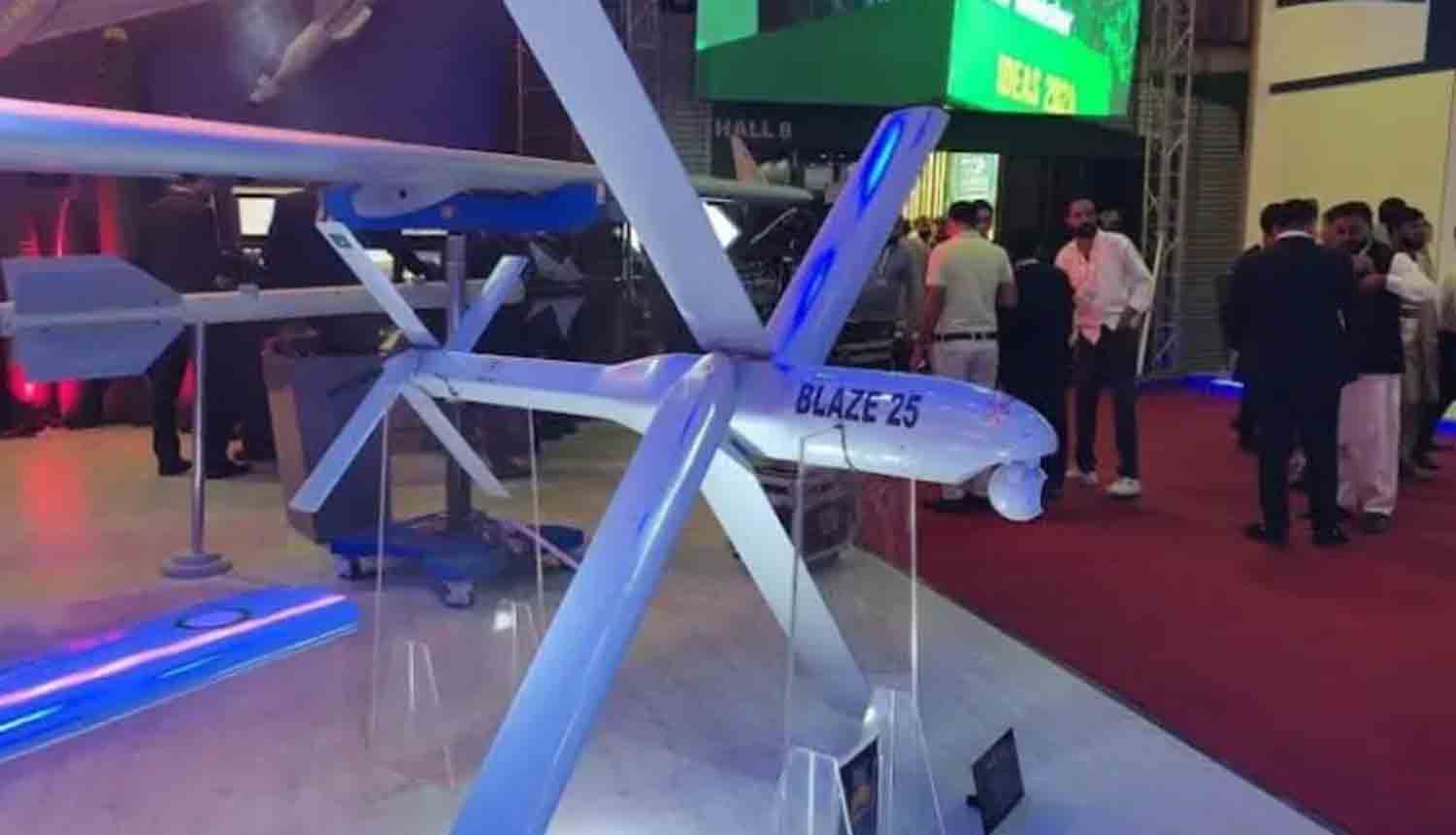
Pakistan Introduces BLAZE-25 Loitering Munition—A Powerful Counterpart to Russia’s LANCET

0
BLAZE-25

Pakistan’s leading defense manufacturer, Global Industrial & Defence Solutions (GIDS), has introduced the BLAZE-25 loitering munition, a state-of-the-art system that closely resembles the distinctive design of Russia‘s powerful LANCET drone.

The LANCET loitering munition, developed by ZALA AERO—part of the renowned Kalashnikov Concern, famous for the AK-47—has gained notoriety for its exceptional accuracy in targeting high-value military assets in Ukraine.

Weighing in at 25 kg, the BLAZE-25 was presented to the audience at the International Defence Exhibition & Conference (IDEX) held in Abu Dhabi, United Arab Emirates (UAE).

As the lightest model in the BLAZE loitering munition series, it is followed by the 50 kg BLAZE-50 and the 75 kg BLAZE-75, which is the heaviest variant. The BLAZE-25 is designed for tube-launching and is intended for short-range precision strikes.

Equipped with an electric propulsion system, it is particularly effective for missions that require minimal acoustic and thermal signatures.

The drone boasts an operational range of up to 75 km and can sustain flight for 60 minutes, making it capable of executing tactical strikes in close-range situations. When functioning as a standard drone, the BLAZE-25 has a data-link range of 10 km, which is notably less than its engagement range. This indicates the potential for autonomous targeting capabilities, enabling it to operate independently after deployment.

The BLAZE loitering munition family is anticipated to significantly enhance the loitering munition capabilities of the Pakistan Armed Forces. A notable aspect of the BLAZE-25 is its dual functionality, allowing it to serve both as a conventional loitering munition and as a surveillance drone.

When utilized for reconnaissance operations, it boasts a data-link range of 10 km, which is notably less than its maximum operational range of 75 km.

This suggests the incorporation of autonomous target acquisition features, enabling the system to operate independently once deployed, thereby reducing the likelihood of jamming or signal interference. The introduction of the BLAZE-25 at IDEX 2025 highlights the increasing significance of loitering munitions in the rapidly changing landscape of modern warfare.

These transformative systems have already demonstrated their effectiveness in recent conflicts, providing military forces with an unparalleled combination of cost efficiency and precise firepower against high-value targets. With the launch of the BLAZE-25, Pakistan confidently asserts its position in the intensifying global arms race, joining a select group of nations that are vigorously advancing loitering munition technology—an area traditionally led by the United States, Israel, and Turkey.

The BLAZE family enhances the firepower of Pakistan’s burgeoning loitering munitions sector, where both state-owned and private companies are engaged in a fierce competition to develop innovative indigenous solutions. While Pakistan’s focus on loitering munitions was anticipated—particularly following the Russia-Ukraine conflict—the rapid pace of its domestic advancements has caught many off guard, marking a bold new phase in the country’s defense development.

Egypt’s acquisition of J-10C fighters and PL-15 missiles threatens Israel’s air superiority in the Middle East

0
J-10C fighter

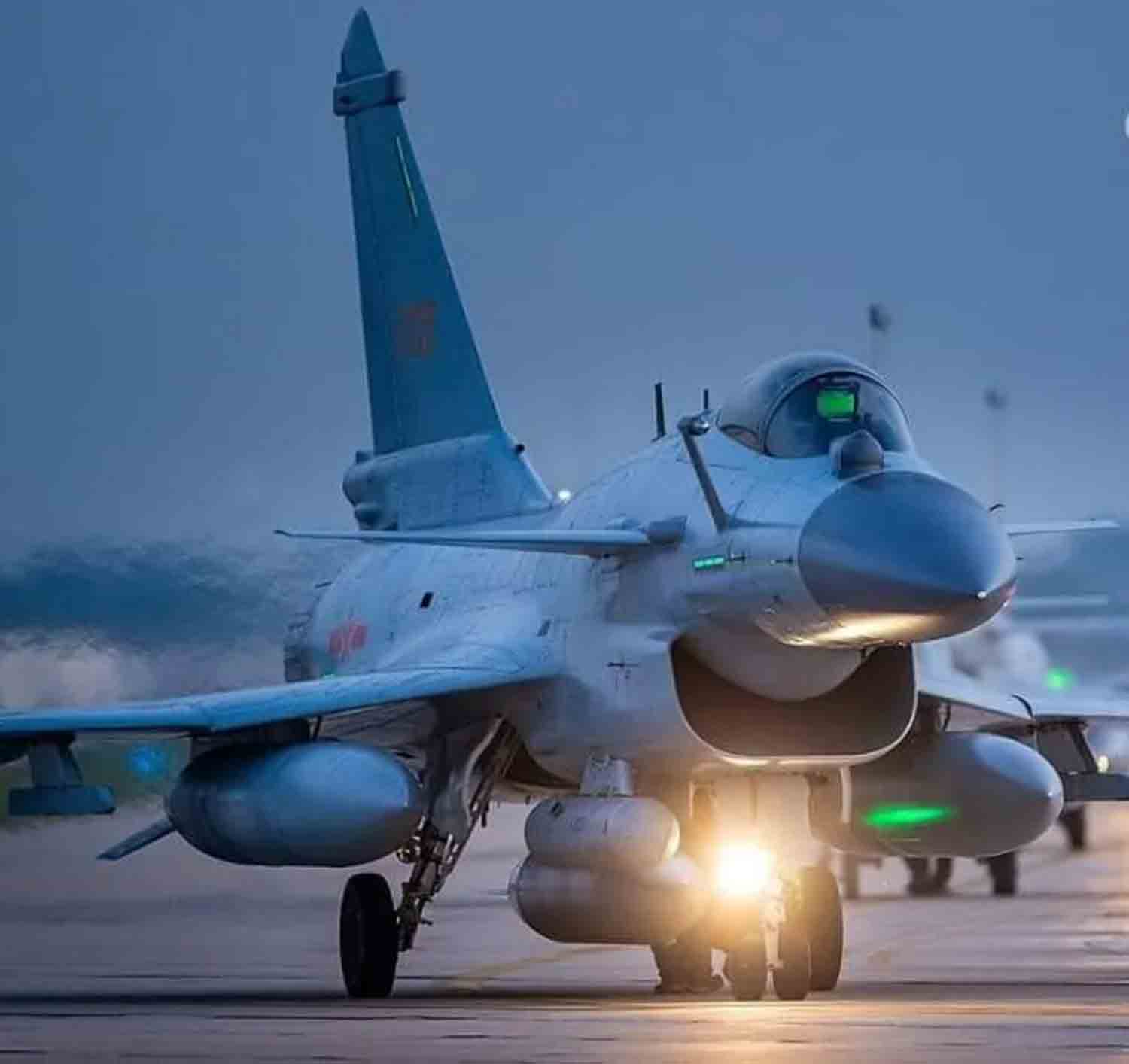
Concerns are escalating within Israel‘s defense and security sectors following Egypt‘s recent acquisition of Chinese-made J-10C fighters and long-range PL-15 air-to-air missiles, which have sent ripples of anxiety throughout the region. Israeli defense analysts caution that Egypt’s possession of the J-10C “Vigorous Dragon” and the PL-15 Beyond Visual Range (BVR) missile could significantly enhance its air force capabilities, potentially altering the aerial power dynamics in the Middle East.

The PL-15 missile, featuring Active Electronically Scanned Array (AESA) radar, is capable of reaching speeds of Mach 4 and is estimated to have an operational range exceeding 300 kilometers, positioning it among the longest-range air-to-air missiles globally.

The Israeli defense platform Nziv highlights that Egypt’s acquisition of the advanced 4.5-generation J-10C “Vigorous Dragon” represents more than a mere military enhancement; it signifies a strategic initiative to modernize its air force and reduce dependence on American military technology.

Israel’s apprehension extends beyond Egypt’s advanced fighter jets; the primary concern is the integration of the PL-15 missile into Egypt’s military capabilities. This state-of-the-art weapon, designed for BVR engagements, empowers Egyptian aircraft to engage adversaries from considerable distances, fundamentally altering the nature of aerial combat in a manner that is particularly alarming for Israel.

For many years, Israel has maintained air superiority, bolstered by a sophisticated array of American military assets, including the advanced fifth-generation F-35 stealth fighters and cutting-edge air defense systems. However, this dominance is now confronted with an unprecedented challenge. The introduction of China’s PL-15 missile into Egypt’s military inventory threatens to disrupt the established balance of aerial power, as it surpasses the American AIM-120 AMRAAM in both range and accuracy.

Egypt operates a fleet of 54 Rafale fighter jets manufactured in France; however, it has been denied access to the advanced long-range METEOR missile, a European weapon that could significantly enhance its air capabilities. The limitations extend further, as Egypt’s F-16 jets are also prohibited from utilizing AIM-120 AMRAAM missiles and AIM-9X short-range air-to-air missiles, placing its air force in a precarious position.

The denial of the METEOR missile to Egypt is primarily attributed to Israel’s persistent opposition to any efforts by France to equip Cairo’s Rafale jets with this transformative weapon. Consequently, Egypt’s Rafale fleet remains without the METEOR beyond-visual-range missile, not due to any technical constraints, but rather because of Israel’s vigorous efforts to maintain its Qualitative Military Edge (QME) over its regional adversary.

Israel’s concerns are well-founded; the prospect of Egyptian Rafales, equipped with METEOR missiles, engaging Israeli F-16s and F-15s in a conflict is a scenario that cannot be overlooked. To avert such a shift in military balance, Israel has applied continuous diplomatic pressure on France to keep the METEOR missile out of Egypt’s arsenal.

However, Israel now confronts a new and alarming situation—Egypt’s acquisition of Chinese-made J-10C fighter jets and the long-range PL-15 air-to-air missile has created significant unease in the region. Reports from Defence Security Asia suggest that Egypt may have already received its initial batch of J-10CE fighter jets, each armed with the powerful PL-15 missile, a development that could alter the dynamics of aerial warfare in the Middle East.

Chinese aerospace analyst Hurin recently fueled speculation by posting images on his social media platform X, showcasing two Egyptian J-10CE fighters in operation. Egypt is reportedly not halting its advancements, as the Egyptian Air Force is expected to procure as many as 40 J-10CE fighters from China, significantly enhancing its air capabilities in a manner that poses increasing challenges for Israel.

The J-10CE represents the export version of the J-10C “Vigorous Dragon,” an advanced 4.5-generation fighter jet created by Chengdu Aircraft Corporation for the People’s Liberation Army Air Force (PLAAF).

Central to the growing apprehension is the PL-15 missile, a Beyond Visual Range (BVR) air-to-air weapon engineered to provide Chinese fighter jets with a substantial edge in aerial engagements. Developed by the China Academy of Launch Vehicle Technology (CALT), the PL-15 is now considered one of the most sophisticated BVR missiles globally, comparable to the American AIM-120D AMRAAM and the European METEOR.

For Israel, this evolving airpower dynamic represents not just a challenge but a direct threat to its historical dominance in the skies.

Trump strikes another setback for Ukraine while providing fresh support to Putin

0
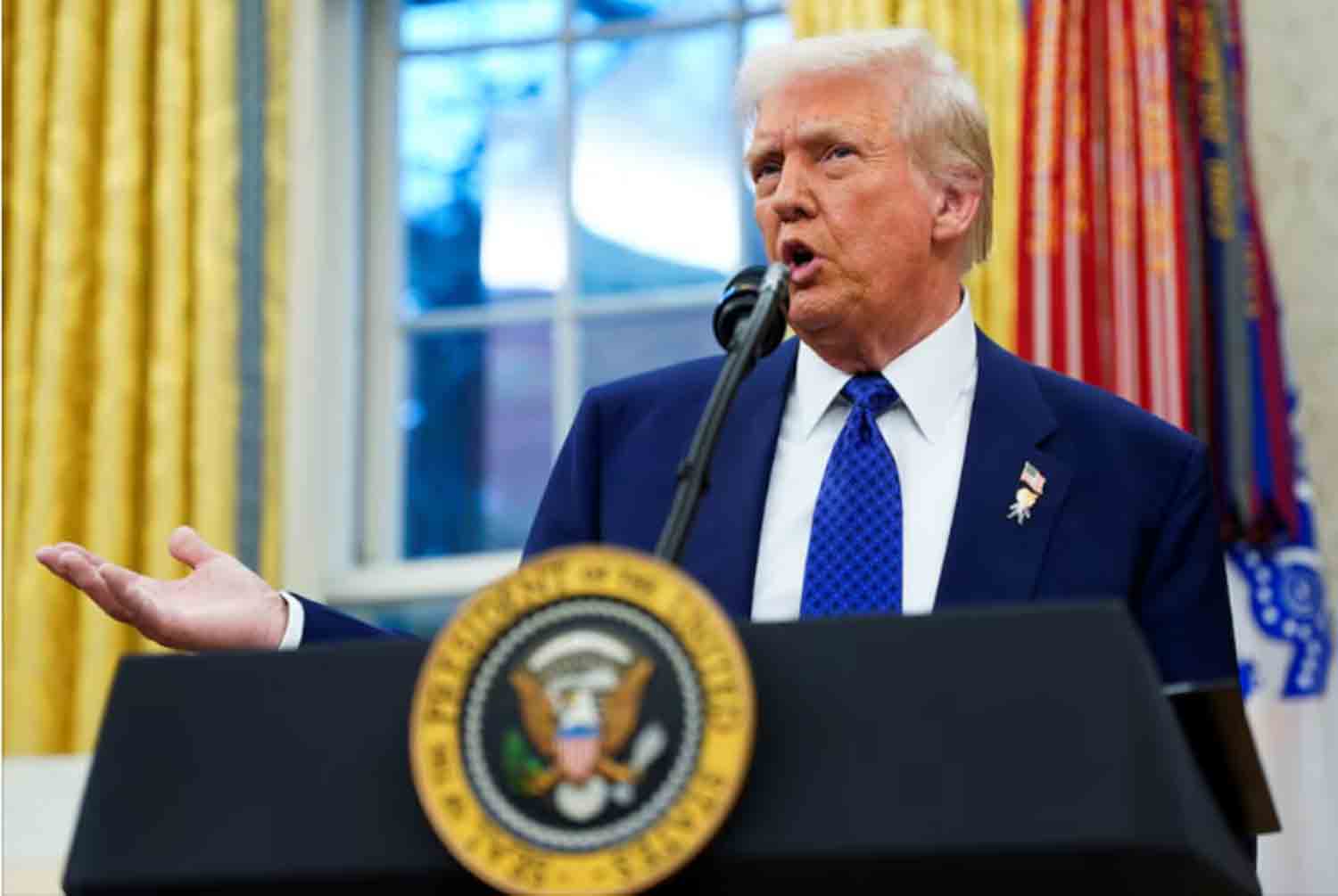
U.S. President Donald Trump speaks, on the day of Tulsi Gabbard's swearing in ceremony as Director of National Intelligence, in the Oval Office at the White House in Washington, D.C.

The situation in Ukraine seemed to reach a new low until President Donald Trump intervened.

After excluding President Volodymyr Zelensky from the initial US discussions with Russia aimed at resolving the conflict, Trump on Tuesday inaccurately claimed that Ukraine instigated the war that has devastated its territory and resulted in countless casualties.

In his most aggressive remarks directed at the Ukrainian leader to date, Trump echoed one of President Vladimir Putin’s narratives, suggesting it was time for elections in Ukraine, seemingly initiating a campaign to marginalize Zelensky.

These comments from the US president are likely to heighten concerns in Europe, which was also left out of the US-Russia negotiations in Saudi Arabia, about Trump potentially seeking to broker a peace agreement in Ukraine that would benefit his ally in the Kremlin.

Furthermore, Trump’s statements appeared to contradict the assurances given by his own Secretary of State Marco Rubio, who indicated after meeting with the Russian delegation that any future peace settlement would be equitable for all involved.

Trump’s criticism of Zelensky, who was celebrated in the United States for his resistance against Russia’s rapid advance on Kyiv at the war’s outset, starkly illustrates how the new American administration has shifted its position from supporting the victim of aggression to favoring the aggressor.

During a press conference at his Mar-a-Lago resort, Trump remarked, “We find ourselves in a situation in Ukraine where elections have not occurred due to martial law.” He further asserted that Zelensky’s approval rating was “at 4%” and described the country as “having been devastated.”

Conducting reliable polling in a war-torn area has proven challenging, with many Ukrainians either displaced internally or having fled the nation. Although recent polls indicate a significant decline in Zelensky’s popularity from the near-universal support he received at the onset of the conflict, the figures are not as low as those mentioned by Trump.

Trump also emphasized the necessity of holding elections in Ukraine for the country’s voice to be acknowledged, stating, “If they want a seat at the table, shouldn’t the people of Ukraine have a say, especially since it has been a long time since we’ve had an election?”

In response to concerns that his comments echo Russian propaganda, Trump clarified, “This is not a Russia issue; it originates from my perspective.”

Ukraine’s last scheduled election was set for April, but Zelensky indicated that conducting elections during wartime was unfeasible, a stance supported by the nation’s Constitution. Trump’s call for democratic participation is particularly ironic given his refusal to accept the outcome of the 2020 presidential election. This irony is further compounded by the fact that Putin has maintained his grip on power for over twenty years through fraudulent elections and stringent domestic control.

Trump attempts to obscure the origins of the Ukraine conflict

Trump’s recent efforts to shape American perceptions regarding Ukraine mirror his past strategies of distorting the truth to further his political ambitions. A notable instance of this was during the 2020 election.

At Mar-a-Lago, he sought to reshape the narrative surrounding Russia’s invasion from three years ago, when Putin’s military crossed into a sovereign democracy, altering the geopolitical landscape of Europe.

“Today I heard, ‘Oh well, we weren’t invited,’” the former president remarked, alluding to Ukraine’s grievances about its exclusion from the emerging peace discussions. “Well, you’ve been there for three years. You should’ve ended it after three years. You should’ve never started it. You could’ve made a deal,” he stated.

Essentially, Trump appears to imply that Ukraine should have negotiated with Russia to prevent the invasion, which would have meant either establishing a pro-Moscow regime in Kyiv or capitulating to grant Putin a victory.

His remarks regarding the Saudi negotiations, which he indicated could lead to a face-to-face meeting with Putin by the month’s end, risk reinforcing what is already perceived as a triumph for Russia. Additionally, his statements are likely to deepen European skepticism towards his ambitious peace proposals, as his administration insists that European nations must take the lead in enforcing any future agreements to halt the conflict.

Trump appeared uncertain regarding the specifics of a potential peace agreement in Ukraine, highlighting the perception that his primary objective is to secure any form of deal that would enable him to declare a personal political triumph. Critics, however, express concerns that such an agreement could lead to renewed conflict.

On Tuesday, he indicated a willingness to consider the deployment of European troops to enforce any future agreement, despite Moscow’s representatives dismissing this notion during the talks in Saudi Arabia. He refrained from addressing British Prime Minister Keir Starmer’s caution that such a force would require a US “backstop.” This statement followed US Defense Secretary Pete Hegseth’s assertion last week that American troops would not participate in peacekeeping efforts in Ukraine. Starmer is scheduled to visit Washington next week to meet with the president, positioning himself as a liaison between the US and Europe.

However, Trump’s favorable view of Putin is not echoed by at least two prominent Republican senators.

Senate Armed Services Chairman Roger Wicker expressed on Tuesday that he does not trust the Russian leader. The Mississippi senator told CNN’s Manu Raju that “Putin is a war criminal and should be imprisoned for life, if not executed.”

Senator John Kennedy concurred with Wicker’s harsh evaluation of Putin but refrained from criticizing Trump’s stance on the peace negotiations. “Vladimir Putin has a black heart. He clearly has Stalin’s taste for blood,” the Louisiana senator remarked. Nevertheless, he emphasized the party’s respect for Trump by dismissing assertions that the president had made significant concessions to Russia merely by re-engaging it diplomatically.

“I haven’t seen us take any steps to relieve the pressure on Putin,” he stated.

U.S. F-35 Fighter Jet Deal Sparks Controversy in India

0
F-35 Lightning II

India’s opposition parties have mounted a vigorous campaign against the proposal to acquire the advanced F-35 Lightning II fighter jets, denouncing the agreement as an extravagant error fraught with the ongoing issues of American engineering. They caution that these expensive aircraft, which have faced numerous operational challenges, may turn into a significant liability instead of a strategic advantage.

The competition for air superiority in India has intensified dramatically, especially with Russia entering the fray with a compelling counteroffer—introducing its advanced fifth-generation Su-57 Felon and proposing a transformative joint production agreement on Indian territory.

As global powers compete for dominance, the stakes are at an all-time high. New Delhi finds itself at a pivotal moment, compelled to traverse a complex geopolitical landscape where each choice will influence its strategic trajectory and alter the aerial balance of power.

The rival proposals from the United States and Russia for fifth-generation fighter jets come at a critical time, as the Indian Air Force (IAF) faces a reduction in squadron strength, which has fallen from 42 to merely 31.

During his notable visit to the White House, Indian Prime Minister Narendra Modi was offered a groundbreaking opportunity—then-President Donald Trump personally extended the invitation for India to acquire the prestigious F-35 fighter jets, emblematic of America’s state-of-the-art air capabilities. Trump emphasized that this deal represented more than a mere transaction; it was a strategic initiative aimed at strengthening U.S.-India defense relations while enhancing American arms exports significantly.

The proposal, rich with geopolitical significance, indicated Washington’s aim to alter the power dynamics in the Indo-Pacific region.

“We will significantly boost military equipment sales to India by billions of dollars. Additionally, we are laying the groundwork to eventually supply India with F-35 stealth fighters,” Trump stated.

India is actively seeking to enhance its fleet of fighter jets, motivated by the pressing need to address the increasing aerial capabilities of its two major rivals—China and Pakistan.

Both countries are swiftly modernizing their air forces, introducing advanced fifth-generation aircraft such as the J-20 Mighty Dragon and the stealthy J-35A, which pose a potential threat to the regional power equilibrium. The Pakistan Air Force is also reportedly considering Türkiye’s next-generation KAAN fighter jet.

In the midst of this intense arms competition, India’s primary opposition party, the Indian National Congress, has seized on criticisms from Trump’s associates and billionaire Elon Musk regarding the F-35 program, using their remarks to launch a pointed critique of Modi’s administration.

As political tensions escalate and national security concerns mount, the discussion surrounding India’s fighter jet acquisitions has transformed into a contentious issue. “Why is Narendra Modi so intent on procuring the F-35, a fighter jet that Elon Musk once labeled ‘garbage’?” questioned a post on Congress’ official X (formerly Twitter) account over the weekend, highlighting the aircraft’s steep costs and high operational expenses.

The Congress statement referenced a November 2024 post by Elon Musk on X, where he shared a video about drones and remarked: “Meanwhile, some are still building manned fighter jets like the F-35.” Musk later reiterated his stance with another post on X, asserting: “Manned fighter jets are obsolete in the era of drones.”

Rosoboronexport’s Director General, Alexander Mikheev, announced that India has been presented with extensive collaboration opportunities regarding the Su-57E project, which includes the possibility of local production. Mikheev stated, as reported by Sputnik India, “Our proposal encompasses the delivery of fully assembled aircraft, the establishment of joint production facilities in India, and assistance in advancing India’s own fifth-generation fighter initiative.”

This offer aligns with Russia’s intensified efforts to enhance the Su-57’s presence in the export market, with Rostec, the state-owned defense enterprise, noting an increasing global interest in the aircraft.

In a related development, Indian defense analyst and Times of India columnist Tathagata Bhattacharya has raised concerns based on a critical 2024 report from the Director of Operational Test and Evaluation (DOT&E), the primary oversight body for the U.S. Secretary of Defense. The report reveals a troubling situation: as of late 2023, the U.S. Air Force’s fleet of 628 F-35s achieved a mere 30% full mission capability rate, significantly below the expected standard of at least 65% for a fully operational air force.

The situation appears even more dire, as the report indicates that the F-35s suffer from persistent mechanical issues, with each grounded aircraft spending an average of 141 days undergoing repairs before being returned to active duty.

Moreover, the aircraft’s critical failure rate—malfunctions that pose serious risks to pilots—was found to be more than double the acceptable limit. These findings raise significant concerns regarding the F-35’s reliability, casting doubt on its adequacy for India’s defense objectives.

A critical 2024 report from the Pentagon’s leading testing office has highlighted the escalating crisis within the F-35 program, indicating a severe shortage of spare parts for vital components such as engine parts, canopies, Distributed Aperture System (DAS) sensors, nacelle vent fans, and several other essential systems.

These alarming shortfalls have rendered fleets susceptible, with no immediate remedies available. Compounding the situation, a significant issue in software and hardware integration—particularly concerning avionics upgrades—led the U.S. Air Force to suspend F-35 deliveries entirely in July 2023. This problem remains unresolved, as the highly anticipated TR-3 software (version 30R08) is still incomplete, further diminishing confidence in the aircraft’s operational readiness.

Bhattacharya issued a grave caution: “Consider the scenario where the Indian Air Force acquires 36 F-35s across two squadrons—at any moment, only 10 would be fully mission-capable, while the remainder would be sidelined as ‘hangar queens.’” He challenged the rationale behind such a procurement, asserting: “Regardless of how advanced a fighter jet’s capabilities are, if it cannot be depended upon to act when required, what is the value of acquiring such a platform? Additionally, the U.S. will never disclose its sensitive technology and source codes.”

With operational shortcomings accumulating and strategic worries intensifying, the F-35’s suitability for India’s defense future seems increasingly precarious.

China’s Fujian aircraft carrier has officially launched into the water for its sea trials

0
Chinese aircraft carrier Fujian

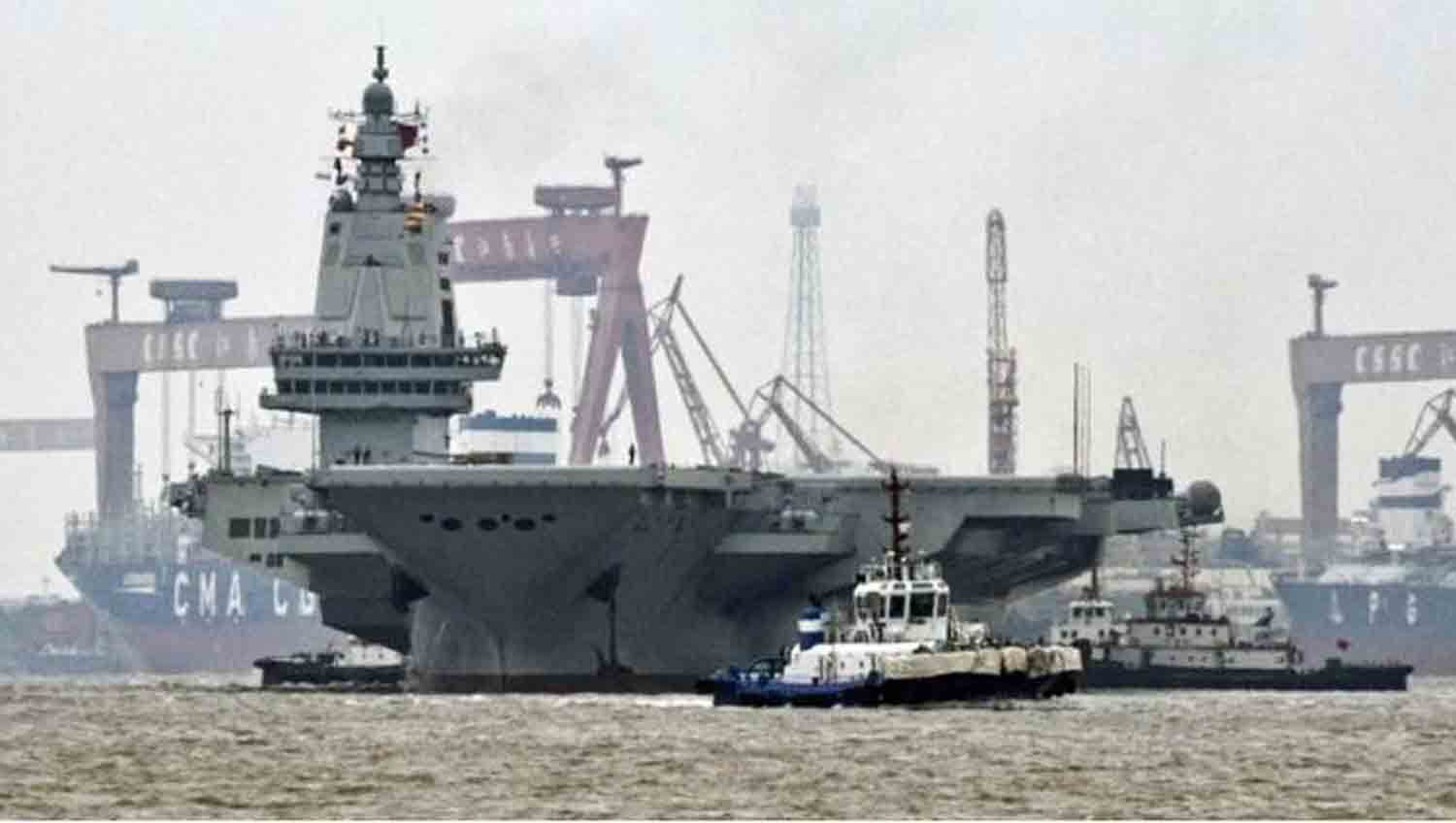
In a notable advancement for China‘s naval forces, the Chinese aircraft carrier Fujian has been observed leaving dry dock to commence its sea trials. This event was documented in video footage shared by Clash Report, a prominent outlet for military and geopolitical news, showcasing the progress of China’s maritime fleet.

The video illustrates the Fujian moving smoothly through the water, reflecting the sophisticated engineering that characterizes this new addition to China’s naval capabilities. In a post on X, Clash Report remarked, “Chinese aircraft carrier Fujian has left dry dock today and began sea trials,” emphasizing the significant development of a vessel that has been under construction for several years.

Named after the province located on China’s southeastern coast, the Fujian signifies not only a technological advancement but also a strategic enhancement for China’s military positioning. Its launch highlights China’s aspirations to broaden its naval reach beyond its coastal waters, potentially reshaping the power dynamics in the Asia-Pacific region.

Viewers of the video commented on the carrier’s elegant design and the smooth transition as it moved from the dock into open waters. This moment is pivotal, marking the start of a series of evaluations that will test the Fujian’s operational capabilities, including its propulsion systems and aircraft management functions.

The sea trials of the Chinese aircraft carrier Fujian represent a significant milestone in its transition from the shipyard to operational waters, where it will undergo extensive evaluations to confirm its readiness for deployment.

These trials commenced with the carrier’s departure from the Jiangnan Shipyard in Shanghai, initially concentrating on the reliability and stability of its propulsion and electrical systems in maritime environments.

As the trials advance, they will incorporate more intricate evaluations. For example, the second sea trial is anticipated to include assessments of the propulsion systems, featuring maneuvers such as sharp turns and reverse sailing to test the carrier’s agility.

In later stages, the trials will broaden in scope, examining the carrier’s ability to navigate in tight spaces, execute emergency maneuvers, and function effectively in challenging weather conditions.

A critical component of these trials is assessing the carrier’s capability to conduct aircraft operations, particularly through the use of electromagnetic catapults for launching aircraft. This phase is vital for evaluating the reliability, speed, and efficiency of aircraft launches, as well as recovery systems like arrestor wires.

Additionally, communication and command systems will be rigorously tested to ensure seamless coordination between the carrier and other naval or aerial units. Safety and emergency protocols will also undergo thorough examination to protect both the crew and the vessel from potential incidents at sea.

The trial phases are sequential, with the initial phase lasting eight days, followed by progressively longer trials. This progression reflects an increase in both complexity and thoroughness of the evaluations. The entire process is anticipated to take several months, with the goal of ensuring that the Fujian meets all operational criteria prior to its official integration into the People’s Liberation Army Navy.

These trials not only assess the ship’s hardware but also serve as a training platform for the crew. They will gain hands-on experience with the carrier’s advanced systems, the nuances of carrier aviation, deck operations, and maintenance in a maritime setting.

The development and deployment of the Fujian are closely monitored by international military analysts and neighboring nations, especially in light of China’s increasing assertiveness in maritime disputes, particularly in the South China Sea. The carrier’s capabilities could significantly bolster China’s ability to project power beyond its shores, potentially altering regional security dynamics.

This initiative also indicates China’s ambition to compete with the naval supremacy of the United States, which has historically maintained a dominant naval presence in the Asia-Pacific region. With its cutting-edge technology and design, the Fujian is set to become a key element in China’s strategy to protect its maritime interests and establish itself as a formidable global naval power.

As the Fujian undertakes these sea trials, the international community will be closely watching each development, assessing how this fits into the larger geopolitical landscape of East Asia. The success of these trials could signal a transformative period in naval warfare, positioning China’s carriers as increasingly influential players in global naval strategy.

The video released by Clash Report not only highlights a significant technical milestone but also reflects the evolving dynamics of global naval power, prompting discussions about its implications for maritime security and international relations in the future.

The Chinese aircraft carrier Fujian stands as a powerful representation of Beijing’s naval aspirations, featuring an impressive suite of technology that ranks it among the most sophisticated carriers worldwide. Named after a province in southeastern China, this vessel serves as both a symbol of strength and a demonstration of advanced engineering.

Central to the Fujian’s operational capabilities are its three electromagnetic catapults, which align it with elite vessels like the U.S. Navy’s USS Gerald R. Ford. These EMALS (Electromagnetic Aircraft Launch System) catapults facilitate more efficient aircraft launches, providing benefits in speed, weight management, and the capacity to deploy a broader range of aircraft.

This advancement marks a considerable improvement over the ski-jump ramps utilized by China’s previous carriers, allowing the Fujian to launch heavier and fully loaded aircraft more effectively.

The carrier features a flight deck with an angled landing area and arresting gear for aircraft recovery, significantly enhancing its operational flexibility. This configuration supports simultaneous launches and recoveries, which is vital for sustaining a rapid operational pace during combat or crisis scenarios.

For its air wing, the Fujian is anticipated to accommodate a diverse array of aircraft, potentially ranging from 40 to 70 in total. Among these, the Shenyang J-15 fighters are expected to play a key role, offering both air superiority and strike capabilities. Additionally, there is excitement surrounding the potential inclusion of the Shenyang J-35, a stealth fighter tailored for carrier operations, which could greatly enhance the carrier’s combat effectiveness.

The Xi’an KJ-600, an airborne early warning and control aircraft, is anticipated to significantly enhance the carrier’s operational awareness, extending its surveillance capabilities over both air and sea well beyond the horizon.

Regarding its defensive features, the Fujian is outfitted with state-of-the-art phased-array radar systems that facilitate long-range detection and tracking of multiple targets, thereby improving its situational awareness. It also incorporates close-in weapon systems (CIWS) such as the HQ-10 and Type 1130, which are designed to defend against aerial threats, including missiles and drones, serving as a crucial last line of defense.

This formidable vessel is powered by a conventional propulsion system, which stands in contrast to the nuclear-powered carriers of the U.S. Navy. It employs steam turbines and diesel generators to manage its substantial displacement of around 80,000 tons, providing considerable endurance and operational flexibility, though it requires regular refueling unlike its nuclear-powered counterparts.

Additionally, the Fujian is equipped with an integrated power system (IPS) that likely aids in managing the energy requirements of its advanced systems, ensuring stable and efficient power distribution throughout the ship’s operations.

The combination of equipment and technology aboard the Fujian not only illustrates China’s naval advancements but also indicates its ambition to play a pivotal role in the geopolitics of the Asia-Pacific region. Each component has been carefully selected to bolster combat effectiveness, positioning the Fujian to transform China’s maritime power projection.

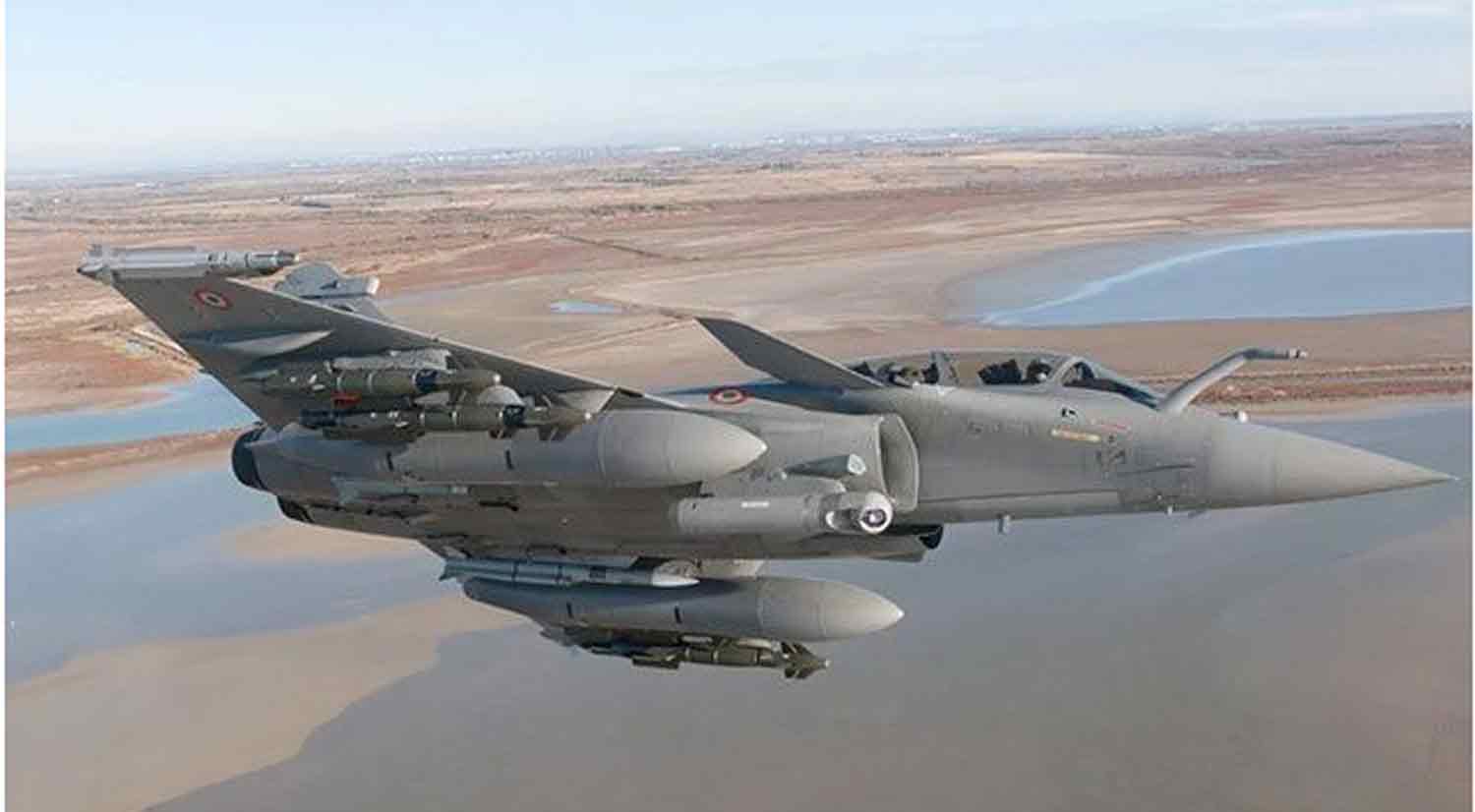
IFRI report states that French Rafale aircraft can engage Russian forces for three days

0

As global military tensions escalate, France is increasingly concerned about the preparedness of its Air and Space Force for a potential large-scale conflict. Although the country possesses one of the most powerful military arsenals in Europe, featuring nuclear capabilities, advanced submarines, and state-of-the-art fighter jets, the reality is that the French military’s readiness, particularly in aerial operations, may not be as robust as expected.

A recent evaluation by specialists at the French Institute for International Relations (IFRI) presents a concerning assessment of the nation’s air capabilities. The report, authored by former French military personnel, highlights a critical shortcoming in France’s fighter jet inventory: the lack of a fifth-generation aircraft. While the Rafale, France’s flagship multi-role fighter, has long been a source of national pride, its limitations are becoming increasingly evident.

The Rafale is recognized as a competent 4th-generation fighter, but it was not designed with stealth in mind. In the early 2000s, France opted to develop a versatile aircraft capable of fulfilling multiple roles rather than focusing on a stealth-oriented design.

This choice was made even as the United States advanced its fifth-generation fighters, such as the F-22 and subsequently the F-35. Although the Rafale has undergone enhancements over the years, incorporating some hybrid features that bring it closer to a 4.5-generation classification, it still lacks the sophisticated low-observable technologies that are vital for contemporary air warfare.

Stealth capabilities, which enable aircraft to evade radar detection, are essential for breaching enemy air defenses and targeting high-value assets. The absence of a genuinely stealthy fighter places French pilots at a considerable disadvantage when facing advanced anti-access/area-denial (A2/AD) systems.

Adversaries such as Russia and China are increasingly deploying systems aimed at denying access to contested airspace for enemy aircraft. In the absence of stealth capabilities, the Rafale fighter jet would be at risk of being intercepted by sophisticated surface-to-air missiles and enemy aircraft.

Although the Rafale is effective in various operational contexts, the disparity between France’s air power and that of its potential rivals is widening. The swift progress in military technologies from China and Russia, including drones, hypersonic missiles, and electronic warfare systems, exacerbates this challenge.

These advancements have altered the aerial power dynamics, raising doubts about Western air superiority for the first time since World War II. France, in particular, is experiencing pressure as its Rafale fleet, despite its strengths, lacks the technological advantages that contemporary warfare necessitates.

In addition to stealth deficiencies, the French Air Force faces a significant limitation in its inventory of precision-guided munitions. In the event of a large-scale conflict, sustaining operations beyond a few days would be difficult, particularly without adequate supplies of advanced missiles such as the Meteor air-to-air missile.

These munitions are crucial for effective long-range engagements, yet France’s stockpile is alarmingly low. The situation has been further aggravated by ongoing military support for Ukraine, which has led to a depletion of essential missiles like the SCALP cruise missile and Aster 30 surface-to-air missile.

The lack of precision-guided weapons is further intensified by France’s choice to forgo cluster munitions. While this decision aligns with global disarmament initiatives, it leaves the French military without a viable option for targeting extensive areas of enemy territory.

France is compelled to depend on a limited number of costly systems that can only effectively target smaller areas. This dependence on advanced munitions, coupled with an inadequate stockpile, may severely hinder France’s capacity to carry out prolonged air operations during a significant conflict.

The absence of a fifth-generation fighter, a lack of sufficient precision-guided munitions, and the diminishing Western air superiority create a challenging situation for France. The nation stands at a pivotal moment, needing to choose between modernizing its air forces to address emerging threats or risking obsolescence against its rivals.

One potential avenue for improvement is the acquisition of a fifth-generation fighter, either by purchasing established platforms like the F-35 or by hastening European initiatives to create a next-generation aircraft through the FCAS [Future Combat Air System] program. However, the FCAS initiative is still in its early stages, with operational aircraft not anticipated until the 2040s.

As France contemplates its future military strategy, the pressing question is whether it will take decisive action to close the widening gaps in its air capabilities or continue to depend on outdated systems that fail to meet the requirements of contemporary warfare. The urgency is clear: in a world marked by increasing volatility, France cannot afford to delay.

Nevertheless, despite the concerning assessment of the French Air Force, it is important to examine the flagship of its combat aviation, the Dassault Rafale. The Rafale represents the pinnacle of modern French military aviation, serving as a versatile multi-role fighter that has been integral to France’s defense strategy for nearly twenty years.

Since its debut in the early 2000s, the Rafale has established itself as a powerful asset, adept at performing a diverse array of missions, including air superiority, precision strikes, and nuclear deterrence. The journey of its development faced numerous obstacles, and the aircraft’s progression highlights the ingenuity and resilience inherent in French military engineering.

The Rafale family includes two main variants: the Rafale C, designed for single-pilot operation, and the Rafale M, intended for naval use. Additionally, the Rafale B, a two-seat version, is available for training and operational support. This aircraft is celebrated for its adaptability, capable of fulfilling various roles based on mission demands.

Whether engaged in air-to-air combat, deep strike operations, close air support, or reconnaissance missions, the Rafale can swiftly adjust to meet the requirements with minimal modifications. This adaptability is enhanced by a sophisticated suite of sensors, avionics, and armaments, providing the Rafale with a significant advantage in combat scenarios.

Central to the Rafale’s capabilities is its advanced radar and sensor suite, which enables effective operation in highly contested environments. The Thales RBE2-AA radar stands out as one of the most sophisticated radar systems developed for fighter jets, allowing the Rafale to track multiple targets over extended distances. Furthermore, its integrated electronic warfare systems equip the aircraft to neutralize threats from enemy radar and missile systems.

The Rafale’s adaptability is significantly bolstered by its ability to integrate a diverse array of weaponry, establishing it as a genuinely multi-role aircraft. It can execute a variety of strikes with remarkable precision, utilizing air-to-air missiles such as the MBDA MICA and Meteor, as well as precision-guided munitions and cruise missiles.

What truly distinguishes the Rafale is its proficiency in conducting high-risk missions while maintaining a low risk profile. The aircraft’s design incorporates features that improve its survivability in hostile environments, including exceptional maneuverability and stealth characteristics, although it does not achieve a fully stealth configuration.

With a reduced radar signature and the capability to operate at both high and low altitudes, the Rafale presents a formidable challenge in both offensive and defensive scenarios. Nonetheless, as noted in previous analyses, the absence of complete stealth capabilities poses certain difficulties when confronting contemporary anti-access/area-denial systems.

A distinctive feature of the Rafale is its suitability for carrier operations. The Rafale M, tailored for deployment on France’s aircraft carriers, is outfitted with reinforced landing gear and a tailhook for arrested landings, enabling effective operation from the Charles de Gaulle’s flight deck.

This naval variant maintains all the functionalities of its land-based siblings, with enhancements that equip it to endure the rigors of maritime operations. Its ability to transition seamlessly between land and sea missions provides France with a considerable strategic edge, facilitating global power projection from its carriers.

Although it originated in the early 21st century, the Rafale continues to advance through improvements in avionics, weaponry, and operational capabilities. Ongoing upgrades have ensured that the Rafale remains at the cutting edge of modern aerial warfare, featuring enhancements to its radar systems, weapon integration, and cockpit interfaces.

The implementation of the F3-R standard, which integrates advanced weaponry and electronic warfare systems, has significantly enhanced the Rafale’s reputation as one of the premier fighter jets globally. Additionally, the Rafale plays a vital role in France’s nuclear deterrence strategy, possessing the capability to transport and deploy nuclear armaments, thereby ensuring its importance in high-stakes geopolitical situations.

Nevertheless, as technological advancements accelerate, the Rafale encounters new obstacles. The rise of fifth-generation fighters like the F-35, along with the progression of advanced drone technologies and hypersonic weapons, will undoubtedly impact the Rafale’s function in future military engagements.

While the aircraft continues to be a dominant force in aerial combat, it must evolve to maintain its relevance in an ever-changing warfare environment. As France looks toward the next generation of combat aircraft, the Rafale is expected to remain a vital element of the nation’s defense strategy, but its future effectiveness will hinge on its capacity to incorporate new technologies and stay at the forefront of modern military operations.

The Rafale, in all its variants and with its broad spectrum of capabilities, exemplifies French engineering prowess, versatility, and military strength. Its ability to adapt and operate across various domains makes it a powerful asset for France and its allies; however, like any military system, it must continue to progress to meet the challenges of future conflicts.

Its status as a cornerstone of France’s military aviation is assured, but whether it can sustain its superiority against increasingly advanced opponents is yet to be determined.

Israel will start talks on the second phase of the Gaza ceasefire, a minister announced

0
Buildings lie in ruin in North Gaza, amid the ongoing conflict between Israel and Hamas, as seen from Israel.

Israel is set to initiate discussions regarding the second phase of the Gaza ceasefire agreement, which will involve the exchange of the remaining Israeli hostages for Palestinian detainees, as stated by Foreign Minister Gideon Saar on Tuesday. He emphasized that Israel is insisting on the complete demilitarization of the region.

Although negotiations for this second phase were expected to commence before the first phase concludes on March 2, Qatar has indicated that official talks have yet to begin.

Saar remarked during a press conference that a “Hezbollah model” in Gaza would be unacceptable to Israel, necessitating total demilitarization and the absence of the Palestinian Authority’s presence. He also mentioned that Israel is aware of an alternative proposal from Arab nations aimed at countering U.S. President Donald Trump’s plan for the redevelopment of Gaza under American oversight, which Israeli Prime Minister Benjamin Netanyahu has expressed interest in exploring. Saar further clarified that Israel would not endorse any plan that would transfer civilian governance in Gaza from Hamas to the Palestinian Authority.

European Union is prepared to act swiftly in relaxing spending regulations for defence

0
European Commission Executive Vice-President Valdis Dombrovskis attends the U.S.-EU Trade and Technology Council in Leuven, Belgium.

The European Commission is poised to swiftly introduce proposals aimed at relaxing budgetary regulations to support increased defence expenditures by member states, according to EU Commissioner Valdis Dombrovskis on Tuesday.

“We must act promptly regarding member states’ spending and the need for additional flexibility. We anticipate working on the specifics in the upcoming weeks to ensure we can proceed rapidly,” Dombrovskis stated prior to a meeting of EU finance ministers in Brussels.

Last week, EU Commission President Ursula von der Leyen indicated that the commission would suggest exempting defense spending from EU government expenditure limits, responding to pressure from U.S. President Donald Trump for Europe to enhance its defense financing. Von der Leyen noted that the removal of restrictions on military spending would align with the precedent set by lifting borrowing limits during the COVID-19 pandemic.

However, not all European governments are in favor of this approach, with some arguing that defense already receives special consideration under existing regulations.

Poland, which currently holds the rotating EU presidency and influences the bloc’s agenda, contended earlier this month that the prevailing view of defense investment as solely related to equipment like tanks or aircraft is overly restrictive.

Poland’s Finance Minister Andrzej Domanski expressed confidence on Tuesday that defense spending could be increased without compromising the integrity of the EU’s fiscal framework. “Maintaining credibility is essential. We believe we can operate within the existing rules,” he remarked before the Brussels meeting. “We need to clearly define these rules so that countries wishing to increase their spending can do so without violating fiscal regulations. Europe must invest more and take our security and defense much more seriously.”

Kremlin says a lasting Ukraine agreement requires addressing broader security issues

0
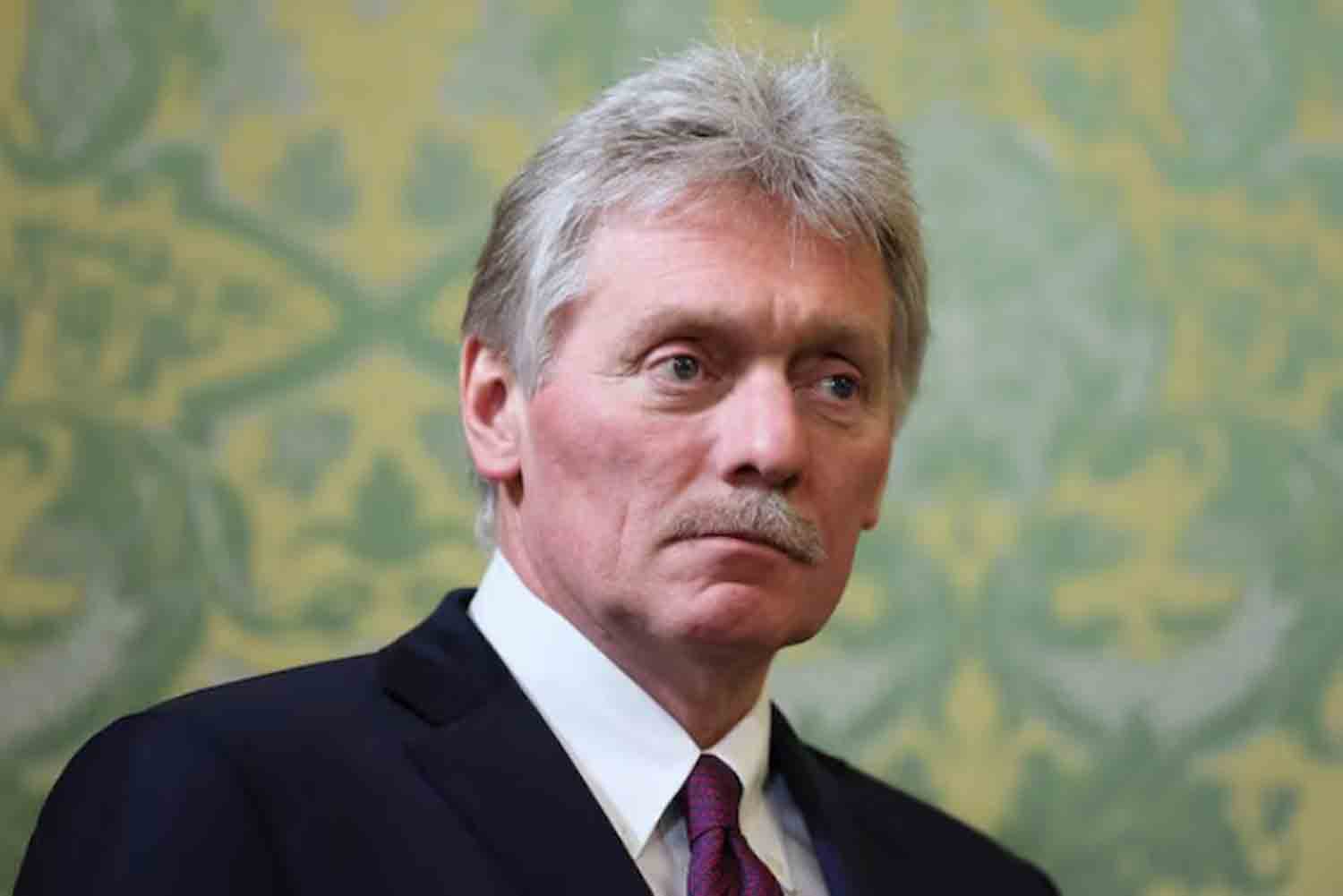
Kremlin spokesman Dmitry Peskov

A sustainable peace agreement in Ukraine cannot be achieved without addressing a broader spectrum of security issues throughout Europe, as stated by the Kremlin.

Kremlin spokesperson Dmitry Peskov informed reporters on Tuesday that “a thorough long-term resolution is unattainable without a detailed examination of security matters across the continent.”

Peskov indicated that the timing of a potential meeting between Presidents Vladimir Putin and Donald Trump remains uncertain, but discussions between the chief diplomats of Russia and the United States in Saudi Arabia could provide some clarity.

Additionally, Peskov mentioned that Putin would be open to negotiations with Ukrainian President Volodymyr Zelensky “if necessary.”

Previously, Putin expressed reluctance to engage in talks with Zelensky, citing the latter’s rule as “illegitimate,” partly due to Ukraine’s failure to conduct elections since Russia initiated its full-scale invasion nearly three years ago.

Philippines has charged that the Chinese navy engaged in ‘reckless’ aerial maneuvers

0
China blasts high-decibel acoustic device to harass PH vessel, the Philippine Coast Guard said.

The Philippine Coast Guard has accused the Chinese Navy of engaging in perilous flight maneuvers on Tuesday, as it approached a government aircraft that was monitoring a disputed shoal in the South China Sea, a claim that Beijing has contested.

“This reckless action posed a serious risk to the safety of the pilots and passengers,” stated the coast guard in an official release.

According to the coast guard, the government fisheries aircraft was conducting a maritime domain awareness flight over the Scarborough Shoal, a rocky atoll and significant fishing area located within the Philippines’ exclusive economic zone.

A helicopter from the People’s Liberation Army Navy reportedly flew within three meters of the aircraft, which the Philippine coast guard described as a “clear violation and blatant disregard” for aviation regulations.

In response, the Chinese military’s Southern Theatre Command asserted that the Philippine aircraft had “illegally intruded” into Chinese airspace and accused the Philippines of “spreading false narratives.” The Southern Theatre Command further stated that China’s naval and air forces were deployed to monitor, warn, and escort the aircraft away, claiming that the Philippines’ actions “severely violated” China’s sovereignty.

Scarborough Shoal, named after a British vessel that ran aground there nearly three centuries ago, is one of the most disputed maritime features in the South China Sea, where tensions between Beijing and Manila have frequently escalated. China asserts sovereignty over nearly the entire South China Sea, a crucial route for over $3 trillion in annual maritime trade, leading to conflicts with Brunei, Indonesia, Malaysia, the Philippines, and Vietnam. A 2016 arbitration ruling invalidated China’s extensive claims, but Beijing has refused to acknowledge the decision.

A slight majority of Germans support a potential peacekeeping mission in Ukraine

0
A member of German army Bundeswehr exercises during a presentation to German Defence Minister Boris Pistorius during his visit to the airborne brigade of German army Bundeswehr in Saarlouis, Germany.

A slight majority of Germans support the deployment of Bundeswehr forces as part of a potential peacekeeping mission in Ukraine to oversee any agreed ceasefire, according to a poll released on Tuesday. European leaders, concerned about being excluded from discussions regarding Ukraine’s future security, are exploring possible contributions to any forthcoming peace initiative as U.S. and Russian officials engage in talks aimed at resolving the three-year conflict.

The Forsa poll conducted for Stern magazine indicated that 49% of Germans are in favor of such a deployment, while 44% oppose it, and 7% chose not to respond. Support for involvement was higher in western Germany, where 52% favored it, compared to 65% opposition in the former Communist eastern regions. Additionally, the survey revealed that 83% of voters for the far-right Alternative for Germany (AfD) would oppose the deployment.

A spokesperson for the defense ministry stated on Monday that Germany would be willing to contribute if a suitable framework is established. However, any decision regarding deployment is likely to be made by a new German government following the federal election scheduled for Sunday.

The poll was conducted on February 13 and 14.

UK Defense Secretary says efforts to resolve the Ukraine conflict signal a “new era of threat”

0
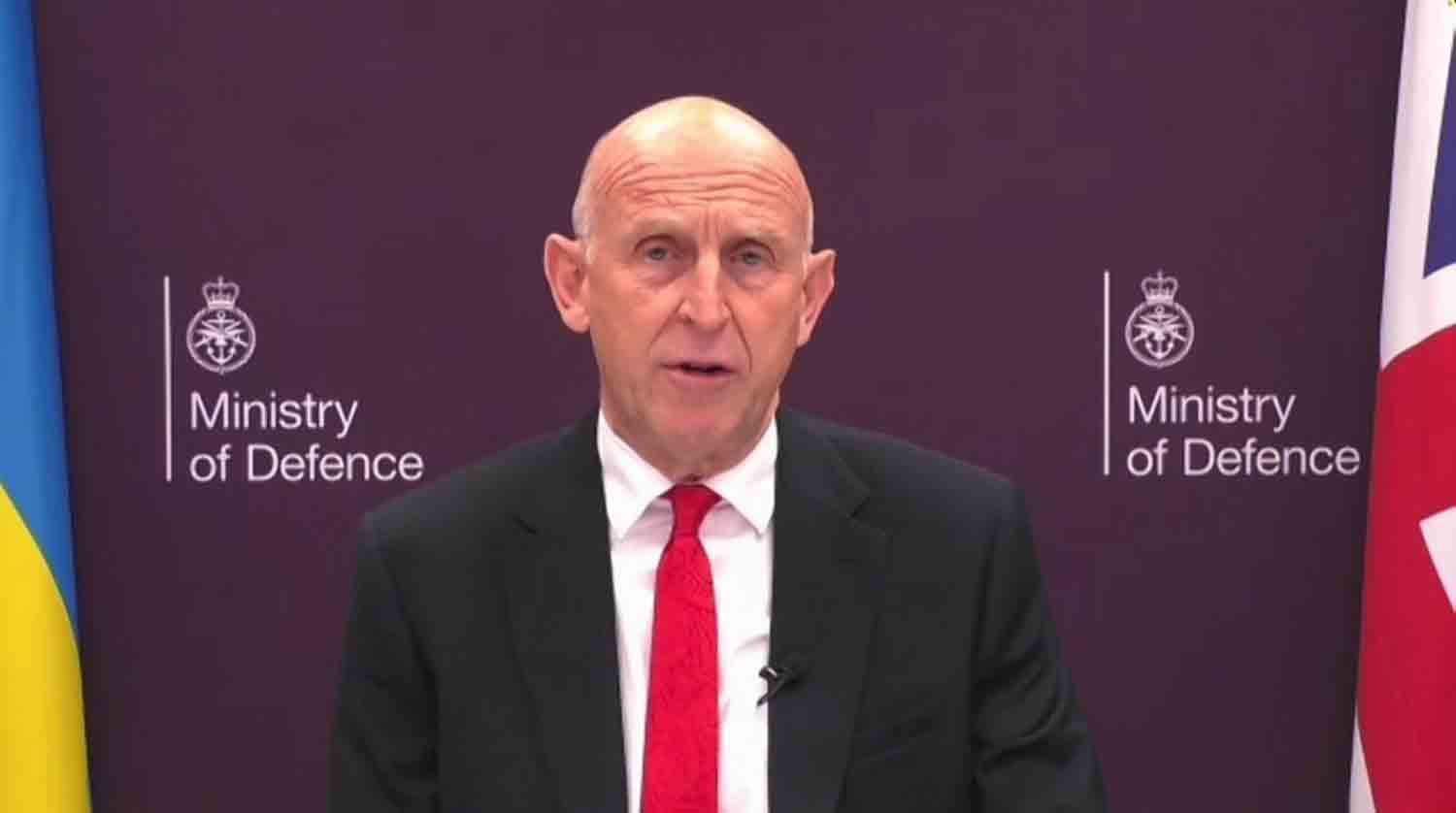
Defence Secretary John Healey

UK Defense Secretary John Healey stated that the ongoing efforts to resolve the conflict in Ukraine signify “a new era of threat,” coinciding with the commencement of US-Russia discussions in Saudi Arabia.

“We are entering a new era of threat, which necessitates a new approach to defense,” Healey remarked during a press briefing in London.

He elaborated on the UK’s defense budget, noting an increase of nearly £3 billion ($3.8 billion) this year, and indicated that the government would soon outline a strategy to allocate 2.5% of GDP to defense spending. However, this figure remains significantly below the 5% of GDP target proposed by the Trump administration.

On Sunday, UK Prime Minister Keir Starmer expressed his willingness to consider deploying British forces on the ground, in collaboration with other nations, should a sustainable peace agreement be reached.

Starmer participated in an emergency summit in Paris with several prominent European leaders to deliberate on a unified response to the potential reduction of the US military presence in Europe.

Healey emphasized, “The choices we make in the coming weeks will not only shape the resolution of the conflict in Ukraine but will also influence global security for generations to come.”

China asserts that all parties in the Ukraine conflict should engage in peace talks

0
The Chinese flag is seen in this illustration.

China has expressed its expectation for “all parties” involved in the Ukraine conflict to engage in peace negotiations, coinciding with discussions between top diplomats from the US and Russia in Saudi Arabia aimed at resolving Moscow’s aggression against its neighbor, from which Kyiv and its European allies have been excluded.

“China supports all initiatives aimed at achieving peace, including the agreement on negotiations reached by the United States and Russia,” stated Guo Jiakun, spokesperson for the foreign ministry, during a regular press briefing.

“Additionally, China anticipates that all involved parties and stakeholders will take part in the negotiation process promptly.”

China has consistently aimed to establish itself as a potential mediator in the conflict, advocating for its own broadly defined proposal to resolve the war. However, its efforts have been overshadowed in the West by its increasingly close relationship with Moscow.

US and Russian officials meet in Saudi Arabia to negotiate a resolution for the Ukraine conflict

0
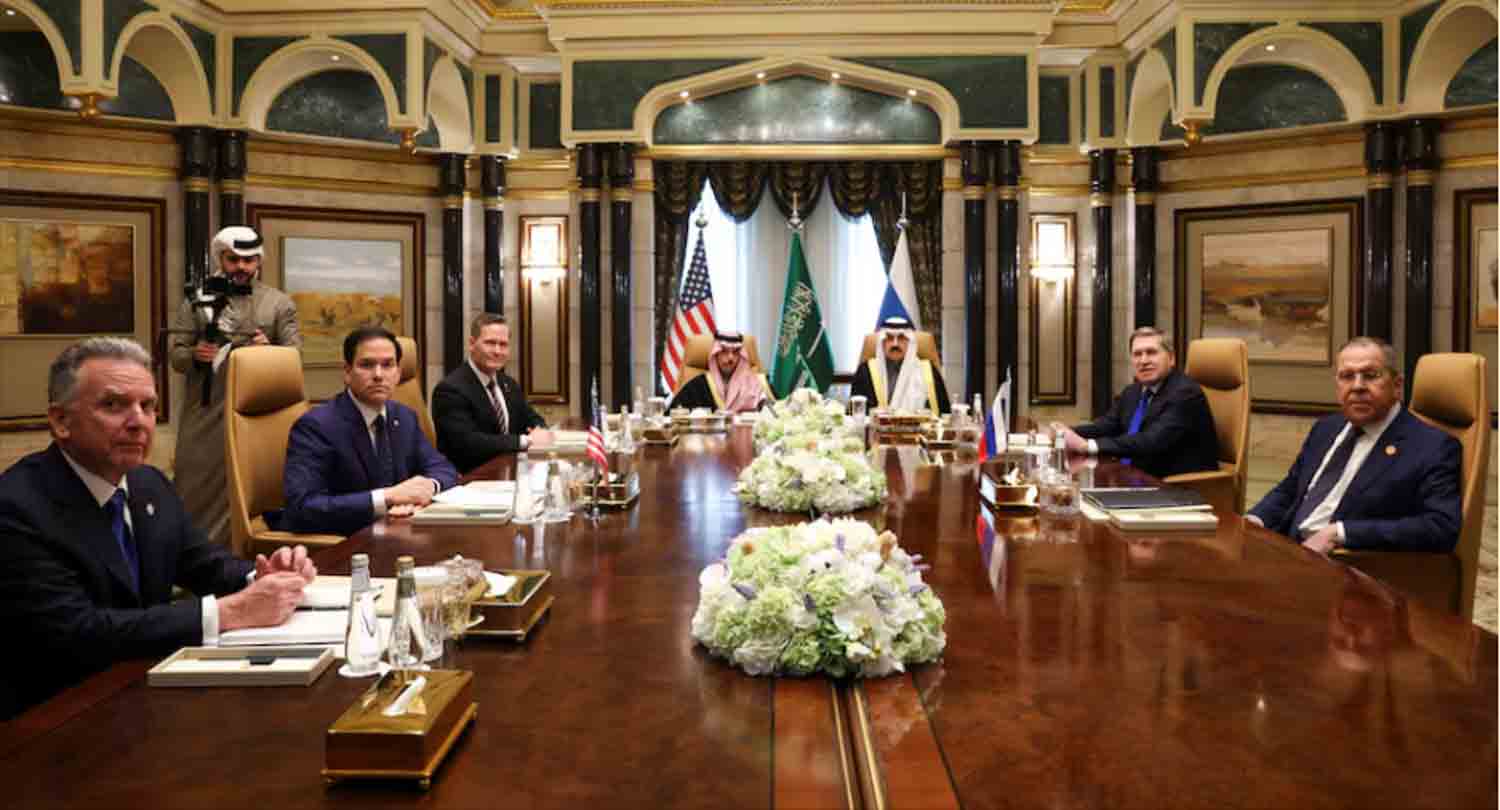
U.S. Secretary of State Marco Rubio meets with Saudi Foreign Minister Prince Faisal bin Farhan Al Saud, Saudi National Security Advisor Mosaad bin Mohammad Al-Aiban, U.S. National Security Advisor Mike Waltz, U.S. Middle East envoy Steve Witkoff, Russian Foreign Minister Sergei Lavrov and Russian President Vladimir Putin's foreign policy advisor Yuri Ushakov, at Diriyah Palace, in Riyadh.

U.S. and Russian officials convened in Riyadh on Tuesday for their most significant discussions to date regarding the resolution of the conflict in Ukraine. The agenda was anticipated to include strategies for concluding the three-year war and improving American-Russian relations. These discussions may set the stage for a potential summit between U.S. President Donald Trump and Russian President Vladimir Putin.

Ukraine, which is not participating in the talks, has asserted that any peace agreement made without its involvement would be unacceptable. President Volodymyr Zelenskiy emphasized last week, “As a sovereign nation, we cannot agree to any arrangements that exclude us.”

European nations, concerned about being excluded from negotiations that could shape the continent’s future security, have also insisted on being part of the peace discussions. Media representatives were permitted to capture footage of the two delegations prior to the commencement of the talks.

Seated at a polished wooden table adorned with three large white floral arrangements were Putin’s foreign policy adviser Yuri Ushakov and Russian Foreign Minister Sergei Lavrov, facing U.S. Secretary of State Marco Rubio, national security adviser Mike Waltz, and Trump’s Middle East envoy Steve Witkoff.

The officials did not respond to reporters’ shouted inquiries regarding whether the U.S. was marginalizing Ukraine or what concessions were being sought from Moscow. Russia indicated that the discussions would aim to conclude the conflict and restore the entirety of the Russia-U.S. relationship, which the Kremlin characterized as being “below zero” during Joe Biden’s previous administration. Kirill Dmitriev, head of Russia’s sovereign wealth fund, remarked in Riyadh, “We truly believe that President Trump and his team are problem solvers who have effectively and successfully tackled significant challenges.”

Dmitriev, a former Goldman Sachs banker educated in the U.S., was involved in the initial communications with Moscow during Trump’s presidency from 2016 to 2020. On Monday, Ushakov indicated that Dmitriev may participate in the delegation to address economic issues. “It is crucial to recognize that U.S. companies incurred losses of approximately $300 billion due to their exit from Russia. This situation has significant economic repercussions for many nations given the current circumstances,” Dmitriev remarked.

US ADOPTS A NEW STRATEGY TOWARD RUSSIA UNDER TRUMP

European leaders convened in Paris on Monday for an urgent summit aimed at formulating a cohesive strategy, following Trump’s unexpected call for immediate discussions on Ukraine after his recent conversation with Putin.

The leaders expressed their commitment to increasing defense investments and taking the initiative in providing security assurances for Ukraine. “There is a palpable sense of urgency,” stated Dutch Prime Minister Dick Schoof. “At this pivotal moment for Europe’s security, we must remain steadfast in our support for Ukraine.”

“Europe must contribute to ensuring any agreement, and collaboration with the United States is vital.” The gathering in Riyadh marks a notable shift from the stance taken by the Biden administration, which has avoided public engagements, believing that Russia lacks genuine intent to resolve the conflict.

Russia commenced a full-scale invasion of Ukraine in February 2022, following its annexation of Crimea and the instigation of an insurgency in the east in 2014, and currently occupies about 20% of Ukrainian territory. U.S. officials characterized Tuesday’s discussions as preliminary efforts to assess Moscow’s willingness to negotiate an end to the war, following the dialogue between Putin and Trump last Wednesday.

“This is a continuation of that initial exchange between President Trump and Putin to explore the feasibility of taking that first step, understanding the interests involved, and determining if this can be effectively managed,” stated State Department spokesperson Tammy Bruce to reporters in Riyadh.

The Kremlin indicated that the discussions would encompass “the entire complex of Russian-American relations,” in addition to preparing for negotiations regarding a resolution for Ukraine and a potential meeting between the two presidents. Russia reported that Lavrov and Rubio spoke on Saturday about eliminating obstacles to trade and investment.

EUROPE SEEKS TO MAINTAIN INFLUENCE AS US AND RUSSIA ENGAGE

Former President Biden, along with allies in Kyiv and around the globe, has implemented extensive sanctions against Moscow in response to its invasion of Ukraine, with the goal of undermining Russia’s economy and military efforts. Riyadh, which is also in discussions with Washington concerning the future of the Gaza Strip, has facilitated initial communications between the Trump administration and Moscow, contributing to a prisoner exchange last week.

It remains uncertain how Europe will interact with Washington following Trump’s unexpected outreach to Putin, who has long been isolated by the West. “We align with President Trump on a ‘peace through strength’ strategy,” a European official remarked after the Paris meeting, requesting anonymity. The U.S. decision has prompted European nations to recognize the necessity of taking greater responsibility for Ukraine’s security.

British Prime Minister Keir Starmer, who expressed readiness to deploy peacekeeping forces to Ukraine prior to the meeting, stated on Monday that a U.S. security “backstop” is essential for European nations to commit troops on the ground. Keith Kellogg, Trump’s envoy for Ukraine, announced plans to visit Ukraine starting Wednesday and was inquired about the possibility of the U.S. providing security assurances for any European peacekeepers. “I’ve been with President Trump, and the policy has always been: You take no options off the table,” he stated.

USS Dewey and Russian warships commence uncommon joint exercises

0
USS Dewey and Russian corvettes kick off rare joint drills.

It is a rare occurrence to witness American and Russian warships conducting joint training exercises. In fact, such collaboration has been virtually nonexistent over the past three years, particularly following Russia’s invasion of Ukraine and its subsequent diplomatic estrangement from the United States and much of Europe. However, Indonesia is altering this dynamic.

While these nations have been rivals in recent times, this week marks a different chapter as warships from Russia, China, the United States, India, Australia, Indonesia, Singapore, and others gather for Exercise Komodo 2025. The highlight of this event is the unusual participation of both the U.S. and Russia. The United States is represented by the Arleigh Burke-class destroyer USS Dewey, while Russia is contributing the corvettes Rezky and Hero of the Russian Federation Aldar Tsydenzhapov, along with the medium sea tanker Pechenga.

The 2025 Komodo Multilateral Naval Exercise is scheduled to take place from February 15 to February 22 in Bali, Indonesia. This biennial event, organized by the Indonesian Navy, emphasizes non-combat operations, particularly focusing on humanitarian assistance and disaster response.

The core objective of the Komodo exercises is to enhance multilateral maritime cooperation and interoperability among navies in the Asia-Pacific region. The activities aim to foster relationships and collaboration in non-combat scenarios, especially in the realms of disaster management and humanitarian aid. This year’s theme is “Maritime Partnership for Peace and Stability.”

The exercise encompasses a range of activities, including an officer exchange forum, bilateral discussions between naval forces, an international maritime security symposium, a defense exhibition, and cultural parades. Additionally, there is an environmental conservation initiative featuring activities such as mangrove planting and the release of turtle hatchlings, which are designed to combat coastal erosion and raise environmental awareness.

From a tactical perspective, the emphasis is placed on non-combat operations. This involves simulated scenarios for maritime rescues and responses to humanitarian crises, such as natural disasters. The exercises are designed to enhance the coordination and effectiveness of humanitarian missions, maritime security, and disaster relief operations.

Safety, collaboration, and the sharing of best practices are prioritized during the exercise. Activities are carried out in a way that fosters peace, mutual understanding, and regional stability. There is a significant focus on engaging non-combatants, with an emphasis on coordination and joint operational capabilities in peaceful contexts, particularly in disaster response scenarios.

This year’s Komodo exercise is notable for uniting navies from countries with varying geopolitical perspectives, demonstrating a shared commitment to maritime security and humanitarian initiatives despite existing global tensions. The participation of such a diverse array of nations highlights the exercise’s goal of promoting goodwill and cooperative maritime security in the Indo-Pacific region.

The characteristics of the naval exercise do not prevent us from delving deeper into the details of two notable warships involved. These vessels are the American destroyer USS Dewey and the Russian corvette Rezky.

The USS Dewey [DDG-105] exemplifies the forefront of American naval engineering, being an Arleigh Burke-class guided-missile destroyer. Commissioned in 2010, it pays tribute to Admiral George Dewey, a distinguished figure from the Spanish-American War.

As a member of Destroyer Squadron 1, the USS Dewey operates under Carrier Strike Group One, with the USS Carl Vinson serving as its flagship. Constructed by Northrop Grumman Ship Systems in Pascagoula, Mississippi, this destroyer measures approximately 155 meters in length and has a full-load displacement of around 9,200 tons.

The ship is powered by four General Electric LM2500-30 gas turbines, enabling it to reach a maximum speed of 30 knots and cover approximately 4,400 nautical miles at cruising speed. Its armament is impressive, featuring the Aegis Combat System with a SPY-1D radar, vertical launch systems for a variety of missiles including Tomahawk cruise missiles and Standard Missiles for air defense, a 5-inch/54 caliber Mk 45 gun, and close-in weapon systems such as the Phalanx CIWS to counter incoming threats.

Additionally, it is outfitted with cutting-edge technologies like the Laser Weapon System [LaWS] for precise targeting and the Optical Dazzling Interdictor, which enhance its effectiveness in contemporary naval combat.

Conversely, the Russian Navy’s Rezky corvette, part of the Steregushchiy class [Project 20380], signifies a notable advancement in Russia’s naval modernization initiatives. Designed by the Almaz Central Marine Design Bureau, Rezky was commissioned in September 2023 and is specifically optimized for operations in coastal waters.

With a length of approximately 104.5 meters and a displacement of around 2,200 tons, this vessel is significantly smaller than the USS Dewey, yet it is specifically designed for coastal combat. The corvette is powered by four Kolomna 16D49 diesel engines, enabling it to reach a maximum speed of 27 knots and cover a distance of 4,400 nautical miles at cruising speed.

Its armament features either a 100mm A-190 or a 130mm A-192 gun, the Redut vertical launch system equipped with 9M96E missiles for air defense, anti-ship missiles such as the Kalibr, AK-630 close-in weapon systems, and torpedo tubes for anti-submarine operations. The Rezky also incorporates stealth technology through its composite superstructure and hull, which minimizes its radar signature, an essential aspect for conducting operations near the coastline.

When evaluating these two ships, several important factors regarding their respective strengths and weaknesses come to light. The USS Dewey, classified as a destroyer, enjoys advantages from its larger size, allowing for more advanced weaponry and systems. Its Aegis Combat System offers enhanced air and missile defense capabilities, potentially providing an advantage in scenarios involving aerial threats.

Additionally, the inclusion of laser weapons and optical dazzlers further bolsters its defensive and offensive potential in contemporary naval engagements. However, the destroyer’s size and complexity may hinder its maneuverability in confined or shallow waters, an area where the design of the Rezky excels.

Rezky’s strengths are rooted in its tailored design for operations in coastal regions. Its compact size, along with stealth capabilities, enhances its ability to remain undetected, which could facilitate more effective surprise assaults or defensive actions during littoral engagements. Although the corvette’s armament is not as varied or long-range as that of the USS Dewey, it is specifically designed to address both surface and underwater threats in close proximity to shore.

However, Rezky’s limited operational range and smaller dimensions render it less effective for prolonged missions away from its home ports, and its missile defense system may not be as advanced as the Aegis system found on the USS Dewey.

In a head-to-head encounter, Dewey’s advanced radar, missile range, and defensive capabilities would provide a significant edge in open-water confrontations, particularly against aerial threats. Nevertheless, Rezky could present a formidable challenge in coastal or littoral combat situations, utilizing its maneuverability and stealth to gain tactical advantages.

Each vessel embodies its respective nation’s naval strategy: the United States prioritizing global power projection through versatile, technologically advanced destroyers, while Russia emphasizes the protection of its extensive coastal territories with specialized, cost-efficient corvettes.

Russia’s sovereign wealth fund leader calls Trump a solution-oriented individual ahead of high-level talks

0
The head of Russia's sovereign wealth fund Kirill Dmitriev speaks to media ahead of his meeting with U.S. delegation in Riyadh, Saudi Arabia.

The head of Russia’s sovereign wealth fund stated on Tuesday that U.S. President Donald Trump is a problem solver, just ahead of U.S.-Russian discussions in Saudi Arabia. These talks are anticipated to be pivotal in addressing the ongoing conflict in Ukraine between the two nations, which were once Cold War adversaries.

This dialogue may set the stage for a summit between Trump and Russian President Vladimir Putin. Kirill Dmitriev expressed to reporters in Riyadh, “We view President Trump and his team as effective problem solvers who have tackled significant challenges with speed, efficiency, and success.”

Russia announced that Foreign Minister Sergei Lavrov will engage in discussions with senior U.S. officials, including Secretary of State Marco Rubio, focusing on resolving the Ukraine conflict and revitalizing the broader spectrum of Russia-U.S. relations. Ukraine has asserted that it cannot accept any peace agreement made without its involvement in the negotiations, from which Kyiv was excluded.

Dmitriev, who has a background in finance as a former Goldman Sachs banker and was educated in the U.S., was instrumental in the initial interactions between Moscow and Washington during Trump’s presidency from 2016 to 2020.

He emphasized the significant economic impact of U.S. businesses exiting Russia, estimating losses around $300 billion, which has affected many countries. “We believe that finding solutions is the way forward,” Dmitriev remarked.

These discussions follow an emergency summit in Paris on Monday, where European leaders convened to formulate a coordinated response after being caught off guard by Trump’s recent initiative for immediate talks with Putin regarding Ukraine. The European leaders committed to increasing defense investments and taking the lead in providing security assurances for Ukraine.

Dutch Prime Minister Dick Schoof expressed on X, “There is a profound sense of urgency felt by all. At this pivotal moment for Europe’s security, it is imperative that we continue to support Ukraine.” He added, “Europe must play a role in ensuring the integrity of any agreement, and collaboration with the United States is crucial.”

INITIAL CONTACT

U.S. Secretary of State Marco Rubio, along with White House national security adviser Mike Waltz and Middle East envoy Steve Witkoff, is scheduled to meet with Russian Foreign Minister Sergei Lavrov and Putin’s foreign policy advisor Yuri Ushakov on Tuesday in Riyadh, according to officials from both sides. This meeting occurs shortly after Trump assumed office and marks a notable shift from the approach taken by President Joe Biden’s administration, which had avoided public engagements, believing that Russia was not genuinely committed to resolving the conflict in Ukraine.

Since 2014, Russia has occupied parts of Ukraine and initiated a full-scale invasion in February 2022. U.S. officials are framing Tuesday’s discussions as an initial engagement to assess Moscow’s willingness to negotiate an end to the war in Ukraine. “This is a continuation of the initial dialogue between Putin and President Trump to explore the feasibility of taking that first step, understanding the interests involved, and determining if this can be effectively managed,” stated State Department spokesperson Tammy Bruce to reporters in Riyadh.

The Kremlin indicated that the discussions would encompass “the entire complex of Russian-American relations,” in addition to laying the groundwork for negotiations regarding a potential resolution for Ukraine and a meeting between the two presidents.

Russia reported that Lavrov and Rubio spoke on Saturday about eliminating obstacles to trade and investment between their nations. Following the invasion of Ukraine three years ago, then-President Biden and allies in Kyiv implemented multiple sanctions against Moscow, aimed at undermining the Russian economy and constraining the Kremlin’s military operations.

Riyadh, which is also engaged in discussions with Washington concerning the future of the Gaza Strip, has facilitated initial communications between the Trump administration and Moscow, contributing to a prisoner exchange that occurred last week.

ENGAGING WASHINGTON

It remains uncertain how European nations will approach Washington after Trump surprised Ukraine and its European allies by reaching out to Putin, who has been largely isolated by the West. “We align with President Trump on a ‘peace through strength’ strategy,” a European official remarked following the Paris meeting, requesting anonymity.

The U.S. decision has led European countries to recognize the necessity of taking greater responsibility for Ukraine’s security. British Prime Minister Keir Starmer, who expressed readiness to deploy peacekeeping forces to Ukraine prior to the meeting, stated on Monday that a U.S. security commitment is essential for European nations to send troops. Keith Kellogg,

Trump’s envoy to Ukraine, announced plans to visit Ukraine starting Wednesday and was questioned about the possibility of the U.S. providing security assurances for any European peacekeepers. “I’ve been with President Trump, and the policy has always been: You take no options off the table,” he stated.

India appears overly enthusiastic about aligning itself with Trump’s America

0
U.S. President Donald Trump meets with Indian Prime Minister Narendra Modi at the White House in Washington, D.C.

Prime Minister Narendra Modi‘s visit to the White House on February 13 underscores India’s eagerness to strengthen ties with the United States, a move that has been cautiously avoided for 75 years since gaining independence from British rule. This shift reflects India’s ambition to secure a prominent position on the global stage, a vision actively promoted by the Hindu nationalist government, which many of the country’s elites now associate with a strategic partnership with the US.

However, this pursuit of closer ties carries its own risks, reminiscent of the cautionary tale of Icarus from Greek mythology.

The Trump administration appears to blend a fervent ideological commitment with a colonial mindset, which should fundamentally conflict with Indian values on moral, political, and geopolitical grounds.

There seems to be a lack of realistic understanding among Indian elites regarding the global landscape, largely due to their misguided belief that the US can assist India in achieving superpower status comparable to China.

Consequently, a potential discussion point for Modi with Trump could have been the revitalization of the stagnant India-Middle East Economic Corridor (IMEC) as a counter to China’s Belt and Road Initiative. However, Israeli Prime Minister Benjamin Netanyahu’s controversial suggestion that Saudi Arabia could serve as a suitable site for resettling Palestinians displaced from Gaza caused significant backlash, particularly from Riyadh, which was expected to be a key investor in the IMEC.

India has remained silent on the US-Israeli strategies concerning Gaza, including Trump’s peculiar proposal to transform the region into a Middle Eastern Riviera, which has faced global condemnation and support for the Abraham Accords. This situation highlights the complexities of a unipolar world.

Trump is decisively distancing himself from his European allies, expecting them to manage independently in the wake of NATO’s setbacks in Ukraine. This situation became apparent during the recent NATO defense ministers meeting in Brussels, where new US Defense Secretary Peter Hegseth made his first appearance.

When questioned about the US’s commitment to Article 5 of the NATO charter regarding collective security, Hegseth shifted the focus to Article 3, which emphasizes resilience. This article states that to effectively achieve the goals of the NATO Treaty, member states must engage in continuous self-help and mutual aid to enhance their individual and collective capabilities to resist armed attacks.

A few days later, Vice President J.D. Vance delivered striking comments at the Munich Security Conference, openly discussing the deterioration of the transatlantic alliance. He indicated that the rift between Europe and the US has evolved beyond issues of military burden-sharing or concerns about Russia, touching on deeper issues related to Europe’s societal and political structures.

Vance highlighted that the most significant threat to Europe is not from Russia or China, but rather a “danger from within.” He depicted a continent that has lost its direction and hinted that the moral foundation of NATO itself may be eroding.

The consequences for Ukraine are significant. Vladimir Zelensky later expressed his concerns at the Munich event, stating, “The US vice-president made it clear: decades of the old relationship between Europe and America are ending. From now on, things will be different, and Europe needs to adjust to that.”

Why is it that, as history unfolds, the Indian elite seem to act like lotus eaters, blind to the scale of US retrenchment? This disconnect is evident among the elites in both the Congress party and the opposition.

These leaders appear unaware of the geopolitical landscape, particularly that military conflict is not a viable option for the US regarding China, if it ever was. Trump is acutely aware that the US should conserve its resources and refrain from making empty promises to leaders such as Modi or Netanyahu.

During a joint press conference with Modi on Friday, Trump explicitly called for peace between India and China and offered assistance. The era when Americans encouraged India to confront China across the Himalayas, eliciting excitement from Indian elites, is over. Notably, Trump did not mention the Quad group, which includes Australia, India, Japan, and the US.

Trump seems constantly aware of China’s role as a key driver of the global economy. While the US ended 2024 with a trade deficit exceeding one trillion dollars, China recorded a trade surplus of the same magnitude. Trump also recognized the global shift in technological power following the emergence of China’s AI model, DeepSeek.

Ultimately, Trump skillfully engaged Modi by labeling him a “tough negotiator” while keeping the threat of “reciprocal tariffs” in reserve to ensure India’s compliance. This strategy resulted in an additional $10 billion in energy sales to India annually, creating an export business valued between $15 billion and $25 billion each year.

Trump views the Modi administration as a significant asset for advancing the America First agenda, encouraging it to procure more military equipment from U.S. suppliers, including F-35 stealth fighters. A report from the U.S. Government Accountability Office last February indicated that the Modi government would require at least $1.7 trillion to acquire, operate, and maintain the F-35s over their projected 66-year lifespan, primarily due to high maintenance expenses and developmental setbacks. From a geopolitical perspective, acquiring such advanced weaponry effectively solidifies India’s position as a U.S. ally.

The source of India’s vulnerabilities remains uncertain. Modi’s swift visit to the U.S. to integrate India into Trump’s foreign policy framework highlights the lack of strategic foresight among policymakers in New Delhi amid a rapidly evolving global geopolitical landscape.

A multi-alignment strategy, grounded in India’s longstanding ties with Russia, presents a viable option that aligns with India’s interests while maintaining its strategic autonomy and independent foreign policy. This approach is particularly relevant as the Trump administration also expresses a willingness to “potentially work together” with Russia.

However, during the joint press conference with Trump, Modi chose to align with the U.S. perspective on the Ukraine conflict, firmly distancing India from Moscow and maintaining a neutral stance between Moscow and Kyiv. He echoed Trump’s call for an immediate ceasefire, seemingly prioritizing American interests.

The question arises: why display such eagerness when a peace settlement on Russia’s terms appears to be a feasible outcome, one that Trump himself may have begun to accept? The irony lies in the fact that Indian elites have reached a low point in their unipolar dilemma at a time when even the Trump administration is recognizing the increasing signs of a multipolar world order, which renders the Cold War-era “bloc mentality” outdated.

Germany will not deploy troops to Ukraine without U.S. involvement, per AFP

0
Soldiers walk among debris as civilians evacuate Pokrovsk in eastern Ukraine.

Germany will refrain from sending peacekeepers to Ukraine unless the United States also commits its own military forces, according to a report by AFP citing a German government source.

These comments follow US Defense Secretary Pete Hegseth‘s statement that American troops will not be deployed as part of any potential security guarantees for Kiev.

A German official conveyed to AFP, “We will not engage in scenarios where European and American security interests are not aligned, such as deploying European soldiers without full US participation.”

Poland has similarly ruled out sending its troops to Ukraine. Polish Prime Minister Donald Tusk stated on Monday, “Poland will continue to support Ukraine as it has been doing: through organizational means, in line with our financial capabilities, and by providing humanitarian and military assistance. We do not intend to send Polish soldiers into Ukraine.”

UK Prime Minister Keir Starmer characterized the conflict in Ukraine as “existential” and expressed his willingness on Sunday to contribute troops as part of post-ceasefire “security guarantees” for Kiev.

Moscow has consistently emphasized that a peace resolution can only be achieved if the West addresses the fundamental issues of the conflict, including Ukraine’s aspirations to join NATO and the alliance’s ongoing eastward expansion. Vassily Nebenzia, Russia’s representative to the UN, remarked earlier this month that only the UN Security Council has the authority to sanction the deployment of peacekeepers, warning that Russia would consider “any foreign military units” lacking UN approval as “legitimate targets.”

US President Donald Trump has committed to swiftly resolving the conflict and has initiated efforts to reestablish diplomatic relations with Moscow, which had effectively been halted in 2022. Officials from the US and Russia are set to discuss the situation in Ukraine in Riyadh on Tuesday.

Ukrainian President Vladimir Zelensky has stated that Ukraine will not take part in the Riyadh discussions and will “not acknowledge” any negotiations conducted without its agreement. Several EU officials have voiced their dissatisfaction with Trump following his phone conversation with Russian President Vladimir Putin on February 12, which occurred without their consent.

Fifteen countries have signed arms agreements with Russia totaling $4.5 billion since the beginning of 2025

0
Su-57 achieved takeoff in slightly more than 11 to 12 seconds from a compact runway.

Rosoboronexport, the foremost arms exporter in Russia, has recently disclosed the extent of its defense contracts with international clients signed since the beginning of the year.

As reported by the company’s CEO, Alexander Mikheev, the order portfolio for Russia’s military-industrial sector has reached an unprecedented $57 billion by the end of 2024, equivalent to over 5.1 trillion rubles at the current exchange rate.

This milestone is achieved in the context of increasing global interest in Russian-manufactured weapons, particularly as international conflicts continue to develop.

At the IDEX 2025 exhibition in Abu Dhabi, Russia is showcasing a variety of advanced military equipment that has been consistently enhanced, informed by insights gained from contemporary combat experiences.

Mikheev highlighted that the exhibition’s main objective is to demonstrate Russia’s integrated approach to the development and modernization of armaments. This strategy has been bolstered by the practical lessons learned from recent military operations.

“The overarching theme of our exhibition is to illustrate Russia’s comprehensive strategy for the development and enhancement of various types of weaponry, reflecting the realities of modern warfare. This focus has already facilitated the signing of contracts exceeding $4.5 billion with 15 allied nations in 2025,” Mikheev remarked, emphasizing Russia’s growing influence in the global defense arena.

The influence of Russian military technology on contemporary warfare has been profoundly affected by the nation’s participation in conflicts such as those in Syria and Ukraine. The practical experience acquired from these engagements has enabled Russian military engineers to enhance their systems, making them more suited to current combat requirements.

While older models like the T-90 and Su-35 have regained popularity, the focus has shifted towards incorporating insights gained from recent conflicts into the creation of newer, more sophisticated systems.

This evolution encompasses not only the enhancement of the power and resilience of Russian weaponry but also improvements in precision, stealth, and compatibility with other modern military forces. The practical military experience gained has distinguished Russia’s armaments, establishing them as a competitive choice in the international arms market.

Consequently, the total value of Russia’s defense export contracts has surpassed $60 billion [5.4 trillion rubles], a notable figure that highlights the country’s robust standing in the global arms trade.

Nevertheless, specific information regarding these contracts remains classified due to the political, diplomatic, and economic pressures exerted by Western nations, which have been actively working to undermine Russia’s military exports through unfair competition.

These initiatives have particularly focused on Russia’s strategic defense sales to countries that are not aligned with Western interests. This ongoing pressure has propelled Russia’s strategy to broaden its military export reach, particularly to nations seeking to lessen their reliance on Western suppliers.

One of the most prominent topics in recent discussions surrounding Russian arms exports has been the impending delivery of Su-57 fighter jets to international clients. Rosoboronexport has announced that in 2025, a foreign buyer will receive the first-ever Russian fifth-generation fighter jet, representing a significant advancement in Russia’s military capabilities.

The Su-57, an advanced aircraft featuring stealth technology, is poised to play a crucial role in the air forces of nations increasingly looking to Russia as a dependable arms provider amid escalating geopolitical tensions.

Positioned as Russia’s counterpart to the Western F-35, the successful entry of the Su-57 into the global market would mark a strategic effort to challenge Western supremacy in the advanced fighter jet sector.

A vital aspect of Russia’s expanding export portfolio is its capacity to deliver a wide array of weaponry tailored to different geopolitical situations. Nations that previously depended on Western defense suppliers are now seeking Russian options for both economical solutions and enhanced strategic autonomy.

This geopolitical shift is particularly important for countries feeling the weight of US-led alliances and sanctions. As Western nations strive to isolate Russia, many countries are keen to broaden their defense supplier base, wary of the risks associated with close ties to Western powers.

In this context, Russia has established itself as a trustworthy alternative, supplying advanced military technology to nations cautious of NATO’s influence or seeking to steer clear of involvement in Western-led defense strategies.

The rising interest in Russian military technology, especially in aircraft and advanced weaponry, underscores a transforming global environment where countries are diversifying their defense procurement to mitigate reliance on Western nations.

1. In spite of persistent sanctions and political challenges, Russia is actively enhancing its presence and influence within the global arms market, particularly by supplying advanced military systems to countries seeking to strengthen their defense capabilities in an uncertain geopolitical landscape.

As nations look for alternative military suppliers, Russian products—especially those that leverage practical combat experience and cutting-edge technology—are increasingly appealing.

The effectiveness of Rosoboronexport’s approach is rooted in its capacity to address the current demands of its clients while also forecasting future military developments. There is a rising need for sophisticated, integrated, and adaptable military systems, and Russia is strategically positioning itself to take advantage of this evolution.

With the emergence of new technologies such as artificial intelligence, advanced radar systems, and long-range precision munitions in global conflicts, Russian defense manufacturers are eager to create offerings that integrate these advancements.

Although competition remains intense, Russia’s ability to maintain a leading edge in modernization and adaptability in its product range will likely influence its future success in the arms industry.

Russia has released an American prisoner ahead of talks with the U.S., reports the New York Times

0

Russia announced on Monday the release of a U.S. citizen who had been held on charges related to the possession of a small quantity of marijuana. This decision comes ahead of discussions between Russian and U.S. officials scheduled to take place in Saudi Arabia, as reported by the New York Times.

Kalob Byers Wayne, 28, was apprehended at Moscow’s Vnukovo airport during a baggage inspection on February 7, when customs officials discovered cannabis-infused marmalade in his luggage.

According to the Kremlin’s spokesperson, the talks in Saudi Arabia on Tuesday are intended to facilitate the restoration of relations between Moscow and Washington, suggesting that certain events should be interpreted within this framework, as noted by the Times.