Tuesday, April 14, 2026
Home Blog Page 67

India takes steps to localize French smart munitions

0
HAMMER missile system

Bharat Electronics Limited (BEL), a Navratna Defence Public Sector Undertaking, has entered into a strategic alliance with French defense technology company Safran Electronics & Defense. This partnership, announced on February 11, aims to create a joint venture focused on the production, customization, sales, and maintenance of HAMMER (Highly Agile Modular Munition Extended Range) Smart Precision Guided Air-to-Ground Weapons in India.

The Memorandum of Understanding (MoU) was executed by K.V. Suresh Kumar, Director (Marketing) at BEL, and Alexandre Ziegler, Executive Vice President of Safran Electronics & Defense, with notable attendees including Manoj Jain, Chairman and Managing Director of BEL, and Franck Saudo, CEO of Safran Electronics & Defense. Senior leaders from both organizations were present at the signing event.

This joint venture is anticipated to enhance India’s domestic defense manufacturing capabilities, supporting the government’s Atmanirbhar Bharat (Self-Reliant India) initiative by decreasing reliance on imports. BEL Chairman Manoj Jain stated that this collaboration will enable the localization of HAMMER production, promote the development of advanced variants, and open new avenues for small and medium-sized enterprises (SMEs) within India’s defense industry.

The joint venture proposed between BEL and Safran Electronics & Defense represents a significant advancement in enhancing India’s defense manufacturing capabilities and achieving self-sufficiency in sophisticated weapon systems. This initiative will facilitate the localization of HAMMER production, promote the development of future variants, and align with the Government of India’s Atmanirbhar Bharat initiative by decreasing reliance on imports. The partnership will enable technology transfer, create opportunities for Indian industries, particularly small and medium enterprises, and position India as a global leader in smart ammunition production, according to Jain.

Technology Transfer and Center of Excellence

Under the terms of the agreement, BEL and Safran intend to establish a Center of Excellence aimed at bolstering India’s defense capabilities. This center will spearhead collaborative industrial efforts in manufacturing, engineering, and operational maintenance, including the repair and overhaul of optronics and navigation systems for the Indian armed forces.

“This partnership with BEL is a pivotal moment for Safran Electronics & Defense. By establishing this center of excellence that merges Safran’s expertise with BEL’s strengths in smart precision-guided munitions, we are contributing to the Government’s Make in India initiative while enhancing India’s sovereign defense capabilities and reinforcing Safran’s industrial footprint in the country,” stated Safran CEO Franck Saudo.

Safran will gradually transfer essential technologies to India, with Bharat Electronics Limited (BEL) responsible for the final assembly, testing, and quality assurance of the HAMMER missile system. This production facility is anticipated to become a vital center for advanced smart munitions, further enhancing India’s status as a prominent manufacturer in the global defense industry.

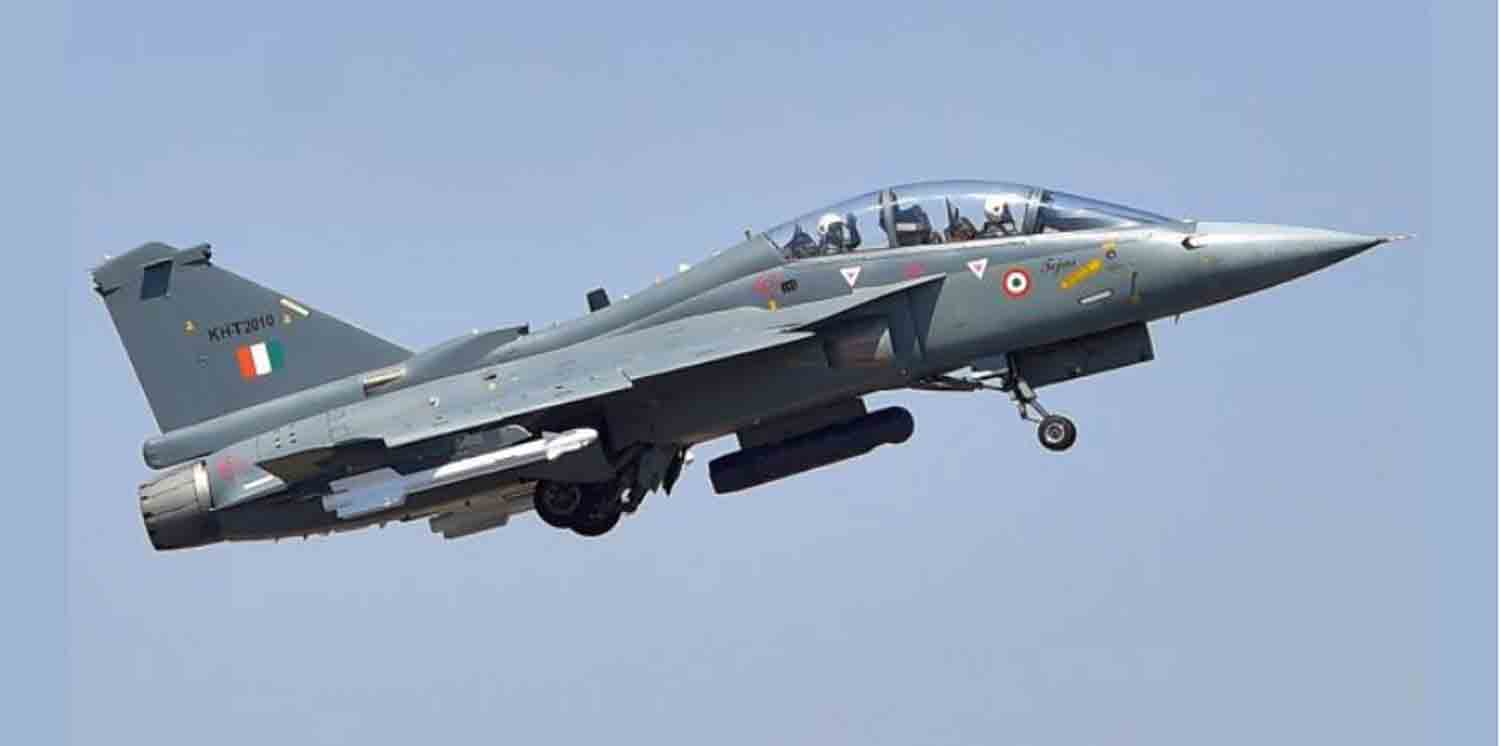
The HAMMER missile is a combat-tested, precision-guided munition recognized for its exceptional accuracy and modular design, allowing it to be deployed across various platforms, including the Rafale and the LCA Tejas. The system features sophisticated targeting capabilities, ensuring effective engagement of enemy targets while minimizing collateral damage.

Chinese J-16s are currently conducting operations far into the South China Sea

0
J-16 fighter jet, China

Recent images of the Chinese J-16 fighter jet highlight China’s aspirations for supremacy in the South China Sea. While such images might typically lack intrigue, given that the J-16 is already familiar to Beijing’s adversaries, its deployment on the Xisha island chain signifies more than mere symbolism; it reflects a deliberate military strategy rooted in China’s ambitions.

The recent stationing of Chinese J-16 fighter jets on the Xisha (Paracel) island chain represents a notable escalation in the ongoing military buildup in the South China Sea. This move emphasizes Beijing’s determination to enhance its foothold in the region, simultaneously raising alarms among neighboring nations and the United States.

The presence of these sophisticated multirole aircraft on a distant island base indicates a strategic transformation with significant geopolitical and military ramifications.

China has consistently regarded the South China Sea as a vital interest, backing its claims with historical narratives that encompass extensive areas of the region. However, these claims frequently conflict with those of Vietnam, the Philippines, Malaysia, Brunei, and Taiwan.

Over the past decade, the militarization of both artificial and natural islands in the area has advanced steadily, converting disputed reefs and atolls into operational military bases. The deployment of J-16s to the Paracels exemplifies this strategy, enhancing China’s capacity to project its influence well beyond its mainland.

The Shenyang J-16 is an advanced multirole fighter derived from the Russian Su-30MKK design. It features state-of-the-art avionics, sophisticated radar systems, and the ability to carry a variety of long-range air-to-air and air-to-ground missiles, thereby significantly bolstering China’s air superiority in the area.

The deployment of these aircraft indicates that China is not only strengthening its defensive capabilities but also positioning itself to assert greater control over vital airspace and maritime routes essential for global commerce.

Furthermore, this move reflects China’s ambition to implement the strategy of “unsinkable carriers.” By utilizing island outposts as forward operating bases, the People’s Liberation Army Air Force (PLAAF) can sustain air power in contested regions without relying on traditional aircraft carriers.

This strategy poses a challenge to the United States and its allies, who depend on naval power to ensure freedom of navigation in the South China Sea. It also complicates potential military responses from regional players, as a network of land-based airfields enables continuous operations independent of vulnerable naval assets.

The strategic ramifications of this development are complex. For the United States, the forward positioning of J-16s adds a new layer of difficulty to current deterrence strategies. While the U.S. Navy and Air Force regularly conduct freedom of navigation operations (FONOPs) to contest Beijing’s maritime assertions, the increasing presence of advanced fighter aircraft in the region heightens the risk of aerial confrontations and escalation.

China’s capacity to sustain a military presence in the South China Sea significantly bolsters its ability to enforce air defense identification zones (ADIZ), thereby limiting the operational flexibility of U.S. and allied forces.

For neighboring countries, this military deployment poses a direct challenge to their sovereignty and security concerns. Vietnam, which has historically disputed China’s claims over the Paracel Islands, perceives this military escalation as a significant threat.

The Philippines, involved in its own territorial disputes regarding the Spratly Islands, may view this as an indication of potential increased Chinese military operations in the area. Moreover, Japan, while not a claimant in the South China Sea, is likely to enhance its surveillance and security collaboration with the U.S. and regional allies in response to China’s assertive posture.

From a wider geopolitical standpoint, this situation aligns with China’s overarching goal of transforming the Indo-Pacific security environment. Beijing’s actions are consistent with its strategy to establish regional dominance by constructing a security framework that reduces the influence of external powers, especially the United States.

The deployment of the J-16 not only acts as a deterrent to possible adversaries but also conveys China’s readiness to defend its territorial claims using advanced military capabilities.

Beijing has consistently characterized its military operations in the South China Sea as defensive, despite recent escalations. Chinese officials maintain that the deployment of fighter jets and other military resources is essential for safeguarding national sovereignty and ensuring regional stability.

This viewpoint, however, is not widely accepted by the international community, especially as China’s military presence in contested areas continues to grow. The militarization of islands contradicts earlier commitments made by China to avoid such actions, resulting in heightened skepticism and diplomatic tensions.

The implications of this military buildup are considerable. The increased militarization in the region heightens the risk of miscalculations and unintentional confrontations between military forces. With U.S. and allied forces frequently operating near Chinese assets, the potential for a confrontation to escalate into a larger conflict remains a serious concern.

Moreover, this development may encourage neighboring nations to expedite their military modernization initiatives, potentially triggering an arms race in an already unstable region.

Ultimately, the deployment of J-16s to the Paracels marks a significant shift in the security landscape of the South China Sea. By bolstering its military presence in disputed territories, China is demonstrating its determination to assert its claims while simultaneously challenging the strategic calculations of both regional and global adversaries.

As tensions escalate, this recent action highlights the increasing significance of the South China Sea as a critical flashpoint in the ongoing struggle for geopolitical influence in the Indo-Pacific.

Russian Soobrazitelny corvette is conducting anti-submarine operations in the Baltic Sea

0
Russian corvette Soobrazitelny

As tensions persist in the Baltic region, the Russian navy has once again showcased its military prowess. The latest demonstration comes from the Russian corvette Soobrazitelny, which has recently completed a series of training exercises centered on anti-submarine warfare and artillery operations in the strategically important waters of the Baltic Sea.

During these exercises, the crew of the corvette conducted intricate anti-submarine drills aimed at detecting, tracking, and neutralizing a simulated enemy submarine, utilizing the ship’s sophisticated anti-submarine weaponry. These operations took place within the Baltic Fleet’s specialized training areas, where Soobrazitelny displayed its readiness to operate in a challenging environment.

A significant aspect of the training involved the use of the ship’s onboard hydroacoustic systems to identify and monitor underwater targets. After successfully locating the simulated enemy submarine, the crew effectively “neutralized” the target with torpedoes, refining their tactical responses to potential underwater threats.

In parallel, Soobrazitelny engaged in air defense exercises aimed at addressing aerial threats. During this segment, the crew reacted to a simulated airstrike, employing established protocols to coordinate anti-air defense measures.

While no live ammunition was utilized, the drills emphasized the importance of communication, coordination, and command control procedures to protect against aerial attacks, reflecting scenarios where Russian vessels might encounter threats from NATO aircraft or other opponents.

The simulated airstrike was executed by helicopters from the naval aviation unit of the Baltic Fleet, highlighting the joint operational aspect of the exercise. The intricate nature of these drills emphasizes the necessity for integrated defense capabilities, as the crew navigates multiple threats and collaborates through various communication channels to ensure a robust defense.

These exercises not only enhance the operational proficiency of the Soobrazitelny and its crew but also convey a strong message regarding Russia’s persistent military presence and preparedness in the Baltic region.

In an area that continues to be a hotspot for geopolitical tensions, this display of military strength reinforces Russia’s capacity to safeguard its interests against external challenges.

The drills are part of a larger initiative aimed at advancing the operational capabilities of the Russian Navy under the K-2 task course framework, which seeks to maintain the readiness of naval forces for diverse combat scenarios.

As NATO enhances its own forces in the region, Russia’s escalating military activities in the Baltic are expected to remain a key point of strategic focus for both parties.

The Soobrazitelny is a contemporary Russian corvette designed for multi-role operations, featuring a flexible design that enables it to undertake a variety of missions, including anti-submarine warfare (ASW), surface combat, air defense, and electronic warfare. Commissioned in 2014, it serves as the lead ship of the Soobrazitelny-class (Project 20380), marking a significant advancement in the Russian Navy’s corvette fleet.

One of the notable attributes of the Soobrazitelny is its sophisticated weaponry, engineered to address threats from both surface and underwater targets. The primary armament features the Uran anti-ship missile system, which is capable of launching P-800 Oniks supersonic cruise missiles.

These missiles are exceptionally effective against surface vessels and can achieve speeds of up to Mach 2.5. The Uran system is tailored for precise long-range strikes, establishing the Soobrazitelny as a formidable contender in naval engagements.

Beyond its anti-ship functions, the Soobrazitelny is outfitted with a comprehensive suite of anti-submarine warfare systems. The corvette is equipped with an RPK-8 launch system that deploys anti-submarine torpedoes.

This capability is enhanced by the ship’s integrated sonar suite, which includes the MGK-335 hydroacoustic complex, facilitating superior underwater detection and tracking of adversary submarines. Consequently, the Soobrazitelny excels in ASW operations, proficiently locating, tracking, and neutralizing submarines with high accuracy.

Additionally, the Soobrazitelny boasts a strong air defense system, attributed to its Redut vertical launch system (VLS). This system is capable of launching a variety of surface-to-air missiles, such as the 9M100 and 9M96, designed to intercept incoming aircraft, missiles, and drones.

The Redut VLS offers significant flexibility, enabling the Soobrazitelny to respond effectively to a wide range of aerial threats, thereby serving as a vital asset for safeguarding both the vessel and adjacent allied forces.

The Soobrazitelny is equipped for close-range defense with an AK-176M 76.2mm naval gun, capable of targeting both surface and aerial threats. This rapid-firing artillery can effectively engage a variety of targets, including incoming missiles and small vessels, thereby enhancing the ship’s point defense capabilities. Furthermore, the corvette is armed with P-120 Malakhit anti-ship missiles, which work in conjunction with the Uran system to establish a robust offensive strategy.

The vessel’s electronic warfare systems are cutting-edge, featuring the PK-10 decoy launching system alongside advanced radar jamming technologies aimed at disrupting enemy tracking and targeting. This capability significantly enhances the Soobrazitelny’s effectiveness in avoiding enemy missile systems, providing crucial protection during high-stakes operations.

For radar and surveillance, the Soobrazitelny utilizes the Furke-4 radar system, which offers long-range surface search capabilities, enabling the detection and tracking of surface vessels under various weather conditions. Additionally, the Zaslon radar system enhances aerial search capabilities, allowing the crew to identify and engage hostile aircraft or missiles at considerable distances.

The Soobrazitelny operates on a combined diesel and gas (CODAG) propulsion system, achieving a maximum speed of 27 knots and a range of approximately 4,000 nautical miles. This propulsion system is supported by a high level of automation, enabling the crew to manage the ship with a relatively small team of around 100 personnel, thus maintaining operational efficiency during prolonged missions.

The Soobrazitelny has been engineered for operational versatility, allowing it to support a helicopter, typically a Ka-27 or Ka-31, which enhances its surveillance and anti-submarine warfare (ASW) capabilities. This helicopter can be utilized for various missions, including reconnaissance, anti-submarine operations, and search-and-rescue, thereby providing significant operational flexibility.

The ship’s design prioritizes survivability, incorporating sophisticated damage control systems, redundant power sources, and reinforced hull sections to safeguard critical areas. It is built to endure contemporary anti-ship missile threats and other combat situations, ensuring that the Soobrazitelny remains effective in challenging environments.

With its integration of advanced sensors, robust weaponry, and adaptable operational functions, the Soobrazitelny exemplifies modern Russian corvette design.

Its capacity to perform a wide range of missions, from surface engagements to air defense and anti-submarine warfare, positions it as an essential element of the Russian Navy’s strategy for asserting dominance in vital maritime areas.

The Soobrazitelny represents Russia’s dedication to bolstering its naval capabilities, particularly in regions such as the Baltic Sea, where its deployment acts as both a military resource and a demonstration of strategic intent.

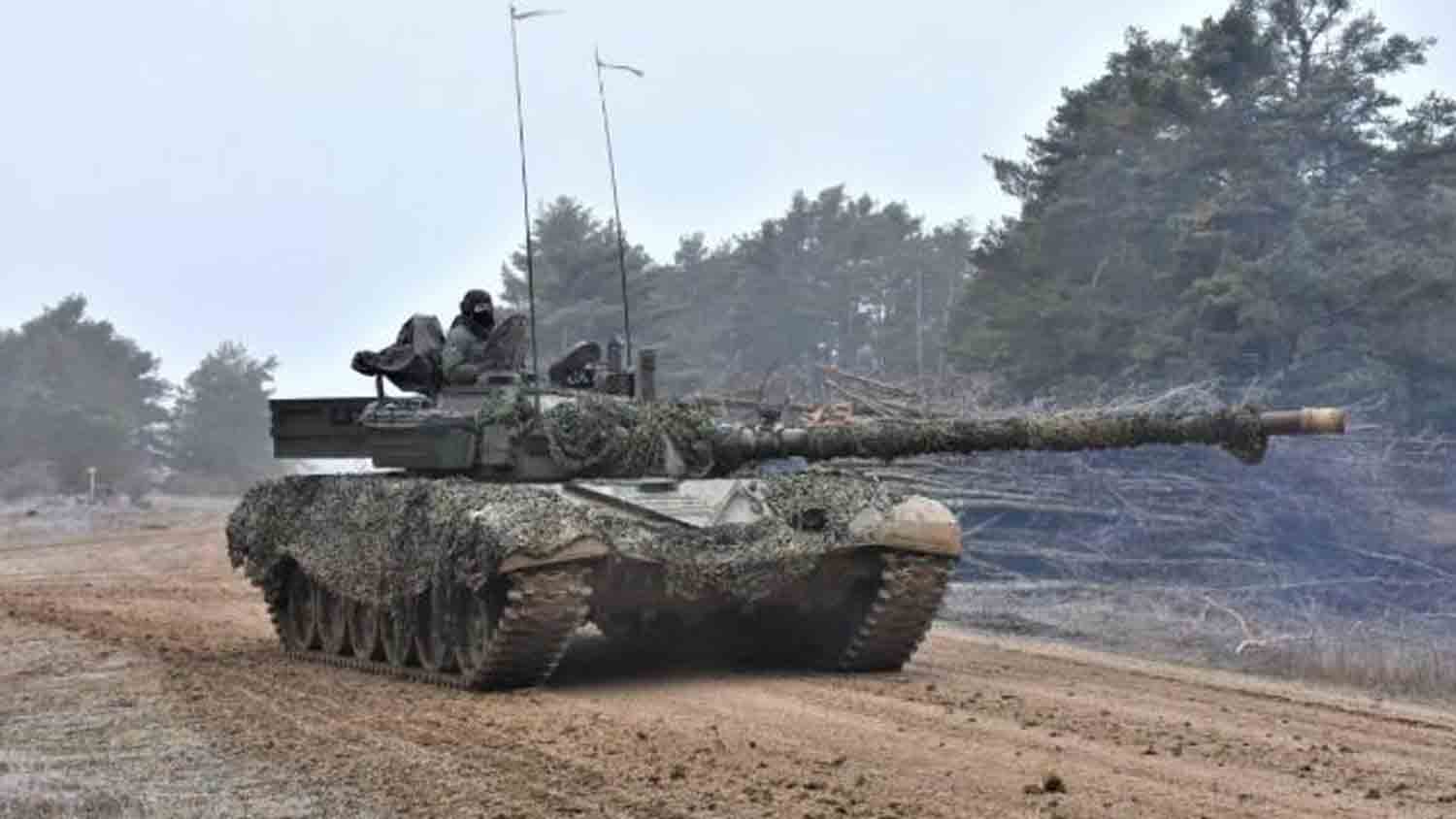
Upgraded Soviet T-72 tanks from the Netherlands are now in the possession of Ukraine

0
T-72 tanks

The Dutch Ministry of Defense has announced that it has completed the delivery of upgraded T-72 tanks to Ukraine, fulfilling its commitment. In a recent statement, the ministry confirmed, “The Netherlands has now delivered the last battle tanks it pledged to Ukraine.”

This initiative was a collaborative effort between the Dutch government and the administration of former U.S. President Joseph Biden, which jointly financed the acquisition, refurbishment, and modernization of T-72M/M1 tanks obtained from Czech reserves.

The refurbishment was executed by Excalibur Armor, a Czech defense contractor recognized for its proficiency in modernizing Soviet-era armored vehicles to meet contemporary combat requirements.

Throughout the refurbishment, the T-72 tanks underwent substantial enhancements to improve their battlefield performance. They were equipped with advanced dynamic armor for better protection, a Czech-developed communication system from MESIT, and a new digital control interface.

Moreover, their night vision systems were upgraded to improve effectiveness in low-light conditions, and the tanks received a more powerful engine, increasing their output to 840 horsepower.

The Dutch government’s intention to supply these upgraded tanks was first revealed in early 2023. By April of that year, an official military aid list for Ukraine included 45 T-72 tanks, as part of a larger initiative to assist Ukrainian forces in their ongoing conflict with Russia. The delivery process, which took nearly two years, is reported to have concluded in early 2025.

The battlefield remains harsh despite the recent reinforcements. Reports indicate that the Russian military has successfully targeted and destroyed several modernized T-72EA tanks across different combat zones, highlighting the intense nature of the ongoing conflict.

Nonetheless, the introduction of these upgraded tanks enhances the firepower and survivability of Ukrainian forces, bolstering their ability to withstand Russian offensives and launch counterattacks when feasible.

This transfer of tanks represents a significant addition to Ukraine’s military capabilities, reflecting the ongoing support from Western allies in their war efforts. As military assistance continues to arrive from European and NATO partners, the strategic implications of these reinforcements are crucial in the shifting dynamics of the conflict between Ukraine and Russia.

Since the beginning of the Russian invasion in February 2022, the Netherlands has played a pivotal role as a key international ally, providing extensive military support to aid Ukraine in its defense against aggression.

The Dutch commitment to Ukraine has been comprehensive, encompassing not only the provision of military equipment but also training, logistical assistance, and the establishment of strategic partnerships.

From the outset, the Netherlands has clearly articulated its position, with Prime Minister Mark Rutte underscoring the significance of a free and independent Ukraine. The Dutch have been vital in delivering both lethal and non-lethal military support, supplying a variety of equipment tailored to meet Ukraine’s urgent battlefield requirements.

The total amount of military assistance from the Netherlands since the onset of the conflict is substantial, with commitments totaling billions of euros. This aid encompasses direct contributions from Dutch military reserves, commercial acquisitions, and collaborative initiatives with allied nations.

The Netherlands has supplied Ukraine with a range of military equipment, including armored vehicles, artillery systems, anti-aircraft defenses, and, most notably, F-16 fighter jets. A commitment has been made to transfer 42 F-16A/B aircraft to Ukraine, with several of these jets already in use for training Ukrainian pilots.

Beyond hardware, the Netherlands has prioritized the enhancement of Ukraine’s air defense systems, which are essential for countering Russian airstrikes targeting civilian and critical infrastructure. This support has included the provision of Patriot missile systems, which have played a crucial role in intercepting enemy missiles. Additionally, the Netherlands has bolstered Ukraine’s artillery capabilities by supplying PzH 2000 howitzers, thereby increasing Ukraine’s artillery effectiveness.

Tanks and armored personnel carriers represent another key component of Dutch military support. In collaboration with countries such as Germany and Denmark, the Netherlands has committed to delivering Leopard 1 and 2 tanks, along with other armored vehicles like the YPR-765, which have been instrumental in ground operations.

The Netherlands has been actively involved in training Ukrainian military personnel by dispatching instructors to the UK and participating in EU training missions. This training program includes not only combat techniques but also logistics, medical assistance, and demining operations, reflecting a comprehensive strategy for enhancing military capabilities.

The financial aspect of this support is significant as well. The Dutch government has committed considerable resources, with pledges extending through 2025, ensuring ongoing assistance. This financial support not only addresses the procurement of military equipment but also bolsters the overall Ukrainian defense budget, facilitating the upkeep and operational expenses of the supplied assets.

In addition to direct military support, the Netherlands has engaged in wider European initiatives to assist Ukraine, participating in efforts such as the Ukraine Defense Contact Group and contributing to NATO’s extensive support packages for Ukraine. This collaborative strategy highlights the Dutch dedication to collective security in Europe.

The T-72 tank is among the most widely manufactured and utilized main battle tanks globally, having been in service with various nations since its launch in the early 1970s.

Originally developed by the Soviet Union as a more efficient and simplified alternative to the T-64, the T-72 has become a fundamental component of Warsaw Pact armored units and has undergone significant modernization over the years.

The initial T-72 tank was equipped with a 125mm smoothbore cannon and an autoloader, which allowed for a reduced crew size of three members. It was driven by a V-46 diesel engine that generated 780 horsepower, enabling a maximum speed of around 60 km/h. Its armor protection was based on a mix of cast steel and composite materials, with later iterations adding explosive reactive armor (ERA) to enhance defense against contemporary anti-tank threats.

A variety of T-72 variants have been created to meet evolving battlefield needs. The T-72A, launched in the late 1970s, boasted upgraded armor and a laser rangefinder for improved targeting accuracy.

The T-72B, introduced in the mid-1980s, featured a more sophisticated fire control system, the capability to fire anti-tank guided missiles (ATGMs) from its main gun, and enhanced armor protection. The T-72B1 was a more economical version that omitted the missile capability while retaining most of the other enhancements.

In the 2010s, the T-72B3 was released, offering significant advancements in the tank’s performance, including a modern fire control system, thermal imaging sights, a more powerful engine, and advanced reactive armor. The T-72B3M further improved upon this with the addition of a new Relikt ERA package, an upgraded main gun stabilizer, and further protective enhancements. These variants have been widely utilized by Russia, especially in recent conflicts.

The T-72 family has also been expanded through export and licensed production versions. The Polish PT-91 Twardy introduced local fire control enhancements and composite armor. The Czech T-72M and T-72M1 served as simplified export models, while India’s T-72 Ajeya included domestic modifications. Iraq’s Asad Babil was a locally produced variant that featured downgraded components compared to the Soviet-built versions.

Numerous upgrade packages have been created by various countries and companies to maintain the T-72’s relevance in contemporary combat scenarios. Notable examples include the Slovakian T-72M2 Moderna, which incorporates Western-style fire control and protection systems, and the Ukrainian T-72AMT, equipped with advanced digital communications, enhanced explosive reactive armor (ERA), and thermal imaging optics. Furthermore, modernization initiatives like the T-72EA aim to improve the tank’s night combat capabilities and overall operational effectiveness.

Despite its age, the T-72 continues to be a significant asset on the battlefield, thanks to ongoing modernization efforts and its widespread availability. It has participated in numerous conflicts, ranging from the Iran-Iraq War to the current war in Ukraine, where various T-72 models have been utilized with differing levels of success. Although newer tank models provide better protection and firepower, the T-72’s versatility ensures its enduring role within global armored forces.

U.S. canceled the F-35 demo at Aero India over concerns of a confrontation with Russia’s Su-57

0

Russia’s advanced fifth-generation fighter, the Sukhoi Su-57 Felon, made a striking impression at Aero India 2025 in Bengaluru, a development that reportedly unsettled the United States, prompting an unexpected withdrawal.

In a surprising turn of events, the U.S. abruptly canceled its plans for aerial demonstrations of the F-35 Lightning II and F-16 fighters, relegating them to static displays. The Su-57 Felon seized this opportunity, showcasing its remarkable power, agility, and state-of-the-art technology, clearly asserting its dominance in the skies.

Denis Alipov, Russia’s Ambassador to India, allegedly remarked that the U.S. decision to withdraw its F-35 and F-16 demonstrations at Aero India “indicates that its competitor (F-35) is not prepared to engage in fair competition.” The sudden cancellation of the U.S. fighter aircraft displays has sparked intense speculation, with many suggesting it was a strategic decision to avoid an inevitable and disadvantageous confrontation with the Russian Su-57.

Renowned for its exceptional flight capabilities, particularly in low-speed maneuvers, the Su-57 was set to capture the audience’s attention, overshadowing its American rivals in a display of aerial prowess.

Indian media previously reported that the primary reason for the absence of the U.S. F-35 in the aerial demonstrations was a “shortage” of demonstration pilots. While defense experts commend the F-35’s advanced avionics as significantly superior to those of the Su-57, its actual flight performance has often been viewed as lacking for a fifth-generation fighter. In contrast, the Russian Su-57 is recognized as the leading authority in low-speed maneuverability, establishing a new standard for aerial agility.

Equipped with cutting-edge three-dimensional thrust vectoring engines, the Su-57 performs remarkable maneuvers that few, if any, competitors can rival. In contrast to the F-35’s engines, the Su-57’s AL-41F1 engines are said to maintain supersonic speeds without the need for afterburners. Starting this year, Russia plans to upgrade the AL-41F1 engines in its Su-57 production variants to the more powerful and easier-to-maintain AL-51F.

The aerial capabilities of the Su-57 could place the F-35 and F-16 at a disadvantage, potentially bolstering public support in India for New Delhi’s decision to procure the Su-57.

While the Su-57 excels in aerial demonstrations, the F-35 boasts significant advantages through its advanced avionics systems, which include sophisticated data links, passive electronic sensors, radar, and other state-of-the-art technologies. Although the advanced avionics of the U.S. fifth-generation F-35 provide a considerable edge to its pilots, these features are not easily demonstrated in flight displays.

Recently, two U.S.-made fifth-generation fighters, the F-35 Lightning II, arrived at the Indian Air Force Base in Yehalanka, Bengaluru, to participate alongside Russia’s Su-57 Felon at Aero India 2025. This event marked a unique occasion at Yehalanka Air Base, where both U.S. and Russian fifth-generation fighter jets were positioned mere meters apart. This is the first time the Su-57 has appeared at Aero India, while the F-35 had previously taken part in the biennial air show in 2023.

International defense analysts indicate that this marks the first occasion where the F-35 Lightning II and the Su-57 Felon are simultaneously present in the same airspace.

The co-presence of both Russian and U.S. fifth-generation fighters at this year’s Aero India is particularly noteworthy, as both nations are vying for India’s favor in selecting their respective aircraft.

The Indian Air Force is in urgent need of fifth-generation fighter jets to maintain its competitive edge against traditional rivals. Pakistan is poised to acquire China’s fifth-generation J-35A fighter, while China has been operating the J-20 Mighty Dragon for several years and is expected to enhance its fleet with the J-35A.

To effectively address the challenges posed by Pakistan and China—both of which are either in the process of acquiring or have already deployed fifth-generation fighters—India cannot depend solely on its fourth-generation++ aircraft, such as the French Rafale and the Russian Sukhoi Su-30MKI. New Delhi requires fifth-generation fighter jets to effectively counter the evolving threats from its neighboring adversaries.

Russia has already proposed a joint production agreement for the Su-57 Felon and has suggested collaboration on India’s own fifth-generation fighter initiative, the Advanced Medium Combat Aircraft (AMCA).

Kremlin has expressed admiration for Trump’s stance on resolving the conflict in Ukraine

0
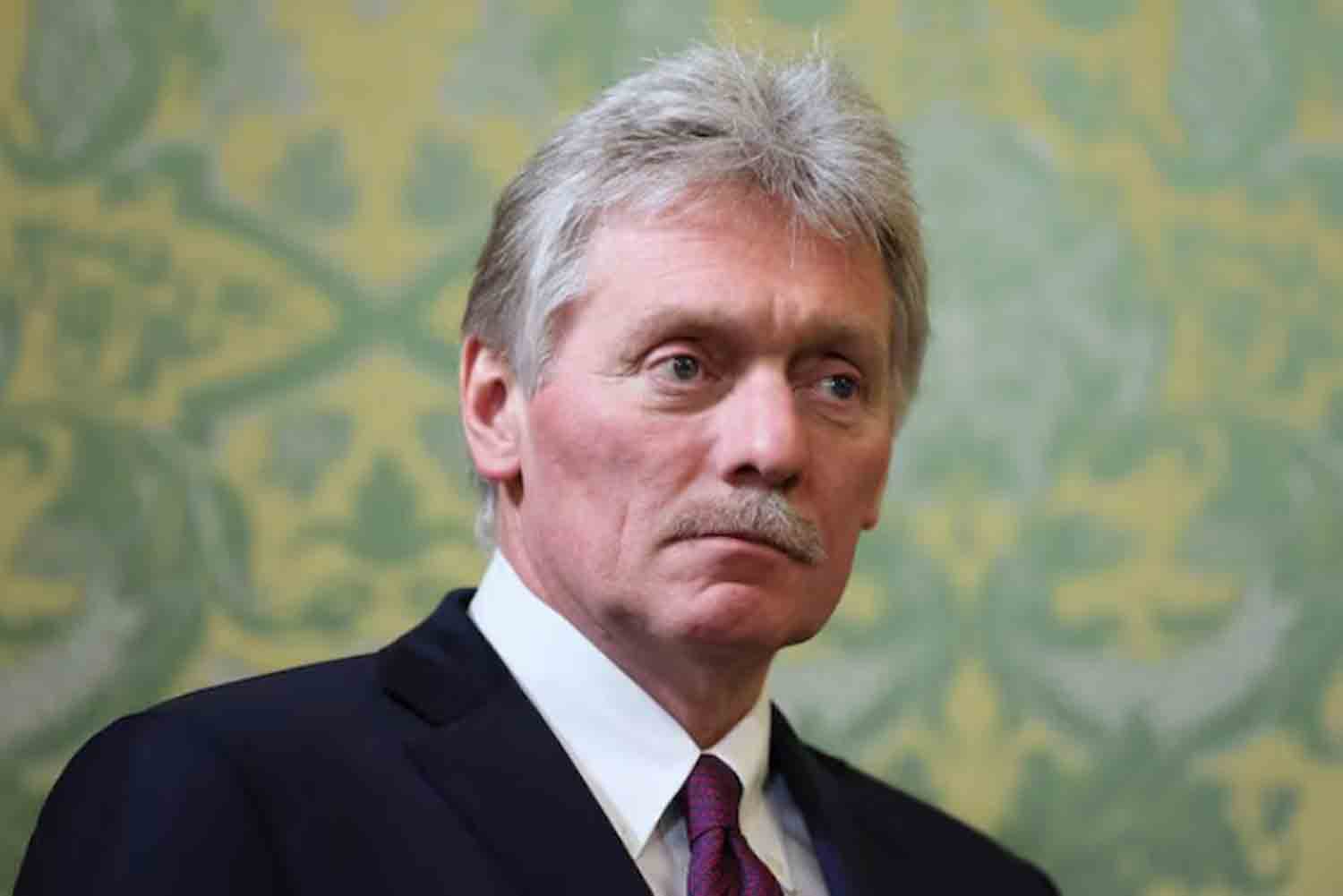
Kremlin spokesman Dmitry Peskov

The Kremlin expressed its admiration on Thursday for U.S. President Donald Trump‘s stance regarding the resolution of the conflict in Ukraine, indicating that preparations are underway for a meeting between Trump and Putin. Kremlin spokesman Dmitry Peskov noted that there is a shared political will from both Russia and the United States to seek a resolution and bring an end to the three-year conflict.

Following a phone conversation lasting over an hour on Wednesday, Trump remarked that NATO membership for Ukraine is not a practical option, despite Kyiv’s aspirations for such a guarantee of its security.

When questioned about Trump’s suggestion that a meeting with Putin might occur in Saudi Arabia, Peskov stated that the specifics of the meeting are still being finalized. He refrained from commenting on which leader initiated the phone call.

Regarding Putin’s invitation for Trump to visit Moscow, Peskov mentioned that there has been a mutual exchange of invitations, but emphasized that the upcoming bilateral meeting represents a separate initiative.

Peskov highlighted the political will expressed during the recent conversation, stating, “There is a commitment to engage in dialogue aimed at finding a resolution.” He added, “There is consensus that a peaceful negotiated settlement is achievable.” He contrasted the current U.S. administration’s approach with that of the previous one, noting, “The former administration believed in prolonging the conflict, while the current administration appears committed to ending the war and fostering peace.”

The stance of the current administration has garnered our admiration, and we remain receptive to discussions. When inquired about the participation of European nations in peace negotiations, Peskov indicated that it is too early to determine the format.

Trump expresses support for Ukraine; however, his initial concessions to Russia raise concerns

0
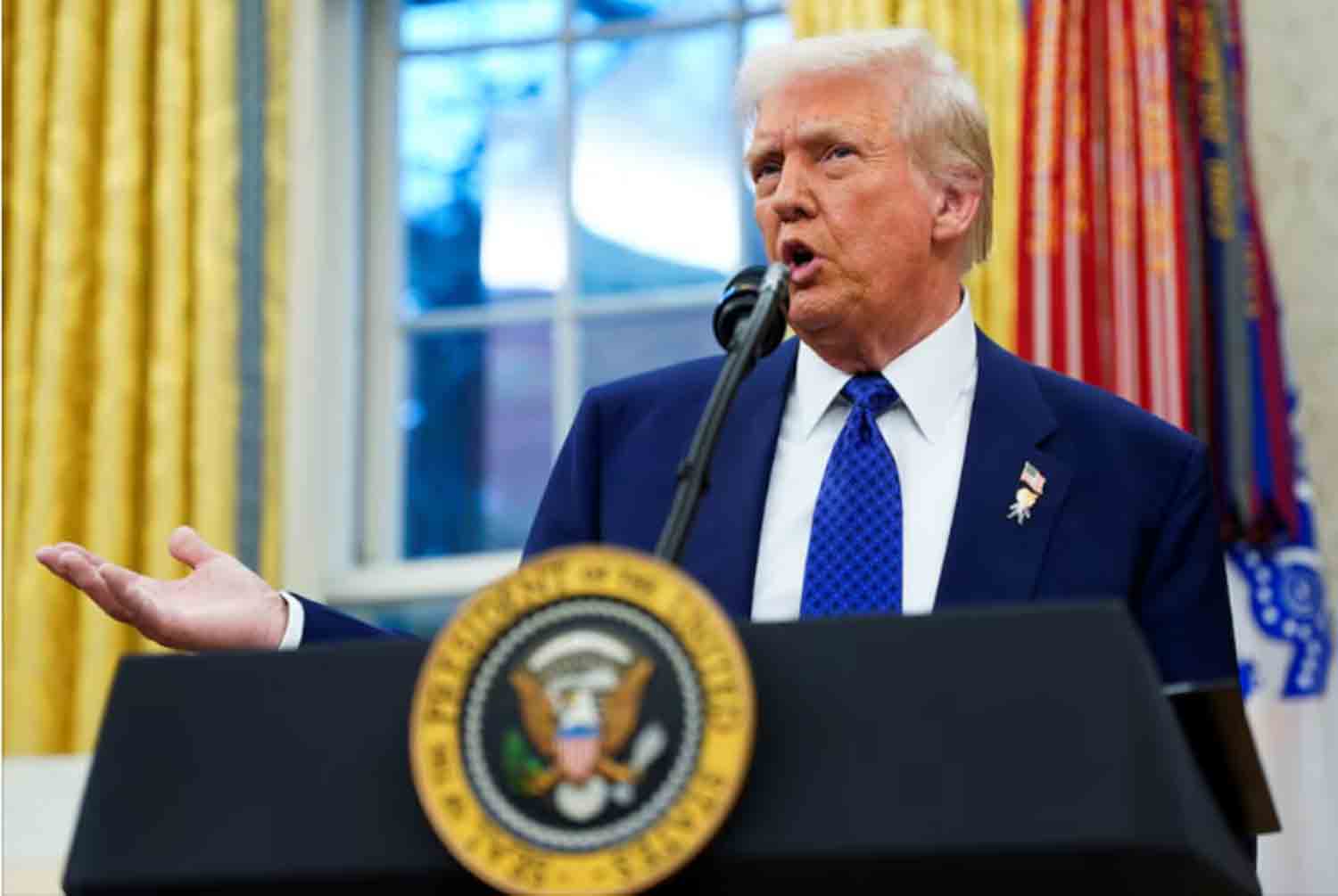
U.S. President Donald Trump speaks, on the day of Tulsi Gabbard's swearing in ceremony as Director of National Intelligence, in the Oval Office at the White House in Washington, D.C.

U.S. President Donald Trump has pledged to bring a quick resolution to the conflict in Ukraine. However, as negotiations are set to commence, the author of “The Art of the Deal” may have inadvertently complicated his position by diminishing his negotiating power.

On January 20, Trump, who assumed the presidency, engaged in separate discussions regarding the war with Russian President Vladimir Putin and Ukrainian President Volodymyr Zelenskiy. He instructed U.S. officials to initiate talks aimed at concluding the nearly three-year conflict.

These conversations followed remarks from Defense Secretary Pete Hegseth, who informed Ukraine’s military allies in Brussels that restoring Ukraine’s borders to their pre-2014 state—prior to Russia’s annexation of Crimea—was not feasible. He also indicated that NATO membership for Ukraine was not part of the solution and confirmed that U.S. troops would not participate in any security arrangements in Ukraine.

Michael McFaul, who served as the U.S. ambassador to Russia during President Barack Obama’s term from 2012 to 2014, expressed skepticism about the Trump administration’s approach to Russia and Ukraine in light of the upcoming negotiations.

“Why is the Trump administration offering concessions to Putin—Ukrainian territory and the exclusion of NATO membership for Ukraine—before talks even start?” McFaul questioned on the social media platform X. “In my experience negotiating with the Russians, you should never concede anything without receiving something in return.”

Currently, Russia controls approximately 20% of Ukraine and has insisted that Kyiv relinquish territory and adopt a stance of permanent neutrality as part of any peace agreement. Conversely, Ukraine demands the withdrawal of Russian forces from occupied areas and seeks NATO membership or equivalent security assurances to deter future aggression from Moscow.

Putin has consistently stated that Russia is willing to engage in discussions to resolve the conflict, yet he maintains that Moscow will fulfill its objectives in Ukraine, which include the country’s “demilitarization” and ensuring its neutrality.

Officials from the Trump administration had indicated for some time that they would not endorse all of Ukraine’s aspirations, but comments made by Hegseth and Trump have startled European partners.

Former Lithuanian Foreign Minister Gabrielius Landsbergis expressed concern on X, stating, “No NATO membership, no boots on the ground? Sounds like abandoning Ukraine,” in reaction to Hegseth’s statements, which come just before the Munich Security Conference where political and military leaders will convene later this week.

“Delegates are heading to Munich not to negotiate, but to inform Zelenskiy of the unfortunate news.”

When asked later on Wednesday if Hegseth’s comments had diminished U.S. leverage, Trump responded to reporters, “I’m backing Ukraine.”

‘ACCEPTANCE OF REALITY’

Stephen Wertheim, a senior fellow at the Carnegie Endowment, characterized Hegseth’s remarks as an “acceptance of reality.” He clarified that Hegseth’s statement does not suggest any U.S. intent to recognize occupied Ukrainian territories as legally Russian, and noted that excluding NATO membership “indicates to Russia that a feasible settlement might be possible.”

Since the onset of the war in February 2022, President Joe Biden and European allies have remained steadfast in their demand for Russia’s withdrawal while keeping the door open for potential NATO membership. The U.S. and Europe have provided Ukraine with tens of billions of dollars in military assistance.

Russia has faced diplomatic isolation within the United Nations, where a significant majority of the 193-member General Assembly has consistently voted to condemn Moscow’s invasion of Ukraine and call for the withdrawal of its troops. On Wednesday, the Kremlin announced that Putin and Trump had agreed to meet, with Putin extending an invitation for Trump to visit Moscow. Such a visit would represent a significant advantage for the Russian president, who is currently subject to an arrest warrant from the International Criminal Court due to his actions in Ukraine.

Brett Bruen, a former foreign policy adviser during the Obama administration, compared Trump’s willingness to meet with Putin to the high-profile summits he held with North Korean leader Kim Jong Un during his first term, aimed at addressing North Korea’s nuclear ambitions. Despite these efforts, Kim continued to advance his nuclear weapons program. Bruen emphasized that such meetings should yield concessions, stating that the Kremlin should not only release more American detainees but also relinquish territory in Ukraine.

MINIRALS AGREEMENT AS SECURITY SHIELD

In conjunction with Trump’s statements and Hegseth’s comments, U.S. Treasury Secretary Scott Bessent visited Kyiv, where he indicated that a minerals agreement between Kyiv and Washington could serve as a “security shield” for Ukraine in the post-war context.

President Zelenskiy expressed his willingness to negotiate a deal that would allow U.S. investment in Ukraine’s mineral resources. On Wednesday, Trump suggested that a minerals deal could secure U.S. financial support for Ukraine, stating, “I told Biden, I said: ‘You ought to be asking for either a loan or some kind of a security, like their oil and gas or something for the money’.”

John Herbst, who served as the U.S. ambassador to Ukraine from 2003 to 2006 during President George W. Bush’s administration, remarked that the U.S. has lost some of its leverage with Russia, but he viewed Bessent’s visit to Kyiv as a positive development.

“Trump is suggesting a trade of American weapons for Ukrainian minerals. This aligns with Trump’s rationale for supplying arms to Ukraine,” Herbst stated. “This is significant and very encouraging.”

However, he cautioned that a swift agreement on imbalanced terms could set a troubling precedent.

British lawmaker and former foreign secretary James Cleverly commented that initiating negotiations by outlining concessions from one side is “not a strong move.”

“Creating the impression that aggression yields rewards is not a wise strategy. Other regimes are observing closely. We must convey that violence and aggression do not prevail. I stand with Ukraine,” he expressed on X.

India anticipates finalizing a $200 million missile agreement with the Philippines within this year, according to sources

0
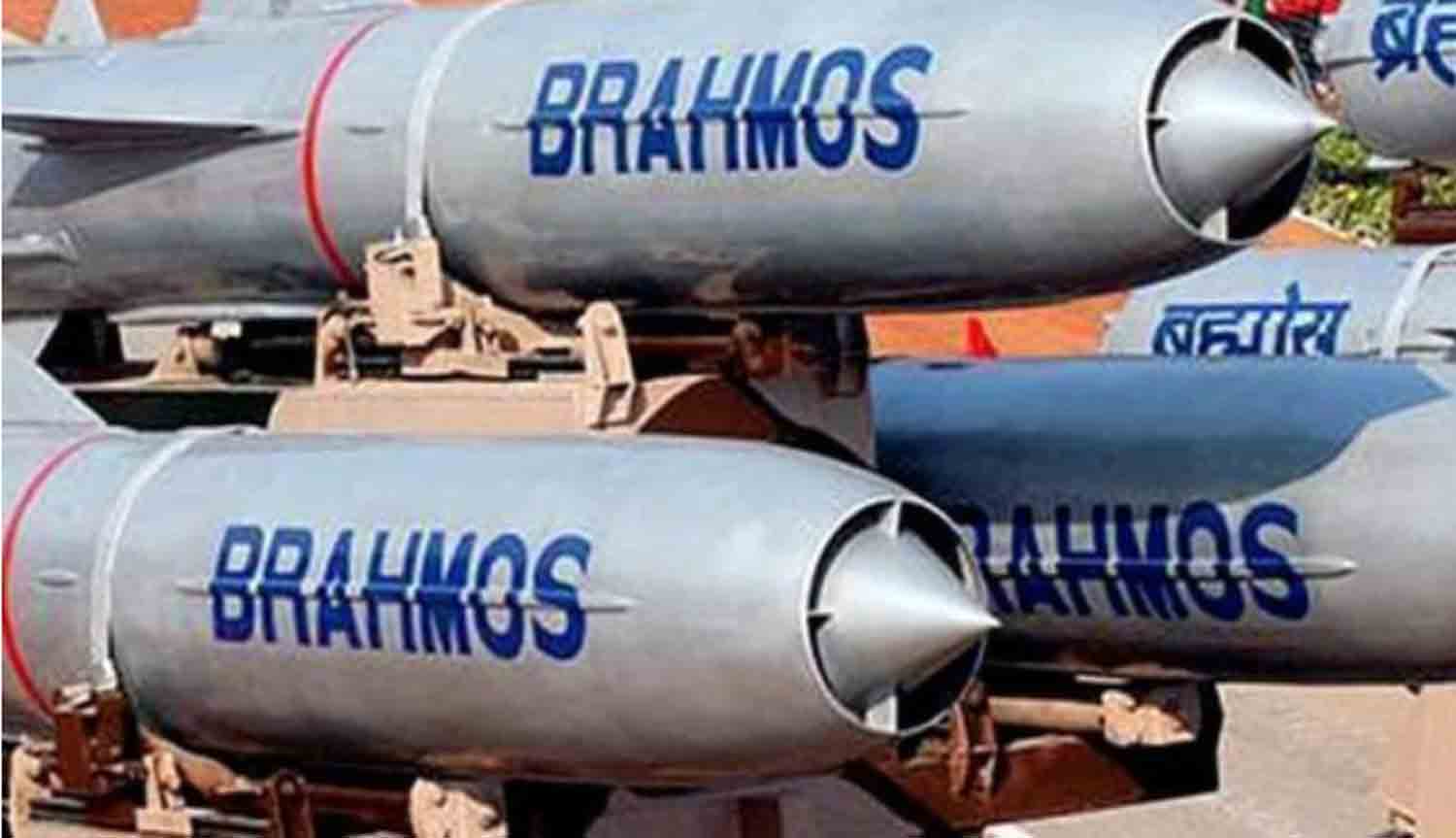
Brahmos missile

India is poised to finalize a deal to supply short-range missiles to the Philippines this year, with the contract valued at over $200 million, according to Indian sources cited by Reuters. This marks New Delhi’s second significant defense export agreement with Manila amid escalating tensions with China.

The Philippines has expressed interest in the Akash missile system, developed by India’s defense research organization, and has indicated plans to place an order in the upcoming fiscal year starting in April, as reported by three anonymous sources due to the sensitive nature of the discussions.

The surface-to-air missile system, which has a range of up to 25 kilometers (16 miles), was previously sold to Armenia in a $230 million transaction last year. Sources suggest that the deal with the Philippines is anticipated to exceed the value of the Armenian contract, although they did not disclose the quantity of missiles or the associated systems, such as radars.

Bharat Dynamics Ltd, the manufacturer of the missiles, participated in last year’s Asian Defense and Security Exhibition held in Manila. Neither the company nor India’s defense ministry provided immediate comments on the matter. A spokesperson for the Philippine defense department, Arsenio Andolong, refrained from discussing specific details regarding the deal or procurement plans but acknowledged that the armed forces have indicated a need for such capabilities.

The anticipated agreement would follow India’s $375 million sale of the mid-range BrahMos supersonic cruise missile to the Philippines in 2022. This acquisition occurs as Manila seeks to enhance its military capabilities amid rising tensions with Beijing over competing claims in the heavily trafficked South China Sea, where confrontations have occurred in recent years.

While India is recognized as the largest arms importer globally, it is increasing its domestic production and expanding defense exports to mitigate China’s military influence in the region, particularly after border clashes in the Himalayas in 2020.

On Wednesday, the chief of the Philippines’ armed forces indicated that the nation aims to procure additional military equipment to modernize its defense inventory, which includes more BrahMos missiles from India and plans for at least two submarines. General Romeo Brawner stated, “We are acquiring more of this (BrahMos system) this year and in the years to come,” although he did not reference the Akash missile system.

Greece Raises Concerns: Turkey Allegedly Reverse Engineering METEOR Missile for GÖKHAN System

0
Eurofighter Typhoon fighter jet with “METEOR” long range air-to-air missile

Greek defense sources have raised new concerns by claiming that Turkey is preparing to leverage its upcoming acquisition of the long-range METEOR air-to-air missile as a model to covertly develop its own indigenous GÖKHAN missile, which could significantly alter the aerial combat landscape in the region. Reports from the Greek newspaper Kathimerini indicate that Turkey’s defense sector plans to engage in reverse engineering of the METEOR missile, examining its structural and operational characteristics to facilitate the creation of the domestically produced GÖKHAN.

Currently in various testing stages, the GÖKHAN missile is referred to as Turkey’s equivalent to the METEOR. It is specifically engineered for compatibility with Turkey’s fifth-generation KAAN stealth fighter jet, enhancing the aircraft’s air superiority capabilities. Greece has claimed that the GÖKHAN’s design closely resembles that of the METEOR missile. However, Turkey’s long-range air-to-air missile is characterized by smaller fins, suggesting it has been optimized for internal weapon bays, a typical feature of fifth-generation fighter jets.

In the coming months, Türkiye is anticipated to conduct live tests of the ramjet-powered GÖKHAN air-to-air missile, representing a crucial step forward in its defense technology development. With a kinetic range surpassing 200 km and a “no escape” zone of 100 km, as reported by the Turkish Defense Research Agency (TÜBİTAK-SAGE), the GÖKHAN has been under development since 2021 as an active radar-guided missile system.

It is designed to give the KAAN fighter a tactical edge, positioning Türkiye among the elite air combat forces globally. The GÖKHAN missile features a ramjet propulsion system that offers a greater effective range than traditional solid-fuel rocket engines, allowing for thrust adjustments during flight—something conventional rocket-powered missiles cannot do. This missile will be integrated into Türkiye’s upgraded F-16 fighters as part of the ÖZGÜR program, which includes the MURAD 100-A AESA radar, and will also be utilized on the next-generation KAAN fighter jet.

Greece has reportedly voiced significant concerns to France regarding its purported endorsement of Türkiye’s acquisition of METEOR long-range air-to-air missiles for use with the Eurofighter Typhoon fighters that Ankara intends to purchase.

Recently, Greek Defense Minister Nikos Dendias summoned French Ambassador to Greece, Laurence Auer, to formally express Greece’s objections to the proposed deal, seeking clarification on the reports about the potential sale of METEOR Beyond Visual Range (BVR) missiles to Türkiye.

“I have communicated to the French Ambassador Greece’s firm opposition to this potential sale (of METEOR missiles to Turkey), as it contradicts the strong strategic partnership between Greece and France that has been established until now,” Dendias remarked on the social media platform X (formerly Twitter). This diplomatic tension between Greece and France arises despite their robust defense collaboration.

Under the bilateral defense agreement signed in September 2021, Greece and France committed to mutual military support in the event of an attack by a third party. The Franco-Greek defense pact has resulted in significant arms acquisitions for Greece, including 24 Rafale fighter jets from Dassault Aviation and French-built naval vessels. Greece’s primary concern is that Türkiye’s procurement of METEOR missiles for the Eurofighter Typhoon could jeopardize its current air superiority over Ankara, which has been bolstered by the acquisition of Rafale fighters from France.

The planned acquisition of 40 state-of-the-art Eurofighter Typhoon jets, equipped with METEOR air-to-air missiles, has ignited significant tensions among Britain, France, and Greece. Reports indicate that Türkiye has linked its purchase of the Eurofighter Typhoons to obtaining approval for the METEOR missiles, a request that now seems to have been fulfilled.

Türkiye is poised to acquire the latest version of the Eurofighter Typhoon—Tranche 4.

Featuring the CAPTOR-E AESA radar, the Eurofighter Typhoon Tranche 4 is recognized as Europe’s most advanced fighter aircraft, anticipated to remain in service until at least 2060. The METEOR Beyond Visual Range Air-to-Air Missile (BVRAAM) is widely regarded as the premier air-to-air missile globally, outclassing the U.S.-produced AIM-120 AMRAAM.

Developed by MBDA, the radar-guided METEOR missile is reported to achieve speeds of Mach 4 and can engage aerial targets at distances of up to 200 km. As Türkiye advances towards incorporating METEOR-class technology into its domestic GÖKHAN missile, the geopolitical arms race in the Eastern Mediterranean is likely to intensify further.

Iran has developed a suicide drone capable of launching attacks from significant depths

0

Iran’s recent introduction of the world’s first underwater-launched suicide drone represents a pivotal advancement in contemporary warfare, heralding a new phase of naval threats and asymmetric military capabilities.

This innovation, which integrates stealth technology, artificial intelligence, and precise targeting, could significantly alter the strategic equilibrium in the Persian Gulf and beyond.

As countries around the globe rush to enhance their drone capabilities, Iran‘s latest development prompts urgent discussions regarding naval defense strategies, countermeasures, and the future landscape of undersea combat.

The newly disclosed drone, which can reportedly be launched from underwater, poses a distinct risk to both military and commercial shipping. Unlike traditional surface drones, this system leverages the element of surprise, making it considerably harder to detect and intercept.

Conventional anti-drone measures typically concentrate on threats from the air or surface, suggesting that naval forces may need to reevaluate their defense tactics to address this emerging undersea threat.

A particularly alarming feature of Iran’s suicide drone is its use of artificial intelligence. With AI-driven navigation and target recognition, the drone can function autonomously, minimizing the need for direct human oversight.

This technological leap not only enhances deployment efficiency but also complicates countermeasures, as AI systems can adjust to changing battlefield scenarios in real-time.

The capability to autonomously identify and engage targets introduces a novel aspect to undersea warfare, potentially undermining the effectiveness of traditional naval defenses against such precision-guided assaults.

The strategic ramifications of this weapon system reach far beyond Iran’s immediate rivals. As a nation often embroiled in geopolitical conflicts, Iran’s creation of an AI-powered underwater suicide drone conveys a powerful message to both regional and global powers.

The Persian Gulf, a vital artery for international oil transportation, may experience increased instability if Iran opts to utilize these drones in disputed waters. The threat of these drones targeting U.S. Navy ships, allied vessels, or commercial maritime traffic raises alarms about a potential arms race in the area.

Discussions surrounding Iran’s military advancements frequently revolve around their origins and technological influences. Given the country’s track record of acquiring and reverse-engineering foreign military technologies, there is considerable speculation about whether this drone represents a fully domestic innovation or an adaptation of foreign designs.

Iran has previously shown its capability to improve existing drone technologies, as evidenced by its Shahed-series UAVs, which have been utilized in various conflicts and provided to allied forces throughout the Middle East. Should this underwater drone follow a similar path, its spread could present a significant challenge to naval forces globally.

Addressing such an advanced system poses a considerable challenge. Conventional sonar systems may find it difficult to detect a small, stealthy underwater drone, especially if it employs noise-reduction technologies or operates at varying depths.

Current missile defense systems designed for aerial threats are unlikely to counter a submerged drone effectively. This situation calls for the development of new defensive measures, including improved undersea surveillance networks, AI-enhanced sonar detection, and specialized interception methods.

The potential for swarm tactics, where multiple underwater drones are deployed simultaneously to overwhelm a target, further complicates defense strategies.

Iran’s introduction of an underwater suicide drone brings forth significant ethical and legal implications. The use of autonomous weapon systems is a contentious issue within the international community, raising concerns about accountability, engagement protocols, and possible breaches of maritime law.

The implementation of AI-powered suicide drones in disputed waters may obscure the distinctions between conventional and asymmetric warfare, complicating military leaders’ ability to anticipate and address such threats effectively.

In light of this advancement, the United States and its allies are likely to expedite their research into counter-drone technologies and underwater defense systems.

Nations with sophisticated submarine warfare capabilities, including the U.S., Russia, and China, are expected to evaluate the feasibility of incorporating similar AI-driven underwater drones into their military inventories.

The emergence of underwater-launched suicide drones could lead to the development of a new military strategy centered on undersea drone warfare and corresponding countermeasures.

Iran’s introduction of this drone technology occurs during a period when unmanned systems are transforming the dynamics of modern warfare. The growing deployment of drones in global conflicts highlights their role as effective, cost-efficient force multipliers.

In contrast to traditional naval assets that demand substantial investment and personnel, suicide drones offer a more economical approach for nations to confront superior naval forces. The underwater variant introduces additional complexity, compelling adversaries to reassess their strategic frameworks and defensive strategies.

As global military powers keep a close watch on Iran’s technological progress, the potential ramifications of this underwater suicide drone are likely to be significant. It remains uncertain whether this new system will represent a groundbreaking advancement or merely serve as a specialized weapon with limited practical use.

Nonetheless, its mere existence highlights the rapid transformation of drone warfare and the pressing necessity for nations to adjust to the emerging threats of the 21st century.

The emergence of AI-powered, submersible kamikaze drones indicates a future in which undersea conflicts may involve not only submarines but also autonomous, precision-guided machines capable of delivering lethal strikes from the ocean’s depths.

Trump claims both Putin and Zelenskiy are pursuing peace as phone talks begin to address the Ukraine conflict

0
President Donald Trump and President Vladimir Putin.

Donald Trump reported that both Russian President Vladimir Putin and Ukrainian President Volodymyr Zelenskiy conveyed their interest in achieving peace during separate phone conversations with him on Wednesday. Following these discussions, Trump instructed senior U.S. officials to initiate negotiations aimed at resolving the conflict in Ukraine.

These talks occurred after Trump’s defense secretary indicated that Ukraine might need to abandon its longstanding aspirations of joining NATO and reclaiming all territories lost to Russia, marking a significant change in the U.S. stance on the issue.

After a conversation lasting over an hour with Putin, Trump stated that the Russian leader, who initiated a comprehensive invasion of Ukraine in 2022, is eager for the war to conclude, and they talked about the possibility of establishing a ceasefire in the near future. “He wants it to end. He doesn’t want to end it and then go back to fighting six months later,” Trump remarked to reporters in the Oval Office. “I believe we are moving towards peace. Both President Putin and President Zelenskiy desire peace, and I share that goal. My hope is to see an end to the loss of life,” he added.

Trump has consistently claimed he could swiftly bring the war in Ukraine to a close, although he has not detailed the methods he would employ to achieve this. The Kremlin previously announced that Putin and Trump had agreed to a meeting, with Putin extending an invitation for Trump to visit Moscow. Trump mentioned that their initial meeting would likely occur soon in Saudi Arabia. In a post on his social media platform, he indicated that Secretary of State Marco Rubio, CIA Director John Ratcliffe, national security adviser Michael Waltz, and Middle East envoy Steve Witkoff would spearhead the negotiations to end the conflict.

Trump and Zelenskiy engaged in a conversation following Trump’s discussion with Putin, with Zelenskiy’s office reporting that their dialogue lasted approximately one hour. Zelenskiy shared on X, “I had a significant conversation with @POTUS. We explored opportunities for peace, discussed our willingness to collaborate, and addressed Ukraine’s technological advancements, including drones and other high-tech industries.”

Since the early stages of the conflict, which is nearing its third anniversary, no peace talks have taken place. Trump’s predecessor, Joe Biden, facilitated billions in military and humanitarian aid to Ukraine but did not have direct communication with Putin after the invasion began.

Currently, Russia occupies about 20% of Ukraine and has insisted that Kyiv relinquish additional territory and adopt a stance of permanent neutrality in any peace agreement. Conversely, Ukraine demands that Russia withdraw from the territories it has seized and insists on receiving NATO membership or equivalent security assurances to deter future aggression from Moscow.

European nations, including the UK, France, and Germany, emphasized on Wednesday their necessity to be involved in any future discussions regarding Ukraine’s fate, highlighting that a fair agreement with security guarantees is essential for lasting peace. They expressed their readiness to bolster support for Ukraine, aiming to strengthen its position.

Unattainable goal

Earlier on Wednesday, Defense Secretary Pete Hegseth articulated the new administration’s most direct stance on the conflict, asserting that Ukraine could not realistically expect to revert to its previous borders or gain NATO membership. “We share your desire for a sovereign and thriving Ukraine. However, we must acknowledge that restoring Ukraine’s pre-2014 borders is an unattainable goal,” Hegseth stated during a meeting at NATO headquarters in Brussels. “Pursuing this unrealistic aim will only extend the conflict and lead to further suffering.”

In 2014, Russia annexed Crimea, a move that Ukraine and numerous Western nations regard as the occupation of Ukrainian territory. Hegseth emphasized that any lasting peace must incorporate “robust security guarantees to prevent the resurgence of conflict.” However, he clarified that U.S. troops would not be sent to Ukraine as part of these guarantees.

In an effort to maintain Trump’s interest in supporting Ukraine, Zelenskiy has recently suggested a proposal for U.S. investment in Ukrainian minerals. Scott Bessent, Trump’s former Treasury Secretary, visited Kyiv on Wednesday, marking the first visit by a member of Trump’s cabinet, and indicated that such a mineral investment could act as a “security shield” for Ukraine post-conflict.

Trump also mentioned that Rubio and Vice President JD Vance are scheduled to discuss the war on Friday in Munich, where Ukrainian officials are anticipated to participate in an annual security conference. This new diplomatic initiative follows a U.S.-Russia prisoner exchange that commenced on Tuesday, which the Kremlin suggested could foster trust between the two nations. On that day, Russia released American schoolteacher Marc Fogel, who had been serving a 14-year sentence in a Russian prison, in return for a Russian cybercrime leader held in the U.S., according to an official statement.

China’s J-20 has dropped its stealth features, now seen in ‘Beast Mode’ with PL-15 missiles, similar to the F-35 and Su-57

0

The Chinese People’s Liberation Army Air Force (PLAAF) seems to be enhancing the firepower and combat capabilities of the J-20 stealth fighter. Recent images reveal the aircraft, known as the Mighty Dragon, in a configuration referred to as ‘beast mode,’ equipped with external PL-15 air-to-air missiles. This modification, however, compromises some of the aircraft’s stealth characteristics.

This development follows sightings of U.S. F-35 and Russian Su-57 aircraft also carrying missiles externally. For more details on the Su-57, further information is available.

A recent video shared on social media shows a J-20 in flight, reportedly armed with eight PL-15 medium-to-long-range air-to-air missiles. The missiles were displayed in pairs on four underwing pylons, while additional missiles were housed internally within the main weapons bay.

Rupprecht Dieno, a PLA observer, noted on social media that a similar image had circulated in December 2024, suggesting that this may not be the first instance of the J-20 operating in “beast mode.”

Additionally, another PLA analyst known as ‘Hurin’ shared a photo of a different J-20, claiming it was equipped with 14 to 16 PL-15 air-to-air missiles.

The J-20 features three internal weapons bays: one located in the underbelly and one on each side of the engines. Previously, it was capable of carrying four PL-15 beyond-visual-range missiles in the main bay and one PL-10 short-range missile in each of the side bays.

In recent years, China has been actively seeking to increase the internal payload capacity of the J-20, while also working on the development of new, longer-range air-to-air missiles designed for external mounting.

At the Zhuhai Air Show in November 2024, the PL-15E missile was introduced, featuring a compact, foldable fin design that allows the J-20 to carry six of these missiles in its main weapons bay, compared to only four of the standard PL-15 missiles.

According to the EurAsian Times, the PL-15E was developed to enhance the long-range combat capabilities of Chinese fighter jets, thereby boosting their firepower without compromising stealth.

This design modification is thought to have been influenced by the AMRAAM’s smaller fins, which enable four missiles to fit within the F-35’s internal weapon bay. However, recent images have shown the J-20 equipped with PL-15 missiles mounted externally.

Stealth aircraft like the J-20 typically utilize an internal weapons bay to hide their armaments, minimizing radar visibility and enhancing aerodynamic performance. While equipping an aircraft with external long-range air-to-air missiles—often referred to as “beast mode”—increases its firepower, it significantly diminishes its stealth capabilities.

As noted by retired Indian Air Force Air Marshal Anil Chopra, the capacity for stealth platforms to carry a greater number of weapons internally is crucial for contemporary air forces, as dominance in aerospace equates to global control.

The J-20’s stealth technology enables it to target adversaries, avoid detection, and penetrate contested airspace to achieve air superiority, although this stealth advantage limits its overall weapon-carrying capacity.

The J-20’s deployment in a full beast mode aligns with China’s broader strategy to bolster the aircraft’s combat capabilities in response to the increasing threat of regional conflict. In this configuration, the J-20 can carry three to four times the number of long-range missiles compared to its stealth mode.

Additionally, the People’s Liberation Army Air Force (PLAAF) can effectively utilize both beast-mode and standard stealth J-20s in combat scenarios. For example, stealth-configured J-20s could lead an engagement, supported by beast-mode J-20s, when entering hostile airspace or engaging in aerial confrontations.

China is not the only nation employing its stealth fighters in a beast mode. The United States Air Force’s fifth-generation F-35 Lightning II has also been seen equipped with a full array of weapons and increased payload on external hard points to enhance its offensive capabilities against potential threats.

However, the J-20 boasts a greater payload capacity than the F-35. Defense analyst Kris Osborn noted that the J-20 can operate with a “bomb-truck” capacity, allowing it to deliver more ordnance than the F-35 in a single mission, with a maximum takeoff weight of 27,998 pounds of internal and external munitions, compared to the F-35’s 18,000 pounds in beast mode.

Given the rising tensions in critical areas of the Indo-Pacific, particularly the South China Sea and the Taiwan Strait, the likelihood of conflict between the US and China has increased. Consequently, both nations are ramping up their military readiness and firepower.

China’s Long-Range AAM Fleet Is Growing

The external deployment of the PL-15 AAM is noteworthy, as it was previously thought that the larger PL-16 and PL-17 missiles would be the ones carried externally on aircraft due to their size.

The Chinese PL-15 missile is frequently likened to the American AIM-120 AMRAAM.

The PL-15 is an active radar-guided long-range air-to-air missile that utilizes a dual pulsed solid-propellant rocket and features an AESA radar. It is recognized for its combination of speed and agility, with an operational range estimated between 200 to 300 kilometers. This missile is compatible with the J-20 and has also been approved for use on the J-10C, J-15, J-16, J-11B, and JF-17 Block-III.

The U.S. Air Force has previously acknowledged that the initiation of the AIM-260 program—aimed at creating a new air-to-air missile with a range exceeding that of the AIM-120 AMRAAM—was significantly motivated by the emergence of the PL-15.

Moreover, earlier reports suggested that the People’s Liberation Army was working on a very long-range missile known as the PL-17, which is believed to be an active radar-guided, very long-range air-to-air missile (VLRAAM) with a claimed range of 400 kilometers.

This range is more than double that of the U.S. military’s current longest-range air-to-air weapon, the AIM-120D, and is designed to engage larger targets such as Flight Refueling Aircraft (FRA) and Airborne Early Warning and Control (AEW&C) aircraft.

The PLAAF is currently developing the PL-21 long-range missile, which is designed to compete with the American AIM-260 JATM and the Russian R-37M. This missile is projected to have a range of approximately 300-400 kilometers.

In a previous article for EurAsian Times, Indian Air Force veteran Air Marshal Anil Chopra (retd) noted, “Since the Gulf War, China has focused on achieving parity with US military capabilities. The country’s military strategy highlights the importance of air power for maritime defense, especially in regions like the South China Sea. Although it still trails in terms of fighter aircraft, it has made significant advancements in air-to-air missiles (AAMs).”

At this point, it remains uncertain whether the J-20 in its beast mode configuration has been fully operationalized within the PLAAF or if it is still undergoing development.

Moscow’s personnel strategy prioritizes vehicles and foot soldiers over armored tanks

0
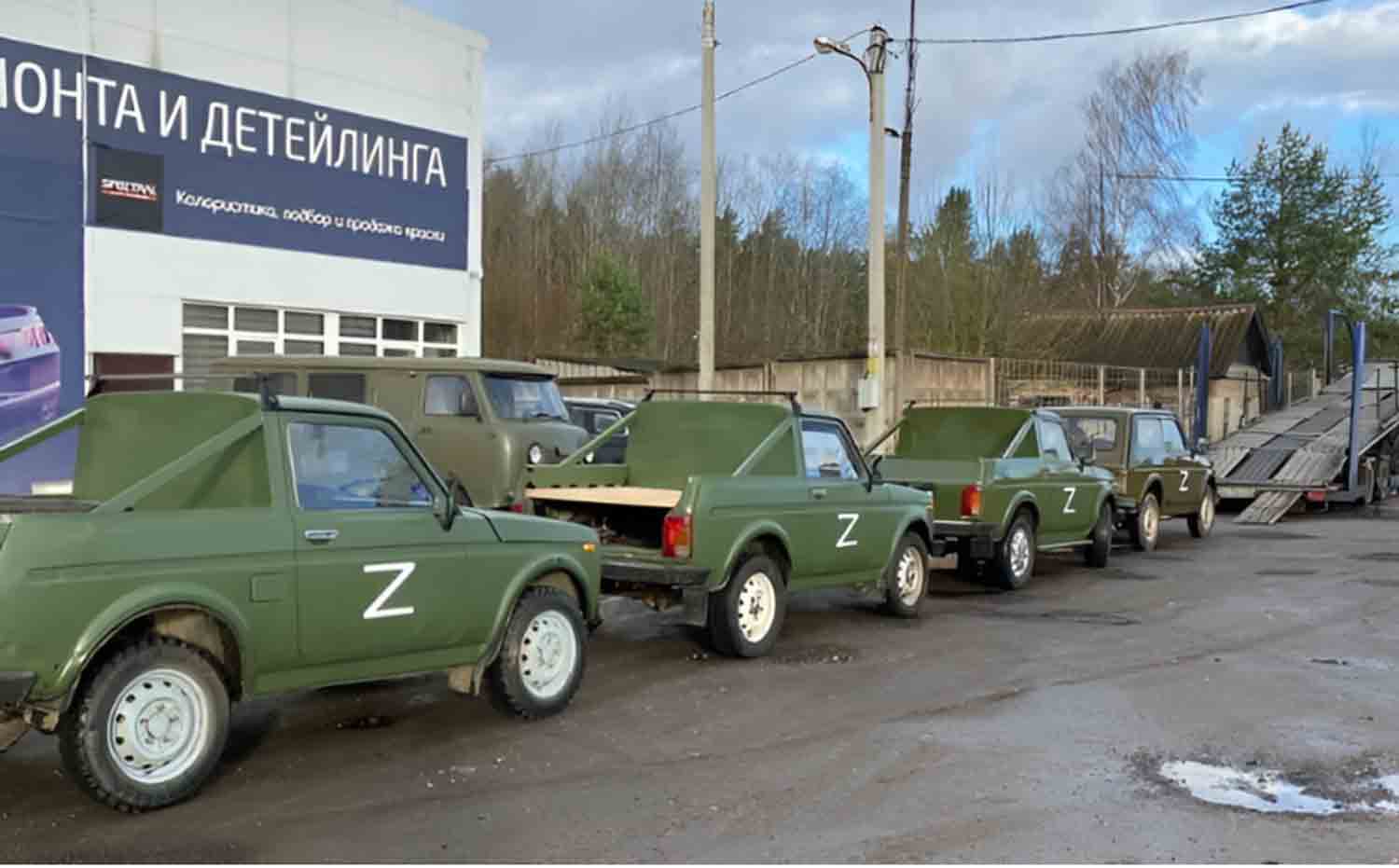
Russia uses cars for battlefield maneuverability

Analysts monitoring the conflict in Ukraine indicate that Russian military units are increasingly utilizing lighter vehicles to enhance battlefield mobility, aiming to conserve their diminishing armored resources.

This change in strategy arises as Ukraine’s Armed Forces continue to deliver significant damage to Russian tanks and other armored vehicles, prompting modifications in Russian offensive tactics.

Since the onset of the full-scale invasion, Ukraine has reportedly destroyed or damaged around 100,000 units of Russian military equipment across land, air, and naval domains. Despite these substantial losses, Russian forces still maintain a considerable arsenal of weaponry, which plays a crucial role in the ongoing conflict.

Military analysts emphasize that modern Russia has not experienced such extensive losses in any previous military engagement.

As of January 31, Ukraine’s General Staff reports that Russian tank losses have reached 9,893 units, with an average daily loss ranging from three to ten tanks.

The open-source intelligence platform Oryx, which independently tracks military equipment losses, states that Russian forces have lost a total of 11,786 armored combat vehicles, including tanks, armored fighting vehicles (AFVs), infantry fighting vehicles (IFVs), armored personnel carriers (APCs), and mine-resistant ambush-protected vehicles (MRAPs). Among these, 8,903 have been confirmed destroyed, 368 damaged, 979 abandoned, and 1,536 captured by Ukrainian forces.

In light of the increasing losses, Russian forces are increasingly resorting to assaults utilizing civilian vehicles, which include everything from passenger cars to dune buggies and even golf carts.

As reported by the Ukrainian military news source ArmyInform, this change in strategy indicates Russia’s difficulties in sustaining its fleet of armored vehicles. The use of lighter transport alternatives, however, places Russian troops at heightened risk, especially in areas laden with mines, where small, unarmored vehicles offer minimal protection against explosive threats.

Historically, Russian troops relied on large-scale armored offensives—often characterized as reckless “banzai attacks”—to breach Ukrainian defenses. Yet, with Ukraine’s widespread deployment of first-person view (FPV) drones gaining dominance on the battlefield, Moscow’s approach seems to be shifting towards human-wave tactics that depend on unconventional transport methods. In certain instances, reports have even indicated that Russian forces are utilizing horses to navigate difficult terrains.

Hegseth visits NATO for the first time as allies anticipate US strategies regarding Ukraine

0
U.S. Defense Secretary Pete Hegseth, left, walks with U.K. Secretary of State for Defence John Healey prior to a bilateral meeting at NATO headquarters in Brussels.

U.S. Defense Secretary Pete Hegseth visited NATO on Wednesday, marking the first trip by a member of the new Trump administration as allies await clarity on the extent of military and financial support Washington plans to extend to Ukraine.

During his visit, Hegseth engaged in discussions with U.K. Secretary of State for Defence John Healey prior to a meeting of the Ukraine Defense Contact Group at NATO’s headquarters in Brussels. His predecessor, former Defense Secretary Lloyd Austin, established this forum in 2022 to facilitate the provision of arms and ammunition to Ukraine.

Over the past three years, approximately 50 nations have collectively supplied Ukraine with over $126 billion in military aid and weaponry. Notably, this week’s meeting was hosted by the United Kingdom, marking a departure from previous gatherings that were led by the United States.

No decisions have been reached regarding the leadership of any future meetings, should they occur.

Hegseth was not anticipated to announce any new military aid for Ukraine during his visit.

This trip occurs just under two weeks before the third anniversary of Russia’s full-scale invasion of Ukraine on February 24, 2022. Many U.S. allies are concerned that if Russian President Vladimir Putin succeeds, he may not limit his ambitions to Ukraine, posing a significant threat to their security amid Europe’s largest land conflict in decades.

President Donald Trump has vowed to swiftly conclude the war, expressing concerns over the financial burden on American taxpayers. He has proposed that Ukraine should compensate the U.S. for its support by granting access to its rare earth minerals, energy resources, and other assets.

Some U.S. allies fear that a rushed agreement could be reached under terms unfavorable to Ukraine. Additionally, Trump seems to believe that European nations should assume greater responsibility for Ukraine’s future security.

Washington’s 31 NATO allies are eager to understand the direction Trump’s new administration will take regarding the world’s largest security alliance. During his first term, Trump unsettled European partners by suggesting that the U.S. might not defend any member that fails to meet NATO’s military spending guidelines.

NATO operates on the principle that an attack on one ally is an attack on all, necessitating a collective response. This membership is viewed as the highest form of security assurance, which Ukraine is actively seeking.

Discussions on Ukraine’s security requirements and defense expenditures are scheduled for Thursday. In response to Putin’s invasion of Ukraine, European allies have increased their military budgets, with 23 nations estimated to have met or surpassed the 2% of GDP spending target set for last year.

Nevertheless, a third of the member states have yet to achieve this benchmark, and Trump is likely to focus on them once more. Recently, he advocated for NATO members to raise their defense spending to 5% of GDP, a target that no member has yet attained, including Poland, which, while spending over 4%, is projected to approach 5% this year.

While addressing reporters in Germany on Tuesday, Hegseth refrained from committing to a U.S. defense spending increase to 5% of GDP. He expressed the view that the U.S. should allocate more than it did under the Biden administration and “should not go lower than 3%.”

He indicated that the ultimate decision rests with Trump, while emphasizing that “we are in fiscally constrained times” and must exercise responsibility regarding taxpayer funds. Currently, the United States allocates approximately 3.3% of its GDP to defense.

NATO leaders are anticipated to reach a consensus on new spending objectives during their upcoming summit scheduled for June 24-26 in The Hague, Netherlands.

Algerian pilots are training to operate Su-57 aircraft in Russia, according to reports

0
Su-57 achieved takeoff in slightly more than 11 to 12 seconds from a compact runway.

Algerian pilots are currently receiving training in Russia to operate the Su-57, which is Russia’s fifth-generation stealth fighter, according to reports from Algerian television. This development represents a crucial advancement in Algeria’s military modernization efforts and underscores the strengthening of defense relations with Moscow.

With the delivery of these advanced fighters anticipated within the year, Algeria is poised to become the first international customer of the Su-57, a situation that carries significant geopolitical and military ramifications.

The training of Algerian pilots in Russia marks an important milestone in the acquisition process of the Su-57. Training foreign pilots on sophisticated combat aircraft is a multifaceted endeavor that requires not only proficiency in flying the aircraft but also a comprehensive understanding of its radar systems, weaponry, and electronic warfare capabilities.

Considering the Su-57’s state-of-the-art stealth and avionics technology, this training will ensure that Algerian pilots are well-prepared to incorporate the fighter into their air force operations. Furthermore, it indicates that Algeria has completed its procurement of the Su-57, confirming its status as the first international operator of this aircraft.

Historically, Algeria has maintained strong defense ties with Russia, depending on Russian military equipment for many years. The acquisition of the Su-57 aligns with this trend, as Algeria aims to modernize its air force and sustain a technological advantage over regional competitors.

The Algerian air force already operates a considerable fleet of Russian aircraft, including the Su-30MKA, MiG-29, and Su-24 bombers. The addition of the Su-57 to its inventory signifies a major enhancement, equipping Algeria with advanced stealth capabilities and improved situational awareness in combat scenarios.

The strategic consequences of this acquisition are extensive. Algeria’s procurement of the Su-57 notably shifts the balance of power in North Africa, especially concerning its main regional rival, Morocco.

The Royal Moroccan Air Force has recently enhanced its fleet with upgraded F-16V fighters and is currently in the process of procuring advanced Western armaments. The Su-57, with its stealth capabilities, sophisticated sensors, and exceptional maneuverability, provides Algeria with a significant strategic edge, potentially initiating a new chapter in the regional arms competition.

For Russia, successfully exporting the Su-57 to Algeria marks an important achievement. The program has encountered various obstacles, including delays and financial limitations, and securing an international customer enhances the aircraft’s credibility in the global marketplace.

Should Algeria’s implementation of the Su-57 be successful, it may inspire other countries, such as India, Vietnam, or the United Arab Emirates, to explore the aircraft for their own military needs. Russia has been vigorously marketing its military technology in recent years, and a successful deployment of the Su-57 in Algeria could facilitate further sales opportunities.

The initiative to train Algerian pilots in Russia underscores the logistical and operational considerations necessary for the effective integration of the Su-57 into Algeria’s military framework. Training foreign pilots on such an advanced system necessitates significant collaboration between Algerian and Russian military personnel.

This also indicates that Algeria has committed resources to develop the infrastructure required for the Su-57’s deployment, including maintenance, logistics, and weapon systems integration. Given the aircraft’s complexity, Algeria may seek ongoing assistance from Russian defense contractors for long-term support and upgrades.

The geopolitical implications of this transaction extend beyond the borders of Algeria and Russia. The introduction of the Su-57 into a North African nation brings a fifth-generation fighter to a region that has predominantly depended on fourth-generation aircraft.

This development may lead NATO members, especially France and the United States, to enhance military collaborations with Morocco and other North African nations in order to counterbalance Algeria’s increasing air capabilities. It could also affect the potential for exporting Western fifth-generation fighters, like the F-35, in the area.

While Algeria’s acquisition of the Su-57 offers certain advantages, it also presents several challenges. The Su-57 is a relatively new aircraft, with a limited number of units currently operational in the Russian Air Force.

Concerns regarding its long-term reliability, maintenance costs, and overall performance in actual combat situations remain largely unaddressed. Furthermore, Algeria needs to formulate tactics and doctrines to maximize the Su-57’s advanced features, ensuring effective integration with its current fleet.

As the delivery of the Su-57 nears, Algeria’s air force stands on the brink of a major transformation. The training of Algerian pilots in Russia highlights the nation’s dedication to incorporating the aircraft into its operational framework.

The addition of the Su-57 to Algeria’s military capabilities carries significant regional and global ramifications, marking a pivotal moment in the advancement of North African air power. This development not only enhances Algeria’s strategic standing but also bolsters Russia’s presence in the international defense arena.

The outcome of this initiative will be closely monitored by military analysts and defense policymakers around the globe, as it may influence future decisions regarding fifth-generation fighter acquisitions in various regions.

Russia is intensifying its efforts to launch the Su-57E, the export variant of its fifth-generation stealth fighter, into the global defense market, the state-owned military export agency, has announced that the initial deliveries to an undisclosed foreign client are set for 2025.

This declaration, made on February 10, 2025, highlights Moscow’s strategic initiative to enhance its presence in the international arms market. Alexander Mikheev, the CEO of Rosoboronexport, emphasized that this forthcoming delivery marks a significant achievement for Russia’s defense sector, solidifying the nation’s role as a key provider of advanced combat aircraft.

Interest in the Su-57E has been growing internationally since export negotiations were first reported in late 2024. This interest was further bolstered by the fighter jet’s showcase at the Zhuhai Airshow in China, where it exhibited its sophisticated avionics, stealth features, and multirole capabilities.

Despite the increasing attention, Rosoboronexport has chosen not to disclose the identity of the purchasing country. The company has cited geopolitical and economic pressures from Western competitors as reasons for this confidentiality, asserting that such discretion safeguards clients from potential diplomatic and financial fallout.

With the impending delivery, the Su-57E is set to emerge as a formidable contender in the global fifth-generation fighter market, presenting a competitive alternative to Western models while combining advanced technology with cost efficiency for prospective buyers.

UK will fund new tanks, drones, and air defense systems for Ukraine

0
A concept demonstrator of a Supacat MBDA Brimstone launcher module mounted on a Supacat HMT 6×6 platform that shows the possible layout of the Gravehawk system

The UK government revealed a new military aid package worth £150 million (approximately $186 million) for Ukraine during a meeting in Brussels on Wednesday. This funding is intended for the provision of drones, tanks, and air defense systems, as reported by Reuters and RIA Novosti.

Details regarding the specific systems and platforms to be delivered are not yet available. However, it is known that the UK plans to supply short-range Gravehawk air defense systems by 2025. This recent financial commitment is part of a broader £4.5 billion package allocated by London for military assistance to Ukraine this year.

Ukrainian forces have already utilized British jet-powered kamikaze drones in operations against Russian targets. While additional deliveries of Challenger 2 tanks appear unlikely due to their limited availability, the funds are expected to be directed towards refurbishing and upgrading Leopard 1 or T-72M1 tanks, potentially sourced from Czech reserves, before being dispatched to Ukraine.

Since the onset of Russia’s full-scale invasion in February 2022, the United Kingdom has been a key supporter of Ukraine, providing substantial military aid to enhance Kyiv’s defense capabilities against Russian aggression. By the end of January 2025, the UK had pledged nearly $16 billion in military support, establishing itself as one of Ukraine’s most reliable allies.

This assistance encompasses a diverse range of equipment, training initiatives, and financial backing, underscoring Britain’s strategic objective to aid Ukraine in repelling Russian forces while simultaneously bolstering its own security and defense sector.

From the beginning, the UK was one of the first countries to provide lethal assistance, establishing a benchmark for other Western allies. In early 2022, London supplied anti-tank weapons such as NLAWs and Javelin systems, which were crucial in stopping Russian armored advances during the early phases of the invasion.

By March 2022, the UK had also sent Starstreak missiles, body armor, helmets, and boots, with more than 4,000 NLAWs delivered to Ukrainian forces. This initial support was vital as Ukraine faced significant pressure, especially around Kyiv, and contributed to shifting the momentum in favor of the Ukrainian defenders.

As the conflict evolved, the UK’s support grew in both breadth and complexity. By mid-2022, Operation Interflex, a UK-led training initiative, was initiated, training over 50,000 Ukrainian recruits by the end of 2024. Supported by 12 allied nations, the program aimed to equip troops with essential battlefield skills, extending into 2025 to ensure ongoing preparedness.

The UK also began to provide more advanced systems, including cruise missiles, air defense systems, and long-range precision strike capabilities. In 2023, Britain committed to maintaining its 2022 military aid levels, which totaled $2.9 billion, and by 2024, it pledged $3.8 billion annually, a commitment reiterated by Finance Minister Rachel Reeves in October 2024, highlighting support “for as long as it takes.”

However, the UK’s military assistance has faced challenges, particularly concerning its own stockpiles. The donation of equipment such as Challenger 2 tanks—14 dispatched from a limited active stockpile of 157—raised concerns about readiness for potential large-scale combat operations.

The UK addressed this challenge by utilizing international collaborations, notably through the International Fund for Ukraine, which has garnered over $1.6 billion in pledges from allies for swift equipment acquisition.

In 2025, a significant $286 million agreement with BAE Systems revitalized artillery barrel manufacturing in Yorkshire, with components dispatched to Ukraine for assembly, representing a major enhancement for both Ukrainian military capabilities and UK industrial development.

By January 2025, the UK’s cumulative military assistance since February 2022 encompassed more than 400 distinct capabilities, including drones, air defense systems, maritime vessels, and munitions. A key advancement was the Gravehawk air defense system, a joint initiative between the UK and Denmark aimed at adapting air-to-air missiles for ground defense, specifically designed to meet Ukraine’s requirements.

Furthermore, the UK broadened its training initiatives, welcoming Ukrainian officer cadets to the Royal Military Academy Sandhurst and dispatching British cadets to Ukraine for the exchange of battlefield expertise. Prime Minister Keir Starmer emphasized Britain’s dedication in January 2025, stating that “Ukraine’s security is our security,” highlighting the strategic significance of this support.

On the financial front, the UK has taken a leading position in innovative funding strategies. In 2025, it extended a $2.9 billion loan under the G7 Extraordinary Revenue Acceleration scheme, which is to be repaid through profits generated from frozen Russian sovereign assets.

This loan, combined with $3.8 billion in annual military assistance, has allowed Ukraine to procure essential equipment, including systems manufactured in the UK. The UK’s leadership is also evident in its sanctions efforts, which, in coordination with the US and EU, have resulted in a loss of over $400 billion in revenue for Russia since 2022, intensifying pressure on Moscow’s military operations.

While the UK’s support has been substantial, it has not been free from domestic and international challenges. The resurgence of artillery production and defense contracts has generated employment and fostered economic development, aligning with the government’s Plan for Change.

Nonetheless, there are ongoing concerns regarding the long-term viability of such assistance, particularly in light of possible changes in US policy under President Donald Trump, who resumed office in January 2025.

Critics contend that Europe’s dependence on limited defense contributions may expose it to risks, yet the UK’s initiatives—such as the swift advancement of systems like Gravehawk and ongoing training programs—illustrate a proactive approach to enhancing Ukraine’s resilience and strengthening its own strategic role in European security.

Saudi Crown Prince and Russia’s wealth fund head helped secure the release of a U.S. prisoner, sources say

0
Saudi Crown Prince Mohammed bin Salman

Saudi Crown Prince Mohammed bin Salman and Kirill Dmitriev, the head of Russia’s sovereign wealth fund, were engaged in discussions regarding the release of U.S. teacher Marc Fogel from a Russian prison, according to a source familiar with the negotiations between Russia and the United States who spoke to Reuters on the condition of anonymity. The Kremlin was unavailable for immediate comment, and the Saudi embassy in Moscow did not respond promptly to a request for information. Crown Prince Mohammed bin Salman, often referred to as MbS, played a significant role in facilitating the prisoner exchange that took place in August 2024.

On Tuesday, U.S. President Donald Trump’s Middle East envoy, Steve Witkoff, returned Fogel to the United States after making an unannounced visit to Russia. Witkoff was quoted by a CNN reporter on X, stating that MbS was “instrumental as well” and that a Russian individual named Kirill “had a lot to do with this.”

Russian President Vladimir Putin, who visited Saudi Arabia in 2023, expressed his gratitude to Mohammed bin Salman for his involvement in the previous exchange last September. Since their first meeting in 2015, Putin and Mohammed bin Salman have developed a strong personal rapport. Recent reports from Reuters indicate that Saudi Arabia is being considered by Russia as a potential location for a summit between Russia and the United States. Dmitriev, a former Goldman Sachs banker educated in the U.S., was involved in the initial communications between Moscow and Trump’s team following his election in 2016.

Dmitriev previously contributed to the release of U.S. investment banker Michael Calvey from a Russian prison in 2019. He described Calvey as a skilled investor and personally endorsed him.

UAE envoy to Washington has described the United States’ approach to Gaza as challenging

0
Children at tent camp for displaced people in Gaza

The United Arab Emirates’  (UAE) ambassador to the United States, Yousef Al Otaiba, remarked on Wednesday that the U.S. stance on Gaza is “challenging.” He emphasized during the World Government Summit in Dubai that ultimately, all parties are engaged in seeking solutions, although the outcome remains uncertain.

President Donald Trump proposed that the United States would assume control over the war-torn Gaza Strip and focus on its economic development after relocating Palestinians, a move that would significantly alter longstanding U.S. policy regarding the Israeli-Palestinian conflict.

When asked if the UAE and the U.S. could reach a consensus on Gaza, the ambassador expressed his country’s intention to explore this possibility. Otaiba noted that the two nations could continue discussions and collaborate, even in the face of differing opinions.

“We are adaptable, we ensure our perspectives are communicated, and we are forthright and unapologetic in our approach. Like any relationship, there are times when our allies heed our advice, and other times when they do not; we may agree on some issues while disagreeing on others, but we consistently aim to identify common ground,” he stated.

He further added, “Disagreement on certain matters does not preclude dialogue between us.”

A senior Trump official is in Kyiv to negotiate a minerals and energy agreement

0
U.S. Secretary of the Treasury Scott Bessent speaks at the White House, in Washington.

U.S. Treasury Secretary Scott Bessent traveled to Kyiv on Wednesday to negotiate a crucial minerals agreement as Ukraine seeks to secure support from U.S. President Donald Trump during a critical phase of the ongoing conflict with Russia.

Bessent, marking the first visit to Ukraine by a cabinet-level official from Trump’s administration, is expected to meet with President Volodymyr Zelenskiy, who has expressed willingness to engage in discussions with Washington and aims to secure U.S. security assurances to bring an end to the war with Russia.

This visit followed a predawn Russian ballistic missile strike that resulted in one fatality in Kyiv, causing alarm among residents as explosions echoed through the city.

Trump has indicated a desire for a swift resolution to the violence but has not clarified his stance on continuing essential military support to Kyiv. He has expressed interest in acquiring $500 billion worth of rare earth minerals from Ukraine, emphasizing that U.S. backing must be “secured.”

In a recent interview with Reuters, Zelenskiy outlined the framework of a potential agreement, presenting a map that highlighted various mineral deposits and asserting that he is proposing a collaborative partnership for their development rather than simply transferring ownership.

A U.S. official familiar with the discussions noted that Bessent, a former hedge fund manager, intends to address a strategic minerals pact that would encompass energy resources, energy assets, and state-owned enterprises.

Those comments may partially allude to a proposal for utilizing Ukraine’s extensive underground storage facilities to hold U.S. natural gas intended for Europe, a topic that President Zelenskiy has indicated is under discussion between Kyiv and the White House. According to sources, such an agreement would enhance U.S. interests in both the security and economic stability of Ukraine.

This visit serves as a clear indication of genuine U.S. commitment to Ukraine, which is particularly reassuring for a Kyiv that is closely monitoring the Trump administration’s interactions with Russian President Vladimir Putin.

On Tuesday, a U.S. prisoner was released by Russia following a trip to Moscow by U.S. special envoy Steve Witkoff, marking the first visit by a senior U.S. official to Russia since the onset of the invasion in February 2022. The potential minerals agreement illustrates how Ukraine has swiftly adjusted its foreign policy to align with the transactional approach advocated by the new administration in Washington, which is Ukraine’s key ally during wartime.

SIGNIFICANT ADVANCEMENTS

Trump’s choice to send his treasury secretary to Ukraine before any other official is notable, especially in a wartime capital that has seen a continuous influx of Western security, defense, and political figures over nearly three years of conflict. Bessent has committed to intensifying sanctions on Russia’s oil industry, a strategy initiated by the Biden administration just prior to its departure.

As hostilities continue in eastern Ukraine, where Russian forces have made significant gains, this visit marks the beginning of a series of critical diplomatic challenges for Ukraine this week. Additionally, on Wednesday, the Ukraine Defence Contact Group, established under former President Joe Biden to provide military support to Ukraine, will meet for the first time since Trump assumed office, with U.S. Defense Secretary Pete Hegseth in attendance.

As the week draws to a close, Zelenskiy is set to meet with U.S. Vice President JD Vance at the Munich Security Conference, where Keith Kellogg, Trump’s special envoy for Russia and Ukraine, is also expected to be present. Trump has claimed to have made “tremendous progress” toward facilitating a deal between Ukraine and Russia and anticipates a conversation with Zelenskiy this week.

On Monday, Russia’s chief representative for U.S. relations stated that all of Putin’s conditions must be fully satisfied before the conflict in Ukraine can conclude, indicating that Moscow is adopting a tough stance with Trump. These conditions require Ukraine to abandon its NATO aspirations and withdraw its forces from the entirety of four Ukrainian regions that are claimed and largely controlled by Russia, a demand that Kyiv has equated to surrender.

Zelenskiy has mentioned that his team is actively working to arrange a meeting with Trump, emphasizing the importance of this meeting occurring prior to the U.S. president’s discussions with Putin. Trump has suggested that he has had conversations with Putin but has not provided specific details. The Kremlin has neither confirmed nor denied these discussions.

Indian aircraft manufacturer commits to expedited delivery following criticism from the air chief

0

India’s state-owned aircraft manufacturer, Hindustan Aeronautics Ltd (HAL), acknowledged the military’s frustration regarding delays in the delivery of fighter jets and assured that production would commence once General Electric provides the necessary engines.

During a press conference held on Tuesday, following the release of a video depicting the air force chief reprimanding HAL representatives, HAL Chairman D.K. Sunil stated, “The air chief’s concerns are valid, especially as his squadron numbers are diminishing.”

“We have committed to having all structures prepared,” Sunil added. “We are in the process of building these aircraft. Once the engines are received, we will begin the rollout.”

The Indian Air Force currently operates only 31 fighter squadrons, significantly below its target of 42, which has raised concerns among officials, particularly in light of ongoing tensions with neighboring countries China and Pakistan.

The Air Force has placed an order for 83 Light Combat Aircraft Mk-1A from HAL, an upgraded version of the existing Mk-1, with initial deliveries scheduled to begin in February 2024 as part of a contract valued at 364.68 billion rupees (approximately $4.20 billion). Additionally, plans are in place to acquire 97 more Mk-1As, bringing the total number of “Tejas” aircraft to 220.

However, the delivery timeline has faced multiple setbacks, primarily due to delays in engine supply from GE, which is currently grappling with supply chain challenges. GE has not yet responded to a request for comment from Reuters as of Wednesday. A video released by the defense news outlet National Defence gained significant attention on Tuesday, showing Air Chief Marshal Amar Preet Singh addressing HAL officials at the Aero India air show in Bengaluru the day before.

Currently, I lack confidence in HAL, Singh stated while seated in the cockpit of a trainer aircraft, with HAL officials positioned beside him on a platform. “I was assured that by February, I would see 11 Mk1As ready, excluding the engines,” Singh remarked. “Not a single one is prepared. I am not impressed.”

Sanjeev Kumar, India’s defence production secretary, mentioned at the same air show that production lines at both HAL and GE have stabilized, indicating that the Indian company would be capable of delivering between 16 to 24 aircraft in the fiscal year beginning in April.

Additionally, this week, India’s close defence partner, Russia, proposed to manufacture its fifth-generation stealth fighter jet, the Sukhoi Su-57, in India for the Indian Air Force, by upgrading the production line for the Sukhoi Su-30 aircraft, of which 260 are currently in service in India.