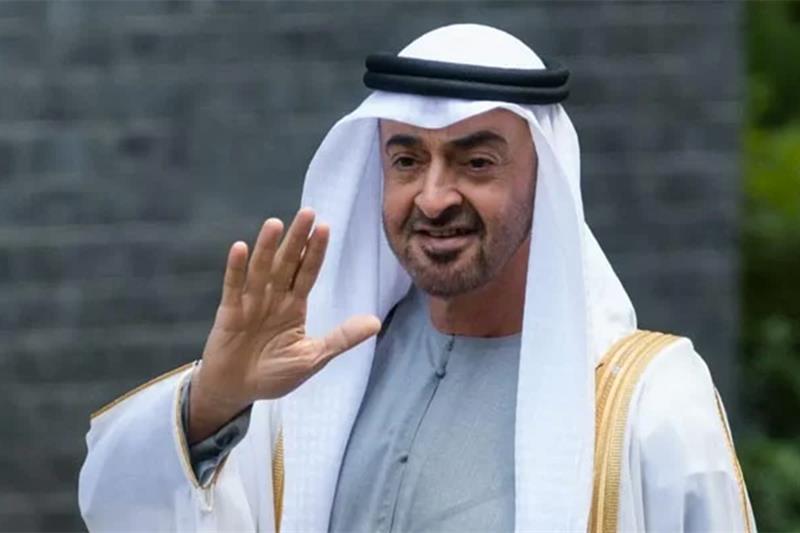
The decision by the United Arab Emirates to leave OPEC effective May 1 is not just an energy story—it is a geopolitical turning point.
At its core, the move reflects a convergence of three forces:
- security pressures from the Iran conflict
- strategic alignment with the United States
- and long-term economic ambition
Together, they are reshaping how Abu Dhabi defines its national interest.
The Iran War Changed the UAE’s Calculus
The recent war with Iran proved to be a decisive moment.
According to regional assessments:
- the UAE absorbed significant drone and missile pressure
- much of the targeting focused on Gulf infrastructure
- regional response coordination remained uneven
This exposed a key vulnerability:
security guarantees within the Gulf are not evenly shared.
Western Security Support—and a Strategic Shift
During the conflict, the UAE’s most consistent support came from:
- United States
- Israel
- United Kingdom
- Italy
- South Korea
This reinforced a broader shift:
Abu Dhabi’s security partnerships are increasingly Western-centric.
In this context, remaining inside an organization like OPEC—historically rooted in shared regional alignment—became strategically complicated.
Gulf Divisions Come Into Focus
The war also highlighted diverging Gulf strategies:
- Oman and Qatar pursued diplomatic off-ramps
- Saudi Arabia balanced de-escalation with strategic caution
- the UAE favored a more forceful response
These differences are not new—but they are now more visible and consequential.
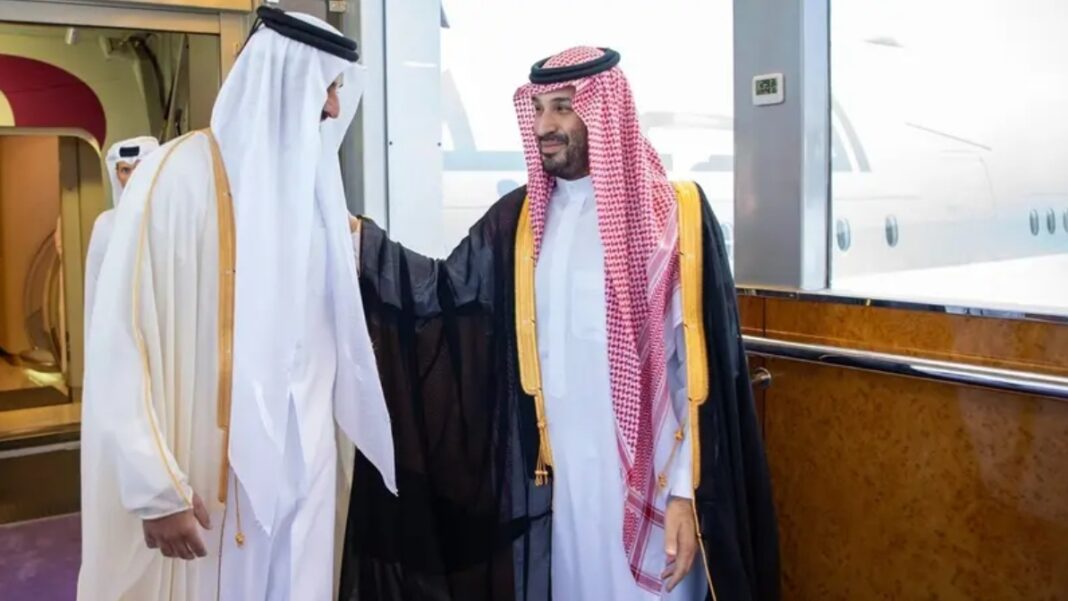
Strains in the UAE–Saudi Relationship
The relationship between Abu Dhabi and Riyadh has become increasingly complex.
Points of divergence include:
- Yemen policy
- Sudan dynamics
- approaches toward Iran
This matters because Saudi Arabia is the de facto leader of OPEC.
As strategic priorities diverge, energy coordination becomes harder to sustain.
The US Factor and Timing of the Exit
Donald Trump has repeatedly linked U.S. military protection of Gulf states to oil pricing policy.
His argument:
- the U.S. provides security
- OPEC maintains high prices
In this environment, the UAE appears to have concluded:
remaining in OPEC while relying on U.S. security creates strategic tension.
Leaving resolves that contradiction—and sends a political signal.
Economic Ambition: Breaking Free From Quotas
Beyond geopolitics, economics played a central role.
The UAE aims to:
- increase output from 3.4 million to 5 million barrels per day by 2027
- capitalize on global demand growth
- leverage low spare capacity in global markets
OPEC quotas made this difficult.
Outside the organization, Abu Dhabi gains:
- production flexibility
- pricing leverage
- faster response to market dynamics
What This Means for OPEC
The departure of a major producer has significant implications:
- reduced cohesion within OPEC
- increased risk of further exits
- weaker ability to control supply
If other countries follow, the organization could shift from:
- a coordinated cartel
to - a looser, less influential grouping
Future Scenarios: What Comes Next
1. Controlled Fragmentation
OPEC survives—but with weaker coordination and more internal divergence.
2. Chain Reaction
Other producers reconsider membership, accelerating fragmentation.
3. Market-Driven Oil Order
Energy markets become more flexible, with producers acting independently rather than collectively.
Conclusion: A Strategic Bet on a New Order
The UAE’s exit from OPEC is ultimately a bet:
- on strategic alignment with Western partners
- on economic opportunity in volatile markets
- on autonomy over coordination
It is too early to declare the end of OPEC.
But one thing is clear:
the balance between geopolitics and energy is shifting—and the UAE has chosen its side.