Tuesday, April 7, 2026
Home Blog Page 136

What missiles does Iran have?

0

Iran launched a barrage of ballistic missiles at Israel on Tuesday in response to Israel’s operations against Tehran’s Hezbollah allies in Lebanon, utilizing a range of weaponry that has long been a concern for Western nations. This assault occurred five months after an unprecedented direct Iranian strike on Israel in April. Ballistic missiles constitute a significant component of Tehran’s military capabilities.

BALLISTIC MISSILES

Ballistic missiles are rocket-propelled weapons that are guided during their initial ascent but subsequently follow a free-fall path influenced by gravity for the majority of their flight. They are designed to deliver warheads that may contain conventional explosives or potentially biological, chemical, or nuclear payloads, with ranges classified from short to intercontinental based on the missile type. The U.S. Office of the Director of National Intelligence reports that Iran possesses the largest stockpile of ballistic missiles in the Middle East.

IRANIAN MISSILE TYPES AND RANGES

* In April, the semi-official Iranian news agency ISNA released a graphic detailing nine Iranian missiles capable of reaching Israel. Among these are the ‘Sejil’, which can travel at speeds exceeding 17,000 km (10,500 miles) per hour and has a range of 2,500 km (1,550 miles), the ‘Kheibar’ with a range of 2,000 km (1,240 miles), and the ‘Haj Qasem’, which can reach up to 1,400 km (870 miles), according to ISNA.

* The Arms Control Association, a non-governmental organization based in Washington, reports that Iran’s ballistic missile arsenal includes the ‘Shahab-1’, with an estimated range of 300 km (190 miles); the ‘Zolfaghar’, which has a range of 700 km (435 miles); the ‘Shahab-3’, with a range between 800 and 1,000 km (500 to 620 miles); the ‘Emad-1’, a missile currently under development with a potential range of up to 2,000 km (1,240 miles); and the ‘Sejil’, also in development, with a range of 1,500 to 2,500 km (930 to 1,550 miles).

TUESDAY’S ATTACK

Fabian Hinz, an expert on Iran’s missile capabilities at the International Institute for Strategic Studies in Berlin, indicated that by analyzing the locations of missile launch videos shared on social media and their distances to Israel, he concluded that Iran utilized a mix of solid- and liquid-fueled missiles.

He explained that solid-fueled missiles, which represent a more advanced technology, are launched from angled mobile platforms, while liquid-fueled missiles are deployed from vertical launch systems. Hinz noted that the three solid-propellant missiles launched on Tuesday could likely be identified as the ‘Haj Qasem’, ‘Kheibar Shekan’, and ‘Fattah 1’. Additionally, the liquid-fueled missiles reportedly launched from Isfahan may include the ‘Emad’, ‘Badr’, and ‘Khorramshahr’.

MISSILE STRATEGY AND DEVELOPMENT

  • Iran asserts that its ballistic missile capabilities serve as a crucial deterrent and retaliatory mechanism against the United States, Israel, and other potential adversaries in the region. The country maintains that it is not pursuing nuclear weapons.
  • A 2023 report by Behnam Ben Taleblu, a Senior Fellow at the Foundation for Defense of Democracies in the U.S., indicates that Iran is actively constructing underground missile depots equipped with transport and launch systems, as well as subterranean facilities for missile production and storage. Notably, in June 2020, Iran claimed to have successfully launched its first ballistic missile from an underground site.
  • The report highlights that years of reverse-engineering various missile types have enabled Iran to enhance missile range by utilizing lighter composite materials and optimizing airframe designs.
  • In June 2023, Iranian officials announced the unveiling of what they termed the nation’s first domestically produced hypersonic ballistic missile, as reported by the official IRNA news agency. Hypersonic missiles are capable of traveling at speeds exceeding five times the speed of sound and can follow complex flight paths, making them challenging to intercept.
  • According to the Arms Control Association, Iran’s missile program is primarily influenced by North Korean and Russian designs, with additional support from China.
  • Iran also possesses cruise missiles, including the Kh-55, an air-launched nuclear-capable missile with a range of up to 3,000 kilometers (1,860 miles), and the advanced anti-ship missile Khalid Farzh, which has a range of approximately 300 kilometers (186 miles) and can carry a warhead weighing 1,000 kilograms (1.1 tons).

REGIONAL ATTACKS

* In January 2024, Iran’s Revolutionary Guards claimed responsibility for missile strikes targeting Israel’s intelligence headquarters located in Iraq’s semi-autonomous Kurdistan region, as well as strikes against Islamic State militants in Syria. Additionally, Iran reported launching missiles at two bases associated with a Baluchi militant group in neighboring Pakistan.
* Both Saudi Arabia and the United States have asserted that Iran was responsible for a drone and missile assault on Saudi Arabia’s critical oil facilities in 2019, a claim that Tehran has refuted.
* In 2020, Iran executed missile strikes against U.S.-led forces in Iraq, including the al-Asad air base, as a response to a U.S. drone strike that killed an Iranian commander.

SUPPORT FOR YEMEN’S HOUTHIS

* The United States has accused Iran of supplying arms to Yemen’s Houthis, who have targeted shipping in the Red Sea and Israel during the Gaza conflict, claiming their actions are intended to support the Palestinian cause. Iran has denied these allegations.
* On September 24, Reuters reported that Iran facilitated clandestine discussions between Russia and the Houthis regarding the transfer of anti-ship missiles to the group, according to Western and regional sources.
* In 2022, the Houthis announced that they had launched ballistic missiles and drones at the United Arab Emirates, including an attack aimed at a base housing U.S. military personnel, which was intercepted by U.S.-made Patriot missiles.

SUPPORT FOR HEZBOLLAH

* The Iran-supported Hezbollah organization in Lebanon has claimed it possesses the capability to convert thousands of rockets into precision-guided missiles and to manufacture drones. In the previous year, the late leader of Hezbollah, Hassan Nasrallah, stated that the group could modify standard rockets into precision missiles with assistance from Iranian specialists.

SYRIA

* According to intelligence officials from Israel and the West, Iran has supplied domestically produced precision-guided missiles to Syria to bolster President Bashar al-Assad’s efforts against rebel forces.
* Additionally, some of its production capabilities have been relocated to underground facilities in Syria, where Assad’s military and other pro-Iranian factions have acquired the skills to manufacture their own missiles, as reported by these sources.
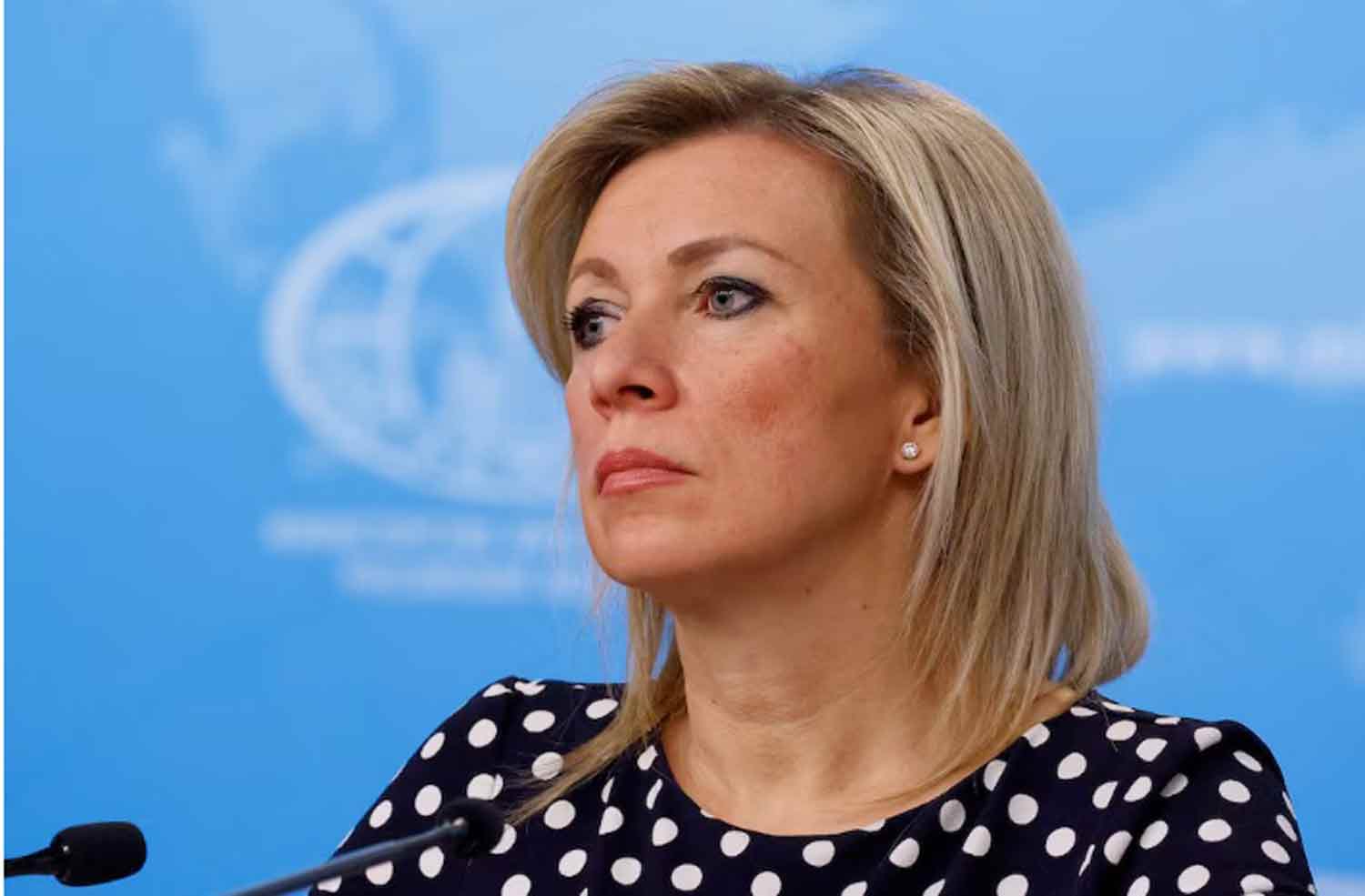
Russia has ruled out possibility of nuclear discussions with United States

0
Spokeswoman of Russia's Foreign Ministry Maria Zakharova

Russia has ruled out the possibility of engaging in nuclear discussions with the United States, attributing this decision to Washington’s position on NATO‘s expansion, as stated by Russian Foreign Ministry spokeswoman Maria Zakharova on Wednesday.

Zakharova emphasized, “We find no value in dialogue with Washington that does not acknowledge Russia’s core interests. The primary issue at hand is NATO’s encroachment into the post-Soviet region, which threatens collective security.”

Additionally, on Tuesday, Kremlin spokesman Dmitry Peskov indicated that Russia is unwilling to negotiate a new treaty with the United States to succeed the existing agreement that limits strategic nuclear weapons, which is set to expire in 2026. He noted that any new treaty would need to be more comprehensive and include other nations.

Israel says U.N. Secretary-General would be denied entry into the country

0

Israel’s foreign minister announced on Wednesday that U.N. Secretary-General Antonio Guterres would be denied entry into the country due to his failure to “unequivocally” condemn Iran‘s missile strikes against Israel.

On Tuesday, Iran launched over 180 ballistic missiles at Israel amid heightened tensions involving its ally Hezbollah in Lebanon. While many missiles were intercepted, some managed to breach Israel’s missile defense systems, although no casualties were reported.

In a statement on Tuesday, Guterres briefly addressed the “latest attacks in the Middle East,” condemning the ongoing conflict but not specifically mentioning Iran. Earlier that day, Israel had deployed troops into southern Lebanon.

Israeli Foreign Minister Israel Katz stated that Guterres’ reluctance to denounce Iran’s actions rendered him unwelcome in Israel. “Anyone who cannot unequivocally condemn Iran’s heinous attack on Israel, as nearly all the countries of the world have done, does not deserve to set foot on Israeli soil,” Katz remarked.

“Israel will continue to defend its citizens and uphold its national dignity, with or without Antonio Guterres.”

Italy to hold conference call with G7 leaders on Middle East

0

Italian Prime Minister Giorgia Meloni is set to lead a conference call with Group of Seven (G7) leaders later on Wednesday to address the ongoing crisis in the Middle East, according to her office.

Meloni emphasized Italy’s commitment to pursuing a diplomatic resolution, particularly in its role as the G7 chair. “I have organized a meeting at the leaders’ level for this afternoon,” she reportedly informed her cabinet.

As the current holder of the G7’s rotating presidency, Italy represents a coalition of major Western democracies, including the United States, Canada, the United Kingdom, France, Germany, Italy, and Japan.

During the cabinet meeting, Meloni expressed “deep concern” regarding recent events, such as Iran’s missile strike on Israel on Tuesday and the escalating instability in Lebanon. She stated, “The objective is to stabilize the Israeli-Lebanese border through the complete enforcement of Resolution 1701,” referencing the U.N. resolution that ended the 2006 conflict between Israel and Hezbollah in southern Lebanon.

Italy has urged the U.N. Security Council to explore the possibility of enhancing the UNIFIL mission’s mandate to bolster security along the Israel-Lebanon border, as stated by a government representative. Italy plays a significant role in the United Nations peacekeeping force in Lebanon (UNIFIL). Reports from Italian media on Wednesday indicated that the government was contemplating the withdrawal of its troops due to escalating violence along the border.

During a press conference following a cabinet meeting in Rome, Foreign Minister Antonio Tajani categorically rejected any notion of withdrawing Italian forces from the U.N. mission. “We have evaluated all options… There is no decision to remove the Italian contingent from UNIFIL,” he informed the press. “In terms of evacuation plans, it is prudent to have a strategy in place during times of conflict, but this also pertains to the safety of civilians.”

Iranian ballistic missile assault on Israel is characterized by its larger scale, complexity

0
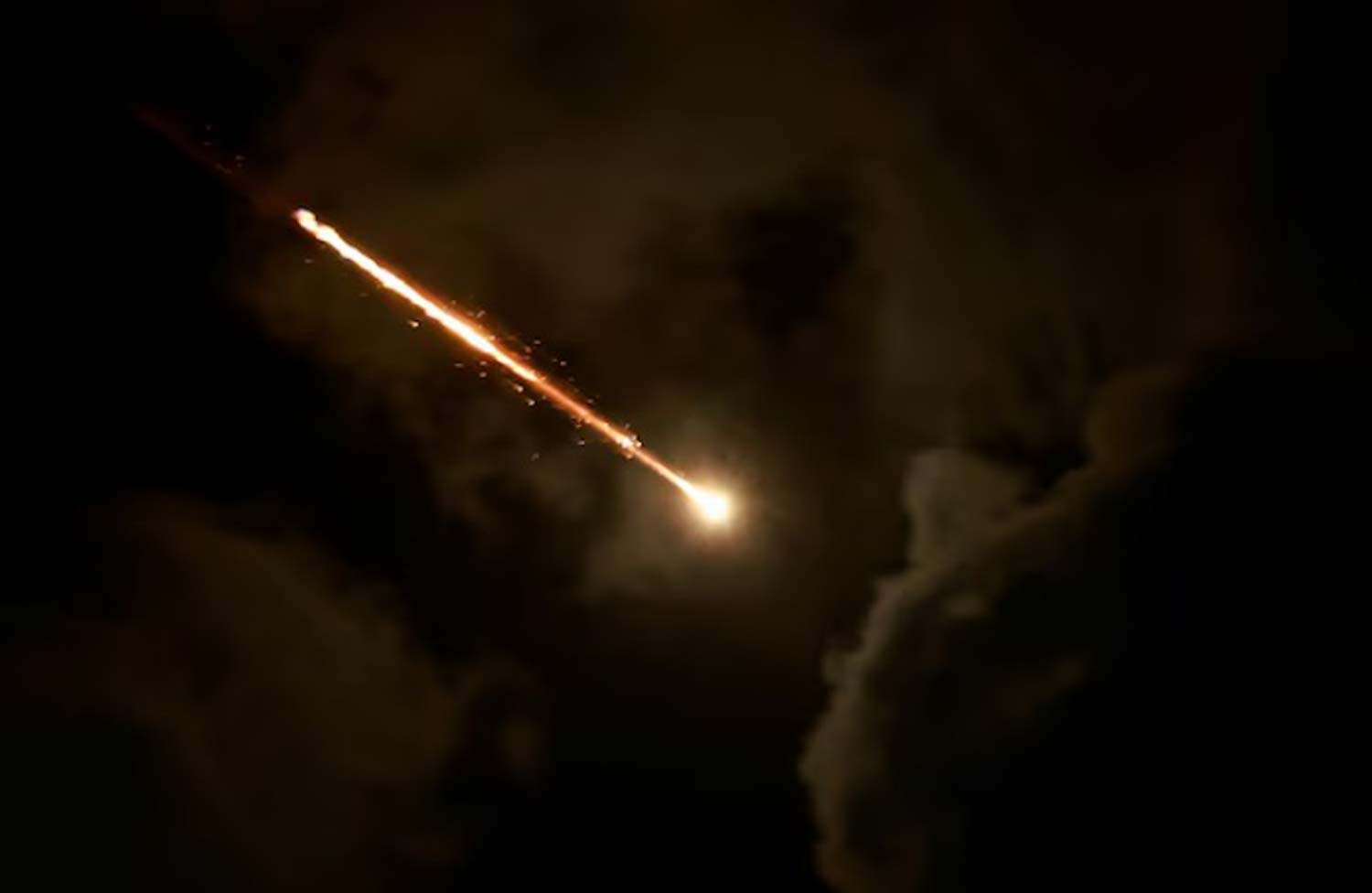
A projectile is seen in the sky after Iran fired a salvo of ballistic missiles, amid cross-border hostilities between Hezbollah and Israel, as seen from Tel Aviv, Israel.

The recent Iranian ballistic missile assault on Israel on Tuesday was characterized by its larger scale, increased complexity, and the deployment of more sophisticated weaponry compared to the strikes in April, according to experts. This escalation has intensified the pressure on missile defense systems, resulting in a higher number of warheads penetrating defenses.

While debris from the over 180 missiles is still being gathered and examined, analysts suggest that the recent attacks likely utilized Iran’s Fattah-1 and Kheybarshekan missiles, both boasting an estimated range of approximately 1,400 kilometers (870 miles).

Iran claims that these missiles are equipped with maneuverable warheads, complicating defensive measures, and utilize solid fuel, which allows for rapid launch capabilities with minimal warning. Jeffrey Lewis, director of the East Asia Nonproliferation Program at the James Martin Center for Nonproliferation Studies, noted that the reduced preparation time for launches means that these missiles can strike simultaneously, further challenging defense systems.

The warheads possess the ability to maneuver slightly, which complicates the allocation of interceptors. This maneuverability enhances their striking accuracy, allowing them to effectively hit targets once they have passed through initial defenses.

During the April strike, some Fattah-1 missiles were deployed, but they were largely intercepted by U.S. and Israeli missile defense systems. The majority of the missiles used were liquid-fueled Emad ballistic missiles, which reportedly have a failure rate of 50% and can only accurately strike targets larger than 1 km in diameter, according to Lewis.

In contrast, Iran claims that its more sophisticated ballistic missiles have a “circular error probable” of approximately 20 meters, indicating that half of the missiles aimed at a target will land within that distance. These missiles are described as “Iran’s most advanced ballistic missiles capable of reaching Israel,” as noted by Fabian Hinz, a research associate for defense and military affairs at the International Institute for Strategic Studies (IISS).

Videos from Tuesday’s assault seemed to depict missile re-entry vehicles, which transport their warheads, along with fiery debris descending to the ground. Some of these missiles were intercepted, including several at altitudes above the Earth’s atmosphere. The Pentagon reported that two U.S. Navy destroyers launched approximately a dozen interceptors against the Iranian ballistic missiles.

Ankit Panda from the Carnegie Endowment for International Peace noted that making direct comparisons with the strikes in April would be challenging due to changes in both the weaponry and the structure of the attacks and defenses. He pointed out that the April strikes involved slower drones and cruise missiles, which allowed for more warning time for defenders.

“We are observing a different attack pattern… likely a more depleted Israeli Arrow interceptor inventory, with the IRGC Aerospace Force seemingly opting for a larger quantity of more advanced missiles,” he stated, referring to the missile division of Iran’s elite Revolutionary Guards Corps.

Reports of damage have been minimal, and Israel initially indicated that there were no fatalities resulting from Tuesday’s assault. However, Malcolm Davis, a senior analyst at the Australian Strategic Policy Institute, cautioned that future attacks could become increasingly complex and involve a greater number of missiles.

“If the Iranians execute another significantly larger attack, it is probable that more missiles will penetrate defenses, especially if ballistic missile strikes are synchronized with cruise missile and drone assaults,” Davis remarked. “Thus, I believe we have not yet witnessed the full scale of potential attacks.”

Russian forces seized the eastern Ukrainian town of Vuhledar

0

Russian forces have fully seized the eastern Ukraine‘s town of Vuhledar, a stronghold that had withstood heavy assaults since the onset of the 2022 conflict, according to reports from Russian war bloggers and media on Wednesday.

Videos shared on Russian Telegram channels showed troops raising the Russian tricolor flag over the ruins of the town. Once home to more than 14,000 residents, Vuhledar has suffered extensive destruction, with many Soviet-era apartment buildings reduced to rubble.

The Moskovsky Komsomolets newspaper reported that Vuhledar has ultimately succumbed after the last remaining Ukrainian troops from the 72nd Mechanized Brigade, known for their fierce defense, retreated late Tuesday.

Both the SHOT Telegram channel and pro-Russian war bloggers have verified that Vuhledar is now entirely under Russian control, although there has been no official comment from either the Russian or Ukrainian military forces.

On Tuesday, a regional official from Ukraine reported that Russian forces had reached the center of Vuhledar, a coal mining town situated on strategically significant elevated terrain. Since August, Russian troops in eastern Ukraine have made their most rapid advances in two years, despite a Ukrainian operation aimed at the Kursk region intended to compel Moscow to reallocate its forces.

President Vladimir Putin has stated that Russia’s main tactical objective is to capture the entirety of the Donbas region in southeastern Ukraine. Currently, Russia occupies nearly 20% of Ukraine, including approximately 80% of the Donbas area.

Since the onset of the conflict in February 2022, the war has primarily involved extensive artillery and drone engagements along a heavily fortified 1,000-kilometer (620-mile) front, with hundreds of thousands of soldiers involved.

In early August, following the Ukrainian incursion into Kursk, Russian forces have been advancing westward at strategic locations along approximately 150 km (95 miles) of the front in the Donetsk region, with the logistics hub of Pokrovsk being a primary objective.

On September 17, they seized control of Ukrainsk and subsequently encircled the hilltop town of Vuhledar, located about 80 km (50 miles) south of Pokrovsk, effectively compelling Ukrainian forces to choose between retreating or facing inevitable capture.

Russia has increasingly employed pincer tactics to encircle and tighten its grip on Ukrainian strongholds. Reports from the area indicate heavy bombardment of the town using artillery and aerial glide bombs.

Neither side has disclosed casualty figures, but both claim that the other has suffered significant losses in the battle for the town.

The control of Vuhledar is crucial as it lies at the junction of the eastern and southern fronts, facilitating Russia’s efforts to penetrate deeper into Ukrainian defensive positions. Russian military analysts suggest that the next objective could be Velyka Novosilka, situated just over 30 km (20 miles) to the west.

Additionally, Vuhledar is strategically located near a railway line that connects Crimea, the Black Sea peninsula annexed by Russia in 2014, to Ukraine’s industrialized Donbas region, which includes Donetsk and Luhansk. Currently, Russian forces hold 98.5% of the Luhansk region and 60% of the Donetsk region.

Ukraine can produce four million drones each year

0
Ukrainian service members of the 33rd Separate Mechanised Brigade fire an anti-tank guided missile weapon system MILAN as they attend a military drill near a frontline, amid Russia's attack on Ukraine, in Donetsk region, Ukraine.

Ukraine has the capacity to manufacture four million drones each year and is rapidly increasing its output of various other weaponry, as stated by President Volodymyr Zelenskiy in remarks released for publication on Wednesday.

During a meeting on Tuesday with executives from numerous international arms manufacturers in Kyiv, Zelenskiy revealed that Ukraine has already secured contracts for the production of 1.5 million drones this year. Prior to Russia’s invasion in February 2022, drone manufacturing was nearly nonexistent in Ukraine.

“In the extremely challenging circumstances of a full-scale war, amidst ongoing Russian attacks, Ukrainians have managed to establish a nearly new defense industry,” Zelenskiy remarked.

Prime Minister Denys Shmyhal, addressing the same audience, noted that Ukraine has tripled its overall domestic weapons production in 2023 and subsequently doubled that output again within the first eight months of this year. Ukrainian officials did not provide specific figures.

After more than 31 months of conflict with invading Russian forces and with no resolution in sight, Ukraine allocates approximately half of its national budget—around $40 billion—toward defense expenditures. The country also benefits from substantial military and financial assistance from its Western allies.

In contrast, Russia, which is significantly larger and wealthier than Ukraine, is projected to increase its military budget by 25% next year, reaching approximately $145 billion. Ukrainian officials anticipate a gradual decline in foreign funding, even as their defense requirements continue to escalate. As a result, Kyiv is placing greater emphasis on enhancing domestic production capabilities.

Prime Minister Shmyhal announced that the government intends to boost spending to support the growth of local arms manufacturing in 2025. “The budget for next year includes a 65% increase in funding for weapon acquisitions, amounting to nearly $7 billion,” Shmyhal stated at the forum.

Ukraine’s strategic objective is to enhance its domestic long-range capabilities and establish conditions that would provide a technological edge over Russian military forces.

Russian troops have been making consistent progress in the eastern Donetsk region of Ukraine, recently asserting full control over the small mining town of Vuhledar.

For Ukraine, the capacity to conduct strikes deep within Russian territory is of utmost importance. President Zelenskiy has been actively seeking authorization to utilize Western long-range missiles for operations inside Russia, but has yet to secure any agreements.

Shmyhal emphasized, “One of our strategic objectives is to bolster the long-range capabilities of Ukrainian weaponry, ensuring that there are no secure areas in the European part of Russia that our drones and missiles cannot reach.”

At an event on Tuesday, multiple agreements were finalized between Ukrainian and international companies aimed at producing ammunition, various types of drones, and repairing Western military equipment within Ukraine.

Additionally, the Franco-German defense consortium KNDS, known for manufacturing heavily armored wheeled and tracked vehicles, announced the establishment of a subsidiary in Kyiv.

Japan ministers announced that they are not pursuing PM’s proposal to create an Asian NATO

0
Japan's Foreign Minister Takeshi Iwaya

Japan’s foreign and defense ministers announced on Wednesday that they are not pursuing a proposal from the newly elected prime minister to create an “Asian NATO,” following rejections from both the United States and India.

Shigeru Ishiba had put forth this idea prior to his anticipated victory in the ruling party leadership election on Friday, suggesting it would enhance security across Asia. However, Indian Foreign Minister Subrahmanyam Jaishankar expressed doubts on Tuesday, indicating that India does not align with Ishiba’s vision. Additionally, last month, Daniel Kritenbrink, the U.S. assistant secretary of state for East Asia and the Pacific, stated that it was premature to consider such a proposal.

Japan’s foreign minister, Takeshi Iwaya, remarked during a news conference in Tokyo that while the concept may hold potential for the future, establishing a mechanism for mutual defense obligations in Asia is challenging at this time. He clarified that this proposed framework would not be directed at any specific nation, particularly in response to questions about China.

Defense Minister Gen Nakatani, in his first press conference following his appointment by Ishiba, noted that the prime minister did not reference any plans for an Asian equivalent of NATO in his recent directives.

Last month, during a presentation at the Hudson Institute think tank, Japan’s newly appointed leader proposed that establishing an “Asian NATO” involving the U.S. and other allied nations would serve as a deterrent against potential military aggression from China in Asia.

He suggested that this organization could integrate various existing groups and alliances, including the QUAD alliance comprising India, the U.S., Japan, and Australia, as well as the trilateral security partnership among Washington, Tokyo, and Seoul.

France deployed additional military assets to the Middle East

0

France announced on Wednesday that it is deploying additional military assets to the Middle East in response to the Iranian threat and has called for a United Nations Security Council meeting later in the day following Iran’s missile strikes on Israel.

Iran declared early Wednesday that its missile assault on Israel had concluded, unless provoked further, while both Israel and the United States vowed to respond to Tehran’s aggression amid rising concerns of an expanded conflict.

“France is dedicated to ensuring Israel’s security and has mobilized military resources in the Middle East to address the Iranian threat,” stated the French presidency after an emergency security cabinet meeting focused on the escalating situation in the region.

The French leader also reiterated the call for Hezbollah to halt its terrorist activities against Israel and its citizens. Specific details regarding the additional military resources dispatched to the area were not provided, and the defense ministry was unavailable for immediate comment.

Foreign Minister Jean-Noel Barrot engaged in discussions with U.S. Secretary of State Antony Blinken to align their diplomatic initiatives, according to the ministry’s statement.

Last week, Paris and Washington sought to establish a temporary ceasefire in Lebanon, just hours prior to Israel’s airstrikes that resulted in the death of Hezbollah leader Sayyed Hassan Nasrallah.

The foreign ministry announced that it had called for a U.N. Security Council meeting to address the ongoing situation in the Middle East, scheduled for Wednesday afternoon.

The French presidency indicated plans to soon host a conference aimed at supporting Lebanon and has instructed the foreign minister to visit the region to facilitate diplomatic efforts aimed at de-escalating tensions.

“Concerned for the safety and welfare of our citizens in Lebanon and the broader Middle East, the head of state has mandated that all necessary actions be taken to assist them and provide aid if required,” the presidency stated.

In a proactive measure, France dispatched a helicopter carrier to the region on Monday to prepare for a potential evacuation order.

Israel enhance ground operations in southern Lebanon

0

The Israeli military announced on Wednesday that it is deploying regular infantry and armored units to enhance ground operations in southern Lebanon, intensifying its efforts against Hezbollah in response to a series of Iranian missile strikes.

While already engaged in combat with Hamas in Gaza, Israel is increasing its military presence in southern Lebanon following the recent Iranian attack, raising concerns about the potential for a broader conflict in the oil-rich Middle East.

The involvement of infantry and armored forces from the 36th Division, including the Golani Brigade, the 188th Armored Brigade, and the 6th Infantry Brigade, indicates that the operation has escalated beyond limited commando actions.

The military has stated that the primary objective of the ground operation is to dismantle tunnels and other border infrastructure, with no intentions of launching a larger offensive against Beirut or significant urban areas in southern Lebanon.

Iran announced on Wednesday that its missile assault on Israel, marking its largest military operation against the nation, has concluded, unless further provocations occur. In response, both Israel and the United States have vowed to retaliate. According to Israeli officials cited by the U.S. news outlet Axios, Israel is expected to execute a “significant retaliation” within days, potentially targeting oil production facilities in Iran and other key locations.

Despite appeals for a ceasefire from the United Nations, the United States, and the European Union, hostilities between Israel and Hezbollah, the Lebanon-based militant group, persisted on Wednesday. Israel intensified its airstrikes on the southern suburbs of Beirut, a stronghold of Hezbollah, conducting at least a dozen strikes against what it identified as the group’s positions.

fresh evacuation orders

Significant smoke plumes were observed rising from various suburban areas. Israel has issued fresh evacuation orders for the region, which has seen a substantial decrease in population following several days of intense bombardment.
According to Lebanese government statistics released on Tuesday, nearly 1,900 individuals have lost their lives and over 9,000 have been injured in Lebanon due to nearly a year of cross-border conflict, with the majority of casualties occurring in the last two weeks.
Hezbollah reported that it engaged Israeli forces attempting to infiltrate the Lebanese town of Adaisseh early Wednesday, successfully driving them back.
The missile strikes from Iran, coupled with Israel’s military actions in Lebanon, have raised global concerns, as Tehran’s regional allies—Hezbollah, Yemen’s Houthis, and various armed factions in Iraq—have initiated attacks in solidarity with Hamas.
German Chancellor Olaf Scholz urged Iran and Hezbollah to cease their assaults on Israel immediately, cautioning that Iran could exacerbate tensions throughout the region. Japan has also expressed deep concern regarding the escalating situation.

Iran stated that the recent attack on Israel was exclusively directed at military installations and was a reaction to the Israeli killings of militant leaders, including Hezbollah’s chief Hassan Nasrallah, as well as Israeli actions in Lebanon and Gaza. According to Iran’s state news agency, three Israeli military bases were targeted in the assault.

Iranian Foreign Minister Abbas Araqchi indicated in a post on X early Wednesday that their actions would cease unless the Israeli regime provoked further retaliation, which would be met with a stronger and more forceful response.

Netanyahu promised a counterattack

Israeli Prime Minister Benjamin Netanyahu has promised a counterattack, asserting that Iran will incur significant repercussions.

The United States has announced its commitment to collaborate with Israel to ensure that Iran faces “severe consequences” for the attack, which Israel claims involved over 180 ballistic missiles.

U.S. Secretary of Defense Lloyd Austin communicated with Israeli Defense Minister Yoav Gallant late Tuesday, affirming that Washington is “well-postured” to protect its interests in the Middle East, as stated by the Pentagon.

The Pentagon also noted that the airstrikes carried out by Iran on Tuesday were approximately double the scale of the assault in April.

Israel activated its air defense systems in response to Iran’s missile strikes on Tuesday, successfully intercepting most of the projectiles “by Israel and a defensive coalition led by the United States,” according to Israeli Rear Admiral Daniel Hagari in a video posted on X. He characterized Iran’s assault as a significant and perilous escalation.

In a statement released by state media, Iran’s military leadership warned that any retaliation from Israel would result in “widespread destruction” of Israeli infrastructure. They also indicated that they would target the regional assets of any Israeli ally that intervened.

On Wednesday, South Korean President Yoon Suk Yeol convened with his national security and economic advisors to discuss the ongoing conflict in the Middle East, urging a prompt yet measured response to any potential effects on the nation’s energy supply, as reported by his office.

Iran launched a barrage of ballistic missiles at Israel

2

Iran launched a barrage of ballistic missiles at Israel on Tuesday in response to Israel‘s operations against Hezbollah allies in Lebanon. Sirens blared throughout Israel, and explosions were reported in Jerusalem and the Jordan River valley as residents sought refuge in bomb shelters. During live broadcasts, state television reporters took cover on the ground.

The Revolutionary Guards of Iran announced that they had fired numerous missiles at Israel, warning that any Israeli retaliation would provoke an even more devastating response from Tehran. A senior Iranian official later informed Reuters that the missile launch order came directly from Supreme Leader Ayatollah Ali Khamenei, who is currently in a secure location.

In the aftermath of the Iranian assault, the Israeli military declared that the country’s airspace was closed. Journalists from Reuters observed missiles being intercepted over neighboring Jordan, while Israeli army radio reported that nearly 200 missiles had been launched from Iran towards Israel.

The military previously indicated that any ballistic missile assault from Iran was anticipated to be extensive, advising the public to seek refuge in secure areas in case of an attack. Iran has pledged to respond following strikes that resulted in the deaths of key leaders of its Hezbollah allies in Lebanon.

The missile launches occurred after Israel reported that its forces had conducted ground operations in Lebanon, although they characterized these actions as limited. This Israeli initiative in Lebanon marks the most significant escalation of regional conflict since hostilities began in Gaza a year ago.

In Washington, President Joe Biden stated that the United States stands ready to assist Israel in defending against Iranian missile threats. “We discussed how the United States is prepared to help Israel defend against these attacks, and protect American personnel in the region,”

Biden mentioned on X after a meeting with Vice President Kamala Harris and the White House national security team earlier that day. The Iranian missile strikes followed Israeli ground troop incursions into Lebanon and aerial bombardments.

The initial ground campaign into Lebanon in 18 years, described by Israel as limited, will see Israeli forces engage with Hezbollah, the most heavily armed proxy of Iran in the Middle East. This operation represents the most significant escalation of regional conflict since hostilities began in Gaza a year ago, following weeks of extensive airstrikes that have severely weakened Hezbollah by eliminating many of its senior leaders. The toll on Lebanon has been devastating, with over a thousand fatalities and a million people displaced from their homes.

Iran has pledged to respond to Israel’s actions, raising concerns that the conflict could extend beyond Lebanon’s borders, despite the United States’ efforts to manage the situation as Israel’s primary ally. In a recent development, Israel announced the assassination of Muhammad Jaafar Qasir, a senior Hezbollah commander responsible for coordinating arms transfers from Iran and its affiliates.

The swift escalation of violence in Lebanon has resulted in hundreds of deaths. In Sidon, a city along the Mediterranean south of Beirut, mourners gathered to grieve over the coffins of those lost in Israeli airstrikes. One resident, Abdulhamid Ramadan, expressed his anguish: “The building was hit, and I couldn’t save my daughter or anyone else. Thankfully, my son and I escaped, but I lost my daughter and wife, and now I am homeless. My entire life changed in an instant.”

Numerous Lebanese individuals expressed their willingness to confront Israeli forces. “This time, it’s not just Hezbollah; all of Lebanon is prepared to fight. The entire nation is resolute in opposing Israel for the atrocities it has committed in Gaza and Lebanon,” stated Abu Alaa, a resident of Sidon.

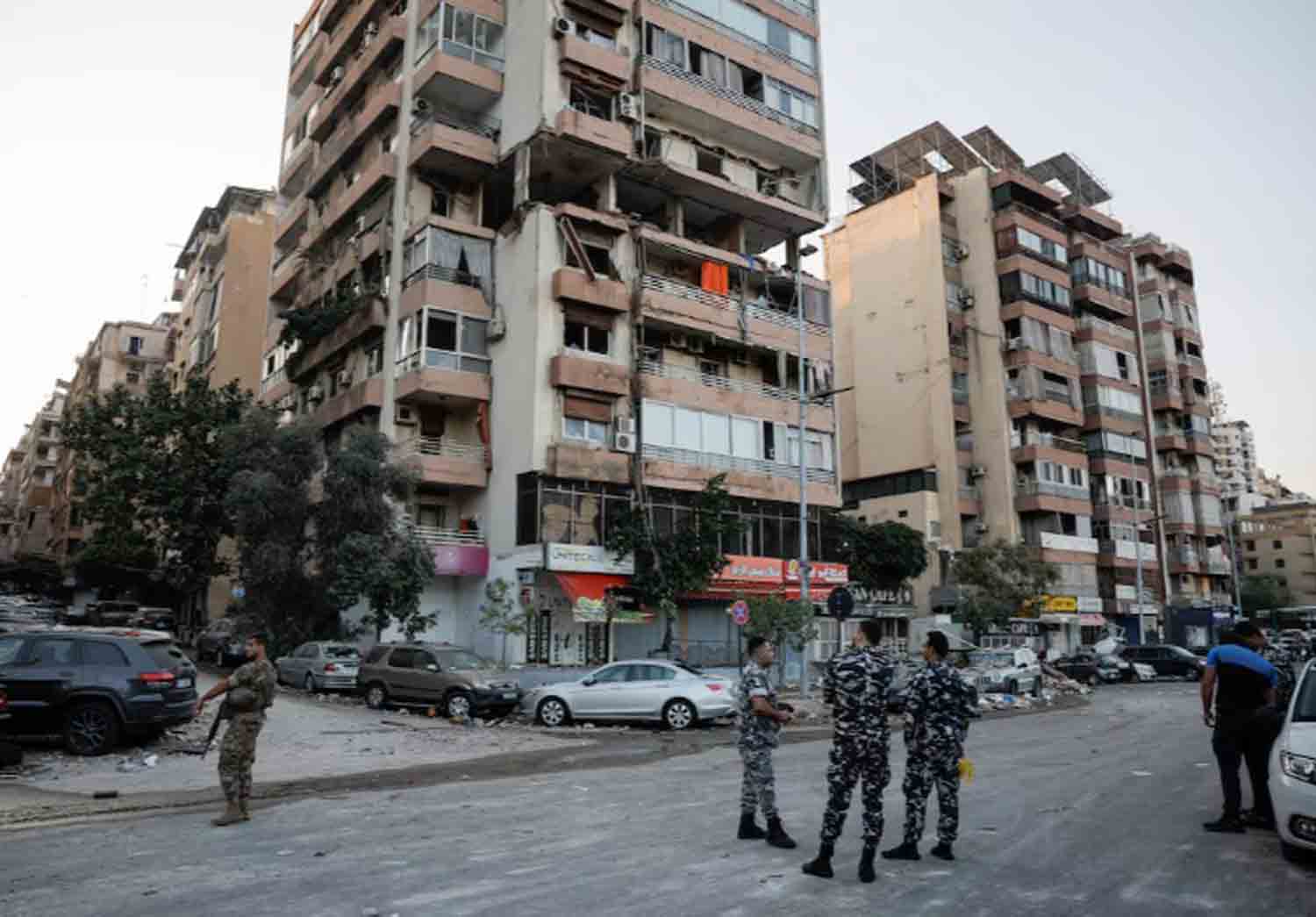
In Beirut, Israeli forces targeted a high-rise building in the central Jnah area, as well as another in the southern suburbs of the capital, temporarily disrupting access to Beirut airport. The Israeli military described these actions as a “precise strike.”

Israel has consistently maintained that it will take all necessary measures to secure its northern border and facilitate the return of tens of thousands of Israelis to towns they evacuated since the onset of the conflict in Gaza a year ago, which was marked by Hezbollah’s cross-border fire in support of the Palestinians in Gaza.

An Israeli security official reported that troops in southern Lebanon had initiated limited incursions into Lebanese territory overnight, although these operations only extended a short distance across the border, with no direct confrontations with Hezbollah fighters noted. The military indicated that similar incursions had been occurring in recent months.

However, in a clear indication that the conflict may escalate, the military announced the mobilization of four additional reserve brigades for operational duties along the northern border.

Israel has a longstanding history of military engagement in Lebanon, having invaded in 1982 during the Lebanese civil war. Although Israeli forces withdrew in 2000, they returned for another significant conflict with Hezbollah in 2006. Since then, the U.N. has monitored the border “blue line.”

The United Nations reported that its peacekeepers have observed sporadic Israeli incursions but have not witnessed a full-scale invasion. Hezbollah, a Shi’ite militia established by Iran to counter Israeli forces in Lebanon, has developed into the most formidable armed group in the country, boasting a significant arsenal of missiles and rockets. It also stands as Lebanon’s most influential political party and plays a leading role in a network of Iranian-backed armed factions throughout the Middle East.

Israel eliminated its long-time leader, Hassan Nasrallah, on Saturday through a significant airstrike in Beirut, causing widespread panic. This event occurred just days after the group experienced a shocking incident involving explosive devices hidden in pagers and radios detonating throughout the nation.

Russia is bracing for a prolonged standoff with US, Sergei Ryabkov says

0
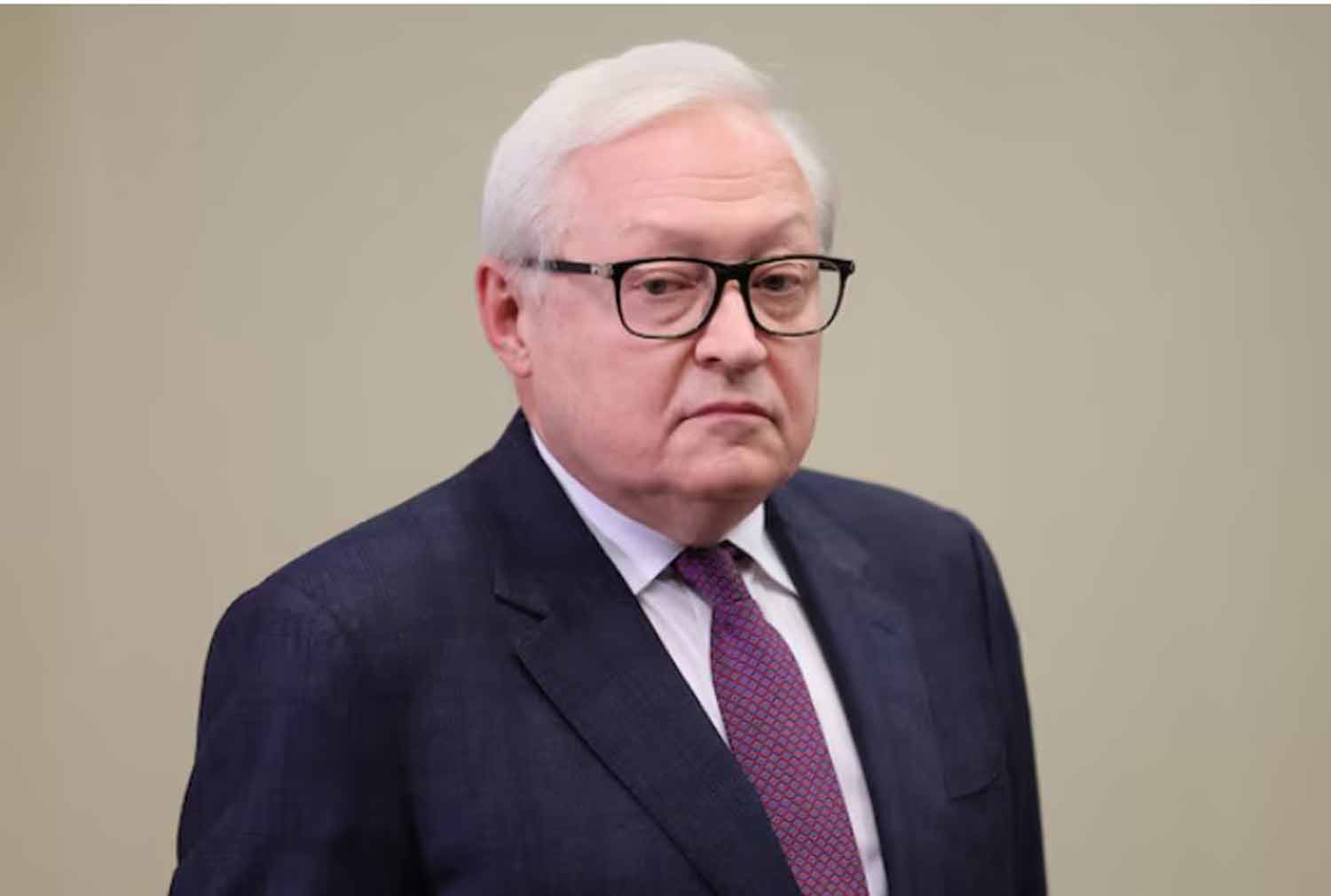
Deputy Foreign Minister of Russia Sergei Ryabkov

Russia is bracing for a prolonged standoff with the United States and has issued multiple warnings to Washington regarding the deteriorating state of relations, as stated by Deputy Foreign Minister Sergei Ryabkov on Tuesday.

The ongoing war in Ukraine, now in its second and a half year, has led to the most severe tensions between Russia and the West since the 1962 Cuban Missile Crisis, a period recognized as the closest the two superpowers came to a deliberate nuclear conflict.

Officials in Russia indicate that the conflict is now entering its most perilous phase. Ukrainian President Volodymyr Zelenskiy has been advocating for months for Kyiv’s allies to provide longer-range Western missiles, enabling Ukraine to strike deeper into Russian territory and thereby curtail Moscow’s capacity to conduct attacks.

Ryabkov, who is responsible for arms control and managing relations with the U.S., expressed that Moscow is fully aware of the realities of the relationship, particularly in light of the “bipartisan anti-Russian consensus” prevailing in the United States.

Ryabkov stated, as reported by the state news agency RIA, that it is essential to brace for a prolonged confrontation with this nation. “We are fully prepared for this in every aspect,” he emphasized. He also mentioned, “We are issuing all necessary warnings to our adversary to ensure they do not misjudge our resolve.”

Last week, President Vladimir Putin cautioned the West that Russia might resort to nuclear weapons if faced with conventional missile strikes, asserting that any attack on Russia backed by a nuclear power would be regarded as a collective assault.

Could the provision of Indian ammunition to Ukraine put a strain on Modi’s relationship with Putin?

1
Prime Minister of India Narendra Modi and President of Ukraine Volodymyr Zelenskyi seen during official meeting in Kiev.

During his visit to Moscow in early July, Indian Prime Minister Narendra Modi characterized Russia as New Delhi’s “trusted ally” and “all-weather friend,” highlighting the long-standing strategic partnership between the two countries.

However, this relationship is now facing scrutiny, particularly following reports that Kyiv has obtained Indian ammunition for use in the ongoing Russia-Ukraine conflict. An investigation by Reuters indicates that Indian shells, purchased by Italy and the Czech Republic, have been redirected to Ukraine. This revelation comes in light of various images from the battlefield in recent months, which show Ukrainian forces utilizing Indian ammunition in their efforts against Russia.

In the meantime, Modi has engaged in several discussions with Ukrainian President Volodymyr Zelenskyy, starting with a meeting in Tokyo in June, followed by a historic visit to Kyiv in August, and most recently, a meeting in New York during the United Nations General Assembly.

India’s Ministry of External Affairs spokesperson, Randhir Jaiswal, dismissed the reports of Ukrainian forces using Indian ammunition as “speculative and mischievous.” He asserted that India has not breached any regulations but did not explicitly deny the existence of Indian shells within Ukraine’s military supplies.

Nevertheless, Russian officials remain skeptical of India’s stance and raise a critical question: Has New Delhi taken steps to ensure that its ammunition does not end up in the conflict in Ukraine?

A Russian official, speaking anonymously to Al Jazeera, stated, “There is substantial evidence that Ukrainian forces are utilizing Indian artillery shells, supported by photographs.” He highlighted the end-user agreements that accompany military exports, which are designed to ensure sellers can monitor the final recipients of their weapons. “Provide us with evidence that India has inquired with Italy or Czechia regarding the transfer of these shells to Ukraine,” the official added, referring to the Czech Republic.

If Indian ammunition is indeed reaching Ukraine, it would not be an isolated case of Indian weaponry being deployed in ongoing conflicts. In June, Al Jazeera reported that rockets and explosives produced by Indian manufacturers were being sent to Israel during the ongoing war in Gaza, which has resulted in over 41,000 fatalities.

Furthermore, if these shells are arriving in Ukraine via third-party nations—without India’s direct intention—this scenario is not without precedent, according to Waheguru Pal Singh Sidhu, a professor at New York University’s Center for Global Affairs.

“During the apartheid era, British-made Centurion tanks from India, which were sent for repairs to a British firm, ended up in South Africa,” Sidhu noted in his comments to Al Jazeera.

Analysts also suggest that India may have assessed that it can navigate the potential strain on its relationship with Russia resulting from the use of Indian shells by Ukraine.

India, historically a prominent arms importer, has shifted its focus towards exporting, with $3 billion worth of weapons sold from 2018 to 2023 as part of its initiative to enhance domestic defense manufacturing under Prime Minister Modi’s leadership.

The ongoing conflict in Ukraine has significantly benefited the Indian defense sector. Exports from three companies—Munitions India, Yantra, and Kalyani Strategic Systems—to Italy and the Czech Republic surged from $2.8 million to $135.24 million between 2022 and 2024.

Christopher Clary, an assistant professor of political science at the University at Albany, State University of New York, noted, “As India increases its arms exports globally, it will face the challenging reality that arms importers may not always act in accordance with the exporter’s intentions and may even engage in actions that seem to violate the original restrictions set by the exporter.”

Additionally, some reports indicate that Indian electronics sent to Russia are being utilized for military purposes.

Sidhu remarked, “If this is indeed the situation, then India is effectively acting as a supplier to both parties, reminiscent of Milo Minderbinder from Catch-22, who profits by catering to both sides of a conflict.”

Some analysts contend that Ukraine’s utilization of Indian ammunition is unlikely to significantly disrupt New Delhi’s longstanding and robust relationship with Moscow, which has been established through close collaboration during the Cold War era. Over the last twenty years, approximately two-thirds of India’s arms acquisitions have originated from Russia, even as New Delhi has sought to reduce its military reliance on Moscow.

Current estimates indicate that Indian munitions constitute only about 1 percent of Ukraine’s total ammunition requirements in its conflict with Russia.

Clary remarked to Al Jazeera that, considering the relatively small volume of ammunition being supplied, the impact on India’s foreign relations is expected to be limited and manageable.

However, a Russian official who spoke with Al Jazeera interpreted the situation differently. The official noted that shortly after his visit to Kyiv in August, Modi reached out to U.S. President Joe Biden to discuss his discussions with Zelenskyy, but did not extend a similar communication to Putin, who subsequently initiated a call to Modi.

Following this, Modi dispatched India’s National Security Adviser, Ajit Doval, to Moscow to inform Putin about the Indian Prime Minister’s meeting with Zelenskyy. The Kremlin subsequently released footage of Doval attempting to convince a skeptical Putin of the benefits of Modi’s visit to Kyiv, highlighting the growing tension in India-Russia relations.

At home, leaders of the opposition Congress party are accusing Prime Minister Modi of undermining historically strong ties with Moscow due to pressure from the United States. Congress leader Rashid Alvi stated to Al Jazeera, “The Indian Prime Minister was compelled to travel to Kyiv via a bulletproof train under U.S. influence, which seeks to sever New Delhi’s longstanding relationship with Russia. If Indian arms are being sent to Ukraine, it is also a result of U.S. manipulation.”

According to Sidhu, a professor at NYU, the more critical issue than the limited quantity of Indian shells reportedly arriving in Ukraine is the underlying reason why the Czech Republic and Italy may be supplying this ammunition to Zelenskyy’s forces.

“It indicates that their production capabilities are strained, and they are eager to provide Ukraine with supplies by any means necessary,” he remarked. “This mirrors the situation in 2011-12 when NATO faced shortages of bombs and weapons for use in Libya; evidently, the conflict in Ukraine has put a strain on weapon supplies among Western allies.”

In February, the German newspaper Der Spiegel reported that Germany was negotiating with India to procure ammunition for Ukraine. The German Embassy in New Delhi declined to comment on the matter.

In the meantime, India has sought to portray Modi’s repeated meetings with both Zelenskyy and Putin—his second visit to Russia in three months is scheduled for October during the BRICS summit—as part of New Delhi’s initiative to facilitate peace between Moscow and Kyiv.

Clary expressed that he does not anticipate a minor supply of Indian shells to Ukraine through third countries to hinder peace negotiations. However, he is skeptical about Modi’s ability to facilitate a resolution.

“The issue lies in the fact that both nations believe they can fulfill their war objectives through military engagement. I doubt that Modi’s mediation can resolve this dilemma,” Clary remarked.

Despite India’s recent gestures towards Ukraine, Shanthie Mariet D’Souza, the founder and president of the Goa-based Mantraya Institute for Strategic Studies, noted that New Delhi’s historically strong relationship with Moscow undermines its role as a neutral mediator. “India’s deep-rooted connections with Russia cast doubt on its impartiality,” she stated in an interview with Al Jazeera.

She concurred that, despite Modi’s initiatives, neither Russia nor Ukraine seems inclined towards peace at this time. “The conflict is currently at a complicated juncture, with both parties resolute in pursuing a military solution,” she explained. “Presently, it appears there is little opportunity for a peacemaker.”

What is available, however, are opportunities for arms sales, including ‘Made in India’ shells being utilized on the front lines.

Diplomats have created channels for India and China to address Himalayan border tensions, says India’s army chief

0

Discussions between Indian and Chinese diplomats have created potential pathways for the two Asian nations to address the ongoing conflict along their Himalayan border, stated India’s army chief on Tuesday.

Relations between the nuclear-capable neighbors have been tense since violent confrontations in 2020 resulted in the deaths of 20 Indian and four Chinese soldiers along the largely undefined border.

Efforts to resolve the standoff through diplomatic and military channels have progressed slowly, adversely affecting business interactions between the two most populous countries, with New Delhi increasing scrutiny of Chinese investments and suspending significant projects.

“The diplomatic side is showing positive signals,” General Upendra Dwivedi remarked at a defense think tank event. “However, the implementation on the ground relies on the military leaders from both sides to make those decisions.”

Dwivedi emphasized that India seeks to restore the status of the western Himalayan frontier to its condition prior to April 2020, when the standoff commenced, noting that the situation will remain delicate until that occurs.

The military forces have withdrawn from four out of six confrontation sites, yet they have not achieved a resolution on the remaining contentious areas. According to Dwivedi, the parties have addressed the more straightforward issues and must now tackle the more complex challenges.

These remarks from the Indian army chief came after recent discussions between India’s National Security Adviser Ajit Doval, Foreign Minister Subrahmanyam Jaishankar, and Chinese Foreign Minister Wang Yi. Jaishankar noted last month that approximately 75% of the disengagement issues along the border with China have been resolved.

Following Doval’s meeting with Wang in Russia last month, both nations also committed to intensifying their efforts to ensure complete disengagement.

Israel has long record of military invasions in Lebanon

0

Israel has been involved in border conflicts with Lebanon’s Iran-supported Hezbollah for a year, coinciding with the ongoing situation in Gaza. The country has a longstanding record of military operations and invasions in Lebanon. Following the assassination of Hezbollah leader Hassan Nasrallah in recent airstrikes in Beirut, Israel has signaled its intention to launch a comprehensive invasion of Lebanon to secure the border area for its citizens who have been displaced by the violence.

Here is an overview of Israel’s military actions in Lebanon:

1948

Lebanon joins other Arab nations in opposing the newly established state of Israel. Approximately 100,000 Palestinians, who either fled or were expelled from British-controlled Palestine during the conflict, seek refuge in Lebanon. An armistice is reached between Lebanon and Israel in 1949.

1968

In retaliation for an attack on an Israeli airliner by Palestinian militants, Israeli commandos destroy several passenger planes at Beirut airport. The Palestine Liberation Organization (PLO) moves to Lebanon two years later after being expelled from Jordan, resulting in increased cross-border tensions.

1973

Israeli special forces, disguised, kill three Palestinian guerrilla leaders in Beirut as revenge for the murder of Israeli athletes during the 1972 Munich Olympics. Throughout the 1970s, Palestinian guerrilla attacks on Israel and subsequent Israeli military responses in Lebanon escalate, prompting many Lebanese to flee the southern region and exacerbating sectarian strife as civil war looms.

1978

Israel conducts an invasion of southern Lebanon, establishing a limited occupation zone in response to a militant attack near Tel Aviv targeting Palestinian guerrillas. The Israeli military supports a local Christian militia known as the South Lebanon Army (SLA).

1982

Israel escalates its military campaign by invading Lebanon up to Beirut, following a series of retaliatory border exchanges. After a protracted and violent 10-week siege characterized by intense Israeli bombardment of West Beirut, thousands of Palestinian fighters are evacuated by sea. Tragically, hundreds of civilians in the Palestinian refugee camps of Sabra and Shatila are killed by Christian militias, who were permitted entry by Israeli forces after the assassination of Lebanon’s newly elected Maronite Catholic president via a car bomb. In response to the invasion, Iran’s Revolutionary Guards form the Shi’ite Muslim militant group Hezbollah in Lebanon.

1985

After withdrawing from central Lebanon in 1983, Israel maintains a military presence in the south, creating a formal occupation zone approximately 15 kilometers (nine miles) deep, which it controls in collaboration with the SLA. Hezbollah initiates a guerrilla campaign against Israeli troops.

1993

In July, Israel initiates “Operation Accountability,” a week-long military operation targeting Lebanon. The stated objective is to directly confront Hezbollah, complicating the group’s ability to utilize southern Lebanon as a launch point for attacks on Israel, while also exerting pressure on the Lebanese government to take action against Hezbollah.

1996

Hezbollah frequently launched attacks on Israeli forces in the southern region and fired rockets into northern Israel, prompting Israel to initiate a 17-day military operation known as “Operation Grapes of Wrath.” This offensive resulted in the deaths of over 200 individuals in Lebanon, including 102 casualties from an Israeli strike on a U.N. base in the village of Qana.

2000

Israel completed its withdrawal from southern Lebanon, concluding a 22-year occupation, following persistent assaults by Hezbollah on Israeli military positions within the occupied territory.

2006

In July, Hezbollah infiltrated Israel, abducting two Israeli soldiers and killing others, which ignited a five-week conflict characterized by extensive Israeli airstrikes targeting Hezbollah strongholds and national infrastructure. Although Israeli ground forces advanced into southern Lebanon, the majority of the fighting was conducted through airstrikes and rocket fire. The conflict concluded without Israel meeting its military goals, while Hezbollah proclaimed a “divine victory.” The toll included at least 1,200 Lebanese, primarily civilians, and 158 Israelis, mostly soldiers.

2024

On October 1, the Israeli military announced the commencement of “limited, localized, and targeted ground raids based on precise intelligence” against Hezbollah forces in southern Lebanese villages near the border, which were deemed to pose “an immediate threat to Israeli communities in northern Israel.” The operation was supported by air force and artillery units executing “precise strikes.”

Putin has authorized the conscription of 133,000 new servicemen

0
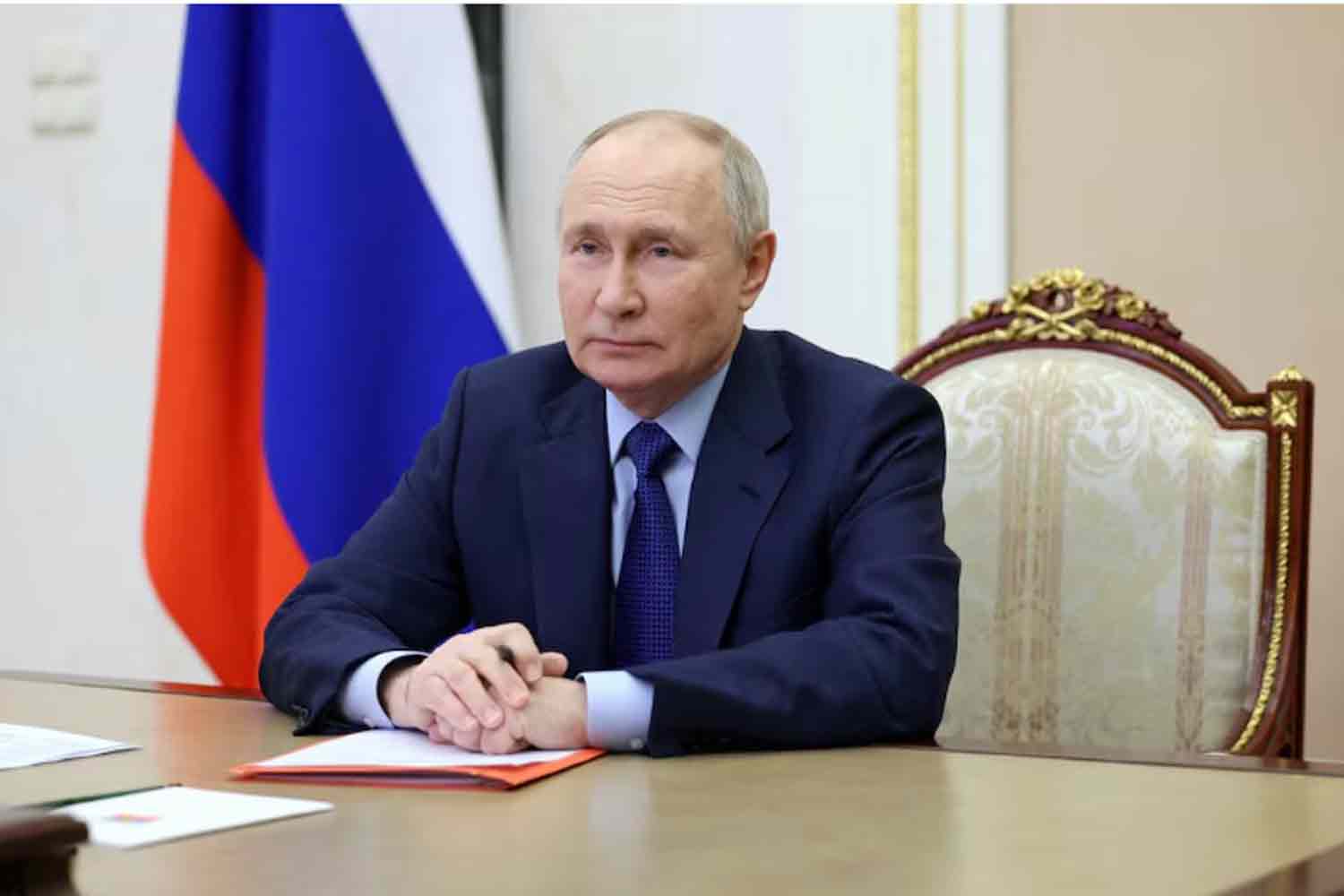
Russian President Vladimir Putin chairs a meeting

Russian President Vladimir Putin has authorized the conscription of 133,000 new servicemen as part of the autumn draft, which is set to commence on October 1 and continue until the end of the year, as outlined in a decree released by the Kremlin on Monday.

The decree, which appeared in the state-run newspaper Rossiyskaya Gazeta, specifies that the draft will target citizens aged 18 to 30 who are not in the reserve and are eligible for conscription under Federal Law, totaling 133,000 individuals.

Vice-Admiral Vladimir Tsimlyansky, head of Russia’s conscription office, confirmed that the duration of service for conscripts will remain unchanged at 12 months within military units in Russia.

Tsimlyansky also emphasized that conscripts will not be deployed to participate in the special military operation in the newly annexed regions, as reported by Rossiyskaya Gazeta.

Russia refers to its ongoing conflict in Ukraine, which escalated with a full-scale invasion in February 2022, as a special military operation, while Kyiv and its allies characterize it as an unprovoked and imperialistic land grab.

In a decision widely criticized by much of the Western world, Russia annexed portions of southeastern Ukraine in late 2022, referring to these areas as ‘new regions.’ In response to perceived escalating threats along its western borders, President Putin ordered an increase in the Russian military by 180,000 troops in September, raising the total to 1.5 million active personnel, which would position it as the second largest military globally, following China.

Ukrainian President Volodymyr Zelenskiy, U.S. President Joe Biden, and other NATO leaders have held Putin accountable as the primary aggressor in the ongoing conflict in Ukraine and as a source of threats to neighboring countries.


Ukraine’s defense minister dismisses three deputies

0
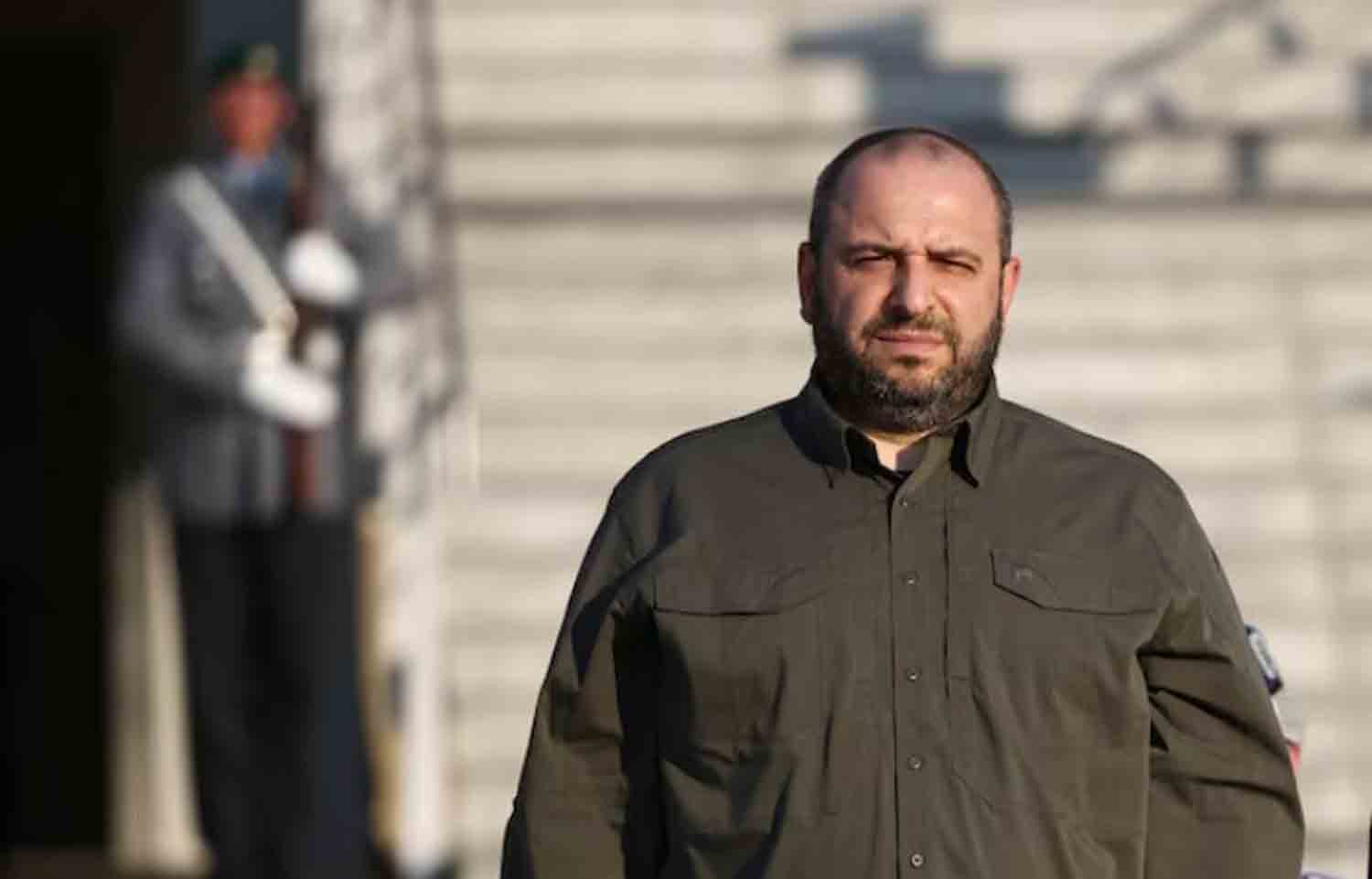
Ukrainian Defence Minister Rustem Umerov

Ukraine‘s defense minister announced the dismissal of three deputy ministers in a cabinet reshuffle aimed at strengthening the country’s response to Moscow’s ongoing invasion, which has persisted for two and a half years.

Rustem Umerov shared this information via social media on Tuesday, stating that he has requested the government to relieve Stanislav Haider, Oleksandr Serhiy, and Yuriy Dzhygyr from their roles as deputy defense ministers, along with Liudmyla Darahan, who served as the ministry’s secretary.

Umerov emphasized the importance of collaborating closely with law enforcement and anti-corruption agencies to effectively reform the procurement system.

He indicated that new appointments would be announced soon. In light of Russia’s extensive military actions, Ukrainian officials are actively working to reduce bureaucratic inefficiencies and combat corruption.

Chinese military carried out combat readiness patrols in South China Sea

0

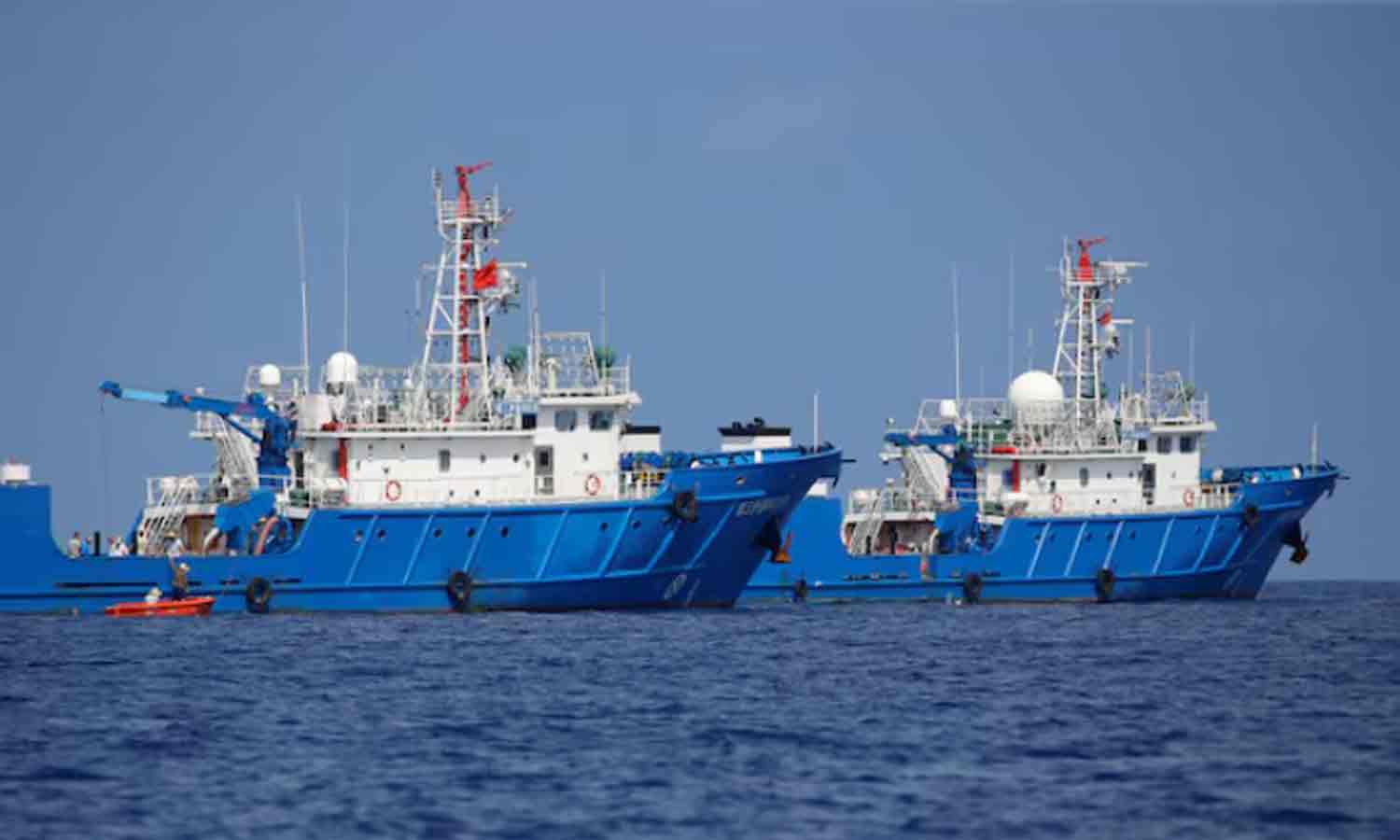
The Chinese military carried out combat readiness patrols in certain areas of the South China Sea from Monday to Tuesday, as reported by state media. This activity follows a series of uncommon military drills and exercises that took place over the weekend.

According to reports, the Southern Theater Command of the Chinese People’s Liberation Army (PLA) engaged in these patrols to enhance combat readiness and ensure peace and stability in the South China Sea region.

China asserts sovereignty over nearly the entire South China Sea, despite competing claims from Brunei, Malaysia, the Philippines, and Vietnam. In 2016, the Permanent Court of Arbitration in The Hague determined that China’s claims lacked a basis in international law, a ruling that Beijing has dismissed.

On Saturday, Chinese air and naval forces conducted operations near the contested Scarborough Shoal, coinciding with announcements from Australia and the Philippines regarding joint military exercises with Japan, New Zealand, and the United States in the Philippines’ Exclusive Economic Zone (EEZ).

The shoal, located approximately 200 km (124 miles) west of Luzon, the principal island of the Philippines, falls within the Philippine Exclusive Economic Zone and has been a point of contention between Beijing and Manila for an extended period.

During recent discussions in New York with China’s chief diplomat, Wang Yi, U.S. Secretary of State Antony Blinken expressed concerns regarding China’s “dangerous and destabilizing actions” in the South China Sea.

Blinken has previously criticized Beijing for its assertive movements involving coast guard and fishing vessels, which are believed to function as a maritime militia in the region.

Israel initiates ground operations in Lebanon, conducting ‘limited’ strikes against Hezbollah

0
Israeli Army tank is transported, amid cross-border hostilities between Hezbollah and Israel, in northern Israel.

Israel’s anticipated ground invasion of Lebanon appeared to commence early Tuesday, as the military announced that troops had initiated “limited” operations targeting Hezbollah positions in the border region.

In a statement, the military indicated that it had launched “limited, localized, and targeted ground raids based on precise intelligence” against Hezbollah in southern Lebanese villages near the border, which were deemed to pose “an immediate threat to Israeli communities in northern Israel.”

Support for the ground forces was provided by the air force and artillery through “precise strikes.” Residents in the Lebanese border town of Aita al-Shaab reported intense shelling, accompanied by the sounds of helicopters and drones in the sky. Flares were frequently deployed over the Lebanese town of Rmeish, illuminating the night.

On Monday, Israeli Defence Minister Yoav Gallant informed local council leaders in northern Israel that the next phase of the conflict along Lebanon’s southern border would soon commence, aimed at facilitating the return of Israelis who have sought refuge from Hezbollah rocket attacks during nearly a year of border hostilities.

The ground invasion signifies a deepening conflict in the Middle East involving Israel and Iran-aligned militants, ignited by an attack on Israel by the Palestinian militant group Hamas on October 7, 2023. This situation now poses a risk of drawing in both the United States and Iran.

On Tuesday morning, an Israeli airstrike in Lebanon targeted Mounir Maqdah, the commander of the Lebanese faction of the Palestinian Fatah movement’s military wing, the Al-Aqsa Martyrs Brigade, as reported by two Palestinian security officials. His current status remains unclear.

The strike occurred in a building within the densely populated Ain al-Hilweh Palestinian refugee camp, located near the southern city of Sidon. This incident marks the first attack on the camp, which is the largest Palestinian camp in Lebanon, since hostilities between Hezbollah and Israel escalated nearly a year ago.

In Syria, an Israeli airstrike in the capital, Damascus, resulted in the deaths of three civilians and injuries to nine others, according to Syrian state media citing a military source. The Israeli military has stated that it does not comment on reports from foreign media.

Israel has conducted strikes on Iran-affiliated sites in Syria for several years, but has intensified these operations following the Hamas attack on its southern region on October 7, 2023. According to Israeli reports, Hamas’s assault resulted in the deaths of 1,200 individuals and the abduction of approximately 250 hostages.

In retaliation, Israel initiated a significant military campaign against Hamas in Gaza, leading to widespread destruction across much of the Palestinian territory, displacing the majority of its 2.3 million residents, and resulting in over 41,300 Palestinian fatalities, as reported by the Gaza health ministry.

Israel’s ground offensive in Lebanon follows a series of significant military actions, including the lethal detonation of booby-trapped Hezbollah pagers, two weeks of airstrikes, and the recent killing of Hezbollah leader Hassan Nasrallah, which has severely impacted the group.

The extensive airstrikes have resulted in the deaths of numerous Hezbollah commanders, but have also claimed the lives of approximately 1,000 civilians and displaced one million people, as reported by the Lebanese government.

Overnight, strikes targeted the southern suburbs of Beirut, according to a security source. A Reuters journalist observed a bright flash followed by a series of loud explosions shortly after the Israeli military issued warnings for residents to evacuate areas near buildings identified as housing Hezbollah infrastructure south of the capital.

In the last 24 hours, Israeli strikes in southern Lebanon, the eastern Bekaa Valley, and Beirut have resulted in at least 95 fatalities and 172 injuries, according to Lebanon’s health ministry early Tuesday.

Hezbollah’s deputy leader, Naim Qassem, delivered his first public address since Nasrallah’s death on Monday, asserting that “the resistance forces are prepared for ground engagement.” He noted that Hezbollah has continued to launch rockets into Israeli territory, reaching distances of up to 150 km (93 miles).

“We understand that this battle may be prolonged. We will emerge victorious as we did in the liberation of 2006,” he stated, referencing the last major conflict between the two adversaries.

Late Monday, Lebanese troops reportedly withdrew approximately five kilometers (3 miles) from their positions along the southern border with Israel, as per a Lebanese security source. A spokesperson for the Lebanese army did not confirm or deny this movement.

Historically, Lebanon’s army has maintained a neutral stance during major conflicts with Israel and has refrained from engaging the Israeli military in the past year of hostilities.

The White House and the U.S. State Department have not yet responded to inquiries regarding Israel’s ground operations in Lebanon. However, on Monday, U.S. President Joe Biden called for a ceasefire.

I have greater concerns than you may realize, and I support their decision to halt operations,” Biden stated to reporters when questioned about his stance on Israeli plans for a cross-border operation. “A ceasefire is necessary at this moment.”

Last week, Israel dismissed a proposal from the U.S. and France that advocated for a 21-day ceasefire along the Lebanon border, aimed at facilitating a diplomatic resolution that would enable displaced civilians from both sides to return to their homes.

Netanyahu asserts that no area in the region is beyond Israel’s reach as a ground invasion appears imminent

0
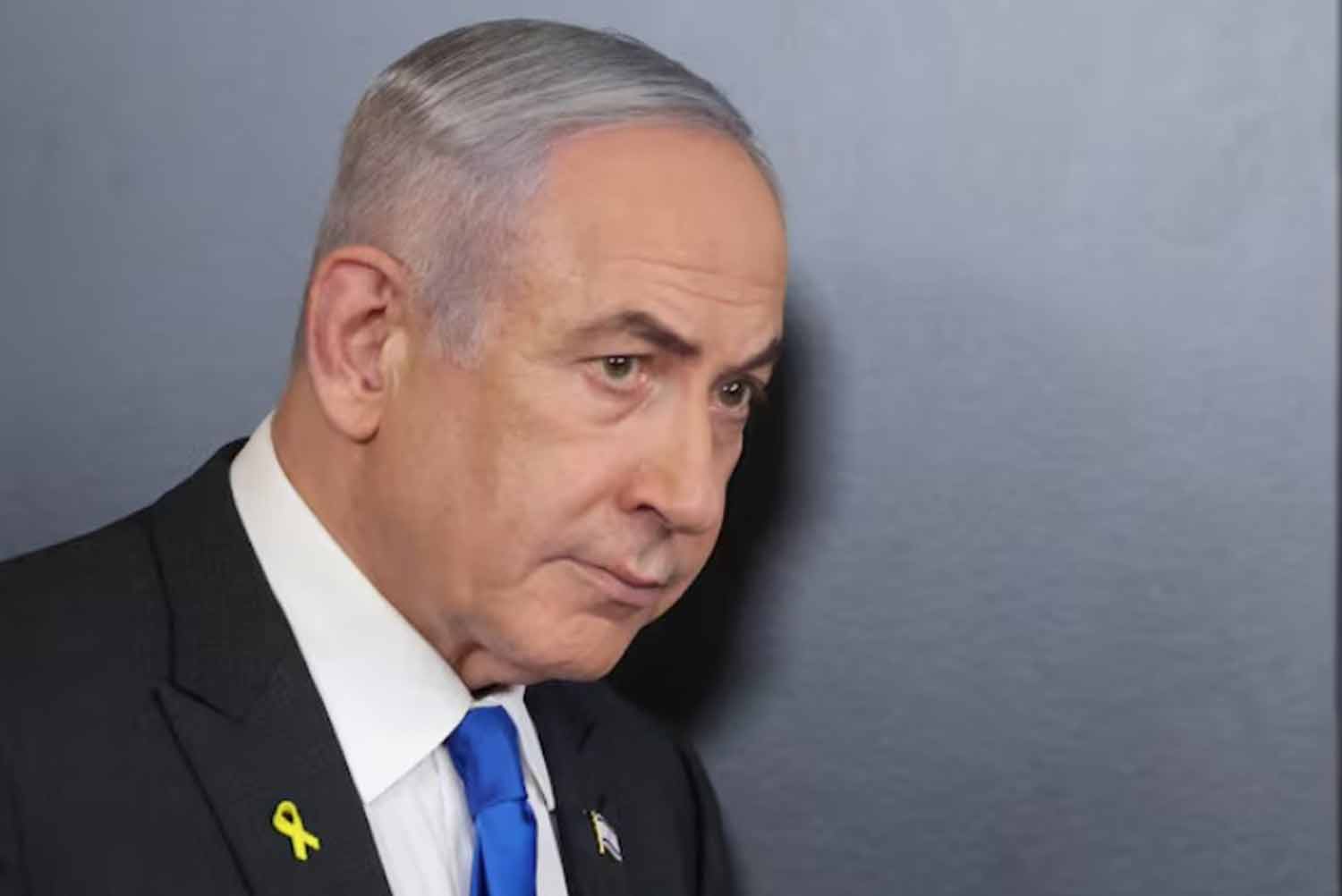
Prime Minister Benjamin Netanyahu

Israel issued a warning to Iran on Monday, asserting that no location in the Middle East is beyond its capabilities and suggesting a potential ground invasion of Lebanon following the assassination of the Hezbollah leader, a key adversary backed by Tehran, in a Beirut suburb last week.

Prime Minister Benjamin Netanyahu stated in a three-minute video message directed at the Iranian populace, “There is no place we will not reach to safeguard our citizens and defend our nation.”

The assassination of Nasrallah on Friday, a significant figure in Tehran’s “Axis of Resistance” against Israeli and U.S. interests in the region, represents one of the most substantial setbacks for both Hezbollah and Iran in recent decades. Following two weeks of extensive airstrikes and a series of targeted killings of Hezbollah leaders, Israel, which has been preparing its forces for a possible ground operation, has indicated that a land invasion of Lebanon remains a viable option.

During a visit to troops stationed along Israel’s northern border, Defence Minister Yoav Gallant emphasized Israel’s commitment to ensuring the safe return of citizens who have sought refuge from Hezbollah rocket attacks amid nearly a year of ongoing border conflict.

“We will utilize all necessary resources—your forces, additional forces, from the air, sea, and land. Wishing you success,” Gallant stated after receiving updates from military commanders.

He noted that while the removal of Nasrallah is a significant objective, it is not the ultimate goal. “To guarantee the return of communities in northern Israel, we will leverage all our capabilities, including your involvement,” he added.

According to an unnamed U.S. official cited by The Washington Post, Israel has informed the U.S. of its intention to initiate a ground operation that could commence soon. This operation is expected to be smaller in scale than Israel’s 2006 conflict with Hezbollah, focusing primarily on the security of border communities.

In response to inquiries about these developments, U.S. President Joe Biden, who has faced challenges in persuading Israel to moderate its military actions, advocated for a ceasefire, stating, “I support them stopping.” The Pentagon directed reporters to Israel for further information regarding any potential land offensive.

Hezbollah prepared to counter ground invasion

Hezbollah’s deputy leader, Naim Qassem, delivered his first public address following the Israeli airstrikes that resulted in the death of Nasrallah last week. He asserted that his fighters are fully prepared to counter any ground invasion and disrupt its objectives. “The resistance forces are ready for a ground engagement,” he stated from an undisclosed location.

As he spoke, Israeli airstrikes continued in Beirut and other regions of Lebanon, prolonging a campaign that has lasted two weeks. This offensive has reportedly led to the deaths of several Hezbollah commanders, approximately 1,000 civilians, and has displaced one million people, according to the Lebanese government. The health ministry reported that the death toll from an Israeli strike on Ain Deleb, a town in southern Lebanon, has risen to 45, with rescuers working amidst the rubble of a collapsed building. “We are rescuing these people, pulling out the living, the torn apart, and the martyrs,” remarked rescuer Mazin al-Khatib.

The assassination of Nasrallah, along with targeted attacks on the group’s communication systems, represents a significant setback for the Shi’ite movement since its establishment by Iran in 1982 to combat Israel. Nasrallah transformed Hezbollah into Lebanon’s most formidable military and political entity, with influence extending throughout the Middle East. The organization now faces the challenge of finding a successor to a leader who was revered by millions for his defiance against Israel, despite being labeled a terrorist by the West.

Qassem indicated that Hezbollah would “choose a secretary-general for the party at the earliest opportunity … and fill the leadership and positions on a permanent basis.” He also noted that Hezbollah has continued to launch rockets into Israeli territory, reaching distances of up to 150 km (93 miles). “What we are doing is the bare minimum … We understand that the battle may be prolonged,” he stated. “We will emerge victorious as we did in the liberation of 2006,” he added, referencing the last major conflict between the two adversaries.

broader conflict

Hours prior to Qassem’s remarks, Hamas reported that an Israeli airstrike had resulted in the deaths of its leader in Lebanon, Fateh Sherif Abu el-Amin, along with his wife, son, and daughter in Tyre on Monday. Additionally, the Popular Front for the Liberation of Palestine announced that three of its leaders were killed in a strike in the Kola district of Beirut, marking the first attack so close to the city center.

The Israeli strikes targeting militant positions in Lebanon are part of a broader conflict that extends from the Palestinian territories of Gaza and the occupied West Bank to Iranian-backed factions in Yemen and Iraq. This escalation has heightened concerns that the United States and Iran could become embroiled in the conflict.

Recent developments suggest that Israel remains committed to its military operations, showing no signs of restraint even after the elimination of Nasrallah. Prime Minister Netanyahu accused the Iranian government of exacerbating the situation in the Middle East, claiming it was leading its own people “closer to the abyss.”

In response, Iranian Foreign Ministry spokesperson Nasser Kanaani stated that Tehran would not allow Israel’s “criminal acts” to go unanswered, referencing the killings of Nasrallah and Brigadier General Abbas Nilforoushan, a deputy commander of the Iranian Revolutionary Guard Corps, who also perished in the strikes.

Despite the heavy civilian casualties, the United States, Israel’s closest ally, has maintained its support. Meanwhile, while Arab nations have condemned Israel’s actions, none have taken significant measures to pressure it to curb its military operations, which has frustrated residents in Beirut like Abou Imad. He expressed his discontent, stating, “You are watching as they (Israel) take over all the Arab countries and take us all. This indifference is shameful, for the Lebanese and Palestinian people.”