Tuesday, April 7, 2026
Home Blog Page 16

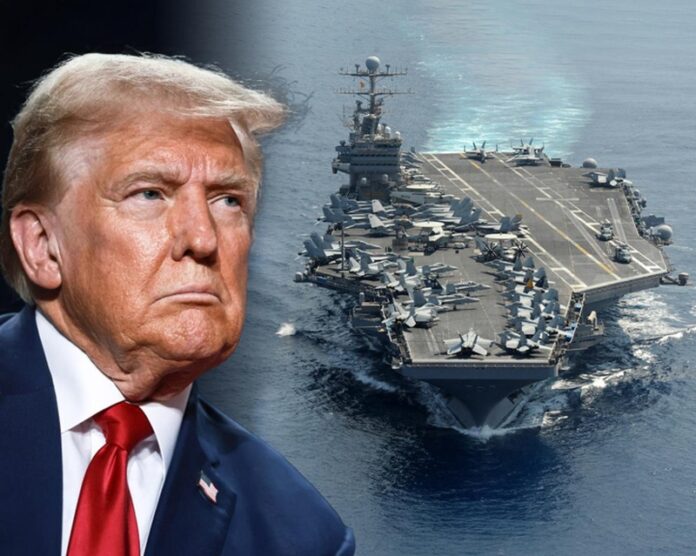
From F-35s to Warships: Inside America’s Latest Military Buildup Near Iran

0

The United States has significantly expanded its military presence across the Middle East in recent weeks, deploying additional air, naval, and intelligence assets amid rising tensions with Iran and growing concerns over regional stability.

Defense officials and open-source tracking data indicate that the buildup is aimed at strengthening deterrence, improving force protection, and ensuring rapid response capability in the event of a wider regional escalation.

Expanded U.S. Air Force Operations

The United States Air Force has carried out an intensive airlift and reinforcement campaign to move personnel, equipment, and advanced platforms into the region.

More than 80 C-17 Globemaster III transport flights, supported by several C-5M Super Galaxy heavy-lift missions and multiple C-130 sorties, have been used to deliver troops and critical materiel to forward operating bases.

To sustain prolonged operations, the US has deployed up to 20 aerial refueling aircraft, including KC-135 Stratotankers and KC-46 Pegasus tankers. Search-and-rescue capability has also been reinforced with HC-130J aircraft, enhancing personnel recovery in contested environments.

In the intelligence and command domain, the Air Force has positioned E-11A BACN aircraft to provide airborne communications and battle management, ensuring connectivity across dispersed forces. Signals intelligence and electronic surveillance capabilities have been strengthened with the deployment of RC-135 Rivet Joint aircraft.

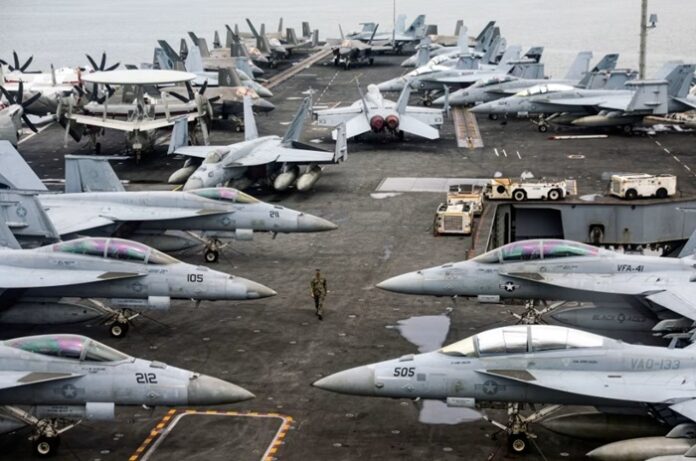
Combat power has also been reinforced. The US has deployed six F-35A stealth fighters alongside six EA-18G Growler electronic warfare aircraft, enhancing both strike and electronic attack capabilities. These assets join previously deployed F-15E Strike Eagles and A-10C Thunderbolt II attack aircraft already operating in the region.

U.S. Navy Strengthens Maritime Posture

At sea, the United States Navy has expanded its surface and subsurface presence across key maritime corridors.

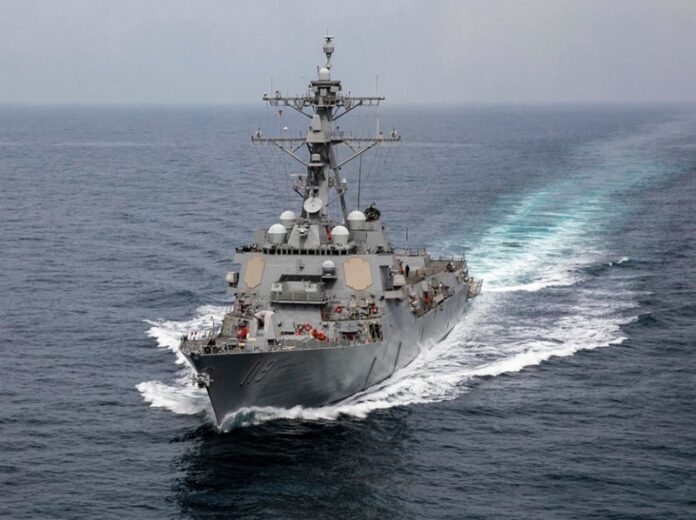
Three Arleigh Burke–class guided-missile destroyers are operating with the USS Abraham Lincoln Carrier Strike Group in the Arabian Sea, providing air defense, missile interception, and strike support.

Additional Arleigh Burke–class destroyers have been positioned in the Gulf of Oman and the Persian Gulf to protect US military facilities and partner infrastructure in Qatar, United Arab Emirates, and Saudi Arabia.

Further north, two more US destroyers are operating in the Gulf of Aqaba and the Mediterranean Sea, where they are tasked with helping to defend Israel against potential missile and drone threats.

Adding a strategic dimension to the deployment, the nuclear-powered guided-missile submarine USS Georgia has been reported operating in the Mediterranean. The Ohio-class submarine is capable of carrying large numbers of cruise missiles and special operations forces, providing the US with a highly survivable strike option.

Deterrence Messaging and Regional Implications

US officials have not announced any imminent military action but emphasize that the buildup is defensive in nature and intended to deter Iran and its regional allies from targeting American forces or partners.

The scale and diversity of the deployments—spanning airlift, intelligence, electronic warfare, naval strike, and missile defense—underscore Washington’s intent to maintain escalation dominance while reassuring allies across the Middle East.

As tensions persist over Iran’s regional activities, maritime security, and ongoing conflicts involving US partners, the reinforced US posture signals readiness for rapid response while keeping diplomatic options on the table.
Trump Stays Silent as Saudi-Emirati Power Struggle Redraws the Region

0

Nearly a decade after Washington openly took sides in a Gulf dispute, a new and potentially more consequential rift has emerged between two of America’s closest Middle Eastern partners: Saudi Arabia and the United Arab Emirates.

Unlike the 2017 blockade of Qatar, when then-President Donald Trump publicly backed Riyadh and Abu Dhabi, Washington has so far remained conspicuously quiet as tensions escalate between the former allies.

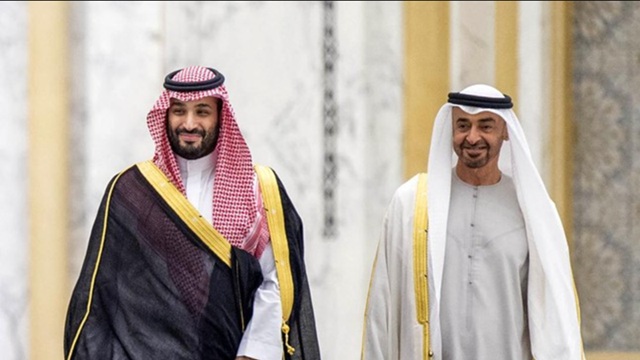
The dispute now stretches across multiple theatres—from Yemen and Sudan to Libya and the Red Sea—highlighting a widening strategic divergence between Crown Prince Mohammed bin Salman and President Mohammed bin Zayed.

From Yemen to Africa: A Multi-Front Rivalry

The fallout became visible in early January when Saudi Arabia launched airstrikes against Yemeni secessionist forces backed by Abu Dhabi and moved to expel the Southern Transitional Council from parts of southern and eastern Yemen. The move marked a sharp reversal from years of coordination in the Yemeni conflict.

Tensions have also spilled into Africa. Riyadh has reportedly discussed supplying arms—via Pakistan—to Sudan’s military, which is fighting the Rapid Support Forces (RSF), a paramilitary group widely seen as aligned with Emirati interests. In Libya, Saudi Arabia and Egypt are lobbying the family of warlord Khalifa Haftar to distance themselves from the UAE and halt alleged logistical support to the RSF.

Alongside covert maneuvering, the rivalry has erupted into an unusually aggressive media and social-media battle. A recent Saudi opinion piece accused the UAE of acting as “Israel’s Trojan horse in the Arab world,” framing Abu Dhabi’s foreign policy as a betrayal of religious and regional principles.

Trump, Business Interests, and Strategic Restraint

Despite the growing feud, Trump has refrained from intervening. Former US diplomats say this restraint reflects lessons learned from 2017, when his administration misread Gulf dynamics and underestimated Qatar’s strategic importance, including hosting the US Al-Udeid air base.

Another key difference today is Trump’s extensive financial exposure across the Gulf. Trump-branded luxury developments are underway in Saudi Arabia, Dubai, Qatar, and Oman—many tied to Saudi developer Dar al-Arkan. His inner circle, including Jared Kushner, Steve Witkoff, and Tom Barrack, also maintains deep business and investment ties with all major Gulf states.

This web of interests complicates any clear US alignment, even as both Saudi Arabia and the UAE compete for influence in Washington.

Competing Visions for the Middle East

Analysts describe the rift as more than a personal dispute—it reflects a structural shift in regional leadership.

Saudi Arabia is positioning itself as the central political and religious heavyweight of the Arab and Islamic world, leveraging its G20 status, nuclear-armed partnership with Pakistan, and expanding defense ties with Turkey. The UAE, by contrast, is pursuing a network-driven strategy, aligning closely with Israel, investing heavily in ports, gold, and logistics, and backing secessionist movements from Sudan to Somaliland.

Abu Dhabi’s role in projects like the India–Middle East–Europe Economic Corridor and its close coordination with Israel resonate strongly in parts of Washington. Yet its growing engagement with China—including concerns over activity at Khalifa Port—has unsettled US intelligence officials.

Why Trump May Ultimately Lean Saudi

While US officials insist Washington wants strong ties with both “brothers,” experts argue that Saudi Arabia’s scale and strategic weight may ultimately prove more attractive to Trump. The kingdom’s economy is roughly double the size of the UAE’s, and its investment pledges rival—or exceed—Abu Dhabi’s.

Trump’s core regional priorities—containing Iran, stabilizing Gaza, reunifying Yemen, and backing state authority in Sudan—also align more closely with Riyadh’s positions than Abu Dhabi’s support for non-state actors.

Israel remains a wildcard. The UAE enjoys unmatched access as Israel’s closest Arab partner, but Saudi Arabia’s influence over broader Arab and Islamic opinion, and its central role in recent Syria diplomacy, continue to give Riyadh an edge.

For now, Trump appears determined not to repeat past mistakes. But as the Saudi-UAE rivalry sharpens, pressure will grow on Washington to decide whether neutrality is sustainable—or merely temporary.

Kazakhstan Opens Door to Israeli Low-Observable Drones Under New Deal

0
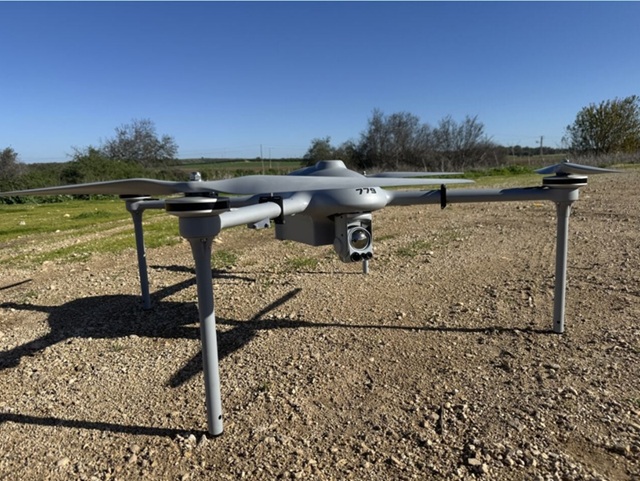
Israeli drone manufacturer Aero-Sentinel Drone

An Israeli drone manufacturer has strengthened its presence in Central Asia after Aero-Sentinel confirmed an exclusive distribution agreement in Kazakhstan, marking a significant expansion into one of the region’s most mature defense and security markets.

The announcement was made on Sunday by Ofir Avram, Chief Marketing Officer of Aero-Sentinel, who confirmed that the company has finalized a partnership with 2LNK GmbH, a Germany-based firm with established operational ties in Kazakhstan. Under the agreement, 2LNK GmbH will serve as the exclusive distributor of Aero-Sentinel’s mission-ready drone platforms in the country.

According to Avram, the deal reflects growing demand within Kazakhstan for intelligence, surveillance, and reconnaissance (ISR) systems that offer proven field performance rather than experimental or developmental platforms.

Aero-Sentinel noted that 2LNK GmbH brings deep local expertise and long-standing relationships within Kazakhstan’s defense and internal security sectors, enabling direct engagement with government and end-user agencies. The local partnership is led by Kody Linshitz and is described by both companies as being built on trust, operational familiarity, and an established market presence rather than indirect market entry.

Kazakhstan’s defense and security sector has expanded steadily in recent years, driven by modernization efforts in border surveillance, counterterrorism operations, and critical infrastructure protection across its vast and diverse geography. Industry officials describe the market as highly structured, with clearly defined technical standards and a strong preference for systems that have already demonstrated operational reliability in real-world conditions.

Under the agreement, Aero-Sentinel will offer its G2 and G3 drone platforms to Kazakh customers. These systems are designed for covert ISR missions and feature low acoustic signatures, enabling close-range operations with a reduced risk of detection. Such capabilities have generated interest from special operations forces and internal security units in multiple regions.

While Aero-Sentinel has not disclosed contract values or delivery timelines, company representatives emphasized that the Kazakhstan partnership forms part of a broader strategy to establish exclusive distribution networks in selected markets where long-term demand for surveillance and reconnaissance systems is expected to remain stable.

The company’s drones are marketed as short- and medium-range platforms optimized for tactical ISR, border monitoring, and sensitive reconnaissance missions. Their design emphasizes low noise output, compact logistical requirements, and rapid deployment—features well suited for both dense urban environments and remote terrain.

Although Aero-Sentinel has not officially confirmed operational use by foreign services, several open-source defense reports have previously linked platforms with similar acoustic and flight profiles to Israeli special operations activity. Reports published last year suggested that comparable drones were employed during covert missions conducted inside Iran.

For Kazakhstan, the agreement provides access to a new category of low-observable ISR drones without the need for lengthy domestic development programs, significantly shortening acquisition timelines. For Aero-Sentinel, the deal establishes a strategic foothold in a region that connects Eastern Europe, Russia, and Asia—an area where demand for advanced surveillance technologies continues to grow.

Trump Administration Weighs Expanded Military Options Against Iran Amid Protests and Nuclear Fears

0

The administration of U.S. President Donald Trump is actively reviewing a broad range of expanded military options against Iran, as unrest inside the country intensifies and concerns grow over Tehran’s nuclear and missile programs, according to reports from major American media outlets.

Senior U.S. officials have briefed President Trump on scenarios ranging from large-scale air and missile strikes to special forces operations aimed at crippling Iran’s strategic capabilities or destabilizing the ruling system. The deliberations come amid widespread protests in Iran, which erupted in late December 2025 and have been met with a violent crackdown by state security forces.

Pentagon Plans: From Limited Strikes to “Decisive” Action

According to reporting by the Wall Street Journal, the Pentagon and the White House have jointly prepared options for what officials describe as “decisive” military action, including a large-scale strike plan targeting Iranian regime assets and facilities linked to the Islamic Revolutionary Guard Corps.

Alongside these expansive scenarios, more limited strikes are also under review, designed to pressure Tehran or degrade specific IRGC infrastructure without triggering a full-scale war.

U.S. defense planners caution, however, that any attempt to target or capture Iran’s Supreme Leader Ali Khamenei would be vastly more complex than past high-profile operations. Analysts note that a so-called “decapitation strategy” would likely require major ground and air deployments to prevent chaos after such an action—resources that are not currently available without a broader invasion.

Special Forces and Nuclear Sites

The New York Times reports that the White House is also considering special operations raids against Iranian nuclear facilities that may remain operational despite earlier strikes. These options go beyond earlier proposals and focus on severely damaging Iran’s ability to pursue nuclear weapons, expand missile production, and support proxy groups across the region.

Some scenarios reportedly envision actions that could weaken the authority of the supreme leader, generate internal instability, or create conditions for long-term regime erosion. While President Trump has not authorized any military action so far, he has repeatedly used the threat of force to push Iran toward negotiations.

Protests, Crackdown, and Rising Regional Volatility

The strategic debate is unfolding as Iran faces one of its most severe internal crises in years. U.S. officials and UN-linked estimates suggest that up to 18,000 people may have been killed during the suppression of protests since December 2025.

These tensions follow earlier U.S. airstrikes on Iranian targets in June 2025 and a brief but intense war involving Israel last year, both of which heightened regional instability. President Trump has warned that further violence against protesters could trigger U.S. military action, though he temporarily eased pressure after reports that some executions in Iran were halted.

Allies Divided, Gulf States Push Back

Israel has reportedly encouraged Washington to consider a joint large-scale operation focused on Iran’s missile infrastructure, reflecting deep concern over Tehran’s growing capabilities.

In contrast, key Gulf allies have imposed firm limits. Saudi Arabia and the United Arab Emirates have refused to allow their airspace or territory to be used for strikes on Iran, citing fears of retaliation similar to the 2019 attacks on Saudi oil facilities and the risk of being drawn into a direct conflict.

This reluctance forces the U.S. to rely more heavily on unilateral assets, including the USS Abraham Lincoln carrier strike group, F-15E aircraft based in Jordan, B-2 stealth bombers, submarines, and long-range strike platforms operating from Diego Garcia.

High Risks, No Final Decision

Military analysts warn that even a successful strike campaign could lead to prolonged instability rather than orderly regime change. Iran’s vast territory, entrenched security apparatus, and willingness to use force against dissent mean that any conflict could stretch on for weeks or months, especially without strong regional support.

As of late January 2026, no final decision has been taken. President Trump continues to call on Iran to negotiate a nuclear deal while emphasizing the strength of U.S. military positioning in and around the region.

Whether these expanded options represent serious preparation for war or leverage for diplomacy remains unclear. What is certain is that the discussions highlight the high stakes and the risk of rapid escalation in an already volatile Middle East.

US MC-130J Commando II Flight to Azerbaijan Signals Strategic Pressure on Iran

0

The reported flight of a U.S. Air Force MC-130J Commando II special operations aircraft from the United Kingdom to Azerbaijan has sparked intense strategic speculation, with analysts viewing the move as a calculated signal aimed at Iran rather than a routine military transit.

According to open-source intelligence (OSINT) and flight-tracking data, the aircraft flew on 29 January 2026 from UK-based U.S. facilities — most likely RAF Mildenhall or RAF Fairford — to Baku, utilizing a route designed to avoid politically sensitive airspace while remaining close to NATO-aligned support infrastructure .

Observers noted intermittent transponder deactivation during parts of the flight, a technique commonly associated with sensitive operational tasking rather than routine training or logistics. Such measures are often used during contingency planning, reconnaissance, or preparatory force positioning missions.

Image

Why Azerbaijan Matters

Azerbaijan’s Heydar Aliyev International Airport offers infrastructure capable of discreetly handling large military aircraft under civilian cover, allowing special operations assets to stage without establishing permanent or politically provocative basing arrangements .

Geographically, Azerbaijan sits along Iran’s northern frontier, sharing a border of more than 700 kilometers. This places Baku in a uniquely sensitive position within any U.S. or allied contingency framework, especially amid heightened Iranian concerns over strategic encirclement involving U.S. forces, Israel, and Gulf-based assets .

Special Operations Context

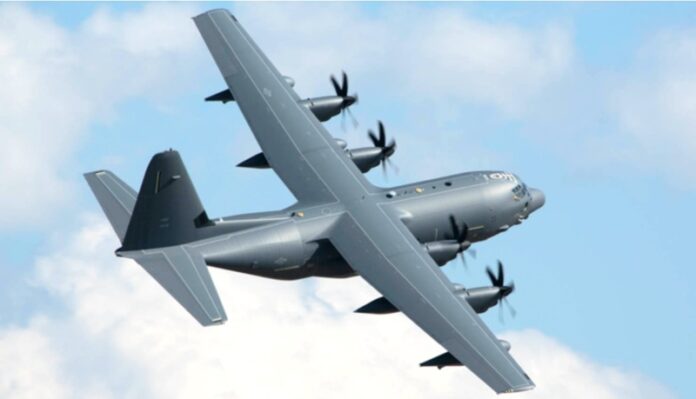
The MC-130J Commando II is operated by Air Force Special Operations Command, and is designed for low-visibility insertion, extraction, resupply, and aerial refuelling of elite U.S. special operations forces in denied or politically sensitive environments.

OSINT reporting indicates that the flight aligns with a broader layered force posture, following earlier January arrivals of C-17 Globemaster III transports and AC-130J Ghostrider gunships, as well as rotary-wing platforms linked to the 160th Special Operations Aviation Regiment, including MH-60 Black Hawks and MH-47G Chinooks .

Within this architecture, the MC-130J functions as an enabling node, extending the reach of U.S. special operations through aerial refuelling, sustainment, and covert mobility across long distances.

Image

Strategic Signaling Toward Iran

Analysts stress that the deployment should be viewed through the lens of operational art rather than tactical aviation. The MC-130J’s forward positioning introduces a latent capability to support intelligence insertion, unconventional warfare preparation, or leadership-focused contingency missions — all while preserving diplomatic deniability .

Historical precedent reinforces this interpretation. MC-130 variants have been associated with highly sensitive missions involving the movement or extraction of high-value individuals, making their presence near Iran psychologically significant even in the absence of kinetic action.

From Tehran’s perspective, such deployments compound an already complex threat environment, forcing Iranian security institutions to divert resources toward leadership protection, counter-intelligence, and internal security — imposing strategic costs without a single shot being fired .

Azerbaijan’s Delicate Balancing Act

For Azerbaijan, accommodating discreet U.S. military movements enhances its strategic relevance and deepens Western security ties, while also increasing exposure to Iranian diplomatic, cyber, or proxy pressure. Baku’s long-standing effort to balance relations with Iran, Russia, and Western partners underscores the risks inherent in serving as a quiet operational node in great-power competition .

Bottom Line

The MC-130J Commando II’s transponder-silent arrival in Azerbaijan is less about imminent military action and more about strategic ambiguity. By positioning a platform synonymous with clandestine operations near Iran’s border, Washington expands its menu of options while shaping adversary perceptions, reinforcing uncertainty, and applying psychological pressure — a hallmark of modern conflict conducted below the threshold of open war .

US Approves $15.67 Billion Arms Sales to Israel and Saudi Arabia as Middle East Tensions Escalate

0
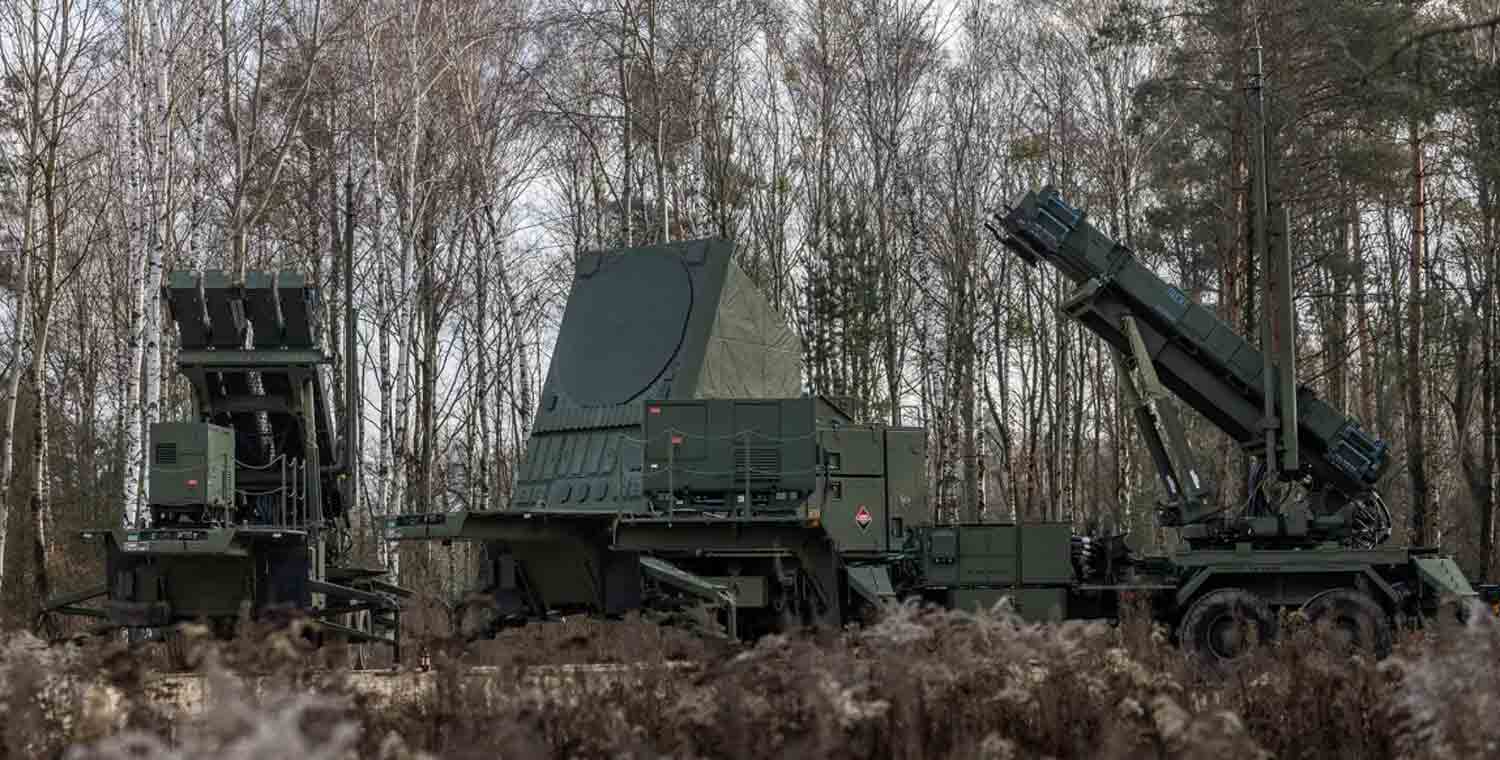
Surface-to-air missile launchers of the Patriot system of 37th Air Defense Missile Squadron from the 3rd Warsaw Air Defense Missile Brigade stand during a demonstration training of the IOC Initial Operational Capability of the anti-aircraft and anti-missile system and its integration into a IBCS command system, Sochaczew.

The United States has approved nearly $15.67 billion in major arms sales to Israel and Saudi Arabia, signaling a strong reaffirmation of Washington’s security commitments to its key Middle Eastern allies amid escalating regional tensions.

The deals, announced on January 30, 2026, were approved by the U.S. State Department under the administration of Donald Trump. They include advanced attack helicopters and tactical vehicles for Israel worth $6.67 billion, and Patriot PAC-3 missile interceptors for Saudi Arabia valued at $9 billion.

The approvals come as the region grapples with the ongoing Gaza conflict, rising fears of Iranian escalation, and continued missile and drone threats across the Gulf.

Image

Arms Package for Israel: Strengthening Air and Ground Power

The U.S. arms sale to Israel is divided into four separate packages, with a focus on enhancing offensive capability, mobility, and battlefield survivability.

Key components include:

  • 30 AH-64E Apache attack helicopters, equipped with advanced targeting systems, rocket launchers, and precision-guided weapons. The helicopters are designed for close air support, anti-armor missions, and high-intensity combat.
  • 3,250 Joint Light Tactical Vehicles (JLTVs), valued at approximately $1.98 billion, aimed at improving troop mobility and protection in complex operational environments.
  • Additional equipment such as power packs for armored personnel carriers and light utility helicopters.

According to the State Department, the sale supports Israel’s qualitative military edge and aligns with U.S. national security objectives by strengthening a frontline ally facing threats from Iranian-backed groups.

The timing of the approval coincides with Israel’s ongoing military operations in Gaza and mounting concerns over a potential direct confrontation with Iran. Critics argue the administration may have accelerated notification procedures, limiting the scope of congressional review.

Patriot Missile Deal for Saudi Arabia: Expanding Air Defense

The larger portion of the announcement involves Saudi Arabia’s acquisition of 730 Patriot Advanced Capability-3 (PAC-3) Missile Segment Enhancement (MSE) interceptors, along with training, logistics, and technical support.

The Patriot system is a cornerstone of integrated air and missile defense, capable of intercepting ballistic missiles, cruise missiles, and hostile aircraft. U.S. officials say the sale will significantly enhance Saudi Arabia’s ability to defend its territory, U.S. forces in the region, and Gulf allies.

The Defense Security Cooperation Agency stated that the deal will strengthen Gulf-wide missile defense cooperation. Lockheed Martin will serve as the principal contractor.

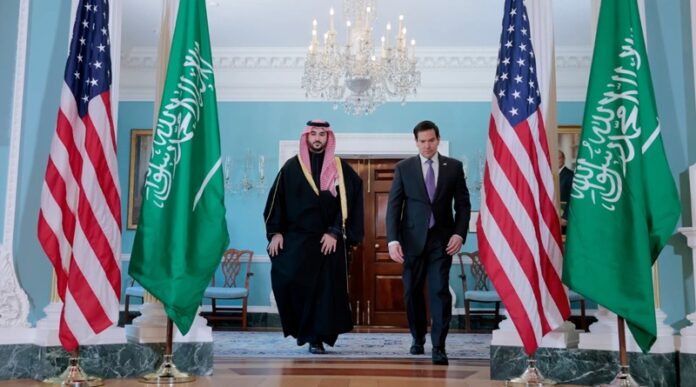
The sale follows recent Washington meetings between Saudi Defense Minister Khalid bin Salman and senior U.S. officials, including Secretary of State Marco Rubio and Defense Secretary Pete Hegseth. Riyadh has faced repeated missile and drone attacks from Yemen’s Iran-aligned Houthi movement, making advanced air defense systems a strategic priority.

Regional Context and Strategic Implications

The arms approvals reflect Washington’s broader strategy of deterrence against Iran, reinforcing allies as concerns grow over Tehran’s missile capabilities, proxy networks, and nuclear ambitions.

Israel continues to face threats from Iranian-backed militias across multiple fronts, while Saudi Arabia remains wary of renewed escalation that could undermine Gulf security and economic diversification efforts.

Supporters of the deals argue that bolstering allied defenses reduces the likelihood of wider conflict by deterring Iranian adventurism. Critics, including some U.S. lawmakers, raise concerns about civilian casualties in Gaza and human rights issues linked to the Yemen conflict.

Under U.S. law, Congress has a 30-day review window to examine the proposed sales, though late-week notifications may limit debate. Similar arms transfers during President Trump’s earlier term faced scrutiny but ultimately moved forward.

Bottom Line

The combined $15.67 billion arms sales underscore America’s determination to fortify its Middle Eastern partners during a period of exceptional volatility. As conflicts persist and regional rivalries intensify, these deals are likely to shape the strategic balance of power in the Middle East for years to come.

Saudi Defense Minister Warns Trump: Failure to Act on Iran Will Strengthen Tehran, Sources Say

0

Saudi Arabia’s Defense Minister Prince Khalid bin Salman has privately warned that if Donald Trump does not follow through on his repeated threats of military action against Iran, the Islamic Republic will emerge politically and strategically stronger, according to multiple sources briefed on the discussions in Washington.

The remarks, delivered during closed-door briefings on Friday, represent a notable shift from Riyadh’s recent public posture, which has emphasized restraint, de-escalation, and diplomacy. Just weeks ago, Saudi Crown Prince Mohammed bin Salman reportedly urged President Trump to avoid military confrontation, warning that a strike could ignite a wider regional war — concerns that contributed to Washington delaying any immediate action.

Behind Closed Doors in Washington

Prince Khalid bin Salman, commonly known as KBS and regarded as the crown prince’s closest confidant, was in Washington for high-level consultations as tensions with Tehran escalated. During his visit, he met senior U.S. officials, including Secretary of State Marco Rubio, Secretary of Defense Pete Hegseth, White House envoy Steve Witkoff, and Chairman of the Joint Chiefs of Staff Dan Caine.

According to officials familiar with the meetings, discussions focused heavily on the possibility of a U.S. military strike against Iran, even as the White House publicly insists that no final decision has been made and that diplomacy remains an option.

Saudi Public Caution vs. Private Alarm

Publicly, Saudi Arabia has taken a careful and measured stance. Riyadh has reiterated its respect for Iran’s sovereignty and emphasized the need for a diplomatic solution. Crown Prince Mohammed bin Salman recently told Iran’s president that Saudi Arabia would not allow its airspace to be used for any U.S. attack.

Privately, however, Prince Khalid struck a more urgent tone. In an hour-long briefing with Middle East experts and representatives from several Jewish organizations, he reportedly argued that backing away after weeks of threats would embolden Tehran.

“At this point, if this doesn’t happen, it will only embolden the regime,” KBS said, according to participants in the room.

Sources said Prince Khalid conveyed similar concerns during his White House meetings, while also admitting that he left Washington without a clear understanding of the Trump administration’s long-term strategy on Iran.

A Strategic Dilemma for the Region

U.S. officials acknowledge that there are currently no serious direct negotiations with Tehran, and Iranian leaders appear uninterested in accepting Washington’s maximalist terms. Meanwhile, the U.S. has ordered a significant military buildup in the Gulf, raising the stakes across the region.

A Gulf official summed up the dilemma bluntly: a U.S. strike risks dangerous regional escalation, but restraint could leave Iran stronger and more defiant.

No Saudi Pivot on Israel

Addressing speculation, Prince Khalid reportedly rejected claims that Saudi Arabia is drifting away from Israel or aligning more closely with Islamist movements. He also dismissed concerns about rising anti-Israel sentiment in Saudi media, though some attendees remained unconvinced.

What This Means

The apparent shift in Saudi private messaging underscores the growing anxiety among U.S. allies that prolonged indecision could reshape the regional balance of power in Iran’s favor. As Washington weighs its next move, Riyadh appears caught between public calls for diplomacy and private fears that inaction may carry its own long-term risks.

Pakistan Achieves Drone Self-Reliance, Develops Anti-Drone Technology: Security Sources

0

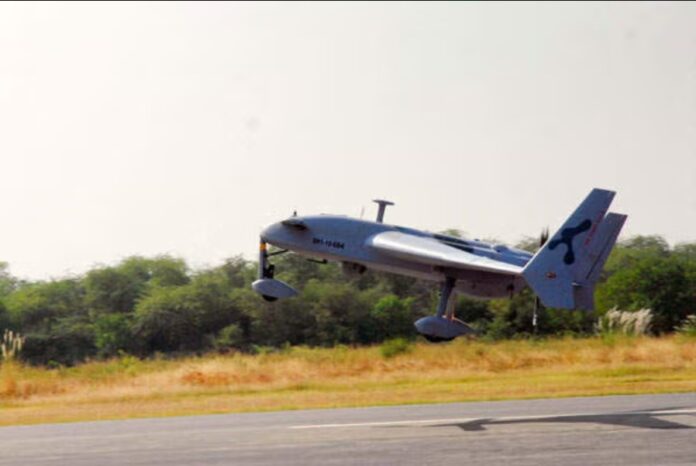
Pakistan has achieved self-reliance in drone manufacturing and is now actively developing advanced anti-drone technology in response to evolving regional and global security challenges, security sources said during a media briefing in Karachi.

Addressing recent reports about an alleged military operation in Tirah Valley, security officials categorically rejected the claims, calling them “false and baseless propaganda.” According to the briefing, no large-scale military operation is currently underway in Tirah.

Security sources clarified that targeted intelligence-based operations (IBOs) are being conducted against terrorist elements, stressing that these actions are part of an ongoing counterterrorism effort aimed at eliminating militant networks operating in the region.

The officials stated that terrorist groups, including what they described as Fitna-e-Hindustan and Fitna-e-Khawarij, have formed linkages in Tirah Valley. These groups are being dismantled through precise intelligence-led actions rather than conventional military operations.

Highlighting technological advancements, security sources revealed that Pakistan has successfully achieved indigenous capability in drone technology. In light of modern warfare trends and the increasing use of unmanned systems in ongoing conflicts worldwide, work is also underway on sophisticated counter-drone systems to neutralize emerging aerial threats.

The briefing emphasized that operations against terrorists are being carried out strictly on the basis of verified intelligence and will continue until the last terrorist is eliminated. Officials reiterated that the state remains committed to ensuring long-term peace and stability through sustained counterterrorism measures.

Security sources further noted that misinformation regarding an “operation in Tirah” was deliberately spread to mislead the public. They added that the nexus between terrorists and criminal elements has been exposed, and such narratives no longer resonate with the local population.

Referring to similar propaganda tactics elsewhere, officials said that groups exploiting slogans of deprivation to justify violence have been exposed, with communities increasingly rejecting terrorism and criminality.

Pakistan, Türkiye Deepen Defence Ties as Turkish Chief of General Staff Meets COAS at GHQ

0
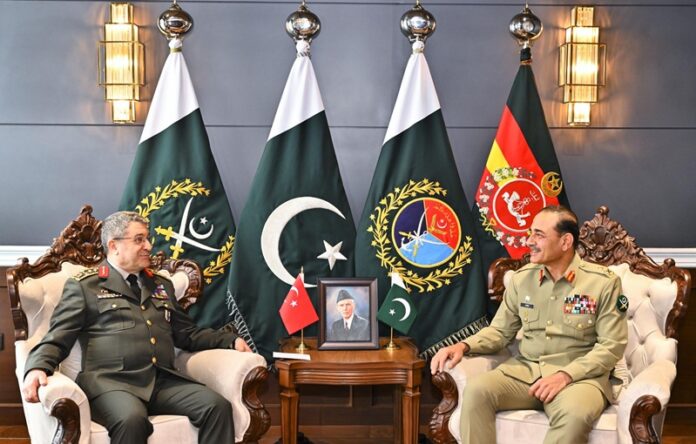
General Selcuk Bayraktaroglu, Chief of the Turkish General Staff, Türkiye, called on Field Marshal Syed Asim Munir, NI (M), HJ, #COAS & CDF of Pakistan at General Headquarters (GHQ) today.

General Selcuk Bayraktaroglu, Chief of the Turkish General Staff, Türkiye, paid an official visit to Pakistan’s General Headquarters (GHQ) on Thursday, where he called on Field Marshal Syed Asim Munir, Chief of Army Staff (COAS) and Chief of Defence Forces (CDF) of Pakistan, according to the Inter Services Public Relations (ISPR).

Upon his arrival at GHQ, General Bayraktaroglu was accorded a guard of honour by a smartly turned-out contingent of the Pakistan Armed Forces, reflecting the longstanding military camaraderie between the two brotherly nations.

During the high-level meeting, both military leaders held comprehensive discussions on matters of mutual interest, the evolving regional and global security environment, and avenues for further strengthening bilateral defence and military cooperation. The dialogue emphasized the importance of maintaining close coordination in the face of emerging security challenges and enhancing collaboration across multiple defence domains.

Field Marshal Syed Asim Munir highlighted the deep-rooted, brotherly relationship between Pakistan and Türkiye, anchored in shared history, mutual trust, and strong people-to-people ties. He expressed appreciation for the consistent support and cooperation extended by the Turkish Armed Forces and reaffirmed Pakistan’s commitment to expanding military-to-military relations with Türkiye.

General Selcuk Bayraktaroglu conveyed his gratitude for the warm reception and lauded the professionalism and operational preparedness of the Pakistan Armed Forces. He reiterated Türkiye’s firm resolve to further deepen defence cooperation, particularly in the areas of military training, joint exercises, and capacity-building initiatives.

Both sides expressed satisfaction over the positive trajectory of Pakistan–Türkiye relations and underscored their shared vision for promoting regional peace, stability, and security. The visit was seen as a reaffirmation of the enduring strategic partnership between the two countries, which continues to evolve amid complex regional and global security dynamics.

Iran Receives 1,000 New Drones, Announces Live-Fire Naval Drills in Strait of Hormuz Amid U.S. Threats

0

Iran has taken two significant military steps amid rising regional tensions, receiving a large batch of new combat drones and announcing live-fire naval exercises in the strategically critical Strait of Hormuz, as U.S. President Donald Trump warns of possible military action if Tehran rejects a new nuclear deal.

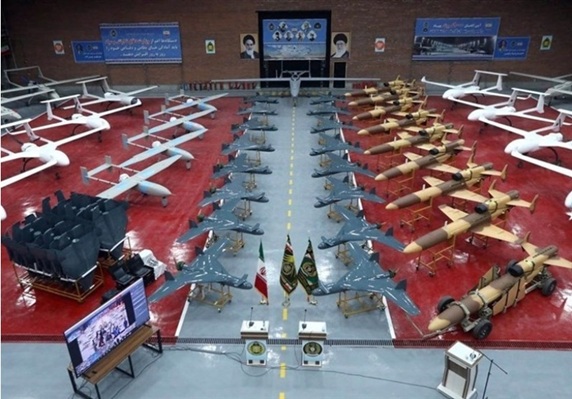
According to Iran’s semi-official Tasnim news agency, a batch of 1,000 domestically produced drones has been delivered to various branches of the Iranian armed forces. The drones are expected to enhance Iran’s surveillance, reconnaissance and strike capabilities at a time of heightened confrontation with the United States and its regional allies.

Iranian Army Commander-in-Chief Major General Amir Hatami said the delivery reflects Tehran’s focus on preparedness in the face of external threats.

“In accordance with the threats ahead, the army maintains and enhances its strategic advantages for rapid combat and imposing a crushing response against any aggressor,” Hatami said.

Iran Expands Drone Capabilities

Iran has heavily invested in unmanned aerial vehicles (UAVs) over the past decade, developing a wide range of drones for intelligence gathering, electronic warfare and precision strikes. Western and regional officials have long accused Tehran of supplying drone technology to allied groups across the Middle East, a claim Iran denies.

Military analysts say the induction of 1,000 drones signals Iran’s intention to rely more on asymmetric warfare tools, allowing it to counter technologically superior adversaries while keeping costs relatively low.

Live-Fire Naval Exercises in Strait of Hormuz

In a separate development, Iran’s Revolutionary Guard naval forces will conduct live-fire exercises in the Strait of Hormuz on February 1 and February 2, Iran’s state-run Press TV reported.

The exercises are expected to include missile launches, naval maneuvers and coordinated operations involving fast-attack craft and coastal defense units. Iranian officials say the drills are defensive in nature and aimed at protecting national interests and maritime security.

The Strait of Hormuz is considered the world’s most critical oil chokepoint, with roughly one-fifth of global oil supplies passing through the narrow waterway. It connects major oil producers—including Saudi Arabia, Iran, Iraq and the United Arab Emirates—to the Gulf of Oman and the Arabian Sea.

Rising Tensions With the United States

These military moves come as President Donald Trump has renewed pressure on Tehran, warning that the United States could launch an attack if Iran refuses to agree to a nuclear deal under Washington’s terms.

U.S. officials have described recent Iranian actions as destabilizing, while Tehran insists its military activities are purely defensive and lawful. Analysts warn that increased military activity in and around the Strait of Hormuz raises the risk of miscalculation, with potential consequences for global energy markets and regional security.

As diplomatic channels remain strained, both sides appear to be reinforcing their military postures, signaling that tensions could intensify further in the coming weeks.

U.S. Navy Deploys Another Destroyer to Middle East as Military Buildup Intensifies

0

The United States Navy has deployed an additional warship to the Middle East, further strengthening its military presence amid escalating regional tensions, a U.S. official told Reuters on Thursday.

According to the official, who spoke on condition of anonymity, the USS Delbert D. Black, an Arleigh Burke-class guided-missile destroyer, entered the Middle East region within the past 48 hours. The deployment brings the total number of U.S. Navy destroyers operating in the region to six, alongside an aircraft carrier and three littoral combat ships.

The latest naval movement was first reported by CBS News and comes as Washington continues a significant military buildup across the Middle East, particularly in and around the Persian Gulf, Red Sea and eastern Mediterranean.

Rising Regional Tensions

The expanded U.S. naval presence coincides with heightened tensions involving Iran, its regional allies, and ongoing conflicts affecting Israel, Gaza and key maritime routes. U.S. officials have repeatedly said the deployments are aimed at deterrence, protection of American forces, and ensuring freedom of navigation through vital sea lanes.

In recent weeks, the Pentagon has reinforced air, naval and missile defense assets in the region amid concerns over potential retaliation against U.S. bases, commercial shipping and allied interests.

Strategic Role of USS Delbert D. Black

The USS Delbert D. Black is equipped with advanced Aegis missile defense systems, capable of countering ballistic and cruise missile threats, as well as conducting air defense, anti-submarine and surface warfare operations. Its deployment enhances the U.S. Navy’s ability to respond quickly to emerging threats and provides additional protection for high-value assets, including aircraft carriers and regional bases.

Defense analysts say the arrival of another destroyer signals Washington’s intent to maintain military readiness and escalation control, even as diplomatic efforts continue behind the scenes.

U.S. Posture Remains Defensive, Officials Say

U.S. officials have emphasized that the military buildup is defensive in nature, aimed at deterring attacks on U.S. personnel and allies rather than signaling an imminent offensive operation. However, the growing concentration of naval and air power underscores the seriousness with which Washington views the current security environment.

With tensions showing little sign of easing, further adjustments to U.S. force posture in the Middle East remain possible in the coming days.

U.S. Hosts Israel & Saudi Leaders for Iran Talks Amid Military Buildup and Strike Debate

0

The Trump administration is holding high-level meetings this week with senior defense and intelligence officials from Israel and Saudi Arabia to discuss escalating tensions with Iran, as President Donald Trump considers possible military strikes, Axios reported, citing U.S. officials and sources familiar with the matter.

According to Axios, the talks come as the United States completes a major military buildup in the Persian Gulf, signaling readiness for potential action against Iran. Israel, Saudi Arabia and other regional states have been placed on heightened alert amid growing concerns that Washington could launch strikes in the coming days.

Israeli Intelligence Briefings

Axios reports that senior Israeli officials traveled to Washington to share detailed intelligence on potential Iranian targets. Israeli Military Intelligence Chief Gen. Shlomi Binder held meetings this week with top officials at the Pentagon, CIA and the White House, briefing U.S. counterparts on specific intelligence requested by the Trump administration.

Israeli officials view the current moment as critical, with Tehran’s military posture and regional activities under close scrutiny.

Saudi Push for De-Escalation

In contrast, Saudi Arabia is focused on preventing a broader regional war, Axios notes. Saudi Defense Minister Prince Khalid bin Salman, the younger brother of Crown Prince Mohammed bin Salman, is expected to hold meetings at the Pentagon, State Department and White House, including discussions with Secretary of State Marco Rubio and U.S. special envoy Steve Witkoff.

Sources told Axios that Riyadh is actively working behind the scenes to broker a diplomatic off-ramp, passing messages between Washington and Tehran in an effort to reduce tensions.

Earlier this week, Saudi Crown Prince Mohammed bin Salman reportedly told Iranian President Masoud Pezeshkian that Saudi Arabia would not allow its airspace to be used for a U.S. attack on Iran.

Trump Yet to Make Final Decision

White House officials told Axios that President Trump has not made a final decision on military action. While Trump publicly warned Iran on Wednesday that any strikes would be “far worse” than previous actions, his advisers insist that diplomatic options remain under consideration.

“There is still a willingness to explore diplomacy,” one administration official told Axios, even as military preparations continue.

No Active U.S.–Iran Negotiations

Despite backchannel efforts, Axios reports that there are currently no serious negotiations underway between Washington and Tehran. U.S. officials say Iran has shown little interest in a deal based on Washington’s current, maximalist terms.

Iranian leaders, meanwhile, have issued stark warnings. Ali Shamkhani, a senior adviser to Iran’s supreme leader, warned on social media that any U.S. military action—regardless of scale—would be considered an act of war, triggering an immediate and unprecedented response, including strikes on Tel Aviv and U.S. interests in the region.

Iran has also threatened to target U.S. military bases across the Middle East.

Military Buildup Nearing Completion

Axios reports that the U.S. military buildup in the Gulf will be completed in the coming days. The USS Abraham Lincoln aircraft carrier has already arrived in the region as part of the expanded naval presence.

Speaking earlier this week, Trump described the force assembled near Iran as an “armada,” claiming it was larger than previous deployments.

A senior U.S. official told Axios that the current directive is to remain prepared, adding that President Trump is expected to reach another key decision point on Iran in the coming days.

Pakistan Navy Assumes Command of CTF-150 for 14th Time, Reinforces Role in Regional Maritime Security

0
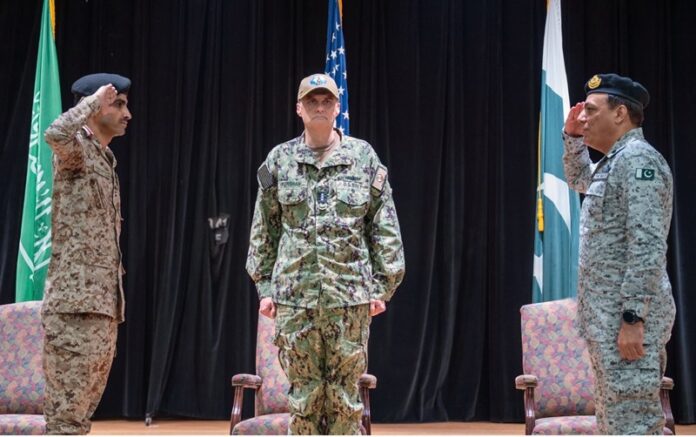
Pakistan Navy took over the command of Combined Task Force-150 (CTF-150) for the 14th time during a change of command ceremony held at the Headquarters of Combined Maritime Forces (CMF), Bahrain

Pakistan Navy has assumed command of the Combined Task Force-150 (CTF-150) for the 14th time, reaffirming Pakistan’s leading role in international maritime security efforts. The change of command ceremony was held at the headquarters of the Combined Maritime Forces (CMF) in Bahrain, according to a press release issued by the Inter-Services Public Relations (ISPR).

During the ceremony, Commodore Muhammad Yasir Tahir of Pakistan Navy formally took over command of CTF-150 from Commodore Fahad S. Al Joaid of the Royal Saudi Naval Forces (RSNF). The event was attended by the Ambassador of Pakistan to Bahrain, Commander Combined Maritime Forces, Commander Royal Bahrain Naval Forces, and senior representatives from various navies operating under the CMF framework.

Addressing the gathering, the incoming commander expressed confidence in his team’s readiness to shoulder the responsibility of leading one of the most critical maritime task forces in the region. Commodore Muhammad Yasir Tahir reaffirmed Pakistan Navy’s unwavering commitment to ensuring maritime security, safeguarding vital sea lines of communication (SLOCs), and countering illicit maritime activities, including trafficking and smuggling.

CTF-150 is one of the five multinational task forces operating under the Combined Maritime Forces, a 39-nation naval partnership headquartered in Bahrain. The task force is mandated to deter and disrupt non-state actors involved in the trafficking of narcotics, weapons, and other illicit goods across key maritime regions, including the Indian Ocean, Arabian Sea, and the Gulf of Oman—some of the world’s most strategically significant waterways.

Pakistan Navy has long been a core contributor to CMF operations and has commanded CTF-150 more times than any other navy, reflecting international confidence in its professionalism, operational competence, and sustained commitment to cooperative maritime security. Under previous commands, Pakistan Navy ships have conducted numerous successful counter-narcotics and interdiction operations, seizing large quantities of drugs and preventing criminal networks from exploiting regional waters.

ISPR noted that the successful anti-narcotics operations carried out by Pakistan Navy units during the RSNF’s command of CTF-150 further demonstrated the effectiveness of multinational coordination and information sharing within the CMF framework. These efforts contribute directly to regional stability, maritime safety, and the protection of global trade routes.

The assumption of command once again highlights Pakistan Navy’s growing role in international naval diplomacy, its ability to operate seamlessly with partner navies, and its continued contribution to peace and security in the wider maritime domain.

Explained: How Rupee Oil Trade and BRICS Payments Pushed the US–India Partnership Toward a Strategic Rift

0
Indian Prime Minister Narendra Modi speaks to U.S. President Donald Trump during a meeting at Hyderabad House in New Delhi, India.

For much of the past decade, Washington and New Delhi projected their relationship as a cornerstone of the Indo-Pacific strategy. But beneath the surface of defense cooperation and diplomatic summits, a quieter conflict has been unfolding—one centered not on weapons or alliances, but on money, trade, and control of the global financial system.

By late 2025, that conflict had matured into what US policymakers increasingly view as a strategic rift.

The Oil Trade That Changed the Equation

The turning point began with Russia’s redirection of crude oil exports toward India following Western sanctions. Payments for this oil were increasingly settled in Indian rupees, not US dollars—a move tolerated at first as a temporary workaround.

But the scale soon became impossible to ignore.

By November 2025, India imported 7.7 million tonnes of Russian oil in a single month, representing 35 percent of total imports, with a substantial share settled outside the dollar system. For Washington, this wasn’t just about Russia—it was about India normalizing large-scale non-dollar energy trade.

RBI’s Quiet Move With Loud Consequences

For months, Russia accumulated billions of rupees it couldn’t spend. That bottleneck disappeared on August 12, 2025, when the Reserve Bank of India (RBI) authorized foreign holders of Special Rupee Vostro Accounts (SRVAs) to invest surplus funds in Indian Government Securities and Treasury Bills.

This decision fundamentally altered the dynamic.

Russian oil revenue no longer needed to flow into US Treasuries or Western markets. Instead, it was recycled directly into Indian sovereign debt, effectively financing India’s infrastructure and budgetary needs.

From Washington’s perspective, this crossed a red line. India was no longer merely avoiding sanctions—it was building an alternative financial loop that reduced US leverage.

When US Partners Joined In

Alarm deepened when India and the United Arab Emirates, both close US partners, operationalized a Local Currency Settlement (LCS) system. The Indian Oil Corporation’s payment for one million barrels of Abu Dhabi crude in rupees proved that the model worked beyond sanctioned actors like Russia.

For US strategists, this was a troubling signal:
dollar-free trade was spreading among American partners themselves.

Washington’s Retaliation

The response was swift and unmistakable. Within weeks, the United States imposed tariffs of up to 50 percent on selected Indian goods, a punitive move that marked a sharp departure from the rhetoric of strategic alignment.

The message was clear: financial divergence carried geopolitical costs.

Rupee Internationalization Accelerates

Despite the pressure, India doubled down. By late 2025, the RBI had permitted 123 correspondent banks from 30 countries, including the UK, Germany, Israel, and Singapore, to open 156 Special Rupee Accounts.

This wasn’t symbolic. It was infrastructure—designed to make the rupee usable at scale for global trade.

BRICS Bridge: The Real Breakpoint

The deepest fault line emerged as India prepared to host the 2026 BRICS Summit. Moving beyond rhetoric, New Delhi proposed the “BRICS Bridge”—a plan to link the Central Bank Digital Currencies (CBDCs) of BRICS members into an interoperable, real-time settlement system.

Built on the 2025 Rio de Janeiro declaration, the project aims to allow Russia, China, India, and new members like the UAE to settle trade instantly in digital local currencies, entirely outside US-controlled financial rails.

With the RBI actively pilot-testing the e-Rupee’s cross-border capabilities, India is effectively constructing a sanctions-resistant, digital alternative to SWIFT.

Why the US Sees a Strategic Threat

For Washington, the concern is not just about Russia or BRICS—it’s about precedent.

If India succeeds, it offers a scalable blueprint for countries seeking to trade, invest, and settle without US oversight. That challenges the dollar’s role not only as a currency, but as a tool of geopolitical influence.

This is why US officials increasingly describe India’s trajectory not as economic modernization, but as a “monetary mutiny”—a fundamental challenge to the post-Cold War financial order the US helped build.

A Partnership Under Strain

The irony is striking. Even as defense ties and Quad diplomacy continue, the financial foundations of the US–India partnership are fracturing.

What began as pragmatic oil purchases has evolved into a systemic confrontation over who writes the rules of global finance. And unlike trade disputes of the past, this one cuts to the core of sovereignty, sanctions, and strategic autonomy.

The rift may not yet be public or formal—but in monetary terms, the separation is already underway.

COAS Field Marshal Asim Munir Witnesses ‘Steadfast Resolve’ Exercise, Emphasizes Technology-Driven Multi-Domain Warfare

0
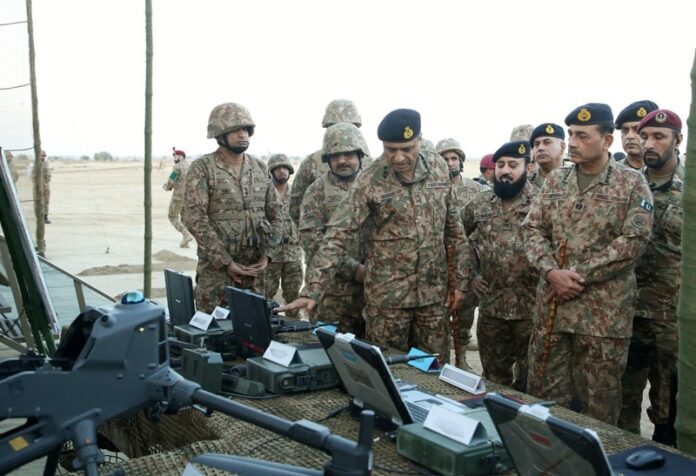
Field Marshal Syed Asim Munir, CDF of Pakistan visited Bahawalpur Garrison where he was briefed on various operational, training and administrative aspects of the Corps, with special focus on preparations for multi-domain warfare.

Chief of Army Staff (COAS) and Chief of Defence Forces (CDF) Field Marshal Syed Asim Munir visited Bahawalpur Garrison where he was briefed on key operational, training, and administrative matters of the Bahawalpur Corps, with a particular emphasis on preparations for future multi-domain warfare, according to the Inter-Services Public Relations (ISPR).

During the visit, the COAS & CDF observed a high-intensity field exercise titled “Steadfast Resolve” at Khairpur Tamewali (KPT). The exercise demonstrated the Pakistan Army’s growing emphasis on technology-enabled warfare, showcasing the integration of advanced capabilities including unmanned aerial systems (drones), electronic warfare assets, modern surveillance platforms, and sophisticated command-and-control mechanisms. The drill reflected the Armed Forces’ evolving doctrine focused on joint, multi-domain operations.

Addressing the troops, Field Marshal Asim Munir commended their high morale, professional excellence, and operational readiness. He reaffirmed that the Pakistan Armed Forces remain fully prepared to defend the country’s sovereignty and territorial integrity against all threats, stressing the importance of maintaining optimum readiness to effectively counter future battlefield and security challenges.

The COAS & CDF highlighted that the character of warfare has undergone a fundamental transformation, driven by rapid technological advancements. He noted that future conflicts will increasingly rely on technological manoeuvres rather than traditional physical manoeuvres, significantly altering both offensive and defensive operations. In this context, he emphasized that the Pakistan Armed Forces are rapidly embracing emerging technologies, with innovation, indigenisation, and adaptability forming the cornerstone of this transformation.

Earlier, Field Marshal Asim Munir inaugurated the ROHI eSkills Learning Hub (STP), an initiative aimed at promoting digital literacy and skill development, particularly for students from Southern Punjab and across the country. He also inaugurated the APS Abbasia Campus, reaffirming the Pakistan Army’s long-standing commitment to quality education, character building, and national development.

Later, the COAS & CDF visited the EME Regional Workshop, where he was briefed on advanced maintenance regimes designed to sustain modern military platforms through cutting-edge technologies, indigenisation, and enhanced combat support measures.

Upon arrival at Bahawalpur Garrison, Field Marshal Asim Munir was received by the Commander Bahawalpur Corps. He also laid a floral wreath at Yadgar-e-Shuhada and offered Fateha, paying solemn tribute to the supreme sacrifices of Pakistan’s martyrs.

US ‘Wi-Fi in the Sky’ E-11A Aircraft Spotted as Military Readiness Signals Rise

0

A key U.S. military communications aircraft was detected operating over the western Mediterranean on Tuesday, adding to a series of movements that analysts say could indicate advanced command-and-control preparations amid escalating tensions with Iran.

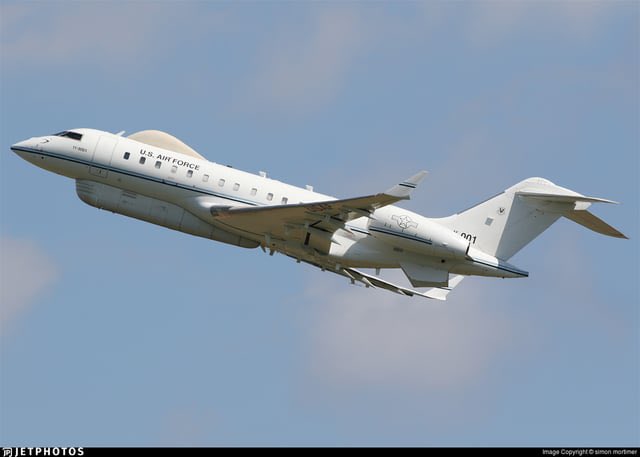
According to open-source flight tracking data, a U.S. Air Force E-11A aircraft, operating under the callsign BLKWF01, was observed flying at high altitude in international airspace. The aircraft is widely known for its role as an airborne communications relay, often described as “Wi-Fi in the sky.”

What Is the E-11A and Why It Matters

The E-11A Battlefield Airborne Communications Node (BACN) is a highly specialized platform designed to connect aircraft, naval vessels, drones, and ground forces by bridging incompatible radios and data networks. Operating at very high altitudes, the aircraft enables real-time voice, video, and data sharing in environments where direct communication is impossible due to terrain, distance, or electronic interference.

Military experts note that the E-11A does not conduct strikes or intelligence collection itself. Instead, it serves as a critical enabler for complex operations, ensuring uninterrupted coordination across multiple domains — air, sea, land, space, and cyber.

Its presence is typically associated with large-scale exercises, coalition operations, or high-readiness military postures.

Why the Mediterranean Flight Is Being Noted

The aircraft’s appearance comes as the United States continues to reinforce its military posture across Europe and the Middle East. While the Pentagon has not commented on the specific mission of BLKWF01, analysts say the E-11A is usually deployed when operational connectivity becomes mission-critical, particularly in scenarios involving multiple strike platforms or coalition partners.

The western Mediterranean has long served as a transit and coordination corridor for U.S. and NATO forces moving toward the Middle East, making the flight strategically noteworthy even in the absence of official confirmation of future action.

Context: Rising US-Iran Tensions

The flight coincides with heightened rhetoric from Washington over Iran’s nuclear program and regional activities, alongside the deployment of major U.S. naval assets, including aircraft carrier strike groups.

Defense analysts caution that the presence of enabling assets such as the E-11A does not automatically signal an imminent strike, but it does suggest advanced readiness and contingency planning, particularly for operations requiring seamless coordination across dispersed forces.

A Critical Piece of Modern Warfare

Often overlooked compared to fighter jets or aircraft carriers, airborne communications platforms like the E-11A are considered indispensable in modern warfare. Without them, complex joint operations — especially those involving stealth aircraft, unmanned systems, and long-range naval assets — would face serious coordination challenges.

In recent conflicts, similar aircraft have played a decisive role in ensuring command continuity even in heavily contested or electronically degraded environments.

What Comes Next

US officials have consistently stated that diplomacy remains the preferred path in dealing with Iran, while maintaining that all options remain on the table. For now, the Pentagon has not issued any public statements linking the E-11A flight to specific operational plans.

However, analysts say the movement of high-value enablers like the E-11A is closely watched because such assets typically appear late in the preparation cycle, when military planners are ensuring that every layer of command and control is in place.

Why Trump Says “Armada” as USS Abraham Lincoln Heads Toward Iran — Meaning, Message and Military Context

0

As the USS Abraham Lincoln aircraft carrier and its accompanying strike group arrived in the Middle East amid rising tensions with Iran, US President Donald Trump on Tuesday announced that “another beautiful armada” was on its way toward Tehran, a term that has drawn attention both for its military implications and symbolic power.

Traditionally, military movements are described using terms such as “fleet,” “task force,” or “carrier strike group.” However, Trump’s repeated use of the word “armada” suggests a deliberate choice aimed at conveying strength, historical resonance, and psychological impact.

Historical and Strategic Connotations of “Armada”

The word armada originates from the Spanish term for an “armed fleet,” historically associated with the powerful Spanish Armada of the 16th century — a large naval force deployed against England in 1588. Over time, the term entered global military and cultural vocabulary not only as a descriptor of naval power but as a symbol of overwhelming force and strategic purpose.

By choosing armada instead of more clinical terms like fleet or naval group, analysts say Trump may be signaling more than just the deployment of vessels. The term evokes historical might and serves as a rhetorical tool to reinforce perceptions of American military dominance as the carrier strike group positions itself near Iran’s maritime approaches.

Political and Psychological Messaging

Experts note that in international political discourse, language plays a key role in shaping audience perception. Trump’s use of armada appears designed to achieve several effects:

  • Demonstrating Force Beyond Hardware: The word evokes not just ships but a concentrated projection of power that includes aircraft, destroyers, and support assets.
  • Signaling Long-Term Strategy: Unlike terms tied to specific operations, armada suggests a sustained posture rather than a one-off mission.
  • Projecting Psychological Impact: By invoking a term with deep historical and symbolic weight, the intention may be to exert psychological pressure on Iran’s leadership and domestic audiences abroad.

Context of Current Deployment

The USS Abraham Lincoln and its strike group were reported to have reached the region as part of a broader US military buildup. This deployment follows recent US statements warning Tehran to negotiate a nuclear agreement and halt actions that Washington views as destabilizing.

White House officials have emphasized that while the presence of a powerful naval force is meant to deter conflict, diplomacy remains on the table if Iran engages in meaningful talks. Environmental and strategic analysts warn that the symbolic choice of words, such as armada, may carry implications for escalation risks and regional responses.

International and Regional Reactions

Iran has publicly rejected external pressure, and allied nations in the Middle East have called for de-escalation and a return to negotiation. Diplomatic efforts continue amid concerns that rhetoric emphasizing military power could overshadow diplomatic channels and heighten tensions across the region.

Trump Warns Iran as US Naval Armada Moves Toward Region

0

US President Donald Trump has issued a stark warning to Iran, claiming that a “massive armada” led by the US aircraft carrier USS Abraham Lincoln is moving rapidly toward the region and is prepared to carry out military action if Tehran refuses to negotiate a nuclear agreement.

In a statement posted on his Truth Social platform, President Trump said the fleet was moving “with great power, enthusiasm, and purpose” and described it as larger than the naval force previously deployed toward Venezuela. He warned that the United States was “ready, willing, and able” to act with “speed and violence” if necessary.

“Hopefully Iran will quickly come to the table and negotiate a fair and equitable deal — NO NUCLEAR WEAPONS — one that is good for all parties,” Trump wrote, adding that time was “truly of the essence.”

US Military Presence and Rising Tensions

The warning comes amid heightened tensions between Washington and Tehran, with the United States increasing its military presence in the Middle East in recent weeks. The USS Abraham Lincoln Carrier Strike Group, which includes guided-missile destroyers and advanced fighter aircraft, has been deployed as part of US deterrence and regional security operations.

While the US Department of Defense has not confirmed any imminent military action, officials have acknowledged that the carrier group provides Washington with a wide range of operational options should the situation escalate.

Trump References Previous Military Action

In his statement, President Trump also referenced what he described as a previous US military operation against Iran, warning that any future strike would be significantly more destructive if Tehran fails to reach an agreement.

“They didn’t make a deal before, and there was major destruction,” Trump said. “The next attack will be far worse. Don’t make that happen again.”

The comments underscore Trump’s long-standing hard-line stance on Iran’s nuclear ambitions and his insistence that Tehran must abandon any path toward nuclear weapons.

Iran Rejects Negotiations Under Threat

Iranian officials have consistently said they will not negotiate under military pressure, maintaining that their nuclear program is for peaceful purposes — a claim disputed by the United States and several of its allies.

Tehran has warned that any US attack would trigger retaliation, raising concerns among regional and international observers about the risk of a wider conflict in the Middle East.

International Concern Over Escalation

The renewed war of words has alarmed regional partners and global powers, many of whom are calling for restraint and renewed diplomacy. Analysts warn that miscalculation on either side could rapidly escalate into open conflict, potentially threatening global energy supplies and regional stability.

For now, diplomatic channels remain limited, and it remains unclear whether Trump’s warning will lead to renewed negotiations or further escalation.

China’s PL-17 Missile Redefines Ultra-Long-Range Air Combat

0

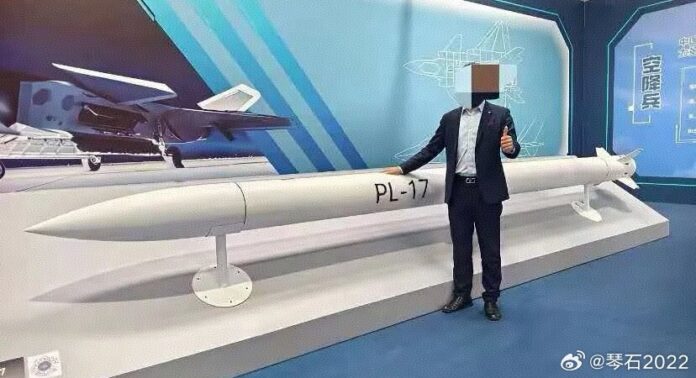
The emergence of the first high-resolution image of China’s PL-17 ultra-long-range beyond-visual-range (BVR) air-to-air missile marks a major inflection point in modern air combat, confirming that Beijing has moved from conceptual development to the operational deployment of a weapon designed to dismantle adversary airpower at unprecedented distances .

Defence analysts describe the PL-17 as a purpose-built counter-intervention weapon, aimed not at traditional fighter-to-fighter combat but at high-value airborne enablers such as aerial refuelling tankers, airborne early warning and control (AEW&C) aircraft, and strategic bombers—assets that underpin Western and allied expeditionary air operations.

Beyond Evolution: A Missile Built for Systemic Disruption

Unlike earlier Chinese BVR missiles, the PL-17 is not an incremental upgrade of the PL-15. Open-source intelligence analysis indicates it is engineered to achieve engagement ranges exceeding 400 kilometres, fundamentally altering airpower calculations by threatening targets once considered safely beyond the reach of fighter-launched weapons .

This capability directly targets the kill chains and sustainment architectures that enable long-range air campaigns, particularly across contested regions such as the Taiwan Strait and the South China Sea, where US and allied airpower relies heavily on airborne command and refuelling assets .

Integration with China’s Fifth-Generation Fighters

The PL-17 aligns closely with China’s fifth-generation airpower ambitions. Integration pathways with the Chengdu J-20 “Mighty Dragon” and the emerging Shenyang J-35 reflect a doctrinal shift toward networked, long-range air denial rather than close-range attritional combat .

While the missile’s large size—approximately six metres in length—limits internal carriage on the J-20, Chinese operational concepts appear to accept this trade-off during the opening stages of a conflict, prioritising the neutralisation of high-value airborne assets over maximum stealth .

In this role, the J-20 functions less as a traditional interceptor and more as a forward sensor and command node, detecting and cueing distant targets while the PL-17 delivers kinetic effects against critical enablers sustaining enemy air operations .

A Networked Kill-Chain Weapon

The true disruptive power of the PL-17 lies in its integration within China’s networked kill-chain architecture. Rather than relying solely on the launching aircraft’s radar, the missile is assessed to receive mid-course targeting updates from a constellation of off-board sensors, including airborne early warning platforms, long-range ground-based radars, and space-based surveillance systems .

This network-centric approach enables engagements far beyond the sensor horizon of any single fighter and complicates defensive countermeasures, as adversaries must confront not just the missile itself but the broader sensor ecosystem supporting it .

Implications for the Indo-Pacific

The operational deployment of the PL-17 erodes the long-standing assumption that high-value airborne assets can operate with relative sanctuary well behind the front lines. In a Taiwan Strait scenario, the credible threat to aerial refuelling tankers alone could severely constrain the effective range and persistence of fighter patrols, regardless of aircraft performance .

For regional actors such as Japan and Australia, the missile introduces new vulnerabilities for airborne command and surveillance platforms, forcing costly investments in redundancy, dispersal, or reduced operational tempo .

The implications extend to South Asia, where potential diffusion of ultra-long-range air-to-air missile technology could fundamentally reshape regional airpower balances by placing surveillance and refuelling assets at risk from distances beyond existing defensive capabilities .

Strategic Signalling and Deterrence

The timing of the image’s public appearance suggests growing confidence within China’s defence-industrial establishment that the PL-17 has reached sufficient maturity for strategic signalling. Earlier sightings of the missile on the J-16 platform support assessments that it is already embedded within operational units .

Beyond its physical lethality, the PL-17 functions as a psychological and doctrinal weapon, shaping adversary planning, influencing basing decisions, and complicating alliance coordination long before any conflict begins .

A Structural Shift in Air Warfare

Taken together, the PL-17 represents not merely a new missile but a structural transformation in air warfare, where victory is increasingly determined by the ability to deny the adversary the systems required to fight at all.

By pairing fifth-generation survivability with extreme-range lethality and networked targeting, China is seeking to compress the battlespace, increase operational risk for intervention forces, and impose prohibitive costs on sustained air presence near contested zones .

The first clear image of the PL-17 should therefore be understood not as the unveiling of a single weapon, but as visual confirmation of a broader doctrinal shift that will shape airpower competition across the Indo-Pacific for decades to come .

Meteor on Rafale: Strategic Breakthrough or Symbolic Signalling by India?

0

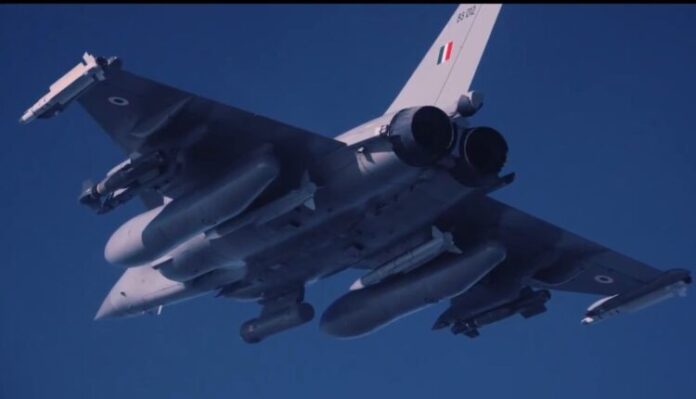
India’s public display of Indian Air Force Rafale fighters armed with MBDA Meteor beyond-visual-range (BVR) air-to-air missiles during the 77th Republic Day flypast has been widely portrayed as a decisive leap in Indian airpower. Yet beneath the spectacle, the event raises important questions about deterrence signalling, escalation risks, and whether visual confirmation truly equates to sustained operational dominance.

While veteran aircraft observers described the flypast as the first unambiguous public confirmation of Meteor missiles on Indian Rafales in Indian airspace, the strategic meaning of this reveal deserves closer scrutiny.

A Carefully Staged Message, Not a Combat Disclosure

The Rafales appeared in highly choreographed Sindoor and Vajraang formations over Kartavya Path, carrying under-wing Meteor missiles. This was not a spontaneous revelation but a deliberate, centrally controlled disclosure, later reinforced by an Indian Air Force video tied to “Operation Sindoor.”

The video juxtaposed Rafale-Meteor imagery with archival footage from the 2019 Balakot airstrikes, implicitly suggesting a seamless evolution from past combat to present capability. Critics argue this comparison risks over-simplification, conflating technological possession with proven combat effectiveness under contested conditions.

Notably absent were details on:

  • Stockpile size
  • Pilot training maturity
  • Sustained wartime sortie rates
  • Rules of engagement for BVR use

Without these, the reveal remains symbolic rather than operationally transparent.

Meteor’s Capabilities: Formidable, But Not Unique

There is little doubt that the MBDA Meteor is among the most advanced BVR missiles in service. Its ramjet propulsion, high terminal energy, and expanded no-escape zone represent a genuine technological edge over older solid-fuel designs.

However, framing Meteor as a decisive game-changer risks ignoring key realities:

  • China’s PL-15 is widely assessed to offer comparable range and kinematics
  • Pakistan is actively upgrading sensors, electronic warfare, and countermeasures
  • Modern air combat increasingly depends on networked kill chains, not single missiles

In such an environment, missile performance alone does not guarantee first-shot dominance.

The Deterrence Paradox

Indian commentators have framed the Meteor reveal as restoring a standoff advantage allegedly absent during the 2019 Balakot crisis, when Pakistan claimed a MiG-21 kill using AIM-120 missiles. But deterrence is not simply about technical parity or superiority — it is about perception management under crisis conditions.

Publicly displaying sensitive weapons can:

  • Signal strength
  • But also compress decision-making timelines
  • Incentivise adversaries to accelerate counter-measures
  • Reduce diplomatic off-ramps during escalation

A Pakistani strategist quoted after the flypast warned that visible capability shifts often invite responses rather than restraint, a concern echoed in broader deterrence literature.

Why the Silence Until Now?

For years, analysts questioned why Meteor missiles were absent from public Rafale imagery despite being part of India’s €7.87 billion acquisition package. The Indian Air Force neither confirmed nor denied operational status, allowing speculation to flourish.

The sudden decision to reverse that ambiguity suggests a shift in communication doctrine, prioritising narrative dominance over traditional secrecy. Critics argue this may reflect:

  • Political messaging needs
  • Procurement justification amid rising costs
  • A desire to counter persistent online scepticism

rather than a fundamental change in battlefield readiness.

Escalation Risks in a Crowded Airspace

South Asia’s airspace is already among the world’s most compressed and escalation-prone. Introducing explicit BVR signalling — especially during ceremonial national events — risks turning airpower modernisation into performative deterrence.

In crisis scenarios involving drones, stand-off weapons, or mixed manned-unmanned formations, miscalculation becomes more likely when both sides assume first-shot advantage.

The Cost Question Remains Unanswered

Each Rafale’s lifecycle cost is estimated to exceed USD 200 million, and the Meteor missile itself is among the most expensive air-to-air weapons in service. As India debates acquiring 114 additional fighters, the Republic Day reveal strengthens negotiating optics — but also intensifies scrutiny.

Critics ask:

  • Are such high-end systems scalable in prolonged conflict?
  • Can inventory depth match platform sophistication?
  • Does symbolic deterrence justify opportunity costs elsewhere in defence spending?

These questions remain unresolved.

Conclusion: Capability Confirmed, Certainty Not

The Republic Day 2026 flypast undeniably confirms that Meteor missiles are integrated on Indian Rafales. What it does not confirm is how decisive this capability would be in a real, contested, electronically degraded conflict against peer adversaries.

Rather than closing debate, the reveal opens a more complex discussion about:

  • Deterrence versus escalation
  • Secrecy versus signalling
  • Technology versus doctrine

The Meteor on Rafale is real — but whether it fundamentally reshapes South Asia’s airpower balance remains an open question.