Thursday, April 9, 2026
Home Blog Page 23

China’s KJ-3000 AEW&C Enters Intensive Flight Testing, Signalling Shift in Indo-Pacific Airpower Balance

0
KJ-3000

A wave of high-resolution open-source imagery released through late 2025 indicates that China’s next-generation KJ-3000 airborne early warning and control (AEW&C) aircraft has entered an intensive flight-testing phase, marking a major step toward operational deployment and underscoring Beijing’s push to reshape the Indo-Pacific command-and-control balance.

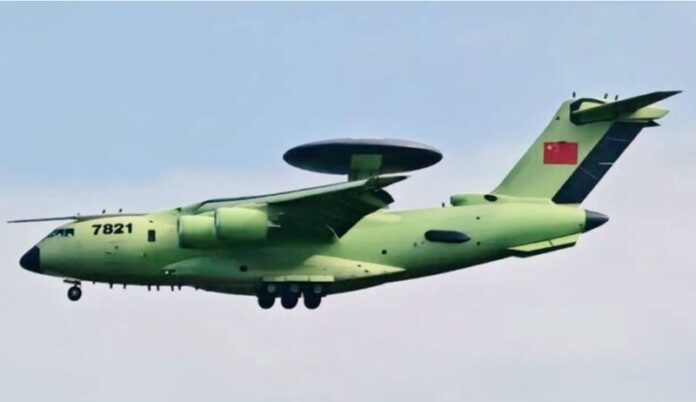
The images—captured repeatedly near the Xi’an Aircraft Corporation flight-test corridor—show a KJ-3000 prototype conducting sustained sorties, a pattern analysts say goes beyond basic airworthiness checks. Defence watchers identified prototype “#7821” in multiple flights, publicly confirming that the platform is now undergoing integrated systems testing rather than sporadic trials.

Image
A KJ-3000 prototype, numbered 7821, has been conducting flight tests since late 2024.

From Prototype to Operational Maturity

The increased tempo and visibility of testing suggest the People’s Liberation Army Air Force is moving the KJ-3000 from experimental validation toward operational maturity. Analysts assess that current trials are focused on stress-testing radar performance, power management, thermal control and data-link resilience under realistic mission profiles.

Notably, Beijing appears comfortable conducting repeated sorties in relatively exposed airspace—interpreted by experts as a form of strategic signalling aimed at regional rivals and extra-regional air forces as much as an engineering requirement.

Y-20 Lineage and Endurance Focus

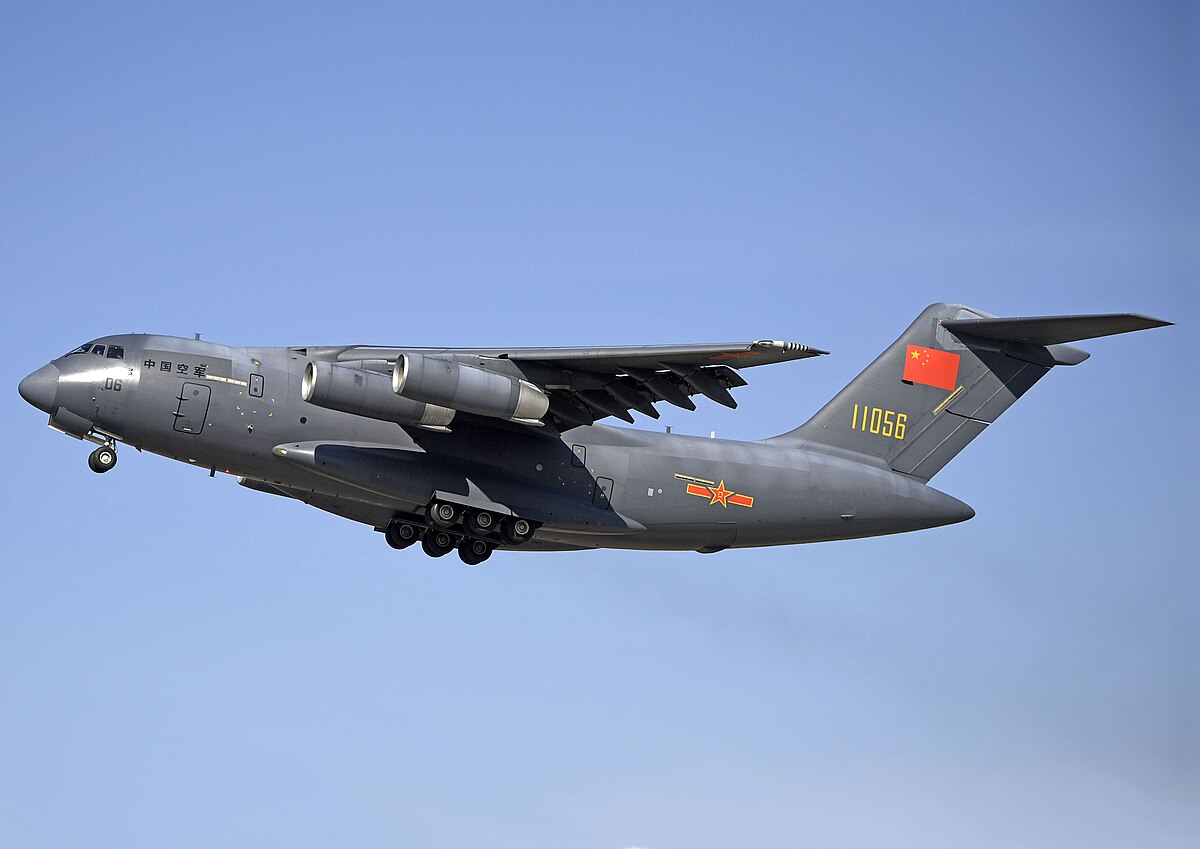
The KJ-3000 is widely assessed to be based on the Y-20B airframe, giving it far greater payload, altitude and endurance than earlier Chinese AEW&C platforms such as the KJ-2000 and KJ-500. This allows longer on-station time and a wider radar horizon across maritime theatres including the South China Sea, East China Sea and Western Pacific approaches to Taiwan.
Image

Late-December imagery shows the aircraft still wearing a yellow primer finish—typical of advanced flight-test phases—alongside an aerial refuelling probe, reinforcing assessments that the design prioritises persistent presence rather than short-duration surveillance.

Advanced Radar and Networked Warfare

The KJ-3000’s most striking feature is its large fixed rotodome housing an advanced active electronically scanned array (AESA) radar. Unlike mechanically rotated systems, the fixed configuration is believed to use multiple AESA panels to provide continuous 360-degree coverage and simultaneous multi-mode operation, including long-range air surveillance and ballistic-missile tracking.

Analysts examining the imagery have pointed to additional dorsal antennas, fuselage modifications and tail structures consistent with a highly networked sensor and communications suite—potentially including elements of counter-stealth detection designed to track fifth-generation aircraft.

Indigenous Engines and Industrial Significance

Powering the aircraft are four domestically developed WS-20 high-bypass turbofan engines, marking a significant milestone in China’s aerospace self-sufficiency. The engines provide the electrical output needed for large radar arrays and cooling systems while improving fuel efficiency and growth margin for future upgrades.

The move away from foreign-sourced engines also enables larger production runs, potentially allowing China to field a more numerous and resilient AEW&C fleet than was possible with earlier designs.

Strategic Impact

Military analysts say the KJ-3000 is designed as a central node in China’s network-centric warfare architecture, linking fighters, missiles, unmanned systems and space-based sensors into a single “system-of-systems.” Integration with platforms such as the J-20 stealth fighter could allow Chinese aircraft to operate with reduced emissions while relying on off-board targeting data.

For regional air forces—including those of India, Japan and Taiwan—the platform’s maturation complicates air-defence planning and erodes traditional advantages based on low-observable penetration or stand-off operations.

What Comes Next

While Beijing has made no official announcements, the sustained testing pattern through mid- and late-2025 suggests accelerated development. Analysts widely assess that initial operational deployment could begin as early as 2026.

With comparable AEW&C platforms globally often costing more than $300–400 million per aircraft, the KJ-3000 underscores the strategic value China places on information dominance as the decisive currency of future airpower competition in the Indo-Pacific.
From Allies to Rivals: How Saudi–UAE Relations Deteriorated to Airstrikes in Yemen

0

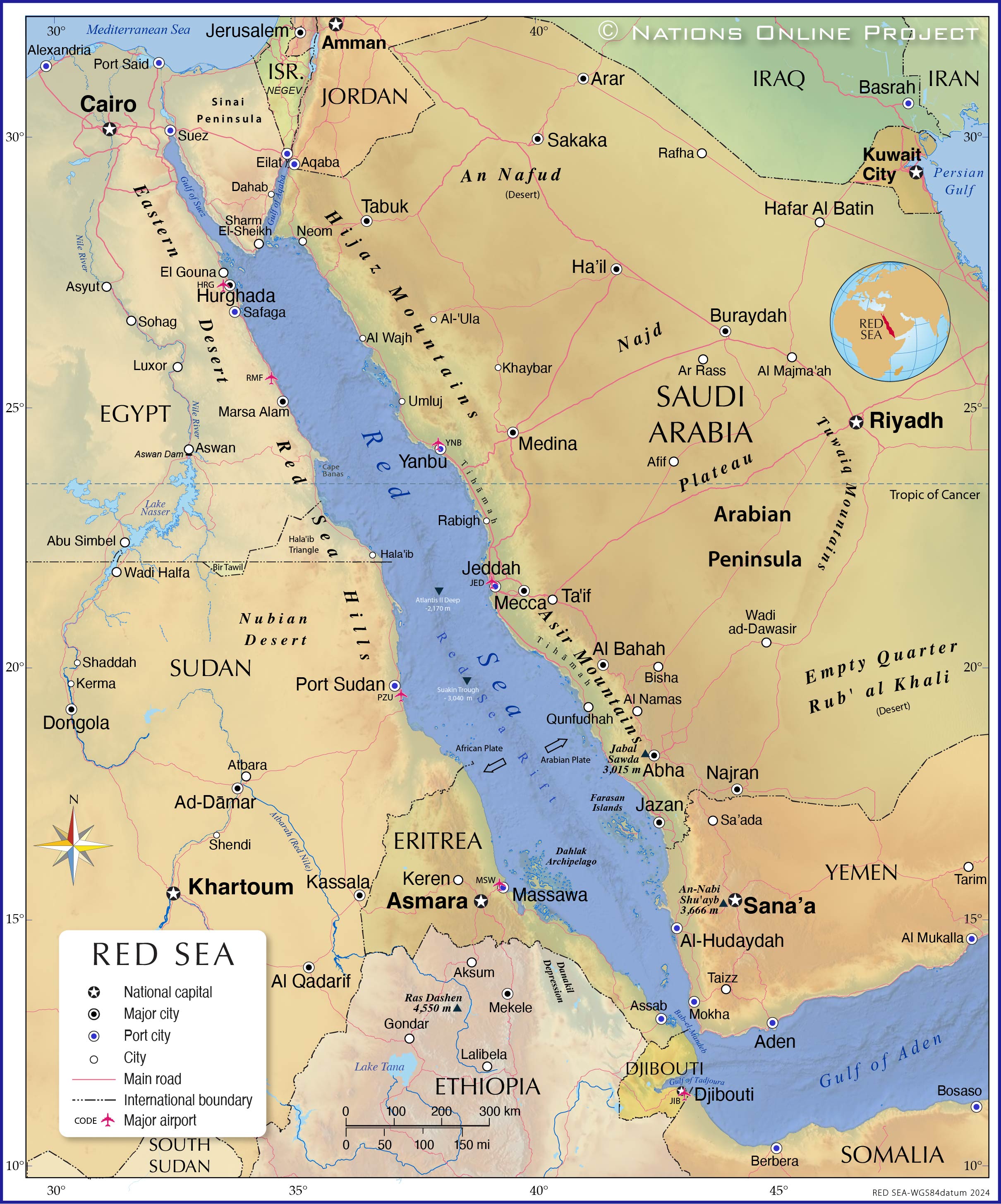
A Saudi airstrike on what Riyadh described as a UAE-linked weapons shipment in Yemen has marked the most serious rupture yet between Saudi Arabia and the United Arab Emirates, two states long regarded as the twin pillars of Gulf security.

The strike near the Yemeni port of Mukalla underscored how years of diverging strategic, economic and political interests have steadily eroded a partnership once defined by close coordination. From Yemen and Sudan to oil policy, Israel and regional commerce, Riyadh and Abu Dhabi have increasingly found themselves on opposite sides of key regional questions.

Below is a timeline tracing how the Saudi–UAE relationship evolved from strategic alignment to open confrontation.

2011: United Front During the Arab Spring

As uprisings swept the Arab world, Saudi Arabia and the UAE formed a common front against Islamist movements. The two deployed joint forces to Bahrain to help quell unrest and later coordinated support for Egypt’s 2013 military takeover that removed the Muslim Brotherhood-led government.

March 2015: Joint War in Yemen

Riyadh and Abu Dhabi launched a military intervention in Yemen to restore the internationally recognised government ousted by the Iran-aligned Houthi movement. UAE forces led ground operations, while Saudi Arabia dominated the air campaign, cementing the alliance’s military partnership.

June 2017: Qatar Blockade

The two Gulf powers jointly spearheaded a regional boycott of Qatar, accusing Doha of supporting terrorism—allegations Qatar denied. The move strengthened the personal alignment between Saudi Crown Prince Mohammed bin Salman and UAE President Mohammed bin Zayed.

2019: UAE Drawdown in Yemen

The UAE began scaling back its troops in Yemen, shifting toward a lower-profile strategy while maintaining influence through the Southern Transitional Council (STC). Saudi Arabia was left to carry the bulk of the war against the Houthis, marking the first major strategic divergence.

September 2020: Israel Normalisation

Abu Dhabi normalised ties with Israel under the US-brokered Abraham Accords. Saudi Arabia declined to follow, insisting that recognition must be preceded by Palestinian statehood—giving the UAE a unique diplomatic channel to Washington.

January–July 2021: Economic and Oil Rivalry

Saudi Arabia led the Al-Ula summit to end the Qatar dispute, with the UAE signing on reluctantly. Soon after, Riyadh moved to challenge Dubai’s commercial dominance by requiring foreign firms to relocate regional headquarters to the kingdom or risk losing government contracts.

Economic rivalry intensified when Saudi Arabia withdrew tariff concessions for goods from free zones, undercutting the UAE’s trade model. At the same time, a rare public rift erupted at OPEC, as the UAE blocked a Saudi-backed deal and demanded a higher oil production baseline.

April 2023: Sudan War Split

As conflict erupted in Sudan, Saudi Arabia hosted ceasefire talks backing the Sudanese army. UN experts later accused the UAE of arming the rival Rapid Support Forces—claims Abu Dhabi denied—highlighting another proxy arena where the two diverged.

December 8, 2025: Hadramout Red Line

Tensions surged in Yemen when UAE-backed STC forces seized oilfields in Hadramout, crossing what Saudi officials privately described as a strategic red line near the kingdom’s border.

December 30, 2025: Saudi Strike in Mukalla

Saudi jets struck a vessel in the port of Mukalla, which the Saudi-led coalition said was unloading heavy weapons destined for separatist forces. The incident marked the first direct military action targeting what Riyadh framed as Emirati-linked interests in Yemen—pushing the rivalry into open confrontation.

What It Means

Analysts say the Mukalla strike reflects a broader shift from partnership to competition between Saudi Arabia and the UAE. While both states remain aligned on some regional goals, their endgames in Yemen, economic ambitions, and approaches to global diplomacy increasingly diverge.

With Yemen already fragmented and the Red Sea emerging as a strategic flashpoint, the Saudi–UAE rift risks adding a new layer of instability to an already volatile region.

Israel Weighs Red Sea Strategy as UAE-Backed Southern Yemen Factions Seek Recognition After Somaliland Move

0
Houthi-mobilized fighters ride atop a car in Sanaa, Yemen

Israel is reported to be exploring the possibility of recognising a UAE-backed political entity in southern Yemen, viewing such a move as a potential strategic counterweight to the Iran-aligned Houthi movement along the Red Sea coast, according to Israeli media analysis. However, officials have not confirmed any decision, and the issue remains speculative.

The report was outlined by Roi Kais, head of the Arab affairs desk at Israel’s public broadcaster Kan 11, who said there has been no public response from UAE-supported forces in southern Yemen following Israel’s recent move on Somaliland. Kais noted that any reaction, if it comes, is likely to remain unofficial.

Behind closed doors, Kais said, elements within UAE-backed southern Yemeni forces have expressed hope that Israel’s recognition of Somaliland could eventually be followed by recognition of a southern Yemeni entity they seek to establish—most commonly associated with the Southern Transitional Council (STC).

Strategic Logic: Red Sea and the Houthis

Analysts point to geography as the core driver. An Israeli relationship with Somaliland—and potentially with a southern Yemeni authority—could expand intelligence, logistics, and maritime coordination along the Red Sea, a corridor increasingly targeted by Houthi missiles and drones amid the Gaza war and regional escalation.

Kais argued that such cooperation could “seriously disturb” the Houthis, whose power base lies in northern Yemen, by tightening pressure along the coast and sea lanes vital to global shipping. Southern Yemen’s coastline, including ports near the Bab el-Mandeb, is considered strategically significant for any effort to deter Houthi attacks.

Image

Regional Frictions and Yemen’s Southern Battles

The report also notes recent battlefield gains by UAE-backed southern forces in southeastern Yemen at the expense of Saudi-aligned units—developments that have reportedly fueled quiet tensions between Riyadh and Abu Dhabi over end-states in Yemen. Whether Israel would “enter the southern Yemeni file” remains uncertain.

Fact Check: Somaliland Recognition and International Positions

  • Israel’s Somaliland move: Israeli media report a recognition announcement, but international confirmation remains limited, and reactions suggest the issue is diplomatically contentious.
  • International stance: The United States Department of State reiterated that Washington continues to recognise Somalia’s territorial integrity, which includes Somaliland.
  • Precedent: Taiwan recognised Somaliland in 2020. Claims that Israel would be only the “second” recogniser are disputed by multiple diplomatic trackers.
  • Regional reactions: Somalia, Turkey, and Egypt have criticised any recognition of Somaliland, citing sovereignty concerns.

A joint statement cited by Israeli outlets referenced Benjamin Netanyahu, Gideon Sa’ar, and Somaliland’s president Abdirahman Mohamed Abdullahi. However, diplomats caution that formal recognition processes typically require wider legal and diplomatic steps that have not been independently verified.

Security Risks

The Houthis have warned that any Israeli presence in Somaliland—or along allied Red Sea coasts—would be considered a military target, raising the risk of escalation if Israel deepens its footprint.

Outlook

For now, Israel’s deliberations regarding southern Yemen remain unofficial and exploratory. Any move toward recognition would carry high diplomatic costs, sharpen Gulf rivalries, and potentially widen the Red Sea confrontation. Whether Israel proceeds—or keeps engagement discreet—will depend on regional reactions, U.S. positions, and the evolving Yemen battlefield.

Pakistan’s Strategic Reset in 2025: How Field Marshal Asim Munir Recalibrated Foreign and Security Policy

0

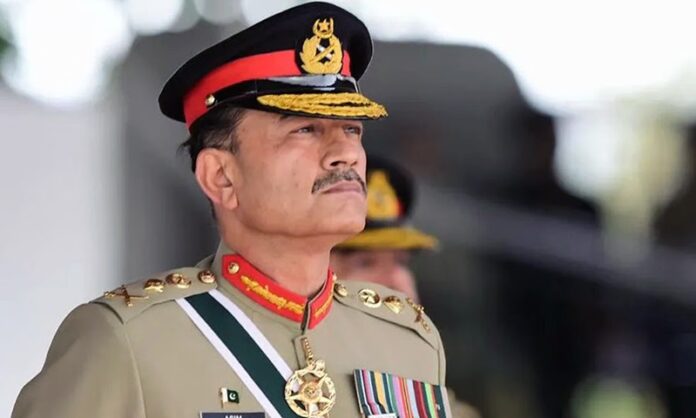
In 2025, Pakistan’s foreign and security policy underwent a clear strategic recalibration, shaped decisively by the leadership of Field Marshal Syed Asim Munir. Against a backdrop of shifting global power alignments, regional conflicts, and economic pressure, Islamabad moved away from reactive diplomacy toward a disciplined, interest-driven posture grounded in deterrence stability and strategic balance.

Rather than ideological rhetoric, Pakistan’s external engagement in 2025 emphasised composure, predictability, and national interest. This shift helped restore diplomatic space, rebuild confidence with key partners, and reposition Pakistan as a credible and responsible regional actor.

Major Powers: Pragmatism Over Polarisation

Relations with China deepened further through defence cooperation and joint technology initiatives, including continued collaboration on platforms such as the JF-17 fighter programme. These ties reinforced Pakistan’s role in sustaining a balance of power in South Asia and beyond.

Engagement with Saudi Arabia evolved from traditional goodwill into a more structured strategic defence partnership, contributing both to Pakistan’s financial stabilisation and its standing in the Muslim world.

Ties with the United States were managed with pragmatism rather than confrontation. Cooperation expanded in counterterrorism, joint military training, and diplomatic coordination, while bilateral trade grew. This steadier relationship enhanced Pakistan’s manoeuvrability in international forums.

Regional Diplomacy: Balance and Confidence-Building

Pakistan adopted a calibrated regional approach. With Iran, Islamabad prioritised border security and confidence-building measures, helping maintain relative calm along the western frontier during periods of regional tension.

Defence-industrial cooperation with Türkiye gained momentum, particularly in drones, naval collaboration, and defence production. A thaw in relations with Bangladesh marked a significant shift after decades of stagnation, supported by military-to-military engagement and renewed political outreach.

Meanwhile, Malaysia and Indonesia emerged as important partners in defence trade and maritime cooperation, expanding Pakistan’s footprint in ASEAN and the Asia-Pacific.

Gulf, Africa and Beyond

Gulf diplomacy remained central. Qatar played a key role as a diplomatic interlocutor in regional crises, while cooperation with the United Arab Emirates focused on defence training, investment, and Pakistani manpower.

Security and political coordination with Jordan and Egypt intensified, particularly within the Organisation of Islamic Cooperation.

Pakistan’s defence exports expanded into Libya and Nigeria, while strategic outreach to Morocco and Azerbaijan widened Islamabad’s influence across North Africa and the Caucasus.

Multipolar Outreach and Multilateral Presence

Engagement with Central Asia through the Shanghai Cooperation Organisation highlighted Pakistan’s role in regional security, connectivity, and trade corridors. Emerging defence ties with Russia further underscored a shift toward a balanced, multipolar foreign policy, reducing reliance on any single bloc.

This bilateral diplomacy was reinforced by active multilateral engagement at the United Nations, OIC, SCO, European Union and ASEAN, signalling a clear departure from perceptions of diplomatic isolation.

Economic Diplomacy and Security Management

Economic diplomacy became a core pillar. Strategic projects such as Reko Diq were framed as long-term recovery drivers, while financial support from China, Saudi Arabia and the UAE provided stabilisation through investments, loans, and rollovers.

Security management tested this posture. Pakistan’s handling of a four-day military confrontation with India was widely viewed as an exercise in restraint backed by credible deterrence. Islamabad reinforced its defensive narrative internationally while maintaining ceasefire stability with the help of external mediation. The nomination of former US President Donald Trump for the Nobel Peace Prize reflected Pakistan’s emphasis on de-escalation through diplomacy.

Long-standing disputes remained firmly on the diplomatic agenda. Jammu and Kashmir was consistently raised at the UN, alongside calls for a plebiscite in line with existing resolutions. Parallel engagement on the Indus Waters Treaty continued at the Permanent Court of Arbitration, the OIC and the UN, with Pakistan projecting confidence in its legal position.

Conclusion

Pakistan’s 2025 foreign policy review presents a coherent narrative of diversified diplomacy, deterrence stability and economic engagement anchored in disciplined military leadership. Field Marshal Asim Munir’s imprint on this trajectory is unmistakable. Under his stewardship, Pakistan has not merely adjusted to global power shifts—it has begun shaping its place within them, positioning itself as a bridge between regions rather than a fault line among them.

Saudi Arabia Issues Ultimatum to UAE Forces in Yemen After Mukalla Airstrike, Exposing Deep Gulf Rift

0
Smoke rises after Israeli strikes near Sanaa airport, in Sanaa, Yemen.

Saudi Arabia on Tuesday declared that its national security was a “red line” and gave United Arab Emirates (UAE) forces 24 hours to withdraw from Yemen, hours after a Saudi-led coalition carried out an airstrike on the southern port city of Mukalla—marking the sharpest escalation yet in tensions between the two Gulf allies.

The airstrike targeted what the coalition described as foreign military support to UAE-backed southern separatists, as relations between Riyadh and Abu Dhabi deteriorated rapidly amid renewed fighting in Yemen’s south.

In a parallel political escalation, the head of Yemen’s Saudi-backed Presidential Leadership Council, Rashad al-Alimi, cancelled a defence pact with the UAE and accused Abu Dhabi of fuelling instability in the war-torn country.

Image

“Unfortunately, it has been definitively confirmed that the United Arab Emirates pressured and directed the Southern Transitional Council to undermine and rebel against the authority of the state through military escalation,” Alimi said in a televised address, according to Yemen’s state news agency.

Saudi Arabia publicly urged the UAE to comply with the withdrawal demand. The UAE’s foreign ministry did not immediately comment.

Mukalla Strike and Arms Allegations

The Saudi-led coalition said the limited airstrike on Mukalla port followed the arrival of two ships from the UAE port of Fujairah over the weekend without coalition authorisation. According to the statement, the vessels disabled their tracking systems after docking and unloaded large quantities of weapons and combat vehicles intended for the Southern Transitional Council (STC).

Saudi state media reported that the strike caused no casualties or collateral damage, while sources said the dock where the cargo had been unloaded was specifically targeted.

Mukalla lies in the strategically critical Hadramout province, large parts of which are controlled by UAE-backed forces. Hadramout borders Saudi Arabia and holds deep historical, tribal and economic ties to the kingdom—making the area particularly sensitive for Riyadh.

From Allies to Rivals in Yemen

The confrontation highlights how Saudi Arabia and the UAE—once core partners in the coalition against the Iran-aligned Houthi movement—are now edging toward open confrontation through rival Yemeni factions.

The STC was originally part of the Saudi-led intervention launched in 2015 but later pivoted toward seeking autonomy or independence for southern Yemen. Although the UAE officially began drawing down its troops in 2019, it has continued backing southern forces that now control vast territory outside Houthi-held areas.

Image

Since 2022, the STC has been part of a Saudi-brokered power-sharing arrangement governing southern Yemen, but recent offensives against Saudi-backed government troops have shattered that fragile balance.

This month’s clashes brought Saudi- and UAE-aligned forces closer than ever to direct conflict, prompting Riyadh to issue warnings against STC military expansion in eastern Yemen and demand withdrawals.

Blockades, No-Fly Zone and Rising Stakes

Following the Mukalla strike, Alimi announced a 72-hour no-fly zone and sea and land blockade on ports and crossings under government authority, with limited exemptions approved by the coalition.

The Saudi-led coalition said it would “continue to prevent any military support from any country to any Yemeni faction without coordination with the legitimate government,” signalling a tougher enforcement posture.

Strategic Implications

Analysts say the crisis exposes a fundamental rift between Saudi and Emirati endgames in Yemen. Riyadh prioritises territorial integrity and border security, while Abu Dhabi has invested heavily in local proxies to secure long-term influence over southern ports and sea lanes.

With Yemen already fragmented between Houthi control in the north and rival factions in the south, the Saudi-UAE standoff risks turning the conflict into a multi-layered regional proxy war, further complicating prospects for peace.

India Clears ₹79,000 Crore Defence Purchases as New Delhi Accelerates Drones, Missiles and ISR Capabilities

0

India has taken a major step in strengthening its military modernisation drive after the Defence Acquisition Council (DAC) approved defence procurement proposals worth nearly ₹79,000 crore, underscoring New Delhi’s focus on drones, precision strike weapons, and surveillance capabilities across all three services.

The approvals were granted during a meeting of the DAC chaired by Defence Minister Rajnath Singh on December 29, 2025, giving Acceptance of Necessity (AoN) to a wide range of Army, Navy and Air Force acquisitions. AoN is a crucial early step in India’s defence procurement process and signals political clearance for future contracts.

Indian Army: Drones, Rockets and Counter-UAS Systems

For the Indian Army, the DAC approved procurement of loiter munition systems, low-level lightweight radars, long-range guided rocket ammunition for the Pinaka multiple launch rocket system, and the Integrated Drone Detection & Interdiction System (IDDIS) Mk-II.

These acquisitions reflect lessons drawn from recent conflicts, particularly the growing role of drones and precision fires. Loitering munitions will give artillery units the ability to conduct real-time precision strikes against tactical targets, while the lightweight radars are designed to detect small, low-flying unmanned aerial systems.

Image

The long-range guided rockets will significantly extend the reach and accuracy of the Pinaka, enabling engagement of high-value targets deeper inside contested areas. Meanwhile, the upgraded IDDIS Mk-II is aimed at protecting critical military infrastructure and forward formations against hostile drones, a growing concern along both the western and northern borders.

Indian Navy: Maritime Surveillance and Networked Operations

For the Indian Navy, the DAC cleared the procurement of Bollard Pull (BP) tugs, high-frequency software-defined radios, and the leasing of High Altitude Long Endurance (HALE) remotely piloted aircraft systems.

The induction of HALE RPAS is particularly significant, as it will enhance India’s continuous intelligence, surveillance and reconnaissance over the Indian Ocean Region, an area of rising strategic competition. Analysts see this as part of India’s broader effort to monitor expanding Chinese naval activity and safeguard sea lanes.

The radios will strengthen secure long-range communications during boarding and amphibious operations, while BP tugs will improve the Navy’s ability to handle ships and submarines in congested harbours.

Indian Air Force: Missiles, Simulators and Precision Strike

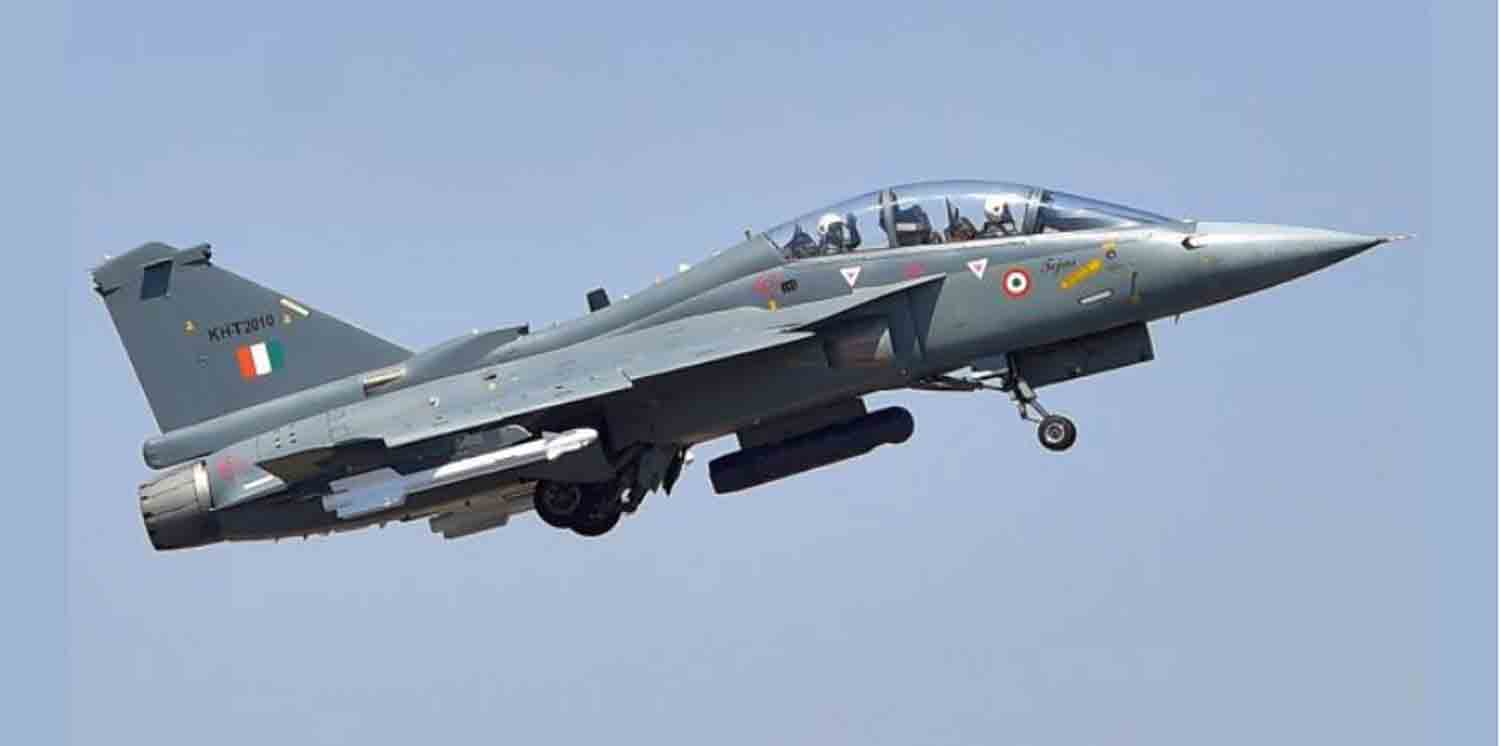
The Indian Air Force received AoN for a mix of combat, training and safety systems, including the Astra Mk-II beyond-visual-range air-to-air missile, SPICE-1000 precision guidance kits, an automatic take-off and landing recording system, and a full mission simulator for the Light Combat Aircraft Tejas.

Image

The Astra Mk-II, with its extended range, will significantly boost the IAF’s ability to engage enemy aircraft from standoff distances, narrowing gaps with regional rivals. The SPICE-1000 kits will enhance long-range precision strike capability, while the Tejas simulator reflects a push toward cost-effective pilot training and higher operational readiness.

Strategic Context

Taken together, the approvals highlight India’s evolving defence priorities: counter-drone warfare, network-centric operations, deep-strike capability and persistent surveillance across land, sea and air. The emphasis on guided rockets, loitering munitions and ISR platforms also aligns with India’s effort to modernise amid lessons from the Ukraine war and rising tensions in the Indo-Pacific.

While AoN does not guarantee immediate contracts, the scale and breadth of the approvals signal sustained political backing for military modernisation and a continued push toward strengthening deterrence through technology-driven capabilities.

Five Militants Killed in Bajaur IBO as Army Officer Embraces Martyrdom in Pakistan’s Anti-Terror Drive

0

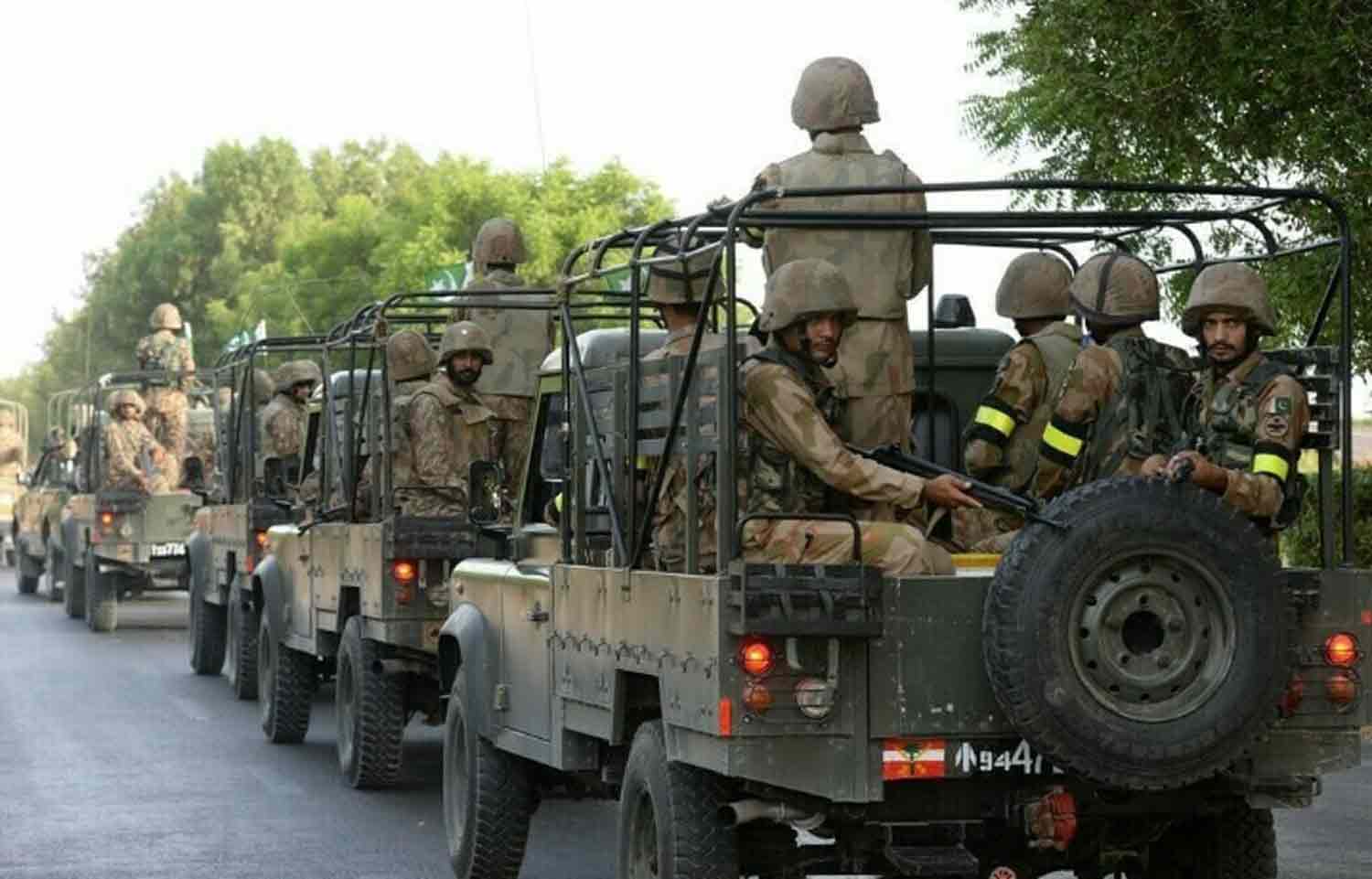
Pakistan’s security forces have killed five militants during an intelligence-based operation (IBO) in Bajaur district’s Khar area, the military said on Sunday, as the country continues an intensified counter-terrorism campaign along its northwestern frontier.

According to a statement issued by Inter-Services Public Relations, the operation was carried out on December 29 after intelligence reports confirmed the presence of militants belonging to Fitna al Khwarij, which the military describes as an India-backed proxy group operating in the border region.

The ISPR said troops engaged the militants effectively, killing five during a fierce exchange of fire. However, the operation also claimed the life of Major Adeel Zaman, a 36-year-old officer from Dera Ismail Khan, who was leading his men from the front.

“Major Adeel Zaman fought gallantly and made the ultimate sacrifice in the line of duty,” the military said, paying tribute to the fallen officer’s leadership and courage.

Weapons Recovered, Area Being Cleared

Security forces recovered weapons and ammunition from the slain militants, who, according to the ISPR, were involved in multiple terrorist attacks against security forces, law enforcement agencies, and civilians in the region.

Sanitisation operations are continuing in and around Khar to ensure no remaining militants are present, the statement added.

Bajaur, which borders Afghanistan’s Kunar province, has remained a sensitive security zone due to cross-border militant movement and the resurgence of extremist violence in parts of Khyber Pakhtunkhwa since 2022. Pakistani authorities have repeatedly warned that militant groups are attempting to regroup and exploit rugged border terrain to launch attacks.

‘Azm-e-Istehkam’ Counter-Terror Campaign

The military said the operation was part of Pakistan’s broader counter-terrorism strategy under Azm-e-Istehkam, a renewed security initiative approved by the Federal Apex Committee under the National Action Plan.

“The relentless counter-terrorism campaign will continue at full pace to eliminate the menace of foreign-sponsored and supported terrorism from Pakistan,” the ISPR said.

The latest operation underscores the ongoing challenges faced by Pakistan’s security forces as they confront militant networks amid heightened regional tensions, while also highlighting the continued human cost of counter-terrorism operations in the country’s northwest.

China Launches Largest-Ever Taiwan War Games, Simulating Blockade as Tensions With US and Allies Rise

0

China on Monday launched its most expansive military exercises ever around Taiwan, showcasing Beijing’s ability to isolate the island from external support in the event of war and sharply escalating pressure on Taipei amid deepening US–Taiwan defence cooperation.

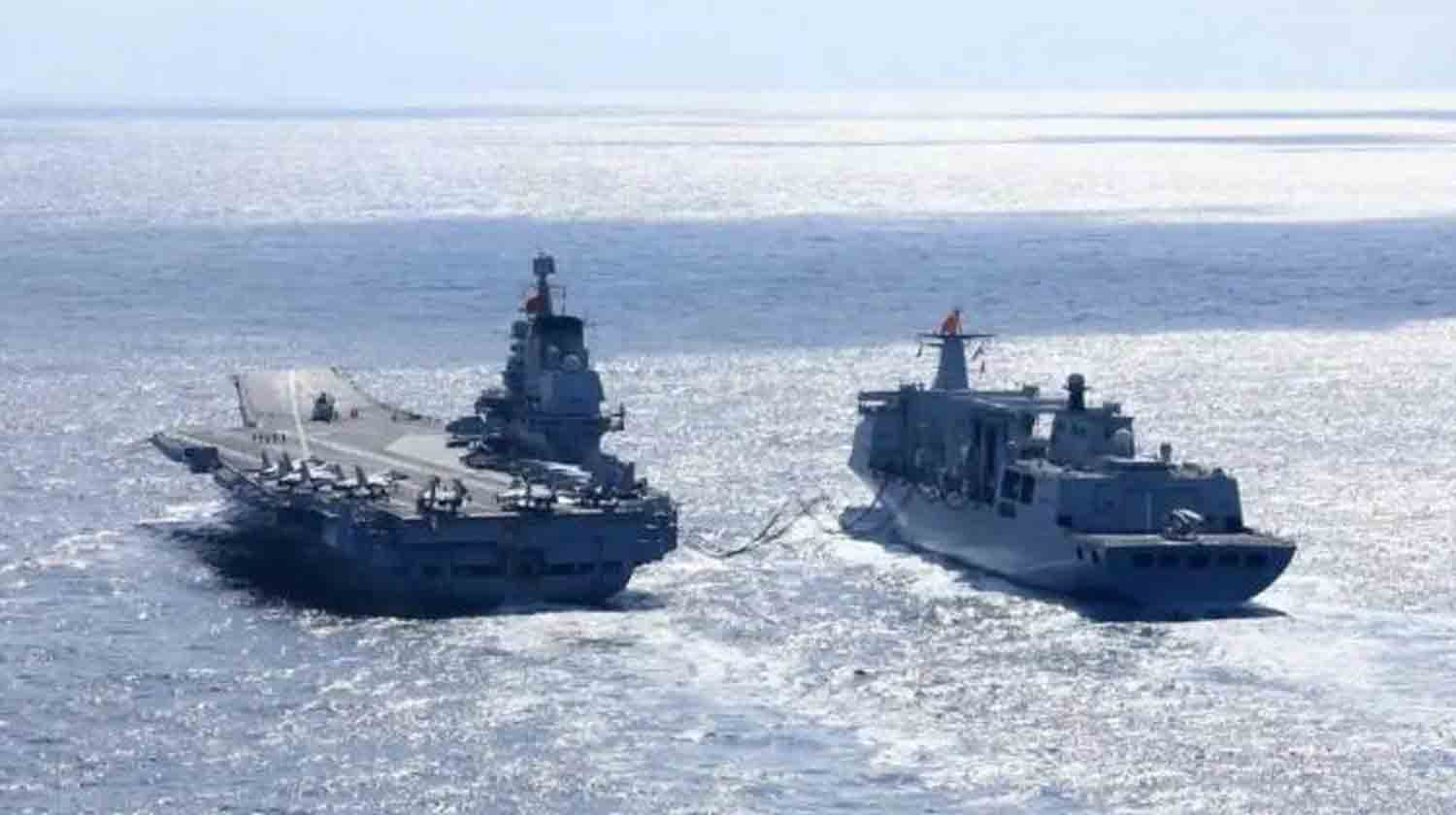
China’s Eastern Theatre Command said the drills—codenamed Justice Mission 2025—involved large-scale deployments of troops, warships, fighter aircraft, missile forces and artillery to encircle the democratically governed island. The exercises include live-fire drills, simulated strikes on land and maritime targets, and rehearsals for sealing off Taiwan’s major ports.

According to China’s Maritime Safety Administration, live-firing will continue through Tuesday across a record seven designated exercise zones, making the drills the largest by geographical coverage and the closest to Taiwan’s shores to date. Earlier announcements had indicated only five firing zones.

Flights Cancelled, Ports Targeted

Taiwan’s Defence Ministry said an additional unannounced drill zone was activated for two hours on Monday morning in waters east of the island, underscoring concerns about reduced warning times. Taiwan’s Transport Ministry said the drills would disrupt more than 100,000 international passengers, while around 80 domestic flights were cancelled.

Chinese state media reported that the exercises are focused on cutting off access to Taiwan’s most critical maritime hubs, including Port of Keelung in the north and Kaohsiung in the south—moves widely interpreted as rehearsals for a full or partial blockade.

Message to Washington and Allies

The drills mark China’s sixth major round of war games around Taiwan since 2022, following heightened tensions after then–US House Speaker Nancy Pelosi’s visit to the island. They come just 11 days after Washington approved a $11.1 billion arms package for Taiwan, the largest single US weapons sale to the island to date.

Analysts say the timing sends a clear signal to the United States and its regional allies. “China is delivering a strong warning against external interference,” said Chieh Chung of Taiwan’s Institute for National Defence and Security Research, noting that several drill zones effectively severed air and sea routes toward Japan north of Taiwan.

Beijing has also hardened its rhetoric after remarks by Japanese Prime Minister Sanae Takaichi suggesting a Chinese attack on Taiwan could prompt a military response from Tokyo.

Image

Taiwan on High Alert

Taiwan’s Defence Ministry said 89 Chinese military aircraft, 14 naval vessels and 14 coast guard ships were operating around the island on Monday, with additional Chinese warships detected in the Western Pacific. Some vessels were involved in close stand-offs with Taiwanese ships near the island’s contiguous zone, about 24 nautical miles offshore.

“Our armed forces must prepare for the worst-case scenario,” said Hsieh Jih-sheng, Taiwan’s deputy chief of general staff for intelligence, warning that live-fire drills in the Taiwan Strait pose risks not only to Taiwan but also to neighbouring countries and international shipping.

Taiwan’s military said it had entered a state of heightened readiness and launched “rapid-response exercises” to ensure forces could be mobilised quickly if drills were to escalate into an actual attack.

Advanced Weapons and Psychological Pressure

China’s military released videos showing futuristic systems—including humanoid robots, micro-drones and weaponised robotic dogs—storming simulated targets, signalling Beijing’s growing emphasis on unmanned and autonomous warfare.

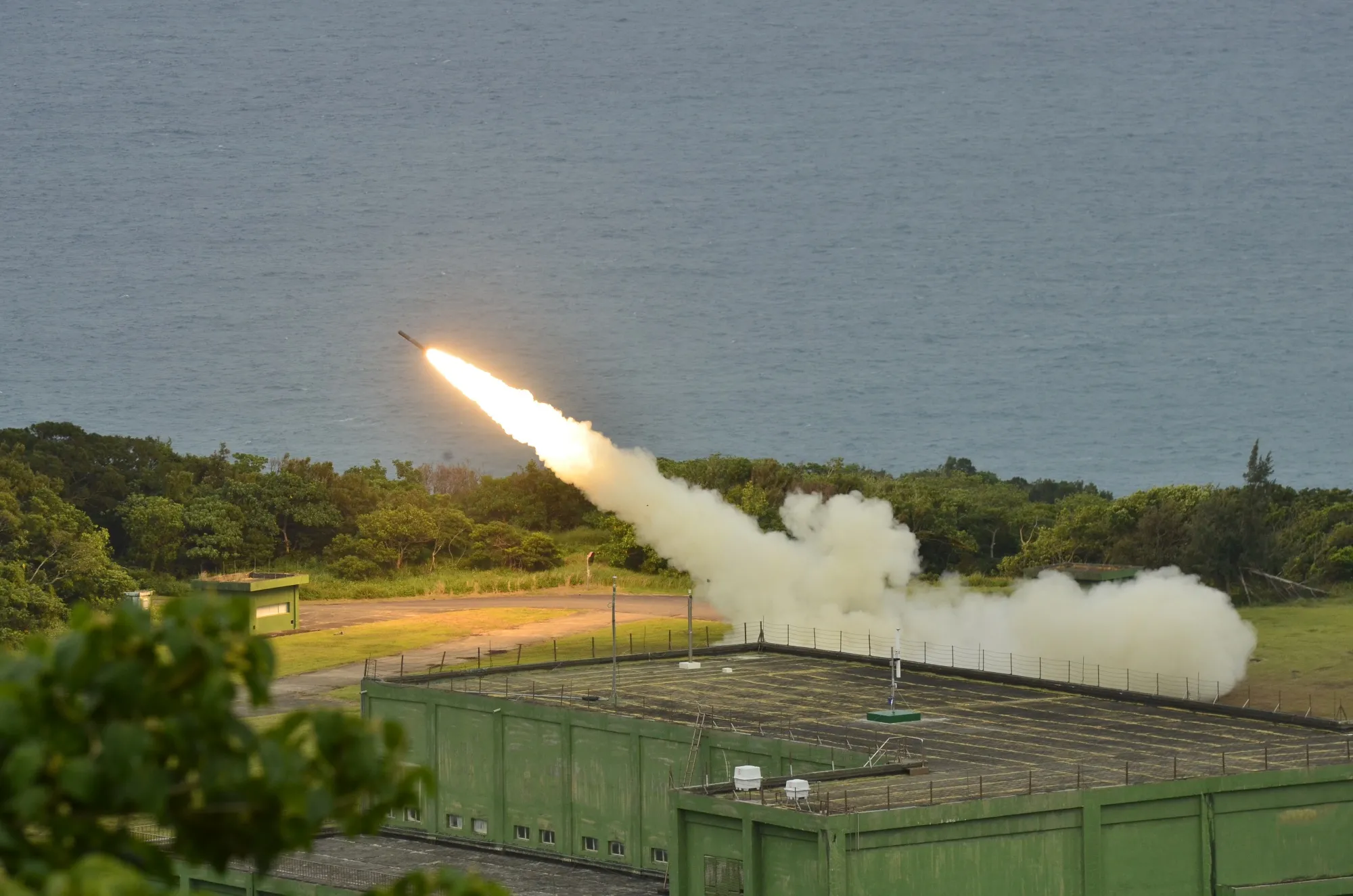
Taiwan’s government condemned the drills, while its defence ministry countered with footage highlighting its own capabilities, including US-made HIMARS, which could strike coastal targets in China’s Fujian province in a conflict.

Despite the show of force, Taiwan’s financial markets remained calm, with stocks closing up 0.9%. “These drills are meant to intimidate,” said Taipei resident Lin Wei-ming. “We’ve seen this before.”

A Blurring Line Between Drills and War

Security experts warn that Beijing’s expanding exercises are increasingly designed to blur the distinction between training and real combat operations—reducing response times for Taiwan, the United States and regional partners.

As China continues to reject Taiwan’s self-rule and Taipei insists only its people can decide their future, Justice Mission 2025 has reinforced concerns that the Taiwan Strait is becoming the world’s most dangerous flashpoint.

Trump Says Ukraine Peace Deal ‘Very Close’, But Territory, NATO and Security Guarantees Remain Major Hurdles

0
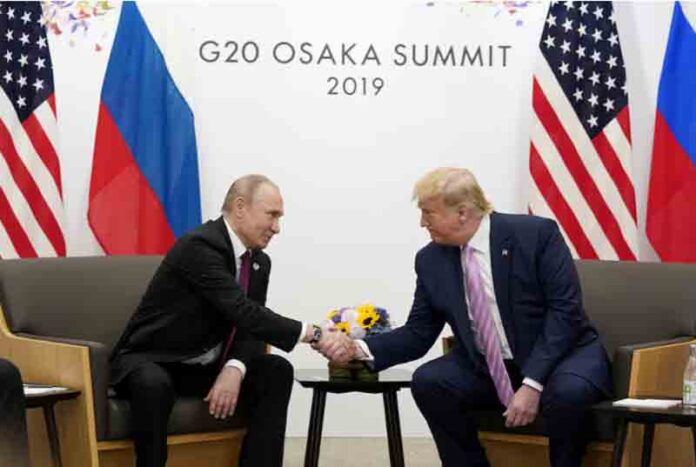
Russia's President Vladimir Putin and U.S. President Donald Trump shake hands during a bilateral meeting at the G20 leaders summit in Osaka, Japan.

US President Donald Trump said on Sunday that Washington and Kyiv may be “very close” to a deal to end the war in Ukraine after talks with Ukrainian President Volodymyr Zelenskiy, raising cautious expectations of a breakthrough after weeks of intense diplomacy.

Image

However, both leaders offered few concrete details, underscoring that the most divisive issues—territorial control, long-term security guarantees for Ukraine, and NATO’s future role—remain unresolved as the war with Russia enters its fourth year.

Territorial Dispute: The Core Obstacle

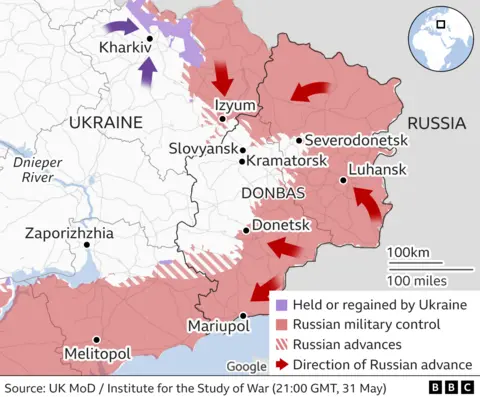
Russia currently controls around 116,000 square kilometres, roughly 19.2 percent of Ukrainian territory, including Crimea, most of Donbas, and large parts of Zaporizhzhia and Kherson. According to pro-Ukrainian assessments, Russian forces advanced in 2025 at their fastest pace since the initial invasion in 2022.

Moscow claims Crimea, Donetsk, Luhansk, Zaporizhzhia and Kherson are legally part of Russia—claims rejected by Ukraine and most of the international community. While Russia has failed to seize all of Donbas, it has renewed demands that Kyiv withdraw from the remaining Ukrainian-held areas of Donetsk if it wants peace.

Image

The Kremlin has warned that failure to reach a deal would result in Ukraine losing more territory. Kyiv, however, has firmly rejected any territorial concessions, saying a ceasefire should freeze fighting along current front lines.

Trump and Zelenskiy both acknowledged that Donbas remains unresolved, though Trump said negotiations were “moving in the right direction.” Earlier US proposals floated the idea of a free economic zone if Ukraine vacated parts of Donbas, though details remain vague.

Russian media have reported that President Vladimir Putin may be open to limited territorial swaps elsewhere in Ukraine in exchange for full control of Donbas, a proposal Kyiv has not endorsed.

Security Guarantees: Ukraine’s Red Line

Ukraine says any peace deal must include strong, binding security guarantees to prevent renewed Russian aggression. Zelenskiy revealed that a draft framework envisages US security guarantees for at least 15 years, with Kyiv pushing for commitments extending up to 50 years.

Image

Trump has signalled that Europe should shoulder most of the responsibility for guarantees, with US backing, but has not clarified whether this would involve troops, defence pacts, or arms commitments. Moscow has already said any foreign troop presence in Ukraine would be unacceptable.

Russia has also demanded limits on the size of Ukraine’s armed forces, protections for Russian speakers and Orthodox believers, and formal neutrality for Kyiv. Ukraine rejects these conditions, saying minority rights are already protected under EU-aligned laws and insisting it will maintain its current force of roughly 800,000 troops.

NATO Question: A Strategic Fault Line

One of Russia’s central demands is a written pledge that NATO will not expand eastward. Initial US peace proposals reportedly included clauses barring Ukraine from NATO membership and requiring constitutional neutrality.

In exchange, Ukraine would receive temporary preferential access to EU markets while its EU membership bid is considered. Kyiv’s own peace plan, however, seeks security guarantees equivalent to NATO’s Article 5 mutual-defence clause—without formal membership.

The future role of NATO remains one of the most politically sensitive aspects of the talks.

Money, Sanctions and Frozen Assets

Under early US proposals, Russia would be reintegrated into the global economy and invited back into the G8, alongside long-term cooperation with the US in energy, infrastructure, artificial intelligence, and Arctic resource development.

The European Union has opted to borrow €90 billion to support Ukraine’s defence over the next two years, stopping short of using frozen Russian sovereign assets—a move that has divided European capitals.

Nuclear Issues, Elections and Business Interests

Other unresolved questions include the future of the Russian-controlled Zaporizhzhia nuclear power plant, the possible resumption of US–Russia nuclear arms control talks, and speculation over US companies gaining access to Russian natural resources.

Washington has also raised the idea of elections in Ukraine. Moscow claims Kyiv’s leadership lacks legitimacy after postponing elections, while Ukraine argues voting is impossible under martial law during an active war.

Outlook

While Trump’s comments signal renewed momentum toward a ceasefire, analysts say the gaps between Russia’s demands and Ukraine’s red lines remain wide. Any deal that addresses territory, NATO, security guarantees, sanctions, and sovereignty simultaneously would mark one of the most complex peace settlements in modern European history—and one still far from assured.

Pakistan Foils Suicide Plot as CTD Rescues Minor Girl Targeted by BLA via Social Media

0

Pakistan’s Counter Terrorism Department (CTD) has thwarted an alleged suicide attack after rescuing a minor girl during a late-night intelligence-based operation on December 25, authorities said, exposing what officials describe as an increasingly dangerous militant tactic: the online grooming of children for terror operations.

According to Counter Terrorism Department officials, the girl was being radicalised by handlers linked to the proscribed Balochistan Liberation Army (BLA), who allegedly exploited social media platforms to indoctrinate her and push her toward a suicide mission.

Assistant Inspector General CTD Azad Khan said the child’s vulnerability was systematically exploited through extremist content and online manipulation. “Through hateful and extremist material on social media, an innocent mind was gradually poisoned,” he said, adding that the girl had been using a mobile phone secretly without her mother’s knowledge—an opening used by militant handlers to establish contact.

Investigators said the handler initially approached the girl under the guise of sympathy and assistance before escalating the communication toward incitement for a suicide attack. “The contact began with emotional reassurance and gradually shifted to anti-Pakistan, foreign-backed propaganda designed to normalise violence,” the CTD official said.

Authorities revealed that the girl was persuaded to leave home and travel to Karachi after misleading her family. However, enhanced screening at police checkpoints disrupted the handler’s movement and prevented a rendezvous at the intended location, effectively exposing and collapsing the alleged plot before it could advance further.

The case highlights a broader security concern for Pakistan as militant outfits face mounting operational pressure from sustained counterterrorism operations and intelligence coordination. Security officials say groups such as the BLA and the Balochistan Liberation Front (BLF) have increasingly turned to women and minors, relying on online radicalisation to bypass traditional surveillance.

Sindh Home Minister Ziaul Hassan Lanjar warned that militant organisations are deliberately shifting their recruitment focus. “The new target of terrorists is our children, and social media is being used as a weapon,” he said, calling the incident clear evidence that banned groups are attempting to weaponise underage girls.

Security analysts say the operation underscores both the evolving threat landscape and the importance of digital vigilance, parental awareness, and proactive intelligence-led policing. Officials added that the rescued child is now in protective custody and receiving counselling, while investigations continue to trace the online networks and handlers involved.

Western Recognition of Palestine Marks Diplomatic Turning Point in 2025—But Impact Remains Largely Symbolic

0
Protesters react holding Lebanese and Palestinian flags during a demonstration in solidarity with Palestinians in Gaza, ahead of the October 7 attack anniversary, amid the Israel-Hamas conflict, in Berlin, Germany.

The decision by several Western countries to formally recognise the State of Palestine in September 2025 emerged as one of the most significant diplomatic developments of the year, injecting fresh momentum into a conflict long frozen by geopolitical paralysis. Driven largely by France, the move was hailed as a symbolic breakthrough for Palestinians—but it also exposed the stark limits of international recognition without enforcement.

On the sidelines of the 80th United Nations General Assembly in New York, France was joined by Britain, Portugal, Canada, Australia and Belgium in announcing recognition of Palestine, as Israel intensified its military campaign in Gaza and accelerated settlement expansion in the occupied West Bank. For Palestinians, the announcements represented long-overdue political acknowledgment. For critics, they raised the question of whether symbolism could translate into tangible change on the ground.

Image

France played the central catalytic role. President Emmanuel Macron formally declared recognition on September 22 during his address to the UN General Assembly, framing the decision as a reaffirmation of the two-state solution—still widely regarded internationally as the only viable framework for resolving the Israeli-Palestinian conflict.

The move provoked a sharp reaction from Israeli Prime Minister Benjamin Netanyahu, who rejected the creation of a Palestinian state and denounced the recognitions as “a huge reward for terrorism,” referring to Hamas and the October 7 attacks.

According to Jean-Paul Chagnollaud, emeritus professor and honorary president of the Institute for Research and Studies on the Mediterranean and the Middle East (IREMMO), France’s decision marked a genuine political shift rather than a mere rhetorical gesture. He said Paris deliberately sought to mobilise a segment of the Western world that had historically avoided formal recognition, culminating in the New York Declaration signed by 142 states.

France’s initiative extended beyond bilateral announcements. Together with Saudi Arabia, Paris co-chaired an international conference that led to the UN General Assembly’s adoption of the New York Declaration on September 12. The declaration described recognition of the Palestinian state as “essential and indispensable” and outlined what was termed an “irreversible” roadmap toward a two-state settlement, while explicitly excluding Hamas from any future political role in Gaza.

Chagnollaud noted that Macron’s position evolved rapidly in 2025. After years of conditioning recognition on prior peace with Israel, the French president shifted course following his April visit to Egypt near the Gaza border, where the scale of destruction and civilian suffering reportedly influenced his decision.

Image

Despite the diplomatic fanfare, the recognitions have had little immediate impact on realities on the ground. Israel’s occupation remains intact, settlement construction continues, violence against Palestinian civilians has not abated, and Hamas still controls the Gaza Strip. While France argued that recognition added pressure on Israel to accept a Gaza ceasefire—eventually announced weeks later under pressure from US President Donald Trump—the broader power dynamics remain unchanged.

Analysts warn that without concrete follow-through, including coordinated diplomatic pressure or sanctions, the recognitions risk becoming counterproductive. European states, they argue, lack meaningful leverage compared with the United States, which opposed both the recognitions and the New York Declaration.

The brief diplomatic momentum was soon eclipsed by Trump’s peace plan, which succeeded in imposing a ceasefire in Gaza but was structured primarily around US and Israeli security priorities. While it reduced immediate violence, it left core Palestinian grievances unresolved, reinforcing concerns that international attention may again shift away from the political roots of the conflict.

As Chagnollaud cautioned, without sustained pressure and implementation, recognition alone may not halt what he described as the political and physical erosion of the Palestinian cause. Instead of marking the beginning of a new diplomatic phase, 2025’s recognitions may come to be remembered as a powerful gesture that fell short of reshaping Palestinian realities—unless followed by decisive action.

Dar Says India’s ‘Regional Hegemony’ Narrative Collapsed as Pakistan Reclaims Diplomatic Space

0

Pakistan’s Deputy Prime Minister and Foreign Minister Mohammad Ishaq Dar on Saturday claimed that Islamabad has emerged from what he described as a phase of “diplomatic isolation,” arguing that recent regional and global developments—particularly involving India—have reshaped perceptions of power and credibility in South Asia.

Addressing a press conference on the annual performance of the Ministry of Foreign Affairs, Dar said Pakistan’s “proactive and principled” foreign policy had restored its standing internationally, while India’s claims of regional dominance were put to the test during recent military tensions.

Referring to the brief but intense armed confrontation between Pakistan and India, Dar said New Delhi’s long-projected image as a “net security provider” in the region was “shattered,” asserting that Pakistan’s response demonstrated restraint, preparedness, and strategic balance. He said Islamabad acted “responsibly” despite what he termed Indian aggression, reiterating Pakistan’s stated preference for peace over escalation.

Dar recalled that after the Pulwama incident, India had attempted to isolate Pakistan diplomatically, but said those efforts failed. “Our defence is now solid and firm,” he said, pointing to Pakistan’s missile and nuclear capabilities as factors underpinning deterrence and stability in the region.

Kashmir, Indus Waters Treaty, and Global Forums

The foreign minister said Pakistan had once again raised the issue of Jammu and Kashmir at international platforms, stressing that durable peace in South Asia was impossible without resolving the dispute. He said Islamabad had strongly opposed what it calls India’s “illegal steps” in Indian-administered Kashmir and succeeded in bringing renewed attention to human rights concerns at global forums, including discussions linked to the UN Security Council.

Dar reiterated that Pakistan was actively pursuing the Indus Waters Treaty dispute at the Organisation of Islamic Cooperation (OIC), the Permanent Court of Arbitration, and the United Nations, claiming that recent assessments were favourable to Pakistan’s legal position.

US, Trump, and Ceasefire Claims

On relations with Washington, Dar said ties with the United States have historically fluctuated but are now on a “positive trajectory,” particularly in trade, investment, and counter-terrorism cooperation. He credited the administration of Donald Trump with playing a role in facilitating a ceasefire between Pakistan and India during the recent crisis.

Dar said Pakistan had nominated Trump for the Nobel Peace Prize on June 11, citing what he described as US mediation efforts and Trump’s repeated public references to the downing of Indian aircraft during the confrontation. He also highlighted bilateral trade with the US reaching $13.28 billion, claiming Pakistan benefited from the lowest tariff rates in South Asia.

Economic Diplomacy and Regional Outreach

Shifting focus to economic diplomacy, Dar said Pakistan’s priority is to transform itself into an economic power, arguing that financial strength would enhance its leadership role in the Muslim world. He pointed to foreign investment in sectors such as mining, including the Reko Diq project, and highlighted recent engagements with Gulf partners.

He said the United Arab Emirates was expected to acquire shares in the Fauji Group, potentially easing Pakistan’s financial liabilities, and expressed gratitude to Saudi Arabia, the UAE, and China for financial support.

Dar also described improving relations with Bangladesh as a “major thaw,” noting that recent diplomatic engagements had created goodwill that Islamabad intends to build on after upcoming elections.

Foreign Policy Outlook

Summing up, Dar said Pakistan’s foreign policy is centred on dialogue, regional stability, economic cooperation, and peace, asserting that Islamabad’s growing diplomatic engagement—from Turkiye and China to the EU, ASEAN, SCO, and Russia—reflects a broader effort to counter India’s regional narrative and reposition Pakistan as a confident, active player on the global stage.

Proxy Wars Reignite: How Saudi, Emirati, Egyptian, Turkish, and Jordanian Moves Reshaped Regional Security

0
firefighter works to extinguish a fire at a power station following Israeli airstrikes in Sanaa, Yemen.

In recent months, a series of tightly linked military actions across Yemen, Sudan, and the Levant have underscored a defining feature of contemporary Middle Eastern security: the return of open-ended proxy confrontation among regional powers. Far from isolated incidents, these developments reflect a deeper unraveling of post-2023 de-escalation efforts and reveal how overlapping alliances are colliding under the pressure of war fatigue, strategic competition, and shifting US engagement.

Saudis Launch Offensive on UAE-Backed Separatists in Yemen

The Saudi-led military move against UAE-backed southern separatist forces in Yemen marks one of the most consequential ruptures inside the long-fractured anti-Houthi coalition. Riyadh’s operations targeted positions held by the Southern Transitional Council, a force politically, financially, and militarily supported by the United Arab Emirates.

For years, Saudi Arabia and the UAE papered over their competing endgames in Yemen—Riyadh prioritising border security and a unified Yemeni state, while Abu Dhabi cultivated southern autonomy through local proxies. The latest offensive signals that Saudi Arabia is no longer willing to tolerate Emirati-backed fragmentation at a moment when it seeks a negotiated stabilisation with the Houthis.

Strategically, this shift reflects Riyadh’s recalculation: southern separatism now poses a longer-term threat to Saudi influence than the Houthis themselves. By moving directly against UAE-aligned forces, Saudi Arabia is asserting primacy in Yemen’s endgame—even at the risk of straining ties with a nominal ally.

Egyptian and Turkish Backing Shifts the Battlefield in Sudan

In Sudan, the civil war took a sharper regional turn as Egypt and Turkey deepened their political and logistical backing for forces aligned with the Sudanese state, tipping the balance against the Rapid Support Forces (RSF)—widely reported to be backed by the UAE.

The RSF’s growing casualties signal more than battlefield setbacks; they point to a tightening of supply lines and diminishing external maneuver space. Egyptian involvement is driven by Cairo’s fear of state collapse along the Nile basin, while Turkey views Sudan as a critical Red Sea and Horn of Africa gateway where Emirati dominance would undercut Ankara’s regional influence.

This alignment has transformed Sudan into a secondary theatre of Saudi-Emirati divergence, with Cairo and Ankara acting as force multipliers against Abu Dhabi’s preferred proxy. The conflict now resembles a multi-layered regional contest, where Sudanese actors are increasingly subordinated to external strategic agendas.

Jordanian Airstrikes Target Al-Hijri’s Logistics Network

Jordan’s recent airstrikes against the logistics infrastructure of Al Hijri mark a rare but telling escalation by Jordan beyond its traditionally defensive posture. According to regional intelligence assessments, Al-Hijri’s network has benefited from indirect backing by Israel and the UAE, primarily as part of broader counter-Iran and counter-militia strategies.

For Amman, the calculus is stark: logistics nodes near Jordan’s borders represent an unacceptable spillover risk, regardless of who sponsors them. The strikes signal Jordan’s refusal to become collateral damage in proxy confrontations engineered by larger regional players.

Politically, the move also reflects Jordan’s strategic anxiety—caught between Israeli security imperatives, Gulf rivalries, and domestic stability concerns. By acting unilaterally, Amman is asserting red lines in a region where ambiguity has increasingly replaced deterrence.

The Bigger Picture: Fragmenting Alliances, Hardening Proxy Lines

Taken together, these three developments reveal a Middle East entering a post-alignment phase. Traditional blocs—Saudi-UAE, Arab-Turkish, and US-aligned security frameworks—are fracturing under the weight of diverging threat perceptions.

  • Saudi Arabia is prioritising state coherence and controlled de-escalation, even if it means confronting former partners.
  • The UAE continues to rely on non-state actors and local proxies to project influence at lower political cost.
  • Egypt and Turkey are rediscovering tactical convergence where Emirati expansion threatens their core interests.
  • Jordan is moving from buffer state to active enforcer of its security perimeter.

This pattern suggests that regional conflicts are no longer merely proxy wars between global powers—but proxy wars among regional middle powers themselves, each pursuing narrow, often incompatible security outcomes.

Conclusion: A Region Sliding Back Into Competitive Disorder

The Saudi move in Yemen, the RSF’s losses in Sudan, and Jordan’s airstrikes together point to a sobering conclusion: the Middle East’s brief experiment with managed de-escalation is giving way to competitive disorder.

As external powers recalibrate or retreat, regional actors are filling the vacuum with force rather than diplomacy. The result is a security environment where alliances are transactional, proxies are expendable, and escalation risks are no longer centrally controlled.

In this emerging order, stability is not negotiated—it is imposed, contested, and frequently reversed.

Defence and Security in 2025: The Year the World Slid Into Permanent Crisis Mode

0
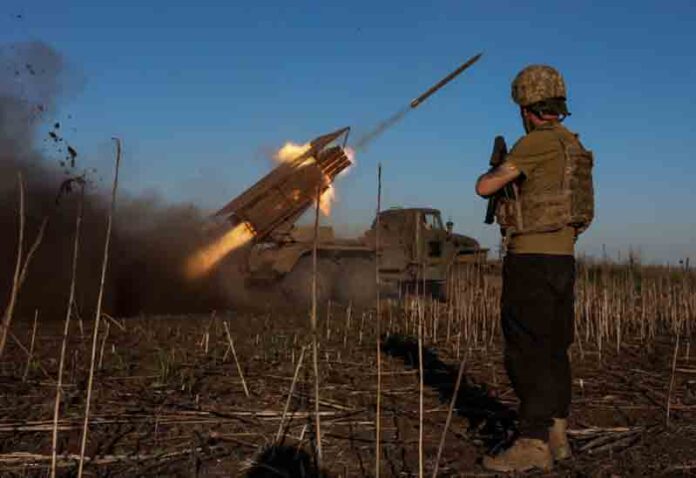
Ukrainian service members of the 25th Sicheslav Airborne Brigade fire a BM-21 Grad multiple rocket launch system towards Russian troops near the frontline town of Pokrovsk, amid Russia's attack on Ukraine, in Donetsk region, Ukraine.

By the end of 2025, global security had crossed a psychological threshold.
What once appeared as overlapping regional crises hardened into a single, interconnected system of conflict—where war, deterrence, economic coercion, cyber operations, and maritime competition blurred into a constant state of strategic confrontation. The events of 2025 did not merely continue earlier wars; they reshaped how power is exercised, alliances are tested, and conflict is managed in an era of permanent instability.

Ukraine War: From Battlefield Attrition to Geopolitical Deadlock

Image

The war in Ukraine entered its fourth year without resolution, but with profound strategic consequences. Russia consolidated control over parts of eastern and southern Ukraine, while Kyiv—backed by NATO—shifted toward a long-war posture built on drone warfare, precision strikes, and economic resilience.

Under President Vladimir Putin, Moscow framed the conflict as an existential struggle against Western encirclement. The return of Donald Trump to the White House fundamentally altered the diplomatic environment. Washington reopened discreet channels with the Kremlin, floating peace frameworks that hinted at territorial compromise—a move that unsettled European allies and deepened divisions within NATO.

Ukraine, while maintaining battlefield resistance, increasingly faced a strategic dilemma: survival through continued resistance versus a negotiated peace that could redefine European borders for generations.

Middle East: War Without Borders

Image

The Middle East in 2025 was defined not by a single war but by interconnected conflicts spanning Gaza, Lebanon, Syria, Iraq, and the Red Sea.

Israel’s war in Gaza expanded strategically, even as it remained geographically contained. The humanitarian toll intensified global diplomatic pressure, while Israel’s northern front with Hezbollah simmered just below full-scale war. Iran, avoiding direct confrontation, continued to project power through proxies—most visibly via the Houthis.

The Red Sea crisis became one of the year’s most consequential security events. Houthi attacks on commercial shipping forced the United States and its allies into sustained naval operations, transforming one of the world’s most vital trade arteries into a militarized zone. This marked a decisive shift: non-state actors demonstrated the ability to disrupt global commerce at strategic scale.

Indo-Pacific: The Quiet Militarisation of the World’s Future

Image

Image

While Europe and the Middle East burned openly, the Indo-Pacific became the world’s most heavily militarised silent theatre.

China intensified pressure on Taiwan through unprecedented air and naval activity, rehearsing blockade scenarios without crossing the threshold of war. The People’s Liberation Army Navy expanded its operational footprint from the South China Sea to the Indian Ocean, deploying submarines and surveillance vessels with growing regularity.

In response, the United States deepened security integration with Japan, Australia, India, and the Philippines. AUKUS moved from concept to capability planning, while QUAD naval cooperation became increasingly operational rather than symbolic. The region’s defining feature in 2025 was not conflict—but preparation for inevitability.

Red Sea and Maritime Security: The Global Commons Under Fire

Image

2025 marked the year maritime security returned to the centre of global defence planning. The weaponisation of chokepoints—from the Red Sea to the Taiwan Strait—exposed the fragility of global trade in an era of contested seas.

Navies increasingly focused on convoy protection, missile defence, and unmanned surface and underwater systems. Insurance costs soared, shipping routes lengthened, and energy markets absorbed repeated shocks. Control of the seas was no longer just about power projection—it became central to economic survival.

Technology and the New Face of War

Image

If 2022–24 introduced new technologies to war, 2025 normalised them.
Drones dominated battlefields from Ukraine to Gaza. Artificial intelligence shaped targeting, logistics, and intelligence fusion. Cyber operations quietly disrupted infrastructure, financial systems, and military command networks without triggering formal escalation.

War became cheaper, faster, and more deniable—lowering the threshold for violence while increasing its persistence. The distinction between war and peace eroded further.

Alliances Under Strain: NATO, Global South, and Strategic Autonomy

Image

NATO remained militarily united but politically strained. European states accelerated rearmament, increasingly aware that US security guarantees could no longer be assumed as unconditional. Meanwhile, much of the Global South resisted pressure to align fully with either bloc, opting instead for strategic hedging.

Defence cooperation increasingly intersected with trade, sanctions, energy, and technology access—turning security partnerships into complex transactional relationships rather than ideological alliances.

Conclusion: 2025 as the Point of No Return

By the close of 2025, the world was no longer transitioning toward a new security order—it was living inside one.
Wars did not end; they mutated. Deterrence did not fail; it fragmented. Diplomacy did not disappear; it became quieter, narrower, and more conditional.

The defining lesson of 2025 is stark: global security is no longer episodic—it is structural. The challenge ahead is not merely preventing the next war, but learning how to manage a world where conflict, coercion, and competition have become permanent features of international life.

If 2025 will be remembered for anything, it will be as the year the illusion of a post-conflict world finally collapsed.

Kremlin Confirms Contacts With Trump Administration After Receiving US Ukraine Peace Proposals

0

The Kremlin has confirmed that senior Russian officials have held direct contacts with members of the administration of US President Donald Trump following the delivery of American proposals related to a possible peace settlement in Ukraine.

Kremlin spokesman Dmitry Peskov said on Friday that Russian President Vladimir Putin’s foreign policy aide, Yuri Ushakov, held telephone conversations with several officials from the US administration. Peskov did not specify when the calls took place but said the contacts followed an internal review of the US proposals in Moscow.

According to the Kremlin, Putin’s investment and foreign policy envoy Kirill Dmitriev returned to Moscow with printed copies of the US peace proposals after meetings in Miami over the weekend. The documents are now being closely examined by Russian officials.

“The information was analysed, and on behalf of President Putin, contact took place between representatives of the administrations of Russia and the United States,” Peskov said. “It was agreed to continue the dialogue.”

Peskov declined to comment on Moscow’s assessment of the proposals, saying that public statements at this stage could undermine sensitive negotiations. He added that Russia preferred to keep discussions behind closed doors while diplomatic contacts continue.

Image

Meanwhile, Russia’s Kommersant newspaper reported that Putin recently told a group of senior Russian business leaders he might be open to a limited territorial exchange involving areas controlled by Russian forces in Ukraine, while insisting that Moscow seeks full control over the Donbas region.

Asked about the report, Peskov said the issue of a Ukrainian peace settlement was discussed only “in general terms” during the meeting and declined to provide further details on the substance of those conversations.

The confirmed contacts underscore renewed diplomatic engagement between Moscow and Washington at a critical moment in the war, even as both sides remain cautious about publicly outlining positions that could affect the fragile negotiations over a potential Ukraine peace deal.

India–US P-8I Poseidon Deal Stalls as Price Shock and Trade Tensions Spill Into Defence Ties

0

As 2025 draws to a close amid intensifying great-power competition in the Indo-Pacific, negotiations between India and the United States over the acquisition of six additional Boeing P-8I Poseidon maritime patrol aircraft remain frozen, trapped by a sharp cost escalation and a widening trade dispute that has begun to erode defence cooperation between Washington and New Delhi.

Once viewed as one of the most secure and operationally critical procurements for the Indian Navy, the P-8I expansion has become a test case for how inflation, tariff-driven economic pressure, and strategic mistrust can derail even mature military partnerships. Despite repeated high-level engagements involving senior US defence officials and Boeing executives, no breakthrough has emerged, reinforcing concerns in New Delhi that Washington’s Indo-Pacific rhetoric is increasingly at odds with its transactional trade posture.

The stalled deal now sits at the intersection of India’s maritime security needs, America’s economic statecraft, and China’s expanding naval footprint across the Indian Ocean Region. For the Indian Navy, the delay carries direct operational consequences, threatening surveillance gaps at a time when People’s Liberation Army Navy submarines and intelligence vessels are appearing with greater frequency near India’s maritime approaches.

A force multiplier under strain

The Boeing P-8I Poseidon has, for more than a decade, been the backbone of India’s maritime domain awareness. Derived from the US Navy’s P-8A but customised for Indian requirements, the aircraft integrates advanced radar, electro-optical sensors, sonobuoy processing, anti-submarine warfare (ASW) suites, torpedoes, and anti-ship missiles into a long-range, network-centric platform.

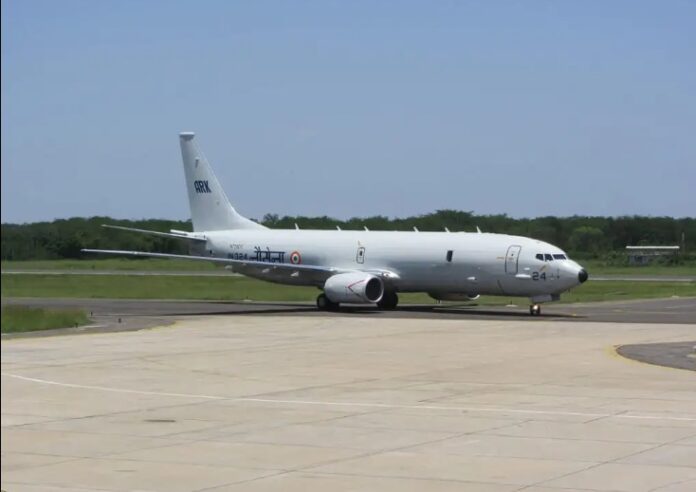
Indian P-8I Poseidon

India currently operates 12 P-8I aircraft, split between INS Rajali in Tamil Nadu and Goa. The Navy has long assessed that a minimum fleet of 18 aircraft is necessary to sustain continuous coverage across the Arabian Sea, Bay of Bengal, Andaman Sea, and critical chokepoints such as the Malacca Strait. The urgency has grown as Chinese nuclear-powered submarines, including Type-093 Shang-class boats, conduct longer and more complex patrols in the region.

Beyond maritime roles, the aircraft has demonstrated strategic versatility, including overland surveillance during the 2017 Doklam standoff, highlighting its value as a multi-domain intelligence platform rather than a purely naval asset.

Cost shock and trade fallout

At the heart of the impasse is a dramatic rise in projected costs. The deal, cleared under the US Foreign Military Sales framework in 2021 at about USD 2.42 billion, was revised in mid-2025 to nearly USD 3.6 billion—an increase of almost 50 percent. Indian defence planners privately describe the escalation as operationally unjustifiable and politically untenable, particularly given the absence of similar inflation in earlier P-8I acquisitions.

The dispute has been compounded by a broader trade confrontation after Washington imposed a 25 percent tariff on Indian imports in August 2025, citing New Delhi’s continued purchases of discounted Russian oil. US President Donald Trump publicly defended the move, while India dismissed it as a double standard, pointing to China’s larger Russian oil imports facing no comparable penalties.

The tariff decision has effectively poisoned the negotiating climate, prompting India’s Ministry of Defence to pause talks and review major US defence acquisitions. Analysts say the episode has exposed vulnerabilities in India’s reliance on FMS mechanisms, where limited pricing flexibility and US domestic industrial pressures can collide with long-term force-planning assumptions.

Strategic implications

For Washington, the stalemate risks undermining its image as India’s most reliable high-end defence partner at a moment when Beijing is actively offering alternative surveillance and maritime solutions to regional states on more flexible commercial terms. Strategically, the deadlock weakens Indo-Pacific deterrence narratives by signalling that economic leverage can override shared security objectives.

For India, the episode reinforces a doctrinal shift toward procurement diversification and accelerated indigenisation under the “Aatmanirbhar Bharat” policy. Without meaningful offsets, local assembly, or deeper industrial participation by Indian firms, the deal is unlikely to regain momentum.

While alternatives such as indigenous UAV programmes or platforms like Japan’s Kawasaki P-1 exist, analysts note that none match the P-8I’s operational maturity, sensor fusion, or interoperability with US and allied forces. As China’s naval shadow lengthens across the Indian Ocean, the fate of the P-8I negotiations has become a litmus test for whether India–US defence cooperation can withstand the pressures of transactional geopolitics—or whether economic disputes will continue to blunt a partnership central to balancing maritime power in the Indo-Pacific.
Israel Weighs Gaza Border Redraw Ahead of Netanyahu–Trump Talks, Report Says

0
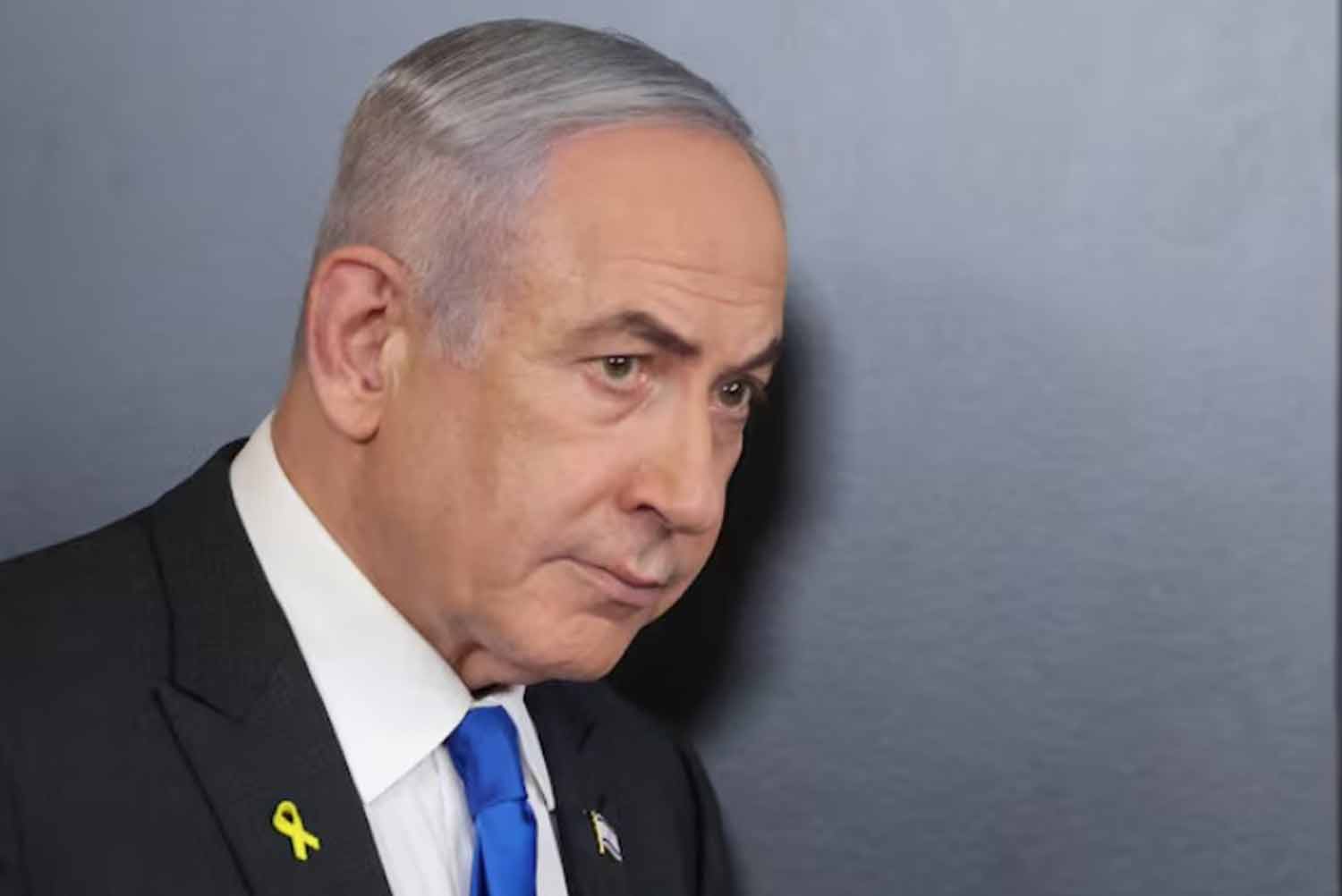
Prime Minister Benjamin Netanyahu

Israeli Prime Minister Benjamin Netanyahu is due to travel to the United States next week for talks with President Donald Trump, as intensive political and security-level discussions focus on the future of the Gaza Strip and the possibility of altering its borders.

According to Israel’s Walla news site, officials are examining whether to seek US backing to redraw the Israel–Gaza boundary by elevating the so-called “yellow line”—a military demarcation used during the war—into Israel’s new official border. Such a move would effectively annex large parts of Gaza, the report said.

What the “Yellow Line” Would Mean

Political sources cited by Walla said the proposal under discussion would annex territory up to the yellow line, while pursuing a parallel strategy to cut off Hamas economically until it loses control of the enclave. One source described the initiative as carrying a broader deterrent message for the future, framing it as punishment through territorial loss.

The yellow line reportedly covers around 58% of Gaza, including areas in Beit Hanoun, Beit Lahia, Khan Younis, and significant parts of Rafah. The concept under review would keep an ongoing Israeli military presence across roughly half of the territory.

Strategy, Risks and International Constraints

The same sources said the approach being discussed prioritises security control and demilitarisation over reconstruction, with the aim of exerting sustained pressure on Hamas. Analysts note, however, that such measures would face major legal, humanitarian and diplomatic hurdles, and would likely provoke strong opposition from regional actors and much of the international community.

Under the second phase of Trump’s broader framework, Israel would ultimately withdraw eastward to the current border line, according to the report. Yet regional diplomats assess that the chances of Arab states accepting the annexation of roughly half of Gaza are extremely low, if not impossible—casting doubt on whether any border change could secure regional or international endorsement.

Context: War, Borders and Diplomacy

The discussions come as Washington seeks to shape post-war arrangements for Gaza amid ongoing fighting and stalled ceasefire efforts. Any formal redrawing of borders would mark a dramatic departure from long-standing international positions that treat Gaza as occupied Palestinian territory, and could complicate US efforts to stabilise the region and rebuild a coalition with Arab partners.

The White House has not publicly commented on the report. Israeli officials have also avoided formal confirmation, underscoring that deliberations remain pre-decisional ahead of Netanyahu’s meeting with Trump.

Trump Administration Reviews Israel’s Military Edge Amid Proposed Arms Sales to Saudi Arabia and Qatar

0
F-35 jet lands on the USS Carl Vinson aircraft carrier during the Rim of the Pacific (RIMPAC) military exercises about 100 miles south of Oahu, Hawaii, U.S.

The Trump administration is reassessing Israel’s Qualitative Military Edge (QME) as it weighs potential high-value arms sales to Saudi Arabia and Qatar, a move that has raised concern in Israel over a possible shift in the Middle East’s military balance.

According to US and regional officials, discussions on QME in the context of defence deals with Gulf states have taken place over recent weeks. Senior US military officials have held a series of closed-door briefings on Capitol Hill with members of Congress, while a senior official from the State Department visited Israel last week in part to address Israeli concerns.

A US official familiar with the talks said the administration is likely preparing formal positions ahead of an expected meeting between Israeli Prime Minister Benjamin Netanyahu and US President Donald Trump, anticipated before the end of the year. Media reports say Netanyahu is expected to arrive in Florida on December 29.

Congress Briefed as Arms Talks Advance

An Arab official confirmed that QME is under review as part of broader arms sales discussions with Riyadh and Doha, though he expressed doubt that a new understanding would be reached imminently. Lawmakers from the Senate Foreign Relations Committee and the House Armed Services Committee have been involved in the Capitol Hill consultations.

Meanwhile, a senior official from the State Department’s Bureau of Political-Military Affairs, which oversees US arms transfers, travelled to Israel last week for talks that included Israel’s qualitative military advantage.

US Senator Lindsey Graham also met Netanyahu on Sunday. While Graham did not publicly address arms sales, he said discussions covered Hamas and Hezbollah’s rearmament and Iran’s ballistic missile programme.

F-35 Sales at the Center of the Debate

The administration is considering two major arms packages for Saudi Arabia and Qatar. Trump confirmed during a November meeting with Saudi Crown Prince Mohammed bin Salman that Washington plans to sell F-35 fighter jets to the kingdom, acknowledging that Israel has pressed for Riyadh to receive a less advanced configuration than Israel’s own fleet.

“I know they [Israel] would like you to get planes of reduced calibre,” Trump said at the time. “I think they are both at a level where they should get top of the line.”

Israeli media have also reported US-Qatar talks on a possible F-35 sale, prompting concerns in Jerusalem that a surge in advanced arms transfers to Arab states could erode Israel’s long-standing military superiority.

Balancing Trump’s Style With Congressional Power

The Trump administration is also finalising a broader US-Saudi defence agreement that officials say could accelerate transfers of more sophisticated weapons. The deal has yet to be signed by US Defence Secretary Pete Hegseth and has been kept largely out of public view as the White House works to line up congressional support.

Although Trump has often sidelined Congress on military matters, any major arms sale ultimately requires navigating Capitol Hill. Under long-standing convention, senior lawmakers on foreign relations committees can place informal holds on weapons transfers — a power that has previously delayed even sales to Israel itself.

Why QME Matters

Israel’s Qualitative Military Edge — the principle that it must maintain superior military capabilities over regional adversaries — dates back to the Cold War. It was formally codified into US law in 2008, requiring periodic reviews of arms sales to Arab states.

Israel receives uniquely customised versions of US weapons systems, including the F-35I Adir, which it has modified to extend range and maintain stealth. These adaptations, Israeli officials argue, are critical to preserving deterrence, particularly against Iran.

As Washington explores reshaping defence ties with Gulf partners, the renewed scrutiny of QME highlights the delicate balancing act facing the Trump administration: expanding strategic partnerships in the Middle East without undermining Israel’s long-standing military advantage.

Russia Unveils Plan to Build Nuclear Power Plant on the Moon by 2036

0

Russia has announced plans to construct a power plant on the Moon within the next decade to support its lunar exploration ambitions and a joint research base with China, as global powers intensify competition to establish a long-term presence on Earth’s only natural satellite.

Russia’s state space agency Roscosmos said it aims to complete the lunar power facility by 2036, signing a contract with the Lavochkin Association to carry out the project. The energy installation is intended to supply electricity for Russia’s lunar programme, including robotic rovers, a scientific observatory and infrastructure for the International Lunar Research Station, a joint initiative with China.

Roscosmos described the project as a shift from short, one-off missions toward permanent scientific operations on the Moon, calling it a critical step toward sustained exploration.

Implied Nuclear Technology

While Roscosmos stopped short of explicitly stating that the lunar power plant would be nuclear, it confirmed that the project involves Rosatom and the Kurchatov Institute, strongly suggesting the use of nuclear technology to generate power in the Moon’s harsh environment.

Roscosmos chief Dmitry Bakanov said earlier this year that deploying a nuclear power plant on the Moon was among the agency’s strategic goals, alongside renewed ambitions to explore Venus, often described as Earth’s “sister planet.”

Reasserting Space Ambitions

Russia has long prided itself on its space heritage dating back to Yuri Gagarin, who became the first human to travel into space in 1961. However, Moscow’s standing in space exploration has slipped in recent decades, as the United States and China have surged ahead with ambitious lunar and deep-space programmes.

The setback was underscored in August 2023, when Russia’s unmanned Luna-25 spacecraft crashed into the Moon during a landing attempt. At the same time, commercial launch innovations led by Elon Musk have transformed space access, eroding an area once dominated by Russian expertise.

A New Lunar Race

The Moon, located about 384,400 kilometres from Earth, plays a crucial role in stabilising Earth’s axial tilt and driving ocean tides. As interest grows in using the Moon as a staging ground for deeper space missions, major powers are increasingly focused on building sustainable infrastructure — including reliable power sources — beyond Earth.

If realised, Russia’s lunar power plant would mark one of the most ambitious off-world energy projects ever attempted, signalling Moscow’s determination to reassert itself in the emerging global race for lunar exploration.

Ukraine Secures Limited Gains in Revised US Peace Plan as Russia Holds Firm on Territory

0
Ukraine's President Volodymyr Zelenskiy speaks with U.S. President Donald Trump via a phone line, amid Russia's attack on Ukraine, in Kyiv.

Ukraine has won several key concessions in the latest US-led draft framework aimed at ending Russia’s invasion, President Volodymyr Zelensky said, even as fundamental disagreements over territory and Moscow’s likely acceptance continue to cloud prospects for a deal.

The 20-point plan, negotiated by US and Ukrainian officials and now under review in Moscow, softens earlier provisions that Kyiv viewed as red lines. However, the Kremlin is widely expected to resist abandoning its maximalist demands, including a full Ukrainian withdrawal from occupied eastern regions.


Zelensky acknowledged during a two-hour briefing with journalists that he “does not like” all elements of the document. Still, Kyiv succeeded in removing requirements for an immediate pullback from Donetsk and clauses that would have formally recognised Russian sovereignty over territory seized by Moscow’s forces. The revised text also drops demands that Ukraine legally renounce its bid to join NATO.

Demilitarised Zones, Delayed Decisions

While the plan does not mandate troop withdrawals, it opens the door to future redeployments and the creation of demilitarised zones, including in parts of Donetsk still under Ukrainian control. Zelensky said the latest draft would treat current troop positions in Donetsk, Luhansk, Zaporizhzhia and Kherson as a de facto line of contact, pending further talks.

“A working group will convene to determine the redeployment of forces necessary to end the conflict, as well as to define the parameters of potential future special economic zones,” Zelensky said, reading from an annotated copy of the proposal.

He added that Washington is seeking compromise formulas — such as demilitarised or free economic zones — to bridge the gap between Kyiv’s refusal to cede land and Moscow’s insistence on withdrawals.

US Pressure, Russian Intransigence

US President Donald Trump is pressing both sides to conclude a deal to end the four-year war triggered by Russia’s full-scale invasion in 2022. The conflict has killed tens of thousands, devastated eastern Ukraine and displaced millions, while Russian forces continue to advance and strike cities and energy infrastructure with nightly missile and drone attacks.

Moscow claimed in 2022 to have annexed Donetsk, Luhansk, Kherson and Zaporizhzhia — in addition to Crimea, seized in 2014. President Vladimir Putin has shown little sign of compromise, reiterating demands for sweeping Ukrainian withdrawals and political concessions that Kyiv and European allies describe as capitulation.

Zelensky conceded Ukraine could face painful choices if US military support were curtailed. Any agreement involving troop pullbacks or special economic zones would require approval via a national referendum, he said.

NATO, Nuclear Plant, Elections

On NATO, Zelensky reiterated that Ukraine has not altered its constitutional path toward membership, though prospects remain slim after Washington ruled out near-term accession. Moscow has long cited NATO expansion as a core grievance.

The plan also envisages joint US-Ukrainian-Russian management of the Russian-occupied Zaporizhzhia nuclear power plant — a provision Zelensky opposes, saying he does not want Russian oversight. He added that presidential elections would be held only after an agreement is signed, despite pressure from both Moscow and Washington.

Russia has yet to comment publicly on the revised draft. Earlier direct talks in Istanbul failed to break the deadlock, and despite intensified diplomacy, the two sides’ positions remain far apart.