Saturday, June 6, 2026
Home Blog Page 24

Pakistan Army Team Spirit 2026 Begins at NCTC Pabbi with 24 International Teams

0
The opening ceremony of the 9th International Pakistan Army Team Spirit (PATS) Competition–2026 was held at the National Counter Terrorism Centre (NCTC), Pabbi, aimed at enhancing military-to-military cooperation amongst contingents from friendly forces.

The opening ceremony of the 9th International Pakistan Army Team Spirit (PATS) Competition–2026 was held at the National Counter Terrorism Centre Pabbi, marking the start of a 60-hour long patrolling exercise designed to strengthen military-to-military cooperation among friendly nations.

According to a statement issued by Inter-Services Public Relations, the inaugural event was attended by a senior officer and formally launched one of Pakistan Army’s flagship multinational professional military competitions.

Strong International Participation

This year’s PATS competition has drawn 24 international teams from 19 friendly countries, along with military observers, reflecting Pakistan’s expanding defence engagement and training cooperation.

Participating countries include Bahrain, Bangladesh, Belarus, Egypt, Iraq, Jordan, Kingdom of Saudi Arabia, Malaysia, Maldives, Morocco, Nepal, Qatar, Sri Lanka, Türkiye, United States of America, and Uzbekistan. In addition, Indonesia, Myanmar, and Thailand are taking part as observers.

From Pakistan, 16 domestic teams from the Pakistan Army and the Pakistan Navy are participating, while observers from the Pakistan Air Force are also present.

A Realistic, High-Intensity Military Exercise

Pakistan Army Team Spirit is a mission-specific and task-oriented professional military exercise hosted annually in Pakistan. The competition places participating teams in a near real operational environment, requiring them to conduct demanding sub-tactical missions under physical and mental stress.

The exercise emphasizes:

  • Endurance and physical fitness
  • Mental resilience under pressure
  • Rapid decision-making
  • Small-unit tactics and leadership
  • Coordination in complex terrain

Participants are tested continuously over 60 hours, making PATS one of the most demanding patrolling competitions in the region.

Enhancing Interoperability and Professional Exchange

The primary aim of PATS is to promote perseverance through team spirit while sharpening core soldierly skills. The exercise also serves as a platform for interoperability, allowing participating forces to share best practices, innovative ideas, and operational experiences.

Military analysts note that PATS has become an important soft-power and defence-diplomacy tool for Pakistan, reinforcing its image as a professional military training hub, particularly in counter-terrorism and small-unit operations.

The continued participation of a wide range of countries—from the Middle East, South Asia, Central Asia, Europe, and North America—underscores the growing international relevance of the Pakistan Army Team Spirit competition.

Satellite Internet Becomes a Battlefield as Iran and Ukraine Expose Legal Gaps

0
Starlink logo is seen on a smartphone in front of displayed Ukrainian flag in this illustration.

Satellite internet has rapidly evolved from a commercial convenience into critical strategic infrastructure, a shift that became starkly visible in early 2026 amid crises in Iran and Ukraine. Events in both countries underscored a new reality: space-based connectivity is now firmly embedded in modern conflict and internal security operations.

Iran’s Internet Blackout and the Limits of Satellite Resilience

In January 2026, Iranian authorities imposed a nationwide internet blackout during mass protests, cutting off mobile data, broadband services, and most international connectivity in an effort to suppress dissent and control information flows.

During the initial phase of the shutdown, satellite-based internet—particularly Starlink—emerged as one of the few remaining channels for communication beyond Iran’s state-controlled networks. For activists and civilians, it briefly provided a digital lifeline.

That window quickly narrowed. Iranian authorities reportedly deployed advanced radio-frequency jamming systems to disrupt Starlink signals, causing severe packet loss and unstable connections consistent with military-grade electronic interference rather than routine congestion. In several areas, terminals became unusable altogether.

Security forces also reportedly confiscated satellite terminals during raids, reinforcing Tehran’s determination to eliminate alternative connectivity paths. The episode demonstrated that even resilient low-Earth-orbit (LEO) satellite constellations are vulnerable to sustained, state-level interference—and that satellite internet now sits squarely within the battlespace of internal security operations.

Ukraine: Starlink and the Weaponisation Dilemma

At roughly the same time, Starlink became the center of controversy in Ukraine. Ukrainian officials publicly stated that Russian forces were using Starlink terminals mounted on unmanned aerial vehicles to support long-range drone operations, including strikes on civilian infrastructure.

Ukraine’s defense establishment confirmed coordination with SpaceX to disable Starlink access on Russian drones once such usage was identified. SpaceX reiterated that its terms of service prohibit the use of Starlink on weapons systems and said it would take technical steps to prevent misuse when detected.

Regardless of intent, the outcome was clear: a private U.S. company made operational decisions with immediate battlefield consequences in an active armed conflict.

Image

From Service Provider to Strategic Actor

For military planners, the implications are profound. Commercial satellite providers are no longer passive enablers of connectivity; they are actors whose technical and policy decisions can shape tactical and operational outcomes.

This shift exposes deep weaknesses in existing legal and governance frameworks. The Outer Space Treaty establishes broad principles such as peaceful use and state responsibility for national space activities, but it does not address radio-frequency jamming, cyber interference, or the denial of satellite services during conflict.

International humanitarian law requires distinction between civilian objects and military objectives. Yet commercial satellite systems routinely serve both civilian and military users simultaneously. A Starlink terminal may enable civilians to communicate during a blackout—and minutes later support military command, control, or targeting. Existing law offers no clear threshold for when such systems become lawful military objectives.

The Tallinn Manual reflects this uncertainty, acknowledging that states disagree on when cyber or electronic interference constitutes a prohibited use of force and stressing that the manual itself is non-binding.

A Governance Vacuum in Space

The Iran and Ukraine cases also highlight a deeper governance problem: private companies now control infrastructure essential to both civil society and military operations, yet international law primarily regulates states.

When SpaceX restricts access to prevent hostile use, it exercises power traditionally reserved for governments—but without the transparency, accountability, or legal constraints imposed on state actors. U.S. export control regimes regulate satellite technology transfers, but they were never designed for real-time service denial decisions during active hostilities.

As a result, private operators operate in a legal gray zone, guided largely by corporate policy rather than coherent national or international standards.

What Comes Next

The lesson is not that commercial satellite systems are unreliable. On the contrary, they are now indispensable—and exposed. Future conflicts are increasingly likely to target connectivity rather than territory, with satellite networks as prime objectives.

Without updated legal norms, states will continue to jam, spoof, and interfere with space-based systems while denying that such actions cross established legal thresholds.

For the United States and its allies, this reality demands:

  • Formal integration of commercial space providers into military planning
  • Clear doctrine for protecting and defending space-based communications
  • Sustained diplomatic efforts to establish binding international norms against indiscriminate interference with satellite infrastructure

Space is already contested. The law governing it remains dangerously underdeveloped.

U.S.–Iran Nuclear Talks Set for Turkey as Trump Mixes Threats and Diplomacy

0

Nuclear talks between United States and Iran are expected to take place in Turkey on February 6, according to officials from both sides speaking on condition of anonymity, marking a potentially significant opening in one of the Middle East’s most volatile diplomatic standoffs.

The move follows a directive by Iranian President Masoud Pezeshkian, who ordered preparations for talks with Washington amid escalating rhetoric from U.S. President Donald Trump, including warnings that “bad things” would happen if a deal is not reached.

Iran Signals Conditional Willingness for Talks

In a statement posted on social media, President Pezeshkian said Iran was responding not only to U.S. overtures but also to appeals from friendly regional countries urging restraint and diplomacy.

He instructed Iran’s foreign minister to prepare the groundwork for what he described as “equitable and fair negotiations,” provided the talks take place in an atmosphere free from threats and “unreasonable expectations.”

Tehran has repeatedly stressed that it prefers diplomacy, while simultaneously warning that any military aggression would trigger a decisive and unrestricted response.

Trump’s Dual Message: Negotiation and Threat

President Trump, meanwhile, has maintained that he remains hopeful of reaching an understanding with Iran, saying Washington could “work something out.” At the same time, he has issued open-ended warnings, stating that failure to reach a deal would lead to unspecified consequences.

Analysts see this as a familiar Trump tactic—applying psychological pressure while avoiding explicit commitments. Rather than outlining specific actions, Trump leaves the threat deliberately vague, allowing uncertainty itself to become a tool of leverage.

This approach gives Washington maximum flexibility, preserving military, economic, and diplomatic options while shifting the burden of escalation onto Tehran.

Iran’s Foreign Minister Sees Path to Agreement

Iranian Foreign Minister Abbas Araghchi expressed cautious optimism in an interview with CNN, saying a nuclear deal remains achievable if the U.S. negotiating team adheres to Trump’s stated goal of fairness.

“If the U.S. comes to a fair and equitable deal to ensure that there is no nuclear weapon, I am confident that we can achieve an agreement,” Araghchi said, reinforcing Tehran’s long-standing claim that its nuclear programme is not aimed at weaponisation.

Regional Voices Urge De-Escalation

Concern about renewed confrontation is growing across the Middle East. Speaking at a panel during the World Governments Summit in Dubai, Anwar Gargash, diplomatic adviser to the UAE president, warned that the region cannot afford another crisis.

“The Middle East has gone through various calamitous confrontations. We don’t need another one,” Gargash said, calling for direct U.S.–Iranian negotiations to prevent recurring tensions that destabilise the region.

Pressure Without Decision: What Is Washington Really Doing?

Despite rising U.S. military deployments in the region, there is little indication that Trump has made a final decision on military action. Instead, current moves suggest a calibrated strategy:

  • Threat without commitment, keeping adversaries guessing
  • Psychological pressure through ambiguity
  • Public emphasis on negotiations, paired with coercive messaging
  • Deliberate open-ended warnings, designed to heighten uncertainty

In practical terms, this signals that Washington is building leverage for a deal rather than preparing for immediate conflict—while ensuring it retains freedom of action if talks collapse.

Bottom Line: Deal or Dangerous Uncertainty

The emerging message from Washington appears stark: Iran is being offered negotiations under pressure rather than guarantees. Trump’s implicit calculation is that sustained uncertainty—political, economic, and military—may be more destabilising for Tehran than compromise.

As February 6 approaches, the talks in Turkey could become a pivotal moment. Success may ease regional tensions and revive diplomacy; failure could deepen instability in an already fragile Middle East.

USS John F. Kennedy Takes to Sea as Navy Pushes Next-Generation Carrier Fleet

0
USS John F. Kennedy

The United States Navy’s newest aircraft carrier, USS John F. Kennedy (CVN-79), has departed the Newport News Shipbuilding yard in Virginia and entered open waters for its first sea trials, marking a critical milestone before eventual commissioning into operational service.

CVN-79 is the second carrier of the Gerald R. Ford–class, a new generation of nuclear-powered aircraft carriers designed to replace the ageing Nimitz-class aircraft carriers, which have formed the backbone of U.S. naval aviation since the mid-1970s.

What Sea Trials Mean

The initial sea trials are designed to test the carrier’s propulsion, navigation, power generation, and basic shiphandling at sea. Engineers and naval crews will assess reactor performance, hull integrity, steering systems, and onboard sensors before the ship returns to port for further outfitting and refinements.

Unlike flight trials, these early tests focus on the ship as a maritime platform rather than on aircraft operations, which will follow in later phases.

Image

A Key Platform in U.S. Naval Modernization

The USS John F. Kennedy represents a major evolution in carrier design. Measuring 337 meters in length with a flight deck width of 78 meters and a full displacement of approximately 100,000 tons, the carrier is among the largest warships ever constructed.

Designed for a 50-year service life, CVN-79 can operate more than 80 aircraft and helicopters, including fifth-generation fighters, airborne early-warning aircraft, electronic warfare platforms, and support helicopters.

As part of the Ford class, the ship incorporates advanced technologies intended to increase sortie rates, reduce crew workload, and lower long-term operating costs compared to Nimitz-class carriers.

Lessons from the First Ford-Class Carrier

The lead ship of the class, USS Gerald R. Ford (CVN-78), faced years of technical challenges related to new systems such as the electromagnetic aircraft launch system (EMALS) and advanced arresting gear.

According to U.S. Navy officials, many of those early issues have informed design improvements and production refinements on CVN-79, allowing the John F. Kennedy to progress more smoothly toward operational readiness.

Strategic Importance

Aircraft carriers remain central to U.S. power projection, crisis response, and deterrence strategy. With rising competition from near-peer rivals and growing emphasis on maritime operations in the Indo-Pacific and Middle East, the Ford-class carriers are intended to provide sustained airpower, survivability, and flexibility well into the second half of the 21st century.

The departure of USS John F. Kennedy for sea trials signals not just progress on a single ship, but momentum in the U.S. Navy’s broader effort to modernize its carrier fleet amid an evolving global security environment.

Pakistan, Libya Discuss Security Cooperation During High-Level GHQ Meeting

0

Field Marshal Khalifa Abu-al-Qasim Haftar, Commander-in-Chief of the Libyan Arab Armed Forces, along with Osama Saad Hammad, Prime Minister of Libya’s Government, called on Syed Asim Munir, Chief of Army Staff (COAS) and Chief of Defence Forces (CDF), at General Headquarters (GHQ), Rawalpindi, according to a statement issued by Inter-Services Public Relations.

During the meeting, both sides exchanged views on issues of mutual interest, with particular emphasis on regional security dynamics, evolving threat environments, and avenues for professional military cooperation. The engagement underscored the importance of sustained dialogue and institutional collaboration between the armed forces of Pakistan and Libya.

Expanding Defence Diplomacy

Field Marshal Asim Munir welcomed the Libyan delegation and reaffirmed Pakistan’s commitment to strengthening bilateral relations with Libya. He reiterated Islamabad’s support for peace, stability, and institutional capacity-building in Libya, particularly through defence cooperation, training, and professional military engagement.

The meeting comes as Pakistan’s military leadership has intensified outreach with regional and extra-regional partners, reflecting a broader strategy of defence diplomacy amid shifting geopolitical alignments across the Middle East, Africa, and South Asia. In recent months, COAS Asim Munir has held high-level engagements with military and political leaderships across the Gulf and wider region, positioning Pakistan as a professional security partner rather than a participant in regional rivalries.

Libya–Pakistan Security Context

Libya continues to face complex security challenges stemming from political fragmentation, militia activity, and regional interference. For Pakistan, engagement with Libyan authorities aligns with its longstanding policy of supporting state institutions, national armed forces, and UN-backed stabilization efforts without direct involvement in internal conflicts.

Pakistan and Libya share a history of cordial relations dating back decades, including cooperation in defence training and military professionalism. Analysts note that renewed engagement may open pathways for collaboration in areas such as counterterrorism training, institutional reform, and capacity-building for regular armed forces.

Ceremonial Reception at Noor Khan Airbase

Earlier, upon arrival at Noor Khan Airbase, Field Marshal Haftar was received by COAS Asim Munir. The Libyan commander later paid homage to Pakistan’s martyrs and laid a wreath at the martyrs’ memorial at GHQ, reflecting mutual respect and longstanding goodwill between the two countries’ armed forces.

The meeting was held in a cordial and constructive atmosphere, reinforcing the depth of Pakistan–Libya relations and signalling intent to maintain regular high-level military-to-military engagement.

India’s Defence Push Gets Funding Boost, but Key Capabilities Remain Years Away

0
Kaveri engine fitted on an IL-76 flying test bed in Russia

India’s defence research establishment has welcomed the Union Budget 2026 as a turning point, but a closer reading of recent remarks by Samir V Kamat, Chairman of the Defence Research and Development Organisation, suggests that while funding momentum is real, delivery timelines remain long and risks unresolved.

Speaking to ANI, Kamat described the budget as “very good” for indigenous defence development, highlighting a capital outlay of ₹1.39 lakh crore for indigenous systems and an overall defence capital budget of ₹2.19 lakh crore. DRDO itself has received a 15.6 percent increase in its capital budget—undoubtedly a significant boost for research and development.

However, increased allocation does not automatically translate into near-term capability, especially in areas where India has historically struggled.

Aero-Engines: Strategic Priority, Strategic Delay

Kamat confirmed that aero-engine development remains DRDO’s top priority, calling it a “long-drawn process” that typically takes 10–13 years globally to mature. Even if India’s Cabinet Committee on Security clears a new engine program in 2026, integration readiness is projected only by 2035–2036.

This timeline exposes a critical dependency gap. India’s fifth-generation Advanced Medium Combat Aircraft (AMCA) will rely on imported General Electric F414 engines for its first two squadrons, with indigenous powerplants arriving—at best—a decade later.

While this approach avoids delaying AMCA induction, it also reinforces a pattern where self-reliance is postponed rather than synchronized with platform development.

Kaveri: Partial Success, Persistent Shortfall

The Kaveri engine, once envisioned as the heart of India’s fighter aviation, remains a cautionary tale. Kamat acknowledged that the engine delivers 72 kN of thrust, falling well short of the 83–85 kN required for the Light Combat Aircraft Tejas.

As a result, Kaveri will not power any manned frontline fighter. Instead, a non-afterburning derivative is planned for India’s future unmanned combat aerial vehicle (UCAV).

While this salvages some value from decades of investment, it also underscores a hard reality: India’s flagship indigenous engine has yet to meet the demands of modern fighter aviation.

Hypersonic Missile Ambitions: Promising but Unproven

On the Long-Range Anti-Ship Hypersonic Missile, Kamat struck a confident tone, calling it a potential “gamechanger.” Two development trials have been completed, with a third planned before user evaluation.

If inducted, the missile is expected to exceed the speed and range of BrahMos, significantly enhancing India’s maritime strike capability.

Yet hypersonic systems are among the most complex weapons ever developed. Transitioning from controlled trials to operational reliability—especially against modern naval defences—remains a steep challenge. A land-attack variant and an air-launched version are still at earlier stages, pushing full-spectrum capability further into the future.

Deep Tech Focus: Necessary, but Diffuse

DRDO’s stated focus on AI/ML, quantum technologies, and advanced materials reflects global defence trends. These technologies are indeed foundational—but critics argue that DRDO’s challenge has never been identifying the right domains, but converting research into deployable systems at scale.

Without tighter program management, clearer milestones, and stronger private-sector integration, deep-tech ambitions risk remaining enablers rather than outcomes.

The Core Question: Money vs. Momentum

The 2026 budget clearly strengthens India’s defence R&D ecosystem. But Kamat’s own timelines reveal a structural issue: most headline capabilities—aero-engines, hypersonic weapons, UCAVs—will mature well into the 2030s.

For a country facing immediate and evolving security challenges, this raises uncomfortable questions:

  • Can India afford decade-long development cycles for critical technologies?
  • How long can interim dependence on foreign engines and systems continue?
  • And will higher budgets finally translate into faster induction—or simply better-funded delays?

The answers will determine whether Budget 2026 becomes a genuine inflection point, or just another chapter in India’s long quest for defence self-reliance.

U.S. EA-18G Growlers Deployed to Jordan with Advanced Jamming Pods

0

The deployment of two EA-18G Growler electronic attack aircraft to a Jordanian air base is drawing close attention from defense analysts, as it signals a potential shift toward electronic warfare–enabled air operations in the Middle East.

According to available imagery and flight data, one Growler arrived equipped with the legacy ALQ-99 electronic warfare pod, while the second carried the newer ALQ-249 Next Generation Jammer (NGJ)—a combination that provides both proven and next-generation jamming capabilities against modern air-defense systems.

Electronic Warfare at the Center of Operations

The ALQ-99 pod has long been the backbone of U.S. airborne electronic attack, designed to jam enemy radars, disrupt surface-to-air missile (SAM) guidance, and reduce the likelihood of aircraft detection and missile lock-on.

In contrast, the ALQ-249 NGJ represents a major leap forward. The system offers significantly stronger jamming power, faster threat identification, digital beam steering, and improved effectiveness against modern, networked air-defense environments. It is specifically designed to counter advanced radar systems and integrated air-defense networks.

The presence of both pods suggests not a training detachment, but an operationally flexible electronic warfare posture—capable of suppressing both legacy and advanced air-defense threats.

Why Jordan Matters

Jordan occupies a strategically critical position bordering Syria, Iraq, and within operational reach of Iran and its regional proxies. U.S. use of Jordanian bases provides depth, political insulation, and rapid access to multiple theaters without relying solely on Gulf installations.

Defense analysts note that forward-deploying Growlers to Jordan strongly suggests that any future air operations could be launched from this axis, particularly if suppression of enemy air defenses (SEAD) and electronic attack are expected to be decisive.

Likely Strike Architecture

Based on current deployments and regional force posture, any strike package operating from Jordan would likely include:

  • F-15E Strike Eagle for heavy precision strike
  • F-35 Lightning II for stealth penetration and targeting
  • EA-18G Growlers for radar suppression and electronic attack
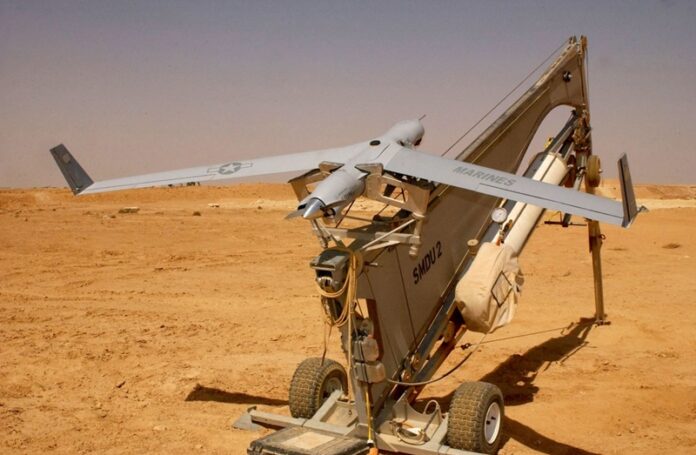
  • Uncrewed aerial systems (UAS) for ISR, decoy, and battle damage assessment

In such an architecture, Growlers would operate ahead of or alongside strike aircraft, degrading radar coverage, disrupting command-and-control links, and opening corridors through defended airspace.

A Broader Regional Signal

The arrival of Growlers equipped with the ALQ-249 NGJ also reflects Washington’s emphasis on maintaining escalation dominance without immediately resorting to large-scale force. Electronic warfare allows the U.S. to neutralize adversary capabilities temporarily, impose uncertainty, and retain flexibility while sending a clear deterrence signal.

The deployment comes amid heightened regional tensions, increased U.S. concern over air-defense proliferation, and growing reliance on layered electronic and cyber effects in modern warfare.

While no official confirmation of imminent strike operations has been issued, the composition and location of these assets indicate that the U.S. is preparing the battlespace—ensuring that if kinetic action is required, enemy sensors and air defenses can be blinded, disrupted, or suppressed from the opening moments.

U.S. Air Force Conducts Successful Live-Warhead Test of ERAM Cruise Missile

0

The United States Air Force has successfully conducted a live-warhead test of its Extended Range Attack Munition (ERAM) during a demonstration at the Eglin Test and Training Range, marking a major milestone for the program less than 16 months after the initial contract award.

According to the Air Force, the test achieved all primary objectives, including full warhead detonation, while collecting high-fidelity performance data required to mature the weapon system. The demonstration forms part of ERAM’s accelerated development pathway, aimed at delivering a new long-range strike capability to operational units on a compressed timeline.

Image

Industry Partnership and “Rusty Dagger” Validation

Defense firm Zone 5 Technologies confirmed it supported the Air Force during the live-fire event, stating that the test validated the maturity of its “Rusty Dagger” concept, which underpins ERAM’s design philosophy.

Company officials said the demonstration proved the system’s readiness as a next-generation, affordable long-range strike solution, highlighting the effectiveness of close collaboration between industry and the Air Force in rapidly advancing critical technologies.

Accelerated Development at the “Speed of Relevance”

Air Force officials described the test as a new benchmark, noting that ERAM advanced from contract award to live-warhead testing in under two years. The pace reflects the service’s emphasis on delivering combat-ready capabilities at what it terms the “speed of relevance,” particularly as it prepares for high-end conflicts.

ERAM is a next-generation, air-launched cruise missile designed to deliver precision standoff strikes against high-value fixed targets. The system is intended to provide what the Air Force calls “affordable mass”—allowing commanders to deploy large numbers of long-range weapons without relying solely on more expensive legacy munitions.

Addressing Long-Range Strike Capacity Gaps

By prioritizing cost control and rapid producibility, the ERAM program aims to close gaps in long-range strike inventories at a time when sustainment and depth of stockpiles are becoming critical planning factors. The missile is designed for mass production while maintaining sufficient range and accuracy to operate against defended targets.

Brig. Gen. Robert Lyons III, Portfolio Acquisition Executive for Weapons, said the program demonstrates that lethal and cost-effective capabilities can be delivered rapidly by streamlining processes and empowering development teams.

Image

Testing, Data Collection, and Next Steps

The test was executed through a coordinated effort involving the Air Force Life Cycle Management Center’s Armament Directorate, the 96th Test Wing, and multiple industry partners. Engineers and test conductors at Eglin’s Central Control Facility planned and executed the mission, with data captured using the range’s advanced instrumentation and tracking systems.

Officials said the data will be used to validate ERAM’s performance and inform upcoming development phases, including potential production decisions. Conducting live-warhead testing at this stage is intended to reduce technical risk before the system is fielded to operational units.

Brig. Gen. Mark Massaro, commander of the 96th Test Wing, said the future battlefield demands cost-effective, attritable weapons that allow commanders to generate mass and maintain operational advantage—making ERAM a key component of the Air Force’s evolving strike doctrine.

Why Iran’s Shahed Drone Stockpile Is a Strategic Game-Changer

0
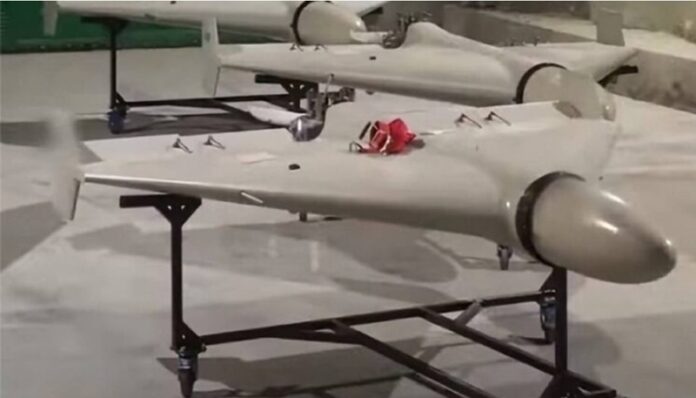
Shahed Kamikaze drone

Claims that Iran possesses an operational stockpile of up to 80,000 Shahed loitering munitions, supported by a reported production rate of around 400 drones per day, have elevated Tehran’s unmanned warfare capability into a central factor shaping regional and global military planning.

If accurate, these figures would place Iran at the apex of global loitering-munition inventories—far beyond any other state actor—and signal a decisive shift from symbolic drone use toward industrial-scale endurance warfare.

Image

From Tactical Weapon to Strategic Arsenal

The assessment gained traction after widely circulated reports citing Israeli estimates that Iran is producing hundreds of Shahed-class drones daily and has accumulated tens of thousands ready for deployment. Such a force would represent not merely a large arsenal, but a doctrinal transformation in how drones are used—as instruments of sustained pressure rather than precision strike alone.

Battlefield experience reinforces these concerns. Ukrainian wartime disclosures have shown how Shahed-derived systems, when employed at scale, can maintain daily attack tempos that exhaust air-defence systems and strain national infrastructure. The operational lesson is clear: quantity and persistence can offset technological inferiority.

Why the Shahed-136 Matters

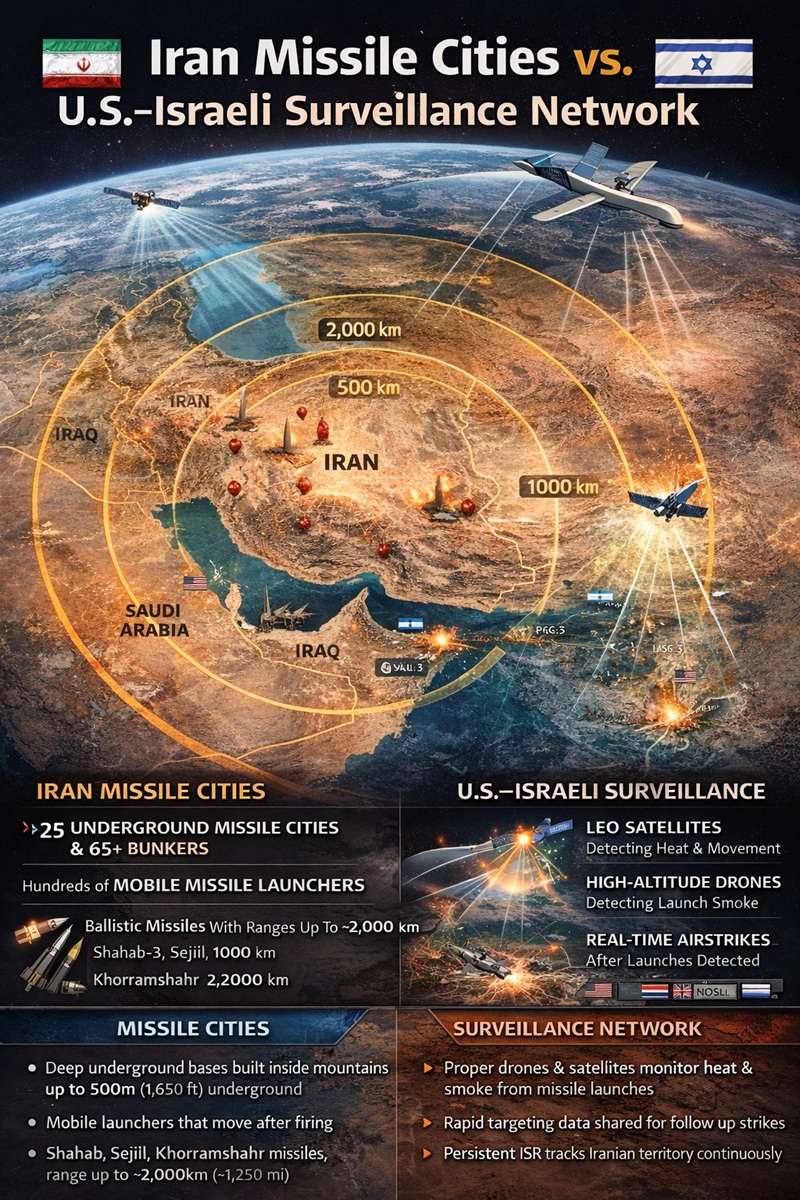
At the centre of this capability is the Shahed-136, engineered for manufacturability, range, and cost efficiency rather than sophistication. With an estimated range exceeding 2,000 kilometres and a warhead capable of damaging economically critical infrastructure, the platform is designed to impose cumulative costs on defenders.

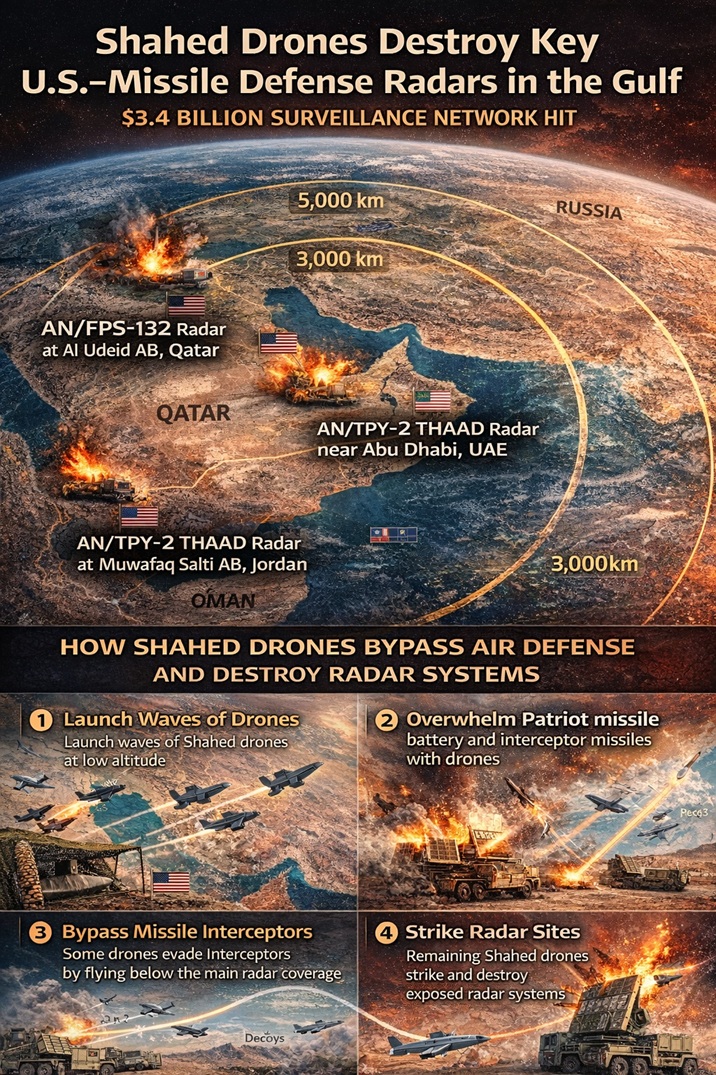
Powered by a simple piston engine and guided by basic inertial navigation, the Shahed prioritises ease of production and resilience under sanctions. Unit costs—estimated far below those of interceptor missiles—create highly unfavourable exchange ratios, forcing defenders to spend vastly more to stop each incoming drone.

Industrial Scale and Endurance Warfare

If Iran can sustain production approaching 400 units per day, annual output would exceed 140,000 drones—an extraordinary figure for a sanctioned economy. Such capacity implies a distributed manufacturing ecosystem, multiple assembly sites, modular components, and stockpiled airframes ready for rapid activation during crises.

This approach reflects Iran’s long-standing industrial philosophy: dispersion, redundancy, and rapid iteration based on battlefield feedback. The result is not just replenishment during conflict, but the ability to expand inventories even under sustained attack.

Strategic Implications for the Middle East and Beyond

An inventory measured in tens of thousands enables Iran to conduct prolonged saturation campaigns across multiple theatres simultaneously. In the Gulf, this could target ports, desalination plants, and energy infrastructure. Against Israel, drone waves could be designed to deplete interceptor stocks before higher-end missile salvos. In the Levant, coordinated launches from Iran and proxy territories could compress response timelines and overwhelm layered defences.

Even interception rates above 80 percent would still allow hundreds of drones through during mass launches, shifting the definition of air-defence success from interception percentages to long-term endurance.

Image

A Global Wake-Up Call on Defence Economics

Beyond physical damage, a mass Shahed arsenal functions as a tool of strategic coercion. Persistent drone pressure imposes psychological strain, economic disruption, and continuous high-alert postures that degrade readiness over time. The real battleground becomes industrial capacity and stockpile depth, not individual platform performance.

For Asia, the implications are profound. From South Asia to East Asia and Southeast Asia, loitering munitions challenge air-defence architectures optimised for ballistic and cruise missiles. The lesson is that future resilience depends on cheap interceptors, electronic warfare, distributed sensors, rapid repair, and shared stockpiles, not solely on exquisite systems.

A Structural Shift in Warfare

Whether Iran ultimately possesses exactly 80,000 Shahed drones or a smaller number, the strategic direction is unmistakable. Warfare is shifting toward manufacturing-versus-magazine competition, where endurance, economics, and psychological pressure matter as much as precision.

States that adapt early—by making defence cheaper, more distributed, and more repairable—will remain resilient. Those that do not risk being strategically coerced by an adversary that can simply keep drones in the sky night after night.

From F-35s to Warships: Inside America’s Latest Military Buildup Near Iran

0

The United States has significantly expanded its military presence across the Middle East in recent weeks, deploying additional air, naval, and intelligence assets amid rising tensions with Iran and growing concerns over regional stability.

Defense officials and open-source tracking data indicate that the buildup is aimed at strengthening deterrence, improving force protection, and ensuring rapid response capability in the event of a wider regional escalation.
Expanded U.S. Air Force Operations

The United States Air Force has carried out an intensive airlift and reinforcement campaign to move personnel, equipment, and advanced platforms into the region.

More than 80 C-17 Globemaster III transport flights, supported by several C-5M Super Galaxy heavy-lift missions and multiple C-130 sorties, have been used to deliver troops and critical materiel to forward operating bases.

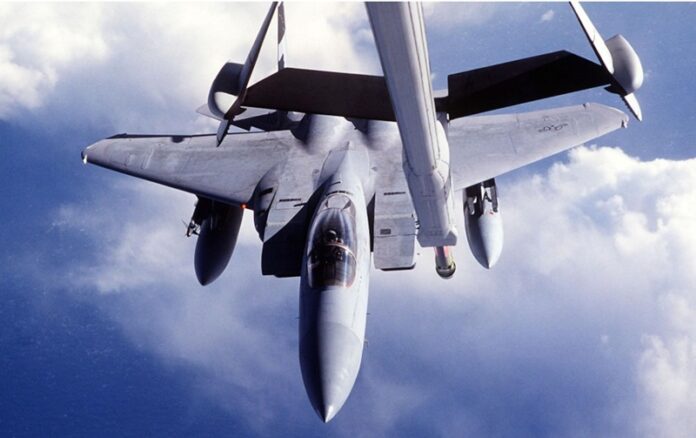
To sustain prolonged operations, the US has deployed up to 20 aerial refueling aircraft, including KC-135 Stratotankers and KC-46 Pegasus tankers. Search-and-rescue capability has also been reinforced with HC-130J aircraft, enhancing personnel recovery in contested environments.

In the intelligence and command domain, the Air Force has positioned E-11A BACN aircraft to provide airborne communications and battle management, ensuring connectivity across dispersed forces. Signals intelligence and electronic surveillance capabilities have been strengthened with the deployment of RC-135 Rivet Joint aircraft.

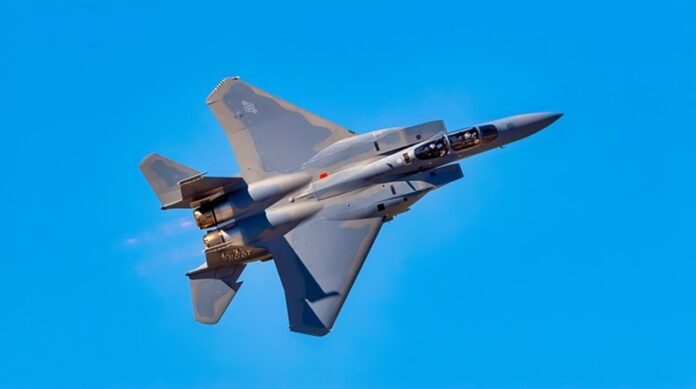
Combat power has also been reinforced. The US has deployed six F-35A stealth fighters alongside six EA-18G Growler electronic warfare aircraft, enhancing both strike and electronic attack capabilities. These assets join previously deployed F-15E Strike Eagles and A-10C Thunderbolt II attack aircraft already operating in the region.

U.S. Navy Strengthens Maritime Posture

At sea, the United States Navy has expanded its surface and subsurface presence across key maritime corridors.

Three Arleigh Burke–class guided-missile destroyers are operating with the USS Abraham Lincoln Carrier Strike Group in the Arabian Sea, providing air defense, missile interception, and strike support.

Additional Arleigh Burke–class destroyers have been positioned in the Gulf of Oman and the Persian Gulf to protect US military facilities and partner infrastructure in Qatar, United Arab Emirates, and Saudi Arabia.

Further north, two more US destroyers are operating in the Gulf of Aqaba and the Mediterranean Sea, where they are tasked with helping to defend Israel against potential missile and drone threats.

Adding a strategic dimension to the deployment, the nuclear-powered guided-missile submarine USS Georgia has been reported operating in the Mediterranean. The Ohio-class submarine is capable of carrying large numbers of cruise missiles and special operations forces, providing the US with a highly survivable strike option.

Deterrence Messaging and Regional Implications

US officials have not announced any imminent military action but emphasize that the buildup is defensive in nature and intended to deter Iran and its regional allies from targeting American forces or partners.

The scale and diversity of the deployments—spanning airlift, intelligence, electronic warfare, naval strike, and missile defense—underscore Washington’s intent to maintain escalation dominance while reassuring allies across the Middle East.

As tensions persist over Iran’s regional activities, maritime security, and ongoing conflicts involving US partners, the reinforced US posture signals readiness for rapid response while keeping diplomatic options on the table.

Trump Stays Silent as Saudi-Emirati Power Struggle Redraws the Region

0

Nearly a decade after Washington openly took sides in a Gulf dispute, a new and potentially more consequential rift has emerged between two of America’s closest Middle Eastern partners: Saudi Arabia and the United Arab Emirates.

Unlike the 2017 blockade of Qatar, when then-President Donald Trump publicly backed Riyadh and Abu Dhabi, Washington has so far remained conspicuously quiet as tensions escalate between the former allies.

The dispute now stretches across multiple theatres—from Yemen and Sudan to Libya and the Red Sea—highlighting a widening strategic divergence between Crown Prince Mohammed bin Salman and President Mohammed bin Zayed.

From Yemen to Africa: A Multi-Front Rivalry

The fallout became visible in early January when Saudi Arabia launched airstrikes against Yemeni secessionist forces backed by Abu Dhabi and moved to expel the Southern Transitional Council from parts of southern and eastern Yemen. The move marked a sharp reversal from years of coordination in the Yemeni conflict.

Tensions have also spilled into Africa. Riyadh has reportedly discussed supplying arms—via Pakistan—to Sudan’s military, which is fighting the Rapid Support Forces (RSF), a paramilitary group widely seen as aligned with Emirati interests. In Libya, Saudi Arabia and Egypt are lobbying the family of warlord Khalifa Haftar to distance themselves from the UAE and halt alleged logistical support to the RSF.

Alongside covert maneuvering, the rivalry has erupted into an unusually aggressive media and social-media battle. A recent Saudi opinion piece accused the UAE of acting as “Israel’s Trojan horse in the Arab world,” framing Abu Dhabi’s foreign policy as a betrayal of religious and regional principles.

Trump, Business Interests, and Strategic Restraint

Despite the growing feud, Trump has refrained from intervening. Former US diplomats say this restraint reflects lessons learned from 2017, when his administration misread Gulf dynamics and underestimated Qatar’s strategic importance, including hosting the US Al-Udeid air base.

Another key difference today is Trump’s extensive financial exposure across the Gulf. Trump-branded luxury developments are underway in Saudi Arabia, Dubai, Qatar, and Oman—many tied to Saudi developer Dar al-Arkan. His inner circle, including Jared Kushner, Steve Witkoff, and Tom Barrack, also maintains deep business and investment ties with all major Gulf states.

This web of interests complicates any clear US alignment, even as both Saudi Arabia and the UAE compete for influence in Washington.

Competing Visions for the Middle East

Analysts describe the rift as more than a personal dispute—it reflects a structural shift in regional leadership.

Saudi Arabia is positioning itself as the central political and religious heavyweight of the Arab and Islamic world, leveraging its G20 status, nuclear-armed partnership with Pakistan, and expanding defense ties with Turkey. The UAE, by contrast, is pursuing a network-driven strategy, aligning closely with Israel, investing heavily in ports, gold, and logistics, and backing secessionist movements from Sudan to Somaliland.

Abu Dhabi’s role in projects like the India–Middle East–Europe Economic Corridor and its close coordination with Israel resonate strongly in parts of Washington. Yet its growing engagement with China—including concerns over activity at Khalifa Port—has unsettled US intelligence officials.

Why Trump May Ultimately Lean Saudi

While US officials insist Washington wants strong ties with both “brothers,” experts argue that Saudi Arabia’s scale and strategic weight may ultimately prove more attractive to Trump. The kingdom’s economy is roughly double the size of the UAE’s, and its investment pledges rival—or exceed—Abu Dhabi’s.

Trump’s core regional priorities—containing Iran, stabilizing Gaza, reunifying Yemen, and backing state authority in Sudan—also align more closely with Riyadh’s positions than Abu Dhabi’s support for non-state actors.

Israel remains a wildcard. The UAE enjoys unmatched access as Israel’s closest Arab partner, but Saudi Arabia’s influence over broader Arab and Islamic opinion, and its central role in recent Syria diplomacy, continue to give Riyadh an edge.

For now, Trump appears determined not to repeat past mistakes. But as the Saudi-UAE rivalry sharpens, pressure will grow on Washington to decide whether neutrality is sustainable—or merely temporary.

Kazakhstan Opens Door to Israeli Low-Observable Drones Under New Deal

0
Israeli drone manufacturer Aero-Sentinel Drone

An Israeli drone manufacturer has strengthened its presence in Central Asia after Aero-Sentinel confirmed an exclusive distribution agreement in Kazakhstan, marking a significant expansion into one of the region’s most mature defense and security markets.

The announcement was made on Sunday by Ofir Avram, Chief Marketing Officer of Aero-Sentinel, who confirmed that the company has finalized a partnership with 2LNK GmbH, a Germany-based firm with established operational ties in Kazakhstan. Under the agreement, 2LNK GmbH will serve as the exclusive distributor of Aero-Sentinel’s mission-ready drone platforms in the country.

According to Avram, the deal reflects growing demand within Kazakhstan for intelligence, surveillance, and reconnaissance (ISR) systems that offer proven field performance rather than experimental or developmental platforms.

Aero-Sentinel noted that 2LNK GmbH brings deep local expertise and long-standing relationships within Kazakhstan’s defense and internal security sectors, enabling direct engagement with government and end-user agencies. The local partnership is led by Kody Linshitz and is described by both companies as being built on trust, operational familiarity, and an established market presence rather than indirect market entry.

Kazakhstan’s defense and security sector has expanded steadily in recent years, driven by modernization efforts in border surveillance, counterterrorism operations, and critical infrastructure protection across its vast and diverse geography. Industry officials describe the market as highly structured, with clearly defined technical standards and a strong preference for systems that have already demonstrated operational reliability in real-world conditions.

Under the agreement, Aero-Sentinel will offer its G2 and G3 drone platforms to Kazakh customers. These systems are designed for covert ISR missions and feature low acoustic signatures, enabling close-range operations with a reduced risk of detection. Such capabilities have generated interest from special operations forces and internal security units in multiple regions.

While Aero-Sentinel has not disclosed contract values or delivery timelines, company representatives emphasized that the Kazakhstan partnership forms part of a broader strategy to establish exclusive distribution networks in selected markets where long-term demand for surveillance and reconnaissance systems is expected to remain stable.

The company’s drones are marketed as short- and medium-range platforms optimized for tactical ISR, border monitoring, and sensitive reconnaissance missions. Their design emphasizes low noise output, compact logistical requirements, and rapid deployment—features well suited for both dense urban environments and remote terrain.

Although Aero-Sentinel has not officially confirmed operational use by foreign services, several open-source defense reports have previously linked platforms with similar acoustic and flight profiles to Israeli special operations activity. Reports published last year suggested that comparable drones were employed during covert missions conducted inside Iran.

For Kazakhstan, the agreement provides access to a new category of low-observable ISR drones without the need for lengthy domestic development programs, significantly shortening acquisition timelines. For Aero-Sentinel, the deal establishes a strategic foothold in a region that connects Eastern Europe, Russia, and Asia—an area where demand for advanced surveillance technologies continues to grow.

Trump Administration Weighs Expanded Military Options Against Iran Amid Protests and Nuclear Fears

0

The administration of U.S. President Donald Trump is actively reviewing a broad range of expanded military options against Iran, as unrest inside the country intensifies and concerns grow over Tehran’s nuclear and missile programs, according to reports from major American media outlets.

Senior U.S. officials have briefed President Trump on scenarios ranging from large-scale air and missile strikes to special forces operations aimed at crippling Iran’s strategic capabilities or destabilizing the ruling system. The deliberations come amid widespread protests in Iran, which erupted in late December 2025 and have been met with a violent crackdown by state security forces.

Pentagon Plans: From Limited Strikes to “Decisive” Action

According to reporting by the Wall Street Journal, the Pentagon and the White House have jointly prepared options for what officials describe as “decisive” military action, including a large-scale strike plan targeting Iranian regime assets and facilities linked to the Islamic Revolutionary Guard Corps.

Alongside these expansive scenarios, more limited strikes are also under review, designed to pressure Tehran or degrade specific IRGC infrastructure without triggering a full-scale war.

U.S. defense planners caution, however, that any attempt to target or capture Iran’s Supreme Leader Ali Khamenei would be vastly more complex than past high-profile operations. Analysts note that a so-called “decapitation strategy” would likely require major ground and air deployments to prevent chaos after such an action—resources that are not currently available without a broader invasion.

Special Forces and Nuclear Sites

The New York Times reports that the White House is also considering special operations raids against Iranian nuclear facilities that may remain operational despite earlier strikes. These options go beyond earlier proposals and focus on severely damaging Iran’s ability to pursue nuclear weapons, expand missile production, and support proxy groups across the region.

Some scenarios reportedly envision actions that could weaken the authority of the supreme leader, generate internal instability, or create conditions for long-term regime erosion. While President Trump has not authorized any military action so far, he has repeatedly used the threat of force to push Iran toward negotiations.

Protests, Crackdown, and Rising Regional Volatility

The strategic debate is unfolding as Iran faces one of its most severe internal crises in years. U.S. officials and UN-linked estimates suggest that up to 18,000 people may have been killed during the suppression of protests since December 2025.

These tensions follow earlier U.S. airstrikes on Iranian targets in June 2025 and a brief but intense war involving Israel last year, both of which heightened regional instability. President Trump has warned that further violence against protesters could trigger U.S. military action, though he temporarily eased pressure after reports that some executions in Iran were halted.

Allies Divided, Gulf States Push Back

Israel has reportedly encouraged Washington to consider a joint large-scale operation focused on Iran’s missile infrastructure, reflecting deep concern over Tehran’s growing capabilities.

In contrast, key Gulf allies have imposed firm limits. Saudi Arabia and the United Arab Emirates have refused to allow their airspace or territory to be used for strikes on Iran, citing fears of retaliation similar to the 2019 attacks on Saudi oil facilities and the risk of being drawn into a direct conflict.

This reluctance forces the U.S. to rely more heavily on unilateral assets, including the USS Abraham Lincoln carrier strike group, F-15E aircraft based in Jordan, B-2 stealth bombers, submarines, and long-range strike platforms operating from Diego Garcia.

High Risks, No Final Decision

Military analysts warn that even a successful strike campaign could lead to prolonged instability rather than orderly regime change. Iran’s vast territory, entrenched security apparatus, and willingness to use force against dissent mean that any conflict could stretch on for weeks or months, especially without strong regional support.

As of late January 2026, no final decision has been taken. President Trump continues to call on Iran to negotiate a nuclear deal while emphasizing the strength of U.S. military positioning in and around the region.

Whether these expanded options represent serious preparation for war or leverage for diplomacy remains unclear. What is certain is that the discussions highlight the high stakes and the risk of rapid escalation in an already volatile Middle East.

US MC-130J Commando II Flight to Azerbaijan Signals Strategic Pressure on Iran

0

The reported flight of a U.S. Air Force MC-130J Commando II special operations aircraft from the United Kingdom to Azerbaijan has sparked intense strategic speculation, with analysts viewing the move as a calculated signal aimed at Iran rather than a routine military transit.

According to open-source intelligence (OSINT) and flight-tracking data, the aircraft flew on 29 January 2026 from UK-based U.S. facilities — most likely RAF Mildenhall or RAF Fairford — to Baku, utilizing a route designed to avoid politically sensitive airspace while remaining close to NATO-aligned support infrastructure .

Observers noted intermittent transponder deactivation during parts of the flight, a technique commonly associated with sensitive operational tasking rather than routine training or logistics. Such measures are often used during contingency planning, reconnaissance, or preparatory force positioning missions.

Image

Why Azerbaijan Matters

Azerbaijan’s Heydar Aliyev International Airport offers infrastructure capable of discreetly handling large military aircraft under civilian cover, allowing special operations assets to stage without establishing permanent or politically provocative basing arrangements .

Geographically, Azerbaijan sits along Iran’s northern frontier, sharing a border of more than 700 kilometers. This places Baku in a uniquely sensitive position within any U.S. or allied contingency framework, especially amid heightened Iranian concerns over strategic encirclement involving U.S. forces, Israel, and Gulf-based assets .

Special Operations Context

The MC-130J Commando II is operated by Air Force Special Operations Command, and is designed for low-visibility insertion, extraction, resupply, and aerial refuelling of elite U.S. special operations forces in denied or politically sensitive environments.

OSINT reporting indicates that the flight aligns with a broader layered force posture, following earlier January arrivals of C-17 Globemaster III transports and AC-130J Ghostrider gunships, as well as rotary-wing platforms linked to the 160th Special Operations Aviation Regiment, including MH-60 Black Hawks and MH-47G Chinooks .

Within this architecture, the MC-130J functions as an enabling node, extending the reach of U.S. special operations through aerial refuelling, sustainment, and covert mobility across long distances.

Image

Strategic Signaling Toward Iran

Analysts stress that the deployment should be viewed through the lens of operational art rather than tactical aviation. The MC-130J’s forward positioning introduces a latent capability to support intelligence insertion, unconventional warfare preparation, or leadership-focused contingency missions — all while preserving diplomatic deniability .

Historical precedent reinforces this interpretation. MC-130 variants have been associated with highly sensitive missions involving the movement or extraction of high-value individuals, making their presence near Iran psychologically significant even in the absence of kinetic action.

From Tehran’s perspective, such deployments compound an already complex threat environment, forcing Iranian security institutions to divert resources toward leadership protection, counter-intelligence, and internal security — imposing strategic costs without a single shot being fired .

Azerbaijan’s Delicate Balancing Act

For Azerbaijan, accommodating discreet U.S. military movements enhances its strategic relevance and deepens Western security ties, while also increasing exposure to Iranian diplomatic, cyber, or proxy pressure. Baku’s long-standing effort to balance relations with Iran, Russia, and Western partners underscores the risks inherent in serving as a quiet operational node in great-power competition .

Bottom Line

The MC-130J Commando II’s transponder-silent arrival in Azerbaijan is less about imminent military action and more about strategic ambiguity. By positioning a platform synonymous with clandestine operations near Iran’s border, Washington expands its menu of options while shaping adversary perceptions, reinforcing uncertainty, and applying psychological pressure — a hallmark of modern conflict conducted below the threshold of open war .

US Approves $15.67 Billion Arms Sales to Israel and Saudi Arabia as Middle East Tensions Escalate

0
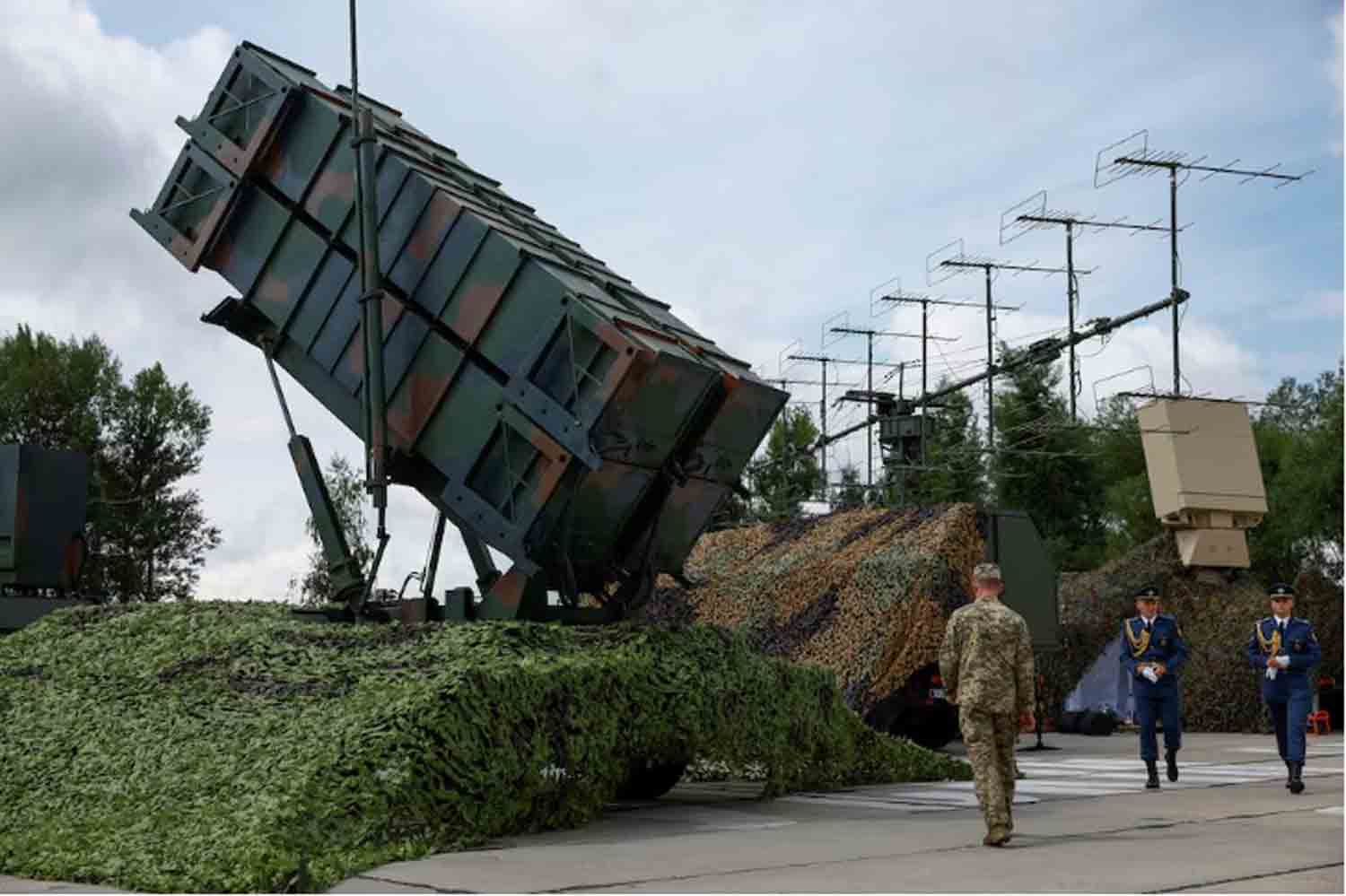
Surface-to-air missile launchers of the Patriot system of 37th Air Defense Missile Squadron from the 3rd Warsaw Air Defense Missile Brigade stand during a demonstration training of the IOC Initial Operational Capability of the anti-aircraft and anti-missile system and its integration into a IBCS command system, Sochaczew.

The United States has approved nearly $15.67 billion in major arms sales to Israel and Saudi Arabia, signaling a strong reaffirmation of Washington’s security commitments to its key Middle Eastern allies amid escalating regional tensions.

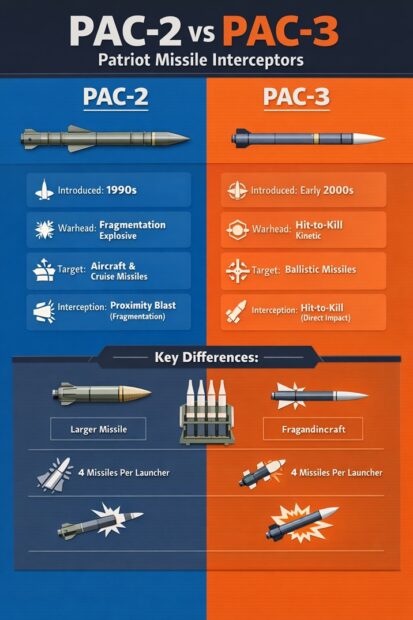
The deals, announced on January 30, 2026, were approved by the U.S. State Department under the administration of Donald Trump. They include advanced attack helicopters and tactical vehicles for Israel worth $6.67 billion, and Patriot PAC-3 missile interceptors for Saudi Arabia valued at $9 billion.

The approvals come as the region grapples with the ongoing Gaza conflict, rising fears of Iranian escalation, and continued missile and drone threats across the Gulf.

Image

Arms Package for Israel: Strengthening Air and Ground Power

The U.S. arms sale to Israel is divided into four separate packages, with a focus on enhancing offensive capability, mobility, and battlefield survivability.

Key components include:

  • 30 AH-64E Apache attack helicopters, equipped with advanced targeting systems, rocket launchers, and precision-guided weapons. The helicopters are designed for close air support, anti-armor missions, and high-intensity combat.
  • 3,250 Joint Light Tactical Vehicles (JLTVs), valued at approximately $1.98 billion, aimed at improving troop mobility and protection in complex operational environments.
  • Additional equipment such as power packs for armored personnel carriers and light utility helicopters.

According to the State Department, the sale supports Israel’s qualitative military edge and aligns with U.S. national security objectives by strengthening a frontline ally facing threats from Iranian-backed groups.

The timing of the approval coincides with Israel’s ongoing military operations in Gaza and mounting concerns over a potential direct confrontation with Iran. Critics argue the administration may have accelerated notification procedures, limiting the scope of congressional review.

Patriot Missile Deal for Saudi Arabia: Expanding Air Defense

The larger portion of the announcement involves Saudi Arabia’s acquisition of 730 Patriot Advanced Capability-3 (PAC-3) Missile Segment Enhancement (MSE) interceptors, along with training, logistics, and technical support.

The Patriot system is a cornerstone of integrated air and missile defense, capable of intercepting ballistic missiles, cruise missiles, and hostile aircraft. U.S. officials say the sale will significantly enhance Saudi Arabia’s ability to defend its territory, U.S. forces in the region, and Gulf allies.

The Defense Security Cooperation Agency stated that the deal will strengthen Gulf-wide missile defense cooperation. Lockheed Martin will serve as the principal contractor.

The sale follows recent Washington meetings between Saudi Defense Minister Khalid bin Salman and senior U.S. officials, including Secretary of State Marco Rubio and Defense Secretary Pete Hegseth. Riyadh has faced repeated missile and drone attacks from Yemen’s Iran-aligned Houthi movement, making advanced air defense systems a strategic priority.

Regional Context and Strategic Implications

The arms approvals reflect Washington’s broader strategy of deterrence against Iran, reinforcing allies as concerns grow over Tehran’s missile capabilities, proxy networks, and nuclear ambitions.

Israel continues to face threats from Iranian-backed militias across multiple fronts, while Saudi Arabia remains wary of renewed escalation that could undermine Gulf security and economic diversification efforts.

Supporters of the deals argue that bolstering allied defenses reduces the likelihood of wider conflict by deterring Iranian adventurism. Critics, including some U.S. lawmakers, raise concerns about civilian casualties in Gaza and human rights issues linked to the Yemen conflict.

Under U.S. law, Congress has a 30-day review window to examine the proposed sales, though late-week notifications may limit debate. Similar arms transfers during President Trump’s earlier term faced scrutiny but ultimately moved forward.

Bottom Line

The combined $15.67 billion arms sales underscore America’s determination to fortify its Middle Eastern partners during a period of exceptional volatility. As conflicts persist and regional rivalries intensify, these deals are likely to shape the strategic balance of power in the Middle East for years to come.

Saudi Defense Minister Warns Trump: Failure to Act on Iran Will Strengthen Tehran, Sources Say

0

Saudi Arabia’s Defense Minister Prince Khalid bin Salman has privately warned that if Donald Trump does not follow through on his repeated threats of military action against Iran, the Islamic Republic will emerge politically and strategically stronger, according to multiple sources briefed on the discussions in Washington.

The remarks, delivered during closed-door briefings on Friday, represent a notable shift from Riyadh’s recent public posture, which has emphasized restraint, de-escalation, and diplomacy. Just weeks ago, Saudi Crown Prince Mohammed bin Salman reportedly urged President Trump to avoid military confrontation, warning that a strike could ignite a wider regional war — concerns that contributed to Washington delaying any immediate action.

Behind Closed Doors in Washington

Prince Khalid bin Salman, commonly known as KBS and regarded as the crown prince’s closest confidant, was in Washington for high-level consultations as tensions with Tehran escalated. During his visit, he met senior U.S. officials, including Secretary of State Marco Rubio, Secretary of Defense Pete Hegseth, White House envoy Steve Witkoff, and Chairman of the Joint Chiefs of Staff Dan Caine.

According to officials familiar with the meetings, discussions focused heavily on the possibility of a U.S. military strike against Iran, even as the White House publicly insists that no final decision has been made and that diplomacy remains an option.

Saudi Public Caution vs. Private Alarm

Publicly, Saudi Arabia has taken a careful and measured stance. Riyadh has reiterated its respect for Iran’s sovereignty and emphasized the need for a diplomatic solution. Crown Prince Mohammed bin Salman recently told Iran’s president that Saudi Arabia would not allow its airspace to be used for any U.S. attack.

Privately, however, Prince Khalid struck a more urgent tone. In an hour-long briefing with Middle East experts and representatives from several Jewish organizations, he reportedly argued that backing away after weeks of threats would embolden Tehran.

“At this point, if this doesn’t happen, it will only embolden the regime,” KBS said, according to participants in the room.

Sources said Prince Khalid conveyed similar concerns during his White House meetings, while also admitting that he left Washington without a clear understanding of the Trump administration’s long-term strategy on Iran.

A Strategic Dilemma for the Region

U.S. officials acknowledge that there are currently no serious direct negotiations with Tehran, and Iranian leaders appear uninterested in accepting Washington’s maximalist terms. Meanwhile, the U.S. has ordered a significant military buildup in the Gulf, raising the stakes across the region.

A Gulf official summed up the dilemma bluntly: a U.S. strike risks dangerous regional escalation, but restraint could leave Iran stronger and more defiant.

No Saudi Pivot on Israel

Addressing speculation, Prince Khalid reportedly rejected claims that Saudi Arabia is drifting away from Israel or aligning more closely with Islamist movements. He also dismissed concerns about rising anti-Israel sentiment in Saudi media, though some attendees remained unconvinced.

What This Means

The apparent shift in Saudi private messaging underscores the growing anxiety among U.S. allies that prolonged indecision could reshape the regional balance of power in Iran’s favor. As Washington weighs its next move, Riyadh appears caught between public calls for diplomacy and private fears that inaction may carry its own long-term risks.

Pakistan Achieves Drone Self-Reliance, Develops Anti-Drone Technology: Security Sources

0

Pakistan has achieved self-reliance in drone manufacturing and is now actively developing advanced anti-drone technology in response to evolving regional and global security challenges, security sources said during a media briefing in Karachi.

Addressing recent reports about an alleged military operation in Tirah Valley, security officials categorically rejected the claims, calling them “false and baseless propaganda.” According to the briefing, no large-scale military operation is currently underway in Tirah.

Security sources clarified that targeted intelligence-based operations (IBOs) are being conducted against terrorist elements, stressing that these actions are part of an ongoing counterterrorism effort aimed at eliminating militant networks operating in the region.

The officials stated that terrorist groups, including what they described as Fitna-e-Hindustan and Fitna-e-Khawarij, have formed linkages in Tirah Valley. These groups are being dismantled through precise intelligence-led actions rather than conventional military operations.

Highlighting technological advancements, security sources revealed that Pakistan has successfully achieved indigenous capability in drone technology. In light of modern warfare trends and the increasing use of unmanned systems in ongoing conflicts worldwide, work is also underway on sophisticated counter-drone systems to neutralize emerging aerial threats.

The briefing emphasized that operations against terrorists are being carried out strictly on the basis of verified intelligence and will continue until the last terrorist is eliminated. Officials reiterated that the state remains committed to ensuring long-term peace and stability through sustained counterterrorism measures.

Security sources further noted that misinformation regarding an “operation in Tirah” was deliberately spread to mislead the public. They added that the nexus between terrorists and criminal elements has been exposed, and such narratives no longer resonate with the local population.

Referring to similar propaganda tactics elsewhere, officials said that groups exploiting slogans of deprivation to justify violence have been exposed, with communities increasingly rejecting terrorism and criminality.

Pakistan, Türkiye Deepen Defence Ties as Turkish Chief of General Staff Meets COAS at GHQ

0
General Selcuk Bayraktaroglu, Chief of the Turkish General Staff, Türkiye, called on Field Marshal Syed Asim Munir, NI (M), HJ, #COAS & CDF of Pakistan at General Headquarters (GHQ) today.

General Selcuk Bayraktaroglu, Chief of the Turkish General Staff, Türkiye, paid an official visit to Pakistan’s General Headquarters (GHQ) on Thursday, where he called on Field Marshal Syed Asim Munir, Chief of Army Staff (COAS) and Chief of Defence Forces (CDF) of Pakistan, according to the Inter Services Public Relations (ISPR).

Upon his arrival at GHQ, General Bayraktaroglu was accorded a guard of honour by a smartly turned-out contingent of the Pakistan Armed Forces, reflecting the longstanding military camaraderie between the two brotherly nations.

During the high-level meeting, both military leaders held comprehensive discussions on matters of mutual interest, the evolving regional and global security environment, and avenues for further strengthening bilateral defence and military cooperation. The dialogue emphasized the importance of maintaining close coordination in the face of emerging security challenges and enhancing collaboration across multiple defence domains.

Field Marshal Syed Asim Munir highlighted the deep-rooted, brotherly relationship between Pakistan and Türkiye, anchored in shared history, mutual trust, and strong people-to-people ties. He expressed appreciation for the consistent support and cooperation extended by the Turkish Armed Forces and reaffirmed Pakistan’s commitment to expanding military-to-military relations with Türkiye.

General Selcuk Bayraktaroglu conveyed his gratitude for the warm reception and lauded the professionalism and operational preparedness of the Pakistan Armed Forces. He reiterated Türkiye’s firm resolve to further deepen defence cooperation, particularly in the areas of military training, joint exercises, and capacity-building initiatives.

Both sides expressed satisfaction over the positive trajectory of Pakistan–Türkiye relations and underscored their shared vision for promoting regional peace, stability, and security. The visit was seen as a reaffirmation of the enduring strategic partnership between the two countries, which continues to evolve amid complex regional and global security dynamics.

Iran Receives 1,000 New Drones, Announces Live-Fire Naval Drills in Strait of Hormuz Amid U.S. Threats

0

Iran has taken two significant military steps amid rising regional tensions, receiving a large batch of new combat drones and announcing live-fire naval exercises in the strategically critical Strait of Hormuz, as U.S. President Donald Trump warns of possible military action if Tehran rejects a new nuclear deal.

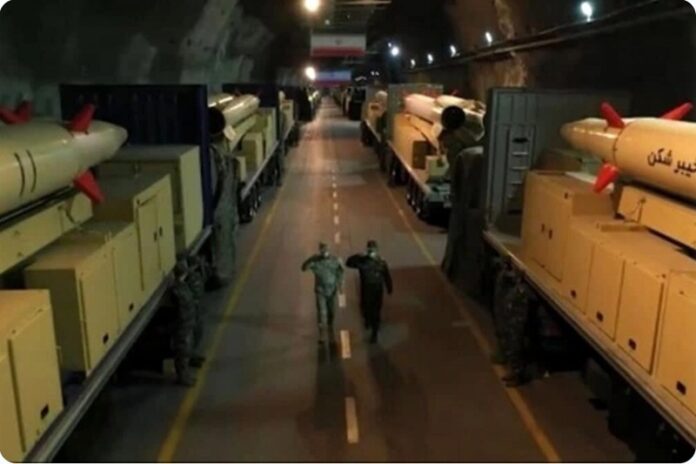
According to Iran’s semi-official Tasnim news agency, a batch of 1,000 domestically produced drones has been delivered to various branches of the Iranian armed forces. The drones are expected to enhance Iran’s surveillance, reconnaissance and strike capabilities at a time of heightened confrontation with the United States and its regional allies.

Iranian Army Commander-in-Chief Major General Amir Hatami said the delivery reflects Tehran’s focus on preparedness in the face of external threats.

“In accordance with the threats ahead, the army maintains and enhances its strategic advantages for rapid combat and imposing a crushing response against any aggressor,” Hatami said.

Iran Expands Drone Capabilities

Iran has heavily invested in unmanned aerial vehicles (UAVs) over the past decade, developing a wide range of drones for intelligence gathering, electronic warfare and precision strikes. Western and regional officials have long accused Tehran of supplying drone technology to allied groups across the Middle East, a claim Iran denies.

Military analysts say the induction of 1,000 drones signals Iran’s intention to rely more on asymmetric warfare tools, allowing it to counter technologically superior adversaries while keeping costs relatively low.

Live-Fire Naval Exercises in Strait of Hormuz

In a separate development, Iran’s Revolutionary Guard naval forces will conduct live-fire exercises in the Strait of Hormuz on February 1 and February 2, Iran’s state-run Press TV reported.

The exercises are expected to include missile launches, naval maneuvers and coordinated operations involving fast-attack craft and coastal defense units. Iranian officials say the drills are defensive in nature and aimed at protecting national interests and maritime security.

The Strait of Hormuz is considered the world’s most critical oil chokepoint, with roughly one-fifth of global oil supplies passing through the narrow waterway. It connects major oil producers—including Saudi Arabia, Iran, Iraq and the United Arab Emirates—to the Gulf of Oman and the Arabian Sea.

Rising Tensions With the United States

These military moves come as President Donald Trump has renewed pressure on Tehran, warning that the United States could launch an attack if Iran refuses to agree to a nuclear deal under Washington’s terms.

U.S. officials have described recent Iranian actions as destabilizing, while Tehran insists its military activities are purely defensive and lawful. Analysts warn that increased military activity in and around the Strait of Hormuz raises the risk of miscalculation, with potential consequences for global energy markets and regional security.

As diplomatic channels remain strained, both sides appear to be reinforcing their military postures, signaling that tensions could intensify further in the coming weeks.

U.S. Navy Deploys Another Destroyer to Middle East as Military Buildup Intensifies

0

The United States Navy has deployed an additional warship to the Middle East, further strengthening its military presence amid escalating regional tensions, a U.S. official told Reuters on Thursday.

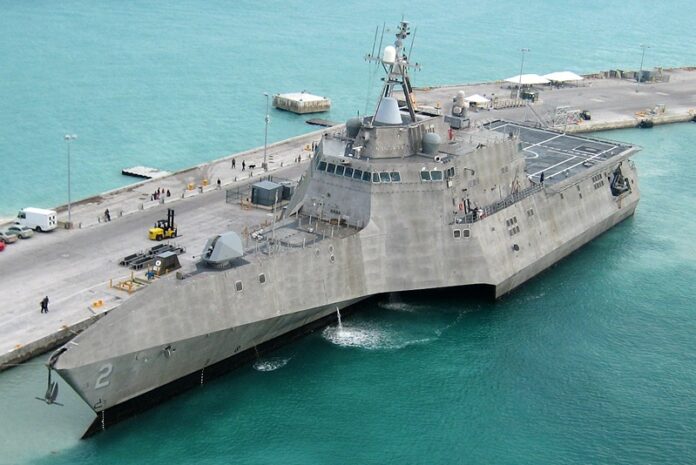
According to the official, who spoke on condition of anonymity, the USS Delbert D. Black, an Arleigh Burke-class guided-missile destroyer, entered the Middle East region within the past 48 hours. The deployment brings the total number of U.S. Navy destroyers operating in the region to six, alongside an aircraft carrier and three littoral combat ships.

The latest naval movement was first reported by CBS News and comes as Washington continues a significant military buildup across the Middle East, particularly in and around the Persian Gulf, Red Sea and eastern Mediterranean.

Rising Regional Tensions

The expanded U.S. naval presence coincides with heightened tensions involving Iran, its regional allies, and ongoing conflicts affecting Israel, Gaza and key maritime routes. U.S. officials have repeatedly said the deployments are aimed at deterrence, protection of American forces, and ensuring freedom of navigation through vital sea lanes.

In recent weeks, the Pentagon has reinforced air, naval and missile defense assets in the region amid concerns over potential retaliation against U.S. bases, commercial shipping and allied interests.

Strategic Role of USS Delbert D. Black

The USS Delbert D. Black is equipped with advanced Aegis missile defense systems, capable of countering ballistic and cruise missile threats, as well as conducting air defense, anti-submarine and surface warfare operations. Its deployment enhances the U.S. Navy’s ability to respond quickly to emerging threats and provides additional protection for high-value assets, including aircraft carriers and regional bases.

Defense analysts say the arrival of another destroyer signals Washington’s intent to maintain military readiness and escalation control, even as diplomatic efforts continue behind the scenes.

U.S. Posture Remains Defensive, Officials Say

U.S. officials have emphasized that the military buildup is defensive in nature, aimed at deterring attacks on U.S. personnel and allies rather than signaling an imminent offensive operation. However, the growing concentration of naval and air power underscores the seriousness with which Washington views the current security environment.

With tensions showing little sign of easing, further adjustments to U.S. force posture in the Middle East remain possible in the coming days.