Saturday, April 11, 2026
Home Blog Page 26

New Report Exposes Serious Weaknesses in Russia’s S-400 Air Defence

0
S-400 air defense systems

A new report by the Royal United Services Institute (RUSI) has uncovered major vulnerabilities in Russia’s S-400 air defence system—one of Moscow’s most celebrated strategic weapons. Despite its reputation as a world-class air defence platform, the S-400 appears heavily dependent on foreign electronics, materials, software, and a fragile production chain that could be targeted to undermine Russia’s operational capabilities.

Foreign Microelectronics at the Core of S-400 Weakness

RUSI’s analysis reveals that key components of the S-400 rely on technology sourced from abroad:

  • The system’s sophisticated electronics use materials produced by Rogers Corporation, a U.S. company with loose export controls and a major manufacturing base in China.
  • Another essential supplier of components is located in Kazakhstan, remains unsanctioned, and continues providing critical parts.

This dependence makes the S-400 vulnerable to export controls, sanctions pressure, and supply-chain disruption, potentially crippling its production and performance.

Russian Production Facilities Within Ukraine’s Strike Range

The report highlights that the S-400’s guidance and control systems are manufactured at just two sites in Russia—both within the reach of Ukraine’s Flamingo cruise missiles.
This geographic vulnerability exposes the S-400 supply chain to kinetic attack, placing its production capacity at direct operational risk.

Broader Weaknesses Across Russian Air Defence Systems

Beyond the S-400, RUSI notes that nearly all Russian air defence platforms rely on Western-made microelectronics, calibration tools, specialty ceramics, and foreign software used for radar and system design. These dependencies create multiple points of failure that can be exploited through:

  • Cyber intrusions
  • Export restrictions
  • Targeted sanctions
  • Disruptive strikes on production nodes

How Ukraine and Its Partners Could Exploit These Vulnerabilities

According to the report, Ukraine and supporting nations could significantly degrade Russia’s air defence capabilities by:

  1. Blocking modernisation of Russian microelectronics by targeting critical raw materials and equipment suppliers.
  2. Sanctioning providers of beryllium oxide ceramics, essential for radar systems in the S-400 and other platforms.
  3. Restricting high-end Western testing and calibration tools used in quality control of air defence equipment.
  4. Conducting cyber operations to compromise design software and disrupt production processes.
  5. Striking key industrial facilities involved in guidance and radar manufacturing.
  6. Imposing sanctions on repair and recovery services, particularly those dependent on Western machine tools.

Such measures could slow or halt Russia’s production of air defence interceptors at a time when Moscow is expending missiles faster than it can replace them.

Implications for Global Customers

RUSI warns that countries which have purchased or are considering purchasing Russian air defence systems—including the S-400—should reevaluate their resilience.
These systems may be vulnerable to:

  • Cyberattacks
  • Technical compromise
  • Supply-chain disruption
  • Sanctions pressure

The report suggests that international buyers might face severe maintenance and resupply challenges in a prolonged conflict scenario.

Impact on the Ukraine War

Russia’s air defence network—particularly the S-400—intercepts a majority of Ukrainian strikes targeting energy, industrial, and military infrastructure. If Ukraine and its partners succeed in disrupting interceptor production, RUSI argues, Kyiv could significantly increase damage to Russian targets in 2026, adding pressure on Moscow’s war machinery.
China’s New Stealth UCAV Seen Flying for First Time in Leaked Footage

0

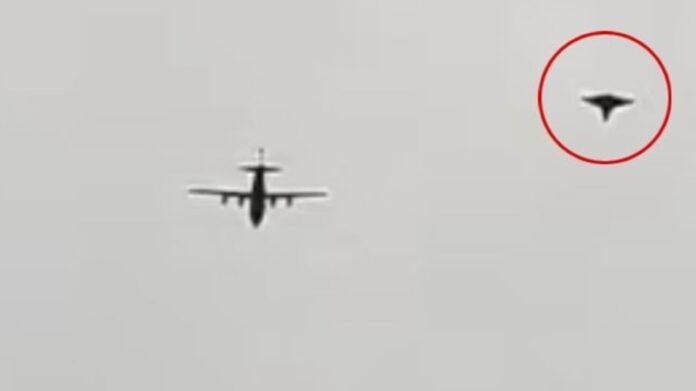
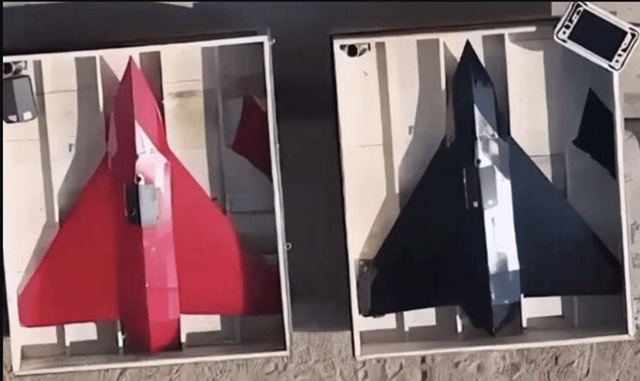
For the first time, video footage has emerged showing what appears to be China’s next-generation stealth unmanned combat aerial vehicle (UCAV)—informally known as the Collaborative Combat Aircraft (CCA)—flying in formation with a PLA Air Force Y-8 or Y-9 transport aircraft.

Shared on the Chinese platform Weibo and amplified by OSINT analyst @RupprechtDeino, the footage offers the clearest evidence yet that China has entered an active flight-testing phase for its loyal-wingman-style drone program, potentially accelerating its path toward operational deployment.

The CCA represents a pivotal step in China’s bid to integrate unmanned platforms into future combat formations. With the PLA Air Force (PLAAF) pursuing increasingly sophisticated concepts such as autonomous teaming, distributed lethality, and network-centric operations, the CCA appears poised to become a central component of next-generation airpower.

A Stealthy Flying-Wing UCAV Built for High-Risk Missions

Believed to be developed by AVIC’s Hongdu Aviation Industry Group, the drone features a sleek flying-wing design, optimized for a low radar cross-section and minimal infrared signature. The footage shows no visible external sensors—further strengthening assessments that the aircraft is purpose-built for stealth.

Analysts suggest the CCA is designed to serve multiple high-stakes missions:

  • Loyal Wingman role: flying alongside manned fighters for data-sharing and tactical support
  • Deep-strike operations: penetrating hostile air defenses
  • SEAD/DEAD missions: targeting radar and missile sites
  • Electronic warfare and decoy operations: disrupting or confusing enemy networks
  • Target designation for long-range missiles

Its integration into “intelligent swarm” doctrine suggests the PLAAF aims to field UCAV formations capable of autonomous decision-making, coordinated strikes, and battlefield adaptation.

The UCAV’s pairing with a Y-8/Y-9 in the leaked video hints that the transport aircraft may have served as a mission control hub, testing real-time data exchange and coordinated maneuvers between manned and unmanned assets.

A Rare Glimpse Into a Secretive Program

The video, posted by Weibo user @lyman2003, reveals the CCA cruising in close formation with the PLA’s tactical transport aircraft—an unprecedented public sighting.
The presence of the Y-8/Y-9 suggests:

  • Testing of command-and-control links
  • Evaluation of multi-platform coordination
  • Airborne networking trials mirroring Western ABMS/FCAS concepts

China often uses controlled “leaks” to signal confidence in new capabilities, and analysts believe this footage may have been intentionally permitted to demonstrate progress without formal announcement.

How China’s CCA Compares to Global UCAV Programs

The emergence of the CCA invites comparisons with similar projects:

  • USAF: Kratos XQ-58A Valkyrie — low-cost attritable UCAV
  • Australia: Boeing MQ-28 Ghost Bat — loyal wingman system
  • Russia: S-70 Okhotnik-B — heavy stealth UCAV linked to Su-57

Key differences stand out:

  • China appears to be developing the CCA at a notably faster pace than U.S. or Australian equivalents
  • Its decentralized industrial model enables rapid prototyping and parallel production
  • However, China’s program remains far less transparent, with unclear information about AI autonomy, payloads, range, or mission reliability

While speed boosts China’s lead in fielding operational UCAVs, the opacity of the program makes it difficult to assess real-world performance or shortcomings.

What We Know So Far: Production, Prototypes, and Program Status

Evidence of the CCA has surfaced gradually:

  • 2022: First prototype spotted via satellite imagery
  • 2023: A second prototype appears, indicating rapid iteration
  • 2025: First public flight footage released, suggesting transition to early tactical testing

The program is likely linked to the secretive “J-XY” initiative, potentially part of China’s broader sixth-generation fighter ecosystem.

Manufacturers suspected:

  • Hongdu Aviation Industry Group — expertise in drones
  • Chengdu Aerospace Corporation — master of Chinese stealth designs

Both remain unconfirmed, consistent with China’s tight control over sensitive defence projects.

Strategic Implications: A Future Battlefield Shaped by UCAV Swarms

If the CCA becomes operational, the PLAAF could deploy 2–4 UCAV formations guided by a J-20 stealth fighter or ground-based command centers, enabling:

  • Deep-penetration strikes
  • Saturation attacks against air defenses
  • Coordinated electronic warfare
  • High-speed autonomous SEAD operations

Such systems would be especially impactful in contested theaters such as the Taiwan Strait or the South China Sea, where rapid dominance and distributed strike capability are essential.

The CCA’s integration into a “system of systems” approach—linking aircraft, drones, satellites, and ground stations—could give China a decisive edge in early-phase air superiority campaigns.

The Road Ahead: Potential Game-Changer or Unproven Prototype?

China’s unveiling strategy—quiet development followed by controlled exposure—suggests high confidence in the CCA’s trajectory. With its vast industrial base, China may outpace Western programs simply by producing UCAVs in large numbers, even if individual platforms lack perfect performance.

Yet major questions remain:

  • How autonomous is the CCA?
  • Can it reliably operate in contested electromagnetic environments?
  • What are its endurance and payload limits?
  • Will Beijing risk deploying it before rigorous testing is complete?

The next breakthrough will likely come from additional leaked footage or satellite imagery hinting at new prototypes, serial production, or operational trials.

For now, the CCA stands as one of the most significant unmanned aircraft developments of the decade—poised either to reshape air warfare or raise the stakes in the unfolding great-power drone race.

S-400 Standoff: Turkey Holds Firm as Washington Pushes F-35 Conditions

0
S-400 air defense systems

Turkey has reaffirmed that it will not abandon its Russian-made S-400 air defence system—even as diplomatic efforts intensify to bring Ankara back into the U.S.-led F-35 fighter jet programme. The stance underscores a deeper strategic divide within NATO at a time when global airpower politics are rapidly shifting.

The renewed discussions follow a warming of ties between Ankara and Washington after Donald Trump’s return to the White House, raising hopes that years of friction might finally ease. But despite this diplomatic thaw, both sides remain locked in a structural impasse: the United States is barred by law from readmitting Turkey into the F-35 programme unless it relinquishes the S-400, while Turkey insists that the system is a non-negotiable element of its sovereign defence posture.

The Turkish Defence Ministry reiterated this position in a press briefing, saying there were “no new developments on the S-400 system” despite ongoing talks to lift U.S. sanctions and reopen the path to F-35 procurement. The message was unmistakable—Ankara is prepared to remain outside the F-35 ecosystem rather than give up the advanced Russian platform it acquired in 2019.

Foreign Minister Hakan Fidan has meanwhile expressed optimism that sanctions could be resolved “very soon,” but U.S. officials continue to stress that American law leaves no flexibility. U.S. Ambassador Tom Barrack made it explicit:

“Turkey must no longer operate nor possess the S-400 to return to the F-35 programme.”

This contradiction—political goodwill vs. legal rigidity—reflects the core dilemma confronting both capitals.

Why the S-400 vs F-35 Standoff Matters for NATO

The dispute has become one of NATO’s most consequential internal challenges. It is not simply about incompatible weapons systems but about the tension between:

  • National strategic autonomy (Turkey)
  • Alliance-based interoperability (NATO and the U.S.)

NATO relies on integrated sensor networks, shared classified data, and seamless coordination. Washington argues that operating the S-400 alongside the F-35 risks exposing sensitive stealth signatures to Russian collection systems, eroding the foundation of fifth-generation warfare.

Turkey counters that the S-400 is operated independently and does not interface with NATO infrastructure. For Ankara, the issue is symbolic of a broader refusal to be constrained in its defence partnerships—especially amid complex threat environments in Syria, the Black Sea, the Eastern Mediterranean, and the Middle East.

Both sides agree on the value of restoring defence cooperation, yet their bottom lines remain fundamentally incompatible.

How the Crisis Began: From S-400 Purchase to F-35 Expulsion

Turkey purchased the S-400 from Russia in 2017 after years of frustration over failed negotiations for the U.S. Patriot system and limited technology transfer guarantees.

Deliveries began in July 2019. Washington immediately responded by:

  • Removing Turkey from the F-35 programme
  • Imposing CAATSA sanctions on Ankara’s defence procurement agency
  • Unwinding Turkey’s industrial role in the F-35 supply chain, a process costing the U.S. up to $600 million

Before its removal, Turkey had invested over $1 billion and planned to buy up to 100 F-35 jets.

President Erdoğan denounced the decision as unjust and insisted that the S-400 would remain active, though not integrated into NATO networks.

The rift became one of the deepest fractures in U.S.-Turkey relations in decades.

Strategic Implications for NATO’s Defence Architecture

Turkey’s S-400 stockpile presents practical and political challenges:

Operationally

  • NATO’s integrated air defence depends on shared classified data
  • The S-400’s origin and doctrine lie outside NATO standards
  • Coexistence with F-35s introduces risks that adversaries (namely Russia) could exploit to study stealth signatures

Politically

  • It raises questions about alliance discipline
  • It sets a precedent for future defence diversification by other NATO members
  • It complicates strategic planning at a time when NATO faces pressures from Russia, the Middle East, and the Black Sea

Still, Turkey remains NATO’s second-largest military power and occupies irreplaceable geography controlling access to the Bosphorus and Dardanelles.
This mix of strategic indispensability and strategic divergence has kept the alliance from imposing harsher measures.

Trump’s Return and the Reopening of Diplomatic Space

The return of Donald Trump has re-energised dialogue, with U.S. officials describing the current round as the “most productive in nearly a decade.” Both sides have signalled willingness to explore creative compromises, even if U.S. law limits how far Washington can go.

The new diplomatic climate reflects a more transactional approach to alliance politics—yet CAATSA sanctions remain intact unless Congress acts.

Turkey’s Backup Plan: Hedging With New Airpower Options

Turkey is not waiting passively. Ankara has:

  • Pursued Eurofighter Typhoon purchases from Qatar and Oman
  • Accelerated its indigenous fifth-generation fighter jet programme
  • Continued investing in layered missile defence architecture with the S-400 as a centrepiece

This signals a long-term strategy to reduce dependence on U.S. platforms and avoid political conditionality in future defence procurement.

Turkey maintains that while it welcomes renewed talks, sovereign defence decisions are not up for renegotiation.

A Test Case for NATO’s Future

The S-400 crisis has become a litmus test for NATO’s ability to operate in an era of:

  • Multipolar competition
  • Divergent national priorities
  • Rising indigenous defence industries among member states

Whether the dispute ends in compromise, legal adjustment, or prolonged stalemate will shape the future of alliance cohesion.

For now, Turkey stands firm, the United States stands constrained, and NATO watches as one of its most complex internal challenges continues to unfold.

Hadid-110: Iran’s Fastest Combat Drone Signals New Drone Doctrine

0

Iran’s public unveiling of the Hadid-110—a high-speed, jet-powered stealth combat drone—marks a major turning point in Tehran’s evolving drone warfare strategy. The platform represents a deliberate shift away from mass-produced, slow loitering munitions toward faster, stealth-enhanced strike systems designed to challenge modern air-defense networks across the Middle East.

Revealed during the Sahand 2025 military exercises, the Hadid-110 was introduced by the Islamic Revolutionary Guard Corps (IRGC) as Iran’s fastest stealth-configured UAV to date, reportedly capable of exceeding 500 km/h and operating inside contested airspace where legacy drones have become vulnerable.

Its debut comes as unmanned warfare has moved from a supporting role to a central tool of deterrence, retaliation, and power projection across the region—from the Persian Gulf to the Levant.

While Iranian state media has framed the Hadid-110 as a transformational leap in asymmetric warfare, the absence of independent performance verification has led global defense analysts to react with a mix of interest and caution.

Yet even without external confirmation, the drone’s introduction signals Iran’s commitment to pairing speed, low observability, and precision strike capability to compensate for adversaries’ technological superiority.

A Geopolitical Debut on a Multinational Stage

Iran showcased the Hadid-110 during Sahand 2025 drills in East Azerbaijan Province, held with the participation of Russia, China, India, Pakistan, and Central Asian SCO members, alongside observers including Saudi Arabia and Oman.

By introducing the drone in a multinational setting, Iran ensured the platform functioned both as a technical demonstration and a geopolitical message aimed at allies, competitors, and potential arms clients.

Tehran emphasized that the Hadid-110 is intended for deterrence and defensive precision strikes, highlighting its suitability for hitting radar systems, command centers, and critical infrastructure — core components of Iran’s long-standing anti-access/area-denial (A2/AD) doctrine.

Technical Profile: Speed, Stealth, and a Compressed Strike Window

The Hadid-110 features a jet engine engineered to sustain speeds of 500–517 km/h—far outpacing Iran’s propeller-driven Shahed-136 drones, which cruise around 185 km/h.

This speed dramatically reduces the time available for air-defense systems to detect, track, and intercept incoming threats, placing greater pressure on command-and-control networks.

Key Technical Characteristics

  • Speed: 500+ km/h (claimed)
  • Range: ~350 km
  • Endurance: 1 hour
  • Warhead: ~30 kg
  • Ceiling: 9.1 km
  • Radar Cross-Section: 0.01–0.02 m² (claimed)

Its delta-wing design supports both aerodynamic efficiency and reduced radar visibility. Though not comparable to advanced manned stealth aircraft, even partial stealth could challenge legacy regional radar systems.

With modest endurance and a tactical-range strike envelope, the Hadid-110 functions as a high-speed precision attack drone, intended to penetrate defenses, strike high-value targets, and expend itself in a single mission.

In capability terms, it sits somewhere between Russia’s Lancet and Israel’s Harop, but prioritizes speed over loiter time.

A Drone Born From Decades of Technological Reinvention

The Hadid-110 represents the newest phase of Iran’s drone evolution, which began under wartime scarcity during the Iran-Iraq War and accelerated through:

  • Reverse-engineering efforts
  • Battlefield experimentation
  • Technological lessons from captured foreign systems, most notably the U.S. RQ-170 Sentinel (2011)

The IRGC Aerospace Force has since driven drone innovation across stealth design, rapid prototyping, and battlefield integration.

First displayed publicly in February 2025, the Hadid-110—also referred to as Dalahu—was positioned as both a technological milestone and an emblem of national resilience under sanctions.

Crucially, the drone’s development reflects Iran’s experience in recent conflicts, including the widely reported 12-day confrontation with Israel, where slower drones struggled against modern interceptors. This reinforced Tehran’s belief that future drone survivability will depend on speed and reduced detectability—not sheer numbers.

Launch Flexibility: Designed for a Dispersed, Survivable Strike Force

One of the Hadid-110’s most strategically important features is its non-runway launch capability.
The drone can be fired from rail systems or with solid-fuel boosters, enabling launches from:

  • Mobile truck-based platforms
  • Concealed ground locations
  • Potentially even maritime vessels

Footage from Sahand 2025 showed the UAV being catapulted into flight before transitioning to jet propulsion, demonstrating a launch system optimized for dispersed operations and survivability under attack.

Regional Impact: A New Challenge for Middle Eastern Air Defenses

The introduction of a high-speed, semi-stealth attack drone forces regional adversaries—especially Gulf states and Israel—to reassess air-defense priorities.

Implications include:

  • Shorter detection and interception windows for Patriot and other regional air-defense systems
  • Increased interceptor expenditure and sensor fatigue
  • Potential need for upgraded radars, faster interceptors, and improved AI-driven tracking solutions

Analysts note that Iran’s UAV portfolio, ranging from slow kamikaze drones to high-speed stealth types, now presents a multi-layered threat spectrum requiring costly countermeasures.

Globally, the Hadid-110 may also attract interest from countries like Russia and China, where demand for affordable precision-strike UAVs continues to rise.

However, Iran’s reliance on domestically produced parts under sanctions raises questions about manufacturing scale and long-term sustainment.

Skepticism and the Need for Verification

Despite Iran’s ambitious performance claims, defense analysts stress that independent verification remains absent.
Past Iranian platforms have often shown lower performance than advertised once observed in real conditions.

Still, even discounted claims show the Hadid-110 represents a coherent response to evolving air-defense environments, emphasizing:

  • Speed
  • Survivability
  • Precision
  • Compressed engagement timelines

Iran positions the drone as a dedicated asset for penetrating layered defenses and striking high-value targets, reflecting a doctrinal shift from mass swarm tactics to more sophisticated unmanned strike capabilities.

Strategic Takeaway

More than a new drone, the Hadid-110 is a strategic signal: Iran intends to remain a disruptive, adaptive player in the regional and global unmanned warfare landscape.

It reinforces a future battlespace in which speed, stealth, and autonomy increasingly dominate—challenging traditional airpower assumptions and reshaping defensive planning across the Middle East.


Faiz Hameed Sentenced: First Ever Court Martial of a Former ISI Chief

0


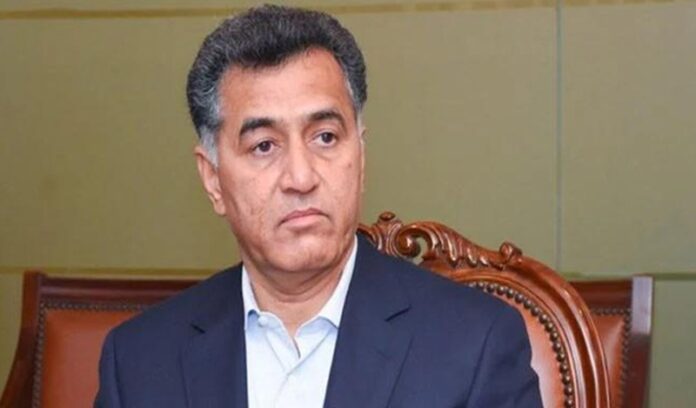
Pakistan’s military has announced that former ISI Director General Lt Gen (Retd) Faiz Hameed has been sentenced to 14 years of rigorous imprisonment after a Field General Court Martial found him guilty on four major charges. This is the first time in Pakistan’s history that a former head of the ISI has been convicted through a court-martial process.

According to an ISPR press release, the proceedings began on 12 August 2024 under relevant sections of the Pakistan Army Act. The charges included:

  • Involvement in political activities
  • Violations of the Official Secrets Act deemed harmful to state security
  • Misuse of authority and government resources
  • Causing unlawful harm to individuals

After months of legal proceedings, the court found the retired general guilty on all counts and announced the sentence on 11 December 2025. The ISPR emphasized that Faiz Hameed was provided all legal rights, including the right to choose his own defence team. He also retains the right to appeal.

The press release added that investigations into additional political matters involving the former ISI chief are ongoing, including alleged attempts to create political unrest in collaboration with political actors.

Political Fallout and Government Response

No formal response has yet been issued by Faiz Hameed’s legal team.
Minister for Information Atta Tarar, however, welcomed the verdict, saying:

“The decision is based on evidence. Today, a person who crossed the red line has been held accountable.”

Last year, the ISPR confirmed that following Supreme Court orders, a detailed court of inquiry was launched into allegations filed in the Top City housing society case, leading to disciplinary action under the Army Act.

The inquiry concluded that Faiz Hameed was involved in multiple violations of the Pakistan Army Act after his retirement.

Legal Basis: How a Retired General Can Be Court-Martialed

Under the Army Act:

  • Section 92 generally bars court-martial actions against a retired officer after six months.
  • But Sections 31 and 40 create exceptions related to incitement to mutiny, financial corruption, fraud, and related misconduct.

These provisions enabled the continuation of proceedings against the retired ISI chief.

Background: The Top City Allegations

The Supreme Court had earlier directed the complainant to approach relevant authorities regarding their allegations. Following this, Army leadership formed a committee led by a Major General to investigate.

According to the petition filed by Moiz Ahmed Khan, owner of Top City housing society:

  • On 12 May 2017, Rangers and ISI personnel raided their office and residence in connection with a terrorism case.
  • The petitioner alleged that Faiz Hameed’s brother, Sardar Najaf, attempted mediation.
  • It was claimed that the retired general indirectly contacted the complainant through a relative to arrange a meeting.
  • During the meeting, Faiz allegedly offered to return stolen items except 400 tolas of gold and cash.
  • The petition further alleged that retired Brigadiers Naeem Fakhar and Ghaffar pressured the complainant to pay Rs 40 million and fund a private TV channel.

These allegations became the basis of the inquiry that ultimately led to disciplinary proceedings.

Past Examples: Senior Officers Who Faced Court Martial

Lt Gen (Retd) Asad Durrani

Court-martialed and stripped of benefits for co-authoring The Spy Chronicles with former RAW chief A.S. Dulat. His book was deemed to contain sensitive national security material.

Lt Gen Javed Iqbal (2012)

Convicted of espionage for allegedly sharing classified information with India’s RAW. Sentenced to 14 years, later released after a reduced term.

Brigadier Ali Khan (2011)

Charged for links with Hizb-ut-Tahrir and for attempting to incite rebellion within the military.

Lt Gen Ziauddin Butt (2001)

Detained and court-martialed after being appointed Army Chief by PM Nawaz Sharif in defiance of General Musharraf. Later cleared of major conspiracy charges.

Brigadier Niaz (1958)

Tried during Ayub Khan’s era for political activities and alleged conspiracy against the government.

A Historic Verdict With Wider Implications

The conviction of Faiz Hameed — a figure often seen at the center of Pakistan’s political-military controversies — marks a rare and unprecedented moment in the country’s civil-military dynamics.

Analysts believe the case may shape future norms of accountability within the armed forces, especially regarding officers accused of political engineering, influence-peddling, or misuse of authority.

Amid Tensions With Pakistan, Afghan Clerics Bar Citizens From Taking Part in Foreign Militancy

0

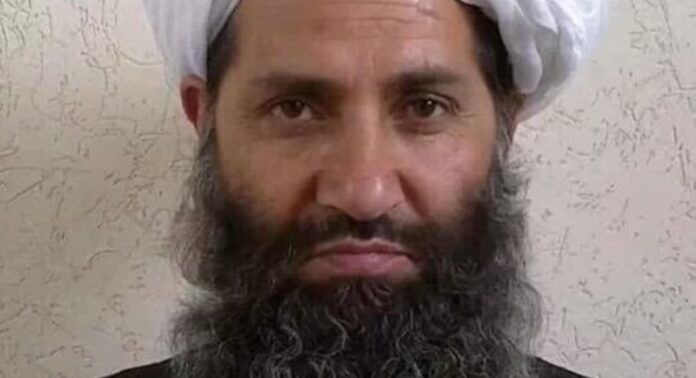
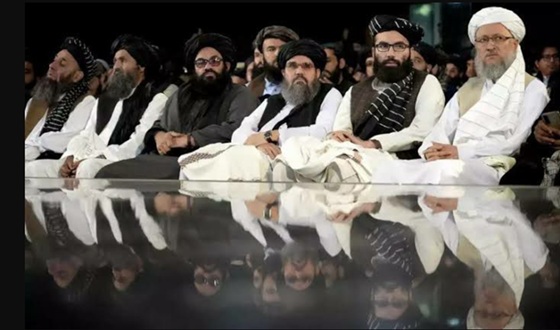
In a significant development amid worsening tensions with Pakistan, a nationwide assembly of Afghan clerics convened under the Taliban’s interim government has approved a resolution declaring that no Afghan citizen is permitted to take part in military activities abroad.

The gathering, held Wednesday in Kabul, brought together dozens of religious scholars from across Afghanistan. Senior Taliban officials — including Chief Justice of the Supreme Court Maulvi Abdul Hakim Haqqani, Minister for the Promotion of Virtue and Prevention of Vice Muhammad Khalid Hanafi, and Minister of Higher Education Nida Mohammad Nadim — also attended.

A two-page, five-point resolution was unanimously endorsed at the conclusion of the meeting. A copy obtained by the BBC states that Taliban Supreme Leader Hibatullah Akhundzada has not granted permission to any Afghan to engage in military operations outside the country, and any violation of this directive “is not permissible.”

The resolution further urges the Taliban interim government to take concrete steps to stop Afghans from joining conflicts abroad.

Context: Pakistan–Afghanistan Relations at Their Lowest Point

The clerics’ declaration comes at a time of deepening friction between Kabul and Islamabad.
Despite repeated demands, the Afghan Taliban have been unable — or unwilling — to stop cross-border attacks by the Tehrik-i-Taliban Pakistan (TTP). These tensions have resulted in armed clashes along the border and the prolonged closure of key crossings for nearly two months.

Multiple rounds of talks between Pakistani officials and the Taliban government — held in Doha, Istanbul and Riyadh — have failed to produce consensus on how to deal with the TTP. Pakistan has been calling on the Taliban to issue a clear religious decree against the group’s activities, but Kabul insists the matter is an “internal issue” for Pakistan.

Highlights of the Resolution: ‘Sacred Jihad’ if Afghanistan Is Attacked, but No Fighting Abroad

The resolution’s second clause states that fighting against foreign aggression on Afghan soil is both a religious obligation and a “sacred jihad.”

It continues:

“If anyone attacks Afghanistan or violates the sanctity of Muslims, all Afghans are duty-bound to defend their system, territory and values, and this defense shall be considered sacred jihad.”

Another key clause reiterates that Afghans cannot travel to other countries to take part in militancy — a point Afghan analysts believe is indirectly linked to Pakistan’s concerns.

Who Attended the Clerics’ Conference?

Organizers said each provincial Ulema Council sent at least three members, all personally appointed by Taliban leader Hibatullah Akhundzada.
The attendees included religious figures from the Ministry for the Promotion of Virtue, the Ministry of Education, the Ministry of Hajj and Religious Affairs, and the Supreme Court.

Observers note that while such resolutions do not always translate into strict enforcement, the Taliban typically use religious bodies to send signals to fighters and the public — particularly regarding groups like the TTP or foreign militant elements historically present in Afghanistan.

Implications: A Message to Afghans — and Possibly to Pakistan

Although the resolution does not name Pakistan or the TTP, analysts say its practical focus is unmistakable.

Analysis by Tahir Khan

Tahir Khan, an expert on Afghan affairs, told the BBC:

  • Pakistan’s demand for a fatwa appears to have influenced this latest resolution.
  • However, it is too soon to say whether it will reduce militant attacks inside Pakistan.
  • A similar religious decree issued in 2023, endorsed by Akhundzada, did coincide with a drop in attacks at the time.

He added that recent signs of Afghan citizens’ involvement in attacks inside Pakistan are also troubling for Kabul, as some non-state Afghan Taliban members — motivated by ideology or personal ties — have joined the TTP.

Analysis by Iftikhar Firdous

Journalist and Khorasan Diary editor Iftikhar Firdous said:

  • The resolution contains nothing fundamentally new; the Taliban have expressed these positions before.
  • Without naming the TTP, it is unclear whether Pakistan will see direct benefit.
  • Still, this could pave the way for another, more explicit directive targeting groups operating from Afghanistan.

He also noted that the clause on responding forcefully to foreign aggression may be a reference to recent Pakistani strikes inside Afghanistan, which Islamabad has justified as counterterrorism operations.

The Fatwa Issue Remains a Sticking Point

During bilateral talks following recent border clashes, Afghanistan’s deputy interior minister Rahmatullah Najib told Pakistani officials that:

  • A fatwa is issued by the Darul Ifta, not the government.
  • Pakistan should submit a formal request — but cannot dictate what the fatwa must say.

Pakistan’s Minister of State for Interior Talal Chaudhry responded by accusing the Taliban of avoiding a clear statement against the TTP because they “use them.”

Analysts say Pakistan wants a religious decree to undermine the ideological justification of TTP militants — many of whom swear allegiance to Akhundzada — in hopes of weakening their operational and moral standing.

Looking Ahead

Afghanistan’s resolution appears to attempt a balancing act: addressing Pakistani concerns, controlling Afghan fighters’ involvement abroad, and consolidating public support against any future foreign attack.

But whether this move will ease tensions or curb militancy remains uncertain.

For now, the clerics’ decision underscores how deeply the Taliban government is entangled in Pakistan’s security calculus — and how limited the prospects remain for a breakthrough in bilateral relations.

US Ties Rewarm as Washington Signals Path for Turkey’s Return to F-35 Program — If S-400s Go

0
F-35 Lightning II

The United States and Turkey are holding their most serious talks in years on Ankara’s possible return to the F-35 fighter jet program, with Washington making clear that any reinstatement depends on Turkey no longer owning or operating its Russian-made S-400 air defense systems.

U.S. Ambassador to Turkey Tom Barrack said in a statement on X that discussions are under way on both Turkey’s exclusion from the F-35 project and the fate of the S-400s, describing the current dialogue as “the most fruitful” in nearly a decade.

“As laid out in US law, Türkiye must no longer operate nor possess the S-400 system to return to the F-35 program,” Barrack said, adding that the close relationship between President Donald Trump and President Recep Tayyip Erdoğan had created a “new atmosphere of cooperation” and raised hopes for a breakthrough in the coming months.

Turkey was removed from the U.S.-led F-35 consortium in 2019 after it proceeded with the purchase of Russia’s S-400 missile system, which Washington says could expose sensitive data on the stealth jet to Moscow. CAATSA sanctions on Turkey’s defence sector followed in 2020.

Ankara, which invested around $1.4 billion in the program and was slated to receive more than 100 aircraft while producing key components, has long called its expulsion “unjust” and has pushed either for readmission or financial compensation.

Erdogan: ‘We Have Not Given Up on the F-35s’

Turkish President Recep Tayyip Erdoğan has repeatedly signaled that rejoining the F-35 program remains a strategic goal.

Speaking to reporters after a NATO summit in The Hague in June, Erdoğan said Turkey “has not given up” on acquiring the jets and has formally conveyed its desire to rejoin the program during meetings with Trump.

Technical-level talks have since resumed, alongside long-running Turkish efforts to modernize its air force with Eurofighter Typhoons, upgraded F-16s, and its own KAAN fifth-generation fighter project, expected to enter service later this decade.

Turkish officials argue the original S-400 purchase was driven by repeated U.S. delays and restrictions on selling Patriot air defense systems — a grievance Ankara still cites in public messaging.

S-400: Core Obstacle, Search for ‘Creative’ Solutions

For Washington, the condition is unequivocal: no S-400s, no F-35s.

US law under CAATSA bars advanced weapons sales to countries operating major Russian systems like the S-400, and successive administrations have insisted that Turkey must remove or neutralize the batteries to move forward.

Turkish Foreign Minister Hakan Fidan recently told Reuters that Ankara and Washington are “very close” to finding a way to lift the sanctions, hinting at “creative solutions” for the S-400s — such as long-term storage or relocation — while insisting they have not been integrated into NATO systems.

Some analysts and commentators have floated more ambitious ideas, including transferring the S-400s to a third country like Ukraine in exchange for F-35 access, though no such plan has been endorsed publicly by either government.

Domestic and Alliance Pushback

Barrack’s public comments have stirred criticism from several quarters in the US and Europe.

Members of Congress who have long opposed Turkey’s re-entry point to Ankara’s human-rights record, tensions with Greece, and ongoing security operations in Syria. Earlier this year, the State Department reiterated that US opposition to Turkey’s return remained in place absent clear steps on the S-400s.

On social media, Kurdish activists accused the ambassador of “selling out” US interests to Erdoğan, while some pro-Ukraine voices argued that any deal should include transferring the S-400 systems to Kyiv. Pro-Israel commentators, meanwhile, highlighted Erdoğan’s harsh rhetoric toward Israel and the West. (These reactions reflect online opinion rather than official positions.)

Regional partners such as Greece and Israel are closely watching the talks, wary that restoring Turkey’s access to fifth-generation fighters could significantly alter the balance of airpower in the Eastern Mediterranean if not paired with confidence-building measures.

What’s at Stake for NATO and the Region

A successful deal would:

  • bolster NATO’s southern flank at a time of heightened tensions in the Black Sea and Middle East
  • strengthen interoperability between Turkish and allied air forces
  • potentially smooth broader disputes over sanctions and defence cooperation

Failure, however, could:

  • push Turkey further toward Russian and Chinese defence suppliers
  • accelerate Ankara’s reliance on indigenous platforms like KAAN and Kızılelma
  • deepen long-standing mistrust between Ankara and key NATO capitals

For now, US officials are signalling cautious optimism while stressing that any solution must be “clear and permanent” on the S-400 issue. Turkish officials continue to talk up alternatives and sovereignty—while also making clear they still want the F-35.

The coming months will show whether the Trump–Erdoğan channel can turn this opening into a lasting reset, or whether the F-35 will remain the symbol of a fractured partnership.

Three Major anti-Taliban Movements Form Unified Political Platform, Call for New Constitution and Elections

0

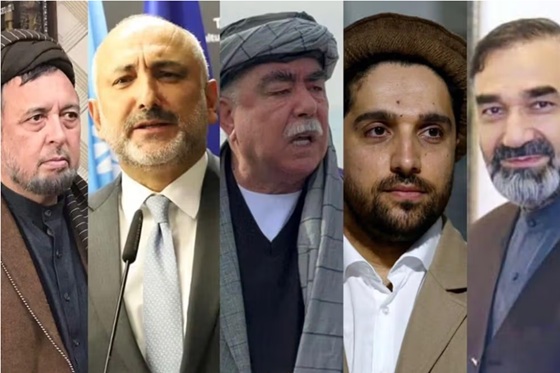
The National Resistance Council for Afghanistan (NRF) says three major anti-Taliban political movements have reached a joint agreement and are now speaking with one voice to address the current political crisis in the country.

NRF spokesperson Abdullah Qarluq said the National Resistance Council for the Salvation of Afghanistan, the National Assembly for Salvation, and the Afghanistan National Movement for Peace and Justice will soon issue a joint statement outlining their unified stance.

According to the groups’ representatives, this is the first time that jihad-era leaders from the former government, alongside technocrats and other political figures, have come together under a broad umbrella. They describe the agreement as a “golden opportunity” for lasting peace.

The platforms include:

  • The National Resistance Council for the Salvation of Afghanistan (with figures such as Ahmad Massoud, Atta Mohammad Noor and Yunus Qanuni)
  • The Afghanistan National Movement for Peace and Justice, led by Hanif Atmar
  • The National Assembly for Salvation, led by Mohammad Mohaqiq, Abdul Rashid Dostum and others

Key points in the joint statement

The joint declaration calls for drafting a new constitution, paving the way for a political settlement, and holding both national and local elections. The groups argue that the crisis must be resolved through political dialogue and national consensus, warning that failure to do so could have “serious consequences for the Taliban.”

The statement says Afghanistan’s political crisis should be addressed through comprehensive negotiations backed by the UN Security Council, regional states and the international community. It calls for an internationally guaranteed roadmap, with monitoring of any agreement’s implementation.

The groups emphasize meaningful inclusion of women and youth in any future political structure and urge an end to rights violations, discrimination and forced displacement.

They also demand transparency in mineral revenues and called on countries that have suspended humanitarian aid to resume assistance under a “neutral committee.”

Background and Context

Since the Taliban returned to power, political opposition leaders, military commanders and former officials have relocated abroad and begun reorganizing in exile. Although divided in the past, figures such as Ahmad Massoud, Atta Noor, Dostum, Mohaqiq and others now appear to be moving toward coordinated political pressure.

Recent reports suggest Iran has encouraged some opposition leaders to consider dialogue with the Taliban, while Taliban officials—including senior cabinet members—have also visited Tehran.

Meanwhile, the Taliban face widespread criticism for restrictions on women’s rights, arrests of former officials, and alleged human-rights violations. The new opposition alignment is seen by analysts as an attempt to create a unified front ahead of any future negotiations.

After Chinese Nationals Killed, Taliban Move to Replace Local Tajik Fighters With Pashtun Units in Badakhshan

0

The Taliban administration has begun replacing local Tajik-origin fighters in Afghanistan’s northern Badakhshan province with Pashtun fighters following the killing of five Chinese nationals inside Tajik territory, sources familiar with the situation say.

According to multiple local accounts, Taliban leadership has decided to disarm and relocate Tajik-origin fighters and shift control of mining revenues, land allocation and local taxation from Badakhshan-based members to officials linked with Kandahari Taliban networks.

Deployment of non-local Taliban units

Sources confirm that a Taliban delegation, accompanied by members of “Unit 01,” travelled to Darwaz district two days ago in order to arrest local commander Jummah Fateh, who reportedly fled before they arrived. Around 120 members of the unit were later seen in Shighnan and other areas moving back towards Faizabad.

Taliban fighters from Unit 01 have now been stationed in Shikai, Nusay and Maimay districts, where they are reportedly disarming local fighters or ordering them to relocate.

One local fighter in Baharak who had guarded Jummah Fateh was reportedly detained by Taliban forces.

Senior Taliban officials—including the deputy governor of Badakhshan, intelligence chiefs, and representatives from Kabul’s Interior Ministry and General Directorate of Intelligence—were also present in Darwaz, pushing local fighters to obey central orders.

Tighter control over border contacts

The Taliban delegation instructed fighters stationed near the Tajikistan border to end all direct contact or meetings with Tajik guards. From now on, all communication must be approved centrally, sources say.

Jummah Fateh has now been officially reassigned as Taliban governor of Dasht-e-Archi district in Kunduz, while his brother and followers were transferred from the Darwaz battalion to a new deployment near Jowzjan. However, some refused transfer and remain in hiding.

Possible leadership reshuffles

Sources believe Taliban supreme leader Hibatullah Akhundzada may soon remove Army Chief of Staff Fasihuddin Fitrat, which would signal growing internal tensions among Badakhshan-based Taliban factions.

The new Taliban governor in Badakhshan is expected to forcibly disarm remaining local fighters and impose tighter control over mining revenue, fueling anger among local ranks.

Link to killings of Chinese nationals

This reshuffling follows a series of incidents in which five Chinese nationals were killed near the Afghanistan–Tajikistan border. Three of them died in an attack in Ishkashim district allegedly involving Taliban-linked militants.

Sources claim the attack was connected to fighters believed to have links with Eastern Turkistan militants, despite Taliban denials about hosting foreign fighters.

Tajik authorities say border forces became involved after clashes near Nusay village, prompting Tajik President Emomali Rahmon to order increased security along the frontier.

Mining control and corruption concerns

Locals in Badakhshan say the Taliban Ministry of Mines continues to block permit applications and has halted local mining operations. According to sources, senior mining officials are being replaced with Kandahar-linked commanders as Taliban leaders seek tighter control over valuable mineral sites.

Several Badakhshan miners complain that their applications are deliberately delayed while access is quietly granted to others connected with Taliban authorities in Kabul and Kandahar.

Background

Badakhshan—bordering Tajikistan, China and Pakistan—is a strategically sensitive province historically associated with Tajik fighters, smuggling routes, and high-value mineral deposits.

Since taking power, the Taliban have faced regional pressure to ensure no Uyghur, Tajik or anti–Central Asia militants operate from Afghan soil—especially under China’s security concerns in Xinjiang and ongoing tensions with Tajikistan.

Recent incidents involving Chinese nationals have placed additional diplomatic pressure on the Taliban, prompting internal reshuffles and stricter border control measures.

South Korea Scrambles Fighter Jets After Chinese and Russian Warplanes Enter Its Air Defense Zone

0

South Korea says it scrambled fighter jets on Tuesday after Chinese and Russian military aircraft briefly entered its Air Defense Identification Zone (KADIZ) before leaving the area.

According to the Joint Chiefs of Staff (JCS), seven Russian aircraft and two Chinese aircraft flew into the zone around 10 a.m., but did not violate South Korea’s territorial airspace. The planes were identified and monitored, and South Korean fighters were deployed as a precaution, the JCS said.

Yonhap News Agency reported that the aircraft spent about an hour inside KADIZ near South Korea’s eastern and southern coasts.

Background and Context

China and Russia have expanded their joint air activity around the Korean Peninsula in recent years, seen by analysts as part of broader strategic cooperation and pressure on the United States and its regional allies.

The Korean Peninsula remains a heavily militarized zone where U.S. forces are stationed in South Korea, while China and Russia frequently conduct flights to signal military presence and challenge allied surveillance.

According to Yonhap, Chinese and Russian military aircraft typically carry out joint flights around the peninsula once or twice a year, though such activity has become more sensitive amid heightened tensions following Russia’s invasion of Ukraine and growing strategic coordination between Beijing and Moscow.

Inside M23’s Emerging ‘State’: How a Rebel Movement Is Building Power, Governance and a Parallel Future in Eastern Congo

0
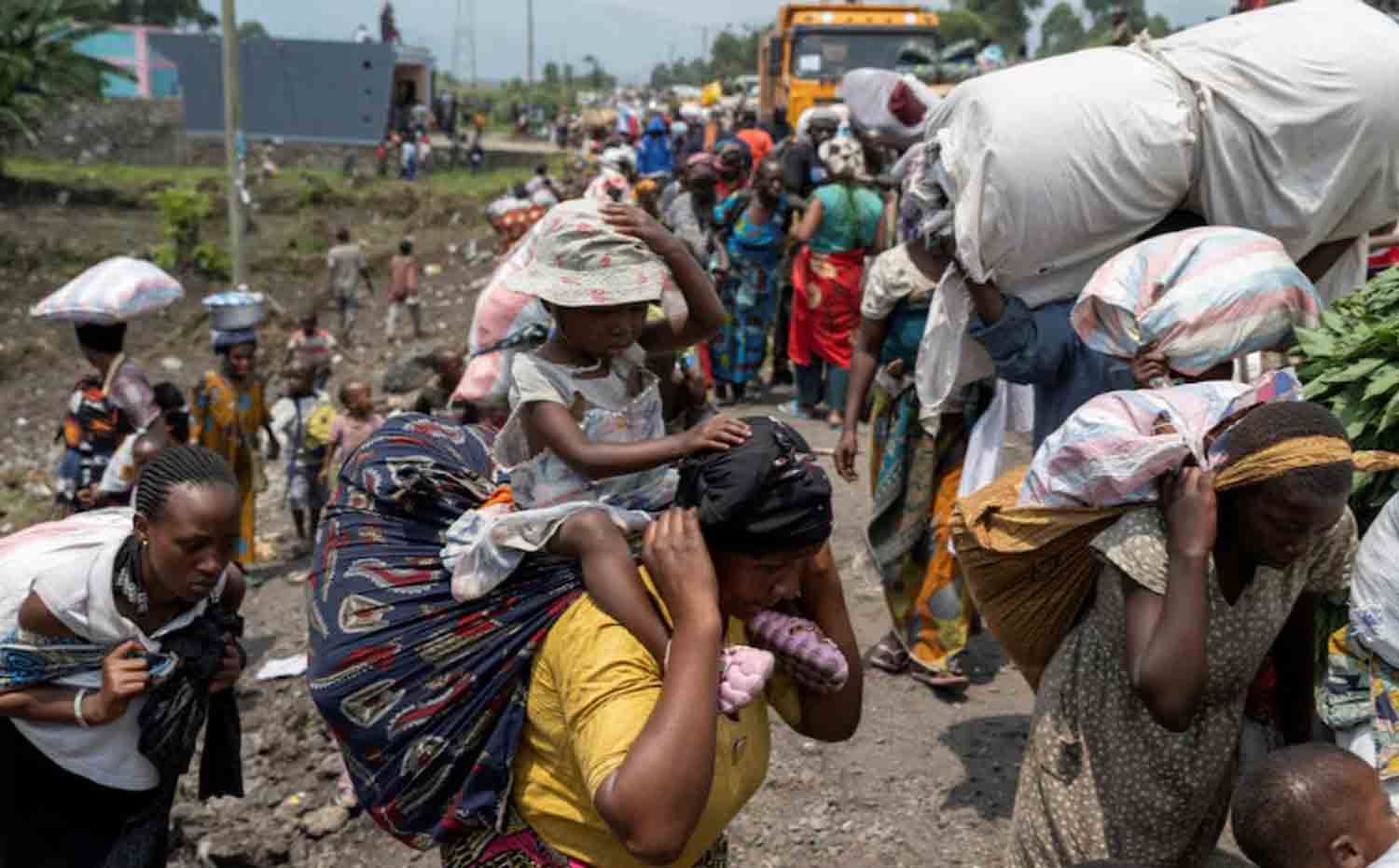
Congolese people carry their belongings as they flee from their villages around Sake in Masisi territory, following clashes between M23 rebels and the Armed Forces of the Democratic Republic of the Congo (FARDC); towards Goma, North Kivu province of the Democratic Republic of Congo.

In a wooden hall on the foothills of North Kivu, hundreds of men and women sit in neat lines—listening not to government instructors, but to commanders of the M23 rebel movement. It is the final day of a two-week “re-education” course.

M23’s leader, Sultani Makenga, asks a question that lands like a declaration: Can only force liberate Congo from misrule in Kinshasa?

The hall shouts back in unison: “Yes, Commander!”

This is not just training. It is the shaping of a political narrative—part of a broader project to transform a rebellion into something resembling a government.

Training citizens to believe in a new state

Participants learn how to handle weapons and perform basic military drills, but the program’s main focus is ideological: Congo’s history, the failures of governance, and M23’s vision of a new federal state rooted in discipline, sacrifice and “proper leadership.”

At the heart of this curriculum is a 32-page M23 charter—now circulating not only among fighters but also among civilians.

This is not merely armed rebellion; it is political education.

Diplomacy on paper, war on the ground

In Washington, a Trump-led diplomatic ceremony recently produced promises of peace between Congo and Rwanda. But the agreement did not include M23—one of the main actors on the ground.

A day after the signatures, heavy fighting continued in eastern Congo.

M23 took part instead in separate talks hosted in Doha—and meanwhile expanded control and recruitment back home.

Diplomacy may be happening in capitals, but the war is being decided in the hills.

The rise of a parallel administration

Over the past year, M23 has built structures that resemble a functioning state:

  • appointment of provincial governors and mayors
  • collection of taxes
  • issuance of travel visas
  • repair of roads
  • dispute-settlement mechanisms
  • its own financial networks

The goal is not simply to control territory, but to govern it.

Residents say the rebels have restored some order after years of chaos, yet strict rules and heavy oversight define everyday life.

A rapidly expanding military force

According to UN analysts, the group now has around 14,000 combatants—nearly triple the size of last year.

Some Congolese soldiers have defected; others joined after surrendering. UN investigations also point to modern weapons and training believed to originate from Rwanda—despite Kigali’s official denial.

M23 is no longer fighting just to survive; it is consolidating territory.

The mineral economy: the real battlefield

Eastern Congo is home to some of the most valuable minerals in the world:

  • coltan
  • gold
  • tin
  • cobalt

M23 has seized 45 mining sites, including the Rubaya mine, which alone produces 15% of the world’s coltan—used in smartphones, advanced electronics and aerospace systems.

UN investigators estimate the rebels earn up to $800,000 a month from taxation and smuggling networks through Rwanda.

Minerals aren’t just an economic resource—they are the engine of the war.

A conflict rooted in history and identity

This region has lived through decades of displacement, genocide trauma, and ethnic violence.

After the 1994 Rwandan genocide, militias flowed into Congo, followed by Rwandan forces. A spiral of wars eventually killed millions.

Today, M23—dominated by ethnic Tutsis—claims to defend communities in the east and accuses Kinshasa of abandoning them, echoing grievances that fueled earlier rebellions.

History here never ends—it mutates.

The future: federation or fragmentation?

Analysts warn that if peace talks collapse and M23 solidifies its authority, Congo may face two possible futures:

1️⃣ a weak federal state
2️⃣ or a de facto partition

Either scenario reshapes Congo’s national identity—and regional geopolitics.

As one researcher put it: “This is not merely rebellion; it is state-formation.”

Life under M23: order and fear

Ten months into rebel control, residents report better security on the streets of Goma and Bukavu—but also fear, surveillance and restrictions.

“You can walk at night now,” one resident says. “But you must follow the rules. Otherwise—be careful.”

A calmer city, but an anxious society.

M23’s project can be summarized in one line:

Build a state where the government collapsed—and keep it.


Clashes Intensify on Cambodia–Thailand Border as Both Sides Vow to Defend Sovereignty

0
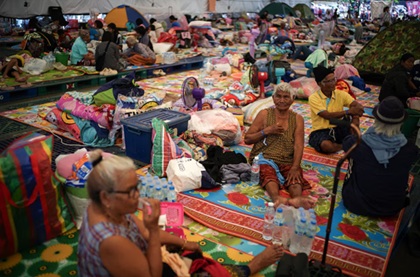
Displaced people gather inside a temporary shelter amid deadly clashes between Thailand and Cambodia along a disputed border area, in Buriram province, Thailand.

Fighting along the disputed border between Cambodia and Thailand escalated on Tuesday, with both Southeast Asian neighbours accusing each other of triggering renewed clashes and pledging not to back down in defending their territorial sovereignty. The violence resumed on Monday, raising fresh questions about the fate of a fragile ceasefire brokered by US President Donald Trump in July.

Former Cambodian leader Hun Sen said his country had waited 24 hours to honour the ceasefire before launching counter-attacks. Writing on Facebook, Hun Sen claimed Cambodia “needs peace” but was “forced to act in defence of its territory,” adding that reinforced bunkers and weapons had given Cambodian forces an advantage against what he called an “attacking enemy.”

Thai military reports wider fighting

Thai military officials said clashes had spread across at least five border provinces. They accused Cambodian forces of using artillery, rocket launchers and bomb-dropping drones to strike Thai positions.

Rear Admiral Sorsant Kongsieree, a spokesperson for Thailand’s defence ministry, said Thailand was committed to protecting its sovereignty and territorial integrity and would take all necessary military measures.

Civilian and military casualties

Cambodia’s defence ministry accused Thailand of “brutal and illegal actions,” saying nine civilians had been killed and 20 seriously wounded since Monday. Thai authorities reported that three soldiers had been killed, while 29 people were injured.

Hun Sen’s son also criticised Bangkok, saying Thailand should not use “sovereignty as a pretext to attack civilian villages.”

Mass evacuations

Both governments said hundreds of thousands of residents had been evacuated from border areas as the clashes intensified.

Tensions have risen since last month, when Thailand suspended de-escalation measures agreed during a Trump-hosted summit. The move came after a Thai soldier was injured by a landmine Bangkok alleged Cambodia had recently planted.

The latest fighting is the most serious since a five-day exchange of rockets and heavy artillery in July, which left at least 48 people dead and displaced 300,000 before Trump intervened to negotiate a ceasefire.

Long-standing border dispute

Cambodia and Thailand have claimed overlapping areas along their 817-kilometre land border for more than a century. Disputes surrounding ancient temple sites and undefined frontier points have repeatedly fuelled nationalism and sporadic armed clashes, including a deadly week of artillery exchanges in 2011.

Analysts note that Thailand holds a clear advantage in military capability, with a larger defence budget, more advanced weapons and fighter aircraft providing air support to ground forces. However, diplomatic ties between the two countries have sharply deteriorated, and there is little clarity on how the ceasefire can be restored.

China’s New Aircraft Carrier ‘Fujian’ Brings Beijing Closer to Challenging US Naval Power in the Pacific

0

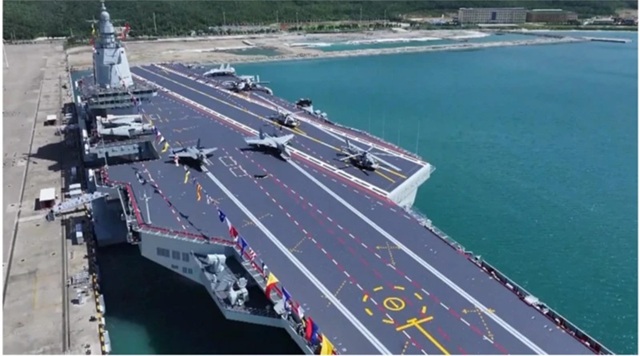
Experts say China’s third aircraft carrier, Fujian, launched in November 2025, is far more advanced than the country’s previous two carriers, marking a significant step in Beijing’s quest to challenge US naval dominance in the Western Pacific.

Weighing around 80,000 tons and named after the Chinese province closest to Taiwan, the carrier can host up to 70 aircraft at a time, including fighter jets, helicopters and early-warning aircraft capable of detecting threats at long range, coordinating air defence and striking distant targets.

A leap toward US-level capability

Fujian is China’s first carrier equipped with a flat flight deck and electromagnetic catapults, enabling the launch of heavier aircraft with greater weapons and fuel loads—technology previously available only to the United States.

According to Taiwan-based defence experts, this capability lifts China’s carrier strike groups to a new level well beyond its earlier carriers, Liaoning and Shandong.

Xi Jinping’s naval vision

Chinese state media have called Fujian a major milestone in the country’s naval development. Reports say President Xi Jinping personally approved the decision to install electromagnetic catapults and attended the carrier’s high-profile commissioning ceremony dressed in military uniform while praising pilots as “heroes.”

Xi has repeatedly asserted that the Pacific Ocean is “big enough for both China and the United States,” signalling Beijing’s ambition to achieve strategic parity.

Regional concerns and US response

Analysts warn that Fujian poses emerging risks to Taiwan’s eastern front from the Pacific side. However, US military bases in Okinawa, South Korea, Guam and the Philippines maintain strong counter-strike capabilities.

By comparison, all 11 US aircraft carriers are nuclear-powered and heavier than Fujian. Experts note that China’s limited overseas bases and Fujian’s diesel engines will require frequent refuelling, constraining its sustained combat range.

Toward a maritime arms race

Despite the growing role of long-range missiles and drones, satellite imagery shows China is already building a fourth carrier and pursuing plans for nuclear-powered platforms.

Some analysts say this trajectory points toward an accelerating naval arms race between the world’s two largest powers.

As one Taiwan-based defence researcher told the New York Times, “The risks exist on both sides—whether it’s China or the United States.”

US Weapons Left in Afghanistan Now Integral to Taliban Defense and Used in Pakistan Attacks, SIGAR Report Says

0

The US Special Inspector General for Afghanistan Reconstruction (SIGAR) has revealed that the United States spent around $144 billion on reconstruction during the 20-year Afghan war, but left behind military equipment worth billions of dollars during the sudden 2021 withdrawal—equipment that has now become part of the Taliban’s military capability and regional influence.

$7 billion in US military equipment abandoned

According to SIGAR, the United States left behind nearly $7 billion in military hardware—including weapons, vehicles and aircraft—most of which was originally supplied to the Afghan National Security Forces during the two decades of US presence. The report notes that all of this equipment had been financed by American taxpayers and is now benefiting the Taliban and other militant groups.

Massive US investment in Afghan security forces

The report states that more than $31 billion was spent on Afghan security forces, including the supply of 96,000 ground combat vehicles, over 23,000 multi-purpose mobility vehicles, more than 427,000 weapons, 17,000 night-vision devices and 162 aircraft. Prior to the fall of Kabul, the Afghan forces had 162 US-made aircraft, of which 131 were operational.

Pakistan says US weapons now fuel terrorism

Pakistan has repeatedly expressed concern that US-supplied weapons have been transferred by the Taliban to the Tehreek-e-Taliban Pakistan (TTP) and are being used against security forces in Pakistan. Islamabad argues that the surge in militant attacks on its soil is directly linked to modern equipment obtained from Afghanistan after the Taliban takeover.

Earlier this year, the United Nations also reported that the Taliban continues to provide shelter, operational support and weapons to the TTP despite Pakistan’s objections.

Taliban deny accusations

The Taliban government rejects these allegations, claiming that Afghan territory is not being used against any neighboring country and describing terrorism in Pakistan as an “internal issue” of Islamabad.

Videos and field assessments

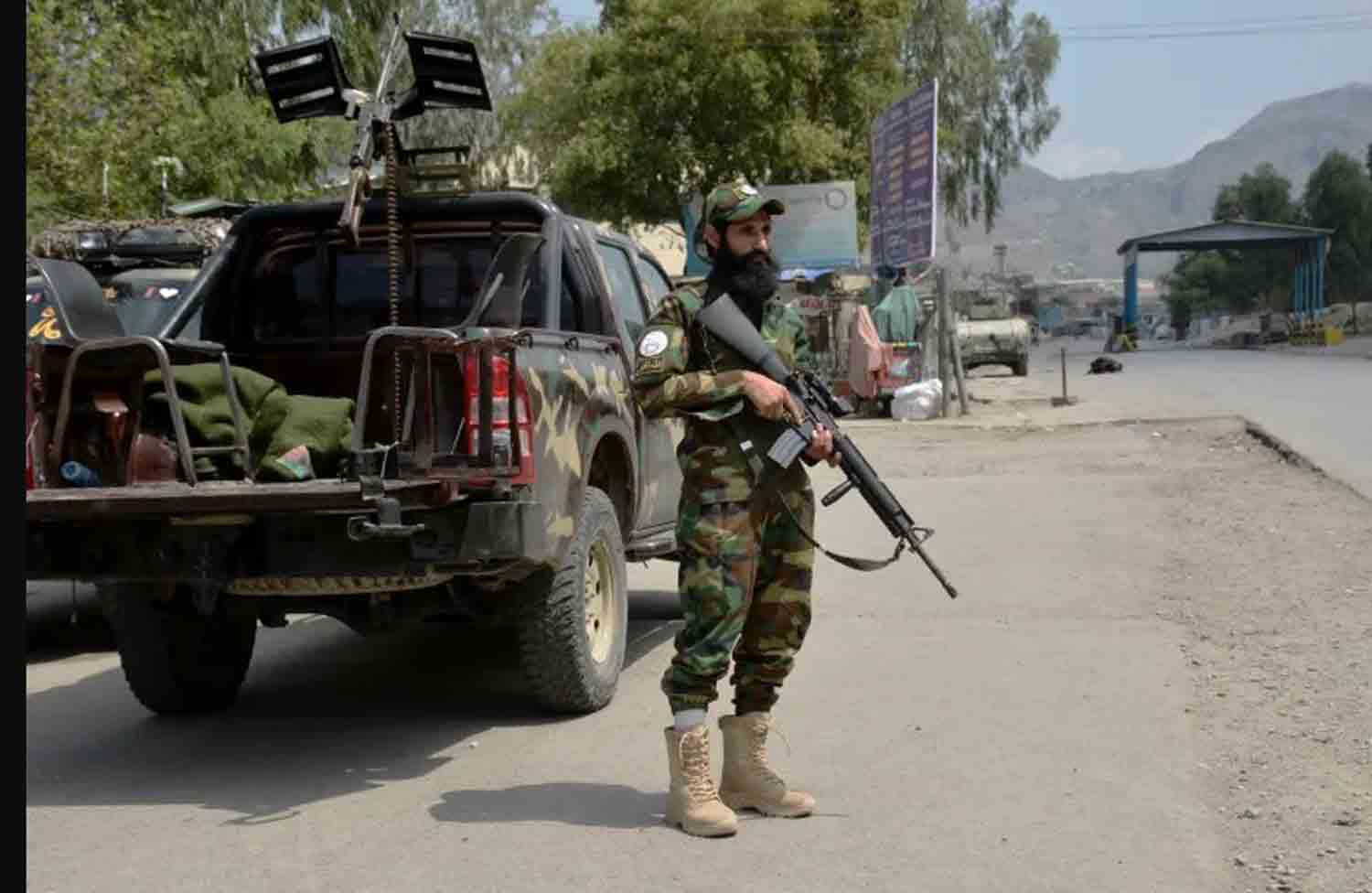
Footage from recent border clashes indicates that Taliban fighters are using mostly light and medium-range US-made weapons, including M-series rifles, machine guns, RPGs and night-vision devices. Military experts confirm this trend and say that such weapons have already made their way into Pakistan, Iran and Central Asian markets through smuggling and black-market networks.

Black market spread and regional risk

Experts argue that weapons abandoned after the US withdrawal have gone the same route as Soviet-era arms—widely trafficked and sold commercially after the Soviet exit in the 1980s. According to analysts, the Taliban consider these weapons as “war gains,” making any US attempt to reclaim them practically impossible.

Islamabad remains concerned

Pakistan maintains that the uncontrolled flow of advanced US weapons into militant hands has increased the threat of insurgency within its territory. Islamabad believes that any US initiative aimed at retrieving or neutralizing such arms would contribute to regional security, although such a move appears increasingly unlikely due to the widespread dispersion of the weapons.

Trump’s New Security Strategy Pivots Hard to China, Economic Nationalism — and India-Focused South Asia

0
President Donald Trump speaks at an event to sign the Laken Riley Act, legislation requiring the detention of immigrants living in the U.S. illegally who are accused of theft, at the White House, in Washington, U.S.

The White House has released President Donald Trump’s 2025 National Security Strategy (NSS), a 33-page document that sharply narrows America’s global ambitions, casts China as the principal long-term rival, and openly pressures allies to fall in line with a more transactional U.S. agenda.

Framed as a corrective to “globalism” and decades of overreach, the strategy rejects the idea of permanent U.S. global dominance and instead defines a tight list of “core, vital national interests” — from a secure Western Hemisphere to a “free and open Indo-Pacific” and continued American edge in critical technologies like AI, biotech and quantum.

It also makes clear that, in South Asia, Washington’s center of gravity is now India. Pakistan and Afghanistan do not appear in the text at all.

Break with the post–Cold War consensus

The document opens with a blistering critique of U.S. foreign policy since the 1990s, accusing “elites” of chasing an “undesirable and impossible” goal of ruling the world while hollowing out the very industrial and middle-class base on which U.S. power depends.

Instead, the strategy says America’s foreign policy will be judged against a narrow checklist:

  • Survival and safety of the U.S. as a sovereign republic.
  • Protection of the homeland from military attack and “hostile foreign influence,” including predatory trade, propaganda and cultural subversion.
  • Full control of borders and migration flows.
  • The world’s strongest military, nuclear deterrent and energy sector.
  • A robust industrial base and reindustrialization as “highest priority” economic policy.

Longstanding language about upholding a “rules-based international order” is replaced by repeated references to core interests, borders, and economic security.

Economic security at the heart of national security

More than recent strategies under either party, the NSS fuses domestic economic policy with grand strategy:

  • It declares that reindustrializing the U.S. economy and unleashing domestic energy production are central to national power, not just prosperity.
  • It ties Trump’s tax cuts, deregulation and pushback against “DEI” directly to restoring institutional “competence” and competitiveness.
  • It calls for protecting supply chains and intellectual property and confronting “predatory” practices by foreign competitors — a thinly veiled reference to China.

Foreign policy, the document argues, must stop “allowing allies and partners to offload the cost of their defense onto the American people,” and must stop accepting trade and financial arrangements that damage the U.S. middle class.

Re-bargaining the deal with allies

Allies in Europe and the Indo-Pacific are put on notice: Washington wants their help, but on new terms.

Europe and NATO

In Europe, the U.S. promises to “support our allies in preserving the freedom and security of Europe” — but also insists the continent must assume primary responsibility for its own defense as “aligned but sovereign nations.”

The strategy explicitly warns against NATO becoming a “perpetually expanding alliance,” a subtle but significant departure from the open-door language favored by many European governments.

Beyond defense, the document criticizes European migration policies, censorship trends and demographic decline, and speaks favorably of “patriotic European parties” — a notable ideological tilt that could sharpen tensions with several EU governments.

Indo-Pacific allies

In Asia, the tone is both reassuring and demanding. The U.S. vows to help “keep the Indo-Pacific free and open,” preserve freedom of navigation, and deny aggression inside the First Island Chain — the arc of territory from Japan through Taiwan to the Philippines.

But it also pushes allies such as Japan, South Korea and Australia to:

  • Spend more on defense,
  • Grant expanded access to ports and facilities, and
  • Invest in specific deterrent capabilities aimed at China.

The message: Washington still sees itself as the backbone of deterrence, but wants others to carry more weight — financially, politically and militarily.

China at the center of the new strategy

China occupies pride of place in the strategy and is clearly labeled the primary systemic competitor.

The document argues that three decades of “mistaken” engagement made China richer but “neither freer nor more peaceful,” and that the U.S. must now push for a “rebalanced, reciprocal relationship” that focuses on non-sensitive trade while confronting Beijing on five fronts:

  1. Predatory subsidies and overcapacity that distort global markets.
  2. IP theft and industrial espionage.
  3. Supply-chain vulnerabilities, including critical minerals.
  4. Fentanyl precursor exports fueling the U.S. drug crisis.
  5. Propaganda and cultural influence operations.

On the security side, the strategy:

  • Reaffirms opposition to any unilateral change of the Taiwan status quo.
  • Calls for preserving U.S. military “overmatch” and building a posture that can deny aggression in the First Island Chain.
  • Highlights the South China Sea as a potential choke point where coercion could threaten one-third of global shipping — and calls for deeper cooperation from “India to Japan and beyond” to keep those lanes open.

Rather than full decoupling, the NSS sketches a model of managed coexistence plus hard deterrence: economic pushback, supply-chain reshoring, and tech controls, paired with a more muscular regional military posture.

South Asia: India elevated, Pakistan and Afghanistan sidelined

Nowhere is the strategy’s strategic reframing more visible than in South Asia.

  • The terms “South Asia,” “Pakistan,” and “Afghanistan” do not appear in the document.
  • India, by contrast, is referenced repeatedly — both as a key Indo-Pacific partner and as a pivotal actor in the broader Global South.

The NSS calls for:

  • Strengthening commercial relations with India.
  • Deepening defense and strategic cooperation, notably via the Quad alongside Japan and Australia.
  • Enlisting India, alongside European and Asian allies, in competing with China for infrastructure, investment and critical minerals in the Global South.

The absence of Pakistan and Afghanistan signals a major downgrade. Regional issues that once dominated U.S. agendas — cross-border militancy, Afghan stability, India-Pakistan crisis management — are no longer framed as central to American “vital interests.”

Instead, the region is viewed primarily through:

  • An Indo-Pacific maritime lens (sea lanes, chokepoints, China’s naval presence), and
  • A Global South economic lens (infrastructure, supply chains, and competition with China’s Belt and Road–style initiatives).

For New Delhi, the strategy is both opportunity and obligation: India is given an upgraded role, but also clear expectations that it will spend more on defense, align more closely on tech and supply-chain policy, and shoulder more responsibility in the Indian Ocean and Southeast Asia.

For Islamabad and Kabul, the signal is sobering: unless terrorism or nuclear risk spikes in ways that directly touch U.S. homeland security or great-power competition, Washington’s strategic gaze is drifting elsewhere.

A narrower, harder U.S. posture

Taken together, the 2025 National Security Strategy describes a United States that:

  • Defines fewer vital interests,
  • Puts economic and industrial power at the center of security,
  • Treats China as the primary, enduring challenger,
  • Leans heavily on like-minded allies — especially in Europe and the Indo-Pacific — but on more explicitly American terms, and
  • Reimagines South Asia with India at the core and Pakistan and Afghanistan on the margins.

Whether allies, rivals and regional actors adapt to this sharper, more transactional U.S. posture will go a long way toward determining how stable — or turbulent — the coming decade becomes.

US Presses Europe to Take Over NATO Defense by 2027

0


The Pentagon has delivered a blunt message to European diplomats this week: the United States wants Europe to assume full responsibility for NATO’s conventional defense capabilities — from intelligence to missile systems — by 2027. Several European officials immediately questioned the feasibility of the deadline, calling it “unrealistic.”

The message was conveyed during a high-level meeting in Washington between Pentagon staff overseeing NATO policy and multiple European delegations. If implemented, the shift would dramatically redefine how the U.S., a founding member of NATO, cooperates with its most important military partners.

Pentagon Concerned Over ‘Insufficient Progress’ Since 2022

According to officials present at the meeting, the Pentagon expressed frustration that Europe has not made the expected progress in strengthening its defense capabilities since Russia’s full-scale invasion of Ukraine in 2022.

U.S. officials warned that if Europe fails to meet the 2027 deadline, Washington may withdraw from certain NATO defense-coordination mechanisms, effectively reducing its operational role within the alliance.

Capitol Hill lawmakers have also been briefed on the Pentagon’s position, with some reportedly alarmed by the implications for transatlantic security.

Europe Pushes Back: “Money Alone Won’t Fix This”

European officials say that the proposed deadline does not reflect the operational and industrial realities on the ground. Beyond political will and increased spending, Europe faces structural challenges:

  • Insufficient production capacity in its defense-industrial base
  • Long delivery timelines for advanced U.S.-made systems Washington wants Europeans to buy
  • Gaps in high-end capabilities that cannot simply be purchased off the shelf

Even if Europe places immediate orders, several high-value U.S. weapons and defense systems would take years to deliver.

Intelligence: The Most Difficult Gap to Fill

The U.S. also contributes capabilities that cannot be replicated quickly — including strategic intelligence and advanced surveillance, which have been central to Ukraine’s battlefield successes.

A NATO official acknowledged that European allies have begun assuming a greater share of the continent’s security burden, but declined to comment on the 2027 deadline specifically.

“Allies recognize the need to invest more in defense and to shift more of the conventional burden from the United States to Europe,”
the official said.

The Trump Factor: Mixed Signals, Consistent Pressure

European governments have largely accepted former and current U.S. demands that they take greater responsibility for their own security. The European Union has set its own target of preparing the continent for independent defense capability by 2030, including improvements in air defense, drones, cyber operations, ammunition production, and other critical areas.

However, the broader U.S. posture remains clouded by political uncertainty:

  • During the 2024 campaign, Donald Trump frequently criticized European allies
  • He even suggested he would encourage Vladimir Putin to attack NATO countries that failed to spend enough on defense
  • Yet at the NATO Summit in June, he praised European leaders for supporting a U.S. plan to raise annual defense spending targets to 5% of GDP

This week, U.S. Deputy Secretary of State Christopher Landau reiterated Washington’s stance at the NATO foreign ministers’ meeting:

“It is clear that Europe must assume responsibility for its own defense.”

From Moscow’s Winter Streets to Syria’s Crumbling Coast: Inside the Exiled Assad Loyalists’ Bid to Ignite a New War

0

In a luxury Radisson hotel overlooking the frozen avenues of Moscow, two of Syria’s most notorious power brokers—Major General Kamal Hassan and billionaire Rami Makhlouf—are quietly drafting the blueprint of a new conflict. Once pillars of Bashar al-Assad’s authoritarian state, both men now live in gilded exile, stripped of the authority they enjoyed for decades. Yet the trappings of exile have not cooled their ambitions. Their eyes remain fixed on Syria’s coastal heartland, where they hope to rebuild an empire from the ashes of Assad’s fallen regime.

This is the story of a war the world assumed was over—yet one that may be preparing to return.

A New Battlefield Born in Exile

In his Moscow hotel suite, Rami Makhlouf—the tycoon who once controlled vast sectors of Syria’s economy—spends his days between prayer, writing, and phone calls to field commanders scattered across Syria, Lebanon, and the Gulf. On his desk lie three thick manuscripts on Islamic interpretation, drafted during years of isolation under house arrest in Damascus.

Makhlouf now describes himself as a man chosen for a divine mission.
“God gave me wealth and influence so I may lead my people in the final battle,” he told associates in voice messages circulated among Alawite networks.

Across town, in a quiet suburb, Kamal Hassan, Assad’s ruthless former military intelligence chief, lives in a three-story villa. His voice notes to old operatives sound like commands to a defeated army he still believes he can resurrect:
“Be patient, my people. Do not lay down your arms. The time will come.”

Both men share the same wound—loss of power—and the same dream: to carve out a new Alawite power base along the Syrian coast.

The 14 Underground Command Centers: Assad’s Last Legacy

In the final months of Bashar al-Assad’s rule, his security apparatus carved out 14 subterranean command bunkers beneath Tartous, Latakia, and other coastal towns. Conceived as last-resort fortresses in the event of Damascus’ fall, these bunkers now lie at the heart of a silent struggle.

Hassan and Makhlouf both want control of them.
Whichever man wins that contest will command the weapons stockpiles, the encrypted communications systems, and the hardened networks of officers who once defended the regime’s most strategic territory.

The question is no longer whether a new conflict is being prepared, but who will own it.

Two Rivals, One Goal: Rebuild Power from the Ruins

Kamal Hassan

  • Former head of Military Intelligence
  • Claims loyalty of nearly 12,000 fighters
  • Has spent roughly $1.5 million funding militias since March
  • Employs 30 former state hackers to sabotage the new government
  • Sees himself as the rightful custodian of Alawite “honor”

Rami Makhlouf

  • Once controlled over a third of Syria’s economy
  • Claims a force of 54,053 fighters, including 18,000 officers
  • Pays fighters $20–$30 per month, distributing millions through intermediaries
  • Frames his return as part of a prophetic end-times battle
  • Smuggles weapons and funds through networks in Lebanon, Russia, and the UAE

The two men detest each other but are bound by a shared desperation:
Neither can return to Syria without seizing power by force.

The Wild Card: Maher al-Assad

Perhaps the most pivotal figure in this unfolding drama is Maher al-Assad, the former commander of the 4th Armored Division and Bashar’s powerful younger brother.
He, too, is now in Moscow.

Despite exile, Maher still commands the loyalty of thousands of elite veterans across Syria. His business empire—protected through shell companies—remains largely intact.

Multiple former officers say the same thing:
“If Maher gives the order, thousands will mobilize overnight.”

Hassan and Makhlouf both want him.
Neither can control him.
And Maher has not yet chosen sides.

The New Syrian Government Strikes Back

In Damascus, the newly established government of President Ahmed al-Sharaa is well aware of the danger brewing abroad.
To counter the plot, it has deployed a man uniquely suited to the mission—Khaled al-Ahmad, Sharaa’s childhood friend and a former loyalist who defected in Assad’s final months.

Al-Ahmad’s task is surgical:

  • Meet secretly with former Alawite officers
  • Convince communities that their future lies with the new state, not exiled warlords
  • Undercut the sectarian narrative weaponized by Hassan and Makhlouf

The governor of Tartous, Ahmed al-Shami, confirmed the government is tracking the plotters closely:
“They lack tools, they lack capacity, and most importantly—they lack trust among the people.”

A Coast on Edge: Fear, Fatigue, and Daily Killings

In March, after a failed uprising in a coastal Alawite town, pro-government forces killed nearly 1,500 civilians.
Since then, kidnappings and targeted killings occur almost daily.

Ordinary Alawites—who suffered immensely under Assad’s rule despite being portrayed as its beneficiaries—are exhausted. They fear another war yet feel unprotected by the new government.

A former intelligence officer now living in Lebanon described the mindset driving militias toward renewed conflict:
“Our dignity can only be restored through blood. Maybe thousands will die, but sacrifices must be made.”

It’s the rhetoric of men who have lost everything—except their appetite for war.

Russia’s Changing Calculus: From Kingmaker to Distant Landlord

For years, Russia acted as Assad’s military backbone.
Today, Moscow’s priority is simpler: protect its coastal bases and avoid another messy Syrian conflict.

Russian officials have met separately with Hassan and Makhlouf, but have offered no support. Instead, they appear to be grooming General Ahmed al-Mulla, a senior Syrian officer with long-standing Russian citizenship, as a potential mediator—or spoiler.

President al-Sharaa raised the issue directly with Moscow during his October visit.

The message from Russia was clear:
No new war. No new Assad.


Money: The One Resource Both Plotters Are Running Out Of

Makhlouf’s assets are frozen under international sanctions.
Hassan’s personal networks provide limited funding.
Their fighters are poorly paid, poorly equipped, and increasingly skeptical.

Commanders on the ground admit openly:
“They pay us, we take it. But no one is ready to fight for them.”

Without a financial lifeline—or Maher al-Assad—neither man can launch a full-scale coastal revolt.

Is a New Uprising Likely?

Given the current dynamics:

  • Low public appetite for renewed conflict
  • Bitter rivalry between Hassan and Makhlouf
  • Russia’s refusal to back either side
  • Government countermeasures already underway
  • Exhaustion among Alawite communities

A large-scale uprising appears unlikely in the short term.

But the danger has not passed.

If Maher al-Assad throws his weight behind either man—or if coastal insecurity deepens—Syria could slip once again into a devastating sectarian war.

Conclusion: The Most Dangerous Silence Is the One Before a Storm

The world may believe Syria’s war has ended.
But in Moscow’s hidden suites and Syria’s tense coastlines, powerful exiles are preparing for a conflict the region cannot afford.

A regime has fallen.
A state is rebuilding.
And amid the ruins, the ghosts of Syria’s past are trying to rise again.

Peace or a Price? Trump’s Ukraine Deal Hits Impasse After Midnight Kremlin Talks

0

A late-night round of high-stakes negotiations between U.S. envoys and Russian President Vladimir Putin ended without agreement on Wednesday, stalling President Donald Trump’s push for a sweeping peace plan to end Russia’s nearly four-year war in Ukraine.

The five-hour meeting inside the Kremlin’s Senate Palace — the first in-person session between Trump’s inner circle and Putin since August — produced what Russian officials called “some acceptable elements” but failed to resolve fundamental disputes over territory, security guarantees, and the future of Ukraine’s military.

Senior Kremlin adviser Yuri Ushakov said the U.S. presented a “refined framework” for Trump’s controversial 28-point peace proposal, which has been revised repeatedly following intense backlash from Kyiv and Europe. While Moscow signaled cautious interest in humanitarian and economic components, Ushakov flatly rejected key provisions limiting Ukraine’s military and requiring concessions on contested territory.

“Core issues remain unsuitable,” Ushakov told reporters. “Russia cannot negotiate away realities on the ground.”

Those “realities” include Moscow’s control over nearly 19% of Ukrainian territory — an outcome Kyiv refuses to recognize.

Ukraine Pushes Back as U.S. Tweaks the Plan

The U.S. delegation — led by presidential envoy Steve Witkoff and adviser Jared Kushner — arrived in Moscow after a week of intense shuttle diplomacy that included a private session with Ukrainian officials in Miami. That meeting produced several changes to the proposal:

  • A permanent NATO ban softened to a 10-year membership freeze;

  • Proposed territorial transfers reframed as demilitarized buffer zones pending arbitration;

  • Control of reconstruction funds shifted more heavily toward Kyiv;

  • U.S. share of profits from frozen Russian assets reduced from 50% to 30%.

Ukrainian President Volodymyr Zelenskyy acknowledged the improvements but insisted that sovereignty and alliances remain “non-negotiable.”

“There will be no deal behind Ukraine’s back,” Zelenskyy warned during a visit to Paris.

Polls show 69% of Ukrainians support a negotiated peace, but 80% oppose ceding land.

Europe Splits as Pressure Mounts

European reactions have hardened in recent days. French President Emmanuel Macron and German Chancellor Friedrich Merz have urged Washington to remove clauses they say “reward aggression,” while Britain’s Keir Starmer backed a European counter-proposal requiring post-war arbitration over disputed territories.

Inside Brussels, officials warn of donor fatigue after more than €100 billion in aid since 2022 — yet insist any settlement must include Ukraine at the table.

NATO Secretary-General Jens Stoltenberg cautioned that ignoring Kyiv’s red lines risks “legitimizing the use of force in Europe.”

What Russia Wants

Putin set expectations low before the talks, accusing Europe of “sabotage” and claiming Russian forces had seized new ground in Donbas — a claim Kyiv disputes. His negotiating team presented its own four-chapter counterdocument covering peace terms, European security architecture, and U.S.–Russia relations.

Officials say Putin praised Trump’s “initiative” but repeated two non-negotiables:

  • Russia keeps full control of Donbas;

  • Ukraine’s status remains permanently neutral.

Analysts say the Kremlin believes time favors Moscow: Russian forces gained more ground in 2025 than any year since the invasion began.

Three Possible Outcomes

1. “Cold Peace” in 2026

A Korean-style armistice with demilitarized zones and reconstruction funding. Fighting stops but political disputes remain.

2. War Grinds On

Most likely scenario: continued fighting, no treaty, and mounting casualties as neither side concedes territory or neutrality.

3. Interim Ceasefire

A temporary U.S.-brokered freeze — front lines hold, humanitarian corridors open, but no legal settlement.

The Stakes Couldn’t Be Higher

Trump calls the plan “not easy, but necessary,” warning Ukraine risks “losing even more” if talks collapse. European leaders counter that a flawed deal could entrench Russian power for a generation.

With more than one million casualties since 2022, and Putin insisting territorial “realities” are not negotiable, the road to any sustainable peace remains perilously narrow.

The G2 Moment: How Trump’s Tweet Redefined Global Power

0

A Tweet That Shook the World

Before meeting Chinese President Xi Jinping, U.S. President Donald Trump posted a short message on social media — written entirely in capital letters:
“THE G2 WILL BE CONVENING SHORTLY.”

That single phrase sent shockwaves through diplomatic and media circles. American commentators instantly decoded it as a reference to the world’s two largest economies — the United States and China — suggesting the rise of a new format, the G2, much like the G7 but with only two seats at the table.

Yet, behind this apparently casual remark lay a calculated signal. Trump was not merely talking economics; he was sketching a new map of global power — a return to a bipolar world, where only Washington and Beijing truly matter.

The Message Between the Lines

Trump’s statement did more than hint at economic cooperation. It sought to position China not as a rival to be contained but as an equal in the hierarchy of global power. By invoking the idea of “G2,” Trump appeared to accept the inevitability of China’s rise while simultaneously trying to frame it as a shared stage rather than a confrontation.

The timing and tone were deliberate. This was not a slip of the tongue; it was a message aimed at several audiences — Beijing, America’s allies, and perhaps most importantly, New Delhi.

India’s Discomfort with the G2 Narrative

In India, Trump’s post landed like a diplomatic jolt. For a nation eager to project itself as a rising superpower, the notion of a “G2” left no space for a “third.”

Indian analysts and media voices were quick to dismiss Trump’s remark as thoughtless or impulsive. Some accused him of flattering foreign leaders, others of destabilizing the delicate balance of international politics. Yet, beneath the criticism lay an unspoken anxiety: India had been sidelined in a world increasingly defined by U.S.–China competition.

While China built its power quietly — investing in technology, manufacturing, and global influence — India’s ambitions often outpaced its capabilities. It still relies on Europe and Russia for fighter jets, struggles under American tariffs, and depends heavily on the U.S. job market for its skilled workers. Despite Trump calling Prime Minister Narendra Modi a “great friend,” real policy breakthroughs remain scarce — and the unease, it seems, lies in New Delhi, not Washington.

Strategic Optics: From Seoul to Tokyo

Some observers found it odd that Trump invoked the “G2” concept while in South Korea, a nation still hosting U.S. troops. During that trip, he approved plans to assist Seoul in developing nuclear-powered submarines. Days later, in Japan, he addressed American soldiers alongside the country’s new prime minister.

But these gestures were hardly inconsistent. The U.S. continues to maintain a dense military network across Asia, even as it acknowledges China’s ascent. The competition remains intact, but so does the economic interdependence. For now, rivalry and cooperation coexist — a paradox that defines the 21st-century balance of power.

Regional Reactions: Anxiety and Assurance

While India’s media fretted over Trump’s tone, the rest of the region reacted with calm restraint. Even Taiwan, the player most directly exposed to Beijing’s ambitions, projected confidence. Its foreign minister noted that Taipei had “close contact and trust” with Washington and saw no reason for alarm.

Those who claim that Trump accepted China’s dominance overlook a crucial fact: the message came alongside a show of military resolve.

Power and Posturing: The Military Undercurrent

Just before the Trump–Xi meeting, the United States initiated two significant defense moves:

  • The first U.S. nuclear exercises since 1992, signaling strategic readiness.
  • Orders to U.S. forces in the South China Sea to conduct precision targeting drills using HIMARS (High Mobility Artillery Rocket Systems).

According to CNBC, the exercises were intended to demonstrate Washington’s unwillingness to yield space in the Indo-Pacific. The HIMARS — built by Lockheed Martin and famed for their accuracy in Iraq and Afghanistan — symbolized America’s determination to stay militarily relevant even as it spoke the language of cooperation.

Trade, Minerals, and Mutual Need

At the heart of the Trump–Xi dialogue was the long-running dispute over rare earth minerals, vital to advanced technology and defense industries. Trump announced that the issue had been resolved, with Beijing agreeing to ease export restrictions.

China’s Foreign Ministry confirmed that the two leaders reached “consensus on major economic and trade issues.” The ministry also revealed that Trump would visit China the following April, and Xi had been invited to the United States in return.

Meanwhile, the Chinese Ministry of Commerce suspended special port fees targeting U.S. naval ships — another gesture of détente.

A Recognition of Equals

The outcome was unmistakable: Washington had, perhaps reluctantly, acknowledged China as a true superpower. More importantly, it learned that Beijing cannot be coerced through pressure or intimidation.

The United States may browbeat allies like India or Canada into trade concessions, but with China, the rules are different — the only viable path is negotiation between equals.

Epilogue: A Tweet That Marked a Turning Point

When Trump later spoke to reporters aboard Air Force One, he called his meeting with Xi “excellent.” On a scale of zero to ten, he rated it a twelve.

Behind the bravado lay a simple truth: with one tweet, Trump had acknowledged a new world order — one in which the United States no longer stands alone, and the global stage has space for only two leading powers.


Putin’s Nuclear Saber-Rattling: Russia’s Strategic Drills Amid Ukraine War and Trump’s Peace Push

0
Yars intercontinental ballistic missile systems
In a move that reverberated across global capitals, Russian President Vladimir Putin oversaw a high-profile strategic nuclear exercise, dubbed “Grom,” on Wednesday, October 22, 2025. The drills, involving Russia’s nuclear triad of land-, sea-, and air-based forces, tested the country’s ability to authorize and deploy nuclear weapons. Conducted hours after U.S. President Donald Trump postponed a planned summit with Putin in Budapest, the timing of the exercises has sparked intense speculation about their intent. Are they a routine test of Russia’s deterrence capabilities, or a calculated message to the West amid the ongoing Ukraine war and Trump’s nascent peace efforts?

The “Grom” Exercises: A Display of Nuclear Might

The “Grom” (Thunder) drills are an annual event in Russia’s military calendar, designed to ensure the readiness of its strategic nuclear forces. On October 22, Putin participated via videoconference, receiving updates from Chief of the General Staff Gen. Valery Gerasimov. The exercises tested the entire nuclear triad, a cornerstone of Russia’s defense strategy, capable of delivering devastating strikes across continents. According to the Kremlin, all objectives were met, confirming the reliability of Russia’s command-and-control systems.The drills included:

  • Land-Based Component: A RS-24 Yars intercontinental ballistic missile (ICBM) was launched from the Plesetsk Cosmodrome in northwestern Russia, targeting the Kura test range in Kamchatka, near the U.S. border in eastern Russia. The Yars, with a range exceeding 11,000 km, can carry multiple nuclear warheads, making it a potent strategic weapon.
  • Sea-Based Component: The nuclear-powered submarine K-117 Bryansk, a Project 667BDRM Delfin-class vessel, fired an R-29RMU Sineva submarine-launched ballistic missile (SLBM) from the Barents Sea, demonstrating Russia’s ability to strike from its maritime forces.
  • Air-Based Component: Tu-95MS strategic bombers launched long-range cruise missiles, showcasing the air leg of the triad’s flexibility in delivering nuclear payloads.

The Kremlin emphasized that the drills were pre-planned and routine, aimed at maintaining the operational readiness of Russia’s nuclear deterrent. Yet, their execution amid heightened geopolitical tensions suggests a broader strategic purpose.

The Ukraine War: A Backdrop of Escalation

The “Grom” exercises unfold against the backdrop of the Ukraine war, now grinding through its third year. Russian forces have made slow but costly advances in eastern Ukraine, particularly in Donetsk, while Ukraine has mounted bold counteroffensives, including incursions into Russia’s Kursk region. The conflict has seen escalating Western support for Ukraine, with NATO countries supplying advanced weaponry like HIMARS and Storm Shadow missiles. Russia, in response, has repeatedly invoked its nuclear capabilities to deter deeper Western involvement, with Putin updating Russia’s nuclear doctrine to allow for nuclear retaliation against conventional attacks threatening its sovereignty. The drills serve multiple purposes in this context:

  • Deterrence: By showcasing the operational readiness of its nuclear triad, Russia aims to dissuade NATO from escalating its support for Ukraine, particularly in response to Kyiv’s calls for long-range missiles like ATACMS to strike deeper into Russian territory.
  • Psychological Warfare: The widely publicized launches, with footage circulating on platforms like X, project strength to both domestic and international audiences. For Russians facing economic sanctions and battlefield setbacks, the drills reinforce national resolve. For Ukraine and its allies, they serve as a chilling reminder of the stakes.
  • Strategic Messaging: The exercises underscore Russia’s ability to escalate to catastrophic levels if pushed, particularly as Ukraine’s cross-border operations challenge Russian territorial integrity. This aligns with Putin’s rhetoric framing the war as an existential struggle against Western encroachment.

Trump’s Peace Push: A Delicate Dance Disrupted

Since his inauguration in January 2025, President Trump has made ending the Ukraine war a cornerstone of his foreign policy, promising a swift resolution through negotiation. His administration has initiated high-level contacts with Moscow, including a call between U.S. Secretary of State Marco Rubio and Russian Foreign Minister Sergey Lavrov. A summit with Putin was planned in Budapest, Hungary, hosted by Hungarian Prime Minister Viktor Orbán, a leader with ties to both leaders. However, on October 22, Trump announced the summit’s postponement, citing the need to avoid a “waste of time” until both sides are prepared for productive talks.The “Grom” drills, conducted hours after this announcement, have fueled debate about their intent:

  • A Message to Trump? Some analysts interpret the exercises as a deliberate “taunt” to Trump, signaling that Russia negotiates from a position of strength. By flexing its nuclear muscle, Putin may be pressuring the U.S. to offer concessions, such as easing sanctions or limiting NATO’s role in Ukraine, as prerequisites for talks.
  • Routine or Strategic? The Kremlin insists the drills are routine, and their annual nature supports this claim. However, Putin’s personal oversight and the timing—coinciding with the summit delay—suggest a strategic intent to underscore Russia’s resolve. Kremlin spokesman Dmitry Peskov noted that both leaders prioritize efficiency, but the drills may indicate Russia’s reluctance to compromise without significant U.S. concessions.
  • Impact on Diplomacy: The exercises complicate Trump’s peace efforts by reinforcing Russia’s hardline stance. Trump’s vision of a deal likely involves territorial concessions from Ukraine and guarantees of neutrality, but Russia’s nuclear posturing suggests it may demand recognition of annexed territories like Crimea and Donbas. The summit’s postponement reflects Trump’s caution, possibly awaiting clearer signals from Moscow or stronger domestic support for negotiations.

Global and Domestic Reactions

The drills have elicited varied responses, reflecting the high stakes of the moment:

  • NATO and the West: NATO is conducting its own nuclear deterrence exercises this month, creating a tense backdrop of mutual posturing. Western leaders, particularly in Europe, are wary of Russia’s actions, with some urging Trump to maintain a firm stance against nuclear intimidation. The drills reinforce concerns about escalation risks, especially if miscalculations occur in Ukraine.
  • Global South: Countries like China and India, which have maintained neutrality in the Ukraine conflict, are likely monitoring the situation closely. Russia’s nuclear saber-rattling may strain its partnerships with nations advocating de-escalation, while Trump’s peace push could gain traction if he positions himself as a mediator capable of averting a broader crisis.

Strategic Implications and the Path Forward

The “Grom” exercises highlight the delicate balance of deterrence, diplomacy, and brinkmanship in the Ukraine war and U.S.-Russia relations:

  • For Ukraine: The drills underscore the existential threat of Russia’s nuclear arsenal, potentially pressuring Kyiv to temper its military ambitions, such as reclaiming occupied territories. Ukraine’s reliance on Western aid makes it vulnerable to shifts in U.S. policy, especially if Trump prioritizes a quick deal over sustained support.
  • For Russia: The exercises reinforce Putin’s narrative of Russia as a great power capable of countering Western influence. By showcasing nuclear capabilities, Russia aims to deter deeper NATO involvement and secure leverage in peace talks. However, this risks further diplomatic isolation if perceived as reckless.
  • For Trump: The drills test Trump’s ability to navigate a complex geopolitical landscape. His peace initiative hinges on persuading both Russia and Ukraine to compromise, but Russia’s nuclear posturing suggests a high bar for negotiations. The summit delay indicates Trump is recalibrating, possibly seeking to strengthen his position through backchannel diplomacy or domestic consensus.

Conclusion: A High-Stakes Chess Game

Russia’s “Grom” nuclear drills are more than a routine exercise—they are a bold statement in a world on edge. Set against the grinding Ukraine war and Trump’s ambitious peace efforts, the drills signal Russia’s readiness to escalate if its interests are threatened. For Putin, they are a reminder of Russia’s strategic weight; for Trump, they are a hurdle in his quest for a diplomatic breakthrough. As the world watches this high-stakes chess game, the path to peace remains fraught with risks, where every move could tip the balance toward resolution or catastrophe. The question now is whether Trump’s deal-making can defuse the tension, or if Russia’s nuclear shadow will cast a longer chill over Ukraine and beyond.