Saturday, June 6, 2026
Home Blog Page 27

Explainer: What Is the EU’s “Anti-Coercion Instrument” and Why Is It Being Linked to the Greenland Dispute?

0

The European Union is facing renewed pressure to activate its powerful Anti-Coercion Instrument (ACI) as tensions rise with the United States over Greenland, following threats by US President Donald Trump to impose tariffs. Often described in Brussels as a “bazooka” or even a “nuclear option,” the mechanism is designed to protect EU member states from economic intimidation by foreign powers.

What is the Anti-Coercion Instrument?

The Anti-Coercion Instrument is a legal and economic tool adopted by the EU to deter and respond to economic coercion — situations where a non-EU country attempts to pressure the EU or one of its 27 member states into changing policy through trade restrictions, tariffs, boycotts, or investment barriers.

The instrument allows the EU to retaliate collectively, rather than leaving an individual member state to face pressure alone. This reflects a broader EU strategy of strengthening “economic sovereignty” amid growing geopolitical competition.

Why Is It Called a “Bazooka” or “Nuclear Option”?

The ACI earns its dramatic nicknames because of the wide range of countermeasures it enables. These can include:

  • Imposing retaliatory tariffs or quotas
  • Restricting access to EU public procurement
  • Limiting trade in services
  • Suspending intellectual property protections
  • Restricting foreign investment

Because these measures can significantly impact major economies, Brussels has framed the tool as a deterrent first, rather than something meant for frequent use.

Why Is Greenland at the Center of the Dispute?

Greenland, an autonomous territory within the Kingdom of Denmark, has long held strategic importance due to its location, mineral resources, and Arctic access. President Trump’s renewed rhetoric — including threats of tariffs — has reignited concerns in Europe that economic pressure could be used to influence EU or Danish policy choices related to the territory.

Denmark, as an EU member state, would fall under the ACI’s protection, making the issue a test case for how far the EU is willing to go to defend its members against pressure from even close allies like the United States.

How Would the EU Decide to Use the Instrument?

The process involves several steps:

  1. Assessment by the European Commission to determine whether economic coercion is taking place
  2. Consultations with the targeted country to seek de-escalation
  3. Approval by EU member states if countermeasures are deemed necessary

The emphasis remains on dialogue, with retaliation seen as a last resort.

Why Is the EU Hesitant to Trigger It?

Despite growing calls to act, many EU capitals remain cautious. Deploying the ACI against the United States — the EU’s largest trade partner — could escalate into a broader trade conflict, with serious economic and political consequences.

Still, supporters argue that failing to act could weaken EU credibility, signaling that even its strongest defensive tools are off-limits when pressure comes from powerful allies.

What’s at Stake?

The debate over the Anti-Coercion Instrument goes beyond Greenland. It touches on:

  • The EU’s ability to act as a geopolitical actor
  • The balance between transatlantic relations and European autonomy
  • Whether economic coercion will become a normalized tool in global politics

As tensions persist, Greenland may become the first real test of whether the EU is prepared to pull the trigger on its most powerful trade defense mechanism.

Saudi Arabia Distances Itself as US Considers Options on Iran

0

As the United States moves an aircraft carrier toward the Middle East and keeps “all options on the table” in its approach toward Iran, Saudi Arabia has made clear it is not seeking to influence Washington’s decision-making, amid speculation about regional pressure behind the scenes.

According to Saudi officials quoted in regional media, including Arab News, Riyadh has rejected claims that it advised the United States either to strike Iran or to refrain from military action, stressing that the Kingdom is closely monitoring developments but is not lobbying for escalation.

The deployment of the USS Abraham Lincoln comes against the backdrop of widespread protests inside Iran and growing uncertainty over how Washington might respond. US officials continue to describe Tehran as a major regional adversary, while weighing the implications of internal unrest for broader regional stability.

Riyadh Rejects Claims of Behind-the-Scenes Pressure

A senior Saudi official at the Kingdom’s embassy in Washington dismissed reports suggesting that Saudi Arabia had urged the US not to strike Iran, calling such claims “not true.” The clarification appears aimed at countering narratives that Gulf states are driving American military calculations.

Saudi officials have instead emphasized caution and restraint.

Speaking earlier this week at a major business conference in Riyadh, Saudi Minister of State for Foreign Affairs Adel Al-Jubeir addressed questions about the protests in Iran and the possibility of a US response. While avoiding direct comment on military options, he said that “everybody is watching the situation very closely” and expressed hope that tensions could be resolved in a way that would “minimize any kind of damage.”

The remarks align with Saudi Arabia’s public posture of avoiding open calls for confrontation while remaining alert to regional security risks.

Saudi Commentators: Iran Holds the Key

Saudi analysts have also pushed back against claims that Riyadh is shaping Washington’s Iran policy. Ali Shihabi, a prominent Saudi commentator, wrote on X that Saudi Arabia “did not get involved in this discussion one way or the other,” reinforcing the official line of non-intervention in US deliberations.


In a separate column published in the Saudi daily Asharq Al-Awsat, veteran journalist Abdulrahman Al-Rashed argued that the current crisis is ultimately in Iran’s own hands.

According to Al-Rashed, ending Iran’s nuclear ambitions and curbing its external activities could spare Tehran foreign intervention at a time of widespread domestic unrest. He described the moment as unprecedented, saying the Islamic Republic is facing an “existential crisis” for the first time since its founding.

“The only actor capable of preventing its descent, and possibly its collapse, is the regime itself,” he wrote, adding that threats against Iran are now converging from both internal and external directions.

Saudi Position: Watchful, Not Directive

Taken together, Saudi official statements and commentary reflect a consistent message: Riyadh is watching events unfold but is not dictating outcomes.

While Saudi Arabia has long viewed Iran as a strategic rival, its current posture emphasizes regional stability, damage limitation, and the avoidance of uncontrolled escalation—particularly at a time when protests inside Iran and US military signaling have raised the stakes.

As Washington continues to assess its next steps, Saudi Arabia appears intent on maintaining diplomatic distance from operational decisions, while signaling that Iran’s own choices will determine whether tensions spiral further or begin to ease.

Trump’s $1 Billion ‘Board of Peace’ Plan for Gaza Sparks Global Concern

0
U.S. President Donald Trump looks on as he signs an executive order in the Oval Office at the White House in Washington,.

Donald Trump wants a new club to manage peace—and entry doesn’t come cheap.

According to a draft charter seen by Bloomberg, the US president is proposing a “Board of Peace” in which countries must contribute at least $1 billion to secure permanent membership. The plan, which would oversee Gaza’s reconstruction and temporary governance, is already triggering concern among diplomats who see it as a potential rival to the United Nations.

Under the draft rules, Trump would serve as the board’s inaugural chairman, holding veto power over membership. Countries that do not pay the $1 billion fee would see their membership expire after three years, while big contributors would effectively buy permanent seats at the table.


The charter frames the initiative as a response to what it calls the failure of existing global institutions, arguing that peace now requires “the courage to depart from institutions that have too often failed.” That language has intensified fears that Trump is seeking to sideline—or even undermine—the UN’s traditional role in conflict management.

Gaza at the Center of the Plan

The Board of Peace is envisioned as an international body tasked with promoting stability, restoring governance, and securing long-term peace in conflict zones—starting with Gaza.

Trump has already sent invitations to a wide range of world leaders. Egypt, Turkey, Canada, Argentina, Jordan and Pakistan have confirmed receiving formal offers. Canadian Prime Minister Mark Carney said he has accepted the invitation “in principle,” while Egypt and Jordan say they are reviewing the proposal through internal legal channels.

Pakistan’s foreign ministry confirmed that Prime Minister Shehbaz Sharif received an invitation, reiterating Islamabad’s commitment to peace efforts in Gaza “in accordance with United Nations resolutions”—a carefully worded signal that Pakistan is wary of bypassing existing international frameworks.

European and Latin American leaders have also reportedly been invited, including Italy’s Giorgia Meloni, Brazil’s Luiz Inácio Lula da Silva, Hungary’s Viktor Orbán, Argentina’s Javier Milei, and Albania’s Edi Rama. Milei called participation an “honour,” while Turkish President Recep Tayyip Erdoğan has been asked to join as a founding member.

Who Controls the Money?

One of the most controversial aspects of the draft charter is financial control.

Sources familiar with the document told Bloomberg that it suggests Trump himself would control the funds raised from membership fees. Diplomats say this provision alone could deter many countries, with several states already expressing strong opposition to the draft.

US officials argue the funds would be used to execute the board’s mandate in Gaza, particularly reconstruction and administrative stabilization. Critics counter that the lack of clear oversight mechanisms risks politicizing aid and concentrating unprecedented power in the hands of a single leader.

A High-Profile—and Contentious—Board

Trump has named a seven-member leadership team that blends diplomacy, finance, and political loyalty.

The board includes former UK prime minister Tony Blair, US Secretary of State Marco Rubio, World Bank President Ajay Banga, Trump’s son-in-law Jared Kushner, and special envoy Steve Witkoff. Blair’s appointment is already controversial in the Middle East due to his role in the 2003 Iraq war.

Two senior advisers—Aryeh Lightstone and Josh Gruenbaum—will oversee day-to-day operations, while former UN Middle East peace coordinator Nicholay Mladenov has been named high representative for Gaza.

A Rival to the UN?

The United Nations has reacted cautiously. A spokesperson for Secretary-General António Guterres said member states are free to form alternative groups, while emphasizing that the UN “will continue with its mandated work.”

That response reflects a broader diplomatic reality: many governments are reluctant to openly confront Washington, but are uneasy about a parallel peace structure that charges for influence and centralizes authority.

Whether Trump’s Board of Peace becomes a genuine governance mechanism or collapses under diplomatic resistance remains unclear. What is already evident, however, is that the proposal has reopened fundamental questions about who controls peace-building, who pays for it, and who decides Gaza’s future.

PAF F-16s Join Saudi-Hosted Spears of Victory-2026 Amid Deepening Pak-Saudi Defence Ties

0

A contingent of the Pakistan Air Force (PAF), comprising F-16 Block-52 fighter aircraft along with air and ground crew, has arrived at King Abdulaziz Air Base in Saudi Arabia to participate in the multinational aerial combat exercise Spears of Victory-2026, according to the Inter-Services Public Relations (ISPR).

The high-profile exercise brings together fighter jets and combat support elements from Saudi Arabia, Pakistan, France, Italy, Greece, Qatar, Bahrain, Jordan, the United Kingdom, and the United States, underscoring its importance as one of the region’s most complex multinational air combat drills.

Advanced Air Combat and Electronic Warfare Focus

Exercise Spears of Victory-2026 is designed to enhance interoperability, operational synergy, and mutual understanding among participating air forces, particularly in demanding operational domains such as:

  • Large Force Employment (LFE)
  • Night composite air operations
  • Integrated Intelligence, Surveillance and Reconnaissance (ISR)
  • Operations in advanced electronic warfare environments

PAF pilots will operate F-16 Block-52 aircraft equipped with modern avionics and Beyond Visual Range (BVR) capabilities, flying alongside—and against—aircrew operating a wide spectrum of advanced combat platforms. The exercise provides a realistic, contested battlespace environment to validate tactics, techniques, and procedures against peer and near-peer air forces.

Demonstrating Long-Range Reach and Expeditionary Capability

For this international deployment, PAF fighter aircraft conducted a non-stop flight from Pakistan to Saudi Arabia, a move that highlights the Air Force’s long-range operational reach, air-to-air refuelling proficiency, and expeditionary capability.

Military analysts note that such deployments are increasingly important in modern air warfare, where rapid force projection and sustained operations far from home bases are critical indicators of combat readiness.

Pak-Saudi Defence Cooperation in Focus

PAF’s participation in Spears of Victory-2026 comes at a time of strengthening defence ties between Pakistan and Saudi Arabia, following a recent defence cooperation pact aimed at expanding collaboration in training, joint exercises, defence production, and operational coordination.

The agreement reflects a shared commitment to regional security, counter-terrorism cooperation, and capacity building across air, land, and maritime domains. Pakistan and Saudi Arabia already maintain long-standing military links, with regular joint exercises and personnel exchanges, particularly in the air and ground forces.

Against this backdrop, Pakistan’s presence in a Saudi-hosted multinational exercise reinforces its role as a trusted defence partner and highlights the growing institutional depth of Pak-Saudi military relations.

Strategic Significance

Participation in Spears of Victory-2026 not only enhances PAF’s interoperability with leading global air forces but also allows it to benchmark its operational preparedness in a technology-driven, electronically contested environment.

ISPR stated that the exercise reflects PAF’s professional excellence and proven ability to operate effectively in diverse and demanding conditions, while contributing to broader regional and international military cooperation.

As air forces worldwide adapt to rapidly evolving threats, exercises like Spears of Victory-2026 serve as critical platforms for testing readiness, strengthening alliances, and reinforcing collective security frameworks in the Middle East and beyond.

Netanyahu Rebukes Trump Administration Over Gaza Governance Plan

0
Prime Minister Benjamin Netanyahu

A rare and unusually blunt statement from Israeli Prime Minister Benjamin Netanyahu’s office has laid bare a deepening rift with the Trump administration—this time over who will govern Gaza once the fighting subsides.

In a sharply worded response, Netanyahu’s office said the announcement of a Gaza Executive Committee operating under a Peace Conference framework was made without coordination with Israel and directly contradicts Israeli policy. The prime minister has now instructed Israel’s foreign minister to raise the matter formally with the U.S. secretary of state, underscoring the seriousness of the dispute.

The language is striking not just for its tone, but for its target.


Israeli leaders traditionally handle disagreements with Washington—especially with a Republican administration led by Donald Trump—behind closed doors. Publicly contradicting the White House signals that tensions over Gaza’s post-war governance have reached a politically sensitive breaking point.

What Triggered the Clash

At the center of the dispute is a U.S.-backed diplomatic initiative that appears to outline a transitional governing body for Gaza, reportedly linked to a broader peace conference mechanism. While details remain limited, the move suggests Washington is attempting to shape Gaza’s administrative future through an internationalized framework rather than leaving decisions solely in Israel’s hands.

For Netanyahu’s government, this crosses a red line.

Israel’s stated position has consistently rejected any post-war arrangement that could reintroduce Hamas influence, impose international trusteeship without Israeli consent, or create a political pathway that constrains Israel’s military freedom of action. Any governance model discussed without Israeli coordination is therefore seen not as diplomacy, but as strategic overreach.

Why This Matters Politically

The dispute exposes diverging priorities between Israel and the Trump administration despite their broader ideological alignment.

Washington appears focused on stabilizing Gaza quickly to prevent regional escalation, humanitarian collapse, and mounting international pressure—especially from Arab partners and European allies. Israel, by contrast, prioritizes long-term security control, deterrence, and preventing Gaza from becoming a renewed launchpad for attacks.

Netanyahu’s unusually direct response suggests concern that U.S. initiatives could lock Israel into a post-war framework it neither designed nor fully controls.

It also reflects domestic political pressures. Any perception that Israel is being sidelined in decisions about Gaza’s future could be politically damaging for Netanyahu, particularly among right-wing coalition partners who oppose external involvement in Palestinian governance.

A Shift in the Relationship?

The episode does not indicate a full rupture—but it does highlight transactional limits in the Israel-U.S. relationship.

Even under a Trump administration generally sympathetic to Israel, Gaza remains a point of friction where American diplomatic imperatives collide with Israeli security doctrine. By instructing the foreign minister to escalate the issue directly to the U.S. secretary of state, Netanyahu is signaling that Israel expects recalibration—or at least explicit consultation.

Whether Washington adjusts course or presses ahead will shape not only Gaza’s future governance, but the tone of U.S.–Israel coordination in the next phase of the conflict.

The Bigger Picture

This clash underscores a broader reality: the “day after Gaza” question is no longer theoretical. As military operations grind on, diplomatic maneuvering over governance, legitimacy, and control is accelerating—and not always in lockstep among allies.

Netanyahu’s statement serves as a warning shot. Israel may be willing to coordinate with partners, but it will resist any externally imposed political architecture for Gaza that bypasses Israeli consent.

In a region already strained by war, this public disagreement adds another layer of uncertainty—one that could complicate ceasefire talks, reconstruction planning, and broader regional diplomacy in the months ahead.

Iran’s Post-War Pivot to China’s HQ-9B Missile System Is Raising Alarms Across the Region

0

Iran’s skies were supposed to be protected. Instead, during the June 2025 Israel-Iran war, they were repeatedly penetrated.

Now, Tehran appears to be responding with a decisive shift: turning to China’s HQ-9B long-range air defense system to rebuild a shield that failed under combat pressure .


Senior Iranian lawmaker Abolfazl Zohrevand has claimed that China will soon supply HQ-9 long-range surface-to-air missile systems, calling the move essential to closing “critical operational gaps” exposed during the 12-day conflict. Israeli strikes reportedly degraded radar nodes, missile facilities, and command infrastructure, revealing deep vulnerabilities in Iran’s layered defenses .

Beijing has officially denied the reports, with its embassy in Tel Aviv labeling them “incorrect.” Yet Iranian media linked to the Armed Forces General Staff insist the package includes not just interceptor missiles, but long-range surveillance radars and electronic warfare systems—suggesting a far more ambitious, networked air defense rebuild .

At the center of the reports is the HQ-9B, China’s most advanced export-grade surface-to-air missile system. Marketed with an engagement range exceeding 200 kilometers, the system is designed to counter cruise missiles, ballistic threats, and stealth aircraft. If deployed, it would significantly upgrade Iran’s current mix of Russian S-300 variants and indigenous systems like the Bavar-373, which struggled under real-world attack conditions .

The implications stretch far beyond hardware.

Iran’s reported pivot toward Chinese air defense technology signals waning confidence in Russia as a reliable supplier. Years of delivery delays and opaque upgrade pathways have fueled frustration in Tehran, while China is increasingly seen as willing to offer complete systems under flexible financial arrangements .

Those arrangements reportedly include oil-for-weapons barter deals—allowing Iran to bypass sanctions by leveraging its vast hydrocarbon reserves, while China secures long-term energy supplies and a real-world proving ground for its advanced air defense technology .

Operational lessons from the June war are shaping this recalibration. Static missile sites were rapidly neutralized, leaving gaps exploited by precision-guided munitions and electronic warfare. The HQ-9B’s mobile launchers and network-centric design are therefore especially attractive for a country expecting repeated high-intensity air campaigns .

Even limited deployment could complicate planning for Israel and the United States. Longer engagement ranges would force reassessments of penetration routes, suppression-of-enemy-air-defense timelines, and the safety of high-value assets such as refueling tankers and airborne early warning aircraft operating near Iranian airspace .

But the gamble cuts both ways.

If the HQ-9B performs as advertised, China gains powerful validation against Western airpower—and a stronger foothold in a missile market long dominated by Russia. If it fails, the exposure could damage Beijing’s ambitions as a top-tier defense exporter .

For Iran, the system represents more than an air defense upgrade. It is a strategic signal—of post-war urgency, of shifting alliances, and of a region where the skies are becoming ever more crowded, contested, and dangerous.

India Distances Itself from South Africa-Led Naval Exercise Involving BRICS Members

0
Russian vessel arrives at the Simon's Town Naval base ahead of the BRICS Plus countries joint naval exercise.

India has issued a formal clarification distancing itself from a recent naval exercise hosted by South Africa that involved the participation of some BRICS countries, underscoring New Delhi’s cautious approach to military engagements conducted under loosely defined multilateral banners.

In a statement released by the Ministry of External Affairs (MEA), India made it clear that the exercise in question was entirely a South African initiative and not a formal or institutionalised BRICS activity. The MEA stressed that not all BRICS members participated, and India itself did not take part, nor has it joined similar exercises in the past.

“The exercise in question was entirely a South African initiative in which some BRICS members took part. It was not a regular or institutionalised BRICS activity, nor did all BRICS members take part in it,” the MEA said.

Context: BRICS Expansion and Military Sensitivities

The clarification comes at a time when BRICS is undergoing significant transformation. With its recent expansion to include new members from the Middle East and Africa, questions have intensified about whether the grouping is evolving beyond an economic and political coordination forum into a platform for strategic or military alignment.

India has consistently maintained that BRICS is not a military alliance and has shown reluctance to associate the bloc with defence-oriented initiatives that could be perceived as counter-balancing Western security frameworks. New Delhi’s position reflects its long-standing foreign policy doctrine of strategic autonomy, avoiding entanglement in blocs that could limit diplomatic flexibility.

The South Africa-led naval exercise, which included participation by certain BRICS states, risked creating the impression of an emerging BRICS-aligned military posture—an interpretation India has now explicitly rejected.

India’s Preferred Framework: IBSAMAR

To remove ambiguity, the MEA highlighted IBSAMAR, a trilateral maritime exercise involving India, Brazil, and South Africa, as the only regular naval drill India participates in within this context.

“The regular exercise that India is a part of in this context is the IBSAMAR maritime exercise,” the statement noted, adding that the last edition was held in October 2024.

Unlike ad-hoc or host-driven initiatives, IBSAMAR is a long-standing, structured naval engagement focused on maritime security cooperation, interoperability, and goodwill among the three democracies of the Global South.

Strategic Signalling

India’s clarification serves multiple strategic purposes:

  • Avoiding BRICS militarisation: India is signalling that BRICS should remain an economic and political platform, not a defence bloc.
  • Managing perceptions: The statement aims to prevent misinterpretation by partners such as the United States, Japan, and ASEAN countries regarding India’s strategic intentions.
  • Internal BRICS balance: By drawing a distinction between institutional and non-institutional activities, India is pushing back against attempts by individual members to reframe BRICS’ scope unilaterally.

Bottom Line

India’s response highlights the growing complexity within BRICS as member states pursue divergent strategic ambitions. While some countries appear willing to experiment with defence cooperation under the BRICS umbrella, New Delhi is drawing a firm red line—reaffirming that its participation in multilateral military exercises will remain limited, transparent, and outside the BRICS framework.

Russia Fits Kamikaze Drone With Starlink-Type Satellite Terminal, Ukrainian Experts Say

0
wreckage of the BM-35 drone

Ukrainian military specialists say Russia has begun integrating Starlink-type satellite communication terminals—not SpaceX’s Starlink system itself—into its one-way attack drones, marking a potentially significant evolution in Moscow’s drone warfare capabilities.

The assessment follows the interception and recovery of a BM-35 loitering munition by Ukrainian forces earlier this week. According to Serhii Beskrestnov, a Ukrainian UAV specialist known by the call sign “Flash,” technical inspection of the downed drone revealed hardware consistent with commercial low-Earth-orbit satellite communication terminals similar in design and function to Starlink.


“For the first time, the use of a Starlink-type satellite control system on a BM-35 UAV has been recorded,” Beskrestnov said. He emphasized that while the equipment resembles Starlink, it is not confirmed to be part of SpaceX’s network.

Beskrestnov warned that satellite-based control of this kind poses a serious challenge. “Drones using this method of communication are largely resistant to electronic warfare,” he said. “They can be guided precisely under real-time operator control, even in environments where radio links are heavily jammed.”

Photographs and technical evaluations shared by Ukrainian specialists show the satellite terminal integrated into the drone’s airframe in a configuration designed to maintain stable connectivity throughout the flight. Such an arrangement would allow operators to adjust navigation and targeting dynamically rather than relying solely on pre-programmed routes.

The BM-35 is one of Russia’s newer long-range one-way attack drones, traditionally guided via radio links or inertial navigation systems. The introduction of satellite-based control using Starlink-type terminals would extend operational range and significantly reduce vulnerability to Ukrainian electronic countermeasures.

Ukrainian analysts also report that Russia is preparing to deploy its Geran-4 strike drone, an unmanned platform reportedly capable of carrying air-to-air missiles. These drones, described as unmanned interceptors, are expected to rely on similar satellite communication systems for flight control and target acquisition in contested airspace.

According to Ukrainian assessments, Russia has established procurement channels for Starlink-type satellite terminals through intermediary companies in the United Arab Emirates, Singapore, and Malaysia. These systems are reportedly distributed to frontline units and drone manufacturers rather than sourced directly from SpaceX.

Kyiv has repeatedly warned that Russia is adapting commercially available Western-style technologies to enhance its strike capabilities. Frontline reports over recent months have pointed to improved control links across multiple Russian drone platforms.

Military analysts say the appearance of a satellite terminal on a one-way attack drone represents a notable escalation, allowing Russian operators to bypass electronic defenses and retain control until the final phase of flight—without relying on confirmed Starlink infrastructure.

US Moves to Lock In Critical Minerals Pact as China Export Control Deadline Nears

0
Chinese and U.S. flags, in Beijing.

The United States is preparing to convene dozens of foreign ministers from allied countries next month in a bid to accelerate an agreement aimed at reducing global dependence on Chinese critical minerals, according to officials familiar with the plans.

The meeting, scheduled for February 4 and hosted by US Secretary of State Marco Rubio, will focus on diversifying and strengthening supply chains for minerals that are essential to advanced manufacturing, clean energy technologies, and modern weapons systems. The talks come as Washington seeks to finalize progress before a temporary delay in China’s export controls expires later this year.

Why Critical Minerals Matter

Critical minerals—including lithium, rare earth elements, cobalt, graphite, and nickel—are indispensable for products ranging from electric vehicles and wind turbines to semiconductors, missiles, and fighter aircraft. China currently dominates much of the global supply chain, controlling a significant share of mining, processing, and refining capacity, even for minerals extracted elsewhere.

US officials increasingly view this dependence as a strategic vulnerability, particularly amid rising geopolitical competition and the growing use of trade and export controls as policy tools.

A Race Against China’s Timeline

The urgency behind the February meeting is driven in part by Beijing’s expanding use of export restrictions on strategically sensitive materials. China has already imposed or tightened controls on several key inputs used in defense and high-tech industries, signaling its willingness to leverage supply chain dominance for political and economic influence.

American officials are concerned that once current delays or exemptions expire, Chinese export controls could further constrain access for US allies, reinforcing the need for preemptive coordination among like-minded states.

Allied Unity Proves Elusive

Despite shared concerns over China’s market power, negotiations have been far from smooth. Allies are seeking to balance collective security goals with domestic economic interests, industrial policy priorities, and trade rules.

Washington is pushing some European Union member states to pursue bilateral agreements with the US that would allow faster implementation and tailored commitments. However, the European Commission has resisted this approach, insisting that mineral supply agreements must be handled through a unified EU framework to avoid fragmentation and internal competition.

This divergence highlights a recurring challenge in transatlantic coordination: while the US prioritizes speed and strategic alignment, the EU emphasizes regulatory coherence and collective bargaining power.

Beyond Mining: Building Full Supply Chains

US officials say the talks are not limited to mining alone but extend across the entire value chain, including:

  • Mineral processing and refining
  • Recycling and circular economy initiatives
  • Environmental and labor standards
  • Strategic stockpiling and emergency sharing mechanisms

Many allies remain wary of simply shifting dependency from China to another single supplier, instead favoring distributed production networks that reduce risk and improve resilience.

Strategic and Economic Implications

If successful, the initiative could reshape global commodity flows and accelerate investment in alternative suppliers across Australia, Africa, Latin America, and North America. However, building new processing capacity is capital-intensive and time-consuming, meaning China’s dominance is unlikely to be challenged quickly.

Failure to reach consensus, analysts warn, could leave allies exposed to supply disruptions just as demand for critical minerals surges due to energy transition goals and military modernization.

A Test of Allied Coordination

The February meeting is shaping up to be a critical test of whether US allies can move from shared concern to coordinated action. While there is broad agreement on the risks posed by over-reliance on China, translating that consensus into binding commitments remains politically and economically complex.

As competition over technology, energy, and industrial capacity intensifies, critical minerals are rapidly becoming one of the central fault lines of 21st-century geopolitics.

China’s Airpower Surge: PLAAF on Track to Field Nearly 1,000 Stealth Fighters by 2030

0
J-35AE fighter jet

China’s People’s Liberation Army Air Force (PLAAF) is on course for a dramatic expansion that could fundamentally reshape the airpower balance in Asia by the end of the decade, according to projections by the Royal United Services Institute (RUSI).

By 2030, the PLAAF is expected to operate one of the world’s largest and most modern fighter fleets, built around mass production of stealth and heavy multirole aircraft—far outpacing the pace of regional competitors.

What China’s Air Force Could Look Like in 2030

RUSI estimates that by the end of the decade, the PLAAF may field approximately:

  • Around 1,000 J-20A/S heavy stealth fighters
  • 200–300 J-35 medium stealth fighters
  • Roughly 900 J-16 heavy multirole fighters

Together, these aircraft would give China an unprecedented combination of stealth, range, payload, and numbers, allowing sustained operations across the Western Pacific and along China’s land borders.

A Production Pace Few Can Match

China’s advantage is not just design—it is industrial scale.

The number of J-20 stealth fighters reportedly rose from around 150 aircraft in mid-2022 to over 200 by late 2023. Production rates are believed to have reached around 100 aircraft per year in 2023, later stabilising at approximately 120 fighters annually.

In 2025 alone, estimates suggest the PLAAF inducted:

  • Around 120 J-20A/J-20S stealth fighters
  • Another 100–170 non-stealth fighters, including J-16, J-15, and J-10 variants

This means China may have added up to 300 new combat aircraft in a single year, a rate unmatched by any other major air force.

J-35: The Next Stealth Layer

Alongside the J-20, China is developing the J-35, a medium stealth fighter believed to be entering low-rate initial production. While still less visible than the J-20 program, analysts expect output to ramp up rapidly.

Based on China’s previous production behaviour, 200–300 land-based J-35s could be operational by 2030. The aircraft is expected to benefit directly from sensors, avionics, and weapons already matured on the J-20, accelerating its operational readiness.

India’s Challenge: Numbers and Speed

In contrast, India’s response appears incremental rather than transformational.

India currently operates roughly 600 fighter aircraft and plans to acquire 114 additional jets. Proposed measures include:

  • Induction of LCA Mk-1A fighters
  • A possible purchase of 30–40 Rafales
  • Limited and uncertain induction of LCA Mk-2

While these steps address near-term shortages, they do not match China’s production speed, scale, or stealth concentration, especially in the 2025–2030 timeframe.

Why This Matters Strategically

This widening gap is not merely numerical. China’s growing fleet combines:

  • Stealth penetration capability
  • Long-range sensors and missiles
  • Networked operations
  • High sortie sustainability

Such a force allows China to dominate airspace through mass, persistence, and layered capability, rather than relying on a small number of elite aircraft.

By comparison, slower acquisition cycles elsewhere risk creating capability cliffs, where aging fleets struggle to keep pace with rapidly modernising adversaries.

A Regional Airpower Inflection Point

If current trends continue, 2030 could mark an inflection point where the PLAAF becomes not only Asia’s largest air force, but one capable of sustained high-intensity operations across multiple theatres.

For regional air forces, the challenge is no longer just keeping up technologically—but keeping up industrially.

Conclusion

RUSI’s projections underline a stark reality: China’s airpower growth is being driven by consistent production, mature designs, and long-term planning, not one-off procurement decisions.

Unless acquisition speed and industrial output change elsewhere, the coming decade may see the airpower balance in Asia tilt decisively toward Beijing.

Turkey’s Kızılelma Signals Shift Toward Fully Autonomous Air Combat

0
Bayraktar KIZILELMA unmanned fighter jet armed with GÖKDOĞAN air-to-air missile

Türkiye’s Bayraktar Kızılelma unmanned combat aircraft is increasingly emerging as a marker of a new phase in air warfare, as recent tests highlight the rapid maturation of fully autonomous, jet-powered combat drones designed to operate independently or in coordinated formations without human pilots.

Developed by Turkish defence firm Baykar, Kızılelma is part of a broader global transition toward autonomy-first air combat concepts, where artificial intelligence, sensor fusion, and coordinated drone operations are prioritized over traditional manned fighter platforms.

Autonomy Takes Center Stage

Recent demonstrations have focused less on individual weapons performance and more on autonomous mission execution, including synchronized operations between multiple aircraft. Kızılelma has now demonstrated the ability to fly in fully autonomous mode, conduct coordinated maneuvers with another jet-powered unmanned aircraft, and execute mission profiles traditionally reserved for piloted fighters.

These tests underline a key shift: autonomy is no longer limited to navigation or takeoff and landing but is expanding into tactical decision-making, formation control, and mission coordination—areas long considered too complex for unmanned systems.

Design Philosophy: Unmanned, Yet Fighter-Like

Unlike many earlier drones optimized for endurance or strike missions, Kızılelma is deliberately designed to closely resemble a manned fighter aircraft in size, performance, and operational concept. Its jet propulsion, stealth-oriented shaping, internal weapons carriage, and high-subsonic performance place it closer to next-generation combat aircraft than traditional UAVs.

Türkiye is also developing multiple autonomous aircraft concepts in parallel, signaling that Kızılelma is not a one-off platform but part of a wider ecosystem of AI-enabled air combat systems.

Cost Disruption in Air Power

One of the most disruptive aspects of autonomous combat aircraft is cost asymmetry. Current Western autonomous combat aircraft projects, such as the U.S. XQ-58 Valkyrie, are often discussed in the $20–30 million range per unit. Comparable Chinese systems, including stealth UCAVs like the GJ-11, are believed to fall within a similar cost bracket.

By contrast, projected costs for sixth-generation manned fighters are frequently estimated at $250–300 million per aircraft, excluding lifecycle and pilot training expenses. Training a single next-generation fighter pilot alone is expected to cost $12–15 million or more.

This means the cost of one manned sixth-generation fighter could potentially fund 10 to 15 autonomous combat drones, each capable of operating with AI-driven coordination, persistence, and acceptable attrition.

From Platforms to Swarms

The operational logic behind systems like Kızılelma is not individual aircraft dominance but area saturation and persistence. AI-enabled drones could, in theory, scan vast maritime or continental regions within hours, identify targets through sensor fusion and imagery analysis, and conduct strikes without risking pilots.

Future concepts envision lighter, smaller drones—possibly one-third the size and weight of today’s combat aircraft—powered by hybrid propulsion systems combining optimized fuel use with advanced batteries. Such platforms could offer extreme endurance, reduced signatures, and compatibility with long-range air-to-air missiles.

Earlier Combat Milestones

While the current focus is on autonomy and coordinated operations, Kızılelma had already crossed a major milestone earlier with a beyond-visual-range (BVR) air-to-air missile engagement, demonstrating that an unmanned combat aircraft could complete a full kill chain using onboard sensors and decision logic.

That earlier event provided proof of concept. The latest developments, however, suggest something broader: autonomous air combat is moving from isolated demonstrations toward operational doctrine.

Strategic Implications

Kızılelma’s progress places Türkiye among a small group of states pushing toward AI-centric air combat, alongside ongoing efforts in the United States and China. What distinguishes the Turkish approach is the apparent emphasis on rapid iteration, operational testing, and cost efficiency, rather than decade-long development cycles.

As air forces worldwide prepare for an era where pilot availability, cost, and survivability are growing constraints, platforms like Kızılelma point toward a future where numbers, autonomy, and coordination may matter more than individual aircraft prestige.

Conclusion

The Bayraktar Kızılelma is no longer just an experimental unmanned jet. Its evolving autonomy, coordinated operations, and cost-disruptive potential indicate a structural shift in air warfare, where intelligent drones increasingly shoulder missions once reserved for manned fighters.

The age of autonomous combat aviation is no longer theoretical—it is taking shape in real flight test programs.

UK Royal Navy Flies First Autonomous Anti-Submarine Helicopter as North Atlantic Tensions Rise

0
UK's first pilotless helicopter, Proteus

Britain’s Royal Navy has confirmed that its first full-sized autonomous helicopter, designed for anti-submarine warfare and other high-risk maritime missions, has successfully completed its maiden flight, marking a significant step in the modernization of UK and NATO naval capabilities.

The helicopter, named Proteus, completed a short initial test routine, according to a statement released by the Royal Navy on Friday. Developed under a £60 million ($80.46 million) programme, the platform is intended to enhance maritime surveillance and undersea warfare capabilities at a time of rising security concerns in the North Atlantic.

A New Tool for Undersea Warfare

Proteus has been specifically designed to conduct anti-submarine operations, sea patrols, and underwater vessel tracking, missions that are becoming increasingly critical amid heightened activity by Russian submarines in North Atlantic waters.

The Royal Navy said the system will play a key role in defending Britain and its NATO allies against what it described as “evolving threats” in the region, particularly along vital sea lanes between Greenland, Iceland, and the United Kingdom—an area long regarded as strategically crucial for tracking submarine movements.

Autonomous Design Reduces Risk

Designed and built by Leonardo Helicopters, Proteus relies on advanced sensors, onboard computers, and software-driven decision-making systems that allow it to interpret its environment and operate without a human crew.

Nigel Colman, UK managing director of Leonardo Helicopters, said the aircraft represents a major shift in maritime aviation.

“Proteus represents a step-change in how maritime aviation can deliver persistence, adaptability and reach—conducting the dull, dirty and dangerous missions in challenging environments without putting human operators at risk,” he said.

Part of a Broader European Defense Shift

Europe’s defense landscape has undergone rapid transformation since Russia’s full-scale invasion of Ukraine in February 2022, prompting governments to raise defense spending, expand force structures, and accelerate investment in autonomous and unmanned systems.

The North Atlantic has re-emerged as a focal point for NATO planners, particularly as undersea infrastructure protection, submarine detection, and persistent surveillance become higher priorities.

In this context, Proteus reflects a growing reliance on autonomous platforms to provide continuous coverage and operational flexibility without the constraints associated with crewed aircraft.

More Capable Than Existing Naval Drones

The Royal Navy already operates several unmanned systems, including smaller rotary-wing surveillance drones. However, Proteus is larger, longer-ranged, and more sophisticated, bridging the gap between traditional crewed helicopters and lightweight unmanned aerial vehicles.

Its size and sensor capacity allow it to carry more advanced payloads, extending mission duration and enabling operations in harsher maritime environments.

Strategic Implications

The introduction of Proteus aligns with wider NATO efforts to improve maritime domain awareness and counter increasingly quiet and capable submarines operating in the North Atlantic.

While Russia has dismissed claims that Moscow poses a growing threat to Greenland and surrounding waters, Western militaries continue to invest in surveillance and tracking capabilities to maintain undersea superiority.

India Exits Iran’s Chabahar Port After US Sanctions, Recasting Regional Connectivity Strategy

0

India has formally exited the Chabahar Port project in Iran following the reimposition of US sanctions targeting the strategic facility, marking a significant reversal in New Delhi’s long-standing regional connectivity ambitions. Ahead of the sanctions taking effect, India paid out its remaining $120 million financial commitment to Iran, effectively ending its operational and managerial involvement in the port.

According to officials familiar with the matter, Iran is now free to use the funds at its discretion to continue port operations independently, without any Indian participation. The move underscores the growing constraints faced by regional middle powers as US sanctions increasingly reshape infrastructure, trade, and geopolitical alignments.

India’s Quiet Withdrawal

In the immediate aftermath of the sanctions renewal, all government-appointed directors on the board of India Ports Global Limited (IPGL)—the state-owned entity responsible for developing and operating Chabahar—resigned simultaneously. The IPGL website was also taken offline, reportedly to “insulate everyone associated with the port from potential sanctions exposure.”

These steps indicate a deliberate effort by New Delhi to achieve a clean legal and institutional break, minimizing risk to officials, contractors, and affiliated entities under US secondary sanctions.

Why Chabahar Mattered to India

Chabahar Port, located on Iran’s southeastern coast near the Strait of Hormuz, was central to India’s strategy to:

  • Bypass Pakistan for access to Afghanistan and Central Asia
  • Establish a foothold in the northwestern Indian Ocean
  • Counterbalance China’s presence at Gwadar Port in Pakistan

India had long portrayed Chabahar as a purely commercial and development-oriented project, even securing limited US sanctions waivers in earlier years due to its role in supporting Afghanistan’s economy.

However, with the geopolitical environment hardening and US-Iran tensions persisting, those exemptions have effectively collapsed.

Sanctions Trump Strategic Autonomy

India’s exit highlights the limits of strategic autonomy when confronted with extraterritorial sanctions. Despite strong diplomatic engagement with Washington and its growing role in US-led Indo-Pacific frameworks, New Delhi ultimately chose compliance over confrontation, prioritizing broader economic and financial interests.

For Indian policymakers, the risk of exposing banks, shipping companies, and state-owned enterprises to US penalties outweighed the strategic benefits of remaining involved at Chabahar.

Implications for Iran

For Iran, India’s withdrawal is a setback but not an operational shutdown. Tehran retains full control of Chabahar and the $120 million already transferred, allowing it to continue port development through domestic resources or alternative partners.

Iran has repeatedly signaled interest in deeper cooperation with China, Russia, and regional players, and Chabahar could increasingly be integrated into eastward connectivity frameworks that are less vulnerable to US pressure.

However, without Indian participation, the port’s role as a gateway to Central Asia via Indian-backed corridors becomes significantly diminished.

Regional Connectivity Recalibrated

India’s departure from Chabahar also alters regional trade and transit dynamics. Projects such as the International North–South Transport Corridor (INSTC) and India’s envisioned Afghanistan–Central Asia access routes now face structural uncertainty.

Meanwhile, Pakistan and China’s Gwadar Port, backed by the China–Pakistan Economic Corridor (CPEC), emerges further consolidated as the dominant deep-sea port in the region—ironically reinforcing the very imbalance India originally sought to counter.

A Broader Pattern

The Chabahar episode reflects a broader trend in which US sanctions are reshaping global infrastructure and forcing states to choose between strategic projects and financial system access. Ports, pipelines, and logistics hubs—once seen as neutral economic assets—are now deeply embedded in geopolitical contestation.

For India, the exit underscores a strategic pivot toward projects that are fully insulated from sanctions risk, including deeper maritime integration with US-aligned partners and alternative connectivity initiatives in the Indo-Pacific.

Conclusion

India’s withdrawal from Chabahar Port marks the end of a decade-long experiment in balancing relations with Iran and the United States. While the financial commitment has been fulfilled, the strategic vision underpinning the project has effectively collapsed under sanctions pressure.

The episode serves as a cautionary case study for regional powers navigating an increasingly fragmented global order—where infrastructure, finance, and geopolitics are no longer separable.

Former Qatari PM Backs Saudi–Pakistan–Türkiye Defense Pact as Regional Security Order Shifts

0
hamad bin jassim bin jaber al thani Warns Iran War Backfires, Says Regime Won’t Collapse

Former Qatari Prime Minister Hamad bin Jassim bin Jaber Al Thani has publicly endorsed the idea of a Saudi–Pakistan strategic defense pact, potentially joined by Türkiye and, ideally, Egypt and key Gulf states, describing it as a necessary response to shifting global power dynamics and increasingly unpredictable Western—particularly US—policies.

In a statement reflecting growing debate within the Muslim world over strategic autonomy, Hamad bin Jassim argued that such an alliance could strengthen regional security, reduce external dependence, and provide a durable framework for cooperation at a time when traditional security guarantees are being reassessed.

A Response to a Changing Strategic Environment

Hamad bin Jassim’s remarks come amid a broader realignment in global and regional geopolitics. Across the Middle East and South Asia, policymakers are increasingly questioning the reliability of external security umbrellas as Washington recalibrates its global priorities, balances commitments across Europe and the Indo-Pacific, and relies more on selective engagement rather than permanent regional presence.

Against this backdrop, a Saudi–Pakistan–Türkiye axis would bring together complementary strengths:

  • Saudi Arabia as a financial, energy, and political heavyweight in the Arab and Islamic worlds
  • Pakistan as a nuclear-armed state with large, combat-experienced armed forces
  • Türkiye as a technologically advanced military power with growing defense exports and expeditionary experience

Collectively, these capabilities could form the nucleus of a self-sustaining regional security framework.

Not an Anti-Iran Alliance

A notable element of Hamad bin Jassim’s position is his emphasis that any such pact should not be hostile toward Iran. This reflects lessons drawn from decades of regional polarization, where zero-sum security blocs often intensified instability rather than reduced it.

By advocating a non-confrontational posture, the former Qatari premier signals that the proposed alliance should focus on deterrence, crisis management, and internal security cooperation—rather than acting as an aggressive coalition aimed at provoking regional escalation.

This approach aligns with recent diplomatic trends, including Saudi-Iran rapprochement efforts and broader Gulf attempts to de-escalate long-running rivalries.

Beyond a Military Alliance

Hamad bin Jassim stressed that the alliance must be broad-based, extending beyond military cooperation to include:

  • Economic coordination and investment frameworks
  • Political consultation mechanisms
  • Defense industrial collaboration
  • Crisis response and strategic dialogue

Such multidimensional integration would distinguish the pact from ad-hoc military coalitions and enhance its resilience against leadership changes or external pressure.

Analysts note that Türkiye’s growing defense industrial base, Pakistan’s production capacity, and Gulf financing could together create a powerful ecosystem for joint weapons development, technology transfer, and supply-chain independence.

The Importance of a Clear Charter

One of the most significant warnings in Hamad bin Jassim’s statement concerns institutional design. He argued that the alliance must be founded on a clear, well-studied charter that defines objectives, decision-making mechanisms, and respect for national sovereignty.

Without such clarity, he cautioned, the pact risks becoming symbolic rather than effective, or vulnerable to internal divisions and external manipulation.

This emphasis reflects past regional experiences, where loosely structured alliances struggled to survive political transitions or diverging threat perceptions.

Implications for the Wider Muslim World

If expanded to include Egypt and additional Gulf states, the proposed framework could represent one of the most significant security groupings in the Muslim world—linking the Middle East, South Asia, and the Eastern Mediterranean.

Such a bloc would not replace existing partnerships with Western powers but could rebalance them, giving member states greater leverage and strategic choice.

For Pakistan in particular, participation would reinforce its role as a bridge between the Middle East and South Asia, while for Saudi Arabia and Türkiye, it would strengthen collective deterrence without over-militarization.

Conclusion

Hamad bin Jassim’s endorsement of a Saudi–Pakistan–Türkiye strategic defense pact reflects a broader regional conversation about self-reliance, autonomy, and multipolar security. His emphasis on inclusivity, non-hostility toward Iran, and institutional clarity suggests an alliance aimed at stability rather than confrontation.

Whether such a pact materializes will depend on political will, threat perceptions, and the ability of prospective members to translate shared interests into a durable framework. However, the growing frequency of such proposals underscores a clear reality: regional powers are increasingly preparing for a future in which security is shaped less by external guarantees and more by collective regional capacity.

Russia Targets 2026 First Flight for Su-75 Checkmate Light Stealth Fighter

0
Rosoboronexport presents Su-57E at DSA 2026

Russia is aiming for a first flight of the Su-75 “Checkmate” light stealth fighter in 2026, according to a report by Izvestia published on January 12, 2026. While no specific date has been confirmed, the timeline would mark the aircraft’s first transition beyond the full-scale mock-up unveiled in 2021.

The Su-75 was officially revealed at the MAKS Air Show in August 2021 as a single-engine Light Tactical Aircraft, intended to complement the heavier Su-57 and eventually replace aging MiG-29 variants in Russian service. Since its debut, the program has remained in the development and preparation phase, with no confirmed flight testing milestones achieved to date.

Initial plans had projected a maiden flight as early as 2023, but the schedule was subsequently revised multiple times—to 2024, then 2025, and now early 2026—reflecting funding constraints, industrial prioritisation, and broader geopolitical pressures. As of January 2026, the aircraft remains in a pre-flight stage, with no publicly announced domestic or export orders.

Russian state officials have stated that prototype manufacturing activities are underway at the Komsomolsk-on-Amur Aircraft Plant, which also produces Su-35S and Su-57 fighters. However, development has taken place under the impact of international sanctions, which have constrained access to imported electronics, machine tools, and financing, while production capacity has been focused on meeting operational requirements for existing aircraft types.

From a design perspective, the Su-75 features a configuration aimed at reducing radar signature while maintaining manufacturing simplicity. The aircraft incorporates a diverterless supersonic inlet, a V-tail layout, and internal weapons bays to support low-observable operations. Publicly available imagery and patent filings since 2021 indicate ongoing refinement of aerodynamic surfaces and structural elements.

The Su-75 is planned as a single-seat, multirole fighter capable of air-to-air and air-to-ground missions. It is expected to be powered by a derivative of the Saturn AL-51F-1 engine, also associated with later Su-57 variants. Published specifications suggest a maximum takeoff weight of around 26,000 kilograms, a payload capacity of up to 7,400 kilograms, and a maximum speed in the Mach 1.8–2.0 range, though all figures remain provisional pending flight testing.

Avionics concepts include an open-architecture electronic suite and a cost-optimised AESA radar, with reported efforts to maintain component commonality with the Su-57. The cockpit is expected to feature large multifunction displays consistent with recent Sukhoi designs.

Analysts note that the Su-75 program has been advanced with a strong emphasis on export potential and cost control, rather than immediate large-scale domestic procurement. Russian officials have repeatedly linked the aircraft’s future production volume and timeline to foreign interest, suggesting that serial manufacturing will depend on confirmed external commitments.

If the planned 2026 first flight takes place, it would represent a significant milestone for Russia’s effort to reintroduce a lightweight, single-engine combat aircraft after several decades. However, the aircraft’s operational role, production prospects, and competitiveness will remain uncertain until flight testing begins and performance claims are validated.

US Approves $1.5 Billion Naval Infrastructure Deal with Peru, Expanding Strategic Footprint in the Eastern Pacific

0
Callao Naval Base, Peru

The United States has approved a potential $1.5 billion Foreign Military Sale (FMS) to Peru aimed at modernising maritime and onshore infrastructure at the Callao Naval Base, the country’s most critical naval installation. The US State Department confirmed the approval on January 15, with the Defense Security Cooperation Agency (DSCA) notifying Congress shortly thereafter.

Unlike traditional arms sales, the package does not include major weapons systems or combat platforms. Instead, it focuses on long-term infrastructure modernisation, engineering support, and sustainment—highlighting a growing US emphasis on strategic basing, logistics resilience, and partner capacity-building rather than direct militarisation.

What the Deal Includes

According to the DSCA, Peru requested a comprehensive suite of construction and engineering services designed to overhaul port infrastructure at Callao. The package covers:

  • Lifecycle facility design and construction
  • Project and construction management
  • Engineering studies and site surveys
  • Facility assessments and infrastructure planning
  • Acquisition and logistics support
  • Long-term sustainment services

The total projected value of all work and associated services is $1.5 billion, making it one of the largest US-approved defence infrastructure projects in South America in recent years.

Why Callao Matters

Callao Naval Base sits adjacent to Lima and serves as Peru’s primary naval hub, supporting fleet operations, logistics, ship maintenance, and maritime security missions across the eastern Pacific. The base is central to Peru’s ability to:

  • Protect vital sea lanes
  • Conduct counter-narcotics operations
  • Respond to illegal fishing and maritime crime
  • Support humanitarian assistance and disaster relief missions

The DSCA noted that the modernisation effort will reduce civilian-military overlap within the existing base layout, improving operational security, safety, and efficiency—an increasingly important concern as port congestion and dual-use infrastructure expand along Latin America’s coastline.

Long-Term US Presence Without Bases

One of the most strategically significant elements of the sale is the deployment of up to 20 US government or contractor personnel in Peru for as long as ten years. While modest in number, this long-term presence ensures sustained US involvement in planning, oversight, and project execution.

This approach reflects a broader US strategy: persistent engagement without permanent basing. By embedding technical expertise rather than troops or weapons, Washington strengthens interoperability and influence while avoiding domestic political sensitivities in host nations.

Strategic Significance Beyond Peru

Although US officials stress that the deal will not alter the regional military balance, analysts view the project as part of Washington’s effort to reinforce maritime infrastructure across strategically important regions, including the Indo-Pacific, Middle East, and increasingly, Latin America’s Pacific coast.

The eastern Pacific has gained renewed importance due to:

  • Rising Chinese commercial port investments
  • Expanding illegal, unreported, and unregulated (IUU) fishing
  • Growing transnational narcotics trafficking routes
  • Increased naval deployments tied to great-power competition

By strengthening Peru’s naval logistics and port resilience, the US enhances a regional partner’s capacity to police its waters while indirectly counterbalancing external influence, particularly China’s expanding economic footprint in South American ports.

No Weapons, But Strategic Depth

The absence of Major Defense Equipment is deliberate. Infrastructure-focused FMS packages allow the US to lock in long-term strategic alignment without triggering arms race concerns or parliamentary resistance in recipient states.

The DSCA stated that Peru will have “no difficulty absorbing these articles and services,” underscoring that the project aligns with existing operational structures rather than introducing disruptive new capabilities.

No prime contractor has yet been named, with selection expected later through a competitive process. No offset agreements are currently planned, and any such arrangements would be negotiated directly between Peru and the eventual contractor.

Peru’s Perspective

For Peru, the deal supports broader naval modernisation goals while avoiding the fiscal and political costs of acquiring high-end combat platforms. Upgraded infrastructure will improve fleet readiness, reduce maintenance bottlenecks, and enhance Peru’s ability to respond to maritime contingencies across its extensive coastline.

It also reinforces Peru’s status as a reliable US security partner in a region where Washington increasingly prioritises institutional strength, logistics, and governance over headline-grabbing arms transfers.

Conclusion

The $1.5 billion Callao Naval Base modernisation deal highlights a quiet but consequential shift in US defence engagement strategy. Rather than focusing on weapons sales, Washington is investing in infrastructure, sustainment, and long-term presence—tools that shape regional security environments without overt militarisation.

For Peru, the project promises enhanced maritime capability and operational efficiency. For the United States, it secures strategic access, influence, and partnership in the eastern Pacific—without altering regional military balances or provoking escalation.

US Links Tariff Relief to Drone Purchase, Putting Indonesia’s Strategic Autonomy to the Test

0
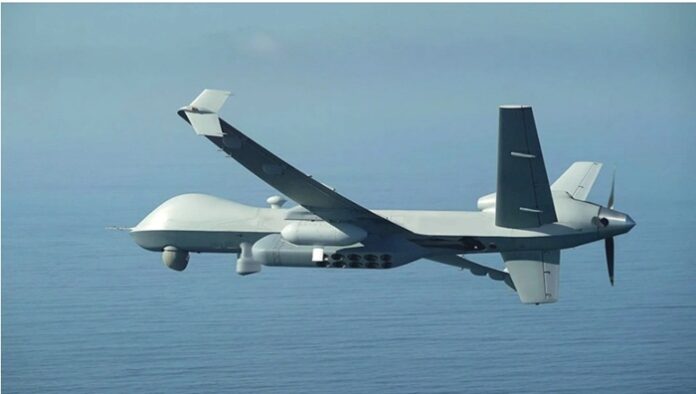
MQ-9-Sea-Guardian.jpg

The disclosure that the United States has conditioned tariff relief for Indonesian exports on the purchase of American-made maritime surveillance drones marks a significant escalation in the use of trade policy as a geopolitical tool. The move underscores how economic leverage is increasingly intertwined with Indo-Pacific security strategy, particularly amid intensifying competition in the South China Sea and growing focus on Indonesia’s North Natuna Sea.

According to a confidential Indonesian government document dated October 10, 2025, Washington has proposed reducing punitive tariffs on Indonesian goods from 32 percent to 19 percent—potentially saving Indonesian exporters billions of US dollars—on the explicit condition that Jakarta acquire and publicly announce the procurement of US unmanned aerial systems for maritime surveillance. The demand effectively reframes defence procurement from a sovereign decision into a transactional element of trade negotiations.

The proposal aligns closely with President Donald Trump’s second-term “America First” doctrine, which has aggressively leveraged tariffs to extract strategic concessions from partners. Indonesia, Southeast Asia’s largest economy and a central maritime state in the Indo-Pacific, has emerged as a key test case for whether middle powers can preserve strategic autonomy under mounting great-power economic pressure.

Indonesia Responds with Caution

Indonesia’s official response has been deliberately measured. Brigadier General Rico Ricardo Sirait, Head of the Information Bureau at the Ministry of Defense’s General Secretariat, stated that there has been no specific discussion or decision regarding the purchase of maritime surveillance drones. He emphasized that defence procurement decisions are guided by national needs, fiscal capacity, and government policy—not the interests of foreign parties.

This cautious stance reflects President Prabowo Subianto’s balancing strategy since assuming office in late 2024. While accelerating military modernisation, his administration continues to uphold Indonesia’s long-standing bebas aktif (free and active) foreign policy doctrine, which prioritises non-alignment, strategic flexibility, and resistance to formal security entanglements—particularly those that could provoke retaliation from China.

Why the North Natuna Sea Matters

The strategic stakes are amplified by Indonesia’s contested maritime geography. The North Natuna Sea lies within Indonesia’s exclusive economic zone but overlaps with China’s expansive nine-dash line claims, creating persistent friction. These tensions have already resulted in repeated confrontations between Indonesian patrol vessels and Chinese fishing fleets operating under coast guard escort.

Analysts warn that Washington’s insistence on a visible hardening of Indonesia’s maritime posture could turn surveillance procurement into overt geopolitical signalling. Intelligence firm Stratfor has noted that the US is effectively demanding Indonesia purchase US-made drones and deploy them in ways that publicly reinforce its South China Sea posture vis-à-vis China—potentially recalibrating regional threat perceptions overnight.

Trade Pressure Meets Security Alignment

The economic implications are substantial. The threatened tariffs affect key Indonesian export sectors, including nickel, palm oil, textiles, footwear, and electronics, within a bilateral trade relationship valued at approximately US$300 billion annually. This places Indonesia at a crossroads between economic vulnerability and strategic coercion.

The confidential document reportedly outlines demands extending well beyond drones, including expanded bilateral security cooperation, restrictions on Chinese technology in critical infrastructure, and mandatory consultations with Washington before Indonesia enters certain digital trade agreements. Collectively, these conditions would represent a deep intrusion into sovereign policymaking.

Although the specific drone model is not named, defence analysts widely believe the General Atomics MQ-9B SeaGuardian is the likely platform. The system offers more than 40 hours of endurance, high-altitude operation, and advanced multi-sensor capabilities optimized for maritime surveillance. Similar platforms are already operated by India and the Philippines, enhancing regional maritime domain awareness.

By linking such advanced ISR capabilities directly to tariff relief, Washington effectively collapses the distinction between trade negotiation and defence alignment, raising serious questions about Indonesia’s long-standing diversified procurement strategy.

Strategic Risks and Regional Consequences

Indonesia’s Ministry of Defense has continued to use carefully calibrated language, signalling neither acceptance nor rejection of the proposal. Officials acknowledge that maritime surveillance remains a capability gap, given Indonesia’s vast archipelagic jurisdiction spanning more than six million square kilometres. However, past concerns over cost and integration—particularly during stalled MQ-9B discussions in 2023—have reinforced Jakarta’s caution toward high-cost, single-source systems.

Experts warn that accepting security-linked trade concessions could have far-reaching consequences. Muhammad Zulfikar Rakhmat of the Center of Economic and Law Studies cautions that visible alignment with US security demands could strain Indonesia’s relations with China, undermine its strategic autonomy, and heighten instability in the South China Sea.

China’s potential responses could range from diplomatic protests and economic retaliation to increased maritime pressure and intensified grey-zone operations. Such dynamics risk transforming Indonesia from a stabilising middle power into a frontline state in the US-China rivalry.

At the regional level, Indonesia’s decision could also affect ASEAN unity. Analysts warn that accepting security-linked trade conditions could set a precedent, increasing intra-ASEAN polarisation and weakening collective efforts to manage South China Sea disputes through diplomacy.

A Defining Choice for Jakarta

Economically, tariff relief could bolster Indonesia’s projected 5.2 percent GDP growth in 2026. However, a squadron of MQ-9B SeaGuardian drones is estimated to cost around US$500 million, excluding long-term maintenance and integration expenses—placing additional strain on an already stretched defence budget.

Indonesia retains alternative options, including diversifying export markets, deepening ties with non-aligned partners, and continuing its multi-vector defence procurement approach.

How Jakarta navigates this dilemma will not only shape its role in the South China Sea but may also serve as a defining test for middle-power autonomy in an era where trade, technology, and security are increasingly inseparable.

Could a Pakistan–Saudi Arabia–Turkey Military Alliance Reshape Regional Deterrence?

0

The possibility of a Pakistan–Saudi Arabia–Turkey military alliance has re-emerged as regional power dynamics evolve across South Asia and the Middle East. While no formal pact exists, growing defense cooperation and political coordination among the three countries have prompted debate over whether such an alignment could meaningfully alter regional deterrence—particularly between Pakistan and India.

Recent remarks by Türkiye’s foreign minister provide rare official insight into the status of discussions.

Reporter: Does Türkiye want to be part of a regional alliance like the one formed by Pakistan and Saudi Arabia?
Turkish Foreign Minister Hakan Fidan: As of now, there are ongoing talks, but we have not yet signed any agreement.

This statement reflects both interest and restraint, suggesting that while dialogue exists, a binding framework has yet to materialize.

Strategic Rationale Behind the Concept

The appeal of a trilateral alignment lies in complementary national strengths:

  • Saudi Arabia offers financial capacity, energy influence, and diplomatic weight in the Islamic and Arab worlds.
  • Pakistan contributes a large, experienced military, strong airpower, and a credible nuclear deterrent.
  • Turkey brings advanced drone technology, a rapidly expanding defense-industrial base, and modern military R&D capabilities.

Supporters argue that institutionalizing cooperation among these three states could gradually evolve into a broader security framework, potentially attracting interest from countries such as Azerbaijan, Malaysia, Indonesia, Qatar, Jordan, and Morocco.

For Pakistan, deeper coordination with Ankara and Riyadh could strengthen deterrence by broadening strategic depth and diplomatic signaling, even without formal defense guarantees.

Pakistan’s Role: Conventional Strength and Strategic Deterrence

Pakistan would likely serve as the operational core of any alignment. Its air force remains among the most capable in the region, while its nuclear capability underpins long-term strategic stability in South Asia.

However, Pakistan’s deterrence posture is designed primarily for national defense, not alliance-based security commitments. Any perception of extending deterrence assurances to external partners would raise doctrinal, diplomatic, and legal questions at the international level.

Islamabad must also balance any new alignments with its longstanding strategic partnership with China, ensuring that emerging frameworks do not create conflicting obligations or perceptions.

Saudi Arabia: Influence Without Formal Alliance Obligations

Saudi Arabia is often viewed as the financial anchor of a potential alliance, yet Riyadh’s foreign policy has increasingly emphasized flexibility and diversification rather than rigid military blocs.

Key considerations shaping Saudi caution include:

  • Continued security cooperation with the United States
  • Expanding economic and investment ties with India
  • A preference for regional stability and de-escalation

While Saudi–Pakistan military cooperation—particularly in training, advisory roles, and defense exchanges—has deep historical roots, Riyadh has consistently avoided treaty-based alliances that could draw it into external conflicts.

As a result, Saudi Arabia is more likely to support selective defense cooperation rather than a formal collective defense pact.

Turkey: Active Engagement, Measured Commitments

Among the three, Turkey appears the most openly engaged, as reflected in Foreign Minister Fidan’s confirmation of ongoing talks. Ankara has steadily expanded defense cooperation with Pakistan, particularly in naval platforms, aerospace projects, and unmanned systems.

Turkey’s defense exports and joint R&D initiatives align well with Pakistan’s modernization priorities, offering long-term strategic value beyond short-term military coordination.

Nevertheless, Turkey faces important constraints:

  • NATO membership limits overt bloc formation
  • Economic pressures require balanced diplomacy
  • Managing relations with Europe, the Gulf, and the United States simultaneously

Fidan’s remarks underline that Turkey is exploring options without committing to formal alliance structures.

Prospects for Expansion: Cooperation Over Coalition

Speculation that additional Muslim-majority countries might join a future alliance remains largely aspirational. States such as Indonesia, Malaysia, Morocco, Jordan, and Qatar generally prefer:

  • Strategic autonomy
  • Non-aligned or multi-aligned foreign policies
  • Issue-based cooperation over permanent military commitments

While expanded participation in joint exercises, defense procurement, or political coordination forums is plausible, a unified military bloc with collective defense obligations appears unlikely.

Implications for India: Strategic Complexity, Not Constraint

Even absent a formal alliance, closer coordination among Pakistan, Turkey, and Saudi Arabia could add diplomatic and strategic complexity to South Asia’s security environment.

However, claims that such an alignment would fundamentally prevent Indian military action are overstated. India retains:

  • Strong strategic partnerships with the United States, France, Israel, and Russia
  • Growing indigenous defense-industrial capacity
  • Expanding political and economic ties with Gulf states, including Saudi Arabia

New Delhi would likely respond through counter-balancing diplomacy and deeper partnerships, rather than altering its core security doctrine.

Will It Become Reality?

A formal, treaty-based military alliance among Pakistan, Saudi Arabia, and Turkey is unlikely in the near future.

What is far more realistic—and already visible—is:

  • Expanded defense cooperation
  • Joint training and military exercises
  • Defense-industrial collaboration
  • Issue-specific political coordination

In effect, a strategic alignment without alliance formalities.

Conclusion

The idea of a Pakistan–Saudi Arabia–Turkey military alliance reflects genuine shifts in regional geopolitics, but practical constraints continue to limit its realization. As Türkiye’s foreign minister candidly acknowledged, discussions are underway—but agreements have not been signed.

Rather than the emergence of a rigid military bloc, the more plausible trajectory is incremental, pragmatic cooperation—subtle enough to avoid escalation, yet significant enough to influence regional deterrence over time.

Trump Questions Reza Pahlavi’s Ability to Lead Iran as Protests Pressure Tehran

0
U.S. President Donald Trump looks on as he signs an executive order in the Oval Office at the White House in Washington,.

U.S. President Donald Trump has cast doubt on whether Iranian opposition figure Reza Pahlavi could command enough domestic support to lead Iran, even as protests continue to strain the country’s clerical establishment.

Speaking in an exclusive interview with Reuters at the Oval Office on Wednesday, Trump described Pahlavi, the son of Iran’s last shah, as “very nice” but questioned his political viability inside Iran. Trump said Washington has not reached a point where it is prepared to fully back any single opposition figure.

“He seems very nice, but I don’t know how he’d play within his own country,” Trump said. “I don’t know whether or not his country would accept his leadership.”

U.S. Caution on Iran’s Opposition

Trump’s remarks highlight the limits of U.S. support for Iran’s fragmented opposition movement, despite repeated warnings from Washington that it could intervene in support of protesters. Iran has witnessed sustained unrest, with reports of thousands killed during a security crackdown against demonstrations opposing clerical rule.

Reza Pahlavi, 65, has lived outside Iran since before the 1979 Islamic Revolution that overthrew his father. From exile, he has emerged as a prominent voice among some protesters, particularly monarchist groups. However, Iran’s opposition remains deeply divided along ideological and organizational lines and lacks a cohesive structure inside the country.

Sanam Vakil, deputy director of Chatham House’s Middle East and North Africa Program, echoed Trump’s caution, noting that while Pahlavi has gained visibility, it is difficult to measure his actual support within Iran. “It’s very hard to see how much support he has or how much support any figure has in Iran,” she said.

Possibility of Regime Collapse

Trump said it was possible that Iran’s government could fall under the pressure of ongoing protests but stopped short of predicting an imminent collapse. “Any regime can fail,” he said, describing the current moment as an “interesting period of time” for Iran.

Broader Foreign Policy Comments

During the wide-ranging interview, Trump also addressed other international and domestic issues. He blamed Ukrainian President Volodymyr Zelenskiy for the stalemate in negotiations aimed at ending Russia’s war in Ukraine, saying Russian President Vladimir Putin was “ready to make a deal.”

Asked what was blocking progress, Trump responded: “Zelenskiy.”

Trump dismissed criticism from Republican lawmakers over a Justice Department probe involving Federal Reserve Chair Jerome Powell, insisting party loyalty should outweigh institutional concerns. He also brushed aside warnings from JPMorgan CEO Jamie Dimon that political pressure on the Federal Reserve could fuel inflation.

Venezuela, Economy, and Davos

Trump confirmed he will meet Venezuelan opposition leader Maria Corina Machado at the White House on Thursday, marking their first in-person meeting. He described Machado as “a very nice woman” and said discussions would focus on “basics.” Machado won the Nobel Peace Prize last year, though the Nobel Committee has stated the award cannot be transferred despite her public praise of Trump.

The president also defended the strength of the U.S. economy and said he would emphasize strong job numbers and economic performance at the upcoming World Economic Forum in Davos, Switzerland. According to the White House, Trump is scheduled to hold bilateral meetings with the leaders of Switzerland, Poland, and Egypt during the event.

China to Build Military Drone Factory in Bangladesh: Strategic Shift in Bay of Bengal Power Balance

0

China’s decision to establish a large-scale military drone manufacturing facility in Bangladesh marks a significant turning point in South Asia’s defence-industrial and geopolitical landscape. Valued at Tk608 crore (approximately US$55.3 million), the project embeds Beijing deeper into the Bay of Bengal security architecture, while simultaneously raising strategic concerns in India and beyond .

Approved by Bangladesh’s finance ministry, the government-to-government agreement places the Bangladesh Air Force (BAF) as the implementing authority. The project includes technology transfer from China Electronics Technology Group Corporation (CETC) International, a major Chinese state-owned defence conglomerate with global expertise in radar systems, electronic warfare, and unmanned aerial vehicles (UAVs) .

What the Drone Factory Will Produce

Although official documents do not specify exact platforms, industry assessments indicate the factory will prioritize production of the Wing Loong II, a medium-altitude long-endurance (MALE) armed drone often compared to the U.S. MQ-9 Reaper.

The Wing Loong II offers:

  • Up to 32 hours endurance
  • 480 kg payload capacity
  • Precision strike capability using guided munitions
  • Advanced ISR (intelligence, surveillance, reconnaissance) sensors suitable for maritime and border operations .

This capability represents a qualitative leap for the Bangladesh Air Force, enabling persistent maritime surveillance over the Bay of Bengal and enhancing deterrence against grey-zone threats such as illegal fishing, piracy, and covert incursions.

Why the Project Matters Strategically

For China, transferring UAV manufacturing technology—rather than merely exporting finished platforms—anchors long-term defence-industrial dependence and projects influence into a strategically contested maritime region. The move complements China’s broader Belt and Road Initiative (BRI) footprint in Bangladesh, where ports and transport corridors already offer potential dual-use value .

For Bangladesh, the factory aligns with its Forces Goal 2030 modernisation plan, which prioritises:

  • Indigenous sustainment
  • Reduced lifecycle costs
  • Operational autonomy
  • Integration of airpower into a network-centric battlespace

Domestic production will reduce foreign exchange outflows and allow incremental upgrades tailored to Bangladesh’s operational needs rather than supplier-driven configurations .

India’s Strategic Unease

The project has triggered immediate concern in New Delhi, where policymakers increasingly view Chinese defence cooperation with Bangladesh as part of a broader strategic encirclement of India’s eastern flank. Bangladesh’s proximity to India’s sensitive northeastern corridor amplifies these anxieties.

Indian analysts worry that armed MALE UAVs operating from Bangladeshi territory could enhance surveillance reach and electronic intelligence collection near Indian military installations. These concerns are intensified by CETC’s strengths in sensor fusion, secure datalinks, and electronic warfare, which could make Bangladeshi UAV operations resilient in contested electromagnetic environments .

At the same time, Bangladeshi officials have adopted a cautious public tone. Finance Adviser Salehuddin Ahmed has refrained from detailed comment, signalling Dhaka’s effort to manage regional sensitivities without abandoning its strategic objectives .

A Credibility Gap in Regional Defence Diplomacy

Academic Md Obaidullah of Daffodil International University notes that India’s resistance to Chinese arms sales has not been matched by credible alternatives. Stalled initiatives—such as a US$500 million defence line of credit pledged in 2019—have weakened India’s standing as a defence partner, pushing Dhaka closer to Beijing by default .

This dynamic was evident when Bangladesh selected Chinese-origin JF-17 fighters over India’s Tejas, citing delays and uncompetitive terms rather than ideological alignment.

Beyond Bangladesh: Regional Implications

China already accounts for roughly 11 percent of global Chinese arms exports to Bangladesh (2019–2023). By embedding production capacity locally, Beijing elevates the relationship from transactional arms sales to structural defence-industrial integration, significantly raising the cost for Dhaka should it seek to pivot away in the future .

The factory also opens the possibility of Bangladesh evolving into a regional UAV assembly or export hub, leveraging its strategic geography and competitive labour costs to serve South and Southeast Asian markets.

What Comes Next

Expected to become operational by late 2026, the drone factory’s symbolic weight may rival its physical output. It signals Bangladesh’s assertion of defence sovereignty amid intensifying great-power competition in the Indo-Pacific.

Whether this initiative stabilises the region or accelerates a UAV-centric arms competition will depend less on the drones themselves and more on how India, China, and regional stakeholders choose to respond.