Sunday, April 12, 2026
Home Blog Page 46

Russia admits to using sand and cement to reinforce its tank armor

0
T-90MS main battle tank Russia

On April 8, 2025, a significant development emerged from the ongoing conflict in Ukraine: Russia‘s military has officially recognized a severe shortage of explosive reactive armor (ERA) for its tanks.

A report from NII Stali, a leading Russian research institute specializing in steel and armor technologies, reveals that engineers have resorted to creating a new form of non-explosive reactive armor (NERA) and have even recommended that tank crews use sand or cement to fill voids in existing ERA panels.

This acknowledgment, initially suggested by open-source intelligence and now confirmed, highlights a larger crisis within Russia’s armored divisions as they face challenges in maintaining their effectiveness against a resilient Ukrainian defense.

What started as a minor detail in the conflict has evolved into a significant indicator of logistical difficulties, raising concerns about the viability of Russia’s military operations and their impact on contemporary warfare.

The importance of this situation extends beyond the unconventional solutions; it sheds light on Russia’s capabilities during wartime. For years, analysts and observers, including those monitoring destroyed Russian tanks via platforms like Oryx, have documented the substantial losses inflicted by Ukrainian forces utilizing advanced anti-tank weaponry and drones.

With Russian researchers now acknowledging the issue, the global community gains a clearer understanding of how material shortages are altering the dynamics of the battlefield. To appreciate the implications, it is essential to comprehend the technical distinctions between ERA and NERA, as well as the significance of sand-filled panels as a sign of a desperate measure.

Explosive reactive armor has been fundamental to tank defense since its widespread implementation in the late 20th century, functioning by placing an explosive layer between two metal plates.

When a projectile, like a shaped-charge warhead from the American Javelin missile, impacts a tank, the explosive detonates outward. This action disrupts the incoming stream of molten metal, diminishing its capacity to penetrate the tank’s armor. This technology, initially developed by Soviet engineers and enhanced over many years, has demonstrated effectiveness against singular, high-energy attacks.

However, it has a significant drawback: once activated, the explosive reactive armor (ERA) panel is depleted, leaving that area of the tank exposed to further strikes. In contrast, non-explosive reactive armor (NERA), which utilizes materials such as rubber or composite layers between metal, does not detonate.

Instead, NERA absorbs and redirects energy through deformation, providing less protection per impact but maintaining its structural integrity against multiple strikes. Western military forces, including the United States with its M1 Abrams tanks, have adopted NERA-like systems in conjunction with ERA to address these limitations.

Russia’s transition towards a NERA-style approach, as indicated by the NII Stali study, signifies an effort to adapt to this new reality. However, the proposal to use sand or cement as a temporary solution highlights the shortcomings of this adaptation.

Physically, these materials do not possess the reactive capabilities of explosives or advanced composites. While sand may absorb some kinetic energy and cement could provide slight mass to deflect shrapnel, neither can deliver the dynamic response necessary to counter contemporary anti-tank threats.

Photographic evidence gathered by open-source analysts, including images of damaged T-72 and T-90 tanks in Ukraine, frequently reveals large gaps where ERA panels used to be—some visibly repaired with improvised materials. These observations, widely shared in open-source intelligence (OSINT) circles, corroborate the institute’s admissions, illustrating a military stretched thin by combat losses and supply chain challenges.

The origins of this shortage can be traced to Russia’s industrial and logistical difficulties, which have been worsened by over three years of conflict and international sanctions. The NII Stali, based in Moscow, has historically been instrumental in the development of armor for Soviet and Russian tanks, ranging from the T-64 to the T-14 Armata.

However, the production of Explosive Reactive Armor (ERA) necessitates specialized explosives and precise manufacturing techniques, both of which have faced significant challenges since the onset of the Ukraine invasion in February 2022. Western sanctions have limited access to essential components, while Ukraine’s strikes on Russian industrial facilities have further disrupted production.

A December 2024 report from the Institute for the Study of War indicated that Russia had lost more than 3,700 tanks during the conflict, a number supported by Oryx’s visual verification of 3,387 losses at that time. To address these losses, Russia has brought older T-62s and T-55s from Soviet-era reserves back into service, but outfitting them with modern ERA has proven to be a significant challenge.

This situation sharply contrasts with Russia’s pre-war aspirations. The T-14 Armata, which was introduced with great fanfare during Moscow’s Victory Day parade in 2015, was expected to represent a significant advancement in tank technology, featuring cutting-edge armor and electronics. However, production has been limited, with estimates indicating that fewer than 20 units were operational by 2022, according to the International Institute for Strategic Studies.

The majority of Russia’s armored forces predominantly utilize upgraded T-72s and T-90s, which have been the backbone of its military since the post-Soviet period. The T-72, originally launched in the 1970s, is equipped with a 125mm smoothbore cannon and can achieve speeds of up to 37 miles per hour. However, its basic armor, lacking explosive reactive armor (ERA), provides limited defense against modern threats.

The T-90, which is an advancement of the T-72 introduced in the 1990s, offers enhancements such as improved fire control systems and Kontakt-5 ERA. Nevertheless, it has also faced challenges against Ukraine’s arsenal, which includes Javelins, NLAWs, and FPV drones.

These deficiencies have significant implications on the battlefield. Ukrainian forces have effectively capitalized on the weaknesses of Russian tanks, resulting in severe consequences. The Javelin missile, a fire-and-forget weapon provided by the United States, employs a top-attack method to target the weakest points in armor, often circumventing ERA altogether.

Additionally, inexpensive FPV drones armed with explosives have transformed tanks into easy targets, as evidenced by numerous videos released by Ukraine’s Defense Ministry. A compromised or absent ERA heightens this risk, leaving tank crews vulnerable. Analysts believe that Russian commanders, recognizing these dangers, may be adapting their strategies by increasingly relying on infantry operations or artillery strikes to offset the reduced survivability of their tanks.

However, this strategic shift comes with drawbacks. Reports from the front lines indicate that the morale of tank crews has declined, with some opting to abandon their vehicles rather than confront almost certain destruction. This trend is reflected in Oryx data, which shows over 1,100 abandoned tanks by early 2025.

The wider consequences of this crisis reach far beyond Ukraine. Russia’s difficulties in sustaining its armored units raise concerns about the future of its military capabilities. Traditionally, tanks have played a pivotal role in Russian military strategy, from the large-scale armored offensives of World War II to the Cold War confrontations with NATO.

In the present day, however, the emergence of drones and precision-guided munitions is challenging this traditional approach. Some analysts suggest that Russia may hasten the development of unmanned ground vehicles, an area where it currently trails behind countries like the United States, which has already tested systems such as the Robotic Combat Vehicle.

Alternatively, Moscow might strengthen its partnerships with allies like China, whose Type 99 tank features advanced composite armor and could serve as a model or supplier for Russian enhancements. Given China’s increasing role as an economic support for Russia amid Western sanctions, this scenario is quite feasible.

For Western military forces, Russia’s current challenges provide a valuable lesson in adaptability. The U.S. Army, with its inventory of over 6,000 M1 Abrams tanks, has consistently emphasized a combination of explosive reactive armor (ERA) and passive armor, along with active protection systems like Trophy, designed to intercept incoming threats.

The Abrams, weighing 68 tons and equipped with a 120mm cannon, continues to set the standard for contemporary tank design, achieving speeds of up to 42 miles per hour. The Abrams supplied to Ukraine in 2023 has been upgraded with Kontakt-1 ERA and anti-drone cages, showcasing battlefield innovations driven by necessity.

In light of Russia’s difficulties, NATO strategists may intensify their focus on incorporating drones and counter-drone technologies into their armored strategies, ensuring that their tanks remain effective against emerging threats.

Taking a step back, Russia’s use of sand and cement resonates with historical precedents. During World War II, as German forces encountered shortages towards the end of the war, they resorted to improvising with extra steel plates and even concrete on tanks like the Panther and Tiger.

These adaptations provided temporary relief but failed to change the overall outcome. In a similar vein, Russia’s current solutions may extend its military efforts, yet they reveal a more profound weakness. The ongoing conflict in Ukraine, now entering its fourth year, has laid bare the limitations of a military once viewed as a rival to the West, compelling it to rely on creativity in the face of dwindling resources.

Ultimately, the insights from NII Stali transcend mere technical details; they offer a glimpse into the harsh realities of attrition warfare. Russia’s armored units, strained by losses and supply challenges, are evolving in unexpected ways that highlight their desperation.

For readers, this serves as a reminder of how industrial strength and innovation influence conflicts far from their origins. As the war continues, one question remains: can these temporary measures support Russia’s ambitions, or do they simply postpone an unavoidable confrontation?
Belgian spare parts are crucial for keeping Ukraine’s F-16s operational

0
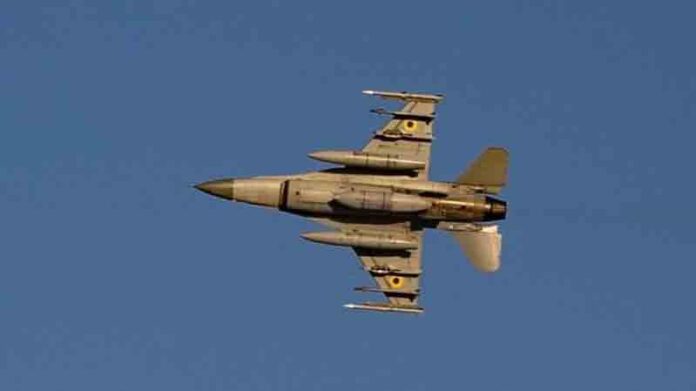
F-16 fighters Ukraine

On April 8, 2025, Belgian Prime Minister Bart De Wever joined Ukrainian President Volodymyr Zelensky in Kyiv to unveil a substantial commitment: a €1 billion aid package for Ukraine for the current year, along with a promise to provide a minimum of €1 billion in military assistance each year for the duration of the current Belgian government’s term.

During a joint press conference, they also announced plans to supply four F-16 fighter jets to Ukraine—two intended for spare parts in 2025 and two fully operational units to be delivered in 2026.

This initiative highlights Belgium’s increasing involvement in supporting Ukraine amid its ongoing conflict with Russia, which has now entered its third year, and signifies a practical yet thoughtful contribution to Kyiv’s defense efforts.

The decision to provide F-16s, especially the two designated for spare parts, sheds light on the logistical hurdles Ukraine must overcome as it seeks to incorporate advanced Western aircraft into its air force.

The General Dynamics F-16 Fighting Falcon, a single-engine multirole fighter, has been a fundamental asset for NATO air forces since its debut in the late 1970s. Capable of reaching speeds up to Mach 2 and with a combat radius exceeding 500 miles, the F-16 is designed for air-to-air combat, ground attacks, and reconnaissance operations.

Its adaptability is enhanced by an advanced avionics system, including the AN/APG-68 radar for accurate targeting and a fly-by-wire control system that improves maneuverability. Powered by either a Pratt & Whitney F100 or a General Electric F110 engine, the aircraft can carry a diverse range of munitions, from AIM-9 Sidewinder missiles to laser-guided bombs. For Ukraine, which has been dependent on outdated Soviet-era MiG-29s and Su-27s, the F-16 signifies a significant advancement in military capability—provided it can be effectively maintained.

The decision to allocate two of the four jets for parts is a practical one. Ukraine’s current F-16s, supplied by nations such as the Netherlands and Denmark, are already engaged in combat. Keeping these aircraft operational in a conflict zone presents significant challenges. Engines can wear out from extensive use, avionics may malfunction, and airframes endure considerable stress from frequent missions.

By designating jets specifically for parts, Belgium is helping to extend the operational lifespan of Ukraine’s fleet. One F-16 can provide essential components—its engine, which generates over 23,000 pounds of thrust, could support another aircraft, while its radar or cockpit systems could replace damaged parts.

This strategy is reminiscent of tactics employed in previous conflicts, such as the U.S. military’s use of spare airframes during the Vietnam War to maintain F-4 Phantoms in the air. For Ukraine, where every flight hour is crucial in the face of Russian drones and missiles, this could be the key to keeping a squadron operational rather than grounded.

Belgium’s support is part of a larger coalition initiative. The Netherlands has committed to supplying 24 F-16s, with deliveries currently in progress, while Denmark has pledged 19. Norway has also joined the coalition with a smaller contribution.

Together, these contributions aim to establish a fleet of 80 to 100 jets, a target that President Zelensky has indicated is essential to countering Russia’s air dominance. Despite Russia’s larger and more advanced air force, featuring Su-35s and MiG-31s, it has suffered significant losses—over 100 fixed-wing aircraft since 2022—forcing it to rely on older models like the Su-25.

The F-16, although not as sophisticated as the U.S. F-35 or Russia’s Su-57, provides Ukraine with a dependable platform to counter Russian air operations, particularly when equipped with Western munitions such as the AGM-88 HARM anti-radiation missile, which is designed to disable enemy radar systems.

The specifics of Belgium’s F-16s are significant in this context. The country operates the F-16A/B variants, which have undergone upgrades through midlife improvement programs over the years. Although these aircraft are being retired as Belgium shifts to the Lockheed Martin F-35A Lightning II, they remain capable.

In terms of technology, the F-35, a fifth-generation stealth fighter, far surpasses the F-16, thanks to its advanced sensor fusion and low-observable design that enables it to avoid radar detection in ways the F-16 cannot. Belgium anticipates receiving its first F-35s later this year, which clarifies why it can now allocate F-16s to Ukraine.

The two jets expected to be delivered in 2026 will likely come from this retiring fleet, refurbished to be operational, while the pair intended for 2025 may already require extensive repairs, making them more valuable as parts than as complete aircraft.

This assistance package prompts inquiries regarding Belgium’s ability to maintain such support. With a population of 11 million and a relatively modest defense budget of approximately €6.9 billion for 2024, Belgium does not possess the military strength of nations like the United States or France.

Belgium’s annual commitment of €1 billion aligns with Spain’s pledge starting in 2024 and surpasses contributions from larger economies such as Italy. A portion of this funding is expected to benefit Belgium’s defense sector. Notable companies like FN Herstal, a prominent small-arms manufacturer, and CMI Defence, recognized for its artillery systems, may secure contracts to provide Ukraine with rifles, machine guns, or turreted cannons.

For example, FN Herstal’s SCAR rifle is already utilized by certain NATO forces, while CMI’s Cockerill turrets are installed on modern armored vehicles. If Belgium increases production for Ukraine, it could mark a transition from a minor player to a more significant contributor in Europe’s defense arena.

The timing of this announcement, coinciding with De Wever’s visit to Kyiv, is significant. His itinerary included a visit to Bucha, a town infamous for the Russian atrocities of 2022, where numerous civilians lost their lives.

In a city still bearing the scars of conflict, De Wever labeled Russia as the aggressor and reaffirmed Belgium’s commitment. “We cannot accept that decisions regarding Ukraine’s future and Europe’s security are made without Ukraine and its European allies,” he stated on X, reflecting a position that aligns with NATO’s broader efforts to support Kyiv. In response, Zelensky commended Belgium for its “strong steps to protect Ukrainian lives,” acknowledging both the financial assistance and the aircraft.

While the addition of two F-16s for Ukraine in 2026 may appear minimal in the context of the ongoing conflict, the threat posed by Russia’s air defenses, which include S-400 systems and shorter-range Pantsir units, remains significant.

The F-16’s radar cross-section is larger than that of more stealthy aircraft, making it susceptible to these defense systems unless operated with strategic tactics—such as low-altitude approaches or standoff strikes using precision munitions. Nevertheless, even a limited number of jets can influence the dynamics in specific areas.

During Ukraine’s counteroffensive in 2023, a significant shortcoming was the lack of air support. The introduction of F-16s could enhance protection for ground forces and disrupt Russian supply lines, particularly if equipped with Joint Direct Attack Munitions (JDAMs), which convert unguided bombs into precision-guided munitions.

The postponement of operational jets until 2026 has ignited discussions. Previous commitments from Belgium, under former Prime Minister Alexander De Croo, aimed for deliveries as early as 2024. However, this schedule has been pushed back, first to late 2025 and now to 2026, due to delays in Belgium’s F-35 deployment.

Lockheed Martin has encountered production challenges with the F-35, including software malfunctions and supply chain issues that have delayed deliveries globally. In March, De Wever acknowledged this situation, stating that Belgium could not send F-16s until its own air defenses were assured—a practical yet frustrating reality for Ukraine, where each month of delay results in lost lives.

Russia is expected to respond strongly to this commitment. Moscow has consistently regarded Western arms supplies as provocative, and the provision of F-16s—perceived as a representation of NATO’s strength—could lead to retaliatory actions or propaganda efforts.

In 2024, Maria Zakharova, spokesperson for the Russian Foreign Ministry, cautioned that the delivery of F-16s would “escalate the conflict,” suggesting potential reprisals. It remains uncertain whether this will manifest as increased drone strikes on Ukrainian cities or pressure on NATO’s eastern borders, but the Kremlin typically does not overlook such developments.

Beyond the technical aspects, there is a human element involved. Since 2023, Ukrainian pilots have been undergoing training on F-16s in Belgium, Denmark, and the U.S. This transition, which can take months even for seasoned pilots, involves adapting from the MiG-29s’ analog systems to the F-16’s digital interfaces and helmet-mounted cueing systems, presenting a significant learning challenge.

Technicians must also become proficient in maintaining the jet, as tasks such as replacing an F100 engine or diagnosing radar issues demand specialized expertise. The anticipated arrival of spare parts in 2025 could alleviate some of this pressure, allowing ground crews to concentrate on ensuring aircraft are combat-ready instead of searching for necessary components.

In Belgium, the aid package has elicited mixed responses. Taxpayers, grappling with increasing energy prices and inflation, may question the allocation of €1 billion abroad when pressing domestic issues persist. The coalition led by De Wever, which came into power in late 2024, includes the nationalist N-VA party, whose supporters often favor an isolationist stance.

Nevertheless, public backing for Ukraine remains robust—early 2025 polls indicate that over 60% of Belgians support military assistance, reflecting Europe’s shared concern regarding Russia’s aggression. Military officials view the transfer of F-16s as an opportunity to retire outdated assets while bolstering NATO’s eastern defenses.

Historically, the F-16 has demonstrated its effectiveness. During the 1991 Gulf War, U.S. F-16s conducted thousands of sorties, significantly damaging Iraq’s air defenses with few losses. In the Yugoslav conflicts, they enforced no-fly zones and accurately targeted ground installations. Although Ukraine’s conflict is distinct—characterized by peer-to-peer engagement, attrition, and contested airspace—the F-16’s proven history indicates it can adapt to these challenges.

In comparison to Russia’s Su-35, which boasts sophisticated radar and longer-range missiles, the F-16 may not be as advanced. However, its maneuverability and integration within NATO provide it with a significant advantage in joint operations.

Belgium’s commitment also signifies a changing landscape in Europe. While the U.S. has historically spearheaded aid initiatives—contributing over $50 billion in military assistance since 2022—European nations are now taking a more active role.

The deployment of Germany’s Leopard 2 tanks, France’s SCALP missiles, and Belgium’s F-16s illustrates a growing willingness across the continent to shoulder responsibility. Although Belgium’s €1 billion annual commitment is modest compared to U.S. support, it sets a precedent for smaller countries. This marks a stark contrast to 2014, when Europe hesitated in response to Russia’s annexation of Crimea, heavily relying on American leadership.

Looking forward, this development could have significant implications for NATO and the EU. If Belgium maintains its commitment, it may encourage nations like Portugal and Sweden to step up their contributions. Within NATO, it strengthens the momentum of the F-16 coalition, potentially expediting deliveries from other supporters.

For the EU, this situation tests its unity—can smaller member states demonstrate the same determination as France and Germany as the conflict continues? From my viewpoint, Belgium’s decision is a strategic move: while modest in scale, it carries substantial symbolic weight, indicating that even nations that have remained on the periphery can influence the trajectory of a conflict.

Nevertheless, the postponement until 2026 raises concerns about urgency. With Russia gaining ground in eastern Ukraine, can Kyiv afford to wait, or will this assistance, like previous aid, arrive just before a critical turning point?

US aims to regain control of the Panama Canal from Chinese influence, says Pentagon chief

0

The United States aims to reclaim the Panama Canal from Chinese influence, U.S. Defense Secretary Pete Hegseth stated on Tuesday during his visit to the Central American country. Following discussions with the Panamanian government, Hegseth committed to enhancing security collaboration with local forces and emphasized that China would not be permitted to exploit the canal for espionage through its commercial ties.

“Together, we will reclaim the Panama Canal from China’s influence,” Hegseth declared at a pier in Panama City that had been renovated with U.S. support. “China did not construct this canal, does not manage it, and will not weaponize it. With Panama leading the way, we will ensure the canal remains secure and accessible to all nations.”

Over 40% of U.S. container traffic, valued at approximately $270 billion annually, transits the Panama Canal, representing more than two-thirds of the vessels that navigate through this vital interoceanic waterway each day. Hegseth, the first U.S. defense secretary to visit Panama in decades, flew over the canal in a Black Hawk helicopter after meeting with U.S. troops and Panamanian security personnel. He also visited the Miraflores lock, greeting sailors aboard a passing container ship.

His remarks were carefully crafted, conveying a strong stance while providing reassurances to Panamanians who may still be concerned about former President Trump’s threats regarding the canal. While Hegseth focused on diminishing Chinese influence, Trump has made broader statements and has not dismissed the possibility of military action. Hegseth’s visit comes in the wake of reports that the Trump administration has sought military options to secure access to the canal, which the U.S. constructed over a century ago and transferred to Panama in 1999.

Trump has expressed dissatisfaction, claiming it was a detrimental agreement for the United States. Given Trump’s assertive language, the stakes were elevated for Hegseth’s visit. Ryan Berg, director of the Americas Program at the Center for Strategic and International Studies, remarked, “Overall, this has not been a successful issue for the United States regarding public diplomacy in Panama.”

Nevertheless, both current and former U.S. officials, along with experts, assert that the United States has found a cooperative ally in Panama’s President Jose Raul Mulino, whom Hegseth met earlier on Tuesday. In February, Mulino declared Panama’s official withdrawal from China’s Belt and Road Initiative and has supported Trump’s efforts to address migration issues. He has accepted deportation flights for non-Panamanians and has worked to reduce migration from South America through the perilous Darien jungle.

Hegseth commended Mulino, noting that his administration recognizes the threat posed by China. His comments regarding Panama taking the lead on canal security issues seemed to acknowledge local sensitivities. During his visits to military bases, previously known as Fort Sherman and Rodman Naval Station before the U.S. withdrawal, Hegseth referred to the canal as “key terrain” and expressed hope for increased U.S. troop engagements, including the revitalization of a jungle survival training center.

“In reality or in perception, the communist Chinese have aimed for greater control over this canal, and to that we say: Not on our watch,” Hegseth stated to U.S. troops and Panamanian security forces. “We will enhance our partnership even further.”

Hegseth, a veteran of the U.S. military and a former host on Fox News, has shown strong support for Trump’s security initiatives focused on the southern border. This includes actions such as sending U.S. troops to the border with Mexico, providing facilities at Guantanamo Bay, Cuba, for the detention of migrants, and utilizing military aircraft for deportation operations.

U.S. SECURITY ISSUES

Trump has inaccurately asserted that China is managing the Panama Canal, a claim that Hegseth himself refuted on Tuesday, along with the allegation of Chinese military presence in the area. However, experts recognize legitimate U.S. security concerns, especially regarding potential espionage, given the significant Chinese commercial involvement in Panama, which includes plans by Chinese companies to construct a bridge over the canal.

The Chinese Embassy in Panama issued a statement clarifying, “China has never been involved in the management and operation of the Panama Canal, nor has it ever interfered in its affairs. The only instance in history when the canal was blocked was due to a U.S. invasion. Who is genuinely protecting the canal’s neutrality and prosperity? Who continues to demand the ‘reclamation’ of the canal? Who poses the real threat to it?”

Last month, Trump praised a deal orchestrated by the U.S. firm BlackRock to acquire the majority of the $22.8 billion port operations from Hong Kong’s CK Hutchison, which includes ports at both ends of the Panama Canal. Trump characterized this acquisition as a demonstration of the United States “reclaiming” the canal. In response, China has criticized the deal, with its market regulator announcing plans for an antitrust review.

Current and former U.S. officials emphasize that the Panama Canal is vital for the movement of U.S. warships in any potential future conflict in Asia, as Navy vessels would need to transit from the Atlantic to the Pacific to support military operations.

China can monitor ships traversing the canal without needing to obstruct it. However, John Feeley, who served as the U.S. ambassador to Panama from 2015 to 2018, challenged the Trump administration’s claim that China’s involvement in Panama constituted a breach of the U.S.-Panama treaty.

“The issue with Trump’s approach is the intimidation tactic he employed, asserting that the neutrality treaty has been violated. This is not the case,” Feeley stated. Mulino has defended Panama’s management of the canal, asserting that it has been conducted responsibly for global trade, including that of the United States, and emphasized that it “is, and will remain, under Panamanian control.”

Hezbollah is open to disarmament talks, contingent on Israel’s withdrawal, according to a senior official

0

As the calls for Hezbollah in Lebanon to disarm grow stronger, a high-ranking official from the group informed Reuters that they are open to discussions with the Lebanese president regarding their weapons, contingent upon Israel‘s withdrawal from southern Lebanon and an end to its military actions.

President Joseph Aoun, who has U.S. support and pledged to establish a state monopoly on arms control upon taking office in January, is expected to initiate talks with Hezbollah about its weaponry soon, according to three political sources in Lebanon.

The topic of disarmament has gained urgency following the shift in power dynamics caused by last year’s conflict with Israel and the removal of Hezbollah’s ally, former President Bashar al-Assad of Syria. Hezbollah emerged significantly weakened from the 2024 war with Israel, suffering the loss of many top leaders and thousands of fighters, along with substantial damage to its rocket stockpile.

The senior Hezbollah official stated that the group is willing to engage in discussions about its arms as part of a national defense strategy, but this is dependent on Israel withdrawing its forces from five strategic locations in southern Lebanon. “Hezbollah is prepared to address the issue of its arms if Israel retreats from these five points and ceases its aggression against the Lebanese,” the official told Reuters.

This stance on potential discussions regarding its arms has not been previously disclosed. The sources requested anonymity due to the sensitive nature of the political situation. Hezbollah’s media office did not provide an immediate response to a request for comment, and the presidency also refrained from commenting.

Israel, which deployed ground forces into southern Lebanon during the conflict, has mostly withdrawn but opted in February to retain control over five strategic hilltop positions. The country plans to eventually transfer these positions to Lebanese forces once it is confident that the security situation permits such a move.

RENEWED FOCUS ON HEZBOLLAH’S ARMS

Although a ceasefire has been in place since November, Israeli airstrikes continue to exert pressure on Hezbollah, while the United States has insisted that the group disarm and is preparing for nuclear negotiations with Iran, its primary supporter.

Hezbollah remains the most formidable of the Iranian-backed paramilitary organizations in the region, yet its supply routes from Iran through Syria have been disrupted following the ousting of Assad.

On Monday, Reuters reported that several Iranian-supported militia groups in Iraq are willing to disarm for the first time to prevent escalating tensions with the Trump administration in the U.S.

Hezbollah has consistently dismissed demands from its critics in Lebanon to disarm, asserting that its weapons are essential for the nation’s defense against Israel. Significant disagreements regarding its arsenal led to a brief civil conflict in 2008.

Critics argue that Hezbollah has unilaterally involved Lebanon in various conflicts and that the existence of its substantial weaponry outside government oversight has weakened the state. A ceasefire mediated by the U.S. stipulates that the Lebanese army must dismantle all unauthorized military installations and seize all weapons, beginning in regions south of the Litani River, which flows into the Mediterranean approximately 20 kilometers (12 miles) north of the Israeli border.

Two sources knowledgeable about Hezbollah’s perspective indicated that the group is considering transferring its most powerful weapons, including drones and anti-tank missiles, to the army, particularly those located north of the Litani River.

CALL FOR A DISARMAMENT TIMETABLE

Aoun has stated that the issue of Hezbollah’s armaments should be resolved through dialogue, as any forceful disarmament attempts could lead to conflict, according to the sources.

Last week, Patriarch Bechara Boutros Al-Rai, the leader of Lebanon’s Maronite Church, emphasized the necessity for all weapons to be under state control, acknowledging that this process would require time and diplomatic efforts, as “Lebanon cannot endure another war.”

A Lebanese official mentioned that communication channels with relevant parties are being established to “begin examining the transfer of weapons” to state authority, following the army and security services’ efforts to extend state control throughout Lebanon, aligning with Aoun’s policy.

This matter is also being discussed with Parliament Speaker Nabih Berri, a significant ally of Hezbollah, who plays a crucial role in bridging differences, the official noted.

U.S. envoy Morgan Ortagus, who visited Beirut over the weekend, reiterated Washington’s stance that Hezbollah and other armed groups should be disarmed promptly, with the expectation that the Lebanese army would carry out this task.

“It’s evident that Hezbollah must be disarmed, and it’s clear that Israel will not tolerate terrorists firing into their territory, a position we fully understand,” Ortagus stated in an April 6 interview with Lebanon’s LBCI television.

Kamal Shehadi, a minister from the anti-Hezbollah Lebanese Forces party, stated that several Lebanese government ministers are advocating for a disarmament timeline. In an interview with Reuters, Shehadi emphasized that the disarmament process should be completed within six months, referencing the disarmament of militias following the civil war as a model. He argued that establishing a timetable, which would likely set specific deadlines for the process, is essential to safeguard citizens from ongoing attacks that result in loss of life, economic damage, and destruction.

The latest conflict erupted when Hezbollah fired in support of Hamas at the onset of the Gaza war in October 2023. In a speech on March 29, Hezbollah leader Naim Qassem claimed that his group no longer maintains an armed presence south of the Litani River and has adhered to the ceasefire agreement, while accusing Israel of violating it daily. Israel, however, has alleged that Hezbollah continues to possess military infrastructure in the southern region.

Qassem has placed the responsibility on the Lebanese government to compel Israel to withdraw and cease its assaults. He mentioned that there is still an opportunity for diplomatic resolutions but cautioned that the “resistance is present and ready,” suggesting that alternative measures could be taken if Israel fails to comply with the agreement.

Trump’s new tariffs are on the horizon, poised to escalate the ongoing global trade conflict

0
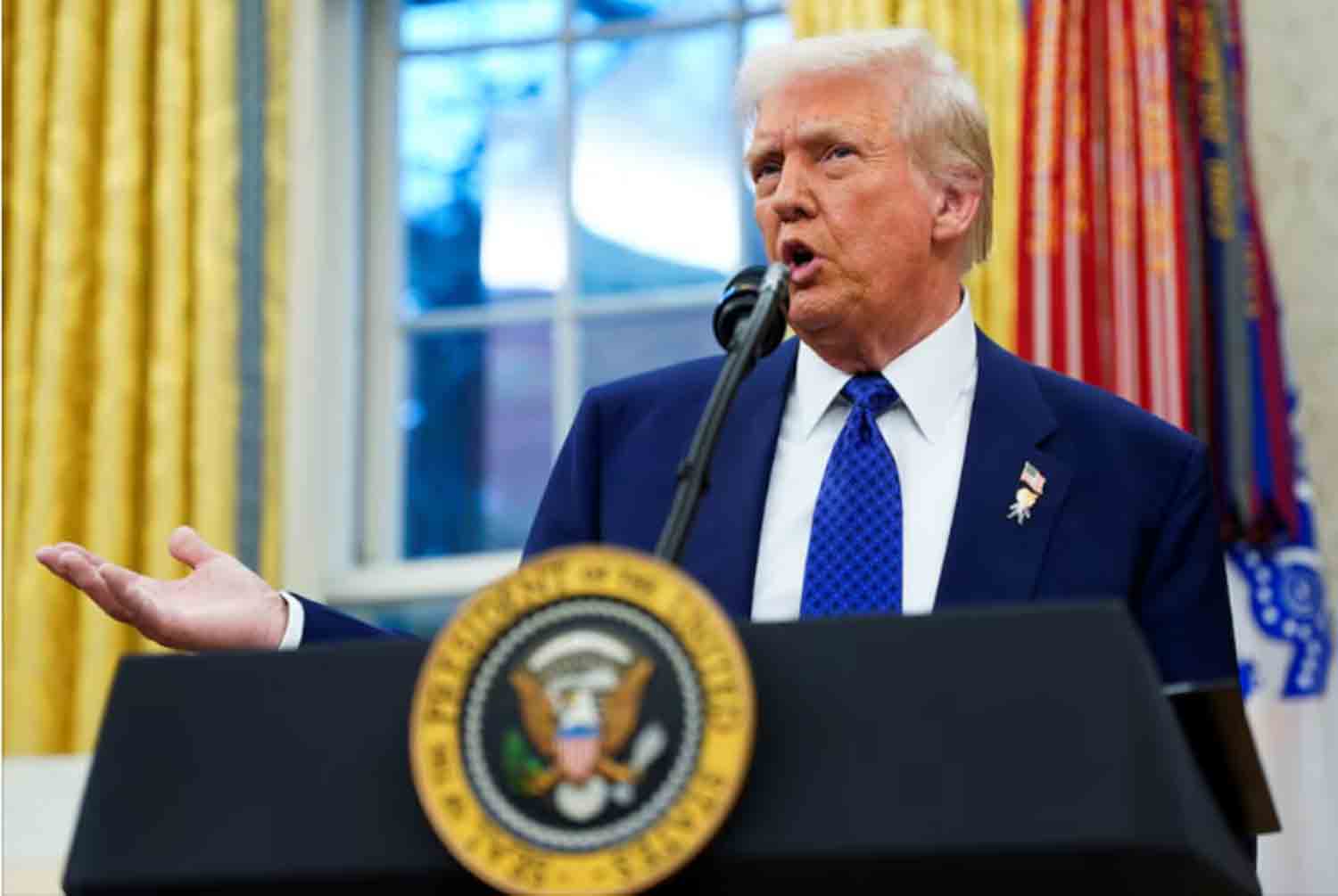
U.S. President Donald Trump speaks, on the day of Tulsi Gabbard's swearing in ceremony as Director of National Intelligence, in the Oval Office at the White House in Washington, D.C.

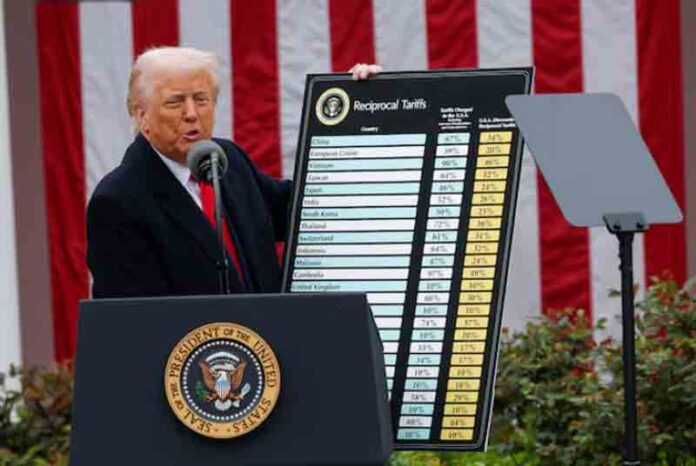
President Donald Trump‘s “reciprocal” tariffs on numerous countries were set to be implemented on Wednesday, featuring significant 104% duties on Chinese imports, further escalating his global trade conflict even as he readied for discussions with certain nations.

These aggressive tariffs have disrupted a long-standing global trading framework, instilling concerns of a recession and causing a sharp decline in global stock markets.

On Tuesday, the S&P 500 index closed below 5,000 for the first time in almost a year, approaching bear market territory, which is defined as a 20% drop from its recent peak. Since Trump announced the tariffs last Wednesday, S&P 500 companies have experienced a staggering loss of $5.8 trillion in market value, marking the most significant four-day decline since the index’s inception in the 1950s, according to LSEG data.

Asian markets resumed their sell-off on Wednesday after a brief pause, with Japan’s Nikkei index falling over 3% and South Korea’s won hitting a 16-year low. U.S. stock futures also indicated a potential fifth consecutive day of losses on Wall Street.

Trump has sent mixed messages to investors regarding the long-term status of the tariffs, labeling them as “permanent” while also claiming they are compelling other leaders to seek negotiations. “We have many countries approaching us that want to make deals,” he stated during a White House event on Tuesday afternoon. He later expressed his expectation that China would also seek an agreement.

The Trump administration has arranged discussions with South Korea and Japan, both key allies and significant trading partners, and Italian Prime Minister Giorgia Meloni is scheduled to visit next week. The anticipation of potential agreements with other nations had initially boosted stock markets earlier on Tuesday, but U.S. stocks ultimately relinquished their gains by the end of the trading session.

Trump has nearly doubled tariffs on Chinese imports, raising them from 54% last week in reaction to counter-tariffs announced by Beijing. China has pledged to resist what it perceives as coercive tactics.

Economists caution that U.S. consumers may experience increased prices on a wide range of products, from sneakers to wine, due to the ongoing trade conflict. The complete impact of the tariffs implemented on Wednesday may take time to manifest, as goods already in transit as of midnight will be exempt from the new charges, provided they arrive in the U.S. by May 27.

A recent Reuters/Ipsos poll indicates that nearly 75% of Americans anticipate a rise in the cost of everyday items over the next six months. Trump’s previous blanket 10% tariffs on imports from various countries began on Saturday. The latest tariffs, which came into effect at 12:01 a.m. ET (0401 GMT), target nations that Trump claims are “ripping off” the U.S.

This list includes several of America’s closest allies, such as the European Union, which faces a 20% tariff. Vietnam, which gained from the U.S. supply chain shifts away from China during Trump’s first-term trade conflict, is now subject to a 46% tariff.

Trump asserts that these tariffs are a reaction to barriers that hinder U.S. goods and have negatively impacted American businesses. He has also accused countries like Japan of manipulating their currencies for trade advantages, a claim that Tokyo has denied. Japan’s finance minister stated on Wednesday that trade discussions with Washington might encompass foreign exchange rates.

Trump has indicated that he may not be done with imposing tariffs. During a meeting with Republican lawmakers on Tuesday evening, he mentioned that he would soon unveil “major” tariffs on pharmaceutical imports, which are among the few categories currently exempt from the new taxes.

Algeria and Mali suspend flights due to a diplomatic conflict

0
Why is West Africa becoming a hot spot of terrorism?

Algeria and Mali have suspended flights to and from each other’s airspace, as announced by their governments on Monday, amid a growing diplomatic conflict.

On April 1, Algeria‘s defense ministry reported that its military had downed an armed surveillance drone that had breached its airspace near the remote Saharan area of Tinzaouaten. In contrast, Mali contended that the wreckage of its drone was discovered 9.5 kilometers (5.9 miles) south of the border they share.

On Monday, Algeria’s Foreign Ministry stated that evidence from the incident, including radar data, indicated a breach of its airspace by 1.6 kilometers. Consequently, it announced a ban on flights to and from Mali due to ongoing violations of its airspace. In retaliation, Mali’s transport and infrastructure ministry declared that it had closed its airspace to all Algerian aircraft, citing Algeria’s “persistent support for international terrorism,” although it did not provide specific instances or evidence to substantiate this claim.

In response to the situation, Mali, along with its allies Burkina Faso and Niger, recalled their ambassadors from Algeria for consultations, as stated on Sunday. Algeria retaliated on Monday by recalling its ambassador to Niger and Mali and delaying the appointment of its new ambassador to Burkina Faso. The three Sahel nations issued a joint statement condemning what they termed the “irresponsible act by the Algerian regime.”

US Energy Secretary anticipates stricter sanctions on Iran if an agreement is not reached

0

U.S. Energy Secretary Chris Wright stated on Tuesday that Iran should anticipate stricter sanctions if it fails to reach an agreement with President Donald Trump regarding its nuclear program. “I fully expect very stringent sanctions on Iran, which we hope will compel them to abandon their nuclear ambitions,” Wright remarked during an interview with CNBC.

On Wednesday, Wright will embark on a nearly two-week tour of three Middle Eastern nations, including Saudi Arabia, marking his inaugural visit as a U.S. official to the de facto leader of the Organization of the Petroleum Exporting Countries, according to a source familiar with the situation who spoke to Reuters.

Wright also supported Trump’s forthcoming executive order, anticipated later on Tuesday, aimed at revitalizing the coal industry, which he deemed crucial for powering artificial intelligence data centers, steel production, and other industrial sectors. “To support the AI boom and the re-industrialization of the United States, we need a growing electricity supply. If we want to significantly increase America’s electricity production over the next five to ten years, we must halt the closure of coal plants,” Wright explained in the interview.

When asked about Trump’s assertion that the European Union should increase its energy purchases from the United States, Wright noted that countries in Asia, Europe, and beyond have expressed interest in acquiring more American energy. He believes that European nations will be reluctant to revert to Russian energy supplies once the conflict in Ukraine concludes. “In discussions with European leaders, a common sentiment is regret over their reliance on Russia for energy,” he stated. “I don’t foresee a strong inclination to depend on Russia for a significant portion of our energy supply once the war is over. That scenario seems highly unlikely.”

Russia has expelled Ukrainian forces from a key stronghold in the Kursk region, according to military reports

0

Russia is nearing the complete reclamation of its western Kursk region after successfully displacing Ukrainian forces from one of their remaining strongholds, according to the regional governor and state media reports on Tuesday.

The Russian Defence Ministry shared footage purportedly showing the recapture of the settlement of Guyevo, accompanied by dramatic music. The video depicted smoke billowing from various structures, a soldier displaying the Russian flag from a damaged Orthodox church window, and Russian troops conducting house-to-house searches for any concealed Ukrainian soldiers.

While Reuters confirmed the video’s location through existing files and satellite imagery, the date of the footage remains unverified. Ukraine has not provided an immediate response.

Since August of the previous year, Russia has been working to expel Ukrainian forces from Kursk following a surprise incursion by Kyiv’s troops that embarrassed President Vladimir Putin. Ukrainian President Volodymyr Zelenskiy had hoped this move would serve as leverage in future negotiations. Recently, however, Russia has regained significant territory within Kursk, pushing Ukrainian forces closer to the border. Additionally, it has begun to advance into Ukraine’s neighboring Sumy region after Putin mentioned the potential for establishing a buffer zone.

Alexander Khinshtein, the Kursk governor appointed by President Putin in December, stated that the raising of the Russian flag in Guyevo indicates that Russian forces are on track to regain control of the region “very soon.” The state TASS news agency, citing an unnamed military source, reported that Russian forces need to drive Ukrainian troops out of just two more settlements—Gornal and Oleshnya—to reclaim the entire region. The Defence Ministry claimed its forces had defeated Ukrainian troops in the vicinity of these settlements, although it suggested they still remained under Ukrainian control. Reuters has not been able to verify these battlefield assertions.

Ukraine’s prominent DeepState war map indicates that the country currently controls approximately 58 square kilometers (22 square miles) of Russian territory in the Kursk region, a significant decrease from the 1,400 square kilometers previously claimed by Kyiv last year.

On Monday, Ukrainian President Volodymyr Zelenskiy acknowledged for the first time that Ukrainian forces have been operating in Russia’s neighboring Belgorod region. He stated that the purpose of these operations in border areas is to safeguard Ukraine’s Sumy and Kharkiv regions from Russian aggression, asserting that “the war must return to where it originated.”

The ongoing conflict in Ukraine has resulted in hundreds of thousands of casualties, displaced millions, devastated towns, and sparked the most intense confrontation between Moscow and the West in decades.

Russian commander Apti Alaudinov was reported by the state RIA news agency on Friday, stating that the situation in the Belgorod region is “under control” following an attempted incursion by the Ukrainian army around two weeks ago.

Croatia plans to raise its defense budget to 3% of its GDP by the year 2030

0
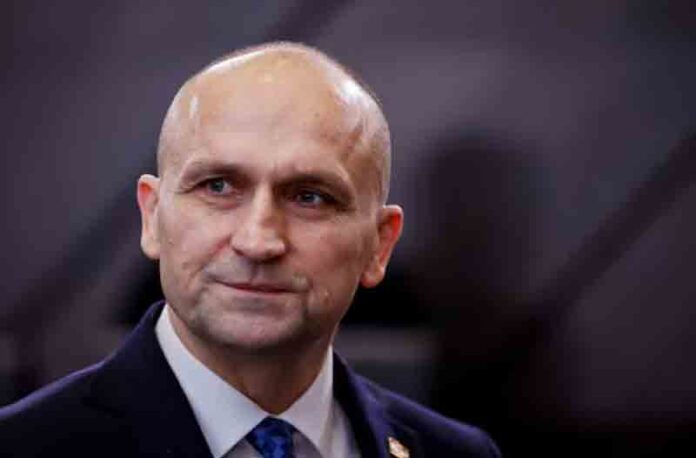
Croatia's Defence Minister Ivan Anusic attends a meeting of the North Atlantic Council in the NATO defence ministers' session together with Sweden as the invitee, at the Alliance's headquarters in Brussels, Belgium.

Croatia has announced plans to increase its defense expenditure to 2.5% of GDP by 2027 and to 3% by 2030, as stated on Tuesday. This commitment makes Croatia the latest NATO member in Europe to enhance military spending in response to pressure from U.S. President Donald Trump. Currently, the country allocates 2% of its GDP to defense.

Defence Minister Ivan Anusic emphasized the nation’s active efforts in developing its defense industry and strengthening collaboration with allies during the opening of the Adriatic Sea Defence & Aerospace Exhibition and Conference in Zagreb.

Anusic also revealed that Croatia‘s military is in discussions with Germany to acquire 50 Leopard tanks, which are expected to be delivered by 2028. This initiative is part of a broader effort across Europe to enhance military capabilities amid concerns regarding a potential reduction in U.S. defense commitments to the region.

Zelenskiy reports that Chinese citizens have been detained while fighting for Russia in Ukraine

0
Ukraine's President Volodymyr Zelenskiy gives a press conference in Kyiv, Ukraine, on February 19, 2025, amid the Russian attack on Ukraine.

President Volodymyr Zelenskiy announced on Tuesday that Ukrainian forces have apprehended two Chinese nationals who were reportedly fighting for Russia in eastern Ukraine, a development that could jeopardize ongoing peace efforts in the three-year conflict.

While Beijing maintains a close diplomatic relationship with Moscow, it has not been publicly acknowledged as having directly supported the Kremlin’s large-scale invasion, which U.S. President Donald Trump aims to bring to a swift conclusion.

In a post on X, accompanied by a video of one of the captured individuals, Zelenskiy indicated that Kyiv possesses “information suggesting that there are many more Chinese citizens” involved in the conflict. He did not clarify whether Ukraine believes these individuals were acting under directives from Beijing.

He remarked, “Russia’s engagement of China, along with other nations, whether directly or indirectly, in this European war is a clear indication that Putin is not interested in ending the conflict.”

Andriy Kovalenko, a member of Ukraine’s National Security and Defence Council, referred to the captured individuals as “mercenaries” in a social media post but did not provide further details.

Since its invasion in February 2022, Russia has utilized Iranian drones and North Korean missiles and artillery. Kyiv has also reported that North Korean troops have been deployed to engage Ukrainian forces in parts of Russia’s western Kursk region, where Ukraine conducted a rapid incursion last summer.

Zelenskiy noted in a joint briefing in Kyiv with Belgian Prime Minister Bart De Wever, “However, there is a distinction: the North Koreans were fighting on the Kursk front against us, while the Chinese are engaged on Ukrainian territory.”

Russia has not yet made any public statements regarding Zelenskiy’s assertion about Chinese fighters, nor has it confirmed the involvement of North Korean troops in the Kursk region.

Zelenskiy, who mentioned that the individuals were in possession of documents verifying their identities, expressed to reporters his hope that their capture would encourage the U.S. to adopt a firmer approach towards Russia in the ongoing peace negotiations aimed at ending the conflict.

In recent weeks, U.S. and Russian officials have participated in bilateral discussions, which have drawn criticism from Ukraine, as there are concerns about the Trump administration’s accommodating attitude towards the Kremlin.

“I believe the U.S. should focus more on the current situation,” Zelenskiy stated, noting that Ukrainian forces had encountered a total of six Chinese fighters. “We sincerely hope that this incident will lead to increased dialogue between Americans and Ukrainians, followed by discussions with the Russians.”

In a separate announcement, Ukrainian Foreign Minister Andrii Sybiha revealed that Kyiv had summoned China’s chargé d’affaires in Ukraine to express condemnation of the situation and seek clarification. China, which established a “no limits” strategic partnership with Russia just days before the invasion, has indicated its willingness to assist in resolving the conflict in Ukraine.

Trump is waiting for China’s reaction before implementing the 104% tariffs

0

On Tuesday, U.S. President Donald Trump announced that he is awaiting a response from China before implementing tariffs exceeding 100%, suggesting a potential openness to last-minute negotiations with the second-largest economy in the world.

Following several tumultuous days in the markets due to Trump’s extensive tariffs, which have sparked recession fears and disrupted a long-standing global trading framework, global markets showed signs of stabilization. U.S. stock indexes experienced a significant rebound after a severe selloff that has erased trillions of dollars in value since the previous week.

Trump has already enacted a 10% tariff on nearly all imports into the largest consumer market globally, with additional targeted tariffs of up to 50% on various trading partners set to take effect on Wednesday. In response, China has rejected what it describes as “blackmail” and has pledged to “fight to the end,” following Trump’s threat to escalate tariffs to 104% in retaliation for China’s decision to impose “reciprocal” duties announced last week.

Trump suggested that a resolution could be on the horizon, stating, “China also wants to make a deal, badly, but they don’t know how to get it started. We are waiting for their call. It will happen!” via social media.

In an effort to avert the tariffs, numerous countries are proposing concessions. The Trump administration has initiated discussions with several nations, including Japan and South Korea. Meanwhile, China is preparing for a prolonged economic struggle, with manufacturers of various goods, from tableware to flooring, expressing concerns about profit margins and hastily planning new overseas production facilities. Citing increasing external risks, Citi has revised its 2025 GDP growth forecast for China down to 4.2% from 4.7%.

Several companies are warning of impending price increases. Chipmaker Micron has informed its customers of a tariff-related surcharge starting Wednesday, while U.S. clothing retailers are postponing orders and pausing hiring. According to an industry group, running shoes produced in Vietnam that currently sell for $155 will rise to $220 once Trump’s 46% tariff on that country is implemented.

Consumers are taking the opportunity to stock up on essentials. “I’m purchasing double of everything—beans, canned goods, flour, you name it,” stated Thomas Jennings, 53, as he navigated the aisles of a Walmart in New Jersey.

In the midst of tensions between the world’s two largest economies, China’s Foreign Ministry labeled comments made by Vice President JD Vance during a recent Fox News interview as “ignorant and impolite.”

While defending the tariffs imposed by Trump, Vance criticized the U.S. economic model for its detrimental effects on American workers, stating, “We borrow money from Chinese peasants to buy the products those Chinese peasants create.”

Vietnam has requested a 45-day extension, while Indonesia has announced concessions for U.S. imports, including tax reductions on electronics and steel.

On Tuesday, stock markets regained stability following a tumultuous period for investors, which led some business leaders, including those aligned with Trump, to encourage the president to reconsider his approach. European shares rebounded from 14-month lows after four consecutive days of significant declines, and global oil prices stabilized after reaching four-year lows. Wall Street’s primary indexes recovered from a substantial selloff, driven by technology stocks.

EUROPE CONSIDERS RETALIATORY MEASURES

The European Commission is contemplating imposing counter-tariffs of 25% on various U.S. products, including soybeans, nuts, and sausages, although items like bourbon whiskey were excluded from consideration. Officials indicated their willingness to engage in negotiations.

The 27-member bloc is currently grappling with existing tariffs on automobiles and metals, and is set to encounter a 20% tariff on additional products this Wednesday. Trump has also indicated the possibility of imposing tariffs on alcoholic beverages from the EU.

In a recent meeting, European pharmaceutical companies expressed their concerns to von der Leyen, cautioning that Trump’s tariffs could accelerate the industry’s migration from Europe to the United States.

China pledges to “fight to the end” as countries plan their responses to the tariff conflict started by Trump

0
U.S. President Donald Trump delivers remarks on tariffs in the Rose Garden at the White House in Washington, D.C., U.S.

China has rejected what it describes as “blackmail” from the United States, as the global trade conflict initiated by President Donald Trump‘s extensive tariffs shows little sign of easing, despite some stabilization in battered stock markets on Tuesday.

Beijing’s response followed Trump’s warning that he would increase tariffs on U.S. imports from China to over 100% on Wednesday, in retaliation for China’s decision to implement “reciprocal” duties announced by Trump the previous week.

China’s assertive stance stands in stark contrast to the more conciliatory approaches taken by other Asian nations. Meanwhile, the European Union continues to consult with its member states on how to respond effectively to Trump’s tariffs without inflicting further damage on its consumers and exporters.

“The U.S. threat to escalate tariffs against China is yet another mistake, revealing the American tendency to resort to blackmail,” stated China’s commerce ministry. “Should the U.S. persist in its demands, China will fight to the very end.”

In a phone conversation with China’s Premier Li Qiang, European Commission President Ursula von der Leyen urged Beijing to pursue a negotiated resolution and emphasized the importance of maintaining a fair trading system based on equal competition. They also discussed establishing a mechanism to monitor potential trade diversions resulting from the tariffs, as the EU is concerned that China may redirect low-cost exports from the U.S. to Europe.

Chinese manufacturers, ranging from those producing tableware to flooring, are expressing concerns about their profits and are hastily planning new overseas facilities in response to the tariff developments. In light of increasing external risks, Citi has revised its 2025 GDP growth forecast for China down to 4.2% from 4.7%.

The European Union has introduced its own counter-tariffs in response to President Trump’s aggressive trade policies, which have affected numerous countries, caused turmoil in financial markets, and raised concerns about a potential global recession.

‘UNRECOGNIZABLE’ US

As market fluctuations continued, the CEO of Euronext, the pan-European stock exchange operator, remarked that the United States is beginning to resemble an emerging market. “There is widespread fear,” Stephane Boujnah stated during an interview with France Inter radio, describing the U.S. as “unrecognizable.” He noted a sense of loss, as the U.S., once seen as a dominant nation aligned with European values and institutions, now appears more like an emerging market. Emerging economies frequently implement targeted tariffs to shield specific industries from international competition.

On Tuesday, stock markets showed signs of recovery after a tumultuous period for investors, prompting some business leaders, including those close to Trump, to encourage the president to reconsider his approach. European stocks rebounded from 14-month lows in early trading following four consecutive days of significant declines, while global oil prices also recovered after a sharp drop. U.S. stock index futures rose slightly after experiencing trillions of dollars in losses since the previous week, as investors eagerly awaited any indication of the U.S. engaging in negotiations. Japan’s Nikkei index surged 6% on Tuesday, and Chinese blue-chip stocks increased by 1%, recovering some of the over 7% decline from Monday. Conversely, Indonesian markets faced a severe downturn, with stocks plummeting 9% as trading resumed after a lengthy holiday. The central bank of Indonesia has committed to intervening, joining other global authorities in efforts to mitigate the recent market turmoil.

Trump stated that the tariffs, starting at a minimum of 10% on all U.S. imports and potentially reaching as high as 50% for specific items, are intended to help the United States restore its industrial sector, which he claims has diminished over years of trade liberalization.

EUROPE CONSIDERS RETALIATORY MEASURES

In response, the European Commission has suggested implementing counter-tariffs of 25% on various U.S. products, such as soybeans, nuts, and sausages. However, items like bourbon whiskey were notably excluded from this proposal, according to a document reviewed by Reuters.
Officials indicated their willingness to engage in negotiations for a “zero for zero” agreement with Trump’s administration.
The 27-member European Union is already grappling with existing tariffs on automobiles and metals, and is set to face a 20% tariff on additional products starting Wednesday. Trump has also warned of potential tariffs on EU alcoholic beverages.
In light of the high U.S. tariffs, Vietnam, a low-cost manufacturing center, has requested a 45-day extension and pledged to increase its purchases of American goods to help balance trade.
Amid a significant decline in its rupiah currency, Indonesia has announced concessions for U.S. imports, including tax reductions on electronics and steel, in an effort to gain favor with the White House.

The largest economy in Southeast Asia plans to send a delegation to Washington next week to negotiate a deal aimed at mitigating the effects of a 32% tariff set to take effect on Wednesday. Meanwhile, South Korea is exploring options to boost imports from the United States as it prepares for its own discussions with Washington.

According to Politico, U.S. Treasury Secretary Scott Bessent met with President Trump in Florida on Sunday to encourage him to focus on securing trade agreements, which would help reassure markets about the long-term goals of his strategy. Additionally, Elon Musk, who is leading Trump’s initiative to reduce government spending, has advocated for eliminating tariffs between the U.S. and Europe and has reportedly urged Trump directly to reconsider the tariffs.

Kremlin supports direct talks between the U.S. and Iran on the nuclear program

0
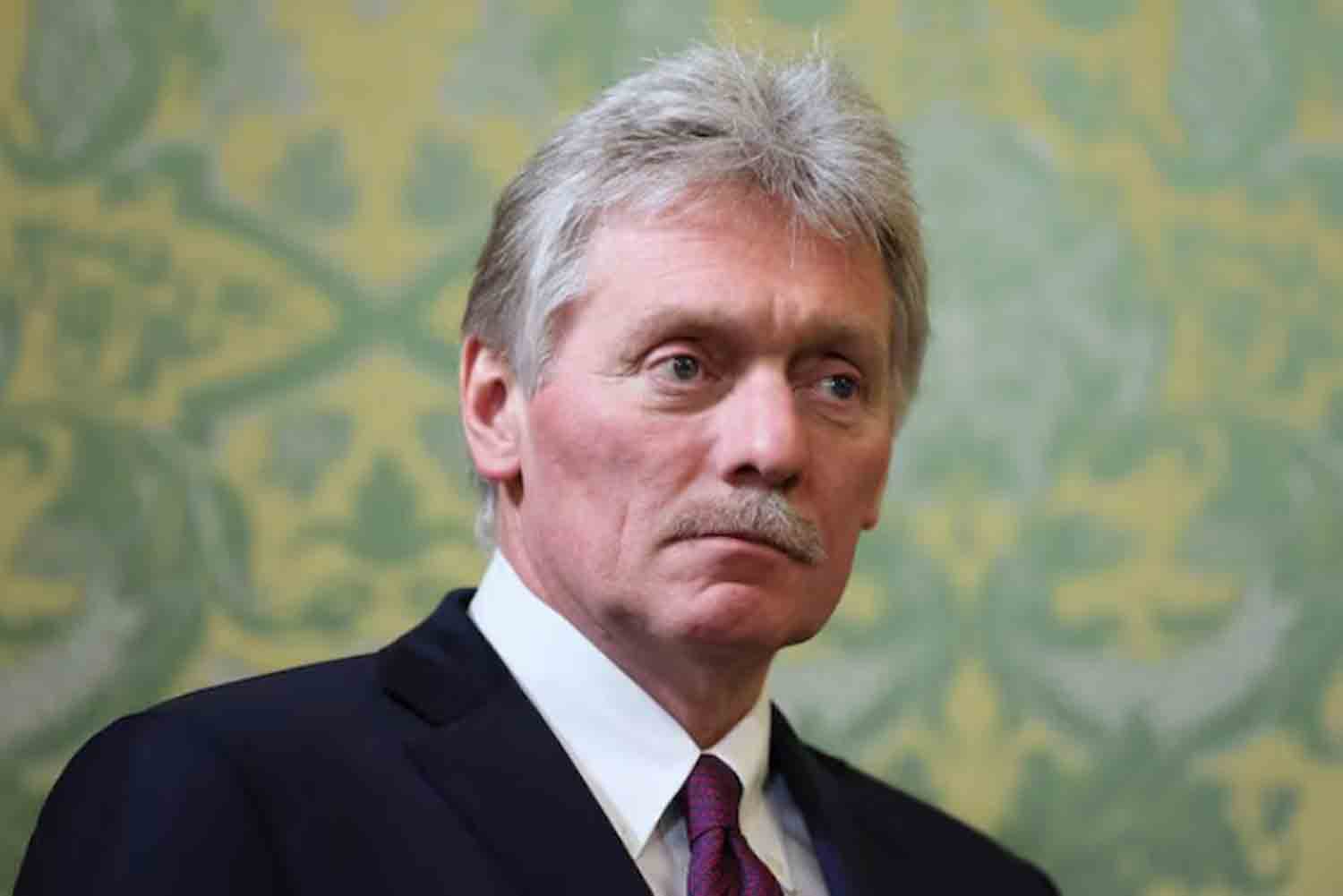
Kremlin spokesman Dmitry Peskov

On Tuesday, the Kremlin announced its support for both direct and indirect negotiations between Iran and the United States regarding Tehran’s nuclear program, viewing this as an opportunity to reduce tensions between the two nations.

During a press briefing, Kremlin spokesman Dmitry Peskov emphasized Russia’s commitment to a diplomatic and political resolution.

Peskov stated, “We are aware that certain direct and indirect communications are scheduled to occur in Oman. Naturally, this is a positive development, as it could contribute to easing tensions surrounding Iran.”

Iranian state media reported that discussions between the U.S. and Iran are set to take place in Oman on April 12, although the specifics of the talks remain uncertain.

U.S. President Donald Trump indicated on Monday that the two nations were ready to engage in direct discussions; however, Iran’s foreign minister clarified that the meetings in Oman would be indirect and conducted through intermediaries.

In recent months, Trump has expressed a desire to reach an agreement with Iran concerning its long-standing nuclear program, while also threatening military action if a deal is not achieved.

Since Moscow deployed tens of thousands of troops to Ukraine in February 2022, Russia and Iran have strengthened their diplomatic and military relations. Moscow has utilized Iranian-made drones extensively against Ukrainian military and infrastructure targets. Additionally, Russia has previously offered to assist in facilitating talks between Tehran and Washington.

Uzbekistan is seeking to purchase Chinese fighter jets

0
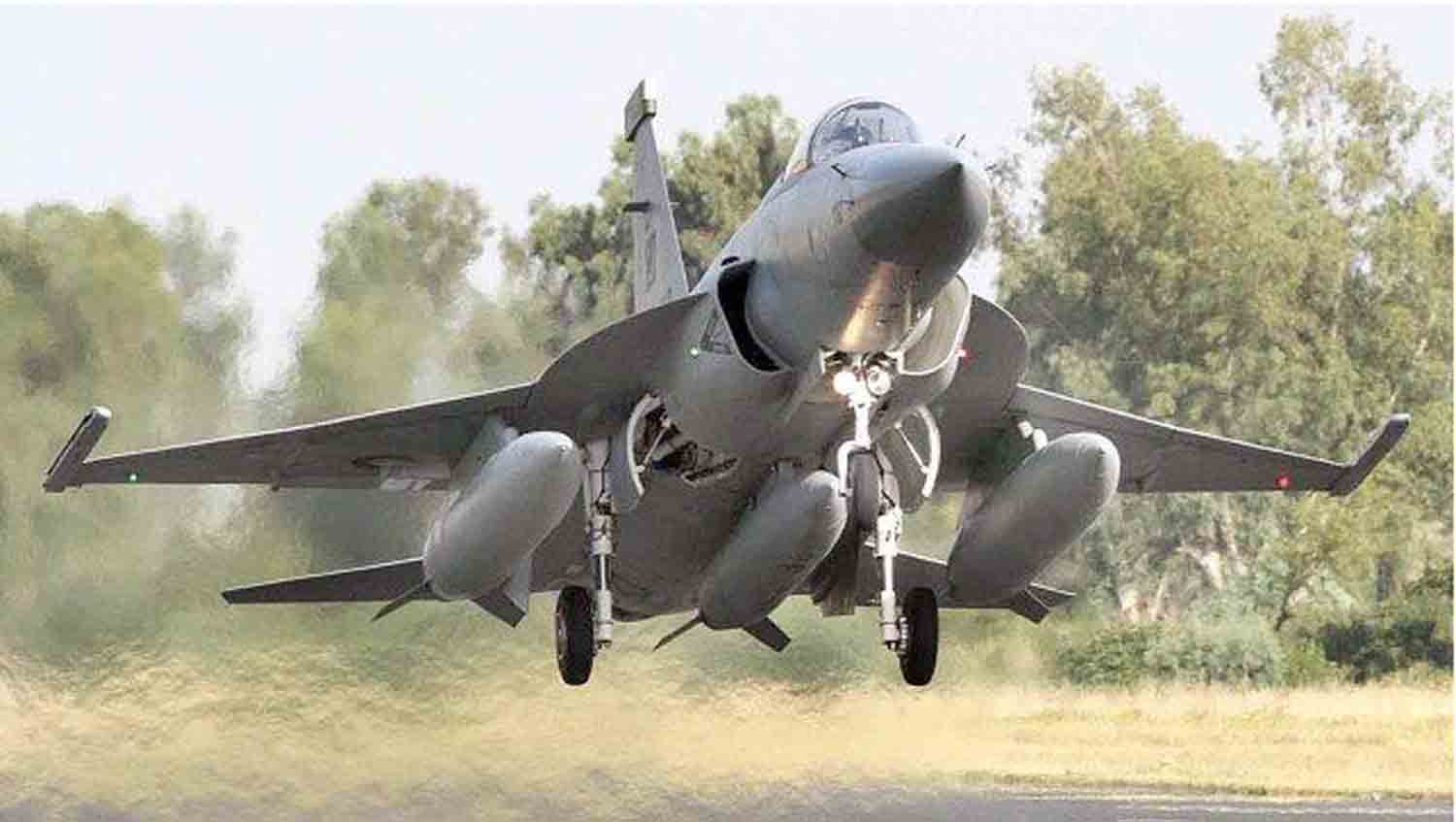
JF-17 Block III

Uzbekistan is reportedly close to finalizing a deal to acquire modern fighter jets from China, as indicated by various regional defense media outlets.

Although neither government has officially confirmed the transaction, a video circulating on social media allegedly features an Uzbek pilot undergoing training on one of the Chinese aircraft.

A source affiliated with the Defense Industry Agency of the Uzbek Defense Ministry informed local media that Beijing has approved the sale of multirole fighter jets to the Uzbek Air Force. While the specific model remains undisclosed, there is speculation that the JF-17 Thunder, a lightweight fighter co-developed by China and Pakistan, may be the aircraft in question.

Previously, Uzbekistan had shown interest in the French-made Rafale fighter from Dassault Aviation. However, recent developments indicate that Tashkent may have shifted its focus to a Chinese option, possibly influenced by factors such as cost, quicker delivery schedules, or a strategic partnership with Beijing.

Additionally, some reports suggest that Uzbekistan has shown interest in China’s more advanced J-35A stealth fighter. Nevertheless, analysts are doubtful that Beijing would be willing to share its next-generation technology with non-allied nations, especially since the J-35A is still in the early phases of limited deployment within China’s military. Historically, the Chinese government has been cautious about exporting high-end military technology.

If confirmed, this sale would represent a significant arms transaction between Uzbekistan and China, highlighting the strengthening military relationship between the two countries. It would also indicate a change in Uzbekistan’s procurement approach, which has historically favored Russian and Western military systems.

The Uzbek Air Force currently relies on outdated Soviet-era MiG and Su-series fighters, many of which are in need of replacement. Shifting to newer, more adaptable aircraft would enhance air policing, bolster regional deterrence, and improve strike capabilities.

Uzbekistan has already engaged with Chinese defense products, having previously purchased the FD-2000, FM-90, and KS-1C surface-to-air missile systems. These purchases reflect a growing trend towards incorporating Chinese-manufactured systems into the nation’s air defense framework.

Trump’s trade war disrupts established norms and prompts global intervention

0
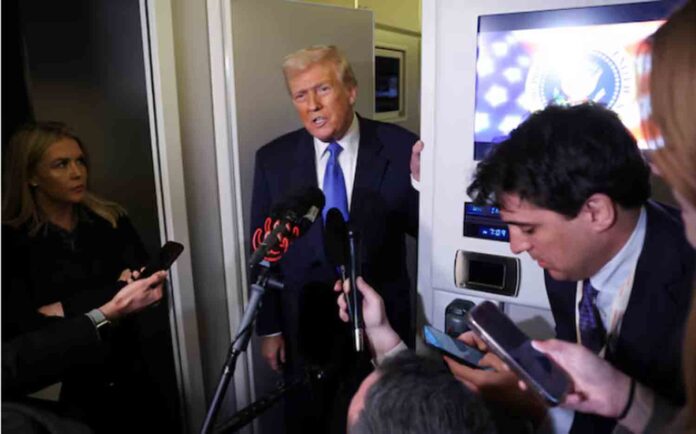
U.S. President Donald Trump speaks to reporters aboard Air Force One on his return to Washington, D.C., U.S.

The future of international trade and the effects of US President Donald Trump’s recent tariff policies will significantly hinge on the ultimate goals of Washington. Is the United States contemplating a withdrawal from the World Trade Organization (WTO), or is it attempting to instigate necessary reforms within an organization it has increasingly marginalized?

By implementing extensive new tariffs, the US has not only overtly breached its commitments to the WTO but has also indicated a disregard for international trade regulations. Furthermore, Washington has shown no willingness to utilize the WTO’s established mechanisms for addressing emergency tariff increases. This often-overlooked aspect is vital: the US must either revert to adhering to established rules or continue on a trajectory where trade is dictated by unilateral actions rather than multilateral agreements. The future of US involvement in the WTO is contingent upon this choice.

The WTO possesses two primary methods for ensuring compliance: moral persuasion and retaliatory actions. While moral persuasion may influence smaller nations, it proves ineffective against the adept negotiators of the world’s largest economy. Retaliation, on the other hand, is a lengthy process. According to WTO regulations, it can only be initiated after a dispute has been resolved, a decision rendered, and damages assessed, which can take up to two years. However, with the WTO Appellate Body currently incapacitated due to a US blockade, such resolutions are unattainable. Any retaliatory measures taken by other nations would also constitute violations of WTO rules, as the organization was not designed to handle such impasses.

The WTO cannot expel the United States, but it can explore alternative strategies to maintain its multilateral functions without American involvement. While these options are complex, they are achievable. In fact, many member countries might even welcome a US departure. In recent years, the US has not only stepped back from its leadership role within the organization but has also actively undermined it.

However, the US has not officially withdrawn, and some of its reform suggestions merit consideration. For example, it has proposed adjusting the preferential treatment afforded to developing nations, noting that many of these countries have become significant players in the global economy. Additionally, the US calls for stricter enforcement against members that do not submit timely notifications regarding their trade policies and subsidies. Its recommendation to exclude such “delinquent” nations from meetings and to raise their fees faced strong opposition from WTO officials, a backlash that may have contributed to the US’s shift towards tariffs.

The prospect of a “WTO without the US” serves as a leverage point. Nevertheless, the US still generates over 40% of its corporate profits from international markets, and relinquishing its influence over global trade regulations does not align with its strategic goals. Establishing a viable alternative path necessitates unprecedented collaboration among WTO members, a challenge exacerbated by the current leadership void. The EU lacks the determination, China is not yet prepared, and efforts for collective leadership among like-minded nations are proving ineffective.

The most probable result will be a series of reciprocal agreements. Smaller economies that depend on US markets may provide customized concessions. Countries like Switzerland and Singapore, which already maintain low tariffs, could adapt more readily. Non-tariff barriers are generally simpler to modify, as long as they do not disguise protectionist measures.

For larger economies such as the EU or Japan, the strategy may initially involve retaliatory measures to unsettle American industries, followed by negotiations. This approach could activate US corporate lobbying efforts, compelling Washington to reassess its stance. If Trump’s primary goal is to secure improved access for US companies in foreign markets, this traditional strategy may prove effective.

However, if his intentions are different—such as instigating a controlled global economic crisis to reduce the US trade deficit—the situation could become significantly more unstable. In this scenario, tariffs would likely remain in place, making compromise difficult.

In such a context, international trade would face considerable challenges. Some projections suggest that global GDP could decline by 0.3-0.5% due to the interplay of US tariffs and retaliatory actions. Disrupted supply chains would heighten competition in third-party markets, and US imports could decrease by as much as one-third, leading to inflation and shortages for American consumers.

Interestingly, the United States might see an increase in domestic investment. A recent estimate indicated that as much as $3 trillion could be funneled back into the American economy. Trump’s strategy could be viewed as a more aggressive form of import substitution, bringing both its benefits and challenges.

Currently, Russia is not directly impacted by these tariff changes. The bilateral trade has already diminished significantly due to sanctions, and there are no new tariffs from the US specifically aimed at Russia. However, the indirect consequences could be substantial.

Global trade operates like a network of rivers. Trump’s tariff barriers, along with retaliatory measures, will redirect goods to alternative markets, often at considerable discounts. This shift in exports could lead to lower prices and negatively affect local industries, including those in Russia. A decrease in demand for industrial resources such as oil, gas, and metals could adversely impact the economy.

China, being the primary focus of US tariffs, may boost its exports to Russia. In principle, Beijing has the ability to manage its export volumes.

Every trade policy decision carries significant implications. Trump’s tariff approach serves as a valuable example of how these implications can manifest.


Netanyahu is reportedly urging the U.S. to prevent the sale of F-35 aircraft to Turkey

0
F-35 Lightning II

Israeli Prime Minister Benjamin Netanyahu has been actively urging U.S. Secretary of State Marco Rubio to prevent the sale of F-35 fighter jets to Turkey, citing worries about Ankara’s increasing influence in Syria, according to three sources, including two senior Western officials, who spoke to Middle East Eye.

Netanyahu discussed the F-35 situation during several conversations with Rubio in March and April, as reported by the two Western officials. A third source familiar with the discussions confirmed that Netanyahu had indeed pressed Rubio regarding the arms deal.

Netanyahu has numerous issues to discuss with Trump, including unexpected tariffs imposed on Israel, potential nuclear negotiations with Iran, the disarmament of Hezbollah, and the ongoing conflict in Gaza.

The rivalry between Israel and Turkey is intensifying in Syria.

Recently, Israel conducted airstrikes on three military installations in Syria, including the Tiyas air base, also known as T4. These attacks were timed to exploit a brief opportunity before Turkey repositioned its military assets.

Middle East Eye previously reported that Turkey is deploying a Hisar-type air defense system to the T4 base.

Turkey’s control over these bases is part of a defense agreement that Ankara and Damascus have been negotiating since December. This pact would involve Turkey providing air support and military protection for Syria’s new government, which currently lacks a viable military force.

Netanyahu and his advisors view Rubio as a key ally in their efforts to block Turkey from obtaining F-35s, according to the Western officials.

Rubio’s Stance on Turkey

Rubio is recognized as one of the leading critics of Turkey within Trump’s administration. He was among the few American officials to voice concern over the arrest of Istanbul’s mayor, Ekrem Imamoglu, on March 19. The imprisonment of Imamoglu, a prominent rival of Turkish President Recep Tayyip Erdogan, ignited widespread protests across Turkey.

In the wake of the arrest, Steve Witkoff, Trump’s envoy to the Middle East, remarked that Trump had a “truly transformational” conversation with Erdogan, highlighting that “there is a lot of positive news emerging from Turkey at this time.”

Sources informed MEE that Netanyahu has frequently brought up the F-35 matter with Rubio, including during a call that occurred prior to Rubio’s meeting with his Turkish counterpart, Hakan Fidan, in Washington DC on March 25.

According to a summary of that meeting released by the State Department, the two leaders talked about “close cooperation to promote a stable, unified, and peaceful Syria.”

Rubio and Fidan also shared a warm greeting during a NATO summit in Brussels in April.

During his tenure as a Republican Senator, Rubio showed a keen interest in the Eastern Mediterranean. He successfully passed legislation aimed at enhancing security and energy collaboration among Greece, Cyprus, and Israel.

Rubio co-authored the 2019 Eastern Mediterranean Security and Energy Partnership Act, which authorized military financing for Greece and removed restrictions on arms sales to the Republic of Cyprus.

Greece has historically been Turkey’s adversary in the region. In 1974, Turkey invaded northern Cyprus following a failed coup aimed at uniting the island with Greece. Currently, Turkey has over 35,000 troops stationed in the Turkish Republic of Northern Cyprus, a territory recognized by no UN member state other than Turkey.

Cyprus, Greece, and Israel are increasingly concerned about Turkey’s expanding influence in the region, particularly following the overthrow of Bashar al-Assad’s government in Syria by Islamist rebels last year.

With Turkey’s allies now established in Damascus, both Greece and Cyprus fear that Turkey may attempt to replicate a maritime agreement similar to the one it made with Libya’s Tripoli-based government.

Over the past decade, Greece and Israel have strengthened their military cooperation, supported by the United States, partly as a countermeasure to Turkey’s maritime agreement with Libya.

This collaboration has intensified in light of Turkey’s rising influence in Syria. On March 30, Greek Prime Minister Kyriakos Mitsotakis visited Israel, and discussions are underway for Greece to acquire Israel’s Barak medium-range air defense systems.

The Israeli foreign ministry has refrained from commenting on Netanyahu’s lobbying efforts, and the State Department did not respond to MEE’s inquiry by the time of publication.

A source familiar with Ankara’s perspective indicated that while they are aware of Netanyahu’s lobbying, they do not believe it will have a significant impact.

A senior Turkish official informed MEE that the Trump administration has not indicated any changes regarding the F-35 issue.

According to the source, “Netanyahu could only request Trump to increase the number of F-35s sold to Israel, potentially doubling what Turkey might purchase. You cannot expect Trump to refrain from making that sale.”

Trump and the ‘unfriendly takeover’

Although Trump frequently emphasizes his positive rapport with Erdogan, he has also voiced criticism towards Turkey on multiple occasions.

In December, Trump remarked that Erdogan facilitated an “unfriendly takeover” of Syria following the overthrow of Assad’s government by Hay’at Tahrir al-Sham (HTS). He expressed apprehension regarding Turkish expansionist ambitions, stating, “They’ve wanted it [Syria] for thousands of years, and he got it.”

Steve Bannon, a former advisor to Trump and host of the podcast War Room, which has become essential for those interested in Trump’s perspective, recently labeled Erdogan as “one of the most dangerous leaders” globally, asserting that he aims to “re-establish the Ottoman Empire.”

Influence from external parties is increasingly evident in Trump’s administration, highlighted by right-wing conspiracy theorist Laura Loomer’s criticism of several national security officials.

The conflict between Turkey and the US regarding F-35 fighter jets dates back to 2019 when Ankara acquired Russia’s S-400 missile system, resulting in its removal from the warplane’s co-production program. The following year, the Trump administration imposed sanctions on Turkey.

MEE reported that Ankara is contemplating the temporary deployment of S-400 air defense systems to T4 or Palmyra in Syria to secure the airspace during base reconstruction. However, a final decision is pending, and approval from Russia is necessary.

According to US law, Turkey must forfeit the S-400 system to be reinstated in the F-35 program. However, deploying the S-400 to Syria could raise concerns for Israel.

Israel has historically held a veto over US arms sales to other Middle Eastern nations to ensure it retains a qualitative military advantage in the region.

France confronts U.S. supremacy through naval agreements with the UAE in the Gulf region

0
UAE navy

On April 7, 2025, Intelligence Online reported that several French naval defense firms, including Naval Group, MBDA, and Constructions Mécaniques de Normandie (CMN), are expanding their presence in Abu Dhabi, the capital of the United Arab Emirates (UAE).

This initiative aligns with the UAE’s ambitious long-term objective to develop a sovereign naval industry, thereby decreasing its dependence on foreign military imports. Some of these companies have already secured new contracts, while others are strategically positioning themselves for future prospects in this resource-rich Gulf nation.

This development marks a notable transformation in the UAE’s defense strategy and highlights France’s increasing significance as a key ally in the region’s military framework.

The UAE’s drive for naval independence is occurring amid a broader technological competition in the Persian Gulf, where global powers are competing for influence through advanced defense technologies.

France, with its advanced naval capabilities, is entering this competitive landscape with unique offerings that distinguish it from rivals such as the United States and China. Naval Group, a state-supported leader in warship design and construction, presents innovative systems like the Gowind-class corvette, which is designed for coastal defense and maritime security.

MBDA, a prominent European missile manufacturer, provides precision-guided munitions, including the Exocet anti-ship missile, known for its proven reliability in combat. Additionally, CMN, recognized for its fast attack craft, enhances these efforts with nimble, high-speed vessels tailored to the Gulf’s specific operational needs.

Collectively, these companies are not merely supplying equipment; they are providing the UAE with an opportunity to diversify its defense alliances in a region traditionally dominated by American systems such as the F-35 fighter jet and Patriot missile systems.

What distinguishes French technology in this arena is its flexibility and ability to work seamlessly with other systems. Take the Gowind corvette, for example; this 2,500-ton warship is outfitted with sophisticated radar technologies, including the SETIS combat management suite, which allows for the integration of various missile and sensor systems.

It is tailored for a wide range of missions, from anti-piracy operations to territorial defense, making it particularly suitable for the UAE’s objective of safeguarding its waters in the unpredictable Persian Gulf. The Exocet missile from MBDA, a subsonic weapon with a range of up to 180 kilometers, boasts a notable history, having been effectively utilized during the Falklands War, where it showcased its precision in targeting naval vessels.

Additionally, CMN’s Baynunah-class corvettes, already operational within the UAE Navy, are designed with lightweight structures and can exceed speeds of 30 knots, enabling quick responses in a region where threats can arise rapidly from both state and non-state actors.

In contrast, American counterparts like the Littoral Combat Ship, despite their advanced features, have encountered criticism regarding budget overruns and operational challenges, while China’s Type 056 corvette lacks the same level of combat-tested reliability.

The UAE’s ambition to develop a self-sufficient naval industry raises an important question: can a nation heavily dependent on foreign expertise genuinely attain autonomy in this sector? The leadership in Abu Dhabi has openly expressed its intention to cultivate a domestic defense industry, driven by substantial oil revenues and a strategic imperative to enhance its security control.

According to a report from Intelligence Online, French companies are not just exporting ready-made products; they are also establishing operations in the UAE, indicating potential technology transfers or collaborative ventures.

Historically, the UAE has relied significantly on imports, with its naval capabilities enhanced through contracts such as the $1 billion agreement for Baynunah corvettes, which were delivered by CMN in partnership with local firm Abu Dhabi Ship Building from 2009 to 2017.

However, the concept of sovereignty remains challenging to achieve, as essential systems—such as radars, missiles, and propulsion—continue to be sourced from abroad. In contrast, Saudi Arabia, another influential Gulf nation, has faced difficulties in its Vision 2030 initiative aimed at localizing defense production. Projects like the Avante 2200 corvette program are heavily dependent on Spain’s Navantia, despite the country’s goals for self-reliance.

This conflict between ambition and reality is a recurring theme in the Gulf region. The UAE’s military expansion gained momentum following the 1991 Gulf War, which highlighted the vulnerabilities of smaller Gulf states. Since then, Abu Dhabi has poured billions into its military, including a $19 billion contract in 2022 for 80 French Rafale jets equipped with MBDA’s Meteor and Storm Shadow missiles.

The naval aspect of this strategy has become increasingly critical due to escalating regional tensions, including Iran’s ballistic missile tests and Houthi assaults on shipping in the Red Sea. Given that the UAE’s waters are vital for oil infrastructure and trade routes, a strong naval presence is essential, and French companies seem well-positioned to address this need.

Naval Group’s Gowind has achieved notable success in the UAE, delivering two units in 2023 and 2024, which bolster the nation’s capacity to patrol its coastline and address asymmetric threats such as drone boats and fast attack vessels.

France’s growing involvement in Abu Dhabi is indicative of a larger geopolitical strategy. For many years, the United States has been the UAE’s main security ally, supplying a range of military assets from fighter jets to missile defense systems. The $23 billion F-35 agreement, which was approved in 2021 but has faced delays due to technical and political challenges, highlights this partnership.

However, France’s advancements suggest a gradual shift in influence. Paris has long aimed to regain its foothold in the Middle East, a region where it once exerted colonial control and now perceives both economic and strategic prospects.

The UAE, cautious about becoming overly dependent on Washington amid changing U.S. foreign policy, appears keen to broaden its partnerships. This evolving landscape has not gone unnoticed by other nations. The UK, through companies like BAE Systems, has its own legacy in the Gulf, particularly with the potential sale of Typhoon jets to the UAE.

China has also made its presence felt, proposing more affordable options such as the Wing Loong drone and Type 054A frigate, although these alternatives do not possess the combat experience of Western systems. Russia remains unpredictable, with its naval exports constrained by sanctions, yet its S-400 air defense system serves as a reminder of its ambitions in the region.

The human aspect of this partnership adds another dimension of interest. French engineers and technicians are reportedly establishing a foothold in Abu Dhabi, collaborating with Emirati staff to maintain and potentially co-develop these military systems.

The Missile Engineering Centre (MEC), inaugurated by MBDA in 2023 in partnership with the UAE’s Tawazun Council, represents a significant advancement in this area. MBDA describes the MEC as the first facility of its kind outside Europe, aimed at cultivating local expertise in missile technology, a sector where the UAE has traditionally relied on imports.

The extent to which this results in authentic knowledge transfer or merely maintains a customer-supplier dynamic is still uncertain. In contrast, U.S. defense contracts typically impose stringent regulations on technology sharing, as exemplified by the F-35 program, where source codes are tightly controlled.

France’s openness to collaboration may provide a competitive advantage; however, the true measure of the UAE’s naval aspirations will depend on its capacity to cultivate a skilled workforce capable of independent innovation.

The hardware warrants further examination, particularly the Gowind corvette from Naval Group, which is central to this partnership. At 102 meters long and displacing 2,500 tons, the Gowind is a versatile platform designed for flexibility. Its SETIS combat system combines radar, sonar, and electronic warfare capabilities, enabling it to identify threats from over 100 kilometers away.

The vessel can accommodate a helicopter or unmanned aerial vehicles, boosting its surveillance functions, and its missile arsenal includes options such as MBDA’s VL MICA for air defense and Exocet for engaging surface targets. With a crew of 65 and a range of 3,700 nautical miles, it is designed for prolonged missions in the Gulf’s warm, shallow waters, where potential threats include Iranian submarines and pirate skiffs.

In comparison to the U.S. Navy’s Littoral Combat Ship, which has a displacement of 3,500 tons and can reach speeds of 40 knots, the Gowind prioritizes cost-effectiveness and simplicity over speed, a compromise that aligns with the operational requirements of the UAE.

China’s Type 056, weighing in at 1,500 tons, is lighter and more affordable but lacks the advanced electronics found in the Gowind. Meanwhile, Russia’s Buyan-M corvette, equipped with Kalibr cruise missiles, provides significant offensive capabilities but faces challenges due to export limitations.

MBDA’s contributions are significant and deserve attention. The Exocet MM40 Block 3, a key player in naval warfare since the 1970s, features a 165-kilogram warhead that achieves remarkable precision, guided by an active radar seeker.

Its extensive range and capability to fly at low altitudes make it a powerful anti-ship weapon, as evidenced during conflicts such as the Iran-Iraq War. The VL MICA, a vertical-launch air defense missile, creates a protective zone of 20 kilometers around the Gowind, effectively targeting aircraft and incoming missiles using either infrared or radar guidance.

These advanced systems provide the UAE with a multi-layered defense capability that neither China nor Russia can fully replicate in their export offerings. While the U.S. presents alternatives like the Harpoon missile and Aegis-equipped destroyers, these come at a higher cost that may not align with the UAE’s regional priorities.

Looking forward, the effects of this Franco-Emirati collaboration extend beyond the borders of Abu Dhabi. The Persian Gulf remains a volatile region, with Iran’s naval growth and the ongoing conflict in Yemen heightening the demand for maritime security.

The UAE’s investment in French technology could shift the regional power dynamics, bolstering its capacity to deter threats without relying exclusively on U.S. carrier strike groups. However, the aspiration for a self-sufficient naval industry is fraught with obstacles. While constructing ships and missiles is one aspect, achieving expertise in their design and maintenance presents a different set of challenges.

The UAE has a history of success with joint ventures, such as the EDGE Group, but it remains untested in fully independent production, indicating that a significant journey lies ahead. For France, the implications are equally significant. Achieving success in Abu Dhabi could pave the way for entry into other Gulf markets, while failure could allow competitors to seize the opportunity.

From an analytical standpoint, this situation presents an intriguing case of ambition intertwined with pragmatism. The UAE is strategically utilizing French expertise to enhance its defense capabilities while remaining open to collaboration with other global powers. In contrast, France is seizing the opportunity presented by a moment of U.S. uncertainty to reaffirm its presence in a region with which it is familiar.

However, a broader question persists: can a relatively small nation like the UAE, despite its wealth and strategic aspirations, genuinely operate independently in a world where naval dominance is still largely influenced by global superpowers? The outcome of this inquiry could significantly impact not only the future of the Gulf region but also the overall dynamics of 21st-century geopolitics.

Pentagon focuses on Bullseye as the global missile competition intensifies rapidly

0
Bullseye missile

On April 7, 2025, General Atomics Electromagnetic Systems (GA-EMS), a defense technology company located in San Diego, announced a major collaboration with Rafael Advanced Defense Systems, an Israeli firm recognized for its advanced missile technologies.

The two organizations have entered into a memorandum of understanding to co-develop and produce a new long-range, precision-guided missile named Bullseye, designed for deployment by the U.S. military and its allied forces. This missile, which can be launched from air, ground, or maritime platforms, is based on the design of Rafael’s Ice Breaker missile and aims to provide a versatile and cost-efficient solution for precision strikes.

This announcement was made during the Navy League’s Sea-Air-Space Conference in National Harbor, Maryland, representing a significant advancement in U.S.-Israeli defense cooperation, with production expected to occur at GA-EMS’s facility in Tupelo, Mississippi.

Although the Pentagon has not yet confirmed plans to acquire Bullseye, the missile’s advanced development stage and Rafael’s existing contracts with undisclosed clients indicate its potential to transform modern combat.

The Bullseye missile is the result of a partnership that draws on decades of expertise from both sides of the Atlantic. GA-EMS, a subsidiary of General Atomics, has a strong track record in advancing military technology.

The company has historically focused on developing electromagnetic systems, including railguns and aircraft launch systems for U.S. Navy carriers, while also contributing to missile defense and space technology. Rafael, based in Haifa, Israel, adds its own impressive credentials to this partnership.

The company is globally recognized for its innovative missile systems, including the Spike anti-tank missile and the Iron Dome air defense system, which has been operational since 2011 and is credited with intercepting thousands of rockets targeting Israeli territory.

The Ice Breaker, which serves as the basis for Bullseye, is a fifth-generation missile currently in production. Rafael has reported that there are around 1,200 units ordered from undisclosed clients, as stated in a report to Breaking Defense. Deliveries for these orders are anticipated to commence by the end of this year.

Bullseye distinguishes itself through its versatility and advanced development. It is engineered to function across various platforms—aircraft, ground launchers, and naval vessels—making it a versatile asset for diverse mission requirements.

Its modular architecture facilitates incremental enhancements, allowing it to adjust to emerging threats without necessitating a complete redesign. Scott Forney, president of GA-EMS, highlighted this flexibility during his speech at the conference, stating, “We are thrilled to collaborate with Rafael to launch Bullseye, a highly effective deep-strike missile. Bullseye will be manufactured in the U.S. for delivery to U.S. military clients, supporting a range of critical precision-fire missions for the Department of Defense and coalition partners.”

The missile has achieved Technology Readiness Level [TRL] 8, a Pentagon standard indicating that it has undergone testing in realistic conditions and is approaching operational readiness.

Rafael has performed comprehensive testing on aerodynamics, propulsion, seeker technology, and launch integration, positioning Bullseye as a nearly complete product rather than a mere concept.

However, the U.S. Department of Defense has yet to place any orders for Bullseye, raising concerns about its immediate prospects. A GA-EMS representative informed Breaking Defense that the company is “actively engaging with potential U.S. customers across various services” to assess how the missile could fulfill their requirements.

This absence of commitment from the Pentagon contrasts with Rafael’s existing contracts, suggesting that while the technology is validated, its acceptance by U.S. forces may depend on bureaucratic or strategic considerations.

Forney suggested that there could be significant cost advantages, indicating that by utilizing Rafael’s previous investment in the Ice Breaker’s development, GA-EMS can “minimize risk and development expenses while delivering a high-performance, precision-guided missile at a substantial reduction in per-unit costs.”

This proposition may resonate with the Pentagon, which is increasingly prioritizing cost-effectiveness in light of escalating defense budgets, projected to reach $849.8 billion in fiscal year 2025, as reported by the Congressional Budget Office.

The lack of U.S. orders necessitates an examination of the factors hindering adoption. One potential reason is the competition posed by established systems already present in the U.S. arsenal. The Joint Air-to-Surface Standoff Missile (JASSM), manufactured by Lockheed Martin, has been a reliable option for long-range precision strikes since its debut in 1998.

With a range surpassing 230 miles and stealth features, JASSM has demonstrated its effectiveness in various conflicts, including its use in 2018 to target chemical weapons facilities in Syria. Likewise, the Long-Range Anti-Ship Missile (LRASM), also from Lockheed Martin, provides a naval strike capability with a range exceeding 300 miles and sophisticated targeting systems.

Both of these systems are fully integrated into U.S. military operations, backed by extensive testing and a strong supply chain. While Bullseye offers promising multi-platform versatility, it must establish its unique position in this competitive landscape. Its modular design could serve as a distinguishing factor, enabling it to adapt to specific mission requirements that JASSM or LRASM may not fulfill as effectively. However, persuading the Pentagon to allocate resources to a new system presents a significant challenge.

In addition to technical competition, strategic priorities may influence decisions as well. The U.S. military is increasingly focused on countering near-peer threats such as China and Russia, whose advanced air defenses and hypersonic weaponry have altered the dynamics of modern warfare. In this environment, a missile like Bullseye, built on Rafael’s proven combat technology, could provide a valuable advantage.

Yuval Miller, the executive vice president and leader of Rafael’s Air & C4ISR Systems Division, highlighted a crucial aspect: “By integrating Rafael’s proven 5th Generation missile technologies with GA-EMS’s expertise in advanced manufacturing, assembly, integration, and testing, Bullseye will provide unmatched accuracy, flexibility, and cost-effectiveness, equipping warfighters with a cutting-edge missile system that not only strikes its target but also adapts to changing mission requirements.”

This focus on flexibility is in line with the Pentagon’s initiative for multi-domain operations, which necessitates seamless coordination among air, land, and sea forces—a concept that has been evaluated in exercises such as the Rim of the Pacific [RIMPAC] in 2024.

For Rafael, collaborating with GA-EMS signifies more than a mere manufacturing agreement; it is a strategic effort to enhance its presence in the U.S. market. Israel’s defense sector has historically depended on domestic innovation to address its security challenges, given the nation’s geopolitical context.

A prime example is the Iron Dome, which was created in response to rocket threats from Hamas and Hezbollah, achieving its first successful interception in April 2011. Rafael’s partnership with GA-EMS could strengthen its international reputation, positioning it as a vital supplier to NATO allies and other U.S. partners. Nevertheless, relocating production to Tupelo raises concerns regarding Israel’s oversight of its intellectual property.

The memorandum guarantees that Bullseye will adhere to U.S. military standards; however, Rafael must weigh the advantages of this partnership against the potential risk of compromising its technological superiority. This issue has been a concern in previous U.S.-Israeli defense collaborations, notably during the joint development of the Arrow missile defense system in the 1980s.

The Tupelo facility stands as a significant achievement for GA-EMS. Situated in Mississippi’s Golden Triangle region, this Manufacturing Center of Excellence has evolved into a center for cutting-edge defense production.

This site employs hundreds of highly skilled workers and is capable of managing intricate assembly and integration processes, including electromagnetic launch systems and missile payloads. Local officials view the Bullseye initiative as a significant economic opportunity, with the potential to generate jobs and draw in additional investments.

The facility’s function aligns with a broader trend of defense manufacturing returning to the U.S., motivated by concerns regarding supply chain security and the need to lessen dependence on foreign production. This shift has been intensified by disruptions caused by the COVID-19 pandemic and rising tensions with China over essential technologies.

On a global scale, the introduction of Bullseye contributes to a larger narrative of technological competition. Russia’s Kinzhal hypersonic missile, which has been operational in Ukraine since 2022, reaches speeds surpassing Mach 10 and has a range exceeding 1,200 miles, posing a significant challenge to Western air defense systems.

China’s DF-17, a hypersonic ballistic missile introduced in 2019, highlights Beijing’s aspirations for advanced precision strike capabilities. Although the specific details of Bullseye remain confidential, its versatile design and Rafael’s proven expertise indicate it may effectively address such threats through swift and adaptable deployment.

The missile’s capacity to be launched from maritime platforms could be crucial in the Indo-Pacific region, where demonstrating naval strength is essential for deterring Chinese aggression. In Eastern Europe, where NATO confronts Russian military presence at its borders, Bullseye’s ground-launch capabilities could enhance deterrence against Moscow’s expanding arsenal.

Precision-guided munitions have historically revolutionized warfare since their widespread use in the late 20th century. The U.S. first showcased their effectiveness during the Gulf War in 1991, when laser-guided bombs achieved remarkable accuracy in targeting Iraqi installations.

Over the years, these weapons have transitioned from specialized tools to vital elements of military strategy, allowing for strikes with minimal collateral damage—a capability proven in conflicts such as those in Afghanistan and Libya.

Bullseye builds upon this historical foundation, but its modular design reflects a contemporary shift towards flexibility, similar to the U.S. Army’s Precision Strike Missile (PrSM), which began testing in 2019 and aims to replace outdated munitions with a range exceeding 300 miles.

Envision a potential conflict in the South China Sea, where U.S. naval forces encounter Chinese anti-ship missiles. A carrier strike group, armed with Bullseye, launches the missile from a destroyer to target a distant enemy radar site. At the same time, an Air Force F-35 deploys another Bullseye from the air, hitting a mobile command center.

The missile’s versatility in adapting to both sea-based and air-launched missions illustrates its potential to integrate operations across different domains. In a European context, ground-based Bullseye units could assist NATO forces by targeting Russian artillery that lies beyond the capabilities of traditional systems.

These scenarios underscore the objectives of GA-EMS and Rafael: to create a weapon that adapts to the battlefield’s requirements, rather than compelling commanders to work within its constraints.

As Bullseye approaches production, its eventual influence remains unclear. The missile’s advanced development and Rafael’s current orders indicate a viable market, yet the Pentagon’s reluctance suggests underlying issues—be they bureaucratic delays, financial limitations, or a preference for established technologies.

For GA-EMS, collaborating with Rafael presents an opportunity to solidify its position in the precision-strike sector, while for Rafael, it allows for strengthening relationships with the largest defense budget in the world. More broadly, Bullseye symbolizes the ongoing competition to maintain technological dominance amid rising global tensions.

Will it transform warfare for the U.S. and its allies, or will it remain a specialized option overshadowed by more established systems? The outcome may hinge less on the missile itself and more on the strategic decisions made in Washington in the years ahead.

Arab nations and the Palestinians: a complex relationship

0
Palestinians react after a school sheltering displaced people was hit by an Israeli strike, at Beach camp in Gaza City .

Arab nations officially endorse the Palestinian cause; however, security concerns, regional dynamics, and sectarian conflicts have complicated their relationships with Palestinians dispersed throughout the Middle East, resulting in various political and military crises.

JORDAN

Jordan was among the nations that welcomed a significant influx of Palestinian refugees when approximately 700,000 Palestinians fled or were displaced during the establishment of Israel in 1948.

Following Israel’s victory in the 1967 Arab-Israeli war, the Palestine Liberation Organization (PLO), led by Yasser Arafat, relocated to Jordan. From this base, the PLO conducted cross-border operations against Israel, posing a challenge to King Hussein’s authority.
King Hussein, who narrowly escaped an assassination attempt when gunmen attacked his motorcade in 1970, retaliated, leading to a civil war. This conflict resulted in thousands of deaths and the expulsion of Palestinians to Beirut.
In 1994, Jordan became the second nation, after Egypt, to sign a peace agreement that established normalized relations with Israel.

LEBANON

In 1975, a complex civil war broke out in Lebanon, a country marked by deep sectarian divisions, following the PLO’s relocation from Jordan.
Palestinian refugee camps frequently became targets for Israeli, Syrian, and Lebanese militias as they vied for dominance in a nation once known as the Switzerland of the Middle East.

In one of the most horrific events of the 15-year conflict, Lebanese Christian militias, with support from Israel, killed at least 800 Palestinian civilians in the Sabra and Shatila refugee camps. Although Lebanese officials publicly support the rights of Palestinian refugees, their policies, which limit civil rights, have drawn criticism from human rights organizations.

The government argues that these measures are designed to prevent the permanent settlement of Palestinians in Lebanon, thereby facilitating their eventual return to their homeland.

EGYPT

As the most populous Arab nation, Egypt has consistently positioned itself as a supporter of the Palestinian cause. In the ongoing Gaza conflict that began in 2023, Egypt has acted as a mediator between Israel and Hamas, a role it has played in previous conflicts and peace talks. Cairo maintains strong connections with various Palestinian factions, including Hamas, which has governed Gaza since 2007.

However, it is important to note that Hamas is a branch of Egypt’s Muslim Brotherhood, the Islamist organization that President Abdel Fattah al-Sisi dismantled following the ousting of President Mohamed Mursi in 2013. Egypt’s primary focus has been to ensure security along the border between Gaza and the Sinai Peninsula, where it has largely quelled an insurgency. Additionally, Egypt has assisted Israel in enforcing a blockade of Gaza since Hamas assumed control.

Egypt became the first Arab nation to establish peace with Israel in 1979. Since that time, Palestinians residing in Egypt have reported facing growing bureaucratic and security obstacles.

UNITED ARAB EMIRATES

In 2020, the United Arab Emirates emerged as the most significant Arab country to forge diplomatic relations with Israel in three decades, facilitated by the U.S.-mediated Abraham Accords. This agreement broke a longstanding taboo against normalizing relations without the establishment of a Palestinian state, a norm that had persisted since Jordan’s peace treaty.
Abu Dhabi has actively opposed Islamist factions throughout the region, including in Egypt, Sudan, and Libya. The UAE and Israel have since cultivated strong economic and security partnerships, including collaboration in defense.

SUDAN

Historically, Khartoum was recognized by Israelis as the city where the Arab League declared its “Three No’s” resolution regarding Israel in 1967—no recognition, no peace, and no negotiations. However, in October 2020, Sudan agreed to normalize relations with Israel, motivated by the potential for economic relief, removal from the list of state sponsors of terrorism, and greater international integration.
In exchange, the administration of U.S. President Donald Trump consented to lift Sudan from its designation as a state sponsor of terrorism, a label that had kept Sudan isolated from the global economy. The military in Sudan spearheaded the initiative to establish ties with Israel, while civilian groups, which were later marginalized due to a coup and ensuing civil war, were more hesitant about the move.

KUWAIT

Relations between the Palestine Liberation Organization’s leader Yasser Arafat and Kuwait deteriorated due to Arafat’s perceived support for Iraqi President Saddam Hussein during the 1990 invasion of Kuwait. Kuwait had previously been a significant ally and financial backer of Arafat, who initiated his Fatah movement while in the country in 1964.
Following the U.S.-led conflict that expelled Iraqi forces, many Palestinians faced coercion to leave or were forcibly expelled, as Kuwaitis harbored suspicions of their loyalty.

IRAQ

During Saddam Hussein’s regime, Palestinians benefited from subsidized housing, free education, and the right to work—privileges that were uncommon for foreigners. However, following Saddam’s fall in 2003, they faced persecution, violence, and expulsion at the hands of newly dominant Shi’ite militias in response to the end of Sunni governance.

Ukraine aims to align with the United States on a minerals agreement in discussions this week

0

This week, Ukraine will dispatch a delegation to Washington to advance discussions on a more comprehensive minerals agreement proposed by the United States, as stated by the deputy prime minister on Monday.

Yulia Svyrydenko mentioned on X, “Our goal is to reach an agreement on project selection, legal structures, and long-term investment strategies.”

The U.S. government is seeking Kyiv’s consent to secure a substantial share of Ukraine’s future mineral revenues. President Donald Trump views this as a means to recoup billions in aid provided to Ukraine in its conflict with Russia. While Kyiv is eager to retain the support of its ally, it is also cautious about relinquishing its future resources.

In late March, Washington delivered a revised draft that is significantly broader than a previous version that had been accepted. Svyrydenko noted that the ongoing discussions with the U.S. reflect the strategic interests of both nations and “our mutual commitment to fostering a robust and transparent partnership.”

The Ukrainian team traveling to Washington will consist of officials from the ministries of economy, foreign affairs, justice, and finance, she added. Ukrainian officials have been careful in their remarks regarding the draft, which reportedly indicates that the U.S. is seeking all of Ukraine’s natural resource revenues for an extended period.

President Volodymyr Zelenskiy emphasized that Kyiv would not acknowledge past U.S. aid as loans requiring repayment, nor would it agree to any arrangement that jeopardizes its future integration with the European Union.