Monday, April 13, 2026
Home Blog Page 55

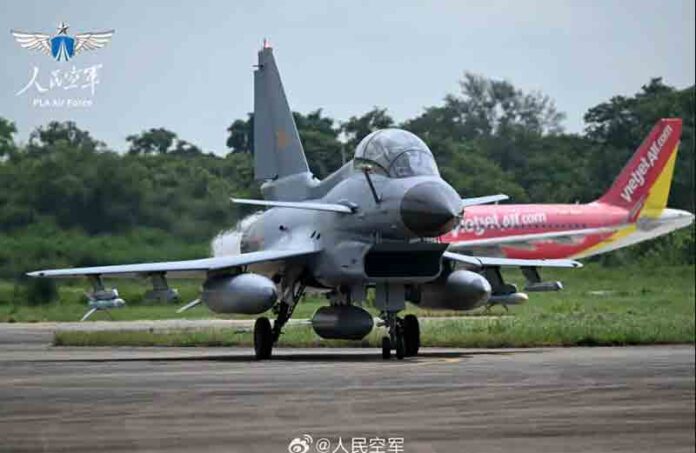
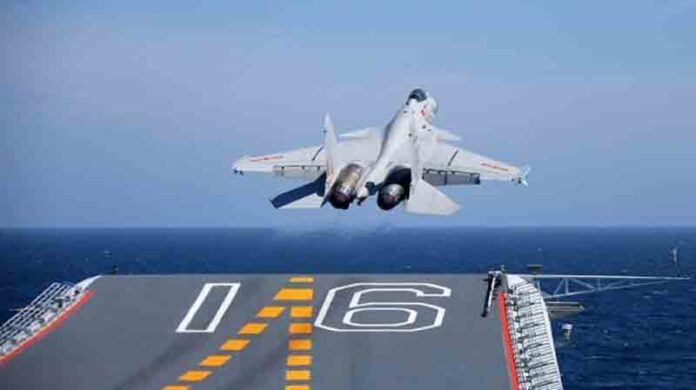
Chinese Navy J-15 aircraft crashes during a training exercise in Hainan province

0
Chinese Navy J-15 fighter jet

Reports on social media, particularly on X, indicate that a Chinese Navy J-15 fighter jet crashed during a training exercise around 1:30 p.m. local time on March 15, 2025.

According to various posts on X, the incident took place in an open area near Jialai Town, Lingao County, in Hainan Province, China. Accompanying video footage allegedly depicts a significant explosion followed by a parachute, implying that the pilot ejected and survived the incident.

As of 1:50 p.m. Eastern European Time on the same day—corresponding to early morning in the United States—there has been no official confirmation or denial from the Southern Theater Command of the Chinese Navy or the General Staff of the People’s Liberation Army Navy (PLAN). This absence of official verification means the incident remains unconfirmed, relying solely on unverified social media reports for information.

The posts on X provide a vivid account. One user shared in English, “Chinese J-15 fighter jet crashed during a training accident. The pilot ejected safely,” along with a brief video clip. Another post, originally in Russian, translates to, “In China, a J-15 fighter crashed, the pilot successfully ejected.”

Similar messages have emerged in Tamil, Urdu, and Japanese, illustrating the rapid dissemination of the news across different languages and regions. While the footage shows a dramatic explosion and a parachute descending, its authenticity and exact location are still uncertain without validation from Chinese authorities or independent news sources.

Hainan Province, situated in southern China and housing important military facilities, including the Lingshui Airbase, is a plausible location for such an incident due to its involvement in naval aviation training. However, until official sources provide clarity, the details remain speculative.

Chinese military aircraft have a history of being involved in accidents, which helps to contextualize the risks linked to advanced fighter jets such as the J-15.

In March 2019, a Chinese Navy fighter jet, the specific model of which was not identified by the defense ministry, crashed during a training exercise in Hainan Province, resulting in the deaths of both pilots. The ministry confirmed that there were no casualties on the ground and initiated an investigation, but details regarding the aircraft’s model were not revealed. Analysts speculated that it might have been a J-15, given its operational use in naval exercises from Hainan, although this was never substantiated.

Prior to this, in April 2018, state media reported a J-15 crash during a training session that led to the pilot’s death. This incident raised early alarms about the jet’s reliability, with subsequent reports indicating “unpardonable mechanical failures” that sparked discussions about potential replacements, as noted by PLA Air Force Lieutenant General Zhang Honghe in Chinese media.

Other Chinese fighter jets have also encountered similar issues. In January 2018, an air force aircraft—possibly a J-10—crashed in Guizhou Province during a training operation, resulting in the loss of its crew, although the PLA Air Force did not specify the number of casualties.

The J-10, a single-engine multirole fighter, has been a cornerstone of China’s air force since the early 2000s, but its accident record illustrates the difficulties in maintaining a modernized fleet. Likewise, the J-11, a twin-engine fighter based on the Soviet Su-27, has experienced its share of incidents. In 2015, state media reported that two pilots perished when their aircraft—believed to be a J-11—caught fire shortly after takeoff during a training mission.

These incidents reveal a trend of training-related accidents as China enhances its military aviation capabilities, although official information is often limited due to the PLA’s hesitance to disclose operational failures.

The J-15, often referred to as the “Flying Shark,” serves as a fundamental element of China’s naval aviation strategy. Created by the Shenyang Aircraft Corporation (SAC) in collaboration with the 601 Institute, this aircraft is a carrier-based, all-weather, twin-engine multirole fighter categorized as a 4.5-generation fighter.

Its development can be traced back to the Soviet Su-33 prototype, specifically the T-10K-3, which was obtained from Ukraine in 2001. Chinese engineers meticulously analyzed and reverse-engineered this airframe, incorporating domestic technologies and avionics derived from the J-11B program.

The J-15 made its inaugural flight in August 2009, reportedly powered by Russian-supplied Saturn AL-31 turbofan engines. By 2012, it successfully completed its first takeoff and landing on the Liaoning, China’s first operational aircraft carrier, a significant achievement highlighted by state media as a major advancement in naval capabilities.

Over the years, several variants of the J-15 have been developed, showcasing China’s commitment to enhancing the platform. The standard J-15 is designed for short takeoff but arrested recovery (STOBAR) operations, utilizing ski-jump ramps on carriers such as the Liaoning and Shandong.

In 2016, the J-15T prototype was introduced, featuring catapult-assisted takeoff but arrested recovery (CATOBAR) capabilities, and was tested at land-based facilities in preparation for the electromagnetic launch systems on the newer Fujian carrier. The twin-seat variant, J-15S, took to the skies in 2012, while the J-15D, an electronic warfare version similar to the U.S. Navy’s EA-18G Growler, was unveiled in 2018.

By 2021, analysts recognized the J-15B, an upgraded model equipped with advanced avionics, AESA radar, and compatibility with PL-10 and PL-15 missiles. In 2022, a production version of the J-15 transitioned to the domestically produced WS-10 engine, replacing the AL-31, a change that was commended by Chinese observers for enhancing safety and reliability in the challenging environment of carrier operations.

The J-15 is equipped with a formidable range of weaponry, including air-to-air missiles such as the PL-10 and PL-15, anti-ship missiles, and precision-guided munitions. According to Sun Cong, the chief designer of the J-15, its combat radius and payload capacity are comparable to those of the U.S. Navy’s F/A-18, as stated during the National Committee of the Chinese People’s Political Consultative Conference.

Sun also asserted that the J-15’s air combat capabilities exceed those of the F/A-18E/F Super Hornet, although he admitted that it falls short in terms of electronics and land-attack systems when compared to fifth-generation fighters. Rear Admiral Yin Zhuo supported this view, mentioning in state media that while the J-15’s electronic systems align with fifth-generation standards, its stealth features are constrained by its Su-33-based airframe.

For the Southern Theater Command, which manages operations in the South China Sea, the J-15 is an essential component. This area is a focal point for territorial disputes, with China claiming nearly all of its waters and frequently encountering tensions with neighboring countries like Vietnam and the Philippines, as well as U.S. naval forces engaged in freedom-of-navigation operations.

The J-15, launched from aircraft carriers such as Liaoning and Shandong, enhances China’s ability to project power, facilitating air dominance, maritime strikes, and electronic warfare in contested regions. The J-15D’s capability to neutralize enemy radar and air defenses significantly boosts the effectiveness of strike groups, a tactic that analysts compare to U.S. strategies employed during the Gulf War.

In 2024, Chinese military expert Fu Qianshao noted on NetEase that the J-15D represents a shift in carrier operations towards offensive strategies, moving away from the Soviet-era reliance on escort vessels for long-range attacks.

The exact size of the PLAN’s J-15 fleet is not publicly available, as China closely monitors such information. Western analysts, including those from Jane’s and The Aviationist, estimate that there are between 50 and 70 J-15s operational as of 2025, reflecting production that began in 2013. The aircraft carrier Liaoning, which was commissioned in 2012, typically operates with 24 to 36 J-15s, depending on the mission requirements, while the Shandong, which has been in service since 2019, accommodates a similar number.

The Fujian, which is still in the testing phase as of 2025, is expected to deploy J-15Ts and J-15Bs alongside the more advanced J-35, with a potential capacity for up to 60 aircraft. These carriers are central to China’s aspirations for blue-water naval capabilities, with the J-15 serving as the main strike asset.

As the narrative surrounding the alleged crash on March 15 develops, several critical questions remain unanswered. If verified, this incident would add to the J-15’s troubled safety history, prompting concerns regarding training standards and mechanical dependability.

The reported survival of the pilot provides a glimmer of hope, but without official confirmation, the repercussions for China’s naval aviation are uncertain. The Southern Theater Command’s lack of communication aligns with the PLA’s media approach, which emphasizes control over openness.

In the meantime, social media is rife with speculation, eagerly anticipating when, or if, Beijing will address the events that transpired over Hainan. Until that clarification is provided, the J-15 continues to symbolize China’s growing military power while also highlighting the dangers associated with its ambitions.
Italy is unable to provide additional SAMP/T missiles to Ukraine due to low reserves

0
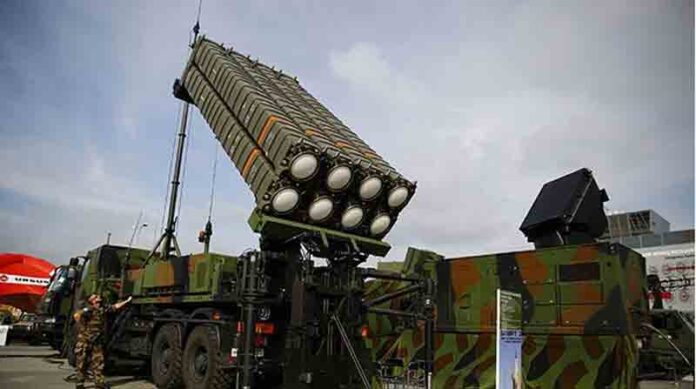
SAMP/T air defense systems

On March 14, 2025, the Italian newspaper Corriere della Sera reported that the two SAMP/T air defense systems provided to Ukraine by Italy and France are nearly depleted of missiles. This situation has raised alarms regarding Ukraine’s capacity to protect its airspace amid ongoing Russian aerial assaults.

The article notes that Italy’s missile reserves have reached a critical level, with the remaining stock allocated for the defense of vital national assets. In contrast, France reportedly has a somewhat larger inventory, although it too is struggling to fulfill Ukraine’s urgent demands for additional munitions.

As the conflict in Ukraine enters its third year, this shortage highlights the broader logistical and production challenges faced by Western allies in their support of Kyiv against Russian aggression.

The Corriere della Sera article mentions that Ukraine has requested at least 50 more Aster-30 missiles, which are essential for the operation of the SAMP/T systems. These systems were supplied to enhance Ukraine’s defenses against an increase in Russian drones, cruise missiles, and ballistic threats in recent months.

Italy has already delivered two of its five SAMP/T batteries, leaving it with only three to protect its own territory, thereby reducing its reserves to a critical level. While French officials have not publicly disclosed their remaining stock, sources indicate that they maintain a modest surplus compared to Italy.

This situation has ignited discussions in both nations regarding the need to balance national security priorities with their obligations to support Ukraine, particularly as Russian forces persist in targeting Ukrainian cities and infrastructure.

Compounding the situation, a recent report from The Wall Street Journal has raised concerns regarding the performance of the SAMP/T systems in Ukraine. The American publication, referencing unnamed sources familiar with the deployment of these systems, characterized their effectiveness as underwhelming when compared to the U.S.-manufactured Patriot air defense systems also utilized by Ukrainian forces.

The Journal reported that the SAMP/T systems, which consist of six launch platforms each, have encountered difficulties in detecting and intercepting Russian missiles, especially during extensive, multi-target assaults. The report indicates that software issues may have hindered the systems’ capability to track incoming threats, leading to frustration among Ukrainian operators.

In contrast, the Patriot systems have received significant acclaim from Ukrainian officials for their success in intercepting advanced Russian munitions, including the Kinzhal hypersonic missile.

The assertions made by The Wall Street Journal have sparked debate among defense analysts and policymakers. While the Patriot system boasts a longer operational history and a strong supply chain supported by the United States, the SAMP/T was anticipated to serve as a viable European alternative.

Typically, each SAMP/T battery comprises a radar unit, a command module, and six launchers, which can fire Aster-30 missiles designed to intercept aircraft, drones, and ballistic missiles at distances of up to 120 kilometers. However, sources cited by the Journal suggest that the system’s performance in Ukraine has not met expectations, particularly in light of Russia’s evolving military strategies.

According to data from the Ukrainian military, air defenses have endured an onslaught of over 1,000 missiles and drones in the past six months, a volume that may have revealed vulnerabilities in the SAMP/T’s design or its integration into the defense framework.

On March 14, coinciding with the publication of the Corriere della Sera article, Ukraine’s Defense Minister Rustem Umerov held discussions with his Italian counterpart, Guido Crosetto, in Rome to address urgent matters. The meeting took place at the Italian Ministry of Defense and centered on securing additional military assistance for Ukraine in 2025, particularly focusing on enhancing air defense capabilities.

Umerov expressed appreciation for the SAMP/T systems that have already been provided, highlighting their importance in safeguarding Ukrainian airspace. However, he emphasized the critical need for more missiles to ensure their continued effectiveness. Crosetto reiterated Italy’s dedication to supporting Ukraine, while also recognizing the challenges faced by Italy’s own defense resources.

The ministers also considered potential collaborative industrial initiatives with Italian defense companies, including Leonardo, which partners with the French firm Thales to produce the SAMP/T through the Eurosam consortium. Although no definitive agreements on missile supplies were reached, the discussions highlighted the increasing pressure on European allies to enhance their support as U.S. aid encounters political challenges.

The SAMP/T, or Surface-to-Air Missile Platform/Terrain, is an advanced air defense system developed collaboratively by France and Italy. Launched in the early 2000s, it is engineered to address a diverse array of aerial threats, ranging from low-flying aircraft to short-range ballistic missiles.

The Aster-30 missile serves as the fundamental element of the system, available in two primary versions: the Aster-30 Block 1, designed for engaging aerodynamic targets such as aircraft and cruise missiles, and the Aster-30 Block 1NT, an enhanced variant that can accurately target ballistic missiles.

Both missile types are equipped with an active radar seeker and a hit-to-kill warhead, enabling them to eliminate targets through direct impact rather than relying on explosive fragmentation. The SAMP/T system utilizes the Arabel radar, which offers comprehensive 360-degree coverage and the capability to track multiple targets at once, relaying information to the launchers that can each carry eight missiles.

In its typical setup, a SAMP/T battery includes one Arabel multifunction radar, a command-and-control unit, and six truck-mounted vertical launchers. The system’s high mobility allows for rapid deployment in response to threats, and it can function autonomously or as part of a coordinated defense network.

The Aster-30 Block 1 has an operational range of approximately 120 kilometers against aircraft and 20-30 kilometers against ballistic missiles, depending on the speed and trajectory of the target. The Block 1NT variant enhances this capability with upgrades to its seeker and software, designed to address more sophisticated threats.

Eurosam, the manufacturer, promotes the SAMP/T as a cost-efficient alternative to the Patriot system, with each battery estimated to cost around $500 million, while individual missiles are priced at approximately $2 million each. In Ukraine, these systems have been deployed to protect vital urban areas and infrastructure, a role that has tested their effectiveness amid ongoing Russian attacks.

The deployment of the SAMP/T system in Ukraine represented its inaugural combat experience, in contrast to the Patriot system, which has been utilized in various conflicts from the Gulf War to recent operations in the Middle East. This absence of proven battlefield reliability may help explain some of the difficulties highlighted by The Wall Street Journal.

Defense experts point out that the Aster missiles used by the SAMP/T follow a “shoot-see-shoot” strategy, where one missile is fired at a target and the outcome is evaluated before launching another. This approach is designed to conserve ammunition.

In comparison, the Patriot system typically employs a “shoot-shoot-see” method, firing two missiles to ensure a successful hit. While this tactic consumes more munitions, it may prove more effective in chaotic, high-intensity scenarios.

Although Ukrainian officials have not publicly validated the Journal’s assertions, their ongoing requests for additional Patriot batteries—coupled with the shortages of SAMP/T systems—indicate a preference for the American system in critical regions such as Kyiv.

Italy has made a notable contribution to Ukraine’s defense, but its support is limited by its own requirements. With only five SAMP/T batteries available before the conflict, the donation of two units was a significant commitment. The Italian military depends on these systems to safeguard strategic locations, including Rome and essential NATO facilities, leaving little capacity for further transfers without jeopardizing national security.

France, which operates around a dozen SAMP/T batteries, has greater flexibility, although it too must consider its NATO commitments and domestic defense needs. Both nations have indicated intentions to boost Aster missile production, but increasing manufacturing capacity is a gradual process, hindered by supply chain issues and the high costs associated with advanced components.

Eurosam has announced plans for upgrades to the SAMP/T, including the upcoming SAMP/T NG variant, which will feature improved radar and missile capabilities; however, these enhancements are still years away from being operational.

The current missile shortage and concerns regarding performance arise at a critical juncture for Ukraine. According to estimates from the Ukrainian military, Russian forces have intensified their aerial operations, deploying an average of 100 drones and missiles weekly in early 2025. This relentless assault has put significant pressure on Ukraine’s air defense systems, which comprise both Soviet-era S-300 units and Western-supplied NASAMS and IRIS-T batteries.

The reduction of SAMP/T munitions may create vulnerabilities, especially against ballistic threats that have been aimed at energy infrastructure and civilian locations. Ukrainian President Volodymyr Zelensky has consistently called on allies to enhance their support with additional air defense systems and munitions, cautioning that any delays could allow Russia to gain aerial superiority by spring.

As of March 15, 2025, the situation continues to evolve. Italy and France face mounting pressure to address Ukraine’s requests, but their capacity to respond is influenced by domestic priorities and industrial capabilities. The recent meeting in Rome between Umerov and Crosetto did not yield immediate solutions, although it did pave the way for potential future collaboration.

Additionally, the challenges faced by the SAMP/T, as highlighted by The Wall Street Journal, have sparked a wider discussion about Europe’s dependence on American systems like the Patriot and the difficulties of maintaining high-tech military support in a drawn-out conflict. For the time being, Ukraine’s defenders must navigate the reality of limited resources, a situation that could significantly impact the course of the war in the coming months.

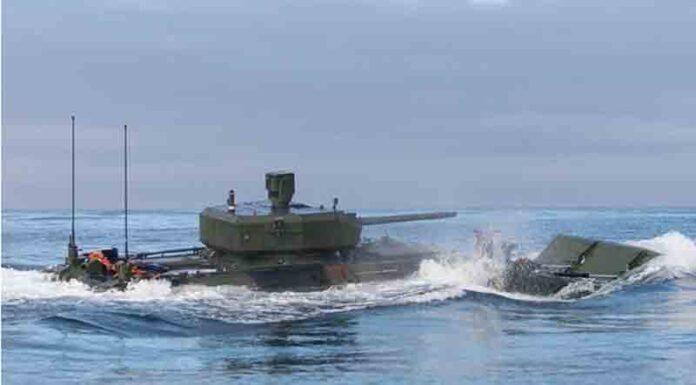
BAE Systems will produce 30 cannon-equipped armored combat vehicles for the U.S. Marine Corps

0
cannon-equipped ACVs

On March 14, 2025, BAE Systems Land & Armaments LP, located in Sterling Heights, Michigan, was awarded a contract modification worth $188.4 million by the U.S. Marine Corps to manufacture 30 Amphibious Combat Vehicles (ACVs) outfitted with medium-caliber cannons.

This recent order is part of a larger contract that could reach a total value of $3.85 billion if all options are utilized, as announced by the Department of Defense. It represents a significant advancement in the Marine Corps’ ongoing initiative to enhance its amphibious capabilities.

The production will take place at various BAE Systems facilities across the United States, with funding sourced from the Marine Corps’ fiscal 2025 procurement budget. The project is expected to be completed by February 2028, highlighting the Pentagon’s dedication to improving the Marine Corps’ operational capacity from sea to shore.

This announcement coincides with the Marine Corps’ efforts to adapt its force structure in response to changing global challenges, particularly in contested maritime areas.

The Amphibious Combat Vehicle, developed by BAE Systems in partnership with Italy’s Iveco Defence Vehicles, is a next-generation platform intended to replace the outdated Assault Amphibious Vehicles that have been in service since the 1970s.

This 8×8 wheeled vehicle is designed to transport Marines from naval vessels to land, providing a blend of open-ocean amphibious capability and strong land mobility. BAE Systems states that the ACV can accommodate up to 13 combat-ready Marines along with a crew of three, featuring a design that facilitates a smooth transition from water to land operations.

The variant included in this latest contract, which is equipped with a medium-caliber cannon—likely a 30mm turret produced by Kongsberg Defence & Aerospace—enhances its firepower, allowing it to engage various targets while providing support to dismounted troops.

The Marine Corps Systems Command, located in Quantico, Virginia, manages a program that has been under development since 2011, following the discontinuation of the previous Expeditionary Fighting Vehicle initiative.

This contract modification is part of a broader, multi-year strategy aimed at deploying a range of ACV variants designed for various mission requirements. The Marine Corps has already received personnel carriers (ACV-P) and command-and-control models (ACV-C), while the recovery variant (ACV-R) is currently undergoing testing.

The introduction of the cannon-equipped ACV-30 significantly boosts the Corps’ combat capabilities, aligning with the priorities set forth in its Force Design 2030 modernization strategy. This initiative, led by former Commandant Gen. David Berger, aims to shift the Marine Corps’ focus towards expeditionary operations in the Indo-Pacific region, where future conflicts may involve island-hopping strategies and contested coastal areas.

“The ACV offers a mobile platform that can keep pace with mechanized units while transporting Marines to the battlefield,” stated a Marine Corps spokesperson last year, emphasizing its role in connecting naval and land operations.

The operational importance of the ACV stems from its adaptability. In contrast to its tracked predecessor, the AAV, which faced challenges with speed and maintenance, the wheeled ACV can achieve speeds of eight knots in water and operate alongside M1 Abrams tanks on land. Its capability to launch from amphibious vessels up to 12 miles offshore provides commanders with greater flexibility in planning assaults.

During Exercise Balikatan 2024 in the Philippines, the 15th Marine Expeditionary Unit utilized ACVs for live-fire training, marking the vehicle’s first operational use in a joint exercise with an allied nation.

The Corps has introduced new training standards in response to incidents in 2022, where multiple ACVs overturned during surf operations. Although no injuries occurred, these incidents led to a temporary halt and a recertification process aimed at ensuring crew competence, as reported by Military.com in November 2024.

In addition to its technical features, the ACV program embodies broader strategic objectives. The Marine Corps plans to procure 632 units across various models, a decrease from the original target of 1,122, reflecting the emphasis of Force Design 2030 on developing lighter, more agile forces.

The $188.4 million allocated for this production run will remain available beyond the end of the fiscal year, indicating a commitment to long-term investment. Manufacturing is spread across BAE Systems facilities located in Stafford, Virginia; San Jose, California; Sterling Heights, Michigan; Aiken, South Carolina; and York, Pennsylvania, which supports numerous jobs and a complex supply chain.

The partnership with Iveco draws on extensive experience in armored vehicle design, while Kongsberg’s turret system incorporates cutting-edge fire control technology, as confirmed in a press release from the Norwegian company in November 2024.

While the United States remains the primary buyer, the ACV has garnered interest from international markets. Taiwan became the first export customer in 2022, placing an order for 60 ACVs as part of a $300 million agreement to enhance its coastal defenses against potential threats from China.

Deliveries commenced in 2023, with the Taiwanese Marine Corps incorporating the personnel variant into its operational framework, according to a Defense News report from that year. Japan has also shown interest, with discussions still ongoing as of early 2025, although no definitive orders have been made.

BAE Systems presented the ACV at the International Defence Exhibition (IDEX) in February 2025, targeting military forces in the Middle East and Europe. “We are collaborating with prospective clients to customize solutions that meet their specific requirements,” stated Rebecca McGrane, BAE’s Vice President of Amphibious Programs, during the event, as reported by the UK Defence Journal. Nevertheless, the U.S. Marine Corps continues to be the primary operator, having received over 100 units by March 2025.

The operational journey of the ACV is still in progress. It was first introduced in limited quantities in 2019 as part of a low-rate initial production phase and achieved initial operational capability in November 2020. Full-rate production commenced in December 2020, although it faced minor delays due to the COVID-19 pandemic, according to a Congressional Research Service report from March 2024.

The ACV’s first major evaluation occurred during the 2022 rollovers, which revealed initial difficulties in surf-zone operations. In response, the Marine Corps established safety protocols, including the deployment of support boats during waterborne training, as highlighted in a November 2024 article by Military.com.

Since then, the ACV has taken part in various exercises, such as Balikatan and mechanized raid courses at Camp Pendleton, showcasing its capabilities in combined arms operations. “The goal is to enable Marines to reach their objectives more quickly and with enhanced firepower,” remarked Capt. John Ludlow, an ACV instructor, in an interview with Military.com last fall.

The Marine Corps has prioritized upgrades as a central aspect of its strategy. The baseline ACV-P variant, which was delivered in 2019, offered fundamental troop transport capabilities along with enhanced survivability features, such as modular armor and a reduced infrared signature. In 2024, the introduction of the ACV-C variant brought additional capabilities, including seven radios and a larger battery pack to support silent watch operations, facilitating mobile command posts.

The ACV-30, which underwent initial testing in February 2024, incorporates Kongsberg’s remote turret, providing stabilized medium-caliber firepower while preserving troop capacity. Additionally, the recovery variant, awarded a contract in April 2024 for $79 million, is equipped with a crane and winch that can tow vehicles weighing up to 30 tons, effectively replacing the AAVR7A1.

These advancements are in line with the objectives of Force Design 2030, which emphasizes increased lethality and adaptability. However, some analysts express concerns that the wheeled design may compromise off-road performance when compared to tracked vehicles.

The program has faced its share of challenges. Initial cost projections for the Expeditionary Fighting Vehicle, which was canceled in 2011, escalated to $15 billion, prompting a shift towards a more modular and cost-efficient approach with the ACV. The current contract ceiling of $3.85 billion reflects a more stringent budgetary environment, yet critics, including a 2023 review by the Government Accountability Office, have raised concerns about delays in testing and integration.

Proponents of the ACV highlight its potential for future growth, particularly its capacity to integrate new sensors or weaponry, as a valid reason for the investment. “It’s a platform built for the long haul,” stated Garrett Lacaillade, vice president of BAE’s amphibious programs, in an interview with Seapower Magazine in February 2024, emphasizing its open architecture.

As of March 15, 2025, the ACV continues to be a fundamental element of the Marine Corps’ amphibious strategy. The most recent order, valued at $188.4 million, secures production through 2028, with the medium-caliber cannon variant enhancing its operational capabilities. The extent to which it will fulfill the Corps’ ambitious objectives in the Pacific and beyond will depend on the results of ongoing testing and real-world deployments.

Currently, the vehicle exemplifies the Pentagon’s efforts to harmonize tradition with modern advancements, preparing Marines for a landscape where the frontlines of conflict are constantly evolving.

Trump launches significant military actions against Yemen’s Houthis, leading to at least 19 deaths

0
Smoke rises after Israeli strikes near Sanaa airport, in Sanaa, Yemen.

At least 19 individuals lost their lives as U.S. President Donald Trump initiated extensive military operations against Yemen‘s Iran-aligned Houthis on Saturday, in response to the group’s assaults on shipping in the Red Sea. He issued a stark warning, stating that “hell will rain down” on the Houthis if they do not cease their actions.

Trump also cautioned Iran, the primary supporter of the Houthis, that it must immediately withdraw its backing for the group. He emphasized that if Iran posed a threat to the United States, “America will hold you fully accountable and we won’t be nice about it!”

The ongoing military strikes, which one official indicated could extend over several days or even weeks, mark the largest U.S. military engagement in the Middle East since Trump assumed office in January. This escalation coincides with the United States intensifying sanctions against Tehran while seeking to bring it to the negotiating table regarding its nuclear program.

According to the Houthi-run health ministry, at least 13 civilians were killed and nine others injured in U.S. strikes targeting Yemen’s capital, Sanaa. Additionally, six people, including four children and one woman, were reported killed, with 11 others injured in a U.S. strike in the northern province of Saada, as reported by Houthi-run Al-Masirah TV.

The political bureau of the Houthis condemned the strikes as a “war crime.” In a statement, they declared, “Our Yemeni armed forces are fully prepared to respond to escalation with escalation.”

Residents in Sanaa reported that the strikes impacted a building within a Houthi stronghold. One resident, Abdullah Yahia, recounted to Reuters, “The explosions were violent and shook the neighborhood like an earthquake. They terrified our women and children.”

The Houthis, an armed group that has gained control over much of Yemen in the past decade, have conducted over 100 attacks on shipping since November 2023, disrupting global trade and prompting the U.S. military to engage in an expensive campaign to intercept missiles and drones, depleting U.S. air defense resources. The Houthis assert that their attacks are in solidarity with Palestinians amid the ongoing conflict between Israel and Hamas in Gaza.

Iran’s allies, including Hamas in Gaza and Hezbollah in Lebanon, have faced significant setbacks due to Israeli actions since the onset of the Gaza conflict. Additionally, Bashar al-Assad of Syria, who maintained a close relationship with Tehran, was ousted by rebels in December.

In contrast, the Houthis in Yemen have demonstrated remarkable resilience, frequently taking the offensive by sinking two ships, capturing another, and killing at least four sailors in operations that have disrupted global shipping routes, compelling companies to divert to longer and costlier paths around southern Africa.

The administration of former President Joe Biden aimed to diminish the Houthis’ capacity to target vessels off the U.S. coast, but their actions were limited. However, U.S. officials, who requested anonymity, indicate that Trump has approved a more assertive strategy.

STRIKES ACROSS YEMEN

The strikes conducted on Saturday involved fighter jets from the Harry S. Truman aircraft carrier stationed in the Red Sea, according to officials. The U.S. military’s Central Command, responsible for overseeing operations in the Middle East, characterized these strikes as the initiation of a comprehensive operation throughout Yemen.

Defense Secretary Pete Hegseth stated on X, “Houthi attacks on American ships, aircraft, and our troops will not be tolerated; Iran, their supporter, is on notice. We will restore freedom of navigation.”

Trump hinted at the possibility of significantly more destructive military actions against Yemen, asserting, “The Houthi attack on American vessels will not be tolerated. We will employ overwhelming lethal force until we achieve our objective.”

Iran’s mission to the United Nations has not yet provided a response to a request for comment.

On Tuesday, the Houthis announced their intention to resume attacks on Israeli vessels navigating the Red Sea, Arabian Sea, Bab al-Mandab Strait, and Gulf of Aden, marking the end of a period of relative tranquility that began in January with the Gaza ceasefire.

The U.S. military actions occurred shortly after a letter from former President Trump was sent to Iran’s Supreme Leader Ayatollah Ali Khamenei, proposing discussions regarding Iran’s nuclear program. However, Khamenei dismissed the idea of negotiations with the United States on Wednesday.

Despite this, Tehran is increasingly worried that rising public discontent over economic difficulties could lead to widespread protests, as reported by four Iranian officials to Reuters.

According to U.S. officials, Israeli airstrikes last year on Iranian sites, including missile production facilities and air defense systems, diminished Tehran’s conventional military strength in response to Iranian missile and drone assaults.

Iran has consistently denied any intention to develop nuclear weapons. Nevertheless, it is significantly ramping up uranium enrichment to levels as high as 60% purity, nearing the approximately 90% threshold considered weapons-grade, as cautioned by the International Atomic Energy Agency (IAEA).

Western nations argue that there is no justification for enriching uranium to such elevated levels for any civilian program, noting that no other country has done so without subsequently developing nuclear arms. Iran maintains that its nuclear endeavors are for peaceful purposes.

UK’s Starmer announces that a ‘coalition of willing’ is broadening its support for Ukraine following the ceasefire

0
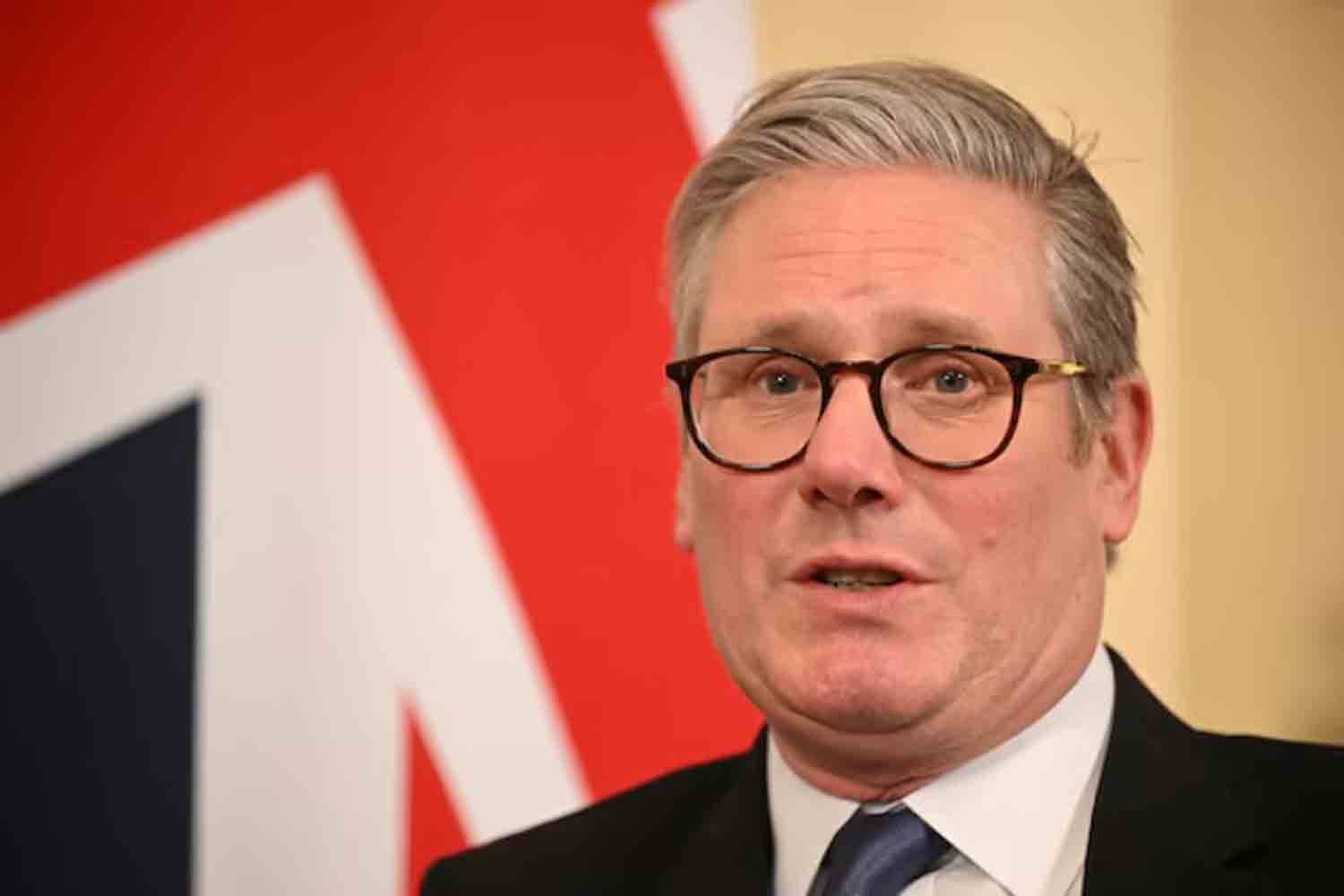
British Prime Minister Keir Starmer

British Prime Minister Keir Starmer announced on Saturday that European nations and Western allies are prepared to enhance their support for Ukraine if a peace agreement is reached with Russia. He indicated that military leaders are expected to finalize “robust plans” in the coming week.

Following a virtual meeting with approximately 25 leaders, including representatives from Germany, France, Italy, Canada, Australia, Ukrainian President Volodymyr Zelenskiy, and NATO’s Secretary General, Starmer emphasized that the “coalition of the willing” has reaffirmed its dedication to ensuring Ukraine’s security.

“We have agreed to intensify our pressure on Russia, continue providing military assistance to Ukraine, and impose stricter economic sanctions on Russia to undermine Putin’s military efforts and encourage negotiations,” Starmer stated to the press.

The British Prime Minister aimed to rally support from allies to increase pressure on Russian President Vladimir Putin to accept a ceasefire agreement advocated by U.S. President Donald Trump, while also securing firm commitments to uphold any resulting agreement—an expectation Trump has made clear for Europe to fulfill.

“Our military leaders will convene this Thursday in the United Kingdom to establish strong and effective plans to support a peace deal and ensure Ukraine’s future security,” he added. “President Trump has presented a pathway to lasting peace for Putin. Now, we must turn this vision into reality.”

Zelenskiy claims that Ukrainian forces in Kursk are not surrounded and warns of a new buildup of Russian troops

0
Ukraine's President Volodymyr Zelenskiy appears at a joint press conference

Ukrainian forces continue to resist Russian and North Korean troops in the Kursk region of Russia, while also preparing for a possible new offensive in Ukraine’s northeastern Sumy region, as stated by President Volodymyr Zelenskiy on Saturday.

Military experts suggest that Russia is nearing the expulsion of Ukrainian troops from their established positions in the western Russian area, leading U.S. President Donald Trump to caution that thousands of Ukrainian soldiers are “completely surrounded.”

In a social media update following a briefing with his chief general, Zelenskiy clarified that Ukrainian forces are not encircled in Kursk, but noted that Moscow is amassing troops nearby for a potential separate assault. “This suggests an intention to target our Sumy region,” he remarked. “We are aware of this and will respond accordingly.” He emphasized the need for all partners to comprehend Putin’s plans and preparations, as well as what he might disregard.

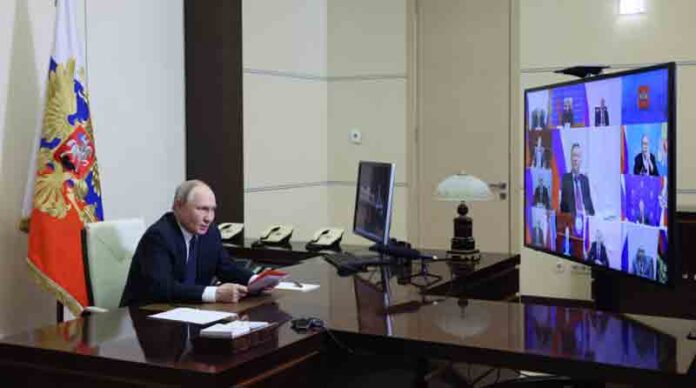
On Thursday, Russian President Vladimir Putin expressed his conditional support for Trump’s proposal of a 30-day ceasefire with Ukraine, while indicating that hostilities would continue until several key conditions are met.

During a meeting with approximately 25 European leaders and allies on Saturday, British Prime Minister Keir Starmer urged for increased pressure on Putin to agree to a ceasefire. Zelenskiy added, “The buildup of Russian forces suggests that Moscow intends to continue disregarding diplomatic efforts. It is evident that Russia is extending the conflict.”

In his remarks, he also noted that the situation on the battlefield near the strategically important eastern city of Pokrovsk has “stabilized,” and that Ukraine has successfully deployed a new domestically-produced long-range missile in combat. Kyiv aims to enhance its domestic defense industry to reduce reliance on Western allies who have supplied essential artillery, air defense, and long-range strike capabilities.

Ukraine’s new “long Neptune” missile has a range of 1,000 kilometres (621 miles), Zelenskiy said.

Trump mentioned that his promise to resolve the Russia-Ukraine conflict in 24 hours was made with some sarcasm

0
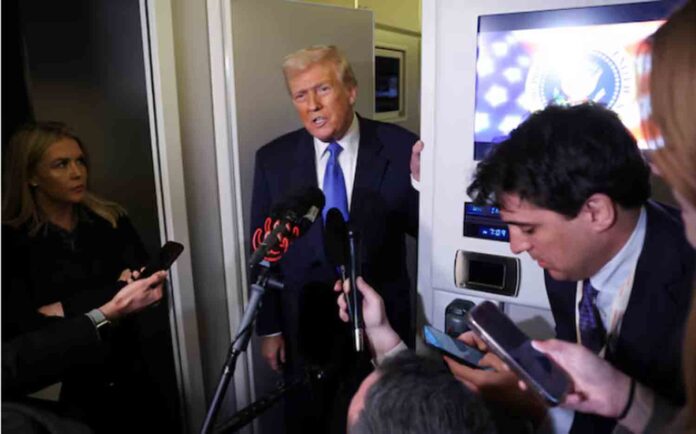
U.S. President Donald Trump speaks to reporters aboard Air Force One on his return to Washington, D.C., U.S.

On Friday, President Donald Trump acknowledged that he was “being a little bit sarcastic” when he claimed during his campaign that he could resolve the Russia-Ukraine conflict within 24 hours, even before taking office.

During an interview for the “Full Measure” television program, Trump was questioned about this promise as his administration continues to seek a resolution 54 days into his second term.

“Well, I was being a little bit sarcastic when I said that,” Trump stated in a clip released prior to the episode airing on Sunday. “What I truly mean is that I would like to see it resolved, and I believe I can be successful in doing so.”

This admission is notable, as Trump is known for making grandiose statements.

In a CNN town hall in May 2023, he remarked, “They’re dying, Russians and Ukrainians. I want them to stop dying. And I’ll have that done—I’ll have that done in 24 hours.”

During a September debate with then-Vice President Kamala Harris, he asserted, “That is a war that’s dying to be settled. I will get it settled before I even become president. If I win, when I’m president-elect, I’ll talk to both sides and bring them together.”

Trump frequently reiterated this claim throughout his campaign.

This week, his special envoy, Steve Witkoff, was in Moscow for discussions regarding a US-proposed ceasefire, which Ukraine has accepted.

In the interview, Trump was also asked about the potential plan if Putin refuses to agree to a ceasefire in the conflict he initiated three years ago.

“Bad news for this world because so many people are dying,” Trump responded.

“However, I believe he’s going to agree. I really do. I think I know him pretty well, and I think he’s going to come to an agreement.”

Portugal Halts F-35 Initiatives Due to Concerns Over Trump’s Unpredictability in Europe

0
F-35 Lightning II

In a significant development that may alter its future air combat capabilities, Portugal is re-evaluating its plan to acquire fifth-generation F-35 Lightning II fighter jets from the United States. This reconsideration is driven by increasing worries regarding Washington’s strategic unpredictability and the changing dynamics within NATO.

This decision reflects Lisbon’s concerns about American foreign policy, especially during the tenure of former President Donald Trump, as well as the shifting security environment in Europe. In an interview with the local media outlet Publico, Portugal’s Defence Minister, Nuno Melo, emphasized the pressing need to update the country’s aging fleet of 28 F-16 AM/BM fighters, which are approaching the end of their operational life.

Although the F-35 was initially seen as the main replacement option, Melo suggested a potential shift towards European-manufactured fighter jets. “The world is evolving, and we must consider geopolitical realities when making vital defense choices,” he remarked. “The recent stance of the United States within the NATO framework necessitates a careful reassessment of our alternatives, as the reliability of our allies is a crucial factor that we must consider.”

Melo also expressed concerns regarding possible operational restrictions imposed by allied nations. “Our alliances should not come with conditions,” he stated. “Limitations on the use, maintenance, and critical components of these aircraft could greatly affect their combat readiness in various operational contexts.”

While the minister did not specify which aircraft might succeed the aging F-16 fleet, industry experts believe that Portugal is currently assessing the Dassault Rafale, Eurofighter Typhoon, and Saab Gripen—three prominent multirole fighters from Europe. This strategic shift aligns with a broader European movement towards reducing reliance on U.S. defense technology amid apprehensions about Washington’s capacity to maintain control over advanced military systems.

Lisbon’s discussions indicate an increasing trend towards European autonomy in defense, especially as France, Germany, and Spain progress with the Future Combat Air System (FCAS), which aims to establish Europe’s next-generation air superiority capabilities.

A significant issue regarding the F-35 is its dependence on a complex, interconnected digital framework managed by the United States. Numerous NATO allies have expressed concerns that, should diplomatic relations with Washington deteriorate, their access to these aircraft might be restricted or entirely revoked.

Although there is no conclusive evidence that the U.S. has embedded a so-called “kill switch” in the F-35’s software, ongoing speculation—intensified by previous actions from Washington—has heightened European apprehensions. For Portugal, which needs to guarantee that its future fleet of fighter jets remains operational in any conflict, these worries cannot be easily overlooked.

The timing of Portugal’s reassessment adds further complexity to the situation. The nation is gearing up for early elections following the downfall of its center-right government, leaving the ultimate decision regarding fighter jet procurement in limbo. It remains uncertain whether the incoming administration will continue this shift or revert to the F-35.

At present, 14 NATO member countries have either placed orders for or are currently utilizing the F-35, solidifying the aircraft’s status as the alliance’s leading air combat platform. However, Portugal’s reluctance may indicate a potential rift within NATO concerning future fighter jet acquisitions.

Concerns regarding U.S. influence on European air power extend beyond Portugal to Germany, where the planned acquisition of 35 F-35 Lightning II jets is under increased scrutiny. Berlin’s €8.3 billion (RM39.7 billion) agreement with Lockheed Martin, set to begin deliveries next year, has become a focal point in the ongoing discussion about Europe’s dependence on American military equipment.

Fears surrounding potential U.S.-imposed restrictions have grown, especially following Washington’s recent suspension of military aid to Ukraine, which many view as a political strategy.

Reports indicate that the ineffectiveness of U.S.-supplied F-16s in Ukraine was not due to direct deactivation but rather because Washington withheld essential updates for their electronic warfare systems. This has raised concerns that similar tactics could be employed against Germany’s F-35 fleet in the future.

Recently, the U.S. opted not to upgrade the AN/ALQ-131 electronic warfare system on Ukraine’s F-16s, significantly diminishing their capability to counter Russian air defenses. Wolfgang Ischinger, former chairman of the Munich Security Conference, expressed in an interview with Bild, “If we have to worry that the United States might apply the same restrictions to Germany’s F-35s as they have with Ukraine, then we may need to consider canceling the contract.”

The ongoing procurement discussions in Germany, along with Portugal’s reassessment, are intensifying calls across Europe for enhanced self-sufficiency in military procurement.

“In investing billions in advanced fighter jets, we must ensure complete sovereignty over their deployment,” stated Ingo Gädechens, a former military officer and member of the German parliament.

As geopolitical tensions escalate, the debate surrounding the F-35 is increasingly viewed as a critical indicator of Europe’s future defense strategy.

Will European countries continue to depend on American-made jets, despite the potential for external influence, or will they shift towards domestic alternatives to achieve strategic independence?

For Portugal, Germany, and the wider NATO alliance, the choices made today could significantly alter the military power dynamics in Europe for many years ahead.

China’s J-10 Fighter: A Significant Landmark in Aerospace Development Amid Claims of Israeli Impact

0
J-10C “Vigorous Dragon”

The introduction of China’s J-10 “Vigorous Dragon” fighter jet in 1998 represented a significant milestone in the advancement of Beijing’s defense capabilities. At that time, China’s aerospace industry was still developing, facing challenges due to a technological gap and limited experience in creating indigenous fighter jets. The J-10 was not just a new addition to the fleet; it symbolized China’s ambition to assert itself against the established dominance of Western and Russian aviation technologies.

Nevertheless, the development of the J-10 has been surrounded by intrigue and speculation. Reports have consistently indicated that the design and technological innovations of the fighter were influenced by an unexpected partner—Israel. Despite Israel’s close ties with the United States, there are claims that it provided essential technical support to China, allowing Beijing to advance its domestic fighter jet program more rapidly.

The suspected collaboration between Israel and the J-10 program dates back to the early 1990s, coinciding with the establishment of formal diplomatic relations between Beijing and Tel Aviv. Defense experts highlight a notable partnership between China’s Chengdu Aircraft Corporation (CAC) and Israel Aerospace Industries (IAI), which is thought to have significantly impacted the J-10’s development.

One of the strongest pieces of evidence for Israeli influence on the J-10 is its design, which closely resembles that of Israel’s LAVI fighter—a highly ambitious program from the 1980s that was ultimately canceled. The LAVI project, which received substantial funding from the United States, aimed to create a cutting-edge multi-role combat aircraft to compete with the Lockheed Martin F-16 “Fighting Falcon.” However, due to concerns about competition with its own fighter exports, Washington withdrew funding, leading Israel to abandon the initiative.

Reports suggest that although the LAVI never became operational, its technological innovations were not squandered. It is believed that Israel transferred essential components of the LAVI program to China, including avionics, composite materials, and advanced flight control systems, many of which were similar to those found in modern American fighter jets.

A prominent example of Israeli influence on the J-10 is its “canard-delta” design, a hallmark of the LAVI. However, despite the similarities between the J-10 and the LAVI, there are significant distinctions. The J-10 is larger, heavier, and tailored to meet China’s unique operational needs, featuring different engine configurations and avionics systems.

The alleged partnership between Israel and China extended beyond the J-10 project. Sources within the defense industry indicate that the two countries participated in various defense technology exchanges during the late 1980s and early 1990s. A notable instance is the creation of China’s PL-8 air-to-air missile, which closely resembles Israel’s Python-3 missile.

Produced by Xian Aircraft Corporation, the PL-8 is a vital component of China’s air force, highlighting the lasting influence of Israeli technology. Furthermore, reports indicate that Israel also assisted China in obtaining radar and avionics technologies.

The Doppler E/LM-2035 radar and the “Tamam” inertial navigation system—both significant products of Israeli defense technology—are reported to have been integrated into Chinese fighter jets, including the J-8 and J-10.

In the 1980s, China actively pursued Western technology as part of its broader military modernization strategy. The United States and several European countries provided China with access to advanced defense systems, such as aircraft engines and avionics, primarily to counter Soviet influence.

However, this collaboration came to a sudden end following the Tiananmen Square crackdown in 1989, which led Western nations to impose military sanctions on China. With access to Western military technology restricted, China sought alternative partnerships, and Israel, recognized for its advanced avionics and missile technology, emerged as a viable option.

The degree of Israeli assistance to China is still debated, but the technological progress observed in China’s fighter jet programs strongly indicates external influence. Regardless of the actual level of Israeli involvement, the successful development of the J-10 marked a significant milestone for China’s aviation sector.

This aircraft served as a foundation for subsequent indigenous programs, paving the way for the creation of more sophisticated platforms like the J-16 and the fifth-generation J-20 “Mighty Dragon.” Today, China is recognized as one of the leading aerospace powers globally, capable of designing and producing advanced fighter jets that compete with those from the United States and Russia.

Whether Israeli technical expertise was pivotal in the J-10’s development remains uncertain, but the aircraft undeniably represents a crucial chapter in China’s pursuit of military self-sufficiency and its aspirations for global influence.

While discussions about Israel’s involvement in the J-10’s creation persist, it is clear that the fighter jet symbolizes China’s rise as a significant force in the competitive arena of modern air combat.

Reports suggest that Algeria might have begun the acquisition of Sukhoi Su-35 fighter jets

0
Su-35S

Reports have surfaced indicating that a Russian-made Sukhoi Su-35 fighter jet was observed in Algeria, sparking speculation that the North African country may have started to receive these advanced aircraft.

The sighting, which occurred at the Oum Bouaghi air base in northeastern Algeria, has attracted the attention of military analysts and regional observers, although there has been no official confirmation from either the Algerian government or Russian officials.

If confirmed, this development would represent a major step in Algeria’s efforts to modernize its air force and could potentially alter the regional power dynamics.

The uncertainty surrounding the situation has led to various rumors and theories, with some suggesting that the jets might be part of an order originally meant for Egypt, while others view it as a continuation of Algeria’s strong military relationship with Russia.

Initial reports have emerged from local sources and social media, including sightings of large Russian An-124 transport planes arriving in Algeria in recent weeks. These observations have fueled claims that Algeria could be receiving as many as 24 Su-35 jets, although the precise number has yet to be verified.

Neither Algeria’s Ministry of National Defense nor Russia’s state arms exporter, Rosoboronexport, has commented on the speculation. This lack of communication is consistent with Algeria’s historical approach of maintaining discretion regarding military acquisitions, a strategy influenced by its cautious stance amid regional tensions, particularly with Morocco.

The absence of an official statement has only heightened interest in what could be one of the most significant arms deals in North Africa in recent years.

Algeria’s pursuit of advanced Russian fighter jets has been ongoing for several years. Throughout the last decade, the nation has progressively modernized its air force, with a significant reliance on Moscow for military hardware. In 2018, it was reported that Algeria was in discussions to acquire Su-35s, potentially as part of a larger agreement that included other Russian aircraft such as the Su-34 and Su-57.

During the same period, Egypt reportedly withdrew from a deal for Su-35s due to pressure from the United States, which threatened sanctions in response to Cairo’s military relationship with Russia. Analysts have speculated that Russia may have redirected those aircraft to Algeria, a long-time customer with a fleet predominantly composed of Soviet and Russian models, including over 70 Su-30MKA fighters.

According to the Italian news agency Agenzia Nova, General Said Chengriha, the Chief of Staff of the Algerian Army, was involved in the initial stages of discussions regarding aircraft acquisitions in February 2025, although specific details are limited.

The Su-35, particularly the export version known as the Su-35E, is a key component of Russia’s contemporary fighter jet offerings. Developed by Sukhoi, a leading Russian aerospace company, this aircraft is categorized as a 4++ generation fighter, serving as a bridge between older models and fully fifth-generation stealth aircraft like the Su-57.

First introduced in the early 2000s as an advancement of the Su-27 Flanker, the Su-35E features sophisticated avionics, improved maneuverability, and a comprehensive weapons system. It is equipped with two Saturn AL-41F1S engines, each capable of producing up to 31,000 pounds of thrust with afterburners, allowing it to reach a maximum speed of approximately Mach 2.25, or around 1,500 miles per hour, at high altitudes.

Its operational range surpasses 2,200 miles when equipped with external fuel tanks, rendering it ideal for extended missions throughout North Africa and the Mediterranean region.

The aircraft is outfitted with advanced avionics, including the Irbis-E passive electronically scanned array radar, which can detect targets at distances of up to 250 miles and track multiple targets simultaneously. This radar, combined with an infrared search-and-track system, enables the Su-35E to engage adversaries without depending solely on radar emissions, significantly enhancing its survivability in contested airspace.

The cockpit of the jet is equipped with a digital fly-by-wire system and multifunction displays, offering pilots real-time information on navigation, targeting, and potential threats. Its airframe, made from a combination of titanium and composite materials, supports a maximum takeoff weight exceeding 76,000 pounds, striking a balance between strength and maneuverability.

In terms of armament, the Su-35E features a 30mm GSh-30-1 cannon, capable of firing up to 150 rounds for close-range confrontations. It has 12 external hardpoints that can accommodate a wide range of munitions, with a total payload capacity of up to 17,600 pounds. This includes air-to-air missiles such as the R-77, which boasts a range of over 60 miles, and the shorter-range R-73, designed for dogfighting scenarios.

For ground attack missions, it can deploy KAB-500 guided bombs and Kh-29 air-to-surface missiles, as well as anti-ship missiles like the Kh-31. Its electronic warfare capabilities are enhanced by jamming pods and countermeasures, including flares and chaff, to evade enemy radar and missiles.

These attributes position the Su-35E as a multirole fighter, capable of air superiority, ground attack, and maritime operations—versatility that aligns with Algeria’s strategic requirements along its extensive borders and Mediterranean coastline.

If Algeria has indeed secured the Su-35E, the potential impact on its air force could be significant, although this remains uncertain without official verification. Currently, the Algerian Air Force operates a combination of older MiG-25s and MiG-29s, in addition to its more contemporary Su-30 fleet.

The addition of the Su-35 would bolster its capacity to project military power and counter aerial threats, particularly due to the aircraft’s sophisticated radar and long-range armaments. Military analyst John Pike from GlobalSecurity.org recently remarked that “the Su-35’s range, payload, and sensor capabilities would provide Algeria with a considerable advantage in regional air defense.”

Furthermore, the aircraft’s agility, showcased by its thrust-vectoring engines, could enhance pilot training and combat readiness, provided that Algerian personnel receive the requisite training, potentially in Russia as some sources indicate.

Nevertheless, there are challenges that could mitigate these advantages. Adopting a new platform necessitates significant investment in maintenance systems, spare parts, and personnel training—areas where Algeria has previously encountered difficulties with its Russian-supplied aircraft.

The complexity of the Su-35 may also put a strain on logistics, particularly if sanctions or export limitations hinder Russia’s ability to offer support. Additionally, its absence of stealth features, unlike fifth-generation fighters such as the F-35, could render it susceptible to advanced air defense systems employed by potential rivals.

Without official figures regarding the number of jets or their deployment schedule, any evaluation of their potential impact remains speculative, although this uncertainty has already ignited discussions within defense communities.

From a geopolitical standpoint, the rumored acquisition has significant ramifications for North Africa and beyond. Algeria’s military expansion is taking place amid its ongoing rivalry with Morocco, which has been modernizing its forces with U.S.-made F-16s and is reportedly interested in F-35s.

A report from Defence Security Asia in February 2025 suggested that Morocco’s pursuit of American stealth fighters may be a direct reaction to Algeria’s engagements with Russia. The two countries, at odds over the Western Sahara dispute, have been involved in an arms race for years, and the introduction of the Su-35 could temporarily shift the aerial advantage toward Algeria.

France, as a former colonial power with substantial interests in the region, may view this situation with concern, particularly following an incident in early March 2025 when a Russian Su-35 flew close to a French Reaper drone over the Mediterranean, as reported by Reuters.

On the other hand, Russia stands to benefit from strengthening its relationship with Algeria, its largest arms market in Africa. With Western sanctions restricting its export capabilities, Moscow has relied on traditional allies like Algiers to support its defense sector. If confirmed, the Su-35 deal would add to a series of recent exports, including the Su-57 to Algeria in February 2025, according to Military Africa.

For the United States, the potential spread of Russian jets in North Africa could lead to enhanced collaboration with Morocco and other allies to counterbalance Algeria’s military capabilities, which may heighten regional tensions. NATO members, especially those with bases in the Mediterranean, might also reconsider their strategies if Algeria’s air force achieves a significant technological advancement.

Currently, the situation regarding the Su-35 in Algeria is marked by ambiguity. The recent sightings in Oum Bouaghi and the surge in transport flights provide intriguing hints, but without concrete evidence, they remain mere indications. Algerian state television has not commented on the speculation, and Russian officials have maintained silence, adhering to their typical stance on sensitive arms transactions.

What is evident is that Algeria’s quest for advanced military equipment underscores its larger goal of safeguarding its airspace and exerting influence in a turbulent region. Whether the Su-35 will play a pivotal role in this strategy or fade into obscurity as just another rumor will hinge on the developments that unfold in the coming weeks. For the time being, observers can only monitor the situation as the skies over North Africa suggest potential changes that have yet to be validated.

China’s latest stealth vessel, the Luohe, conducts firepower tests in the Yellow Sea.

0
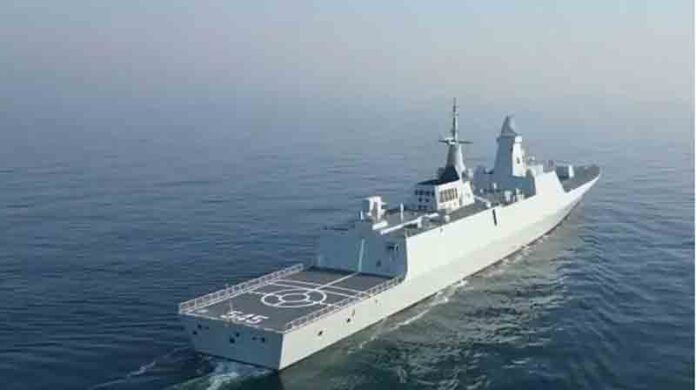
China's latest naval asset, the Luohe, a Type 054B stealth frigate

Reports indicate that China’s latest naval asset, the Luohe, a Type 054B stealth frigate, has successfully completed its inaugural operational test in the Yellow Sea. Commissioned into the People’s Liberation Army Navy (PLAN) in January, this vessel marks a significant advancement in China’s efforts to modernize its naval capabilities.

The event, reported by Chinese state media, occurred off the eastern coast of China, an area frequently utilized for naval drills due to its strategic proximity to key shipping routes and potential conflict zones such as the Korean Peninsula and Taiwan.

While the specific goals of the test have not been fully disclosed, the deployment highlights China’s commitment to strengthening its maritime forces in response to escalating regional tensions and its desire to extend its influence beyond its coastal waters.

The Luohe’s first operational test follows closely on the heels of its official commissioning, demonstrating a swift transition to active service. According to updates on X and reports from state media, the frigate underwent rigorous testing in the Yellow Sea, which lies between China to the west and the Korean Peninsula to the east.

This region has historically served as a testing ground for the PLAN, providing a controlled setting to evaluate new vessels and strategies. The test was characterized not as a standard training drill but as an assessment of the ship’s preparedness for real-world operations.

A spokesperson for the PLAN, as reported by China Central Television, referred to the event as an opportunity to “validate the ship’s combat systems and operational capabilities,” although details regarding the duration or extent of the test were not made public.

For the United States and its allies, who are vigilant about China’s naval developments, the introduction of the Luohe provides insight into the advancing capabilities of the world’s largest navy in terms of ship count.

Central to this narrative is the Type 054B frigate, which aims to enhance the features of its predecessor, the widely utilized Type 054A. The Luohe, designated with hull number 545, marks the first of its class—a stealth frigate engineered for quiet and effective operations in contested maritime environments.

With a length of approximately 440 feet and a displacement of around 6,000 tons, it surpasses the Type 054A in size and sophistication, which has been a cornerstone of the People’s Liberation Army Navy (PLAN) since the mid-2000s. The design of the ship’s hull minimizes its radar profile, significantly improving its survivability against contemporary detection technologies.

Its propulsion system, which is thought to integrate gas turbines and diesel engines, enables speeds exceeding 27 knots and offers a range suitable for long missions, potentially reaching up to 5,000 nautical miles. This blend of stealth and endurance positions the Luohe as a flexible asset for both coastal defense and operations in more distant waters.

The frigate’s armament and systems underscore China’s ambition to develop a navy capable of addressing various threats. A key feature is its 32-cell vertical launch system (VLS), representing a notable enhancement over the Type 054A’s setup. This system is capable of launching a variety of missiles, including the YJ-12, a supersonic anti-ship missile with a range exceeding 200 miles, designed for precise and rapid strikes against enemy vessels.

The VLS is designed to support HQ-16 surface-to-air missiles, which offer protection against aircraft and incoming missiles at medium ranges, extending up to approximately 25 miles. For close-range defense, the vessel is outfitted with a Type 1130 close-in weapon system (CIWS), a rapid-fire gun capable of firing thousands of rounds per minute to intercept missiles or small boats.

Additionally, a 100mm main gun complements its arsenal, providing effective firepower for surface engagements or shore bombardment. Collectively, these systems empower the Luohe to target threats on land, at sea, and in the air, showcasing a multi-role capability that distinguishes it from older PLAN frigates.

In terms of technology, the Luohe is equipped with advanced sensors and electronics that significantly enhance its situational awareness. A notable feature is its S-band active electronically scanned array (AESA) radar, a recent upgrade for the Type 054B class. This radar, prominently positioned on the ship’s superstructure, offers 360-degree coverage and the ability to track multiple targets simultaneously, even in challenging environments such as coastal waters.

Experts indicate that this radar provides superior detection capabilities for stealth aircraft and low-flying missiles compared to the systems found on previous PLAN vessels. The frigate is also equipped with a hull-mounted sonar and potentially a towed-array sonar system, both crucial for submarine detection—a persistent concern in the Yellow Sea and surrounding areas.

These systems are seamlessly integrated through a modern combat management system, enabling the crew to effectively coordinate responses to complex threats. While the exact number of crew members is not publicly available, it is estimated that a ship of this size would typically require around 150 to 200 personnel, comprising both officers and enlisted sailors trained to manage its advanced technology.

The Luohe is a component of China’s North Sea Fleet, one of the three principal fleets within the People’s Liberation Army Navy (PLAN), alongside the East Sea Fleet and the South Sea Fleet. Based in Qingdao, Shandong Province, the North Sea Fleet is tasked with overseeing operations in the Yellow Sea and the Bohai Sea, both of which are vital to China’s economic and security priorities.

This fleet plays a crucial role in safeguarding the approaches to Beijing and Tianjin, two of the nation’s key cities, while also monitoring activities around the Korean Peninsula. The presence of the Luohe in this fleet indicates a strategic emphasis on enhancing northern defenses, although its capabilities enable it to assist in operations in other regions as necessary.

The North Sea Fleet currently operates a diverse array of destroyers, frigates, and submarines, and the introduction of a stealth frigate like the Luohe significantly improves its capacity to execute both defensive and offensive missions in an area where U.S. and allied navies occasionally carry out freedom-of-navigation operations.

In the larger context of Chinese naval strategy, the Type 054B frigate is essential to the PLAN’s transition towards a more balanced and expansive force. Traditionally, China’s navy concentrated on coastal defense, utilizing smaller vessels and submarines to deter threats close to its shores.

However, over the last twenty years, the PLAN has shifted to a strategy that prioritizes “near seas defense and far seas protection,” a doctrine defined by Chinese military leaders under President Xi Jinping.

The Luohe aligns well with this strategic framework. Its stealth capabilities and missile systems position it as a formidable asset for denying access to contested maritime areas near China, such as the Taiwan Strait and the Senkaku Islands, which are administered by Japan but claimed by China.

Simultaneously, its versatile design and operational range enable it to accompany larger vessels, such as aircraft carriers and amphibious assault ships, on missions that extend beyond its home waters, potentially into regions like the South China Sea or the Indian Ocean.

“A naval analyst based in Beijing remarked in a recent interview with a Western media outlet, speaking on the condition of anonymity due to the sensitive nature of the subject, that the Type 054B represents a connection between China’s historical naval capabilities and its future aspirations. It signifies a shift from mere coastal defense to a focus on power projection.”

The operational trials of the Luohe further underscore its role within China’s expanding carrier strike groups. The People’s Liberation Army Navy (PLAN) currently operates two aircraft carriers, the Liaoning and Shandong, while a third, the Fujian, is in the midst of sea trials. Frigates like the Type 054B serve as optimal escorts for these carriers, offering anti-submarine and anti-aircraft protection as the carriers concentrate on launching their aircraft.

In potential conflict situations, such as a blockade or an amphibious operation, the Luohe could provide a protective screen for larger vessels, ensuring they achieve their mission objectives. Its stealth capabilities also enhance its survivability against enemy targeting, complicating adversary strategies.

For the U.S. Navy, which has historically led in carrier-based operations, the introduction of vessels like the Luohe indicates that China is developing a fleet that could challenge U.S. dominance, at least within the regional context.

The frigate’s function extends beyond tactical operations to encompass strategic objectives, playing a vital role in China’s ambition to establish a “world-class” navy by the middle of the century, as stated in official communications from the Chinese Communist Party.

Currently, the Luohe stands as the sole Type 054B frigate confirmed to be operational, but it is expected that it will soon be joined by others. Chinese media and defense analysts indicate that at least one more Type 054B is being constructed, with sea trials for a second vessel potentially commencing in late 2025.

The precise number of frigates China intends to produce in this class is not publicly disclosed, as the People’s Liberation Army Navy (PLAN) seldom shares detailed production timelines. However, insights can be gleaned from the Type 054A, its predecessor, which has seen over 40 units commissioned since 2008, making it one of the most prevalent classes within the PLAN’s surface fleet.

Should the Type 054B follow a similar path, China may deploy a dozen or more within the next ten years, contingent on budgetary allocations and strategic imperatives. Each vessel typically requires about three to four years for construction and testing, a timeframe indicative of China’s streamlined shipbuilding capabilities.

This efficiency is a defining characteristic of China’s naval growth, which has surpassed that of any other nation in recent years. According to the Pentagon’s 2022 assessment of Chinese military capabilities, the PLAN is estimated to operate approximately 340 ships, a number projected to rise to 400 by 2025.

This fleet encompasses not only frigates but also destroyers, corvettes, submarines, and aircraft carriers, many of which are produced at extensive shipyards in locations such as Dalian and Shanghai. In 2023 alone, China commissioned several new warships, a rate that significantly exceeds the U.S. Navy’s output of about two to three major combat vessels annually. The Luohe was built at the Hudong-Zhonghua Shipyard in Shanghai, a facility renowned for its production of some of the PLAN’s most sophisticated ships.

This swift construction is driven by a state-led industrial framework, substantial defense funding, and a workforce proficient in maritime engineering. A U.S. naval officer remarked during a congressional hearing last year that “China has transformed shipbuilding into an assembly line,” underscoring the challenges this presents to American naval strategists.

The operational testing of the Luohe in the Yellow Sea marks a significant milestone, reflecting both its specific mission and China’s overarching aspirations. During the test, the ship executed maneuvers to evaluate its systems, including radar tracking and missile targeting, under conditions that likely mimicked real-world threats.

While the outcomes of the test have not been disclosed, the decision by the People’s Liberation Army Navy (PLAN) to publicize the event indicates a strong belief in the frigate’s operational readiness. As of March 14, 2025, the Luohe is assigned to the North Sea Fleet, ready for future deployments.

Whether it will participate in exercises in more remote regions, such as the South China Sea or the Western Pacific, will depend on China’s forthcoming strategies—actions that the U.S. and its allies will monitor closely. For the time being, the frigate represents a navy in evolution, one that is progressively narrowing the gap with its Western peers while reshaping the maritime dynamics in Asia.

United States has designated the South African ambassador as persona non grata

0
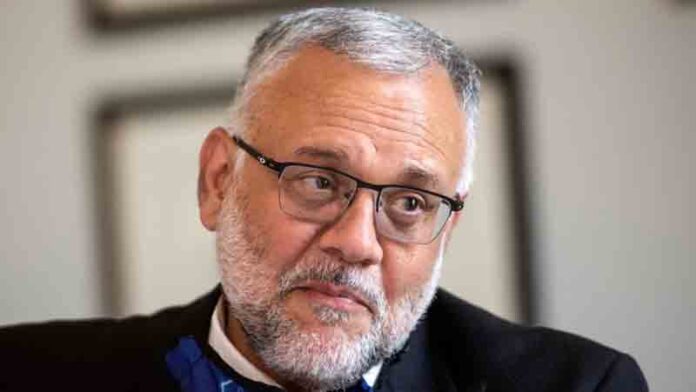
In this 2020 photo, Ebrahim Rasool addresses the Cape Town Press Club on December 15, 2020 in Cape Town, South Africa

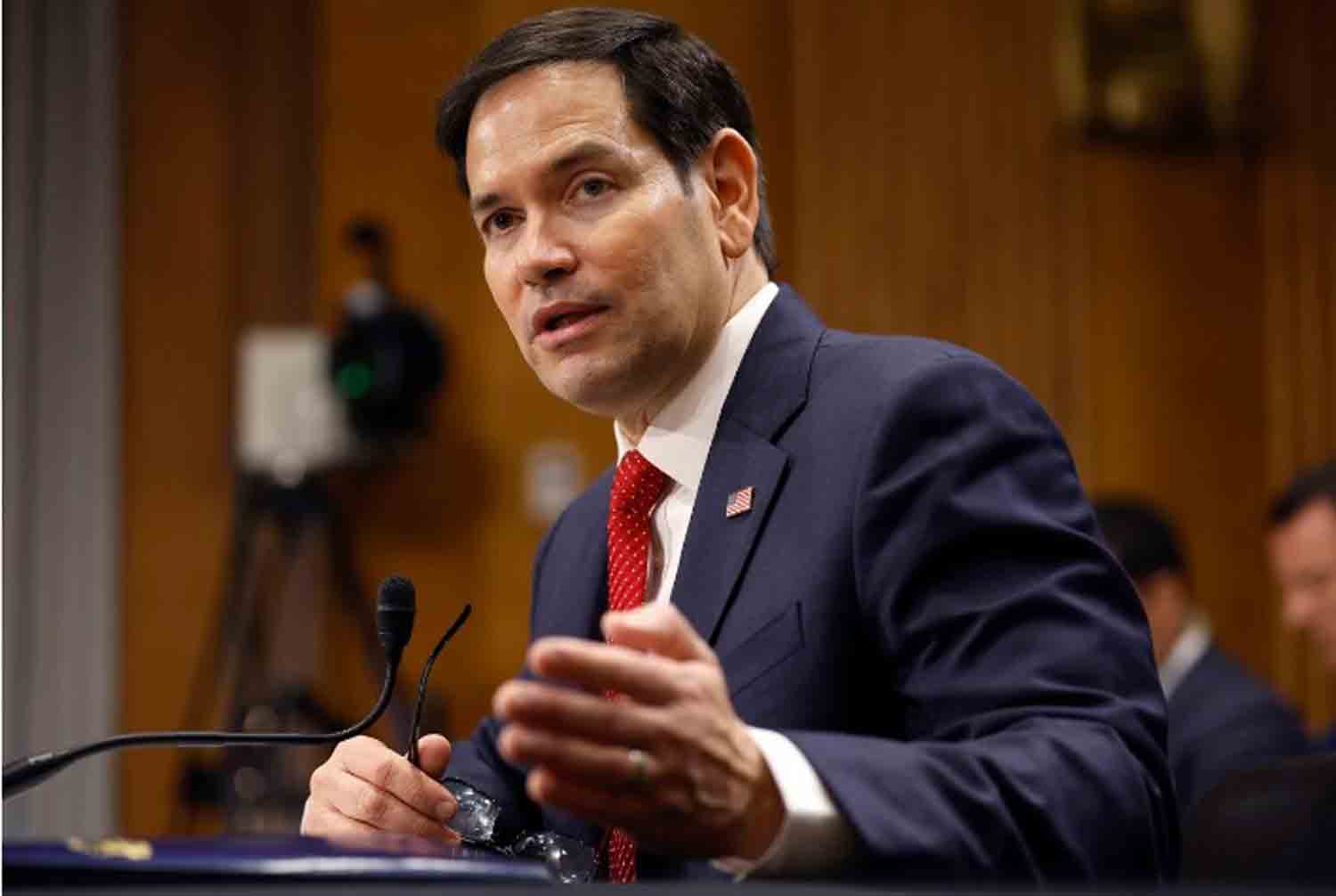
On Friday, U.S. Secretary of State Marco Rubio announced that Ebrahim Rasool, South Africa’s ambassador to the United States, has been declared persona non grata. Rubio criticized Rasool as a “race-baiting politician” who harbors animosity towards America and President Donald Trump.

“South Africa’s Ambassador to the United States is no longer welcome in our great country,” Rubio stated in a post on the social media platform X. “We have no discussions to engage in with him, thus he is deemed PERSONA NON GRATA,” he added.

Rasool had presented his credentials to former President Joe Biden on January 13, marking the beginning of his tenure, as noted on the South African embassy’s website, which indicated that this was Rasool’s second term in Washington. The U.S. State Department and the South African embassy in Washington did not provide immediate comments when approached.

Relations between the United States and South Africa have soured since Trump halted U.S. financial assistance to the country, citing concerns over its land policy and a genocide case against Israel at the International Court of Justice.

Trump has claimed, without providing evidence, that “South Africa is confiscating land” and that “certain groups of people” are being treated “very poorly.” Elon Musk, a billionaire originally from South Africa and an ally of Trump, has stated that white South Africans have suffered due to “racist ownership laws.”

In January, South African President Cyril Ramaphosa enacted legislation designed to facilitate the state’s ability to expropriate land for public interest, sometimes without compensating the owners. He has defended this policy, asserting that the government has not seized any land and that it aims to address racial inequalities in land ownership within the Black-majority nation.

U.S. has enacted visa restrictions on Thai officials due to the deportation of Uyghurs to China

0
Secretary of State, Sen. Marco Rubio testifies during his Senate Foreign Relations confirmation hearing at Dirksen Senate Office Building.

On Friday, U.S. Secretary of State Marco Rubio announced sanctions against officials from Thailand, a U.S. ally, due to their involvement in the deportation of at least 40 Uyghurs to China, where the U.S. asserts that these individuals will face persecution. The State Department emphasized that the U.S. is “dedicated to countering China’s attempts to coerce governments into forcibly returning Uyghurs and other groups to China, where they risk torture and enforced disappearances.”

This action seems aimed at deterring Thailand and other nations from engaging in similar deportations. Although the U.S. has previously imposed sanctions on Thailand, including the suspension of military aid following military coups, and has targeted Thai individuals and companies for violating sanctions related to third countries, a prominent Southeast Asia expert noted that he could not recall sanctions being placed on Thai government officials, who were not identified in Rubio’s announcement.

Thailand’s decision to deport the Uyghurs, who had been detained for a decade, occurred despite warnings from United Nations human rights experts about the potential for torture, mistreatment, and “irreparable harm” if they were sent back.

Earlier this month, Reuters reported that Canada and the United States had offered to resettle 48 ethnic Uyghurs, but Bangkok was concerned about straining relations with China. Rubio stated, “I am immediately implementing this policy by taking steps to impose visa restrictions on current and former officials of the Government of Thailand who are responsible for, or complicit in, the forced return of 40 Uyghurs from Thailand on February 27.” He further urged global governments to refrain from forcibly returning Uyghurs and other groups to China, citing China’s ongoing acts of genocide and crimes against humanity against the Uyghurs.

The statement indicated that the restrictions may also apply to the family members of those who have been sanctioned. Thailand has justified its deportation actions, asserting that they were carried out in compliance with legal and human rights standards. The Thai embassy in Washington did not provide an immediate response to a request for comment regarding Rubio’s announcement.

Murray Hiebert, a prominent expert on the region from the Southeast Asia program at the Center for Strategic and International Studies in Washington, noted that he could not recall any previous U.S. sanctions targeting Thai government officials. He mentioned that Thailand tends to be quite sensitive to criticism, but its response might be moderated by U.S. President Donald Trump’s threats of tariffs against nations with significant trade surpluses with the United States.

“They may prefer to remain under the radar,” he stated. “They already face scrutiny due to having the 11th largest trade surplus with the U.S. … it remains uncertain whether Thailand will escape repercussions when Trump enacts reciprocal tariffs in early April.”

Analysts suggest that Washington has refrained from implementing stricter sanctions against Thailand in the past, fearing that such actions could drive its long-standing ally closer to China. The Campaign for Uyghurs, an advocacy group based in Washington, praised Rubio’s actions and the Trump administration, stating that it “delivers a powerful message that those who facilitate the human rights violations of the Chinese Communist Party (CCP) will be held accountable for their actions.”

Rubio, a strong supporter of Uyghurs during his tenure as a U.S. senator, has reiterated that Beijing’s treatment of the group constitutes “genocide and crimes against humanity,” a classification first made by the U.S. in the final hours of President Donald Trump’s administration in 2021. China has denied the allegations of abuse and forced labor against Uyghurs, claiming that it has established “vocational training centers” in recent years to combat terrorism, separatism, and religious extremism.

Putin claims he will show mercy to Ukrainians in Kursk if they surrender

0
Russia's President Vladimir Putin chairs a security council meeting via videoconference at the Novo-Ogaryovo state residence outside Moscow.

Russian President Vladimir Putin has urged Ukrainian forces in the Kursk region to surrender, as discussions continue regarding a potential ceasefire mediated by the United States.

During a meeting with Russia’s security council on Friday, Putin accused Ukrainian troops in the area of committing offenses against civilians. He also recognized US President Donald Trump’s desire to protect the lives of the soldiers, asserting that the lives of those who surrender would be assured as Russian forces regain control of the territory.

Putin mentioned that Russia is making efforts to mend its relations with the US, which he claimed had been “practically reduced to zero” due to the previous American administration.

“Overall, the situation is beginning to evolve,” he stated regarding relations with the Trump administration. “Let’s see what develops from this.”

As Kyiv appears to be losing its hold on Kursk, its only territorial leverage, many speculate that Putin may be postponing discussions on a US-Ukraine ceasefire until the region is fully under Russian control. Earlier this week, Ukrainian officials agreed to a US proposal for a 30-day ceasefire along the entire front line following talks with US representatives in Saudi Arabia.

Putin’s comments followed his meeting with US Special Envoy Steve Witkoff in Moscow on Thursday, a visit that US Secretary of State Marco Rubio described as providing “reason to be cautiously optimistic.” Trump echoed this sentiment earlier in the day, referring to the discussions as “good and productive” in a post on Truth Social, and expressing hope that “there is a very good chance that this horrible, bloody war can finally come to an end.”

Trump stated that he has “strongly requested” Putin to spare the lives of Ukrainian soldiers in Kursk.

“We interpret President Trump’s appeal as being motivated by humanitarian concerns for these servicemen,” Putin remarked on Friday. “In this context, I want to stress that if they surrender and lay down their arms, they will be assured of their lives and treated humanely in accordance with international law and the laws of the Russian Federation.”

However, he noted that Ukraine’s military must first instruct its troops in Kursk to surrender.

In February, the United Nations Human Rights Monitoring Mission in Ukraine expressed alarm over reports indicating that numerous Ukrainian soldiers who had surrendered to Russia since late August 2024 were “shot dead on the spot.”

“All claims of executions of captured Ukrainian military personnel, as well as public statements that call for or condone such actions, must be thoroughly investigated,” stated Danielle Bell, the head of the mission, at that time.

“Every day of war results in loss of life.”

Meanwhile, Ukrainian President Volodymyr Zelensky expressed doubt regarding Putin’s intentions and called on the US to take “strong measures” to compel Russia to cease its aggression against Kyiv.

In a series of posts on X, the Ukrainian president expressed his nation’s desire for peace, stating, “From the very first moments of this war, our only wish has been for Russia to allow our people to live in peace and for the Russian occupiers to withdraw from our territory.”

He emphasized, “Each day of conflict results in the loss of our people’s lives – the most precious asset we possess.”

Zelensky further accused Putin of trying to undermine peace talks and misrepresenting the “true situation” on the battlefield. On Thursday, the Russian president proposed several conditions for a ceasefire, insisting that any agreement must address what the Kremlin considers the “root causes” of the conflict.

Russia initially invaded Ukraine in 2014 and escalated to a full-scale invasion in 2022. At that time, Putin insisted that Ukraine should never join NATO and demanded a reduction of NATO’s military presence in Eastern and Central Europe, which the US and its allies rejected as unacceptable, condemning the invasion as a blatant act of aggression.

“Putin cannot withdraw from this war without losing everything,” Zelensky remarked. “That is why he is taking every possible measure to obstruct diplomatic efforts by imposing extremely challenging and unacceptable conditions even before a ceasefire can be discussed.”

Zelensky urged nations capable of influencing Russia, particularly the US, to take action to help bring an end to the conflict.

“Pressure must be directed at those unwilling to cease hostilities. We must focus on Russia. Only through decisive measures can we conclude this war, which has already persisted for years,” he stated.

The Ukrainian president is anticipated to participate in a virtual meeting with European and NATO leaders regarding support for Ukraine on Saturday, organized by British Prime Minister Keir Starmer.

Despite strong rhetoric, Iran’s economic difficulties may push it to negotiate with Trump

0

For Iran‘s clerical leadership, negotiating with the “Great Satan” to secure a nuclear agreement and alleviate severe sanctions may, for once, represent the lesser of two undesirable options. Despite harboring significant distrust towards the United States, particularly under President Donald Trump, Tehran is increasingly alarmed that rising public frustration over economic difficulties could lead to widespread protests, according to four Iranian officials.

Consequently, even though Iran’s clerical leaders maintain a firm public stance and assertive rhetoric, there exists a pragmatic inclination within Tehran’s political circles to reach an agreement with Washington, the officials noted. Tehran’s anxieties have been heightened by Trump’s rapid reimplementation of his first term’s “maximum pressure” strategy, aimed at reducing Iran’s oil exports to nearly zero through additional sanctions, thereby crippling the already vulnerable economy.

President Masoud Pezeshkian has consistently emphasized the dire economic conditions in the Islamic Republic, asserting that the current situation is more severe than during the Iran-Iraq war of the 1980s, and recently pointed to the latest U.S. sanctions targeting vessels transporting Iranian oil.

One Iranian official expressed concern that completely severing diplomatic channels could exacerbate domestic dissatisfaction directed at Ayatollah Ali Khamenei, who is the ultimate authority in the Islamic Republic. “There is no doubt that the individual who has served as Supreme Leader since 1989 and his foreign policy choices bear more responsibility than anyone else for the current situation,” stated Alex Vatanka, director of the Iran Program at the Middle East Institute in Washington.

Iran’s struggling economy compelled Khamenei to cautiously support the nuclear agreement reached with major powers in 2015, which resulted in the easing of Western sanctions and a subsequent improvement in economic conditions. However, after President Trump withdrew from the nuclear deal in 2018, his renewed campaign against Iran further deteriorated living standards.

“The situation deteriorates every day. I can’t pay my rent, settle my bills, or buy clothes for my children,” lamented Alireza Yousefi, a 42-year-old teacher from Isfahan. “Now, with additional sanctions, survival will become impossible.” The Iranian foreign ministry did not provide a response to a request for comment.

‘ON EQUAL TERMS’

While intensifying pressure on Iran through new sanctions and military threats, Trump also extended an invitation for negotiations by sending a letter to Khamenei suggesting nuclear discussions. Khamenei rejected the proposal on Wednesday, asserting that Washington’s demands were excessive and that Tehran would not be coerced into talks.

“If we engage in negotiations while facing maximum pressure from the other side, we will be at a disadvantage and achieve nothing,” stated Iran’s chief diplomat, Abbas Araqchi, in an interview with the Iran newspaper published on Thursday.

“The other side must recognize that the pressure strategy is ineffective; only then can we negotiate on equal footing,” he emphasized. A senior Iranian official acknowledged that reaching an agreement was the only viable option, although the path would be challenging due to Iran’s mistrust of Trump following his withdrawal from the 2015 agreement. Iran has managed to avoid economic collapse primarily due to China, its main oil purchaser and one of the few countries still engaging in trade with Tehran despite the sanctions.

Oil exports experienced a significant decline after Trump withdrew from the nuclear agreement, but they have rebounded in recent years, generating over $50 billion in revenue for both 2022 and 2023 as Iran discovered methods to bypass sanctions, as per estimates from the U.S. Energy Information Administration.

However, there remains uncertainty regarding the long-term viability of these exports, as Trump’s maximum pressure strategy continues to target Iran’s crude oil sales through various sanctions on tankers and related entities.

PUBLIC DISCONTENT GROWS

The Iranian leadership is also grappling with a range of additional challenges, including energy and water shortages, a plummeting currency, military difficulties with regional allies, and increasing apprehension about a potential Israeli attack on its nuclear sites—all exacerbated by Trump’s stringent policies.

The energy and water sectors are hindered by insufficient infrastructure investment, excessive consumption fueled by subsidies, decreasing natural gas output, and ineffective irrigation practices, resulting in power outages and water scarcity. Since the reimposition of sanctions in 2018, the Iranian rial has lost over 90% of its value against the dollar, according to reports from foreign exchange platforms, officials, and lawmakers.

In light of concerns regarding Trump’s harsh tactics, many Iranians are turning to dollars, other stable currencies, gold, or cryptocurrencies as safe havens for their savings, indicating a further decline in the rial’s value, as reported by state media.

The cost of rice has surged by 200% compared to last year, according to reports from state media. Additionally, housing and utility expenses have sharply increased, with some areas in Tehran and other major cities experiencing rises of approximately 60% in recent months. This surge is attributed to the significant depreciation of the rial and escalating raw material prices, as reported by various media outlets.

While official inflation rates are reported to be around 40%, some Iranian analysts suggest that the actual figure exceeds 50%. The Statistical Center of Iran has noted a considerable increase in food prices, with more than a third of essential goods rising by 40% in January, resulting in prices that are more than double those from the same month last year.

In January, the Tasnim news agency cited Ebrahim Sadeghifar, the head of Iran’s Institute of Labor and Social Welfare, stating that between 22% and 27% of Iranians now live below the poverty line. Meanwhile, Iran’s Jomhuri-ye Eslami newspaper reported last week that poverty rates are approximately 50%.

“I can hardly manage to pay the rent for my carpet shop or my employees’ wages. No one has the funds to purchase carpets. If this situation persists, I will have no choice but to let my staff go,” said Morteza, 39, in a phone interview from Tehran’s Grand Bazaar, providing only his first name.

“How do they expect to address the economic crisis if they refuse to engage with Trump? They should just talk to him and come to an agreement. You can’t afford to be proud when you’re hungry.”

NUCLEAR RED LINE

According to reports from Iranian state media, February saw at least 216 protests throughout Iran, involving a diverse group of participants including retirees, workers, healthcare professionals, students, and merchants. These demonstrations primarily addressed economic challenges, such as inadequate wages and prolonged periods without salary payments.
Although the protests were generally small in scale, officials express concern that worsening living conditions could lead to significant unrest. “The country resembles a powder keg, and additional economic pressure could ignite it,” remarked one official closely associated with the government.
The ruling class in Iran is highly cognizant of the potential for a resurgence of unrest akin to the protests that erupted in 2022-2023 following Mahsa Amini’s death in custody, as well as the nationwide demonstrations in 2019 triggered by fuel price hikes, according to the officials.
A senior Iranian official indicated that there have been multiple high-level discussions regarding the likelihood of new mass protests and strategies to prevent them.
Despite these concerns about possible unrest, Iranian officials maintain that Tehran is willing to engage in limited discussions with Trump, emphasizing that “excessive demands,” such as the dismantling of Iran’s peaceful nuclear program or its conventional missile capabilities, are non-negotiable. “While we acknowledge the worries about increasing economic pressure and the rising discontent among the populace, we cannot compromise our right to develop nuclear energy simply because Trump desires it,” the senior official stated.

Ali Vaez, the Iran project director at the International Crisis Group, stated that the leaders of Iran perceive negotiating with Trump under duress as a sign of weakness, which they believe would lead to increased pressure rather than alleviating it.

He added, “This is why Ayatollah Khamenei appears to think that the only thing more perilous than enduring sanctions is capitulating to them.”

AP reports that the U.S. and Israel are exploring options in Africa for resettling Palestinians from Gaza

0
Palestinians react after a school sheltering displaced people was hit by an Israeli strike, at Beach camp in Gaza City .

The United States and Israel have reached out to officials in Sudan, Somalia, and the autonomous region of Somaliland to explore the possibility of using their land for the resettlement of Palestinians from Gaza, as reported by the Associated Press on Friday, citing U.S. and Israeli sources.

Sudanese officials have rejected the U.S. proposal, while representatives from Somalia and Somaliland stated they were not aware of any such discussions, according to AP.

The White House and the U.S. State Department did not provide immediate comments to Reuters’ inquiries. Additionally, the information ministers of Somalia and Somaliland did not respond to phone calls from Reuters seeking their input. Sudan’s foreign ministry, which is currently grappling with a severe civil war that has displaced 12 million citizens and led to widespread famine, also did not respond promptly to requests for comment.

Earlier this month, Arab leaders endorsed a $53 billion reconstruction plan for Gaza proposed by Egypt, aimed at preventing the displacement of Palestinians from the region, contrasting with former U.S. President Donald Trump’s vision of a “Middle East Riviera.” This plan was supported by leaders from both Sudan and Somalia.

Trump had previously suggested a U.S. takeover of the Gaza Strip for reconstruction efforts, following earlier proposals that implied the permanent displacement of Palestinians. His plan heightened longstanding fears among Palestinians about being forcibly removed from their homes and faced significant international backlash.

On October 7, 2023, the Palestinian militant group Hamas launched attacks on southern Israeli communities, resulting in approximately 1,200 fatalities and around 250 hostages, according to Israeli reports. In retaliation, Israel initiated a military offensive that has reportedly resulted in over 48,000 Palestinian deaths, as per health officials in Gaza.

As Trump improves relations, Russia identifies a new primary adversary: Britain

0
Russia and Great Britain flags

Two British diplomats have been expelled amid a spying controversy, accompanied by a scathing statement from Russia‘s foreign intelligence service, which labeled Britain as “a warmonger.” Additionally, a senior ally of Vladimir Putin has threatened to confiscate UK assets located in Russia.

As the United States, under Donald Trump, attempts to mend relations with Moscow and facilitate peace between Russia and Ukraine, Britain has been designated as Russia’s primary adversary.

This designation is one that Britain has intermittently held for the past two hundred years. In a notably charged public statement on Monday, Russia’s foreign intelligence service asserted, “London today, similar to the period leading up to both World Wars of the last century, is acting as the principal global ‘warmonger’.” The agency accused London of undermining Trump’s peace efforts in Ukraine.

“The time has come to reveal their true intentions and deliver a clear warning to ‘perfidious Albion’ and its elites: your efforts will not prevail,” stated the agency, known as the SVR.

The statement did not provide further details regarding its grievances with Britain’s actions prior to the two World Wars. While Moscow has directed particularly harsh criticism towards Britain, it has also intensified its rhetoric against the European Union, especially targeting French President Emmanuel Macron, whose discussions of France’s nuclear capabilities in response to a perceived Russian threat have provoked the Kremlin’s ire.

Russia’s invasion of Ukraine in 2022 has escalated into Europe’s largest and most lethal conflict since World War II, resulting in hundreds of thousands of casualties, displacing millions, and sparking the most significant confrontation between Moscow and the West in decades.

Throughout much of the conflict, Russia criticized Washington for its support of Kyiv. However, this stance has shifted with Trump in office.

Three Russian officials, who requested anonymity due to their lack of authorization to speak publicly, indicated that Britain is now viewed as Moscow’s primary adversary. One official expressed frustration, claiming that London is “fueling chaos and war” in Ukraine. Another characterized Britain as the leading force in the West in rallying opposition against Russia.

Prime Minister Keir Starmer’s recent comments about potentially deploying British troops and aircraft to Ukraine as part of a peacekeeping mission have provoked ire among senior Russian officials. His hosting of a meeting for the “coalition of the willing,” along with his direct lobbying of Trump to support Ukraine, has also drawn criticism.

Russian Foreign Minister Sergei Lavrov has accused Starmer of escalating tensions at a time when Trump was attempting to de-escalate them. British diplomats in Russia are aware of the challenges they face, as reciprocal expulsions have already reduced the staff at the British embassy by at least ten diplomats since the war began. Currently, neither country has defense attaches stationed there.

On Monday, Russia’s FSB security service accused a British diplomat and the spouse of another diplomat of espionage, leading to their expulsion—an allegation that London dismissed as “baseless.” In response, Britain summoned the Russian ambassador in London and expelled a Russian diplomat along with a diplomatic spouse.

The British Foreign Office stated on Wednesday, “It is evident that the Russian state is actively working to push the British Embassy in Moscow towards closure.”

Russia’s Foreign Ministry and the British Foreign Office have not yet responded to requests for comments.

“HOSTILE ACTION”

The head of Britain’s MI6 Secret Intelligence Service has described Russia’s actions as “staggeringly reckless” sabotage occurring on British and European territory. Recently, a London court convicted three Bulgarians for their involvement in a Russian espionage unit. Additionally, a British man confessed in court to committing arson at a Ukrainian-owned warehouse in East London, acting on behalf of Russia.

A British investigation has attributed the 2006 poisoning of Kremlin critic Alexander Litvinenko in London to Russia, involving a radioactive substance. Furthermore, London has accused Moscow of being responsible for the 2018 poisoning in Salisbury, which utilized the Novichok nerve agent. Russia has denied these allegations.

Some Russian politicians have insinuated, without presenting evidence, that Britain assisted Ukraine in executing sabotage operations against Russian targets, including an incident on the bridge connecting Crimea to mainland Russia that resulted in two fatalities in 2023. One of the three Russian officials claimed that Starmer, similar to Boris Johnson before him, is leveraging the Ukraine conflict to divert attention from domestic issues. London maintains its position of seeking a “just peace” for Ukraine rather than compelling it to surrender.

‘THE ENGLISHWOMAN RELIEVES HERSELF’

Nationalist commentators on Russian state television have begun asserting that London has sought to undermine Moscow for centuries. Although London became a favored destination for Russian investments following the Soviet Union’s collapse in 1991, the roots of distrust towards Britain can be traced back to the Crimean War of 1853-1856, during which Britain was part of an alliance that defeated the Russian Empire.

In light of recent perceived offenses by Britain, Russian politicians have revived a 19th-century phrase that characterizes Britain’s aggressive foreign policy towards Russia during Queen Victoria’s reign: “The Englishwoman relieves herself” on Russia, a saying that implies Britain’s ongoing efforts to disrupt Russian interests.

This emerging anti-British sentiment, coupled with a noticeable reduction in anti-U.S. rhetoric in state media, may leave London in a more vulnerable position. As Russia enters its fourth year of conflict, with its economy under strain, there is a growing belief in Moscow that the new approach from Trump could present an opportunity for peace on terms favorable to Russia.

Some lawmakers have suggested that companies from “hostile” nations, including Britain, should be barred from returning even if Western sanctions are lifted following a potential peace agreement with Ukraine, or face significantly stricter conditions if they do.

Vyacheslav Volodin, a close ally of Putin, recently emphasized the necessity of reclaiming funds from Britain, referring to the interest accrued on approximately $26 billion in frozen Russian assets in the UK, which London has been directing to Ukraine. According to UK government data, British-Russian trade has plummeted from over £16 billion in 2021 to just above £2 billion in 2023, with oil giant BP incurring losses exceeding $20 billion due to its exit from Russia in 2022. Meanwhile, other British firms, such as the British-Swedish pharmaceutical company AstraZeneca and GlaxoSmithKline, continue their operations in the country.

BRITISH LOCOMOTIVE

Some individuals in Britain may find it surprising that Moscow attributes significant global importance to London’s intelligence agencies and special forces. However, one of three Russian officials noted that London has demonstrated its capability to lead by example regarding Ukraine. “They are the driving force, pulling others along with them,” the official remarked.

Britain has been proactive in supporting the Ukrainian military by providing training and financial assistance. It was the first nation to commit Western-made main battle tanks to Ukraine and the first to supply long-range cruise missiles when other countries were hesitant to act. This decisive support has provoked strong reactions from Russia.

“If Britain is currently launching missiles at our territory from Ukraine, I believe this is a valid reason for Britain to cease to exist,” stated Andrei Gurulyov, a pro-Putin lawmaker and former military leader, during a January broadcast on state television.

Russia’s efforts to portray Britain as a warmonger align with President Putin’s claim that former British Prime Minister Boris Johnson convinced Ukrainian President Volodymyr Zelenskiy to abandon a potential peace agreement in 2022, a claim both Johnson and Zelenskiy have denied.

While this narrative might seem to undermine the assertion that Britain poses a threat to Moscow, Russian politicians and commentators have been quick to highlight the diminished size of the British military, which currently comprises fewer than 75,000 full-time soldiers, compared to Russia’s estimated 1.1 million active personnel. State television host Yevgeny Kiselyov humorously remarked on his flagship program this month that the entire British army could fit within London’s Wembley Stadium.

China, Iran, and Russia have commenced discussions in Beijing regarding Iran’s nuclear matters

0

Senior diplomats from Iran, Russia, and China convened in Beijing on Friday to discuss Tehran’s nuclear concerns, as reported by Chinese state broadcaster CCTV. This meeting occurred shortly after Iran dismissed U.S. “demands” to reinitiate discussions regarding its nuclear program.

In 2015, Iran entered into an agreement with the United States, Russia, China, the United Kingdom, France, and Germany, committing to limit its nuclear activities in exchange for the removal of international sanctions. However, in 2018, then-President Donald Trump withdrew the U.S. from the agreement.

Recently, Trump announced that he had sent a letter to Iranian Supreme Leader Ayatollah Ali Khamenei suggesting nuclear negotiations, stating, “There are two ways Iran can be handled: militarily, or you make a deal.” In response, Iranian President Masoud Pezeshkian asserted that negotiations with the U.S. would not occur under threats, emphasizing that Iran would not comply with U.S. “demands” for dialogue.

Iran expressed further outrage after six members of the United Nations Security Council—namely the U.S., France, Greece, Panama, South Korea, and the UK—held a private meeting to discuss its nuclear program. Tehran condemned this gathering as a “misuse” of the U.N. Security Council’s authority.

Leading up to the Beijing discussions, which included the vice foreign ministers of China, Russia, and Iran, China expressed hope that the trilateral meeting would foster “conditions” conducive to the prompt resumption of dialogue and negotiations. Iran has consistently denied pursuing the development of nuclear weapons; however, the International Atomic Energy Agency recently cautioned that Tehran is “dramatically” increasing its uranium enrichment, nearing the approximately 90% threshold considered weapons-grade.

Trump is influencing Kiev, conversing with Moscow, and marginalizing Western Europe

0
Russian President Vladimir Putin and then-US President Donald Trump on the sidelines of the G20 Summit in Osaka, Japan, June 28, 2019.

As high-stakes diplomacy progresses between the United States and Ukraine, it is evident that President Donald Trump harbors minimal personal regard for his Ukrainian counterpart, Vladimir Zelensky. Their most recent encounter at the White House in February further highlighted this sentiment, with Trump displaying a clear lack of respect towards Zelensky.

There are logical explanations for Trump’s stance. Zelensky placed significant trust in Joe Biden, aligning Ukraine’s future with the Democratic Party. When Biden’s anticipated second term failed to materialize and Kamala Harris faced setbacks, Kyiv found itself without a dependable ally in Washington.

Trump’s instincts, both personal and political, position him in stark contrast to leaders like Zelensky, who, despite being an unconventional political outsider, embodies a governance style that fundamentally clashes with Trump’s worldview.

Notably, Trump has openly criticized Zelensky, which breaches established diplomatic protocols. Reports from the German media outlet Bild suggest that the White House has even considered the possibility of Zelensky’s resignation. These reports indicate that Trump no longer views Zelensky as a viable partner and is applying considerable political pressure to push him out.

The administration has not refuted these assertions. However, securing Trump’s approval is a challenging endeavor. Among contemporary political figures, very few have succeeded in earning his genuine respect. The unpredictable and ego-driven 47th president of the United States shows little tolerance for the leadership of the European Union or for the leaders of neighboring countries like Mexico and Canada.

Trump seems to be more comfortable with strong, authoritative leaders who exude power, such as Hungarian Prime Minister Viktor Orban, Turkish President Recep Tayyip Erdogan, Israeli Prime Minister Benjamin Netanyahu, and, most notably, Russian President Vladimir Putin.

Ukraine as a Geopolitical Asset

In the realm of politics, much like in business, the selection of partners is often beyond one’s control. Throughout his tenure in the fiercely competitive and sometimes cutthroat New York real estate sector, Trump has had to collaborate with individuals of dubious reputations. Consequently, his approach to international relations mirrors his business strategies: practicality takes precedence over emotional considerations.

Trump’s interest in Ukraine is not driven by personal connections; instead, he perceives the nation as a valuable asset in which the United States has invested significantly. Although he did not personally initiate support for Kiev, he now bears the responsibility of overseeing America’s involvement in the conflict, and, akin to any businessman, he seeks a return on that investment.

This perspective explains why Trump is not inclined to withdraw immediately. He is actively seeking ways to derive value from Ukraine, whether through its rare earth minerals, transportation and logistics networks, fertile black soil, or other tangible resources. He is reluctant to dismiss it as a lost cause without first attempting to recover some of America’s expenditures.

As a result, his administration is striving to compel Kiev to reach a settlement based on terms set by Washington. This initiative reached a peak during Tuesday’s meeting in Riyadh, where Trump’s negotiators presented Zelensky’s team with a clear ultimatum: accept the US conditions, which include a ceasefire or a partial halt to hostilities, or face the risk of total abandonment.

Zelensky’s Eroding Influence

Ahead of this pivotal meeting, Zelensky reportedly sent a letter of apology to Trump in an attempt to ease the tensions that arose from their awkward encounter at the White House. As noted by US special envoy Steve Witkoff, this move was aimed at preserving what little leverage Ukraine has in negotiations.

Trump remains highly doubtful of Zelensky’s capability to fulfill any agreements. The credibility of the Ukrainian president has been significantly compromised, raising questions about his ability to negotiate effectively on behalf of his country’s political elite. Trump has learned from previous experiences that commitments made by Kiev do not always result in tangible outcomes.

After the Riyadh meeting, Trump shifted his focus to a more pressing matter: negotiations with Moscow. In contrast to Zelensky, Putin is negotiating from a position of power, complicating the potential for any agreement. The era in which the West could impose terms on Russia has long passed, and Trump likely recognizes that his influence over Moscow is limited.

The European Challenge

Should Trump manage to establish a consensus with Putin, the subsequent phase will involve persuading Western European nations to accept this new geopolitical landscape. For Washington’s European allies, who have heavily invested in Ukraine, this will be a difficult adjustment. The EU has spent years portraying itself as a staunch supporter of Kiev, and being sidelined from critical negotiations would be profoundly embarrassing.

What is unfolding is exactly this scenario. The leaders of the bloc, including European Commission President Ursula von der Leyen, have been relegated to mere observers, issuing hollow statements of support for Ukraine while lacking any substantial influence over the situation. A settlement orchestrated by Trump, without their involvement, would serve as a stark indication of their waning significance in global matters.

Moreover, a significant portion of Western Europe’s investment in Ukraine—both financial and political—stands to be jeopardized. While the Biden administration made efforts to keep European allies engaged in the decision-making process, Trump appears disinterested in such collaboration. His focus is on securing a deal that aligns with American interests, seemingly indifferent to the reputational harm this may cause to the EU’s political leadership.

This scenario poses a significant diplomatic test for Trump. Unlike business transactions, which can be abandoned, geopolitical agreements carry enduring implications. His capacity to maneuver through this intricate situation—applying pressure on Kiev, negotiating with Moscow, and marginalizing Western Europe—will be crucial in determining whether he can emerge as a successful peacemaker.

In the end, Ukraine’s destiny is no longer solely in its own control. The choices made in Washington, Moscow, and, ironically, Riyadh will dictate the nation’s future. Whether Trump can broker a deal that satisfies all involved parties remains uncertain. However, it is evident that Ukraine’s role as a key element in the West’s confrontation with Russia is diminishing.

Turkey’s Eurofighter Typhoon Agreement Advances as the UK Presents Official Proposal

0
Eurofighter Typhoon fighter jet with “METEOR” long range air-to-air missile

Turkey’s efforts to acquire Eurofighter Typhoon fighter jets are progressing smoothly, as the United Kingdom’s Ministry of Defence has officially presented a sales proposal to Turkey’s Ministry of National Defense.

Reports from Turkish media, citing informed sources, indicate that Turkey’s defense ministry is currently conducting a comprehensive assessment of the sales proposal, which is a vital phase in the procurement process.

“We previously announced that an official document had been prepared concerning the acquisition of 40 Eurofighter Typhoon fighter jets to fulfill our air force’s operational requirements. This document was submitted to the UK Ministry of Defence and the relevant manufacturer, with the anticipation of receiving a counteroffer,” a source informed Turkish media.

“The expected offer has now been received by our ministry, and the evaluation process is in progress.”

The Eurofighter Typhoon, developed by a consortium of four European nations—namely the United Kingdom, Germany, Spain, and Italy—requires unanimous consent from all partner countries for export.

Turkey’s interest in the Eurofighter Typhoon gained significant traction late last year after Germany decided to allow the consortium’s manufacturers to pursue the sale, marking a departure from Berlin’s earlier resistance.

Additionally, sources have disclosed that UK Defence Secretary John Healey visited Ankara for discussions with his Turkish counterpart.

In line with the strengthening defense relationship between Türkiye and the UK, two Royal Air Force (RAF) Eurofighter Typhoon jets arrived at Murted Air Base in Ankara last December, enabling Turkish officials to perform a direct assessment of the aircraft.

The arrival of these jets highlighted the advancements in Türkiye’s procurement initiatives, despite ongoing concerns from Germany regarding the sale. To further enhance the bilateral defense discussions, Turkish Chief of General Staff General Metin Gürak visited the UK in September of the previous year. During his visit, he toured RAF Coningsby, a significant airbase that hosts Eurofighter Typhoon squadrons, where he had the chance to closely examine the fighter jets that Türkiye has been aiming to acquire for several years.

Despite Germany’s ongoing objections, Türkiye’s pursuit of the Eurofighter Typhoon has reportedly garnered strong support from the governments of the UK, Italy, and Spain. Türkiye has consistently shown a keen interest in obtaining the Eurofighter Typhoon to upgrade its air force, especially after its exclusion from the F-35 program.

Germany has persistently hindered Ankara’s attempts to obtain the aircraft. Türkiye was removed from the fifth-generation F-35 fighter jet program after it moved forward with the purchase of Russia’s S-400 “Triumf” long-range air defense system, a decision that led to Western sanctions and diplomatic tensions. Germany’s hesitation to approve the Eurofighter Typhoon sale to Türkiye is believed to be linked to Ankara’s outspoken criticism of Israel’s military actions in Gaza, introducing a political aspect to the defense procurement discussions.

Türkiye aims to acquire the latest version of the Eurofighter Typhoon, known as Tranche 4, which is equipped with the state-of-the-art AESA CAPTOR-E radar. Recognized as Europe’s most advanced multi-role fighter variant, the Tranche 4 is anticipated to remain operational until at least 2060.

Germany has officially ordered 38 Tranche 4 Eurofighter Typhoons, highlighting the aircraft’s enduring strategic importance. Should the agreement proceed, Türkiye plans to incorporate 40 Tranche 4 Eurofighter Typhoons into its air force, enhancing its aging fleet of F-16s, which continue to serve as the foundation of its aerial combat strength.

As discussions progress, attention is focused on Berlin, as its final endorsement is crucial for facilitating Türkiye’s long-anticipated acquisition of the Eurofighter Typhoon.