Monday, April 13, 2026
Home Blog Page 61

Rubio discussed with Poland the need for NATO allies to boost defense spending

0
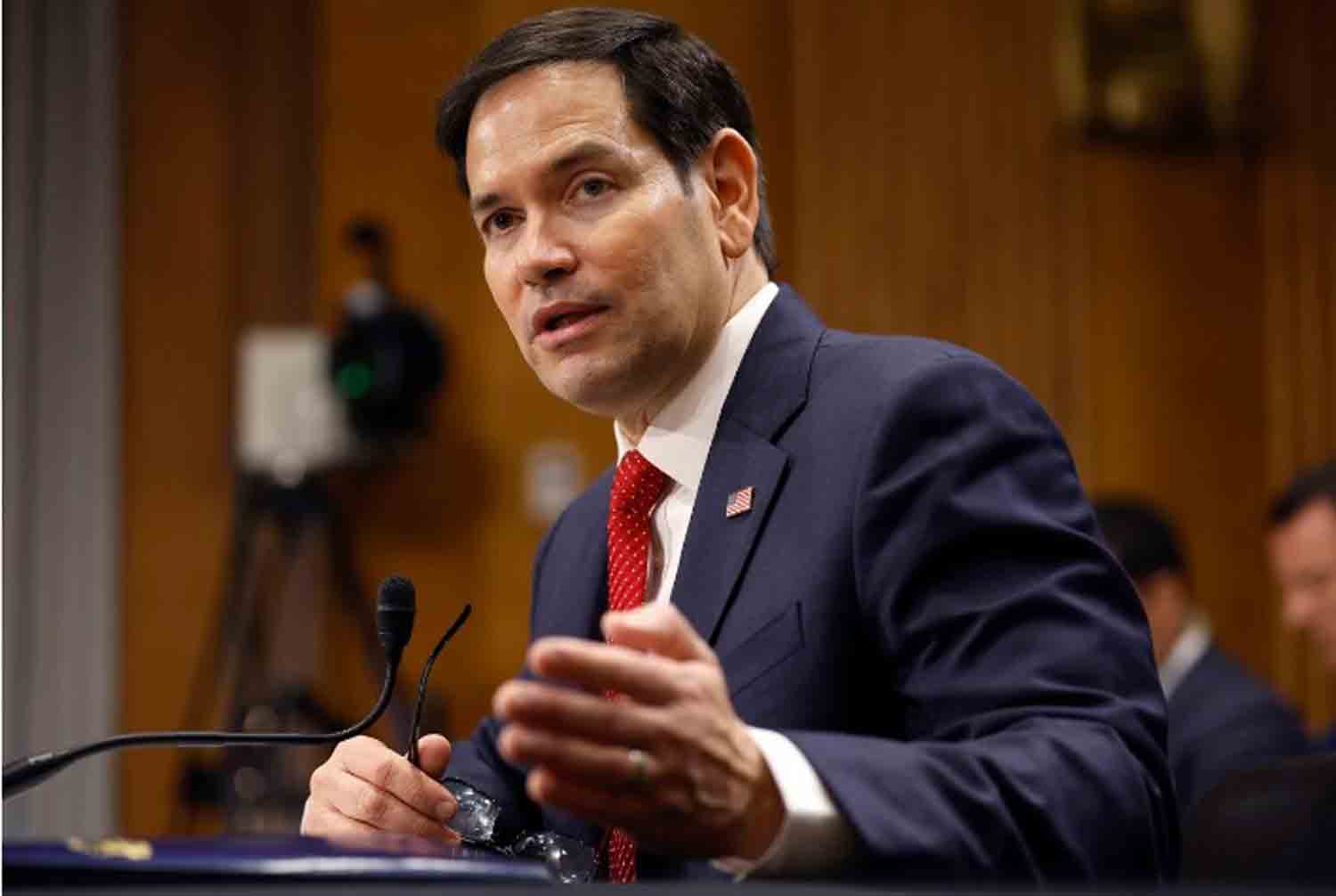
Secretary of State, Sen. Marco Rubio testifies during his Senate Foreign Relations confirmation hearing at Dirksen Senate Office Building.

U.S. Secretary of State Marco Rubio announced that he met with Polish Foreign Minister Radoslaw Sikorski in Washington on Friday, where they addressed issues such as “fair and reciprocal market access” and emphasized the urgent need for NATO Allies to enhance their defense investments.

Following the meeting, Rubio shared on the social media platform X that they also discussed the ongoing Russia-Ukraine conflict and reiterated the necessity for all NATO members to increase their defense spending without delay. He highlighted that market access reciprocity was another significant topic of their conversation.

When asked about Washington’s negotiation strategies concerning Ukraine, the Polish foreign minister indicated that this was a matter for the U.S. to clarify, but he felt that the United States was dedicated to achieving lasting peace. He refrained from commenting on Rubio’s discussions regarding talks with Russia in Saudi Arabia.

U.S. President Donald Trump has been advocating for a resolution to the Ukraine conflict and recently held separate discussions with both Russian President Vladimir Putin and Ukrainian President Volodymyr Zelenskiy.

This week, Trump’s senior officials, including Rubio, engaged in talks with their Russian counterparts in Saudi Arabia, which did not cover the situation in Ukraine. Additionally, Trump referred to Zelenskiy as a dictator on Wednesday and has urged both the Russian and Ukrainian leaders to collaborate on ending the war that commenced with Russia’s invasion of Ukraine in February 2022, following its annexation of Crimea in 2014.

Trump has called for NATO countries to increase their defense budgets. Despite nearly doubling their defense spending since the annexation of Crimea, European nations still average below NATO’s guideline of 2% of GDP. Poland is projected to have the highest defense spending among NATO members, estimated at 4.1% of GDP in 2024, while eight of the alliance’s 32 members are expected to spend less than 2%.

Trump has warned that he may withhold protection from allies that do not meet their spending commitments.

Australia said China failed to provide a satisfactory explanation for the short notice of its navy’s live-fire exercises

0
Australian Deputy Prime Minister and Defence Minister Richard Marles

Australia criticized China on Saturday for not providing adequate justification for what it deemed insufficient notice regarding a live-fire drill conducted in waters between Australia and New Zealand, which led to flight diversions by airlines.

Defence Minister Richard Marles stated that the government has yet to receive a “satisfactory answer from China regarding the notice” of the drills, which he described as “disconcerting” for commercial aviation.

“When we conduct such activities, we typically provide 12 to 24 hours of notice,” Marles explained to Nine Entertainment, as per a transcript. “A satisfactory explanation is needed as to why that was not possible.”

On Friday, airlines such as Qantas, Emirates, and Air New Zealand adjusted their flight routes between Australia and New Zealand after China announced that its navy would conduct live-fire exercises in international waters off the coast of New South Wales.

Australia’s defence force indicated that there was no immediate threat to Australian or New Zealand assets, as confirmed by the government on Friday.

“China did adhere to international law, and it is crucial to acknowledge that,” Prime Minister Anthony Albanese remarked on Saturday during a broadcast by the Australian Broadcasting Corporation.

Chinese foreign ministry spokesman Guo Jiakun stated on Friday that the naval exercises “maintained safety standards and professional operations in accordance with relevant international laws and practices.”

Australian Foreign Minister Penny Wong met with her Chinese counterpart Wang Yi on Friday during a Group of 20 meeting in South Africa, where they planned to discuss “safe and professional military conduct.”

The exercise occurred following the entry of a People’s Liberation Army Navy frigate, cruiser, and replenishment vessel into Australia’s maritime approaches last week, which subsequently traveled down the east coast of Australia this week, under the observation of the navies and air forces of both Australia and New Zealand.

Earlier this month, Australia raised concerns regarding “unsafe and unprofessional” maneuvers by a Chinese fighter jet directed at an Australian maritime patrol in the South China Sea. In response, Beijing accused the Australian aircraft of “deliberately intruding” into its airspace.

China continues to reject the 2016 ruling by the Permanent Court of Arbitration in The Hague, which determined that its extensive claims over nearly the entire South China Sea—areas also claimed by several Southeast Asian nations—lack support from international law.

Iranian drone carrier Shahid Mahdavi has arrived in Malaysia for an operational visit

0
drone carrier Shahid Mahdavi

A significant milestone was achieved as, for the first time, two warships from the Islamic Republic of Iran Navy (IRIN) docked in Malaysia, an event characterized by the Royal Malaysian Navy (RMN) as an “operational visit.”

An official announcement shared on the RMN’s Facebook page indicated that the Iranian naval vessels making their debut in Malaysia are the auxiliary ship Shahid Mahdavi and the frigate IRINS Dena.

The RMN statement noted, “This marks the first arrival of two assets from the Islamic Republic of Iran Navy in Malaysia for an operational visit, specifically the auxiliary ship (ocean liner – 110-3) Shahid Mahdavi and the frigate I.R.I.N.S Dena.”

“This visit represents a historic moment that will lay the groundwork for enhancing bilateral relations between the Royal Malaysian Navy (RMN) and the Islamic Republic of Iran Navy moving forward. Welcome to Malaysia!” the statement further emphasized.

Captain Erman Shahril Adlan, the Director of Human Resource Development (RMN), led the delegation in welcoming the Iranian warships, accompanied by the RMN Central Band. The Ambassador of Iran to Malaysia, His Excellency Valiollah Mohammadi Nasrabadi, was also in attendance.

Notably, the Shahid Mahdavi, one of the visiting Iranian warships, is reported to function as a drone carrier under the operation of Iran’s Islamic Revolutionary Guard Corps Navy (IRGCN). It is one of only two known Iranian drone carriers, alongside the Shahid Bagheri.

International reports suggest that both vessels are designed as multi-role warships intended to extend Iranian naval influence beyond its territorial waters. Originally constructed as a container ship by Hyundai Heavy Industries in Ulsan, South Korea, in 2000, the Shahid Mahdavi has previously been known by several names, including Iran Isfahan, Sarita, Dandle, Twelfth Ocean, and Sarvin.

In July 2021, the vessel was converted into a warship at Shahid Darvishi Marine Industries located near Bandar Abbas, with its official commissioning taking place in March 2023.

Technical Specifications of Shahid Mahdavi:
– Length: 240 meters
– Beam: 32 meters
– Displacement: 36,000 to 40,000 tons
– Maximum Speed: 18 knots
– Operational Range: Up to 18,000 nautical miles without refueling
– Propulsion: MAN B&W engines producing 29,000 kW

In addition to serving as a drone carrier, Shahid Mahdavi, along with its sister ship Shahid Bagheri, is armed with a diverse range of weaponry, which includes:
– Naval guns
– Anti-ship missiles
– Cruise missiles
– Air defense systems
– Fast attack boats equipped with rockets

Both drone carriers are also outfitted with 3D Phased Array radar and electronic warfare systems, significantly enhancing their operational effectiveness.

Images released by Iranian media in mid-2024 indicated that Shahid Bagheri, recognized as Iran’s inaugural drone carrier, has been fitted with a “ski jump” launch system, akin to those utilized on the Russian aircraft carrier Admiral Kuznetsov and the UK’s Queen Elizabeth-class carriers.

High-ranking Iranian military officials have asserted that drone carriers such as Shahid Mahdavi and Shahid Bagheri will operate as mobile maritime cities, capable of supporting long-range naval missions for extended durations. Both vessels are reportedly able to remain at sea for up to a year without the need for resupply, thereby reinforcing Iran’s maritime capabilities.

Rear Admiral Ali Reza Tangsiri, the Commander of the IRGCN, has stated that the vessels will bolster Iran’s strategic maritime goals by ensuring the stability of Sea Lines of Communication (SLOC) and providing support to Iranian fishing boats and regional commercial vessels in distress.

Reports from Iranian media indicate that the Shahid Mahdavi and Shahid Bagheri drone carriers will significantly improve Iran’s reconnaissance and strike capabilities, particularly through the use of suicide drones. Among the drones expected to be launched from these ships is the Shahed-136, an Iranian loitering munition that has also been utilized by Russian forces in Ukraine.

With a range estimated between 2,000 km and 2,500 km, the Shahed-136 represents a considerable threat to merchant and naval vessels operating in the area. By integrating drone warfare with naval operations, Iran seeks to expand its military influence beyond its maritime boundaries, thereby strengthening its strategic position in the Persian Gulf, Indian Ocean, and beyond.

Putin highlights the significant thermal advantage of the Oreshnik ballistic missile

0

Russian President Vladimir Putin has asserted that the warheads of the “Oreshnik” missile system are capable of withstanding temperatures comparable to those found on the sun’s surface, a development he credits to innovative materials created by Russian experts.

During his address at the “Technologies of the Future” forum in Moscow on February 21, 2025, Putin emphasized the distinctive characteristics of these warheads, particularly their resilience to extreme thermal conditions.

According to narratives from Russian state sources, this advancement represents a significant breakthrough in missile technology, enhancing the Oreshnik’s status as a powerful asset within Russia’s military capabilities.

Putin remarked that the idea for such systems originated in the 1980s; however, the lack of appropriate materials to endure such high temperatures hindered progress at that time. He claimed that advancements in modern Russian technology have now resolved these previous challenges.

In addition to discussing the missile, Putin connected this development to wider technological advancements, highlighting the role of specialists who have developed materials for cutting-edge aircraft like the MS-21-300 and advocating for ongoing collaboration across various sectors to maintain Russia’s technological superiority.

The Oreshnik missile gained attention when it was first utilized in combat on November 21, 2024, targeting the Pivdenmash defense facility in Dnipro, Ukraine.

This event marked the operational introduction of the missile during the Russo-Ukrainian War, which Russian officials characterized as a direct reaction to Ukraine’s deployment of U.S.-provided ATACMS and British Storm Shadow missiles targeting Russian territory.

The missile was launched from the Kapustin Yar facility in Astrakhan Oblast and was reported to have a multiple independently targetable reentry vehicle (MIRV) payload, releasing six warheads across the designated target area.

Ukrainian authorities indicated that the physical damage was minimal, with high-ranking sources suggesting that the warheads might have been “dummies” without explosives. This detail raised questions about whether the strike was intended more as a political statement than a genuine military action.

The attack prompted air raid alerts throughout eastern Ukraine, yet no significant casualties were reported, and the strategic implications seemed limited in comparison to the rhetoric from Russia. Analysts from both Western nations and Ukraine interpreted the incident as an escalation, heightening concerns about a broader conflict, although its immediate effects on the battlefield were relatively minor.

Russian commentators were quick to emphasize the importance of the Oreshnik missile. In a televised statement following the strike in Dnipro, Putin asserted, “There are currently no means to counter this weapon. The missiles strike targets at a speed of 10 Mach, which is 2.5-3 kilometers per second. We are prepared for any developments. Those who still have doubts should reconsider.”

Anatoly Matviychuk, a military expert in Russia, reinforced this assertion, stating in state-affiliated media, “It can carry six to eight conventional or nuclear warheads and is likely already operational, providing unparalleled versatility and power.” Meanwhile, skepticism remains prevalent among Ukrainian officials.

Mykhailo Podolyak, an adviser to President Volodymyr Zelensky, refuted Putin’s assertions in an interview with The Guardian, stating, “Putin lacks understanding of military matters. He is someone who relies on presentations showing animated depictions of missile trajectories, claiming they are invulnerable to interception. He has made similar claims about the Kinzhal missile, yet it has been demonstrated that Patriot systems can effectively neutralize it.”

From a Western perspective, Jeffrey Lewis, director of the East Asia Nonproliferation Program at the Middlebury Institute, provided a balanced assessment to Reuters, noting, “While this represents a new capability, it does not signify a significant shift in conventional weapons development. It combines existing technologies in an innovative manner. The high speed of reentry can cause damage, even if the warhead is not explosive.”

Examining the technical specifications of the Oreshnik, experts from both Russia and the United States offer differing yet complementary viewpoints. Russian commentators, including military blogger Yuri Podolyaka, claim that the missile has a range of 5,000 kilometers, posing a threat to much of Europe and the U.S. West Coast, with hypersonic speeds surpassing Mach 10—approximately 12,300 kilometers per hour.

Putin has asserted that the missile is impossible to intercept, a claim echoed by Matviychuk, who informed Russian media, “Its MIRV design enables it to strike multiple targets with accuracy, and the materials used in its warheads can withstand extreme temperatures, making it a transformative weapon.” This aligns with Putin’s recent remarks regarding heat-resistant materials, indicating an emphasis on engineering durability at hypersonic speeds.

American analysts, however, are cautious about the excitement surrounding the Oreshnik missile. Pentagon Deputy Press Secretary Sabrina Singh characterized it as a variant of the RS-26 Rubezh intermediate-range ballistic missile (IRBM), explaining to reporters that it is experimental and based on an intercontinental ballistic missile (ICBM) platform, with its reduced range likely achieved by omitting a booster stage.

Lewis, who examined debris from the Dnipro strike, informed Reuters that the technology is not groundbreaking. He stated, “All ballistic missiles within this range are hypersonic, and while intercepting them poses challenges, systems like Israel’s Arrow 3 or our SM-3 Block 2A are equipped to address this threat. The warheads that struck Dnipro followed a lofted trajectory, indicating a high apogee to decrease range, rather than representing a significant technological advancement.”

The Russian narrative surrounding the Oreshnik portrays it as a testament to national strength, with Putin’s recent remarks enhancing its allure by referencing solar temperatures—around 5,500 degrees Celsius at the sun’s surface. Such assertions suggest the use of advanced ablative materials or ceramics, although no specific alloys or composites have been revealed.

American specialists remain skeptical about its distinctiveness, with Lewis telling Reuters, “A detailed examination of the debris could provide insights into Russian design, but it does not signify a fundamental change. The speed and multiple independently targetable reentry vehicle (MIRV) capabilities are noteworthy, but this represents an evolution rather than a revolution.”

The missile’s initial deployment in Ukraine, combined with Putin’s heightened rhetoric, highlights its function as both a psychological and strategic instrument. However, its actual impact—evident in Dnipro and in broader expert discussions—indicates a capability that is more entrenched in propaganda than in demonstrable effectiveness.

As Russia continues to amplify its technological claims, the Oreshnik remains a contentious topic, with its true capabilities being debated amidst the complexities of the ongoing conflict.

US may restrict Ukraine’s access to Starlink internet services due to mineral concerns, according to sources

0
Starlink logo is seen on a smartphone in front of displayed Ukrainian flag in this illustration.

U.S. negotiators have been urging Kyiv to grant access to Ukraine‘s essential mineral resources, suggesting that the country could face restrictions on its use of Elon Musk‘s crucial Starlink satellite internet service, according to three sources familiar with the discussions, as reported by Reuters.

The topic of Ukraine’s access to SpaceX’s Starlink was raised during talks between U.S. and Ukrainian officials after President Volodymyr Zelenskiy declined an initial proposal from U.S. Treasury Secretary Scott Bessent, the sources indicated.

Starlink is vital for providing internet connectivity to Ukraine, which has been severely impacted by the ongoing conflict. The matter was revisited on Thursday during meetings between Keith Kellogg, the U.S. special envoy for Ukraine, and Zelenskiy, as noted by one source who was informed about the discussions.

During this meeting, Ukraine was warned that it could face an imminent cutoff of the Starlink service unless an agreement regarding critical minerals was reached, according to the source, who requested anonymity due to the sensitive nature of the negotiations. “Starlink is essential for Ukraine. They view it as their guiding light,” the source remarked. “Losing Starlink would be a significant setback.”

Zelenskiy has previously dismissed demands from the Trump administration for $500 billion in mineral resources from Ukraine as repayment for wartime assistance, arguing that the U.S. has not provided specific security assurances. On Friday, the Ukrainian president stated that both U.S. and Ukrainian teams were collaborating on an agreement, with Trump expressing optimism that a deal would be finalized soon.

Musk expedited the delivery of thousands of Starlink terminals to Ukraine to replace communication services that were disrupted by Russia following its invasion in February 2022. While initially celebrated as a hero in Ukraine, Musk had previously limited access to the service at least once in the fall of 2022 as he became increasingly critical of Kyiv’s approach to the conflict.

U.S. lawmakers are experiencing a split regarding Trump’s push for a swift resolution to the Ukraine conflict, with some expressing concerns over Musk’s rapid initiatives to reduce the federal workforce and close government agencies. Melinda Haring, a senior fellow at the Atlantic Council, emphasized the critical role of Starlink in supporting Ukraine’s drone operations, which are vital to its military strategy. “The loss of Starlink would significantly alter the situation,” Haring remarked, highlighting that Ukraine has achieved parity with Russia in drone deployment and artillery usage. Ukraine boasts a diverse array of drone capabilities, including maritime drones, reconnaissance drones, and long-range unmanned aerial vehicles.

The Ukrainian embassy in Washington, along with the White House and the U.S. Department of Defense, did not provide immediate comments on the matter. Similarly, SpaceX, the operator of Starlink, has not yet responded to inquiries.

Last fall, Ukraine proposed the idea of opening its critical mineral resources to investment from allies as part of a “victory plan” aimed at strengthening its negotiating position and compelling Moscow to engage in talks. Trump has supported this notion, suggesting that Ukraine could supply the U.S. with rare earth elements and other minerals in exchange for financial assistance in its war efforts.

However, Zelenskiy recently turned down a detailed U.S. proposal that would have allocated 50% of Ukraine’s critical minerals—such as graphite, uranium, titanium, and lithium, essential for electric vehicle batteries—to Washington and American companies. This has led to a growing divide between the two leaders, with Trump labeling Zelenskiy as “a dictator without elections” after Zelenskiy accused Trump of being ensnared in a Russian disinformation narrative, a rebuttal to Trump’s claim that Ukraine instigated the war.

Trump disrupts Pentagon leadership by dismissing a senior general and appointing a retired three-star officer

0
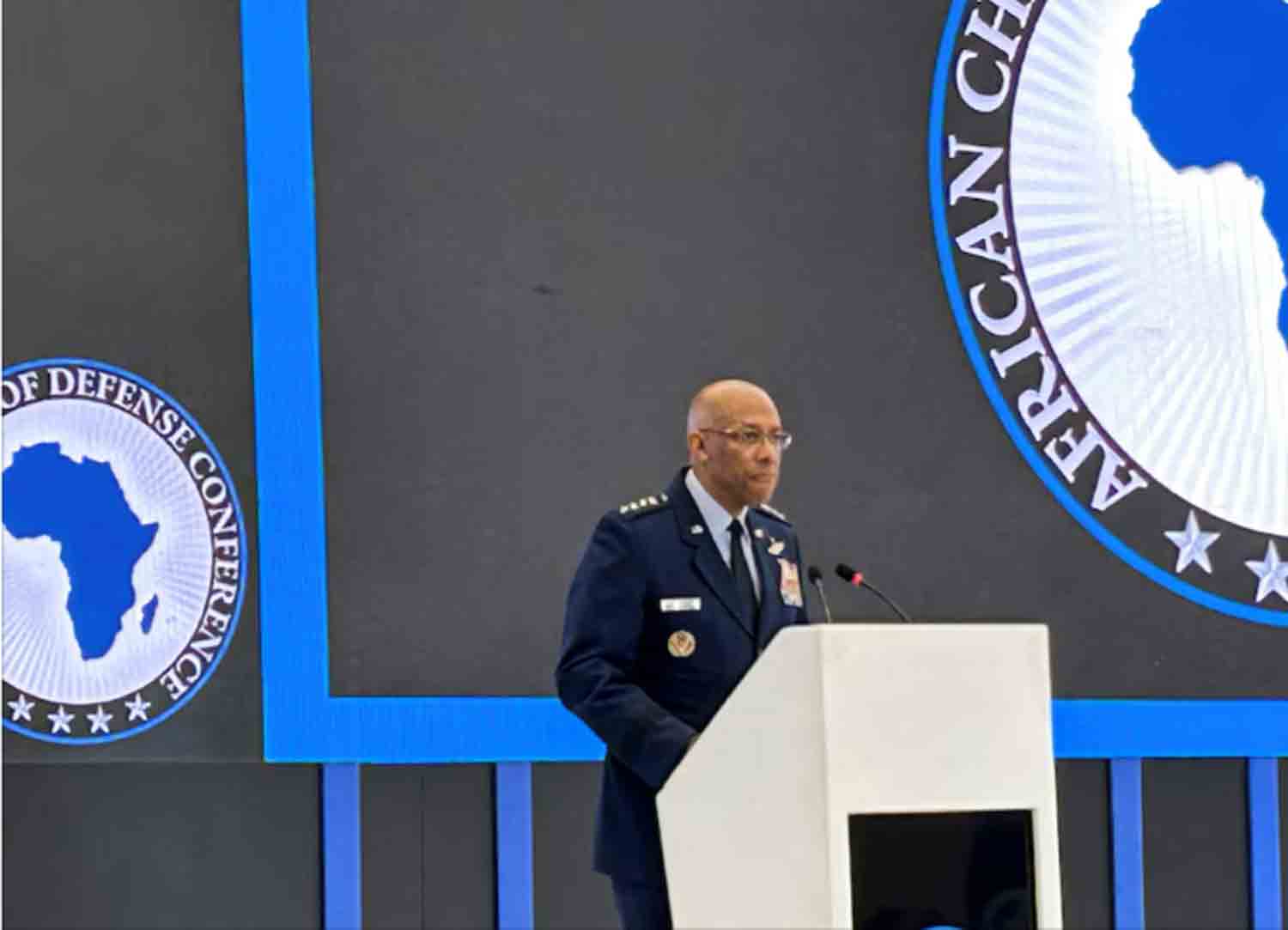
U.S. Air Force General C.Q. Brown, chairman of the Joint Chiefs of Staff, speaks at a conference of African chiefs of defense in Gaborone, Botswana.

On Friday, President Donald Trump dismissed Air Force General C.Q. Brown from his position as chairman of the Joint Chiefs of Staff and announced plans to replace five other senior military officials, marking an extraordinary shift in U.S. military leadership.

In a statement on Truth Social, Trump indicated that he would nominate retired Lieutenant General Dan “Razin” Caine as Brown’s successor. Caine, a former F-16 pilot, most recently served as the associate director of military affairs at the Central Intelligence Agency.

Additionally, Trump will appoint a new head of the U.S. Navy, currently led by Admiral Lisa Franchetti, and will also make changes to the air force vice chief of staff and the judge advocates general for the Army, Navy, and Air Force, according to the Pentagon.

This decision initiates a significant period of transition at the Pentagon, which is already preparing for potential civilian staff dismissals, a comprehensive budget overhaul, and a reconfiguration of U.S. military deployments in line with Trump’s new America First foreign policy.

While changes in civilian leadership are common with each administration, the uniformed members of the U.S. armed forces remain apolitical, serving under both Democratic and Republican administrations.

General Brown, who took on the role of the highest-ranking military officer in October 2023, was anticipated to serve until September 2027. Trump did not provide reasons for Brown’s dismissal or clarify whether he would continue in his role until a Senate confirmation for his successor.

“I want to thank General Charles ‘CQ’ Brown for his over 40 years of service to our country, including as our current Chairman of the Joint Chiefs of Staff. He is a fine gentleman and an outstanding leader, and I wish a great future for him and his family,” Trump stated. Reuters was the first to report on the incoming Trump administration’s plans for these extensive personnel changes, including Brown’s removal.

Defense Secretary Pete Hegseth expressed skepticism about Brown prior to assuming leadership of the Defense Department, where he aims to dismantle diversity, equity, and inclusion initiatives within the military. In his latest book, Hegseth questioned whether Brown’s appointment was influenced by his race rather than his qualifications. He wrote, “Was it because of his skin color? Or his skill? We’ll never know, but always doubt—which on its face seems unfair to CQ.

But since he has made the race card one of his biggest calling cards, it doesn’t really much matter,” in his 2024 publication, “The War on Warriors: Behind the Betrayal of the Men Who Keep Us Free.”

Brown, a former fighter pilot and the second Black officer to serve as chairman of the Joint Chiefs of Staff, shared his personal experiences in a poignant video released after George Floyd’s death in 2020. He was traveling for official duties when Trump announced his appointment.

Just hours before the announcement, Brown’s official X account featured images of him engaging with troops stationed at the U.S.-Mexico border. In a post on X, he stated, “Border Security has always been critical to the defense of our homeland. As we navigate unprecedented security challenges… we will ensure our troops at the border have everything they need.” A spokesperson for Brown has not yet provided a response to requests for comment.

Saudi Arabia seems to be boosting its ballistic missile capabilities, according to recent satellite imagery

0
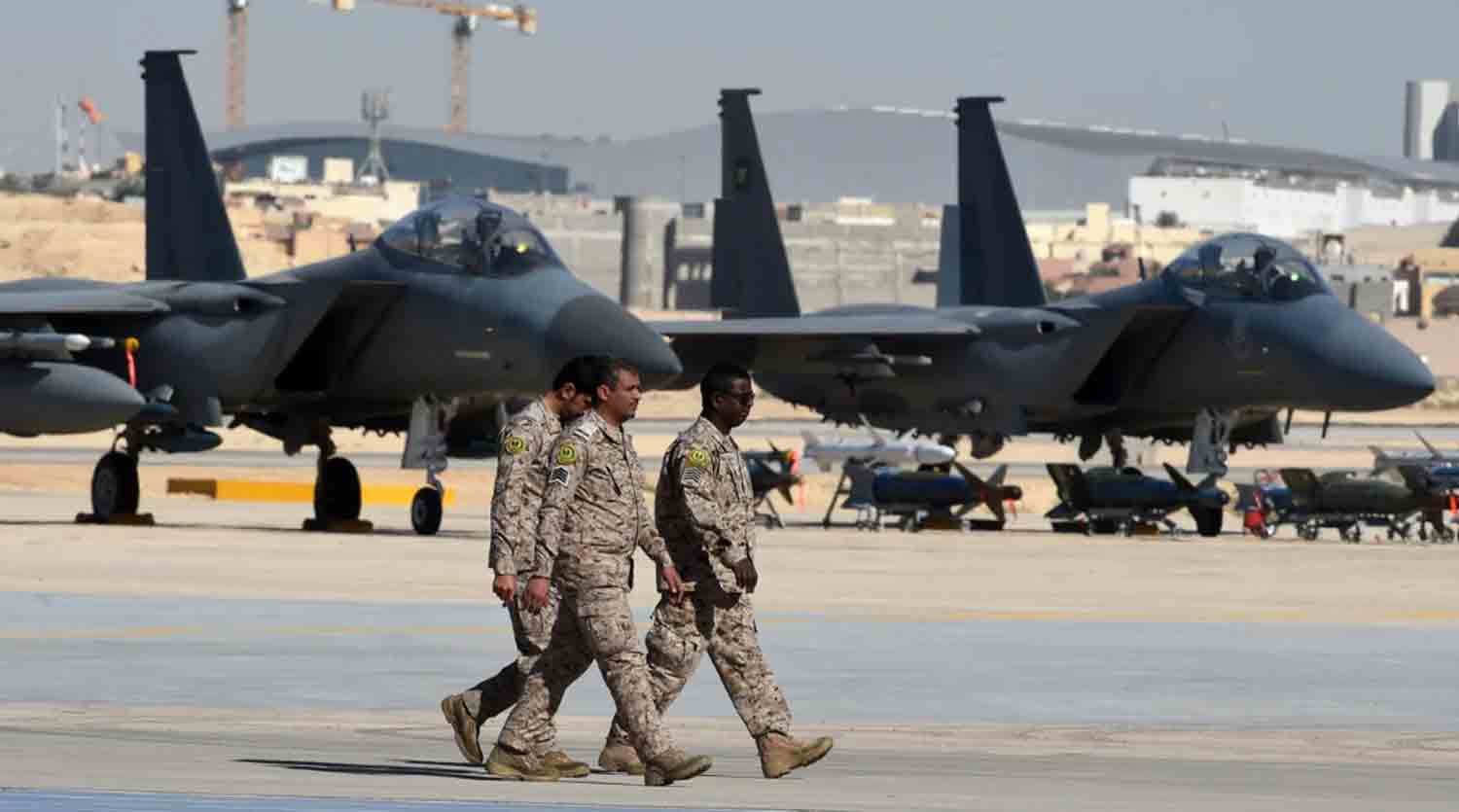
Saudi army officers walk past F-15 fighter jets, GBU bombs and missiles displayed during a ceremony marking the 50th anniversary of the creation of the King Faisal Air Academy at King Salman airbase in Riyadh.

Recent satellite imagery suggests that Saudi Arabia may be discreetly enhancing and expanding its long-range missile capabilities.

Fabian Hinz, a defense and military analyst at the International Institute for Strategic Studies (IISS), examined these images in a report released on Thursday.

The kingdom first developed long-range surface-to-surface missiles during the 1980s, primarily in response to the Iran-Iraq war and the increasing missile proliferation in the region.

Information regarding the evolution of its missile program has been limited, as Saudi Arabia seldom showcases its long-range weaponry publicly.

The IISS report indicates the apparent construction of an underground missile facility near al-Nabhaniyah in central Saudi Arabia. This construction commenced in 2019 and was largely completed by early 2024.

According to the report, this site represents the first of its kind established since the 1980s.

Hinz noted several indicators that suggest the site is indeed a missile base, including an administrative building that mirrors those found at other Saudi missile facilities, a similar spatial arrangement between the underground complex and surrounding residential and administrative zones, and a tunnel entrance akin to that of an existing base.

Records from contractors also confirm that the al-Nabhaniyah project is under the auspices of the defense ministry.

Additionally, the report highlights recent developments at the existing Saudi missile base in Wadi al-Dawasir, where a new large building has been constructed, potentially serving as an operational or support facility within the complex.

The IISS has observed indications of modernization and expansion at a missile base headquarters in Riyadh, along with the construction of new tunnels or underground facilities at bases in al-Hariq, Raniyah, and al-Sulayyil.

Saudi Arabia’s long-range missile capabilities remain largely classified.

In 2014, the kingdom conducted a significant military exercise that featured its Chinese-manufactured Dongfeng-3 ballistic missiles, marking their public debut.

According to a CNN report from December 2021, Saudi Arabia was in the process of producing its own ballistic missiles with support from China, based on US intelligence evaluations.

In May 2022, The Intercept reported, referencing a US intelligence source, that Riyadh intended to acquire Chinese ballistic missiles through a program referred to as “Crocodile.”

As part of its Vision 2030 initiative aimed at economic diversification and reducing oil dependency, Saudi Arabia is working to enhance its domestic defense manufacturing sector.

Hinz noted, “The noticeable lack of ballistic missile deployment in Saudi Arabia’s operations against Ansarullah (the Houthis) suggests that these systems may function more as a strategic deterrent rather than as a combat capability.”

He added, “Their true purpose may only become evident during a crisis.”

Ukrainian troops reject Trump’s proposal for peace negotiations with Russia

0
Ukrainian service members of the 68th Jaeger Brigade named after Oleksa Dovbush attend military exercises at a training ground, amid Russia's attack on Ukraine, in Dnipropetrovsk region, Ukraine.

Peace negotiations this week between Russia and the United States, aimed at concluding three years of conflict in Ukraine, have failed to resonate with front-line Ukrainian soldiers, who believe that without Kyiv’s involvement, a swift resolution to the fighting is unlikely.

An infantryman known by the call sign “Rugbyist,” while gripping his assault rifle, reflected on Ukraine’s staunch defense during the initial weeks of Russia’s invasion in February 2022, prior to the influx of Western support, and indicated that Ukraine could mount a similar resistance if necessary.

He expressed skepticism regarding U.S. President Donald Trump’s commitment to Ukraine, stating, “You can’t be betrayed by a person you didn’t expect anything from.” Another soldier, referred to as “Pruzhynka,” shared a similar sentiment about the Russian-U.S. discussions in Saudi Arabia, asserting his intention to continue fighting upon his return to the front lines.

“Perhaps they reached some conclusions over there, but that’s merely their perspective,” remarked the 21-year-old, whose call sign translates to “spring,” during an interview with Reuters at a training facility in southeastern Ukraine.

“Ukrainians won’t buy into all that.” Trump’s advocacy for a rapid peace with Moscow, while marginalizing Ukraine, has instilled apprehension among many Ukrainians and their supporters. Nevertheless, soldiers on the front lines remain resolute in their commitment to continue the fight, drawing on three years of significant sacrifices and the loss of numerous comrades.

President Volodymyr Zelenskiy has rejected any agreements made without Ukraine’s involvement and is actively seeking robust security assurances from Kyiv’s allies before consenting to any resolution. Trump envoy Keith Kellogg mentioned on Friday that he had “extensive and positive” discussions with Zelenskiy during his visit to Kyiv but did not provide additional details.

On Friday, the Kremlin suggested a potential meeting between former President Trump and Russian President Vladimir Putin, although specific details remain to be finalized. On the battlefield, Ukrainian forces, significantly outnumbered and outgunned, are facing challenges in repelling Russian advances across much of the extensive eastern front.

Intense combat is occurring near the critical logistics center of Pokrovsk, which is partially defended by the 68th Jaeger Brigade of Ukraine. During training exercises, soldiers expressed skepticism regarding the current peace negotiations and anticipated no swift resolution to the conflict.

“We have many patriots among us – we are the descendants of the Cossacks,” stated “Alladin,” who is involved in training the troops. “We will fight until the end.”

Kongsberg suggests converting civilian vessels to enhance defense capabilities

0
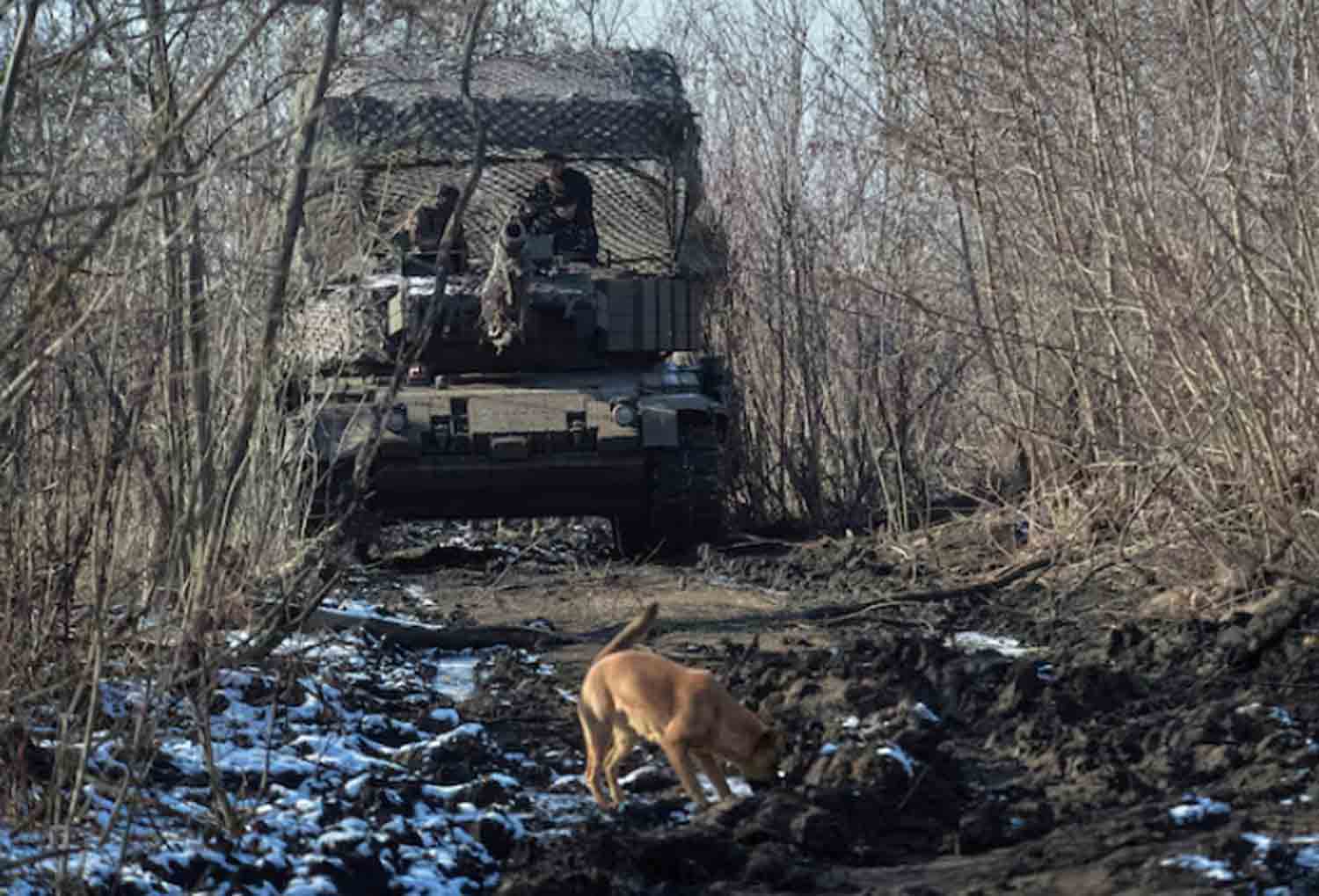
Servicemen of the 5th Separate Heavy Mechanised Brigade of the Ukrainian Armed Forces drive in a Leopard 1A5 tank, amid Russia's attack on Ukraine.

The CEO of Norway‘s Kongsberg Gruppen stated that adapting civilian platforms for military applications can accelerate defense production and enhance standardization, particularly as the pressure for increased military spending in Europe intensifies under President Donald Trump. In an interview with Reuters, Geir Haoy emphasized the need for simplified processes to achieve this acceleration.

He noted that the defense sector is increasingly asking how commercial products and systems can be integrated into military frameworks. Recently, the Trump administration surprised European allies by urging them to take greater responsibility for their own security and to reduce reliance on the U.S., while also initiating discussions with Russia regarding the conflict in Ukraine. U.S. Secretary of Defense Pete Hegseth encouraged European nations to raise their military expenditures to 5% of GDP, cautioning that “stark strategic realities” would limit U.S. focus on European security.

Following these comments, European defense stocks experienced an uptick. As various nations aim to modernize and expand their naval capabilities, Haoy suggested that one effective approach would be to standardize vessels by adapting civilian designs for military use, thereby addressing the challenges posed by varying standards and platforms. He explained that by making vessels as civilian as possible while ensuring they meet military requirements, production can be expedited, costs reduced, and sophisticated vessels developed. Haoy also pointed to the situation in Ukraine, where the complexity of managing multiple supply chains for different weapon systems has led to increased time and expenses.

Standardizing processes, utilizing civilian platforms, and enhancing their military applications by integrating necessary capabilities and capacities could serve as a viable solution to accelerate our operational effectiveness.

In addition to developing their own capabilities, major defense firms must prioritize the security of their supply chains, which typically involve smaller and medium-sized enterprises that often struggle to make significant upfront investments.

“We are currently exploring in Europe how to maintain this supply chain while increasing capacity and identifying effective sourcing strategies.”

A study shows Europe can defend itself independently but needs better coordination among member states

0
Members of the military honour guard march, on the day of a meeting between German Defence Minister Boris Pistorius and European Commissioner for Defence and Space Andrius Kubilius in Berlin, Germany.

Europe must allocate approximately 250 billion euros ($261.6 billion) each year for defense investments to ensure its security independent of U.S. assistance, according to a study released on Friday. This expenditure, representing 1.5% of the EU‘s gross domestic product, would enable Europe to deploy around 300,000 troops to defend against potential threats from Russia, as indicated by the research conducted by the Bruegel Institute and the Kiel Institute for the World Economy.

The report emphasized the necessity for enhanced coordination and collaborative procurement among European nations, highlighting that despite the continent’s financial capabilities, effective defense collaboration remains a significant hurdle among national military forces.

European nations have faced mounting pressure from U.S. President Donald Trump to bolster their military capabilities, with his defense secretary recently cautioning Europe against relying excessively on the U.S. for its defense needs. German Chancellor candidate Friedrich Merz expressed skepticism regarding the future of U.S. involvement in NATO, while U.S. National Security Advisor Mike Waltz set a June deadline for all NATO members to meet the defense spending goal of 2% of GDP.

The Bruegel and Kiel study proposed increasing European defense spending to as much as 4% of GDP annually, up from the current 2%. It suggested that half of this increase could be financed through common European debt for joint procurement, with the remainder funded at the national level.

The study pointed out that Russia has significantly enhanced its military capabilities since the onset of the Ukraine conflict, noting the mobilization of approximately 700,000 troops and a substantial rise in the production of tanks and armored vehicles. It concluded that to establish 50 additional brigades, Europe would require 1,400 new main battle tanks and 2,000 infantry fighting vehicles, a demand that would surpass the total inventory of the German, French, Italian, and British ground forces combined.

Guntram Wolff, a co-author of the study, stated that this situation is economically manageable, noting that the resources required are significantly lower than those mobilized to address the crisis during the COVID pandemic.

Poland’s finance minister has emphasized that defence spending will remain a top priority

0
Polish army general stands in front of the surface-to-air missile launcher, the Patriot (Wisla) system, newly added into the Integrated Battle Command System (IBCS) at an army base in Sochaczew, Poland.

Defence will continue to be a primary focus in Poland‘s budget, according to Finance Minister Andrzej Domanski, who emphasized the need for European Union nations to support a Polish initiative that would allow for increased military expenditure without violating the bloc’s fiscal regulations.

The ongoing conflict in Ukraine has driven Poland to enhance its military capabilities and increase arms acquisitions, with the country dedicating 4.7% of its gross domestic product (GDP) to defence this year, marking one of the highest contributions within NATO.

Domanski stated in a radio interview, “The budget, particularly defence spending, has always been and will remain our foremost priority. These expenditures shape all our other investments, as they are only justified when Poland’s security is assured.” He also called on other EU member states to elevate their defence budgets.

On Thursday, Polish Prime Minister Donald Tusk advocated for the swift implementation of new fiscal regulations to support enhanced European defence initiatives and suggested that the EU should utilize frozen Russian assets to finance aid for Ukraine.

Domanski remarked that, in light of recent developments from the United States, the EU must assume greater responsibility for its own security and the overall situation on the continent. Earlier this week, French President Emmanuel Macron convened two meetings with European leaders to discuss accelerating defence spending and responding more swiftly as the U.S. administration intensifies diplomatic efforts to resolve the ongoing Ukraine-Russia conflict.

YY-20A aircraft sighted—The enigma surrounding China’s 50-tanker PLAAF deepens.

0
YY-20A tanker, China

On February 21, 2025, military aviation expert Andreas Rupprecht, recognized on X as @RupprechtDeino, shared an intriguing update that stirred interest within the defense analysis community. A previously unverified YY-20A tanker, identified by the serial number 20646, was captured in photographs.

This discovery not only contributed to the documented inventory of China’s expanding fleet of aerial refueling aircraft but also reignited an ongoing inquiry: how many YY-20A tankers are currently operational within the People’s Liberation Army Air Force (PLAAF)?

Rupprecht’s commentary raised the possibility that all aircraft numbered from 20541 to 21040—potentially totaling 50 tankers—are indeed active YY-20As, or if the numbering system has obscured the actual count. The reality remains unclear, often hidden behind the secrecy that characterizes Chinese military advancements, yet the implications are significant.

Determining the precise number of YY-20A tankers in operation is largely speculative, given Beijing’s hesitance to disclose comprehensive force structure information. If Rupprecht’s assertion holds true, and all 50 serials from 20541 to 21040 correspond to active YY-20A tankers, it would indicate an impressive production rate for a platform that was only introduced in 2022.

Nevertheless, discussions on X and analyses from outlets like Aviation Week suggest a more cautious estimate. A 2023 evaluation indicated that by 2032, China might operate up to 75 YY-20 tankers, suggesting a current fleet size closer to a dozen, with production expected to increase annually.

The sighting of 20646, positioned within the sequence, implies that the PLAAF may indeed be producing these aircraft at a consistent rate—potentially six to eight per year, according to some analysts—while transitioning from the initial YY-20A to the more advanced YY-20B variant, which is powered by domestically produced WS-20 engines.

The potential for renumbering or utilizing Y-20B transports as dual-purpose tankers adds complexity to the situation. Currently, the fleet is estimated to have between 10 and 20 operational YY-20As, with many more in development as China accelerates efforts to enhance its strategic airlift and refueling capabilities.

The YY-20A, part of the larger Y-20 family, represents more than just a numerical increase; it is a crucial element in the PLAAF’s evolution into a force capable of global power projection. Based on the Xi’an Y-20 strategic transport, the YY-20A tanker variant can carry up to 90 tons of fuel, significantly surpassing the capacity of the older H-6U tankers it is set to replace.

This advancement enables Chinese aircraft such as the J-20 and J-16 to extend their operational ranges well beyond the first island chain, which stretches from Japan to Taiwan and the Philippines. For the People’s Liberation Army (PLA), this capability not only enhances the defense of national airspace but also supports offensive operations throughout the Indo-Pacific region, including areas like the South China Sea and potential hotspots such as Guam.

The Y-20 platform’s adaptability—functioning as a transport, tanker, and potentially an airborne early warning and control (AEW&C) system—reflects the multi-role versatility found in Western aircraft like the Airbus A400M, while competing with the scale of the U.S. Air Force’s C-17 Globemaster III.

In conjunction with China’s expanding network of overseas bases, the YY-20A equips the PLA to deploy and sustain forces swiftly, whether for military engagements or humanitarian efforts, marking a transition from a focus on regional defense to a broader global presence.

American military officials have been closely observing developments across the Pacific, expressing a blend of reluctant admiration and increasing apprehension. The Pentagon’s 2024 China Military Power Report, published in December, highlighted the swift modernization of the People’s Liberation Army Air Force (PLAAF), noting that its fleet of 3,150 aircraft—more than 2,400 of which are combat-ready—positions it as the third-largest air force in the world, closely trailing the U.S. Air Force.

During a recent briefing, a senior Pentagon official, who requested anonymity, emphasized the significance of the YY-20 in this advancement: “The Chinese are rapidly closing operational gaps. Their tanker fleet, spearheaded by the YY-20, provides their stealth fighters and bombers with the range necessary to contest our forces in the Western Pacific.”

Kris Osborn, a military analyst for The National Interest, expressed similar concerns back in 2018, prior to the introduction of the YY-20B, cautioning that the Y-20 series could potentially “double the operational range of China’s fifth-generation fighters,” a prediction that is now materializing.

In a more recent 2023 analysis for The War Zone, Osborn highlighted the YY-20B’s ability to take off in “hot and high” conditions—thanks to the WS-20 engines—as a transformative factor, enabling operations from challenging, elevated bases that could be crucial in a Taiwan scenario.

The underlying message is unmistakable: the U.S. is wary of a PLAAF capable of executing long-range strikes and undermining American naval supremacy, a scenario that keeps defense strategists in Washington on high alert.

What is the aircraft causing such unease across the Atlantic? The Xi’an Y-20, affectionately known as “Chubby Girl” due to its broad fuselage, made its first appearance in 2013 as China’s inaugural domestically produced heavy airlifter. It was developed by Xi’an Aircraft Industrial Corporation with contributions from Russian and Ukrainian sources.

The standard Y-20A transport variant, initially equipped with Russian D-30KP-2 engines, can carry a payload of 66 tons and has a maximum range of 7,800 kilometers when fully loaded. It is capable of transporting a variety of cargo, including ZTZ-99 tanks and medical supplies.

In 2022, the YY-20A tanker variant was introduced, replacing cargo space with fuel pallets. This version includes two underwing refueling pods and a centerline drogue, designed for refueling larger aircraft such as the H-6N bomber or KJ-500A AEW&C platform, with monitoring provided by IIR/TV cameras for accuracy.

The Y-20B, which debuted in 2023, features an upgrade to four Shenyang WS-20 high-bypass turbofan engines, increasing thrust to 31,000 pounds per engine and improving both range and short-field capabilities. A YY-20B tanker sub-variant was observed in late 2023, likely enhancing these features, although there are suggestions that the Y-20B’s modular design may allow any variant to function as a tanker with minimal adjustments.

The aircraft is equipped with advanced avionics, a glass cockpit featuring heads-up displays, and is constructed with composite materials, making it both modern and substantial, with a wingspan of 50 meters and a length of 47 meters.

Internationally, the Y-20’s potential for export is gaining attention. Nigeria has been mentioned as a potential buyer since at least January 2024, according to Wikipedia’s documentation of PLAAF marketing activities, likely attracted by the aircraft’s capability to operate from less developed airfields—a significant advantage for African nations with varying infrastructure.

Venezuela, aligned with pro-China sentiments, along with various African nations such as Egypt, where the Y-20 captivated audiences at the 2024 Egypt International Airshow, is part of a larger narrative. According to The War Zone in September 2024, China’s showcase of the Y-20A at South Africa’s AAD 2024 expo highlighted its strategic ambitions on the continent, where countries are in search of cost-effective alternatives to Western or Russian airlifters like the C-130 and Il-76.

Experts identify a potential market for the Y-20E export variant, equipped with WS-20 engines, which could attract nations looking for strategic airlift capabilities without the geopolitical implications associated with U.S. or NATO-affiliated platforms.

Pakistan, already a customer of Chinese AEW&C systems, may consider the anticipated KJ-3000 AEW&C variant, while Serbia, which received Chinese FK-3 missiles via Y-20 in 2022, could explore further acquisitions to strengthen bilateral relations. However, competition remains fierce, as Russia’s Il-76 continues to be a cost-effective option, and sanctions on Moscow may allow it to offer lower prices than China.

Nonetheless, with increasing production capabilities and the introduction of a civilian Y-20F-100 variant aimed at commercial markets, China is positioning itself to meet global demand for its “Chubby Girl.”

The appearance of the YY-20A, marked by the notable sighting of 20646, reflects China’s broader military ambitions—a combination of aspiration, engineering prowess, and strategic insight that is altering the balance of power in the Indo-Pacific region.

Whether the PLAAF deploys 50 tankers today or reaches 75 by the end of the decade, the implication is clear: China’s air force has evolved from a regional entity to a significant global player, capturing the attention of the international community, particularly the Pentagon.

US Treasury’s Bessent suggests Russia could gain sanctions relief in conflict negotiations

0
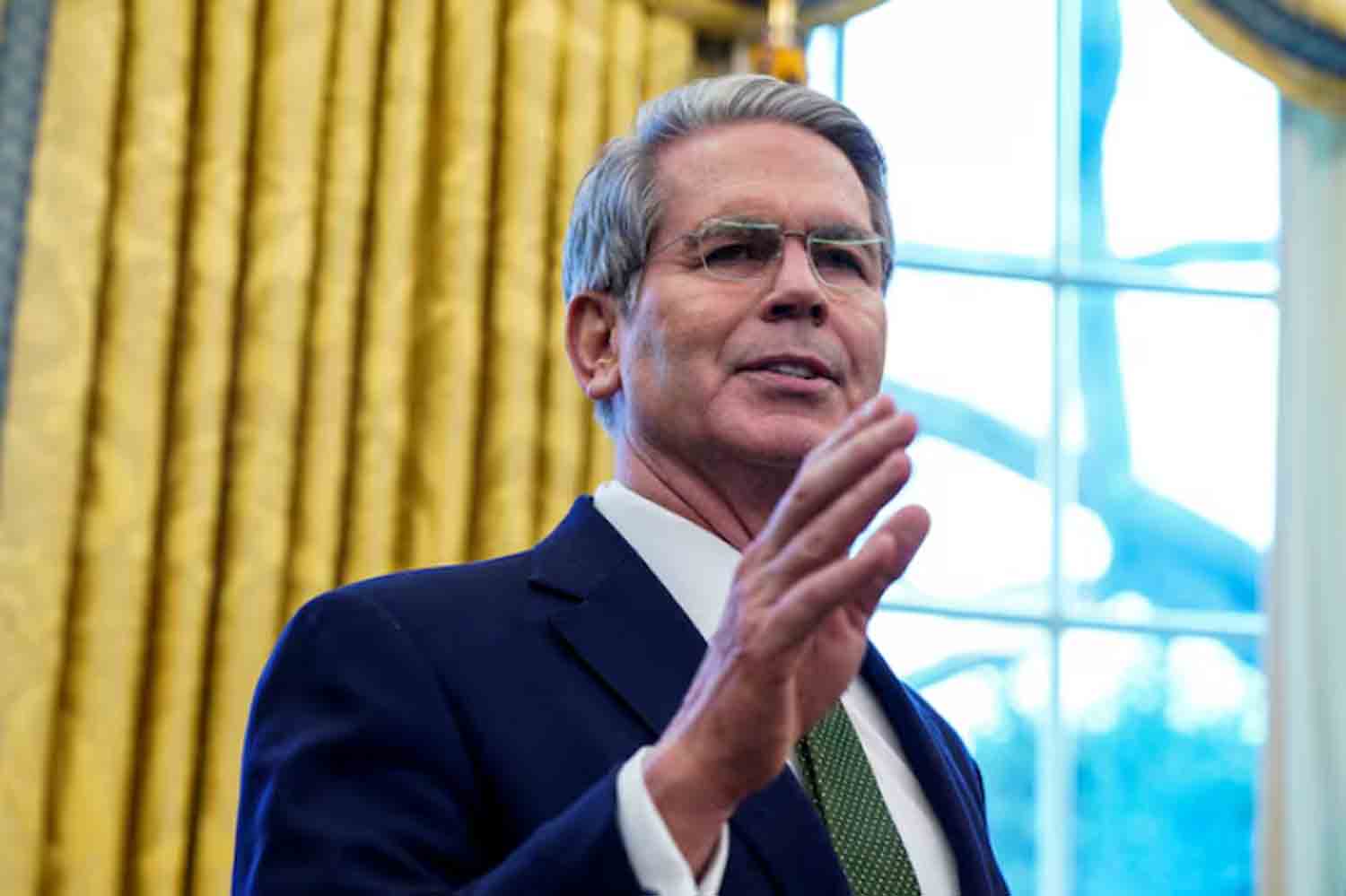
U.S. Secretary of the Treasury Scott Bessent speaks at the White House, in Washington.

Russia may find some relief from U.S. sanctions if it demonstrates a genuine willingness to negotiate an end to the conflict in Ukraine, U.S. Treasury Secretary Scott Bessent stated in an interview with Bloomberg Television on Thursday.

Bessent also mentioned that he plans to engage with his Chinese counterpart on Friday, encouraging China to shift its economic focus towards greater consumer spending. When asked about the potential for the U.S. to either escalate or ease sanctions on Russia based on the progress of negotiations regarding the Ukraine war, Bessent remarked, “That’d be a very good characterization.”

He further noted, “The president is dedicated to resolving this conflict swiftly.” President Donald Trump has indicated that he might meet with Russian President Vladimir Putin this month to discuss ways to conclude the war.

While Bessent did not specify when a Trump-Putin meeting might occur, he confirmed that he would not participate in the upcoming G20 finance ministers and central bank governors meeting in South Africa “due to some domestic considerations.” During his confirmation hearing in the U.S. Senate, Bessent expressed his willingness to support an increase in U.S. sanctions on Russian energy, particularly targeting major oil companies, should Trump request it.

The Treasury Secretary criticized Ukrainian President Volodymyr Zelenskiy for not finalizing a $500 billion agreement to supply critical minerals to the U.S. and for escalating tensions with Trump. The U.S. president has labeled Zelenskiy a “dictator.” Bessent stated that Zelenskiy had assured him he would sign the minerals deal in Munich, which he has not done. He characterized the minerals supply agreement as part of a broader strategy to align Ukraine more closely with the U.S.

On Wednesday, Zelenskiy rejected U.S. demands for Ukraine to repay Washington with mineral resources equivalent to wartime aid, arguing that the U.S. had not provided nearly that amount and had not offered specific security guarantees in the proposed agreement.

CHINA REBALANCING ARGUMENT

During an introductory call with his Chinese counterpart, Bessent expressed his intention to advocate for economic reforms that would promote greater domestic consumption. The Chinese foreign ministry announced that Vice Premier He Lifeng would engage in a video call with Bessent on Friday, a discussion initiated by the U.S. to address significant economic matters between the two nations. Bessent’s predecessor, Janet Yellen, frequently communicated and met with He.

The notion that China should decrease its reliance on exports for economic growth has been a recurring theme voiced by Yellen and several other U.S. Treasury secretaries over the years. Nevertheless, China has persisted with its investment and export-driven strategies.

“The Chinese need to adjust their economic model to prioritize consumption, as they are currently favoring the business sector at the expense of the consumer,” Bessent remarked.

DEBT ISSUANCE UNCHANGED

Bessent indicated that any potential increase in the proportion of longer-term Treasuries in government debt issuance is not imminent, citing challenges such as the Federal Reserve’s quantitative tightening measures. During Trump’s election campaign, Bessent criticized Yellen’s preference for issuing shorter-term bills, which generally offer lower interest rates, arguing that this approach was designed to stimulate short-term growth, a claim Yellen refuted.

“That transition is still a long way off, and we will have to see how the market responds,” Bessent stated when questioned about the possibility of moving towards longer-term issuance. “It will depend on the path we take.” He also dismissed rumors regarding the U.S. government potentially revaluing its gold reserves to alleviate borrowing requirements or to finance the establishment of a sovereign wealth fund, as reported.

Trump is reportedly quite displeased with Zelensky, according to Rubio

0
U.S. Secretary of State Marco Rubio at the State Department in Washington, U.S.

US President Donald Trump is reportedly “very upset” with Ukrainian President Vladimir Zelensky, as stated by Secretary of State Marco Rubio, who highlighted a disagreement regarding a proposed mineral rights agreement.

This development indicates escalating tensions between the United States and Ukraine. On Wednesday, Trump referred to Zelensky as a “dictator without elections,” accusing him of poorly managing the conflict with Russia and misappropriating American aid.

Zelensky, whose presidential term concluded last spring, has declined to call for new elections, citing the ongoing martial law. Moscow considers Zelensky to be illegitimate, asserting that the Ukrainian parliament now holds legal authority.

In a Thursday interview with Canadian-American journalist Catherine Herridge, Rubio expressed his belief that “President Trump is very upset at President Zelensky – and rightfully so.”

Rubio also mentioned that he was “personally very upset” regarding the discussions that senior US officials had with Zelensky about a potential deal that would allow the US to access Ukraine’s extensive mineral resources, indicating that Zelensky had changed his position on the matter.

According to Rubio, the US officials attempted to reassure Zelensky by stating, “we want to be in a joint venture with you – not because we’re trying to steal from your country, but because we think that’s actually a security guarantee,” while emphasizing the need for the US to recoup some of the financial support it had provided to Ukraine.

He stated that they were eager to proceed with the deal, emphasizing its logical appeal. However, he mentioned the necessity of navigating it through his legislative process. Two days later, he noted that Zelensky was publicly claiming to have rejected the deal, which Rubio contested, asserting that this was not an accurate representation of their meeting.

The diplomat expressed that Ukraine should exhibit some degree of appreciation. He remarked that when such gratitude is absent and Zelensky accuses the president of being misinformed, it becomes quite counterproductive. Rubio was alluding to Zelensky’s reaction to Trump’s assertion that the Ukrainian leader’s current approval rating stands at 4%.

While Zelensky has not directly responded to Trump’s comments labeling him a “dictator,” Ukrainian Foreign Minister Andrey Sibiga emphasized that both the Ukrainian populace and President Zelensky have resisted Russian President Vladimir Putin’s pressures, asserting that Ukraine cannot be coerced into submission.

In light of the ongoing tensions between Zelensky and Trump, Kremlin spokesman Dmitry Peskov remarked that officials in Kiev are making “absolutely unacceptable statements about other states,” and he noted that the decline in Zelensky’s popularity is an “absolutely obvious trend.”

South Korea and the United States carry out a military exercise featuring B-1B bombers and fighter aircraft

0
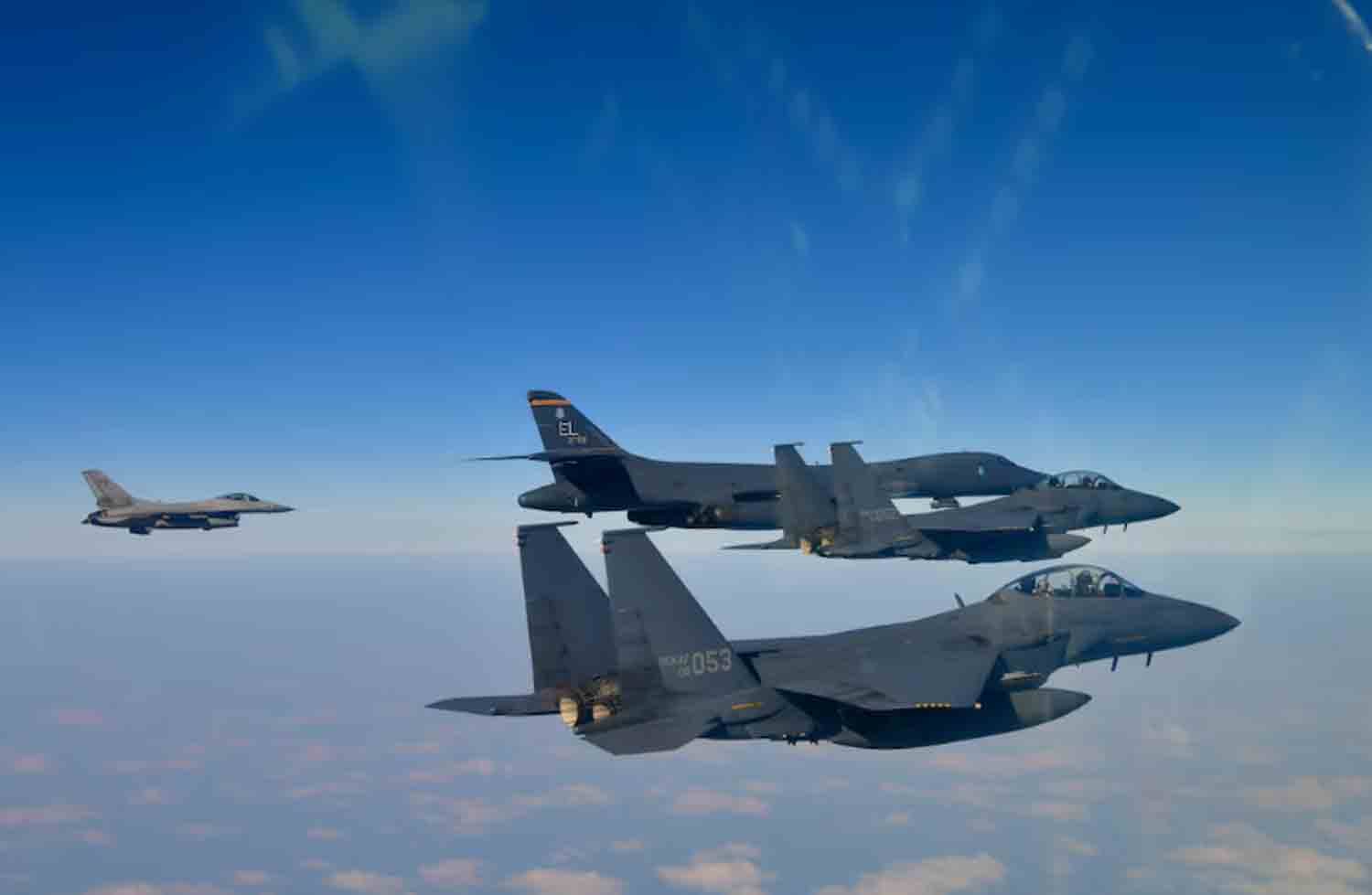
A U.S. Air Force B-1B bomber, top second from left, and South Korean Air Force F-15K fighter jets, right bottom, conduct a joint aerial drill over the Korean Peninsula on Thursday.

The U.S. and South Korean armed forces carried out an aerial exercise featuring at least one U.S. B-1B bomber alongside several fighter jets, marking the first joint air force drill during President Donald Trump’s second term.

According to Seoul’s Defense Ministry, the exercise included South Korean F-35 and F-15 fighter jets as well as American F-16s, although the exact number of aircraft was not disclosed. The training aimed to showcase U.S. deterrence capabilities against North Korean nuclear and missile threats and to enhance the interoperability of South Korean and U.S. military forces, as stated by the ministry.

In recent years, South Korea and the United States have intensified their joint military exercises and expanded trilateral drills with Japan in response to escalating North Korean nuclear threats, while refining their defense strategies that incorporate U.S. strategic assets. These drills have increasingly featured advanced U.S. weaponry, including long-range bombers, aircraft carriers, and submarines.

Tensions have reached a peak as North Korean leader Kim Jong Un continues to showcase his military nuclear capabilities and strengthen ties with Russia amid President Vladimir Putin’s conflict in Ukraine, disregarding appeals from the United States and neighboring Asian countries to resume denuclearization talks.

On Tuesday, North Korea condemned Washington, Seoul, and Tokyo for their “absurd” objective of denuclearizing the North, asserting its intention to expand its nuclear arsenal under Kim’s leadership. This statement followed a meeting of the top diplomats from the U.S., South Korea, and Japan at a security conference in Germany, where they reaffirmed their commitment to enhancing military cooperation and reinforcing international sanctions to counter Pyongyang’s nuclear ambitions.

Arab leaders will meet to discuss a postwar initiative for Gaza to counter Trump’s ‘Riviera’ proposal

0
Buildings lie in ruin in North Gaza, amid the ongoing conflict between Israel and Hamas, as seen from Israel.

Arab leaders are scheduled to convene in Saudi Arabia on Friday for their inaugural meeting aimed at addressing US President Donald Trump’s proposal for the US to assume control of Gaza, displace its Palestinian inhabitants, and transform it into a Middle Eastern “Riviera.”

This gathering will include representatives from Egypt, Jordan, the United Arab Emirates, Saudi Arabia, Qatar, and other Gulf Arab states, and is set to occur prior to a larger Arab summit on March 4, as announced by Saudi Arabia. Following this, a meeting of Islamic nations is anticipated, according to the Egyptian foreign ministry.

Initially described by Egypt in early February as an “emergency summit,” this meeting comes five weeks after Trump first introduced his plan, highlighting the challenges faced by Arab nations in establishing a cohesive response.

Conflicting information has surfaced regarding the Arab strategy.

A report from Egypt’s state-run Al Ahram Weekly indicated that Cairo is advocating for a 10-to-20-year initiative to reconstruct Gaza with funding from Gulf Arab countries, while excluding Hamas from governance and permitting the 2.1 million Palestinian residents to remain.

Al Ahram, referencing Egyptian sources, noted that the proposal has not yet garnered unanimous support from Arab nations, who are divided on the governance of Gaza. CNN has reached out to the Egyptian government for further comments.

Egyptian Prime Minister Mostafa Madbouly stated on Wednesday that his country could completely reconstruct Gaza within three years, aiming to improve its condition beyond what it was prior to the conflict, although he did not specify the methods for achieving this goal. Should a lasting ceasefire be established in Gaza in the near future, this timeline could potentially align with the conclusion of Trump’s presidential term.

However, many experts believe that the full reconstruction of the region would require a significantly longer period.

In a joint statement released on Tuesday, the World Bank, the European Union, and the United Nations indicated that merely restoring essential services—such as healthcare and education, along with debris removal—would take approximately three years. They estimated that the comprehensive rebuilding of the heavily damaged area would take around ten years and cost upwards of $50 billion, with housing alone projected to require $15 billion. The Egyptian prime minister noted that his country’s strategy takes these evaluations into account.

Additionally, the Egyptian government and local real estate developers are looking to participate in the reconstruction efforts, which could involve contracts valued in the billions.

“We possess the necessary experience, which we have successfully applied in Egypt,” Madbouly remarked during a press conference in the new administrative capital of Egypt. “We are capable of rebuilding the Gaza Strip in a manner that surpasses its previous state—three years is indeed a feasible timeline for this endeavor.”

Trump stated on Wednesday that he had not yet reviewed the Egyptian proposal.

A “long and complex journey”

Despite the pressing requests from Arab nations for a robust counterproposal, the World Bank, EU, and UN have indicated that the reconstruction of Gaza is a “long and complex” process.

This effort will likely require addressing governance and financial issues with international support—topics that may prove challenging to navigate.

Any reconstruction initiative would be rendered ineffective if the fragile ceasefire in Gaza collapses, leading the region back into conflict.

A source familiar with the reconstruction efforts mentioned that funding could come from both public and private donations, likely sourced from the EU and Gulf Arab states, and noted that an international donor conference for Gaza might be scheduled for April.

The success of the plan could also be jeopardized if Israel, which has controlled Gaza’s border long before Hamas’ attack in October 2023, chooses not to cooperate. Thus far, Israel has supported Trump’s strategy to reduce Gaza’s population, and its defense ministry recently announced plans to establish a “Directorate for the Voluntary Departure of Gaza Residents” to assist those Gazans who wish to emigrate.

Hamas and Israel reached an agreement last month regarding the initial phase of a truce, which may lead to a permanent ceasefire. Israeli Foreign Minister Gideon Sa’ar announced on Tuesday that discussions will commence on a possible second phase of the truce, albeit two weeks later than originally scheduled.

The Palestinian Authority, based in the West Bank, stated on Thursday its readiness to govern Gaza following the conflict, a proposition that Israeli Prime Minister Benjamin Netanyahu has consistently opposed. The PA is not anticipated to take part in the Saudi meeting scheduled for Friday.

Hamas has conveyed mixed signals regarding its future role in Gaza post-conflict. Over the weekend, senior Hamas official Osama Hamdan asserted in an interview in Qatar that the group would independently determine who governs Gaza. However, this week, Hazem Qassem, a spokesperson for Hamas, indicated that the group is not “clinging to power.”

According to Egypt’s state-backed Al Qahera News, Egypt is in the process of establishing a temporary committee to oversee the reconstruction of Gaza.

In the meantime, Qatar has emphasized that the decision on governance should rest with the Palestinians themselves.

The UAE stands out as one of the few Arab nations willing to consider a role in postwar Gaza, contingent upon an invitation from a reformed Palestinian Authority and a commitment from Israel towards establishing a future Palestinian state. The UAE has rejected Trump’s plan to displace Palestinians.

However, Hamas has cautioned that it will regard anyone who replaces Israel in Gaza with the same hostility, urging regional countries not to act as “agents” for Israel.

Pakistan and EU officials discuss Middle East and Afghanistan, focusing on global security challenges

0

Officials from Pakistan and the European Union (EU) convened for their 9th Counter-Terrorism Dialogue in Brussels, where they addressed both regional and global challenges, including the situations in the Middle East and Afghanistan, as reported by the Pakistani foreign office on Thursday.

This dialogue is part of the broader Strategic Engagement Plan established in 2019 between the EU and Pakistan, aimed at strengthening collaboration on security issues and regional cooperation. It underscores a mutual commitment to tackle the evolving threats posed by militancy.

This meeting occurs against the backdrop of ongoing turmoil in the Middle East, particularly due to Israeli military actions affecting several regional nations, including the conflict in Gaza. There are also concerns among countries like Pakistan regarding the potential resurgence of militant groups in Afghanistan.

Pakistan has consistently urged Israel and the international community to implement a permanent ceasefire in Gaza and withdraw Israeli forces from Lebanon and Syria. Additionally, Islamabad has accused Afghanistan of harboring militant groups, a claim that Kabul has denied amid a recent increase in militancy in Pakistan’s western regions.

According to a statement from the Pakistani foreign office, “The European Union and Pakistan condemned terrorism in all its forms and reaffirmed their unwavering commitment to combat it. The Dialogue facilitated discussions on regional and global challenges, particularly the security ramifications of the situations in Afghanistan and the Middle East.”

Both parties emphasized the necessity of robust cooperation with international partners within multilateral frameworks, including the United Nations and the Global Counter-Terrorism Forum, which the EU has co-chaired since 2022.

Abdul Hameed, the director-general for counter-terrorism at the Pakistani foreign ministry, represented Pakistan, while the European Union delegation was led by Maciej Stadejek, the director for security and defense policy at the European External Action Service.

The foreign office stated that discussions between the European Union and Pakistan encompassed the sharing of best practices and potential areas for collaboration. The focus was on joint efforts to prevent and counter violent extremism, manage the recruitment and movement of foreign fighters, address both offline and online radicalization, combat terrorism financing, and tackle other pertinent issues related to the increasing challenges of terrorism.

China’s mediation ambitions in the Ukraine conflict clash with its goals concerning Trump and trade relations

0
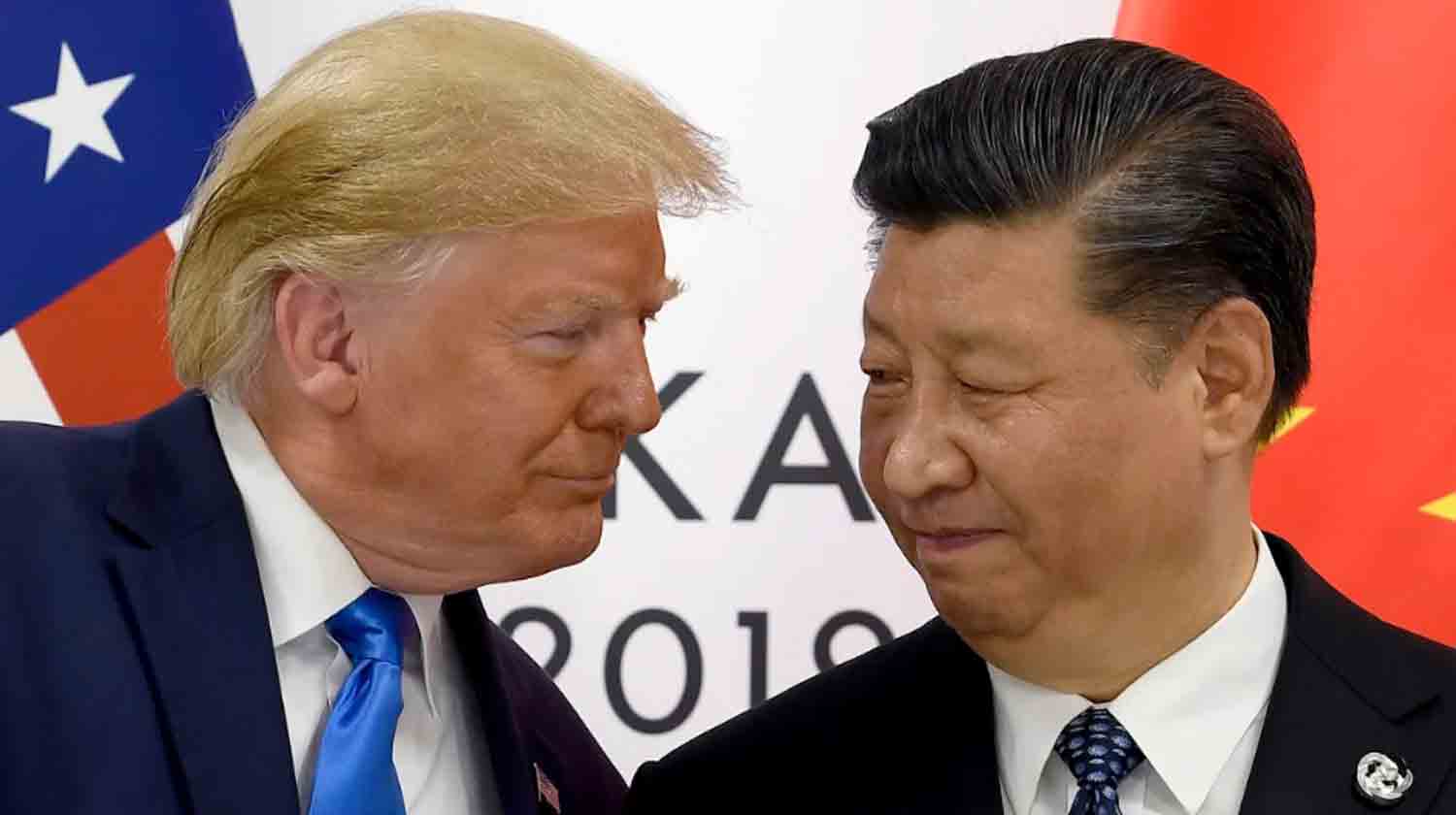
Donald Trump meets with Chinese President Xi Jinping

Over the past three years, China has consistently expressed its intention to serve as a mediator in the ongoing conflict in Ukraine. This has included various diplomatic efforts by Beijing’s envoy, who has engaged with nations ranging from South Africa to Indonesia. Additionally, China has proposed a peace initiative in collaboration with Brazil, formed a coalition of “friends for peace” among developing countries, and even suggested deploying Chinese peacekeepers to Europe.

However, during a recent meeting in Saudi Arabia between Russian and U.S. officials, Chinese President Xi Jinping was absent, opting instead to engage with technology entrepreneurs in Beijing.

China’s strategic focus is evident: it aims to revitalize its economy and negotiate with U.S. President Donald Trump to avert another detrimental trade conflict. While Beijing aspires to be recognized as a global peacemaker, it seeks to achieve this without incurring significant costs or risks, particularly those that could jeopardize its relationship with Moscow, which is crucial for its energy needs.

China’s top diplomat, Wang Yi, emphasized this point at the Munich Security Conference, stating that without Russian gas, China would struggle to meet its energy demands safely. Observers noted that this remark highlighted China’s reluctance to leverage its substantial gas imports from Russia—approximately 23 billion cubic meters annually—as a means to exert pressure.

With limited involvement in the Ukraine negotiations, China has redirected its attention to trade and economic matters. Xi has instructed Chinese officials to analyze Trump’s trade policies and formulate responses to his initial tariffs and threats, according to sources familiar with the situation. Furthermore, China has intentionally moderated the rhetoric of its foreign ministry spokespeople to maintain the possibility of a favorable agreement with Trump, as reported by several individuals interviewed for this article.

The group comprises individuals well-versed in the perspectives of the Chinese government, including diplomats and analysts based in Beijing. Most of them requested anonymity due to their lack of authorization to speak with the media. The Chinese foreign ministry has not yet provided a response to a request for comment.

IN PRIVATE DISCUSSIONS

This week, Trump surprised the global community by initiating peace talks directly with Russian President Vladimir Putin, excluding Ukraine and Europe from the discussions. He made concessions prior to the negotiations and referred to Ukraine’s President Volodymyr Zelenskiy as a “dictator,” attributing blame to him for the invasion that Putin commenced in February 2022. During a conference in Munich, Wang emphasized the necessity for “all stakeholders,” including European nations, to participate in the negotiations.

European diplomats acknowledged that while Wang’s overture was a positive sign, it fundamentally failed to address a critical concern that Europe has been raising with China for several months: its indirect financial support of the war through energy purchases and backing of Russia’s military-industrial complex, which China disputes.

Noah Barkin, a senior adviser at Rhodium Group specializing in China, noted that Wang was representing European interests due to China’s apprehension about being excluded from postwar reconstruction efforts. “While Europe and China do not share aligned interests, both parties are keen to prevent this from becoming an agreement forged solely by Trump and Putin in secrecy,” he remarked.

Diplomats also downplayed the idea that Trump’s swift engagement with Putin could weaken Xi’s “no-limits” partnership with Russia. “This is wishful thinking. Such a notion overlooks the profound coordination, exchanges, and intimacy between the leaders,” stated a senior European diplomat. “Russia is heavily dependent on China; they are unlikely to jeopardize their relationship with Beijing simply because Trump made a phone call.” Despite having largely overlooked Ukrainian diplomats in Beijing over the past three years, granting few meetings and engaging in minimal substantive discussions, sources indicate that China has recently shifted its approach towards Europe.

Recent observations by several diplomats indicate an increased willingness from China to interact with European diplomats in the past few days. Notably, Beijing has sent experienced diplomat Hua Chunying to Brussels, according to two sources familiar with her visit.

The relationship between Brussels and Beijing has been strained, particularly as the European Union raises concerns regarding market access for European firms, the significant trade deficit, and China’s excess manufacturing capacity.

However, despite this heightened engagement, China has not made any concessions on these matters or taken significant actions, as many diplomats believe that the 10% tariffs imposed by Trump on Chinese imports were merely an initial move. “I have not observed any indications that China is ready to alter its trade policies or its stance on Russia to foster a closer relationship with Europe,” stated Barkin. “Beijing likely perceives Europe as being in a vulnerable position right now, making concessions seem unnecessary.”

EU leaders are more concerned about U.S. influence than the threat from Russia

0
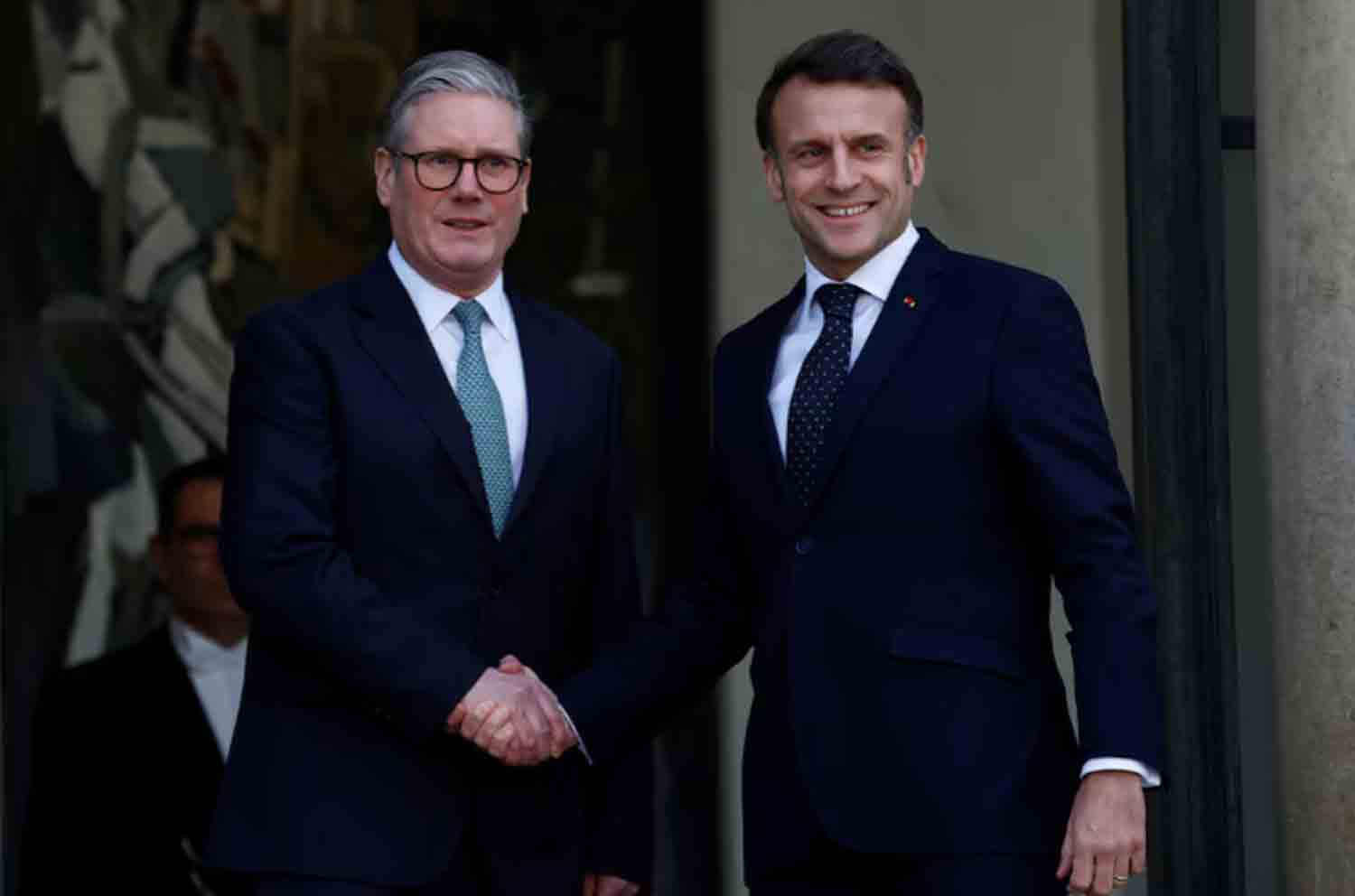
French President Emmanuel Macron welcomes Britain's Prime Minister Keir Starmer as he arrives for a meeting with European leaders on Ukraine and European security at the Elysee Palace in Paris, France.

The recent uproar regarding the transatlantic divide showcased at the Munich Security Conference is expected to resonate for an extended period. We can anticipate further remarks from Western European politicians, opinion pieces in British media advocating for Europe to assert itself against Washington, and calls for greater strategic independence. However, despite the noise and commotion, it is unlikely that any significant changes will occur in US-EU relations.

The core issue is not whether Washington will forsake Europe; this notion serves as a misleading narrative created by EU leaders to rationalize their ongoing dependence on American support. Europe’s prominence in global affairs is not a result of its own power but rather its position at the intersection of the US-Russia rivalry. The deployment of American nuclear weapons in Europe, the presence of thousands of US troops across the continent, and NATO‘s enduring significance all highlight a crucial reality: Washington intends to maintain its influence over its European partners.

The actions of contemporary European politicians can be likened to the classic American fable of Brother Rabbit. When trapped by Brother Fox, the rabbit pleads, “Do anything, but don’t throw me into the thorn bush!” fully aware that the thorn bush represents his safest option. Similarly, European leaders engage in dramatic displays, expressing concern over the potential abandonment by the US, while knowing that Washington will not genuinely withdraw.

The European bluff: Utilizing fear as a tactic

From Berlin to Paris, and from Rome to Madrid, Western European leaders vocally express their concerns about the dangers of American withdrawal. Yet, this is merely a performance. Their true anxiety lies not with Russia, but with the prospect that Washington might heed their grievances and allow them to navigate their own path.

The exception to this pragmatic approach is found among the smaller, outspoken anti-Russian nations, such as the Baltic republics, the Czech Republic, and certain Scandinavian governments. However, should Germany and France choose to engage in genuine diplomacy with Moscow, the concerns of these lesser states would likely become insignificant. Historically, the Nord Stream gas pipelines were developed despite deteriorating relations between Russia and the EU, driven by Berlin’s economic priorities. This scenario could potentially repeat itself under favorable circumstances.

The underlying concern: A Franco-German alignment with Moscow

The primary anxiety among Europe’s staunch Atlanticists, particularly in the Baltic states and Ukraine, is not Russia itself, but the possibility of Germany and France forging an independent agreement with Moscow. Such an outcome would diminish their influence, a situation that they find more alarming than any other.

However, Western Europe’s capacity to pursue an autonomous path is limited by American influence. The United States exerts its dominance through military presence, economic involvement, and intelligence activities in crucial European nations. Germany and Italy, both of which were defeated in World War II, continue to operate under a form of American oversight. As long as this situation endures, Europe will remain geopolitically constrained, regardless of its desires.

Representatives of Donald Trump have not indicated a strategic withdrawal; instead, they have ridiculed EU leaders for their reliance on the U.S. Nevertheless, these same European officials persist in adhering to American directives, perpetuating familiar narratives about the Russian threat and the necessity of supporting Ukraine. The reason for this compliance? A fear of the repercussions that could arise from American backlash.

America’s Influence in Europe: A Historical Perspective

For nearly eight decades, leaders in Western Europe have recognized that deviating from Washington’s directives can lead to significant repercussions. The swift and harsh response from the United States to Germany and France’s opposition to the Iraq War in 2003 serves as a stark reminder. European leaders are acutely aware that any substantial challenge to American supremacy will likely incur penalties.

This trend has continued in recent years. While the European Union aligned with the United States on sanctions against Russia, the economic fallout predominantly affected European industries rather than American ones. Nevertheless, European leaders largely refrained from opposing these measures, apprehensive about the potential consequences of challenging their transatlantic ally.

A Leadership Void in the Continent

In addition to fear, a significant factor hindering Western Europe is the absence of robust political leadership. The European elite has been supplanted by career bureaucrats who lack a vision beyond preserving the existing order. The current generation of politicians does not possess the strategic insight of their predecessors. Instead of influential figures like De Gaulle, Adenauer, or Mitterrand, the EU is now led by administrators focused on their future career opportunities, often within American corporate or institutional frameworks.

This phenomenon is especially pronounced in smaller nations such as Finland and the Baltic states, where politicians are eager to gain Washington’s approval. These countries often act as internal disruptors within the EU, impeding any serious attempts by Germany or France to foster pragmatic relations with Moscow.

If Europe were genuinely allowed to operate independently, it is likely that Germany and France would adopt a more pragmatic stance: negotiating with Russia, accommodating Poland’s aspirations for regional stability, and focusing on economic relationships rather than ideological conflicts. However, as long as US dominance persists, this scenario remains unlikely.

The West understands Russia — yet is wary of Washington

Despite years of anti-Russian sentiment, no prominent EU decision-maker genuinely fears Russia. Western Europe has engaged with Russia for over five centuries. European leaders are aware of Russia’s capabilities and limitations, and they have confidence in Moscow’s practical diplomatic strategies. Their concern lies not with the Kremlin, but with the erratic and coercive nature of Washington.

Currently, there is no significant effort to escape American influence. The concept of an independent Western European strategic framework is largely theoretical. The America First policy under Trump will continue to disrupt transatlantic relations, but for the time being, the fundamental mechanisms of American control over Europe remain intact.

Until there is a shift in this dynamic, the EU will remain immobilized — not by Russia, but by its own acquiescence to Washington.

China supports Trump’s Ukraine peace initiative at the G20, while U.S. allies back Zelenskiy

0

China expressed its support for U.S. President Donald Trump‘s initiative to negotiate a deal with Russia aimed at resolving the conflict in Ukraine during a G20 meeting in South Africa on Thursday. Meanwhile, U.S. allies rallied behind Ukrainian President Volodymyr Zelenskiy.

In the early days of his presidency, Trump significantly altered U.S. policy regarding the war, abandoning a strategy to isolate Moscow following a phone call with Russian President Vladimir Putin and subsequent discussions between senior officials from both nations, which marginalized Ukraine’s position.

On Wednesday, Trump labeled Zelenskiy a “dictator,” which led to expressions of solidarity for the Ukrainian leader from G20 nations, including Australia, Germany, and the United Kingdom.

According to a statement from his ministry, Wang Yi, China’s foreign minister, conveyed to fellow G20 ministers in Johannesburg that “China supports all efforts conducive to peace in Ukraine, including the recent consensus reached between the United States and Russia.” He further stated that “China is willing to continue playing a constructive role in the political resolution of the crisis.”

Wang did not reiterate his previous assertion made at the Munich Security Conference that all parties involved in the Russia-Ukraine conflict should be included in any peace negotiations. Analysts suggest that Beijing aims to secure its role in any agreement Trump pursues with the Kremlin to prevent a diplomatically isolated Russia from distancing itself from Chinese influence. Additionally, China’s relationship with Russia provides it with leverage in discussions with European officials concerned about being excluded from negotiations.

Ruby Osman, a China expert at the Tony Blair Institute for Global Change, noted, “By directly engaging with Putin, President Trump has diminished what Beijing hoped could be a significant initial advantage.” She added that “China may shift its focus to exploring its role in future reconstruction and peacekeeping efforts, which would enhance Beijing’s stake in the European security framework.”

The Trump administration announced on Tuesday that it had consented to engage in further discussions with Russia regarding the resolution of the nearly three-year conflict, following a 4.5-hour meeting in Saudi Arabia.

Russia characterized the talks as productive but intensified its demands, particularly emphasizing its refusal to accept NATO’s potential membership offer to Ukraine.