While global attention remains focused on the air war involving the United States, Israel, and Iran, reports are emerging that a new ground front may be forming inside western Iran.
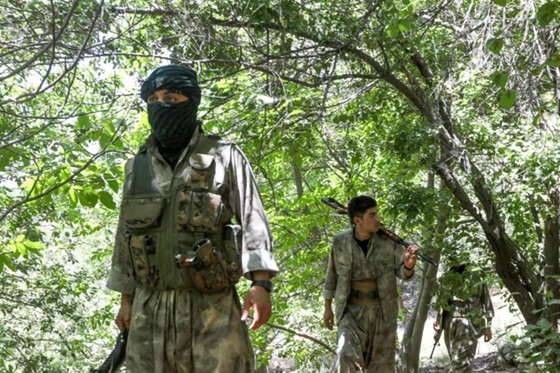
According to multiple reports, Kurdish fighters may have crossed from Iraq’s Kurdistan Region into Iranian territory, potentially launching attacks against Iranian security forces.
If confirmed, this would mark the first significant ground front inside Iran since the current conflict began.
Reports of Cross-Border Operations
Several media outlets and regional sources are describing a rapidly evolving situation along the Iran–Iraq border.
Key claims currently circulating include:
-
Kurdish fighters may have crossed into Iranian Kurdistan from Iraq
-
Kurdish opposition groups say they are preparing or already conducting operations inside Iran
-
Some reports suggest the border city of Marivan may be contested or partially abandoned by Iranian regime forces
At the same time, other reports indicate Kurdish militias have consulted with the United States about potential operations against Iranian security forces.
Some sources claim Kurdish groups have requested:
-
Intelligence support
-
Weapons supplies
-
Training assistance
There are also claims that U.S. intelligence agencies are exploring options to arm Kurdish opposition groups.
However, these reports remain partially unconfirmed.
Why the Kurdish Front Matters
The Kurdish regions of western Iran have long been one of the Islamic Republic’s most sensitive internal security challenges.
Several million Kurds live in Iran, primarily in provinces near the Iraq border, including:
-
Kurdistan Province
-
Kermanshah Province
-
West Azerbaijan Province
These regions have historically experienced periodic protests, insurgency, and clashes with Iranian security forces.
During the nationwide protests that followed the death of Mahsa Amini in 2022, Kurdish cities were among the first to erupt in demonstrations.
For Tehran, Kurdish unrest represents a dual threat:
-
Internal opposition within Kurdish communities
-
Armed infiltration from Kurdish militant groups based in Iraq
Kurdish Groups Involved
The Kurdish fighters mentioned in the reports are primarily Iranian Kurdish opposition groups operating from bases in northern Iraq.
These groups include:
-
Kurdistan Democratic Party of Iran (PDKI)
-
Kurdistan Freedom Party (PAK)
-
PJAK (Free Life Party of Kurdistan) and other Kurdish militant organizations
Many of these groups recently formed a political and military coalition aimed at coordinating opposition activities against the Iranian government.
The coalition has also urged Iranian soldiers stationed in Kurdish regions to defect and join opposition forces.
Such messaging suggests preparation for a broader confrontation if Iran’s central authority weakens.
Tehran’s Strategic Challenge
If Kurdish fighters establish even limited operational positions inside Iran, Tehran could face several major challenges.
1. Security Forces Redeployment
Iran would likely need to divert Islamic Revolutionary Guard Corps (IRGC) units and internal security forces to contain insurgent activity.
2. Risk of Local Uprisings
Kurdish insurgent activity could encourage civil unrest and protests in nearby cities, especially in areas already critical of the government.
3. Difficult Terrain
Western Iran’s geography favors insurgent forces.
The Zagros Mountains, which run along the Iran–Iraq border, provide:
-
Rugged terrain
-
Numerous valleys and passes
-
Ideal conditions for guerrilla warfare
Historically, the mountains have been extremely difficult for central governments to control.
The Strategic Logic Behind a Kurdish Front
There may be a broader strategic logic behind the potential Kurdish operations.
The ongoing air campaign by Israel and the United States is focused on degrading Iran’s military infrastructure.
However, internal insurgency could target something far more critical: the regime’s political stability.
A government under air attack can sometimes endure.
But a government facing simultaneous external strikes and internal rebellion becomes far more vulnerable.
If Kurdish regions begin slipping from Tehran’s control while external pressure continues, the conflict could shift from a military confrontation to a regime stability crisis.
Indicators to Watch
If a Kurdish insurgent front is genuinely emerging, several signs may appear in the coming days:
-
Sustained attacks on IRGC bases and checkpoints
-
Kurdish fighters establishing positions inside Iranian territory
-
Iranian missile or drone strikes against Kurdish bases in Iraq
-
Calls for mass mobilization in Kurdish cities
The appearance of several of these indicators together would strongly suggest that a new ground front has opened inside Iran.
A War on Two Fronts?
For now, the Kurdish situation remains fluid and partially unconfirmed.
But the growing number of reports suggests that something significant may be developing along the Iran–Iraq border.
If Kurdish fighters are indeed entering Iran and launching operations, Tehran could soon find itself fighting two simultaneous conflicts:
-
An air war against external adversaries
-
An insurgency within its own borders
Such a scenario would dramatically complicate the strategic environment for the Iranian government.
The skies above Iran may remain the most visible battlefield.
But the next phase of the conflict could unfold on the ground in the mountains of western Iran.