


A low-resolution satellite image showing what appears to be fire on the deck of a U.S. Navy Arleigh Burke-class guided-missile destroyer in the Arabian Sea has triggered intense debate among defense analysts.
The incident comes amid escalating maritime tensions between the United States and Iran, with Iran’s Islamic Revolutionary Guard Corps (IRGC) claiming responsibility for a long-range missile strike against the American warship.
However, the available imagery remains too limited to confirm whether the fire resulted from a missile impact, a technical malfunction, or another onboard incident.
Low-resolution satellite imagery appears to show a fire on the deck of a U.S. Navy Arleigh Burke-class destroyer in the Arabian Sea, possibly the result of an impact by an Iranian anti-ship missile.
This would align with the IRGC claim that it targeted a destroyer using… pic.twitter.com/sqo6U3sqkW
— OSINTWarfare (@OSINTWarfare) March 4, 2026
Iran Claims Missile Strike Under “Operation True Promise 4”
Shortly after the imagery began circulating online, the IRGC announced that its naval forces had conducted a “powerful strike” against a U.S. destroyer.
According to Iranian officials:
-
The attack occurred more than 600 kilometers from Iranian territory
-
The strike was carried out using an advanced anti-ship cruise missile
-
The operation was part of Operation True Promise 4
Iranian statements claimed the missile strike caused major fires on the destroyer and a nearby logistics tanker that was reportedly refueling the warship.
So far, there has been no official confirmation from the United States Navy regarding the incident.
The Alleged Weapon: Iran’s Ghadr-380 Anti-Ship Missile
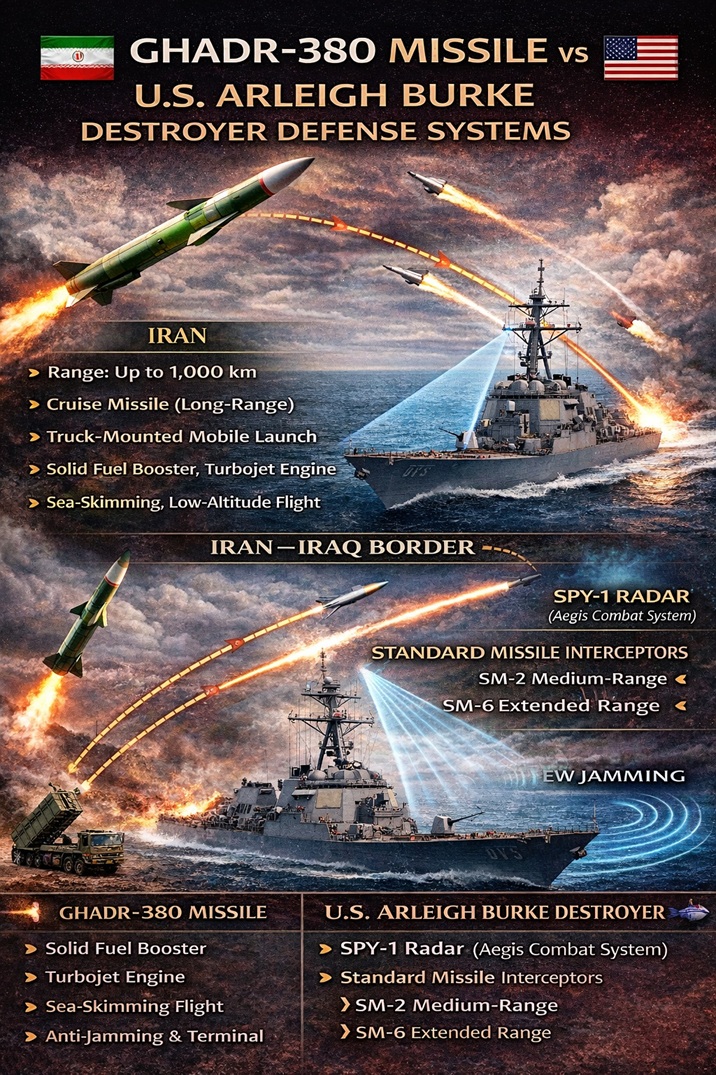
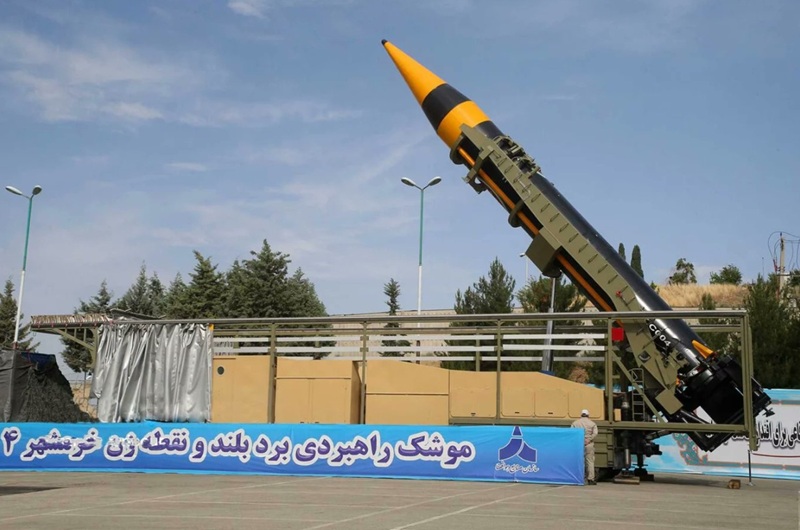
Iranian officials said the strike was carried out using the Ghadr-380 anti-ship cruise missile, a relatively new system introduced in 2025.
Key reported features of the Ghadr-380 include:
-
Range: up to 1,000 kilometers
-
Launch platform: mobile truck-mounted launcher
-
Propulsion: turbojet cruise engine
-
Flight profile: low-altitude sea-skimming approach
-
Guidance: anti-jamming navigation and terminal target tracking
The missile uses a solid-fuel booster to accelerate after launch before transitioning to turbojet propulsion for long-range flight.
Iran says the system was designed specifically to target large naval vessels such as destroyers and aircraft carriers.
Why the Incident Matters Strategically
If confirmed, a successful missile strike against a U.S. Arleigh Burke-class destroyer would represent a rare event in modern naval warfare.
These destroyers are among the most advanced surface combatants in the world.
The class serves as the backbone of the U.S. Navy’s global surface fleet, with more than 70 ships currently in service.
They are equipped with the Aegis combat system, designed to defend against missiles, aircraft, and other threats.
Capabilities of the Arleigh Burke-Class Destroyer
Arleigh Burke destroyers are designed for multi-mission warfare, including missile defense and long-range strike operations.
Key features include:
-
96 vertical launch missile cells
-
Standard Missile interceptors
-
Tomahawk cruise missiles
-
anti-submarine rocket systems
The ships can also deploy MH-60R Seahawk helicopters for anti-submarine warfare and maritime reconnaissance.
Newer Flight III variants include the advanced AN/SPY-6 radar, which is significantly more sensitive than earlier systems and improves detection of ballistic missiles and stealth targets.
Each destroyer carries more than 300 crew members, reflecting the complexity of operating modern integrated combat systems.
Satellite Imagery Remains Inconclusive
The satellite image circulating online shows what appears to be a thermal anomaly or visible fire on the destroyer’s deck.
However, the image resolution is too low to determine:
-
whether a missile actually struck the ship
-
whether there is structural damage
-
whether critical systems were affected
Analysts note that even a small onboard fire can generate heat signatures detectable by satellites, especially when ships operate in open ocean areas.
Without higher-resolution imagery or official confirmation, the cause of the fire remains uncertain.
Information Warfare and Strategic Messaging
Iran’s rapid announcement of a successful strike may also serve a strategic communication purpose.
By claiming the ability to hit a U.S. warship hundreds of kilometers from its shores, Tehran may be attempting to reinforce its anti-access strategy aimed at deterring American naval operations near Iranian waters.
At the same time, the absence of confirmed damage imagery creates a contested information environment, where competing narratives circulate before full verification.
The Strategic Importance of the Arabian Sea
The alleged strike location in the Arabian Sea is strategically significant.
This maritime region connects the Strait of Hormuz with the wider Indian Ocean, serving as a major route for global energy shipments.
The United States maintains a strong naval presence in the area to:
-
protect shipping lanes
-
deter regional threats
-
maintain freedom of navigation
Any escalation involving warships in this corridor could have wider implications for global energy markets and maritime security.
Cruise Missiles vs Modern Warships
The incident also highlights the growing role of long-range precision missiles in naval warfare.
Relatively inexpensive cruise missiles can threaten warships that cost billions of dollars to build and operate.
This dynamic reflects a broader shift in modern naval combat, where success increasingly depends on:
-
sensor networks
-
missile defense systems
-
electronic warfare capabilities
rather than simply the size or firepower of individual ships.
A Contested Incident
Until higher-resolution satellite imagery emerges or official naval reports clarify the situation, the alleged Iranian strike remains unconfirmed.
Nevertheless, the episode illustrates how quickly maritime confrontations between major powers can escalate—and how information, imagery, and strategic messaging now shape the perception of naval battles as much as the weapons themselves.


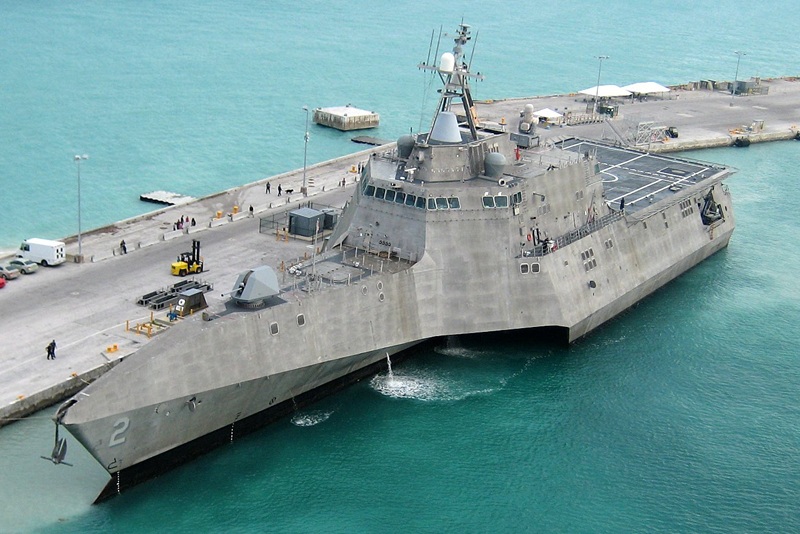
That image at the top is not an Arleigh Burke Class Destroyer. It depicts one of the new Independence class Littoral Combat Ships, widely regarded as a failed design.