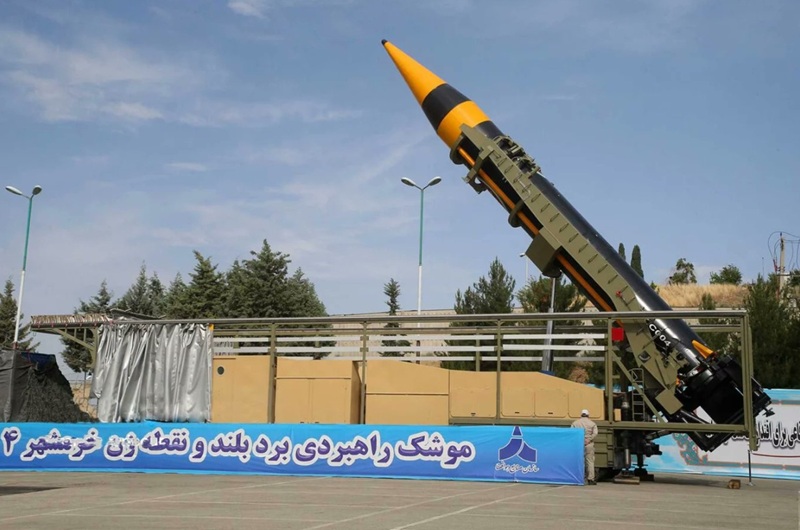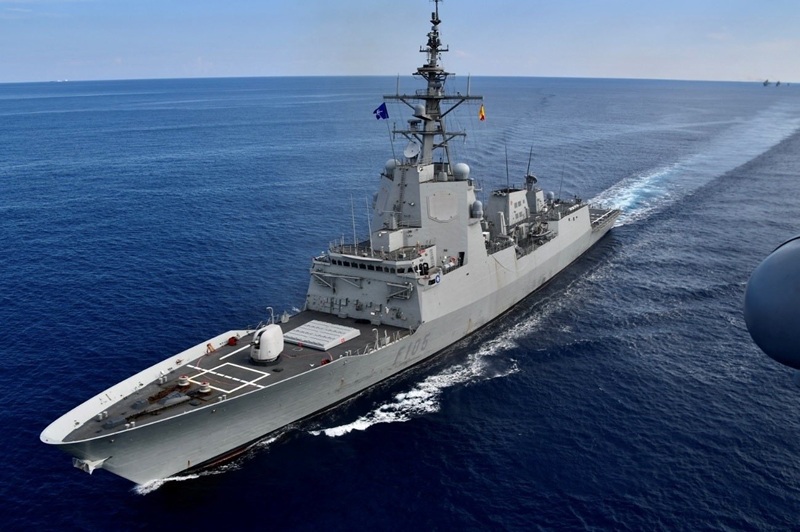

The United States Navy has introduced a new technological element into the ongoing conflict in the Middle East: a ship-mounted laser weapon system designed to counter drones and other aerial threats.
According to footage released by U.S. Central Command (CENTCOM), the High Energy Laser with Integrated Optical-dazzler and Surveillance (HELIOS) system is now deployed aboard a U.S. Navy destroyer operating near Iran’s coastline.
Reports indicate the laser system may already be actively engaging Iranian drones during the ongoing military campaign known as Operation Epic Fury.
HELIOS Laser System Deployed at Sea
The HELIOS system is a directed-energy weapon mounted on U.S. Navy Arleigh Burke–class destroyers.
CENTCOM footage shows the system positioned on the destroyer and aimed toward the same airspace where Iran has launched hundreds of drones and missiles during the conflict.
According to a report by the New York Post, citing sources familiar with the operation, HELIOS has already been used against Iranian drones during the war.
Before the conflict escalated, the system reportedly demonstrated its effectiveness during testing.
In February 2026, weeks before the war began, HELIOS successfully destroyed four drones during a live test, according to confirmation from USNI Proceedings.
However, primary military sources have not yet publicly confirmed the number of combat kills achieved by the system during the current conflict.
Why the HELIOS Deployment Matters
Even without confirmed combat kills, the deployment of HELIOS carries major strategic implications.
The current air defense battle across the Gulf is not only a military contest—it is also an economic contest.
Traditional missile defense systems are extremely expensive to operate.
For example:
-
Patriot interceptor missiles: $3–4 million each
-
THAAD interceptors: approximately $10 million each
Since the conflict began, Gulf states have reportedly intercepted over 755 drones and 172 ballistic missiles.
Even using conservative estimates, the cost of these interceptions likely runs into several billion dollars in just a few days.
Laser Weapons Change the Economics of Drone Warfare
Unlike traditional missile systems, laser weapons operate using electrical power instead of expensive interceptors.
The HELIOS system draws power directly from the destroyer’s onboard generator.
This means:
-
No missiles are required
-
No ammunition magazines are depleted
-
No supply ships are needed to replenish interceptors
The cost of firing a laser beam is essentially the cost of electricity.
Against an Iranian Shahed drone, which costs roughly $30,000, the cost of destroying the target with a laser is dramatically lower—potentially less than the daily electricity cost of a large apartment.
Iran’s Drone Strategy
Iran has spent years developing a strategy based on low-cost drone saturation.
The concept is simple:
-
Launch large numbers of inexpensive drones
-
Force defenders to use costly interceptor missiles
-
Create a massive financial burden on defensive systems
For example:
If a defender spends $1 million to intercept a $30,000 drone, the economic advantage lies with the attacker.
Repeating that exchange hundreds or thousands of times imposes a huge financial strain on air defense networks.
This cost imbalance has been one of Iran’s most effective strategic tools in modern drone warfare.
HELIOS May Reverse the Cost Equation
The introduction of directed-energy weapons like HELIOS could fundamentally change that balance.
If laser systems can intercept even a portion of incoming drones, the cost asymmetry begins to shift in the defender’s favor.
Instead of spending millions per intercept, defenders could potentially neutralize threats for a fraction of the cost.
This would undermine the economic logic behind large-scale drone saturation attacks.
The First Real Combat Test
For years, directed-energy weapons have been discussed as the future of air defense.
But the current conflict may represent the first large-scale operational test of such systems in real combat conditions.
Iran spent years refining the doctrine that made Shahed drones strategically valuable.
Now the United States has introduced a technology that could challenge that doctrine directly.
Whether HELIOS proves capable of consistently defeating drone swarms remains to be seen.
But this war may determine whether laser weapons become the next major evolution in modern air defense.