A missile strike on the United States Embassy in Baghdad has reportedly damaged a counter-drone radar system, raising fresh concerns about the vulnerability of U.S. facilities and the broader missile-defense network across the Middle East.
The attack took place inside Baghdad’s heavily fortified Green Zone, the district that houses Iraq’s government institutions and foreign embassies.
Security officials told international media that a missile struck a helipad inside the embassy compound, sending smoke rising from the complex.
Shortly afterward, the U.S. Embassy issued an updated security alert urging American citizens in Iraq to leave the country immediately, warning that Iran-aligned militias continue to pose a significant threat to U.S. personnel and infrastructure.
Radar System Possibly Destroyed in Embassy Attack
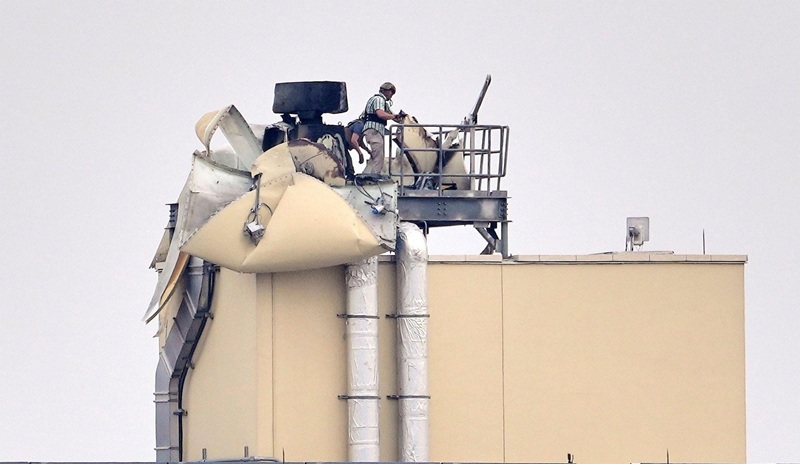
Images emerging after the attack suggest that a Saab Giraffe 1X radar system positioned within the embassy compound may have been destroyed.
NEW photos suggest a Giraffe 1X radar was likely destroyed during the attack on the U.S. Embassy in Baghdad today.
Photos show the radome shattered, exposing a flat-panel antenna consistent with the Saab system.
The radar is designed for counter-drone, C-RAM, and short-range… pic.twitter.com/dnWOBF3jQy
— Clash Report (@clashreport) March 14, 2026
Photographs show a shattered radome with a flat-panel antenna exposed, a configuration consistent with the Giraffe 1X radar.
The system is designed for:
- Counter-drone operations
- Counter-rocket, artillery, and mortar (C-RAM) defense
- Short-range air-defense surveillance
The radar provides 360-degree monitoring capability and can detect small unmanned aerial vehicles at distances of roughly 4 kilometers.
The U.S. Army recently ordered the system from Swedish defense company Saab, with deliveries expected in 2026, suggesting it may have been rapidly deployed to Baghdad in response to rising drone threats.
Baghdad Attack Comes Amid Escalating Proxy Conflict
The strike marks the second attack on the U.S. Embassy in Baghdad since the start of the current regional conflict.
Several Iran-aligned militias operating in Iraq—many of them part of the Islamic Resistance in Iraq coalition—have claimed responsibility for drone and rocket attacks targeting U.S. bases and diplomatic facilities.
The attack also occurred shortly after strikes reportedly targeted members of Kataib Hezbollah, an Iran-backed militia that is part of Iraq’s Popular Mobilization Forces.
For years, Iraq has served as a proxy battleground between the United States and Iran, and the latest escalation has once again drawn the country into the broader regional conflict.
Earlier Losses to U.S. Missile-Defense Radars
The Baghdad incident follows earlier reports of damage to several key U.S. missile-defense radar systems across the Middle East, significantly affecting the regional early-warning network.
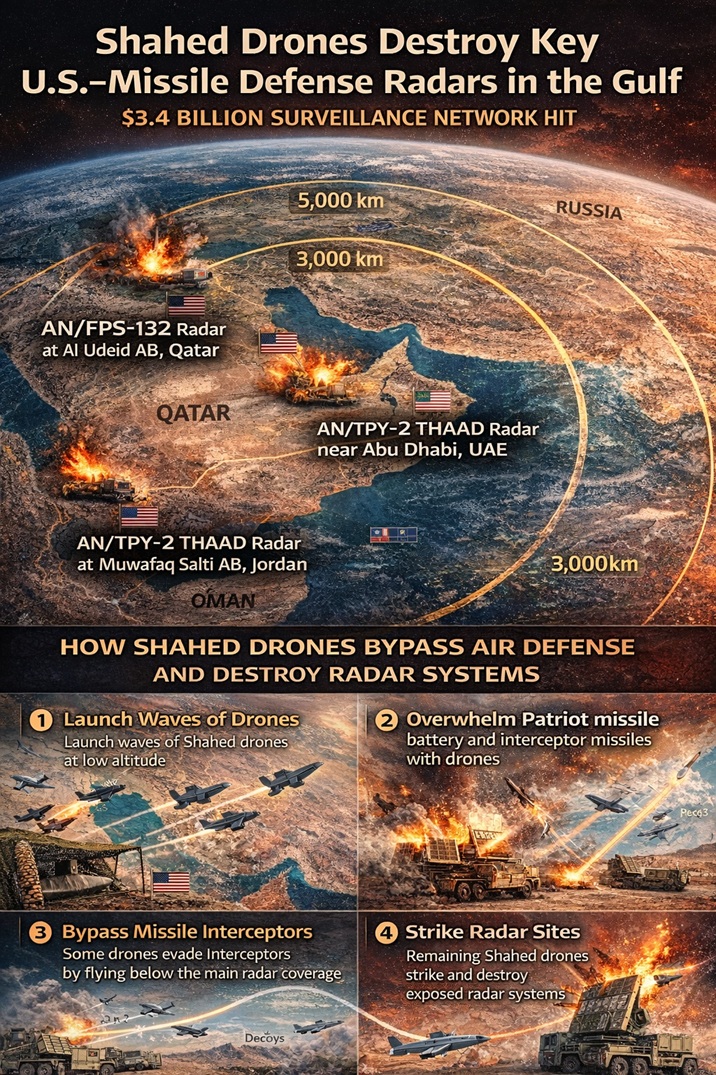
New assessments indicate that two AN/TPY-2 radars used by the THAAD missile defense system were destroyed, including:
- One radar near Abu Dhabi in the United Arab Emirates
- Another radar at Muwafaq Salti Air Base in Jordan
These losses add to the previously reported destruction of an AN/FPS-132 early-warning radar at Al Udeid Air Base in Qatar.
If confirmed, the combined damage to radar infrastructure could exceed $3.4 billion.
Strategic Radar Systems Affected
The destroyed radar systems are among the most critical components of the U.S. global missile-defense architecture.
AN/TPY-2 Radar
- Core sensor of the THAAD missile-defense system
- Detects ballistic missiles at extremely long distances
- Provides tracking data needed to guide interceptor missiles
AN/FPS-132 Early-Warning Radar
- A powerful long-range missile detection system
- Monitors missile launches across vast geographic areas
- Provides early warning to U.S. and allied defense networks
These sensors form the backbone of the layered missile-defense system protecting U.S. forces and allied countries in the Gulf region.
Radar Coverage Loss Spans Thousands of Kilometers
The radar sites that were reportedly destroyed monitored enormous portions of the Middle East and surrounding regions.
Their detection ranges can extend from:
- 3,000 kilometers
- Up to 5,000 kilometers
The AN/FPS-132 radar in Qatar, for example, reportedly monitored areas reaching:
- Western China
- Parts of Russia
- Large portions of the Middle East
With its loss, analysts warn that significant gaps may have emerged in long-range missile detection coverage.
Replacing such capability with airborne surveillance systems would be difficult, particularly in areas covered by advanced Iranian air-defense networks.
Shahed Drones and the Rise of Asymmetric Warfare
Another notable aspect of the attacks is the type of weapon reportedly used to strike some of the radar systems.
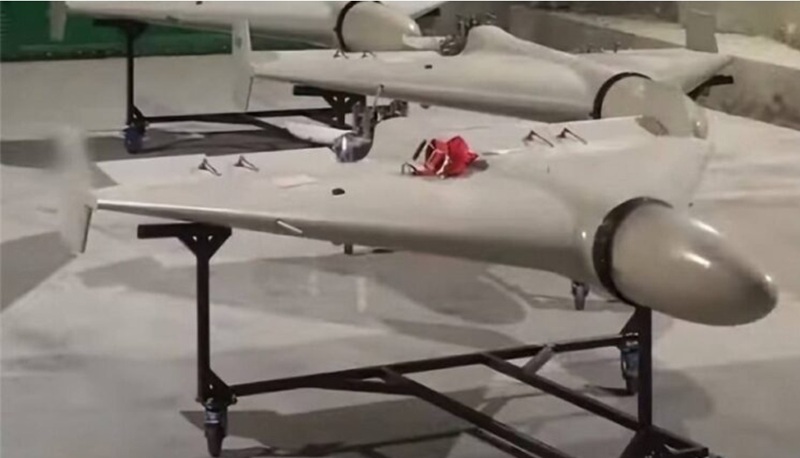
Several of the radar strikes were reportedly carried out by Shahed loitering drones, low-cost unmanned aircraft developed by Iran.
These drones are believed to cost tens of thousands of dollars, making them dramatically cheaper than the systems they target.
Despite their relatively simple design, they have proven capable of damaging military infrastructure worth hundreds of millions or even billions of dollars.
Cheap Drones vs Billion-Dollar Defenses
The attacks highlight a growing challenge for modern militaries.
There is a dramatic cost imbalance between offensive and defensive systems:
- Shahed drone: tens of thousands of dollars
- THAAD radar system: hundreds of millions to over $1 billion
- Strategic radar networks: multi-billion-dollar infrastructure
When launched in large numbers, inexpensive drones can overwhelm or exploit gaps in advanced defenses.
Blinding the Missile-Defense Network
Defense analysts believe the radar strikes may represent a deliberate strategy.
Rather than attempting to overwhelm missile interceptors directly, attackers appear to be targeting the sensors that guide those interceptors.
Without radar detection and tracking data, missile-defense systems struggle to:
- Detect incoming threats early
- Track missile trajectories
- Guide interceptor missiles accurately
In practical terms, destroying radar sensors can blind an air-defense network before the interceptors are even launched.
Strategic Implications for the Gulf
The loss of multiple radar systems could weaken the regional missile-defense posture of the United States and its allies.
Modern air-defense networks rely on several interconnected components:
- Early-warning radars
- Tracking sensors
- Interceptor missiles
- Command-and-control systems
If key radar nodes are removed, the effectiveness of the entire defensive architecture may decline.
A New Phase of the Conflict
With the Baghdad embassy attack and earlier radar losses across the region, analysts say the conflict may be entering a new phase where sensor networks themselves are becoming primary targets.
In modern warfare, the ability to detect threats early is essential.
And as recent events demonstrate, blinding an air-defense system can sometimes be as strategically important as destroying the weapons it controls.