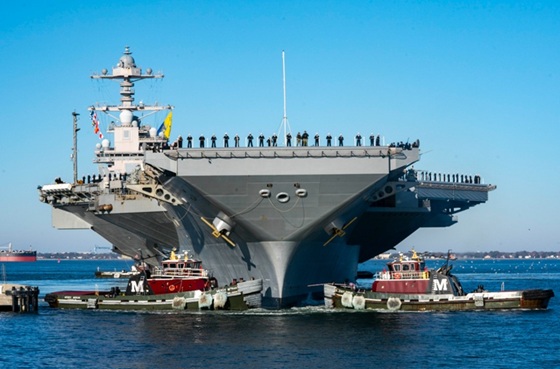
Satellite imagery analysis indicates that the United States Navy has repositioned two major carrier strike groups across the Red Sea and Arabian Sea, a move that appears to reflect changing threat conditions along Iran’s maritime periphery.
The shift involves the USS Gerald R. Ford and USS Abraham Lincoln carrier strike groups, whose movements suggest a deliberate adjustment in naval posture designed to reduce vulnerability to asymmetric threats while maintaining operational reach across the Middle East.
Satellite Imagery Reveals Strategic Naval Shift
According to imagery analysis released by MizarVizion, the two carrier strike groups have moved away from previously forward-leaning positions closer to contested waters.
The repositioning highlights how U.S. naval commanders are recalibrating risk in a maritime environment increasingly shaped by:
- Anti-ship missile systems
- Fast-attack boat harassment
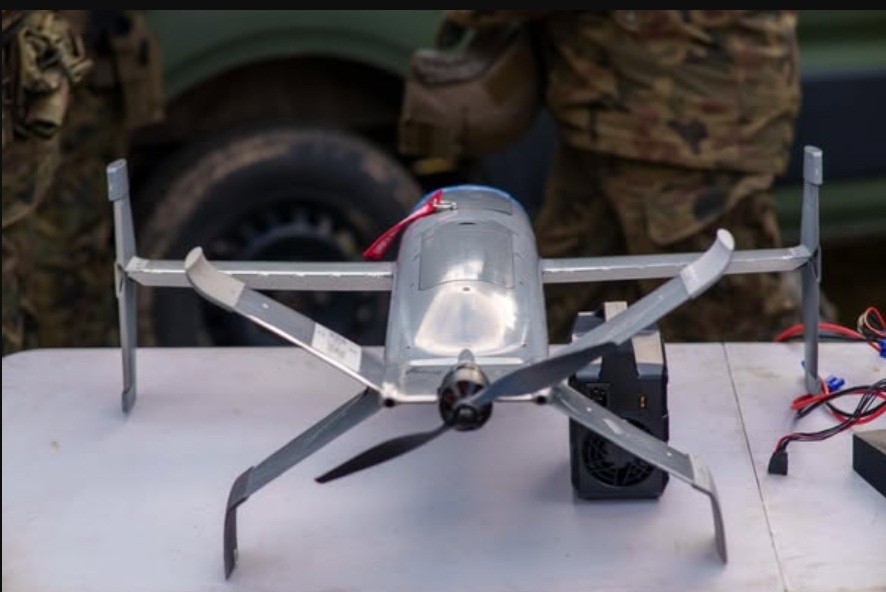
- Drone and unmanned maritime threats
- Swarm craft tactics used by Iran-aligned forces
Rather than indicating a withdrawal, analysts assess the movement as a controlled redistribution of naval assets intended to preserve combat capability while lowering exposure to coastal threats.
USS Gerald R. Ford Moves South in the Red Sea
Satellite imagery shows the USS Gerald R. Ford carrier strike group shifting southward within the central Red Sea, operating off the Saudi Arabian port city of Jeddah.
This position places the carrier beyond the estimated range of anti-ship missile systems operated by Houthi forces along Yemen’s coastline.
Operating further from the Yemeni coast reduces the risk of sudden missile attacks while still allowing carrier-based aircraft to project power across large areas of the Middle East.
The move reflects a broader shift toward stand-off positioning, where naval forces operate outside immediate threat envelopes while maintaining the ability to conduct air operations.
USS Abraham Lincoln Moves Away from Iranian Coast
At the same time, the USS Abraham Lincoln carrier strike group moved toward the southwestern waters of Oman near Salalah.
This relocation significantly increases the distance between the carrier and Iranian territory to more than 1,100 kilometers, compared to its earlier position less than 350 kilometers from Iran’s coast.
The shift follows a reported incident involving Iranian gunboats engaging an escort vessel attached to the Abraham Lincoln strike group.
Such close-range encounters highlight the risks of operating large naval formations near hostile coastlines where fast-attack craft and swarm tactics can quickly escalate tensions.
Managing Risk in Modern Naval Warfare
The repositioning demonstrates how modern carrier operations must adapt to a rapidly evolving threat environment.
Operating too close to contested coastlines increases vulnerability to:
- Short-range anti-ship missiles
- Drone and unmanned boat attacks
- Fast-attack craft swarm tactics
- Surprise harassment operations
Increasing distance from potential launch sites allows naval forces more time to detect and respond to threats before they reach effective engagement range.
Carrier Airpower Maintains Regional Reach
Despite moving further from Iran and Yemen, both carrier strike groups retain the ability to conduct air operations across the region.
Modern carrier aircraft have sufficient range to perform:
- Strike missions
- Intelligence and surveillance operations
- Maritime patrols
- Rapid response operations
This capability allows the United States to maintain deterrence and operational influence without placing high-value naval assets directly inside coastal missile envelopes.
A Strategic Adjustment, Not a Withdrawal
The simultaneous movement of both carrier strike groups suggests coordinated planning rather than isolated decisions.
Naval strategists describe this approach as distributed positioning, where forces remain active across a theatre while avoiding predictable patterns that adversaries could exploit.
Such repositioning reflects a calculated effort to balance three priorities:
- Protect high-value naval assets
- Maintain operational reach across the region
- Preserve deterrence against potential adversaries
The Future of Naval Deterrence in the Middle East
The repositioning of the USS Gerald R. Ford and USS Abraham Lincoln illustrates how naval deployments are increasingly shaped by asymmetric threats.
In modern maritime environments, proximity to hostile coastlines can create vulnerabilities even for the most advanced naval forces.
As tensions continue to evolve across the Middle East, carrier strike groups are likely to rely more heavily on mobility, stand-off operations, and distributed positioning to maintain strategic presence while minimizing risk.
U.S. Carrier Strike Group Structure and Airpower Range

U.S. Carrier Strike Group (CSG) Structure
A carrier strike group is the core power-projection formation of the U.S. Navy, designed to conduct air strikes, maritime security missions, and deterrence operations across large regions.
Core Components
| Component | Typical Number | Role |
|---|---|---|
| Aircraft Carrier | 1 | Command center and airpower platform |
| Guided Missile Cruisers | 1–2 | Air defense and missile defense |
| Guided Missile Destroyers | 2–3 | Anti-air, anti-ship, and anti-submarine warfare |
| Attack Submarine | 1 | Stealth surveillance and submarine hunting |
| Logistics / Supply Ships | 1–2 | Fuel, ammunition, and resupply |
Together these vessels form a multi-layered defense network protecting the carrier while allowing sustained combat operations far from U.S. territory.
Carrier Air Wing (Airpower Component)
The Carrier Air Wing (CVW) stationed on the carrier provides the primary offensive capability.
Typical aircraft mix:
| Aircraft Type | Primary Role |
|---|---|
| F-35C Lightning II | Stealth strike fighter |
| F/A-18E/F Super Hornet | Multirole fighter |
| EA-18G Growler | Electronic warfare |
| E-2D Hawkeye | Airborne early warning |
| MH-60R/S Seahawk | Anti-submarine and logistics |
A carrier air wing typically includes 60–75 aircraft.
Airpower Range from the Carrier
Carrier aircraft extend the strike group’s operational reach far beyond the ship itself.
| Aircraft | Combat Radius |
|---|---|
| F-35C Lightning II | ~1,100 km |
| F/A-18E/F Super Hornet | ~720 km |
| EA-18G Growler | ~700 km |
| E-2D Hawkeye | 2,700 km surveillance range |
With aerial refueling and support aircraft, carrier aviation can conduct missions over 1,500 km from the ship.
Defensive Layers of the Strike Group
The carrier is protected by multiple layers of defense:
Outer Layer
- Submarines detect enemy vessels
- Airborne early warning aircraft monitor airspace
Middle Layer
- Destroyers and cruisers intercept missiles and aircraft
- Electronic warfare systems jam enemy sensors
Inner Layer
- Close-in weapon systems (CIWS)
- Point-defense missiles
This layered defense allows the carrier to operate even in contested maritime environments.
Strategic Role
Carrier strike groups allow the United States to:
- Project military power without relying on land bases
- Conduct rapid air strikes anywhere in the world
- Maintain deterrence in strategic regions
- Protect major shipping lanes and allies
Because aircraft extend the strike group’s reach hundreds of kilometers, the carrier itself can operate outside coastal missile threat zones while still influencing events ashore.