In a recent interview, U.S. Secretary of State Marco Rubio painted a stark picture of Iran’s leadership:
- hardliners dominate decision-making
- leadership visibility is uncertain
- internal coherence is weakening
His conclusion: these dynamics are preventing progress toward peace.
EXCLUSIVE: Secretary of State Marco Rubio exposes the issues within Iran’s power structure and how it’s preventing progress on peace in the Middle East:
“Unfortunately, the hardliners with an apocalyptic vision of the future have the ultimate power in that country.”
“Now that… pic.twitter.com/XzmCMS8ySW
— Fox News (@FoxNews) April 27, 2026
But the real significance of Rubio’s remarks lies not in what they say about Iran—but in what they reveal about Washington’s understanding of it.
The Core Misreading: It Was Never About Personalities
The central issue is not who leads Iran.
It never was.
The problem lies in:
- the regime’s core strategic positions
- its ideological foundations
- and Washington’s limited ability to change either
Focusing on personalities risks missing the larger reality:
Iran’s policies are structural, not individual.
Khamenei Was Ideological—But Not Irrational
Before the war, Ali Khamenei was often portrayed as uncompromising.
But that characterization was incomplete.
Despite deep ideological hostility toward the United States, he was:
- willing to consider negotiations
- capable of cost-benefit calculations
- focused on regime survival
This is a critical point.
Even within an ideological system, strategic pragmatism existed.
The War Changed the System Itself
The conflict did more than damage infrastructure—it altered Iran’s political structure.
For the first time, Iran shifted from:
- a highly centralized system
to - a more decentralized power structure
The Islamic Revolutionary Guard Corps still anchors the system.
But:
- consensus is harder to achieve
- decision-making is slower
- internal coordination is more complex
This is not just instability—it is structural transformation.
A Harder Iran to Negotiate With
Ironically, the outcome is the opposite of what pressure was meant to achieve.
Instead of producing a more flexible Iran, the result may be:
- a more fragmented leadership
- reduced central authority
- harder-to-predict decision-making
And in negotiations, unpredictability is not leverage—it is friction.
The Mojtaba Question
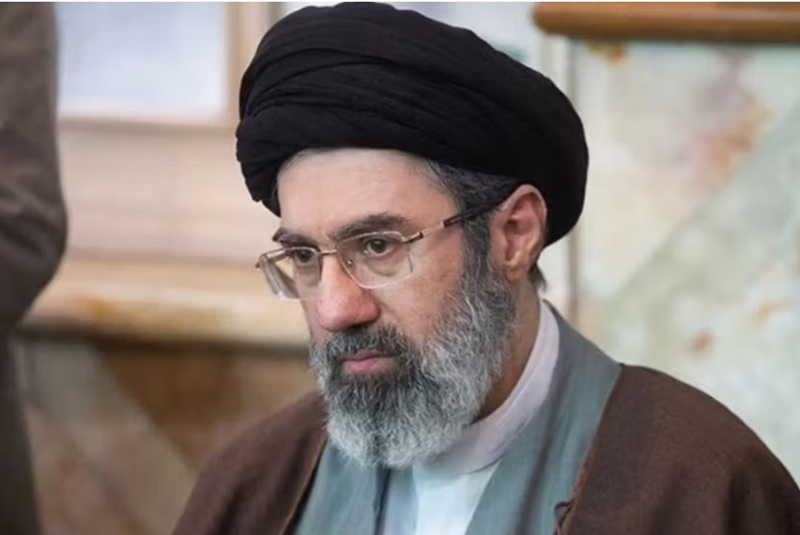
The rise of Mojtaba Khamenei reflects this new reality.
His position is shaped less by political consensus and more by:
- lineage
- post-war power dynamics
- shifting institutional balance
This underscores a broader point:
the war has reshaped Iran’s political trajectory in ways that were not fully anticipated.
Rubio Is Not Wrong—But the Timing Matters
Rubio’s observations about:
- hardline influence
- leadership opacity
- internal fragmentation
are largely accurate.
But they are also:
the consequences of the war itself.
That distinction matters.
Because it raises a difficult question:
The Strategic Trade-Off Washington Missed
If a centralized leadership under Khamenei was:
- more predictable
- capable of making deals
- able to enforce decisions
Then weakening that structure may have created a more difficult negotiating environment.
In other words:
the system the U.S. now faces is partly the result of the strategy it pursued.
No Easy Path Forward
Washington now faces a more complex challenge:
- a less centralized Iran
- persistent ideological red lines
- reduced leverage through pressure alone
This narrows the available options:
- escalation risks wider conflict
- diplomacy faces structural obstacles
- pressure may produce diminishing returns
Final Thought: A Harder Problem Than Before
The bottom line is simple—but uncomfortable:
Iran has not been broken. It has been reshaped.
And in the process, it may have become:
- harder to understand
- harder to influence
- harder to negotiate with
Rubio is right to highlight the problem.
But the deeper issue is this:
Washington is now dealing with a system that is more complex precisely because it tried to weaken it.