


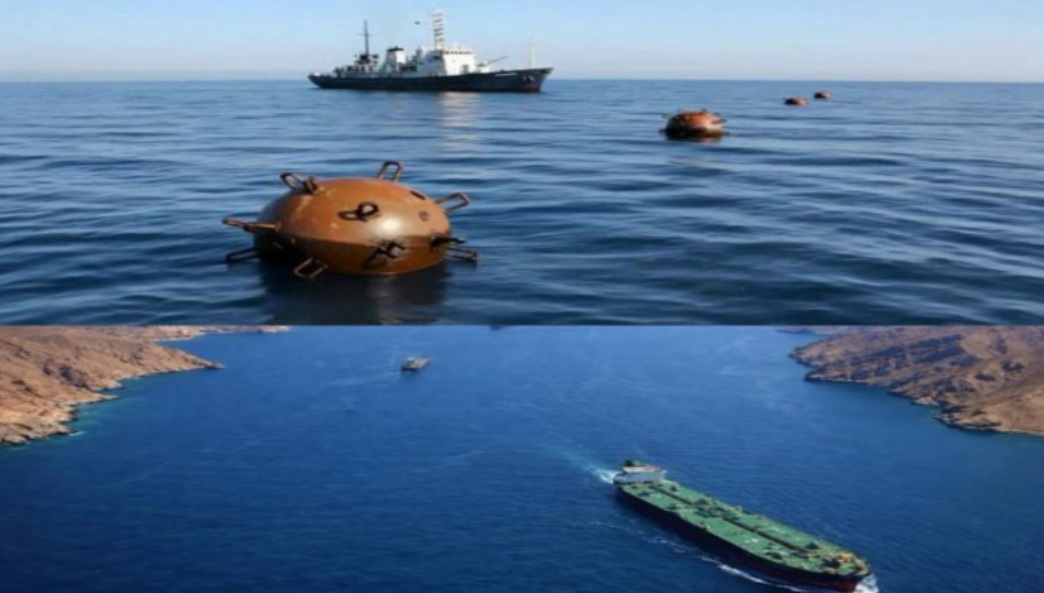
The U.S. Navy is accelerating its use of artificial intelligence to detect and neutralize Iranian naval mines in the strategically vital Strait of Hormuz, as tensions in the Gulf continue to threaten global shipping.
The move comes amid growing concerns that underwater explosives could disrupt one of the world’s most important energy corridors, through which nearly 20% of global oil supplies transit.
Today, the @DeptofWar entered into agreements with SEVEN of the world’s leading frontier AI model and infrastructure companies to deploy frontier capabilities on the Department’s classified networks:
• SpaceX
• OpenAI
• NVIDIA
• Reflection
• Microsoft
• Amazon… pic.twitter.com/HGQoQ68uBF— Department of War CTO (@DoWCTO) May 1, 2026
$100 Million AI Contract to Boost Mine-Hunting Capability
At the center of this effort is a contract worth up to $99.7 million awarded to Domino Data Lab, aimed at transforming how the Navy detects naval mines.
The company will serve as the AI backbone for Project AMMO (Accelerated Machine Learning for Maritime Operations), a program designed to:
- Speed up mine detection
- Improve accuracy in contested waters
- Reduce reliance on human operators
From Ships to Algorithms: A Shift in Naval Warfare
Traditionally, mine-hunting required specialized ships and highly trained crews — a slow and risky process.
Now, the U.S. Navy is shifting toward:
- Unmanned Underwater Vehicles (UUVs)
- AI-powered detection systems
- Real-time data integration
Thomas Robinson, COO of Domino Data Lab, summarized the shift:
“Mine-hunting used to be a job for ships… it’s becoming a job for AI.”
Speed is the Game-Changer
The biggest advantage of AI integration is speed.
Previously:
- Updating AI models to detect new mines took up to six months
Now:
- Updates can be deployed in just a few days
This means the Navy can rapidly adapt to new threats — a critical capability in dynamic conflict zones like the Gulf.
How the Technology Works
The system combines multiple data sources:
- Side-scan sonar
- Visual imaging systems
- Sensor fusion analytics
It allows the Navy to:
- Track performance of AI detection models
- Identify errors in real time
- Deploy updates across operational systems quickly
This creates a continuous learning loop, improving effectiveness with every mission.
Why Hormuz Matters
The Strait of Hormuz remains one of the most critical maritime chokepoints in the world.
Any disruption can:
- Trigger oil price spikes
- Disrupt global supply chains
- Escalate regional conflict
Even with a fragile ceasefire between the U.S. and Iran, mine-clearing operations could take months — making faster detection tools essential.
From Baltic to Gulf: Global Flexibility
One of the most significant advantages of the new AI system is adaptability.
For example:
- AI trained to detect Russian mines in Europe
- Can be quickly retrained to identify Iranian mines
This reduces deployment timelines dramatically — from nearly a year to just one week, according to company estimates.
Conclusion: AI Becomes a Core Naval Weapon
The U.S. Navy’s investment in AI-driven mine detection reflects a broader shift in modern warfare:
➡️ From manpower to machine learning
➡️ From slow clearance to rapid response
➡️ From static systems to adaptive intelligence
In contested waters like Hormuz, speed and adaptability may now be as important as firepower.


Asking questions are actually good thing if you are not understanding something fully, except this post gives
good understanding yet.
Pretty! This was an extremely wonderful article. Thanks for supplying these details.
It’s gooing to be end of mine day, however before
end I am reading this great paragraph to
improve my know-how.