Pakistan is reportedly moving to induct China’s Type 625E short-range air defense system, signaling a major shift in how modern battlefields are being defended. This is not just another weapons acquisition—it reflects a deeper transformation driven by one dominant reality:
Drone warfare is reshaping combat.
From Ukraine to the Middle East, low-cost drones and loitering munitions have exposed critical vulnerabilities in traditional air defense systems. Pakistan’s move suggests it is adapting quickly to this evolving threat environment.
Filling the “Last-Mile” Defense Gap
Pakistan already operates layered air defense systems such as:
- HQ-9/P (long-range)
- LY-80 (medium-range)
However, these systems are not optimized for:
- ultra-low altitude threats
- drone swarms
- cluttered terrain environments
The Type 625E is designed specifically to fill this gap—what analysts call the “last-mile interception layer.”
Built for Drone-Swarm Warfare
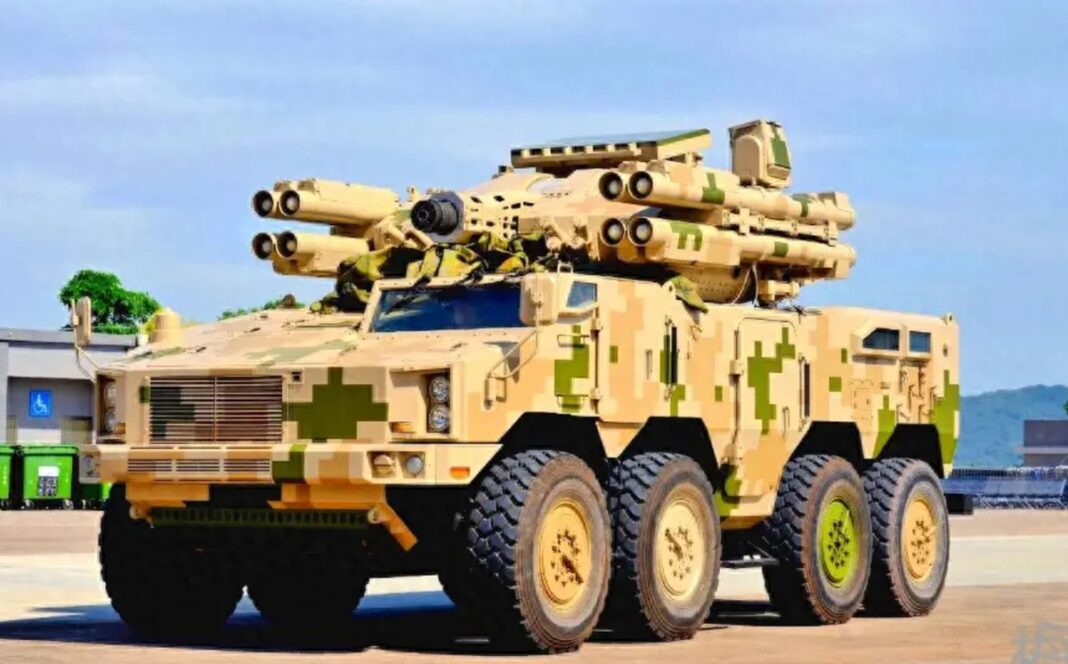
The defining feature of the Type 625E is its hybrid design:
Dual Interception System:
- 25mm six-barrel Gatling cannon
- Short-range surface-to-air missiles
This combination allows it to:
- engage multiple targets simultaneously
- create a dense “kill zone”
- counter saturation attacks from drone swarms
The cannon alone can fire up to 5,000 rounds per minute, making it highly effective against fast-moving, low-altitude targets.
Missile Layer Extends Reach
Beyond the gun system, the platform carries:
- FN-16 missiles (≈6 km range)
- potential extended-range options (up to 10 km)
This allows early interception before threats reach critical zones, adding depth to the defensive envelope.
Smart Sensors, Faster Decisions
The Type 625E integrates:
- X-band radar
- tracking radar
- electro-optical/infrared sensors
This multi-sensor fusion enables:
- autonomous target detection
- real-time tracking
- engagement without external command
In simple terms:
It can fight even when networks are jammed.
Mobility Changes the Game
Unlike heavier tracked systems, the Type 625E uses an 8×8 wheeled chassis, giving it:
- rapid deployment capability
- shoot-and-scoot mobility
- flexibility across diverse terrain
This is critical in South Asia, where battlefield conditions vary from deserts to mountains.
Network-Centric Warfare Integration
The system is designed to operate within a broader air defense network, allowing:
- real-time data sharing
- coordinated targeting
- faster response cycles
This aligns with modern network-centric warfare doctrine, where decentralized units enhance survivability.
China–Pakistan Defense Alignment Deepens
The induction of the Type 625E also highlights growing military cooperation between Pakistan and China.
Benefits include:
- interoperability with existing systems
- streamlined logistics
- integrated command structures
This ensures long-term operational efficiency and scalability.
Comparison with Other Systems
The Type 625E is often compared to Russia’s Pantsir system.
Key Differences:
- Type 625E → more mobile, cost-effective
- Pantsir → longer-range missile focus
Pakistan’s choice reflects a clear priority:
countering drone swarms rather than traditional aircraft threats
Strategic Implications
This development signals a broader shift in military thinking:
- Low-cost drones = primary battlefield threat
- High-cost systems alone are no longer enough
- Dense, layered defenses are essential
Regionally, this could:
- trigger similar upgrades by neighboring countries
- accelerate SHORAD competition in South Asia
Uncertainty Remains
Despite strong indications, official confirmation is still lacking.
Questions remain:
- How many systems will be deployed?
- What configurations will be used?
- What is the timeline for full integration?
These factors will determine the true operational impact.
Bottom Line
Pakistan’s move toward the Type 625E is not just procurement—it is adaptation.
- Warfare is changing
- Drones are dominant
- Air defense must evolve
The future battlefield will be decided not just by advanced jets—but by who controls the skies at low altitude.
Quick Take
- Pakistan likely inducting Type 625E
- Focus on counter-drone warfare
- Hybrid gun + missile system
- High mobility and autonomous operation
- Strengthens layered air defense
FAQs
Q1: What is the Type 625E air defense system?
The Type 625E is a short-range air defense (SHORAD) system developed by China. It combines a rapid-fire Gatling gun with short-range surface-to-air missiles to intercept drones, helicopters, and low-flying aircraft.
Q2: Why is Pakistan interested in the Type 625E?
Pakistan is focusing on countering drone swarm threats, which traditional air defense systems struggle to handle. The Type 625E provides a cost-effective and mobile solution for low-altitude, high-volume aerial threats.
Q3: How does the Type 625E counter drone swarms?
The system uses:
- A high-rate 25mm Gatling cannon (up to 5,000 rounds/minute)
- Short-range missiles for extended reach
This allows it to engage multiple drones simultaneously and create a dense defensive “kill zone.”
Q4: What is the range of the Type 625E system?
- Gun system: approximately 2–2.5 km
- Missile system: around 6 km (extendable up to 10 km depending on configuration)
Q5: Is the Type 625E better than traditional air defense systems?
It is not a replacement but a complement. Long-range systems like HQ-9/P handle high-altitude threats, while the Type 625E focuses on low-altitude drone and close-range threats.
Q6: What makes the Type 625E different from other systems like Pantsir?
Compared to Russia’s Pantsir system:
- Type 625E is more mobile and cost-effective
- It focuses more on high-rate gun fire for drone swarms
- Designed for large-scale deployment
Q7: Can the Type 625E operate independently?
Yes, it has integrated radar and electro-optical sensors, allowing it to detect and engage targets without relying on external command systems.
Q8: What role does mobility play in the Type 625E?
The system is mounted on an 8×8 wheeled chassis, enabling:
- rapid repositioning
- shoot-and-scoot tactics
- flexibility across different terrains
Q9: Is Pakistan officially confirmed to have inducted the Type 625E?
As of now, there is no official confirmation, but multiple defense reports indicate that Pakistan is in the process of acquiring or inducting the system.
Q10: Why are SHORAD systems becoming important in modern warfare?
Modern conflicts have shown that low-cost drones can overwhelm traditional defenses. SHORAD systems like the Type 625E provide essential protection against these fast, low-altitude threats.