Tuesday, April 7, 2026
Home Blog Page 124

Trump hints at a potential effort to undermine the current checks and balances in Washington

0

President-elect Donald Trump is already demonstrating significant authority, indicating a potential effort to undermine the established checks and balances in Washington, while foreign leaders are left trying to adjust to his electoral success.

Initial indications from Mar-a-Lago, the Florida venue where Trump is assembling his new administration, imply that upon his return to the White House in January, empowered by a decisive victory and a democratic mandate, he intends to operate with considerable assertiveness.

Trump has utilized social media to direct Senate Republicans participating in this week’s majority leader election to support recess appointments for his Cabinet nominees, and all three candidates have promptly indicated their willingness to consider this approach. He appears poised to govern with a firm grip on a Republican-dominated power structure—assuming Republicans secure control of the House, which CNN has yet to confirm—viewing Congress more as a formality than as an independent, co-equal branch of government.

The decisions made by the president-elect signal the onset of an administration characterized by outsider populism rather than traditional power structures. For instance, he has excluded Mike Pompeo and Nikki Haley from Cabinet positions, both of whom held significant foreign policy roles previously. On Sunday, he proposed the position of US ambassador to the United Nations to New York Representative Elise Stefanik, according to two sources familiar with the matter. Additionally, his choice to include billionaire entrepreneur Elon Musk in a call with Ukrainian President Volodymyr Zelensky—an opportunity typically reserved for senior foreign policy officials—illustrates how Trump’s unconventional approach will disrupt established governance norms.

The long-term consequences of Trump’s victory are becoming increasingly apparent. Speculation surrounding future Supreme Court vacancies and potential retirements underscores the next president’s ability to solidify the ultra-conservative majority he has cultivated into the coming decades.

Federal employees are bracing for an anticipated purge of career bureaucrats, as Trump allies are eager to replace them with political appointees willing to implement directives that could dismantle the regulatory framework and diminish central government authority. Furthermore, CNN reported last week on discussions within the Pentagon regarding the military’s response to any orders to act against American citizens, following Trump’s campaign assertions that he might break longstanding taboos regarding the use of force on domestic soil.

Another pressing question is how far Trump will go in seeking retribution against his political adversaries in light of the impeachments, indictments, and a conviction that he has used as a foundation for his campaign. Upcoming Cabinet nominations, including that of attorney general, will provide insight into the extent of his desire for vengeance.

Democrats are grappling with the significant repercussions of their inability to prevent Trump’s resurgence, leading to a cycle of self-blame. They currently lack a definitive leader to rejuvenate their message or a solid power base should the Republicans maintain control of the House. This situation is likely to bolster Trump’s position in the coming weeks.

Internationally, Trump’s ascendance is prompting a substantial reevaluation of geopolitical strategies. Leaders from Europe to Taiwan, and Iran to Russia, are strategizing on how to navigate the uncertainties associated with Trump’s return. Some are hastily attempting to win favor with the president-elect, while others are preparing for potential backlash.

The increasing sense of urgency and recalibration both domestically and globally highlights that Trump is poised to return to office with greater power than during his initial term, benefiting from reduced constraints. His victories in all seven battleground states—Arizona being confirmed by CNN on Saturday—provide him with popular legitimacy. Additionally, his unique achievement of becoming only the second president to serve non-consecutive terms positions him as a significant historical figure rather than a mere anomaly.

This new political landscape will be evident on Wednesday when Trump visits the White House for lunch with President Joe Biden, who defeated him in 2020 but whose influence diminishes as Trump reasserts his own.

Trump’s resolve to assert unmatched authority is manifesting across various dimensions.

Staffing: His prompt decision to appoint campaign co-chair Susie Wiles as the first female chief of staff signals his intention for a rapid commencement.

The dismissal of Pompeo and Haley conveys a significant narrative. Pompeo, who served as CIA director and secretary of state, was previously regarded as a loyal ally during Trump’s first term. However, he has recently been labeled a member of the “Deep State” by Trump advisor Roger Stone. Haley, the former U.S. ambassador to the UN, criticized Trump during her primary campaign, and he subsequently overlooked her offer to assist on the campaign trail. The implication is unmistakable: only staunch MAGA supporters are welcome for new roles in the administration.

Stefanik, who currently chairs the House GOP conference, began her congressional career as a moderate Republican from upstate New York but has advanced in leadership by consistently supporting Trump.

Trump’s Influence on Washington Republicans: Since his victory rally last week, Trump has largely remained out of the public eye. However, his social media activity has gained significant traction. On Sunday, he indicated his intention to exert control over multiple branches of government by setting conditions for candidates vying for leadership positions within the Senate Republican ranks.

“Any Republican Senator seeking the coveted LEADERSHIP position in the United States Senate must agree to Recess Appointments (in the Senate!), without which we will not be able to get people confirmed in a timely manner,” Trump stated on X.

Historically, presidents have utilized recess appointments as a strategy to confirm Cabinet nominees in the face of opposition. Trump may seek to broaden this approach to secure extended temporary appointments for nominees deemed controversial or unqualified by certain senators, including members of his own party. However, Democrats could potentially obstruct efforts to enter recess through filibuster tactics.

Tony Carrk, executive director of Accountable.US, a nonpartisan oversight organization, cautioned that “President-Elect Trump is attempting to undermine our checks and balances and centralize authority by insisting that Senate Republicans bypass their constitutional responsibilities and appoint his nominees without public oversight.”

Florida Senator Rick Scott, who has garnered support for the majority leader position from prominent MAGA figures such as Elon Musk and former presidential candidate Vivek Ramaswamy, quickly committed to aligning with their agenda. South Dakota Senator John Thune and Texas Senator John Cornyn, both established members of the Senate, who are viewed as frontrunners in the upcoming secret-ballot election, also expressed a willingness to consider this direction—indicating the delicate balance they would need to maintain with Trump during his presidency.

Thune, currently serving as the minority whip, shared on X that all possibilities were being considered, including recess appointments. Cornyn also took to X to assert that Republicans would remain in session to counter any Democratic attempts to obstruct Trump’s nominees, stating: “Furthermore, the Constitution explicitly grants the President the authority to make recess appointments.”

Retribution: Washington is anxiously observing whether Trump will act on his promise to leverage his newfound authority against his adversaries.

During an appearance on CNN’s “State of the Union,” House Judiciary Chairman Jim Jordan asserted, “I don’t believe any of that will occur.” The Ohio Republican told Dana Bash, “We are the party that opposes political prosecution. We stand against targeting opponents through legal means.” Nevertheless, Jordan has formally cautioned special counsel Jack Smith, who has overseen federal criminal inquiries into Trump, to retain records, thereby keeping the door open for a potential congressional investigation.

Trump’s most strategic political move may be to focus all his efforts on his agenda for the first 100 days. However, his longstanding principle has been to seek retribution against those he perceives as enemies.

Musk’s Role in Government: A recent incident highlighted how Trump’s anticipated second term may be even more unconventional than his first.

Musk, the visionary behind Tesla and SpaceX, participated in a call between Trump and Zelensky the day after the election, according to a source familiar with the matter, as reported by CNN.

While a president-elect has the authority to include anyone on a call, Musk’s significant government contracts raise concerns about a potential conflict of interest. His involvement alongside Trump—whom he actively supported and promoted on X, the platform he owns—underscores this issue.

Additionally, Musk’s Starlink internet service plays a vital role for Ukrainian forces engaged in the fight against Russia’s aggressive invasion. Given Trump’s commitment to ending the conflict and his close ties with Russian President Vladimir Putin, Musk’s participation could be seen as a means of exerting pressure on Zelensky should he resist Trump’s future requests.

More broadly, the friendship between Trump and Musk provides an intriguing insight into the unconventional network of advisors Trump is likely to assemble in Washington. Their relationship not only affirms Trump’s status as a figure of interest to the world’s wealthiest individual but also grants Musk privileged access to the soon-to-be most influential leader. Both exemplify how outsiders can leverage their immense wealth to gain significant power, traditionally held by established political figures.

Foreign leaders are actively seeking to establish rapport with the president-elect, making congratulatory calls while facing domestic scrutiny regarding their strategies for engagement. Trump is signaling a return to the aggressive foreign policy that characterized his initial term, and there are growing concerns that he may disregard NATO’s fundamental principle of mutual defense or jeopardize Taiwan’s security by suggesting that the U.S. would not intervene if China were to invade the democratic island.

Consequently, many long-held beliefs about American influence and policy that have shaped the post-World War II and post-Cold War landscape are now in question. This dilemma for U.S. allies was articulated by French President Emmanuel Macron, who experienced the unpredictability of Trump’s first term firsthand.

With anticipated increases in transatlantic tensions, Macron emphasized last week that Trump was elected to prioritize American interests and raised doubts about Europe’s ability to safeguard its own. “I have no intention of leaving Europe as a stage inhabited by herbivores, only for carnivores to come and devour us according to their agenda,” Macron stated, as translated from his remarks on his official X account.

A Trump presidency could lead to major changes at the Pentagon

0

During his re-election campaign, Donald Trump pledged to eliminate what he termed “woke” generals from the military. As he prepares to assume the presidency again, there is growing speculation within the Pentagon regarding the extent of his potential actions.

In his anticipated second term, Trump is likely to adopt a more critical stance towards his military leadership, particularly after experiencing pushback from the Pentagon on issues ranging from his doubts about NATO to his willingness to send troops to manage domestic protests.

Many of Trump’s former generals and defense secretaries have emerged as some of his most vocal opponents, with some labeling him a fascist and questioning his suitability for the presidency. In response to their criticism, Trump has even suggested that Mark Milley, his former chairman of the Joint Chiefs of Staff, could face execution for treason.

Current and former officials indicate that loyalty will be a key focus for Trump in his second term, as he seeks to identify and remove military personnel and career civil servants whom he views as disloyal.

Jack Reed, the Democratic chair of the Senate Armed Services Committee, expressed concern, stating, “He will dismantle the Department of Defense, to be frank. He will enter and remove generals who uphold the Constitution.”

Issues related to cultural conflicts may serve as a catalyst for potential dismissals. In June, Trump was questioned by Fox News about whether he would terminate generals labeled as “woke,” a term used by conservatives to criticize those advocating for racial and social justice.

“I would dismiss them. A military cannot be ‘woke,'” Trump responded.

There are apprehensions among current and former officials that Trump’s administration might target the current chairman of the Joint Chiefs of Staff, Air Force General C.Q. Brown. He is a highly regarded former fighter pilot and military leader known for maintaining a non-political stance.

General Brown, who is Black, released a video addressing discrimination within the military shortly after the murder of George Floyd in May 2020 and has actively supported diversity initiatives in the U.S. armed forces.

Brown’s spokesperson, Navy Captain Jereal Dorsey, stated, “The chairman and all service members in our armed forces are dedicated to the security and defense of our nation and will maintain this commitment as we transition to the new administration of President-elect Trump.”

J.D. Vance, Trump’s vice president-elect, previously voted against Brown’s confirmation as the top U.S. military officer during his tenure as a senator and has expressed concerns regarding what he perceives as resistance to Trump’s directives within the Pentagon.

In an interview with Tucker Carlson prior to the election, Vance remarked, “If individuals within your own government are not following your orders, you must replace them with those who will support the president’s agenda.”

Throughout the campaign, Trump promised to reinstate the name of a Confederate general at a significant U.S. military base, reversing a decision made following the death of George Floyd.

Trump’s campaign prominently featured anti-woke rhetoric, particularly targeting transgender service members. He has previously implemented a ban on transgender individuals serving in the military and released a campaign advertisement on X that depicted them as weak, asserting, “WE WILL NOT HAVE A WOKE MILITARY!”

The Trump transition team has not yet provided a response to requests for comment.

Lawful Orders

Trump has indicated that the U.S. military could play a significant role in various aspects of his policy agenda, including utilizing the National Guard and potentially active-duty personnel for mass deportations of undocumented immigrants and addressing domestic disturbances.

Such suggestions have raised concerns among military analysts, who argue that deploying the military within the United States could not only breach legal statutes but also alienate a large segment of the American populace from the generally esteemed U.S. armed forces.

In a communication to military personnel following Trump’s electoral victory, outgoing Defense Secretary Lloyd Austin recognized the election outcome and emphasized that the military would adhere to “all lawful orders” issued by civilian authorities.

However, some analysts warn that Trump possesses considerable discretion in interpreting legal frameworks, and U.S. troops are obligated to follow legal orders, even if they perceive them as ethically questionable.

“There is a prevalent misunderstanding among the public that military personnel can refuse to follow immoral orders, which is not accurate,” stated Kori Schake from the conservative American Enterprise Institute. Schake cautioned that a second term for Trump could lead to significant personnel changes as he advances contentious policies.

“I anticipate considerable turmoil during a second Trump administration, both due to the initiatives he will pursue and the individuals he will appoint to implement them,” she remarked.

A U.S. military official, speaking anonymously, minimized these worries, asserting that instigating disorder within the military’s command structure would provoke political repercussions and would be unnecessary for Trump to achieve his objectives.

“What these individuals will discover is that military leaders are primarily focused on combat readiness rather than political matters,” the official noted. “I believe they will come to terms with that—at least they ought to.”

Civil servants at the Pentagon may face loyalty assessments

Current and former officials indicate that career civil servants at the Pentagon may face loyalty assessments. Allies of Trump have openly supported the idea of utilizing executive orders and regulatory changes to replace numerous civil servants with those aligned with conservative ideologies.

A senior defense official, who requested anonymity, informed Reuters of growing apprehension within the Pentagon regarding the possibility of Trump removing career civilian staff from the department. “I have significant worries about their positions,” the official remarked, noting that several colleagues have voiced similar concerns about job security.

Career civil servants represent a substantial portion of the nearly 950,000 non-uniformed personnel employed by the U.S. military, many of whom possess extensive specialized knowledge.

During his campaign, Trump pledged to empower himself to significantly reduce the federal workforce across various government sectors.

In his first term, some of Trump’s more controversial proposals, such as the idea of launching missiles into Mexico to target drug laboratories, did not materialize into policy, largely due to resistance from Pentagon officials.

“This situation will be like 2016 amplified, and there is a fear that he will dismantle the ranks and expertise in a manner that could cause irreversible harm to the Pentagon,” the official stated.

A former NATO commander predicts Russia will keep about 20% of the territory it occupied in Ukraine before 2014

0
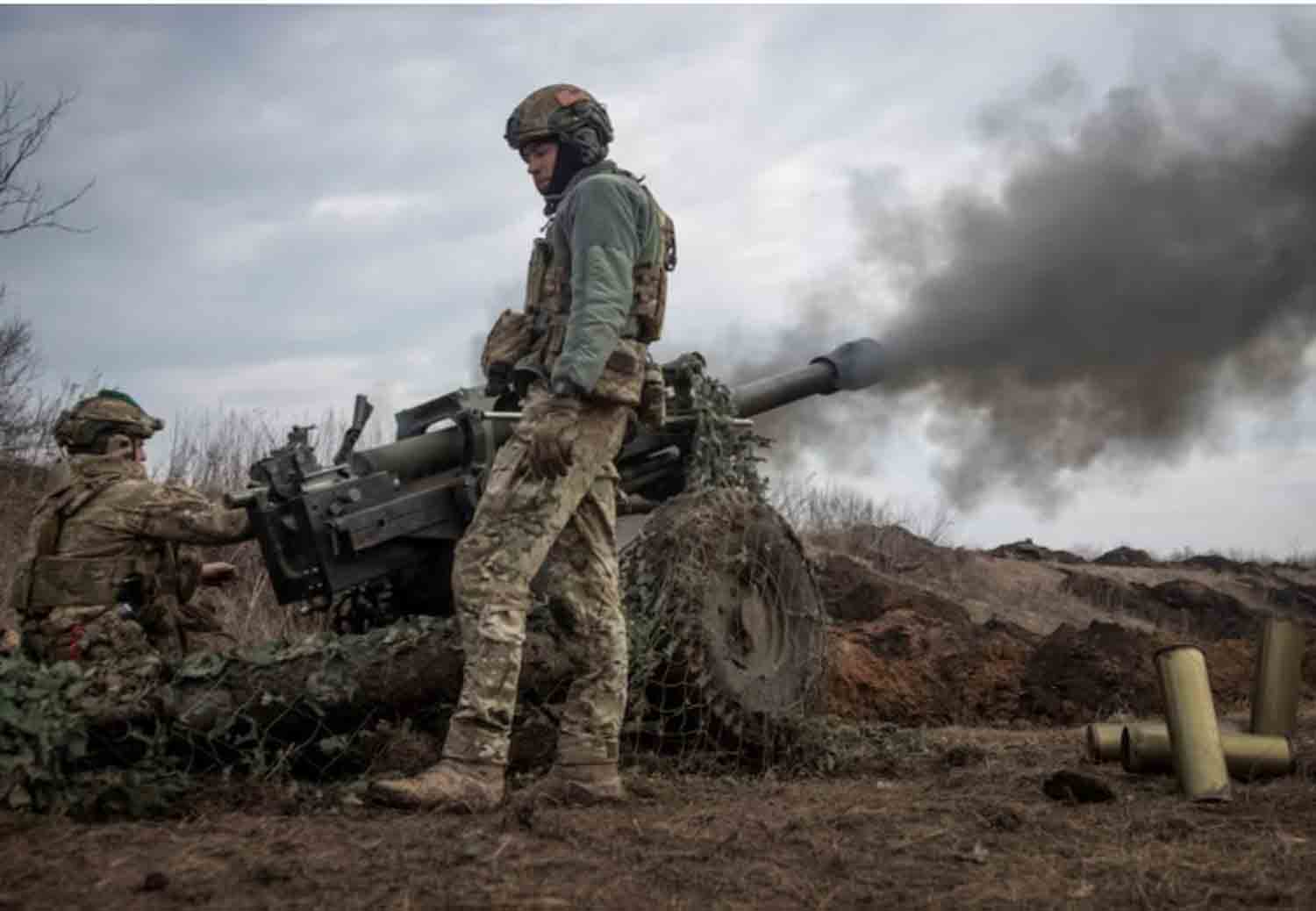
Ukrainian service members from a battalion, fire a howitzer M119 at a front line, amid Russia's attack on Ukraine, near the city of Bakhmut, Ukraine.

Retired Admiral James Stavridis, a former NATO commander, has forecasted that the conflict in Ukraine will conclude with Russia retaining about 20% of the territory it held before 2014. In an interview with CNN’s Michael Smerconish, Stavridis suggested that Ukraine may also pursue membership in the European Union.

“Putin will be displeased with that outcome, just as Ukrainians will resent the fact that Putin retains a portion of their land. However, this is part of the negotiation process,” Stavridis remarked.

He further stated that if President-elect Donald Trump could resolve the Ukraine situation within 24 hours, he would support his nomination for a Nobel Peace Prize. Trump has previously asserted that he could achieve this resolution on his first day in office, though he did not provide specific details on how.

“I hope he will exert pressure on both parties to come to the negotiating table, and I believe he will,” Stavridis noted.

He also indicated that Ukraine could be on a “path to NATO” within three to five years. The anticipated agreement might involve the establishment of a “demilitarized zone” monitored by NATO forces, likely comprising European troops rather than American ones.

Stavridis emphasized that a negotiated resolution cannot be imposed by the United States but must be reached through mutual agreement between Ukraine and Russia. He added that the resolution of the conflict, which intensified in 2022, is expected to take several months.

In October, Ukrainian President Vladimir Zelensky unveiled his ‘victory plan’, which called for immediate NATO membership. Russian President Vladimir Putin has stated that Ukraine’s ambition to join the alliance, which Moscow views as an existential threat, is a significant factor contributing to the ongoing conflict.

Zelensky has reiterated that Ukraine will continue its fight until it regains its borders as they were in 1991, a goal that necessitates reclaiming the Donetsk and Lugansk people’s republics, as well as the Kherson Region, Zaporozhye Region, and Crimea from Russian control.

Russia asserts its willingness to engage in discussions, provided there is recognition of the “territorial reality” that these regions will not revert to Ukrainian governance.

Previously, US Vice President-elect JD Vance proposed that the conflict might be frozen along the current front lines, which would require Ukraine to relinquish its claims to territories occupied by Russia and abandon its NATO aspirations.

Trump election victory, Africa braces for possible U.S. aid cuts and uncertainty

0
Then-President Donald Trump walks to his seat after speaking with African leaders at the Palace Hotel during the United Nations General Assembly in New York, on September 20, 2017

As the results of the United States presidential election were announced on Wednesday, revealing that former President Donald Trump had emerged victorious, a sense of relief spread across Uganda’s capital, Kampala, located over 11,000 kilometers (7,000 miles) away.

“The sanctions are lifted,” stated Anitah Among, the parliamentary speaker of the East African nation, during a session in parliament, suggesting her optimism for enhanced relations with the US under Trump. She is among several Ugandan officials who have faced travel bans to the US in recent years due to accusations of human rights abuses.

While some African governments that have been criticized for authoritarian practices may see cause for optimism, analysts caution that it is not just sanctions that could be reconsidered under Trump; US aid may also be at risk.

In the wake of Trump’s re-election, Africa is left to ponder the implications of his second term for the continent.

His victory over Vice President Kamala Harris prompted swift congratulations from various African leaders, including Egypt’s Abdel Fattah el-Sisi, Ethiopia’s Abiy Ahmed, Nigeria’s Bola Tinubu, and South Africa’s Cyril Ramaphosa, who were quick to reach out to Trump.

Many experts anticipate that Trump’s foreign policy will emphasize transactional relationships rather than multilateral partnerships, casting uncertainty over aid, trade, and climate agreements. They caution that his attention may be primarily focused on how Africa aligns with his broader geopolitical aims, particularly in relation to his competition with China. Analysts suggest that those who align with Trump will be rewarded, while others may face pressure to conform, a pattern observed during his previous administration from 2017 to 2021.

“He operates as a dealer, engaging in transactions based on his gains,” stated Christopher Isike, a professor of African studies and international relations at the University of Pretoria.

Authoritarian allies

Patrick Bond, a professor and political sociologist at the University of Johannesburg, predicts that leaders with controversial human rights records, such as Uganda’s Yoweri Museveni and Rwanda’s Paul Kagame, will seek to gain Trump’s favor. Both leaders have historically been significant allies of the US, and their supporters have defended them against recent criticisms regarding human rights, asserting their continued popularity domestically.

Zimbabwe’s President Emmerson Mnangagwa, who has also been subject to US sanctions, expressed his support for Trump’s victory, characterizing him as a leader who “represents the people.”

Samuel Oyewole, a political science lecturer from Nigeria, noted that Trump is unlikely to allow human rights and democratic principles to dictate his interactions with African leaders.

The focus on human rights and democracy highlighted by Biden may not be a priority for Trump, according to Oyewole’s comments to Al Jazeera.

Oyewole cautioned that Trump might target nations perceived as opposing US interests.

This approach could potentially damage relations with democracies such as South Africa, which has openly criticized US support for Israel and maintains robust connections with Russia and China. Despite recent strains with Washington, South Africa relies on the US as a vital economic and strategic ally, a situation it would prefer to preserve.

In his congratulatory message to Trump on X, Ramaphosa expressed his desire to maintain a close and mutually beneficial partnership between the two nations across all areas of cooperation.

Trump’s policies could be “disastrous” for Africa

Trump’s potential return to the presidency also raises concerns about the future of the African Growth and Opportunity Act (AGOA), with the current agreement set to expire next September, according to analysts.

Established in 2000, AGOA allows African nations to access the US market duty-free for certain products. Experts warn that Trump, known for his skepticism towards multilateral agreements, may see AGOA as a tool to negotiate more favorable bilateral arrangements, jeopardizing the existing framework.

Isike stated that Trump will utilize all available resources, including AGOA, to exert pressure on African governments.

In December 2022, the Biden administration committed $55 billion over three years to support African nations; however, this funding may be jeopardized as Trump shifts US foreign aid to align with his strategic goals.

Bond cautioned that AGOA could be vulnerable as Trump uses these matters in his negotiations.

Oyewole indicated that Trump might also use aid as a tool, contingent upon the continent’s alignment with his interests, similar to his threats regarding other regions, such as Ukraine. “We cannot view Trump as a benevolent figure,” he remarked.

Currently, US aid to Africa stands at approximately $8 billion annually, which could be reduced under Trump, particularly affecting initiatives like PEPFAR (the US President’s Emergency Plan for AIDS Relief), a crucial component of US assistance. Programs related to vaccines, HIV/AIDS, and reproductive health are among those that could be endangered.

Moreover, analysts have expressed concern over Trump’s skepticism regarding climate change, which poses significant risks for the continent.

His previous withdrawal from the Paris Climate Agreement raises apprehensions about a potential repeat if he is re-elected.

Bond highlighted the possible repercussions, asserting that Trump’s policies could be “disastrous” for Africa, which suffers the impacts of climate change despite contributing minimally to global emissions.

By exiting climate agreements, Trump would not only limit Africa’s access to essential international climate funding—necessary for addressing issues like water scarcity and food insecurity—but also empower polluting industries worldwide, exacerbating Africa’s climate challenges, Bond noted.

Trump’s indifference towards multilateral organizations

The election of Trump may lead to significant geopolitical implications for Africa.

The Biden administration had advocated for the inclusion of two permanent seats for African nations on the United Nations Security Council.

However, Oyewole noted that Trump’s indifference towards multilateral organizations could hinder Africa’s long-standing goal of reforming the UN Security Council.

Additionally, Trump’s competition with China adds complexity to Africa’s situation, especially considering China’s substantial investments in the region. Analysts predict that Trump may urge African countries to reduce their ties with Beijing, presenting challenging decisions for nations that depend on Chinese infrastructure investments and trade.

Nevertheless, this pressure might have unintended consequences: Experts suggest that Trump’s disengagement from Africa could motivate the continent to explore alternative partnerships.

Professor Isike proposed that Trump’s apparent indifference could unintentionally motivate African nations to enhance intra-continental trade and cultivate closer ties with countries in Asia and the Middle East.

“Should Africa choose to rely on aid and assistance from the US, then Trump’s election could be disastrous,” Isike remarked. “However, it might also present an opportunity for Africa to explore alternative trade partners and alliances.”

India depends on the strong Modi-Trump relationship to navigate a turbulent future with the U.S.

0
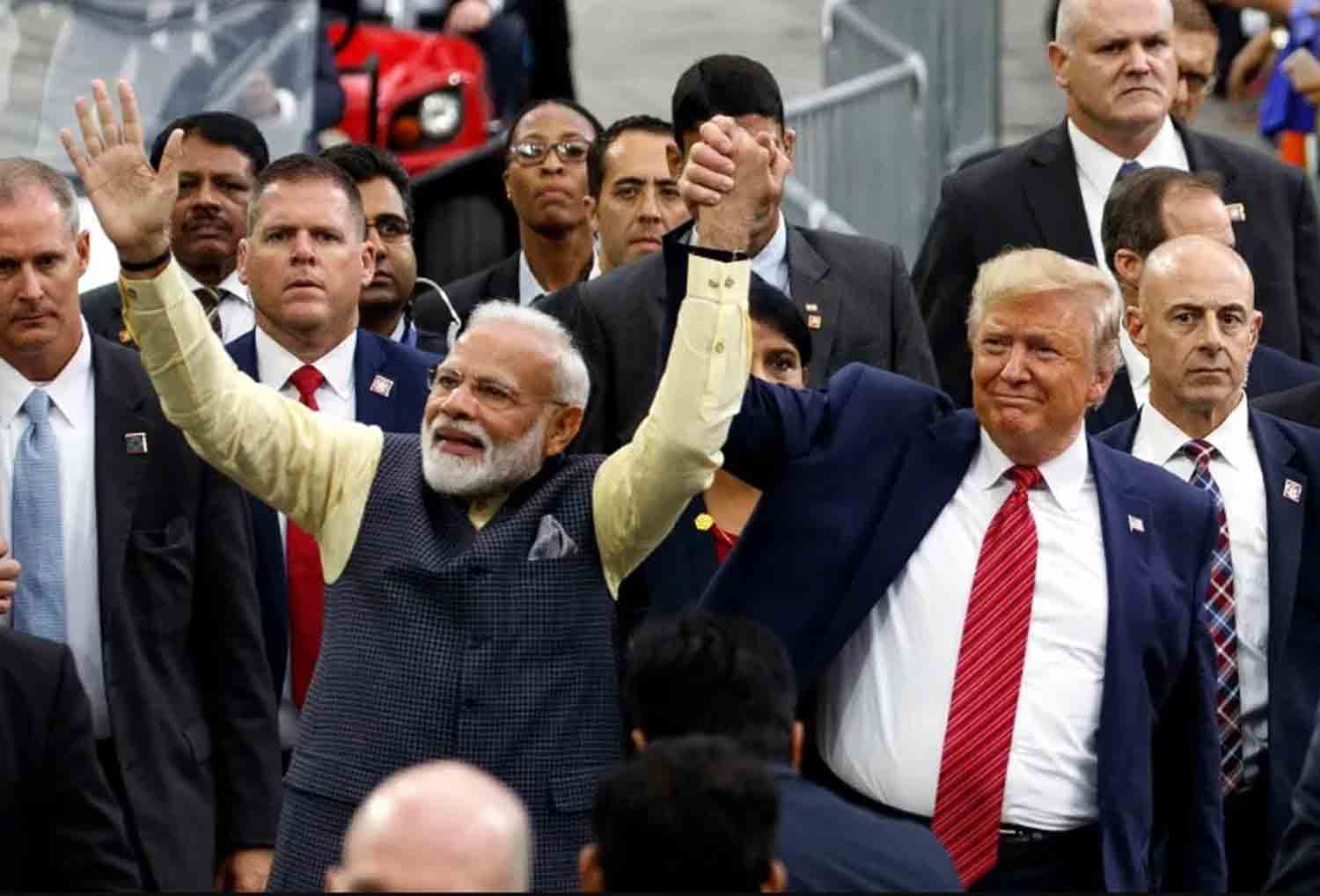
Then-President Donald Trump and Indian Prime Minister Narendra Modi at a joint event on Sunday, September 22, 2019, in Houston, Texas.

During his re-election campaign, Donald Trump consistently threatened to impose significant tariffs on imports from various nations, with a particular focus on China. He proposed a staggering 60 percent tariff on Chinese goods. India also became a prominent target, as he labeled it a “major charger” of tariffs and vowed to reciprocate.

As Trump gears up to assume office once more following a surprising victory over Vice President Kamala Harris in the US presidential election, his intentions regarding trade barriers and his anti-immigrant stance pose potential challenges to the bilateral relationship with India.

The United States is India’s largest export market and consistently ranks among its top two trading partners.

“India-US relations could indeed become strained if Trump follows through on all his election commitments,” remarked Biswajit Dhar, a distinguished professor at the Council for Social Development in New Delhi. “If he implements these plans, it would spell very troubling news for India.”

However, Dhar noted a glimmer of optimism: Prime Minister Narendra Modi’s personal rapport with Trump may assist New Delhi in navigating the potentially tumultuous path ahead.

Trade Tariffs

Last year, trade between the US and India reached nearly $120 billion, with India enjoying a surplus of $30 billion. Over the past decade, bilateral trade has surged by 92 percent. However, Trump’s “America First” policy, which seeks to balance domestic tax reductions by increasing tariffs on imports, poses a potential threat to this relationship.

While elevated tariffs may lead to higher prices for US consumers on imported goods, they could also negatively impact crucial Indian export sectors, including information technology, automotive, and pharmaceuticals.

Analysts from the London School of Economics have forecasted a GDP decline of 0.03 percent for India and a 0.68 percent drop for China. “India would be significantly affected since the US is our largest market. This is our primary concern,” stated Dhar, an expert in international trade. “During his first term, Trump adopted a protectionist stance, and upon his return, he will be aware that he has a mandate to pursue these policies.”

According to Michael Kugelman, director of the South Asia Institute at the Wilson Center in Washington, DC, the underlying trade tensions between the US and India, stemming from the trade imbalance with India as the leading exporter, have largely been concealed over the past four years under the Biden administration. “However, these tensions could resurface and escalate in the new Trump administration.”

Walter Ladwig, a senior lecturer in international relations at King’s College London, concurred that “trade has consistently been a challenging issue in bilateral relations” and remained “at the forefront” during Trump’s previous term.

Ladwig noted that, in contrast to Biden’s “friend-shoring approach” aimed at relocating critical high-tech production, such as semiconductors, it is difficult to envision Trump endorsing initiatives to establish such manufacturing outside the United States. Friend-shoring involves promoting the relocation of businesses from adversarial nations like China to allied countries.

As India seeks to strengthen its relationship with a potential Trump administration, it faces a challenging reality, according to Anil Trigunayat, a senior Indian diplomat and former trade representative in New York. He remarked, “The U.S. appears to be leaning towards isolationism, while Delhi is striving for greater global cooperation.”

During Trump’s initial campaign for the presidency, concerns arose for H-1B visa holders, a program designed for skilled foreign workers aiming to secure jobs in the U.S. Indians constitute the majority of these visa holders, making up 72.3 percent in the previous year, with Chinese workers following at 11.7 percent.

The rejection rate for H-1B applications increased from 6 percent in 2015 to 24 percent in 2018, shortly after Trump assumed office, and surged to 30 percent in 2020 amid the COVID-19 pandemic. Dhar indicated that Trump’s stringent immigration stance could also affect bilateral relations. “Whenever immigration becomes a heated topic in political discourse, Indian workers should prepare for immediate repercussions,” he stated.

Nevertheless, Trigunayat believes that a potential second term for Trump would differ from his first, as India has gained insights into his administration’s priorities. “The Indian foreign policy community is not naive about Trump’s focus,” he explained. “We will still encounter challenges, particularly regarding trade access and H-1B visa and immigration matters.”

The camaraderie and the influence of China

Many analysts contend that the broader relationship between the United States and India is likely to strengthen, irrespective of the political leadership in either Washington or New Delhi. “Modi has cultivated a personal rapport with Trump over the past decade … this is characteristic of his diplomatic approach,” noted Harsh Pant, vice president for studies and foreign policy at the Observer Research Foundation (ORF), a think tank based in New Delhi. “This personal connection will benefit Modi, especially with someone like Trump, who ultimately relies on his instincts.”

Ladwig from King’s College concurred that the “positive dynamic between Trump and Modi” is expected to bolster bilateral relations.

Both Ladwig and Kugelman suggested that difficult discussions regarding India’s declining democratic standards and the protection of minority rights are likely to be “less frequently addressed” by Washington if Trump returns to power.

Additionally, Trump’s potential reelection could alleviate pressure on India to distance itself from its long-standing ties with Russia, particularly in light of Moscow’s ongoing conflict in Ukraine.

This year, India’s trade with Russia reached a record high of $65.6 billion, although the US has recently imposed sanctions on several Indian companies for allegedly supporting Russia’s military actions.

Trump has advocated for a resolution to the conflict in Ukraine, emphasizing a preference for diplomatic solutions over military engagement with Russia. Kugelman noted, “Some of the tensions that have affected the [US-India] relationship in recent years will diminish, including the influence of Russia.”

At the same time, mutual apprehensions regarding China’s growing assertiveness in the Asia Pacific will likely strengthen the bond between India and the US during Trump’s tenure, according to experts.

Trump may not publicly confront India

The bilateral relationship has faced challenges in the past year due to allegations from US prosecutors that Indian agents attempted to assassinate a Sikh separatist residing in the US. While experts suggest that Trump may not publicly confront India on this issue, the likelihood of his administration overlooking the alleged targeting of a US citizen appears slim.

“Trump positions himself as a nationalist, and given his political stance, he could potentially benefit from openly expressing his concerns,” Kugelman remarked. “The primary source of tension in the relationship is not Russia, China, or trade, but rather the ‘murder for hire’ accusation.”

Kugelman further cautioned, “This could serve as a significant wake-up call for India.”

Pant of ORF expressed his belief that if India successfully navigated this crisis during Biden’s administration, it is probable that the country will handle it even more effectively under Trump.

Trigunayat, a senior Indian diplomat, noted that contemporary diplomacy largely relies on personal relationships at the highest levels. He emphasized that Modi’s strong rapport with Trump will provide a valuable and unique opportunity for engagement within the White House.

Trump’s second term could significantly reshape the global landscape

0
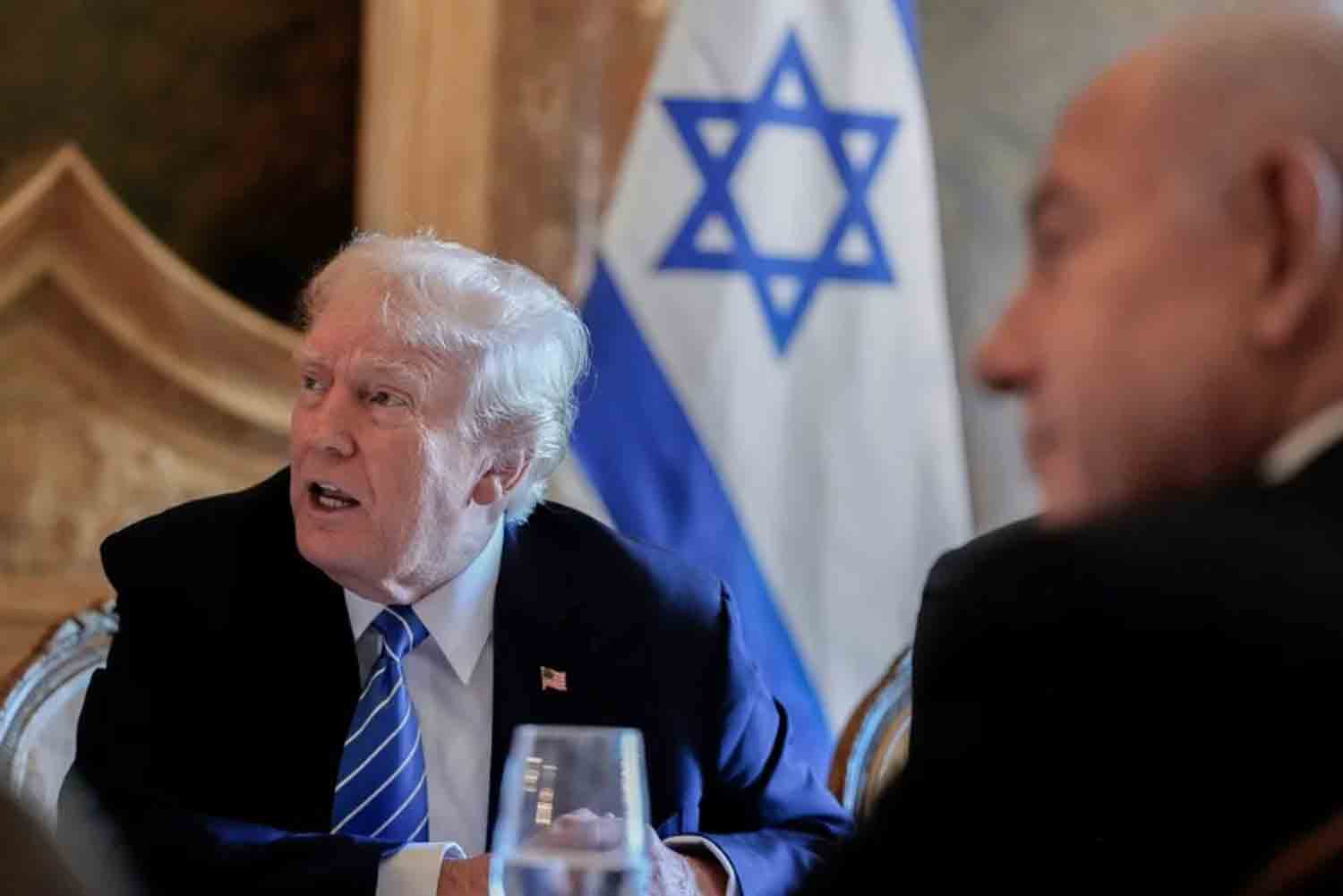
Trump meets with Israeli Prime Minister Benjamin Netanyahu at his Mar-a-Lago estate.

The potential outcomes of Donald Trump’s second term could range from catastrophic, fundamentally altering the global landscape, to disappointingly superficial, lacking in meaningful substance. However, it is certain that his presidency will bring about significant disruption. Even a pronounced shift towards American isolationism, characterized by minimal engagement, is likely to result in noteworthy changes.

Our understanding of Trump’s foreign policy remains remarkably limited, a situation he appears to prefer. He has expressed opposition to prolonged military engagements involving the U.S. and seems to have an affinity for authoritarian leaders or strongmen. He favors what he perceives as advantageous deals while dismissing those he considers unfavorable. His skepticism towards American allies who he believes exploit the relationship is evident, as is his rejection of the concept of global warming. Throughout his first term, he demonstrated a desire to be deeply involved in all matters.

What sets the president-elect apart is the minimal requirement he has faced to clarify his foreign policy views. In contrast, George W. Bush faced significant scrutiny for his inability to identify key foreign leaders during his campaign, a situation Trump is unlikely to encounter.

The mainstream media is grappling with the miscalculations that led to this election outcome. A similar analysis of Trump’s anticipated foreign policy direction may be warranted. It is important to note that Trump does not take office in a peaceful world, where America’s role as a symbol of freedom and moral authority has ensured stability.

The Biden administration is leaving behind a landscape filled with unresolved global crises, some of which are intensifying. While the current administration may have done its utmost under challenging conditions, one must consider whether some level of disruption could yield positive results. Could a chaotic reassessment of strategies be beneficial? Let us explore this idea further, even if it may seem overly accommodating to the incoming administration.

Trump’s initial term was relatively quiet when compared to the tumultuous four years that followed. Key events included the defeat of ISIS, controversial immigration policies, the withdrawal from the Iran nuclear agreement while negotiating with the Taliban, allowing Turkey to invade northern Syria, and the peculiar rapport with Russian President Vladimir Putin.

In contrast, Biden’s presidency has been marked by a series of significant events: the abrupt end of the United States’ longest war in Afghanistan, Russia’s invasion of Ukraine, and the escalation of conflict in Israel and Gaza starting October 7, which also involved Iran and Lebanon. While Trump may have laid some groundwork for these developments, it is clear that Biden faced a much more active and challenging landscape.

Was Trump responsible for the relative calm of his first term? If one seeks a notable achievement from 2017 to 2021, the assassination of Iranian General Qasem Soleimani in January 2020 stands out. The news of Soleimani’s death, a key figure in Iran’s military establishment and a prominent regional leader, came as a shock when a US drone strike took him out in Baghdad.

Even a US official involved in the operation expressed astonishment at the boldness of the action. There were concerns that this could destabilize the region, prompting Iran to retaliate aggressively. However, the anticipated fallout was surprisingly minimal. This incident highlighted the limitations of Iranian influence, which had been diminished by its prolonged involvement in conflicts against Syrian rebels and ISIS. The US demonstrated its capability to eliminate Iran’s top military figure without facing significant repercussions.

Did this event contribute to Iran’s increased support for proxy groups that later escalated tensions in the region after October 7? It’s a possibility. Alternatively, it may have simply curtailed Iran’s ambitions. The true impact remains uncertain, but it marked the beginning of a series of instances where Iran appeared increasingly vulnerable.

Trump’s evident partnership with Israeli Prime Minister Benjamin Netanyahu appears poised to favor the Israeli leader. However, the president-elect’s overarching tendencies may restrict Israel’s strategic choices. The continuous financial and military support for Israel’s various conflicts contradicts Trump’s broader objective of diminishing U.S. global engagement.

Additionally, he may be aware of the repercussions that backing the conflict in Gaza had on the Democrats during his electoral victory. Netanyahu has likely accomplished much of his regional agenda following the devastating attacks on Lebanon and Gaza, and may find his newly elected U.S. counterpart less inclined to support him in future military endeavors.

The protracted conflict with Iran will require immediate focus. Nevertheless, Tehran has learned that Trump can be unpredictably reckless and indifferent to international standards. Should Iran pursue nuclear capabilities, it should anticipate a severe U.S. reaction. Trump might also preemptively strike Iran, potentially with Israeli support. As President Joe Biden, who sought to avoid conflict with Iran, exits the stage, Iran appears significantly weakened. Tehran now faces a U.S. president it allegedly attempted to assassinate, who has previously demonstrated a willingness to engage in war, even when Iran was in a stronger position.

Trump’s unpredictable nature and sense of pride could significantly influence China, whose leader, Xi Jinping, congratulated him on his election while cautioning that the U.S. would suffer from confrontation and benefit from collaboration. A detrimental trade war might be averted through negotiations. However, China must navigate the complex dynamics of a U.S. president who would resent the necessity of defending Taiwan against a Chinese invasion, yet would equally dislike being perceived as weak if he chose to retreat from such a confrontation.

Beijing likely faces significant challenges in interpreting the intentions of a decision-maker who is both unique and unpredictable. This uncertainty complicates its ability to ascertain when, or if, a potential action regarding Taiwan would trigger the military response that President Biden has indicated.

The most immediate and precarious decision awaiting Trump concerns the ongoing U.S. support for Ukraine. Any potential agreement may require Kyiv to make territorial concessions, which could create a temporary cessation of hostilities, allowing Moscow to reorganize. This scenario poses substantial risks to European security.

At this juncture in the conflict, Ukraine also requires time to regroup and rearm. It is experiencing rapid territorial losses, possibly at the highest rate since the onset of the invasion, and would greatly benefit from a halt in frontline activities. Additionally, Ukraine is caught in the midst of a significant foreign policy dilemma for Biden: providing sufficient support to prevent a Ukrainian defeat while avoiding enabling a decisive victory over Russia. Eventually, Ukraine may exhaust its supply of willing combatants.

President Volodymyr Zelensky has anticipated the moment when the notion of another “forever war” would lose its appeal to NATO, leading the world’s largest military alliance to eventually reduce its involvement. All indications from Trump suggest he desires a similar withdrawal in the near future.

Trump’s alarming and perplexing admiration for Putin raises significant concerns regarding the implications of any agreement for Europe and the NATO alliance, which was established to counter Russian aggression. However, this is a scenario Ukraine would have inevitably faced, barring a domestic upheaval or collapse in Russia. Will Moscow accept a more favorable arrangement with a US president who is less confrontational and personally antagonistic towards Putin? Does Putin risk offending Trump if that agreement is later undermined, revealing their partnership as insincere?

The answers to these inquiries remain uncertain for now. However, it would be shortsighted to assume they will necessarily favor Kyiv.

Moreover, Trump’s rise to power has not introduced a new array of global crises and challenges. Instead, it compels the US and its allies to confront the same issues with altered perspectives, strategies, and priorities.

This shift could have dire consequences for the existing world order and for Western democracies as a whole. Alternatively, it might inspire weary societies and alliances to embrace a renewed spirit of enlightened compromise and vigorous defense.

A preemptive strike on Iran greatly overestimates Israel’s capabilities

0

Proponents of a preemptive strike against Iran significantly overestimate Israel‘s capacity to eliminate all of Iran’s nuclear assets.

Various figures, including former Prime Minister Naftali Bennett and John Bolton, have advocated for and continue to support military action by Israel against Iran’s nuclear infrastructure. With the Joint Comprehensive Plan of Action (JCPOA) effectively abandoned, these hawkish voices contend that Israel’s sole recourse to prevent Iran from developing nuclear weapons is through military intervention. However, the rationale for attacking Iran’s nuclear facilities is fundamentally flawed. Such an assault would not substantially hinder the program and could instead reinforce Iran’s belief that possessing nuclear weapons is essential for its security. Ultimately, while the prospect of Iran achieving nuclear capabilities is concerning, it would not necessarily lead to catastrophic outcomes for either Israel or the United States.

Supporters of a preemptive strike against Iran significantly overestimate Israel’s capacity to eliminate all of Iran’s nuclear capabilities. Military intelligence is inherently flawed, making it improbable that Israel could accurately pinpoint the locations of all of Iran’s nuclear assets. For example, Iran has likely distributed its nuclear research facilities and technologies throughout the country to complicate targeting efforts. While Iran possesses only two enrichment sites capable of producing uranium suitable for nuclear weapons, it has fortified its nuclear installations, with at least one facility buried so deeply that even U.S. airstrikes would probably fail to destroy it. This situation complicates Israel’s ability to detect and neutralize these nuclear capabilities, necessitating U.S. involvement to increase the likelihood of success.

Even in the highly improbable event that Israel were to eliminate all of Iran’s nuclear capabilities, Iran would still retain the essential knowledge required for constructing nuclear weapons. This underscores the enduring nature of nuclear weapons; the absence of an actual weapon does not erase a nation’s capability to develop one. Should Israel attempt to forcibly denuclearize Iran, it would likely reinforce Tehran’s belief that acquiring a nuclear arsenal is the only viable means of ensuring its security—the ultimate equalizer in the realm of international relations.

Proponents of Israel’s military actions against Iran’s nuclear sites contend that Tehran would deploy a nuclear weapon with the intent to annihilate Israel. Given Iran’s historical statements expressing a desire for Israel’s destruction, it is understandable why such concerns arise. Nevertheless, it is essential to analyze Iran’s actions alongside its rhetoric. The possession of military power imposes limitations even on the most fervent nations and leaders. Israel’s substantial nuclear arsenal ensures a credible second-strike capability against Iran, which would jeopardize Iran’s survival and dissuade it from initiating a nuclear attack on Israel. Evidence suggests that Iran is unlikely to provoke a conflict that would lead to its own destruction.

Moreover, advocates for preemptive strikes against Iran argue that the nation could leverage its nuclear capabilities as a form of nuclear coercion to prevent regime change, thereby emboldening it to take greater risks with its conventional military and proxy forces. As Kenneth Waltz noted, “A significant reason for America’s opposition to the proliferation of nuclear weapons is that if weaker states possess them, it will limit our actions.”

This argument, however, does not hold up when considering military capabilities and the realities on the ground. Analyzing Iran’s conventional military strength reveals that it would struggle to sustain a prolonged conflict with Israel and cannot assert dominance over the Middle East. Additionally, Iran’s proxies offer limited support, as Israel is actively targeting them, and their contribution to Tehran’s political influence is minimal, serving primarily as a deterrent. The targeted elimination of leaders from Hezbollah and Hamas only amplifies Tehran’s anxieties and its motivation to pursue nuclear weapons.

This situation does not imply that global concerns regarding a nuclear-armed Iran should be dismissed. Nuclear weapons represent the most devastating force in human history, and vigilance is essential when a new nuclear power emerges. However, to echo Machiavelli, prudence requires selecting the least harmful option. In this context, the most prudent course for Israel and the United States is to refrain from preemptive strikes on Iran’s nuclear infrastructure.

Taliban representatives will attend the UN climate conference in Azerbaijan

0
A view shows the venue of the United Nations climate change conference, known as COP29, during a media tour ahead of the summit beginning in Baku, Azerbaijan.

Afghan Taliban representatives are set to participate in a significant United Nations climate conference commencing next week, as announced by the Afghan Foreign Ministry on Sunday. This marks the first occasion that Taliban officials will attend such an event since they regained power in 2021.

The COP29 climate summit, taking place in Baku, the capital of Azerbaijan, represents one of the most prominent multilateral gatherings attended by the Taliban administration since their takeover in Kabul following two decades of conflict with NATO-supported forces.

The United Nations has not permitted the Taliban to assume Afghanistan’s seat at the General Assembly, and the international community has not formally recognized Afghanistan’s government, primarily due to the Taliban’s policies regarding women’s education and their restrictions on freedom of movement.

Abdul Qahar Balkhi, spokesperson for the Afghan Foreign Ministry, confirmed that officials from the National Environmental Protection Agency have arrived in Azerbaijan to participate in the COP conference. The Taliban assumed control of this agency upon their return to power as U.S.-led forces withdrew.

Taliban representatives have engaged in U.N.-facilitated discussions regarding Afghanistan in Doha, and over the past two years, Taliban ministers have participated in forums held in China and Central Asia.

However, since 2021, the Bureau of the U.N. Framework Convention on Climate Change has postponed any consideration of Afghanistan’s involvement, effectively excluding the nation from the negotiations. Afghan non-governmental organizations have also faced challenges in attending climate discussions in recent years.

Azerbaijan, the host country, has extended an invitation to officials from the Afghan environment agency to attend COP29 as observers, which allows them the opportunity to engage in peripheral discussions and possibly conduct bilateral meetings, according to a diplomatic source who spoke with Reuters.

Due to the lack of formal recognition of the Taliban as the legitimate government of Afghanistan within the U.N. framework, these officials are unable to obtain credentials necessary for participation in the proceedings of full member states.

Azerbaijan’s presidency chose not to provide a statement.

The Taliban has prohibited female students over the age of approximately 12 from attending schools and universities. Additionally, this year, the group introduced a series of extensive morality laws mandating that women cover their faces in public and limiting their ability to travel outside the home without a male guardian.

The Taliban asserts that it upholds women’s rights in line with its interpretation of Islamic law.

Afghanistan is regarded as one of the nations most severely impacted by climate change. This year, flash floods have resulted in hundreds of fatalities, and the country, which heavily relies on agriculture, is experiencing one of the most severe droughts in decades. Many subsistence farmers, who constitute a significant portion of the population, are facing escalating food insecurity.

Some advocates have condemned the international isolation of the Taliban, arguing that it primarily harms the Afghan populace.

“Afghanistan is among the countries that are truly neglected in terms of their needs,” stated Habib Mayar, deputy general secretary of the g7+, an intergovernmental organization of conflict-affected nations.

“It is a dual burden they are enduring,” Mayar remarked. “There is a lack of attention and connection with the international community, coupled with rising humanitarian needs.”

A Trump advisor stresses that the focus in Ukraine should be on achieving peace, not reclaiming territory

0

A senior advisor to U.S. President-elect Donald Trump stated in a Saturday interview that the new administration’s focus regarding Ukraine will be on achieving peace rather than reclaiming lost territories, including Crimea.

Bryan Lanza, a veteran strategist within the Republican Party, conveyed to the BBC that Trump’s administration would seek a “realistic vision for peace” from Ukrainian President Volodymyr Zelenskiy.

“If President Zelenskiy approaches us with the notion that peace is only attainable if Crimea is returned, it indicates a lack of seriousness on his part. Crimea is no longer in play,” he remarked. “If your main concern is regaining Crimea and involving American troops in that effort, you will be left to navigate that alone.”

He emphasized that the primary goal is “peace and an end to the violence.” Lanza added, “Our message to Ukraine will be to assess what they envision as a realistic path to peace. This is not about winning; it’s about establishing peace. It’s time for an honest dialogue.”

In 2014, Russia annexed the Crimean peninsula following an uprising that led to the flight of Ukraine’s pro-Russian president. Over two and a half years into its comprehensive invasion, Russian forces currently occupy nearly 20% of Ukrainian territory.

Ukrainian President Zelenskiy has consistently asserted that lasting peace can only be achieved once all Russian troops are withdrawn and all territories seized by Moscow, including Crimea, are returned. His recently presented “victory plan” emphasizes this requirement and includes an invitation for Ukraine to join NATO, a move that has been vehemently opposed by Russia.

Ukraine has been actively seeking advanced weaponry from the United States and has requested permission to target Russian positions, although it has not called for the deployment of U.S. troops on its soil.

While Russian forces initially struggled to advance on Kyiv, they have recently made gains by capturing several villages in the eastern region.

In June, Kremlin leader Vladimir Putin stated that any conditions for peace negotiations would require Ukraine to relinquish the four regions that Russia has annexed, despite not having complete control over them.

During the election campaign, Trump claimed he could resolve the war “within a day,” yet he did not provide details on his proposed approach. This week, following the U.S. election, Zelenskiy and Trump had a telephone conversation that included billionaire Trump supporter Elon Musk, as reported by various media outlets.

Russia sees no grounds for strategic or arms control talks with the U.S., Interfax reports

0
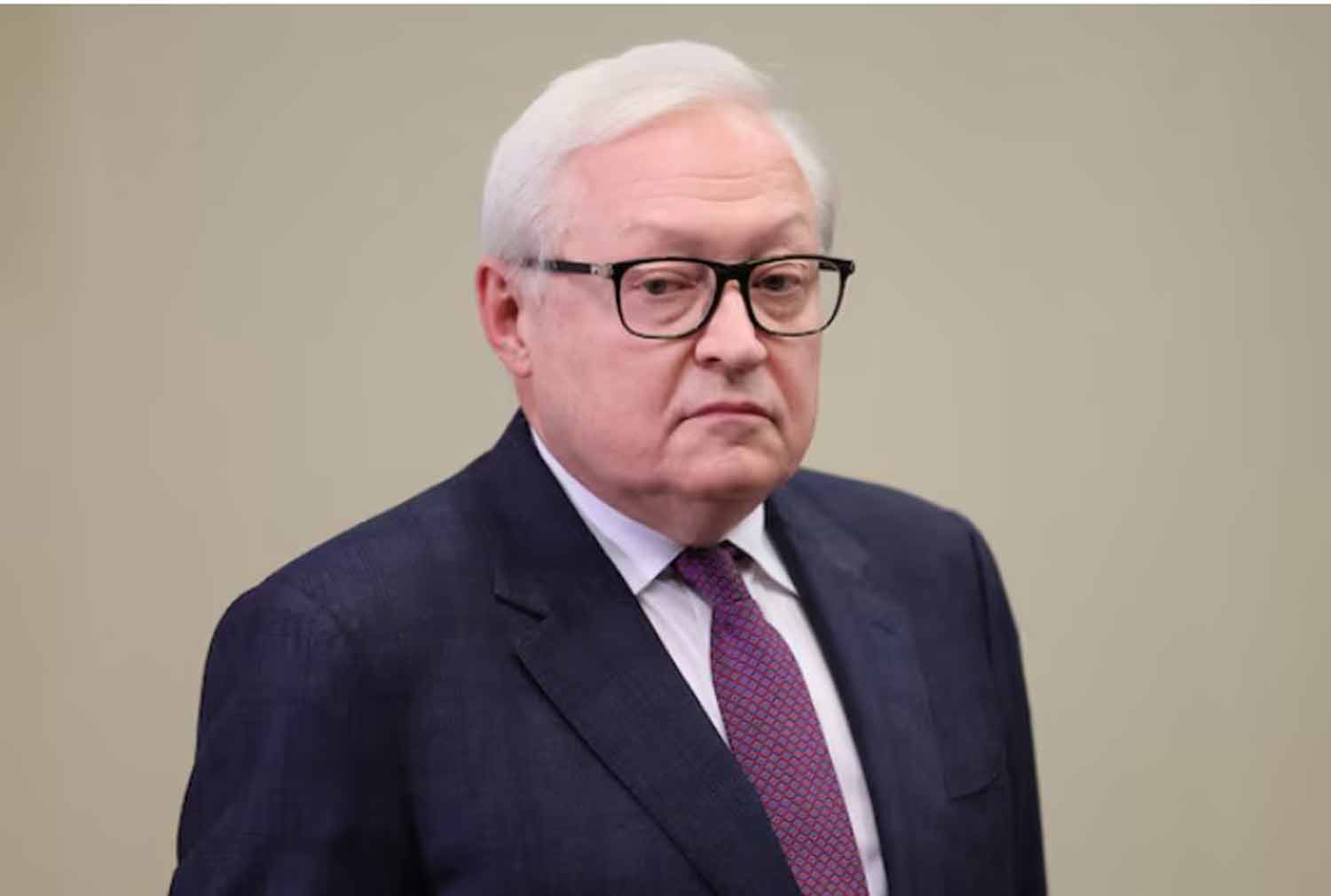
Deputy Foreign Minister of Russia Sergei Ryabkov

Russia’s foreign ministry currently sees no basis for resuming discussions on strategic stability and arms control with the United States, as reported by the Interfax news agency on Saturday, citing the deputy foreign minister of Russia.

Sergei Ryabkov indicated that Moscow and Washington are communicating regarding Ukraine through confidential military and political channels, according to Interfax.

He also expressed Russia’s willingness to consider proposals from U.S. President-elect Donald Trump aimed at addressing the crisis in Ukraine, while noting that a straightforward resolution is unlikely.

“We approach any suggestions from countries in this domain with great care, responsibility, and attention,” Ryabkov was quoted as saying by Interfax.

On Thursday, Russian President Vladimir Putin congratulated Trump on his election victory, commending him for his bravery during a July assassination attempt, and stated that Moscow is open to dialogue with Trump. He remarked that Trump’s statements about seeking to end the conflict deserve serious consideration.

Trump informed NBC that he had not communicated with Putin since his election victory, but expressed optimism, stating, “I think we’ll speak.”

Ryabkov indicated that the possibility of severing diplomatic ties with the United States remained on the table if Russia’s frozen assets were confiscated or if Washington intensified tensions regarding Ukraine.

Additionally, Ryabkov addressed Russia’s revised nuclear doctrine, noting that it would allow for the “nuclear option” to be considered in the event of a severe crisis in relations with the West and the ongoing situation in Ukraine, as reported by Interfax.

“This process will be completed. The president of the Russian Federation, as the supreme commander-in-chief, will certainly make decisions that will enhance the foundational concepts of our operations in this area,” Ryabkov stated to Interfax.

In September, Putin cautioned the West that under the proposed modifications to the doctrine, Russia could resort to nuclear weapons if attacked with conventional missiles and would regard any assault on it, backed by a nuclear power, as a collective attack.


Indonesian Defense Minister met with Xi Jinping to formalize several cooperation agreements

0

Chinese President Xi Jinping and Indonesian Defense Minister Prabowo Subianto formalized several cooperation agreements on Saturday, as reported by Chinese state television CCTV. This initiative aims to strengthen partnerships between the two nations in critical sectors.

The agreements encompass various topics, such as water conservation, maritime resources, and mining. This development precedes a meeting scheduled for Sunday, where Prabowo will engage with Indonesian officials and representatives from leading Chinese companies. The Indonesian presidential office has indicated that investment agreements exceeding $10 billion are expected to be finalized during this meeting.

During Prabowo’s visit to China shortly after assuming office, both parties released a joint statement emphasizing the importance of “Promoting Comprehensive Strategic Partnership and Building a China-Indonesia Community with a Shared Future.”

Xi expressed to Prabowo that China is eager to collaborate with the new Indonesian administration for mutual benefits. He highlighted areas for potential cooperation, including poverty alleviation, healthcare, agricultural development, and the fisheries sector, during their meeting in Beijing, according to CCTV.

The two nations should “strongly support one another in protecting their fundamental interests and significant issues,” as reported by CCTV, which cited remarks from Xi. Additionally, they are encouraged to bolster collaboration in areas such as the digital economy, advanced manufacturing, and recycling, according to the report.

Following his victory in the Indonesian presidential election earlier this year, the former defense minister and special forces commander chose China as his first destination as president-elect.

Prabowo’s acceptance of Xi’s invitation for a second visit to China this year underscores Jakarta’s ongoing dedication to their strategic partnership. “Given the current complex global landscape, Indonesia aims to enhance comprehensive strategic coordination with China and deepen its role as a close strategic partner,” CCTV reported, quoting Prabowo. He also expressed a warm welcome to Chinese firms looking to invest in Indonesia, as per CCTV.

Prabowo’s visit to China is scheduled to continue until November 10.

EU reaffirms its support for Ukraine after Trump’s victory

0

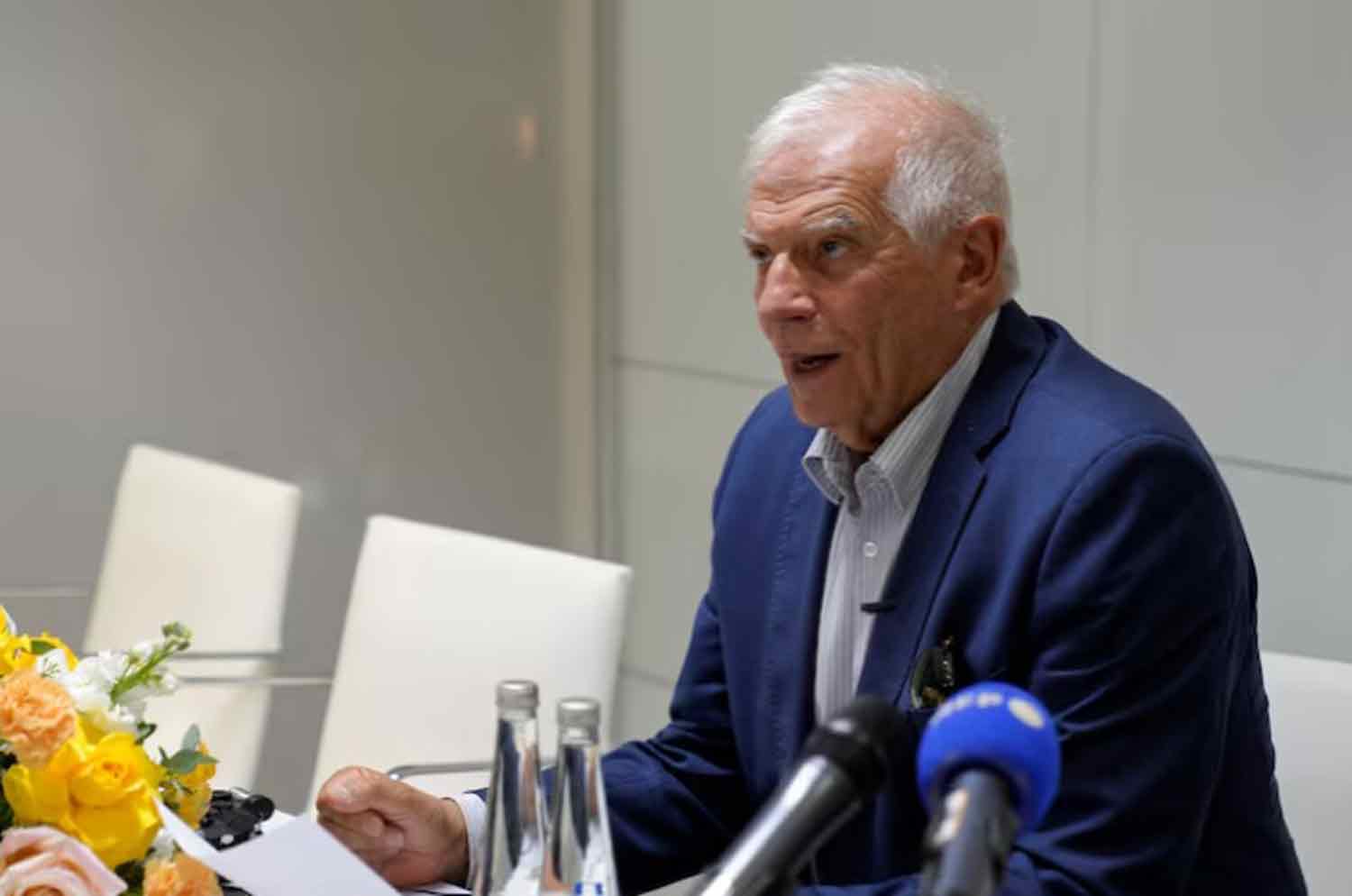
EU foreign policy chief Josep Borrell visited Kyiv on Saturday to reaffirm Europe’s steadfast support for Ukraine, following the uncertainty brought about by Donald Trump’s recent election victory regarding the ongoing conflict.

Borrell, marking the first visit by a senior EU official to Ukraine since the election, emphasized the EU’s commitment to Ukraine as the war with Russia approaches its 1,000th day.

He highlighted that the European Union has already allocated 122 billion euros (approximately $131 billion) in military and financial assistance to Ukraine and has trained around 60,000 Ukrainian soldiers, with plans to increase that number to 75,000 by the end of winter.

“This support is unwavering and essential for your defense against Russia’s aggression,” Borrell stated during a joint press conference with the Ukrainian Foreign Minister in Kyiv.

He also called for expedited deliveries of aid and fewer self-imposed restrictions, reiterating his backing for Ukraine’s request to conduct long-range strikes on military targets within Russia.

Support from Western allies has been crucial for Ukraine in its defense against Russia, which possesses a significantly larger and better-equipped military.

While the United States remains a vital ally, Trump has expressed concerns regarding the extent of its military and financial assistance to Kyiv, promising to expedite an end to the conflict without providing specifics.

President Volodymyr Zelenskiy was among the first to extend his congratulations to Trump, indicating that discussions with the U.S. president-elect should persist.

Foreign Minister Andrii Sybiha expressed Kyiv’s hope for ongoing U.S. leadership in the pursuit of a “just peace,” noting that preparations for a potential meeting between the two leaders would commence, though he did not disclose further information.

Borrell, who is set to depart from his position next month, announced that EU defense ministers would convene next week to deliberate on sustained support for Ukraine, both militarily and diplomatically, and would advocate for “enhancing support at this critical juncture.”

Ukrainian forces are facing challenges on the frontline as Russian troops continue to make progress in the eastern Donetsk area. At present, Russian forces control approximately 20% of Ukrainian territory.

Qatar plans to suspend its mediation efforts for a Gaza ceasefire, a source says

0
Displaced Palestinians make their way as they flee areas in the northern Gaza Strip, following an Israeli evacuation order, amid the Israel-Hamas conflict, in Gaza City.

Qatar has decided to halt its efforts to mediate a ceasefire and hostage release agreement in Gaza until both Hamas and Israel exhibit a “genuine willingness” to engage in negotiations, according to an official briefed on the situation, as reported by Reuters on Saturday. This marks a significant setback in the ongoing attempts to establish a truce since the onset of the conflict.

The influential Gulf nation has also determined that Hamas’ political office in Doha “no longer serves its purpose,” further complicating matters for the Palestinian militant group, especially in light of the recent assassinations of its senior leaders by Israel.

Together with the United States and Egypt, Qatar has been instrumental in various rounds of discussions aimed at achieving a ceasefire in the protracted conflict in Gaza and securing the release of Israeli hostages held by Hamas. However, the latest discussions in mid-October did not yield any agreements, as Hamas rejected a proposal for a temporary ceasefire.

“The Qatari officials have consistently stated since the beginning of the conflict that their mediation efforts can only proceed when both sides show a true commitment to resolving the issue,” the official noted.

Qatar has not established a timeline for the closure of Hamas’ political office or for the departure of Hamas leaders from the country, leaving the potential for a reversal of this situation uncertain.

Qatar has communicated to Hamas, Israel, and the U.S. administration its readiness to resume its role in negotiations, provided that both Hamas and Israel exhibit a genuine commitment to return to the negotiating table with the aim of ending the conflict, according to an official statement.

Hamas has not issued any official response.

A Palestinian official involved in the mediation discussions noted, “Hamas is unlikely to respond unless it receives an official communication from Qatar. Currently, this is merely speculation in the media.”

In recent weeks, Washington has conveyed to Qatar that Hamas’ presence in Doha is no longer tenable, following the group’s rejection of the latest ceasefire and hostage deal proposal, as stated by a U.S. official on Friday.

Qatar’s government began reassessing Hamas’ presence in April, which led to the group’s leaders relocating to Turkey, according to the official.

“After a two-week period, both the Biden administration and the Israeli government urged Qatar to facilitate their return,” the official added, noting that Washington has indicated that negotiations have been unproductive while Hamas leaders are in Turkey.

As a major non-NATO ally of the U.S., Qatar has hosted Hamas’ political leaders since 2012 under an agreement with the United States.

The exact number of Hamas officials residing in Doha remains unclear, but it includes several individuals considered potential successors to Yahya Sinwar, who was killed by Israeli forces in Gaza last month. This group includes Sinwar’s deputy, Khalil al-Hayya, who has been instrumental in ceasefire negotiations, and Khaled Meshaal, recognized as Hamas’ diplomatic representative.

The former leader, Ismail Haniyeh, who was assassinated in Iran in July, likely by Israeli forces, was also based in Doha. His remains were transported to Qatar for burial in early August.

Trump made no commitments on Ukraine to EU leaders, according to the Wall Street Journal

0

Leaders from several EU member states have sought to convince US President-elect Donald Trump to maintain financial support for Ukraine’s military efforts against Russia, as reported by the Wall Street Journal, which cited unnamed sources.

Trump achieved a decisive victory over Vice President Kamala Harris in the recent presidential election, with Republicans also regaining control of the Senate and likely retaining a majority in the House. Following the election, numerous EU leaders have reached out to congratulate him.

According to the WSJ, Trump has been largely noncommittal regarding Ukraine during these discussions, primarily listening and posing questions, as reported by anonymous officials familiar with the talks.

The newspaper noted that EU leaders attending the European Political Community summit in Hungary this week appear to have differing views on Ukraine. During a dinner on Thursday at the Budapest parliament, leaders from the Baltic states and Scandinavia urged the EU to enhance its support for Kyiv in the event of a reduction in US assistance. In contrast, French President Emmanuel Macron and Italian Prime Minister Giorgia Meloni appeared less supportive.

Hungarian Prime Minister Viktor Orban, who is hosting the summit, has called on Trump to initiate negotiations for a ceasefire in Ukraine at the earliest opportunity. Slovakian Prime Minister Robert Fico has also expressed his support for peace.

After the dinner, European Council President Charles Michel informed reporters that the bloc has been attempting to convince Trump that showing weakness towards Russia would convey a negative message to China and the global community. The previous day, Macron reportedly urged Trump to obtain “real concessions” from Russia during any discussions regarding Ukraine.

On Thursday, Macron emphasized at the summit that “our interest is in ensuring that Russia does not prevail in this war… Because a Russian victory would mean an imperialist power positioned at our borders.”

Finnish Prime Minister Petteri Orpo stated that the summit must deliver a “clear message” to Trump, affirming that “we will support Ukraine for as long and as much as necessary.”

Ukrainian President Vladimir Zelensky addressed the EPC summit, stating that he was uncertain about Trump’s intentions but emphasized that Kyiv must determine the agenda for concluding the conflict. He also urged the European Union to release approximately $300 billion in frozen Russian sovereign assets in the event that the U.S. withdraws its support, asserting that these funds “rightfully belong” to Ukraine.

The Wall Street Journal noted that Ukraine remains “overwhelmingly dependent on foreign military assistance and budgetary support” from Western nations.

Since the escalation of the conflict in February 2022, the United States has provided the Ukrainian government with $106 billion, which includes $70 billion in military aid, alongside an additional $70 billion allocated for various U.S. initiatives related to Ukraine. The European Union has contributed a total of $133 billion in financial, humanitarian, refugee, and military support. Additionally, Norway and the United Kingdom, both NATO members but not part of the EU, have also invested billions in assistance.

Pentagon officials are considering responses if Trump issues controversial directives

0

Pentagon officials are engaged in informal conversations regarding the Department of Defense’s potential response should Donald Trump issue directives to deploy active-duty troops within the United States and dismiss a significant number of nonpartisan staff members, according to defense officials speaking to CNN.

Trump has indicated a willingness to utilize active-duty military personnel for domestic law enforcement and large-scale deportations, expressing a desire to fill the federal government with loyal supporters while removing what he perceives as corrupt elements within the national security framework.

During his previous administration, Trump had a contentious relationship with many senior military leaders, including retired General Mark Milley, who took measures to restrict Trump’s authority to deploy nuclear weapons while serving as chairman of the Joint Chiefs of Staff. The president-elect has also consistently criticized U.S. military generals, labeling them as “woke,” “weak,” and “ineffective leaders.”

Officials are currently evaluating various scenarios in anticipation of a significant restructuring at the Pentagon.

“We are all preparing and strategizing for the worst-case scenario, but the truth is we are uncertain about how this will unfold,” remarked one defense official.

The election of Trump has sparked discussions within the Pentagon regarding the implications of a potentially unlawful order from the president, especially if his political appointees within the department do not resist.

“Military personnel are legally obligated to refuse unlawful orders,” stated another defense official. “However, the concern is what follows – will we witness resignations from high-ranking military officials? Or would they perceive that as abandoning their troops?”

At this stage, it remains uncertain who Trump will appoint to lead the Pentagon, although officials anticipate that he and his team will aim to foster a more cooperative relationship with the military compared to his previous administration, according to a former defense official familiar with the first Trump term.

“The rapport between the White House and the Department of Defense was extremely poor, and it is certainly a priority for them to consider how they select individuals for the DoD this time,” the former official noted.

Defense officials are also working to identify civilian employees who could be affected if Trump reinstates Schedule F, an executive order he initially issued in 2020 that, if implemented, would have reclassified a significant number of nonpolitical, career federal employees, making them more susceptible to dismissal.

Secretary of Defense Lloyd Austin expressed confidence on Tuesday, stating, “I firmly believe that our leaders will continue to act appropriately regardless of the circumstances. I also trust that our Congress will persist in supporting our military effectively.”

Pentagon has limited options

A primary concern for many defense officials is how Trump intends to utilize American military capabilities domestically.

Last month, Trump suggested that the military should be deployed to address what he termed “the internal adversary” and “radical left extremists.”

“I believe it can be effectively managed, if necessary, by the National Guard, or if absolutely required, by the military, because they cannot allow that to occur,” he stated, alluding to possible protests on Election Day.

Numerous former high-ranking military officials who served under Trump have raised alarms in recent years regarding his authoritarian tendencies, including Milley and retired General John Kelly, who was Trump’s chief of staff. Kelly remarked prior to the election that Trump aligns “with the general definition of fascism” and referenced the loyalty exhibited by Hitler’s Nazi generals.

The Pentagon has limited options to proactively protect the military from potential misuse of power by a commander in chief. While Defense Department attorneys can and do advise military leaders on the legality of orders, there are no substantial legal protections to prevent Trump from deploying American troops to enforce order on U.S. streets.

A former senior Defense Department official who worked under Trump indicated that it is probable that more active-duty forces will be assigned to support Customs and Border Protection at the southern border.

There are currently thousands of personnel stationed at the border, comprising active duty members, National Guard, and Reserves. Last year, the Biden administration deployed 1,500 active duty troops, followed by the addition of several hundred more.

According to a former official, there is a possibility that forces could be dispatched to American cities if requested to assist with the mass deportation strategy frequently mentioned by Trump during his campaign.

He noted that domestic law enforcement agencies lack the necessary manpower, helicopters, trucks, and expeditionary capabilities that the military possesses. However, he stressed that the decision to deploy active-duty forces in American urban areas must be approached with caution.

“You can never downplay that; it’s not something you can dismiss lightly. It is a significant matter,” the former senior official stated. “Yet, it may be the only viable solution to address issues on a larger scale.”

In a separate discussion, an Army official indicated that a Trump administration might consider sending several thousand additional troops to bolster the border mission, but cautioned that this could negatively impact the military’s readiness to confront foreign threats.

The president’s authority is particularly extensive if he opts to invoke the Insurrection Act, which allows for the deployment of troops domestically under specific circumstances related to the defense of constitutional rights.

Additionally, the Posse Comitatus Act aims to limit military involvement in law enforcement unless Congress grants authorization. However, this law includes exceptions for situations involving rebellion and terrorism, providing the president with considerable discretion regarding the invocation of the Insurrection Act.

Reports suggest that Trump contemplated invoking this Act in 2020 to address protests following George Floyd’s death.

“If a city or state fails to take necessary actions to protect the lives and property of its residents, I will deploy the United States military to swiftly resolve the issue for them,” he stated at that time.

Civilian Employees Facing Uncertainty

In a video released last year, Trump stated that if he were to be elected, he would “promptly re-issue my 2020 Executive Order that reinstates the President’s power to dismiss rogue bureaucrats…we will eliminate all corrupt individuals within our National Security and Intelligence framework, and there are many.”

The Pentagon is already preparing for potential changes in policy.

“My inbox has been flooded with inquiries regarding this issue,” remarked one defense official concerning Schedule F. “It’s certainly going to be a hectic few months.”

Following Trump’s initial implementation of Schedule F late in his previous term, the Pentagon and other federal agencies were instructed to compile lists of employees who would be categorized under this designation. At that time, defense officials aimed to minimize the number of civilian employees affected to mitigate workforce disruption, according to sources. The department is currently engaged in similar preparations.

In April, the Office of Personnel and Management introduced a regulation intended to enhance protections for federal employees. However, a defense official noted that “there are still avenues a new administration could exploit to circumvent these safeguards,” even if it may require several months to execute.

Austin has consistently expressed concerns regarding the potential for political misuse of the military. In a memo issued in July, he emphasized the importance of preserving the integrity and continuity of the civilian workforce, stating that Department of Defense career civilian employees must be protected from unlawful and inappropriate political influences, just as their uniformed colleagues are.

He further noted that career civil servants have a responsibility to uphold strict political neutrality, prioritizing their allegiance to the Constitution and the laws of the United States.

In a message to military personnel on Wednesday, he reaffirmed that the US military will follow only lawful orders.

“The US military will continue to be prepared to implement the policy decisions of its next Commander in Chief and to adhere to all lawful directives from its civilian leadership,” he stated. “You represent the United States military—the most exceptional fighting force in the world—and you will persist in safeguarding our nation, our Constitution, and the rights of every citizen.”

Meanwhile, Secretary of State Antony Blinken communicated to State Department employees in an email on Friday that he would convey to the incoming Trump administration that “you are all patriots.”

This message, which was shared with CNN, recognized that “transitions can create uncertainty and provoke questions about the future of our global work, the State Department itself, and its personnel.”

This statement appears to be particularly significant, considering that during Trump’s first impeachment, several top career officials at the State Department were targeted, leading to a notable exodus of career diplomats during his initial term.

Trump faces a notably different North Korean leader this time

0
North Korean leader Kim Jong Un and U.S. then-President Donald Trump shake hands over the military demarcation line between North and South Korea on June 30, 2019.

No leader in the United States has approached relations with North Korea in the same manner as Donald Trump.

The former president transitioned from issuing threats of “fire and fury” against Kim Jong Un for missile tests to developing a personal rapport, engaging in a series of historic summits, and even claiming that the two had fallen “in love.”

This unexpected alliance is now poised for scrutiny. Trump is anticipated to reclaim the presidency during a time of heightened concern among the U.S. and its allies regarding Kim and the dangers posed by his regime.

Reports suggest that Pyongyang has dispatched thousands of troops and significant amounts of munitions to Russia as it continues its conflict in Ukraine, which Western leaders view as a significant escalation. Just days before Trump secured the presidency, North Korea conducted another provocative act by testing an intercontinental ballistic missile capable of reaching any part of the United States.

More assertive North Korean leader

While campaigning, Trump remarked that Kim “misses” him and suggested that North Korea would refrain from provocations upon his return to power.

However, a second Trump administration will confront a North Korean leader who is likely more assertive and potentially more perilous.

Kim, along with his military capabilities, is now strengthened by growing connections with Moscow. He has adopted a more rigid approach towards the United States and its ally South Korea following the unsuccessful diplomatic efforts of the previous Trump administration.

This development complicates the possibility of reaching an agreement aimed at curbing North Korea’s weapons program and raises concerns about whether Trump, recognized for his unpredictable foreign policy, might alter the expectations the US has for North Korea, according to experts.

During a series of meetings in 2018 and 2019 in Singapore, Hanoi, and the demilitarized zone, Trump and Kim created unprecedented visuals for both leaders.

At that time, the leader of the world’s democratic superpower was seen smiling and taking photos with an isolated autocrat, notorious for his oppressive governance and pursuit of weapons that defy international sanctions to maintain his regime.

For Trump, these meetings represented an attempt to achieve what previous US presidents have long sought: to limit Pyongyang’s nuclear ambitions. For Kim, they provided an opportunity to seek relief from stringent international sanctions and to gain significant recognition on the global stage.

However, the discussions concluded without any significant progress, with the abrupt termination of the 2019 summit in Hanoi being viewed by experts as a considerable loss of prestige for Kim.

Although the leaders convened again that year, experts indicate that Pyongyang has since declined to reengage with the United States and has resumed weapons testing that had seemingly been halted during the discussions. While North Korea has not conducted a nuclear test since 2017, Kim has recently pledged to significantly increase the nation’s nuclear arsenal.

Rachel Minyoung Lee, a senior fellow at the Stimson Center in Washington, remarked, “The conditions we face in dealing with North Korea have fundamentally shifted compared to five years ago.” She highlighted the increased costs associated with North Korea’s nuclear and missile programs due to advancements made since the Hanoi summit, as well as a shift in North Korea’s foreign policy following the summit’s failure, which has fostered skepticism within the North Korean leadership regarding the strategic importance of the United States.

In the past year, Kim has raised global alarm by altering North Korea’s longstanding policy towards South Korea, now labeling it a “permanent enemy.” He has urged his military to expedite war preparations in response to what he perceives as “confrontation moves” by the US, coinciding with the Biden administration’s efforts to strengthen alliances and enhance military exercises with South Korea and Japan.

Additionally, there has been a notable strengthening of ties with Russia. Since last September, Kim has met with his “closest comrade,” Russian President Vladimir Putin, on two occasions and formalized a significant defense agreement in June.

Western officials have expressed concerns about the formation of an anti-Western coalition involving China, North Korea, Iran, and Russia. This narrative, whether it materializes or not, is likely to be advantageous for Kim, who aims to diminish his country’s isolation and enhance its global influence.

According to Lee, Kim perceives greater economic, military, and diplomatic benefits from aligning North Korea with China and Russia rather than reestablishing ties with the United States, especially given the unpredictable outcomes of such engagement.

Kim’s personal rapport with Trump

This situation complicates how Trump might approach Kim and raises doubts about whether the North Korean leader would be open to further discussions, should Trump seek to revive their previous rapport.

During a talk at the World Knowledge Forum in Seoul in September, former Trump national security advisor Robert O’Brien indicated that Trump would be willing to resume negotiations with North Korea if he were to regain the presidency. However, he noted that it remains uncertain how Kim would react to renewed discussions and whether he would adhere to previous commitments regarding denuclearization, which have historically not been fulfilled. O’Brien emphasized that for the U.S., demanding anything less than complete denuclearization would be a challenging stance to maintain.

In response to Trump’s remarks about Kim missing him, North Korean state media stated over the summer that they are indifferent to who occupies the White House. The stance from Pyongyang suggests that Kim’s nuclear weapons strategy will persist regardless of developments in the United States.

However, Kim’s core objectives—gaining recognition from the U.S. as a legitimate nuclear state and obtaining sanctions relief to foster economic growth—are believed to remain intact.

This indicates that the North Korean leader might seek advantages should Trump return to power.

Although Kim views the U.S. as unreliable, Eul-Chul Lim, director of the North Korea Research Center at Kyungnam University’s Institute for Far Eastern Studies (IFES) in Seoul, noted that “Trump’s reelection is likely to significantly encourage Kim Jong Un—at the very least, it would enable him to reaffirm his personal rapport with Trump and maintain communication.”

Lim also pointed out that Kim may leverage a strengthened North Korea-Russia alliance to enhance his negotiating position with the United States.

The question remains whether Trump is inclined towards negotiation and what form such a deal might take.

Some analysts have expressed concern that he might dilute U.S. demands in pursuit of a desirable agreement, or alternatively, could escalate tensions once more.

“Trump’s unpredictability is notable… and his approach during his first term may not serve as a reliable predictor of his future actions. We will need to observe whether Trump 2.0 remains committed to capping and ultimately reducing North Korea’s nuclear arsenal,” stated Duyeon Kim, an adjunct senior fellow at the Center for a New American Security based in Seoul.

“The most troubling scenario would be if Kim persuades Trump 2.0 to abandon denuclearization efforts and accept North Korea’s continued enhancement of its nuclear capabilities without limits,” she added.

Geopolitical Divides

The geopolitical divides that have intensified since Trump’s previous administration have significantly altered the foundation for any potential US-North Korea dialogue.

The conflict in Ukraine has not only pushed Russia closer to North Korea but has also strengthened its ties with China, the primary geopolitical adversary of the United States.

While Trump has shown admiration for Putin and expressed skepticism towards US alliances, including those with NATO, Japan, and South Korea, there are likely constraints on his ability to redefine these relationships in an effort to counteract Beijing.

Additionally, Trump will encounter a markedly different South Korea, where the conservative government led by Yoon Suk Yeol has positioned itself as a robust ally of the US in enhancing deterrence against North Korea. This administration is unlikely to support a meeting between Trump and Kim without a definitive strategy for North Korea’s denuclearization.

Edward Howell, a politics lecturer at the University of Oxford specializing in the Korean Peninsula, stated, “The chances of the US abandoning South Korea are minimal, especially considering the serious threats posed by North Korea, Russia, and China.”

He further noted, “Even if direct dialogue between leaders might lead to a temporary easing of tensions, it is hard to envision Pyongyang making any substantial concessions regarding its nuclear program, which it considers vital.”

Israel Katz, the new Defence Minister, is called a “bulldozer” by Israeli media for his assertive approach

0

Israel’s newly appointed Defence Minister, Israel Katz, is recognized for his confrontational approach and has been a steadfast ally of Prime Minister Binyamin Netanyahu for many years.

In a significant move announced late Tuesday, Netanyahu dismissed Defence Minister Yoav Gallant, citing a loss of trust during the ongoing conflict with Hamas in Gaza.

“Trust has diminished over the past few months. Consequently, I have decided to terminate the defence minister’s position,” Netanyahu stated in an official release.

The announcement also confirmed that Foreign Minister Israel Katz would succeed Gallant.

At 69 years old, Katz has been characterized by Israeli media as a “bulldozer” due to his forthright and often tough demeanor, and he is regarded as a close confidant of Netanyahu.

Following his appointment, Katz pledged to confront Israel’s adversaries and fulfill the nation’s military objectives.

“We will collaborate to guide the defence establishment towards victory over our foes and to accomplish the war’s objectives: the safe return of all hostages, which is our foremost moral duty, the eradication of Hamas in Gaza, the defeat of Hezbollah in Lebanon, the containment of Iranian threats, and the safe return of residents from the north and south to their homes,” he declared in a statement.

A member of Netanyahu’s ruling Likud party, Katz has served in various cabinet positions since 2003 and previously held the presidency of the party’s convention.

Criticism of the UN

During his tenure as foreign minister, Katz garnered global attention for his sharp criticisms of world leaders and international organizations that opposed Israeli military operations, especially in Gaza.

He led a diplomatic campaign against the United Nations Relief and Works Agency for Palestine Refugees in the Near East (UNRWA), and last month, the Israeli parliament prohibited the agency from operating in Israel and occupied East Jerusalem.

On Monday, Katz directed his ministry to officially inform the United Nations of Israel’s decision to terminate its agreements with UNRWA.

Last month, Katz sparked controversy by labeling UN Secretary-General Antonio Guterres as “persona non grata” in Israel and stated in a post on X that he would prevent Guterres from entering the country.

Before taking on the role of foreign minister, Katz was primarily recognized for his tenure as the minister of transport. He held this position for a decade, from 2009 to 2019, and also managed the energy and finance portfolios in various cabinets under Netanyahu.

Aviv Bushinsky, a political analyst and former chief of staff to Netanyahu, remarked to AFP that Katz is expected to align more closely with the prime minister compared to his predecessor, Gallant.

“I cannot recall a time when Israel Katz opposed Netanyahu on any issue,” Bushinsky noted.

“While it is true that he lacks military experience, he excelled as a transport minister and has been a long-standing member of the cabinet,” he continued.

“Moreover, Netanyahu believes he can effectively manage affairs on his own – and he has succeeded in doing so, even after the departures of Benny Gantz and Gadi Eisenkot, both of whom are generals.”

Katz, who hails from the coastal city of Ashkelon, has been a significant figure in Israeli politics since he joined the Knesset in 1998.

Currently, he ranks among the top ministers in the Likud party.

He is married with two children and resides in Moshav Kfar Ahim in southern Israel.

NATO has called North Korea’s military deployment a ‘perilous escalation’ supporting Russia in Ukraine

0

NATO officials expressed on Friday that the deployment of North Korean troops represents a “dangerous expansion” of the nation’s backing for Russia‘s conflict in Ukraine.

In a collective statement, the military alliance’s 32 member nations cautioned that “the escalating military collaboration” between Russia and North Korea “significantly affects Euro-Atlantic security, with repercussions for the Indo-Pacific region as well.”

Australia, Japan, New Zealand, South Korea, and Ukraine also endorsed the NATO statement.

NATO Secretary General Mark Rutte indicated in late October that North Korean forces have been dispatched to Russia, with military units positioned in the Kursk area.

Following a meeting with Rutte, Ukraine’s President Volodymyr Zelenskyy remarked on Thursday that “a more robust response from Western nations regarding North Korea’s emerging role in the Russia-Ukraine conflict is essential.”

The implications of Trump’s return for China

0

China is preparing for a potentially tumultuous and unpredictable future in its intensifying rivalry with the United States, following Donald Trump‘s remarkable political resurgence that has led him back to the presidency.

His return may result in tariffs reaching as high as 60% on Chinese imports, which could severely impact economic growth in the world’s second-largest economy and disrupt global supply chains. Additionally, increased technology restrictions and aggressive rhetoric towards Beijing could further escalate tensions in the already strained relations between the two superpowers.

However, Trump’s protectionist trade policies and transactional foreign policy approach might also undermine U.S. alliances and its global leadership role, creating opportunities for China to capitalize on America’s withdrawal and influence the development of an alternative global order.

Shen Dingli, a foreign policy analyst based in Shanghai, remarked, “Trump’s return to power will undoubtedly present both increased opportunities and heightened risks for China. The ultimate outcome—whether it results in more risks or opportunities—will hinge on the nature of interactions between the two nations.”

Officially, China has aimed to maintain a neutral position regarding Trump’s victory. The Foreign Ministry stated on Wednesday that it “respected” the decision made by the American electorate.

On Thursday, Chinese leader Xi Jinping extended his congratulations to Trump. Despite the deterioration of US-China relations during Trump’s previous term, he has consistently expressed admiration for Xi, referring to him as “a very good friend.”

According to a statement from the Chinese Foreign Ministry, Xi conveyed to the president-elect that China and the United States can “discover the right way” to “cooperate in the new era.”

However, beneath this composed exterior, Beijing is likely preparing for potential challenges and uncertainties.

Liu Dongshu, an assistant professor of international affairs at the City University of Hong Kong, noted, “Trump is an unpredictable individual. It remains unclear how he will execute, and to what degree, the policies he advocated during his campaign, and whether he will adhere to his agenda from his first term.”

High Tariffs

During Trump’s initial term, the outspoken populist, who vowed to restore America’s greatness, initiated a contentious trade conflict with China. He placed Huawei, a major Chinese telecommunications company, on a blacklist citing national security concerns and held Beijing accountable for the Covid-19 outbreak. By the conclusion of his first term, the relationship between the two nations had deteriorated to its lowest level in decades.

In his current campaign, Trump has threatened to impose tariffs of 60% on all Chinese-made products and to revoke China’s “permanent normal trade relations” status, which has afforded the country the most favorable trade conditions with the United States for over twenty years.

If implemented, this severe action could significantly harm an economy already struggling with a property crisis, declining consumer demand, decreasing prices, and increasing local government debt.

Investment bank Macquarie projects that at the extreme 60% tariff rate, China’s growth could be reduced by two percentage points, nearly half of the anticipated full-year economic growth rate of 5%.

Larry Hu, chief China economist at Macquarie, noted in a research report on Wednesday that a potential Trade War 2.0 could disrupt China’s current growth model, which heavily relies on exports and manufacturing as its primary growth engines.

This forecast seemed to resonate with investors, as Trump’s lead over Vice President Kamala Harris expanded on Wednesday, leading to a significant decline in both Chinese stocks and the yuan.

Tariffs function as a tax on imports, negatively impacting consumers in the imposing country and businesses that depend on imported raw materials and intermediate goods for their production processes. A major escalation in global trade tensions is expected to cause difficulties not only for China and the United States but also for other nations engaged in global supply chains.

In contrast to his Republican predecessors who were more traditional in their approach, Trump employs an unpredictable and unconventional policy-making style, which heightens Beijing’s uncertainty.

“Trump started his first term as a strong supporter of Xi Jinping, but later imposed tariffs and criticized Beijing during the pandemic,” remarked Daniel Russel, vice president of international security and diplomacy at the Asia Society Policy Institute.

“Consequently, Beijing is likely to approach the President-elect with caution, seeking to understand which version of Trump they will encounter and identifying potential opportunities,” added Russel, who previously served as the chief Asia advisor to former President Barack Obama.

Challenges and Opportunities

Experts suggest that Trump’s “America First” agenda and his transactional approach may inadvertently benefit Beijing.

“While Beijing is genuinely worried about the unpredictability of Trump’s policies towards China, it also recognizes that challenges can present opportunities,” stated Tong Zhao, a senior fellow at the Carnegie Endowment for International Peace.

“Even with concerns about a potential trade war, Beijing is confident that Trump’s stringent tariff measures will face significant backlash in Europe, allowing China to enhance its economic relationships with European nations and counteract U.S. efforts to further decouple technology and supply chains between China and the West,” he explained.

Trump’s long-standing skepticism towards NATO—having stated in February that he would not defend NATO allies who do not meet defense spending commitments against a potential Russian attack—along with his general disregard for international alliances and institutions, poses a risk to the American partnerships that President Joe Biden has diligently worked to strengthen in response to the challenges posed by a rising China.

This situation could provide Beijing with a timely advantage, as it grows increasingly frustrated with what it perceives as Washington’s strategy to encircle and contain China through an “Asian NATO.”

Furthermore, America’s potential shift towards isolationism under Trump may be seen as favorable by Xi, who has intensified his efforts to assert leadership in the Global South and to establish a new world order that is less influenced by Western powers.

Taiwan and Its Relations with Russia

Beijing may be exploring ways to leverage Trump’s affinity for negotiation, particularly regarding Taiwan. The Chinese Communist Party asserts sovereignty over the island, despite never having exercised control over it.

During the previous Trump administration, characterized by a strong stance against China, the United States enhanced its support for Taiwan through increased arms sales and diplomatic engagements. However, recent statements from Trump have raised doubts about the U.S. commitment to this democratic entity.

While campaigning, Trump accused Taiwan of “stealing” the semiconductor industry from the United States, suggesting that the self-governing democracy should compensate the U.S. for its defense.

Experts in the industry argue that Taiwan developed its semiconductor sector through a combination of strategic foresight, diligent effort, and significant investment. Additionally, the island has acquired the majority of its military equipment from U.S. manufacturers over the past few decades. Nevertheless, Trump’s campaign rhetoric has indicated a shift towards a more transactional perspective on Taiwan.

In an interview with the Wall Street Journal, Trump was asked whether he would resort to military action against a potential Chinese blockade of Taiwan. He responded that such a scenario was unlikely, as he believes Xi respects him and perceives him as “crazy.” Instead, Trump proposed imposing tariffs on Beijing ranging from 150% to 200%.

Zhao noted that Trump’s comparatively less vigorous stance on defending Taiwan might encourage Beijing to seek more concessions from Washington regarding the Taiwan issue. He suggested that China could employ both positive incentives and coercive tactics to persuade the United States to lessen its military and political backing for Taiwan.

Trump, who has often highlighted his favorable relationship with Russian President Vladimir Putin, has hinted that the US might push Ukraine towards a difficult peace agreement with Russia.

Ending the protracted conflict in Ukraine could alleviate a significant point of contention in China-Europe relations, but it might also complicate the growing alignment between Moscow and Beijing since Russia’s invasion, according to Liu from the City University of Hong Kong.

Liu stated that if US-Russia relations improve, it could create a rift between Russia and China, effectively driving them apart. He emphasized that Trump clearly views China, rather than Russia, as the primary adversary.

On Thursday, Putin congratulated Trump on his electoral victory and expressed his willingness to engage with the United States.

During a policy forum in Sochi, Russia, Putin remarked that Trump’s campaign statements regarding the resolution of the Ukraine conflict and the restoration of US-Russia relations “merit at least some attention.”

When asked if he was open to discussions with Trump, Putin replied affirmatively, stating, “Yes we are. We’re ready.”

Poland has finalized a deal to enhance its missile launcher capabilities with new vehicle supplies

0
Poland's Minister of Defence Wladyslaw Kosiniak-Kamysz

Poland has finalized a contract worth 1.3 billion zloty ($323.19 million) for the acquisition of domestically manufactured support vehicles intended for the WR-40 Langusta multiple rocket launchers, as announced by Defence Minister Wladyslaw Kosiniak-Kamysz on Friday.

This initiative is part of Poland‘s broader strategy to enhance its military capabilities in light of Russia‘s invasion of Ukraine. “We aim to fulfill as many orders as possible, as safety and economic considerations are paramount,” Kosiniak-Kamysz stated.

He emphasized that the Polish defense industry should prepare for an increase in orders, noting that 50% of the budget for the Polish military will be directed towards domestic production.

The Polish government has committed to allocating 4.1% of its gross domestic product to defense in 2024, maintaining the highest percentage among NATO allies for the second consecutive year, with plans to raise this figure to 4.7% by 2025. The vehicles contracted are expected to be delivered by 2028, although Kosiniak-Kamysz did not reveal the total quantity ordered.

Furthermore, the contract includes provisions for modifications to all previously delivered WR-40 Langusta launchers.

In 2024, the Armaments Agency has already finalized approximately 100 military contracts, with several dozen additional agreements anticipated by the end of the year, as reported by General Artur Kuptel, the head of the Armaments Agency, to Reuters in October.