Monday, April 6, 2026
Home Blog Page 139

Saudi Arabia forms an international coalition to support a two-state solution for Israel and Palestine

0
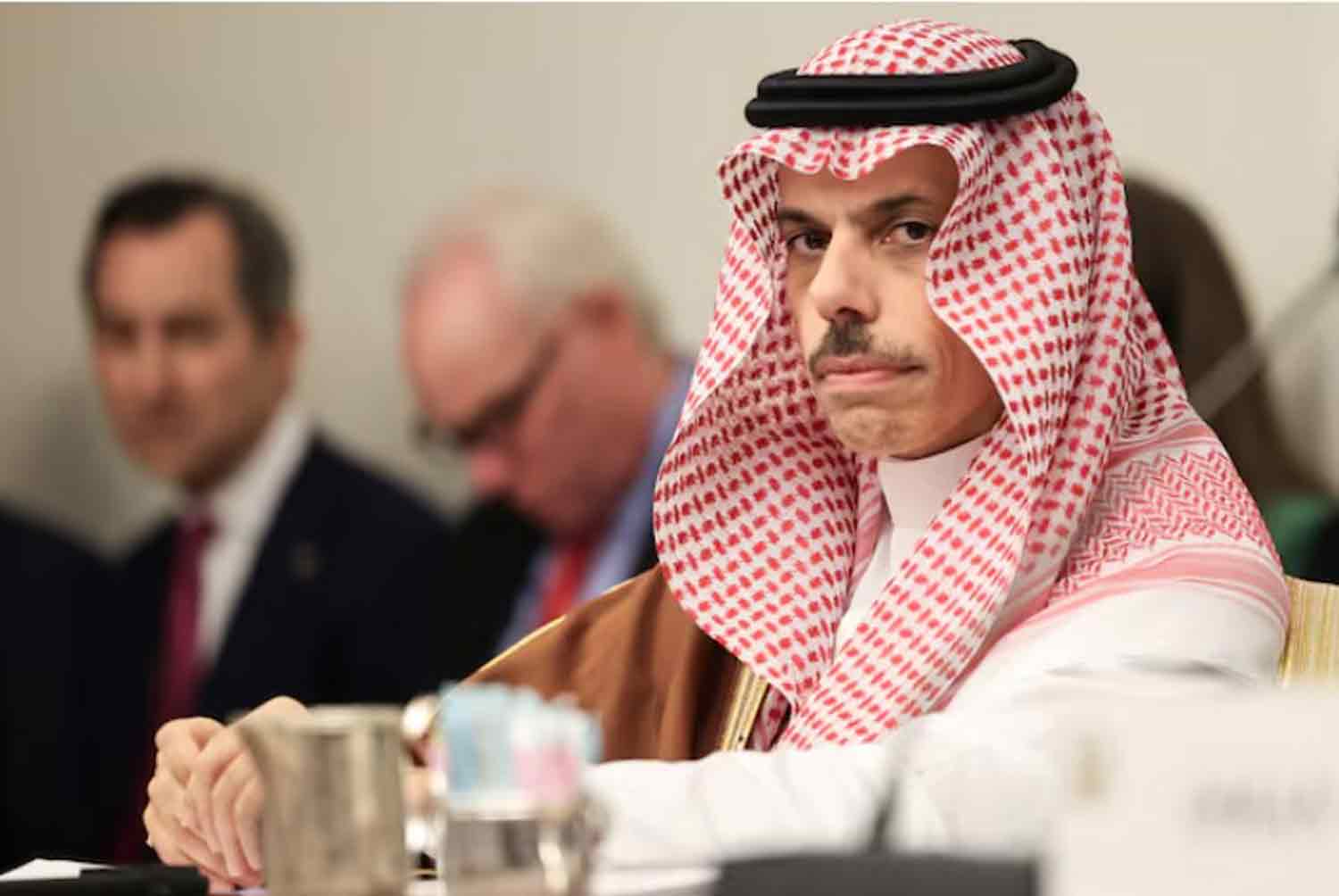
Saudi Arabia Foreign Minister Prince Faisal bin Farhan Al Saud

Saudi Arabia has established a global coalition aimed at advocating for a two-state solution to the Israeli-Palestinian conflict, as announced by the country’s foreign minister, Prince Faisal bin Farhan Al Saud, during the United Nations General Assembly in New York on Thursday.

This coalition comprises several Arab and Muslim nations along with European partners, although the Saudi state news agency did not disclose the specific countries involved. European Union foreign policy chief Josep Borrell indicated on X that the initial meetings would take place in Riyadh and Brussels.

Following the outbreak of the Gaza war last October between Israel and Hamas, the militant group governing Gaza, Saudi Arabia suspended U.S.-backed initiatives to normalize relations with Israel, according to two sources familiar with the situation.

“Advancing the two-state solution is the most effective way to end the cycle of conflict and suffering, creating a new reality where the entire region, including Israel, can experience security and coexistence,” bin Farhan stated.

Saudi Crown Prince Mohammed bin Salman stated last week that the kingdom would not recognize Israel unless a Palestinian state is established, and he vehemently denounced the “crimes of the Israeli occupation” against the Palestinian population.

Since October 7, when militants from Hamas launched an incursion into southern Israel, resulting in the deaths of 1,200 individuals and the abduction of approximately 250 hostages, a conflict has erupted between Israel and Hamas.

In retaliation, Israel has initiated a military campaign in Gaza, which has reportedly led to the deaths of over 41,500 Palestinians, according to health authorities in Gaza. Israel has also indicated its intention to continue its intensified operations against Hezbollah in Lebanon, following nearly a year of cross-border skirmishes alongside the ongoing conflict in Gaza.

Japan reports Chinese navy aircraft carrier was observed in Pacific for seven days

0

Japan’s defense ministry announced on Friday that it has observed the Chinese Navy aircraft carrier “Liaoning” in the Pacific Ocean over the last week.

The ministry reported that Liaoning, along with several accompanying Chinese Navy ships, was seen navigating and performing aircraft landing exercises in waters located approximately 280 to 1,020 kilometers (174 to 634 miles) southwest of Okinotori Island, Japan.

A U.S. official reported that a Chinese nuclear submarine sank earlier this year

0

A senior U.S. defense official reported on Thursday that China‘s latest nuclear-powered attack submarine sank earlier this year, which could pose a significant embarrassment for Beijing as it aims to enhance its military capabilities. China boasts the largest navy globally, comprising over 370 vessels, and is in the process of developing a new generation of nuclear-armed submarines.

The official, who requested anonymity, indicated that the submarine, which is the first of its class, sank next to a pier sometime between May and June. A spokesperson for the Chinese embassy in Washington stated that they had no information to share regarding the incident. “We are not familiar with the situation you mentioned and currently have no information to provide,” the spokesperson remarked.

The cause of the sinking remains unclear, as does whether the submarine was carrying nuclear fuel at the time. The official noted that this incident not only raises concerns about training standards and equipment quality but also highlights deeper issues regarding the People’s Liberation Army’s internal accountability and the oversight of China’s defense industry, which has historically faced challenges related to corruption.

The official remarked that it is not unexpected for the PLA Navy to attempt to hide the sinking. During a press conference in Taipei on Friday, Taiwan’s Defence Minister Wellington Koo stated that authorities have a comprehensive understanding of the situation through various intelligence and surveillance techniques, although he did not provide further details.

Taiwan, which China claims as its own territory, closely monitors China’s military operations. In June, images surfaced online showing a Chinese nuclear submarine surfacing in the Taiwan Strait near local fishermen.

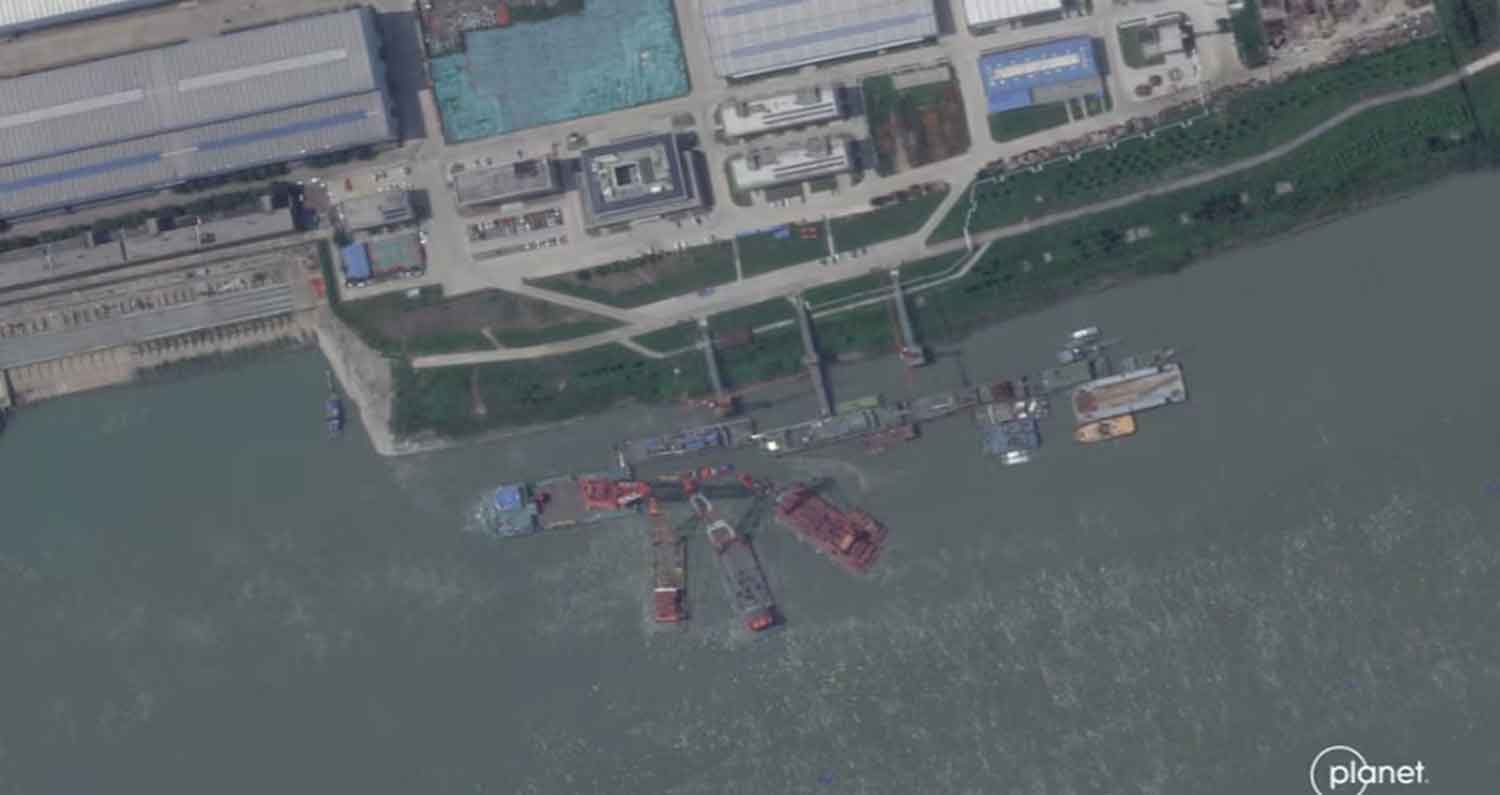
The Wall Street Journal was the first to report on the Chinese submarine incident. A series of satellite images from Planet Labs taken in June appear to indicate the presence of cranes at the Wuchang shipyard, where the submarine may have been docked.

As of 2022, China possessed six nuclear-powered ballistic missile submarines, six nuclear-powered attack submarines, and 48 diesel-powered attack submarines, according to a Pentagon report on China’s military capabilities.

This submarine fleet is projected to expand to 65 by 2025 and 80 by 2035, as stated by the U.S. Defense Department. On Wednesday, China announced the successful launch of an intercontinental ballistic missile into the Pacific Ocean, a development likely to heighten international concerns regarding the country’s nuclear expansion.

Earlier this month, the United States and China engaged in theater-level commander discussions for the first time, aiming to stabilize military relations and prevent misunderstandings, particularly in sensitive areas like the South China Sea.

Russian drone is suspected of violating Romanian airspace during nighttime attack on Ukraine

0

A Russian drone reportedly entered the national airspace of NATO member Romania for a brief duration of less than three minutes during an overnight assault on Ukraine, according to the Romanian defense ministry on Friday.

The drone strike targeted the southern Ukrainian town of Izmail, located just across the Danube River from Romania, resulting in three fatalities and 14 injuries, as confirmed by Odesa regional prosecutors. The Ukrainian air force reported that it successfully intercepted 24 out of 32 drones involved in the attack.

The Romanian ministry stated that its radar system detected the potential incursion of one of the drones into Romanian airspace for a short period in the border region.

In response, Romania deployed two F-16 fighter jets along with two Spanish F-18s, which are currently engaged in air policing operations within the country for the remainder of the year. Residents in the southeastern Romanian county of Tulcea were advised to seek shelter.

Romania has a 650-kilometer (400-mile) border with Ukraine and has experienced multiple incidents of Russian drone debris landing within its territory over the past year, primarily as a result of Ukrainian air defense operations, according to the Romanian defense ministry.

On September 8, both Romania and Latvia reported incursions into their airspace by Russian drones, raising concerns about potential escalation. This month, defense ministers from NATO’s eastern flank nations urged a strong, coordinated response from the alliance to address these drone incursions, advocating for the establishment of a rotational integrated air and missile defense (IAMD) model.

Netanyahu said Israel will keep discussing U.S. ceasefire proposals

0
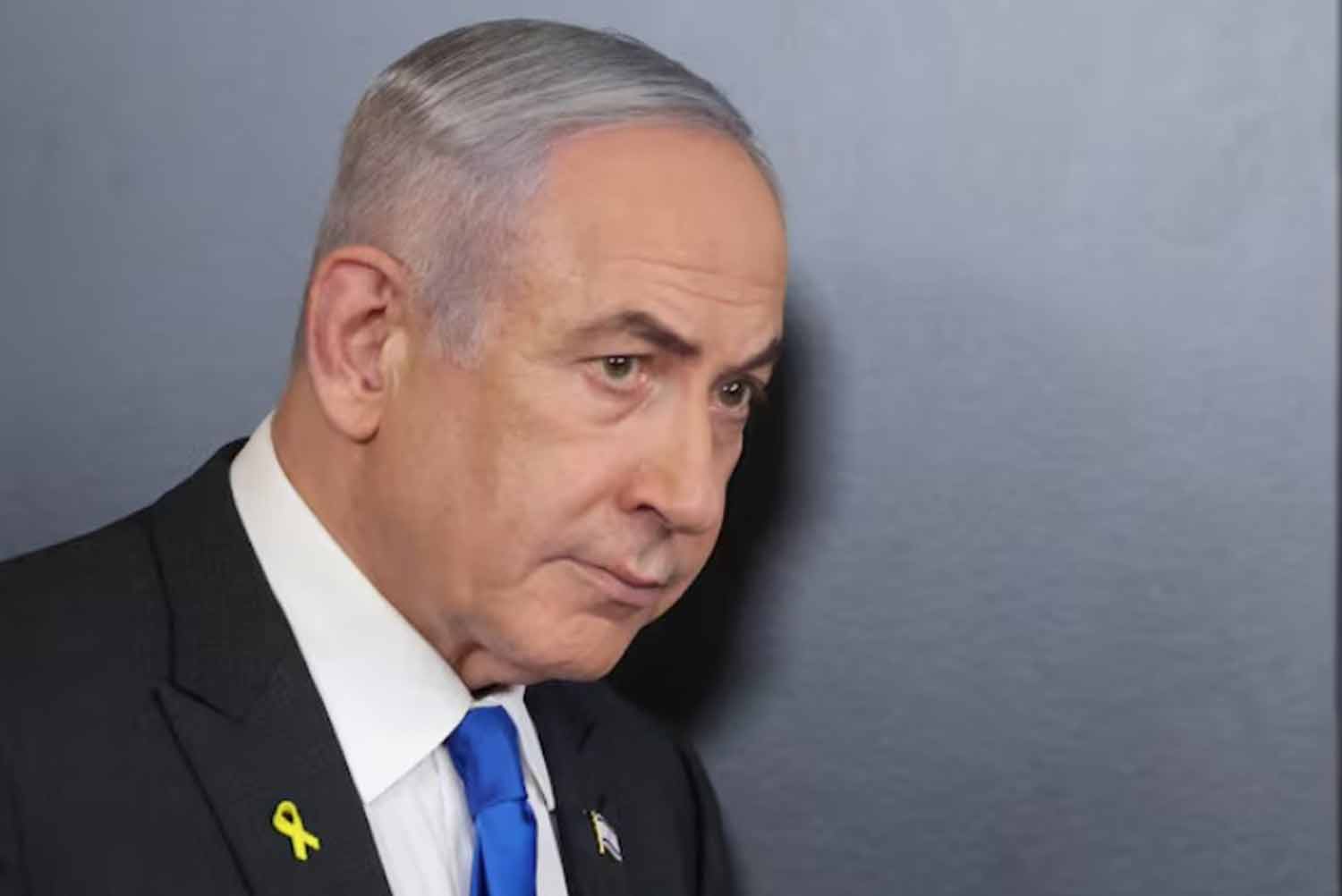
Prime Minister Benjamin Netanyahu

Israeli officials convened on Thursday to deliberate on the U.S. ceasefire proposals concerning Lebanon, with Prime Minister Benjamin Netanyahu indicating that discussions will persist in the upcoming days. He expressed gratitude for the efforts made by the United States.

“Our teams convened on Thursday, September 26, to evaluate the U.S. initiative and explore ways to achieve our common objective of ensuring the safe return of individuals to their homes. We will carry on with these discussions in the days to come,” he stated.

These remarks followed Israeli Foreign Minister Israel Katz’s assertion on Thursday that a ceasefire in the northern region was not on the table, as Israeli airstrikes have intensified against the Iranian-backed Hezbollah movement, marking the most significant military action in decades.

Following Netanyahu’s departure for New York to attend the United Nations General Assembly, his office released a statement confirming that the prime minister had instructed Israeli forces to maintain their operations in Lebanon with full intensity.

Netanyahu’s remarks did not address the statements made by Katz and other Israeli officials, who have also opposed a ceasefire. Instead, he noted that there has been “a lot of misreporting surrounding the U.S.-led ceasefire initiative.” The statement emphasized, “Israel aligns with the objectives of the U.S.-led initiative to allow individuals along our northern border to return to their homes safely and securely.” It further acknowledged, “Israel values the efforts of the U.S. in this matter, as its involvement is crucial for promoting stability and security in the region.”

For nearly a year, Israeli forces have engaged in daily skirmishes with Hezbollah in southern Lebanon, following the Iranian-backed group’s missile attacks on Israel that occurred immediately after the Hamas-led assault on October 7. This ongoing conflict has forced tens of thousands of individuals on both sides of the border to evacuate their homes, resulting in vast areas being largely uninhabited. Israel has identified the return of evacuees to their residences as a key objective of its military operations.

In the past week, Israeli airstrikes have targeted hundreds of locations in southern Lebanon and further inland, resulting in over 600 fatalities. Concurrently, Hezbollah has launched hundreds of rockets and missiles at various targets in Israel, including an attack on Tel Aviv. Israel’s air defense systems have successfully intercepted many of these missiles, thereby limiting the extent of the damage.

Putin establishes a nuclear boundary for West

0

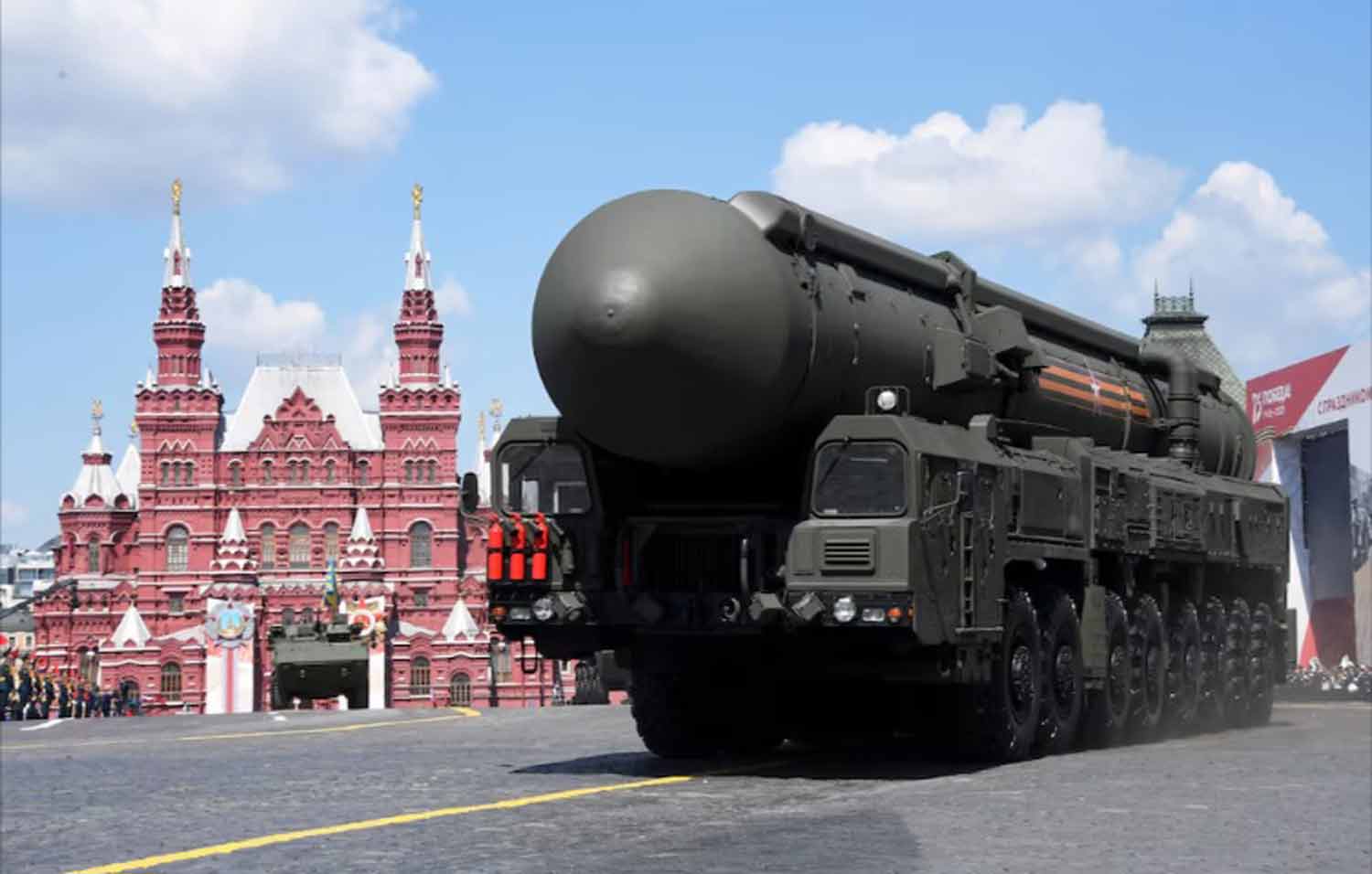
President Vladimir Putin has established a “red line” for the United States and its allies, indicating that Moscow may resort to nuclear weapons if Ukraine is permitted to launch long-range Western missile strikes deep into Russian territory. However, there are voices in the West questioning the sincerity of his threat.

This inquiry is pivotal for the ongoing conflict. Should Putin be bluffing, as Ukraine and some of its allies suspect, the West might feel emboldened to enhance its military assistance to Kyiv, undeterred by Moscow’s warnings. Conversely, if he is genuine, there is a significant risk—repeatedly emphasized by Moscow and recognized by Washington—that the situation could escalate into a global conflict.

In a recent development, Putin expanded the range of scenarios that could trigger Russia’s use of nuclear weapons. He stated that such a response could occur following a substantial cross-border conventional assault involving aircraft, missiles, or drones. Additionally, any nuclear power that supports a nation attacking Russia would be deemed complicit in that aggression.

Both criteria are directly relevant to the potential scenario that could unfold if the West permits Ukraine to launch strikes deep into Russian territory using Western long-range missiles, such as U.S. ATACMS and British Storm Shadows. Putin has indicated that such actions would require support from Western satellites and targeting systems.

Nikolai Sokov, a former Soviet and Russian diplomat, remarked, “It was a very clear message: ‘Don’t make a mistake – all these kinds of things may mean nuclear war.'”

Bahram Ghiassee, a nuclear analyst based in London at the Henry Jackson Society think tank, connected the timing of Putin’s statements to Ukraine’s efforts to secure long-range missiles from the West, particularly as President Volodymyr Zelenskiy is advocating for this support with U.S. President Joe Biden this week.

“Putin is essentially saying: just stop it right there,” Ghiassee noted.

nuclear blackmail

Kyiv’s response was immediate, with President Zelenskyy’s chief of staff accusing Putin of engaging in “nuclear blackmail.” Anton Gerashchenko, a former adviser to Ukraine’s internal affairs minister, expressed on X that he views this as another instance of Putin’s bluster, asserting, “This is yet another bluff and demonstration of Putin’s weakness. He will not dare to use nuclear weapons because that will make him a complete outcast.”

U.S. Secretary of State Antony Blinken characterized Putin’s threats as irresponsible and ill-timed, noting that this is not the first occasion on which Putin has “rattled the nuclear sabre.”

Andreas Umland, an analyst at the Swedish Institute of International Affairs, suggested that Putin is engaging in psychological tactics. He stated, “This is a psychological PR operation by the Kremlin, lacking substantial backing. It aims to intimidate leaders and voters in nations that support Ukraine.”

Fabian Hoffmann, a doctoral research fellow and defense expert based in Oslo, remarked that while Putin’s statements should not be dismissed, it is crucial to avoid overreacting. “Russian nuclear use is not imminent,” he noted on X, adding that concern should only arise when Russia indicates actual preparations.

Hoffmann elaborated that potential next steps could involve removing warheads from storage and pairing them with delivery systems for a tactical strike, followed by preparations for large-scale nuclear deployment, such as readying silos and alerting bombers—actions that U.S. intelligence would likely detect.

Security expert Mark Galeotti commented, “While talk is easy and can have political ramifications, there is no evidence of a genuine willingness to use nuclear weapons, and we would be able to detect such intentions if they were to arise.”

clear warning

Putin has provided more detailed insights than before regarding the conditions that might lead to the use of nuclear weapons. His spokesperson indicated on Thursday that these remarks were intended to convey a warning to Western nations about the severe repercussions they would face if they engaged in attacks against Russia.

However, the proposed adjustments did not fully align with the expectations of some more aggressive commentators. Notably, Sergei Karaganov has advocated for a limited nuclear strike in Europe to “sober up” Russia’s adversaries and compel them to take its nuclear deterrent seriously.

Practically, these changes expand Russia’s nuclear protection to include Belarus, a key ally. They also lower the threshold for nuclear engagement, suggesting that such action could be warranted in response to a conventional attack that poses a “critical threat to our sovereignty.” Previously, the nuclear doctrine referred to threats against “the very existence of the state.”

Putin made this announcement in a four-minute video while addressing the nine members of a security council that convenes biannually to discuss nuclear deterrence strategies. He emphasized that the use of nuclear weapons is an extreme measure and that Russia has always approached this issue with caution.

Ministers and intelligence officials listened attentively, with some occasionally fidgeting or shuffling papers. One participant, Alexei Likhachev, the head of the state nuclear corporation Rosatom, took meticulous notes.

However, the primary audience for Putin’s message was in Kyiv, Washington, and London. Yevgeny Minchenko, a Russian political consultant, interpreted the revised doctrine as a clear warning to Ukraine and the West against further escalation of the conflict. He articulated the message as, “If you attempt to harm us through your proxies, we will retaliate against both your proxies and you.”

Sergei Markov, a former Kremlin advisor, noted that these changes could pave the way for Russia to deploy tactical nuclear weapons in specific scenarios, particularly in relation to Ukraine.

Markov stated on his official blog that the threshold for deploying nuclear weapons has been significantly reduced, making it more likely for Russia to utilize them. He explained that the shift in nuclear doctrine was prompted by the perceived threat of a complete escalation from the West, which believes that Russia would refrain from being the first to employ tactical nuclear weapons.

However, Russia is now asserting its readiness to do so. Markov indicated that Russia might consider using tactical nuclear weapons against Ukraine or targeting air bases in Romania or Poland, particularly if Ukrainian aircraft were to launch missions from those locations, especially with support from U.S. or British satellites, and if those jets were used to attack Moscow or central Russia.

not only as a warning

Igor Korotchenko, a military analyst frequently featured on state television, stated that the recent adjustments were essential due to the West’s disregard for numerous prior warnings against escalating tensions, including Russian military drills over the summer that simulated the deployment of tactical nuclear weapons.

“Western adversaries no longer acknowledge any ‘red lines,’ operating under the belief that supplying arms to Ukraine and conducting Western-supported strikes deep within Russian territory will not provoke a nuclear response,” Korotchenko remarked in an interview with the daily Izvestia.

Vladimir Avatkov, a member of an official advisory body to President Putin on international matters, noted that the announcement of these doctrinal changes positioned Moscow to preempt any Western decisions regarding missile support for Ukraine.

“Let them ponder this now,” he stated on Telegram. “This serves not only as a warning but aims to restore the fear they have completely lost, potentially prompting some strategic reconsideration.”

The modifications received strong support from Russian nationalists and war bloggers, many of whom have long pushed for the use of nuclear weapons to compel Ukraine’s surrender, sparking discussions about what circumstances might justify a nuclear response.

Dmitry Medvedev, deputy chairman of Russia’s Security Council and a former president, cautioned that Putin’s statements should prompt Ukraine and the West to reconsider their positions.

“The mere alteration of the regulatory framework governing our country’s nuclear capabilities may temper the enthusiasm of those adversaries who have not yet abandoned their instinct for self-preservation,” he commented in a statement.

akin to children

Sokov, a former Russian diplomat, expressed a notable frustration in Moscow regarding the West’s apparent indifference to its numerous nuclear warnings. He pointed out that during three rounds of military exercises this year, which were intended to simulate the launch of tactical nuclear missiles, there were widespread complaints in both the media and among experts about the lack of attention from Western nations.

“Consequently, they have chosen to amplify their message,” Sokov remarked. “Putin seems to view the West as akin to children, requiring detailed explanations for even the simplest matters because they fail to comprehend the gravity of the situation.”

Sokov voiced his apprehension over the “careless rhetoric” among politicians and analysts who claim that the West has disregarded several Russian red lines without consequence—citing the provision of tanks and F-16 fighter jets to Ukraine as examples. He emphasized that, in reality, the West has not yet crossed two clearly defined red lines set by Russia: the deployment of NATO troops in Ukraine and allowing Ukraine to launch Western long-range missiles into Russian territory.

“How can we predict Putin’s reaction when, to date, we have not actually crossed any of Russia’s red lines?” he stated during a phone interview, contending that such predictions are speculative rather than based on factual evidence. “I am genuinely worried about the careless discourse, especially as we may find ourselves in an entirely unprecedented situation… If the risks are not adequately considered, we could face a very unpleasant surprise.”

US diplomatic efforts in the Middle East struggle as time runs out for Biden

0
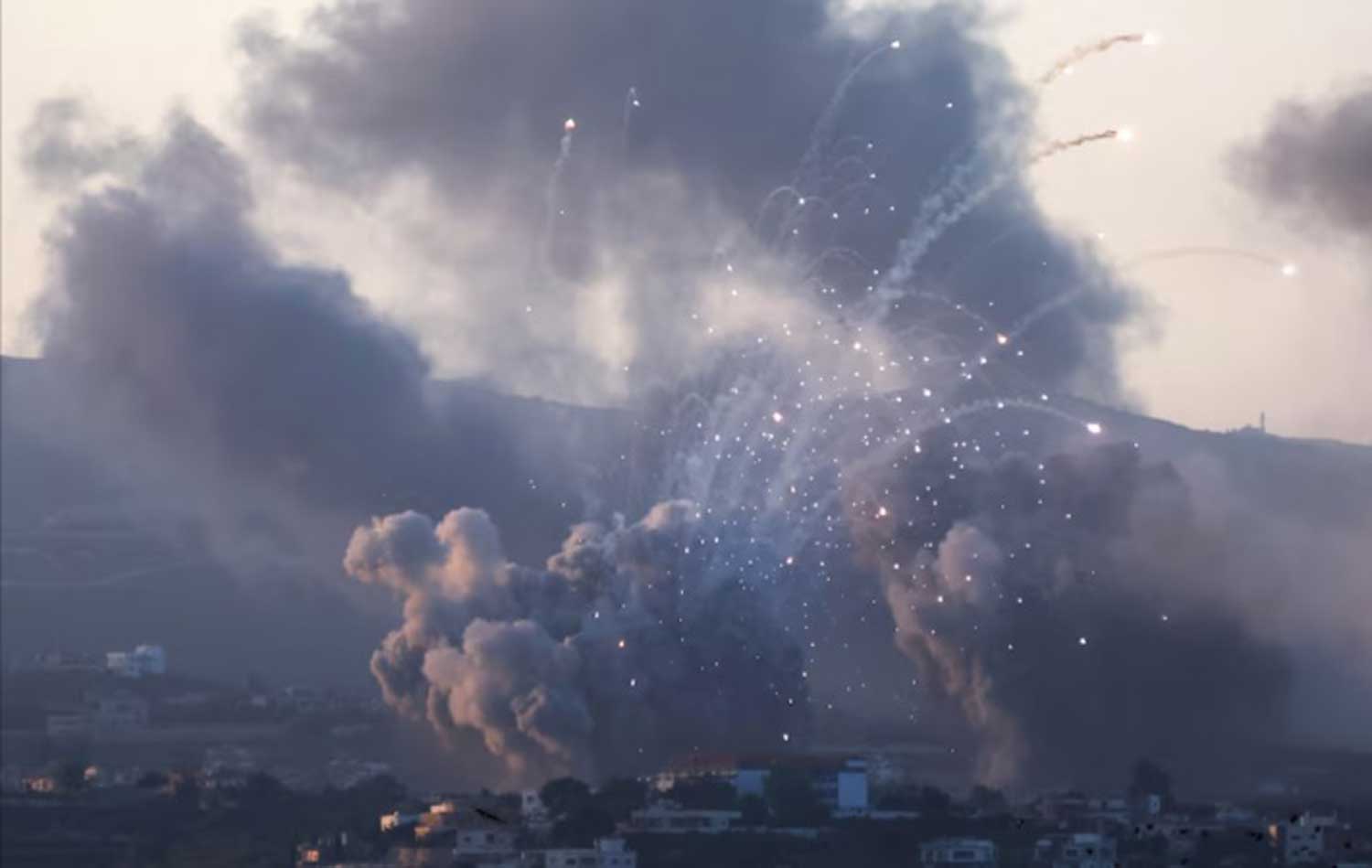
Smoke billows over southern Lebanon following Israeli strikes.

U.S. initiatives aimed at achieving a ceasefire in Gaza have encountered significant obstacles after nearly a year of ongoing conflict. Meanwhile, Iran-supported Houthi rebels persist in their assaults on shipping in the Red Sea. Additionally, despite vigorous diplomatic efforts led by the U.S., the IsraelHezbollah situation is on the verge of escalating into a full-scale regional war.

As his administration approaches its conclusion, President Joe Biden is confronted with a series of Middle Eastern crises that are unlikely to be resolved before he departs in January, potentially impacting his foreign policy reputation, according to analysts and international diplomats.

Over the past year, Biden has faced the challenge of balancing support for Israel’s right to defend itself against Hamas militants in Gaza and Hezbollah in Lebanon, while also striving to minimize civilian casualties and avert a wider regional conflict. He has repeatedly encountered the limitations of this approach, most recently highlighted by Israel’s dismissal of a U.S.-endorsed proposal for a 21-day ceasefire along the Lebanon border, as it continues military operations that have resulted in numerous Lebanese casualties.

Jonathan Panikoff, the former deputy national intelligence officer for the U.S. in the Middle East, remarked, “We are witnessing the limitations of U.S. power and influence in the region.” A prominent illustration of this trend is President Biden’s hesitance to leverage U.S. support—both as Israel’s primary arms supplier and its diplomatic protector at the United Nations—to persuade Israeli Prime Minister Benjamin Netanyahu to align with Washington’s objectives.

For almost a year, the United States has been unable to facilitate a resolution between Israel and Hamas to cease hostilities and secure the release of hostages taken during the militants’ October 7 incursion that ignited the Gaza conflict. Individuals familiar with the situation indicate that no significant progress is expected soon.

While U.S. officials often attribute the stalled negotiations to Hamas, some also point to Netanyahu’s evolving demands. During U.S. Secretary of State Antony Blinken’s nine visits to the region since October 7, he has frequently found himself in disagreement with senior Israeli officials. For instance, during a news conference last November, Blinken urged Israel to temporarily halt its military actions in Gaza to permit humanitarian aid access. Shortly thereafter, Netanyahu publicly dismissed the suggestion, asserting that he had made it clear to Blinken that Israel would continue its operations “full force.” The White House has not yet provided a response to inquiries regarding this matter.

Biden has received recognition from fellow Western leaders for revitalizing essential U.S. alliances, particularly with NATO and key Asian partners, following his predecessor Donald Trump’s skepticism regarding these relationships. This was evident in April when the Biden administration successfully rallied support from regional and European allies to assist Israel in countering an Iranian drone and missile assault.

However, some foreign diplomats argue that Biden’s approach to the turbulent Middle East, particularly his reaction to the Gaza conflict, has undermined U.S. credibility on the global stage. “President Biden’s initial misstep was asserting that the U.S. would unwaveringly support Israel,” remarked one Western official. “We have yet to recover from that.”

A diplomat from the Middle East commented that U.S. diplomatic efforts have “failed to impress adversaries,” pointing out that while Biden deployed military resources to the region after October 7 as a deterrent to Iran and its proxies, this action did not fully achieve its intended effect. The Iran-aligned Houthi rebels in Yemen have continued their missile assaults on commercial vessels in the Red Sea, despite the presence of additional Western naval forces for protection.

Michael ‘Mick’ Mulroy, a former deputy assistant secretary of defense for the Middle East during the Trump administration, stated, “He could have acted more swiftly and decisively against these proxy attacks.” U.S. officials have consistently countered such critiques, asserting that their diplomatic efforts have yielded positive outcomes and that the military presence in the region has so far prevented the escalation of conflict from Gaza into a broader regional war.

“Diplomacy is not simply a matter of snapping our fingers and achieving instant results,” U.S. Ambassador to the U.N. Linda Thomas-Greenfield explained to the Security Council earlier this month. “It requires diligent effort, and unfortunately, it takes time. It has not failed.”

Since October 7, President Biden’s aspirations for what was once considered a potential hallmark of his foreign policy—establishing normalized relations between Israel and Saudi Arabia alongside U.S. security assurances for Riyadh—have been significantly undermined. At the United Nations, where the Security Council previously endorsed Biden’s initiative for a ceasefire and hostage resolution in Gaza, there are indications that the patience for U.S. diplomatic efforts in the Middle East is diminishing.

Jordan’s Foreign Minister Ayman Safadi remarked on Thursday that attempts to quell the violence in the region have resulted in “a year of failure,” asserting that the Israeli government will not adhere to international law unless held accountable, and is disregarding even its allies, including the United States.

Panikoff, a former intelligence official now affiliated with the Atlantic Council in Washington, articulated the core of the Biden administration’s challenge regarding Gaza: “Plan A hasn’t worked for months. So where’s Plan B?”

With Israel threatening a ground offensive in Lebanon and pledging to maintain pressure on Iran-backed Hezbollah until thousands of Israeli evacuees can return home, the situation in Lebanon could further escalate.

The developments in Lebanon may not only affect Biden’s legacy but also have repercussions for Vice President Kamala Harris’s presidential campaign. Some progressive Democratic voters are already expressing dissatisfaction with the unwavering U.S. support for Israel.

It remains uncertain whether Netanyahu will respond positively to Biden’s appeals to prevent further escalation in Lebanon. As a lame duck president in the final four months of his term, analysts suggest that while Biden’s efforts to mitigate Middle Eastern unrest are commendable, his successor will likely face the ongoing crises he leaves behind.

Turkish president hopes for better relationship with new US president

0

Turkish President Tayyip Erdogan expressed his hope that the new U.S. president would foster improved relations, as Ankara has faced disappointment from both Republican and Democratic administrations in the past, according to reports from broadcaster Haberturk and others on Thursday.

The upcoming U.S. elections in November will feature a contest between Republican Donald Trump and Democrat Kamala Harris, who currently serves as Vice President. During his time in office, Trump enacted sanctions against Turkey due to its acquisition of Russian defense systems.

While speaking to Turkish journalists in New York prior to his departure from the U.N. General Assembly, Erdogan reiterated Turkey’s desire to be compensated for the funds it invested in F-35 fighter jets after being expelled from the program because of its Russian purchases.

Erdogan remarked, “My hope is that whoever takes office does not lead us to regret the departure of the current administration. We have all faced disappointment from both parties.”

Israel secured $8.7 billion military aid package from US

0
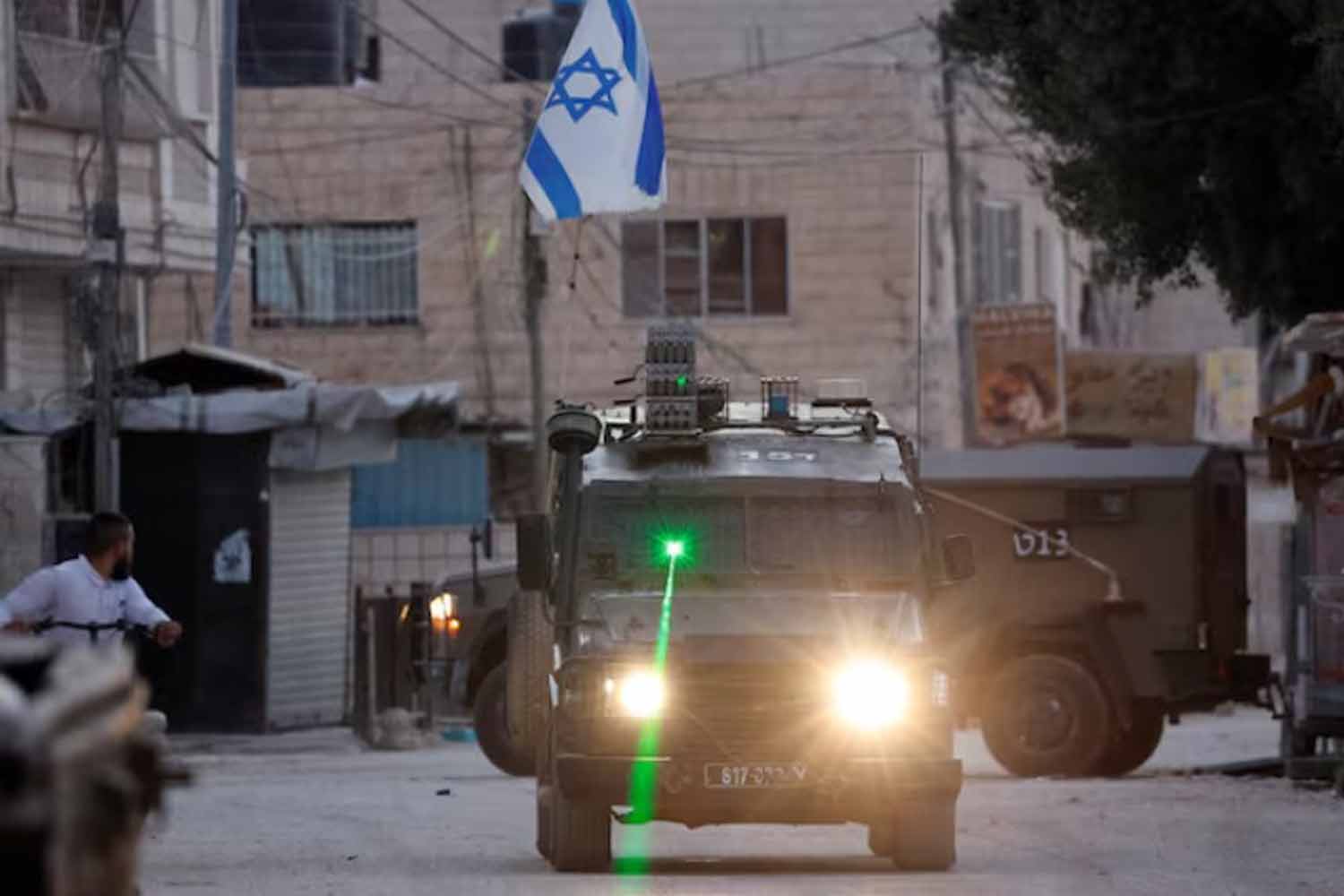
A military vehicle with a laser transits during an Israeli raid in Jenin, in the Israeli-occupied West Bank

On Thursday, Israel announced that it has secured an $8.7 billion aid package from the United States aimed at bolstering its military operations and preserving its qualitative military superiority in the region. This package comprises $3.5 billion allocated for urgent wartime procurement, which has already been received and designated for vital military acquisitions, along with $5.2 billion intended for air defense systems, including the Iron Dome anti-missile system, David’s Sling, and an advanced laser defense system.

Israel is currently engaged in conflicts on two fronts: one against the Palestinian Islamist group Hamas in Gaza and the other against the Iran-supported Hezbollah movement in Lebanon. The announcement of this aid followed discussions at the Pentagon involving Eyal Zamir, the director general of Israel’s defense ministry, and U.S. defense officials, including Amanda Dory, the acting Under Secretary of Defense for Policy, as stated by Israel’s Defense Ministry.

This major investment will greatly enhance essential systems like Iron Dome and David’s Sling, while also facilitating the ongoing advancement of a sophisticated high-powered laser defense system that is nearing completion, according to the statement.

The ministry emphasized that this agreement highlights the “robust and lasting strategic alliance between Israel and the United States, as well as the unwavering commitment to Israel’s security,” especially in countering regional security challenges posed by Iran and its allied militias.

Abbas urges UN to intervene and stop Gaza conflict

0

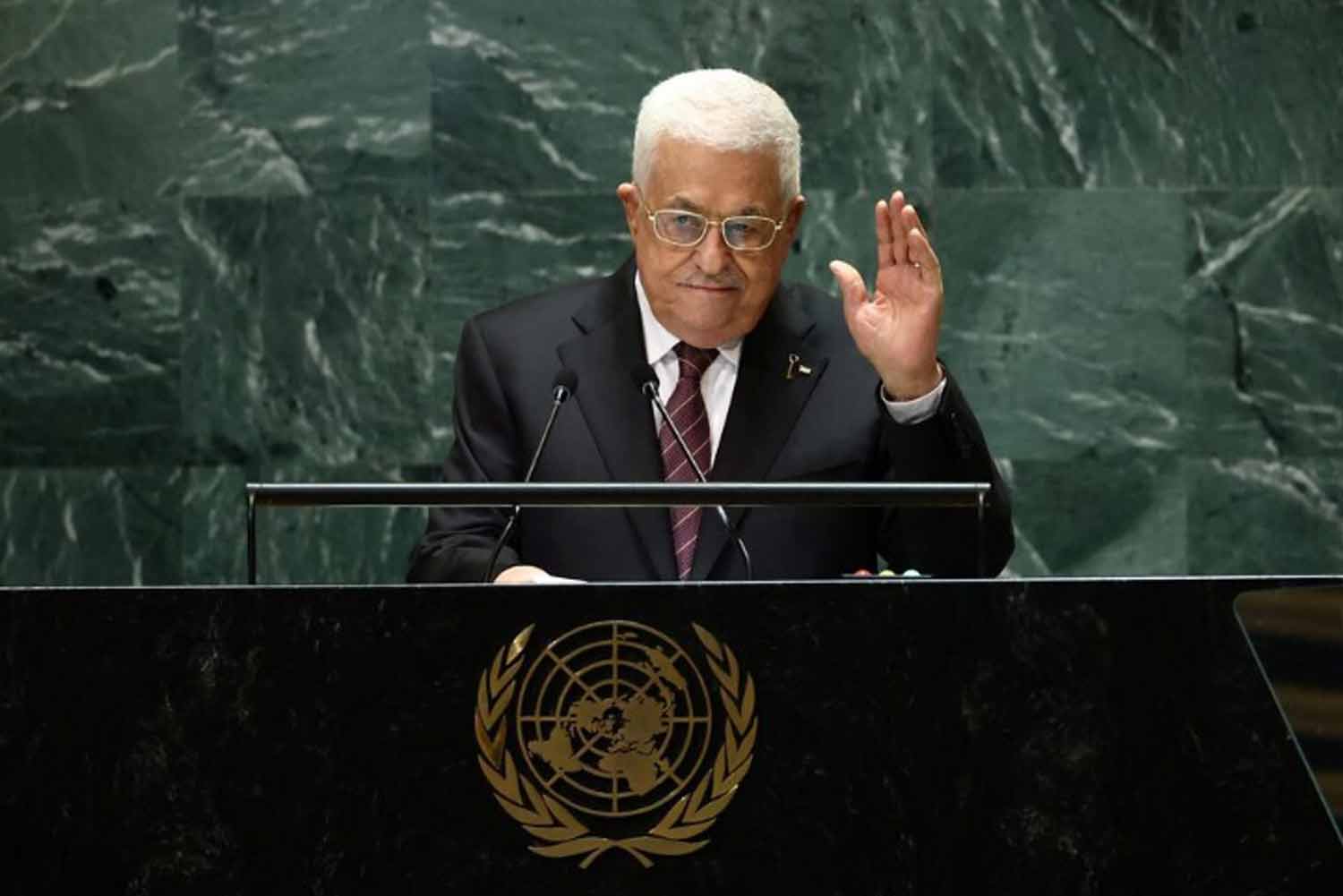
Palestinian President Mahmoud Abbas called on the U.N. General Assembly on Thursday to intervene and halt the ongoing conflict in the Gaza Strip between Israel and Hamas militants. He emphasized that Israel has nearly obliterated Gaza, rendering it uninhabitable.

“This insanity must end. The entire world bears responsibility for the plight of our people,” he stated to the assembly of 193 member nations.

The conflict erupted on October 7, 2023, when Hamas militants attacked Israeli communities, resulting in approximately 1,200 fatalities and around 250 hostages taken to Gaza, as reported by Israeli sources.

In the aftermath, Israel’s military operations have devastated large areas of the already besieged Palestinian territory, displacing nearly all of its 2.3 million residents and leading to severe food shortages and disease, with Palestinian health authorities reporting over 41,000 deaths.

Efforts by the United States, Qatar, and Egypt to negotiate a ceasefire and secure the release of hostages held by Hamas have so far been unsuccessful.

Abbas advocated for a thorough and lasting ceasefire in Gaza, the cessation of assaults by Israeli settlers in the West Bank and East Jerusalem, the provision of humanitarian assistance across Gaza, and a complete withdrawal of Israeli forces from the region.

“We reject the creation of buffer zones or any territorial concessions from Gaza,” he asserted. “We will not permit even a single centimeter of Gaza to be taken.”

“The State of Palestine must fulfill its responsibilities in the Gaza Strip and exert its full authority and jurisdiction there, including over the border crossings, particularly the Rafah international border,” Abbas emphasized.

He stated that the Palestinian Authority, which he leads, should maintain control over all Palestinian territories and would conduct elections once the conflict concludes.

In response to Abbas’ address, Israel’s U.N. Ambassador Danny Danon issued a statement accusing him of advocating for peace only at the United Nations while neglecting to condemn the October 7 attack by Hamas militants that initiated the conflict in Gaza.


What actions are countries taking to evacuate their citizens from Lebanon?

0
Smoke billows over southern Lebanon following Israeli strikes.

A significant increase in border conflict between Israel and Hezbollah in Lebanon has prompted Western nations to urgently revise their evacuation contingency plans for the area. Cyprus, being the nearest EU member to the Middle East, is expected to serve as a primary hub, having previously facilitated the escape of approximately 60,000 individuals during the Hezbollah-Israel conflict in 2006. Additionally, neighboring Turkey has extended its support by offering facilities for evacuation.

Most of the contingency planning appears to focus on maritime operations, which would allow for the transportation of larger groups, although the specifics will depend on the prevailing security conditions, according to a source familiar with the situation. The journey to Cyprus by sea takes roughly 10 hours, while a flight from Beirut takes about 40 minutes.

Here are some specifics regarding the contingency plans:

AUSTRALIA

Australian authorities have developed contingency plans that may include sea evacuations, while advising around 15,000 of its citizens in Lebanon to depart as long as Beirut airport remains operational.

CANADA

Reports indicate that Canada plans to collaborate with Australia for the evacuation of its nationals by sea. The strategy involves hiring a commercial vessel capable of transporting 1,000 individuals daily, as reported by The Toronto Star.

FRANCE

France has been advising its citizens against traveling to Lebanon and has had evacuation plans prepared for several months, although no formal evacuation order has been issued. Current contingency strategies focus on Cyprus and Beirut airport, with discussions ongoing regarding potential evacuations through Turkey. A French warship is stationed in the region, and a helicopter carrier located in Toulon would require several days to reach the area.

GREECE

On Tuesday, the Greek foreign ministry recommended that its citizens exit Lebanon and refrain from any travel to the country. A frigate is on standby to provide assistance if necessary.

UNITED KINGDOM

The United Kingdom has urged its nationals to leave Lebanon without delay. Approximately 700 troops have been deployed to Cyprus, enhancing the military presence in the region, which already includes two Royal Navy ships and two military bases on the island.

United States

The United States has initiated the deployment of several troops to Cyprus to assist in preparations for various scenarios, including the potential evacuation of American citizens from Lebanon.

Portugal

In Portugal, Prime Minister Luis Montenegro issued a travel advisory for Lebanon on Wednesday. He stated that the country is coordinating with EU partner nations to facilitate the evacuation of Portuguese nationals residing in Lebanon.

Azerbaijan finalized an agreement to purchase JF-17 Thunder jets from Pakistan

0
Aliyev toured the static display of the JF-17 Block-III

Pakistan has recently signed an agreement to sell JF-17 Block-III fighter jets to Azerbaijan as part of its initiative to enhance defense collaboration with allied nations.

During a recent visit to Pakistan, Azerbaijan’s President Ilham Aliyev was informed about the combat capabilities and versatile applications of the JF-17 Block-III fighter jet. Following this visit and at the request of the Azerbaijani government, Pakistan dispatched a contingent from the Pakistan Air Force (PAF) to participate in ADEX-2024 in Baku, showcasing the airworthiness and static display of the JF-17 Thunder Block-III.

During this deployment, the JF-17 successfully conducted air-to-air refueling operations, flying directly to Baku, Azerbaijan, from a PAF Multi-Role Tanker Transport (MRTT) aircraft, thereby demonstrating its long-range capabilities.

President Aliyev toured the static display of the JF-17 Block-III and later observed an impressive aerial demonstration by the JF-17 Thunder, highlighting the skill of PAF pilots and the aircraft’s agility and maneuverability.

The JF-17 Thunder Block III is a 4.5 generation multi-role fighter aircraft, featuring an AESA radar and long-range beyond-visual-range (BVR) capabilities, enabling it to undertake a diverse range of combat missions and enhancing contemporary air power.

President Ilham Aliyev emphasized that the support from Pakistan will significantly contribute to strengthening military cooperation between the two nations, fostering closer defense ties and reinforcing the strong brotherly relations that exist between Pakistan and Azerbaijan.

A brief overview of the historical context of Israel-Hezbollah hostilities

0
Smoke billows over southern Lebanon following Israeli strikes.

A significant increase in border hostilities between the Iran-supported Hezbollah group and Israel has sparked concerns over a potential new Israeli ground offensive in Lebanon. This development marks yet another chapter in the long-standing conflict along the Lebanese-Israeli border.

Historical context includes:

1948
Lebanon joins other Arab nations in opposing the newly established state of Israel. Approximately 100,000 Palestinians, who either fled or were forced from their homes in what was formerly British-controlled Palestine during the conflict, seek refuge in Lebanon. An armistice between Lebanon and Israel is reached in 1949.

1968
In retaliation for an assault on an Israeli airliner by Palestinian militants, Israeli commandos carry out the destruction of several passenger aircraft at Beirut airport. The Palestine Liberation Organization (PLO) moves its base of operations to Lebanon two years later after being expelled from Jordan, resulting in increased cross-border tensions.

1973

In 1973, Israeli special forces, operating under disguise, assassinated three Palestinian guerrilla leaders in Beirut as a response to the murder of Israeli athletes during the 1972 Munich Olympics. Throughout the 1970s, Palestinian guerrilla attacks on Israel and subsequent Israeli military reprisals against targets in Lebanon escalated, prompting many Lebanese to flee the southern regions of their country and exacerbating sectarian tensions, which contributed to the onset of civil war in Lebanon.

1978

By 1978, Israel launched an invasion of southern Lebanon, establishing a limited occupation zone in response to a militant attack near Tel Aviv. During this operation, Israel provided support to a local Christian militia known as the South Lebanon Army (SLA).

1982

In 1982, Israel expanded its military campaign, advancing all the way to Beirut following a series of retaliatory border exchanges. After a protracted and violent 10-week siege characterized by intense Israeli bombardment of West Beirut, thousands of Palestinian fighters were evacuated by sea. Tragically, during this period, hundreds of civilians in the Palestinian refugee camps of Sabra and Shatila were killed by Christian militiamen, who were permitted entry by Israeli forces after the assassination of Lebanon’s newly elected Maronite Catholic president via a car bomb.

Iran’s Revolutionary Guards form the Shi’ite Muslim militant group Hezbollah in Lebanon as a response to the Israeli invasion.

1983

In 1983, Israel withdrew from central Lebanon but maintained a military presence in the southern region, establishing a formal occupation zone approximately 15 kilometers deep, in collaboration with its ally, the South Lebanon Army (SLA). Hezbollah engages in guerrilla warfare against Israeli troops.

1993

In July 1993, Israel initiates “Operation Accountability,” a week-long military campaign targeting Lebanon. The stated objective is to directly confront Hezbollah, complicating the group’s ability to utilize southern Lebanon as a launch point for attacks on Israel, while also pressuring the Lebanese government to take action against Hezbollah.

1996

By 1996, as Hezbollah continues to launch attacks on Israeli forces in the south and fires rockets into northern Israel, Israel responds with a 17-day military operation known as “Operation Grapes of Wrath,” resulting in over 200 casualties in Lebanon, including 102 individuals who perish when Israel strikes a U.N. facility in the village of Qana.

2000

In 2000, Israel completes its withdrawal from southern Lebanon, concluding a 22-year occupation, following persistent assaults on its military positions in the region by Hezbollah.

2006

In July 2006, Hezbollah infiltrated Israel, abducting two Israeli soldiers and resulting in the deaths of others. This incident ignited a five-week conflict characterized by extensive Israeli airstrikes targeting Hezbollah positions and national infrastructure.

While Israeli ground troops advanced into southern Lebanon, the majority of the fighting was conducted through air assaults and rocket fire. The conflict concluded without Israel meeting its military goals, with Hezbollah proclaiming a “divine victory.” The toll included at least 1,200 Lebanese lives, predominantly civilians, and 158 Israeli fatalities, mainly soldiers.

2024

Fast forward to September 23, 2024, when Israel initiated “Operation Northern Arrows” against Hezbollah following nearly a year of intermittent hostilities along the Lebanese-Israeli border, coinciding with the ongoing Gaza conflict.

This operation was launched shortly after an explosion involving Hezbollah’s communication devices, which the group attributed to Israeli actions.

The escalation in violence followed the October 7, 2023, assault on southern Israel by Hamas-led militants. Hezbollah claimed its retaliatory strikes were in solidarity with Palestinians facing Israeli attacks in Gaza.

Israel’s military objective in the north was to facilitate the safe return of residents to their homes. In response, Hezbollah indicated that it would cease rocket attacks contingent upon a ceasefire in Gaza.

Israeli airstrikes intensified, targeting southern Lebanon, the Bekaa Valley, and even reaching the Christian-majority Keserwan district north of Beirut for the first time. Hezbollah retaliated with a series of rocket launches into Israeli territory.

The conflict resulted in hundreds of casualties and thousands of injuries in Lebanon, prompting tens of thousands to flee their homes in the south, seeking refuge in various locations across Lebanon and in war-torn neighboring Syria, primarily in schools.

Changes in nuclear doctrine are a signal to West, Kremlin says

0

The Kremlin announced on Thursday that the modifications to Russia’s nuclear weapons doctrine, as articulated by President Vladimir Putin, should be interpreted as a warning to Western nations regarding the repercussions of their involvement in attacks against Russia.

Putin indicated on Wednesday that Russia might resort to nuclear weapons if it were targeted by conventional missiles, asserting that any assault on Russia backed by a nuclear state would be regarded as a collective attack.

The alteration of Russia’s official nuclear doctrine is a response from the Kremlin to discussions in the United States and the United Kingdom concerning the potential authorization for Ukraine to launch conventional Western missiles into Russian territory.

Kremlin spokesperson Dmitry Peskov confirmed that revisions to a document titled “The Foundations of State Policy in the Sphere of Nuclear Deterrence” have been established.

When questioned by journalists about whether these changes served as a message to the West, Peskov affirmed, “This should be considered a definite signal.”

He elaborated, stating, “This is a warning to these nations about the consequences of their participation in any form of attack on our country, not limited to nuclear means.”

Peskov characterized the current global situation as an “unprecedented confrontation,” which he attributed to the “direct involvement of Western nations, including nuclear powers,” in the conflict in Ukraine.

He also mentioned that a decision regarding the publication of the nuclear documents would be made at a later time.

Russia’s existing nuclear doctrine, articulated in a decree by President Putin in 2020, indicates that the country may resort to nuclear weapons in response to a nuclear strike from an adversary or a conventional assault that poses a threat to the nation’s survival.

When inquired about whether the potential abandonment of a post-Soviet moratorium on nuclear testing was part of the discussions regarding these changes, Peskov stated that he was unable to provide an answer, as the meeting held on Wednesday was largely classified.

Biden announced $8 billion in military aid to Ukraine

0
Ukraine's President Volodymyr Zelenskiy visits the Scranton Army Ammunition Plant in Scranton, Pennsylvania, U.S.

U.S. President Joe Biden announced on Thursday a military assistance package exceeding $8 billion for Ukraine, aimed at supporting Kyiv in its efforts to “win this war” against Russian aggressors, coinciding with President Volodymyr Zelenskiy’s visit.

This aid includes the initial delivery of a precision-guided glide bomb known as the Joint Standoff Weapon, which has a range of up to 81 miles (130 km). This medium-range missile significantly enhances Ukraine’s capabilities to engage Russian forces from safer distances. The bomb is designed to be deployed from fighter jets and is noted for its high accuracy in targeting. However, Biden will not disclose any plans for allowing Ukraine to utilize U.S. missiles for strikes deeper within Russian territory, according to a U.S. official.

Biden emphasized that supporting Ukraine, which has been under Russian invasion since February 2022, remains a top priority for the U.S. “That is why, today, I am announcing a surge in security assistance for Ukraine and a series of additional actions to help Ukraine win this war,” Biden stated, as he prepares to leave office in January.

Of the new aid, $5.5 billion is set to be allocated before the conclusion of the U.S. fiscal year on Monday, when the funding authority will expire. An additional $2.4 billion will be provided through the Ukraine Security Assistance Initiative, which enables the administration to procure weapons for Ukraine from manufacturers rather than depleting U.S. stockpiles.

This assistance will enhance Ukraine’s air defense capabilities, provide unmanned aerial systems, and supply air-to-ground munitions, while also bolstering Ukraine’s defense industrial base and supporting its maintenance and sustainment needs, Biden noted.

The president announced a plan for the Defense Department to refurbish and supply Ukraine with an additional Patriot air defense battery along with more Patriot missiles. Biden has directed the Pentagon to enhance training for Ukrainian F-16 pilots, which includes the training of an extra 18 pilots in the coming year. To address Russian sanctions evasion and money laundering, the U.S. will take action to disrupt what Biden referred to as “a global cryptocurrency network,” in collaboration with international partners.

Trump criticism of Zelenskiy

Biden also stated that he will host a leader-level meeting of the Ukraine Defense Contact Group in Germany next month to align the efforts of over 50 nations supporting Ukraine. Prior to his midday meeting with Biden (1600 GMT), Zelenskiy is scheduled to engage with both Democratic and Republican leaders at the Capitol.

Support for Ukraine’s defense has generally been bipartisan in the U.S., but it remains uncertain how many Republicans will be available to meet with Zelenskiy, especially given the increasing criticism of his administration from party figures, including Donald Trump, the Republican presidential candidate. Trump has been vocal in his criticism of the Ukrainian president during his campaign for the November 5 election and has, for the time being, declined Zelenskiy’s request for a meeting.

At a campaign rally in North Carolina, Trump expressed strong disapproval of Zelenskiy, stating, “We continue to give billions of dollars to a man who refused to make a deal, Zelenskiy.” He also held Biden and Vice President Kamala Harris accountable for permitting Russia’s invasion. Many congressional Republicans have expressed outrage over Zelenskiy’s visit to a munitions factory in Scranton, Pennsylvania, where Biden was raised, leading the Republican-led House Oversight Committee to initiate an investigation into Zelenskiy’s trip.

House Speaker Mike Johnson, a Republican who is not anticipated to meet with Zelenskiy on Thursday, has called for the dismissal of his ambassador to Washington due to the planned trip to Scranton. However, he clarified to reporters that this request should not be interpreted as a threat to block military assistance.

Israeli Foreign Minister rejects Lebanon ceasefire proposal

0
Smoke billows over southern Lebanon following Israeli strikes.

Israeli Foreign Minister Israel Katz firmly dismissed calls for a ceasefire with Hezbollah on Thursday, following requests from the United States and France for a 21-day pause in hostilities that have resulted in numerous casualties in Lebanon and heightened concerns about a potential ground invasion.

Katz stated, “There will be no ceasefire in the north. We will continue to combat the Hezbollah terrorist organization with all our strength until we achieve victory and ensure the safe return of northern residents to their homes,” via a post on the social media platform X.

His remarks extinguished hopes for a rapid resolution, despite Prime Minister Najib Mikati’s earlier optimism regarding the possibility of a ceasefire in Lebanon, where hundreds of thousands have been displaced in search of safety. The ongoing conflict, the most intense in nearly twenty years between Israel and the Iran-aligned Hezbollah group, has sparked fears of a renewed Israeli ground offensive along the Lebanese-Israeli border.

Hezbollah has been in conflict with the Israeli military since its establishment by Iran’s Revolutionary Guards in 1982, aimed at countering an Israeli invasion of Lebanon. Over the years, it has become Tehran’s most formidable proxy in the Middle East.

In response to escalating tensions, the United States, France, and several allies have called for an immediate 21-day ceasefire along the Israel-Lebanon border, while also advocating for a ceasefire in Gaza. This call followed extensive discussions at the United Nations on Wednesday.

Israeli Prime Minister Benjamin Netanyahu, en route to New York for a United Nations address, stated that he had not yet responded to the ceasefire proposal but had ordered the military to continue operations. Hardline members of his government insisted that Israel should reject any ceasefire and maintain its offensive against Hezbollah.

Israeli airstrikes overnight targeted approximately 75 Hezbollah sites in the Bekaa Valley and southern Lebanon, including weapons storage facilities and launchers prepared for use, according to the Israeli military on Thursday.

In a recent airstrike, at least 23 Syrians, predominantly women and children, lost their lives when Israel targeted a three-story building in the Lebanese town of Younine, as reported by the town’s mayor, Ali Qusas. Lebanon currently hosts around 1.5 million Syrians who have fled the civil war in their home country.

The Israeli military reported that numerous Hezbollah targets were struck, including militants, military installations, and arms depots, across various locations on Thursday morning.

Additionally, around 45 projectiles were launched from Lebanon towards the western Galilee region, with some intercepted and others landing in uninhabited areas, according to the Israeli military.

Israel expanded its airstrikes in Lebanon on Wednesday, resulting in at least 72 fatalities, as compiled from statements by the Lebanese health ministry, according to Reuters.

The ongoing conflict has raised concerns among neighboring countries regarding the safety of their citizens residing in Lebanon. According to a source from the Turkish defense ministry, Turkey is preparing for the potential evacuation of its citizens and other foreign nationals from Lebanon.

Israeli Prime Minister Netanyahu reiterated his commitment to ensuring that the tens of thousands of Israelis evacuated from northern border regions can safely return home. Finance Minister Bezalel Smotrich, who leads one of the two nationalist-religious factions within Israel’s ruling coalition, stated that Hezbollah must be defeated, asserting that only their surrender would facilitate the return of evacuees.

Lebanon’s Prime Minister Mikati expressed support for a ceasefire but emphasized that its success hinges on Israel’s willingness to adhere to international resolutions, especially as Israeli troops have been repositioning closer to Lebanon. When asked about the possibility of a ceasefire being established soon, Mikati responded to Reuters, “Hopefully, yes.”

Mikati’s interim government includes ministers affiliated with Hezbollah, which is widely regarded as the most influential political entity in the country. The proposed ceasefire would pertain to the Israel-Lebanon “Blue Line,” the boundary separating the two nations, and would create an opportunity for negotiations aimed at a diplomatic resolution to the conflict, according to a senior official from the Biden administration. UN Special Coordinator for Lebanon, Jeanine Hennis-Plasschaert, also endorsed the call for an immediate 21-day ceasefire to facilitate diplomatic efforts.

Israeli airstrikes significantly escalated

Israel has prioritized the security of its northern border and is facilitating the return of approximately 70,000 residents who were displaced due to frequent exchanges of fire initiated by Hezbollah a year ago, in support of Hamas in Gaza.

Since Monday, Israeli airstrikes have significantly escalated, coinciding with Lebanon’s deadliest day since the conclusion of its civil war in 1990, which resulted in over 550 fatalities. Approximately half a million Lebanese have been forced to evacuate their homes, and hospitals are struggling to cope with the influx of injured individuals. This wave of bombings follows a series of attacks last week, where explosive devices detonated across Lebanon, resulting in numerous casualties and injuries.

Israel’s military leadership has indicated that a ground offensive may be on the table, raising concerns about the potential for a broader conflict in the Middle East. Both Hezbollah and Hamas are part of a network of Iranian-backed armed groups operating in the region.

Before a U.N. Security Council meeting on Wednesday, Israel’s U.N. Ambassador Danny Danon expressed that Israel would support a ceasefire and favored a diplomatic resolution. He emphasized to the Security Council that Iran is at the center of the violence in the region, asserting that achieving peace necessitates addressing this threat.

Global leaders have expressed alarm over the rapid escalation of the conflict, which is occurring alongside Israel’s ongoing military actions in Gaza. This week, Israeli airstrikes have specifically targeted Hezbollah leaders and struck numerous locations throughout Lebanon, while Hezbollah has retaliated with rocket fire directed at Israel.

Sudan’s military initiates efforts to reclaim territory in capital

0
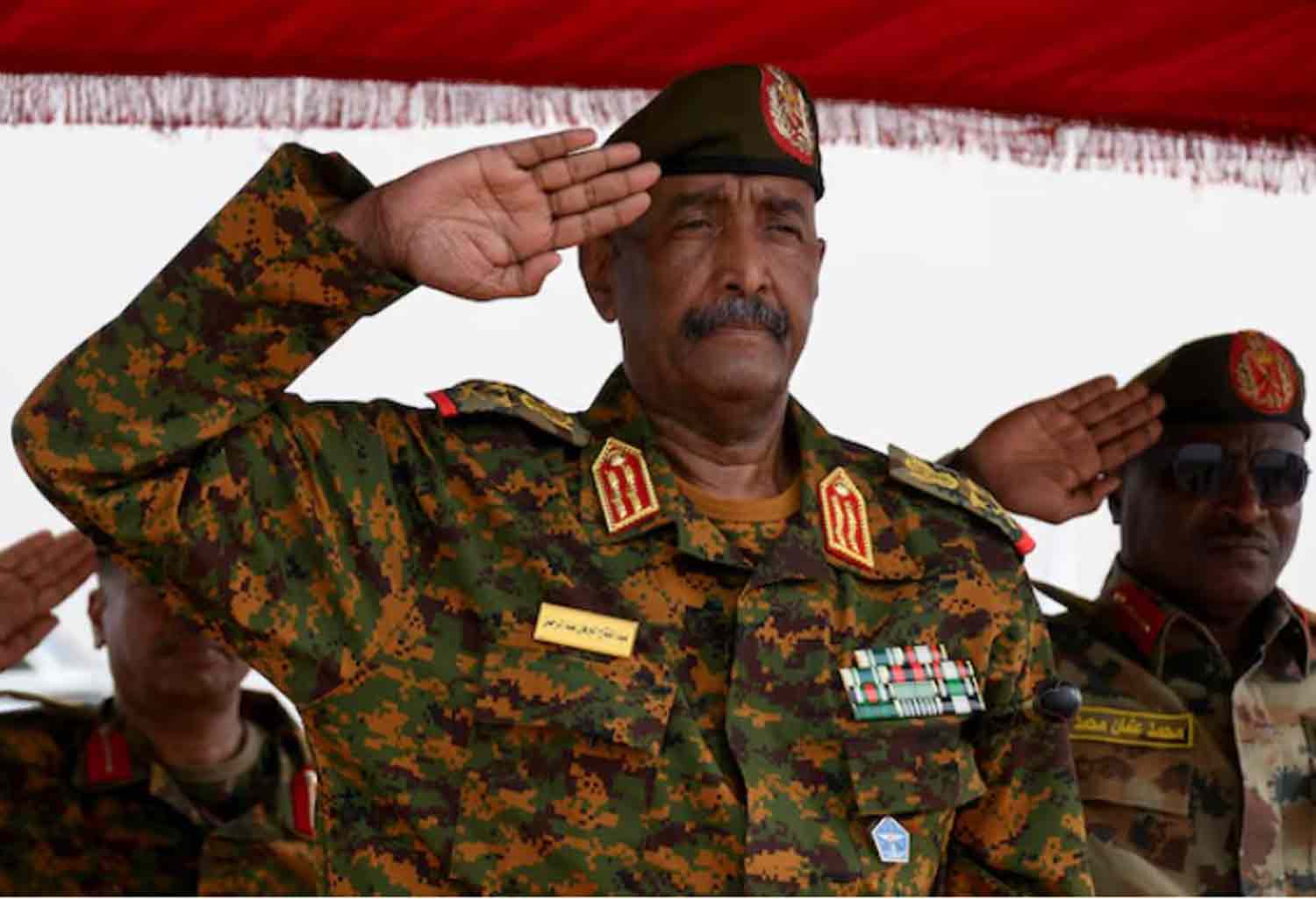
Sudan's General Abdel Fattah al-Burhan salutes as he listens to the national anthem after landing in the military airport of Port Sudan.

Sudan‘s military initiated a series of artillery and air strikes in the capital on Thursday, marking its most significant offensive to reclaim territory since the onset of its 17-month conflict with the Rapid Support Forces (RSF), according to witnesses and military officials.

This military action follows the army’s loss of control over much of the capital at the beginning of the conflict and precedes an address by General Abdel Fattah al-Burhan, the army’s commander, at the United Nations General Assembly in New York later that day.

Witnesses reported intense bombardments and skirmishes as army units attempted to cross bridges over the Nile that link the three cities comprising the greater capital: Khartoum, Omdurman, and Bahri.

While the army managed to regain some territory in Omdurman earlier this year, it primarily relies on artillery and air support and has struggled to dislodge the more effective RSF ground forces entrenched in various areas of the capital.

In recent months, the RSF has continued to make territorial gains in other regions of Sudan, exacerbating a humanitarian crisis that has displaced over 10 million people and led to severe hunger and famine in parts of the country.

Diplomatic initiatives by the United States and other nations have stalled, particularly after the army declined to participate in discussions held in Switzerland last month.

Lebanon’s Prime Minister hopes for an early ceasefire

0
Smoke billows over southern Lebanon following Israeli strikes.

Lebanese Prime Minister Najib Mikati has conveyed optimism regarding the possibility of achieving a ceasefire to halt the ongoing conflict between Israel and Hezbollah, which is backed by Iran. This situation has significantly impacted Lebanon and heightened concerns about a potential ground invasion.

The United States, France, and several allied nations have advocated for an immediate 21-day ceasefire along the Israel-Lebanon border, while also supporting a ceasefire in Gaza, following extensive discussions at the United Nations on Wednesday.

Mikati has welcomed this call for a truce but emphasized that the success of such an agreement hinges on Israel’s commitment to upholding international resolutions, especially as it continues to position troops near the Lebanese border. When asked about the likelihood of securing a ceasefire in the near future, Mikati responded to Reuters, “Hopefully, yes.”

Mikati’s caretaker government includes ministers affiliated with Hezbollah, which is widely regarded as the most influential political entity in the country.

The proposed ceasefire would pertain to the “Blue Line” that serves as the boundary between Lebanon and Israel, facilitating negotiations for a possible diplomatic resolution to the ongoing conflict, as stated by a senior official from the Biden administration.

On Thursday, UN Special Coordinator for Lebanon, Jeanine Hennis-Plasschaert, expressed her support for an immediate 21-day ceasefire to create an environment conducive to diplomatic efforts.

Israel has prioritized the security of its northern border and the safe return of approximately 70,000 residents who have been displaced due to frequent hostilities since the outbreak of war in October between Israel and Hamas in Gaza, located on Israel’s southern border.

On Wednesday, Israel expanded its airstrikes in Lebanon, resulting in at least 72 fatalities, according to a compilation of reports from the Lebanese health ministry by Reuters. The ministry also reported that at least 223 individuals sustained injuries.

Israel’s military leader indicated that a ground offensive could be on the horizon, heightening concerns that the ongoing conflict might escalate into a broader war in the Middle East. In recent months, U.S. officials have been in discussions with representatives from both Israel and Lebanon to mitigate tensions, according to a senior official from the Biden administration.

Before a U.N. Security Council meeting on Wednesday, Israel’s U.N. Ambassador Danny Danon expressed that Israel would support a ceasefire and favored a diplomatic resolution. He also informed the Security Council that Iran is at the center of the violence in the region, asserting that achieving peace necessitates addressing this threat.

Global leaders have expressed alarm over the rapidly escalating conflict, which coincides with Israel’s military actions in Gaza against Hamas militants, who are also supported by Iran. The death toll in Lebanon has surged, prompting thousands to evacuate their homes.

This week, Israeli airstrikes have targeted Hezbollah leaders and struck numerous locations deep within Lebanon, displacing hundreds of thousands from the border area, while Hezbollah has retaliated with rocket fire into Israel.

Hezbollah has faced significant setbacks recently, with the assassination of several senior commanders and the destruction of thousands of communication devices used by its members, resulting in casualties. Since Monday, Lebanese hospitals have been overwhelmed with the injured, following Israeli bombings that claimed over 550 lives, marking the deadliest day in Lebanon since the end of its civil war in 1990.

North Korea may be able to produce a double-digit number of nuclear weapons, MP says

0
North Korean leader Kim Jong Un tours facilities during a visit to the Nuclear Weapons Institute and the production base of weapon grade nuclear materials.
North Korean leader Kim Jong Un tours facilities during a visit to the Nuclear Weapons Institute and the production base of weapon-grade nuclear materials at an undisclosed location in North Korea.

A South Korean lawmaker stated on Thursday that North Korea possesses sufficient plutonium and uranium to manufacture at least a double-digit quantity of nuclear weapons, according to information from the country’s intelligence agency.

The agency also anticipates the possibility of North Korea conducting a seventh nuclear test following the U.S. presidential election on November 5, as noted by Lee Seong-kweun, a member of the parliamentary intelligence committee.

In a report released in July, the Federation of American Scientists estimated that Pyongyang might have generated enough fissile material to create up to 90 nuclear warheads, although it is believed that the actual number assembled is closer to 50.

Lee pointed out that it is uncommon for North Korean state media to cover leader Kim Jong Un’s visit to a uranium enrichment site, indicating that the report issued earlier this month was likely intended to convey a message to Washington in advance of the U.S. presidential election.

Lee, addressing reporters following a briefing from South Korea’s National Intelligence Service, indicated that the report regarding the visit might serve domestic interests. “Given the dire economic circumstances, this could be seen as an effort to boost confidence among the populace,” Lee remarked.

North Korea maintains that its nuclear weapons and ballistic missile capabilities are essential for countering perceived threats from the United States and its allies. The regime frequently emphasizes these weapons as symbols of national pride and evidence of the country’s strength.

The North Korean Supreme People’s Assembly (SPA), which functions as the state’s nominal parliament, is scheduled to hold a new session on October 7 in Pyongyang. During this session, amendments to the constitution may be proposed, along with potential measures to redefine boundaries with South Korea, according to Lee.

The previous SPA meeting took place in January, during which leader Kim advocated for a constitutional change that would designate South Korea as the “primary foe.”


Naval vessels from New Zealand and Australia traversed the Taiwan Strait on Wednesday

0
New Zealand's Defence Minister Judith Collins

Naval ships from New Zealand and Australia transited the Taiwan Strait on Wednesday, as confirmed by New Zealand Defence Minister Judith Collins in a statement released on Thursday.

The vessels navigated the disputed strait starting at 2 PM local time on Wednesday, an action Collins characterized as a standard operation in line with international law. “The New Zealand Defence Force undertakes all operations in compliance with international law and established best practices,” she stated.

This marked the first occasion since 2017 that a New Zealand naval vessel has traversed the strait. Additionally, a Japanese newspaper reported that the two ships were accompanied by the Japanese Self Defense Force destroyer Sazanami, although Collins’ statement only referenced the New Zealand and Australian vessels.

There was no immediate response from Australia’s Department of Defence or the Defence Minister’s office.