Tuesday, April 7, 2026
Home Blog Page 19

China’s Airpower Surge: PLAAF on Track to Field Nearly 1,000 Stealth Fighters by 2030

0

China’s People’s Liberation Army Air Force (PLAAF) is on course for a dramatic expansion that could fundamentally reshape the airpower balance in Asia by the end of the decade, according to projections by the Royal United Services Institute (RUSI).

By 2030, the PLAAF is expected to operate one of the world’s largest and most modern fighter fleets, built around mass production of stealth and heavy multirole aircraft—far outpacing the pace of regional competitors.

What China’s Air Force Could Look Like in 2030

RUSI estimates that by the end of the decade, the PLAAF may field approximately:

  • Around 1,000 J-20A/S heavy stealth fighters
  • 200–300 J-35 medium stealth fighters
  • Roughly 900 J-16 heavy multirole fighters

Together, these aircraft would give China an unprecedented combination of stealth, range, payload, and numbers, allowing sustained operations across the Western Pacific and along China’s land borders.

A Production Pace Few Can Match

China’s advantage is not just design—it is industrial scale.

The number of J-20 stealth fighters reportedly rose from around 150 aircraft in mid-2022 to over 200 by late 2023. Production rates are believed to have reached around 100 aircraft per year in 2023, later stabilising at approximately 120 fighters annually.

In 2025 alone, estimates suggest the PLAAF inducted:

  • Around 120 J-20A/J-20S stealth fighters
  • Another 100–170 non-stealth fighters, including J-16, J-15, and J-10 variants

This means China may have added up to 300 new combat aircraft in a single year, a rate unmatched by any other major air force.

J-35: The Next Stealth Layer

Alongside the J-20, China is developing the J-35, a medium stealth fighter believed to be entering low-rate initial production. While still less visible than the J-20 program, analysts expect output to ramp up rapidly.

Based on China’s previous production behaviour, 200–300 land-based J-35s could be operational by 2030. The aircraft is expected to benefit directly from sensors, avionics, and weapons already matured on the J-20, accelerating its operational readiness.

India’s Challenge: Numbers and Speed

In contrast, India’s response appears incremental rather than transformational.

India currently operates roughly 600 fighter aircraft and plans to acquire 114 additional jets. Proposed measures include:

  • Induction of LCA Mk-1A fighters
  • A possible purchase of 30–40 Rafales
  • Limited and uncertain induction of LCA Mk-2

While these steps address near-term shortages, they do not match China’s production speed, scale, or stealth concentration, especially in the 2025–2030 timeframe.

Why This Matters Strategically

This widening gap is not merely numerical. China’s growing fleet combines:

  • Stealth penetration capability
  • Long-range sensors and missiles
  • Networked operations
  • High sortie sustainability

Such a force allows China to dominate airspace through mass, persistence, and layered capability, rather than relying on a small number of elite aircraft.

By comparison, slower acquisition cycles elsewhere risk creating capability cliffs, where aging fleets struggle to keep pace with rapidly modernising adversaries.

A Regional Airpower Inflection Point

If current trends continue, 2030 could mark an inflection point where the PLAAF becomes not only Asia’s largest air force, but one capable of sustained high-intensity operations across multiple theatres.

For regional air forces, the challenge is no longer just keeping up technologically—but keeping up industrially.

Conclusion

RUSI’s projections underline a stark reality: China’s airpower growth is being driven by consistent production, mature designs, and long-term planning, not one-off procurement decisions.

Unless acquisition speed and industrial output change elsewhere, the coming decade may see the airpower balance in Asia tilt decisively toward Beijing.
Turkey’s Kızılelma Signals Shift Toward Fully Autonomous Air Combat

0
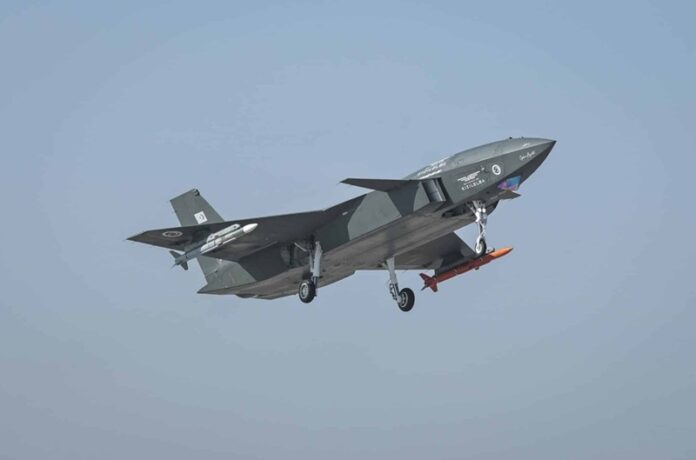
Bayraktar KIZILELMA unmanned fighter jet armed with GÖKDOĞAN air-to-air missile

Türkiye’s Bayraktar Kızılelma unmanned combat aircraft is increasingly emerging as a marker of a new phase in air warfare, as recent tests highlight the rapid maturation of fully autonomous, jet-powered combat drones designed to operate independently or in coordinated formations without human pilots.

Developed by Turkish defence firm Baykar, Kızılelma is part of a broader global transition toward autonomy-first air combat concepts, where artificial intelligence, sensor fusion, and coordinated drone operations are prioritized over traditional manned fighter platforms.

Autonomy Takes Center Stage

Recent demonstrations have focused less on individual weapons performance and more on autonomous mission execution, including synchronized operations between multiple aircraft. Kızılelma has now demonstrated the ability to fly in fully autonomous mode, conduct coordinated maneuvers with another jet-powered unmanned aircraft, and execute mission profiles traditionally reserved for piloted fighters.

These tests underline a key shift: autonomy is no longer limited to navigation or takeoff and landing but is expanding into tactical decision-making, formation control, and mission coordination—areas long considered too complex for unmanned systems.

Design Philosophy: Unmanned, Yet Fighter-Like

Unlike many earlier drones optimized for endurance or strike missions, Kızılelma is deliberately designed to closely resemble a manned fighter aircraft in size, performance, and operational concept. Its jet propulsion, stealth-oriented shaping, internal weapons carriage, and high-subsonic performance place it closer to next-generation combat aircraft than traditional UAVs.

Türkiye is also developing multiple autonomous aircraft concepts in parallel, signaling that Kızılelma is not a one-off platform but part of a wider ecosystem of AI-enabled air combat systems.

Cost Disruption in Air Power

One of the most disruptive aspects of autonomous combat aircraft is cost asymmetry. Current Western autonomous combat aircraft projects, such as the U.S. XQ-58 Valkyrie, are often discussed in the $20–30 million range per unit. Comparable Chinese systems, including stealth UCAVs like the GJ-11, are believed to fall within a similar cost bracket.

By contrast, projected costs for sixth-generation manned fighters are frequently estimated at $250–300 million per aircraft, excluding lifecycle and pilot training expenses. Training a single next-generation fighter pilot alone is expected to cost $12–15 million or more.

This means the cost of one manned sixth-generation fighter could potentially fund 10 to 15 autonomous combat drones, each capable of operating with AI-driven coordination, persistence, and acceptable attrition.

From Platforms to Swarms

The operational logic behind systems like Kızılelma is not individual aircraft dominance but area saturation and persistence. AI-enabled drones could, in theory, scan vast maritime or continental regions within hours, identify targets through sensor fusion and imagery analysis, and conduct strikes without risking pilots.

Future concepts envision lighter, smaller drones—possibly one-third the size and weight of today’s combat aircraft—powered by hybrid propulsion systems combining optimized fuel use with advanced batteries. Such platforms could offer extreme endurance, reduced signatures, and compatibility with long-range air-to-air missiles.

Earlier Combat Milestones

While the current focus is on autonomy and coordinated operations, Kızılelma had already crossed a major milestone earlier with a beyond-visual-range (BVR) air-to-air missile engagement, demonstrating that an unmanned combat aircraft could complete a full kill chain using onboard sensors and decision logic.

That earlier event provided proof of concept. The latest developments, however, suggest something broader: autonomous air combat is moving from isolated demonstrations toward operational doctrine.

Strategic Implications

Kızılelma’s progress places Türkiye among a small group of states pushing toward AI-centric air combat, alongside ongoing efforts in the United States and China. What distinguishes the Turkish approach is the apparent emphasis on rapid iteration, operational testing, and cost efficiency, rather than decade-long development cycles.

As air forces worldwide prepare for an era where pilot availability, cost, and survivability are growing constraints, platforms like Kızılelma point toward a future where numbers, autonomy, and coordination may matter more than individual aircraft prestige.

Conclusion

The Bayraktar Kızılelma is no longer just an experimental unmanned jet. Its evolving autonomy, coordinated operations, and cost-disruptive potential indicate a structural shift in air warfare, where intelligent drones increasingly shoulder missions once reserved for manned fighters.

The age of autonomous combat aviation is no longer theoretical—it is taking shape in real flight test programs.

UK Royal Navy Flies First Autonomous Anti-Submarine Helicopter as North Atlantic Tensions Rise

0
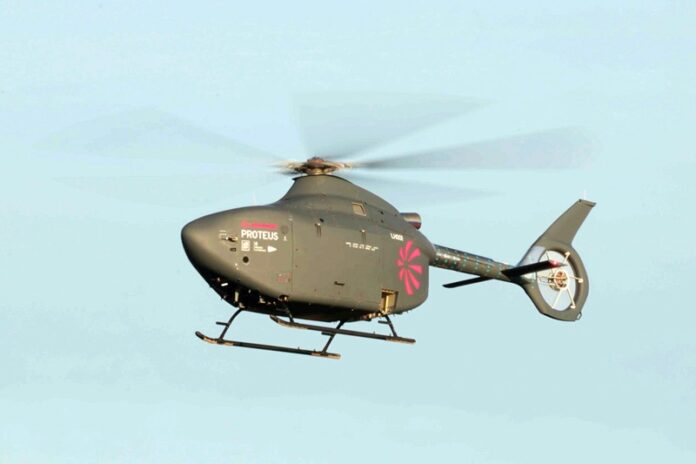
UK's first pilotless helicopter, Proteus

Britain’s Royal Navy has confirmed that its first full-sized autonomous helicopter, designed for anti-submarine warfare and other high-risk maritime missions, has successfully completed its maiden flight, marking a significant step in the modernization of UK and NATO naval capabilities.

The helicopter, named Proteus, completed a short initial test routine, according to a statement released by the Royal Navy on Friday. Developed under a £60 million ($80.46 million) programme, the platform is intended to enhance maritime surveillance and undersea warfare capabilities at a time of rising security concerns in the North Atlantic.

A New Tool for Undersea Warfare

Proteus has been specifically designed to conduct anti-submarine operations, sea patrols, and underwater vessel tracking, missions that are becoming increasingly critical amid heightened activity by Russian submarines in North Atlantic waters.

The Royal Navy said the system will play a key role in defending Britain and its NATO allies against what it described as “evolving threats” in the region, particularly along vital sea lanes between Greenland, Iceland, and the United Kingdom—an area long regarded as strategically crucial for tracking submarine movements.

Autonomous Design Reduces Risk

Designed and built by Leonardo Helicopters, Proteus relies on advanced sensors, onboard computers, and software-driven decision-making systems that allow it to interpret its environment and operate without a human crew.

Nigel Colman, UK managing director of Leonardo Helicopters, said the aircraft represents a major shift in maritime aviation.

“Proteus represents a step-change in how maritime aviation can deliver persistence, adaptability and reach—conducting the dull, dirty and dangerous missions in challenging environments without putting human operators at risk,” he said.

Part of a Broader European Defense Shift

Europe’s defense landscape has undergone rapid transformation since Russia’s full-scale invasion of Ukraine in February 2022, prompting governments to raise defense spending, expand force structures, and accelerate investment in autonomous and unmanned systems.

The North Atlantic has re-emerged as a focal point for NATO planners, particularly as undersea infrastructure protection, submarine detection, and persistent surveillance become higher priorities.

In this context, Proteus reflects a growing reliance on autonomous platforms to provide continuous coverage and operational flexibility without the constraints associated with crewed aircraft.

More Capable Than Existing Naval Drones

The Royal Navy already operates several unmanned systems, including smaller rotary-wing surveillance drones. However, Proteus is larger, longer-ranged, and more sophisticated, bridging the gap between traditional crewed helicopters and lightweight unmanned aerial vehicles.

Its size and sensor capacity allow it to carry more advanced payloads, extending mission duration and enabling operations in harsher maritime environments.

Strategic Implications

The introduction of Proteus aligns with wider NATO efforts to improve maritime domain awareness and counter increasingly quiet and capable submarines operating in the North Atlantic.

While Russia has dismissed claims that Moscow poses a growing threat to Greenland and surrounding waters, Western militaries continue to invest in surveillance and tracking capabilities to maintain undersea superiority.

India Exits Iran’s Chabahar Port After US Sanctions, Recasting Regional Connectivity Strategy

0

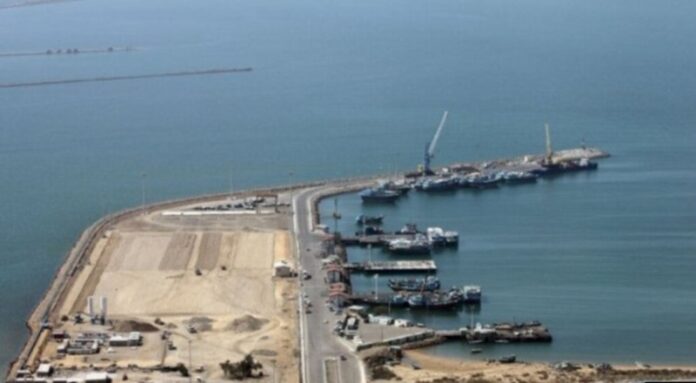
India has formally exited the Chabahar Port project in Iran following the reimposition of US sanctions targeting the strategic facility, marking a significant reversal in New Delhi’s long-standing regional connectivity ambitions. Ahead of the sanctions taking effect, India paid out its remaining $120 million financial commitment to Iran, effectively ending its operational and managerial involvement in the port.

According to officials familiar with the matter, Iran is now free to use the funds at its discretion to continue port operations independently, without any Indian participation. The move underscores the growing constraints faced by regional middle powers as US sanctions increasingly reshape infrastructure, trade, and geopolitical alignments.

India’s Quiet Withdrawal

In the immediate aftermath of the sanctions renewal, all government-appointed directors on the board of India Ports Global Limited (IPGL)—the state-owned entity responsible for developing and operating Chabahar—resigned simultaneously. The IPGL website was also taken offline, reportedly to “insulate everyone associated with the port from potential sanctions exposure.”

These steps indicate a deliberate effort by New Delhi to achieve a clean legal and institutional break, minimizing risk to officials, contractors, and affiliated entities under US secondary sanctions.

Why Chabahar Mattered to India

Chabahar Port, located on Iran’s southeastern coast near the Strait of Hormuz, was central to India’s strategy to:

  • Bypass Pakistan for access to Afghanistan and Central Asia
  • Establish a foothold in the northwestern Indian Ocean
  • Counterbalance China’s presence at Gwadar Port in Pakistan

India had long portrayed Chabahar as a purely commercial and development-oriented project, even securing limited US sanctions waivers in earlier years due to its role in supporting Afghanistan’s economy.

However, with the geopolitical environment hardening and US-Iran tensions persisting, those exemptions have effectively collapsed.

Sanctions Trump Strategic Autonomy

India’s exit highlights the limits of strategic autonomy when confronted with extraterritorial sanctions. Despite strong diplomatic engagement with Washington and its growing role in US-led Indo-Pacific frameworks, New Delhi ultimately chose compliance over confrontation, prioritizing broader economic and financial interests.

For Indian policymakers, the risk of exposing banks, shipping companies, and state-owned enterprises to US penalties outweighed the strategic benefits of remaining involved at Chabahar.

Implications for Iran

For Iran, India’s withdrawal is a setback but not an operational shutdown. Tehran retains full control of Chabahar and the $120 million already transferred, allowing it to continue port development through domestic resources or alternative partners.

Iran has repeatedly signaled interest in deeper cooperation with China, Russia, and regional players, and Chabahar could increasingly be integrated into eastward connectivity frameworks that are less vulnerable to US pressure.

However, without Indian participation, the port’s role as a gateway to Central Asia via Indian-backed corridors becomes significantly diminished.

Regional Connectivity Recalibrated

India’s departure from Chabahar also alters regional trade and transit dynamics. Projects such as the International North–South Transport Corridor (INSTC) and India’s envisioned Afghanistan–Central Asia access routes now face structural uncertainty.

Meanwhile, Pakistan and China’s Gwadar Port, backed by the China–Pakistan Economic Corridor (CPEC), emerges further consolidated as the dominant deep-sea port in the region—ironically reinforcing the very imbalance India originally sought to counter.

A Broader Pattern

The Chabahar episode reflects a broader trend in which US sanctions are reshaping global infrastructure and forcing states to choose between strategic projects and financial system access. Ports, pipelines, and logistics hubs—once seen as neutral economic assets—are now deeply embedded in geopolitical contestation.

For India, the exit underscores a strategic pivot toward projects that are fully insulated from sanctions risk, including deeper maritime integration with US-aligned partners and alternative connectivity initiatives in the Indo-Pacific.

Conclusion

India’s withdrawal from Chabahar Port marks the end of a decade-long experiment in balancing relations with Iran and the United States. While the financial commitment has been fulfilled, the strategic vision underpinning the project has effectively collapsed under sanctions pressure.

The episode serves as a cautionary case study for regional powers navigating an increasingly fragmented global order—where infrastructure, finance, and geopolitics are no longer separable.

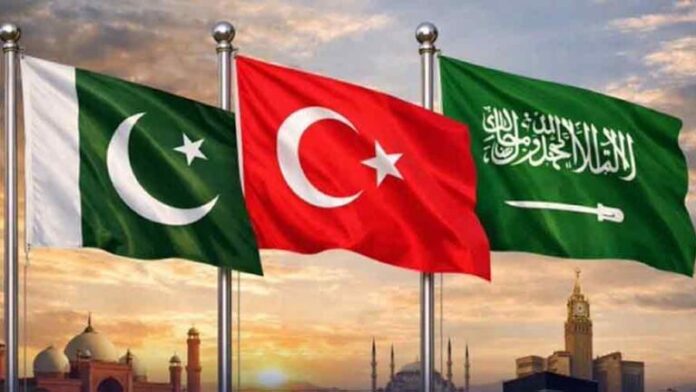
Former Qatari PM Backs Saudi–Pakistan–Türkiye Defense Pact as Regional Security Order Shifts

0
hamad bin jassim bin jaber al thani

Former Qatari Prime Minister Hamad bin Jassim bin Jaber Al Thani has publicly endorsed the idea of a Saudi–Pakistan strategic defense pact, potentially joined by Türkiye and, ideally, Egypt and key Gulf states, describing it as a necessary response to shifting global power dynamics and increasingly unpredictable Western—particularly US—policies.

In a statement reflecting growing debate within the Muslim world over strategic autonomy, Hamad bin Jassim argued that such an alliance could strengthen regional security, reduce external dependence, and provide a durable framework for cooperation at a time when traditional security guarantees are being reassessed.

A Response to a Changing Strategic Environment

Hamad bin Jassim’s remarks come amid a broader realignment in global and regional geopolitics. Across the Middle East and South Asia, policymakers are increasingly questioning the reliability of external security umbrellas as Washington recalibrates its global priorities, balances commitments across Europe and the Indo-Pacific, and relies more on selective engagement rather than permanent regional presence.

Against this backdrop, a Saudi–Pakistan–Türkiye axis would bring together complementary strengths:

  • Saudi Arabia as a financial, energy, and political heavyweight in the Arab and Islamic worlds
  • Pakistan as a nuclear-armed state with large, combat-experienced armed forces
  • Türkiye as a technologically advanced military power with growing defense exports and expeditionary experience

Collectively, these capabilities could form the nucleus of a self-sustaining regional security framework.

Not an Anti-Iran Alliance

A notable element of Hamad bin Jassim’s position is his emphasis that any such pact should not be hostile toward Iran. This reflects lessons drawn from decades of regional polarization, where zero-sum security blocs often intensified instability rather than reduced it.

By advocating a non-confrontational posture, the former Qatari premier signals that the proposed alliance should focus on deterrence, crisis management, and internal security cooperation—rather than acting as an aggressive coalition aimed at provoking regional escalation.

This approach aligns with recent diplomatic trends, including Saudi-Iran rapprochement efforts and broader Gulf attempts to de-escalate long-running rivalries.

Beyond a Military Alliance

Hamad bin Jassim stressed that the alliance must be broad-based, extending beyond military cooperation to include:

  • Economic coordination and investment frameworks
  • Political consultation mechanisms
  • Defense industrial collaboration
  • Crisis response and strategic dialogue

Such multidimensional integration would distinguish the pact from ad-hoc military coalitions and enhance its resilience against leadership changes or external pressure.

Analysts note that Türkiye’s growing defense industrial base, Pakistan’s production capacity, and Gulf financing could together create a powerful ecosystem for joint weapons development, technology transfer, and supply-chain independence.

The Importance of a Clear Charter

One of the most significant warnings in Hamad bin Jassim’s statement concerns institutional design. He argued that the alliance must be founded on a clear, well-studied charter that defines objectives, decision-making mechanisms, and respect for national sovereignty.

Without such clarity, he cautioned, the pact risks becoming symbolic rather than effective, or vulnerable to internal divisions and external manipulation.

This emphasis reflects past regional experiences, where loosely structured alliances struggled to survive political transitions or diverging threat perceptions.

Implications for the Wider Muslim World

If expanded to include Egypt and additional Gulf states, the proposed framework could represent one of the most significant security groupings in the Muslim world—linking the Middle East, South Asia, and the Eastern Mediterranean.

Such a bloc would not replace existing partnerships with Western powers but could rebalance them, giving member states greater leverage and strategic choice.

For Pakistan in particular, participation would reinforce its role as a bridge between the Middle East and South Asia, while for Saudi Arabia and Türkiye, it would strengthen collective deterrence without over-militarization.

Conclusion

Hamad bin Jassim’s endorsement of a Saudi–Pakistan–Türkiye strategic defense pact reflects a broader regional conversation about self-reliance, autonomy, and multipolar security. His emphasis on inclusivity, non-hostility toward Iran, and institutional clarity suggests an alliance aimed at stability rather than confrontation.

Whether such a pact materializes will depend on political will, threat perceptions, and the ability of prospective members to translate shared interests into a durable framework. However, the growing frequency of such proposals underscores a clear reality: regional powers are increasingly preparing for a future in which security is shaped less by external guarantees and more by collective regional capacity.

Russia Targets 2026 First Flight for Su-75 Checkmate Light Stealth Fighter

0
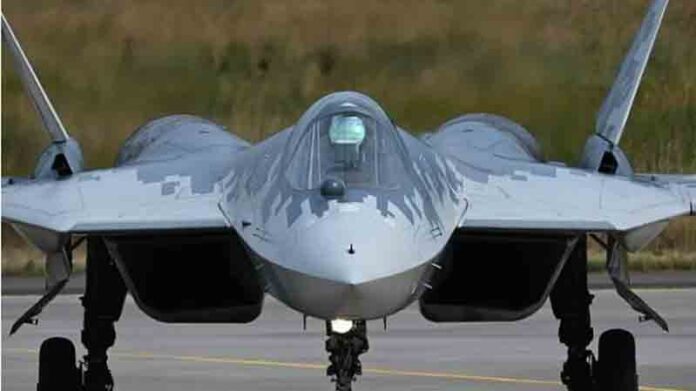
Su-57 stealth fighter

Russia is aiming for a first flight of the Su-75 “Checkmate” light stealth fighter in 2026, according to a report by Izvestia published on January 12, 2026. While no specific date has been confirmed, the timeline would mark the aircraft’s first transition beyond the full-scale mock-up unveiled in 2021.

The Su-75 was officially revealed at the MAKS Air Show in August 2021 as a single-engine Light Tactical Aircraft, intended to complement the heavier Su-57 and eventually replace aging MiG-29 variants in Russian service. Since its debut, the program has remained in the development and preparation phase, with no confirmed flight testing milestones achieved to date.

Initial plans had projected a maiden flight as early as 2023, but the schedule was subsequently revised multiple times—to 2024, then 2025, and now early 2026—reflecting funding constraints, industrial prioritisation, and broader geopolitical pressures. As of January 2026, the aircraft remains in a pre-flight stage, with no publicly announced domestic or export orders.

Russian state officials have stated that prototype manufacturing activities are underway at the Komsomolsk-on-Amur Aircraft Plant, which also produces Su-35S and Su-57 fighters. However, development has taken place under the impact of international sanctions, which have constrained access to imported electronics, machine tools, and financing, while production capacity has been focused on meeting operational requirements for existing aircraft types.

From a design perspective, the Su-75 features a configuration aimed at reducing radar signature while maintaining manufacturing simplicity. The aircraft incorporates a diverterless supersonic inlet, a V-tail layout, and internal weapons bays to support low-observable operations. Publicly available imagery and patent filings since 2021 indicate ongoing refinement of aerodynamic surfaces and structural elements.

The Su-75 is planned as a single-seat, multirole fighter capable of air-to-air and air-to-ground missions. It is expected to be powered by a derivative of the Saturn AL-51F-1 engine, also associated with later Su-57 variants. Published specifications suggest a maximum takeoff weight of around 26,000 kilograms, a payload capacity of up to 7,400 kilograms, and a maximum speed in the Mach 1.8–2.0 range, though all figures remain provisional pending flight testing.

Avionics concepts include an open-architecture electronic suite and a cost-optimised AESA radar, with reported efforts to maintain component commonality with the Su-57. The cockpit is expected to feature large multifunction displays consistent with recent Sukhoi designs.

Analysts note that the Su-75 program has been advanced with a strong emphasis on export potential and cost control, rather than immediate large-scale domestic procurement. Russian officials have repeatedly linked the aircraft’s future production volume and timeline to foreign interest, suggesting that serial manufacturing will depend on confirmed external commitments.

If the planned 2026 first flight takes place, it would represent a significant milestone for Russia’s effort to reintroduce a lightweight, single-engine combat aircraft after several decades. However, the aircraft’s operational role, production prospects, and competitiveness will remain uncertain until flight testing begins and performance claims are validated.

US Approves $1.5 Billion Naval Infrastructure Deal with Peru, Expanding Strategic Footprint in the Eastern Pacific

0
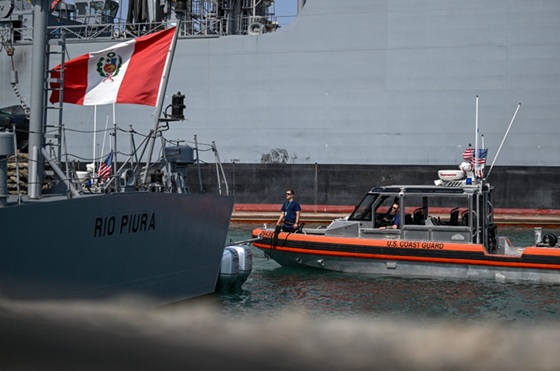
Callao Naval Base, Peru

The United States has approved a potential $1.5 billion Foreign Military Sale (FMS) to Peru aimed at modernising maritime and onshore infrastructure at the Callao Naval Base, the country’s most critical naval installation. The US State Department confirmed the approval on January 15, with the Defense Security Cooperation Agency (DSCA) notifying Congress shortly thereafter.

Unlike traditional arms sales, the package does not include major weapons systems or combat platforms. Instead, it focuses on long-term infrastructure modernisation, engineering support, and sustainment—highlighting a growing US emphasis on strategic basing, logistics resilience, and partner capacity-building rather than direct militarisation.

What the Deal Includes

According to the DSCA, Peru requested a comprehensive suite of construction and engineering services designed to overhaul port infrastructure at Callao. The package covers:

  • Lifecycle facility design and construction
  • Project and construction management
  • Engineering studies and site surveys
  • Facility assessments and infrastructure planning
  • Acquisition and logistics support
  • Long-term sustainment services

The total projected value of all work and associated services is $1.5 billion, making it one of the largest US-approved defence infrastructure projects in South America in recent years.

Why Callao Matters

Callao Naval Base sits adjacent to Lima and serves as Peru’s primary naval hub, supporting fleet operations, logistics, ship maintenance, and maritime security missions across the eastern Pacific. The base is central to Peru’s ability to:

  • Protect vital sea lanes
  • Conduct counter-narcotics operations
  • Respond to illegal fishing and maritime crime
  • Support humanitarian assistance and disaster relief missions

The DSCA noted that the modernisation effort will reduce civilian-military overlap within the existing base layout, improving operational security, safety, and efficiency—an increasingly important concern as port congestion and dual-use infrastructure expand along Latin America’s coastline.

Long-Term US Presence Without Bases

One of the most strategically significant elements of the sale is the deployment of up to 20 US government or contractor personnel in Peru for as long as ten years. While modest in number, this long-term presence ensures sustained US involvement in planning, oversight, and project execution.

This approach reflects a broader US strategy: persistent engagement without permanent basing. By embedding technical expertise rather than troops or weapons, Washington strengthens interoperability and influence while avoiding domestic political sensitivities in host nations.

Strategic Significance Beyond Peru

Although US officials stress that the deal will not alter the regional military balance, analysts view the project as part of Washington’s effort to reinforce maritime infrastructure across strategically important regions, including the Indo-Pacific, Middle East, and increasingly, Latin America’s Pacific coast.

The eastern Pacific has gained renewed importance due to:

  • Rising Chinese commercial port investments
  • Expanding illegal, unreported, and unregulated (IUU) fishing
  • Growing transnational narcotics trafficking routes
  • Increased naval deployments tied to great-power competition

By strengthening Peru’s naval logistics and port resilience, the US enhances a regional partner’s capacity to police its waters while indirectly counterbalancing external influence, particularly China’s expanding economic footprint in South American ports.

No Weapons, But Strategic Depth

The absence of Major Defense Equipment is deliberate. Infrastructure-focused FMS packages allow the US to lock in long-term strategic alignment without triggering arms race concerns or parliamentary resistance in recipient states.

The DSCA stated that Peru will have “no difficulty absorbing these articles and services,” underscoring that the project aligns with existing operational structures rather than introducing disruptive new capabilities.

No prime contractor has yet been named, with selection expected later through a competitive process. No offset agreements are currently planned, and any such arrangements would be negotiated directly between Peru and the eventual contractor.

Peru’s Perspective

For Peru, the deal supports broader naval modernisation goals while avoiding the fiscal and political costs of acquiring high-end combat platforms. Upgraded infrastructure will improve fleet readiness, reduce maintenance bottlenecks, and enhance Peru’s ability to respond to maritime contingencies across its extensive coastline.

It also reinforces Peru’s status as a reliable US security partner in a region where Washington increasingly prioritises institutional strength, logistics, and governance over headline-grabbing arms transfers.

Conclusion

The $1.5 billion Callao Naval Base modernisation deal highlights a quiet but consequential shift in US defence engagement strategy. Rather than focusing on weapons sales, Washington is investing in infrastructure, sustainment, and long-term presence—tools that shape regional security environments without overt militarisation.

For Peru, the project promises enhanced maritime capability and operational efficiency. For the United States, it secures strategic access, influence, and partnership in the eastern Pacific—without altering regional military balances or provoking escalation.

US Links Tariff Relief to Drone Purchase, Putting Indonesia’s Strategic Autonomy to the Test

0

The disclosure that the United States has conditioned tariff relief for Indonesian exports on the purchase of American-made maritime surveillance drones marks a significant escalation in the use of trade policy as a geopolitical tool. The move underscores how economic leverage is increasingly intertwined with Indo-Pacific security strategy, particularly amid intensifying competition in the South China Sea and growing focus on Indonesia’s North Natuna Sea.

According to a confidential Indonesian government document dated October 10, 2025, Washington has proposed reducing punitive tariffs on Indonesian goods from 32 percent to 19 percent—potentially saving Indonesian exporters billions of US dollars—on the explicit condition that Jakarta acquire and publicly announce the procurement of US unmanned aerial systems for maritime surveillance. The demand effectively reframes defence procurement from a sovereign decision into a transactional element of trade negotiations.

The proposal aligns closely with President Donald Trump’s second-term “America First” doctrine, which has aggressively leveraged tariffs to extract strategic concessions from partners. Indonesia, Southeast Asia’s largest economy and a central maritime state in the Indo-Pacific, has emerged as a key test case for whether middle powers can preserve strategic autonomy under mounting great-power economic pressure.

Indonesia Responds with Caution

Indonesia’s official response has been deliberately measured. Brigadier General Rico Ricardo Sirait, Head of the Information Bureau at the Ministry of Defense’s General Secretariat, stated that there has been no specific discussion or decision regarding the purchase of maritime surveillance drones. He emphasized that defence procurement decisions are guided by national needs, fiscal capacity, and government policy—not the interests of foreign parties.

This cautious stance reflects President Prabowo Subianto’s balancing strategy since assuming office in late 2024. While accelerating military modernisation, his administration continues to uphold Indonesia’s long-standing bebas aktif (free and active) foreign policy doctrine, which prioritises non-alignment, strategic flexibility, and resistance to formal security entanglements—particularly those that could provoke retaliation from China.

Why the North Natuna Sea Matters

The strategic stakes are amplified by Indonesia’s contested maritime geography. The North Natuna Sea lies within Indonesia’s exclusive economic zone but overlaps with China’s expansive nine-dash line claims, creating persistent friction. These tensions have already resulted in repeated confrontations between Indonesian patrol vessels and Chinese fishing fleets operating under coast guard escort.

Analysts warn that Washington’s insistence on a visible hardening of Indonesia’s maritime posture could turn surveillance procurement into overt geopolitical signalling. Intelligence firm Stratfor has noted that the US is effectively demanding Indonesia purchase US-made drones and deploy them in ways that publicly reinforce its South China Sea posture vis-à-vis China—potentially recalibrating regional threat perceptions overnight.

Trade Pressure Meets Security Alignment

The economic implications are substantial. The threatened tariffs affect key Indonesian export sectors, including nickel, palm oil, textiles, footwear, and electronics, within a bilateral trade relationship valued at approximately US$300 billion annually. This places Indonesia at a crossroads between economic vulnerability and strategic coercion.

The confidential document reportedly outlines demands extending well beyond drones, including expanded bilateral security cooperation, restrictions on Chinese technology in critical infrastructure, and mandatory consultations with Washington before Indonesia enters certain digital trade agreements. Collectively, these conditions would represent a deep intrusion into sovereign policymaking.

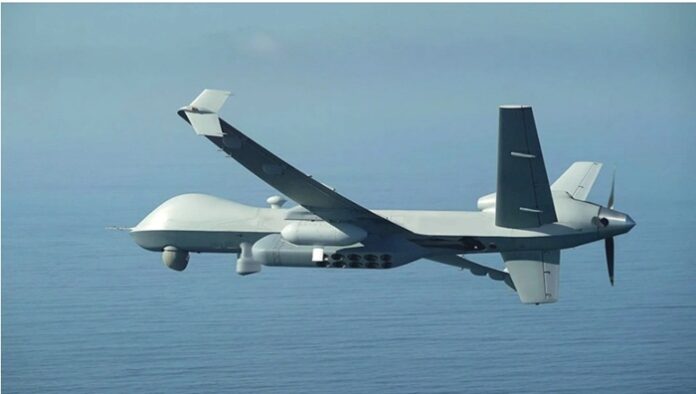
Although the specific drone model is not named, defence analysts widely believe the General Atomics MQ-9B SeaGuardian is the likely platform. The system offers more than 40 hours of endurance, high-altitude operation, and advanced multi-sensor capabilities optimized for maritime surveillance. Similar platforms are already operated by India and the Philippines, enhancing regional maritime domain awareness.

By linking such advanced ISR capabilities directly to tariff relief, Washington effectively collapses the distinction between trade negotiation and defence alignment, raising serious questions about Indonesia’s long-standing diversified procurement strategy.

Strategic Risks and Regional Consequences

Indonesia’s Ministry of Defense has continued to use carefully calibrated language, signalling neither acceptance nor rejection of the proposal. Officials acknowledge that maritime surveillance remains a capability gap, given Indonesia’s vast archipelagic jurisdiction spanning more than six million square kilometres. However, past concerns over cost and integration—particularly during stalled MQ-9B discussions in 2023—have reinforced Jakarta’s caution toward high-cost, single-source systems.

Experts warn that accepting security-linked trade concessions could have far-reaching consequences. Muhammad Zulfikar Rakhmat of the Center of Economic and Law Studies cautions that visible alignment with US security demands could strain Indonesia’s relations with China, undermine its strategic autonomy, and heighten instability in the South China Sea.

China’s potential responses could range from diplomatic protests and economic retaliation to increased maritime pressure and intensified grey-zone operations. Such dynamics risk transforming Indonesia from a stabilising middle power into a frontline state in the US-China rivalry.

At the regional level, Indonesia’s decision could also affect ASEAN unity. Analysts warn that accepting security-linked trade conditions could set a precedent, increasing intra-ASEAN polarisation and weakening collective efforts to manage South China Sea disputes through diplomacy.

A Defining Choice for Jakarta

Economically, tariff relief could bolster Indonesia’s projected 5.2 percent GDP growth in 2026. However, a squadron of MQ-9B SeaGuardian drones is estimated to cost around US$500 million, excluding long-term maintenance and integration expenses—placing additional strain on an already stretched defence budget.

Indonesia retains alternative options, including diversifying export markets, deepening ties with non-aligned partners, and continuing its multi-vector defence procurement approach.

How Jakarta navigates this dilemma will not only shape its role in the South China Sea but may also serve as a defining test for middle-power autonomy in an era where trade, technology, and security are increasingly inseparable.

Could a Pakistan–Saudi Arabia–Turkey Military Alliance Reshape Regional Deterrence?

0

The possibility of a Pakistan–Saudi Arabia–Turkey military alliance has re-emerged as regional power dynamics evolve across South Asia and the Middle East. While no formal pact exists, growing defense cooperation and political coordination among the three countries have prompted debate over whether such an alignment could meaningfully alter regional deterrence—particularly between Pakistan and India.

Recent remarks by Türkiye’s foreign minister provide rare official insight into the status of discussions.

Reporter: Does Türkiye want to be part of a regional alliance like the one formed by Pakistan and Saudi Arabia?
Turkish Foreign Minister Hakan Fidan: As of now, there are ongoing talks, but we have not yet signed any agreement.

This statement reflects both interest and restraint, suggesting that while dialogue exists, a binding framework has yet to materialize.

Strategic Rationale Behind the Concept

The appeal of a trilateral alignment lies in complementary national strengths:

  • Saudi Arabia offers financial capacity, energy influence, and diplomatic weight in the Islamic and Arab worlds.
  • Pakistan contributes a large, experienced military, strong airpower, and a credible nuclear deterrent.
  • Turkey brings advanced drone technology, a rapidly expanding defense-industrial base, and modern military R&D capabilities.

Supporters argue that institutionalizing cooperation among these three states could gradually evolve into a broader security framework, potentially attracting interest from countries such as Azerbaijan, Malaysia, Indonesia, Qatar, Jordan, and Morocco.

For Pakistan, deeper coordination with Ankara and Riyadh could strengthen deterrence by broadening strategic depth and diplomatic signaling, even without formal defense guarantees.

Pakistan’s Role: Conventional Strength and Strategic Deterrence

Pakistan would likely serve as the operational core of any alignment. Its air force remains among the most capable in the region, while its nuclear capability underpins long-term strategic stability in South Asia.

However, Pakistan’s deterrence posture is designed primarily for national defense, not alliance-based security commitments. Any perception of extending deterrence assurances to external partners would raise doctrinal, diplomatic, and legal questions at the international level.

Islamabad must also balance any new alignments with its longstanding strategic partnership with China, ensuring that emerging frameworks do not create conflicting obligations or perceptions.

Saudi Arabia: Influence Without Formal Alliance Obligations

Saudi Arabia is often viewed as the financial anchor of a potential alliance, yet Riyadh’s foreign policy has increasingly emphasized flexibility and diversification rather than rigid military blocs.

Key considerations shaping Saudi caution include:

  • Continued security cooperation with the United States
  • Expanding economic and investment ties with India
  • A preference for regional stability and de-escalation

While Saudi–Pakistan military cooperation—particularly in training, advisory roles, and defense exchanges—has deep historical roots, Riyadh has consistently avoided treaty-based alliances that could draw it into external conflicts.

As a result, Saudi Arabia is more likely to support selective defense cooperation rather than a formal collective defense pact.

Turkey: Active Engagement, Measured Commitments

Among the three, Turkey appears the most openly engaged, as reflected in Foreign Minister Fidan’s confirmation of ongoing talks. Ankara has steadily expanded defense cooperation with Pakistan, particularly in naval platforms, aerospace projects, and unmanned systems.

Turkey’s defense exports and joint R&D initiatives align well with Pakistan’s modernization priorities, offering long-term strategic value beyond short-term military coordination.

Nevertheless, Turkey faces important constraints:

  • NATO membership limits overt bloc formation
  • Economic pressures require balanced diplomacy
  • Managing relations with Europe, the Gulf, and the United States simultaneously

Fidan’s remarks underline that Turkey is exploring options without committing to formal alliance structures.

Prospects for Expansion: Cooperation Over Coalition

Speculation that additional Muslim-majority countries might join a future alliance remains largely aspirational. States such as Indonesia, Malaysia, Morocco, Jordan, and Qatar generally prefer:

  • Strategic autonomy
  • Non-aligned or multi-aligned foreign policies
  • Issue-based cooperation over permanent military commitments

While expanded participation in joint exercises, defense procurement, or political coordination forums is plausible, a unified military bloc with collective defense obligations appears unlikely.

Implications for India: Strategic Complexity, Not Constraint

Even absent a formal alliance, closer coordination among Pakistan, Turkey, and Saudi Arabia could add diplomatic and strategic complexity to South Asia’s security environment.

However, claims that such an alignment would fundamentally prevent Indian military action are overstated. India retains:

  • Strong strategic partnerships with the United States, France, Israel, and Russia
  • Growing indigenous defense-industrial capacity
  • Expanding political and economic ties with Gulf states, including Saudi Arabia

New Delhi would likely respond through counter-balancing diplomacy and deeper partnerships, rather than altering its core security doctrine.

Will It Become Reality?

A formal, treaty-based military alliance among Pakistan, Saudi Arabia, and Turkey is unlikely in the near future.

What is far more realistic—and already visible—is:

  • Expanded defense cooperation
  • Joint training and military exercises
  • Defense-industrial collaboration
  • Issue-specific political coordination

In effect, a strategic alignment without alliance formalities.

Conclusion

The idea of a Pakistan–Saudi Arabia–Turkey military alliance reflects genuine shifts in regional geopolitics, but practical constraints continue to limit its realization. As Türkiye’s foreign minister candidly acknowledged, discussions are underway—but agreements have not been signed.

Rather than the emergence of a rigid military bloc, the more plausible trajectory is incremental, pragmatic cooperation—subtle enough to avoid escalation, yet significant enough to influence regional deterrence over time.

Trump Questions Reza Pahlavi’s Ability to Lead Iran as Protests Pressure Tehran

0
U.S. President Donald Trump looks on as he signs an executive order in the Oval Office at the White House in Washington,.

U.S. President Donald Trump has cast doubt on whether Iranian opposition figure Reza Pahlavi could command enough domestic support to lead Iran, even as protests continue to strain the country’s clerical establishment.

Speaking in an exclusive interview with Reuters at the Oval Office on Wednesday, Trump described Pahlavi, the son of Iran’s last shah, as “very nice” but questioned his political viability inside Iran. Trump said Washington has not reached a point where it is prepared to fully back any single opposition figure.

“He seems very nice, but I don’t know how he’d play within his own country,” Trump said. “I don’t know whether or not his country would accept his leadership.”

U.S. Caution on Iran’s Opposition

Trump’s remarks highlight the limits of U.S. support for Iran’s fragmented opposition movement, despite repeated warnings from Washington that it could intervene in support of protesters. Iran has witnessed sustained unrest, with reports of thousands killed during a security crackdown against demonstrations opposing clerical rule.

Reza Pahlavi, 65, has lived outside Iran since before the 1979 Islamic Revolution that overthrew his father. From exile, he has emerged as a prominent voice among some protesters, particularly monarchist groups. However, Iran’s opposition remains deeply divided along ideological and organizational lines and lacks a cohesive structure inside the country.

Sanam Vakil, deputy director of Chatham House’s Middle East and North Africa Program, echoed Trump’s caution, noting that while Pahlavi has gained visibility, it is difficult to measure his actual support within Iran. “It’s very hard to see how much support he has or how much support any figure has in Iran,” she said.

Possibility of Regime Collapse

Trump said it was possible that Iran’s government could fall under the pressure of ongoing protests but stopped short of predicting an imminent collapse. “Any regime can fail,” he said, describing the current moment as an “interesting period of time” for Iran.

Broader Foreign Policy Comments

During the wide-ranging interview, Trump also addressed other international and domestic issues. He blamed Ukrainian President Volodymyr Zelenskiy for the stalemate in negotiations aimed at ending Russia’s war in Ukraine, saying Russian President Vladimir Putin was “ready to make a deal.”

Asked what was blocking progress, Trump responded: “Zelenskiy.”

Trump dismissed criticism from Republican lawmakers over a Justice Department probe involving Federal Reserve Chair Jerome Powell, insisting party loyalty should outweigh institutional concerns. He also brushed aside warnings from JPMorgan CEO Jamie Dimon that political pressure on the Federal Reserve could fuel inflation.

Venezuela, Economy, and Davos

Trump confirmed he will meet Venezuelan opposition leader Maria Corina Machado at the White House on Thursday, marking their first in-person meeting. He described Machado as “a very nice woman” and said discussions would focus on “basics.” Machado won the Nobel Peace Prize last year, though the Nobel Committee has stated the award cannot be transferred despite her public praise of Trump.

The president also defended the strength of the U.S. economy and said he would emphasize strong job numbers and economic performance at the upcoming World Economic Forum in Davos, Switzerland. According to the White House, Trump is scheduled to hold bilateral meetings with the leaders of Switzerland, Poland, and Egypt during the event.

China to Build Military Drone Factory in Bangladesh: Strategic Shift in Bay of Bengal Power Balance

0

China’s decision to establish a large-scale military drone manufacturing facility in Bangladesh marks a significant turning point in South Asia’s defence-industrial and geopolitical landscape. Valued at Tk608 crore (approximately US$55.3 million), the project embeds Beijing deeper into the Bay of Bengal security architecture, while simultaneously raising strategic concerns in India and beyond .

Approved by Bangladesh’s finance ministry, the government-to-government agreement places the Bangladesh Air Force (BAF) as the implementing authority. The project includes technology transfer from China Electronics Technology Group Corporation (CETC) International, a major Chinese state-owned defence conglomerate with global expertise in radar systems, electronic warfare, and unmanned aerial vehicles (UAVs) .

What the Drone Factory Will Produce

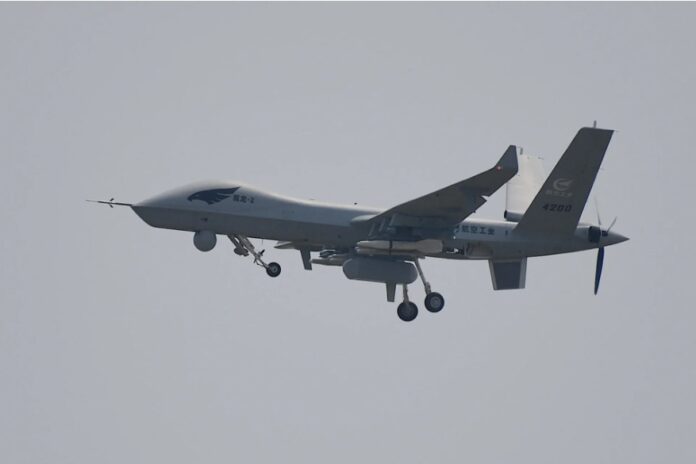
Although official documents do not specify exact platforms, industry assessments indicate the factory will prioritize production of the Wing Loong II, a medium-altitude long-endurance (MALE) armed drone often compared to the U.S. MQ-9 Reaper.

The Wing Loong II offers:

  • Up to 32 hours endurance
  • 480 kg payload capacity
  • Precision strike capability using guided munitions
  • Advanced ISR (intelligence, surveillance, reconnaissance) sensors suitable for maritime and border operations .

This capability represents a qualitative leap for the Bangladesh Air Force, enabling persistent maritime surveillance over the Bay of Bengal and enhancing deterrence against grey-zone threats such as illegal fishing, piracy, and covert incursions.

Why the Project Matters Strategically

For China, transferring UAV manufacturing technology—rather than merely exporting finished platforms—anchors long-term defence-industrial dependence and projects influence into a strategically contested maritime region. The move complements China’s broader Belt and Road Initiative (BRI) footprint in Bangladesh, where ports and transport corridors already offer potential dual-use value .

For Bangladesh, the factory aligns with its Forces Goal 2030 modernisation plan, which prioritises:

  • Indigenous sustainment
  • Reduced lifecycle costs
  • Operational autonomy
  • Integration of airpower into a network-centric battlespace

Domestic production will reduce foreign exchange outflows and allow incremental upgrades tailored to Bangladesh’s operational needs rather than supplier-driven configurations .

India’s Strategic Unease

The project has triggered immediate concern in New Delhi, where policymakers increasingly view Chinese defence cooperation with Bangladesh as part of a broader strategic encirclement of India’s eastern flank. Bangladesh’s proximity to India’s sensitive northeastern corridor amplifies these anxieties.

Indian analysts worry that armed MALE UAVs operating from Bangladeshi territory could enhance surveillance reach and electronic intelligence collection near Indian military installations. These concerns are intensified by CETC’s strengths in sensor fusion, secure datalinks, and electronic warfare, which could make Bangladeshi UAV operations resilient in contested electromagnetic environments .

At the same time, Bangladeshi officials have adopted a cautious public tone. Finance Adviser Salehuddin Ahmed has refrained from detailed comment, signalling Dhaka’s effort to manage regional sensitivities without abandoning its strategic objectives .

A Credibility Gap in Regional Defence Diplomacy

Academic Md Obaidullah of Daffodil International University notes that India’s resistance to Chinese arms sales has not been matched by credible alternatives. Stalled initiatives—such as a US$500 million defence line of credit pledged in 2019—have weakened India’s standing as a defence partner, pushing Dhaka closer to Beijing by default .

This dynamic was evident when Bangladesh selected Chinese-origin JF-17 fighters over India’s Tejas, citing delays and uncompetitive terms rather than ideological alignment.

Beyond Bangladesh: Regional Implications

China already accounts for roughly 11 percent of global Chinese arms exports to Bangladesh (2019–2023). By embedding production capacity locally, Beijing elevates the relationship from transactional arms sales to structural defence-industrial integration, significantly raising the cost for Dhaka should it seek to pivot away in the future .

The factory also opens the possibility of Bangladesh evolving into a regional UAV assembly or export hub, leveraging its strategic geography and competitive labour costs to serve South and Southeast Asian markets.

What Comes Next

Expected to become operational by late 2026, the drone factory’s symbolic weight may rival its physical output. It signals Bangladesh’s assertion of defence sovereignty amid intensifying great-power competition in the Indo-Pacific.

Whether this initiative stabilises the region or accelerates a UAV-centric arms competition will depend less on the drones themselves and more on how India, China, and regional stakeholders choose to respond.

Iran Warns Neighbours Hosting U.S. Troops of Retaliation as Tensions Rise Over Possible U.S. Intervention

0
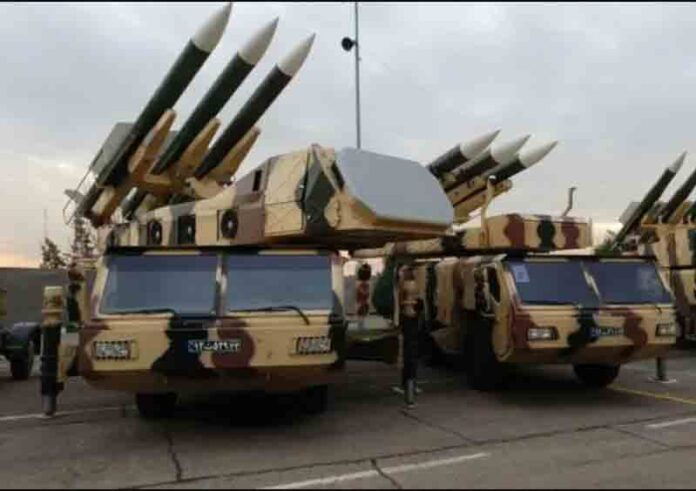
3rd Khordad air defence system, Iran

Iran has issued a stark warning to neighbouring countries hosting United States military forces, saying their territories could become targets if Washington intervenes in Iran amid ongoing protests. The warning, conveyed by a senior Iranian official to Reuters, underscores a sharp escalation in regional tensions as uncertainty grows over potential U.S. action.

According to multiple diplomats, some U.S. personnel have been advised to temporarily leave key military facilities in the Middle East, including the Al Udeid Air Base in Qatar, which serves as the forward headquarters of U.S. Central Command (CENTCOM). Diplomats described the move as a “posture change” rather than a full evacuation, noting that there were no visible signs of a large-scale troop withdrawal similar to the one seen before last year’s Iranian missile strikes.

An Israeli official, citing an internal assessment, said U.S. President Donald Trump has decided to intervene in Iran, though the scope and timing of such action remain unclear. Israeli sources also confirmed that Prime Minister Benjamin Netanyahu’s security cabinet was briefed on the risks of regime instability in Iran and the possibility of U.S. military involvement. Israel fought a 12-day conflict with Iran last year, with U.S. forces joining toward the end.

The senior Iranian official said Tehran has directly warned countries including Saudi Arabia, the United Arab Emirates, Turkey, and Qatar that U.S. military bases on their soil would be considered legitimate targets if Washington attacks Iran. Tehran has also urged U.S. allies in the region to restrain Washington and prevent further escalation.

Diplomatic engagement has meanwhile stalled. The Iranian official confirmed that direct contacts between Iran’s Foreign Minister Abbas Araqchi and U.S. Special Envoy Steve Witkoff have been suspended, reflecting the deteriorating diplomatic climate. Iranian state media reported that senior Iranian officials, including security chief Ali Larijani, held urgent calls with counterparts in Qatar, the UAE, and Turkey to convey Iran’s position.

Araqchi told UAE Foreign Minister Sheikh Abdullah bin Zayed that calm currently prevailed inside Iran and that Tehran remained determined to defend its sovereignty against any foreign interference. However, independent verification has been difficult due to an internet blackout inside Iran, which has severely restricted the flow of information.

Key U.S. Military Bases Under Scrutiny

Iran’s warnings have renewed attention on the extensive U.S. military footprint across the Middle East:

  • Al Udeid Air Base, Qatar: The largest U.S. base in the region, hosting around 10,000 troops and serving as CENTCOM’s forward headquarters. A new regional air and missile defence coordination cell was established here earlier this year.
  • Bahrain: Home to the U.S. Navy’s Fifth Fleet, overseeing operations across the Gulf, Red Sea, Arabian Sea, and parts of the Indian Ocean.
  • Kuwait: Hosts Camp Arifjan, Ali Al Salem Air Base, and Camp Buehring, key hubs for U.S. Army operations and deployments into Iraq and Syria.
  • United Arab Emirates: Al Dhafra Air Base near Abu Dhabi supports U.S. Air Force missions, including intelligence and reconnaissance operations.
  • Saudi Arabia: U.S. forces, including Patriot and THAAD air defence systems, are stationed at Prince Sultan Air Base south of Riyadh.
  • Iraq: Ain Al Asad Air Base and Erbil Air Base support U.S. and NATO missions; Ain Al Asad was previously targeted by Iranian missiles in 2020.
  • Jordan: Muwaffaq al Salti Air Base hosts U.S. air expeditionary forces conducting regional missions.
  • Turkey: Incirlik Air Base, jointly operated with Turkey, houses U.S. personnel and nuclear assets and plays a role in regional coalition operations.

Rising Risk of Regional Escalation

With U.S. President Trump publicly encouraging Iranians to continue protesting and declaring that “help is on the way,” Tehran appears determined to raise the costs of any intervention by threatening a broader regional response. Analysts warn that even limited U.S. military action could rapidly widen into a multi-front confrontation, drawing in U.S. allies and destabilizing an already volatile Middle East.

As diplomatic channels narrow and military postures shift, the situation remains highly fluid, with regional capitals bracing for the possibility of further escalation.

Dassault’s Rafale Production Rate vs. Global Demand: Why India’s 114-Jet Order Could Stretch Deliveries to 2036

0
Rafale Marine [Rafale M] fighter

In 2025, French aerospace manufacturer Dassault Aviation delivered a record 26 Rafale fighter jets, surpassing its previous year’s output and demonstrating steady growth in production capacity. However, with a backlog totaling around 220 Rafale aircraft at the end of 2025, the company faces a substantial challenge to keep pace with global demand, especially if a large Indian order of about 114 jets materializes.

Current Production and Backlog

In 2025, Dassault Aviation delivered 26 Rafale jets—15 for export customers and 11 for the French Air and Space Force—up from 21 Rafales delivered in 2024. Despite this increased output, the company’s backlog of 220 Rafales remains high, reflecting strong international demand from existing and new customers.

At the current production rate—roughly two jets per month—the existing backlog represents nearly a decade of work for Dassault, even before accounting for potential new orders.

India’s Potential Mega Order

New Delhi is reportedly in advanced discussions to procure 114 additional Rafale fighter jets to modernize the Indian Air Force under a planned defense acquisition program. If this order is finalized and added to the current schedule, the backlog could swell to around 334 aircraft, extending the timeline for deliveries well into the late 2030s unless production is increased significantly.

Currently, India has already signed multiple Rafale deals with France, including a $7.4 billion deal for 26 Rafales for its navy, expected to be delivered by 2030.

Production Ramp-Up Plans

Dassault has indicated plans to increase its Rafale production rate in the coming years. Reports suggest the company aims to eventually build up to three to four aircraft per month, with even higher rates possible as investment and supply chain capacity improve.

This strategic ramp-up is essential given the aircraft’s growing popularity. Since the start of the program, more than 533 Rafales have been ordered worldwide by France and several export customers, with hundreds still pending delivery.

Demand Outpacing Supply

Despite efforts to scale production, demand continues to outpace supply. Export contracts from countries such as Egypt, Qatar, Greece, Croatia, the UAE, Indonesia, and Serbia have helped expand Rafale’s global footprint, yet also placed strain on Dassault’s manufacturing line.

To meet both existing backlog and potential large orders like India’s, Dassault and its partners will need to significantly boost industrial capacity, streamline supply chains, and potentially establish localized production or assembly facilities. Recent industry discussions have even floated the idea of expanding production outside France to keep up with demand.

Conclusion

At its current pace of around 26 Rafales delivered annually, Dassault Aviation could take over a decade to clear the existing backlog, even before fulfilling potential mega-orders like India’s 114 jets. Unless production is accelerated substantially, key customers could face delivery timelines stretching into the mid-2030s. The coming years will be pivotal for Dassault as it balances delivery commitments with ambitious plans to ramp up output.

Iran Finds Little Support From China as Protests Grow and Economy Slips Further

0

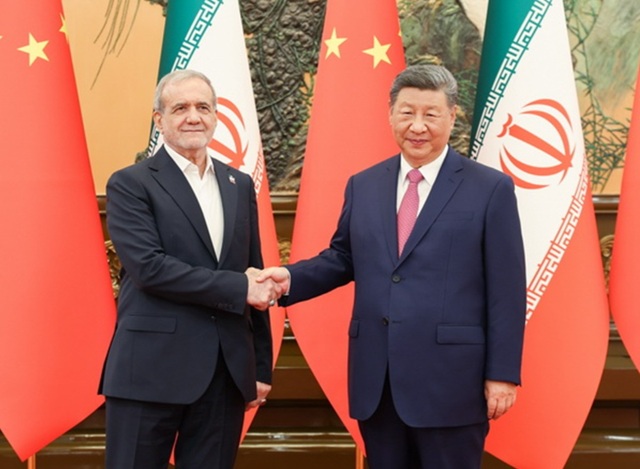
As nationwide protests persist and economic pressures deepen, Iran is discovering that its much-touted strategic partnership with China offers far less support than Tehran once anticipated. A recent Wall Street Journal report highlights how Beijing has largely stayed on the sidelines, even as Iran grapples with inflation, currency depreciation, and rising public discontent.

Iran’s economic crisis has become increasingly visible. The Iranian rial has lost significant value, inflation remains elevated, and purchasing power has eroded across large segments of society. These conditions have fueled recurring street protests, driven primarily by economic hardship, unemployment, and frustration with governance. Despite these pressures, Tehran has received no meaningful economic bailout or political backing from Beijing.

This cautious Chinese approach contrasts sharply with expectations created after Iran and China signed a 25-year comprehensive cooperation agreement in 2021. Iranian officials promoted the deal as a strategic breakthrough that would unlock billions of dollars in Chinese investment across energy, infrastructure, and transportation. Years later, however, most promised projects remain unrealized or limited in scope.

The reasons are largely strategic. China continues to prioritize stable relations with the United States, the European Union, and energy-rich Gulf states. Deeply engaging with Iran—particularly during a period of unrest—would expose Chinese firms and financial institutions to secondary U.S. sanctions. As a result, Beijing has restricted its engagement to low-profile oil imports and selective trade arrangements that minimize political and legal risk.

Crucially, the Iran–China relationship is not a formal alliance. It is transactional and interest-based, rather than ideological. China benefits from discounted Iranian oil and regional leverage, but it has little incentive to underwrite Iran’s economy or intervene diplomatically during moments of internal crisis. When domestic protests rise or fiscal pressures intensify, Beijing’s support remains limited and carefully calibrated.

For Iran, this reality underscores the limits of its “Look East” strategy. Reliance on China as a counterweight to Western sanctions has not translated into economic stabilization or diplomatic protection. With Beijing unwilling to step in decisively, Tehran faces mounting pressure to manage its economic and social challenges largely on its own.

As protests continue and economic indicators remain fragile, the gap between Iran’s expectations of China and the actual scope of Chinese support is becoming increasingly clear—reshaping assumptions in both the Middle East and Western capitals about the true resilience of the Iran–China partnership.

Indian Army Chief Pushes for Rocket–Missile Force, Citing Pakistan and China

0

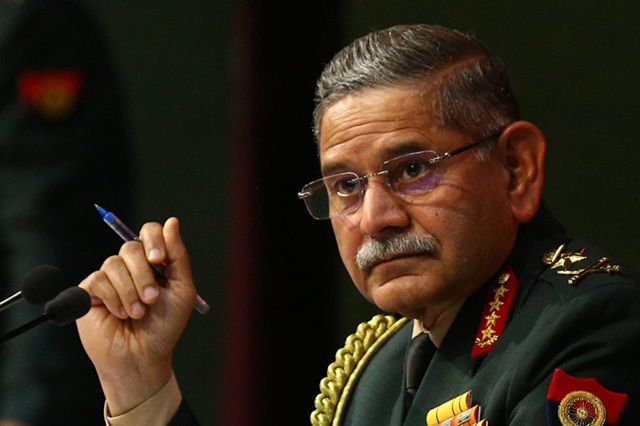
India’s Army Chief Upendra Dwivedi has publicly argued for the establishment of a dedicated rocket–missile force, saying evolving battlefield realities now require closer integration of rockets and missiles to achieve strategic and operational impact.

Speaking about India’s future force structure, General Dwivedi said rockets and missiles have become increasingly intertwined in modern warfare, noting that both systems can deliver decisive effects when employed together. He described the creation of a rocket–missile force as “the need of the hour.”

Regional Drivers: Pakistan and China

The Indian Army chief explicitly linked the proposal to regional developments, pointing out that Pakistan has already established a rocket force and that China has long operated a dedicated missile-centric force structure.

According to defence analysts, these references underline New Delhi’s concern about maintaining credible deterrence and conventional strike options in a region where long-range precision fires are becoming central to military planning.

Expanding Rocket Ranges

General Dwivedi highlighted recent progress in India’s rocket artillery capabilities, stating that the Pinaka system has been tested successfully to a range of 120 kilometres. He added that additional contracts have already been signed to explore extended ranges of up to 150 kilometres.

Looking further ahead, he said India is examining the possibility of increasing rocket ranges to between 300 and 450 kilometres, signalling a major expansion in stand-off strike capability.

Missiles as Part of the Same Strike Ecosystem

In his remarks, the army chief also referenced India’s existing missile programmes, underscoring that rockets and missiles should be viewed as part of a single strike ecosystem rather than separate domains.

Military planners note that such integration would allow the Indian Army to deliver rapid, precise, and scalable firepower across different ranges, bridging the gap between traditional artillery and strategic missile forces.

Shift in Indian Army Doctrine

The statement reflects a broader doctrinal shift within the Indian Army toward long-range precision fires, networked targeting, and deterrence by denial. A dedicated rocket–missile force would centralise command, improve coordination, and potentially mirror structures already adopted by regional rivals.

While no timeline or organisational details were announced, the remarks suggest that discussions on restructuring India’s long-range firepower capabilities are gaining momentum at the highest levels of military leadership.

Regional Implications

Analysts say the proposal could have significant implications for South Asian strategic stability, particularly if India accelerates development of longer-range rocket systems. Any move toward a formal rocket–missile force is likely to be closely watched in Islamabad and Beijing, given the existing security dynamics in the region.

Pakistan’s 2025 FARA Filing Outlines Security, Trade and Economic Agenda for Resetting U.S. Relations

0

A lobbying disclosure filed in Washington in May 2025 under the U.S. Foreign Agents Registration Act (FARA) outlines Pakistan’s proposed framework for renewing bilateral relations with the United States, focusing on counter-terrorism cooperation, trade and investment, financial modernization, and regional geopolitics.

The filing was submitted by Squire Patton Boggs, which states that it is acting as a registered agent on behalf of the Pakistan government. The materials were received by the U.S. Department of Justice’s FARA Registration Unit on May 15, 2025 .

Outreach to U.S. Officials

The document includes correspondence from Paul W. Jones, now an adviser at Squire Patton Boggs, to a U.S. State Department official. In the email, the firm explicitly acknowledges its status as a registered foreign agent and seeks feedback on a one-page outline titled “A Renewed Pakistan–United States Relationship” .

The communication also requests engagement on U.S. policy perspectives, including discussion related to the Financial Action Task Force (FATF).

Security and Counter-Terrorism Cooperation

Security cooperation is a central theme of the filing. The document states that Pakistan is prepared to “double down” on counter-terrorism cooperation with the United States.

It specifically references Pakistan’s role in arresting and expelling to the U.S. the individual responsible for the Abbey Gate ISIS attack, which killed 13 American soldiers. The filing notes that this action was publicly acknowledged by U.S. President Donald Trump in a March 2025 address to a joint session of Congress .

The document further states that Pakistan is prepared to:

  • Do more with the United States against ISIS
  • Assist in retrieving U.S. military weapons and equipment left behind in Afghanistan that are now being used to destabilize Pakistan
  • Seek greater U.S. collaboration against the Pakistani Taliban (TTP), which the 2025 U.S. DNI Annual Threat Assessment cited as a potential threat

No claims beyond these statements appear in the filing.

Trade, Investment and Market Access

On the economic front, the filing emphasizes Pakistan’s recognition of fair global trade and its willingness to help balance trade with the United States.

It states that Pakistan is prepared to:

  • Purchase significantly more U.S. exports, including agricultural and energy products
  • Lower tariffs on U.S. goods
  • Facilitate large U.S. investments through the Special Investment Facilitation Council (SIFC), jointly chaired by Pakistan’s prime minister and army chief

The document notes that Pakistan’s goods trade surplus with the U.S. is under US$3 billion, arguing that trade could be quickly balanced .

Critical Minerals and Strategic Resources

The filing highlights Pakistan’s extensive reserves of copper, lithium, cobalt, nickel, and rare earth elements, describing them as valued in the trillions of dollars.

Pakistan proposes a bilateral critical minerals agreement with the United States, framing it as beneficial to U.S. national security and Pakistan’s economic development, particularly in the context of strategic supply chains .

Financial Modernization and Reform

Pakistan’s largely cash-based economy is described as “poised for digitization,” offering opportunities for U.S. fintech and broadband companies.

The filing references:

  • Commitments to taxation, energy, and state-owned enterprise reforms
  • Improvements in Pakistan’s macroeconomic outlook
  • A recent sovereign credit rating upgrade discussed during Finance Minister Muhammad Aurangzeb’s April 2025 visit to Washington

Geopolitical Positioning

Politically, the document stresses that Pakistan seeks a bilateral relationship with the United States that stands on its own merits, not dependent on U.S. relations with neighboring countries.

It states that Pakistan’s relationship with China does not inhibit offering economic and counter-terrorism opportunities to the U.S., and that U.S.–India relations should not constrain stronger U.S.–Pakistan ties. The filing also references Pakistan’s actions against Iranian-backed terrorist separatists and calls for further coordination with Washington .

Why the Filing Matters

FARA filings are disclosure documents and do not imply misconduct. However, they provide a rare, official record of how foreign governments present their priorities to U.S. policymakers.

This 2025 filing offers a detailed snapshot of Pakistan’s strategic messaging in Washington at a time of shifting regional security dynamics and evolving U.S. global priorities.

Trump’s Hard-Power Doctrine Jolts Global Order, Leaving Allies Uneasy and Rivals Alert

0
President Donald Trump speaks at an event to sign the Laken Riley Act, legislation requiring the detention of immigrants living in the U.S. illegally who are accused of theft, at the White House, in Washington, U.S.

President Donald Trump has launched the new year with a series of aggressive foreign policy moves that are reverberating across the globe, unsettling allies and emboldening rivals while challenging the rules-based international order the United States helped build after World War II.

In recent weeks, Trump has overseen the removal of Venezuela’s leadership, openly vowed to control the country’s vast oil reserves, and warned that other Latin American states could face similar military action. He has also revived talk of annexing Greenland, even suggesting force could be used, while cautioning Iran that U.S. strikes remain an option.

A Return to Raw Power Politics

Trump’s actions signal a return to overt power politics and spheres of influence, a concept many believed had faded from modern diplomacy. Analysts say his approach reflects a reworked version of the 19th-century Monroe Doctrine—sometimes described by critics as a “Donroe Doctrine”—prioritizing U.S. dominance in the Western Hemisphere.

“Everyone expected Trump to return with bluster,” said Brett Bruen, a former Obama-era foreign policy adviser. “But this bulldozing of the pillars that have long undergirded international stability is happening at an alarming pace.”

Trump has already demonstrated a willingness to use military force, including the June bombing of Iranian nuclear facilities and a January strike that precipitated regime change in Venezuela. Despite campaigning on avoiding new wars under an “America First” banner, he has signaled readiness for further interventions, particularly in Latin America.

Allies Uneasy, Rivals Watching Closely

The shift has left many U.S. allies scrambling to adjust. European leaders, already anxious about Washington’s long-term commitment to defending Ukraine against Russia, have reacted sharply to Trump’s focus on Greenland—an autonomous territory of Denmark, a fellow NATO member.

German President Frank-Walter Steinmeier warned of a “breakdown of values,” cautioning against a world order devolving into what he described as a “den of robbers.” Danish Prime Minister Mette Frederiksen has said that any U.S. attempt to seize Greenland would spell the end of the transatlantic alliance.

In response to Washington’s posture, some European officials have floated the idea of NATO deployments in the Arctic, while accelerating efforts to strengthen Europe’s own defence industry as a hedge against unpredictable U.S. policy.

Asia and Latin America React

Trump’s actions have also stirred unease in Asia. Japanese and South Korean lawmakers warned that the use of force in Venezuela could normalize changing the status quo through military power. Some Japanese politicians have even publicly questioned whether long-term reliance on U.S. security guarantees remains viable.

In Latin America, reactions have been more muted, reflecting political and economic dependence on Washington. Mexico criticized the use of force but stopped short of escalating the dispute, while Brazil and other regional powers are reportedly weighing closer ties with China to balance U.S. pressure.

Oil, Influence, and Accusations of Neo-Imperialism

Trump’s emphasis on Venezuela’s oil reserves has fueled accusations of neo-imperialism. While Washington has left parts of the existing power structure intact, U.S. officials have pressed for preferential access for American companies—an approach critics say undermines international norms on sovereignty.

The White House has defended the strategy as a necessary restoration of American influence, arguing that rivals in Beijing, Moscow, Havana, and Tehran have taken note of U.S. resolve.

Alexander Gray, a former Trump adviser now at the Atlantic Council, said the Venezuela operation is likely the opening move in a broader reassessment of U.S. interests in the hemisphere.

Implications for the Global Order

Experts warn that Trump’s disregard for international legal frameworks could encourage Russia and China to pursue more coercive actions against their neighbors. Russian commentators have openly framed the Venezuela episode as proof that international law has been supplanted by force.

Chinese analysts, meanwhile, note that Trump’s acceptance of great-power spheres of influence could indirectly benefit Beijing, particularly in disputes over Taiwan and influence in the Global South.

What Comes Next

Trump has signaled that his assertive posture may extend beyond the Western Hemisphere. Even as fallout from Venezuela continues, he has threatened possible military action in Iran amid mass protests challenging clerical rule.

“We may have to act,” Trump told reporters aboard Air Force One, underscoring a presidency increasingly defined by the use—or threat—of unilateral power.

As governments worldwide recalibrate, a central question remains: whether Trump’s reshaping of U.S. foreign policy marks a temporary rupture or a lasting transformation of the global order.

China Rejects Indian Objections, Defends CPEC and Pakistan Border Agreement

0
Chinese Foreign Ministry spokesperson Mao Ning

China on Monday firmly rejected Indian media claims questioning border issues and the China-Pakistan Economic Corridor (CPEC), stating that the territory where infrastructure development is taking place “belongs to China” and that Beijing is fully within its rights to carry out construction on its own land.

Responding to questions from Indian outlets, Chinese Foreign Ministry spokesperson Mao Ning said there was “nothing wrong” with China undertaking infrastructure projects in the area, stressing that such activities fall entirely under China’s sovereignty.

1960s China–Pakistan Boundary Agreement Reaffirmed

Mao Ning recalled that China and Pakistan signed a formal boundary agreement in the 1960s, under which the border between the two countries was mutually agreed and demarcated. She described the settlement as a legitimate exercise of sovereign rights by two independent states, emphasizing that it remains legally valid.

Chinese officials have repeatedly stated that the agreement was concluded through negotiations and mutual consent, and that it provides a clear legal framework governing the China-Pakistan border.

CPEC Framed as Economic, Not Political

Addressing criticism of the China-Pakistan Economic Corridor, Mao said the initiative is an economic cooperation project aimed at promoting regional development, improving connectivity, and enhancing the livelihoods of local populations.

She stressed that CPEC focuses on infrastructure, energy, and trade, and should not be politicized. According to Beijing, the corridor is designed to benefit Pakistan’s economy while supporting regional integration under China’s broader connectivity initiatives.

China’s Position on Kashmir Unchanged

Mao also clarified that neither the China-Pakistan boundary agreement nor CPEC affects China’s long-standing position on the Kashmir dispute. She said Beijing’s stance remains consistent and unchanged, underlining that CPEC does not prejudice claims or positions related to Kashmir.

China has traditionally maintained that the Kashmir issue is a historical dispute that should be resolved peacefully through dialogue between the parties concerned, in accordance with relevant United Nations resolutions.

Background: India’s Objections

India has repeatedly objected to CPEC projects, arguing that parts of the corridor pass through territory it claims. India maintains that infrastructure activity in these areas violates its sovereignty, a position China and Pakistan have consistently rejected.

Beijing’s latest comments reflect its continued diplomatic backing for Pakistan and its refusal to accept Indian objections to China-Pakistan bilateral arrangements.

Strategic Significance

Analysts note that China’s firm language signals a desire to insulate CPEC from regional disputes and to prevent external actors from influencing bilateral economic cooperation with Pakistan. The statement also comes amid heightened geopolitical competition in South Asia and growing scrutiny of major infrastructure projects.

For Islamabad, China’s reiteration of support reinforces the political and strategic foundations of CPEC, which remains a flagship component of Pakistan-China relations.

Iran Cripples Starlink Nationwide, Setting a Global Precedent in Information Warfare

0
Starlink logo is seen on a smartphone in front of displayed Ukrainian flag in this illustration.

Iran has effectively disabled Starlink satellite internet across large parts of the country, marking a historic escalation in state-led information warfare and setting a global precedent for the vulnerability of commercial satellite networks during internal political crises.

The shutdown unfolded as anti-government protests intensified across Tehran, Mashhad, Isfahan, and more than 190 cities. On January 8, 2026, Iranian authorities activated a coordinated digital suppression campaign that combined a nationwide terrestrial internet blackout with advanced electronic warfare measures aimed specifically at satellite-based connectivity.

Unprecedented Scale of Digital Suppression

Iranian digital-rights expert Amir Rashidi, Director of Digital Rights and Security at the Miaan Group, described the operation as unprecedented.

“I have been monitoring internet access in Iran for 20 years, and I have never seen anything like this,” Rashidi said, underscoring the scale and sophistication of the attack.

Independent technical analysis revealed that Iranian jamming operations initially disrupted around 30 percent of Starlink traffic. Within hours, disruption levels surged beyond 80 percent, rendering satellite connectivity unreliable and fragmented, particularly in protest-heavy urban areas.

First Verified National-Scale Starlink Disruption

This marks the first confirmed case of a nation-state successfully neutralising Starlink at a national level during an internal political crisis, challenging the long-held assumption that low-Earth-orbit satellite constellations guarantee uncontrollable access to information.

Engineers described the resulting connectivity as a “patchwork” of intermittent access—partial functionality in some rural areas, but near-total blackouts in major cities—indicating targeted, precision jamming rather than indiscriminate shutdowns.

How Iran Disabled Satellite Internet

Security analysts say Iran relied on military-grade electronic warfare systems, flooding GPS frequencies with high-power interference. This prevented Starlink terminals from accurately determining their position, a requirement for locking onto fast-moving satellites.

By disrupting GPS timing, geolocation, and beam-forming synchronisation, Iranian systems severed satellite links without requiring cooperation from SpaceX or Starlink operators.

These techniques mirror electronic warfare capabilities Iran has previously used against drones and precision-guided munitions, including during its 2025 confrontation with Israel, now repurposed for domestic population control.

Economic Impact of Iran’s Internet Blackout

The digital shutdown has imposed heavy economic costs. According to Simon Migliano, head of research at Top10VPN, Iran is losing approximately US$1.56 million per hour due to internet disruption.

With connectivity reduced to roughly one percent of normal levels, small businesses, online payments, logistics platforms, and digital services have been disproportionately affected—deepening strain on an economy already under sanctions and inflationary pressure.

Despite the losses, authorities selectively maintained access for government and security institutions, revealing a calculated strategy to preserve regime functionality while paralysing civil society.

Why Starlink Became a Security Target

Starlink had emerged as a critical tool for Iranian protesters. Thousands of smuggled terminals allowed activists to bypass state-controlled networks, livestream crackdowns, coordinate demonstrations, and transmit footage to international audiences.

During earlier shutdowns in 2022 and 2025, Starlink exposed the limits of Iran’s traditional internet “kill switch,” convincing security planners that satellite connectivity represented a structural vulnerability rather than a manageable nuisance.

By January 2026, neutralising Starlink had become a strategic priority aimed at collapsing the final layer of protest resilience.

Global Implications for Satellite Security

Iran’s success has sent shockwaves through global defence and technology communities. The operation demonstrates that commercial satellite networks are not immune to state-level electronic warfare, blurring the line between civilian infrastructure and military targets.

For countries increasingly reliant on satellite internet—whether for civilian communications, disaster response, or military command and control—the Iranian precedent raises urgent questions about resilience in contested electromagnetic environments.

Western governments, including the United States, have voiced support for digital freedom in Iran, but the episode highlights a growing gap between political intent and the technical ability to protect satellite connectivity from hostile interference.

A New Era of Digital Sovereignty

Iran’s nationwide Starlink disruption redefines digital sovereignty as control over the electromagnetic spectrum rather than regulation or legislation alone. It signals a future where information dominance depends not only on bandwidth and coverage, but on a state’s capacity to deny, disrupt, or control access at scale.

As authoritarian governments study Iran’s approach, the assumption that space-based internet guarantees freedom of information is rapidly eroding—reshaping the strategic calculus of both protest movements and military planners worldwide.

Indonesia’s Defence Minister Meets Pakistan’s Army Chief, Pledges Expanded Defence Cooperation

0

Indonesia’s Defence Minister, Sjafrie Sjamsoeddin (Retd), on Monday called on Syed Asim Munir, Chief of Army Staff (COAS) and Chief of Defence Forces (CDF), at the General Headquarters (GHQ) in Rawalpindi, underscoring growing defence engagement between Pakistan and Indonesia.

According to the Inter-Services Public Relations, the meeting focused on issues of mutual interest, evolving regional and global security dynamics, and the exploration of concrete avenues to further enhance bilateral defence cooperation.


Discussions highlighted the importance of strengthening institutional linkages between the armed forces of both countries, expanding professional military education and training exchanges, and deepening collaboration in the defence industrial sector. Officials noted that such cooperation is increasingly relevant as both countries face complex security challenges ranging from terrorism and maritime security to emerging non-traditional threats.

The Indonesian defence minister praised the professionalism of the Pakistan Armed Forces and acknowledged their sacrifices in the fight against terrorism. He also expressed Jakarta’s strong desire to broaden defence ties with Pakistan across multiple domains, including training, joint exercises, defence production, and technology cooperation.

Pakistan and Indonesia share a long history of friendly relations rooted in common values, shared perspectives on regional stability, and cooperation within multilateral forums. Defence ties between the two countries have steadily expanded in recent years, with Pakistan emerging as a key defence partner for Indonesia, particularly in the areas of military training and defence exports.

Defence analysts note that Pakistan’s growing defence industrial base—including aircraft, naval platforms, and land systems—offers Indonesia cost-effective options for military modernisation, while Indonesia’s experience in maritime security and archipelagic defence presents opportunities for knowledge-sharing and joint initiatives.

During the meeting, Field Marshal Asim Munir reaffirmed Pakistan’s commitment to building a strong, enduring, and forward-looking defence relationship with Indonesia. He emphasised that cooperation would continue to be guided by mutual respect, shared strategic interests, and a common desire to contribute to regional and global peace and stability.

The engagement reflects Pakistan’s broader defence diplomacy efforts aimed at strengthening ties with key partners in Southeast Asia, while Indonesia continues to diversify its defence partnerships amid shifting regional security dynamics.