Friday, June 5, 2026
Home Blog Page 18

U.S. Navy Deploys HELIOS Laser Weapon Against Iranian Drones in Gulf War

0
USS Preble equipped with HELIOS.

The United States Navy has introduced a new technological element into the ongoing conflict in the Middle East: a ship-mounted laser weapon system designed to counter drones and other aerial threats.

According to footage released by U.S. Central Command (CENTCOM), the High Energy Laser with Integrated Optical-dazzler and Surveillance (HELIOS) system is now deployed aboard a U.S. Navy destroyer operating near Iran’s coastline.

Reports indicate the laser system may already be actively engaging Iranian drones during the ongoing military campaign known as Operation Epic Fury.

HELIOS Laser System Deployed at Sea

The HELIOS system is a directed-energy weapon mounted on U.S. Navy Arleigh Burke–class destroyers.

CENTCOM footage shows the system positioned on the destroyer and aimed toward the same airspace where Iran has launched hundreds of drones and missiles during the conflict.

According to a report by the New York Post, citing sources familiar with the operation, HELIOS has already been used against Iranian drones during the war.

Before the conflict escalated, the system reportedly demonstrated its effectiveness during testing.
In February 2026, weeks before the war began, HELIOS successfully destroyed four drones during a live test, according to confirmation from USNI Proceedings.

However, primary military sources have not yet publicly confirmed the number of combat kills achieved by the system during the current conflict.

Why the HELIOS Deployment Matters

Even without confirmed combat kills, the deployment of HELIOS carries major strategic implications.

The current air defense battle across the Gulf is not only a military contest—it is also an economic contest.

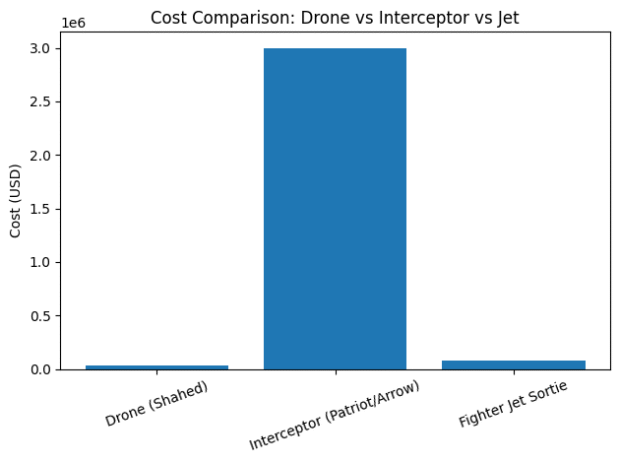
Traditional missile defense systems are extremely expensive to operate.

For example:

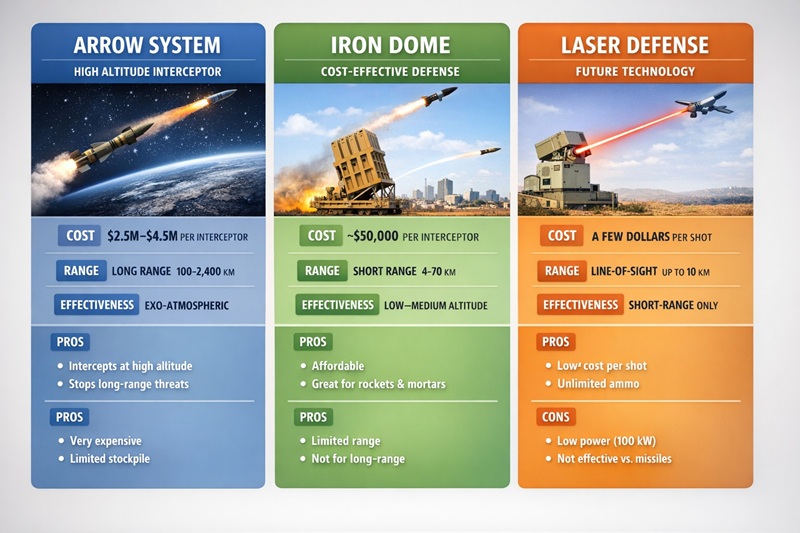
  • Patriot interceptor missiles: $3–4 million each

  • THAAD interceptors: approximately $10 million each

Since the conflict began, Gulf states have reportedly intercepted over 755 drones and 172 ballistic missiles.

Even using conservative estimates, the cost of these interceptions likely runs into several billion dollars in just a few days.

Laser Weapons Change the Economics of Drone Warfare

Unlike traditional missile systems, laser weapons operate using electrical power instead of expensive interceptors.

The HELIOS system draws power directly from the destroyer’s onboard generator.

This means:

  • No missiles are required

  • No ammunition magazines are depleted

  • No supply ships are needed to replenish interceptors

The cost of firing a laser beam is essentially the cost of electricity.

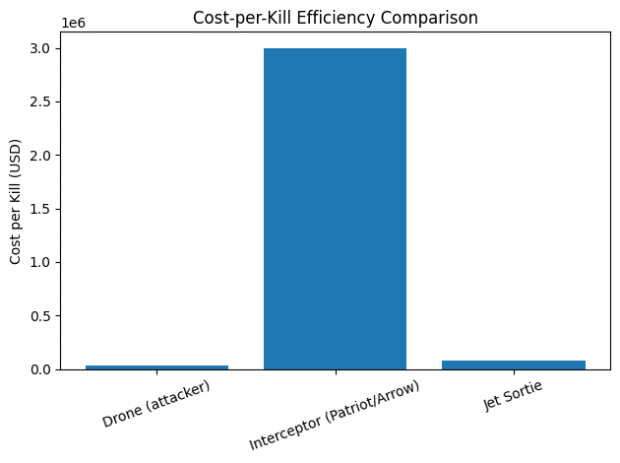
Against an Iranian Shahed drone, which costs roughly $30,000, the cost of destroying the target with a laser is dramatically lower—potentially less than the daily electricity cost of a large apartment.

Iran’s Drone Strategy

Iran has spent years developing a strategy based on low-cost drone saturation.

The concept is simple:

  • Launch large numbers of inexpensive drones

  • Force defenders to use costly interceptor missiles

  • Create a massive financial burden on defensive systems

For example:

If a defender spends $1 million to intercept a $30,000 drone, the economic advantage lies with the attacker.

Repeating that exchange hundreds or thousands of times imposes a huge financial strain on air defense networks.

This cost imbalance has been one of Iran’s most effective strategic tools in modern drone warfare.

HELIOS May Reverse the Cost Equation

The introduction of directed-energy weapons like HELIOS could fundamentally change that balance.

If laser systems can intercept even a portion of incoming drones, the cost asymmetry begins to shift in the defender’s favor.

Instead of spending millions per intercept, defenders could potentially neutralize threats for a fraction of the cost.

This would undermine the economic logic behind large-scale drone saturation attacks.

The First Real Combat Test

For years, directed-energy weapons have been discussed as the future of air defense.

But the current conflict may represent the first large-scale operational test of such systems in real combat conditions.

Iran spent years refining the doctrine that made Shahed drones strategically valuable.

Now the United States has introduced a technology that could challenge that doctrine directly.

Whether HELIOS proves capable of consistently defeating drone swarms remains to be seen.

But this war may determine whether laser weapons become the next major evolution in modern air defense.

Did an Iranian Missile Trigger NATO Article 5? Ballistic Missile Incident Over Turkey Raises Global Security Questions

0
Khorramshahr-4 Ballistic Missile

A reported ballistic missile launch from Iran toward the eastern Mediterranean region has sparked intense debate among security analysts about whether the incident could trigger NATO’s Article 5 collective defense clause.

Article 5 of the NATO treaty states that an attack against one member state is considered an attack against all members, making it one of the most significant provisions in the alliance’s security framework.

The missile incident has now raised a critical question: Did the event meet the threshold for invoking NATO’s collective defense mechanism?

Sequence of Events

According to reports from multiple sources, a ballistic missile launched from Iranian territory followed a long trajectory across the Middle East.

The missile reportedly:

  • Launched from Iran

  • Passed over Iraq

  • Continued across Syria

  • Entered the eastern Mediterranean region

  • Was intercepted by NATO air defenses before reaching Turkish airspace

Officials from Turkey, NATO, and international media outlets acknowledged that a missile was intercepted during the event.

Iran’s Denial

Shortly after the reports emerged, Iranian armed forces issued a statement denying that any missile had been fired toward Turkey.

Iran’s denial created an unusual situation in which two conflicting narratives quickly emerged:

  1. NATO and Turkish sources confirming an intercepted missile.

  2. Iranian officials denying responsibility for any launch directed at Turkey.

This contradiction has complicated efforts to determine whether the incident qualifies as a direct attack on a NATO member state.

Possible Target: British Base in Cyprus

Some Turkish officials suggested that the missile may not have been aimed at Turkey at all.

Instead, they indicated the missile’s intended target might have been a British Royal Air Force base in Cyprus.

If true, this would mean:

  • The missile’s path over the region near Turkey was incidental

  • Turkey itself may not have been the intended target

Such a scenario could significantly affect how NATO legally interprets the incident.

What NATO’s Article 5 Means

Infographic: How NATO Article 5 works and when it can be triggered

Article 5 is the core of NATO’s collective defense system.

The clause states that an armed attack against one member state is considered an attack against the entire alliance.

However, invoking Article 5 is not automatic.

It requires political consensus among NATO’s 32 member states.

Even when an incident meets the legal threshold, alliance members must still agree that collective defense should be activated.

Why the Incident Is So Sensitive

The reported missile trajectory raises complex legal and strategic questions.

A ballistic missile launched by a state actor that:

  • crosses multiple countries

  • approaches NATO territory

  • requires NATO air defense interception

could potentially be interpreted as an armed attack under the treaty framework.

However, NATO governments often consider intent, targeting, and context before determining whether Article 5 applies.

U.S. Response Remains Cautious

When asked directly about whether the incident triggered Article 5, U.S. officials avoided confirming that the clause had been activated.

This cautious response suggests that alliance leaders may be seeking to avoid rapid escalation while investigating the circumstances surrounding the missile launch.

Because the United States plays a central role in NATO’s military posture, its interpretation of events carries significant influence over how the alliance responds.

Iran’s Denial and Strategic Messaging

Iran’s denial of responsibility may serve a strategic purpose.

By rejecting claims that the missile was aimed at Turkey, Tehran may be offering NATO a diplomatic path to avoid a formal Article 5 decision.

If the missile is interpreted as:

  • a navigational error

  • a misidentified launch

  • or an unintended trajectory

then the alliance may avoid treating the event as a direct attack.

This would allow NATO governments to prevent a broader confrontation.

A Critical Test for NATO

The incident highlights the delicate balance between legal obligations and geopolitical realities.

Article 5 has only been invoked once in NATO history—after the September 11, 2001 attacks on the United States.

A state-launched ballistic missile crossing near NATO territory could represent one of the most serious tests of the clause since the alliance was founded in 1949.

The Bigger Strategic Question

Ultimately, the debate surrounding the missile incident goes beyond technical details about its trajectory.

The central issue is whether NATO member states are prepared to treat incidents arising from the wider regional conflict as direct threats to the alliance itself.

For now, the situation remains unresolved.

But the way NATO interprets this event could shape how the alliance responds to future crises involving missile warfare, air defense, and regional escalation.

Did Iran Strike a U.S. Navy Destroyer? Satellite Image of Fire on Arleigh Burke Warship Raises Questions

1
Arleigh Burke-class destroyer

A low-resolution satellite image showing what appears to be fire on the deck of a U.S. Navy Arleigh Burke-class guided-missile destroyer in the Arabian Sea has triggered intense debate among defense analysts.

The incident comes amid escalating maritime tensions between the United States and Iran, with Iran’s Islamic Revolutionary Guard Corps (IRGC) claiming responsibility for a long-range missile strike against the American warship.

However, the available imagery remains too limited to confirm whether the fire resulted from a missile impact, a technical malfunction, or another onboard incident.

Iran Claims Missile Strike Under “Operation True Promise 4”

Shortly after the imagery began circulating online, the IRGC announced that its naval forces had conducted a “powerful strike” against a U.S. destroyer.

According to Iranian officials:

  • The attack occurred more than 600 kilometers from Iranian territory

  • The strike was carried out using an advanced anti-ship cruise missile

  • The operation was part of Operation True Promise 4

Iranian statements claimed the missile strike caused major fires on the destroyer and a nearby logistics tanker that was reportedly refueling the warship.

So far, there has been no official confirmation from the United States Navy regarding the incident.

The Alleged Weapon: Iran’s Ghadr-380 Anti-Ship Missile

Iranian officials said the strike was carried out using the Ghadr-380 anti-ship cruise missile, a relatively new system introduced in 2025.

Key reported features of the Ghadr-380 include:

  • Range: up to 1,000 kilometers

  • Launch platform: mobile truck-mounted launcher

  • Propulsion: turbojet cruise engine

  • Flight profile: low-altitude sea-skimming approach

  • Guidance: anti-jamming navigation and terminal target tracking

The missile uses a solid-fuel booster to accelerate after launch before transitioning to turbojet propulsion for long-range flight.

Iran says the system was designed specifically to target large naval vessels such as destroyers and aircraft carriers.

 Infographic: Ghadr-380 missile vs U.S. Arleigh Burke destroyer defense systems

Why the Incident Matters Strategically

If confirmed, a successful missile strike against a U.S. Arleigh Burke-class destroyer would represent a rare event in modern naval warfare.

These destroyers are among the most advanced surface combatants in the world.

The class serves as the backbone of the U.S. Navy’s global surface fleet, with more than 70 ships currently in service.

They are equipped with the Aegis combat system, designed to defend against missiles, aircraft, and other threats.

Capabilities of the Arleigh Burke-Class Destroyer

Arleigh Burke destroyers are designed for multi-mission warfare, including missile defense and long-range strike operations.

Key features include:

  • 96 vertical launch missile cells

  • Standard Missile interceptors

  • Tomahawk cruise missiles

  • anti-submarine rocket systems

The ships can also deploy MH-60R Seahawk helicopters for anti-submarine warfare and maritime reconnaissance.

Newer Flight III variants include the advanced AN/SPY-6 radar, which is significantly more sensitive than earlier systems and improves detection of ballistic missiles and stealth targets.

Each destroyer carries more than 300 crew members, reflecting the complexity of operating modern integrated combat systems.

Satellite Imagery Remains Inconclusive

The satellite image circulating online shows what appears to be a thermal anomaly or visible fire on the destroyer’s deck.

However, the image resolution is too low to determine:

  • whether a missile actually struck the ship

  • whether there is structural damage

  • whether critical systems were affected

Analysts note that even a small onboard fire can generate heat signatures detectable by satellites, especially when ships operate in open ocean areas.

Without higher-resolution imagery or official confirmation, the cause of the fire remains uncertain.

Information Warfare and Strategic Messaging

Iran’s rapid announcement of a successful strike may also serve a strategic communication purpose.

By claiming the ability to hit a U.S. warship hundreds of kilometers from its shores, Tehran may be attempting to reinforce its anti-access strategy aimed at deterring American naval operations near Iranian waters.

At the same time, the absence of confirmed damage imagery creates a contested information environment, where competing narratives circulate before full verification.

The Strategic Importance of the Arabian Sea

The alleged strike location in the Arabian Sea is strategically significant.

This maritime region connects the Strait of Hormuz with the wider Indian Ocean, serving as a major route for global energy shipments.

The United States maintains a strong naval presence in the area to:

  • protect shipping lanes

  • deter regional threats

  • maintain freedom of navigation

Any escalation involving warships in this corridor could have wider implications for global energy markets and maritime security.

Cruise Missiles vs Modern Warships

The incident also highlights the growing role of long-range precision missiles in naval warfare.

Relatively inexpensive cruise missiles can threaten warships that cost billions of dollars to build and operate.

This dynamic reflects a broader shift in modern naval combat, where success increasingly depends on:

  • sensor networks

  • missile defense systems

  • electronic warfare capabilities

rather than simply the size or firepower of individual ships.

A Contested Incident

Until higher-resolution satellite imagery emerges or official naval reports clarify the situation, the alleged Iranian strike remains unconfirmed.

Nevertheless, the episode illustrates how quickly maritime confrontations between major powers can escalate—and how information, imagery, and strategic messaging now shape the perception of naval battles as much as the weapons themselves.

Satellite Images Reveal Damage at Iran’s Minzadehei Nuclear Compound After Israeli Strike Near Tehran

0
Israel attacked what it called the Minzadehei nuclear weapons development compound northeast of Tehran on March 3, 2026. Imagery from March 4, 2026

New satellite imagery has revealed significant damage at a facility northeast of Tehran that Israel claims was a secret nuclear weapons development compound.

The Israeli military says it targeted the Minzadehei compound on March 3, 2026, describing it as a covert location where Iranian nuclear scientists were working on critical components of a nuclear weapons system.

Images captured on March 4, 2026, show multiple destroyed structures and blast damage within a heavily secured area.

What the Satellite Images Show

Recent imagery from Airbus satellite observations indicates notable destruction within the compound.

Visible damage includes:

  • Several above-ground buildings destroyed or heavily damaged

  • A large crater on the nearby hillside

  • Structural damage inside the facility’s secured perimeter

The crater suggests either a missed strike or a target located underneath the hillside, indicating that parts of the facility may extend underground.

Layout of the Minzadehei Facility

The compound appears to be a high-security complex designed with both surface and underground infrastructure.

Satellite images show:

  • A high perimeter wall with guard towers

  • Two clusters of above-ground buildings

  • A network of long, winding internal roads

  • Several structures built into or protected by hillside revetments

These design features are typical of facilities intended to protect sensitive operations from airstrikes or surveillance.

Israeli Claims About the Target

According to the Israel Defense Forces (IDF), the site functioned as a covert nuclear research center.

The IDF stated that:

  • The compound served as a “nuclear headquarters”

  • A group of nuclear scientists worked there secretly

  • The facility was used to develop a key component of Iran’s nuclear weapons system

However, Israeli officials have not specified which component of the nuclear weapons program was being developed at the site.

Possible Underground Infrastructure

A second video released by the IDF highlighted a building partially buried into the hillside near the targeted area.

This structure appears to be:

  • Connected to nearby above-ground buildings

  • Linked through walled walkways and trench systems

  • Built directly into the slope of the hill

Satellite imagery indicates the hillside facility was constructed around 2021, suggesting it may have been part of a relatively recent expansion of the site.

However, available imagery dating back to 2005 does not conclusively confirm the existence of a large underground complex or the full extent of the subterranean infrastructure.

Unanswered Questions About the Target

Interestingly, the exact location outlined by the Israeli military in some public materials does not appear to show visible damage in the latest imagery.

It remains unclear:

  • Why that specific area was not struck

  • Whether the actual target lay beneath the hillside

  • Or whether multiple facilities are connected underground

These uncertainties make it difficult to determine the full impact of the strike.

Possible Nuclear Warhead Development Work

Israeli Ambassador Michael Leiter suggested that the facility was involved in preparing nuclear material for missile delivery systems.

According to his statements, the compound may have been intended to:

  • Pair enriched uranium with a ballistic missile delivery system

  • Advance Iran’s ability to develop nuclear warheads

This raises the possibility that the facility was involved in work on a reentry vehicle for a nuclear-capable ballistic missile.

Before the latest escalation in the conflict, Israeli officials had already warned that Iranian nuclear scientists might be coordinating with ballistic missile development teams.

A Facility Designed for Survival

Ambassador Leiter also claimed the underground facility was approaching a point where it would become extremely difficult to destroy through conventional airstrikes.

Many modern nuclear facilities are designed with:

  • Reinforced underground chambers

  • Mountain or hillside protection

  • multiple internal access tunnels

Such designs aim to protect critical nuclear infrastructure from aerial bombardment.

Strategic Context

The strike appears to be part of a broader Israeli effort to disrupt Iran’s nuclear weapons development infrastructure during the ongoing conflict.

However, the exact function of the Minzadehei compound remains unclear.

Israeli officials have suggested it played a role in nuclear weaponization, but they have not publicly identified the specific component or technology under development.

Until additional intelligence or imagery becomes available, the full significance of the strike will remain uncertain.

Kurdish Fighters Reportedly Launch Cross-Border Attacks Into Iran, Opening Potential New Front in War

0
Fighters from the Kurdistan Free Life Party (PJAK)

While global attention remains focused on the air war involving the United States, Israel, and Iran, reports are emerging that a new ground front may be forming inside western Iran.

According to multiple reports, Kurdish fighters may have crossed from Iraq’s Kurdistan Region into Iranian territory, potentially launching attacks against Iranian security forces.

If confirmed, this would mark the first significant ground front inside Iran since the current conflict began.

Reports of Cross-Border Operations

Several media outlets and regional sources are describing a rapidly evolving situation along the Iran–Iraq border.

Key claims currently circulating include:

  • Kurdish fighters may have crossed into Iranian Kurdistan from Iraq

  • Kurdish opposition groups say they are preparing or already conducting operations inside Iran

  • Some reports suggest the border city of Marivan may be contested or partially abandoned by Iranian regime forces

At the same time, other reports indicate Kurdish militias have consulted with the United States about potential operations against Iranian security forces.

Some sources claim Kurdish groups have requested:

  • Intelligence support

  • Weapons supplies

  • Training assistance

There are also claims that U.S. intelligence agencies are exploring options to arm Kurdish opposition groups.

However, these reports remain partially unconfirmed.

Why the Kurdish Front Matters

The Kurdish regions of western Iran have long been one of the Islamic Republic’s most sensitive internal security challenges.

Several million Kurds live in Iran, primarily in provinces near the Iraq border, including:

  • Kurdistan Province

  • Kermanshah Province

  • West Azerbaijan Province

These regions have historically experienced periodic protests, insurgency, and clashes with Iranian security forces.

During the nationwide protests that followed the death of Mahsa Amini in 2022, Kurdish cities were among the first to erupt in demonstrations.

For Tehran, Kurdish unrest represents a dual threat:

  1. Internal opposition within Kurdish communities

  2. Armed infiltration from Kurdish militant groups based in Iraq

Kurdish Groups Involved

The Kurdish fighters mentioned in the reports are primarily Iranian Kurdish opposition groups operating from bases in northern Iraq.

These groups include:

  • Kurdistan Democratic Party of Iran (PDKI)

  • Kurdistan Freedom Party (PAK)

  • PJAK (Free Life Party of Kurdistan) and other Kurdish militant organizations

Many of these groups recently formed a political and military coalition aimed at coordinating opposition activities against the Iranian government.

The coalition has also urged Iranian soldiers stationed in Kurdish regions to defect and join opposition forces.

Such messaging suggests preparation for a broader confrontation if Iran’s central authority weakens.

Tehran’s Strategic Challenge

If Kurdish fighters establish even limited operational positions inside Iran, Tehran could face several major challenges.

1. Security Forces Redeployment

Iran would likely need to divert Islamic Revolutionary Guard Corps (IRGC) units and internal security forces to contain insurgent activity.

2. Risk of Local Uprisings

Kurdish insurgent activity could encourage civil unrest and protests in nearby cities, especially in areas already critical of the government.

3. Difficult Terrain

Western Iran’s geography favors insurgent forces.

The Zagros Mountains, which run along the Iran–Iraq border, provide:

  • Rugged terrain

  • Numerous valleys and passes

  • Ideal conditions for guerrilla warfare

Historically, the mountains have been extremely difficult for central governments to control.

The Strategic Logic Behind a Kurdish Front

There may be a broader strategic logic behind the potential Kurdish operations.

The ongoing air campaign by Israel and the United States is focused on degrading Iran’s military infrastructure.

However, internal insurgency could target something far more critical: the regime’s political stability.

A government under air attack can sometimes endure.

But a government facing simultaneous external strikes and internal rebellion becomes far more vulnerable.

If Kurdish regions begin slipping from Tehran’s control while external pressure continues, the conflict could shift from a military confrontation to a regime stability crisis.

Indicators to Watch

If a Kurdish insurgent front is genuinely emerging, several signs may appear in the coming days:

  • Sustained attacks on IRGC bases and checkpoints

  • Kurdish fighters establishing positions inside Iranian territory

  • Iranian missile or drone strikes against Kurdish bases in Iraq

  • Calls for mass mobilization in Kurdish cities

The appearance of several of these indicators together would strongly suggest that a new ground front has opened inside Iran.

A War on Two Fronts?

For now, the Kurdish situation remains fluid and partially unconfirmed.

But the growing number of reports suggests that something significant may be developing along the Iran–Iraq border.

If Kurdish fighters are indeed entering Iran and launching operations, Tehran could soon find itself fighting two simultaneous conflicts:

  • An air war against external adversaries

  • An insurgency within its own borders

Such a scenario would dramatically complicate the strategic environment for the Iranian government.

The skies above Iran may remain the most visible battlefield.

But the next phase of the conflict could unfold on the ground in the mountains of western Iran.

U.S. Torpedo Strike on Iranian Frigate Near Sri Lanka Raises Questions About India’s Maritime Authority

0
IRIS Dena, of the Iranian Navy

The reported U.S. torpedo strike on the Iranian frigate IRIS Dena near Sri Lanka has sparked debate about security dynamics in the Indian Ocean and India’s role as a regional maritime leader.

The incident occurred shortly after the Iranian warship had participated in MILAN-2026, India’s flagship multinational naval exercise. The event, hosted by the Indian Navy, brought together 18 foreign warships and dozens of maritime forces in a demonstration of regional cooperation.

For New Delhi, the sinking of a vessel that had recently been a guest of the Indian Navy raises difficult strategic and diplomatic questions.

From Naval Exercise to Battlefield

The Iranian frigate had just completed participation in MILAN-2026, a major naval exercise designed to promote cooperation among Indo-Pacific navies.

The exercise aims to strengthen maritime security partnerships and reinforce India’s role as a coordinator of regional naval collaboration.

However, the destruction of a participating vessel soon after it departed the exercise has changed the narrative.

Instead of highlighting cooperation, the event risks drawing attention to how quickly the Indian Ocean can become entangled in wider geopolitical conflicts.

India’s Maritime Neighborhood in the Spotlight

Map: Location of IRIS Dena sinking near Sri Lanka and India’s maritime boundary

The strike reportedly occurred near Sri Lanka, south of India’s maritime boundary.

This region is strategically important for India because it sits along major sea lanes linking the Middle East, South Asia, and Southeast Asia.

New Delhi has long tried to maintain stability in these waters, viewing the area as part of its immediate maritime neighborhood.

The incident therefore raises uncomfortable questions about whether external powers can conduct military operations in the region without coordination with India.

Diplomatic Sensitivities of Naval Hospitality

Naval diplomacy operates according to a number of informal traditions.

One of these norms is the concept of naval hospitality—when a country hosts foreign warships for exercises or port visits, those vessels are treated as guests.

Attacking a ship shortly after it leaves such an event can be seen by some observers as diplomatically sensitive.

While the United States may consider the strike a legitimate wartime action, others argue that it risks sending a message that participation in multinational exercises does not necessarily shield visiting ships from conflict elsewhere.

Implications for India’s MAHASAGAR Vision

India has promoted the concept of MAHASAGAR (Mutual and Holistic Advancement for Security and Growth Across Regions) as a framework for regional maritime cooperation.

Infographic: MILAN-2026 naval exercise participants and Indian Ocean security network

The initiative seeks to position India as a preferred security partner in the Indian Ocean.

Central to that vision is the idea that India can:

  • Convene regional navies

  • Promote maritime stability

  • Provide security leadership in the Indian Ocean

Events like the torpedo strike could complicate that narrative by showing that major powers can still shape the region’s security dynamics independently.

The Indian Ocean and the Middle East Conflict

Another concern is the geographical spillover of the broader U.S.–Iran conflict.

India has traditionally tried to keep the Indian Ocean insulated from Middle Eastern conflicts.

However, if naval engagements connected to that conflict begin occurring near South Asian waters, the region could become an extension of a wider geopolitical confrontation.

Such developments could increase risks for:

  • Commercial shipping routes

  • Energy supply lines

  • Regional maritime security cooperation

Hard Power vs Soft Power

The episode highlights the contrast between military power and diplomatic influence in international relations.

India has spent years building its reputation through:

  • Naval diplomacy

  • Multilateral exercises

  • Regional cooperation initiatives

A single wartime strike by a major power can quickly overshadow those diplomatic efforts.

For some analysts, the incident illustrates how hard power actions can disrupt carefully cultivated soft-power strategies.

Strategic Questions for the Future

The sinking of the Iranian frigate has therefore opened a broader debate about the future of security in the Indian Ocean.

Key questions now being discussed include:

  • How much influence can India realistically exert in its maritime neighborhood?

  • Can multinational naval exercises guarantee diplomatic safety for participants?

  • Will great-power competition increasingly shape the security dynamics of the Indian Ocean?

As tensions between major powers continue to grow, the Indian Ocean may become a more contested strategic space.

For India, balancing diplomacy, regional leadership, and great-power rivalry could become one of the defining challenges of its maritime strategy in the years ahead.

Iranian Shahed Drones Destroy Key U.S. Missile Defense Radars in Gulf, $3.4 Billion Surveillance Network Hit

0
Shahed Kamikaze drone

A series of recent strikes has reportedly dealt a major blow to the U.S.-led missile defense network in the Middle East, with several high-value radar systems destroyed across the Gulf region.

New assessments suggest that two additional AN/TPY-2 radars used by the THAAD missile defense system have been destroyed—one near Abu Dhabi in the United Arab Emirates and another at Jordan’s Muwafaq Salti Air Base.

These losses add to the earlier destruction of the AN/FPS-132 early-warning radar at Al Udeid Air Base in Qatar, bringing the estimated value of destroyed radar infrastructure to more than $3.4 billion.

Strategic Radar Network Severely Damaged

The radars affected are among the most sophisticated components of the U.S. global missile defense architecture.

Three key systems reportedly destroyed include:

AN/TPY-2 Radar

  • Core sensor used in the THAAD missile defense system

  • Capable of detecting ballistic missiles thousands of kilometers away

  • Provides tracking data for missile interceptors

AN/FPS-132 Radar

  • A powerful early-warning radar used for long-range missile detection

  • Monitors strategic missile launches across vast regions

  • Provides early warning for U.S. and allied defense networks

With multiple radar systems now destroyed, analysts warn that the regional missile detection network has suffered a significant gap.

Shahed drones hit US radars

Radar Coverage Loss Extends Thousands of Kilometers

The destroyed radar sites previously monitored vast areas across the Middle East and beyond.

Coverage ranges for these systems can reach between:

  • 3,000 kilometers

  • Up to 5,000 kilometers

The AN/FPS-132 radar alone reportedly monitored areas extending toward:

  • Western China

  • Parts of Russia

  • Large sections of the Middle East

With its destruction, a major portion of the long-range missile detection capability in the region has been lost.

Defense analysts note that replacing such coverage with airborne platforms such as surveillance aircraft would be extremely difficult, especially over areas protected by Iranian air defense systems.

Shahed Drones Used to Destroy Advanced Radar Systems

Perhaps the most striking aspect of the attacks is the weapon reportedly used.

Many of the radar strikes were not carried out with ballistic missiles but with Shahed loitering drones, inexpensive unmanned systems developed by Iran.

Shahed drones are estimated to cost tens of thousands of dollars per unit, making them dramatically cheaper than the systems they targeted.

Despite their relatively simple design, these drones were able to destroy radar systems worth billions of dollars, highlighting the growing impact of asymmetric drone warfare.

Cheap Drones vs Billion-Dollar Defenses

The strikes illustrate a fundamental challenge in modern air defense.

Advanced radar and missile defense systems cost billions of dollars to build and maintain.

However, relatively inexpensive drones can exploit gaps in defenses, especially when launched in large numbers.

This creates a cost imbalance:

  • Shahed drone: tens of thousands of dollars

  • THAAD radar system: hundreds of millions to over $1 billion

  • Long-range radar networks: multi-billion-dollar infrastructure

By targeting radar systems first, attackers can degrade the defender’s ability to detect incoming threats.

Blinding the Missile Defense Network

Analysts say the attacks may represent a deliberate strategy.

Instead of attempting to overwhelm missile interceptors directly, the strikes targeted the sensors that guide those interceptors.

Without radar detection and tracking data, missile defense systems struggle to:

  • Detect incoming missiles early

  • Track their trajectories

  • Guide interceptors to the target

In effect, destroying radar systems can blind an air-defense network before interceptors are even launched.

Strategic Implications for the Gulf

The loss of multiple radar systems could significantly affect the U.S. and allied missile defense posture in the Gulf region.

Radar networks are the backbone of layered air defense systems that combine:

  • Early-warning radars

  • Tracking radars

  • Interceptor missiles

  • Command and control systems

If key radar nodes are removed, the effectiveness of the entire network can be reduced.

Drone Warfare Is Changing Modern Conflict

The events highlight how low-cost drone technology is reshaping modern warfare.

Weapons once dismissed as simple nuisance systems are increasingly capable of striking high-value military infrastructure.

By targeting radar systems rather than missile launchers, attackers can create disproportionate strategic effects with relatively inexpensive weapons.

The Next Phase of the Conflict

With several radar systems reportedly destroyed and missile defense interceptors already under pressure, attention is now shifting to what comes next.

If surveillance coverage remains degraded, future missile strikes could become harder to detect and intercept.

In strategic terms, the destruction of radar systems may prove just as significant as the destruction of missile launchers or aircraft.

Because in modern air defense, seeing the threat is the first step to stopping it.

Iran’s Missile Cities vs U.S.–Israeli Surveillance: Why Tehran’s Launch Rate Is Slowing Despite a Massive Arsenal

0
Iran missile cities

The pace of Iranian missile launches in the ongoing conflict with Israel and the United States has slowed compared with the first days of the war.

However, analysts say this slowdown does not necessarily mean Iran is running out of launchers or missiles. Instead, it reflects the growing impact of intensive drone and satellite surveillance over Iranian territory.

While Tehran still retains a vast missile infrastructure built over decades, operating that system has become far more difficult under constant monitoring.

Strategic Map: Iran Missile Cities vs U.S.–Israeli Surveillance Network

Iran Missile Cities vs U.S.–Israeli Surveillance Network

The graphic above illustrates the core strategic dynamic of the war:

Iran

  • Underground missile bases across the country

  • Mobile launchers capable of relocating after attacks

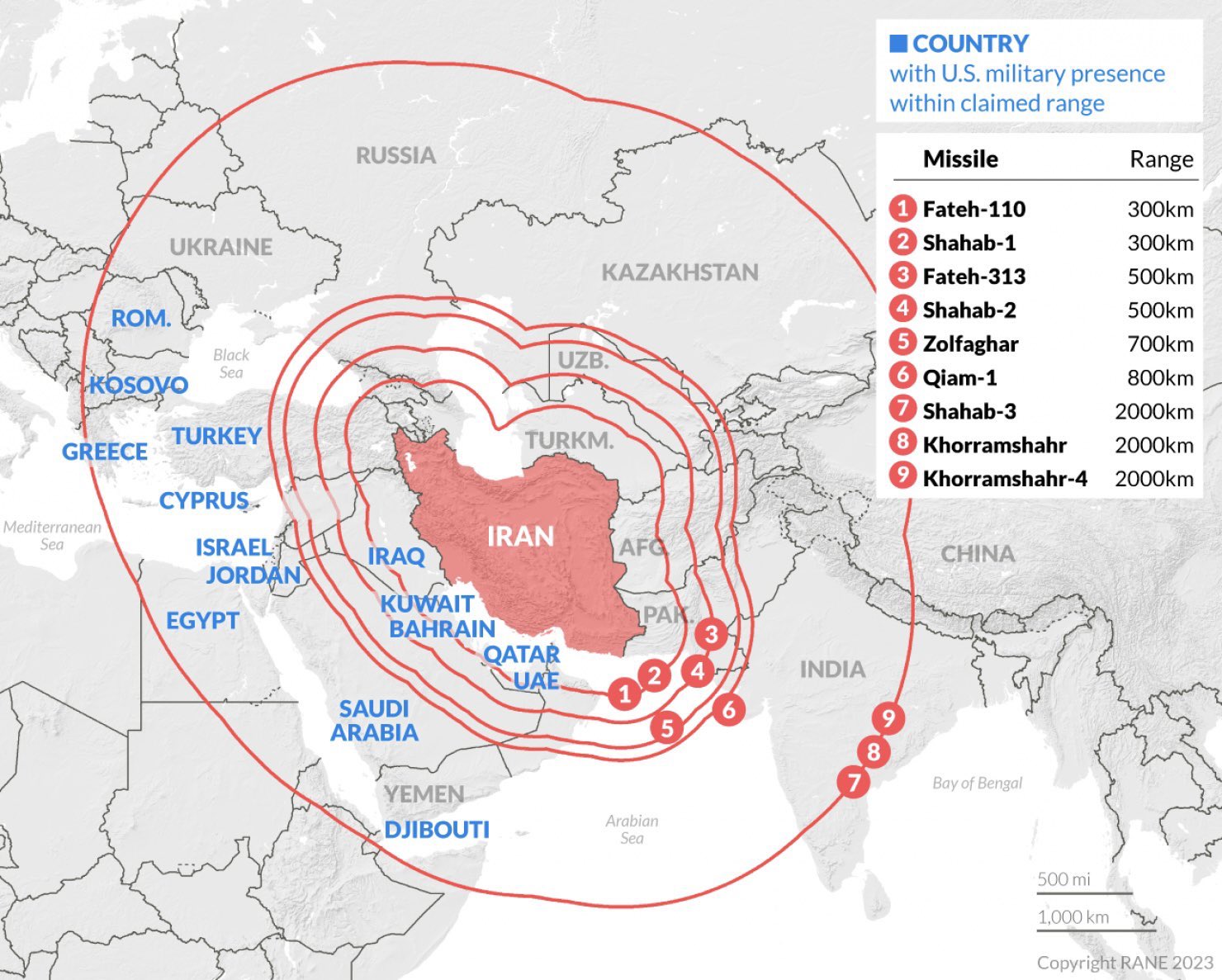
  • Ballistic missiles with ranges reaching up to 2,000 km

U.S.–Israeli forces

  • Persistent surveillance from drones and satellites

  • Real-time detection of missile launches

  • Rapid follow-up airstrikes on launch sites

Iran’s Underground Missile Cities

Iran has spent decades building an extensive network of underground missile bases, often referred to as “missile cities.”

These facilities are typically located deep inside mountains or reinforced tunnels, designed to protect missiles and launch equipment from airstrikes.

Open-source estimates suggest Iran operates:

  • Around 25 underground missile cities

  • At least 65 known missile bunkers and tunnel launch sites

  • Hundreds of mobile missile launchers

  • Over 120 known missile silos

The real number of sites may be significantly higher.

These bases house a wide variety of Iranian ballistic missiles, including:

  • Shahab-3

  • Sejjil

  • Khorramshahr

Some of these systems have ranges approaching 2,000 kilometers, placing Israel, Gulf states, and U.S. bases within reach.

Why Launch Rates Are Declining

Despite Iran’s large missile inventory, launch rates have dropped since the opening phase of the war.

The main reason appears to be surveillance pressure rather than equipment shortages.

Each missile launch produces:

  • Heat signatures

  • Smoke plumes

  • Launch vibrations

These signals are quickly detected by:

  • Infrared sensors on drones

  • Reconnaissance satellites in low-Earth orbit

  • Electronic intelligence systems

Once detected, the launch location can be targeted within minutes.

The Role of Drone and Satellite Surveillance

The United States and Israel are believed to be using a layered intelligence system including:

  • High-altitude surveillance drones

  • Low-Earth-orbit reconnaissance satellites

  • Persistent ISR (Intelligence, Surveillance, Reconnaissance) aircraft

  • Electronic intelligence platforms

Together, these assets create near-continuous monitoring of Iranian territory.

This makes it extremely risky for Iranian crews to operate launchers without being detected.

As a result, Iran must frequently:

  • Clear debris from bombed sites

  • Reopen tunnel entrances

  • Relocate launch equipment

  • Repair damaged infrastructure

All of this slows the overall launch tempo.

Air Superiority Over Tehran Remains Limited

Despite repeated strikes on Iranian targets, neither Israel nor the United States appears to have achieved full air superiority over Tehran.

Most air operations are believed to be conducted from:

  • Iraqi airspace

  • Western Iranian border regions

Strategic bombers such as the B-2 Spirit have not been reported flying directly over Iranian territory.

Iran still maintains operational fighter aircraft including:

  • MiG-29 fighters

  • Yak-130 aircraft

Although these jets are older platforms, they still represent a potential threat to high-value aircraft.

Iranian Naval Forces Still Operational

Reports indicate that Iran has lost around eight naval vessels, but only two were considered modern warships.

Much of Iran’s naval capability remains intact.

Estimates suggest Iran still operates:

  • At least 30 surface ships

  • Hundreds of missile-armed fast attack boats

  • Around 25–30 submarines

These forces pose a continuing threat to shipping routes in the Persian Gulf and Strait of Hormuz.

Why the War Could Last Months

Some officials have suggested that Iranian launchers could soon be exhausted, but current evidence does not support that view.

Iran’s missile infrastructure has been built up over 25 to 30 years, meaning it would take weeks or even months to fully destroy.

More likely, Iran is deliberately reducing launch frequency to avoid exposing its most valuable assets.

The Economics of the Conflict

Another factor shaping the conflict is cost.

Iranian missiles and drones are relatively inexpensive compared with the defensive systems used to intercept them.

For example:

  • Patriot interceptors can cost $3–5 million each

  • Iranian drones may cost tens of thousands of dollars

This cost imbalance places enormous financial pressure on defensive systems during prolonged conflicts.

A War of Attrition

The emerging pattern suggests a long conflict shaped by surveillance, missile strikes, and economic pressure.

U.S.–Israeli strikes will likely continue to inflict significant damage on Iranian infrastructure.

However, key objectives such as:

  • Complete destruction of Iran’s nuclear program

  • Regime change in Tehran

remain far from being achieved.

Iran’s long-standing strategy in regional conflicts has often focused on prolonging wars and increasing costs for opponents rather than seeking quick battlefield victories.

If that strategy holds, the conflict could evolve into a costly war of attrition lasting months or even years.

U.S. Patriot Air Defense Under Strain: Qatar Deploys 2000-Era PAC-2 Missiles as PAC-3 Stockpiles Dwindle

0
Ukrainian service members walk next to a launcher of a Patriot air defence system, amid Russia's attack on Ukraine, in an undisclosed location, Ukraine.

New technical evidence suggests that the U.S. Patriot air-defense system deployed in Qatar may be experiencing significant attrition after days of sustained Iranian missile and drone attacks across the Gulf region.

Images and analysis indicate that American-operated Patriot batteries in Qatar are now firing PAC-2 interceptors manufactured around the year 2000, raising questions about the availability of more advanced PAC-3 interceptors.

The development highlights the intense pressure placed on missile defense systems during prolonged high-tempo conflict.

Evidence Points to Depletion of PAC-3 Interceptors

The Patriot system uses multiple interceptor types depending on the threat environment.

The PAC-3 (Patriot Advanced Capability-3) interceptor is the most modern variant designed primarily to defeat ballistic missiles through hit-to-kill kinetic impact, meaning it destroys incoming missiles by directly colliding with them at high speed.

However, analysts believe that U.S. forces in Qatar have begun firing older PAC-2 interceptors, which rely on a proximity fragmentation warhead rather than direct kinetic impact.

The shift suggests that stocks of PAC-3 interceptors may have been significantly depleted after repeated engagements with Iranian ballistic missiles and drone swarms.

PAC-2 vs PAC-3: Key Technical Differences

infographic explaining PAC-2 vs PAC-3 missiles

The Patriot system has evolved through multiple upgrades, each designed to counter increasingly sophisticated threats.

PAC-2 Interceptor

  • Introduced in the 1990s

  • Uses a fragmentation warhead to destroy targets

  • Primarily designed to counter aircraft and cruise missiles

  • Effective but less optimized against modern ballistic missiles

PAC-3 Interceptor

  • Introduced in the early 2000s

  • Uses hit-to-kill kinetic interception

  • Specifically designed to defeat ballistic missile threats

  • Smaller missile allowing four interceptors per launcher cell

PAC-3 interceptors are significantly more effective against short-range ballistic missiles, which are widely used in Iran’s arsenal.

Age of the Missiles Raises Operational Questions

The PAC-2 interceptors reportedly used in Qatar carry manufacturing dates around 2000, meaning the missiles are now more than two decades old.

Missile interceptors typically have a service life of 10–15 years, after which major refurbishment or replacement is usually required.

Deploying 26-year-old interceptors suggests that the U.S. military may be drawing from deep reserve stockpiles to sustain operational readiness.

According to defense analysts, this indicates either:

  • PAC-3 interceptors are being conserved for a critical escalation scenario, or

  • PAC-3 stockpiles have already been significantly depleted.

Iranian Missile and Drone Pressure

The heavy use of interceptors comes as Iran has launched large waves of ballistic missiles and drones targeting U.S. bases and regional infrastructure across the Gulf.

Air-defense systems in countries such as Qatar, Saudi Arabia, Kuwait, and the UAE have been forced to engage incoming threats repeatedly.

Missile defense systems are designed for limited engagements, but sustained barrages can rapidly exhaust interceptor stockpiles.

Each Patriot interceptor costs approximately:

  • PAC-2: around $2–3 million per missile

  • PAC-3: around $4–5 million per missile

In contrast, many Iranian drones cost tens of thousands of dollars, creating a severe cost imbalance for defenders.

Strategic Implications for Gulf Air Defense

The possible use of aging PAC-2 missiles illustrates a broader challenge in modern air defense warfare.

Sustained missile and drone attacks can force even technologically advanced militaries to consume expensive interceptors faster than they can be replaced.

If PAC-3 stocks are indeed running low, it could have several implications:

  • Greater reliance on older Patriot interceptors

  • Increased use of THAAD and allied air-defense systems

  • Greater urgency in deploying counter-drone technologies

  • Accelerated production of new interceptor missiles

Defense analysts warn that prolonged high-intensity conflict in the Gulf could place significant strain on Western missile defense inventories.

A Test for U.S. Missile Defense Logistics

The situation highlights the logistical realities of missile defense in a large-scale regional conflict.

Air-defense networks are not only tested by the quality of their technology, but also by the depth of their interceptor stockpiles and supply chains.

As Iranian missile and drone attacks continue, the ability of the United States and its allies to sustain interceptor supplies may become one of the defining factors in the evolving conflict.

Taliban Drone Capabilities: Former U.S. ScanEagle Drones and Possible al-Qaeda Support Raise Security Concerns

0
scaneagle drone

New information from security sources in Afghanistan suggests that the Taliban may be developing a limited drone capability based on equipment captured after the collapse of the former Afghan government.

According to officials familiar with the matter, the Taliban obtained approximately 85 ScanEagle surveillance drones from military facilities belonging to the previous Afghan Republic. These American-made unmanned aerial vehicles were originally used by Afghan forces for reconnaissance missions and were not designed to carry weapons.

However, recent reports of suspected drone strikes inside Pakistan have raised concerns that the Taliban may be modifying or replicating drone technology to expand their operational capabilities.

Taliban Acquired 85 ScanEagle Surveillance Drones

Security sources in Afghanistan say that dozens of ScanEagle drones were captured from former Afghan military bases after the Taliban takeover in 2021.

The ScanEagle system, developed for surveillance missions, was widely used by the Afghan Republic’s military to conduct reconnaissance and intelligence gathering operations.

These drones typically operate within a range of around 100 kilometers, although with reliable communications and internet connectivity they can reach distances of up to 200 kilometers.

Because the system was designed for surveillance rather than combat, the drones originally lacked any offensive capability.

Taliban Drones Used in Pakistan Attacks Appear Different

Recent reports indicate that the drones allegedly used by the Taliban in attacks inside Pakistan resemble the ScanEagle platform in general size and structure.

However, military observers say there are notable differences in the fuselage, wings, tail configuration, and propulsion system, suggesting that the aircraft may not be identical to the original ScanEagle design.

These differences could indicate either modifications to existing drones or the development of locally produced unmanned aircraft based on similar concepts.

Limited Payload Capacity

Military officers who previously worked with ScanEagle drones in Afghanistan say the platform can technically carry an additional payload of around one to two kilograms.

However, they note that the aircraft becomes unstable if the weight exceeds that limit.

Even if explosives were attached to the drone, analysts say the resulting weapon would remain far less destructive than Iranian-made loitering munitions such as the Shahed series, which are specifically designed for strike missions.

Possibility of Locally Produced Drones

If the Taliban have not directly modified the captured ScanEagle drones, another possibility is the development of new drones produced locally by copying foreign designs.

Such an effort may involve assistance from militant groups operating in the region.

A United Nations Security Council report published in December 2025 highlighted concerns that militant organizations in Afghanistan could attempt to replicate drone technologies used elsewhere.

Alleged al-Qaeda Technical Support

According to an intelligence officer familiar with the issue, al-Qaeda specialists are reportedly present at the Shikar Qala compound in Logar province.

These specialists are believed to be working on drone development projects by replicating models originally developed in other countries.

If confirmed, such cooperation could allow militant groups in Afghanistan to gradually build an indigenous drone manufacturing capability.

Growing Role of Drones in Regional Militancy

The emergence of drone technology among militant groups reflects a broader trend in modern conflict.

Small unmanned aircraft have become low-cost tools capable of surveillance, propaganda, and limited strike missions, allowing non-state actors to challenge more powerful militaries.

While the Taliban’s current drone capabilities appear limited, analysts warn that continued technological adaptation and external assistance could expand their operational reach in the future.

Suspected Iranian Suicide Drone Strikes Hit CIA Facility in Riyadh and U.S. Consulate in Dubai, Exposing Gulf Security Gaps

0
Shahed Kamikaze drone

A suspected Iranian suicide drone strike targeting the United States Embassy compound in Riyadh and a separate drone attack on the U.S. Consulate in Dubai has exposed new vulnerabilities in American diplomatic and intelligence infrastructure across the Gulf region.

According to internal diplomatic alerts referenced by senior U.S. officials, the Riyadh embassy complex suffered roof collapse, structural disruption, and heavy smoke contamination following multiple drone impacts. At nearly the same time, eyewitnesses in Dubai reported a suicide drone detonation that ignited fires at the American consulate facility.

The incidents highlight the growing threat posed by low-cost loitering munitions capable of penetrating heavily protected diplomatic compounds.

CIA Facility in Riyadh Reportedly Targeted

Reports citing internal U.S. State Department alerts indicate that the drones struck a building housing the CIA’s regional intelligence station inside the U.S. Embassy compound in Riyadh.

Although U.S. and Saudi authorities confirmed drone impacts on the embassy complex, officials have avoided publicly confirming that the CIA facility was the primary target.

Internal communications described sections of the embassy roof collapsing, while acrid smoke filled corridors and offices, forcing personnel to shelter in secure areas as emergency teams conducted rapid damage assessments.

The CIA station in Riyadh functions as a critical intelligence coordination hub linking Washington with regional partners across the Middle East.

Drone Strike Triggers Major Fire at U.S. Consulate in Dubai

In a parallel incident, a suspected Iranian suicide drone crashed into the United States Consulate in Dubai, triggering a large fire that engulfed parts of the diplomatic facility.

Eyewitnesses described towering flames and dense smoke rising above the Dubai skyline as emergency responders from Dubai Civil Defence and U.S. security teams rushed to contain the blaze.

Initial reports suggest the drone explosion damaged several floors of the building, including administrative offices, communications areas, and visa processing facilities.

Consular services were temporarily suspended as evacuation procedures and structural assessments began.

Low-Cost Drones Exploit Gaps in Gulf Air Defense

Defense analysts say the attacks demonstrate the operational effectiveness of loitering munitions or kamikaze drones capable of approaching targets at low altitude.

Such drones can evade traditional air-defense systems designed primarily to intercept ballistic missiles rather than small unmanned aerial vehicles.

Saudi Arabia and the United Arab Emirates maintain advanced missile defense systems including Patriot and THAAD, but these systems are optimized to counter high-speed threats rather than slow-moving drones flying below radar coverage.

The incidents raise serious questions about detection gaps and reaction times within Gulf air-defense networks.

Strategic Escalation in Iran’s Asymmetric Warfare

Military analysts view the suspected drone strikes as part of Iran’s broader asymmetric warfare strategy, which prioritizes low-cost weapons capable of producing disproportionate strategic effects.

Loitering munitions allow attackers to strike high-value infrastructure targets without deploying manned aircraft or triggering large-scale military escalation.

By targeting both a diplomatic installation in Dubai and an intelligence hub in Riyadh, the attacks created a strategic pressure point against two pillars of U.S. regional presence:

  • Diplomatic operations
  • Intelligence and surveillance networks

Psychological Impact on U.S. Diplomatic and Intelligence Personnel

Although no casualties have been confirmed, the attacks had a strong psychological impact on personnel inside both facilities.

Inside the Riyadh embassy compound, staff reportedly sheltered in secure areas as smoke spread through interior corridors and sections of the roof collapsed.

In Dubai, consular personnel evacuated the building as flames spread across multiple floors following the drone detonation.

For diplomats and intelligence officers stationed across the Gulf, the incidents challenge long-held assumptions that heavily fortified diplomatic compounds remain secure from small aerial threats.

Symbolic Targeting of the CIA

The suspected strike on the CIA station also carries significant symbolic weight.

Iranian political narratives have long portrayed the CIA as a central adversary due to its alleged role in the 1953 coup that removed Iranian Prime Minister Mohammad Mossadegh.

Attacks on American intelligence facilities therefore carry domestic political significance within Iran, allowing hardline factions to frame such operations as retaliation for historical grievances.

Iranian state media has already amplified the narrative dimension of the incidents, presenting them as proof that American security infrastructure can be penetrated.

Growing Need for Counter-Drone Defenses

Defense experts argue that the incidents highlight the urgent need for dedicated counter-drone technologies, including:

  • Electronic warfare jamming systems
  • Directed-energy weapons
  • Specialized radar systems for small aerial targets
  • Integrated sensor networks

The cost asymmetry remains a major concern: drones costing thousands of dollars can threaten facilities protected by defense systems worth hundreds of millions.

A New Phase in the Gulf Shadow Conflict

The near-simultaneous drone strikes in Riyadh and Dubai suggest either coordinated operational planning or an escalating campaign designed to test U.S. and Gulf defensive responses.

Beyond their immediate tactical impact, the attacks function as strategic signaling events, reshaping perceptions of vulnerability within the Gulf’s security architecture.

How Washington and its regional allies respond may determine the next phase of the shadow conflict unfolding between Iran and the United States across the Middle East.

Iran Targets U.S. Military Communications Network: Satellite Images Show Damage at Bases Across the Middle East

0
Satellite imagery shows two AN/GSC-52B SATCOM terminals at the US Navy's 5th Fleet HQ in Bahrain were destroyed

Satellite imagery suggests that Iran has carried out a coordinated series of strikes against U.S. military facilities across the Middle East, damaging key communications infrastructure used by American forces in the region.

Since Saturday, at least 11 U.S. military facilities have reportedly been struck or affected by Iranian attacks, according to satellite analysis. The strikes appear to have focused primarily on satellite communication systems, radomes, and supporting infrastructure, which are critical for maintaining real-time command and control across U.S. forces operating in the Gulf.

The attacks mark a significant escalation in the ongoing confrontation between Iran and the United States, as they target systems that enable long-distance military communication and operational coordination.

Damage at U.S. 5th Fleet Headquarters in Bahrain

Satellite imagery indicates that two AN/GSC-52B satellite communications (SATCOM) terminals at the U.S. Navy’s Fifth Fleet headquarters in Bahrain were destroyed.

These terminals are part of the U.S. military’s global communications architecture, enabling high-capacity and near real-time data transmission between deployed forces and command centers. Their destruction could temporarily disrupt secure communications in the region.

The Fifth Fleet plays a central role in maintaining U.S. naval operations in the Persian Gulf, Arabian Sea, and surrounding waters.

Strike on Al Udeid Air Base in Qatar

A tent structure surrounded by satellite dishes at Al Udeid Air Base in Qatar was also destroyed, according to satellite imagery.

Several of the nearby dishes appear to have been damaged as well.

Al Udeid serves as the regional headquarters of U.S. Central Command (CENTCOM) and hosts thousands of American personnel. The base was previously targeted by Iranian strikes last year, highlighting its importance as a command hub for U.S. military operations in the Middle East.

Communications Infrastructure Hit in Kuwait

Iranian strikes also appear to have targeted U.S. installations in Kuwait.

At Camp Arifjan, at least three radomes—protective structures that shield sensitive communication equipment—were either damaged or destroyed. Radomes typically house antennas used for long-distance military communications.

Meanwhile, Ali Al Salem Air Base sustained damage to at least eight buildings or structures located near satellite communications infrastructure, suggesting the attacks may have been aimed at disrupting command-and-control systems.

Prince Sultan Air Base in Saudi Arabia Targeted

Iran’s Islamic Revolutionary Guard Corps (IRGC) announced on Saturday that it had targeted Prince Sultan Air Base in Saudi Arabia.

Satellite images taken by Tuesday show that a fenced building located near a radome at the base had been largely destroyed. The base is an important site for U.S. air operations and regional defense coordination.

Possible Damage Near AN/TPY-2 Radar in the UAE

Satellite imagery also indicates potential damage at a military installation near Al Ruwais in the United Arab Emirates.

An AN/TPY-2 radar system, part of the missile defense architecture used to track ballistic missiles, has been stationed next to a building at the site since last year. Imagery from Sunday shows that the adjacent building was damaged, although it remains unclear whether the radar itself was affected.

Repeated Strikes on Al Dhafra Air Base

Another compound was damaged at Al Dhafra Air Base in the UAE, a major hub for U.S. air operations.

Satellite dishes had been visible at the location as recently as mid-June last year. While it is unclear whether the equipment was still present during the attack, Iran reportedly struck the same area again on Monday.

Strategic Focus on Communications Systems

The pattern of the strikes suggests a deliberate focus on communications infrastructure rather than large troop concentrations or aircraft.

Military analysts note that satellite communications terminals, radomes, and command facilities are essential for coordinating operations across the vast distances of the Middle East. Disrupting them could temporarily complicate command and control for U.S. forces.

The attacks underscore the increasing role of precision targeting and satellite intelligence in modern warfare, as both sides attempt to degrade each other’s operational networks without triggering full-scale regional conflict.

No HQ-9B in Iran’s Arsenal: What We Know About Its Air Defense Capabilities

0

A viral claim circulating across social media alleges that Iran is furious with China over the failure of HQ-9B air defense systems. The narrative suggests that Chinese-supplied systems underperformed during recent US-Israeli strikes.

There is just one problem: there is no credible evidence that Iran ever possessed the HQ-9B system.

According to defense analysts cited in the uploaded document , Iran has made no official statements about HQ-9B failures — and more importantly, there is no verified proof that Iran acquired or deployed the system in the first place. Reports from September 2025 indicated Iran was considering Chinese surface-to-air missile systems, including the HQ-9. Considering is not the same as purchasing, deploying, or operating.

No credible source confirms delivery. Every version of the claim appears to trace back to unverified social media posts lacking primary sourcing .

The rumor is false.

But the real story is far more significant.

Iran’s Documented Air Defense Architecture

S-300PMU2

Iran received four S-300PMU2 batteries from Russia in 2016. These long-range surface-to-air missile systems were designed to counter aircraft and ballistic missile threats. The S-300 was considered one of the backbone elements of Iran’s strategic air defense.

Bavar-373

Alongside the Russian systems, Iran deployed approximately 41–42 domestically produced Bavar-373 batteries beginning in 2017. With an engagement range reportedly around 200 kilometers, Tehran promoted the system as a near-equivalent to advanced Russian platforms.

Legacy Western Systems: MIM-23 Hawk and Rapier missile system

Older Hawk and Rapier systems filled defensive gaps. Though aging, they added layers to what analysts considered one of the Middle East’s most comprehensive integrated air defense networks.

On paper, this was a formidable structure:

  • 4 Russian long-range batteries
  • 40+ indigenous long-range batteries
  • Legacy Western systems for layered coverage
  • Integrated radar arrays and command nodes

It represented the maximum conventional air defense Iran could assemble.

What Happened in 96 Hours

According to the document , more than 2,000 US and Israeli strikes were conducted over a 96-hour period. The campaign reportedly included:

  • Deep-penetration missions by B-2 Spirit stealth bombers targeting hardened underground facilities
  • Long-range strike operations by B-1 Lancer bombers
  • Electronic warfare and saturation attacks across multiple axes
  • Destruction of radar arrays, command nodes, and missile launch sites

Satellite imagery reportedly confirmed:

  • Destroyed radar installations
  • Collapsed command infrastructure
  • Cratered missile positions

The result: Iran’s integrated air defense network was functionally neutralized within days .

Subsequent strike waves reportedly encountered diminishing resistance as the defensive architecture collapsed.

The Strategic Lesson: It Wasn’t About China

The HQ-9B rumor distracts from the core strategic insight.

The issue was not Chinese equipment. It was not Russian equipment. It was not indigenous equipment.

The campaign architecture — combining stealth penetration, electronic warfare, and high-volume saturation — was designed to defeat conventional integrated air defense systems. According to the document’s analysis, it did exactly that .

Even if Iran had possessed HQ-9B systems, there is no evidence suggesting the outcome would have been materially different under a full-spectrum, multi-axis strike campaign of this scale.

Air Defense Failure and Maritime Security

The document makes a broader strategic point :

A country unable to defend its own airspace faces credibility challenges when threatening critical maritime shipping lanes.

Insurance markets and reinsurers assess risk based on military capability. If airspace control is compromised, strategic deterrence weakens. In this framing, the collapse of air defenses directly affects maritime security calculations in the Gulf.

The air defense story and the insurance story are intertwined.


Conclusion

There is no credible evidence that Iran deployed HQ-9B systems. Claims of Iranian anger toward China are unsupported and trace back to unverified social media posts .

The real story is far more consequential:

Iran’s documented air defense architecture — including S-300PMU2 batteries, Bavar-373 systems, and legacy Western platforms — was reportedly dismantled within 96 hours of sustained US-Israeli strikes.

The lesson is not about Chinese systems failing.

It is about the vulnerability of conventional integrated air defense networks when confronted with coordinated stealth, electronic warfare, and saturation campaigns at scale.

And that has implications far beyond one viral rumor.

India Pays the Price for the Trump–Netanyahu War: Oil Shock, Hormuz Risk and Energy Vulnerability

0
India Pays the Price for the Trump–Netanyahu War

India’s economic growth and energy security are increasingly exposed to the volatile front lines of the Middle East conflict.

As tensions escalate following the Trump–Netanyahu military campaign against Iran, New Delhi finds itself deeply vulnerable to rising oil prices and potential disruptions in tanker traffic through the Strait of Hormuz — a chokepoint now at the center of geopolitical risk.

India’s Energy Shift: From Russian Discounts to Gulf Dependence

Over the past two years, India sharply increased imports of discounted Russian crude. However, under pressure from the United States — including threats of tariffs reportedly reaching as high as 50% — India curtailed Russian oil purchases.

As a result:

  • Russian oil imports have fallen to their lowest level since March 2022.
  • India has ramped up purchases of higher-priced Middle Eastern and US crude.
  • Energy sourcing has shifted heavily toward Gulf routes.

This policy shift has reduced price advantages while increasing exposure to supply disruptions.

The Strait of Hormuz: A Single Point of Failure

The Strait of Hormuz has become a strategic chokepoint for India’s energy lifeline.

Current exposure levels are significant:

  • Roughly 50% of India’s oil imports pass through Hormuz.
  • About 60% of its LNG imports transit the strait.
  • Nearly 80–85% of India’s LPG (cooking gas) is sourced from the Gulf and shipped via Hormuz.

Unlike crude oil, India maintains no strategic reserves of LPG. Any disruption in shipments could quickly affect households across the country.

In practical terms, the Trump–Netanyahu war has transformed Hormuz into a massive single point of failure for India’s economy.

The Economic Cost of Rising Oil Prices

The financial implications are substantial.

For India:

  • Every $10 increase in oil prices adds approximately $13–14 billion to the annual import bill.
  • Higher import costs widen the trade deficit.
  • Fuel-driven inflation pressures consumer prices and industrial costs.

In a country where fuel prices directly impact food transport, electricity generation, and household budgets, sustained oil price spikes could slow growth momentum.

Strategic Trade-Off: Price Risk vs Supply Risk

By reducing Russian imports, India traded:

  • A price risk (loss of discounted crude)
    for
  • A supply risk (deeper reliance on Hormuz shipments).

In aligning more closely with the US–Israel axis against Iran, New Delhi accepted greater exposure to Gulf instability.

Meanwhile, President Donald Trump has described Indian Prime Minister Narendra Modi as a “very close friend,” while Israeli Prime Minister Benjamin Netanyahu has referred to Modi as a “brother.”

However, strategic friendship does not shield India from oil market realities.

China’s Strategic Advantage

In contrast, China faces fewer immediate Hormuz-related constraints.

Beijing can:

  • Increase purchases of Russian oil and gas via overland pipelines.
  • Avoid reliance on vulnerable maritime chokepoints.
  • Secure discounted supplies at scale.

India’s curtailment of Russian imports may inadvertently strengthen China’s position, allowing Beijing to absorb additional Russian energy while insulating itself from Gulf disruptions.

At a critical geopolitical moment, New Delhi’s primary rival gains flexibility — while India assumes higher exposure.

What Happens If Hormuz Closes?

If the Strait of Hormuz were disrupted or temporarily blocked:

  • Oil tankers could face delays or rerouting.
  • Insurance premiums would spike.
  • Energy prices would surge globally.
  • India’s import-dependent energy system would feel immediate strain.

LPG shortages would be particularly sensitive politically, as cooking gas directly affects households.

Strategic Outlook

India’s energy strategy now faces three urgent questions:

  1. Can it diversify supply routes fast enough?
  2. Will it rebuild discounted Russian supply channels?
  3. Can it accelerate renewables and domestic production to reduce vulnerability?

The Trump–Netanyahu war has reshaped regional security dynamics — but for India, the most immediate battlefield is economic.

Energy security is now directly tied to geopolitical alignment.

And as oil markets tighten, India may find that the cost of strategic positioning is measured not only in diplomacy — but in billions of dollars.

Six US Troops Killed in Precision Strike at Kuwaiti Port: Air Defense Failure Signals Strategic Shift

0
first six US soldiers to die in the conflict between the US/Israel and Iran were killed by a direct Iranian strike on a makeshift operations center at a CIVILIAN* port in Kuwait on Sunday morning

The confirmed deaths of six United States service members in a single precision strike on a temporary operations center inside a Kuwaiti civilian port mark a major strategic inflection point in Middle East force protection.

According to detailed accounts in the report , the strike destroyed a modular, three-section containerized tactical operations center with one direct hit — collapsing a critical command node responsible for communications, planning, and battlefield coordination.

All six US fatalities in the current phase of hostilities occurred in this single incident.

A Precision Strike with Strategic Consequences

The target was a rapidly assembled container-based command post located within a civilian port facility in Kuwait. The site was chosen for logistical convenience but lacked hardened protection.

The munition — described as air-defense-evading — struck the central module of the three-part container complex, causing catastrophic structural failure and immediate operational paralysis.

Notably, no audible warning sirens or automated alert systems were reportedly triggered before impact.

This absence of early warning has raised serious concerns about:

  • Radar coverage gaps
  • Reaction time limitations
  • Layered air defense effectiveness
  • Detection-to-decision chain reliability

How the Strike Reframes Air Defense Assumptions

Layered air defense architectures typically integrate:

  • Long-range surveillance radar
  • Medium-altitude surface-to-air missile systems
  • Short-range point defenses
  • Electronic warfare assets

Yet in this case, the incoming threat appears to have traversed the defensive envelope without generating actionable detection cues.

If accurate, this suggests the weapon may have exploited:

  • Low radar cross-section
  • Depressed trajectory flight profile
  • High-speed approach
  • Electronic countermeasure masking
  • Algorithmic classification gaps

The event demonstrates that air-defense evasion is no longer theoretical — it is operationally proven.

Why Containerized Command Posts Are Vulnerable

Container-based tactical operations centers are designed for:

  • Rapid deployment
  • Mobility
  • Modular scalability

However, they lack reinforced compartmentalization and blast-resistant hardening.

A precision-guided munition optimized for overpressure and fragmentation can devastate such structures instantly.

The direct hit on the central module suggests deliberate targeting geometry intended to maximize internal shockwave propagation and personnel casualties.

Mobility, in this case, became vulnerability.

Civilian Infrastructure Now a Battlespace

The strike occurred inside a civilian port facility — a dual-use environment supporting both commercial logistics and military coordination.

This carries major implications:

  • Commercial infrastructure is no longer presumed safe in contested theaters
  • Shipping continuity and insurance risk are now strategic concerns
  • Gulf states must reassess military-civilian integration

Visible fires at the port further amplified the psychological and economic impact.

The message is clear: logistics hubs are high-payoff targets.

Force Protection Doctrine Under Review

The incident compels urgent reassessment of forward-deployed US posture across US Central Command’s theater.

Key vulnerabilities exposed:

  • Centralized command nodes
  • Personnel concentration
  • Lack of hardened blast segmentation
  • Limited passive protection measures
  • Insufficient redundancy

Future mitigation may require:

  • Dispersed command architectures
  • Redundant communication hubs
  • Reinforced modular designs
  • Underground alternatives where terrain permits
  • Multi-spectral sensor integration (including infrared and passive detection)
  • AI-driven anomaly detection

Milliseconds now determine survivability.

Strategic Messaging and Global Implications

By accounting for all six American fatalities in the current operational phase, the strike achieves disproportionate strategic impact.

It demonstrates that:

  • Expeditionary infrastructure within missile envelopes remains vulnerable
  • Precision lethality can compress human cost and geopolitical signaling
  • No layered defense is fully impenetrable

For defense planners worldwide — including Indo-Pacific observers — the Kuwaiti incident becomes a case study in the limits of mobility-centric basing under precision strike threat.

What Comes Next?

While the munition type remains undisclosed — ballistic, cruise, or unmanned — its success in penetrating layered defenses forces recalibration.

Likely responses may include:

  • Expanded air-defense deployments
  • Enhanced electronic warfare coverage
  • Greater dispersion of forward command nodes
  • Hardening of dual-use infrastructure

But the strategic breach has already altered regional threat perception.

A single precision strike did more than destroy a container complex — it punctured assumptions about layered defense reliability in the Gulf.

This event will be studied in war colleges and defense ministries worldwide as a defining example of how modern precision warfare reshapes force protection doctrine.

Fattah-2 Hypersonic Missile Explained: Can Israel or the US Intercept Iran’s Mach 15 Weapon?

0
fattah 2 missile iran

As Iran reportedly uses older missile stockpiles to exhaust Israeli missile defense systems, analysts believe Tehran may soon introduce its most advanced weapon: the Fattah-2 hypersonic missile.

Iran claims the Fattah-2 can reach speeds of Mach 15 — approximately 12,000 miles per hour (19,000 km/h). If accurate, that places it among the fastest operational missile systems publicly disclosed.

But what makes a hypersonic missile so difficult to intercept? And is interception truly “impossible”?

Let’s break it down technically.

What Is the Fattah-2

The Fattah-2 is described by Iranian sources as a hypersonic glide vehicle (HGV) mounted on a ballistic missile booster.

Key reported characteristics:

  • Speed: Up to Mach 15
  • Estimated Top Speed: ~12,000 mph
  • Maneuverable glide phase
  • Capable of mid-course trajectory adjustments
  • Designed to evade missile defense systems

Unlike traditional ballistic missiles that follow predictable parabolic trajectories, hypersonic glide vehicles separate from their booster and glide through the upper atmosphere while maneuvering laterally and vertically.

This unpredictability complicates interception calculations.

How Fast Is Mach 15?

To understand interception challenges, consider speed comparisons:

  • Mach 1 = ~767 mph (at sea level)
  • Mach 5 (hypersonic threshold) = ~3,800 mph
  • Mach 10 = ~7,600 mph
  • Mach 15 = ~11,500–12,000 mph

At Mach 15:

  • The missile travels roughly 3.3 miles per second
  • It could cover 1,000 miles in about 5 minutes

That drastically reduces reaction time for radar detection, target classification, and interceptor launch.

How Missile Interceptors Work

Missile defense systems like Israel’s Arrow 3 or the US SM-3 interceptor operate in phases:

  1. Detection – Early warning radar identifies launch plume.
  2. Tracking – Radar predicts trajectory using ballistic modeling.
  3. Interceptor Launch – A defensive missile is fired.
  4. Midcourse Guidance – The interceptor receives updates.
  5. Kinetic Kill Vehicle – The interceptor collides with the target at extremely high speed.

Most systems rely on predicting where a ballistic missile will be — not where it might maneuver.

Ballistic interceptors assume:

  • A largely predictable arc
  • Limited lateral maneuvering
  • Known reentry dynamics

Hypersonic glide vehicles disrupt these assumptions.

Why Hypersonic Missiles Are Hard to Intercept

1. Maneuverability

Unlike standard ballistic missiles, an HGV can:

  • Change direction during glide
  • Adjust altitude
  • Complicate radar tracking

This reduces the interceptor’s ability to compute a stable intercept point.

2. Compressed Decision Window

If a missile travels 3+ miles per second:

  • Radar detection to impact may be under 6–8 minutes.
  • Decision-making shrinks to seconds.

Interceptors must launch quickly and accelerate rapidly enough to match or exceed closing velocity.

3. Interceptor Speed Requirements

To intercept a Mach 15 missile, an interceptor must:

  • Achieve comparable velocity (Mach 10–15 or more)
  • Reach the intercept point before target maneuver changes geometry

For example:

  • SM-3 interceptors reach speeds of roughly Mach 10+
  • Arrow 3 is designed for exo-atmospheric interception

But glide vehicles operate within the atmosphere, where aerodynamic forces complicate tracking and interception physics.

Atmospheric drag also reduces interceptor effectiveness compared to space-based intercept.

4. Heat and Plasma Effects

At Mach 15:

  • The missile generates extreme heat
  • Plasma formation may degrade radar signature
  • Infrared tracking becomes more complex

This can interfere with guidance systems.

Is Interception Truly “Impossible”?

Technically, no system is 100% impossible to intercept. However:

  • Success probability declines sharply
  • Multiple interceptors may be required
  • Defense systems can be saturated

If Iran uses older missiles first to drain interceptor stocks, then introduces Fattah-2, it creates a layered exhaustion strategy:

  1. Saturate defenses with legacy missiles
  2. Deplete interceptor inventory
  3. Introduce maneuvering hypersonic systems

This is known as a cost-exchange strategy — forcing expensive interceptors to counter cheaper offensive weapons.

Strategic Implications

If the Fattah-2 performs as advertised:

  • Israel’s layered missile defense would face unprecedented stress
  • US regional missile defense assets would need reinforcement
  • Reaction times would shrink dramatically
  • Defensive doctrines may require redesign

Hypersonic weapons are not just faster missiles — they represent a shift in the offense-defense balance.

Speed Comparison Snapshot

System Estimated Speed
Traditional SRBM Mach 5–7
Typical ICBM Reentry Mach 20+ (predictable arc)
SM-3 Interceptor ~Mach 10+
Fattah-2 (claimed) Mach 15

The key difference is not just speed — it’s maneuverability at hypersonic velocity.

What Happens Next?

If Iran unveils or deploys Fattah-2 operationally:

  • The conflict could enter a new technological phase
  • Hypersonic defense gaps would be exposed
  • Missile defense stockpile sustainability becomes critical

The real question is not whether interception is theoretically possible — but whether current systems can reliably handle maneuvering hypersonic threats under saturation conditions.

Upgraded Shahed Drones Raise Alarm as Russia, China Links Reshape Iran’s Military Capabilities

0
Shahed Kamikaze drone

US defense sources now describe Iranian Shahed drones as one of the most serious operational threats in the current conflict, citing their increasing ability to penetrate air defense systems.

The concern comes amid reports that Iran’s drone fleet has been significantly upgraded with Russian battlefield technology and may also be benefiting from Chinese satellite and radar support.

Russian Technology Inside Iranian Drones?

According to multiple defense analysts, Iranian Shahed drones now appear to include upgraded Russian components — particularly anti-jamming antenna systems.

One key system reportedly integrated into some drones is the Russian “Comet” antenna module, which features GLONASS satellite navigation capability and strong resistance to electronic jamming.

GLONASS is Russia’s equivalent to GPS. The Comet module is considered highly resistant to signal disruption, a capability that has allowed Russia to continue daily drone operations in Ukraine despite heavy Western jamming efforts.

Reports suggest similar upgraded drones were used in attacks targeting a British base in Cyprus.

If accurate, this would indicate a reverse technology flow:

  • Iran initially supplied Russia with Shahed drones.
  • Russia enhanced the systems with combat-tested upgrades.
  • Upgraded variants are now potentially returning to Iran.

Geran Variants: More Than Just Drones

Russia operates Shahed-type drones under the name “Geran.” Modified versions such as Geran-3 and Geran-5 reportedly feature:

  • Higher speeds (up to 600 km/h)
  • Improved anti-jamming systems
  • Enhanced navigation precision
  • Cruise missile-like capabilities

Some analysts describe these systems as inexpensive cruise missiles rather than simple loitering munitions.

The Alabuga Special Economic Zone in Russia is reported to be producing more than 500 drones per month, with ongoing expansion. Such production capacity could allow Moscow to export updated, battle-tested versions back to Iran.

Shaheds as Air Defense Penetrators

US sources suggest that Shahed drones are currently among the most difficult threats to intercept due to:

  • Low cost and mass production
  • Anti-jamming satellite guidance
  • Low radar cross-section
  • Ability to overwhelm defenses in large numbers

Iran is reportedly increasing drone deployments in the Gulf region, potentially using Shaheds to conserve ballistic missile stocks while still inflicting damage.

This creates a “cost-exchange problem” for US and allied forces: relatively cheap drones forcing expensive interceptor launches.

China’s Expanding Role: Beidou and Beyond

Separate reports indicate that Iran has transitioned much of its military navigation architecture from US GPS signals to China’s Beidou satellite system.

Beidou offers:

  • Encrypted military-grade positioning signals
  • Resistance to Western jamming
  • Short message communication services

China’s satellite constellation — reportedly exceeding 500 satellites — may also support Iran with signals intelligence (SIGINT) and maritime tracking capabilities in the Persian Gulf.

Additionally, reports suggest Chinese systems supplied to Iran include:

  • CM-302 supersonic anti-ship missiles
  • YLC-8B anti-stealth radar systems

If verified, this combination of Russian drone upgrades and Chinese satellite infrastructure could significantly enhance Iran’s ability to contest US naval and air dominance.

Strategic Implications

The convergence of:

  • Russian battlefield drone modifications
  • Chinese satellite navigation systems
  • Expanding Iranian drone production

…creates a multi-layered challenge for US and allied forces.

Meanwhile, US missile stockpiles — particularly interceptors — are reportedly under strain, raising concerns about sustainability in a prolonged high-intensity conflict.

What to Watch Next

Key questions moving forward include:

  • Are upgraded Shahed variants becoming effectively “jam-proof”?
  • Will Russia formally expand drone exports back to Iran?
  • How deeply is China involved in satellite and intelligence support?
  • Can Western air defenses adapt quickly enough to evolving drone tactics?

As drone warfare becomes increasingly central to modern conflict, technological alliances may shape the battlefield as much as traditional firepower.

US Prepares ‘Major Uptick’ in Iran Attacks as Missile Stocks Run Low and Embassy Strikes Escalate

0

The United States is preparing for a “major uptick” in attacks against Iran within the next 24 hours, according to a senior US official, signaling a significant escalation in the ongoing conflict.

US officials assess that the initial round of strikes successfully weakened Iranian air defenses. The next phase, they say, will focus heavily on destroying Iran’s missile production facilities, unmanned aerial vehicle (UAV) programs, and naval capabilities.

Trump Signals “Big Wave” of Strikes

President Donald Trump previewed intensified operations in an interview with CNN, stating:

“We haven’t even started hitting them hard. The big wave hasn’t even happened. The big one is coming soon.”

Trump also suggested the war may last around four weeks but said operations are currently running “ahead of schedule.”

In comments to NewsNation, he warned retaliation would follow attacks on the US Embassy in Riyadh and the killing of US service members, though he added that “boots on the ground” are unlikely to be necessary.

Missile Stockpiles Running Low

A senior US official acknowledged that certain missile inventories are under pressure, particularly:

  • Tomahawk Land Attack Missiles
  • SM-3 interceptors used for ballistic missile defense

Sustained operations and defensive interceptions have reportedly reduced available stockpiles, raising questions about long-term sustainability if the conflict expands further.

Secretary of State: Hardest Hits Yet to Come

US Secretary of State Marco Rubio said “the hardest hits are yet to come,” while emphasizing that the administration believes its objectives can be achieved without deploying ground forces.

Washington’s stated goals include dismantling Iran’s missile capability and neutralizing its ability to conduct drone and naval operations across the region.

US Embassies Targeted by Iranian Drones

The US Embassy in Saudi Arabia was struck by two suspected Iranian drones, according to sources familiar with the matter.

Saudi Arabia’s Defense Ministry confirmed the incident, describing it as causing “limited fire and minor material damages.”

The attack on the US Embassy in Riyadh follows earlier strikes on the US Embassy in Kuwait over the weekend.

In response, the US Mission to Saudi Arabia issued a “shelter in place” advisory for Jeddah, Riyadh, and Dhahran, urging American citizens to remain indoors and avoid non-essential travel to military installations.

Separately, the US State Department issued a broader advisory instructing US citizens to “DEPART NOW” from several countries in the region due to serious safety risks.

IRGC Signals Retaliation Campaign

Following the embassy strike, Iran’s Islamic Revolutionary Guard Corps (IRGC) announced it had begun efforts to target what it described as “American political centers” in the region.

This suggests a widening campaign that could extend beyond strictly military targets.

USS Arlington Activity Raises Questions

Meanwhile, reports indicate that USS Arlington is loading continuously in Norfolk under heightened security.

USS Arlington (LPD-24) is a San Antonio–class amphibious transport dock designed to carry hundreds of Marines, vehicles, ammunition, and supplies. It serves as a floating logistics and deployment hub capable of launching landing craft and helicopters.

Heavy loading activity typically signals preparation for:

  • Rapid Marine deployment
  • Logistical reinforcement
  • Evacuation support
  • Crisis-response operations

The move raises strategic questions about whether the US is preparing for evacuation, deterrence posture reinforcement, or potential expansion of operations.

Strategic Outlook: Escalation or Containment?

The coming days could determine whether the conflict remains limited to air and missile exchanges or expands into a broader regional confrontation.

Key developments to watch:

  • Whether the “big wave” of US strikes materializes
  • The sustainability of US interceptor stockpiles
  • Iran’s continued targeting of diplomatic and military installations
  • Possible activation of additional naval or Marine forces

With embassies under attack, missile stocks tightening, and amphibious assets mobilizing, the conflict appears to be entering one of its most consequential phases.

Qatar Shoots Down Two Iranian Su-24 Bombers, Cuts Ties with Tehran After Missile and Drone Attacks

0
Iranian Su-24 Bombers

Qatar has confirmed that its armed forces shot down two Iranian Sukhoi Su-24 tactical bombers, marking a major escalation in the widening regional conflict involving Iran, the United States, and Israel.

In an official statement released by Qatar’s Ministry of Defense, authorities said the Qatar Emiri Air Force successfully downed the two aircraft as they approached Qatari airspace. The ministry also announced that air defense systems intercepted seven ballistic missiles and five drones that targeted multiple areas across the country.

According to the statement, all projectiles were neutralized before reaching their intended targets.

Qatar Cuts Engagement with Iran

In a separate announcement, Qatar’s Foreign Ministry declared that Doha is no longer engaging with the Iranian government following the attacks.

A spokesperson stated that Iranian strikes targeted civilian infrastructure, including Qatar’s international airport. Qatari fighter jets and air defense systems reportedly intercepted drones and other aerial threats.

The Foreign Ministry warned that the attacks “cannot be left without retaliation” and emphasized that Iran “has to pay a price for this blatant attack on our people.”

The language signals a sharp diplomatic rupture between Doha and Tehran, ending what had previously been a cautious but functional relationship.

Military Details: What Qatar Claims

According to the Ministry of Defense:

  • Two Iranian Su-24 bombers were shot down by Qatari forces
  • Seven ballistic missiles were intercepted
  • Five drones were destroyed
  • All threats were neutralized before impact

Officials emphasized that the response followed established operational protocols and demonstrated the full readiness of Qatar’s armed forces.

The statement also urged citizens and residents to remain calm, avoid rumors, and rely solely on official information channels.

Regional Escalation Deepens

The reported downing of Iranian combat aircraft represents one of the most direct state-to-state air engagements in the Gulf in recent years.

The Sukhoi Su-24 is a twin-engine, all-weather strike aircraft designed for low-level penetration and tactical bombing missions. If confirmed, the loss of two such aircraft would mark a significant operational development.

Qatar’s move to suspend engagement with Tehran could further polarize the region, especially as Gulf states reassess their security posture amid sustained missile and drone exchanges.

Strategic Implications

Several key implications emerge:

  1. Direct Gulf Involvement – Qatar has moved from defensive interception to direct air combat.
  2. Diplomatic Breakdown – Doha’s suspension of engagement signals a severe deterioration in relations.
  3. Retaliation Warning – Official statements suggest further action may follow.
  4. Civilian Infrastructure Targeting – Claims that Iran targeted civilian sites raise the political stakes.

If confirmed independently, this incident could mark a turning point in Gulf security dynamics.

What Happens Next?

With Qatar now openly confronting Iran militarily and diplomatically, the risk of broader Gulf involvement is increasing.

Key questions remain:

  • Will Iran respond to the reported downing of its aircraft?
  • Will other Gulf states follow Qatar’s lead?
  • Could this trigger a wider regional confrontation?

As tensions escalate, the situation remains fluid and highly volatile.

Were US Fighter Jets Shot Down by Iran? Questions Grow After CENTCOM Report and Drone Losses

0
F-15 Fighter

New questions are emerging following a CENTCOM report acknowledging the loss of three US McDonnell Douglas F-15E Strike Eagle fighter jets in a high-threat combat environment.

While US Central Command attributed the losses to friendly fire from Kuwaiti air defense systems, analysts and observers are examining whether that explanation fully accounts for the circumstances surrounding the downings.

At the same time, Iran released footage claiming the shootdown of another Israeli Hermes 900 surveillance drone, adding further complexity to the evolving air war.

CENTCOM’s Friendly Fire Explanation Under Scrutiny

CENTCOM acknowledged that Iranian fighter aircraft were active in the battlespace during the engagement. However, it maintained that the three F-15E Strike Eagles were lost due to accidental engagement by allied air defense systems.

In modern combat operations, such an explanation raises technical questions.

Why?

Modern Identification Friend or Foe (IFF) systems — including encrypted Mode 4 and Mode 5 transponders — are specifically designed to reduce fratricide risks, even in contested electromagnetic environments.

Ground-based air defense systems such as Patriot PAC-2 batteries typically:

  • Cross-check IFF responses
  • Confirm flight plans
  • Validate radar tracks
  • Coordinate with airborne controllers

The simultaneous loss of three fourth-generation multirole fighters to friendly surface-to-air missiles would be an exceptionally rare event in modern NATO-standard operations.

This has led some defense analysts to consider an alternative scenario: that hostile engagement — potentially by Iranian aircraft or advanced surface-to-air systems — may have played a role.

Combat Environment and Plausible Enemy Action

When multiple aircraft are lost in active combat, history shows that official narratives are often viewed cautiously until further details emerge.

The presence of Iranian fighters in the area complicates the friendly-fire explanation. If enemy aircraft were actively contesting airspace, the probability of air-to-air or coordinated surface engagement increases.
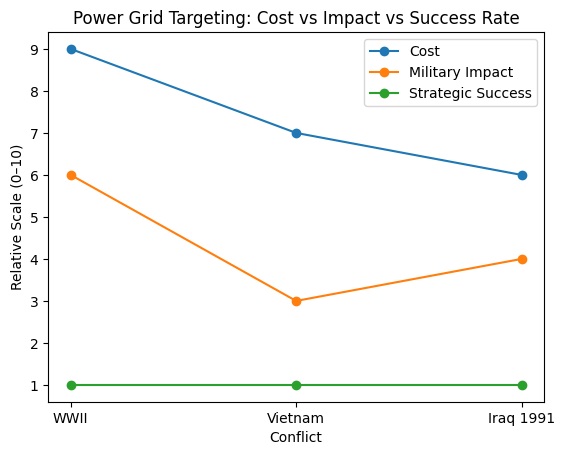
If Iranian systems successfully penetrated coalition air defenses, even partially, the strategic implications would be significant.

Iran Claims Additional Drone Shootdown

Iran released video footage showing the alleged destruction of an Israeli Hermes 900 drone conducting reconnaissance over Iranian territory.

The Hermes 900 is a high-endurance surveillance UAV widely used for intelligence and targeting missions. Its loss would suggest:

  • Increased Iranian air defense effectiveness
  • Improved electronic warfare or radar tracking capability
  • Growing difficulty for coalition ISR (intelligence, surveillance, reconnaissance) operations

Repeated drone losses can degrade real-time targeting capacity, forcing aircraft to operate at greater stand-off distances.

Coalition Operations Appear to Shift

Observers have noted a visible decline in publicly available footage of US-Israeli strikes following the reported F-15 losses.

Potential explanations include:

  • Operational pause for reassessment
  • Tactical repositioning
  • Increased air defense caution
  • Greater reliance on stand-off weapons

Meanwhile, Iranian missile launches reportedly continued, including daylight strikes on Israeli targets and additional attacks on US regional bases. Reports also indicated damage to luxury hotels in Bahrain and the UAE.

Strategic Implications

If the F-15 losses were indeed caused by friendly fire, it would expose coordination challenges in a congested, high-intensity air defense environment.

However, if hostile action was responsible, it would signal:

  • Iranian capability to contest coalition air superiority
  • Potential vulnerabilities in advanced Western aircraft operations
  • A shift toward a more balanced air defense environment

Either scenario suggests the air domain is becoming more contested and unpredictable.

Information Gaps Remain

At present:

  • No independent forensic details have been released
  • Radar data remains classified
  • Engagement timelines are unclear
  • Full battle damage assessments are unavailable

Until further evidence emerges, both friendly-fire and hostile-engagement explanations remain part of the discussion.
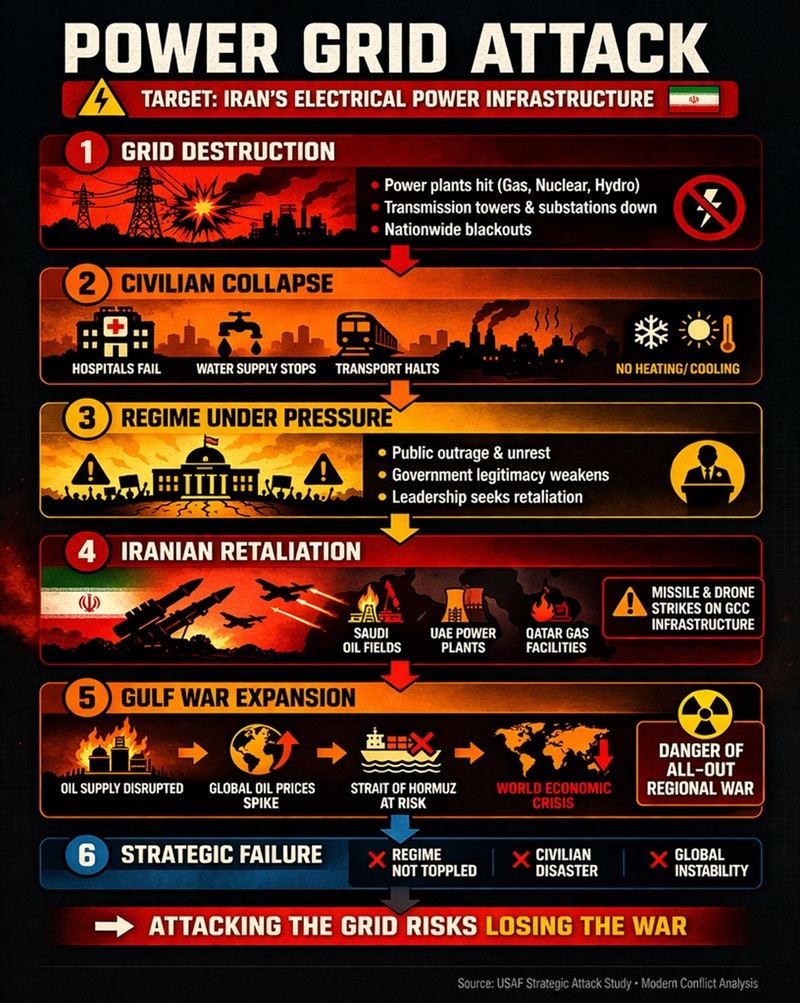
What is certain is that the loss of three F-15Es — followed by another drone shootdown — marks a serious development in the air campaign and may influence operational tempo in the coming days.