Saturday, April 11, 2026
Home Blog Page 25

China Warns of ‘Forceful Measures’ After U.S. Approves Record $11.1bn Arms Sale to Taiwan

0
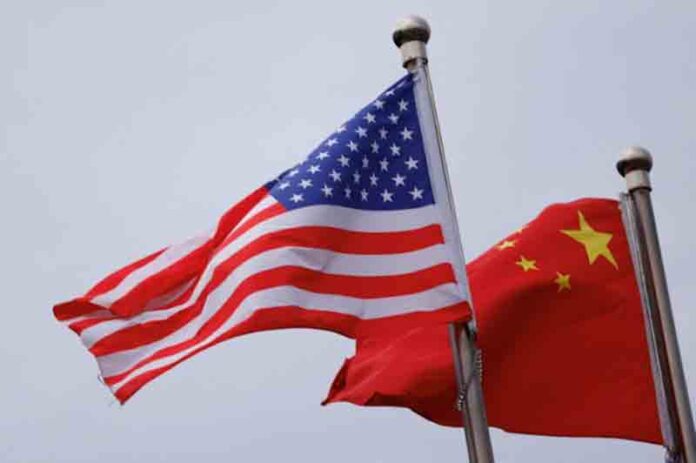
Chinese and U.S. flags, in Beijing.

China’s military said it will step up training and take “forceful measures” to safeguard national sovereignty after the United States approved a record $11.1 billion arms sales package to Taiwan, a move that has sharply escalated tensions across the Taiwan Strait.

In a statement on Friday, China’s Ministry of National Defense said it had lodged “stern representations” with Washington and urged the U.S. to immediately halt arms sales to Taiwan, accusing it of violating commitments not to support what Beijing calls “Taiwan independence forces.”

“The ‘Taiwan independence’ separatist forces, at the cost of the safety and well-being of Taiwan compatriots, are using the hard-earned money of ordinary people to enrich U.S. arms dealers,” the ministry said. It warned that Washington, by repeatedly “going back on its word,” was “bound to get burned itself.”

PLA Signals Heightened Readiness

The ministry said the People’s Liberation Army (PLA) would intensify training and combat preparedness, pledging to take firm action to defend China’s sovereignty and territorial integrity.

“The Chinese PLA will continue to strengthen training and combat readiness, take strong measures to resolutely thwart ‘Taiwan independence’ separatism and external interference,” the statement said, without detailing what specific steps might be taken.

U.S.–Taiwan Arms Deal

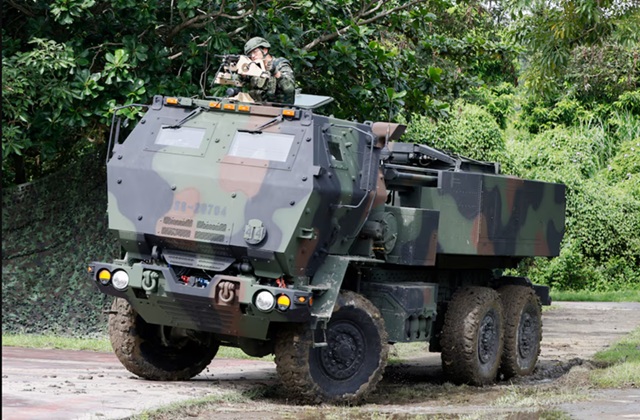
The U.S. arms package — the largest ever approved for Taiwan — includes HIMARS rocket systems, howitzers, Javelin anti-tank missiles, loitering munition drones and other military equipment. HIMARS systems, produced by Lockheed Martin, have been used extensively by Ukraine against Russian forces.

Washington maintains formal diplomatic relations with Beijing but has unofficial ties with Taiwan and is legally obligated under U.S. law to provide the island with defensive weapons. Such arms sales have long been a major source of friction between the U.S. and China.

Taiwan Rejects Beijing’s Claims

Taiwan’s democratically elected government rejects China’s claim of sovereignty, saying only the island’s people can determine their future. Beijing has refused repeated offers of dialogue with Taiwan’s President Lai Ching-te, labeling him a “separatist,” and has not ruled out the use of force to bring the island under its control.

China has in recent years intensified military drills, air and naval patrols, and diplomatic pressure aimed at Taiwan, while warning foreign powers against what it sees as interference in its internal affairs.

The latest U.S. arms sale is expected to further strain already tense U.S.–China relations and raise concerns about stability in the Taiwan Strait.
EU Agrees €90 Billion Loan for Ukraine’s Defence, Sidesteps Use of Frozen Russian Assets

0
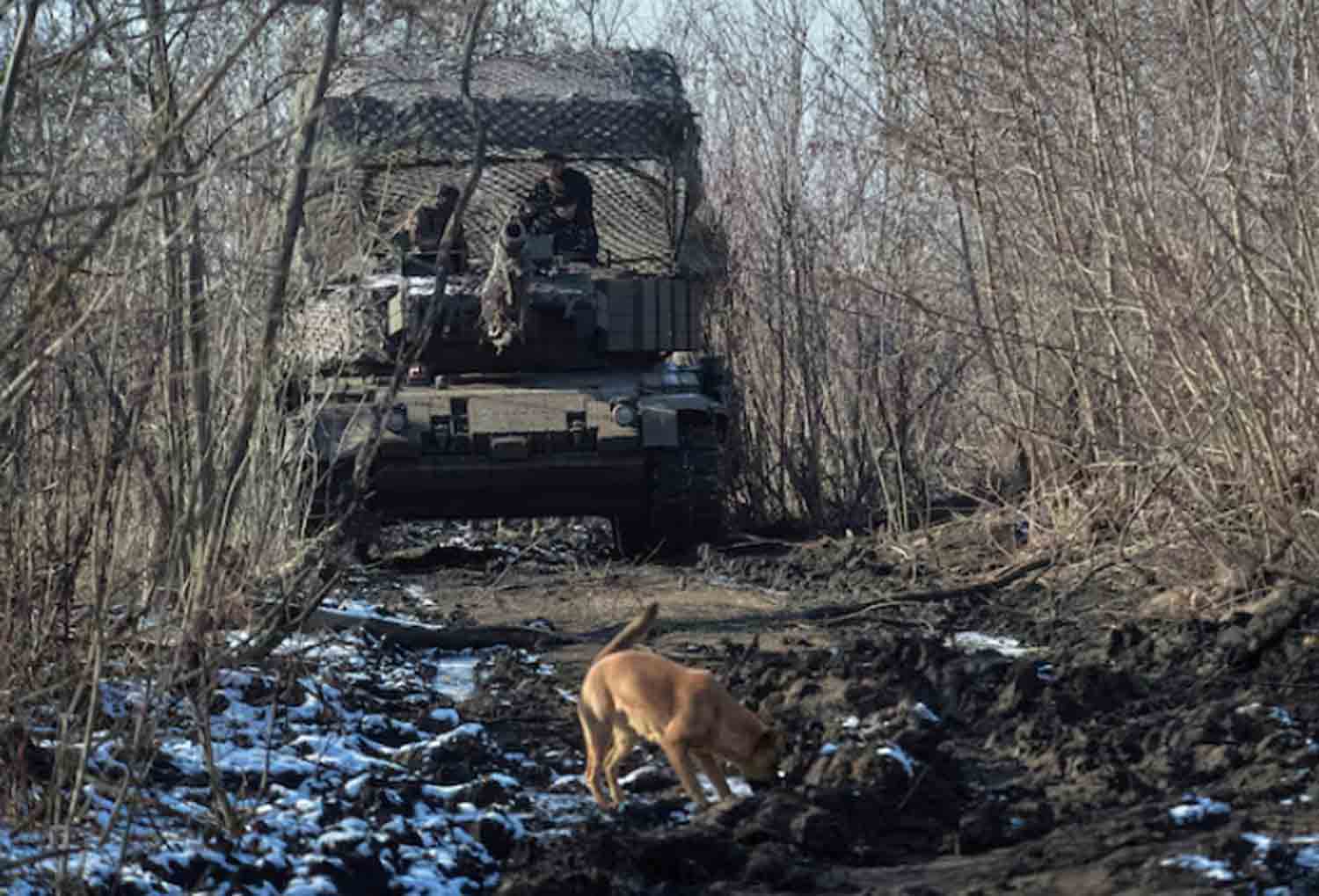
Servicemen of the 5th Separate Heavy Mechanised Brigade of the Ukrainian Armed Forces drive in a Leopard 1A5 tank, amid Russia's attack on Ukraine.

European Union leaders have agreed to borrow €90 billion ($105 billion) to provide loans to Ukraine for its defence against Russia over the next two years, opting for EU-backed borrowing rather than tapping frozen Russian sovereign assets amid political and legal divisions.

The decision was reached after overnight talks at an EU summit in Brussels on Friday, marking a compromise aimed at keeping Ukraine financially afloat while preserving unity within the bloc.

“Today we approved a decision to provide €90 billion to Ukraine,” European Council President Antonio Costa told reporters. “As a matter of urgency, we will provide a loan backed by the European Union budget.”

Russian Assets Remain Frozen

EU leaders reaffirmed that Russian state assets worth around €210 billion held within the bloc will remain frozen until Moscow pays war reparations to Ukraine. Should such payments ever materialise, Kyiv could then use the funds to repay the EU loan.

The leaders also instructed the European Commission to continue exploring a so-called reparations loan based on immobilised Russian assets, but acknowledged that the option is not viable for now.

The main obstacle is Belgium, where approximately €185 billion of the frozen Russian assets are held. Belgian officials have sought strong legal and financial guarantees to shield the country from potential Russian retaliation.

“There were so many questions on the reparations loan that we had to move to Plan B,” Belgian Prime Minister Bart De Wever said. “The EU avoided chaos and division and remained united.”

Hungary Drops Objections

Joint EU borrowing initially appeared unlikely because it requires unanimous approval and had been opposed by Hungary’s Prime Minister Viktor Orban, who maintains closer ties with Moscow.

However, Hungary, along with Slovakia and the Czech Republic, agreed not to block the plan after securing assurances that the scheme would not impose direct financial obligations on them.

“Orban got what he wanted: no reparations loan, and EU action without Hungary’s financial participation,” one EU diplomat said.

Urgency Over Ukraine Funding

The stakes were high for the EU, with officials warning that Ukraine could run out of money by the second quarter of next year without sustained European support — a scenario the bloc fears could tilt the war in Russia’s favour and increase the risk of broader instability in Europe.

“This is good news for Ukraine and bad news for Russia,” German Chancellor Friedrich Merz said. “That was our intention.”

Several leaders stressed that the decision was necessary not only to support Kyiv, but also to demonstrate Europe’s resolve after U.S. President Donald Trump recently criticised European allies as “weak.”

“We simply cannot afford to fail,” EU foreign policy chief Kaja Kallas said.

Zelenskiy Pushes for Asset Seizure

Ukrainian President Volodymyr Zelenskiy, who attended the summit, again urged the EU to go further by fully using frozen Russian assets to finance Ukraine’s defence.

“The decision to use Russian assets to defend against Russian aggression is one of the clearest and most morally justified decisions that could be made,” Zelenskiy said.

For now, EU leaders have chosen a pragmatic route, prioritising speed and unity over legal experimentation, while keeping the Russian asset option on the table for the future.

EU Defence Fund to Invest €1 Billion in 2026, Focusing on Hypersonic and Air Missile Defence

0

The European Defence Fund (EDF) plans to allocate €1 billion ($1.2 billion) for defence research and development in 2026, with the largest share of funding directed toward air and missile defence, including efforts to counter hypersonic glide vehicles, the European Commission said.

According to the EDF’s annual work programme published on Wednesday, €168 million has been earmarked specifically for hypersonic countermeasures and high-end endo-atmospheric interception, reflecting growing concern in Europe over next-generation missile threats.

Another major priority is ground combat, with €150 million allocated to research on future main battle tank (MBT) platforms and a multiple rocket launcher system.

Strengthening Europe’s Defence Base

Established in 2021, the EDF supports collaborative defence R&D among EU member states. Since its launch, the fund has invested nearly €4 billion across more than 200 projects, targeting capability gaps and complex technologies that individual countries would struggle to develop alone.

Notable EDF-backed initiatives include Odin’s Eye II, a satellite-based early-warning system, and multiple projects related to hypersonic defence.

“Europe must strengthen collaboration in defence, with the European Defence Fund acting as a key foundation for this effort,” said European Commissioner for Defence and Space Andrius Kubilius. “For the sixth time, we are investing significant resources to support research and development on major defence capabilities.”

Budget Priorities for 2026

The Commission said half of the EDF’s 2026 budget will be dedicated to major defence capabilities, including:

  • An EU endo-atmospheric interceptor
  • A future main battle tank
  • A multiple rocket launcher
  • Key technologies for next-generation combat aircraft

Around 25% of the budget will be allocated to future defence technologies, such as quantum-secured communications, artificial intelligence, and robotic and drone swarms.

Tanks, Interceptors and Hypersonic Defence

The EDF has set aside €125 million to develop next-generation MBT systems with improved survivability, enhanced firepower, reduced crew requirements and eventual unmanned operation. The Commission noted that Europe’s current tank fleets are aging, making new technologies essential to maintain a military edge.

A further €100 million will support high-end endo-atmospheric interception, advancing interceptor technologies to higher readiness levels and developing demonstrators covering airframes, propulsion and lethality.

In addition, the EDF will directly award an indicative €68 million, without a new call for proposals, to continue work on a hypersonic glide vehicle demonstrator. The programme, subject to EU secrecy rules, involves companies including MBDA, Airbus, Diehl, Hensoldt, Kongsberg, Indra Sistemas and Saab.

Naval and Aerospace Technologies

The 2026 work programme also includes €90 million to design and prototype medium-sized, semi-autonomous surface vessels for coastal defence, with adaptability for future naval warfare roles.

Additional funding — typically ranging from €20 million to €30 million per project — will support technologies such as:

  • A turbofan engine for unmanned “loyal wingman” aircraft
  • Radar systems to track hypersonic vehicles
  • Automated air-to-air refuelling
  • AI-enabled electronic warfare
  • Advanced multiple rocket launcher concepts

Challenges Ahead

While the EDF has helped reduce duplication and improve cross-border cooperation, an interim evaluation by the European Parliamentary Research Service published in October said the fund needs simplified procedures and closer alignment with national defence planning to maximise its impact.

The 2026 funding plan underscores the EU’s growing focus on high-end military technologies as Europe accelerates efforts to strengthen its defence posture amid an increasingly contested security environment.

Germany Approves €50 Billion in New Defense Projects as Military Spending Hits Record Levels

0
German Defence Minister Boris Pistorius attends a session of Germany's lower house of parliament, the Bundestag, in Berlin, Germany.

Germany has approved nearly €50 billion ($59 billion) in major defense procurement projects, marking a new milestone in the country’s rapid military rearmament following Russia’s invasion of Ukraine.

The approvals, cleared on Wednesday by the parliamentary budget committee, cover 30 major procurement projects and bring Germany’s total for 2025 to a record 103 large-scale defense projects worth €83 billion ($97.5 billion).

The latest decisions cap three years of unprecedented defense spending, which now exceeds the combined total of Germany’s military procurement over the previous eight years.

“We are serious when we say that we are equipping our Bundeswehr to be powerful and resilient, and doing so as quickly as possible,” German Defence Minister Boris Pistorius said after the committee meeting. “These decisions show that we are pulling together.”

Radar Satellites and Armored Vehicles

Among the most significant projects approved is the SPOCK tactical radar satellite system, designed to strengthen the Bundeswehr’s intelligence and reconnaissance capabilities. The system will provide all-weather, day-and-night radar imagery, enhanced by artificial intelligence to detect hostile military activity.

Developed through a joint venture between Rheinmetall and Finnish satellite firm Iceye, the system is intended to support Germany’s 45th Armored Brigade, which is being deployed in Lithuania as part of NATO’s reinforced eastern flank.

The German armed forces described SPOCK as a “key project” for improving military reconnaissance. The contract is valued at approximately €1.76 billion, with options that could raise the total above €2.7 billion by 2030, according to German media.

Puma Vehicles, Air Defense and Logistics

Lawmakers also approved expanded procurement of the Puma infantry fighting vehicle, Germany’s primary armored vehicle for mechanized infantry. The package includes increased vehicle numbers, multi-purpose ammunition capable of engaging air and ground targets, provisions for future upgrades, and new combat training simulators.

Additional approvals include modernization and expansion of the Patriot air defense system, increased missile stocks, and conversion kits for existing launchers. The committee also greenlit purchases of transport trucks, trailers, protected medical vehicles, and a range of reconnaissance, combat and support vehicles, including artillery and mortar systems.

Missiles, Torpedoes and Strategic Interceptors

Munitions accounted for a significant share of the approvals. Germany authorized additional IRIS-T SLM surface-to-air missiles, preparations for serial production of the TAURUS NEO long-range standoff missile for Eurofighter jets, Meteor air-to-air missiles, and torpedoes for the new U 212 CD submarine class.

Berlin also approved the purchase of additional launchers and interceptors for its Israeli-made Arrow system, designed to counter ballistic missiles outside the atmosphere.

Rearmament Despite Budget Constraints

The approvals come despite Germany operating under provisional budget rules, highlighting the streamlined procurement procedures introduced in recent years, Pistorius said.

Between 2023 and 2025, Germany approved 255 major defense projects worth €188.4 billion, compared with 215 projects totaling €109 billion between 2015 and 2022. Officials say the surge reflects Berlin’s accelerated push to rebuild military capabilities after decades of underinvestment.

Germany’s rearmament drive has become a cornerstone of NATO’s response to Russia’s war in Ukraine, with Berlin positioning itself as a central pillar of European defense.

U.S. Approves Record $11.1 Billion Arms Sale to Taiwan as China Steps Up Pressure

0
A High Mobility Artillery Rocket System (HIMARS) is on display at a park during Taiwan's annual Han Kuang military exercise in Taichung.

The United States has approved $11.1 billion in arms sales to Taiwan, marking the largest weapons package ever for the self-governed island as China intensifies military and diplomatic pressure against it.

The package, announced on Wednesday, is the second Taiwan arms sale under President Donald Trump’s current administration and comes amid heightened concerns in Washington and Taipei over Beijing’s growing military posture in the region.

According to Taiwan’s defence ministry, the proposed sales include eight major items, among them HIMARS rocket systems, howitzers, Javelin anti-tank missiles, Altius loitering munition drones, and spare parts for existing equipment.

“The United States continues to assist Taiwan in maintaining sufficient self-defence capabilities and in rapidly building strong deterrent power,” the ministry said, adding that the focus is on asymmetric warfare capabilities designed to counter a larger adversary.

Congressional Review and U.S. Rationale

The arms package has entered the U.S. Congressional notification phase, during which lawmakers can block or modify the sale, although Taiwan-related defence assistance traditionally enjoys broad bipartisan support.

In separate statements, the Pentagon said the sales advance U.S. national, economic and security interests by supporting Taiwan’s military modernisation and ensuring a “credible defensive capability.”

Washington has encouraged Taipei to prioritise mobile, survivable and cost-effective systems, including drones and precision rocket artillery, as part of a broader shift toward asymmetric defence.

Taiwan Welcomes Deal, Boosts Defence Spending

Taiwan’s presidential office welcomed the announcement, reiterating the island’s commitment to defence reform and resilience.

“Our country will continue to strengthen whole-of-society defence resilience and safeguard peace through strength,” presidential spokesperson Karen Kuo said, thanking Washington for its support.

President Lai Ching-te last month unveiled a $40 billion supplementary defence budget covering 2026–2033, declaring there was “no room for compromise on national security.”

Beijing Condemns Sale

China reacted angrily to the announcement, as it routinely does following U.S. arms sales to Taiwan.

Beijing’s foreign ministry said the deal “severely undermines peace and stability in the Taiwan Strait” and demanded an immediate halt to such transactions.

“By aiding ‘Taiwan independence’ with weapons, the U.S. side will only bring fire upon itself,” ministry spokesperson Guo Jiakun said. “Using Taiwan to contain China is absolutely doomed to fail.”

Strategic Context

Defence analysts say systems such as HIMARS, widely used by Ukraine against Russian forces, could play a critical role in repelling a potential amphibious invasion.

“This record package reflects both the growing threat from China and Washington’s demand that partners do more to secure their own defence,” said Rupert Hammond-Chambers, president of the U.S.–Taiwan Business Council.

The announcement follows an unannounced visit by Taiwan’s Foreign Minister Lin Chia-lung to the Washington area last week, according to sources familiar with the matter. Reuters was unable to confirm the agenda of the meetings, and Taiwan’s foreign ministry declined to comment.

Balancing Beijing and Taipei

While the United States maintains formal diplomatic relations with Beijing, it has long upheld unofficial ties with Taiwan and is legally obligated under U.S. law to provide the island with defensive arms.

Trump’s emphasis on deal-making and a planned visit to Chinese President Xi Jinping next year had sparked concerns in the region about U.S. commitment to Taiwan. However, U.S. officials have indicated that arms sales to Taipei are set to exceed levels from Trump’s first term as part of a broader deterrence strategy.

Washington’s newly released national security strategy states that the U.S. aims to deter conflict over Taiwan by maintaining “military overmatch” against China in the region — language welcomed by Taipei.

China considers Taiwan part of its territory, a claim the Taiwanese government firmly rejects.

Taliban’s Internal Divisions Are No Longer Hidden — And That’s Why the Emirate Is at Risk

0

For the first time since returning to power, the Afghan Taliban are speaking less like rulers and more like a movement trying to convince itself to stay together.

Across Afghanistan, senior Taliban leaders are repeating the same words with unusual urgency: unity, obedience, loyalty to the Amir, survival of the Islamic system. When power feels secure, such language is unnecessary. When it feels threatened, it becomes constant.

This shift tells us something important: the Islamic Emirate is entering its most vulnerable phase.

When Leaders Start Warning Their Own Ranks

In recent weeks, figures ranging from Mullah Abdul Ghani Baradar to Defence Minister Mullah Yaqoob and Higher Education Minister Neda Mohammad Nadeem have delivered near-identical messages. None focused on economic recovery or diplomacy. All focused on discipline.

That uniformity is revealing. It suggests the leadership is less concerned about foreign pressure than about fractures within its own ranks.

The turning point came with unusually blunt remarks by Interior Minister Sirajuddin Haqqani, who openly criticised governance by fear and intimidation, warning that coercion cannot sustain a state. In Taliban political language, this was extraordinary.

The message was clear — and so was the reaction.

Kandahar Pushes Back

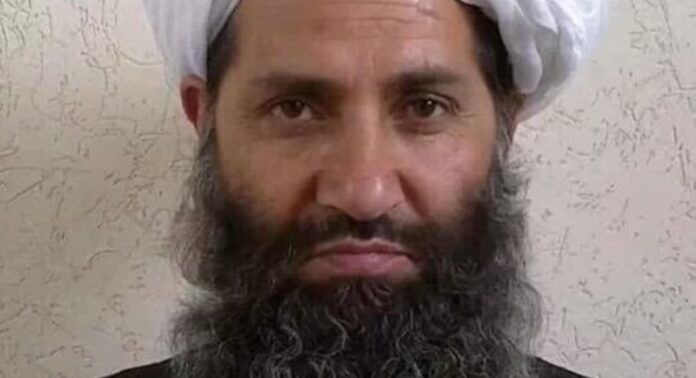
Soon after Haqqani’s remarks, senior figures close to Supreme Leader Haibatullah Akhundzada responded publicly. They warned against “distrust” and “division,” stressing that the Emirate’s survival depends on unity.

Nadeem, one of Akhundzada’s closest allies, repeated this message several times in a single week. That repetition was not accidental. It was defensive.

Former deputy foreign minister Abbas Stanikzai went even further, openly criticising the leadership’s direction. His departure from Afghanistan shortly afterward sent a signal: dissent has limits — and those limits are tightening.

What the Taliban Are Really Arguing About

The Taliban insist ideological unity remains intact. That may be true. But ideology is not the real battleground.

The internal disagreements revolve around three practical questions:

  • How rigid should social policies be, especially on women and education?
  • Can the Emirate survive permanent international isolation?
  • How much power should be concentrated in Kandahar — and in one man?

These are not minor differences. They go to the heart of whether the Taliban want to rule indefinitely or merely dominate temporarily.

Isolation Is Weakening the System

The Taliban may claim sovereignty, but isolation has consequences they cannot ignore.

Afghanistan’s economy is collapsing. Aid is conditional. Recognition remains distant. Sanctions limit basic governance. This does not just hurt ordinary Afghans — it erodes the state’s capacity to function.

Isolation also creates space for external actors to hedge their bets by supporting armed opposition or pressuring the Taliban indirectly.

Unity, in this context, is no longer a virtue. It is a survival strategy.

No Neighbour Is Truly Comfortable

Despite diplomatic engagement, no major regional power genuinely trusts the current Taliban system.

  • Pakistan faces escalating militant violence and is openly discussing political change in Kabul.
  • Iran has warned against exclusionary rule and quietly backed Taliban opponents.
  • Russia and China fear ISIS expansion, militant flows and regional instability.

Even India’s limited engagement is cautious and interest-based, not ideological.

The Taliban are increasingly surrounded by sceptics — not allies.

Why Loyalty Campaigns Signal Weakness

The Taliban’s turn toward clerics, mosques and public calls for renewed allegiance reflects a familiar authoritarian reflex. When institutions are weak, regimes rely on loyalty rituals.

These campaigns are meant to project strength. In reality, they expose anxiety.

Repeated demands for obedience suggest that obedience is no longer guaranteed.

Two Existential Dangers

The Emirate now faces two interconnected risks.

First, the risk of losing effective control as economic failure, regional hostility and internal dissatisfaction converge.

Second, the risk of leadership rupture, as Akhundzada’s rigid authority increasingly appears to some insiders as an obstacle rather than an anchor.

For his supporters, enforcing loyalty is the cheapest way to preserve the system.
For critics, leadership change appears the least costly path to adaptation.

The Moment Before the Shift

The Taliban are not collapsing. Not yet.

But they are no longer confident. Their unity is enforced, not organic. Their authority is asserted, not negotiated. Their legitimacy rests on fear, not consent.

History shows that such systems rarely break suddenly — but when they do, the break is decisive.

Afghanistan is once again approaching a turning point.
The only uncertainty is whether change will come through reform — or rupture.


Pakistan, Libya Explore Expanded Military Cooperation as Army Chief Visits Tripoli

0
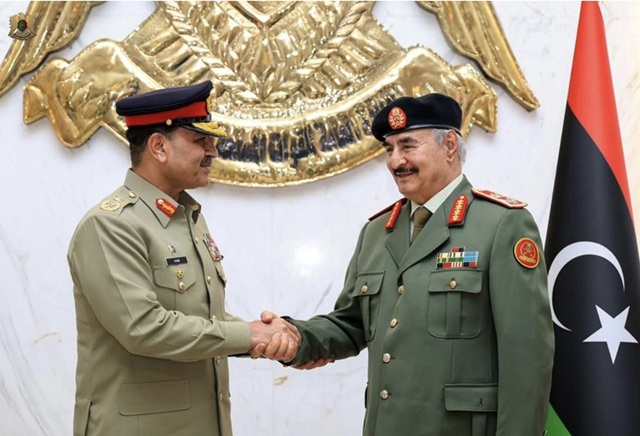
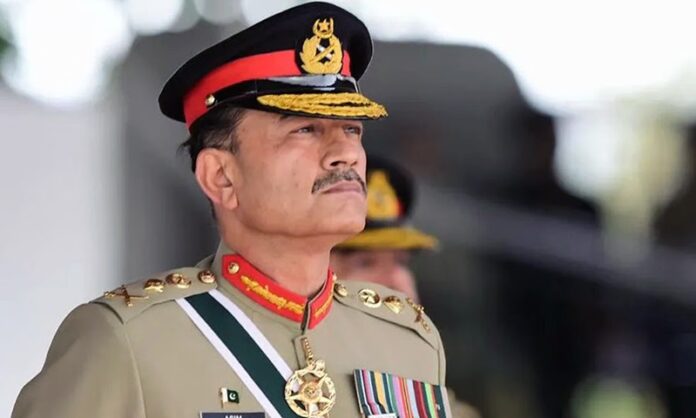
Field Marshal Syed Asim Munir, COAS & CDF, Pakistan, who is on a official visit to Libya, called on Field Marshal Khalifa Belqasim Haftar, Commander-in-Chief of the Libyan Arab Armed Forces.

Pakistan’s Chief of Army Staff and Chief of Defence Forces, Field Marshal Syed Asim Munir, held high-level talks with Libya’s top military leadership during an official visit to the North African country, focusing on regional security, counter-terrorism and defence cooperation, according to a statement issued by the Inter-Services Public Relations (ISPR).

During the visit, Field Marshal Munir called on Field Marshal Khalifa Belqasim Haftar, Commander-in-Chief of the Libyan Arab Armed Forces, and Lieutenant General Saddam Khalifa Haftar, Deputy Commander-in-Chief, the military’s media wing said.

Upon arrival, the Pakistan Army chief was accorded a guard of honour by a smartly turned-out contingent of the Libyan Armed Forces, reflecting the importance attached to the visit.

Focus on Security and Military Cooperation

According to ISPR, the meeting covered matters of mutual interest, evolving regional and global security dynamics, and avenues for enhancing bilateral defence and military-to-military cooperation.

Both sides emphasised the need to strengthen collaboration in key areas, including:

  • Professional military training
  • Capacity building and skill development
  • Counter-terrorism and security cooperation

The discussions come at a time when Libya continues to face complex security challenges, while Pakistan remains actively engaged in international efforts to combat terrorism and promote regional stability.

Commitment to Stronger Defence Ties

Field Marshal Asim Munir reaffirmed Pakistan’s commitment to expanding defence relations with Libya, stressing that cooperation would be pursued on the basis of shared interests, mutual respect and professional engagement.

He underscored Pakistan Armed Forces’ experience in counter-terrorism operations and institutional training, areas in which Pakistan has long provided support to friendly countries through military training programmes and advisory roles.

Field Marshal Khalifa Haftar, in turn, praised the professionalism and operational experience of the Pakistan Armed Forces and expressed Libya’s desire to further deepen defence cooperation between the two countries.

Senior Pakistani Officials Present

The meeting was also attended by Major General Faisal Naseer, Director General of Counter-Intelligence, highlighting the strategic nature of the discussions.

Broader Diplomatic Context

Pakistan and Libya have traditionally maintained cordial relations, with defence cooperation forming an important pillar of bilateral engagement. Defence analysts say the visit signals Pakistan’s continued outreach to countries in Africa and the Middle East, aimed at strengthening military diplomacy, sharing operational expertise, and contributing to regional peace and stability.

Poland Declares First Patriot Air Defense Unit Fully Operational

0
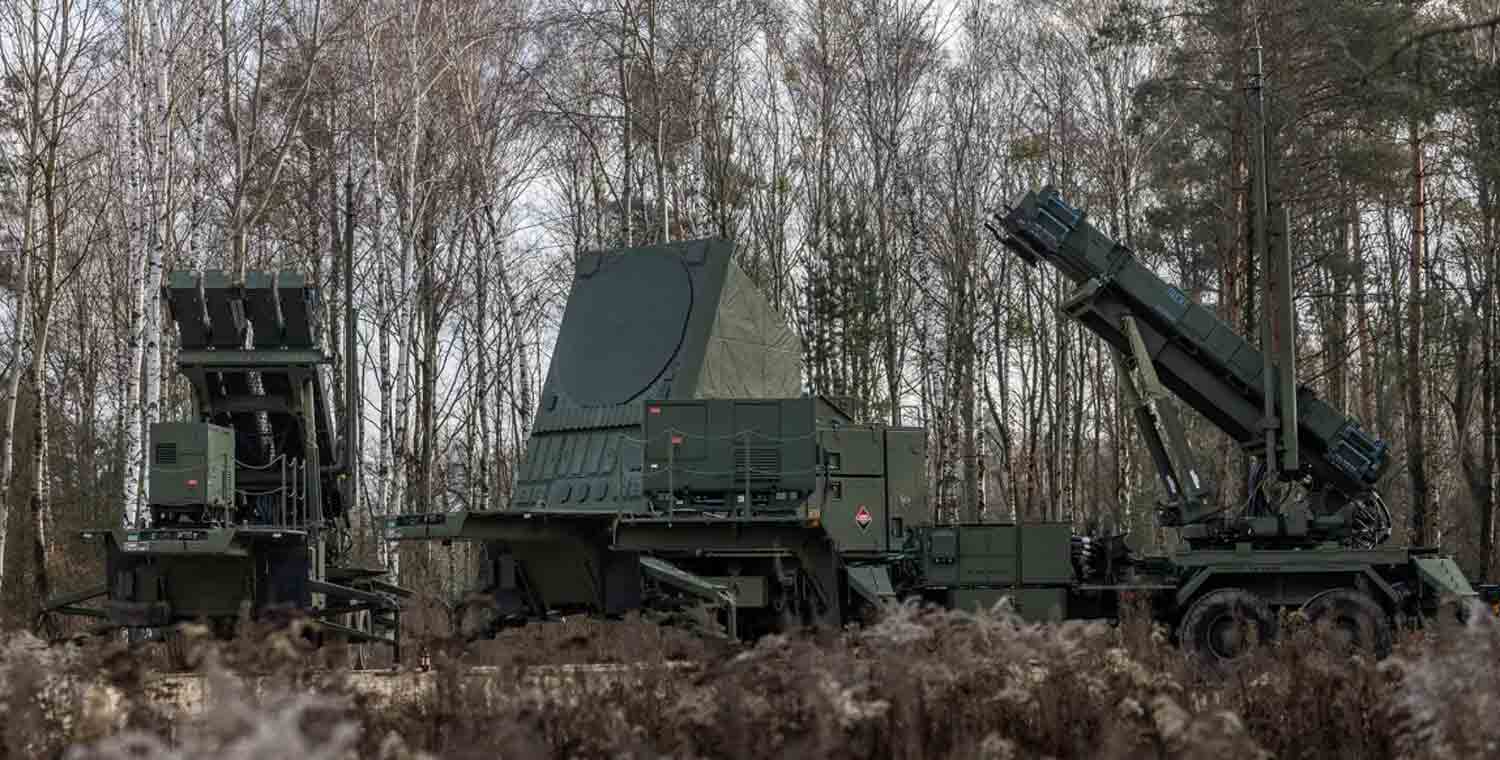
Surface-to-air missile launchers of the Patriot system of 37th Air Defense Missile Squadron from the 3rd Warsaw Air Defense Missile Brigade stand during a demonstration training of the IOC Initial Operational Capability of the anti-aircraft and anti-missile system and its integration into a IBCS command system, Sochaczew.

Poland has declared a major milestone in its national air and missile defense modernisation after the 37th Air Defense Missile Squadron reached Full Operational Capability (FOC) under the country’s flagship Wisła air and missile defense program, the Ministry of National Defense announced.

The squadron, part of the 3rd Warsaw Air Defense Missile Brigade, becomes the first unit to complete the initial phase of Wisła, marking a significant step toward building a fully integrated, layered air defense network for the country.

According to the defense ministry, the declaration of full operational capability followed comprehensive evaluations conducted in December, which focused on combat readiness, command-and-control procedures and the squadron’s ability to conduct real-world missions. During the assessments, key combat systems related to command, control and engagement were tested.

Patriot Systems Enter Active Service

Deputy Prime Minister and Minister of National Defense Władysław Kosiniak-Kamysz described the development as a major boost to Poland’s security, confirming that U.S.-made Patriot air defense systems are now fully operational within the Wisła framework.

“This is a good day for Poland’s security,” Kosiniak-Kamysz said. “The 37th Air Defense Missile Squadron has achieved full operational capability. This is the moment when the Wisła system — the Patriot launchers — begins real service in integrated air and missile defense.”

He emphasized that while advanced equipment is critical, operational effectiveness ultimately depends on trained personnel. “Equipment alone does not fight. The most important element is the soldier and their skills,” he said, thanking troops stationed in Sochaczew, where the squadron is based.

IBCS Integration and Future Phases

The defense minister highlighted that Wisła is designed as a networked system rather than a standalone capability, with command and control provided by the Integrated Battle Command System (IBCS).

“Further phases of the Wisła program are ahead of us,” Kosiniak-Kamysz said. “IBCS is the brain that connects sensors and effectors — from radars that collect data, through decision-making, to selecting which launchers should engage, whether Patriot systems or other platforms, including those linked to the F-35 program.”

In a later statement, he described the achievement as a historic moment for Poland’s air defense architecture.

“This is the implementation of the Wisła program — integrated air defense of the Polish state: missile defense, air defense and counter-drone defense,” he said.

Foundation of Poland’s Layered Air Defense

Wisła is Poland’s primary effort to establish a layered air and missile defense system capable of countering aircraft, ballistic missiles, cruise missiles and unmanned aerial threats. Its first phase centers on Patriot interceptors integrated with IBCS to enable sensor-to-shooter connectivity across multiple platforms.

The 37th squadron is among the first Polish units certified to conduct operational missions under this framework, moving beyond training or limited readiness status.

Polish officials have repeatedly stressed that Wisła will continue to expand in future phases, with additional sensors, interceptors and integration with other systems — including fifth-generation F-35 fighter jets — to create a unified national air defense picture.

Regional Security Context

The announcement comes as Poland accelerates military modernisation in response to heightened security concerns in Eastern Europe, driven by Russia’s war against Ukraine and the growing threat posed by missiles and drones across the region.

Warsaw has positioned Wisła as a cornerstone of its broader defense strategy, strengthening deterrence on NATO’s eastern flank.

Türkiye Weighs Returning Russian S-400s to Moscow in Bid to Repair U.S. Ties and Rejoin F-35 Programme

0
S-400 air defense systems

Türkiye is exploring the possibility of returning its Russian-made S-400 “Triumf” air defence systems to Moscow, a move that could mark one of the most significant strategic reversals by a NATO member since the Cold War and potentially end years of strained relations with the United States.

According to a Bloomberg report cited by defence analysts, Ankara’s reassessment of the controversial system reflects an intensified effort to normalise defence ties with Washington, lift U.S. sanctions and regain access to the F-35 Lightning II fighter jet programme, from which Türkiye was expelled in 2019 .

From Procurement Dispute to Strategic Test

Türkiye’s purchase of the S-400 in 2017 for $2.5 billion made it the first NATO country to acquire a high-end Russian air defence system. Ankara justified the decision by citing stalled negotiations with Washington over the Patriot missile system and restrictive technology-transfer terms.

However, the acquisition triggered a severe backlash from the United States, which argued the S-400 was incompatible with NATO systems and posed a security risk to allied platforms, particularly the F-35.

Washington responded by expelling Türkiye from the F-35 programme, imposing sanctions under the Countering America’s Adversaries Through Sanctions Act (CAATSA), and cutting Turkish defence firms out of the global F-35 supply chain.

Why the S-400 May Now Be a Liability

While Türkiye never fully operationalised the S-400 systems and instead kept them in storage, U.S. officials repeatedly insisted that partial measures were insufficient. Washington has made clear that full divestment of the system is the only path toward restoring defence cooperation.

U.S. Ambassador to Türkiye Tom Barrack recently reiterated that position, saying Ankara must “no longer operate or possess the S-400 system” to re-enter the F-35 programme.

Analysts say the growing importance of integrated digital warfare — based on stealth aircraft, sensor fusion and alliance-wide data sharing — has reduced the standalone military value of the S-400 while increasing its political and strategic cost.

Financial and Industrial Stakes

Türkiye’s exclusion from the F-35 programme has left a widening capability gap in stealth-enabled intelligence, surveillance and strike operations, while also damaging its defence-industrial ambitions.

Before its removal, Turkish firms were producing hundreds of critical F-35 components, a role worth billions of dollars over the programme’s lifetime.

Sanctions have also complicated Türkiye’s indigenous fighter project, KAAN, by limiting access to Western engines, avionics and advanced materials.

Diplomacy with Washington — and Moscow

President Recep Tayyip Erdogan reportedly raised the possibility of returning the S-400 during talks with Russian President Vladimir Putin in December, though Moscow has publicly denied receiving a formal request.

Kremlin spokesman Dmitry Peskov said Russia-Türkiye relations remain strong, while acknowledging unresolved issues.

Ankara is also reportedly seeking compensation for the S-400s, potentially through offsets tied to energy imports from Russia — a sensitive issue given Türkiye’s reliance on Russian oil and gas.

A Defining Choice for Türkiye

Strategically, abandoning the S-400 would signal a decisive pivot back toward NATO interoperability at a time of heightened tensions with Russia and instability across the Middle East and Eastern Europe.

As NATO’s second-largest military, Türkiye’s alignment choices carry outsized importance for alliance cohesion, particularly along its southern and southeastern flanks.

However, domestic resistance remains strong. Turkish officials have previously described the S-400 as a symbol of strategic autonomy, and some military sources insist that transferring the system is unacceptable.

What Comes Next

As 2026 approaches, the outcome of the S-400 dispute will shape not only Türkiye’s defence posture, but also the future of U.S.-Türkiye relations, NATO unity and Ankara’s access to next-generation military technology.

For Türkiye, the potential reward is clear: restored ties with Washington, re-entry into the world’s most advanced combat aircraft ecosystem, and renewed credibility within the Western security architecture.

The cost may be the abandonment of a once-defiant symbol of strategic independence — and a lasting recalibration of Türkiye’s geopolitical course.

Poland to Resume Anti-Personnel Mine Production, Citing Russia Threat and Border Security

0

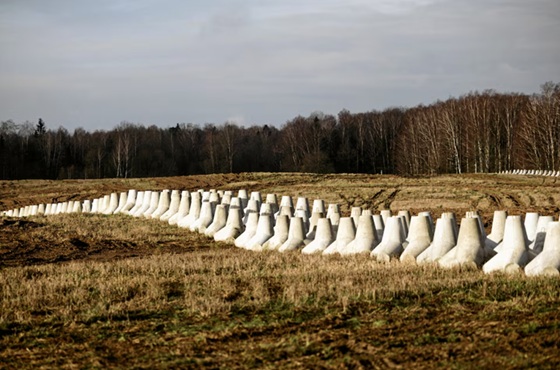
Poland has decided to resume the production of anti-personnel landmines for the first time since the Cold War, with plans to deploy them along its eastern borders and potentially export them to Ukraine, Deputy Defence Minister Pawel Zalewski said.

The move comes as part of a broader regional shift, with nearly all European Union and NATO countries bordering Russia — except Norway — announcing plans to withdraw from the 1997 Ottawa Convention, which bans the use, production and export of anti-personnel mines.

Poland aims to use the weapons to reinforce its borders with Belarus and Russia’s Kaliningrad exclave under a major defensive initiative known as the “East Shield” programme.

“We are interested in large quantities as soon as possible,” Zalewski said.

Formal Decision Confirmed

Asked whether production could begin as early as next year, once Poland completes its withdrawal from the Ottawa Convention, Zalewski said he hoped it would.

“I would very much like that… We have such needs,” he said.

Poland began the formal withdrawal process from the treaty in August, having previously said production could resume if required. Zalewski’s remarks mark the first explicit confirmation from Warsaw that the decision has now been taken.

According to the Landmine and Cluster Munitions Monitor, Poland informed the United Nations in 1995 that it had halted the production of anti-personnel mines in the mid-1980s and had ceased exports.

Millions of Mines Planned

Belma, a state-owned defence manufacturer that already supplies the Polish armed forces with various types of mines, said the East Shield programme could see Poland equipped with millions of landmines to secure its roughly 800-kilometre (500-mile) eastern border.

“We are preparing for Polish demand to amount to 5–6 million mines of all types,” Belma’s chief executive, Jaroslaw Zakrzewski, told Reuters.

While the defence ministry has not yet placed a formal order, Zakrzewski said Belma could scale up production to 1.2 million mines annually starting next year, compared with its current output of around 100,000 mines per year.

Ukraine and Regional Demand

Zalewski said any decision to supply mines to Ukraine would depend on Poland’s production capacity, but stressed Warsaw’s strategic priorities.

“Our starting point is our own needs,” he said. “But for us Ukraine is absolutely a priority, because the European and Polish security line is on the Russia-Ukraine front.”

Belma’s CEO said exports to Ukraine were feasible and added that several NATO countries bordering Russia — including the Baltic states — had already expressed interest in purchasing anti-personnel mines.

Poland’s own defence requirements would take precedence, he said, but surplus production could be supplied to regional allies.

Regional Shift on Landmines

Earlier this year, Lithuania and Finland said they expected to begin producing anti-personnel mines in 2026, citing heightened security concerns following Russia’s full-scale invasion of Ukraine in 2022.

Latvia and Estonia have also announced their withdrawal from the Ottawa Convention, though neither has formally committed to production. Latvian officials say manufacturing could begin quickly if required, while Estonia has described it as a future option.

According to Poland’s foreign ministry, mine production could legally begin once the treaty’s six-month withdrawal period ends on February 20, 2026.

Ukraine has also announced its withdrawal from the Ottawa Convention, arguing that it needs greater freedom to defend itself against Russia, which is not a party to the treaty. Both Kyiv and Moscow have accused each other of using anti-personnel mines during the war.

Other major powers that have never signed the treaty include the United States and China.

Pakistan Navy Launches Fourth Hangor-Class Submarine ‘Ghazi’ in China

0

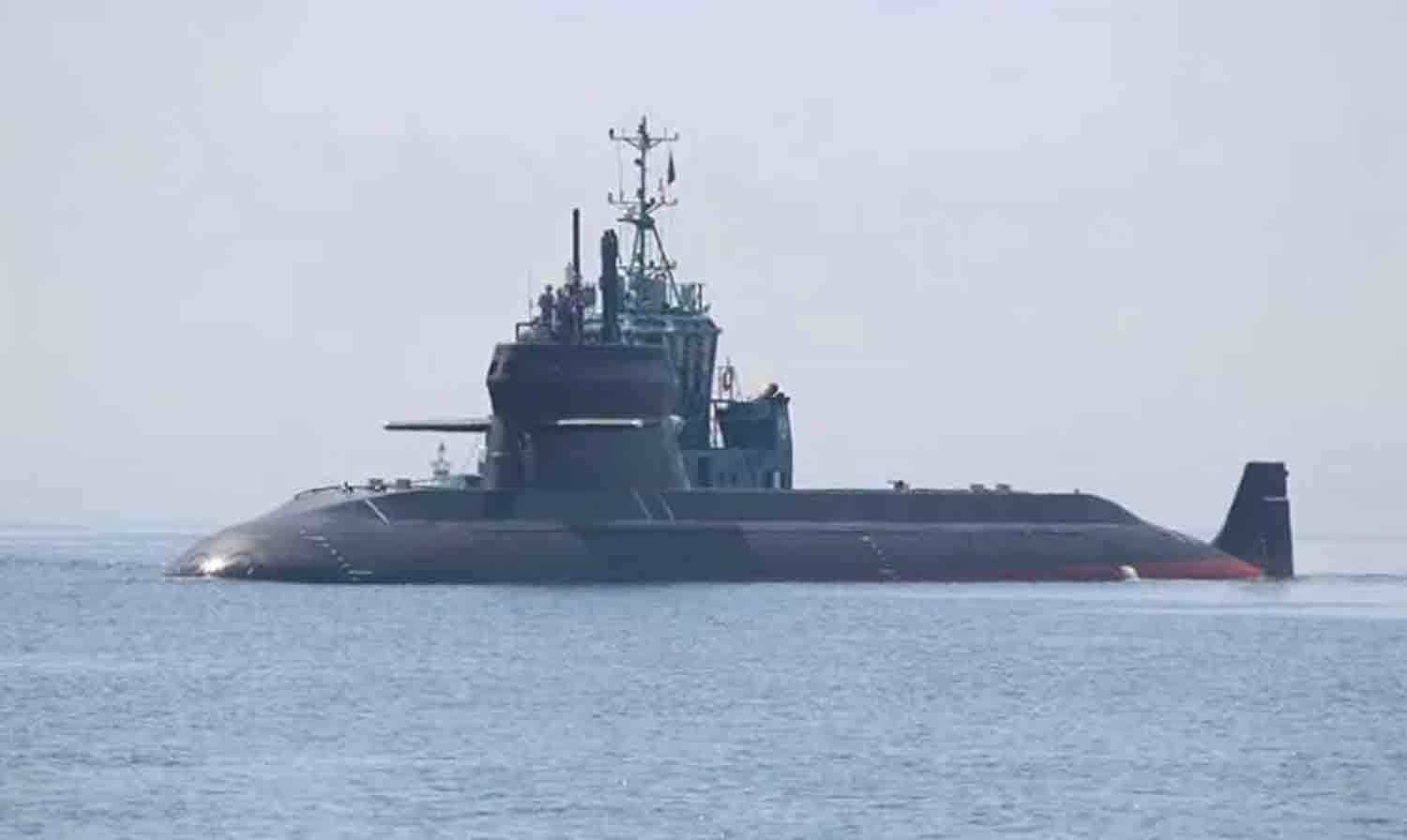
The Pakistan Navy on Tuesday launched its fourth Hangor-class submarine, PNS Ghazi, at the Shuangliu Base in Wuhan, China, marking another major milestone in Pakistan’s largest-ever naval modernisation programme.

With the launch of Ghazi, all four Hangor-class submarines being constructed in China have now entered the phase of rigorous sea trials and are in the final stages before their scheduled induction into the Pakistan Navy, according to a statement issued by the Inter-Services Public Relations (ISPR).

The Hangor-class submarine programme is part of a landmark defence agreement between Pakistan and China for the acquisition of eight advanced submarines, aimed at significantly enhancing Pakistan’s undersea warfare capabilities.

Major Naval Modernisation Project

Under the agreement, four submarines are being built in China, while the remaining four will be constructed in Pakistan at Karachi Shipyard and Engineering Works Limited (KS&EW) under a Transfer of Technology (ToT) arrangement. Defence analysts say the programme represents a critical step in strengthening Pakistan’s indigenous shipbuilding capacity and long-term self-reliance in naval defence.

Once inducted, the Hangor-class submarines will form the backbone of Pakistan Navy’s future undersea fleet, gradually replacing older platforms and expanding operational reach in the Arabian Sea and beyond.

Advanced Capabilities

According to ISPR, the Hangor-class submarines will be equipped with state-of-the-art weapons and sensors, enabling them to engage surface and subsurface targets at standoff ranges. The submarines are designed to conduct a wide spectrum of missions, including intelligence gathering, sea denial, anti-surface and anti-submarine warfare, and strategic deterrence.

Naval experts note that the addition of these submarines will substantially enhance Pakistan’s second-strike capability and improve its ability to safeguard sea lines of communication in a region witnessing growing maritime competition.

Regional Security and Cooperation

ISPR said the Hangor-class submarines will play a pivotal role in maintaining peace and stability in the region, underscoring Pakistan Navy’s emphasis on credible deterrence and maritime security.

The launching ceremony in Wuhan was attended by senior military and government officials from Pakistan and China, reflecting the deepening defence and strategic cooperation between the two countries.

Pakistan and China have maintained a long-standing naval partnership, encompassing warship construction, submarine technology, training, and joint maritime exercises. The Hangor programme is widely seen as one of the most significant manifestations of this cooperation.

Next Steps

Following the completion of sea trials, the submarines will undergo final inspections and acceptance procedures before being formally handed over to Pakistan. Construction of the remaining four submarines at KS&EW is progressing under Chinese technical support, with delivery expected in phases over the coming years.

The induction of the Hangor-class submarines is expected to significantly strengthen Pakistan Navy’s operational readiness and reinforce its role as a key maritime security provider in the Indian Ocean region.

Former Bulgarian Minister Emerges as Contender to Lead Trump’s Gaza ‘Board of Peace’

0
United Nations special envoy Nickolay Mladenov speaks during a press conference in Jerusalem, on 25 June 2020

Nickolay Mladenov, a former Bulgarian foreign and defence minister who later served as the United Nations’ top envoy for Middle East peace, is emerging as a leading contender to take on a senior role in Gaza under U.S. President Donald Trump’s proposed postwar framework, according to officials familiar with the discussions.

Mladenov’s name is circulating in Washington as a potential top official working on behalf of Trump’s so-called “Board of Peace,” a body expected to oversee governance and reconstruction in Gaza during a transition period. His candidacy has gained traction after fierce opposition forced the United States and Israel to look beyond former British prime minister Tony Blair, whose name triggered widespread backlash .

The contrast is striking. While Bulgaria has been rocked by protests over corruption and a cost-of-living crisis, Mladenov has been operating from Abu Dhabi, where he heads the Anwar Gargash Diplomatic Academy and has been involved in high-level diplomacy linking Europe, the Gulf and the Middle East.

A Familiar Figure in Middle East Diplomacy

Mladenov, 53, built a reputation as a pragmatic interlocutor during nearly six years as the UN special coordinator for the Middle East peace process, a post he held until 2021. In that role, he was unusually well regarded by all sides, including Israel, the Palestinian Authority and even Hamas.

“He has good knowledge of the region and good relations with almost everyone,” one Arab official who worked with him during that period told Middle East Eye.

Mladenov himself has said his Balkan background helped shape his approach. In a 2021 interview, he noted that the Balkans’ history of shifting borders, ethnic conflict and population exchanges gave him a deeper understanding of why the Israeli-Palestinian conflict could not be solved by simple territorial lines.

From Sofia to the Gulf

Born in 1972 into a family connected to Bulgaria’s communist-era elite, Mladenov reinvented himself politically after the fall of communism, becoming an advocate for European integration. He went on to serve as Bulgaria’s defence minister and later foreign minister, as well as a member of the European Parliament.

After leaving government, he transitioned to international diplomacy and later to the Gulf, joining a growing cohort of former Western and European officials recruited by wealthy Middle Eastern states to help shape policy, diplomacy and strategic messaging.

His career has not been without controversy. Mladenov appeared in the 2021 Pandora Papers, which revealed he had set up an offshore company in the Seychelles in 2013. He has said the company was never active and was created before he joined the UN.

UAE Ties and U.S. Calculations

Western officials say Mladenov’s close ties to the United Arab Emirates — and by extension Israel — are a key factor behind his consideration for the Gaza role.

“What matters is not the individual, but who is really in control of the process,” one Western official told Middle East Eye, adding that whoever is appointed is likely to face intense criticism.

Mladenov has also cultivated strong relations with Jared Kushner, Trump’s son-in-law, during negotiations over the 2020 Abraham Accords, which normalised relations between Israel and several Arab states, including the UAE. Kushner later said the administration relied heavily on Mladenov’s advice during those talks.

Mladenov has defended the accords, arguing they helped prevent Israel from formally annexing the occupied West Bank at the time.

Gaza Plan Still Stalled

Trump has touted progress on Gaza following a ceasefire brokered by U.S. envoys in October, but his administration’s broader 20-point plan for the territory has stalled. Despite the truce, hundreds of Palestinians have been killed in Israeli strikes that Gaza authorities say violate the ceasefire.

While the UN Security Council has approved a mandate for an international stabilisation force in Gaza, Arab and Muslim countries expected to contribute troops remain reluctant, fearing entanglement between Hamas — which remains armed — and Israeli forces occupying large parts of the enclave.

Among Gulf states, the UAE has emerged as the largest donor to Gaza, while Saudi Arabia and Qatar have distanced themselves from reconstruction plans absent a clear political settlement.

If appointed, Mladenov would likely act as a bridge between Washington, Gulf capitals and Palestinian technocrats on the ground — a role that underscores how postwar planning for Gaza is increasingly being shaped outside traditional multilateral frameworks.

Gaza Mission Dilemma: Pakistan Weighs U.S. Pressure Against Domestic Backlash

0

Pakistan’s most powerful military chief in decades is facing a defining test of his newly consolidated authority as the United States presses Islamabad to contribute troops to a proposed Gaza stabilisation force — a move analysts warn could trigger serious domestic backlash.

Field Marshal Asim Munir is expected to travel to Washington in the coming weeks to meet U.S. President Donald Trump, marking their third meeting in six months, according to two sources familiar with the matter. The talks are expected to focus heavily on Washington’s plans for a post-war security arrangement in Gaza, one of the sources told Reuters.

President Trump’s 20-point Gaza plan envisages a multinational force drawn largely from Muslim countries to oversee a transition period focused on reconstruction and economic recovery in the Palestinian territory, devastated by more than two years of Israeli military operations.

Many countries remain cautious about the proposal, which includes efforts to demilitarise Hamas. Analysts say such a mission could entangle participating states in renewed conflict while inflaming pro-Palestinian and anti-Israeli sentiment at home.

Balancing Washington and Domestic Politics

Munir has cultivated unusually close ties with Trump as part of an effort to repair years of strained relations between Washington and Islamabad. In June, the U.S. president hosted Munir for a private lunch at the White House — the first time a U.S. leader has received a Pakistani army chief without civilian officials present.

“Not contributing could annoy Trump, which is no small matter for a Pakistani state keen to remain in his good graces — especially to secure U.S. investment and security assistance,” said Michael Kugelman, senior fellow for South Asia at the Atlantic Council.

Pakistan, the world’s only Muslim-majority nuclear-armed state, maintains a battle-hardened military that has fought three wars with India and is currently engaged in counter-insurgency operations against Islamist militants it says are operating from neighbouring Afghanistan.

“There is greater pressure on Munir to deliver his capacity,” said defence analyst and author Ayesha Siddiqa, noting Pakistan’s military reach and experience.

Pakistan’s military, foreign office and information ministry did not respond to Reuters’ requests for comment. The White House also declined to comment.

Foreign Minister Ishaq Dar said last month Pakistan could consider peacekeeping contributions, but stressed that disarming Hamas “is not our job.”

Unprecedented Power, High Stakes

Earlier this month, Munir was formally appointed chief of Pakistan’s defence forces, placing the army, navy and air force under his command. He also received an extension through 2030 and will retain the rank of field marshal for life.

Under constitutional amendments passed by Pakistan’s civilian government last month, Munir now also enjoys lifetime immunity from criminal prosecution.

“Few people in Pakistan enjoy the luxury of being able to take risks more than Munir,” Kugelman said. “He has unbridled power, now constitutionally protected.”

Risk of Blowback at Home

In recent weeks, Munir has held meetings with military and civilian leaders from Indonesia, Malaysia, Saudi Arabia, Turkey, Jordan, Egypt and Qatar, according to military statements. Analysts believe these discussions are linked to consultations over the Gaza stabilisation force.

However, analysts say domestic opposition poses the greatest risk. Pakistan’s Islamist parties, deeply hostile to both the U.S. and Israel, retain the ability to mobilise large street protests.

A hard-line Islamist group known for violent protests over blasphemy laws was banned in October, with authorities arresting its leaders and more than 1,500 supporters. While the organisation has been outlawed, officials acknowledge its ideology still resonates.

Meanwhile, supporters of jailed former prime minister Imran Khan — whose party won the most seats in the 2024 elections — also remain strongly opposed to Munir.

“If things escalate once the Gaza force is on the ground, problems will emerge quickly,” said Abdul Basit, senior associate fellow at Singapore’s S. Rajaratnam School of International Studies.

“People will say Asim Munir is doing Israel’s bidding. It would be naïve not to see that reaction coming.”

Explainer: What Is Happening in South Yemen — and Why It Matters

0
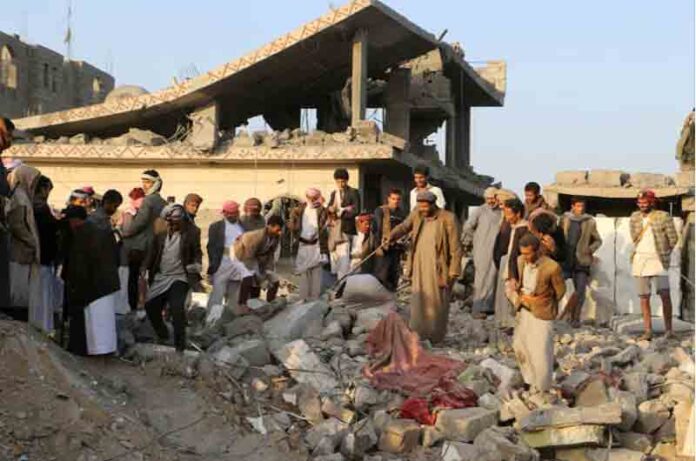
People gather on the rubble of a house hit by a U.S. strike in Saada, Yemen

What Is the Latest Development in Yemen?

Yemen’s already fractured war has entered a new phase after fighters aligned with the Southern Transitional Council (STC) seized large parts of Hadhramaut, Yemen’s biggest and most resource-rich governorate.

Earlier this month, STC-backed forces captured Seiyun, a key inland city, and have since expanded control over oil fields, airports and security installations. The move signals a shift away from a national civil war toward a struggle over who controls the south of Yemen .

Who Are the Southern Transitional Council (STC)?

The STC is a southern separatist movement backed by the United Arab Emirates. While it is formally part of Yemen’s internationally recognised government, its long-term goal is the restoration of an independent South Yemen.

  • Founded in 2017
  • Emerged from the Southern Movement (al-Hirak)
  • Controls Aden, Yemen’s former southern capital
  • Holds three seats on the presidential council
  • Led by Aidaroos al-Zubaidi, Yemen’s vice-president

The STC presents itself as the only coherent authority in the south and increasingly behaves like a state-in-waiting .

Why Is Hadhramaut So Important?

Hadhramaut matters for three key reasons:

  1. Geography – It stretches from the Gulf of Aden to Saudi Arabia
  2. Energy – It holds about 80% of Yemen’s oil reserves
  3. Security – It contains smuggling routes and militant hideouts

Control of Hadhramaut gives the STC economic leverage, territorial depth and international relevance. Until recently, the region was loosely governed, with tribal groups sharing power with the central government .

What Triggered the STC’s Offensive?

In January 2025, the Hadhramaut Tribal Alliance seized several oil facilities, causing power cuts and protests. This instability created an opening.

On 3 December, STC-aligned Hadrami Elite Forces launched an operation called “The Promising Future”, capturing Seiyun and later expanding eastward. Tribal forces said their withdrawal was overseen by Saudi mediators, suggesting quiet regional coordination rather than open conflict .

Is This About Fighting the Houthis?

No — at least not directly.

The Houthis, who control northern Yemen and are backed by Iran, remain the dominant military force in the country. But analysts say the STC is not preparing for a major northern offensive.

According to defence analyst Andreas Krieg, the STC’s strategy is to:

  • Consolidate southern territory
  • Build institutions of governance
  • Avoid overstretching its forces
  • Use the threat of action as political leverage

A direct war with the Houthis would be costly and risky, potentially undoing the STC’s recent gains .

Why Are Saudi Arabia and the UAE Involved?

Saudi Arabia

  • Shares a 1,300 km border with Yemen
  • Wants border security and an exit from the war
  • Would tolerate an STC-led south if it is stable
  • Prefers diplomacy over renewed fighting

United Arab Emirates

  • Strong backer of the STC
  • Focuses on ports, shipping routes and coastal bases
  • Has influence in Aden, Mocha and Socotra
  • Uses proxy forces rather than large troop deployments

The UAE sees the STC as a reliable partner against Islamist groups and a tool to secure maritime trade routes near the Bab al-Mandab strait .

What About the Humanitarian Situation?

Yemen remains one of the world’s worst humanitarian crises:

  • Population: ~41 million
  • 70–80% live in Houthi areas
  • Over 4.5 million displaced
  • More than half of people in government areas face severe food insecurity
  • Flooding and disease have worsened conditions

Any political realignment in the south risks further disruption unless accompanied by stability and aid access .

What Happens Next in South Yemen?

STC forces have reportedly advanced into Al Mahra, Yemen’s easternmost governorate. Analysts believe the separatists are close to achieving full control of south-eastern Yemen.

Rather than military confrontation, Saudi Arabia is expected to respond through:

  • Diplomatic pressure
  • Financial leverage
  • Quiet warnings to STC and UAE leaders

The likely outcome is managed tension, not a decisive rollback of STC control.

The Bigger Picture

Yemen’s war is no longer just about who governs the country — but whether the country can remain united at all.

The STC’s advance in Hadhramaut suggests a future where:

  • The north remains Houthi-controlled
  • The south evolves into a de facto separate state
  • Regional powers prioritise stability over unity

In effect, Yemen may already be fragmenting — not through a peace deal, but through facts on the ground.

China’s Y-30 Transport Aircraft Makes Maiden Flight, Boosting PLA Airlift Power

0
Y-30 Transport Aircraft Takes First Flight

China has conducted the maiden flight of its new Xi’an Y-30 medium-to-heavy transport aircraft, marking a significant step in the People’s Liberation Army Air Force’s (PLAAF) efforts to strengthen intra-theatre logistics, rapid force projection and sustainment in contested environments.

The first flight took place at the Xi’an Aircraft Corporation (XAC) airfield in central China and was confirmed by defence analysts after low-resolution images circulated on Chinese social media. The Y-30 is designed to bridge the long-standing capability gap between the Y-9 tactical airlifter and the Y-20 strategic heavy transport, a shortfall that has constrained PLA operational flexibility for decades .

With a reported payload capacity of 37–40 tonnes — significantly higher than earlier estimates — the Y-30 enters the same operational class as the Airbus A400M, while surpassing platforms such as the C-130J Super Hercules in several performance areas. The aircraft is optimised to transport armoured vehicles, helicopters, artillery and mechanised infantry units, enabling rapid reinforcement and sustained expeditionary operations across the Indo-Pacific.

From Concept to Reality

The Y-30 programme traces its origins to the early 2010s, when Chinese aerospace circles began discussing the need for a new medium transport aircraft to replace ageing Y-8 and Y-9 fleets. Although the project appeared dormant for several years as China prioritised the Y-20, development continued quietly, with renewed activity becoming visible around 2022.

By early 2025, analysts reported that a prototype was nearing completion, culminating in the aircraft’s first flight late in the year. The timing aligns with a broader surge in Chinese aerospace milestones, including advances in sixth-generation fighter concepts, unmanned “loyal wingman” systems and long-range drone platforms, reflecting Beijing’s push to compress development timelines across multiple domains .

Design and Capabilities

The Y-30 is a high-wing, T-tail transport powered by four turboprop engines, a configuration chosen to optimise short-takeoff-and-landing (STOL) performance and operations from austere or damaged runways. Its estimated maximum take-off weight ranges between 100 and 120 tonnes, with an operational range exceeding 4,000 kilometres at full payload.

The aircraft is designed to operate from runways as short as 1,000 metres, significantly expanding the PLA’s options for dispersed basing and forward logistics. It can reportedly carry up to 120 paratroopers, perform heavy airdrops of up to 25 tonnes, and support medical evacuation missions with capacity for around 60 stretchers.

Advanced avionics, fly-by-wire controls and digital cockpit systems are intended to reduce crew workload and improve survivability in contested airspace. While not stealthy, the design incorporates basic signature-reduction measures to lower detection risk.

Strategic Implications

The introduction of the Y-30 has far-reaching implications for regional security. For scenarios involving Taiwan, the South China Sea or the Sino-Indian border, the aircraft enhances China’s ability to rapidly deploy and sustain forces under conditions of persistent surveillance and interdiction.

Regional militaries — including those of India, Japan, Australia and the United States — are reassessing PLA logistics depth as airlift capacity increasingly determines not just deployment speed, but the ability to sustain operations over time. Analysts also note the Y-30’s potential impact on the global defence export market, where a lower-cost Chinese alternative could challenge Western transports such as the A400M.

Looking Ahead

Despite its successful first flight, the Y-30 still faces extensive testing, certification and production challenges before entering service, likely in the late 2020s. Future variants could include aerial refuelling, airborne early warning, maritime patrol and electronic warfare versions.

Once operational at scale, the Y-30 is expected to form the backbone of the PLA’s mid-tier airlift fleet, operating alongside the Y-20 and Y-9 to create a layered, resilient logistics architecture.

The maiden flight of the Y-30 is therefore more than an aerospace milestone. It signals China’s determination to close remaining gaps in military mobility and reinforces the growing recognition that logistics and sustainment are decisive factors in modern warfare .

India Moves to Open Nuclear Power Sector to Private and Foreign Investment

0

India has proposed landmark legislation that would end more than six decades of state monopoly over nuclear power generation, allowing private companies — and even individuals — to build, own and operate nuclear reactors for the first time.

The proposed law, titled the Sustainable Harnessing and Advancement of Nuclear Energy for Transforming India Bill, 2025, must be approved by both houses of parliament before it can come into force.

Ending a Long-Standing Monopoly

Since 1962, India’s civil nuclear sector has been restricted to state-controlled entities under the Department of Atomic Energy, primarily the Nuclear Power Corporation of India (NPCIL). A 2015 amendment allowed other state-run companies to form joint ventures with NPCIL, leading to partnerships with NTPC, Indian Oil Corporation and NALCO. However, none of those projects have resulted in completed nuclear plants.

The new bill would dismantle those restrictions by allowing private players to fully own and operate nuclear power facilities. Sensitive activities — including uranium enrichment, spent fuel reprocessing and heavy water production — would remain under government control.

Why the Reform Matters

India aims to expand its nuclear power capacity to 100 gigawatts over the next two decades, up from just 8.2 GW currently, positioning atomic energy as a central pillar of its clean energy transition.

The proposed reform could unlock billions of dollars in private investment from major Indian conglomerates such as Tata Power, Adani Power and Reliance Industries, all of which have announced interest in nuclear energy. The legislation would also allow private firms to import and process uranium, while opening the door to foreign technology partnerships.

Foreign Investment and Technology

Global nuclear suppliers — including Westinghouse Electric and GE-Hitachi of the United States, France’s EDF, and Russia’s Rosatom — have expressed interest in India’s nuclear expansion plans. The bill permits foreign direct investment through joint ventures with Indian companies, though foreign-controlled firms would not be eligible to hold operating licences.

Liability Rules Eased

A key change in the proposed law is the removal of a controversial clause that allowed plant operators to seek compensation from equipment suppliers in the event of defects. That provision had long deterred foreign vendors.

By easing liability exposure, the new framework reduces legal risk, makes insurance coverage more feasible for suppliers, and is expected to attract greater international participation.

Safety and Compensation Framework

All nuclear operators would still require government licences and safety clearance from the Atomic Energy Regulatory Board. Companies would be required to maintain liability funds ranging from approximately $11 million to $330 million, depending on reactor capacity.

In the event of a nuclear accident, compensation would be drawn from operators’ insurance-backed liability funds, capped at 300 million Special Drawing Rights — an International Monetary Fund reserve unit — in line with international standards.

If passed, the bill would mark one of the most significant shifts in India’s energy policy, reshaping its nuclear sector and potentially accelerating the country’s transition to low-carbon power.

EU Defence ‘Flagship’ Projects in Limbo as Leaders Withhold Backing

0

The future of the European Union’s proposed “flagship” defence projects — including a high-profile counter-drone system initially dubbed a “drone wall” — is increasingly uncertain, as EU leaders prepare to avoid formally endorsing the plans at a summit in Brussels next week.

The proposals have become a focal point of a growing power struggle between the European Commission, which put them forward, and several national governments that argue large-scale defence initiatives should remain the responsibility of member states and NATO, rather than the EU’s executive arm.

Major defence players such as Germany, France and Italy have signalled a preference for developing military capabilities through flexible coalitions of countries instead of Commission-led projects. Diplomats said scepticism over the “flagship” concept was widespread, though its ultimate fate remains unclear.

“There is clear scepticism, but it’s too early to say whether the idea will survive,” one EU diplomat said, echoing the views of several others.

Northern and eastern European countries are expected to push back by voicing support for the projects at a meeting of leaders from the EU’s eastern flank in Helsinki on Tuesday, two days ahead of the Brussels summit, diplomats said.

Commission Push Meets Member State Resistance

The European Commission unveiled four flagship defence projects in October as part of a broader roadmap aimed at boosting Europe’s ability to defend itself by 2030. The plan reflected heightened concern over Russia following its 2022 invasion of Ukraine, as well as uncertainty about long-term U.S. security commitments to Europe under President Donald Trump.

The proposed initiatives include a European Drone Defence Initiative, initially branded as a “drone wall,” an Eastern Flank Watch to reinforce the EU’s borders, a European Air Shield and a European Space Shield.

The Commission had called on EU leaders to endorse the flagships by the end of the year. However, draft conclusions for Thursday’s summit — seen by Reuters — make no reference to the projects. Inclusion would require unanimous approval from all 27 EU leaders, which appears unlikely.

“The word ‘flagships’ is not mentioned because some member states are against the idea,” an EU official said on condition of anonymity. “But others want to move ahead.”

The Commission said it would continue working with member states to advance the projects, arguing they are “essential for Europe’s readiness by 2030.”

Drone Wall Draws Attention, But Divides Members

The drone wall concept gained prominence after around 20 Russian drones entered Polish airspace in September, followed by a series of drone incidents in Romania, Denmark and Germany. The Commission envisioned a Europe-wide network of sensors, jamming systems and defensive weapons to counter drone threats.

At the same time, EU countries are increasingly forming their own coalitions to jointly develop and procure defence systems, including counter-drone capabilities, outside the flagship framework.

“The actual work will be done by member states,” a second EU official said.

The Commission proposed designating the flagships as European Defence Projects of Common Interest, which would make them eligible for EU funding. However, officials noted that coalitions of member states could also put forward such projects, with governments retaining the final say over funding decisions.

The original drone wall proposal faced resistance from southern and western EU countries, which argued it focused too heavily on eastern Europe despite drones posing a continent-wide threat. Although the Commission later reworked the plan into a pan-European initiative, doubts remain about whether defence leadership should rest with the EU executive.

U.S. Tells Ukraine Withdrawal from Donetsk Is Key to Any Peace Deal

0

U.S. peace negotiators have told Ukraine that any agreement to end the nearly four-year-old war with Russia would require Kyiv to withdraw its forces from the eastern Donetsk region, according to an official familiar with the talks.

The proposal was conveyed during two days of negotiations in Berlin between Ukrainian and U.S. officials, the source said, speaking on condition of anonymity. Kyiv has requested further discussions, while a second person briefed on the talks said significant differences remain, particularly over territorial issues.

Ukrainian President Volodymyr Zelenskiy has been meeting in the German capital with U.S. envoy Steve Witkoff, President Donald Trump’s son-in-law Jared Kushner, and several European leaders as Washington presses Kyiv to make concessions in a bid to end Europe’s deadliest conflict since World War Two.

Despite the pressure, Ukrainian officials struck an optimistic tone in public.

“Over the past two days, Ukrainian-U.S. negotiations have been constructive and productive, with real progress achieved,” Rustem Umerov, secretary of Ukraine’s National Security and Defence Council, said in a post on X. He added that the U.S. delegation was working “extremely constructively” to help secure a lasting peace agreement.

Territory and NATO at Center of Talks

Ukraine said on Sunday it was prepared to drop its long-standing ambition to join NATO in exchange for firm Western security guarantees. However, it remains unclear how far the Berlin talks have advanced on that issue or on the future status of Ukrainian territory, both of which are seen as critical to any ceasefire.

Zelenskiy said on X after Monday’s meetings that “a great deal of work is under way on the diplomatic track,” without providing details.

In Moscow, Kremlin spokesman Dmitry Peskov said Russia’s demand that Ukraine not join NATO remained a “fundamental” condition for a peace settlement. He added that Moscow was expecting a briefing from Washington following the Berlin talks.

Russia claims to have annexed Ukraine’s eastern Donbas region — comprising Donetsk and Luhansk — as well as Crimea and three other regions, a move Kyiv and its European allies reject. Russian forces do not fully control all of the territory they claim, including roughly 20% of Donetsk.

Zelenskiy faces the challenge of appearing flexible to the Trump administration while avoiding concessions that could provoke domestic backlash. A poll published on Monday by the Kyiv International Institute of Sociology found that three-quarters of Ukrainians oppose major concessions to Russia.

While 72% of respondents said they could accept freezing the current front lines with limited compromises, 75% said any Russia-friendly deal involving further territorial losses or limits on Ukraine’s armed forces without clear security guarantees would be “completely unacceptable.”

“If security guarantees are not unambiguous and binding, Ukrainians will not trust them,” said KIIS executive director Anton Hrushetskyi.

Europe Faces a Critical Week

The Berlin talks come at the start of a crucial week for Europe. An EU summit on Thursday is expected to decide whether the bloc can back a large loan to Ukraine using frozen Russian central bank assets.

European governments are also grappling with criticism from Washington over migration, security and technology regulation, as the EU struggles to present a unified response.

EU foreign ministers meeting in Brussels on Monday agreed to pursue new sanctions targeting Russia’s so-called shadow fleet of oil tankers.

“The most important thing now is to ensure we can finance Ukraine,” Danish Foreign Minister Lars Lokke Rasmussen said. “Europe must show it is a strong player.”

European Commission President Ursula von der Leyen, NATO Secretary General Mark Rutte, and the leaders of France, Britain, Italy and Poland are among those expected to join further discussions in Berlin.

Pakistan Navy Tests FM-90 Missile, Reaffirms Maritime Defence Readiness

0
Pak Navy successfully conducts tests of new Surface-to-Air Missile

The Pakistan Navy on Monday reaffirmed its commitment to safeguarding the country’s maritime frontiers after successfully conducting a live firing test of a medium-range surface-to-air missile in the northern Arabian Sea, according to an official statement by the military’s media wing.

The test involved the FM-90(N) ER, a ship-borne air-defence missile system capable of intercepting fast, low-flying and highly manoeuvrable aerial threats. The firing comes at a time when Pakistan has increased its emphasis on maritime vigilance and integrated air-defense readiness, following months of heightened regional tensions.

Missile Test Demonstrates Combat Readiness After Pakistan–India Standoff

The latest drill follows a brief but high-intensity four-day confrontation between Pakistan and India, during which both sides exchanged missile and artillery fire and deployed drones, fighter jets and long-range precision systems.

Although the standoff did not escalate into a naval confrontation, the Pakistan Navy remained on heightened alert until a U.S.-mediated ceasefire was reached.

ISPR: Navy Ship Successfully Engaged Aerial Targets

In its statement, ISPR noted:

“Pakistan Navy successfully conducted a Live Weapon Firing (LWF) of the FM-90(N) ER Surface-to-Air Missile in the North Arabian Sea.”

The statement added that during the firepower demonstration, a Pakistan Navy warship “effectively engaged highly manoeuvrable aerial targets, reaffirming the Navy’s war-fighting capability and combat readiness.”

Commander Pakistan Fleet (COMPAK) personally observed the missile launch from a fleet unit at sea, underscoring the strategic significance of the drill.

ISPR further said the fleet commander praised the officers and sailors for their professionalism, precision and operational competence, reaffirming the Navy’s resolve to protect Pakistan’s maritime interests and sea lines of communication (SLOCs).

Why the FM-90(N) ER Test Matters

Defence officials note that the FM-90(N) ER system strengthens Pakistan Navy’s layered air defence by providing:

  • Engagement capability against aircraft, drones and anti-ship missiles
  • Faster reaction time in saturated threat environments
  • Greater survivability for frontline naval assets

The test is also part of Pakistan’s broader effort to upgrade its naval firepower, including expansion of its frigate fleet, acquisition of new UAV systems, and development of long-range precision-strike options.

Pakistan’s Military Increasing Focus on Integrated Readiness

The Navy’s demonstration follows a series of recent readiness activities across Pakistan’s armed forces.

Just last week, Chief of Defence Staff Field Marshal Asim Munir visited forward garrisons in Gujranwala and Sialkot, where he reviewed a field training exercise involving tanks, drones and real-time surveillance systems.

Munir emphasized that modern warfare demands agility, battlefield awareness, data-driven decision cycles and rapid technological adaptation, urging formations to build interoperability across land, air and maritime domains.

Growing Importance of Maritime Security

With over 1,000 km of coastline, major ports such as Karachi and Gwadar, and critical sea lanes supporting Pakistan’s trade and energy imports, naval preparedness remains a strategic priority.

The Northern Arabian Sea has also seen increased military activity involving:

  • U.S. and regional naval patrols
  • Escalating India-Pakistan airpower competition
  • Expansion of Chinese naval presence under CPEC cooperation

Against this backdrop, Pakistan Navy’s live missile firing is seen as a message of deterrence, preparedness and regional stability.

New Report Exposes Serious Weaknesses in Russia’s S-400 Air Defence

0
S-400 air defense systems

A new report by the Royal United Services Institute (RUSI) has uncovered major vulnerabilities in Russia’s S-400 air defence system—one of Moscow’s most celebrated strategic weapons. Despite its reputation as a world-class air defence platform, the S-400 appears heavily dependent on foreign electronics, materials, software, and a fragile production chain that could be targeted to undermine Russia’s operational capabilities.

Foreign Microelectronics at the Core of S-400 Weakness

RUSI’s analysis reveals that key components of the S-400 rely on technology sourced from abroad:

  • The system’s sophisticated electronics use materials produced by Rogers Corporation, a U.S. company with loose export controls and a major manufacturing base in China.
  • Another essential supplier of components is located in Kazakhstan, remains unsanctioned, and continues providing critical parts.

This dependence makes the S-400 vulnerable to export controls, sanctions pressure, and supply-chain disruption, potentially crippling its production and performance.

Russian Production Facilities Within Ukraine’s Strike Range

The report highlights that the S-400’s guidance and control systems are manufactured at just two sites in Russia—both within the reach of Ukraine’s Flamingo cruise missiles.
This geographic vulnerability exposes the S-400 supply chain to kinetic attack, placing its production capacity at direct operational risk.

Broader Weaknesses Across Russian Air Defence Systems

Beyond the S-400, RUSI notes that nearly all Russian air defence platforms rely on Western-made microelectronics, calibration tools, specialty ceramics, and foreign software used for radar and system design. These dependencies create multiple points of failure that can be exploited through:

  • Cyber intrusions
  • Export restrictions
  • Targeted sanctions
  • Disruptive strikes on production nodes

How Ukraine and Its Partners Could Exploit These Vulnerabilities

According to the report, Ukraine and supporting nations could significantly degrade Russia’s air defence capabilities by:

  1. Blocking modernisation of Russian microelectronics by targeting critical raw materials and equipment suppliers.
  2. Sanctioning providers of beryllium oxide ceramics, essential for radar systems in the S-400 and other platforms.
  3. Restricting high-end Western testing and calibration tools used in quality control of air defence equipment.
  4. Conducting cyber operations to compromise design software and disrupt production processes.
  5. Striking key industrial facilities involved in guidance and radar manufacturing.
  6. Imposing sanctions on repair and recovery services, particularly those dependent on Western machine tools.

Such measures could slow or halt Russia’s production of air defence interceptors at a time when Moscow is expending missiles faster than it can replace them.

Implications for Global Customers

RUSI warns that countries which have purchased or are considering purchasing Russian air defence systems—including the S-400—should reevaluate their resilience.
These systems may be vulnerable to:

  • Cyberattacks
  • Technical compromise
  • Supply-chain disruption
  • Sanctions pressure

The report suggests that international buyers might face severe maintenance and resupply challenges in a prolonged conflict scenario.

Impact on the Ukraine War

Russia’s air defence network—particularly the S-400—intercepts a majority of Ukrainian strikes targeting energy, industrial, and military infrastructure. If Ukraine and its partners succeed in disrupting interceptor production, RUSI argues, Kyiv could significantly increase damage to Russian targets in 2026, adding pressure on Moscow’s war machinery.