Saturday, June 6, 2026
Home Blog Page 26

Su-57E vs F-22 vs F-35: How Russia’s Fifth-Generation Fighter Challenges U.S. Airpower Philosophy

0
Rosoboronexport presents Su-57E at DSA 2026

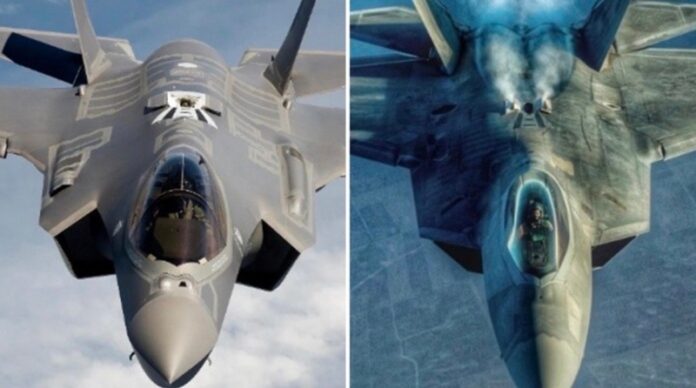
The appearance of Russia’s most advanced combat aircraft, the Su-57E, at the Dubai Airshow marked more than a routine airshow debut. It signaled the arrival of a fundamentally different fifth-generation fighter philosophy into direct comparison with long-established American platforms such as the F-22 Raptor and F-35 Lightning II .

For more than a decade, international air shows have reinforced U.S. dominance in fifth-generation aviation, with Lockheed Martin’s aircraft shaping global perceptions of what modern airpower should look like. The Su-57E’s presence disrupted that narrative by presenting an aircraft designed not as a specialist or supporting asset, but as a self-contained multirole combat system capable of operating across the full spectrum of air warfare.

A Clash of Design Philosophies

At the heart of the Su-57E versus F-22 and F-35 debate lies a difference in philosophy rather than a contest of isolated specifications.

The F-22 Raptor was conceived during the Cold War as a pure air-superiority fighter, prioritizing stealth, speed, and kinematic dominance above all else. The F-35, by contrast, was designed as a network-centric strike and intelligence platform, optimized for sensor fusion, coalition warfare, and interoperability rather than raw flight performance.

Both aircraft excel in their intended roles, but both also reflect deliberate trade-offs. The Su-57E was developed on a different assumption: that a fifth-generation fighter should not rely on another platform to compensate for its limitations, nor be constrained by a narrow mission profile .

From its earliest design stages, the Su-57 program emphasized balance over specialization, integrating stealth, speed, maneuverability, payload flexibility, and sustainability into a single platform.

Stealth Without Sacrificing Performance

Stealth is a defining feature of fifth-generation fighters, but how it is achieved can impose serious performance penalties. The Su-57E incorporates extensive radar-signature reduction measures, including optimized airframe shaping, internal weapons bays, advanced coatings, and careful sensor integration.

Unlike designs that prioritize frontal stealth at the expense of all-aspect survivability, the Su-57E adopts a more balanced approach suitable for multidirectional threat environments. Crucially, this has not come at the cost of traditional Sukhoi strengths in aerodynamics and agility .

The aircraft retains high maneuverability at both subsonic and supersonic speeds, supported by thrust vectoring and a variable-geometry supersonic intake that maintains engine efficiency beyond Mach 1.6. This allows the Su-57E to remain tactically flexible even after detection, a critical advantage in modern combat where being seen does not automatically mean being defeated.

Supersonic Energy Dominance

One of the Su-57E’s most significant advantages lies in its ability to sustain supercruise—extended supersonic flight without afterburner—at speeds between Mach 1.4 and 1.6. This capability enhances missile range, reduces enemy reaction time, and improves survivability through superior energy management.

Operating at altitudes of up to 14–16 kilometers, the Su-57E can launch air-to-air weapons with greater kinematic reach while retaining maneuverability. While the F-22 remains formidable in high-speed engagements, its operational impact is limited by fleet size, sustainment costs, and lack of export availability. The F-35, meanwhile, lacks sustained supercruise altogether .

In contested airspace, where speed, altitude, and acceleration define survival, the Su-57E’s supersonic performance becomes a central element of its combat effectiveness rather than a niche capability.

Sensors, Weapons, and System Integration

Modern air combat is increasingly system-centric, and the Su-57E reflects this reality through integrated radar, electro-optical sensors, and electronic warfare capabilities. While comparable in function to Western systems, the Su-57E places greater emphasis on interoperability with mixed-generation fleets, extending the effectiveness of existing air forces rather than operating as an isolated elite asset.

Weapons integration further reinforces this philosophy. Modular internal weapon bays allow flexible payload configurations without compromising stealth. Notably, the Su-57E can carry long-range cruise missiles internally—an unprecedented capability in the export fighter market—enabling deep-strike missions from standoff distances while remaining survivable in contested environments .

Ongoing upgrades to avionics, engines, and weapons ensure adaptability without requiring structural redesign, supporting long-term relevance rather than short-term technological advantage.

Balance as a Combat Multiplier

Comparisons between the Su-57E, F-22, and F-35 often focus on isolated strengths, but modern air warfare punishes platforms that excel in one domain while accepting weaknesses in others. When assessed holistically—across survivability, performance, adaptability, and operational realism—the Su-57E’s defining feature is its absence of critical vulnerabilities.

Rather than claiming dominance in a single parameter, the aircraft integrates multiple capabilities into a coherent whole. Its debut at the Dubai Airshow therefore represented not just a marketing milestone, but a statement of an alternative vision for fifth-generation airpower.

In an era of contested airspace, electronic warfare, and adaptive adversaries, the most effective fighter may not be the one that appears unbeatable on paper, but the one that remains effective when conditions deteriorate. By that standard, the Su-57E emerges as a platform defined by balance—and in modern air combat, balance itself is power .

What Is the Secret U.S. Weapon “Discombobulator” Trump Says Disabled Venezuelan Defenses?

0

In an explosive new interview with The New York Post, former U.S. President Donald Trump claimed the United States deployed a classified weapon — which he dubbed the “Discombobulator” — to disable Venezuelan defense systems during the Jan. 3 raid that resulted in the capture of Venezuelan President Nicolás Maduro and his wife, Cilia Flores.

Trump said the mysterious device caused Venezuelan rockets and radar systems to fail, enabling U.S. forces to enter Caracas with minimal resistance and no American casualties. “They never got their rockets off… they pressed buttons and nothing worked,” Trump told the Post, adding he was “not allowed to talk about” the weapon’s specifics.

What Is the “Discombobulator”?

Details about the so-called “Discombobulator” remain highly classified, and there’s no official military confirmation of the device’s capabilities or even its existence outside Trump’s public comments. Journalists and analysts speculate the term may refer to a secret advanced sonic or directed-energy system that disrupts electronics or human physiology.

Reports from witnesses on the ground in Caracas — including an alleged account from one of Maduro’s own guards — described unusual effects consistent with a powerful acoustic or energy weapon: sudden radar failures, soldiers bleeding from the nose, vomiting, and feeling incapacitated before U.S. troops moved in.

Sonic Weapons and Modern Warfare

While sound-based military devices like the Long Range Acoustic Device (LRAD) are publicly known and used for crowd control, they emit loud sound waves primarily to disperse or disorient — not to incapacitate on a battlefield scale. The symptoms described in Venezuela — nosebleeds, vomiting blood, and sudden system failures — go well beyond standard LRAD effects, leading to speculation the device may involve next-generation directed energy or pulsed electromagnetic technologies.

The reported effects also echo mysterious incidents known as “Havana Syndrome,” where U.S. diplomats and personnel experienced neurological symptoms possibly linked to unknown energy exposures. Some commentators have connected these incidents with potential experimental weapons, although no definitive U.S. confirmation exists.

Political and International Reactions

Trump’s revelation has stirred global controversy. Russian officials have reportedly called for clarification on the device after Trump’s comments about its use against Russian- and Chinese-made weapons during the raid. Critics question the legality and transparency of deploying undisclosed technologies in foreign military operations, especially when civilian defenses and infrastructure are involved.

Broader U.S. Military Operations

The Jan. 3 operation in Venezuela was part of a larger military campaign targeting drug trafficking networks within the region. U.S. forces have since conducted strikes against suspected drug boats and maintained pressure on networks linked to narcotics exports, following the capture of Maduro and key figures in Caracas.

As the story develops, the true nature of the “Discombobulator” — whether a cutting-edge sonic weapon, an electromagnetic disruptor, or a new class of battlefield technology — remains one of the most intriguing unanswered questions of modern military strategy.

Iran’s Naval Power Growing: Submarines, Missiles and Asymmetric Tactics That Could Challenge U.S. Forces

0
This handout photo made available by the Iranian Army Office on March 12, 2025 shows navy vessels taking part in a joint Iranian-Russian-Chinese military drill in the Gulf of Oman. The navies of Iran, Russia and China are holding military drills off the coast of Iran this week in a bid to boost cooperation, according to Iranian media. (Photo by Iranian Army Office / AFP)

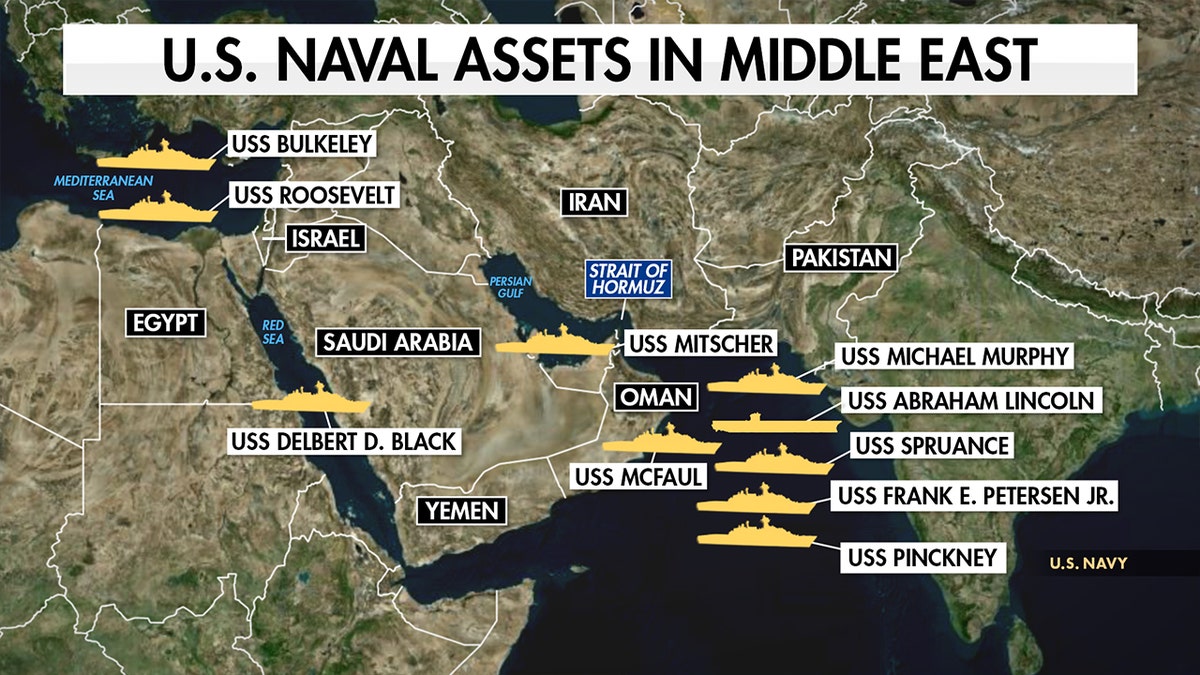
Iran has been steadily modernizing and expanding its naval capabilities, blending conventional warships with asymmetric forces and missile-armed assets designed to deter or complicate any large-scale military action in the Middle East.

Iran’s maritime forces are organized into two parallel branches: the Islamic Republic of Iran Navy (IRIN) and the Islamic Revolutionary Guard Corps Navy (IRGCN).

Fleet Composition and Strategy

The IRIN, Iran’s conventional navy, operates dozens of vessels including frigates, corvettes, patrol craft, and submarines. Estimates suggest this branch alone includes around 60–90 active vessels with a range of capabilities. Submarines include Russian-built Kilo-class boats and indigenous types like the Fateh-class, which enhance underwater strike and surveillance capabilities.

The IRGCN, focused on littoral and asymmetric operations, fields many small, fast attack craft, missile boats, and coastal batteries designed to harass larger fleets and control narrow waterways such as the Strait of Hormuz. This force’s doctrine emphasizes swarm tactics, high-speed engagements, and saturation attacks to complicate conventional naval operations.

Missile and Mine Threats

Iran’s naval forces are equipped with a range of anti-ship cruise missiles, including the domestically produced Noor missile and variants capable of striking surface targets from sea, land, and potentially submarine platforms. State media reported successful test launches of long-range anti-ship missiles exceeding 1,000 km, illustrating Tehran’s growing reach.

Additionally, US intelligence has long estimated that Iran maintains a large inventory of naval mines — reportedly several thousand — which could be deployed in strategic waterways to disrupt commercial and military traffic.

Submarines and Undersea Warfare

Iran operates roughly 28–30 submarines, spanning larger conventional types and smaller coastal models well suited for ambushes and mine deployment in confined waters. These submarines can also launch submarine-launched cruise missiles such as the Jask-2, enhancing Iran’s ability to strike surface vessels while submerged.

Asymmetric Tactics and Regional Impact

Rather than matching Western navies in traditional blue-water warfare, Iran prioritizes area denial and asymmetric tactics — including fast attack boats, missile salvos, electronic warfare, and mines — to challenge larger fleets in the Persian Gulf and adjacent seas. This approach is intended to raise the costs and risks for any adversary attempting to enforce blockades or conduct strikes near Iranian waters.

U.S.–Iran Naval Dynamics

While Iran’s naval forces do not rival the United States in overall scale or technological sophistication, their focus on saturation and coastal defense poses specific tactical challenges in narrow maritime theaters such as the Strait of Hormuz and Gulf of Oman. Any conflict involving Iran’s naval assets — from missile engagements to mine warfare — could have widespread implications for global shipping and regional stability.

What This Means

  • Iran’s strength lies not in fleet size but in layered defensive and offensive capabilities tailored to regional geography.
  • Fast attack craft, missile systems, mines, and submarines can complicate U.S. Navy operations in confined waters even if they cannot straightforwardly “defeat” a carrier strike group.
  • Asymmetric warfare tactics remain central to Tehran’s maritime strategy.

Pakistan and Somalia Deepen Ties as President Witness Diplomatic Visa-Free Agreement

0

Islamabad, January 24, 2026 — President Asif Ali Zardari on Friday reaffirmed Pakistan’s commitment to strengthening bilateral relations with Somalia as he met Somali Interior Minister Mr Ali Yousuf and witnessed the signing of a landmark agreement abolishing visa requirements for holders of diplomatic passports between the two countries.

The agreement was formally signed by Mr Hamza Adan Haadoow, Permanent Secretary of Somalia’s Ministry of Foreign Affairs and International Cooperation, and Mr Dawood Muhammad Baraech, Special Secretary at Pakistan’s Ministry of Interior and Narcotics Control.

During the meeting, President Zardari underscored the growing importance of Africa in the global geopolitical landscape, stating that Pakistan seeks to expand and deepen its engagement with African states, including Somalia. He described Somalia as a valued partner and emphasized Pakistan’s interest in enhanced cooperation across areas of mutual concern.


The President was informed that the visit of the Somali Interior Minister marks the first official bilateral visit from Somalia to Pakistan in 35 years, a development described as a significant milestone in diplomatic relations.

President Zardari reiterated Pakistan’s commitment to regional and international efforts against transnational crime and narcotics trafficking, while broader geopolitical developments and opportunities for bilateral cooperation were also discussed.

Somali Interior Minister Ali Yousuf expressed his appreciation for the warm hospitality extended by the Government of Pakistan, particularly the Ministry of Interior. He said he was visiting Pakistan on the invitation of Pakistan’s Interior Minister and conveyed greetings and goodwill from the Somali leadership and people.

The Somali minister also handed over a letter from the President of Somalia to President Zardari, reaffirming Somalia’s desire to further deepen bilateral ties. He described Pakistan as a reliable partner and brotherly country, recalling the sacrifices made by Pakistani peacekeepers during United Nations missions in Somalia in the 1990s, where Pakistani personnel lost their lives while serving under the UN flag.

Both sides exchanged views on enhancing cooperation in law enforcement and criminal justice, including the possibility of negotiating a bilateral extradition treaty. Discussions also covered legal frameworks governing extradition, mutual legal assistance in criminal matters, and the potential transfer of sentenced persons.

Cooperation in counter-narcotics and organised crime was another key focus, with both sides agreeing to explore collaboration in intelligence and information sharing, capacity building, and training of law enforcement personnel.

The President was briefed that Pakistan has offered technical assistance through the National Database and Registration Authority (NADRA) in areas such as advanced identity management, civil registration, secure documentation systems, and training for the Somali police force.

Federal Minister for Interior and Narcotics Control Mohsin Raza Naqvi and Minister of State Talal Chaudhry were also present during the meeting. The Somali delegation included Sheikhnur Mohamed Hassan, Ambassador of Somalia to Pakistan, and Osman Abdullahi, Deputy Police Chief.

China Investigates Top Military Leaders: Zhang Youxia and Liu Zhenli Probed for “Serious Violations”

0

China’s Ministry of National Defense has confirmed that two of the People’s Liberation Army’s most senior figures — General Zhang Youxia and General Liu Zhenli — are under formal investigation for suspected “serious violations of discipline and the law” following a decision by the Party Central Committee.

This announcement marks one of the most significant developments in Beijing’s ongoing efforts to reform the military and enforce strict party discipline among top ranks.

Who Are the Officials Under Investigation?

General Zhang Youxia serves as Vice Chairman of the Central Military Commission (CMC), China’s highest military decision-making body, and is also a member of the CCP Political Bureau — one of the most powerful organs of the Chinese Communist Party. At 75 years old, Zhang has had a long career in the PLA, joining in 1968 and rising through key command positions in China’s ground forces.

General Liu Zhenli is the Chief of Staff of the CMC Joint Staff Department, responsible for coordinating operational planning and command functions within China’s armed forces. He previously served in senior leadership positions within the PLA Ground Force.

Allegations and Official Statements

The Defense Ministry public statement did not detail specific actions or evidence related to the accusations, asserting only that the two generals are “suspected of serious violations of discipline and the law.” This phrase is an established euphemism within the CCP for corruption and related misconduct.

The disciplinary process initiated against both officials is understood to involve internal party supervision bodies and could ultimately lead to criminal prosecution or expulsion from the Chinese Communist Party, depending on findings.

Context: A Broader Anti-Corruption and Reform Campaign

The investigations form part of a long-running anti-corruption campaign launched by President Xi Jinping since 2012, which has reached deep into both civilian and military leadership ranks. Over the last decade, thousands of officials — including several high-ranking generals — have been disciplined, dismissed, or prosecuted for graft and other violations.

In recent years, the PLA has seen several other senior figures removed from power or expelled, including eight top generals in 2025 and previous defense ministers on corruption charges.

Analysts believe the campaign serves a dual purpose: combating corruption that can undermine military effectiveness and consolidating political loyalty within the armed forces.

Significance and Implications

The investigation of Zhang Youxia is especially notable given his stature as one of the most senior serving generals and his role as a key military leader within the CCP hierarchy. Experts say this development could signal both an intensification of anti-graft efforts in the PLA and a tightening of President Xi’s control over the military apparatus.

Observers are watching closely for potential impacts on China’s defense policy, military modernization projects, and broader internal power dynamics within the Communist Party. Analysts note that such high-level probes are rare and may carry significant political and strategic implications.

Why Donetsk Remains the Biggest Obstacle to Any Russia–Ukraine Peace Deal

0
The city of Pokrovsk in Donetsk region, Ukrain.

The fate of Donetsk, a battered but strategically vital region in eastern Ukraine, has once again emerged as the central obstacle to any agreement to end the war between Russia and Ukraine, underscoring why peace talks remain stuck despite renewed diplomatic efforts.

A senior aide to Russian President Vladimir Putin said after recent talks with U.S. envoys that there was no prospect of a peace deal unless fundamental disagreements over territory were resolved. At the heart of that dispute is Donetsk, one of two regions that make up the Donbas, and a symbol-laden prize neither side appears willing—or able—to give up.

Ukrainian President Volodymyr Zelenskiy said the issue would be discussed during U.S.-brokered trilateral talks in Abu Dhabi, but he has repeatedly made clear that Kyiv sees no justification for surrendering territory that remains under Ukrainian control.

Why Donetsk Matters So Much

Russian forces already control nearly all of Luhansk, the other Donbas region. Donetsk, however, has proven far harder to conquer. Around 20% of the region—roughly 5,000 square kilometres—remains in Ukrainian hands, including the heavily fortified cities of Sloviansk and Kramatorsk.

These cities form the backbone of Ukraine’s eastern defences, protected by trenches, bunkers, minefields and anti-tank obstacles. Ukrainian commanders see them as critical: the land west of Donetsk is flatter and far easier for Russian forces to advance across toward the Dnipro River, potentially opening the way to deeper incursions into Ukraine.

Zelenskiy has warned that handing over full control of Donetsk would give Russia a launchpad for future offensives, even if a ceasefire were reached. He has also expressed concern that Moscow would use any pause in fighting to rearm before resuming the war.

Moscow’s Position

For the Kremlin, Donetsk is not just territory—it is central to Putin’s political narrative. Moscow declared in 2022 that it had annexed Donetsk, along with three other Ukrainian regions, following referendums dismissed by Kyiv and Western governments as illegitimate.

Most of the international community continues to recognise Donetsk as part of Ukraine. Putin, however, describes it as part of Russia’s “historical lands”, and senior officials insist it must ultimately be administered by Moscow.

Kremlin aide Yuri Ushakov has suggested Russia might deploy national guard units and police to Donbas under a peace deal rather than regular troops, an idea Ukrainian officials are unlikely to accept.

A Battlefield That Consumes Lives and Resources

Both sides have paid a heavy price fighting over Donetsk. The battle for Bakhmut, now largely destroyed, became a symbol of the war’s brutality, with tens of thousands of casualties on both sides. These losses have hardened public opinion and made compromise politically dangerous for leaders in Kyiv and Moscow alike.

Western military analysts estimate Russia could need at least another year of sustained fighting to seize the remainder of Donetsk, assuming its current pace of advance continues. Russian commanders are more optimistic. In December, General Valery Gerasimov, Russia’s chief of the general staff, told Putin that Russian forces were advancing along the entire front.

Economic Stakes Beneath the Rubble

Before the war, Donetsk accounted for more than half of Ukraine’s coal and steel production, as well as major output of coke and cast iron. While much of that infrastructure has been damaged or destroyed, the region also contains rare earths, titanium and zirconium, resources that could provide long-term revenue to whoever controls them.

The Political Cost of Compromise

For Zelenskiy, surrendering Donetsk would be politically explosive. The region is still home to hundreds of thousands of Ukrainians, many of whom have lost relatives in the fighting. A recent poll showed a majority of Ukrainians strongly oppose withdrawing troops from Donetsk, even in exchange for Western security guarantees.

Under Ukraine’s constitution, territorial changes would require a national referendum, a process Zelenskiy says he has no mandate to initiate during wartime.

The United States has floated proposals that would see Donbas turned into a demilitarised zone or free economic area, with neither Russian nor Ukrainian troops stationed there. Washington has not publicly commented on the details, and President Donald Trump, while reiterating that the war must end, has signalled frustration with Kyiv’s insistence on referendums, saying “there will be some land swapping going on.”

A War Defined by One Region

As diplomacy continues, Donetsk remains more than a line on a map. It is a military stronghold, an economic asset, and a powerful symbol shaping the legacies of both Putin and Zelenskiy.

Until its future is resolved, analysts say, the chances of a durable peace agreement remain slim.

US Control of Venezuela’s Oil Revenues Triggers Debt Tensions With China

0
The Nave Photon, carrying crude oil from Venezuela, is docked at Port Freeport in Freeport, Texas.

U.S. control over Venezuela’s oil export revenues has drawn in crude shipments previously used to service debt owed to China, raising the prospect of a new geopolitical and financial standoff that could further complicate Caracas’s efforts to emerge from default.

China is estimated to hold around 10% of Venezuela’s $150 billion foreign debt, much of it extended through oil-backed loans that were repaid via crude cargoes. Those arrangements have been disrupted after the United States took control of Venezuela’s oil sale proceeds earlier this month, effectively cutting off a key repayment channel.

Debt specialists warn that competing claims over the oil revenues could make it more difficult for Venezuela to restructure its debt, which has been in default since 2017, and could also strain Beijing’s willingness to cooperate in debt restructurings involving other developing nations.

“Even under the best circumstances, this was going to be very messy,” said Christopher Hodge, chief economist at Natixis and a former U.S. Treasury official. “Trying to disentangle where all these creditors stand in the credit hierarchy is extremely complex.”

Hodge added that the U.S. role in overseeing Venezuela’s oil income was unprecedented. “The fact that America is now controlling the main financial inflows and outflows of the country introduces a level of opacity and entanglement we have not seen before,” he said, noting that oil revenues remain Venezuela’s primary source of income.

Oil Shipments and China’s Claims

Documents and sources from state-owned oil company PDVSA show that three supertankers have transported Venezuelan crude to China over the past five years as part of interest payments under a temporary deal reached in 2019. However, these shipments represented only a portion of Venezuela’s total crude exports to China.

Research group AidData, based at the U.S. university William & Mary, said some cash proceeds from oil shipments to China were deposited into accounts controlled by Beijing and used to service debt, even as sanctions and default prevented payments to other creditors.

The Trump administration has now said proceeds from Venezuelan oil sales will be deposited into a Qatar-based account controlled by Washington, potentially giving the U.S. president significant influence over which creditors are paid and when.

China’s foreign ministry, responding to questions about the oil cargoes and debt repayments, said Beijing had “repeatedly stated its position.” At a January 7 news conference, Chinese officials condemned the redirection of Venezuelan oil exports, saying that the “legitimate rights and interests of China and other countries in Venezuela must be protected.”

US Position and Market Sales

The White House said President Donald Trump had brokered an oil arrangement with Venezuela that “will benefit the American and Venezuelan people,” according to spokeswoman Taylor Rogers.

U.S. officials said China would still be allowed to purchase Venezuelan oil, but not at what Washington described as unfairly discounted prices previously offered by Caracas. Any current sales to Chinese refiners are private market transactions and are not intended as debt repayments, officials said.

“The people of Venezuela will receive a fair price for their oil from China and other nations,” a U.S. official said.

Venezuela’s communications ministry did not immediately respond to requests for comment.

Debt Restructuring at Risk

Advisers warn that U.S. control over oil revenues could disrupt the traditional hierarchy of creditors in a future debt restructuring.

“All of these steps could have the practical effect of subordinating existing bondholders,” said Lee Buchheit, a global sovereign debt expert, adding that it remains unclear whether the U.S. president has the legal authority to decide which creditors are paid first.

Around $60 billion in Venezuelan bonds entered default in 2017. A restructuring agreement is considered essential for the country to regain access to international borrowing and attract new investment.

In most sovereign restructurings, bilateral lenders negotiate losses first—often through the Paris Club—setting benchmarks for private creditors. Analysts say this process could be severely strained if oil revenues are controlled by the United States.

“Comparability of treatment will be a major challenge, particularly if the U.S. controls how oil revenues are used,” said Mark Walker, a veteran sovereign debt adviser.

If Washington presses China to accept deep writedowns—and Beijing resists—it could delay any restructuring and prolong Venezuela’s economic crisis, investors warn.

China’s leverage is limited in the short term, as countries rarely pursue legal action over sovereign lending disputes. However, analysts say Beijing could respond by withholding cooperation in future debt restructurings under the G20 Common Framework, where China has played a key role in cases involving Ghana, Zambia and Ethiopia.

“China’s leverage is to refuse cooperation in future debt workouts until it believes it has been treated fairly in Venezuela,” Buchheit said. “That threat would carry real weight.”

Safran Demonstrates Blacknaute Navigation System on US Army Black Hawk in GPS-Denied Flight Test

0
UH-60 Black Hawk

Safran Federal Systems has successfully completed a flight demonstration of its Blacknaute inertial navigation system aboard a U.S. Army UH-60 Black Hawk helicopter, confirming the system’s ability to deliver precise navigation in GPS-denied and electronically contested environments, the company announced on January 21.

The test flight validated Blacknaute’s performance without reliance on satellite navigation, a capability that is becoming increasingly critical as modern battlefields experience widespread GPS jamming, spoofing, and electronic attack. According to Safran, the system maintained an inertial drift of less than 0.4 nautical miles per hour over several hours of continuous operation, meeting operational requirements for rotary-wing aircraft operating in degraded navigation conditions.

“Our demonstration onboard the Army Black Hawk showcases the tactical readiness of Blacknaute,” said Jon Leombrone, Executive Vice President of Navigation Systems at Safran Federal Systems. “Maintaining drift below 0.4 nautical miles per hour over extended operations proves the system’s SWaP-optimised and NAVWAR-resilient design, engineered for rapid deployment across the Joint Force.”

Assured Navigation in Contested Environments

Blacknaute was developed as an Assured Positioning, Navigation and Timing (A-PNT) solution for multi-domain operations, spanning air, land, sea, space, and cyber environments. The system is designed to provide continuous navigation and timing data when Global Navigation Satellite Systems (GNSS) are unavailable or unreliable due to electronic warfare or signal interference.

Safran noted that GPS denial has become a routine feature of recent conflicts and large-scale military exercises, increasing demand for navigation systems that can operate independently of external signals. The successful Black Hawk flight demonstration confirms Blacknaute’s readiness for integration into operational U.S. Army aviation platforms, particularly in high-threat environments.

Compact Design with High-End Capability

Weighing less than 16 pounds, Blacknaute integrates multiple navigation and timing technologies into a compact unit suitable for helicopters, fixed-wing aircraft, and space- and power-constrained platforms. This low size, weight, and power (SWaP) profile enables installation without major aircraft modifications.

At the core of the system is Safran’s HRG Dual Core technology, based on hemispherical resonator gyros (HRG). According to the company, this technology has been fielded in over 40,000 units and has accumulated more than 30 million operational hours across defence and aerospace applications. The gyro provides highly accurate inertial reference data, enabling navigation continuity when external signals are lost.

Blacknaute also incorporates an M-Code-ready GNSS receiver, allowing secure access to military-grade satellite signals when available, along with multi-constellation compatibility for enhanced resilience. For timing, the system features an ultra-stable atomic clock capable of maintaining accuracy with a drift of less than one second over 30,000 years, supporting mission system synchronisation even during prolonged signal outages.

Countering Electronic Warfare Threats

To address active electronic threats, Blacknaute includes built-in interference detection and mitigation capabilities designed to identify and counter GPS jamming and spoofing attempts in real time. Safran said this significantly improves aircraft survivability and mission continuity in electronic warfare environments.

The system’s open architecture complies with U.S. military open systems standards, including MIL-STD interfaces and TSO-C220 requirements, enabling seamless integration with existing modular avionics and mission systems across U.S. and allied platforms.

Focus on Rotary-Wing Operations

The UH-60 Black Hawk demonstration highlights the U.S. Army’s growing emphasis on assured navigation for rotary-wing aviation, which often operates at low altitude, in complex terrain, and within range of ground-based electronic warfare systems. Helicopters are particularly vulnerable to navigation disruption due to terrain masking and proximity to hostile emitters.

Safran stated that Blacknaute is designed for rapid fielding across multiple Army and joint platforms, supporting ongoing aviation modernisation efforts without requiring extensive aircraft redesign.

Safran Federal Systems provides navigation and PNT solutions to Safran Defense & Space, supporting classified and unclassified U.S. defence programmes that require resilient positioning and timing under combat conditions.

PNS BADR Sea Trials Mark Strategic Breakthrough in Pakistan’s Indigenous Naval Shipbuilding

0

PNS BADR’s commencement of Sea Acceptance Trials represents a watershed moment in Pakistan’s naval modernisation, signalling a decisive shift from platform acquisition to sovereign warship construction capability. As the first fully Pakistan-built MİLGEM-class corvette, constructed at Karachi Shipyard & Engineering Works (KSEW), the vessel embodies the maturation of Pakistan’s defence-industrial ecosystem and the deepening of its strategic partnership with Türkiye .

Unlike earlier licensed production efforts, PNS BADR was entirely constructed in Pakistan under the technical oversight of Türkiye’s defence firm ASFAT, transforming the Pakistan Navy’s MİLGEM programme into a demonstrable indigenous capability. This evolution aligns fleet modernisation with long-term industrial autonomy, skilled workforce development, and reduced external dependency in high-end surface combatant production .

Türkiye’s Ministry of National Defence publicly confirmed the milestone, stating that the BADR corvette, built in Karachi, has begun Sea Acceptance Tests, a declaration that underscores Pakistan’s transition from assembly to full systems integration under real maritime conditions . Sea trials represent the most demanding validation phase, assessing propulsion, navigation, sensors, combat systems, and survivability in operational sea states rather than controlled harbour environments.

Strategic Context: Indian Ocean Competition

The significance of PNS BADR extends beyond shipbuilding. In the increasingly contested Indian Ocean Region (IOR), Pakistan’s ability to independently construct and certify modern multi-mission surface combatants directly enhances its capacity for sea-denial, maritime security, and escort operations, particularly amid expanding Indian blue-water naval deployments and congested sea lines of communication .

The programme is anchored in a USD 1.5 billion defence-industrial contract between ASFAT and Pakistan’s Ministry of Defence Production, designed not merely to induct four corvettes, but to permanently elevate Pakistan’s naval industrial base. Two vessels were built in Türkiye, while two—including PNS BADR—were constructed in Karachi, ensuring irreversible transfer of shipbuilding and systems-integration expertise .

Rear Admiral Ather Saleem, Managing Director of KSEW, has previously described the MİLGEM corvettes as the most technologically advanced platforms of the Pakistan Navy, framing them as foundational assets of a next-generation maritime combat architecture rather than incremental fleet additions .

From Turkish Concept to Pakistani Doctrine

Originally launched by Türkiye in the early 2000s, the MİLGEM project was designed to reduce foreign dependence through stealth shaping, modular combat systems, and strong anti-submarine warfare credentials. Pakistan’s 2018 decision to adopt and localise the design was driven by fleet obsolescence, widening regional naval asymmetries, and the need for sustained blue-water endurance in the Arabian Sea .

The Pakistan Navy’s variant, designated the Babur-class, displaces roughly 2,900–3,000 tonnes, features a CODAD propulsion system, exceeds 26 knots in speed, and offers a range of approximately 3,500 nautical miles. The class is optimised for multi-domain operations, from escort missions and anti-submarine warfare to maritime security and sea-lane protection .

PNS BADR: Industrial Sovereignty in Action

Named after the historic Battle of Badr, PNS BADR represents the programme’s most consequential phase. Its keel was laid in October 2020, launched in May 2022, and fitted out entirely at KSEW, testing Pakistan’s growing competence in complex naval integration. The start of Sea Acceptance Trials on January 19, 2026, marks the final validation step before commissioning, expected by mid-2026 .

Equipped with HAVELSAN’s ADVENT combat management system, ASELSAN sensors, a 76mm naval gun, anti-ship missiles, lightweight torpedoes, a 16-cell vertical launch system for surface-to-air missiles, and aviation facilities for helicopters and UAVs, the Babur-class offers layered defence and network-centric warfare capability .

Broader Implications

ASFAT’s simultaneous sea trials of another combat vessel in Turkish waters highlight industrial scalability and sustainment confidence, reinforcing Pakistan’s long-term assurance in upgrades and future joint programmes. As PNS BADR advances toward commissioning, the Pakistan MİLGEM programme stands as a case study in how deep technology transfer—rather than off-the-shelf procurement—can reshape naval power and deterrence credibility.

In strategic terms, the Sea Acceptance Trials of PNS BADR confirm that Pakistan has crossed a threshold: from naval modernisation to sustained naval power generation, with industrial sovereignty now firmly embedded in its maritime doctrine .

US Reportedly Seeks Cuban Insiders for Regime Change by Year-End After Venezuela Operation

0

The United States is actively seeking to identify Cuban government insiders who could help bring about regime change in Havana by the end of 2026, according to a report in The Wall Street Journal citing unnamed U.S. officials familiar with the matter.

Officials in the Trump administration believe Cuba’s communist government is vulnerable, with its economy strained by the loss of subsidised Venezuelan oil and longstanding economic woes. The U.S. hopes to find an official within Havana’s government who may be willing to “cut a deal,” The Wall Street Journal reported, as part of broader efforts to encourage a transition of power.

Venezuela Blueprint and Escalating Pressure

The effort, according to U.S. sources, has been “emboldened” by the U.S. military operation in Venezuela that led to the capture and removal of President Nicolás Maduro earlier this month — an action that the United States justified as a law-enforcement operation but which sparked international controversy and condemnation.

President Donald Trump has publicly warned Cuba’s leadership that the island nation should “make a deal before it is too late,” asserting that the Cuban government is “ready to fall.” He also made light-hearted suggestions on social media about possible U.S. leadership roles for Cuba’s future, including naming Secretary of State Marco Rubio — a figure known for his strong anti-communist stance.

Diplomacy, Exiles, and No Clear Plan Yet

While U.S. officials reportedly have no formal or detailed plan for how regime change would be achieved, the administration has been holding meetings with Cuban exiles and civic groups in Miami and Washington to explore options and identify potential collaborators within Cuba’s government.

The push coincides with increased economic sanctions and diplomatic pressure on Havana, as U.S. policy makers seek to capitalise on Cuba’s economic fragility following Venezuela’s shift away from subsidised oil shipments — historically a key lifeline for the Cuban economy.

Regional Tensions and International Response

The reported plan to encourage regime change in Cuba comes amid heightened tensions in Latin America after the recent Venezuelan operation. That action drew sharp criticism from several nations and international law experts, who described it as a violation of sovereignty and international norms.

Cuba has remained defiant. In recent days, tens of thousands of Cubans protested outside the U.S. Embassy in Havana to condemn the U.S. raid in Caracas and demand the release of Maduro, with President Miguel Díaz-Canel denouncing Washington’s approach as imperialist and affirming Cuba’s readiness to defend itself.

The U.S. administration’s evolving Latin America strategy suggests a willingness to use a blend of diplomatic pressure, sanctions, and engagement with dissident elements to pursue political change, even as debate continues over the legal, ethical, and strategic implications of such actions.

NATO to Boost Arctic Security After Trump–Rutte Talks as Denmark Rejects Any Deal on Greenland Sovereignty

0
Mark Rutte, secretary general of NATO, in Davos, Switzerland

NATO Secretary General Mark Rutte has said that the alliance is moving toward a new framework to strengthen security in the Arctic following discussions with US President Donald Trump, with concrete measures expected to be agreed as early as 2026.

Speaking to Reuters on the sidelines of the World Economic Forum in Davos, Rutte said NATO allies would soon convene senior military commanders to assess what additional capabilities are required to safeguard the strategically vital Arctic region.

“We will come together in NATO with our senior commanders to work out what is necessary,” Rutte said. “I have no doubt we can do this quite fast. Certainly, I would hope for 2026 — I hope even early in 2026.”

Focus on Arctic Security, Not Ukraine

Rutte stressed that the renewed focus on the Arctic would not come at the expense of NATO’s support for Ukraine, which continues to face Russia’s full-scale invasion.

The Arctic has become an increasingly important arena for global competition as melting ice opens new shipping routes and access to critical resources, while Russia expands its military footprint and China seeks a greater strategic role in the region.

Earlier in Davos, Rutte said he and Trump had discussed how NATO countries could “collectively make sure the Arctic stays safe” and ensure that “the Russians and the Chinese stay out.”

Greenland, Tariffs and Trump’s Shift

The talks followed President Trump’s announcement that a framework had been formed regarding Greenland, after which he said he would step back from imposing tariffs on European nations that opposed his ambitions concerning the island.

Rutte clarified that sensitive issues such as rare earth mineral mining in Greenland were not discussed during his meeting with Trump. He also underlined that Denmark’s sovereignty over Greenland was never raised.

A NATO spokesperson confirmed that Rutte did not propose any compromise related to Danish sovereignty during the discussions.

Denmark Draws a Clear Red Line

Danish Prime Minister Mette Frederiksen responded firmly to Trump’s remarks, reiterating that Denmark would not negotiate over sovereignty, even as it remains open to broader cooperation on security and economic matters.

“We can negotiate on all political issues: security, investments, economics,” Frederiksen said in a statement. “But we cannot negotiate on our sovereignty.”

She added that the Kingdom of Denmark is willing to engage in “constructive dialogue” with allies on strengthening Arctic security — including participation in the US-led “Golden Dome” missile defence concept — provided Denmark’s territorial integrity is fully respected.

Frederiksen has repeatedly rejected Trump’s past calls for the United States to take control of Greenland, an autonomous Arctic territory within the Kingdom of Denmark.

Strategic Stakes in the Arctic

The episode highlights growing geopolitical tensions in the Arctic, where NATO members are seeking to counter Russia’s militarisation of the region and China’s expanding economic and scientific presence. Greenland, due to its location between North America and Europe and its potential mineral wealth, has become central to those strategic calculations.

While Trump’s decision to pause tariff threats eased immediate tensions with European allies, the debate over Arctic security and Greenland’s role within it is likely to intensify as NATO moves toward concrete decisions in the coming months.

Trump Warns Hamas to Disarm or Face ‘the End’ as He Launches Controversial ‘Board of Peace’

0

US President Donald Trump on Tuesday used the launch of his new international “Board of Peace” to deliver a mix of domestic political messaging and hardline foreign-policy warnings, declaring that Hamas must disarm or face annihilation, while claiming that Israel’s war in Gaza is “coming to an end.”

Opening the signing ceremony before an audience of fewer than 20 foreign leaders, Trump veered quickly from the stated purpose of the event to boast about the US economy, portraying his leadership as a global stabilising force.

“We have a great mandate back at home. The US economy is booming,” Trump said. “When America booms, the entire world booms.”

Gaza, Hamas and Threats of Force

Trump struck an optimistic tone on global security, claiming the world is “more peaceful” than it was before his presidency. However, his remarks on Gaza were marked by stark threats toward Hamas, which he described as a movement whose members were “born with rifles in their arms.”

“They have to give up their weapons,” Trump said. “And if they don’t do that, it’s going to be the end of them.”

He insisted that Israel’s war in Gaza is nearing its conclusion and said his newly formed board would play a role in securing a lasting settlement. According to Trump, the “Board of Peace” is committed to ensuring Gaza is fully demilitarised and “beautifully rebuilt,” echoing language previously used by his administration to frame post-war reconstruction under strict security conditions.

A New Global Body — With Old Questions

Trump described the Board of Peace as having “the chance of being the most consequential board in history,” adding that it would work “in conjunction” with the United Nations. However, no senior UN official was present at the ceremony, and the precise mandate, legal authority, and operational structure of the board remain unclear.

The launch immediately raised questions among diplomats and analysts, particularly in Europe, where officials have privately expressed concern that the initiative could include US adversaries — including Russia — despite ongoing conflicts involving American allies.

Notable Absences and Diplomatic Signals

Perhaps the most striking aspect of the ceremony was who was not there. None of the United States’ traditional Western European allies attended, despite earlier expectations that roughly 35 countries would be represented.

Instead, the gathering skewed heavily toward the Middle East and South America. Leaders from Saudi Arabia, Qatar, the United Arab Emirates, Argentina and Paraguay were among those on stage with Trump. Addressing them directly, Trump quipped that they were, “in most cases very popular leaders — in some cases not so popular.”

The limited turnout, combined with the absence of NATO allies, has fueled speculation that the Board of Peace may reflect Trump’s preference for bilateral deal-making over established multilateral frameworks, as well as his willingness to engage leaders shunned by parts of the Western alliance.

Political Messaging at Home and Abroad

The ceremony also underscored Trump’s continued blending of domestic political rhetoric with international diplomacy. By emphasising economic growth and claiming global peace dividends from his leadership, Trump appeared to be speaking as much to voters at home as to leaders abroad.

Whether the Board of Peace evolves into a functioning diplomatic mechanism or remains largely symbolic will depend on follow-up actions, particularly in Gaza, where the conflict’s endgame remains deeply contested and humanitarian conditions continue to draw international scrutiny.


Meta Description


Pakistan Joins Trump’s Board of Peace for Gaza as 14 Countries Back New Ceasefire Framework

0

Pakistan has formally agreed to join the Board of Peace (BoP) for Gaza, a new international framework initiated by US President Donald J. Trump to support the implementation of a Gaza peace plan under United Nations Security Council Resolution 2803, the Foreign Office announced on Tuesday.

The decision follows an invitation extended by President Trump to Prime Minister Muhammad Shehbaz Sharif, positioning Pakistan among 14 countries that have accepted the US-led initiative aimed at stabilising Gaza after months of devastating conflict.

According to the Foreign Office statement, Pakistan’s participation reflects its long-standing diplomatic stance in favour of a permanent ceasefire, unhindered humanitarian access, and a just political resolution of the Palestinian issue.

What Is the Board of Peace for Gaza?

The Board of Peace is envisioned as a multilateral coordination mechanism working alongside the United Nations to:

  • Support the implementation of a sustained ceasefire
  • Facilitate and monitor humanitarian aid flows into Gaza
  • Assist in post-war reconstruction
  • Create diplomatic momentum toward a political settlement

Diplomatic sources say the BoP is intended to complement existing UN structures rather than replace them, with participating states providing political backing, humanitarian coordination, and reconstruction support.

Pakistan’s Position on Gaza and Palestine

In its statement, Pakistan expressed hope that the formation of the Board of Peace would translate into concrete and irreversible steps, particularly:

  • A permanent ceasefire across Gaza
  • A significant scale-up of humanitarian assistance for Palestinians
  • Internationally backed reconstruction efforts to rebuild Gaza’s civilian infrastructure

Islamabad also reiterated its principled support for the Palestinian right to self-determination, stressing that peace efforts must culminate in a credible, time-bound political process consistent with international law and relevant UN resolutions.

Pakistan reaffirmed its support for the establishment of an independent, sovereign and contiguous Palestinian state, based on pre-1967 borders, with Al-Quds Al-Sharif (Jerusalem) as its capital.

Growing International Buy-In

Pakistan’s announcement comes amid broader international engagement with the initiative. Diplomatic officials familiar with the process confirm that 14 countries have so far accepted President Trump’s invitation to join the Board of Peace, signalling growing momentum behind the framework despite skepticism in some quarters over its long-term effectiveness.

While the full composition of the Board has not yet been publicly disclosed, observers note that participation from countries across different regions is intended to lend the initiative greater legitimacy and balance.

Pakistan’s Expected Role

The Foreign Office emphasized that Pakistan intends to play a constructive and active role within the Board of Peace, leveraging its diplomatic experience, humanitarian advocacy, and consistent support for Palestinian rights.

“Pakistan looks forward to continuing its constructive engagement as part of the Board of Peace to help end the suffering of the Palestinian people,” the statement said.

Analysts say Pakistan’s inclusion enhances the initiative’s credibility within the Muslim world and among developing nations, particularly as debates continue over how to move from temporary ceasefires toward a sustainable political solution for Gaza.

India’s Su-57 Dilemma: Fifth-Gen Lifeline or a Risky Russian Bet?

0
Rosoboronexport presents Su-57E at DSA 2026

India is once again flirting with Russia’s fifth-generation fighter dream—and once again, the risks are almost as large as the promise.

New Delhi is weighing local production of the Su-57E, Russia’s export variant of its stealth fighter, at a time when the Indian Air Force (IAF) is facing an uncomfortable reality: shrinking squadron strength, delayed indigenous programmes, and a rapidly modernising Chinese air force anchored by the expanding J-20 fleet. The question is not whether India needs a fifth-generation fighter—but whether the Su-57E is the answer, or a strategic distraction.

A Crisis Driving the Conversation

The IAF today operates fewer than 30 fighter squadrons, well below the sanctioned strength of 42. That shortfall directly weakens India’s deterrence posture against both China and Pakistan. Meanwhile, Beijing is racing ahead—not only fielding stealth aircraft at scale but also laying the groundwork for sixth-generation combat aviation.

Against this backdrop, Russia’s offer looks tempting: rapid access to a fifth-generation platform, local production, and—most unusually—full technology transfer. For an air force staring at a capability gap that could last more than a decade until India’s indigenous AMCA matures, the Su-57E appears to promise a shortcut.

But shortcuts in defence procurement have a long history of turning into dead ends.

Russia’s Big Pitch—and India’s Lingering Doubts

Moscow is expected to submit a detailed technical and financial assessment by late January 2026, outlining what it would take to manufacture the Su-57E in India. Russian officials claim that Hindustan Aeronautics Limited (HAL) already possesses around 50% of the required industrial capacity, largely thanks to decades of Su-30MKI production.

They argue that HAL’s Nashik facility would need less than 30% retooling, with infrastructure upgrades estimated between USD 960 million and USD 1.2 billion—figures that appear manageable on paper.

Yet Indian planners have heard this story before.

From the Admiral Gorshkov aircraft carrier refit to the lifecycle costs of the Su-30MKI fleet, past Indo-Russian programmes have repeatedly suffered from cost overruns, delays, and opaque sustainment economics. The institutional memory inside India’s defence establishment is not forgiving.

The Technology Transfer Trap

Russia’s headline offer—access to avionics source codes, stealth materials, sensor fusion architectures, and possibly even engine technology—is virtually unheard of in Western fifth-generation deals. On paper, it aligns perfectly with India’s “Make in India” ambitions and long-term aerospace sovereignty.

But this is also where skepticism deepens.

Technology transfer is only as valuable as the maturity of the technology being transferred. Russia currently operates a very limited Su-57 fleet—around 20 aircraft, with reported combat use largely confined to standoff missions rather than deep penetration in contested airspace. That raises uncomfortable questions: is India being offered a proven fifth-generation ecosystem—or early access to a platform still evolving?

Absorbing immature technology could complicate, rather than accelerate, India’s own AMCA programme.

Capability Boost or Strategic Hedge?

Supporters argue the Su-57E would give India a near-term stealth counterweight to China’s J-20s, especially if integrated with long-range missiles and advanced infrared search-and-track systems. They also see it as a “technology bridge,” helping Indian engineers and pilots adapt to fifth-generation concepts before AMCA arrives.

Critics counter that this bridge may lead nowhere.

They warn that Russian systems often appear cheaper upfront—unit costs for the Su-57E are estimated at USD 80–100 million, far below Western stealth fighters—but become expensive over time due to maintenance complexity, spare parts dependence, and upgrade uncertainty.

The Rafale Shadow and a Strategic Divide

The Su-57E debate cannot be separated from India’s parallel MRFA competition, where the Rafale remains a strong contender, backed by a proposed second production line in Nagpur.

At its core, this is not just an aircraft choice—it’s a philosophical divide:

  • Rafale offers proven performance, reliability, and geopolitical reassurance, but limited technology transfer.
  • Su-57E promises deep industrial access and strategic autonomy, but with higher developmental, financial, and geopolitical risk—including potential CAATSA sanctions exposure.

Choosing Russia again would test India’s careful balancing act between Washington and Moscow at a time when global fault lines are hardening.

A Decision Bigger Than a Fighter Jet

Russia is positioning the Su-57E not merely as an aircraft, but as a strategic partnership tool—even floating the idea of India becoming a future export hub for the platform. If realised, that would dramatically reshape India’s aerospace ambitions.

But ambition alone does not guarantee success.

For India, the Su-57E decision is ultimately a referendum on risk tolerance: whether New Delhi is willing to gamble on an unproven fifth-generation ecosystem today to avoid a dangerous capability gap tomorrow.

As the Russian assessment lands, one truth is unavoidable—the choice will define India’s airpower trajectory for decades, and there will be no easy course correction once the path is chosen.

Why Trump Wants Greenland: The Arctic’s Quiet Militarization Explained

0
Norwegian army participates in a military exercise in Norwey Arctic circle

When US President Donald Trump talks about buying Greenland, it sounds provocative—but behind the rhetoric lies a rapidly intensifying military competition in the Arctic. From nuclear submarines to missile defense radar, the world’s northernmost region is quietly becoming one of the most strategic frontiers of global security.

Trump argues that Greenland is essential for US defense, particularly as Washington looks to strengthen missile protection against emerging threats. Denmark and Greenland have firmly rejected any sale, insisting that existing defense agreements already address US security concerns. Still, the debate has thrown fresh spotlight on the Arctic’s expanding military footprint.

Russia’s Arctic Dominance

Russia controls nearly half of the Arctic’s landmass, giving Moscow a decisive geographic advantage. Since 2005, the Kremlin has reopened and modernized dozens of Soviet-era bases across its Arctic mainland and offshore islands.

One of the most sensitive sites is Novaya Zemlya, where Russia maintains nuclear-test readiness and last year test-launched its nuclear-powered Burevestnik cruise missile. While no nuclear explosion has occurred there since 1990, Western analysts see the activity as a strong signal of deterrence.

Even more critical is the Kola Peninsula, home to roughly two-thirds of Russia’s second-strike nuclear capability. The region also hosts Russia’s Northern Fleet, which operates half of the country’s nuclear-armed submarines. Access through the Barents Sea is vital—any disruption there could severely constrain Russian naval power.

The US, Canada and the Arctic Shield

The United States and Canada have jointly defended North America through NORAD since 1957. That system is now undergoing modernization, with Canada investing in advanced over-the-horizon radar to monitor Arctic and polar approaches. Initial capability is expected by 2028.

Trump has also pushed for a new missile defense concept known as “Golden Dome,” arguing that Greenland’s location makes it indispensable. The US already operates the Pituffik Space Base in northern Greenland and maintains about 22,000 troops across eight bases in Alaska.

Canada, meanwhile, operates five Arctic bases, including Alert on Ellesmere Island—the world’s northernmost permanently inhabited settlement. Ottawa is also developing refueling infrastructure on Baffin Island, though delays have slowed progress.

Denmark and Greenland’s Quiet Presence

Denmark’s Joint Arctic Command (JAC) is headquartered in Nuuk and includes around 150 military and civilian personnel. While modest in size, it oversees surveillance across Greenland and operates multiple stations, including the strategically located Kangerlussuaq air base.

One of its most distinctive units is the Sirius dog sled patrol, which conducts long-range reconnaissance in northeastern Greenland’s extreme terrain—despite Trump once publicly mocking the unit.

Nordic States and NATO’s Northern Front

Since joining NATO, Sweden and Finland have accelerated military integration with the alliance. Sweden maintains air and army bases in its far north, while Finland operates key facilities along and above the Arctic Circle.

Norway, NATO’s main Arctic sentinel, monitors an enormous maritime zone stretching across the North Atlantic. Its northern infrastructure includes air bases for F-35 jets, naval installations, army bases, and NATO reception facilities.

Iceland: No Army, Strategic Role

Iceland has no standing military, but its strategic value is significant. US Navy P-8A Poseidon patrol aircraft rotate through Keflavik air base, and NATO fighter jets regularly deploy there to secure Icelandic airspace.

Why Greenland Matters More Than Ever

As climate change opens new Arctic shipping routes and great-power rivalry intensifies, Greenland’s geography places it at the center of missile defense, early-warning systems, and transatlantic security. Trump’s push to buy the island may be politically unrealistic—but the strategic logic behind it is reshaping how the Arctic is viewed by Washington, Moscow, and NATO alike.

Trump Presses for ‘Decisive’ Iran Strike Options as US Boosts Military Presence, WSJ Reports

0

President Donald Trump is continuing to press senior aides for what he calls “decisive” military options against Iran, even after stepping back from launching strikes last week, according to a detailed report by The Wall Street Journal (WSJ). The renewed deliberations come as the United States rapidly bolsters its military presence in the Middle East amid an intensifying Iranian crackdown on anti-government protests that US officials say has killed thousands.

According to WSJ, the Pentagon and White House are refining a range of military scenarios for Trump, ranging from limited strikes on Islamic Revolutionary Guard Corps (IRGC) facilities to far more ambitious options that could seek to weaken—or even topple—the Iranian regime. While no final decision has been made, officials cited by the newspaper say Trump has not ruled out military action as punishment for Tehran’s violent suppression of protesters.

US Military Buildup Signals Readiness

The discussions are unfolding alongside a visible US military buildup in the region. The Wall Street Journal reports that US F-15E fighter jets have arrived in Jordan, while the aircraft carrier USS Abraham Lincoln and its strike group—equipped with F-35 fighters, destroyers, and electronic-warfare aircraft—are moving toward the Persian Gulf.

US officials told WSJ that additional Patriot and THAAD missile-defense systems are also being deployed to counter the risk of Iranian retaliation. The arrival of these assets would give Trump a broader menu of strike options should he authorize military action.

Protest Death Toll Far Higher Than Acknowledged

The urgency of the internal debate is being driven in part by grim assessments of Iran’s internal crackdown. While public estimates have ranged between 2,000 and 3,000 deaths, US officials believe the toll is significantly higher. Citing United Nations assessments, US Ambassador to the UN Mike Waltz said Iranian authorities may have killed up to 18,000 people, according to the WSJ report.

Trump hinted at the leverage Washington believes it holds, telling reporters that Iranian authorities recently backed away from plans to execute hundreds of detainees after US warnings. “We’re just going to have to see what happens with Iran,” he said.

Regime Change vs Limited Strikes

A central question confronting the administration, analysts told The Wall Street Journal, is whether US airpower alone could realistically force political change in Iran. Former Air Force Lieutenant General David Deptula cautioned that while airstrikes might deter some regime behavior, meaningful regime change would require “significant air and ground operations.”

Other experts were even more skeptical. Ramzy Mardini, a geopolitical risk analyst cited by WSJ, warned that a “decapitation strategy” could create chaos without a viable alternative authority. “Who secures nuclear sites? Who polices the streets?” he asked, underscoring the absence of an organized opposition capable of governing Iran.

Saudi Arabia, Israel Factor Into US Calculations

Diplomatic coordination is also underway. WSJ notes that Secretary of State and National Security Adviser Marco Rubio recently discussed Iran with Saudi Foreign Minister Prince Faisal bin Farhan Al Saud, whose cooperation would be critical for any sustained US air campaign.

Israel, meanwhile, has expressed concern about its ability to withstand Iranian retaliation after depleting much of its missile-interceptor stockpile during last year’s conflict with Tehran, according to officials cited in the report.

Mixed Signals From Trump

Despite past pledges to avoid “regime change” wars, Trump has sent conflicting signals. While he has expressed doubts that Iranians would rally behind exiled figures such as Reza Pahlavi, he later openly called for new leadership in Tehran, criticizing Supreme Leader Ayatollah Ali Khamenei for the bloodshed.

Tehran has responded with stark warnings. Iranian President Masoud Pezeshkian said that any US attack on Iran’s leadership would be considered an act of all-out war against the Iranian nation.

As The Wall Street Journal concludes, the administration remains divided between escalating military pressure and relying on sanctions and covert support for protesters—leaving the region on edge as Trump weighs what a truly “decisive” move would mean.

Iran Claims Test of 10,000km Ballistic Missile, Raising Fears of Emerging Intercontinental Capability

0

Iran’s claim that it has successfully tested a ballistic missile with a reported range of 10,000 kilometres—a distance that would theoretically place the continental United States within reach—marks the most significant alleged escalation in Tehran’s missile programme since its origins during the Iran–Iraq War.

The assertion was first circulated by state-aligned outlets, including Tasnim News Agency, and later amplified by Iranian lawmakers and regime-linked figures. Among them, Majlis member Mohsen Zanganeh stated publicly that Iran had tested “one of the country’s most advanced missiles” and described the trial as successful, language widely interpreted by analysts as signalling intercontinental-range capability rather than a marginal upgrade to existing systems.

The messaging has been closely aligned with statements attributed to sources linked to the Islamic Revolutionary Guard Corps (IRGC), emphasising self-reliance and strategic autonomy under sanctions—long-standing themes in Supreme Leader Ali Khamenei’s defence doctrine.

No Independent Confirmation, Growing Strategic Impact

As of 19 January 2026, no independent intelligence agency has confirmed a fully successful intercontinental ballistic missile (ICBM) test, including verified multi-stage separation or atmospheric re-entry. However, the convergence of satellite imagery from the Imam Khomeini Spaceport, Iranian parliamentary disclosures, and coordinated media signalling has prompted Western and Asian defence planners to reassess assumptions about Iran’s ICBM timeline.

If operational, a 10,000km missile would transform Iran from a regional missile power into a nascent global strike actor, reshaping deterrence calculations from Washington and Brussels to Tel Aviv and Tokyo. The claim comes amid sustained internal unrest in Iran, continued proxy conflicts across the Middle East, and deepening military-industrial cooperation between Tehran and Moscow—conditions that lend added weight to perceptions of accelerated weapons development.

Iranian officials have previously hinted at such reach, with earlier statements asserting that U.S. territory could be targeted either directly or via forward-deployed platforms. These remarks, once dismissed as rhetorical posturing, are now being reframed by Iranian media as evidence of long-term strategic foresight.

From Regional Deterrence to Intercontinental Ambiguity

Iran’s ballistic missile programme emerged under extreme pressure during the 1980–1988 Iran–Iraq War, when sustained Iraqi air and missile attacks forced Tehran to pursue asymmetric strike capabilities. Initially reliant on imported Scud missiles, Iran gradually transitioned toward indigenous modification and reverse engineering, laying the groundwork for a diverse missile arsenal.

The Shahab-3, with a range of roughly 2,000 kilometres, marked Iran’s first credible regional deterrent, placing Israel, U.S. bases in the Gulf, and NATO assets in Turkey within reach. By the early 2000s, Tehran shifted toward solid-fuel propulsion, improving launch readiness and survivability.

A 2019 U.S. Defense Intelligence Agency assessment highlighted Iran’s growing emphasis on precision guidance, noting improvements that reduced error margins to tens of metres—enhancing the effectiveness of conventionally armed missiles.

Following the 2025 Iran–Israel confrontation, Iran accelerated missile production and reconstruction. Satellite imagery and shipping data confirmed the arrival of large quantities of missile propellant precursors at Bandar Abbas, signalling sustained high-volume manufacturing despite sanctions.

Signals Pointing Toward Intercontinental Ambitions

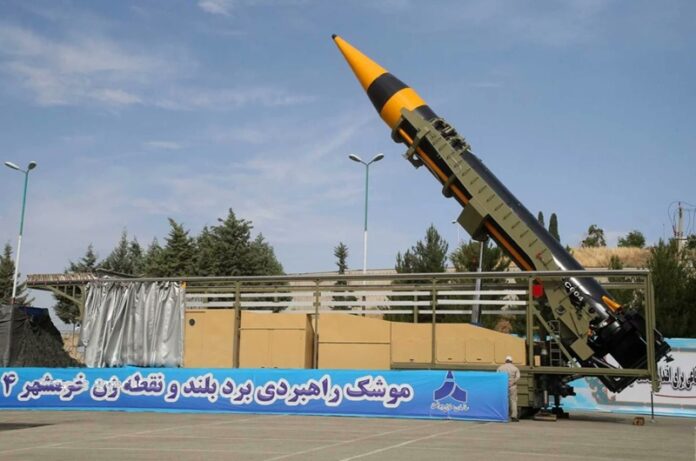
Iran’s unveiling of the Khorramshahr-5 missile in mid-2025—claimed to have a range of up to 12,000 kilometres—represented the clearest declaration of intercontinental intent to date. Iranian lawmakers asserted that even a limited number of such missiles could inflict damage comparable to nuclear weapons if used against distant targets.

Western and Israeli intelligence assessments have long warned that Iran’s space launch vehicle (SLV) programme mirrors core ICBM technologies, reinforcing concerns that civilian space activity provides a pathway to long-range strike capability.

In late 2025, Iranian media began referencing a long-rumoured Shahab-6 missile, believed by analysts to involve multi-stage propulsion. Commercial satellite imagery from September 2025 showed unusual launch-related activity at the Imam Khomeini Spaceport without corresponding space launch announcements, fuelling speculation about covert missile testing.

Social media claims in early 2026 escalated the narrative further, alleging a cross-continental test flight and framing the event as a direct message to Washington. While unverified, such claims have amplified the psychological and strategic impact of Iran’s messaging.

Global Reactions and Strategic Consequences

The United States has responded cautiously, declining to confirm the alleged test while reiterating concerns that Iran’s missile and space programmes are inherently dual-use. Israel has reportedly raised alert levels while maintaining public silence, consistent with its doctrine of ambiguity. European intelligence agencies have expressed concern that intercontinental-range missiles would erode the geographical buffer once insulating the continent.

Unverified claims of deeper Iran–Russia cooperation, including potential missile overflight permissions, have further heightened anxiety among Western security planners, while China is widely seen as quietly benefiting from strategic distraction imposed on the United States.

Deterrence Through Ambiguity

Missile experts caution that credible intercontinental capability typically requires years of iterative testing, raising questions over whether Iran has achieved a true breakthrough or is deliberately exaggerating progress to maximise deterrence.

From a strategic standpoint, Iran does not require a large ICBM force. Even a small number of survivable missiles—real or perceived—could impose disproportionate strategic costs on adversaries by forcing investments in missile defence, early warning, and homeland protection.

Whether bluster or breakthrough, Iran’s claimed 10,000km missile test has already reshaped global threat perception. In an era where deterrence is driven as much by perception and signalling as by verified capability, strategic ambiguity itself has become a powerful weapon—one Tehran appears increasingly willing to wield.

Russia Showcases Combat-Proven Drones at UMEX 2026 as It Targets Global UAV Export Boom

0
Supercam S180 – new high-speed recon drone

Russia is using the Unmanned Systems Exhibition (UMEX) 2026 in Abu Dhabi as a strategic platform to reassert itself in the fast-growing global unmanned warfare market, unveiling a unified national showcase of its combat-tested drone and loitering munition portfolio.

For the first time, JSC Rosoboronexport—Russia’s state arms export agency and part of the Rostec State Corporation—is organising a consolidated Russian exhibit, signalling Moscow’s intent to aggressively expand exports of unmanned systems refined through sustained battlefield use.

UMEX 2026, running from January 20 to 22 alongside the Simulation and Training Exhibition (SimTEX), is expected to attract senior military delegations and procurement officials from the Middle East, Africa, Asia, and Latin America. These regions have seen surging demand for cost-effective and operationally validated unmanned systems following recent high-intensity conflicts.

Pivot Toward Non-Western Markets

Rosoboronexport’s decision to anchor its global unmanned systems marketing campaign in Abu Dhabi rather than traditional European defence shows reflects a deliberate pivot toward non-Western customers. Many of these markets are seeking fewer political restrictions, faster delivery timelines, and greater flexibility in technology access.

At its UMEX stand, Rosoboronexport is highlighting what it describes as battle-proven UAVs and loitering munitions, positioning them as mature systems shaped by real combat feedback rather than controlled trial environments.

Rosoboronexport Director General Alexander Mikheev said unmanned systems represent one of the fastest-growing segments of the global arms market. According to company projections, global demand for UAVs could grow by around 120 percent by 2030, while demand for loitering munitions may surge by as much as 400 percent, driven by their ability to deliver precision effects at a fraction of the cost of traditional guided weapons.

Unmanned Systems as Core Warfighting Assets

The projected growth reflects a broader transformation in modern warfare, where unmanned platforms are no longer auxiliary tools but central elements of reconnaissance-strike complexes, battlefield transparency, and distributed lethality.

Russia’s export strategy increasingly emphasises systems optimised for survivability, rapid production, and favourable cost-exchange ratios. By foregrounding combat validation rather than laboratory metrics, Rosoboronexport is attempting to position battlefield experience as a decisive credibility marker in competition with Western and Israeli unmanned systems.

This approach also aligns with a growing military consensus that attritable, semi-autonomous strike systems offer a more sustainable way to maintain offensive pressure during prolonged, high-intensity conflicts.

Lancet-E and Kub-2-2E Take Centre Stage

At UMEX 2026, Rosoboronexport is placing particular emphasis on the Lancet-E and Kub-2-2E loitering munitions as the core of its export-oriented unmanned strike doctrine.

The Lancet-E is presented as an integrated reconnaissance-strike complex combining the Z-16E reconnaissance UAV with Item-51E and Item-52E loitering munitions developed by ZALA Aero. This sensor-to-shooter architecture enables rapid target detection and engagement, compressing the kill chain against time-sensitive targets such as air defence systems, artillery, armoured vehicles, and mobile command posts.

The system’s distinctive double X-shaped tail improves stability and manoeuvrability, while developers have prioritised reduced radar and acoustic signatures and enhanced resistance to electronic warfare. Russian sources claim Lancet variants have disabled or destroyed thousands of enemy vehicles—figures that are difficult to independently verify but central to Moscow’s export narrative.

Complementing the Lancet-E, the Kub-2-2E loitering munition—developed by the Kalashnikov Group—features an upgraded automatic guidance system designed to improve engagement reliability while reducing operator workload. A key feature highlighted at UMEX is its ability to operate in tandem with the Skat-350M reconnaissance UAV, forming a hunter-killer pairing aligned with modern networked warfare concepts.

Expanding the Unmanned Ecosystem

Also on display is the Supercam S350 reconnaissance UAV, positioned as a versatile and cost-effective ISR platform for both conventional and asymmetric operations. At the tactical level, Rosoboronexport is showcasing the Karakurt and Goliath UAVs, designed for squad- and platoon-level use, reflecting the growing importance of organic aerial reconnaissance at the lowest echelons of combat.

Rostec is further presenting a range of modular warheads for loitering munitions and FPV drones, including high-explosive fragmentation, incendiary, HEAT-incendiary, and training variants. This modular approach allows customers to tailor unmanned strike capabilities to specific operational requirements.

Defence Diplomacy and Industrial Partnerships

Beyond hardware, Rosoboronexport is using UMEX 2026 as a venue for defence diplomacy. The company is hosting a public presentation on Russian unmanned systems on January 21 and holding bilateral meetings focused on procurement, joint production, technology transfer, and long-term lifecycle cooperation.

According to Mikheev, this reflects an evolving export model aimed at integrating customer states into broader reconnaissance-strike ecosystems while supporting indigenous defence industrial development.

Rosoboronexport remains Russia’s sole state intermediary for defence exports, accounting for more than 85 percent of the country’s arms exports and working with over 700 defence enterprises. Its parent organisation, Rostec, unites more than 800 research and production entities across 60 Russian regions and reported revenues exceeding RUB 3.6 trillion (around USD 40 billion) in 2024.

As unmanned systems increasingly define the future of warfare, Russia’s high-profile presence at UMEX 2026 underscores its effort to convert battlefield experience into export influence—positioning Moscow as a key contender in the next phase of global UAV competition.

Yemen Accuses UAE of Leaving Explosives at Mukalla Airport as Hadramout Tensions Rise

0

Tensions between Yemen’s internationally recognised government and the United Arab Emirates have sharply escalated after Yemeni authorities accused Emirati forces of leaving explosives and assassination equipment at a military facility in Hadramout Governorate, allegations strongly denied by Abu Dhabi.

The dispute centres on Al-Rayyan Airport in Mukalla, a strategic site previously under Emirati military control during the Saudi-led coalition’s intervention in Yemen.

Yemeni Governor Makes Explosive Allegations

Hadramout Governor Salem Al-Khanbashi said explosives allegedly linked to the UAE were discovered at camps inside Al-Rayyan Airport and were intended to be used for assassinations and acts of sabotage.

“We will take decisive steps to ensure the UAE pays the price,” Al-Khanbashi said, accusing groups affiliated with Aidarous Al-Zubaidi, the UAE-backed head of the Southern Transitional Council (STC), of looting state institutions and undermining local authority.

The governor said Hadramout had “turned a bitter page” with the help of Saudi Arabia, signalling a shift away from Emirati-backed factions in the governorate.

Yemeni State TV Publishes Images

Yemen’s official television channel broadcast what it described as the first images of explosives, including C4, detonators and assassination tools, allegedly found at sites previously used by Emirati forces at Al-Rayyan Airport.


The footage was aired alongside officials from Yemen’s Ministry of Information and coalition representatives, who claimed the materials were evidence of planned assassinations and enforced disappearances.

According to Yemeni officials, the presence of weapons at a facility under long-term Emirati control establishes direct responsibility, arguing that no military material could have entered or remained at the site without Emirati approval.

Saudi Intelligence Reports Cited

Saudi-linked intelligence reports were also cited by Yemeni officials, alleging that weapons were transferred from Fujairah in the UAE to Al-Rayyan Airport shortly before Abu Dhabi’s claimed withdrawal.

Officials said the explosives were deliberately left behind to be used by allied militias, but that the plan was thwarted by Yemen’s National Shield Forces, a Saudi-backed formation.

“A genuine withdrawal removes its weapons,” one Yemeni official said, arguing that underground storage of explosives indicated an intent to sustain instability rather than promote security.

UAE Denies Allegations, Rejects “Secret Prison” Claims

In response, the UAE Ministry of Defence (MoD) issued a categorical denial, calling the accusations “false, misleading and devoid of evidence.”

The ministry said Emirati forces completed their full withdrawal from Yemen on January 2, 2026, transferring all weapons and equipment in accordance with recognised military procedures. It rejected claims that explosives or assassination tools were left behind and dismissed allegations of secret prisons at Al-Rayyan Airport as “fabrications.”

The MoD said the underground facilities referenced by Yemeni officials were standard military shelters, operations rooms and accommodation, commonly found at airports and military installations worldwide.

The UAE also accused unnamed actors of promoting false narratives to advance political agendas and undermine Abu Dhabi’s role in supporting Yemen’s security over the past decade.

Contradictions and Long-Standing Allegations

Yemeni officials said the UAE statement undermined its own credibility, noting that an earlier version cited December 3, 2025, as the withdrawal date before being edited to January 2, 2026.

They also pointed to United Nations reports, international human rights organisations and the US State Department’s 2019 human rights report, which documented allegations of secret detention facilities run by UAE-backed forces in southern Yemen.

A Wider Power Struggle in Southern Yemen

Analysts say the dispute reflects a broader power struggle in southern Yemen between the Saudi-backed Yemeni government and the UAE-backed STC, particularly in resource-rich and strategically located areas such as Hadramout.

With Yemen’s fragile political process stalled and regional rivalries unresolved, the Mukalla allegations risk further deepening divisions within the anti-Houthi camp and complicating efforts to stabilise southern Yemen.

COAS Field Marshal Asim Munir Visits National Police Academy, Reaffirms Army’s Support for Police

0

Field Marshal Syed Asim Munir, Chief of Army Staff (COAS) and Chief of Defence Force (CDF), on Tuesday visited the National Police Academy (NPA) in Islamabad, where he interacted with officers of the Police Service of Pakistan (PSP) and underscored the police’s central role in maintaining internal security and rule of law.

Federal Interior Minister and Minister of State for Interior were also present during the visit, according to a statement issued by Inter-Services Public Relations (ISPR).

Upon arrival, the army chief was received by the Commandant of the National Police Academy and was presented with a guard of honour by a police contingent. He later laid a wreath at the Police Martyrs’ Monument and offered Fateha, paying tribute to police personnel who sacrificed their lives while combating terrorism, crime and internal security threats.

Field Marshal Munir acknowledged the supreme sacrifices of the police force, stating that their courage and commitment have been critical in safeguarding public safety and upholding the rule of law across the country.

Briefing on Police Training and Modernisation

During the visit, the COAS was briefed on the School for High-Impact Elite Law Enforcement Development (SHIELD) and other training initiatives aimed at capacity building, professional development and modernisation of policing.

He also interacted with Cadet Assistant Superintendents of Police (ASPs), highlighting that the police serve as the first line of defence in protecting citizens’ lives, property and dignity.

Emphasis on Coordination and Public Trust

Addressing Inspectors General of Police (IGPs), Additional IGPs and senior police officers, Field Marshal Munir stressed the importance of inter-agency cooperation, adoption of modern policing practices, and strengthening public trust in law enforcement institutions.

He said a professional, people-centric and well-trained police force is indispensable for ensuring internal security and effective governance. Describing policing as a “sacred trust,” the army chief reaffirmed that the Pakistan Armed Forces would continue to fully support the police in fulfilling their responsibilities.

Senior police leadership, in turn, reaffirmed their commitment to enhancing professional standards, strengthening institutional capacity and advancing reforms to address evolving security challenges.