Sunday, April 12, 2026
Home Blog Page 39

Carney aims for global leadership against Trump after Canada’s election win

0
Former Bank of Canada and Bank of England governor Mark Carney speaks after he won the race to become leader of Canada's ruling Liberal Party and will succeed Justin Trudeau as Prime Minister, in Ottawa, Ontario, Canada.

Canadian Prime Minister Mark Carney achieved a significant comeback for the ruling Liberals in Monday’s election, positioning himself as a global advocate for multilateralism in contrast to U.S. President Donald Trump‘s protectionist stance.

As the first individual to head two G7 central banks, Carney possesses the expertise to gain immediate international respect, according to experts. His critical remarks aimed at Trump during the campaign have garnered attention worldwide. ‘Canada is prepared to assume a leadership role in forming a coalition of nations that share our values,’

Carney stated on April 3 in Ottawa. ‘We advocate for international collaboration. We support the free and open exchange of goods, services, and ideas. If the United States chooses not to lead, Canada will take that responsibility.’ Carney’s Liberals triumphed over the Conservatives, led by Pierre Poilievre, whose ‘Canada First’ slogan and occasionally sharp rhetoric drew parallels to Trump, potentially impacting his electoral outcome.

The Conservatives had maintained a significant lead in the polls for months, which diminished after Trump imposed tariffs on Canada and threatened annexation. In response, Canadians are increasingly avoiding U.S. products and travel. Although Carney continues as prime minister, his Liberals secured only a minority of seats in the House of Commons, rendering the government more vulnerable and reliant on smaller parties for support.

With Australia set to hold elections on May 3, major parties are closely monitoring the polling momentum towards Carney, as Australian political strategists note. Similar to Canada, concerns over the global repercussions of Trump’s policies have shifted voter support towards the center-left Labor Party. Former Canadian diplomat Colin Robertson, who worked with Carney at the Finance Ministry, remarked that Carney is the most qualified prime minister Canada has had since the 1960s, given his leadership experience at the Bank of England and the Bank of Canada.

Carney is expected to initiate the expansion of Canadian trade with Europe, Australia, and Asian democracies like Japan, as noted by Robertson, in order to mitigate some of the economic repercussions from the newly implemented U.S. tariffs on automobiles, steel, and aluminum.

Carney will need to build his global coalition ‘without provoking Trump,’

Strengthening Canada’s economy will likely be Carney’s top priority, which includes advancing infrastructure projects to reduce Canada’s dependence on the United States, the destination for 90% of Canada’s oil exports. As the leader of the smallest G7 nation, Carney will need to build his global coalition ‘without provoking Donald Trump,’ according to Roland Paris, a former adviser to ex-Prime Minister Justin Trudeau and current professor of international affairs at the University of Ottawa. ‘It will be a challenging balancing act for him,’ Paris remarked. ‘While he and Canada have a vested interest in collaborating with other like-minded nations, they should avoid positioning Canada as a focal point of opposition.

Why make Canada a target?’ Paris believes that Carney’s composed demeanor and financial expertise might prompt a more positive reaction from Trump compared to the treatment Trudeau received, where he was disparagingly referred to as ‘governor.’

Robertson, a senior adviser at the Canadian Global Affairs Institute, anticipates that Carney will seek to engage collaboratively with Trump, potentially as soon as the G7 Leaders’ Summit in Alberta this June, where he foresees Carney arranging a trade discussion with Trump and Mexican President Claudia Sheinbaum. Carney has committed to accelerating military expenditures and decreasing reliance on the U.S. for defense procurement, while also collaborating with the European Union’s proposed 800-billion-euro defense fund.

According to Chris Hernandez-Roy, deputy director of the Americas program at the Center for Strategic and International Studies in Washington, Carney is unlikely to achieve the same level of influence as former German Chancellor Angela Merkel or French President Emmanuel Macron. He noted that Canada’s diminished global standing will hinder Carney’s ability to emerge as a genuine leader in the Western world, citing the country’s underfunded military and stagnant economy.

Although Canada holds the G7 presidency this year, which enhances Carney’s platform, his victory may not serve as a replicable model for other global center-left politicians due to the unique existential threat posed by Trump’s comments about annexing Canada.

In Australia, analysts suggest that voter aversion to Trump is negatively impacting center-right opposition leader Peter Dutton, who was previously in a competitive race. Current polls indicate that the rival Labor party is likely to win narrowly or form a minority government with independent support.

Andrew Carswell, former press secretary to conservative Liberal Prime Minister Scott Morrison, who lost the last election, remarked that Trump has significantly disrupted the conservative coalition both in Australia and globally, delivering a substantial blow to the conservative movement with his policies in Washington.

Similarly, in Hungary, leader Viktor Orban, who has expressed admiration for Trump, is facing the strongest opposition in years as the economy struggles and the situation may worsen amid Europe’s challenges with Trump’s aggressive trade policies.

British Prime Minister Keir Starmer, who received support from Carney’s Labour Party in 2023, has attempted to adopt a more diplomatic stance towards Trump, yet he has struggled to enhance his unfavorable approval ratings.

Patrick English, director of political analytics at YouGov, remarked, ‘If Labour aims to regain public favor, taking a firmer position against Trump could be beneficial. He is not well-liked: his tariffs, trade war, and stance on Ukraine are all viewed negatively by the British public.’

He further noted, ‘In Canada, the situation is clearer; supporting Donald Trump often equates to being anti-Canadian.’ Richard Johnston, a retired political science professor at the University of British Columbia, suggested that the implications of Carney’s victory may resonate more with right-leaning parties outside the U.S., stating, ‘Eliminate any association with MAGA.’

Kremlin is waiting for Ukraine’s response to the May ceasefire proposal and invitation for direct talks

0
Kremlin spokesman Dmitry Peskov

On Tuesday, the Kremlin announced that Ukraine had not yet replied to multiple proposals from Russian President Vladimir Putin regarding the initiation of direct peace talks, and it remains uncertain if Ukraine will participate in the three-day ceasefire he has scheduled for next month.

Kremlin spokesperson Dmitry Peskov informed the media, stating, ‘President Putin has consistently expressed Russia’s willingness to commence negotiations without any preconditions.’ He added, ‘We have yet to receive any feedback from the Kyiv administration.’

On Monday, Putin proclaimed a three-day ceasefire in the ongoing conflict in Ukraine, set for May 8-10, coinciding with Russia’s grand celebrations for the 80th anniversary of victory over Nazi Germany in World War II.

In response, Ukraine questioned why Moscow would not accept its request for a ceasefire of at least 30 days, starting immediately. ‘We prioritize human lives over parades,’ remarked President Volodymyr Zelenskiy. Peskov noted that it is ‘very challenging to ascertain’ Ukraine’s intentions regarding the ceasefire.

Australian Abrams shipment to Ukraine is delayed due to a hold-up in Washington

0
M1A1 Abrams tank

A group of decommissioned Australian Army M1A1 Abrams tanks designated for Ukraine remains inactive, primarily due to delays in U.S. export approvals. These tanks are part of a $245 million military aid package revealed by the Albanese government in 2024, yet they have not departed from Australia over six months after the announcement.

The delay is attributed to the necessity of obtaining formal U.S. authorization prior to transferring American-made defense equipment to another nation. As reported by the Australian Broadcasting Corporation (ABC), this situation has been exacerbated by a temporary suspension of military aid to Ukraine imposed last month by President Donald Trump. Although these tanks were included in a wider Australian commitment to bolster Ukraine’s defense against Russia’s aggression, the initiative now seems to be at a standstill.

An unnamed defense official expressed concerns, stating, ‘We are beginning to question whether the Ukrainians truly desire these vehicles — the tank roof is the most vulnerable part of the Abrams, and this is a drone warfare environment.’ This comment arises amidst growing doubts regarding the suitability of the heavily armored M1A1 for Ukraine’s changing combat landscape, characterized by frequent drone strikes and a high demand for agile, mobile units.

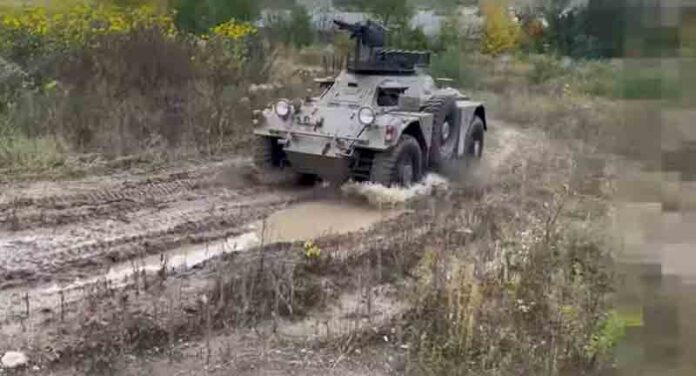
Nevertheless, Ukrainian forces persist in their quest for any available armored vehicles, including older models like the British Ferret armored car, underscoring the critical nature of their equipment shortages. The delivery process is further complicated by speculation about possible peace talks, with sources indicating that ‘it would be awkward to have the tanks loaded on ships in the ocean’ if a ceasefire were to be declared, also mentioning a lack of qualified personnel to accompany the vehicles during transit.

In a statement to ABC, a spokesperson from the Department of Defence indicated that Australia is on track to deliver the M1A1 Abrams by 2025. The export process for the M1A1 is still in progress, and Defence is collaborating with the Ukrainian government according to established agreements regarding the gifting, which includes aspects of delivery and maintenance.

Australia acquired 59 M1A1 tanks in 2007, none of which have been deployed in combat. These tanks are being retired and replaced with the more advanced M1A2 variant. So far, Australia has committed over $1.5 billion in support to Ukraine, which includes $1.3 billion allocated for military aid.

Pakistan employs the Chinese FD-2000 to address the increasing air power capabilities of India

0
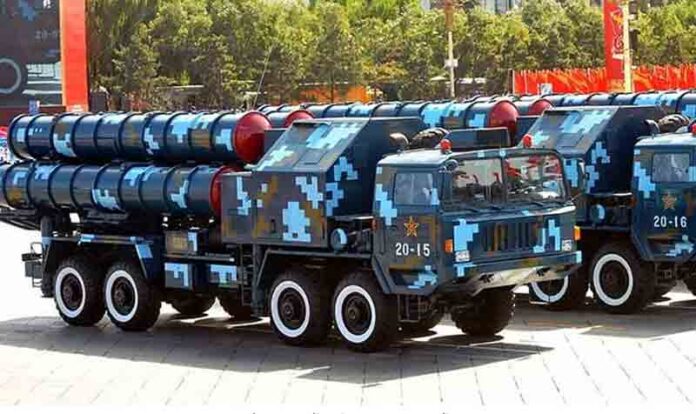
FD-2000 air defence system

In a pivotal shift for South Asian geopolitics, the Pakistan Air Force has incorporated advanced Chinese air defense systems into its military inventory, including the FD-2000, HQ-16FE, and HQ-9BE. This development, reported in early 2025, highlights the strengthening of military relations between Pakistan and China, as well as Pakistan’s strategic response to regional tensions, especially with India.

The introduction of these advanced surface-to-air missile systems marks a significant effort to enhance Pakistan’s air defense capabilities, which could potentially reshape the power dynamics in a region characterized by volatility. Pakistan’s quest for advanced air defense systems is deeply rooted in a long-standing rivalry with India, characterized by intermittent conflicts and a continuous arms race.

The two nuclear-armed nations have engaged in disputes over Kashmir and other matters, with air superiority being a crucial element of their military strategies. For Pakistan, ensuring a credible deterrent against India’s larger and more financially robust military is a strategic necessity.

The procurement of Chinese systems such as the FD-2000, an export variant of the HQ-9, signifies a transition from dependence on Western technology to a closer partnership with Beijing. This collaboration has progressively developed since the 1980s, when Pakistan began to diversify its defense sources in response to fluctuating relations with the United States.

The FD-2000, along with the HQ-16FE and HQ-9BE, signifies a substantial advancement in Pakistan’s capacity to address aerial threats, ranging from fighter jets to cruise missiles.

The FD-2000, created by China’s Precision Machinery Import-Export Corporation, is a long-range surface-to-air missile system intended for targeting various threats. It boasts a range of up to 125 kilometers for aircraft and 25 kilometers for cruise missiles, enabling it to track and engage multiple targets at once due to its sophisticated radar and guidance technologies.

The system utilizes a mix of inertial navigation, mid-course data-link updates, and terminal active radar homing for precise target interception. Its HT-233 passive electronically scanned array radar enhances detection capabilities, making it effective against low-altitude threats such as cruise missiles.

In comparison to Western systems like the American Patriot PAC-3, which has a shorter range of approximately 96 kilometers against aircraft, the FD-2000 provides competitive performance at a more affordable price, which is crucial for budget-limited militaries like Pakistan. However, unlike the Patriot’s hit-to-kill technology, the FD-2000 depends on a proximity-fused warhead, which may be less effective against certain ballistic missile threats.

The HQ-16FE, another Chinese system now part of Pakistan’s arsenal, acts as a medium-to-long-range counterpart to the FD-2000. With a range of 25 to 160 kilometers and an intercept altitude of up to 27 kilometers, it is designed to target fighter-sized aircraft and cruise missiles. This system employs a dual-mode semi-active and active radar homing seeker, supported by a 2D active-scanning phased-array radar with a detection range of 250 kilometers. This radar can track 12 targets and engage eight simultaneously, ensuring comprehensive coverage against multiple threats.

The HQ-16FE plays a vital role in Pakistan’s air defense framework, effectively connecting short-range systems like the Thales Crotale with longer-range options such as the FD-2000. Its origins from the Russian Buk missile family contribute to its established reliability, although its effectiveness against modern stealth aircraft has yet to be demonstrated in actual combat.

The HQ-9BE, a more sophisticated version of the HQ-9 series, significantly enhances Pakistan’s capabilities, boasting a range of 260 kilometers for aircraft and 25 kilometers for tactical ballistic missiles. Its advanced guidance system, featuring the JSG-400 target designation radar and JPG-600 surveillance radar, is specifically designed for intercepting ballistic missiles, which is increasingly important due to India’s growing missile capabilities.

The system can also target cruise missiles at altitudes as low as 20 meters and air-to-ground missiles up to 18 kilometers, further showcasing its adaptability. In contrast to the FD-2000, which relies on older HT-series radars, the HQ-9BE is equipped with electronic counter-countermeasures and decoy systems to improve its resilience against electronic warfare. Although it does not possess the comprehensive anti-ballistic missile capabilities of Russia’s S-400, which is in use by India, the HQ-9BE offers Pakistan a more economical solution for area denial and strategic defense.

The modernization of Pakistan’s air defense is a long-standing initiative, with roots tracing back several decades. During the 1960s and 1970s, Pakistan depended on American systems like the Hawk missile, which offered limited defense against low-altitude threats. The 1980s marked a shift towards European systems, including the French Crotale, which remains operational today. However, U.S. sanctions in the 1990s, prompted by Pakistan’s nuclear ambitions, hindered access to Western technology, leading Islamabad to strengthen ties with Beijing.

The introduction of the HQ-9P by the Pakistan Army in 2021 represented a pivotal development, providing a high-to-medium-altitude defense capability with a range of 125 kilometers. The incorporation of the FD-2000, HQ-16FE, and HQ-9BE enhances this framework, establishing a multi-layered defense network aimed at addressing India’s expanding air and missile capabilities.

Pakistan’s strategic dependence on Chinese systems is driven by several factors. China presents more affordable options compared to Western or Russian systems, which is crucial given Pakistan’s economic limitations. The China-Pakistan Economic Corridor, a $62 billion infrastructure initiative, has strengthened bilateral relations, enabling technology transfers and collaborative projects such as the JF-17 Thunder fighter.

In contrast to Russia, which provides India with advanced systems like the S-400, China does not have competing commitments in the region, positioning it as a dependable ally for Pakistan.

The S-400 system, boasting a range of 380 kilometers and the capability to track 80 targets, provides India with a strategic advantage. However, Pakistan’s multi-layered defense strategy, which includes the FD-2000, HQ-16FE, and HQ-9BE systems, diminishes this edge. In response, India may expedite its Ballistic Missile Defense initiatives or enhance its fleet with additional Rafale fighters equipped with standoff munitions to effectively counter Pakistan’s defenses.

The 2019 Balakot airstrike, during which Indian aircraft breached Pakistani airspace, revealed vulnerabilities in Islamabad’s air defense framework, likely spurring the current modernization efforts. Pakistan’s new defense systems could complicate India’s aerial operations, compelling New Delhi to increasingly depend on stealth capabilities or electronic warfare tactics.

Beyond the India-Pakistan dynamic, China’s involvement as a defense supplier has significant global implications. The success of the HQ-9 series, including the FD-2000, in Pakistan could elevate China’s position in the international arms market, where it competes with the United States and Russia. At the IDEX 2025 defense exhibition in Abu Dhabi, China presented the HQ-9BE, garnering interest from Middle Eastern and African countries in search of cost-effective air defense options.

Egypt’s reported acquisition of the HQ-9B in 2025 highlights China’s expanding export capabilities. Unlike Western defense systems, which often come with political conditions, Chinese offerings provide greater flexibility and lower costs, making them attractive to nations cautious of U.S. or European influence.

Nevertheless, doubts remain regarding the reliability of Chinese systems, with some experts questioning their effectiveness against advanced threats such as fifth-generation fighters. Operational hurdles may temper Pakistan’s aspirations, as integrating the FD-2000, HQ-16FE, and HQ-9BE into a unified network necessitates advanced command-and-control systems and well-trained personnel. While Pakistan’s air defense units have experience with older systems like the Crotale, they face a significant learning curve with these sophisticated platforms.

Logistical challenges, including the acquisition of spare parts and the upkeep of intricate radar systems, may put pressure on Pakistan’s defense budget. Reports from 2022 revealed intentions to enhance the Crotale 4000, indicating a dependence on older systems to address deficiencies. Furthermore, Pakistan’s homegrown LOMADS initiative, a medium-range missile system with a range of 100 kilometers, is still under development, underscoring the difficulties in achieving self-sufficiency.

The wider geopolitical landscape complicates Pakistan’s air defense strategy. The United States, which was once a primary provider of military equipment to Pakistan, has diminished its involvement since the 1990s, shifting its focus to counterterrorism collaboration.

In contrast, China’s support aligns with its broader strategy to counter India and extend its influence in the Indian Ocean region. The anticipated sale of China’s J-35 stealth fighter to Pakistan, reported in 2025, could further alter the regional balance, prompting India to expedite its own fifth-generation fighter program.

For the United States, Pakistan’s alignment with China raises alarms about technology proliferation and the diminishing of Western influence in South Asia. Strategically, Pakistan’s air defense expansion illustrates a classic dilemma: the quest for security through military modernization risks escalating tensions with a more dominant neighbor.

The FD-2000, HQ-16FE, and HQ-9BE systems enhance Pakistan’s capacity to deter aerial threats, yet they may also provoke counteractions from India, potentially igniting a cycle of escalation. The effectiveness of these systems will hinge on Pakistan’s capability to incorporate them into a cohesive defense network, a challenge made more difficult by technical and financial limitations.

Additionally, reliance on Chinese technology links Pakistan’s security to Beijing’s strategic interests, raising concerns about autonomy in a region marked by intensifying great-power rivalries.

As South Asia navigates a complex landscape, the impact of Pakistan’s modernization of its air defense systems reaches far beyond the subcontinent. China’s rise as a primary supplier of sophisticated weaponry poses a challenge to the established arms exporters, altering the dynamics of global defense markets.

For Pakistan, the FD-2000 and similar systems present an opportunity to enhance its resilience against aerial threats; however, their effectiveness depends on addressing operational challenges and navigating the geopolitical consequences. Will these systems elevate Pakistan to a significant defensive power, or will they further entangle it in a competitive regional rivalry? The outcome could influence the trajectory of South Asian security for many years ahead.

US Navy has lost a $60 million jet at sea after it fell off an aircraft carrier

0
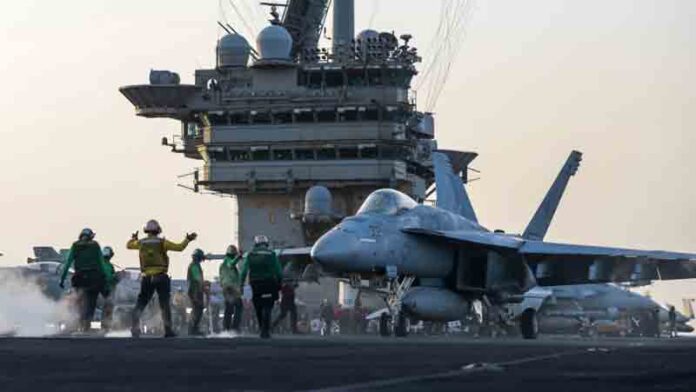
F/A18E Super Hornet preparing for launch on the USS Harry S. Truman.

A US Navy F/A-18 Super Hornet fighter jet was lost at sea after it fell from the USS Harry S. Truman aircraft carrier while being towed aboard, according to a statement from the Navy on Monday.

An official indicated that initial reports suggested the Truman executed a sharp turn to evade Houthi fire, which led to the jet falling overboard. Yemen’s Houthi rebels claimed responsibility for a drone and missile attack on the aircraft carrier, which is currently operating in the Red Sea as part of a significant US military campaign against the Iran-backed group.

All personnel on board have been accounted for, with one sailor reported to have sustained a minor injury. The Navy’s statement noted, ‘The F/A-18E was actively being towed in the hangar bay when the crew lost control of the aircraft, resulting in both the aircraft and tow tractor falling overboard.’

Immediate actions were taken by the sailors to clear the area before the aircraft went overboard, and an investigation is currently underway. A second US official informed CNN that the aircraft has since sunk. The cost of an individual F/A-18 fighter jet exceeds $60 million, as per Navy reports.

US Navy carriers, the largest warships globally at nearly 1,100 feet long and displacing almost 100,000 tons, are surprisingly agile for their size. Nimitz-class carriers like the Truman, powered by two nuclear reactors driving four propeller shafts, can achieve speeds over 34 mph. While specific details regarding the Truman’s evasive maneuver remain undisclosed, images and videos on the Defense Department’s website demonstrate that these massive vessels can tilt significantly during high-speed turns.

Carl Schuster, a former US Navy captain, explained to CNN that carriers typically employ a ‘zig-zag’ strategy to avoid missile attacks, executing a series of alternating 30- to 40-degree turns, each taking about 30 seconds, with the initial turn being quite sharp, akin to riding in a zig-zagging vehicle.

The vessel tilts approximately 10 to 15 degrees during the turn, resulting in a displacement of about 100 to 200 yards from any intended target if traveling at full speed, according to reports. The Truman Carrier Strike Group is currently stationed in the Middle East and was operating in the Red Sea at the time of the event.

The Navy reiterated on Monday that the strike group and its air wing are ‘fully mission capable.’

Multiple attacks

The Truman has faced multiple attacks from the Houthis, making headlines in February when it collided with a merchant vessel near Egypt, fortunately without any reported injuries. Additionally, an F/A-18 from the Truman was mistakenly engaged and shot down by the USS Gettysburg in the Red Sea last December, with both pilots safely ejecting.

Other US Navy vessels in the area have also been targeted by Houthi fire. In early 2024, a US destroyer in the Red Sea activated its Phalanx Close-In Weapon System, its final defense against missile threats, when a Houthi-launched cruise missile came within a mile, mere seconds from impact.

The Houthi attacks on US warships escalated after the US Navy intervened to prevent the group from striking commercial vessels bound for Israel in response to its invasion of Gaza in October 2023. Recently, the Trump administration has intensified airstrikes on Houthi positions in Yemen, leading to retaliatory threats against US naval forces from the rebel group.

The Houthi-controlled armed forces in Yemen declared earlier this month that ‘Yemen will not cease its support operations for the Palestinian people until the Israeli aggression on Gaza ends and the blockade is lifted,’

Removal of Ukrainian forces from Kursk by Russia eliminates an obstacle to achieving peace.

0

The expulsion of Ukrainian forces from the Kursk region by Russia marks the conclusion of the largest incursion into Russian territory since World War II, eliminating a significant obstacle to a peace agreement that Moscow was hesitant to finalize with a substantial enemy presence on its land.

Following the announcement of the successful Kursk operation, President Vladimir Putin proclaimed a unilateral three-day ceasefire to commemorate the 80th anniversary of the Soviet Union’s victory in World War II. Two anonymous Russian sources informed Reuters that the Kremlin found it unacceptable to resolve the conflict while Ukrainian troops remained in Kursk.

Just over two years after Russia’s invasion in 2022, Ukraine launched its most ambitious offensive on August 6, breaching the Russian border into the Kursk region, bolstered by numerous drones and advanced Western weaponry. At its peak, Ukrainian forces claimed control over nearly 1,400 square kilometers of Kursk, but the operation proved to be costly for Kyiv.

Since then, Russia has gained approximately 2,000 square kilometers in Ukraine, now controlling an area nearly equivalent to the size of Pennsylvania, as per Ukrainian open-source maps. Some analysts suggest that Russia’s rapid progress, particularly in eastern Ukraine, was facilitated by the diversion of Ukrainian forces to Kursk.

Christopher McCallion, a fellow at Defense Priorities, a Washington DC think tank advocating for a robust U.S. military with a cautious foreign policy, remarked, ‘Essentially, Ukraine traded territory it values the most – its own – for territory it didn’t value and that it couldn’t hold indefinitely.’

Despite weeks of retreat, Ukraine claims to still have some active forces in Kursk and argues that the incursion diverted Russian attention from further advances on the eastern front by necessitating the deployment of Russian troops elsewhere. Kyiv has also stated that its objectives included safeguarding its Sumy border region and acquiring territory that could be exchanged in future peace negotiations.

Current negotiations, facilitated by Washington’s diplomatic efforts, are in progress, albeit without the leverage Ukraine had hoped for. Significant disparities persist that could jeopardize U.S. President Donald Trump’s peace initiative. Should the discussions falter, Russian forces are expected to continue their military actions, according to one source.

Meanwhile, Ukraine’s military general staff refuted claims that hostilities had ceased in the Kursk region, asserting that their defensive operations are ongoing. Recently, Russia has intensified its assaults in Sumy, which borders Kursk, as reported by local officials.

A Russian missile strike on April 14 resulted in the deaths of 35 individuals in Sumy’s capital. Russia claimed the attack was aimed at a gathering of Ukrainian soldiers. Despite skepticism in Ukraine regarding the value of the Kursk offensive, President Volodymyr Zelenskiy has confirmed that Ukrainian forces are now active in Russia’s Belgorod region, also bordering Ukraine, framing it as a measure to safeguard Ukrainian towns.

Russia currently holds portions of land across the border from Belgorod in Kharkiv. According to U.S. proposals, Ukraine could regain full control of its territory in Kharkiv as part of a peace agreement, while Russia would maintain control over nearly one-fifth of Ukraine.

Largest tank battle

For the Kremlin, the incursion into Kursk, the site of the largest tank battle in history between Soviet and Nazi forces in 1943, represents a significant embarrassment. The announcement of a victory over Ukrainian troops coincides with the upcoming 80th anniversary of the Soviet Union’s triumph over the Nazis on May 9, providing President Putin with a narrative to present to distinguished guests, including China’s Xi Jinping and Brazil’s Luiz Inacio Lula da Silva.

Despite earlier alerts about a potential attack, Russian forces were caught off guard by the Ukrainian offensive, as reported by Russian sources. Officials described a state of disarray as civilians fled eastward while border guards and military personnel attempted to confront agile Ukrainian units equipped with Western arms on the roads of Kursk. Over 120,000 individuals were evacuated, and a visibly frustrated Putin was seen publicly reprimanding the then-governor of Kursk, Alexei Smirnov, who was arrested in April for allegedly embezzling funds meant for border defense, a charge he denies.

North Korean artillery and troops assisted Russia in its defense in Kursk, with Putin personally thanking North Korean leader Kim Jong Un for the support. According to Russia’s defense ministry, Ukrainian forces incurred over 76,000 casualties and lost more than 412 tanks among thousands of military vehicles. Conversely, Ukraine asserts that Russia faced over 62,000 casualties during the conflict. Both sides have refrained from disclosing their own casualty figures, and the accuracy of these claims remains unverified.

Counteroffensive

In August, as Ukrainian forces hurried to expand their territory in Kursk, Russia deployed units to the region to impede their progress and safeguard the Kurchatov nuclear power station, which provides a significant portion of electricity to southern Russia. Within a month, the front lines stabilized, allowing Russia to launch a counteroffensive.

David J. Betz, a professor of modern warfare at King’s College London, remarked to Reuters, ‘There were likely some very embarrassed Russian generals, but the Ukrainian incursion was chaotic and frankly irrational.’ He noted that while Russia has a strong history of self-defense, it often relies on manpower and distance rather than geographical advantages, unlike more fortunate nations.

Gradually, Russian forces began to weaken Ukrainian defenses, deploying thousands of fiber-optic drones that are more resistant to jamming, according to both Russian and Western sources. Within three months, Russia had reduced the area under Ukrainian control by more than half, with Ukrainian maps indicating that by February 6, the territory held by Ukraine had shrunk to 428 square kilometers.

On the third anniversary of its invasion, as Russian forces launched attacks, Putin made a surprise visit to Kursk in military attire, instructing top military officials to intensify their offensive and proposing the establishment of a buffer zone along the Ukrainian border. In March, Ukraine lost over 300 square kilometers of territory it had previously controlled in Kursk.

Valery Gerasimov, Russia’s chief general overseeing the war, informed Putin on Sunday that Kursk had been cleared following the expulsion of the last Ukrainian units from the village of Gornal near the border.

He stated that Ukraine had deployed 60,000 soldiers in Kursk during the peak of the operation, which weakened its other military units, and commended North Korean forces for fighting alongside their Russian allies in Kursk.

Gerasimov informed Putin that, following his directives, Russian troops were ‘persisting’ in establishing a buffer zone and had captured 90 square kilometers of Ukraine’s Sumy region.

Defence Minister of Pakistan warns that an Indian military incursion is likely to occur soon

0
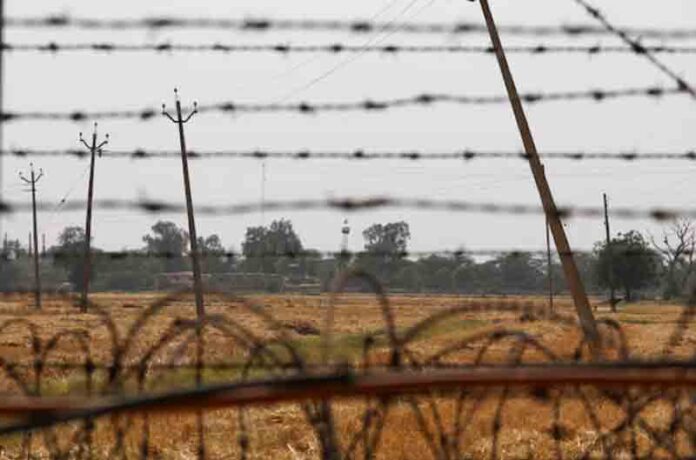
A Pakistan flag is seen on Pakistan Rangers' Post near the Attari-Wagah border crossing

On Monday, Pakistan‘s Defence Minister warned that a military incursion from India is likely following a deadly attack on tourists in Kashmir last week, escalating tensions between the two nuclear-armed countries.

The attack resulted in 26 fatalities and sparked outrage in India, leading to demands for action against Pakistan. India has accused Pakistan of supporting militancy in Kashmir, a disputed region over which both nations have fought two wars.

Defence Minister Khawaja Muhammad Asif stated in an interview with Reuters that Pakistan has bolstered its military presence in response to the imminent threat, and strategic decisions have been made accordingly.

He noted that India’s aggressive rhetoric has increased and that the Pakistani military has informed the government about the potential for an Indian offensive, although he did not elaborate on his reasoning.

Following the Kashmir incident, India named two suspects as Pakistani militants, a claim that Islamabad has denied, calling for an impartial investigation.

Asif emphasized that Pakistan remains on high alert and would only consider using its nuclear capabilities if there is a direct threat to its existence.

Russia states that the initiation of direct peace negotiations should be initiated by Ukraine

0
Kremlin spokesman Dmitry Peskov

On Monday, Russia announced that it is awaiting a signal from Ukraine indicating a willingness to engage in direct negotiations to resolve their conflict, but has not observed any indications of progress.

The Kremlin mentioned last Friday that the potential for direct discussions was brought up during a three-hour meeting between President Vladimir Putin and U.S. envoy Steve Witkoff.

Since March 2022, shortly after the onset of Russia’s full-scale invasion of Ukraine, Moscow and Kyiv have not engaged in direct talks. Later that year, Ukrainian President Volodymyr Zelenskiy issued a decree that prohibited negotiations with Putin following Russia’s annexation of four Ukrainian regions.

Zelenskiy, who met with U.S. President Donald Trump during Pope Francis’ funeral, stated that Kyiv would be open to discussions with Moscow once a ceasefire is established. On Monday, Zelenskiy’s chief of staff, Andriy Yermak, remarked that ongoing Russian assaults contradicted the Kremlin’s claims of desiring peace.

‘Russia is not halting its fire at the front and is currently attacking Ukraine with Shahed drones,’ Yermak posted on Telegram, referring to the Iranian-made drones extensively utilized by Russian forces. ‘All of Russia’s assertions about peace while continuing to attack are simply false.’

When asked whether the initiative for direct talks should originate from Ukraine or the United States, Kremlin spokesman Dmitry Peskov responded, ‘It should come from Kyiv; at the very least, Kyiv needs to take some steps in this direction. They have a legal prohibition on this. However, we have yet to see any action.’

He added that Moscow would persist with its ‘special military operation.’ Both Moscow and Kyiv are facing pressure from the U.S. to reach a resolution to end the conflict, which has become the deadliest in Europe since World War II. Ukraine accuses Russia of stalling to gain more territory and has called for increased international pressure to compel Moscow to cease hostilities.

Conversely, Russia claims that Ukraine is unwilling to make any compromises and seeks a ceasefire solely on its own terms.

On Friday, Putin informed Witkoff that Russia is prepared to engage in discussions with Kyiv without any preconditions, as stated by a Kremlin aide.

Trump also mentioned on the same day that both parties were ‘very close to reaching an agreement.’ Recently, he has expressed heightened criticism towards Moscow, asserting that there is no justification for launching missiles into civilian regions and expressing worry that Putin is merely delaying progress.

India has finalized a $7.4 billion deal for 26 Rafale fighter jets, as per an official statement

0
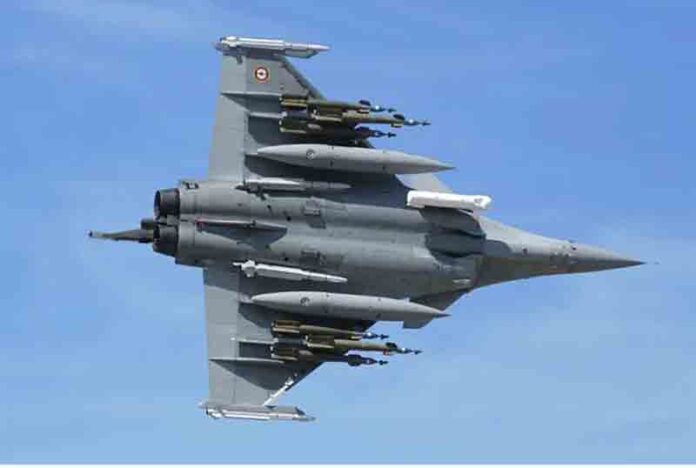
Rafale fighter

On Monday, India finalized an agreement with France to acquire 26 Rafale fighter jets for its navy, amounting to 630 billion rupees ($7.41 billion), as reported by an official from the Indian defense ministry to Reuters.

This acquisition received approval earlier this month from India’s security cabinet, led by Prime Minister Narendra Modi. Currently, the Indian Air Force operates 36 Rafale fighters, while the navy’s fleet primarily consists of Russian MiG-29 aircraft.

This deal is part of India’s efforts to modernize its military, decrease reliance on Russian equipment, and enhance domestic arms production to support forces stationed along its contentious borders with Pakistan and China.

The Indian navy has expressed concerns over China’s increasing activities in the Indian Ocean over the last decade, with Beijing deploying dual-purpose vessels in the area and establishing a military base in Djibouti since 2017.

Additionally, this agreement signifies a continuation of India’s historical dependence on French military equipment, which includes Mirage 2000 jets purchased in the 1980s and Scorpene-class submarines ordered in 2005.

Moscow aims for a ‘balance of interests’ with Ukraine and the U.S., says Lavrov

0
Russian Foreign Minister Sergey Lavrov

In an interview on Sunday, Russian Foreign Minister Sergey Lavrov criticized CBS host Margaret Brennan, reiterating Moscow’s willingness to pursue a ‘balance of interests’ with both Ukraine and the United States. Brennan pointed out that she had not heard Lavrov indicate any readiness for concessions from Moscow. Lavrov responded, ‘No, my brief answer is you are wrong.’

He stressed that he has consistently highlighted Russia’s readiness to seek a balance of interests concerning Ukraine and its strategic relationship with the US. He questioned whether this was not considered by the network as readiness for negotiations, expressing frustration at the need for further clarification.

Lavrov also confirmed ongoing communications with Washington about Ukraine and praised US President Donald Trump’s mediation efforts, stating, ‘There are several signs that we are moving in the right direction.’ He insisted that Russia requires assurances that any ceasefire would not be exploited to strengthen the Ukrainian military and called for an end to arms supplies to Ukraine.

Additionally, Russian President Vladimir Putin engaged in extensive discussions with US special envoy Steve Witkoff at the Kremlin on Friday, which presidential adviser Yury Ushakov characterized as ‘constructive and very useful.’ The talks included the possibility of resuming direct negotiations between Moscow and Kiev.

Trump remarked that Ukraine and Russia ‘should now meet, at very high levels, to finish it off,’ noting that most major points have been agreed upon.

During the interview, Lavrov reaffirmed Russia’s stance on Crimea, asserting, ‘Russia does not negotiate over its own territory,’ and commended President Trump for recognizing the peninsula’s status.

Trump stated in an article published by Time Magazine on Friday that Crimea ‘will remain with Russia’ in any peace agreement, adding that even Ukraine’s President Zelensky is aware of this. ‘It has been with them [Russia] for a long time,’ the US president remarked, highlighting that Russian submarines were present there ‘long before any of the periods we are discussing’ and that most residents of Crimea speak Russian.

Russian officials have consistently indicated that Moscow is willing to pursue a negotiated resolution, but they stress that any agreement must acknowledge the existing territorial realities and tackle the underlying issues of the conflict.

Zelensky maintained on Wednesday that Kiev would never formally accept Crimea as part of Russia. Trump sharply criticized this assertion as ‘very detrimental to the Peace Negotiations with Russia, given that Crimea was lost years ago.’

Trump believes that Ukraine’s Zelensky is prepared to surrender Crimea to Russia

0
Ukraine's President Volodymyr Zelensky (R) meets with US President Donald Trump (L) on the sidelines of Pope Francis' funeral at St. Peter's Basilica at the Vatican.

US President Donald Trump expressed his belief that Ukrainian President Volodymyr Zelensky might be willing to surrender Crimea to Russia as part of a ceasefire agreement, as discussions for a truce entered a crucial phase this week.

Trump intensified his demands on Vladimir Putin, urging the Russian leader to cease hostilities and finalize a deal to end the ongoing conflict that began with Russia’s invasion in February 2022. His remarks followed a meeting with Zelensky at Pope Francis’s funeral, which helped mend relations after a significant disagreement between the US and Ukrainian leaders earlier this year.

When asked if he thought Zelensky was prepared to relinquish Crimea, Trump responded affirmatively, despite Zelensky’s consistent assertions to the contrary. He noted that their discussions in the Vatican had included a brief mention of the Black Sea peninsula, annexed by Moscow in 2014.

The 78-year-old US president, who claimed he could resolve the conflict within a day before taking office, has initiated diplomatic efforts to end the violence since January. Concerns have arisen among Kyiv and its Western allies regarding Trump’s potential shift towards Moscow’s stance.

However, he has shown growing frustration with Putin recently, especially following Russian drone and missile strikes that occurred after the Vatican meeting, resulting in casualties in eastern Ukraine.

The White House has indicated that it may withdraw from its role as a mediator if significant progress is not made soon. Trump mentioned he would allow the process ‘two weeks’ to advance.

US Secretary of State Marco Rubio emphasized the critical nature of the upcoming week, stating, ‘We’re close, but not close enough’ to reach an agreement to cease hostilities, as he told NBC. He described the week ahead as crucial.

However, there remains frustration in the US regarding both parties, as the ongoing conflict has ravaged large areas of eastern Ukraine and resulted in tens of thousands of casualties. On Sunday, Ukraine conducted a significant drone strike in Russia’s Bryansk region, resulting in one civilian death and another injury, according to the regional governor.

While Washington has not disclosed specifics of its peace initiative, it has proposed freezing the front lines and recognizing Russian control over Crimea in exchange for an end to the fighting. Russia asserts it has annexed four regions in eastern and southern Ukraine since its full-scale invasion three years ago, despite lacking complete military dominance in those areas. Currently, Russia occupies approximately 20 percent of Ukraine, including Crimea.

‘territorial concessions’

However, Germany’s Defense Minister Boris Pistorius advised on Sunday that Ukraine should not accept all the terms outlined in Trump’s proposed agreement. He acknowledged that a ceasefire ‘may involve territorial concessions,’ but insisted that these would not extend as far as suggested in the latest proposal from the US president.

Europe has advocated for a more significant role in the negotiations regarding Ukraine, with French President Emmanuel Macron and British Prime Minister Keir Starmer briefly joining Trump and Zelensky for discussions at Saint Peter’s Basilica.

Additionally, Rubio had a phone conversation on Sunday with Russia’s Foreign Minister Sergei Lavrov, during which they noted ’emerging prerequisites’ for initiating negotiations aimed at achieving long-term peace, according to a statement from the Moscow foreign ministry.

Russia is adamant about retaining the territory it has seized and is calling for the demilitarization of Kyiv, along with a cessation of Western support.

In a demonstration of the war’s international implications, North Korea confirmed on Monday that it had, for the first time, sent troops to Russia’s Kursk region, stating that its soldiers assisted Moscow in regaining control of the area.

Over the weekend, Moscow announced the ‘liberation’ of Kursk, where Kyiv had initiated a surprise cross-border offensive in August 2024, intending to leverage the land in future peace negotiations. However, President Zelensky asserted on Sunday that Ukraine’s military continues to hold its position on Russian territory.

Global military expenditures reach a historic $2.7 trillion in a significant increase for 2024

0

In 2024, global military spending surged to $2.72 trillion, marking a 9.4% increase from 2023 and the most significant annual rise since the Cold War, as reported by a prominent conflict think tank on Monday.

The escalation in geopolitical tensions prompted a rise in military expenditures across all regions, with Europe and the Middle East experiencing particularly swift increases, according to data from the Stockholm International Peace Research Institute (SIPRI). SIPRI noted that over 100 nations worldwide increased their military budgets in 2024, emphasizing that as governments focus more on military security—often at the cost of other budgetary areas—the economic and social repercussions could profoundly impact societies for years ahead.

The ongoing conflict in Ukraine and uncertainties regarding U.S. support for NATO led to a 17% rise in military spending in Europe (including Russia), surpassing Cold War-era levels. Russia’s military budget reached approximately $149 billion in 2024, a 38% increase from the previous year and double the amount spent in 2015, constituting 7.1% of its GDP and 19% of total government expenditure.

Meanwhile, Ukraine‘s military spending rose by 2.9% to $64.7 billion, representing 43% of Russia’s military budget. With military spending accounting for 34% of its GDP, Ukraine faced the highest military burden globally in 2024. SIPRI remarked that Ukraine is currently dedicating all its tax revenues to military efforts, making it difficult to sustain further increases in military spending given the constrained fiscal environment.

In the U.S., military expenditure grew by 5.7% to $997 billion, which accounted for 66% of total NATO spending and 37% of global military expenditures in 2024.


North Korea acknowledges the deployment of troops to Russia, praising them as ‘heroes’

0
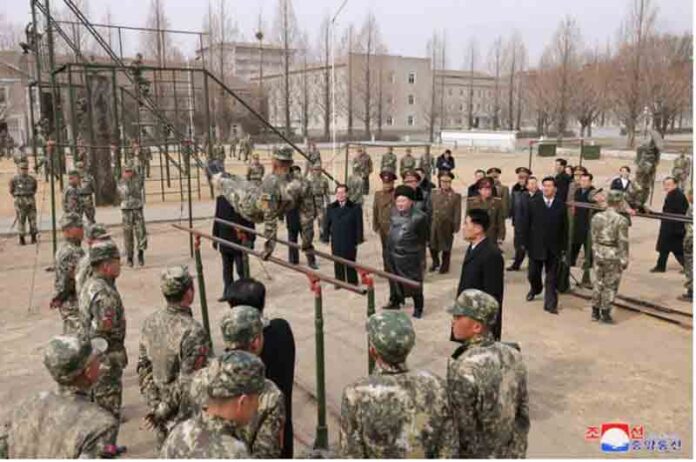
North Korean leader Kim Jong Un watches a cadet practicing on the parallel bars during his visit to the Kang Kon Military Academy, in Pyongyang, North Korea.

On Monday, North Korea officially acknowledged for the first time that it had dispatched troops to support Russia in the ongoing conflict in Ukraine, following directives from leader Kim Jong Un. The North claimed its forces played a role in reclaiming Russian territory previously held by Ukraine.

The successful conclusion of the operation to liberate the Kursk region was described as a demonstration of the ‘highest strategic level of the firm militant friendship’ between North Korea and Russia, according to the KCNA state news agency, which cited the ruling party.

Last week, Russia announced that Ukrainian troops had been driven out of the last village they occupied, a claim that Kyiv refuted, asserting that its forces remained active in Belgorod, another Russian region adjacent to Ukraine.

The Central Military Commission of North Korea’s ruling Workers’ Party indicated that Kim Jong Un authorized the troop deployment as part of the comprehensive strategic partnership treaty he signed with Putin last year. Under Kim’s command, North Korean military units engaged in combat with the same dedication they would exhibit if defending their own nation, as reported by KCNA.

‘Those who fought for justice are all heroes and representatives of the honor of the motherland,’ KCNA quoted Kim as stating. North Korea expressed that it considers it an honor to ally with a powerful nation like the Russian Federation.

In response, the U.S. State Department called for an end to North Korea’s troop deployment to Russia and any reciprocal support from Russia, asserting that such actions violate U.N. Security Council resolutions regarding the training of North Korean soldiers.

A spokesperson for the State Department remarked that nations like North Korea, whose backing has ‘prolonged the Russia-Ukraine war, bear responsibility.’ South Korea characterized the confirmation of troop deployment as an ‘admission of criminal act’ and condemned North Korea for the ‘inhumane and immoral’ choice to send its youth into battle to bolster its regime.

Ukrainian officials reported that North Korea deployed approximately 14,000 troops, which included 3,000 reinforcements to compensate for their losses. Despite facing significant casualties due to a lack of armored vehicles and experience in drone warfare, these troops adapted swiftly.

On April 24, Ukraine’s Special Operations Forces announced the elimination of a unit comprising 25 North Korean soldiers in Kursk, releasing a video that featured one of the deceased soldiers along with their belongings, including a note in Korean.

Additionally, South Korean officials indicated that North Korea has provided various weapons, such as artillery shells and ballistic missiles.

For the first time, Russia confirmed on Saturday that North Korean soldiers have been engaged in combat alongside Russian forces in Kursk, a detail that had not been acknowledged by either Russia or North Korea prior to this.

US military will limit information release on Yemen operations

0

On Sunday, the U.S. military announced that it would not disclose specific information regarding its military operations in Yemen, emphasizing the importance of maintaining operational security. They noted that these strikes have had significant impacts on Houthi rebels.

Last month, President Donald Trump directed an escalation of U.S. military actions in Yemen, with the administration stating that it would persist in targeting Iran-supported Houthi forces until they cease their assaults on shipping in the Red Sea. Recent military actions have resulted in numerous casualties, including 74 fatalities at an oil terminal in mid-April, marking the deadliest strike in Yemen during Trump’s presidency, according to reports from the Houthi-run health ministry.

Human rights advocates have expressed alarm over civilian casualties, prompting three Democratic senators, including Chris Van Hollen, to request accountability from Pentagon chief Pete Hegseth regarding civilian losses. Hegseth has faced criticism for utilizing the unclassified messaging platform Signal to discuss plans for attacks in Yemen.

The U.S. Central Command stated, ‘To maintain operational security, we have purposefully restricted the disclosure of details concerning our current or future operations. We are very intentional in our operational strategy, but we will not disclose specifics about our past or forthcoming actions.’

The military reported that it has targeted over 800 sites since mid-March, claiming to have killed hundreds of Houthi fighters and numerous leaders, as well as dismantling the group’s facilities. The military’s statement indicated that the strikes have ‘destroyed multiple command-and-control facilities, air defense systems, advanced weapons manufacturing sites, and advanced weapons storage locations.’

The U.S. government asserts that these operations are designed to undermine the military and economic capabilities of the Houthis while striving to reduce civilian casualties.

On Thursday, it was reported that a blast on April 20 near a UNESCO World Heritage Site in Sanaa, Yemen, was attributed to a Houthi missile rather than an American airstrike. The Houthis claimed that a dozen individuals lost their lives in this incident and rejected the U.S. denial.

Over the past decade, the Houthis have gained control over large areas of Yemen. Since November 2023, they have been targeting vessels in the Red Sea, asserting that their actions are aimed at ships associated with Israel. They claim to be supporting Palestinians in Gaza, where Israel’s ongoing conflict has resulted in over 51,000 deaths, according to the Gaza health ministry, alongside accusations of genocide and war crimes that Israel refutes.

The recent escalation in the long-standing Israeli-Palestinian conflict began in October 2023, following an attack by Hamas militants on Israel that resulted in 1,200 fatalities and approximately 250 hostages taken, as reported by Israel.

U.S. is urging India and Pakistan to seek a responsible resolution

0
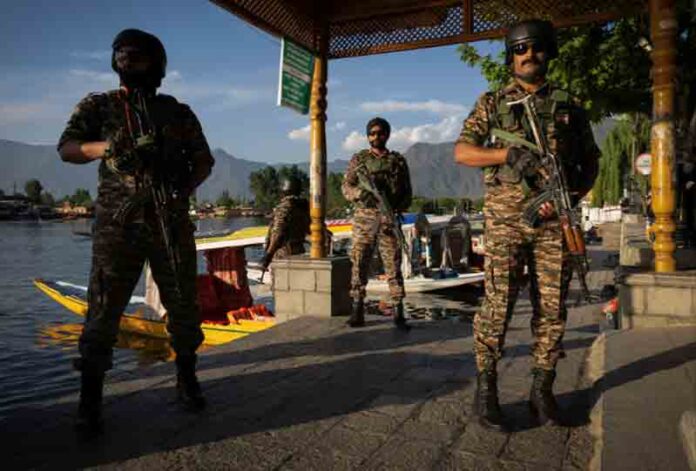
Indian security force personnel stand guard on the banks of Dal Lake, following a suspected militant attack near south Kashmir's Pahalgam, in Srinagar.

On Sunday, the U.S. State Department announced that it is engaging with both India and Pakistan, urging them to pursue what it termed a ‘responsible solution’ amid escalating tensions following a recent Islamist militant attack in Kashmir.

Publicly, the U.S. has shown support for India in the aftermath of the attack but has refrained from criticizing Pakistan. India has accused Pakistan of being behind the April 22 attack in Indian-administered Kashmir, which resulted in over two dozen fatalities, while Pakistan has denied any involvement and called for an impartial investigation.

A spokesperson for the U.S. State Department stated, ‘This is an evolving situation, and we are closely monitoring developments. We have been in contact with the governments of India and Pakistan at various levels.’ The spokesperson further emphasized that the United States encourages all parties to collaborate towards a responsible resolution.

Additionally, the spokesperson reiterated Washington’s support for India, condemning the terrorist attack in Pahalgam, echoing sentiments expressed by President Donald Trump and Vice President JD Vance.

As India becomes an increasingly vital partner for the U.S. in countering China’s growing influence in Asia, Pakistan continues to be an ally, although its significance has waned following the U.S. withdrawal from Afghanistan in 2021.

Michael Kugelman, a South Asia analyst based in Washington and contributor to Foreign Policy magazine, noted that India is now a much closer ally to the U.S. than Pakistan, which may concern Islamabad, as any military retaliation from India could lead to U.S. support for India’s counter-terrorism efforts rather than opposition.

Kugelman noted that due to Washington’s engagement and ongoing diplomatic initiatives regarding Russia’s conflict in Ukraine and Israel’s situation in Gaza, the Trump administration is facing numerous global challenges and may not prioritize India and Pakistan during the initial phase of rising tensions.

Hussain Haqqani, a former Pakistani ambassador to the U.S. and a senior fellow at the Hudson Institute, echoed this sentiment, indicating a lack of U.S. interest in de-escalating the current situation. He remarked, ‘India has long-standing concerns about terrorism originating from across the border, while Pakistan believes that India aims to undermine its sovereignty. Both nations tend to escalate tensions periodically, but this time, there appears to be no U.S. inclination to intervene.’

The region of Kashmir, claimed entirely by both India and Pakistan, has been a historical flashpoint, with both countries having engaged in wars over it. Indian Prime Minister Narendra Modi, representing a Hindu nationalist agenda, has pledged to pursue the perpetrators of the recent Kashmir attack ‘to the ends of the earth,’ asserting that those responsible will face severe consequences.

There have been increasing calls from Indian politicians for military action against Pakistan. Following the attack, both nations implemented a series of retaliatory measures, including Pakistan closing its airspace to Indian flights and India suspending the 1960 Indus Waters Treaty, which governs water-sharing from the Indus River and its tributaries.

Additionally, both sides have resumed cross-border fire after a period of relative tranquility. A lesser-known militant group, Kashmir Resistance, claimed responsibility for the attack via social media, with Indian security agencies identifying it as a front for Pakistan-based militant organizations like Lashkar-e-Taiba and Hizbul Mujahideen.

Ned Price, a former official at the U.S. State Department during President Joe Biden’s administration, remarked that although the Trump administration approached this matter with the necessary sensitivity, the belief that it would support India unconditionally could heighten tensions.

He stated, ‘The Trump Administration has expressed its desire to strengthen the U.S.-India partnership — an admirable objective — but it appears ready to pursue this goal at nearly any expense. If India perceives that the Trump Administration will support it unwaveringly, we may face increased escalation and violence between these nuclear-capable neighbors.’

Prime Minister of Somalia has appointed a new Minister of Defence as part of a cabinet reshuffle

0
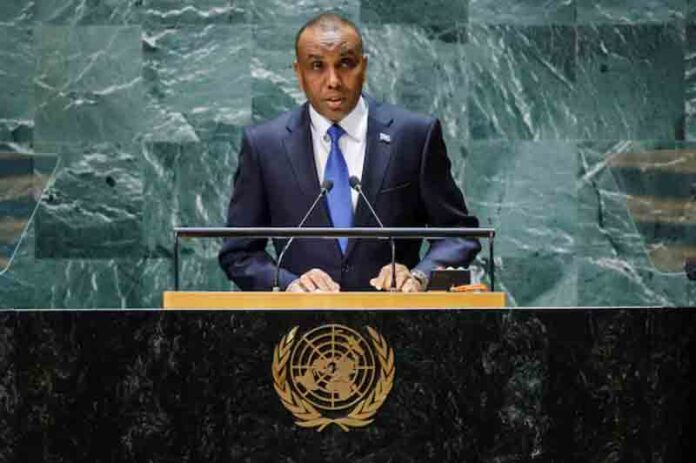
Somalia's Prime Minister Hamza Abdi Barre addresses the 78th Session of the U.N. General Assembly in New York City, U.S.

On Sunday, Somalia‘s Prime Minister, Hamza Abdi Barre, reorganized his cabinet, appointing a new defense minister as part of efforts to combat an Islamist insurgency. The reshuffle, announced by the government spokesperson in a video on the official Facebook page, did not include an explanation from Barre.

Ahmed Moallim Fiqi Ahmed, who has previously held the positions of foreign minister and national security chief, has been named the new defense minister, succeeding Jibril Abdirashid. Additionally, Barre appointed Jibril Abdirashid Haji Abdi as the new second deputy prime minister and Abdisaalan Abdi Ali Daay as the new foreign minister.

This change in defense leadership comes amid the government’s challenges in countering recent territorial gains made by al Shabaab, an al Qaeda-affiliated group. Al Shabaab had briefly taken control of villages within 50 km of Mogadishu, raising concerns about potential threats to the capital.

Although Somali forces have managed to reclaim those areas, al Shabaab continues to make progress in rural regions, while the outlook for international security assistance to Somalia remains uncertain. The group has been conducting an insurgency since 2007, with the goal of overthrowing the government and imposing its interpretation of sharia law.


Israel reports targeting Hezbollah missile sites in southern Beirut

0

On Sunday, the Israeli military announced that it targeted a building in southern Beirut used for storing precision missiles belonging to Hezbollah. This strike further tested the fragile ceasefire between Israel and the Iranian-backed militant group.

Live footage from Reuters captured a large plume of smoke rising from the site nearly an hour after the Israeli army had ordered residents of the Hadath neighborhood to evacuate. Israeli Defence Minister Israel Katz stated that Hezbollah’s precision missiles represent a serious threat to Israel. Hezbollah has not yet responded.

This latest attack adds to the tensions surrounding the U.S.-brokered ceasefire that concluded last year’s devastating conflict between Israel and Hezbollah. Jeanine Hennis-Plasschaert, the U.N. Special Coordinator for Lebanon, remarked on X that the strike in southern Beirut’s suburbs has instilled panic and fear of renewed violence among those yearning for a return to normalcy.

She urged all parties to refrain from actions that could further jeopardize the ceasefire and the implementation of U.N. Security Council Resolution 1701, which ended the month-long war between Israel and Hezbollah in 2006.

Lebanese President Joseph Aoun has called on the United States and France, as guarantors of the ceasefire agreement established in November, to pressure Israel to cease its attacks.

He warned that Israel’s ongoing actions threaten to destabilize the region and compromise its security. Earlier this month, an Israeli airstrike resulted in the deaths of four individuals, including a Hezbollah official, marking the second Israeli strike on a Hezbollah-controlled area in Beirut within five days.

Hostilities in southern Beirut have intensified amid a wider escalation in the region, as Israel resumes strikes on Gaza following a two-month ceasefire, while the United States targets the Iranian-aligned Houthis in Yemen to deter their assaults on Red Sea shipping.

Israel has inflicted significant damage on Hezbollah during the conflict, resulting in the deaths of thousands of its members, the destruction of a large portion of its weaponry, and the removal of key leaders, including Hassan Nasrallah. Hezbollah has refuted any involvement in the recent rocket fire from Lebanon directed at Israel.

U.S. Air Force is considering permanently stationing F-35A stealth fighters in South Korea

0
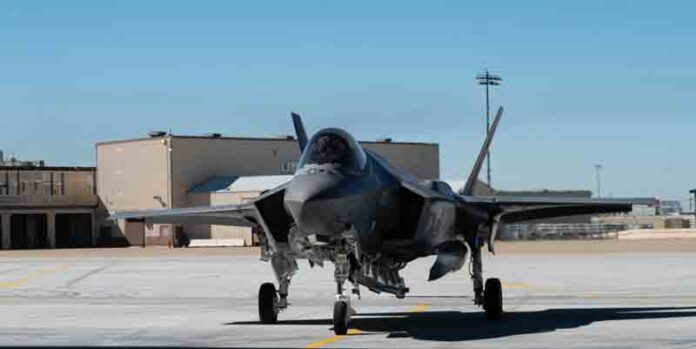
The F-35A Lightning II, dubbed a “Frankenjet” and assigned to the 388th Fighter Wing, returns to Hill Air Force Base, Utah.

As reported by the Korea JoongAng Daily on April 27, 2025, the United States is contemplating the permanent stationing of F-35A stealth fighters at Kunsan Air Base in South Korea. This strategic decision would significantly enhance U.S. air capabilities on the Korean Peninsula, which currently depend largely on F-16 Fighting Falcons.

While F-35As have previously been deployed only for joint exercises, establishing a permanent presence would represent a major strategic shift, introducing advanced 5th-generation airpower to one of the most unstable regions globally. Ongoing discussions are considering the deployment of up to 20 F-35A stealth fighters to Kunsan Air Base, which would augment the Republic of Korea Air Force’s existing fleet of 40 F-35As, acquired through a $6.8 billion deal finalized in 2014 and fully integrated into South Korea’s air defense system.

The permanent introduction of U.S. F-35As would improve interoperability, bolster combined operational readiness, and significantly enhance air superiority capabilities. A U.S. military official from the 7th Air Force noted that while this proposal is under active consideration, no definitive decision has been reached.

Presently, the U.S. military maintains a strong permanent presence in South Korea across all branches, with around 28,500 American troops stationed in the country under the U.S.-ROK Mutual Defense Treaty. The U.S. Army’s Eighth Army is based at Camp Humphreys, the largest overseas U.S. military installation, which includes the 2nd Infantry Division/ROK-U.S. Combined Division, responsible for frontline defenses north of Seoul and equipped with advanced assets such as M1A2 Abrams tanks, Bradley Fighting Vehicles, Apache helicopters, HIMARS rocket artillery systems, and Patriot missile batteries.

The United States Air Force operates under the Seventh Air Force, which is based at Osan Air Base. Osan is home to a Super Squadron consisting of 31 F-16 Fighting Falcons. As per the announcement made on April 24, 2025, the Seventh Air Force intends to initiate a second phase of its Super Squadron test by October 2025. This phase will involve the transfer of an additional 31 F-16s and approximately 1,000 Airmen from Kunsan Air Base to Osan during the summer, effectively establishing two fully operational Super Squadrons.

Kunsan Air Base will remain a key exercise and rotational center, continuing its active flightline operations and strategic munitions storage to facilitate the swift deployment of rotational forces. In addition to air assets, the U.S. Navy plays a crucial role with its rotational presence, utilizing Fleet Activities Chinhae as a support base for visiting carrier strike groups, Aegis-equipped destroyers, and submarines.

Nuclear-powered attack submarines are also periodically deployed to enhance undersea deterrence capabilities. The U.S. Marine Corps maintains a rotational training presence, supported by the III Marine Expeditionary Force from Japan, which is prepared for rapid deployment in amphibious and crisis response operations on the Korean Peninsula.

The permanent stationing of F-35As is regarded as essential to counter the increasing threat posed by North Korea’s expanding ballistic missile capabilities, nuclear weapons initiatives, and the modernization of its conventional forces. The F-35A’s stealth architecture, advanced sensors, electronic warfare systems, and precision strike abilities would enable the United States and South Korea to execute deep strike operations against heavily fortified North Korean targets with little notice.

Furthermore, it would ensure superior air superiority in the initial stages of any potential conflict, which is vital for neutralizing threats before they escalate.

The deployment of additional U.S. F-35As in South Korea would significantly enhance security assurances and facilitate closer integration with their existing F-35A fleet. This would lead to substantial improvements in joint training, operational planning, and network-centric warfare strategies, resulting in a powerful allied force capable of deterring and swiftly countering any aggression from North Korea.

Furthermore, such a deployment would send a strong strategic message, reassuring regional partners and highlighting the United States’ steadfast commitment to defending South Korea and ensuring stability in Northeast Asia.

Ongoing discussions about the potential stationing of U.S. F-35As reflect a broader strategy aimed at achieving overwhelming superiority across land, sea, and air in the Korean Peninsula, emphasizing the deepening military collaboration between the U.S. and South Korea and their mutual resolve to deter threats and maintain peace through strength.

Indian Navy Showcases Power in Arabian Sea: INS Surat’s MR-SAM Test Highlights Maritime Dominance

0
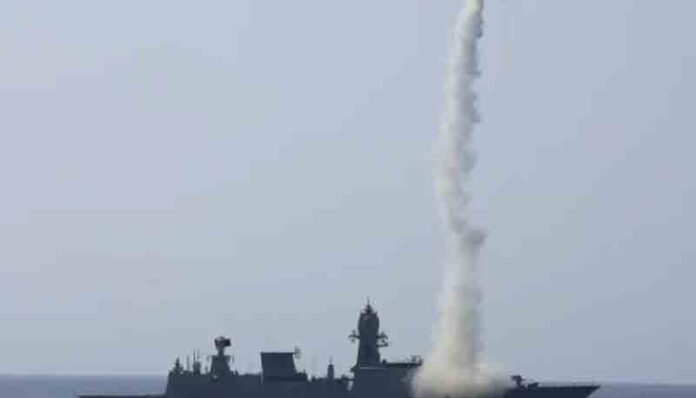
Indian Navy INS Surat launching MR-SAM missile

In a clear show of deterrence amidst rising regional tensions, the Indian Navy conducted a live firing of its Medium-Range Surface-to-Air Missile (MR-SAM). The test took place in the turbulent waters of the Arabian Sea, where the Indian Navy’s advanced guided-missile destroyer, INS Surat, executed the launch of the MR-SAM system, a sophisticated air defense platform developed in collaboration with Israel’s leading aerospace company.

The MR-SAM missile, designed to counter threats within a range of 70 to 100 kilometers, successfully intercepted and destroyed its target, highlighting its crucial role in neutralizing enemy aircraft and incoming missile attacks.

“The Indian Navy ship successfully conducted multiple missile tests, showcasing platform readiness, crew expertise, and the ability to perform long-range strikes,” the Navy stated through its official X (formerly Twitter) account. This missile exercise occurs during a period of escalating hostilities between India and Pakistan.

A senior government official, as reported by local media, noted, “The recent anti-ship missile firing demonstrated the vessel’s capability to transition from peacetime to combat operations while remaining at sea without returning to base ports.

The MR-SAM is a sophisticated air defense missile system that represents a high-tech partnership between Israel Aerospace Industries (IAI) and India’s Defence Research and Development Organisation (DRDO). It combines advanced Israeli radar technology with India’s strategic design needs. Specifically designed to counter a variety of aerial threats—including fighter jets, attack helicopters, stealth drones, and precision-guided cruise missiles—the MR-SAM utilizes cutting-edge Active Electronically Scanned Array (AESA) radar for the detection, classification, and neutralization of threats with exceptional accuracy in hostile and electronic warfare environments.

The missile features a high-explosive fragmentation warhead activated by a proximity fuse to enhance the likelihood of destroying maneuvering targets. With speeds surpassing Mach 2, the MR-SAM provides a swift response to rapid aerial threats, granting a crucial time advantage in contested airspaces.

Additionally, it operates on a ‘fire-and-forget’ basis, allowing operators to disengage from continuous guidance and minimizing vulnerability to enemy countermeasures. Its seamless integration with early warning systems and long-range air defense platforms like the Barak-8 further establishes the MR-SAM as a vital component of multi-layered air defense systems that protect essential national assets.

Its tactical mobility enables quick redeployment to high-risk areas, making it an essential defense for military bases, economic centers, and critical maritime chokepoints. Currently, the MR-SAM is a key element in the aerial defense strategies of India, Israel, Azerbaijan, and other nations focused on security in an era of increasingly sophisticated airborne threats.

The INS Surat (D69), a symbol of India’s naval modernization efforts, is part of the powerful Visakhapatnam-class, a series of destroyers engineered for dominance across air, surface, and subsurface domains.

Built by Mazagon Dock Shipbuilders Limited (MDL) in Mumbai, INS Surat was launched on May 17, 2022, marking a significant milestone in India’s ambitious Project-15B initiative aimed at enhancing its blue-water naval capabilities. Equipped with array of weaponry, including the BrahMos supersonic cruise missile, MR-SAM air defense systems, heavyweight torpedoes, and anti-submarine rockets, this destroyer represents a powerful combination of offensive and defensive capabilities.

Its advanced electronic systems feature the Israeli MF-STAR AESA radar, which provides accurate multi-target tracking and interception, positioning INS Surat as one of the most formidable surface combatants in the Indo-Pacific region. In addition to its kinetic weaponry, the ship is outfitted with state-of-the-art electronic warfare systems, sophisticated HUMSA-NG sonar arrays for underwater surveillance, and helicopters designed for anti-submarine missions, ensuring comprehensive dominance in three-dimensional battle scenarios.

Weighing around 7,400 tonnes and measuring 163 meters in length, INS Surat can reach speeds of up to 30 knots and has an operational range exceeding 7,000 kilometers, allowing it to project power across vital maritime routes.

US and Philippine forces intercept drones during collaborative defense exercises

0
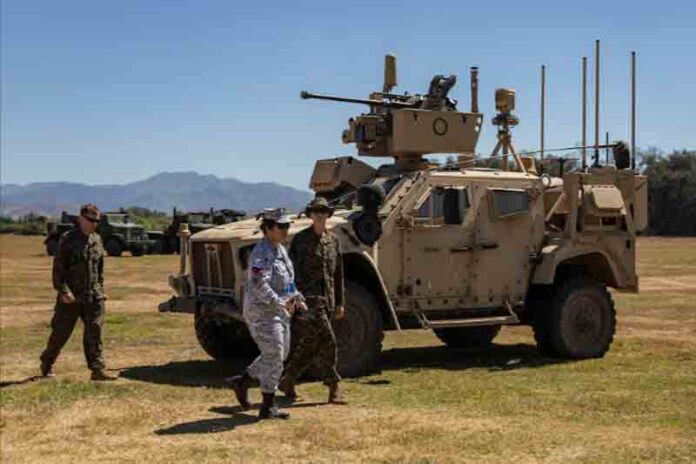
Philippine and U.S. soldiers walk past a MADIS or Marine Air Defense Integrated System during the annual joint military exercises between the U.S. and Philippine troops called "Balikatan" or shoulder-to-shoulder, at a naval base in San Antonio, Zambales province, Philippines.

During live-fire exercises on Sunday, U.S. and Philippine forces successfully shot down drones using Stinger missiles, as part of their annual joint military drills amidst rising tensions with Beijing over the South China Sea.

This year’s Balikatan exercises, which involve over 14,000 troops from both nations and will continue until May 9, emphasize a comprehensive battle assessment between the two defense treaty allies in light of regional security issues. China has condemned these drills as provocative.

The exercises took place in Zambales, a province in the western Philippines that borders the South China Sea, a contentious area between China and Southeast Asian countries. Relations between Beijing and Manila have deteriorated significantly, with frequent clashes in the disputed waters raising fears of military conflict.

Last week, Chinese state media reported that the coastguard had conducted maritime control operations at Sandy Cay, known as Tiexian Reef by China, while the Philippines carried out its own maritime operation on Sunday, noting the illegal presence of Chinese coastguard and maritime militia vessels.

Although the Philippine military characterized this year’s drills as a preparation for national defense, they clarified that the exercises were not aimed at any specific country. The integrated air and missile defense exercise in Zambales utilized the Marine Air Defense Integrated System (MADIS), marking its second live-fire test and first deployment in the Philippines.

This type of training is absolutely invaluable to us, said 3rd Marine Littoral Regiment Officer John Lehane to reporters following the exercise. Additionally, this year’s Balikatan introduced the NMESIS, the U.S. anti-ship missile system, which will be utilized in maritime security operations in Northern Luzon and the Batanes Islands, located near Taiwan.