Wednesday, August 26, 2026
Home Blog Page 38

India–US P-8I Poseidon Deal Stalls as Price Shock and Trade Tensions Spill Into Defence Ties

0

As 2025 draws to a close amid intensifying great-power competition in the Indo-Pacific, negotiations between India and the United States over the acquisition of six additional Boeing P-8I Poseidon maritime patrol aircraft remain frozen, trapped by a sharp cost escalation and a widening trade dispute that has begun to erode defence cooperation between Washington and New Delhi.

Once viewed as one of the most secure and operationally critical procurements for the Indian Navy, the P-8I expansion has become a test case for how inflation, tariff-driven economic pressure, and strategic mistrust can derail even mature military partnerships. Despite repeated high-level engagements involving senior US defence officials and Boeing executives, no breakthrough has emerged, reinforcing concerns in New Delhi that Washington’s Indo-Pacific rhetoric is increasingly at odds with its transactional trade posture.

The stalled deal now sits at the intersection of India’s maritime security needs, America’s economic statecraft, and China’s expanding naval footprint across the Indian Ocean Region. For the Indian Navy, the delay carries direct operational consequences, threatening surveillance gaps at a time when People’s Liberation Army Navy submarines and intelligence vessels are appearing with greater frequency near India’s maritime approaches.

A force multiplier under strain

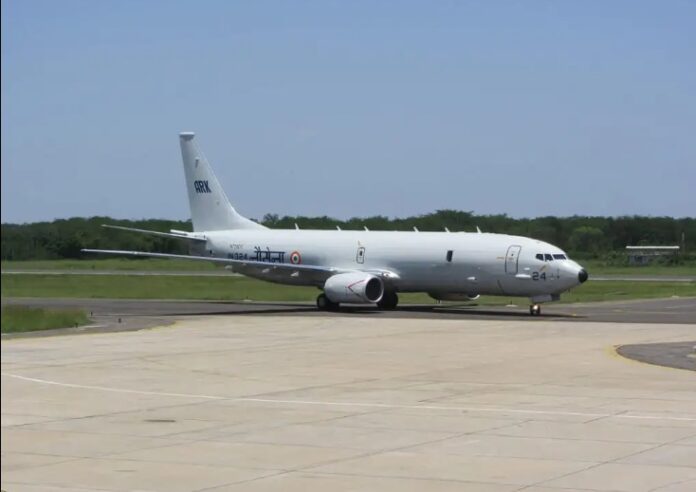
The Boeing P-8I Poseidon has, for more than a decade, been the backbone of India’s maritime domain awareness. Derived from the US Navy’s P-8A but customised for Indian requirements, the aircraft integrates advanced radar, electro-optical sensors, sonobuoy processing, anti-submarine warfare (ASW) suites, torpedoes, and anti-ship missiles into a long-range, network-centric platform.

Indian P-8I Poseidon

India currently operates 12 P-8I aircraft, split between INS Rajali in Tamil Nadu and Goa. The Navy has long assessed that a minimum fleet of 18 aircraft is necessary to sustain continuous coverage across the Arabian Sea, Bay of Bengal, Andaman Sea, and critical chokepoints such as the Malacca Strait. The urgency has grown as Chinese nuclear-powered submarines, including Type-093 Shang-class boats, conduct longer and more complex patrols in the region.

Beyond maritime roles, the aircraft has demonstrated strategic versatility, including overland surveillance during the 2017 Doklam standoff, highlighting its value as a multi-domain intelligence platform rather than a purely naval asset.

Cost shock and trade fallout

At the heart of the impasse is a dramatic rise in projected costs. The deal, cleared under the US Foreign Military Sales framework in 2021 at about USD 2.42 billion, was revised in mid-2025 to nearly USD 3.6 billion—an increase of almost 50 percent. Indian defence planners privately describe the escalation as operationally unjustifiable and politically untenable, particularly given the absence of similar inflation in earlier P-8I acquisitions.

The dispute has been compounded by a broader trade confrontation after Washington imposed a 25 percent tariff on Indian imports in August 2025, citing New Delhi’s continued purchases of discounted Russian oil. US President Donald Trump publicly defended the move, while India dismissed it as a double standard, pointing to China’s larger Russian oil imports facing no comparable penalties.

The tariff decision has effectively poisoned the negotiating climate, prompting India’s Ministry of Defence to pause talks and review major US defence acquisitions. Analysts say the episode has exposed vulnerabilities in India’s reliance on FMS mechanisms, where limited pricing flexibility and US domestic industrial pressures can collide with long-term force-planning assumptions.

Strategic implications

For Washington, the stalemate risks undermining its image as India’s most reliable high-end defence partner at a moment when Beijing is actively offering alternative surveillance and maritime solutions to regional states on more flexible commercial terms. Strategically, the deadlock weakens Indo-Pacific deterrence narratives by signalling that economic leverage can override shared security objectives.

For India, the episode reinforces a doctrinal shift toward procurement diversification and accelerated indigenisation under the “Aatmanirbhar Bharat” policy. Without meaningful offsets, local assembly, or deeper industrial participation by Indian firms, the deal is unlikely to regain momentum.

While alternatives such as indigenous UAV programmes or platforms like Japan’s Kawasaki P-1 exist, analysts note that none match the P-8I’s operational maturity, sensor fusion, or interoperability with US and allied forces. As China’s naval shadow lengthens across the Indian Ocean, the fate of the P-8I negotiations has become a litmus test for whether India–US defence cooperation can withstand the pressures of transactional geopolitics—or whether economic disputes will continue to blunt a partnership central to balancing maritime power in the Indo-Pacific.
Israel Weighs Gaza Border Redraw Ahead of Netanyahu–Trump Talks, Report Says

0
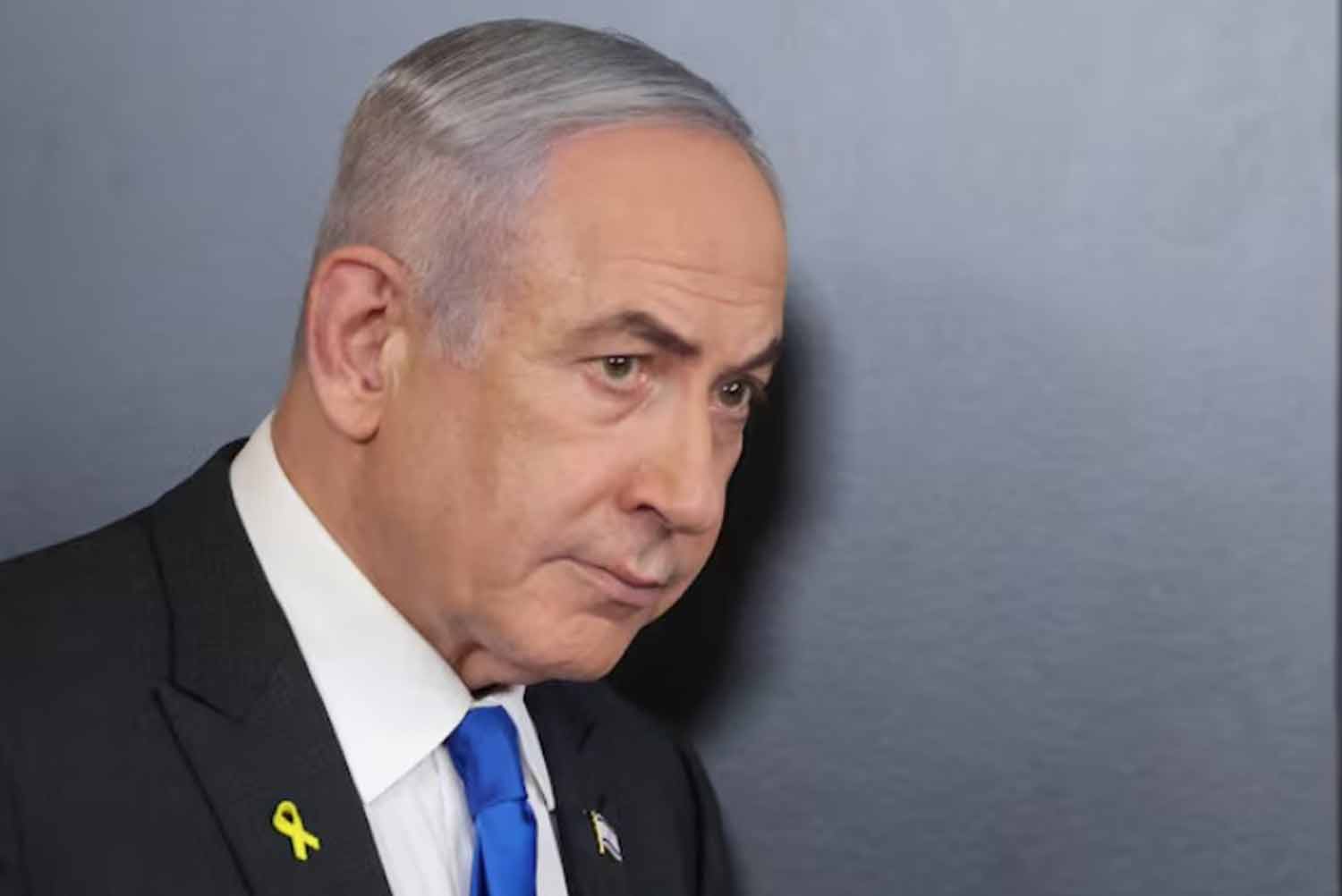
Prime Minister Benjamin Netanyahu

Israeli Prime Minister Benjamin Netanyahu is due to travel to the United States next week for talks with President Donald Trump, as intensive political and security-level discussions focus on the future of the Gaza Strip and the possibility of altering its borders.

According to Israel’s Walla news site, officials are examining whether to seek US backing to redraw the Israel–Gaza boundary by elevating the so-called “yellow line”—a military demarcation used during the war—into Israel’s new official border. Such a move would effectively annex large parts of Gaza, the report said.

What the “Yellow Line” Would Mean

Political sources cited by Walla said the proposal under discussion would annex territory up to the yellow line, while pursuing a parallel strategy to cut off Hamas economically until it loses control of the enclave. One source described the initiative as carrying a broader deterrent message for the future, framing it as punishment through territorial loss.

The yellow line reportedly covers around 58% of Gaza, including areas in Beit Hanoun, Beit Lahia, Khan Younis, and significant parts of Rafah. The concept under review would keep an ongoing Israeli military presence across roughly half of the territory.

Strategy, Risks and International Constraints

The same sources said the approach being discussed prioritises security control and demilitarisation over reconstruction, with the aim of exerting sustained pressure on Hamas. Analysts note, however, that such measures would face major legal, humanitarian and diplomatic hurdles, and would likely provoke strong opposition from regional actors and much of the international community.

Under the second phase of Trump’s broader framework, Israel would ultimately withdraw eastward to the current border line, according to the report. Yet regional diplomats assess that the chances of Arab states accepting the annexation of roughly half of Gaza are extremely low, if not impossible—casting doubt on whether any border change could secure regional or international endorsement.

Context: War, Borders and Diplomacy

The discussions come as Washington seeks to shape post-war arrangements for Gaza amid ongoing fighting and stalled ceasefire efforts. Any formal redrawing of borders would mark a dramatic departure from long-standing international positions that treat Gaza as occupied Palestinian territory, and could complicate US efforts to stabilise the region and rebuild a coalition with Arab partners.

The White House has not publicly commented on the report. Israeli officials have also avoided formal confirmation, underscoring that deliberations remain pre-decisional ahead of Netanyahu’s meeting with Trump.

Trump Administration Reviews Israel’s Military Edge Amid Proposed Arms Sales to Saudi Arabia and Qatar

0
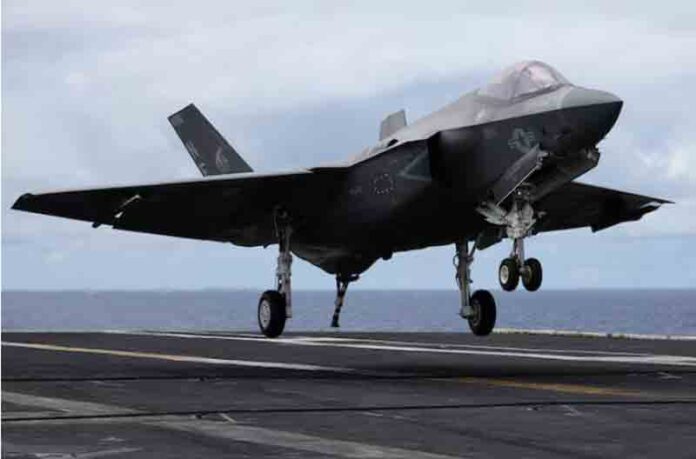
F-35 jet lands on the USS Carl Vinson aircraft carrier during the Rim of the Pacific (RIMPAC) military exercises about 100 miles south of Oahu, Hawaii, U.S.

The Trump administration is reassessing Israel’s Qualitative Military Edge (QME) as it weighs potential high-value arms sales to Saudi Arabia and Qatar, a move that has raised concern in Israel over a possible shift in the Middle East’s military balance.

According to US and regional officials, discussions on QME in the context of defence deals with Gulf states have taken place over recent weeks. Senior US military officials have held a series of closed-door briefings on Capitol Hill with members of Congress, while a senior official from the State Department visited Israel last week in part to address Israeli concerns.

A US official familiar with the talks said the administration is likely preparing formal positions ahead of an expected meeting between Israeli Prime Minister Benjamin Netanyahu and US President Donald Trump, anticipated before the end of the year. Media reports say Netanyahu is expected to arrive in Florida on December 29.

Congress Briefed as Arms Talks Advance

An Arab official confirmed that QME is under review as part of broader arms sales discussions with Riyadh and Doha, though he expressed doubt that a new understanding would be reached imminently. Lawmakers from the Senate Foreign Relations Committee and the House Armed Services Committee have been involved in the Capitol Hill consultations.

Meanwhile, a senior official from the State Department’s Bureau of Political-Military Affairs, which oversees US arms transfers, travelled to Israel last week for talks that included Israel’s qualitative military advantage.

US Senator Lindsey Graham also met Netanyahu on Sunday. While Graham did not publicly address arms sales, he said discussions covered Hamas and Hezbollah’s rearmament and Iran’s ballistic missile programme.

F-35 Sales at the Center of the Debate

The administration is considering two major arms packages for Saudi Arabia and Qatar. Trump confirmed during a November meeting with Saudi Crown Prince Mohammed bin Salman that Washington plans to sell F-35 fighter jets to the kingdom, acknowledging that Israel has pressed for Riyadh to receive a less advanced configuration than Israel’s own fleet.

“I know they [Israel] would like you to get planes of reduced calibre,” Trump said at the time. “I think they are both at a level where they should get top of the line.”

Israeli media have also reported US-Qatar talks on a possible F-35 sale, prompting concerns in Jerusalem that a surge in advanced arms transfers to Arab states could erode Israel’s long-standing military superiority.

Balancing Trump’s Style With Congressional Power

The Trump administration is also finalising a broader US-Saudi defence agreement that officials say could accelerate transfers of more sophisticated weapons. The deal has yet to be signed by US Defence Secretary Pete Hegseth and has been kept largely out of public view as the White House works to line up congressional support.

Although Trump has often sidelined Congress on military matters, any major arms sale ultimately requires navigating Capitol Hill. Under long-standing convention, senior lawmakers on foreign relations committees can place informal holds on weapons transfers — a power that has previously delayed even sales to Israel itself.

Why QME Matters

Israel’s Qualitative Military Edge — the principle that it must maintain superior military capabilities over regional adversaries — dates back to the Cold War. It was formally codified into US law in 2008, requiring periodic reviews of arms sales to Arab states.

Israel receives uniquely customised versions of US weapons systems, including the F-35I Adir, which it has modified to extend range and maintain stealth. These adaptations, Israeli officials argue, are critical to preserving deterrence, particularly against Iran.

As Washington explores reshaping defence ties with Gulf partners, the renewed scrutiny of QME highlights the delicate balancing act facing the Trump administration: expanding strategic partnerships in the Middle East without undermining Israel’s long-standing military advantage.

Russia Unveils Plan to Build Nuclear Power Plant on the Moon by 2036

0

Russia has announced plans to construct a power plant on the Moon within the next decade to support its lunar exploration ambitions and a joint research base with China, as global powers intensify competition to establish a long-term presence on Earth’s only natural satellite.

Russia’s state space agency Roscosmos said it aims to complete the lunar power facility by 2036, signing a contract with the Lavochkin Association to carry out the project. The energy installation is intended to supply electricity for Russia’s lunar programme, including robotic rovers, a scientific observatory and infrastructure for the International Lunar Research Station, a joint initiative with China.

Roscosmos described the project as a shift from short, one-off missions toward permanent scientific operations on the Moon, calling it a critical step toward sustained exploration.

Implied Nuclear Technology

While Roscosmos stopped short of explicitly stating that the lunar power plant would be nuclear, it confirmed that the project involves Rosatom and the Kurchatov Institute, strongly suggesting the use of nuclear technology to generate power in the Moon’s harsh environment.

Roscosmos chief Dmitry Bakanov said earlier this year that deploying a nuclear power plant on the Moon was among the agency’s strategic goals, alongside renewed ambitions to explore Venus, often described as Earth’s “sister planet.”

Reasserting Space Ambitions

Russia has long prided itself on its space heritage dating back to Yuri Gagarin, who became the first human to travel into space in 1961. However, Moscow’s standing in space exploration has slipped in recent decades, as the United States and China have surged ahead with ambitious lunar and deep-space programmes.

The setback was underscored in August 2023, when Russia’s unmanned Luna-25 spacecraft crashed into the Moon during a landing attempt. At the same time, commercial launch innovations led by Elon Musk have transformed space access, eroding an area once dominated by Russian expertise.

A New Lunar Race

The Moon, located about 384,400 kilometres from Earth, plays a crucial role in stabilising Earth’s axial tilt and driving ocean tides. As interest grows in using the Moon as a staging ground for deeper space missions, major powers are increasingly focused on building sustainable infrastructure — including reliable power sources — beyond Earth.

If realised, Russia’s lunar power plant would mark one of the most ambitious off-world energy projects ever attempted, signalling Moscow’s determination to reassert itself in the emerging global race for lunar exploration.

Ukraine Secures Limited Gains in Revised US Peace Plan as Russia Holds Firm on Territory

0
Ukraine's President Volodymyr Zelenskiy speaks with U.S. President Donald Trump via a phone line, amid Russia's attack on Ukraine, in Kyiv.

Ukraine has won several key concessions in the latest US-led draft framework aimed at ending Russia’s invasion, President Volodymyr Zelensky said, even as fundamental disagreements over territory and Moscow’s likely acceptance continue to cloud prospects for a deal.

The 20-point plan, negotiated by US and Ukrainian officials and now under review in Moscow, softens earlier provisions that Kyiv viewed as red lines. However, the Kremlin is widely expected to resist abandoning its maximalist demands, including a full Ukrainian withdrawal from occupied eastern regions.


Zelensky acknowledged during a two-hour briefing with journalists that he “does not like” all elements of the document. Still, Kyiv succeeded in removing requirements for an immediate pullback from Donetsk and clauses that would have formally recognised Russian sovereignty over territory seized by Moscow’s forces. The revised text also drops demands that Ukraine legally renounce its bid to join NATO.

Demilitarised Zones, Delayed Decisions

While the plan does not mandate troop withdrawals, it opens the door to future redeployments and the creation of demilitarised zones, including in parts of Donetsk still under Ukrainian control. Zelensky said the latest draft would treat current troop positions in Donetsk, Luhansk, Zaporizhzhia and Kherson as a de facto line of contact, pending further talks.

“A working group will convene to determine the redeployment of forces necessary to end the conflict, as well as to define the parameters of potential future special economic zones,” Zelensky said, reading from an annotated copy of the proposal.

He added that Washington is seeking compromise formulas — such as demilitarised or free economic zones — to bridge the gap between Kyiv’s refusal to cede land and Moscow’s insistence on withdrawals.

US Pressure, Russian Intransigence

US President Donald Trump is pressing both sides to conclude a deal to end the four-year war triggered by Russia’s full-scale invasion in 2022. The conflict has killed tens of thousands, devastated eastern Ukraine and displaced millions, while Russian forces continue to advance and strike cities and energy infrastructure with nightly missile and drone attacks.

Moscow claimed in 2022 to have annexed Donetsk, Luhansk, Kherson and Zaporizhzhia — in addition to Crimea, seized in 2014. President Vladimir Putin has shown little sign of compromise, reiterating demands for sweeping Ukrainian withdrawals and political concessions that Kyiv and European allies describe as capitulation.

Zelensky conceded Ukraine could face painful choices if US military support were curtailed. Any agreement involving troop pullbacks or special economic zones would require approval via a national referendum, he said.

NATO, Nuclear Plant, Elections

On NATO, Zelensky reiterated that Ukraine has not altered its constitutional path toward membership, though prospects remain slim after Washington ruled out near-term accession. Moscow has long cited NATO expansion as a core grievance.

The plan also envisages joint US-Ukrainian-Russian management of the Russian-occupied Zaporizhzhia nuclear power plant — a provision Zelensky opposes, saying he does not want Russian oversight. He added that presidential elections would be held only after an agreement is signed, despite pressure from both Moscow and Washington.

Russia has yet to comment publicly on the revised draft. Earlier direct talks in Istanbul failed to break the deadlock, and despite intensified diplomacy, the two sides’ positions remain far apart.

FT on Global Power Shift: Asim Munir Emerges as Leading Strategist for Middle Powers

0

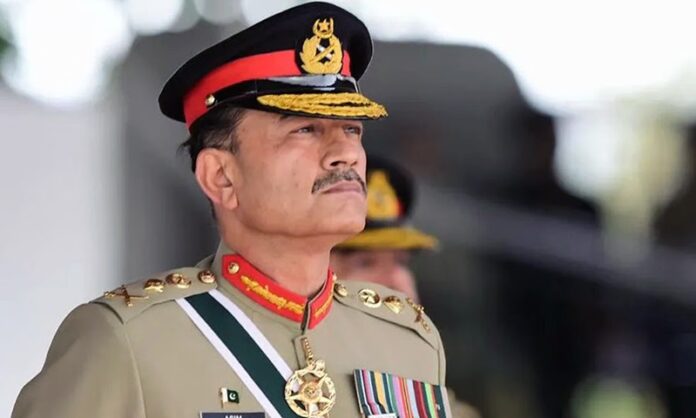
As global politics undergoes rapid and often unpredictable change, Field Marshal Syed Asim Munir has emerged as one of the most effective strategic leaders navigating the new international order, according to the Financial Times.

In an analysis of the evolving global system, the British daily highlights Pakistan’s military chief as a standout example of how middle powers can successfully adapt to intensifying great-power competition. The Financial Times notes that the changing geopolitical environment has opened “a new but challenging era for middle powers,” adding that this transition has proven “particularly complex.”

Against this backdrop, the newspaper identifies Field Marshal Asim Munir as “among the most successful multi-aligners of middle powers,” citing Pakistan’s ability to maintain and balance key relationships simultaneously.

Multidimensional Strategy and Active Diplomacy

According to the Financial Times, Field Marshal Asim Munir represents a “clear example of a successful multidimensional strategist” — and a model of effective diplomacy — for states seeking strategic relevance without over-commitment to any single bloc.

The paper notes that Pakistan’s leadership has remained active in sustaining parallel ties with United States, China, Saudi Arabia, and Iran, an approach described as increasingly rare amid sharpening global rivalries.

This multidirectional engagement, the Financial Times observes, has created “new diplomatic opportunities for Pakistan” at a time when many middle powers are struggling to adjust to shifting alignments.

Engaging Trump’s Informal Style

The newspaper also highlights Pakistan’s handling of relations with former US President Donald Trump, describing Field Marshal Asim Munir as “the best aligned” with Trump’s informal and unconventional diplomatic style.

“Timely pleasant conversations and a soft diplomatic approach” toward Trump proved effective, the Financial Times writes, suggesting that Pakistan’s adaptive tone helped advance its diplomatic standing during a volatile phase in global politics.

Regional Impact and Indian Discomfort

The Financial Times contrasts Pakistan’s diplomatic momentum with India’s difficulties, stating that New Delhi has been “disappointed” by Islamabad’s success. The paper argues that the “game of middle power has proven more difficult than expected for India,” particularly due to its inability to align smoothly with both the changing global environment and Trump’s political style.

As a result, India is facing growing challenges in executing its own middle-power strategy, the newspaper concludes.

A Case Study for Middle Powers

Overall, the Financial Times frames Field Marshal Asim Munir’s approach as a case study in modern statecraft: flexible alignment, calibrated engagement, and pragmatic diplomacy. In an era marked by uncertainty and competition, Pakistan’s experience, the paper suggests, offers important lessons for other middle powers navigating the rapidly changing global order.

Pakistan Army Chief Asim Munir Meets Saudi Defence Minister, Receives Kingdom’s Highest Honour

0
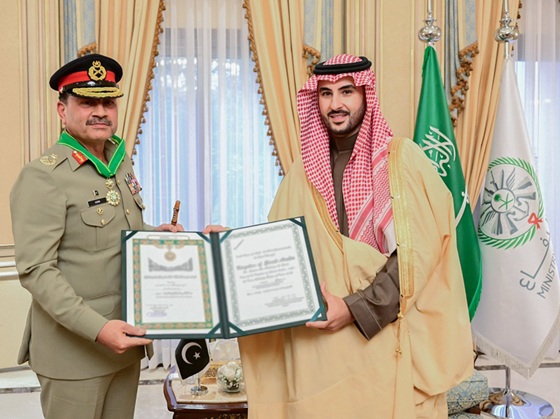
Pakistan Army Chief Asim Munir meets Saudi Defence Minister Prince Khalid bin Salman in Riyadh and receives Saudi Arabia’s highest honour, the King Abdulaziz Medal, highlighting strong Pakistan-Saudi defence ties.

Pakistan’s Chief of Army Staff and Chief of Defence Staff, Syed Asim Munir, held high-level talks with Saudi Arabia’s Defence Minister Prince Khalid bin Salman bin Abdulaziz Al Saud during an official visit to the Kingdom, reaffirming the deep-rooted strategic and defence partnership between the two countries.

According to a statement issued by Inter-Services Public Relations (ISPR), the meeting focused on regional security dynamics, defence and military cooperation, strategic coordination, and evolving geopolitical challenges. Both sides underscored their shared commitment to peace, stability, and security across the Middle East and South Asia.

In a major diplomatic and military gesture, Field Marshal Asim Munir was also awarded the King Abdulaziz Medal of Excellent Class, Saudi Arabia’s highest national honour, under a Royal Decree issued by King Salman bin Abdulaziz Al Saud, Custodian of the Two Holy Mosques.

The honour recognises Field Marshal Munir’s distinguished military service and leadership, as well as his central role in advancing defence cooperation, strategic collaboration, and institutional linkages between Pakistan and Saudi Arabia. Saudi officials also acknowledged his contributions to regional peace and stability, particularly in counter-terrorism cooperation and security coordination.

The Saudi leadership praised the Pakistan Army chief’s professionalism and strategic vision, noting his efforts to further strengthen the longstanding, brotherly relationship between the two nations. Field Marshal Munir expressed gratitude to King Salman and the Saudi leadership, describing the award as a reflection of the enduring bonds between Islamabad and Riyadh. He reaffirmed Pakistan’s commitment to the security, stability, and prosperity of the Kingdom.

Context

Pakistan and Saudi Arabia share one of the closest defence relationships in the Muslim world, marked by decades of military cooperation, training exchanges, and counter-terrorism collaboration. Saudi Arabia remains a key strategic, economic, and diplomatic partner for Pakistan, while Pakistan has long played a supportive role in the Kingdom’s defence and security framework. The conferment of the King Abdulaziz Medal underscores the growing strategic alignment between the two countries at a time of heightened regional uncertainty.


Haqqani’s Kandahar Visit Highlights Growing Tensions Within Taliban Leadership

0

Taliban Interior Minister Sirajuddin Haqqani has travelled to Kandahar to attend the funeral of the mother of Taliban founder Mullah Omar, a visit that analysts say carries political significance amid signs of growing divisions within the Taliban leadership.

Haqqani attended Friday prayers and met with local residents following the funeral. Images and videos circulating on social media showed large crowds gathering around him during the visit.

Kandahar is widely regarded as the ideological and power centre of the Taliban and is home to the group’s supreme leader, Hibatullah Akhundzada. As a result, Haqqani’s public presence in the city has drawn attention from observers monitoring internal Taliban dynamics.

Visit Comes Amid Reports of Internal Friction

The Kandahar trip follows remarks made by Haqqani last week in Khost province, where he publicly criticised aspects of Taliban governance, stating that a system based on fear and coercion could not endure. The comments were notable given Haqqani’s senior security role and were widely interpreted as reflecting internal disagreements within the movement.

Akhundzada has historically taken a hard line against dissent within Taliban ranks. Several officials who publicly disagreed with his policies have previously been sidelined or removed from their positions.

Among them is former deputy foreign minister Abbas Stanikzai, who left Afghanistan following disputes with the leadership and has not returned. Other officials have also faced disciplinary action after questioning policies, including restrictions on girls’ education.

Limits to Central Control

Analysts note, however, that Haqqani occupies a unique position within the Taliban power structure. Despite reported efforts to curtail his authority, his extensive security network and military influence have made it difficult for the leadership to marginalise him completely.

Following Haqqani’s remarks, senior Taliban figures including Deputy Prime Minister Abdul Ghani Baradar and Education Minister Nida Mohammad Nadim issued statements stressing unity, loyalty to the leadership, and the need to avoid internal discord.

UN Reports Note Leadership Disagreements

United Nations monitoring reports have also pointed to signs of disagreement within the Taliban, including instances where certain leaders reportedly did not fully comply with directives issued by Akhundzada.

At the same time, Taliban officials remain divided in their approach to public visibility. While figures such as Haqqani, Baradar and Defence Minister Mullah Yaqoob continue to release photos and videos of public engagements, other officials have largely refrained from media appearances in line with leadership directives.

Public Appearances Seen as Political Messaging

Observers say Haqqani’s public appearances — first in Khost and now in Kandahar — appear aimed at demonstrating his political and social standing, including in areas traditionally associated with the Taliban’s central leadership.

While the crowds in Kandahar were smaller than those seen during his Khost visit, analysts view the trip as a symbolic move underscoring Haqqani’s continued relevance within the Taliban hierarchy.

The visit comes as questions persist about the Taliban’s internal cohesion, governance model and prospects for international recognition, with unity and loyalty increasingly emphasised in official rhetoric.


Explainer | Why Pakistan Is Missing From US Defence Planning

0

For the first time in decades, Pakistan barely features in the United States’ long-term defence planning. The shift is most visible in the latest US defence legislation and strategic documents, where India is elevated as a key partner while Pakistan is referenced only indirectly, mainly in the context of counterterrorism and Afghanistan.

This change marks a structural transformation in Washington’s South Asia policy rather than a temporary diplomatic setback.

From Frontline Ally to Peripheral Actor

After 9/11, Pakistan was a central pillar of US military strategy. It served as:

  • A logistics hub for Afghanistan
  • A counterterrorism partner
  • A key intelligence interlocutor

That era ended with the US withdrawal from Afghanistan in 2021. Once American combat operations ceased, Pakistan’s primary utility in US defence planning sharply declined.

Washington no longer requires:

  • Pakistani supply routes
  • Pakistani basing access
  • Large-scale military cooperation

As a result, Pakistan shifted from being operationally essential to strategically peripheral.

The China Factor: Why India Replaced Pakistan

The dominant driver of US defence planning today is strategic competition with China. In this framework:

  • Pakistan is not positioned to counter China
  • Pakistan maintains a deep strategic partnership with Beijing
  • Pakistan is a core participant in China’s Belt and Road Initiative

By contrast, India is seen as:

  • A demographic, economic, and military counterweight to China
  • A naval power in the Indian Ocean
  • A state willing to align—though selectively—with US Indo-Pacific objectives

From Washington’s perspective, India fits the China-centric strategy; Pakistan does not.

Trust Deficit and Strategic Friction

A persistent trust gap also shapes US thinking.

American policymakers believe Pakistan:

  • Pursues strategic autonomy, not alignment
  • Maintains ties with actors Washington considers adversarial
  • Resists becoming part of any formal US-led security bloc

At the same time, Pakistan views the US as:

  • Transactional and unreliable
  • Willing to disengage abruptly (as in Afghanistan)
  • Overly tilted toward India

This mutual skepticism has discouraged long-term defence planning.

From Partnership to Risk Management

In current US defence documents, Pakistan appears—when it does at all—under:

  • Counterterrorism monitoring
  • Regional stability concerns
  • Afghanistan-linked security risks

There is no language on:

  • Defence co-production
  • Advanced technology sharing
  • Military interoperability
  • Strategic integration

This reflects a policy shift from partnership to risk management.

Congressional Politics Matter

Another factor is US domestic politics.

  • India enjoys strong bipartisan support in Congress
  • Pakistan lacks an effective lobbying presence
  • Afghanistan’s collapse hardened congressional attitudes toward Islamabad

As a result, Pakistan is often viewed through a post-Afghanistan accountability lens, not as a future-oriented defence partner.

Not a Sanction, But a Signal

Importantly, Pakistan’s absence from US defence planning does not mean:

  • Sanctions
  • Hostility
  • Diplomatic rupture

It signals something subtler but more consequential:

Pakistan is no longer central to how Washington imagines future wars, alliances, or deterrence.

What Would Change This?

Analysts say Pakistan would need:

  • A clearer role in regional stability beyond Afghanistan
  • More visible counterterrorism outcomes aligned with US concerns
  • Expanded diplomatic engagement beyond security transactions

Even then, US defence planning is unlikely to return to the post-9/11 model.

The Bottom Line

The US defence architecture is now built around:

  • China competition
  • Technology dominance
  • Networked alliances

In this design:

  • India is embedded
  • Pakistan is managed
  • Afghanistan is the past

Pakistan’s absence is not an oversight—it is a reflection of a new global order and a US strategy that has moved on.

US Defence Bill Deepens Military and Technology Cooperation With India, Targets China Threat

0

Washington — The latest US defence bill approved by US Congress contains multiple provisions aimed at deepening military, technology, and strategic cooperation with India, underscoring Washington’s growing reliance on New Delhi as a key partner in countering China’s influence in the Indo-Pacific region.

India-focused clauses in the legislation reinforce cooperation across defence trade, advanced technology, joint military planning, and supply-chain security, while also calling for expanded coordination on maritime security and regional stability.

Boost to US-India Defence Partnership

Under the bill, the US Department of Defense is directed to expand security cooperation with India, particularly in areas linked to deterrence against China. The legislation highlights India’s role as a “major defence partner”, a designation that allows closer alignment of military standards, interoperability, and technology sharing with US forces.

Lawmakers emphasized that stronger defence ties with India are essential for maintaining balance in the Indo-Pacific, where Beijing’s military modernization and assertive posture continue to raise concerns in Washington.

Advanced Technology and Supply Chains

A key element of the India-related provisions focuses on cooperation in critical and emerging technologies, including defence manufacturing, semiconductors, artificial intelligence, and space-related capabilities. The bill encourages US agencies to work with Indian counterparts to reduce dependence on China-linked supply chains, particularly for sensitive defence and dual-use technologies.

Congressional language also supports joint research, co-development, and co-production initiatives that would allow India to integrate more deeply into US-led defence industrial networks.

Maritime Security and the Indo-Pacific

The legislation places special emphasis on maritime security cooperation, reflecting shared concerns over China’s growing naval footprint in the Indian Ocean and surrounding sea lanes. US lawmakers called for enhanced information sharing, joint exercises, and operational coordination with India to protect freedom of navigation and regional trade routes.

India’s role within broader regional frameworks, including coordination with US allies and partners, is framed as central to Washington’s Indo-Pacific strategy.

Strategic Context

The India-specific clauses come as the US seeks to recalibrate its global posture amid competition with China. By strengthening defence ties with India, Washington aims to reinforce a network of regional partners rather than rely solely on forward-deployed US forces.

Analysts note that the bill reflects bipartisan consensus in Congress that India is no longer viewed simply as a regional power, but as a pivotal strategic actor in shaping Asia’s security environment.

What Comes Next

The Department of Defense is expected to submit follow-up reports to Congress on progress in US-India defence cooperation, including technology transfers, industrial collaboration, and operational interoperability.

The provisions signal that US-India ties will remain a central pillar of American defence policy in the coming years, particularly as strategic competition with China intensifies.

Source

US National Defense Authorization Act (NDAA), S.2296

US Defence Bill Expands Support for Afghanistan War Review Commission

0

The United States Congress has approved new provisions related to Afghanistan in the National Defense Authorization Act (NDAA) for Fiscal Year 2026, strengthening the mandate, funding flexibility, and operational capacity of the Afghanistan War Commission, a body established to review America’s two-decade-long war in Afghanistan.

Under the legislation, Congress has expanded non-reimbursable support for the Afghanistan War Commission, allowing the US Department of Defense (DoD) and other federal agencies to directly provide administrative services, funds, staff, facilities, and logistical support without requiring repayment. The move is intended to accelerate the Commission’s work and remove bureaucratic hurdles that previously slowed its operations .

Contracting Authority Strengthened

The NDAA 2026 also grants new contracting authority to the Commission’s co-chairpersons. This enables the Afghanistan War Commission to independently enter into contracts, subject to appropriations, to hire experts, commission research, and obtain technical services needed to fulfil its mandate .

Lawmakers say this step is critical for ensuring a comprehensive and independent review of US military, intelligence, and political decisions that shaped the Afghanistan conflict from 2001 to 2021.

Why It Matters

The Afghanistan War Commission was created in 2021 following the chaotic US withdrawal from Afghanistan and the return of the Taliban to power. Its task is to assess:

  • Strategic decision-making across multiple US administrations
  • Military planning and execution
  • Intelligence failures and inter-agency coordination
  • The broader costs of the war, including regional and global implications

By enhancing support and autonomy for the Commission, Congress is signaling renewed commitment to accountability and institutional learning from what remains America’s longest war.

Broader Context

The Afghanistan-related clauses are part of a wider NDAA package that covers global security priorities, but these provisions stand out as one of the few sections directly addressing the legacy of the Afghanistan war rather than current conflicts. Analysts note that the expanded authorities suggest Congress wants the Commission’s final report to be thorough, independent, and difficult to ignore when shaping future US foreign and defence policy.

The Commission is expected to submit its findings to both Congress and the President once its review is complete, potentially influencing how Washington approaches future military interventions and post-conflict exits.

America’s Strategic Pivot: Venezuela, NATO and the Quiet Reordering of Global Power

0
Donald Trump gestures at Turning Point USA's AmericaFest in Phoenix, Arizona, U.S.

The Trump administration’s growing focus on the Western Hemisphere reflects a deeper shift in the global balance of power. It signals a gradual deprioritization of Europe’s defence under NATO in favour of safeguarding America’s immediate regional security interests. Many analysts believe the concentration of U.S. military power in the Caribbean could eventually provide a justification for a reduced American presence in Eastern Europe—an outcome that may place NATO’s long-term future in question.

The central debate, however, is whether this represents a full strategic retreat or merely a temporary adjustment driven by economic pressure and defence fatigue. What is increasingly clear is that the escalating tension between the United States and Venezuela cannot be simplistically framed as a moral struggle between democracy and authoritarianism. Rather, it is part of a much larger geopolitical realignment quietly unfolding on the global stage.

War Fatigue and Strategic Reassessment

After two decades of costly entanglements in Afghanistan and Iraq, both the American state and its public are visibly exhausted. Trillions of dollars were spent and countless lives lost, yet neither conflict delivered a decisive victory. Instead, these prolonged wars contributed to chronic instability across South Asia and the Middle East.

Ironically, these conflicts also weakened America’s strategic position. Israel’s long-term security became more precarious, while allies such as Pakistan gradually slipped out of Washington’s direct sphere of influence, emerging instead as regional powers with greater strategic autonomy.

At home, the consequences have been equally severe. Prolonged global militarization has deepened labour shortages, worsened economic stress, and eroded social cohesion within the United States. It is therefore unsurprising that Washington is now asking a fundamental question: why must America remain entangled in every global conflict?

The renewed American focus on Latin America appears to be a direct manifestation of this strategic introspection.

Venezuela: Ideology or Strategic Reality?

Venezuela occupies a unique position in U.S. strategic thinking. Rich in oil and geographically close, yet politically distant, Caracas under Nicolás Maduro has openly aligned itself with China, Russia, and Iran. For Washington, this is not merely an ideological disagreement but a strategic challenge unfolding in America’s immediate neighbourhood.

Historically, the United States has viewed Latin America as its natural sphere of influence, a perception rooted in the 1823 Monroe Doctrine—an idea that remains deeply embedded in U.S. foreign policy thinking. From this perspective, the presence of rival great powers in Venezuela is intolerable, regardless of debates over democracy or authoritarianism.

Notably, Washington has so far avoided direct military intervention in Venezuela. Instead, it has relied on economic sanctions, diplomatic pressure, and encouragement of internal political divisions. This restraint suggests a significant shift: the United States no longer views military force as the default solution to geopolitical challenges. Whether this reflects strategic prudence or declining capacity is open to interpretation.

What is undeniable is that Venezuela has become a complex battleground where China’s investment power, Russia’s military support, and Iran’s expanding ties converge—right on America’s doorstep. This convergence highlights the collision between U.S. relative decline and the emergence of a multipolar world.

A Test Case for a New U.S. Strategy

Venezuela may represent the first major test of America’s revised strategic doctrine. But unlike the past, this is no longer a one-sided contest. Latin America today is far more independent than it once was. Countries such as Brazil and Mexico, along with several Caribbean states, do not automatically align with Washington’s Venezuela policy.

These regional attitudes suggest that even if the United States concentrates its power in the Western Hemisphere, it will not enjoy the uncontested dominance it once took for granted.

America now finds itself in an interim phase: no longer willing—or able—to police the entire world, yet not fully prepared to relinquish global leadership. Venezuela exemplifies this contradiction, where displays of power coexist with deep strategic uncertainty.

Seen through this lens, U.S. engagement with Venezuela is less an act of aggression and more a process of strategic recalibration. It does not yet amount to a declaration of American decline, but it does signal a recognition that the era of uncontested global control is over.

Implications for NATO and Europe

Should the United States meaningfully scale back its global commitments, NATO will be among the first institutions to feel the impact. Since the Cold War, the alliance has relied heavily on American military, financial, and political leadership.

A reduced U.S. role in European defence would profoundly unsettle Eastern Europe, particularly Poland and the Baltic states, which would feel increasingly exposed to Russian pressure. This sense of vulnerability could drive Europe toward accelerated arms production or renewed efforts at accommodation with Moscow.

At the same time, Western Europe may pursue greater strategic autonomy while deepening economic engagement with China. The most dangerous outcome, however, would be internal fragmentation within NATO—reviving old rivalries and reshaping European alignments in unpredictable ways.

In short, American retrenchment could push NATO into a slow-moving crisis that gradually erodes its relevance as a pillar of global power.

Opportunities for Rivals

For Russia, any perception of reduced American resolve would present a strategic opening. It could embolden Moscow to pursue more aggressive policies in Ukraine, Eastern Europe, and the Caucasus.

Similarly, regional powers such as Pakistan in South Asia, and Iran and Türkiye in the Middle East, may adopt more independent policies, accelerating the erosion of U.S. dominance. In the longer term, this could allow Middle Eastern instability to spill closer to Europe’s borders.

China, meanwhile, appears best positioned to fill emerging power vacuums. Through initiatives like the Belt and Road, combined with rapid military modernization, Beijing is steadily advancing toward becoming an alternative global centre of power. President Xi Jinping’s remark that “the world can function without the United States” reflects this growing confidence.

Conclusion

The global order is not witnessing a sudden collapse of American power, but rather a gradual redistribution of influence. Power is once again becoming multipolar, settling into a more natural balance among multiple centres.

The Western Hemisphere may soon become the focal point of this transformation—beginning with Venezuela, but extending far beyond it.

Rubio Says Pakistan Among Countries Being Considered for Gaza Stabilisation Force

0
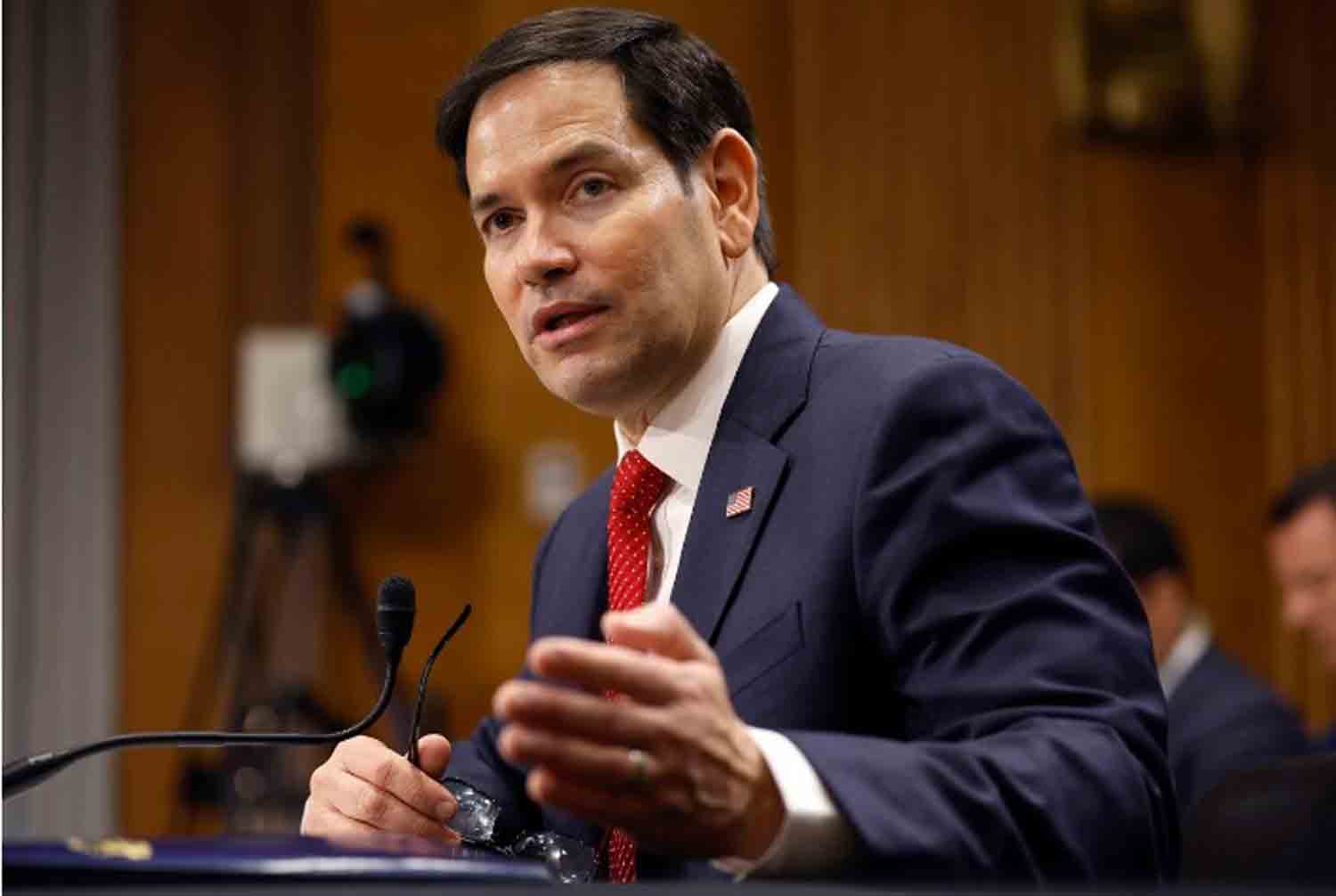
Secretary of State, Sen. Marco Rubio testifies during his Senate Foreign Relations confirmation hearing at Dirksen Senate Office Building.

WASHINGTON — U.S. Secretary of State Marco Rubio said on Wednesday that Washington is grateful for Pakistan’s offer to consider participating in a proposed international stabilisation force for Gaza, but added that countries being approached want clearer details before making firm commitments.

Speaking to reporters during a press briefing in Washington, Rubio said the United States is still working on defining the mandate, scope and phases of the post-war stabilisation mission following Israel’s military campaign in Gaza.

“We’re very grateful to Pakistan for their offer to be a part of it, or at least their offer to consider being a part of it,” Rubio said. “I think we owe them a few more answers before we can ask anybody to firmly commit.”

He added that the U.S. remains confident that a number of countries acceptable to all sides in the conflict are prepared to contribute once those details are finalised.

Ceasefire Phases and Governance in Gaza

Rubio said that while large-scale hostilities in Gaza have subsided compared with earlier stages of the war, significant work remains.

“This is a long-term project,” he said, noting that efforts to move into the second and third phases of the ceasefire could extend beyond the current U.S. administration.

According to Rubio, the next step will be the announcement of a Palestinian technocratic administration tasked with running Gaza’s day-to-day civilian operations before the deployment of any international stabilisation force.

Countries approached for troop contributions — including Pakistan — want clarity on the mission’s objectives, command structure and legal framework, he said.

Disarmament of Hamas and Hezbollah

Rubio also reiterated Washington’s position that lasting peace is impossible if armed groups retain the ability to threaten Israel.

“If Hamas is ever in a position in the future where they can threaten Israel with their weapons, there will be no peace,” Rubio said, adding that the types of weapons used to attack Israel could serve as a benchmark for Hamas’s disarmament.

He argued that international donors would be unwilling to invest in Gaza’s reconstruction if there was a risk of renewed conflict.

“No one can be convinced to invest money in Gaza if they believe that another war could start within a few years,” he said.

On Lebanon, Rubio said the United States supports efforts to strengthen the Lebanese army and to disarm Hezbollah, describing the group as an Iranian-backed force whose military role undermines regional stability.

“Everyone wants a strong Lebanese army that controls the country and Hezbollah disarmed,” he said, adding that Washington was hopeful ongoing talks could lead to that outcome.

Regional and Diplomatic Context

The remarks come as the United States seeks to build a multinational framework for post-war Gaza governance and security, amid regional sensitivities and widespread opposition to foreign military presence without a clear mandate.

Pakistan, which has historically expressed strong political support for the Palestinian cause, has said it would consider participation in international peace or stabilisation efforts only under a clearly defined and internationally endorsed framework.

U.S. officials say further announcements on Gaza’s interim governance and the stabilisation force are expected in the coming weeks.

NATO Sees ‘Positive Signals’ on Future of Czech-Led Ammunition Initiative for Ukraine

0
NATO logo and flag

A senior NATO military official has expressed cautious optimism that the Czech Republic will continue its flagship initiative to source large-calibre artillery ammunition for Ukraine, despite uncertainty following a recent change of government in Prague.

Speaking to Reuters at NATO’s headquarters in Wiesbaden, Major General Maik Keller, deputy commander of NATO’s Security Assistance and Training for Ukraine (NSATU) mission, said there were encouraging signs that the project could move forward.

“I have no final confirmation that the initiative continues, but there are some positive signals coming from Prague,” Keller said.

The Czech-led scheme, launched to secure artillery shells for Ukraine from global suppliers, has become one of Kyiv’s most important sources of ammunition as it faces sustained pressure from Russian forces.

Political Uncertainty in Prague

Before taking office, Czech Prime Minister Andrej Babis pledged to reduce military aid to Ukraine funded directly from the Czech national budget and suggested his government might end the ammunition initiative. He has criticised the programme as lacking transparency and being overpriced, though he has yet to announce a definitive decision on its future.

The initiative, however, enjoys strong backing from the Czech president and from NATO allies, many of whom provide the bulk of its funding.

Keller noted that even if Prague scales back its own financial contribution, the scheme could continue largely unchanged.

“There might be no more Czech funding for the initiative, which there was to a limited extent in the past,” he said. “But the vast majority of the funding is coming from other partners.”

Major Contribution to Ukraine’s War Effort

NSATU, which has coordinated international military assistance to Ukraine for about a year, regards the Czech programme as critical to Kyiv’s battlefield resilience.

According to Keller, the initiative is expected to deliver around 1.8 million rounds of artillery ammunition this year, accounting for 43% of all ammunition supplied to Ukraine and roughly 70% of legacy Soviet-calibre shells used by Ukrainian forces.

“That’s quite a significant and important initiative,” Keller said. “And that’s why we are so keen on continuing it.”

Strategic Importance

Ukraine has repeatedly warned that ammunition shortages threaten its ability to hold front-line positions, particularly as Russia ramps up production and imports of artillery shells. NATO officials say the Czech-led effort has helped plug a critical gap at a time when Western defence industries are still expanding output.

While Prague’s final decision remains pending, NATO officials believe international backing could allow the initiative to survive political changes within the Czech Republic.

Source: Reuters

Pakistan Arrests ISIS-K Spokesman Sultan Aziz Azzam in Major Blow to Group’s Propaganda Network

0

Pakistani authorities have arrested Sultan Aziz Azzam, the chief spokesman of Islamic State Khorasan Province (ISIS-K) and founder of its central media arm, the Al-Azaim Foundation, in what security sources describe as a significant setback for the militant group’s propaganda and communications apparatus.

Security officials said Azzam, who played a central role in shaping and disseminating ISIS-K’s ideological messaging, is currently in the custody of Pakistani intelligence agencies. His arrest, confirmed by multiple sources, is seen as a major disruption to the group’s ability to produce coordinated propaganda and recruitment material.

Key Figure in ISIS-K Media Operations

Azzam was regarded as one of ISIS-K’s most influential non-military figures, overseeing the production of official statements, videos, audio messages and multilingual propaganda distributed across digital platforms. Under his leadership, the Al-Azaim Foundation functioned as ISIS-K’s primary media outlet, issuing claims of responsibility and ideological content aimed at both regional and international audiences.

Some intelligence sources said Azzam had been in Pakistani custody for some time, though the reasons for the timing of the public disclosure remain unclear.

Background and Designation

Born in Nangarhar province, eastern Afghanistan, Azzam was a university graduate who previously worked in local governance and media before joining ISIS-K. He entered the group around 2016, coinciding with its expansion in eastern Afghanistan, and later emerged as its chief media strategist.

In November 2021, the United States designated Sultan Aziz Azzam a Specially Designated Global Terrorist (SDGT), citing his role in directing ISIS-K’s propaganda and information warfare. U.S. authorities said his activities were central to the group’s recruitment and radicalisation efforts.

Intelligence officials said Azzam was arrested in May 2025 while attempting to enter Pakistan, though official details surrounding the operation have not been made public.

Impact on ISIS-K

Counterterrorism officials say Azzam’s detention weakens ISIS-K’s leadership structure and its ability to project influence through media. Recent Pakistani counterterrorism operations have already degraded the group’s operational capacity, leading to the arrest or killing of several senior figures and the disruption of key propaganda platforms, including “Voice of Khorasan.”

While ISIS-K continues to circulate material in some regional languages, analysts note a decline in the group’s coordinated messaging and international outreach.

A Case Study in Modern Extremism

Security analysts say Azzam’s trajectory—from local radio presenter and political adviser to one of ISIS-K’s most prominent propagandists—highlights the growing importance of media expertise in modern militant movements. His case underscores how extremist organisations recruit individuals with professional communication skills to amplify their ideological reach.

Authorities have not indicated whether Pakistan plans to involve the United States or other partners in Azzam’s interrogation.

The arrest comes amid continued regional efforts to curb transnational militant networks operating across Afghanistan and Pakistan, with officials stressing that disrupting propaganda remains as critical as targeting armed cells.

Putin Warns EU Against Seizing Russian Assets, Says Moscow Ready for Peace Talks but Advancing on Battlefield

0
Russian President Vladimir Putin attends a press conference

Russian President Vladimir Putin has warned European countries against attempting to seize frozen Russian sovereign assets, calling such moves “daylight robbery” that could undermine trust in the global financial system, while reiterating that Moscow remains open to peace talks on Ukraine under its own terms.

Speaking during an end-of-year live Q&A session and press conference on Friday, Putin addressed a wide range of issues, including the war in Ukraine, Russia’s economy, and Western efforts to use frozen Russian funds to support Kyiv.

Putin on Frozen Russian Assets

Responding to questions about European proposals to tap frozen Russian central bank assets, Putin said any such action would have serious consequences.

“It would be robbery,” Putin said. “This isn’t just a blow to their image — it undermines trust in the eurozone and the entire modern financial system.”

He warned that if such precedents were set, other countries — particularly oil-producing states that hold reserves in euros — could rethink where they store their assets.

“No matter what they steal and however they do it, they will have to give it back eventually,” Putin said, adding that Russia would defend its interests through legal action, seeking jurisdictions independent of political pressure.

Western countries froze around $300 billion in Russian central bank assets following the escalation of the Ukraine conflict in 2022, with most funds held at Euroclear in Belgium. While the EU has debated using the assets to support Ukraine, leaders recently failed to agree on a reparations-based loan, opting instead for joint borrowing.

Ukraine Peace Talks

On prospects for peace negotiations, Putin said Russia does not yet see clear readiness from Kyiv, but acknowledged emerging signals.

“So far, we don’t really see such readiness from Ukraine,” he said. “But we do see certain signals that they may be prepared for some kind of dialogue.”

Putin reiterated that Moscow is willing to end the conflict peacefully, but only by addressing what it calls the “root causes” of the crisis, echoing positions previously outlined by Russian officials.

Situation on the Battlefield

Putin claimed that Russia currently holds the strategic initiative on the battlefield following what he described as Ukrainian setbacks.

“After our troops pushed the enemy out of the Kursk region, the initiative passed entirely into the hands of the Russian armed forces,” he said. “Our troops are advancing along the entire line of contact.”

Ukraine has not commented on Putin’s battlefield assessment.

Economy and Inflation

Addressing domestic economic conditions, Putin said Russia’s GDP growth stands at around 1%, describing the slowdown as a deliberate effort to curb inflation.

“The goal was to reduce inflation to at least 6%,” he said, adding that it is now expected to fall below that level by year-end, to around 5.7–5.8%.

How Putin Gathers Information

In a lighter exchange, Putin responded to a question from a young boy about how he stays informed. The Russian leader said he sometimes travels around Moscow without an official motorcade, observing daily life firsthand.

He added that he regularly speaks directly with citizens and relies on polling data to assess public sentiment.

Broader Implications

Putin’s remarks come as EU leaders struggle to agree on long-term financing for Ukraine, while tensions remain high over sanctions, frozen assets, and the future of peace talks.

Analysts say the Kremlin’s messaging reflects an effort to project confidence on the battlefield, warn Europe against financial escalation, and leave the door open — at least rhetorically — for negotiations on Russia’s terms.

UN Experts Say India’s May 7 Strikes Violated UN Charter, Raise Alarm Over Indus Waters Treaty

0

United Nations human rights experts have raised serious concerns over India’s unilateral military actions on May 7 inside Pakistan, saying the use of force violated the principles of the UN Charter and risked escalating tensions between the two nuclear-armed neighbours.

In a report examining the latest India–Pakistan confrontation, the UN experts said Indian strikes hit civilian areas, damaged mosques, and resulted in civilian deaths and injuries. The experts noted that such actions contravened international law governing the use of force.

The report said Pakistan informed the UN Security Council that it had reserved its right to self-defence under Article 51 of the UN Charter in response to the attacks.

Lack of Evidence and Legal Concerns

According to the UN experts, India failed to present credible evidence demonstrating Pakistan’s involvement at the state level in the Pahalgam attack, which New Delhi cited as justification for its actions.

The experts stressed that international law does not recognise a right to unilateral military force under the pretext of counterterrorism, warning that such actions could lead to a major regional conflict.

They described India’s strikes as a grave violation of Pakistan’s sovereignty and a breach of the principle of non-interference in the internal affairs of states.

Indus Waters Treaty Under Scrutiny

The UN Special Rapporteurs also endorsed Pakistan’s position on the Indus Waters Treaty (IWT), expressing deep concern over India’s declaration to hold the treaty in abeyance.

The experts warned that any obstruction or threat to transboundary water flows would directly affect the fundamental rights of millions of people in Pakistan, including rights to water, food, health, employment, a clean environment and development.

“Water must not be used as a tool of political or economic pressure,” the experts said, emphasizing that interference with shared water resources violates international norms.

Treaty Cannot Be Suspended Unilaterally

The report underscored that no party has the legal authority to unilaterally suspend the Indus Waters Treaty, stating that it remains in force unless both India and Pakistan mutually agree to terminate or replace it through a new agreement.

The experts also referred to India’s refusal to participate in arbitration mechanisms and its challenge to the scope of the treaty, noting that such actions undermine established dispute-resolution frameworks.

India Urged to Comply with International Law

The UN experts called on India to fully honour its treaty obligations, refrain from actions that violate Pakistan’s rights, and take concrete steps to prevent human rights violations arising from the obstruction of water flows.

They also disclosed that UN Special Rapporteurs sent a formal questionnaire to the Modi government, seeking clarification on India’s allegations against Pakistan and its intentions regarding a peaceful resolution of the Jammu and Kashmir dispute.

India did not respond to the questions, the report said. Due to the lack of response, the UN experts proceeded with the public release of their findings.

The report adds international scrutiny to rising tensions between India and Pakistan, highlighting concerns over military escalation, civilian harm, and the weaponisation of shared natural resources.

Suicide Car Bomb Hits Military Fort in North Waziristan, Several Soldiers Injured

0

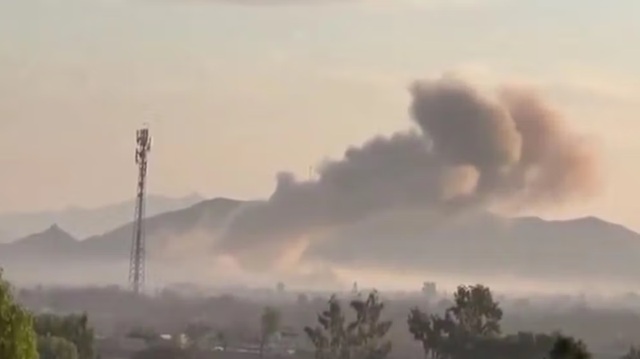
A suicide vehicle bombing struck a military fort in Boya village of North Waziristan near sunrise on Thursday, triggering a powerful explosion that damaged parts of the security installation and injured several soldiers, officials said.

According to security sources, the attacker rammed an explosive-laden vehicle into the outer perimeter of the Boya fort, causing significant damage to the outer wall and roof of the compound.

Militant channels linked to the Hafiz Gul Bahadar group later claimed responsibility for the attack.

Multiple Attackers Involved

A senior security official said the assault involved five attackers.
“One attacker carried out a suicide bombing while four others attempted to breach the fort,” the official told media.

Security forces responded immediately, killing three attackers during the initial engagement. The remaining assailant was later neutralised during a clearance operation, officials confirmed.

“All four attackers attempting to enter the compound have been killed,” a security source told The Khorasan Diary, adding that the area has been secured.

Casualties and Damage

Officials said at least 11 security personnel were injured in the attack.
Two of the wounded soldiers were evacuated in critical condition, while others sustained injuries from the blast impact.

Local residents reported that the force of the explosion damaged nearby houses, with at least three civilians injured in surrounding residential areas. However, due to communication difficulties, the total number of civilian casualties could not be independently verified.

Security Operation Ongoing

Following the attack, security forces launched a search and clearance operation, checking the fort and surrounding areas for improvised explosive devices (IEDs) to prevent further incidents.

The incident comes amid a surge in militant violence in parts of Khyber Pakhtunkhwa, particularly in North Waziristan, where security forces have been conducting counterterrorism operations against armed groups.

Authorities said further details would be shared once the situation is fully assessed.

China Warns of ‘Forceful Measures’ After U.S. Approves Record $11.1bn Arms Sale to Taiwan

0
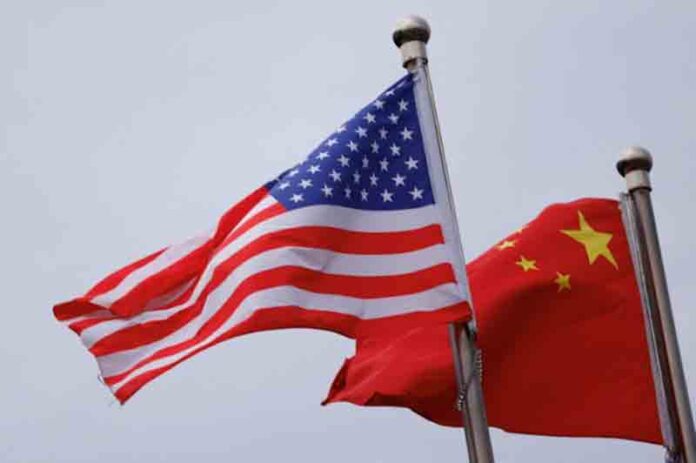
Chinese and U.S. flags, in Beijing.

China’s military said it will step up training and take “forceful measures” to safeguard national sovereignty after the United States approved a record $11.1 billion arms sales package to Taiwan, a move that has sharply escalated tensions across the Taiwan Strait.

In a statement on Friday, China’s Ministry of National Defense said it had lodged “stern representations” with Washington and urged the U.S. to immediately halt arms sales to Taiwan, accusing it of violating commitments not to support what Beijing calls “Taiwan independence forces.”

“The ‘Taiwan independence’ separatist forces, at the cost of the safety and well-being of Taiwan compatriots, are using the hard-earned money of ordinary people to enrich U.S. arms dealers,” the ministry said. It warned that Washington, by repeatedly “going back on its word,” was “bound to get burned itself.”

PLA Signals Heightened Readiness

The ministry said the People’s Liberation Army (PLA) would intensify training and combat preparedness, pledging to take firm action to defend China’s sovereignty and territorial integrity.

“The Chinese PLA will continue to strengthen training and combat readiness, take strong measures to resolutely thwart ‘Taiwan independence’ separatism and external interference,” the statement said, without detailing what specific steps might be taken.

U.S.–Taiwan Arms Deal

The U.S. arms package — the largest ever approved for Taiwan — includes HIMARS rocket systems, howitzers, Javelin anti-tank missiles, loitering munition drones and other military equipment. HIMARS systems, produced by Lockheed Martin, have been used extensively by Ukraine against Russian forces.

Washington maintains formal diplomatic relations with Beijing but has unofficial ties with Taiwan and is legally obligated under U.S. law to provide the island with defensive weapons. Such arms sales have long been a major source of friction between the U.S. and China.

Taiwan Rejects Beijing’s Claims

Taiwan’s democratically elected government rejects China’s claim of sovereignty, saying only the island’s people can determine their future. Beijing has refused repeated offers of dialogue with Taiwan’s President Lai Ching-te, labeling him a “separatist,” and has not ruled out the use of force to bring the island under its control.

China has in recent years intensified military drills, air and naval patrols, and diplomatic pressure aimed at Taiwan, while warning foreign powers against what it sees as interference in its internal affairs.

The latest U.S. arms sale is expected to further strain already tense U.S.–China relations and raise concerns about stability in the Taiwan Strait.

EU Agrees €90 Billion Loan for Ukraine’s Defence, Sidesteps Use of Frozen Russian Assets

0
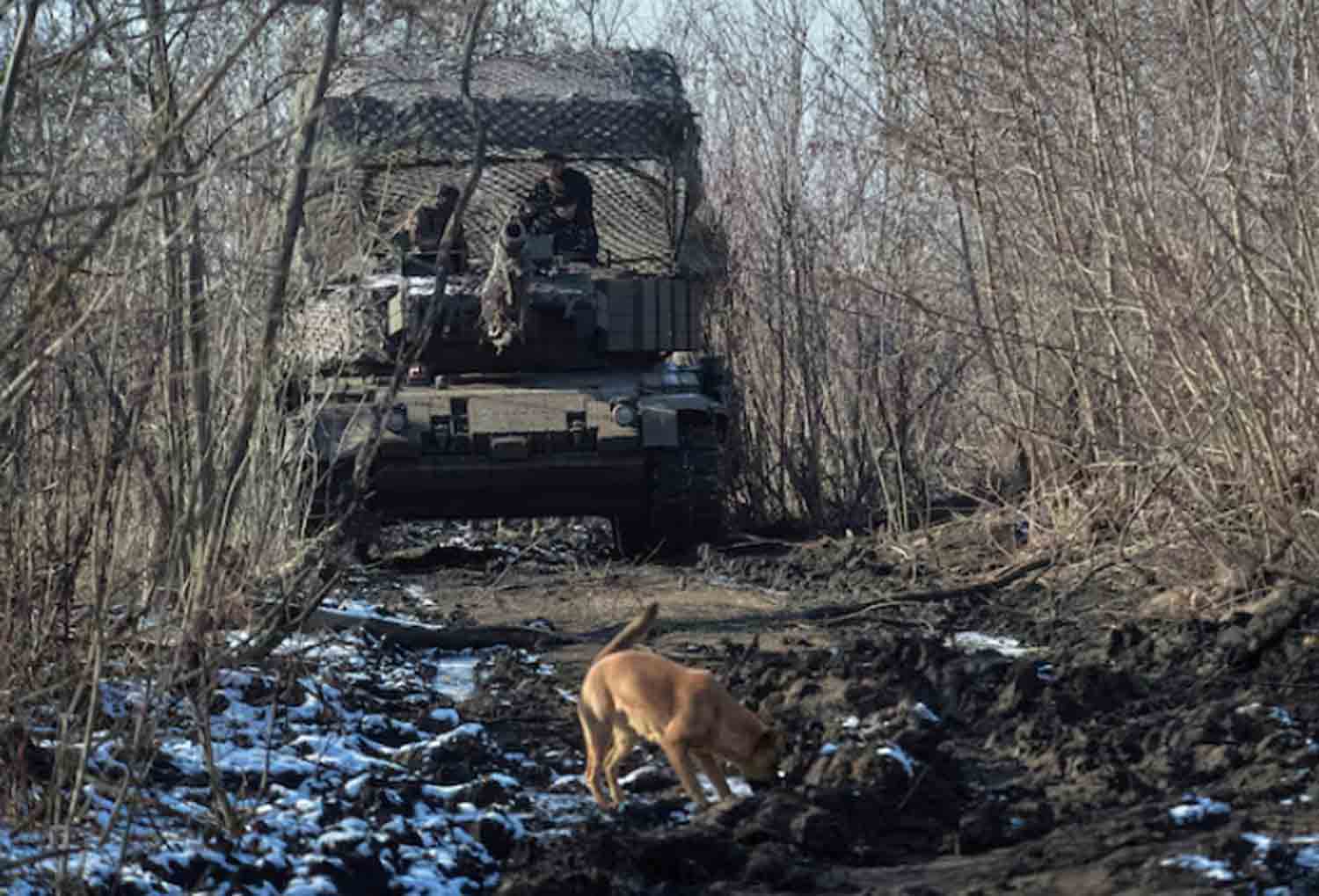
Servicemen of the 5th Separate Heavy Mechanised Brigade of the Ukrainian Armed Forces drive in a Leopard 1A5 tank, amid Russia's attack on Ukraine.

European Union leaders have agreed to borrow €90 billion ($105 billion) to provide loans to Ukraine for its defence against Russia over the next two years, opting for EU-backed borrowing rather than tapping frozen Russian sovereign assets amid political and legal divisions.

The decision was reached after overnight talks at an EU summit in Brussels on Friday, marking a compromise aimed at keeping Ukraine financially afloat while preserving unity within the bloc.

“Today we approved a decision to provide €90 billion to Ukraine,” European Council President Antonio Costa told reporters. “As a matter of urgency, we will provide a loan backed by the European Union budget.”

Russian Assets Remain Frozen

EU leaders reaffirmed that Russian state assets worth around €210 billion held within the bloc will remain frozen until Moscow pays war reparations to Ukraine. Should such payments ever materialise, Kyiv could then use the funds to repay the EU loan.

The leaders also instructed the European Commission to continue exploring a so-called reparations loan based on immobilised Russian assets, but acknowledged that the option is not viable for now.

The main obstacle is Belgium, where approximately €185 billion of the frozen Russian assets are held. Belgian officials have sought strong legal and financial guarantees to shield the country from potential Russian retaliation.

“There were so many questions on the reparations loan that we had to move to Plan B,” Belgian Prime Minister Bart De Wever said. “The EU avoided chaos and division and remained united.”

Hungary Drops Objections

Joint EU borrowing initially appeared unlikely because it requires unanimous approval and had been opposed by Hungary’s Prime Minister Viktor Orban, who maintains closer ties with Moscow.

However, Hungary, along with Slovakia and the Czech Republic, agreed not to block the plan after securing assurances that the scheme would not impose direct financial obligations on them.

“Orban got what he wanted: no reparations loan, and EU action without Hungary’s financial participation,” one EU diplomat said.

Urgency Over Ukraine Funding

The stakes were high for the EU, with officials warning that Ukraine could run out of money by the second quarter of next year without sustained European support — a scenario the bloc fears could tilt the war in Russia’s favour and increase the risk of broader instability in Europe.

“This is good news for Ukraine and bad news for Russia,” German Chancellor Friedrich Merz said. “That was our intention.”

Several leaders stressed that the decision was necessary not only to support Kyiv, but also to demonstrate Europe’s resolve after U.S. President Donald Trump recently criticised European allies as “weak.”

“We simply cannot afford to fail,” EU foreign policy chief Kaja Kallas said.

Zelenskiy Pushes for Asset Seizure

Ukrainian President Volodymyr Zelenskiy, who attended the summit, again urged the EU to go further by fully using frozen Russian assets to finance Ukraine’s defence.

“The decision to use Russian assets to defend against Russian aggression is one of the clearest and most morally justified decisions that could be made,” Zelenskiy said.

For now, EU leaders have chosen a pragmatic route, prioritising speed and unity over legal experimentation, while keeping the Russian asset option on the table for the future.