Monday, April 13, 2026
Home Blog Page 65

United States removes language from its website indicating a lack of support for Taiwan’s independence

0
Flags of Taiwan and U.S. are placed for a meeting.

The U.S. State Department has updated its website by removing a statement indicating its lack of support for Taiwan’s independence, a change that the Taiwanese government commended on Sunday as a sign of support for the island.

The updated fact sheet on Taiwan maintains Washington’s stance against any unilateral changes from either Taiwan or China, which asserts sovereignty over the democratically governed island. In addition to omitting the phrase “we do not support Taiwan independence,” the page now includes a mention of Taiwan’s collaboration with a Pentagon technology and semiconductor development initiative, as well as a commitment to support Taiwan’s participation in international organizations “where applicable.”

Although the United States, like most nations, does not have formal diplomatic relations with Taiwan, it remains the island’s most significant international ally, legally obligated to provide defense support. The updated State Department website states, “We oppose any unilateral changes to the status quo from either side,” and emphasizes the expectation that cross-Strait issues be resolved peacefully and without coercion, in a manner acceptable to the populations on both sides of the Taiwan Strait.

Taiwan’s Foreign Minister Lin Chia-lung expressed appreciation for the support and positive outlook on U.S.-Taiwan relations reflected in the website’s content, according to a statement from his ministry on Sunday.

The State Department and China’s foreign ministry did not respond immediately to inquiries outside of office hours. The language changes were initially reported by Taiwan’s official Central News Agency on Sunday. Notably, the wording regarding Taiwan’s independence was previously removed in 2022, only to be reinstated a month later. Taiwan’s government firmly rejects Beijing’s claims of sovereignty, asserting that only the island’s residents can determine their future. Taiwan identifies itself as an independent nation known as the Republic of China, its official designation. Beijing regards Taiwan as a “core interest” and frequently criticizes any expressions of support for Taipei from Washington.

U.S. President Donald Trump’s recent comments regarding Taiwan’s semiconductor industry have raised concerns in the region since he took office last month. However, his administration has consistently expressed strong support for Taiwan.

Last week marked the first passage of U.S. Navy vessels through the strategically important Taiwan Strait since Trump’s inauguration. Additionally, Taiwan’s foreign ministry reported that a Canadian warship, the Ottawa, transited the strait on Sunday. Canada’s Department of National Defence has not provided a response to inquiries regarding this matter.

Taiwan is currently experiencing increased military pressure from Beijing, characterized by frequent incursions of Chinese military aircraft and vessels into the surrounding waters and airspace. On Sunday, Taiwan’s defense ministry reported the detection of 24 Chinese military aircraft engaged in a “joint combat readiness patrol” alongside Chinese naval forces near the island.

China’s defense ministry has not responded to requests for comments concerning the U.S. State Department’s statements, the Canadian warship, or the heightened military activities.

Israel has received a delivery of heavy bombs that were authorized during Trump’s administration

0

Israel has received a delivery of heavy MK-84 bombs from the United States following the decision by U.S. President Donald Trump to lift an export ban that had been imposed by the previous administration under Joe Biden, as reported by the defense ministry on Sunday.

The MK-84 is a 2,000-pound unguided bomb capable of penetrating thick concrete and metal, resulting in a substantial blast radius. The Biden administration had previously withheld approval for their export to Israel due to concerns regarding potential impacts on densely populated areas in the Gaza Strip.

After the October 7, 2023, attack by Hamas militants from Gaza, the Biden administration had sent thousands of 2,000-pound bombs to Israel but subsequently paused one of the shipments. This hold was lifted by Trump last month.

“The munitions shipment that arrived in Israel tonight, released by the Trump Administration, represents a significant asset for the Air Force and the IDF and serves as further evidence of the strong alliance between Israel and the United States,” stated Defense Minister Israel Katz late Saturday.

The shipment comes amid ongoing concerns about the stability of a fragile ceasefire in Gaza, which was agreed upon last month, as both parties have accused each other of breaching the terms intended to halt hostilities and facilitate the exchange of hostages held in Gaza for Palestinian prisoners in Israeli custody. Since the onset of the conflict, Washington has announced billions of dollars in assistance for Israel.

US Navy Patrol Aircraft Boldly Enters Algerian Airspace in Intense Chase of Russian Submarine

0
Russian Improved Kilo-class submarine Krasnodar

In a significant escalation of geopolitical tensions, a United States Navy (USN) P-8A Poseidon maritime patrol aircraft has allegedly entered Algerian airspace while closely monitoring the Russian submarine Krasnodar (B-256), which was en route to a North African port.

As reported by the Arab defense platform Defense Arabia, the Improved Kilo-class submarine was accompanied by the logistics vessel Evgeniy Churov during its presence in Algerian waters. The report characterized this incident as an unprecedented provocation, noting that it marks the first instance of a US Navy aircraft violating Algerian airspace.

On January 14, the US Boeing P-8A Poseidon reportedly conducted surveillance in Algerian airspace for several hours near the capital, highlighting the audacity of the operation. This aerial incursion by the US Navy coincides with a notable increase in Russian naval operations throughout the Mediterranean, a trend that has intensified since the fall of the Bashar al-Assad regime in Syria, which previously served as a vital location for Russian military assets and personnel.

Prior to the collapse of Assad’s government, Russian naval forces had established a strong presence at the Tartous Naval Base in Syria. The Improved Kilo-class submarine Krasnodar, a key component of the Russian Black Sea Fleet based in Sevastopol, has been unable to return to its home port since the beginning of Moscow’s invasion of Ukraine in February 2022. Alongside its sister submarine, Novorossiysk, Krasnodar was deployed in the Mediterranean at the onset of the conflict, effectively isolating it from the Black Sea due to geopolitical constraints. Analysts believe that Krasnodar’s presence in Algerian waters is a deliberate move.

The submarine seems to be navigating towards the Algerian Navy’s facility in Mers El-Kébir, a key stronghold that also accommodates Algeria’s fleet of Kilo-class submarines. Given the technological parallels between the Russian and Algerian submarines, this situation could facilitate improved logistical cooperation, more efficient maintenance, and shared intelligence—an alarming scenario for Western naval forces observing the area.

At the same time, there is growing speculation regarding Russia’s long-term military objectives in North Africa. Reports suggest that Moscow is contemplating the establishment of a naval and air force presence in Libya, although uncertainties persist about whether the war-torn nation has the requisite infrastructure to support advanced submarine operations.

Geopolitical analysts identify Tobruk as a probable site for a future Russian base in Libya. Moscow has consistently supported Khalifa Haftar, the commander of the Libyan National Army based in Tobruk, bolstering his forces with mercenaries, arms shipments, and military training. Many experts agree that securing a naval presence in the Mediterranean is a fundamental aspect of Russia’s strategic framework. Currently, Tartous is Moscow’s sole naval base outside its borders, but the evolving dynamics of regional power could alter this situation. From Tartous and the Russian Air Force base in Khmeimim, Syria, Moscow has effectively demonstrated its military capabilities across the Mediterranean, safeguarding its geopolitical interests with a firm grip.

The potential downfall of Assad, a key ally for Russia, has introduced a level of uncertainty regarding the future of its military installations in Syria. The bases located in Tartous and Khmeimim are now in a vulnerable position as Damascus shifts its alliances towards emerging power dynamics.

With the situation in Syria remaining unpredictable, there are signs that Libya may be positioning itself as Moscow’s next military foothold in the region. Concurrently, there are unverified reports suggesting that Russia is looking to establish a naval base in the Red Sea, potentially in Port Sudan, which would significantly reshape the strategic maritime landscape.

The Improved Kilo-class submarine Krasnodar has solidified its role as a vital component of Russia’s naval strategy in the Mediterranean. Equipped with cutting-edge stealth technology and formidable weaponry, it operates stealthily beneath the surface, enhancing Moscow’s military presence and posing a challenge to Western naval forces.

As a diesel-electric attack submarine, Krasnodar functions as a crucial intelligence asset, conducting surveillance on NATO vessels, tracking competing submarines, and observing naval operations throughout the region. Its sophisticated acoustic stealth capabilities enable it to navigate undetected for prolonged periods, making it an effective tool for intelligence gathering. When necessary, Krasnodar possesses the capability to deliver significant firepower.

Equipped with the advanced Kalibr cruise missile system, it can engage targets on both land and sea from impressive distances, all while maintaining its stealth.

During military operations in Syria, Krasnodar showcased its destructive capabilities by executing numerous cruise missile strikes on anti-government militant positions, demonstrating its operational effectiveness in actual combat situations.

Krasnodar’s deployment in the Mediterranean is not just a tactical move; it represents a firm statement.

It conveys a clear message to Western nations: Moscow intends to maintain its presence in the region resolutely.

In addition to its combat role, Krasnodar is an essential training resource, participating in joint exercises with Russian naval forces and refining submarine warfare strategies against NATO units that regularly operate in these disputed waters.

Technical Specifications of the Enhanced Kilo-Class Submarine Krasnodar
Krasnodar belongs to the Enhanced Kilo-class (Project 636.3), which represents an advanced iteration of the original Kilo-class diesel-electric submarines.
Recognized for its stealthy operation and impressive combat capabilities, it is engineered for anti-ship and anti-submarine warfare, in addition to intelligence and reconnaissance missions.

1. Dimensions and Design
Length: 73.8 meters
Beam: 9.9 meters
Draft: 6.2 meters
Displacement:
– Surfaced: ~2,350 tons
– Submerged: ~3,950 tons
Hydrodynamic Design: Features an airfoil-shaped hull to minimize drag and improve underwater agility.

2. Propulsion and Speed

Engine Type: Diesel-electric with lithium-ion battery (hybrid)
Power Output: 5,500 hp
Maximum Speed:
– Surfaced: 10 knots (19 km/h)
– Submerged: 20 knots (37 km/h)
Stealth Features: Incorporates anechoic tiles and advanced noise reduction systems for silent operation, significantly complicating detection by enemy sonar.

3. Operational Range and Endurance

Cruising Range: 7,500 nautical miles (13,900 km) at 7 knots
Underwater Endurance: Capable of sustaining operations for up to 45 days with full supplies
Maximum Diving Depth:
– Operational: 240 meters
– Maximum: 300 meters

4. Armament

Torpedo Tubes: Equipped with 6 × 533 mm torpedo tubes.
Missiles:
3M-54 Kalibr cruise missiles (NATO designation: SS-N-27 Sizzler) – These missiles can engage both land and maritime targets at distances of approximately 2,500 km.
There is future potential for the integration of hypersonic missiles.
Torpedoes:
53-65KE anti-ship torpedoes
TEST-71 anti-submarine torpedoes
Anti-Submarine Missiles: 91RE1 (a variant of Kalibr)
Air Defense Missiles: Igla-M system, designed to target enemy aircraft and helicopters.
Naval Mine Warfare Equipment: Capable of deploying sea mines for maritime interdiction missions.
The Krasnodar is an advanced diesel-electric submarine tailored to fulfill the requirements of contemporary naval warfare.
With its long-range strike capabilities, state-of-the-art acoustic stealth features, and exceptional maritime intelligence-gathering abilities, this submarine serves as a vital strategic asset for Russia as it addresses geopolitical challenges in the Mediterranean and beyond.

China-Pakistan JF-17 participates in exercises alongside Rafale, F-15, and Typhoon aircraft

0
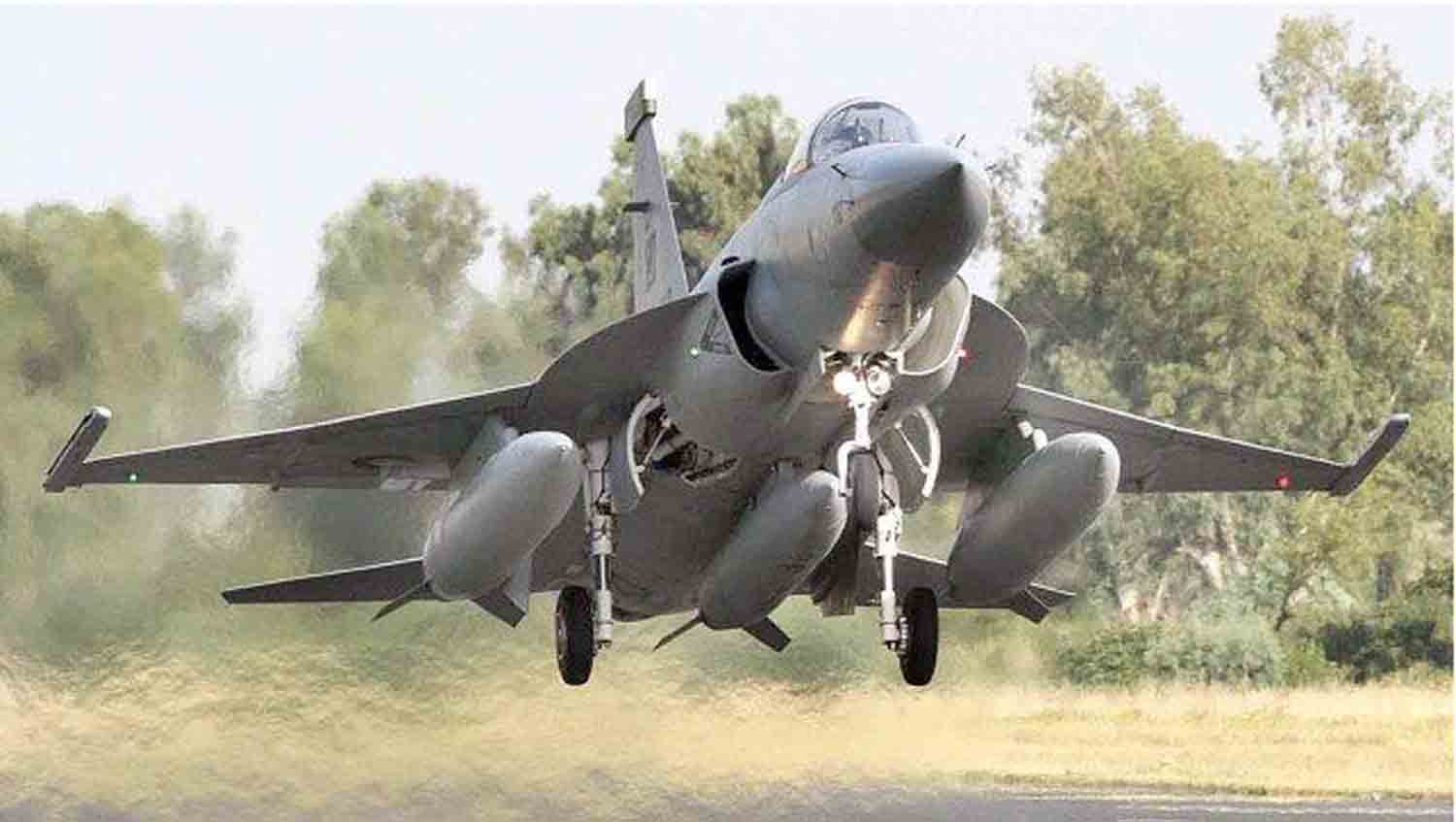
JF-17 Block III

The JF-17 Block III recently showcased its capabilities at the multinational air combat exercise Victory Spear 2025 in Saudi Arabia. Organized by the Royal Saudi Air Force’s Air Warfare Center, this high-intensity Live Execution Exercise (LIVEX) featured a diverse array of airpower, evaluating the combat readiness of advanced fighter jets in realistic scenarios.

Saudi Arabia contributed its F-15s, EF-2000s, and Tornados, while Bahrain sent F-16s. The lineup was further enhanced by France’s Rafales, Pakistan’s JF-17s, Qatar’s EF-2000s, the UAE’s Mirage 2000-5s, the UK’s EF-2000s, and the United States’ F-16s. Greece played a significant role in the exercises, with Australia, Egypt, Jordan, Italy, Morocco, and Spain observing the proceedings.

A notable highlight was the Pakistan Air Force’s long-range operation of the JF-17 Block III, which involved a non-stop flight from Pakistan to Saudi Arabia and back, facilitated by in-flight refueling.

This operation highlighted the aircraft’s impressive mission endurance and operational capabilities. As stated by the Inter-Services Public Relations (ISPR), the exercise served as a platform for the JF-17 Block III to showcase its advanced avionics, weaponry, and combat effectiveness against some of the world’s leading fighter jets.

Running from January 26 to February 6, the exercise tested the boundaries of aerial warfare strategy, emphasizing the need to counter contemporary threats, refine advanced tactics, and improve multinational cooperation.

The JF-17 Block III engaged in direct competition with Western-built aircraft, gaining attention for its maneuverability, firepower, and sophisticated electronic warfare capabilities. As global interest in this fighter continues to rise, its performance during Victory Spear 2025 solidified its reputation as a proficient and economical combat aircraft.

Developed by the Pakistan Aeronautical Complex (PAC) in partnership with China’s Chengdu Aircraft Industry Group (CAIG), the JF-17 Block III is a multirole combat aircraft. Initially referred to as the FC-1, this lightweight, single-engine fighter has become a cornerstone of the Pakistan Air Force (PAF).

The Block III variant, which debuted in 2020, offers substantial enhancements over the earlier Block I and Block II models, improving its avionics, radar, weaponry, and overall performance. This iteration of the JF-17 is tailored to address the increasing demand for advanced and adaptable combat platforms in today’s air combat landscape, effectively balancing cost and capability.

A key advancement in the Block III variant is the incorporation of the Chinese-made active electronically scanned array (AESA) radar, marking a significant improvement in both air-to-air and air-to-ground radar functionalities. The AESA radar, combined with cutting-edge signal processing technology, enables exceptional target tracking, long-range detection, and the capability to engage multiple targets at once.

This radar system significantly enhances the aircraft’s survivability, enabling effective operations in contested environments where electronic warfare may jeopardize conventional radar systems. The Block III aircraft is also outfitted with a state-of-the-art avionics suite, which includes a modern glass cockpit with a digital wide-angle heads-up display (HUD) and multifunctional displays that improve pilot situational awareness.

Beyond the radar enhancements, the Block III JF-17 is powered by a more robust engine, the RD-93MA, which delivers superior thrust and fuel efficiency compared to earlier models. This engine is an upgraded variant of the RD-93, recognized for its dependability and performance across various combat situations.

The RD-93MA engine boasts an improved thrust-to-weight ratio, which enhances the aircraft’s overall capabilities in acceleration, climb rate, and combat maneuverability. Its increased fuel efficiency broadens the aircraft’s operational range, making it a more formidable asset for long-range interdiction missions and extended operations.

Additionally, the JF-17 Block III features an integrated electronic warfare (EW) system aimed at bolstering the aircraft’s survivability in highly contested areas. This system comprises jamming pods, radar warning receivers, and countermeasure systems, enabling the fighter to detect and counter threats from enemy radar, missiles, and other hostile electronic signals.

The incorporation of advanced electronic warfare (EW) capabilities greatly enhances the aircraft’s performance in scenarios where adversaries utilize sophisticated countermeasures and radar technologies. This ensures that the JF-17 Block III maintains its competitive edge in a rapidly changing combat environment.

Another vital aspect of the JF-17 Block III is the significant enhancement in its weaponry. The aircraft is capable of carrying a diverse array of munitions, such as precision-guided bombs, air-to-air missiles, and air-to-ground missiles, which allows it to function effectively in both defensive and offensive roles.

The Block III variant can be outfitted with the latest Chinese PL-15 and PL-10 air-to-air missiles, offering extended-range interception capabilities against both conventional and advanced enemy aircraft.

Moreover, the aircraft is compatible with a variety of Western munitions, including precision-guided munitions (PGMs) and laser-guided bombs, which improves its interoperability with NATO and allied forces. The JF-17 Block III is also equipped to conduct anti-ship and strike missions, owing to its compatibility with multiple air-to-surface missile systems.

A significant feature of the Block III upgrade is its sophisticated data-link system, which facilitates real-time communication and information exchange with other aircraft, ground stations, and command-and-control networks.

The JF-17 Block III is equipped to function within a networked framework, enabling it to both receive and transmit essential intelligence data. This capability significantly enhances the situational awareness of the pilot and the broader combat unit. Furthermore, the data link facilitates the sharing of targeting information, which improves strike accuracy and allows for coordinated engagements with allied platforms.

The cockpit of the JF-17 Block III showcases a modern glass cockpit design, representing a notable advancement from earlier versions. It features a wide-angle heads-up display (HUD), two expansive multifunctional displays (MFDs), and a digital flight control system.

This contemporary cockpit layout enables pilots to swiftly and easily access vital information, which is crucial in high-stress combat scenarios. Additionally, the cockpit incorporates a new fly-by-wire system that enhances handling and stability, especially in challenging combat conditions. This system also boosts the aircraft’s agility and maneuverability, making it a formidable platform for air-to-air engagements.

While the airframe of the JF-17 Block III shares similarities with its predecessors, this variant boasts enhancements in structural integrity and survivability. The aircraft is engineered to endure the demands of high-speed maneuvers and combat conditions, featuring a reinforced airframe and advanced materials that offer improved resistance to wear and tear.

The JF-17 Block III is designed to function effectively in more demanding conditions, thereby extending its operational lifespan and lowering the total cost of ownership for the Pakistan Air Force and other potential users.

This version features state-of-the-art avionics, including a new mission computer and a digital flight control system, which significantly improve the aircraft’s operational versatility. The mission computer facilitates the swift processing of essential mission data, while the flight control system allows for a broader range of intricate maneuvers with enhanced accuracy and stability.

The incorporation of these sophisticated systems positions the JF-17 Block III as a highly proficient and versatile fighter, capable of engaging in various combat situations, from air dominance operations to precision strike missions.

Equipped with cutting-edge avionics and sensors, the JF-17 Block III enhances both its offensive and defensive capabilities. Notably, it includes an integrated helmet-mounted sight system (HMSS) that enables pilots to track and lock onto targets using only head movements.

This feature provides a considerable edge in aerial combat, as it boosts the pilot’s situational awareness and engagement time while minimizing response time during missile confrontations. Additionally, the JF-17 Block III can be outfitted with a digital map system, delivering real-time navigation information and helping the pilot maintain orientation in complex environments.

The JF-17 Block III plays a significant role in the complex air combat landscape, designed to function effectively in multi-threat environments. It collaborates seamlessly with other assets, including AWACS (Airborne Warning and Control Systems) and UAVs (Unmanned Aerial Vehicles), to deliver a coordinated and networked response to adversarial threats.

Equipped with state-of-the-art sensors and a sophisticated data-link system, the JF-17 Block III can integrate into a larger operational framework, facilitating intelligence sharing and enhancing mission execution accuracy.

Additionally, the aircraft features an advanced weapon control system that optimizes the management and deployment of munitions during engagements. This system works in conjunction with the aircraft’s radar and sensor suite, ensuring precise and efficient targeting of threats.

The JF-17 Block III is capable of executing both guided and unguided strikes, utilizing precision targeting technologies to effectively engage both mobile and stationary targets. The enhanced weapons management system in this variant further improves the coordination between the aircraft’s armaments and its sensor capabilities.

With its low operational costs and advanced features, the JF-17 Block III presents an appealing choice for nations in search of a modern yet economical fighter aircraft. Its adaptability in air-to-air and air-to-ground missions, along with its comprehensive suite of advanced avionics, sensors, and weaponry, establishes the JF-17 Block III as a competitive platform in the international defense market.

Pakistan and Saudi naval forces have successfully conducted a maritime exercise featuring live weapons firing

0
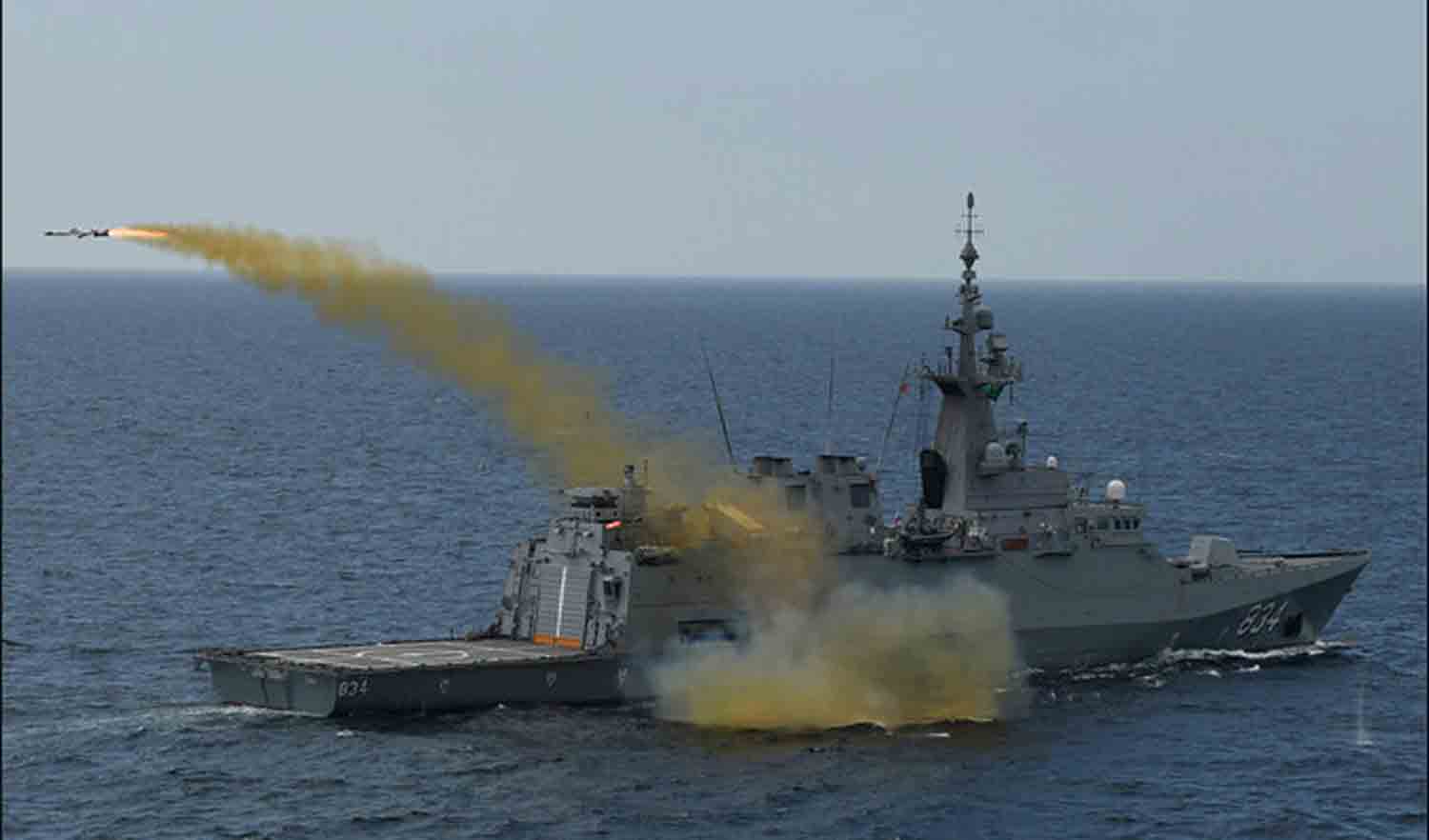
Saudi Navy ship exhibits a live fire demonstration during a bilateral maritime exercise in the North Arabian Sea.

The Pakistan Navy and the Royal Saudi Naval Forces (RSNF) successfully wrapped up a bilateral maritime exercise on Saturday, featuring a live weapons firing demonstration in the North Arabian Sea. This event showcased their combat readiness, as reported by Pakistan’s Naval Headquarters in Islamabad.

The exercise, named Naseem Al Bahr-XV, followed the larger multinational Aman exercise, which aimed to foster regional maritime cooperation among various navies. In contrast to Aman, which emphasizes soft power, multinational coordination, and humanitarian efforts, Naseem Al Bahr is a biennial event focused on enhancing operational readiness and joint warfare capabilities between Pakistan and Saudi Arabia.

This year’s exercise involved four naval vessels: Pakistan’s PNS Zulfiquar and Saudi Arabia’s HMS Jazan, HMS Al Yarmook, and HMS Hail.

According to the official statement, “Exercise NASEEM AL BAHR-XV included advanced maritime operations, with both navies executing a wide array of complex scenarios, such as joint maneuvers, Anti-Surface Warfare, Anti-Submarine Warfare, and integrated Maritime Security Operations.”

The exercise served as a platform to bolster bilateral cooperation, improve interoperability, and affirm a mutual commitment to maritime security. It concluded with a live weapons firing demonstration, where the participating ships effectively launched various surface-to-surface and surface-to-air missiles. The statement highlighted that all vessels accurately engaged their designated targets, showcasing their combat readiness and operational capabilities. Senior officials, including the commander of the Royal Saudi Naval Forces and Pakistan’s chief of naval staff, were present at the event.

US presented Ukraine with a document to access its minerals but offered almost nothing in return

0
United States Vice President JD Vance, second right, and United States Secretary of State Marco Rubio, third right, meet with Ukraine’s President Volodymyr Zelensky, third left, during a bilateral meeting on the sidelines of the Munich Security Conference in Munich.

Ukrainian officials were advised against signing an agreement with the United States regarding rare earth minerals, as the document primarily served US interests without providing specific security guarantees, according to President Volodymyr Zelensky. This information was shared by one current and one former senior official familiar with the discussions.

The proposal suggested that the US could utilize Ukraine’s rare earth minerals as a form of compensation for the support already extended by the Biden administration and as a means of payment for future assistance, as indicated by senior Ukrainian officials who spoke on the condition of anonymity. A senior official from the White House characterized Zelensky’s decision to reject the agreement as “short-sighted.”

Ukraine possesses significant reserves of critical minerals essential for the aerospace, defense, and nuclear sectors. The previous Trump administration expressed interest in accessing these resources to lessen reliance on China. However, Zelensky emphasized that any extraction must be linked to security guarantees that would prevent future Russian aggression.

“I refrained from allowing the ministers to sign the agreement because, in my opinion, it does not adequately safeguard our interests,” Zelensky stated to The Associated Press during the Munich Security Conference in Germany.

Zelensky noted that while the US provided a document, it lacked concrete security guarantees. “For me, the connection between security guarantees and investment is crucial,” he added. He did not elaborate on the reasons behind his directive to his officials not to sign the document presented by US Treasury Secretary Scott Bassent during his visit to Kyiv. A former senior official remarked, “It’s a colonial agreement, and Zelensky cannot sign it.”

White House National Security Council spokesperson Brian Hughes refrained from directly confirming the proposal but stated that “President Zelensky is overlooking the significant opportunity presented to Ukraine by the Trump Administration.” The Trump administration has expressed fatigue regarding the provision of additional U.S. aid to Ukraine, and Hughes noted that a minerals agreement could enable American taxpayers to “recover” funds sent to Kyiv while simultaneously bolstering Ukraine’s economy.

Hughes emphasized that the White House views “strong economic connections with the United States as the most effective safeguard against future aggression and a crucial element of enduring peace.” He remarked, “The U.S. acknowledges this, the Russians acknowledge this, and it is essential for the Ukrainians to acknowledge this as well.”

During discussions in Munich, U.S. officials engaged with their Ukrainian counterparts with a focus on commercial interests, particularly the specifics of mineral exploration and the potential for a partnership with Ukraine, according to a senior official.

The potential worth of Ukraine’s mineral deposits has yet to be addressed, as many areas remain unexplored or are located near conflict zones. The U.S. proposal seemingly did not consider how to secure these deposits amid ongoing Russian hostilities. The official indicated that the U.S. lacked “immediate solutions” to this concern and that one of the key outcomes from the Munich discussions would be to determine how to ensure the safety of any mineral extraction operations in Ukraine, including personnel and infrastructure.

Any agreement must comply with Ukrainian law and be acceptable to the Ukrainian populace, as stated by a senior Ukrainian official. Kseniiia Orynchak, founder of the National Association of Mining Industry of Ukraine, previously noted, “Subsoil belongs to Ukrainians under the Constitution,” suggesting that any deal would require public support.

Zelensky and Vance did not delve into the specifics of the US document during their meeting on Friday at the Munich Security Conference, according to a senior official. The meeting was described as “very good” and “substantive,” with Vance emphasizing that both he and Trump are focused on achieving a sustainable and lasting peace.

Zelensky conveyed to Vance that genuine peace necessitates Ukraine being in a “strong position” at the outset of negotiations. He underscored the importance of US negotiators visiting Ukraine and insisted that the US, Ukraine, and Europe must be involved in discussions with Russia.

However, Gen. Keith Kellogg, Trump’s special envoy for Ukraine and Russia, largely excluded European representatives from any Ukraine-Russia negotiations, despite Zelensky’s appeal. “You can have the Ukrainians, the Russians, and clearly the Americans at the table talking,” Kellogg stated at an event organized by a Ukrainian businessman during the Munich Security Conference. When asked if this implied that Europeans would be left out, he responded, “I’m a school of realism. I think that’s not going to happen.”

Ukraine is currently preparing a “counter proposal” that will be presented to the US in “the near future,” the official noted.

Zelensky remarked, “I think it’s important that the vice president understood me that if we want to sign something, we have to understand that it will work.” He added that this means it “will bring money and security.”

Ukraine excluded from Russia-US discussions, according to Zelensky

0
Ukraine's President Volodymyr Zelenskiy appears at a joint press conference

Ukrainian President Vladimir Zelensky has stated that Ukraine was not included in the upcoming discussions between delegations from Washington and Moscow, which are set to occur in Saudi Arabia in the near future.

On Wednesday, Russian President Vladimir Putin and US President Donald Trump engaged in a phone conversation, marking their first direct communication since the escalation of the Ukraine conflict in February 2022. Following this, the foreign ministers of both nations held a call on Saturday to discuss preparations for a potential high-level summit between Russia and the United States.

While Moscow has not confirmed specific details, various media sources indicate that a US delegation, likely consisting of national security advisers, is expected to travel to Saudi Arabia soon for discussions with their Russian counterparts.

Zelensky expressed his concerns during a press conference at the Munich Security Conference on Saturday, stating, “Perhaps there are discussions happening, but they do not involve us. I have not seen any invitations or communications regarding Ukraine’s participation in these talks.” He emphasized, “We have not received any documents or invitations, which makes it peculiar for me to engage in discussions without prior negotiations with our strategic partners.”

The Ukrainian government was reportedly “neither invited to, nor informed about” the forthcoming US-Russia discussions in Saudi Arabia, as stated by Fox News reporter Nana Sajaia, referencing an unnamed senior official in Kiev. Politico has indicated that there are “no plans for representatives from other major European powers to participate in the talks,” while Bloomberg noted that European officials had not been informed at all.

Kiev and its Western allies, including the previous US administration, have consistently maintained that any discussions regarding Ukraine’s future should include its direct involvement.

After his conversation with Putin on Wednesday, Trump reached out to Zelensky “to inform him of the conversation” with the Russian president. The Ukrainian leader reportedly expressed to Trump that he, similar to President Putin, desires to achieve PEACE.

During his address at the Munich Security Conference on Friday, Zelensky reiterated his stance of “not meeting with Russians.”

“I will only meet with one Russian – with Putin,” he declared, emphasizing that he would engage with the Russian leader to “end the war” only after Ukraine, the US, and the EU had established a “common plan.”

Last month, Putin remarked that while it is “possible to negotiate with anyone,” Zelensky no longer possesses the authority to lift his own decree prohibiting discussions with the Russian president. Although Zelensky’s presidential term is set to expire in May 2024, he has declined to hold elections, citing martial law. The Kremlin has underscored that any potential peace agreement between Moscow and Kiev must be legally binding.

Trump has also recognized that Kiev will eventually need to conduct elections and pointed out that Zelensky may not secure another term, noting that his domestic approval ratings “aren’t particularly great, to put it mildly.”

Lavrov and Rubio discuss removing obstacles from the previous US administration, per Russia

0
Russian Foreign Minister Sergey Lavrov

Russian Foreign Minister Sergei Lavrov and U.S. Secretary of State Marco Rubio engaged in discussions on the situation in Ukraine on Saturday, addressing the removal of “unilateral barriers” established by the previous U.S. administration, according to Moscow.

In the coming days, U.S. and Russian officials are set to initiate talks aimed at concluding Moscow’s military actions in Ukraine, following U.S. President Donald Trump’s surprising outreach to European allies by contacting Russian President Vladimir Putin and announcing an immediate commencement of discussions.

Ukrainian President Volodymyr Zelenskiy stated on Friday that Ukraine was not included in the talks taking place in Saudi Arabia and emphasized that Kyiv would not engage with Russia without prior consultation with its strategic partners.

During the call, which was initiated by the U.S., Lavrov and Rubio agreed to keep communication open to address issues in their bilateral relations, focusing on the removal of unilateral barriers to mutually beneficial trade, economic, and investment cooperation that were left by the previous administration, as noted in a statement from Russia’s foreign ministry.

The specific barriers discussed were not immediately clear. Under former President Joe Biden, the U.S. and its allies imposed extensive sanctions on Moscow in response to its invasion of Ukraine three years ago, aimed at undermining the Russian economy and constraining the Kremlin’s military efforts.

The U.S. State Department indicated that Rubio reiterated Trump’s commitment to seeking a resolution to the conflict in Ukraine during the call. Furthermore, they explored the potential for collaboration on various other bilateral matters, although no additional details were provided.

Russia reported that Lavrov and Rubio “expressed their mutual willingness to engage on urgent international issues, including the resolution of the situation in Ukraine, the circumstances surrounding Palestine, and broader concerns in the Middle East.”

They reached a consensus to focus on reestablishing “mutually respectful interstate dialogue,” reflecting the tone set by the presidents, according to the ministry. Trump and Putin engaged in a conversation lasting over an hour on Wednesday, marking the first direct communication between the U.S. and Russian presidents since Putin’s call with Biden just prior to deploying tens of thousands of troops to Ukraine in February 2022.

The Russian foreign ministry indicated that Lavrov and Rubio also addressed the need to swiftly enhance “the conditions for the operation of Russian diplomatic missions” in the United States. Experts are scheduled to convene soon “to determine specific measures for mutually alleviating barriers to the operations of Russian and U.S. missions abroad,” as stated by the ministry.

US and Russia to convene in Saudi Arabia regarding the Ukraine conflict

0

U.S. and Russian representatives are scheduled to convene in Saudi Arabia in the coming days to initiate discussions aimed at resolving Moscow’s nearly three-year conflict in Ukraine, according to a U.S. lawmaker and a source familiar with the arrangements.

Ukrainian President Volodymyr Zelenskiy, who met with U.S. Vice President JD Vance in Germany on Friday, noted that Ukraine was not invited to the Saudi talks and emphasized that Kyiv would not engage with Russia without prior consultation with its strategic partners.

U.S. Secretary of State Marco Rubio, National Security Adviser Mike Waltz, and White House Middle East Envoy Steve Witkoff are set to travel to Saudi Arabia, as reported by U.S. Representative Michael McCaul to Reuters. It remains unclear who their Russian counterparts will be.

During the Munich Security Conference, McCaul stated that the objective of the discussions is to facilitate a meeting between U.S. President Donald Trump, Russian President Vladimir Putin, and Zelenskiy “to ultimately achieve peace and resolve this conflict.”

A knowledgeable source confirmed the upcoming talks in Saudi Arabia between U.S. and Russian officials. The U.S. State Department has not yet responded to requests for comments.

Trump, who assumed office on January 20, has consistently pledged to bring a swift end to the war in Ukraine. He made separate phone calls to both Putin and Zelenskiy on Wednesday, raising concerns among Washington’s European allies about being excluded from any peace negotiations.

These concerns were largely validated on Saturday when Trump’s envoy for Ukraine indicated that Europe would not be included in the discussions, following Washington’s distribution of a questionnaire to European capitals regarding their potential contributions to security guarantees for Kyiv.

MINERALS DEAL

On Saturday, Rubio held discussions with his Russian counterpart, Sergei Lavrov. They reached an agreement to maintain regular communication in preparation for a meeting between Putin and Trump, as reported by Russia’s Foreign Ministry.

Zelenskiy announced on Friday his intention to visit the United Arab Emirates, Saudi Arabia, and Turkey, although he did not specify the dates. He clarified that he does not plan to engage with U.S. or Russian officials during these trips.

Currently, Moscow occupies approximately 20% of Ukraine and has been gradually advancing in the eastern regions for several months. Meanwhile, Ukraine’s smaller military is facing challenges with manpower and is striving to maintain control over parts of western Russia.

Russia has insisted that Ukraine relinquish territory and adopt a stance of permanent neutrality as part of any peace agreement. Conversely, Ukraine demands the withdrawal of Russian forces from occupied areas and seeks NATO membership or equivalent security assurances to deter potential aggression from Moscow.

Since the onset of the conflict, the United States and Europe have provided Ukraine with tens of billions of dollars in military assistance. Trump has expressed his support for Ukraine but is advocating for security measures in exchange for U.S. financial aid to Kyiv.

Currently, negotiations are underway between the U.S. and Ukraine regarding a potential agreement that would facilitate U.S. investment in Ukraine’s extensive natural resources. According to three sources, the U.S. has proposed acquiring ownership of 50% of Ukraine’s critical minerals. However, Zelenskiy stated on Saturday that the preliminary agreement lacks the necessary security provisions that Kyiv requires.

Trump seeks talks with Russia and China on denuclearization and hopes to reduce defence spending

0
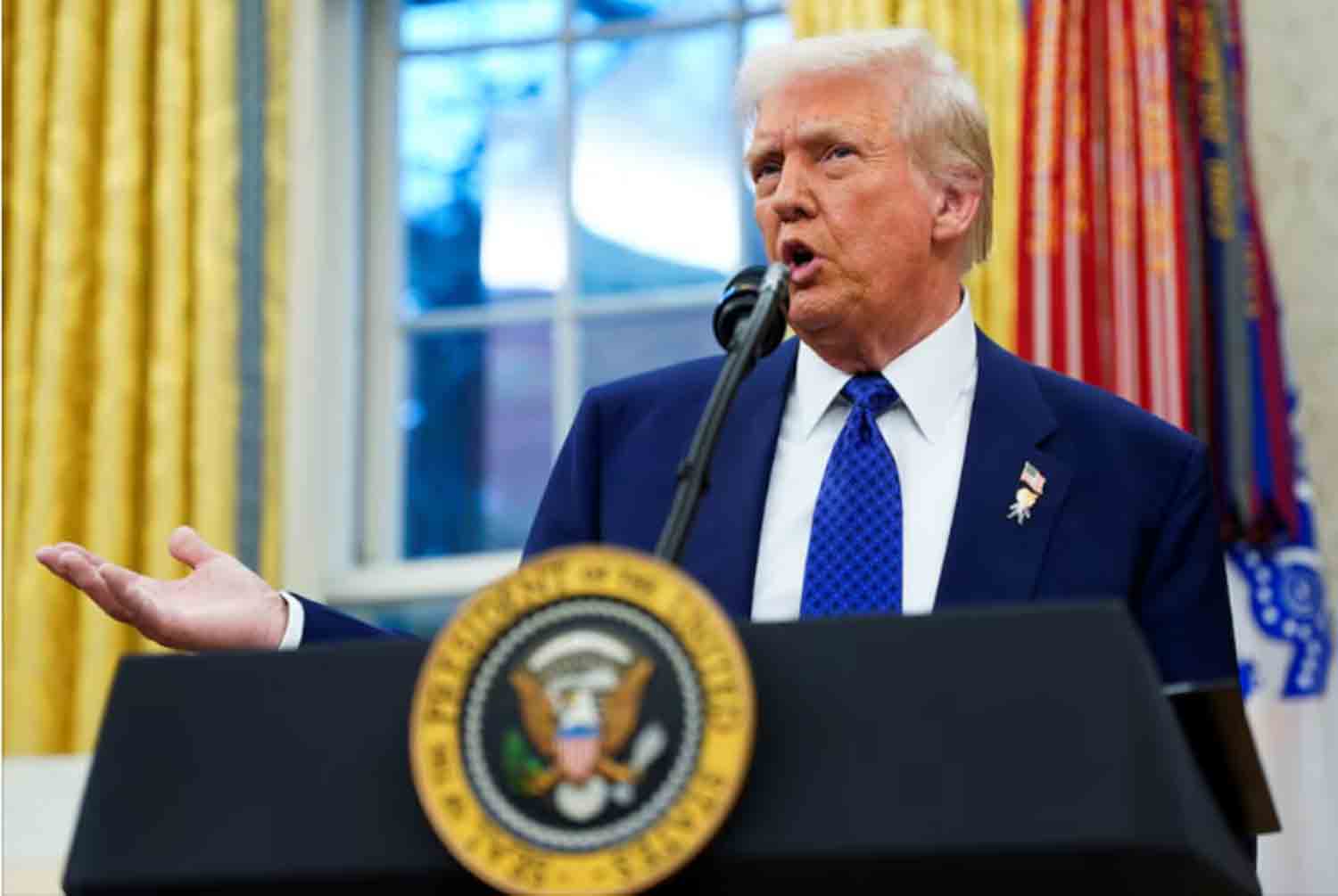
U.S. President Donald Trump speaks, on the day of Tulsi Gabbard's swearing in ceremony as Director of National Intelligence, in the Oval Office at the White House in Washington, D.C.

President Donald Trump expressed on Thursday his desire to revive nuclear arms control discussions with Russia and China, with the ultimate goal of achieving a mutual agreement to reduce their substantial defense budgets by fifty percent.

During a press briefing in the Oval Office, Trump criticized the extensive financial resources allocated to modernizing the nation’s nuclear arsenal, emphasizing his hope to secure commitments from U.S. adversaries to similarly decrease their expenditures.

“There’s no justification for developing new nuclear weapons when we already possess so many,” Trump stated. “We have the capability to annihilate the world multiple times over. Yet, we continue to invest in new nuclear arms while they are doing the same.”

“We are all allocating significant funds that could be redirected towards more constructive initiatives,” he added.

Despite the extensive arsenals held by the U.S. and Russia since the Cold War, Trump warned that China is likely to enhance its nuclear capabilities to a comparable level within the next five to six years.

He remarked that if nuclear weapons were ever deployed, “it would likely lead to total destruction.”

Trump indicated his intention to initiate nuclear discussions with both nations once the situations in the Middle East and Ukraine are resolved.

“One of my initial meetings will be with President Xi of China and President Putin of Russia. I want to propose, ‘let’s halve our military budgets.’ I believe this is achievable.”

During his first term, Trump attempted to engage China in discussions regarding nuclear arms reduction while the U.S. and Russia were negotiating an extension of the New START treaty, but these efforts were unsuccessful.

Under the Biden administration, Russia halted its involvement in the treaty, as both the U.S. and Russia continued extensive programs aimed at prolonging the life or replacing their nuclear stockpiles from the Cold War era.

China has consistently rejected previous American initiatives to include it in nuclear arms negotiations, asserting that the U.S. and Russia must first reduce their significantly larger arsenals. A government representative reaffirmed this stance on Friday.

“The U.S. and Russia should … make significant and substantial reductions to their nuclear arsenals and establish the necessary conditions for other nuclear-armed nations to participate in the nuclear disarmament process,” stated Foreign Ministry spokesperson Guo Jiakun during a daily briefing in Beijing.

UK monitors Russian vessels transporting munitions from Syria

0
Naval personnel stand in front of the Russian aircraft carrier Kuznetsov in the Syrian city of Tartous on the Mediterranean sea

Britain announced on Saturday that it had recently monitored six Russian naval and merchant vessels transporting ammunition used in Syria as they navigated through the Channel. The British defense ministry stated that these ships, which were being closely observed by the Royal Navy and the Royal Air Force, were departing Syria following the removal of President Bashar al-Assad, a key ally of Russia, in December.

According to the ministry, Russia has been withdrawing its military resources from Syria since Assad’s ousting, characterizing this as a significant setback for Moscow’s ambitions in the Middle East.

Defense Minister John Healey remarked, “These vessels were retreating from Syria after Putin distanced himself from his ally Assad, yet they remained armed and loaded with ammunition. This indicates that while Russia is diminished, it still poses a threat.”

Russia aims to maintain access to naval and air bases in Syria under the new Islamist leadership that emerged after Assad fled to Moscow following 13 years of civil conflict, during which Russian forces intervened on his behalf.

The British defense ministry noted that the withdrawal of ammunition from Syria reflects how Russia’s focus on its war in Ukraine has impacted its ability to support Assad’s regime. On Wednesday, Russian President Vladimir Putin held a phone conversation with Syria’s interim leader, Ahmed al-Sharaa, marking their first communication since Assad’s departure. The Syrian presidency reported that Putin had invited Syria’s new foreign minister to Moscow and indicated that Russia was open to reassessing bilateral agreements established during Assad’s tenure.

Russia will establish its first naval base in the Red Sea after receiving approval from Sudan

0
Russian warships are seen during a naval parade rehearsal in the Crimean port of Sevastopol in 2016.

Russia is set to establish its first naval base in Africa, joining the ranks of the United States and China. This development will enhance Russia‘s naval presence in key global waterways, specifically the Red Sea and the Indian Ocean.

Sudan’s geographical position is significant, as it borders Egypt and Libya to the north, Ethiopia and Eritrea to the east, South Sudan to the southeast, and Chad and the Central African Republic to the west. The Red Sea is vital for international trade, with 12 percent of global commerce transiting through it, alongside the strategic Suez Canal located at its northern end.

The establishment of a base in Sudan will allow Russia to offset the loss of its naval facility in Tartus, Syria. Given the ongoing instability in Syria, a reliable base in Sudan will enable Russia to maintain its strategic influence in the region.

The foreign minister of Sudan has confirmed the advancement of this plan after several years of delays. This announcement followed his visit to Moscow, where he engaged in discussions with Russian Foreign Minister Sergei Lavrov. Following their talks, Sharif stated that both nations are in “complete agreement” regarding the establishment of the Russian base, asserting that “there are no obstacles.”

The initial proposal for this base was made by former President Omar al-Bashir during a visit to Sochi in 2017. However, his ousting in a coup in 2019 interrupted Russia’s ambitions for a military foothold in the area. A subsequent agreement was reached in 2020, permitting Russia to station up to four naval vessels, including nuclear-powered ships, in Sudan for a duration of 25 years.

The draft agreement presented by Russia in 2020 highlighted that the logistics facility for the Russian Navy in Sudan is intended for defensive purposes, aimed at fostering peace and stability in the region. The document clarified that the base “is defensive and is not aimed against other countries.”

The naval logistics base is intended for the maintenance and supply replenishment of Russian warships. The logistics facility established by the Russian Navy in Sudan is anticipated to encompass coastal, water, and mooring zones.

Negotiations for the deal stalled due to disagreements between the parties regarding its terms and conditions. The situation was further complicated by the outbreak of civil war in Sudan in April 2023, which pitted the army against the paramilitary Rapid Support Forces, disrupting Russia’s ambitions for a military presence in the area.

The Wagner group, which is supported by Russia, aligned with the paramilitary forces, while the Kremlin provided backing to the Sudanese military. According to the Stockholm International Peace Research Institute (SIPRI), Russia was responsible for approximately 87 percent of Sudan’s armaments.

In April 2024, Russian Deputy Foreign Minister Mikhail Bogdanov made a visit to Sudan, where he expressed unwavering support for the Sudanese army. Additionally, Russia has supported Sudan in the UN Security Council by vetoing a resolution that called for a ceasefire on humanitarian grounds.

Following the closure of the Tartus naval base in Syria, Russia faces new options.

Syria’s current government has annulled a treaty that allowed Russia a long-term military presence in the Mediterranean, a pact established under the previously ruling Bashar al-Assad.

The 2017 agreement had extended the Russian Navy’s lease on the Tartus port for 49 years. However, the future of this arrangement became uncertain after Assad was ousted by Islamist rebels at the end of 2024.

The authorities in Tartus have revoked the agreement, compelling the immediate withdrawal of Russian forces. This development represents a significant setback for Russia, as Tartus was its sole refueling station in the Mediterranean Sea.

The Tartus facility held considerable strategic value for Russia, particularly given the constraints on its Black Sea fleet, which is unable to navigate the Bosphorus Strait due to the ongoing conflict with Ukraine.

Following the loss of the Tartus base, Russia has increased its operations to and from an airbase in eastern Libya, indicating a potential pivot away from the Syrian bases that have previously supported its military activities in Africa and the Mediterranean.

While Tartus served as a less favorable alternative to the Soviet Navy’s former access to larger Egyptian ports, Russia’s lack of intent to engage in a Mediterranean conflict meant that a larger military presence was unnecessary.

At one point, the Russian naval contingent in the Mediterranean consisted of no more than 11 vessels, including 3 to 5 auxiliary ships. This was sufficient for deterrent signaling, intelligence operations, involvement in minor conflicts, and demonstrating support for its allies. Recently, it has also played a role in facilitating the export of Iranian oil to Syria and executing Kalibr missile strikes in support of the Assad regime.

The loss of Tartus, although limited in scope, carries significant consequences. This base was crucial for Russia, providing essential services for refueling and resupplying ships, as well as functioning as an important maintenance center in the region.

This situation clarifies why vessels like the Admiral Grigorevich have been able to remain in the vicinity for prolonged durations without returning to their home ports. The closure of the Turkish straits due to the Ukraine conflict has disrupted the Mediterranean fleet’s link to the Black Sea Fleet.

In this context, Port Sudan presents facilities that could accommodate a modest Russian presence in the Red Sea.

Russian Foreign Military Bases

During the Cold War, the Soviet Union maintained naval bases in Cuba, Syria, and Vietnam. Additionally, it had basing agreements with countries such as Albania (1955-1962), Egypt (1967-1972), Somalia (1964-1978), and Ethiopia (1977-1991).

While several nations had port access agreements with the Soviet Union, these did not equate to fully operational military bases.

Soviet air bases were established in various locations, including Egypt, Ethiopia, Somalia, Yemen, Cuba, Guinea, Angola, and Vietnam. Between 1989 and 1994, Soviet forces were withdrawn from all bases outside the boundaries of the former Soviet Union.

In comparison to its primary competitor, Russia has a relatively small number of military bases abroad. The United States operates over 700 military installations outside its borders, whereas Russia has fewer than 20.

In addition to its military installations in the former Soviet republics, Russia has been actively increasing its presence in the Middle East and North Africa.

Since initiating its military involvement in Syria in 2015, Russia has set up several facilities, including the significant naval base in Tartus and the Khmeimim Air Base. Additionally, the smaller air bases at Tiyas and Shayrat accommodate Russian aircraft and support personnel.

While Russia’s military expansion abroad is modest compared to the extensive presence of the United States, it is relatively significant when compared to other nations such as China.

The United States operates a permanent base in Djibouti, an Air Force facility in Niger, and has deployed troops in Kenya and Somalia. Furthermore, it has authorized special operations forces to assist in counterterrorism efforts across various Sub-Saharan African nations and provides logistical support for French counterterrorism initiatives in Mali.

China currently has only one base in Djibouti, but U.S. officials believe it may be seeking to establish additional bases in several countries, including Angola, Equatorial Guinea, Kenya, Namibia, the Seychelles, and Tanzania.

Recent reports indicate that Moscow may be transitioning its training and assistance agreements with several African nations into permanent military bases. The countries involved include the Central African Republic (CAR), Egypt, Eritrea, Madagascar, Mozambique, and Sudan.

Russia has shown a preference for having access to countries rather than establishing permanent military bases, as the latter can lead to involvement in the host nations’ security challenges and necessitates a much larger financial commitment.

The naval sector stands as the sole exception to this overarching strategy against the establishment of overseas bases.

Historically, both Russia and the Soviet Union have aimed for assured port access for their naval fleets globally, driven by the operational demands of naval missions, which include the need for resupply and maintenance.

Nevertheless, this approach falls short in critical areas like the Mediterranean, where the Russian Navy regularly conducts patrols. Actual bases are essential to maintain a robust military presence in the Mediterranean region.

U.S. M10 light tank underwent comprehensive cold weather testing in the Arctic regions and proved to be resilient

0
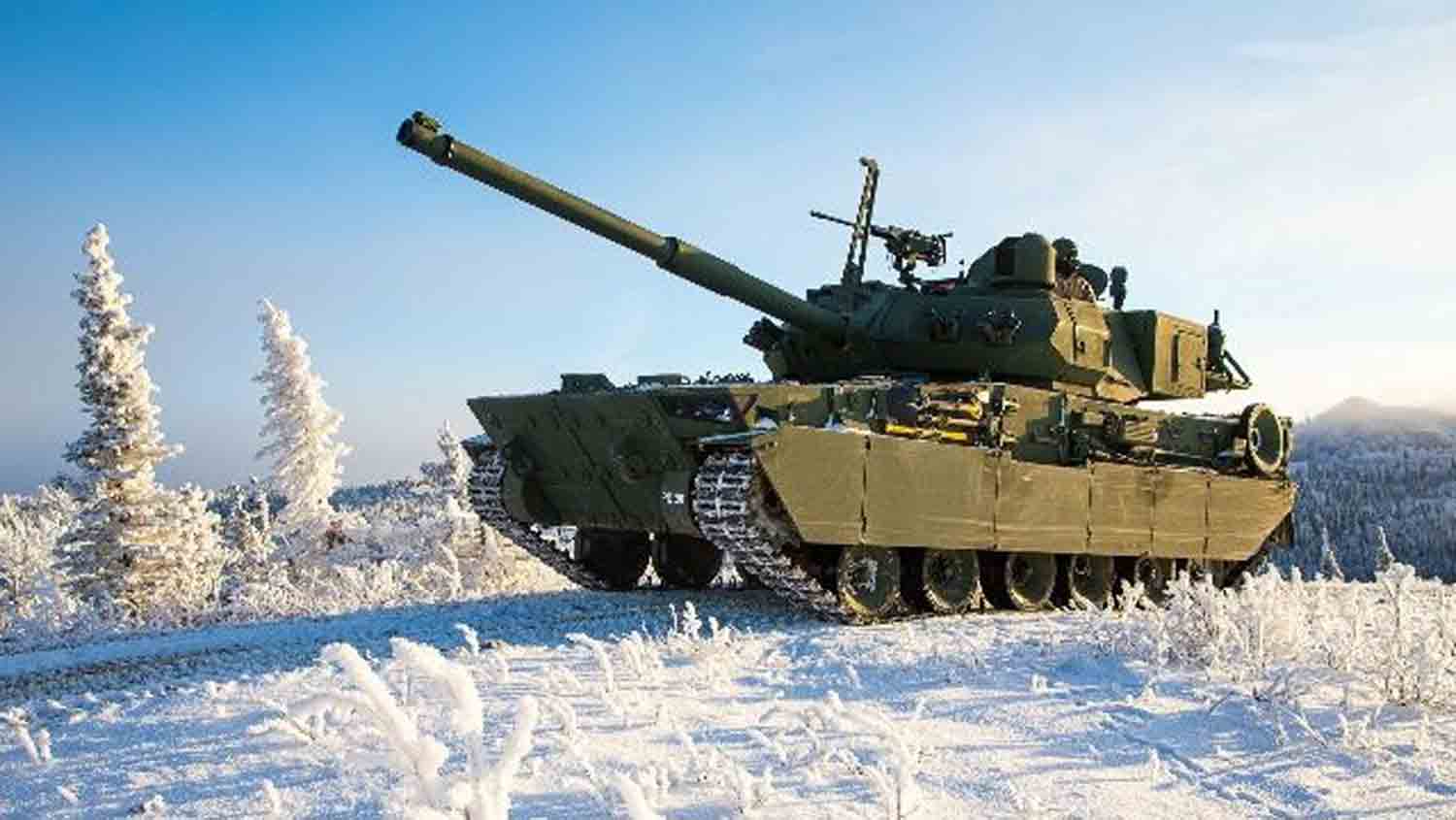
M10 light tank, U.S. Army

The M10 Booker, a newly developed light tank by the U.S. Army, recently completed extensive cold weather evaluations at the Arctic Regions Test Site located in Fort Greeley, Alaska. These assessments aimed to verify the vehicle’s performance and dependability in extreme cold, which is essential for its effectiveness in diverse operational environments worldwide.

At the Arctic testing facility, temperatures can drop significantly below -40 degrees Fahrenheit, creating an ideal setting to assess the M10 Booker’s mechanical and electronic capabilities. The tests included various operational scenarios, such as starting the vehicle, maneuvering on ice and snow, and evaluating the functionality of its weapon systems under freezing conditions.

A critical component of the evaluation was the vehicle’s cold weather starting ability, a frequent challenge for military equipment in arctic settings. Soldiers and engineers observed that the M10 Booker successfully started even in the most frigid temperatures, a vital factor for ensuring operational readiness.

“The cold start evaluation was more than just a simple pass or fail; we tracked the speed at which the systems activated, and the results were promising,” commented one engineer involved in the testing.

Mobility in these severe conditions was another major area of focus. The M10 Booker’s track system and suspension were assessed for their traction and maneuverability on icy and snowy surfaces. Observers noted that while the vehicle performed well in navigating the difficult terrain, there were moments where modifications could enhance its performance.

“The Booker managed the ice effectively, but we did notice some slipping in deeper snow, which we will consider for future design improvements,” stated an Army tester.

The M10’s armament performance in extreme cold conditions underwent thorough evaluation. It was essential for both the main gun and secondary weapons to operate smoothly without any jams or malfunctions caused by freezing temperatures. Collected data indicated that the firing mechanisms functioned within acceptable limits, although minor challenges were noted with ammunition handling in the harshest conditions, highlighting opportunities for further improvement.

Feedback from soldiers involved in the testing was varied. Many expressed appreciation for the vehicle’s sturdy design and the relative comfort it provided, even in severe weather.

“It’s a beast in the cold, and the heater inside keeps you from turning into an icicle,” remarked one soldier. Conversely, some highlighted that external maintenance in such frigid conditions was demanding and time-consuming, which could affect the vehicle’s readiness for combat.

The testing at Fort Greeley also encompassed endurance runs, where the M10 Booker was operated for prolonged periods to identify any potential wear, tear, or failure points under stress. This phase of testing provided valuable insights into the durability of components such as bearings, seals, and electronics, which are susceptible to failure in cold environments. “We’ve gathered data on component longevity that will be beneficial for future versions,” noted a project manager.

The M10 Booker represents the newest addition to the American light tank fleet, currently in serial production to bolster the combat effectiveness of the U.S. Army’s infantry brigades. Developed by General Dynamics Land Systems (GDLS), this light tank is a product of the Mobile Protected Firepower (MPF) initiative, with initial units expected to be delivered starting in February 2024.

While commonly labeled as a “light tank,” military officials prefer the term “assault gun system” to better reflect its designated function on the battlefield.

Armed with a 105mm M35 gun, the M10 Booker boasts considerable firepower, enabling it to engage a variety of targets effectively. This weapon, utilized in earlier tank models, has been upgraded to align with modern standards of mobility and precision.

Additionally, the tank features advanced sighting systems, including both optical and thermal sights, which empower the crew to execute accurate firing in low-light conditions and challenging weather.

In terms of defense, the M10 Booker is constructed with armor that strikes a balance between lightness for mobility and robustness for protection against small arms fire and artillery fragments. It is not intended for direct confrontations with heavy battle tanks but is designed to support infantry operations and target stationary or lightly armored adversaries.

The tank has a weight of approximately 42 tons, which is considered light by contemporary combat vehicle standards, allowing for enhanced maneuverability across diverse terrains.

The M10 is equipped with a fire control system that consolidates data from multiple sensors to improve targeting accuracy. This system supports a range of ammunition types, including standard armor-piercing, high-explosive, and fragmentation rounds.

It has the capacity to carry a substantial amount of ammunition, granting it extended operational endurance on the battlefield without the need for frequent resupply.

The M10 Booker’s ammunition options are varied, featuring not only standard 105mm rounds but also specialized munitions designed for extended range and enhanced penetration. This flexibility enables the tank to respond effectively to various tactical scenarios, such as breaching fortifications, engaging light armored targets, or providing fire support for infantry units.

Currently, modifications and variants of the M10 Booker are in the early phases of development, with ongoing advancements in the production program. Future iterations may include specialized models tailored for specific roles, such as enhanced mine protection or reduced signature emissions to evade enemy detection.

Despite these developments, the fundamental design of the tank emphasizes mobility, firepower, and support for infantry in rapidly changing combat environments.

In summary, the M10 Booker exemplifies a modern take on the light tank concept, merging the traditional functions of such vehicles with cutting-edge technological and tactical advancements. It is set to play a crucial role in the U.S. Army, particularly in operations where the integration of mobility and firepower is essential for achieving battlefield superiority.

In conclusion, the M10 Booker demonstrated notable potential in extreme cold conditions; however, the testing revealed specific areas for enhancement that could further improve its performance. The Army intends to utilize these insights to modify and optimize the design, with the goal of creating a vehicle that not only endures but thrives in severe winter environments.

The evaluations conducted in Alaska are part of a comprehensive series of assessments aimed at confirming the M10 Booker’s readiness for various operational settings, ensuring that U.S. forces possess a dependable asset even in the most demanding climates.

Russian Lancet-E kamikaze drone makes its debut in the Middle East

0
Lancet-E kamikaze drone

Russia is set to introduce its Lancet-E loitering munition to the Middle East for the first time. As reported by Interfax, this drone will be featured at the upcoming IDEX defense exhibition in Abu Dhabi, which is scheduled to begin next week. The Russian delegation will be headed by First Deputy Prime Minister Denis Manturov.

Moscow is making a significant impact at IDEX, with its exhibition space covering over 2,000 square meters. The Russian Defense Ministry informed Interfax that the country’s presence at IDEX is typically substantial. “This year, Russia will present a record number of new defense industry products, including several global premieres.”

The Lancet-E kamikaze drone, specifically designed for export, has emerged as a prominent addition to the loitering munitions category, particularly after its debut at the Army-2024 International Defense Exhibition in Russia. Developed by Zala Aero Group, part of the Kalashnikov Concern, this drone represents an advancement of the Lancet series, featuring modifications aimed at international markets.

The Lancet-E is an upgraded version of the original Lancet loitering munition, which gained attention for its performance during the Ukrainian conflict. This model offers an operational range of 70-80 kilometers, significantly exceeding the 40 kilometers of earlier versions, due to its sophisticated reconnaissance and control systems. The Lancet-E incorporates the Z-16-E reconnaissance drone along with two kamikaze variants, the Item 51-E and Item 52-E, each designed for specific engagement scenarios.

The Lancet-E drone features a lightweight composite airframe that significantly boosts its durability and operational efficiency. Equipped with a brushless electric motor from AXI Model Motors, it can sustain flight for up to 40 minutes, offering ample time for effective target acquisition.

Its propulsion system is enhanced by advanced guidance technologies, which include an optoelectronic system for pre-flight programming and a TV guidance unit for terminal phase control, ensuring accurate targeting.

A notable aspect of the Lancet-E is its versatility in various combat situations, as it can be fitted with different warhead types. Options include high-explosive, high-explosive fragmentation, and cumulative warheads, enabling it to engage a wide range of targets, from armored vehicles to fortified structures and naval vessels.

The drone’s payload capacity has been increased to accommodate warheads weighing up to 5 kilograms, a marked improvement from the previous models’ 3-kilogram limit, thereby enhancing its destructive capabilities.

In comparison to other drones in the Lancet series, the Lancet-E is distinguished by its export-oriented enhancements. While the original Lancet-1 and Lancet-3 were primarily designed for domestic applications, with the Lancet-1 featuring a smaller 1 kg warhead and the Lancet-3 a 3 kg variant, the Lancet-E offers a more adaptable and powerful solution.

The Lancet-E enhances both the range and the quality of video transmission, which is essential for operators managing missions remotely. It also features a thermal camera for nighttime operations, a capability not present in previous models, thereby offering a tactical edge in low-light scenarios.

Another key feature of the Lancet-E is its compatibility with advanced communication and navigation systems, specifically designed to better withstand electronic warfare. In contrast to the standard Lancet models that may depend more on manual operation, the Lancet-E incorporates semi-autonomous functions, which help mitigate the chances of interception or jamming by adversarial forces.

From an operational perspective, the Lancet-E serves more than just a destructive purpose; its reconnaissance abilities facilitate strategic targeting, making it a versatile asset in contemporary warfare. The drone’s capacity to loiter above the battlefield, poised to strike at the most advantageous moment, distinguishes it as a valuable tool for both surveillance and precision attack missions.

The Russian Lancet kamikaze drone has emerged as a notable participant in the ongoing conflict in Ukraine, recognized for its accurate strikes and relatively low expense. Since its debut in late 2022, the Lancet has garnered both praise and criticism regarding its battlefield effectiveness.

The Lancet is a type of loitering munition designed to remain airborne over a designated area until it identifies a target. Upon locking onto a target, it descends to execute a strike, functioning effectively as a one-way attack drone. There are two variants of the Lancet: the Lancet-1 and the Lancet-3, which primarily differ in their dimensions and payload capacities.

The Lancet-3, capable of carrying a payload of up to 3 kg, has gained attention for its effectiveness in neutralizing high-value targets, including tanks, artillery pieces, and air defense systems.

The Lancet has demonstrated its operational effectiveness through several notable achievements. It has been reported to have destroyed or damaged Leopard tanks, Western-supplied artillery such as the M777, and air defense systems like the S-300. A significant event was the attack on a Ukrainian Su-25 at Dolgintsevo airfield, which highlighted its extended operational range, surpassing the initially stated 40 kilometers.

Social media footage and frontline reports frequently emphasize the Lancet’s capability to engage moving targets, indicating substantial advancements in its guidance and autonomous functionality.

As of December 2023, there have been 872 recorded instances of Lancet deployment, boasting an 80% success rate with claims of 698 Ukrainian targets destroyed. However, this figure is derived from publicly accessible information and may not encompass the entirety of operations, given the secretive nature of many drone engagements.

The Lancet, while demonstrating notable successes, is not without its drawbacks. Ukrainian forces have employed various strategies to counter these drones effectively. They have utilized electronic warfare systems to disrupt the drones’ communications, resulting in missed targets or the neutralization of drones during flight.

Additionally, there is evidence of physical countermeasures, such as anti-drone cages surrounding critical military assets, which have occasionally shielded equipment from Lancet attacks. The drone’s performance is also diminished when confronted with sophisticated air defense systems or when its reconnaissance support is compromised.

The Lancet’s dependence on Western microchips, despite existing sanctions, raises concerns regarding supply chain vulnerabilities. Furthermore, the drone is vulnerable to small arms fire, as demonstrated in instances where Ukrainian forces successfully shot them down using rifles or anti-aircraft weapons.

Undeniably, the Lancet stands out as one of Russia’s most effective new weapons in this conflict, offering a cost-efficient means for precision strikes against high-value targets. Its capability to operate autonomously after target designation provides an advantage in counter-battery operations against Ukrainian artillery. However, the drone’s effectiveness is significantly influenced by the availability of reconnaissance support and the operational context, including the electronic warfare capabilities of both parties involved.

From a strategic perspective, the Lancet has compelled Ukraine to modify its defense strategies, both in terms of technology and tactics. The emergence of this drone has catalyzed advancements in counter-drone technologies and methodologies, particularly through the deployment of FPV [First-Person View] interceptors, which have significantly diminished the operational effectiveness of Lancet by targeting both the drones and their operators.

Trump’s selection of a South Asia envoy indicates ‘renewed challenges’ for Pakistan, according to analysts

0
Paul Kapur assistant secretary of state for South Asian affairs.

The nomination of Paul Kapur, an Indian-origin security expert, by President Donald Trump for the position of assistant secretary of state for South Asian affairs may introduce “renewed challenges” for Pakistan; however, analysts indicated on Saturday that there is unlikely to be a major shift in the already cautious US policy towards Islamabad.

Historically, Pakistan and the US have worked together during the Cold War and in the fight against Al-Qaeda post-9/11, but their relationship has faced strains due to differing priorities on various matters. In recent years, tensions have escalated as Washington has expressed concerns over Pakistan’s alleged support for the Taliban during their 2021 takeover of Kabul, claims that Islamabad has denied. The situation further deteriorated in 2022 when former Prime Minister Imran Khan accused the Biden administration of orchestrating his removal through a parliamentary vote, a claim that the US refuted.

Kapur, who is set to take over from Donald Lu pending Senate confirmation, has been a proponent of a stronger US-India alliance and has criticized Pakistan’s security strategies. His appointment signals a broader bipartisan agreement in Washington to prioritize India as a crucial strategic ally, especially in the Indo-Pacific region.

Political analysts and foreign policy experts suggest that while Kapur’s nomination indicates a continuation of Washington’s approach to South Asia, it also points to a potentially “tougher stance toward Pakistan.”

“There is an increasing bipartisan agreement in Washington on enhancing the US-India strategic partnership. Many Trump appointees, including Kapur, support a more profound relationship between the two nations,” stated Syed Hassan Akbar, a senior foreign policy analyst.

“The implications of this in policy will influence US-Pakistan relations moving forward. However, considering the realities of the region, we should not anticipate any significant changes in US policy towards Islamabad, which has remained cautious since the US withdrawal from Afghanistan.”

Kapur is President Trump’s third choice among Indian-origin Americans, following Tulsi Gabbard and Kash Patel, both of whom have already received Senate confirmation for their roles as director of National Intelligence and head of the Federal Bureau of Investigation (FBI), respectively.

Akbar noted that Kapur has previously opposed U.S. security assistance to Pakistan, arguing that such support would be viewed unfavorably in New Delhi. Instead, he advocated for ongoing dialogue and limited economic interactions between Washington and Islamabad.

Abdul Basit, a former Pakistani high commissioner to India, shared similar concerns, suggesting that Kapur’s appointment could intensify operational pressure on Pakistan, even though the overall strategic landscape would remain unchanged.

“This is a strategic move by the United States, with both Democrats and Republicans dedicated to enhancing their partnership with India,” Basit stated. “However, we will certainly feel the operational repercussions.”

According to Basit, Pakistan’s diplomatic standing is compromised by its limited economic influence and ineffective engagement with its diaspora. “Pakistan is not regarded as strategically important, except in negative contexts like terrorism, nuclear proliferation, and Afghanistan,” he remarked. “Our embassy faces constraints, and without effectively mobilizing Pakistani-Americans, it will be challenging to enhance our diplomatic presence.”

He emphasized the significance of political stability in Pakistan, asserting that unpredictability undermines foreign policy.

“Political stability is essential; predictability and consistency are vital. In its absence, the nation will struggle internally, and foreign policy will be adversely affected, as these elements are interrelated,” stated the former diplomat.

While Islamabad has been cautious in its remarks regarding Trump’s seemingly anti-Pakistan appointments, Syed Zulfikar Abbas Bukhari, a prominent member of the Pakistan Tehreek-e-Insaf (PTI) opposition party, referred to Kapur’s nomination as an “internal” matter within the US bureaucracy.

Nonetheless, he expressed approval of Donald Lu’s departure, whom PTI founder and former Prime Minister Imran Khan had accused of orchestrating his ousting through a parliamentary no-confidence vote in 2022.

“This is a matter of bureaucratic changes within the US. It is a positive development, as everything Mr. Donald Lu was involved with ended poorly. Much of the unrest in the subcontinent can be attributed to his actions,” Bukhari remarked.

Christopher Clary, an associate professor of political science at the University at Albany, pointed out Kapur’s extensive academic focus on Pakistan, noting that Trump’s choice for South Asia envoy has characterized Pakistan as a “uniquely dangerous state” due to its strategic decisions.

“Kapur is likely to approach Pakistan with more skepticism than any of his predecessors in that role,” Clary commented on X. “He has spent many years seeking avenues for US-India collaboration, but his academic work has predominantly centered on Pakistan.”

With Kapur in a pivotal role, analysts anticipate that the United States will maintain its approach of limited engagement with Pakistan, while prioritizing strategic cooperation with India.

Akbar advised Pakistan to concentrate on enhancing its economic development and ensuring regional stability to effectively navigate the changing geopolitical environment. He stated, “Pakistan should aim to bolster its economy and tackle issues in our immediate vicinity, while at the very least, ensuring that crisis management mechanisms with Washington remain functional.”

Meanwhile, Basit emphasized the need for Pakistan to take proactive measures to enhance its diplomatic standing. “If we do not implement significant actions to achieve political stability domestically and engage our diaspora in the United States, we will encounter difficulties in our relationship with America,” he remarked.

Kabul continues to support the Pakistani Taliban, a recent UN report states

0

The Tehreek-e-Taliban Pakistan (TTP), commonly referred to as the Pakistani Taliban, has intensified its assaults within Pakistan, receiving ongoing financial and logistical backing from Kabul, according to a recent United Nations (UN) report. This information was highlighted in the 35th report from the UN’s Analytical Support and Sanctions Monitoring Team, dated February 6, which was presented to the UN Security Council.

This expert panel, established by the UN Security Council to facilitate the enforcement of sanctions against individuals and groups associated with militant organizations, produces biannual reports that evaluate the threat landscape to inform global policy and security measures.

The report, which analyzed the period from July 1, 2024, to December 13, 2024, indicated that the “status and strength of TTP in Afghanistan had not changed.” Pakistani authorities have previously estimated that the TTP comprises approximately 10,000 fighters.

However, the report noted a significant escalation in the ambition and scale of TTP’s operations against Pakistan, with over 600 attacks recorded during the reporting period, including those launched from Afghan soil. It also stated that the Taliban continued to offer TTP logistical and operational support, as well as financial assistance, with one Member State reporting that the family of TTP leader Noor Wali Masoud received a monthly stipend of 3 million Afghanis (around $43,000).

The situation arises as Pakistan faces challenges in managing a rise in militancy within its western territories, following the collapse of a tenuous ceasefire between the TTP and the government in November 2022. In recent months, the TTP and various militant factions have increasingly targeted security force convoys and checkpoints, alongside carrying out targeted assassinations and abductions of law enforcement personnel and government officials. According to reports from the Pakistani military, last year saw the deaths of 383 soldiers and 925 militants in numerous confrontations.

While the TTP operates independently from the Afghan Taliban, Pakistani authorities perceive a connection between the two groups. The Pakistani government asserts that the Taliban’s takeover of Afghanistan in 2021 has strengthened the resolve of TTP fighters.

A UN report indicated, “There has been heightened cooperation among the TTP, the Afghan Taliban, and Al-Qaeda in the Indian Subcontinent, executing attacks under the name of Tehrik-e Jihad Pakistan.” It further noted that increased support among these groups, particularly in terms of providing suicide bombers, fighters, and ideological direction, could potentially elevate the TTP to an extra-regional threat and a central organization for other terrorist entities in the area.

Islamabad has consistently attributed the rise in militant activities to Afghanistan, accusing it of harboring and backing militant groups that conduct cross-border assaults. Afghan officials, however, refute these claims, maintaining that Pakistan’s security challenges are an internal issue.

Three Israeli hostages have been freed in Gaza as the ceasefire remains intact

0
Russian-Israeli Sasha (Alexander) Troufanov, a hostage held in Gaza since the deadly October 7, 2023 attack, speaks as he is released by Palestinian Hamas and Islamic Jihad militants as part of a ceasefire and a hostages-prisoners swap deal between Hamas and Israel in Khan Younis, in the southern Gaza Strip.

Israeli hostages Iair Horn, Sagui Dekel-Chen, and Sasha (Alexander) Troufanov reached a designated release location in Gaza on Saturday, following the intervention of Egyptian and Qatari mediators who successfully prevented a standoff that could have jeopardized a delicate ceasefire.

Live footage captured the moment the three were escorted onto a stage flanked by militants wielding automatic rifles at the Khan Younis site. In exchange for their release, 369 Palestinian prisoners and detainees are being returned, a development that alleviates concerns regarding the potential collapse of the 42-day ceasefire agreement.

In Tel Aviv’s Hostage Square, crowds erupted in cheers and tears upon learning that the Red Cross was en route to transfer the three hostages to Israeli forces in Gaza. Observers noted that the trio appeared to be in better health compared to three others released the previous week, who looked emaciated and frail.

Dekel-Chen, a U.S.-Israeli citizen, Troufanov, a Russian-Israeli, and Horn, whose brother Eitan was also taken captive, were abducted from Kibbutz Nir Oz, one of the areas around the Gaza Strip that was attacked by Hamas gunmen on October 7, 2023.

The release site was heavily guarded by numerous armed militants. Some Hamas fighters were reportedly carrying rifles that had been seized from the Israeli military during the October 7 assault, according to Hamas sources. Troufanov was taken hostage alongside his mother, grandmother, and girlfriend, all of whom were released during a brief truce in November 2023. His father was killed in the attack on Nir Oz, which suffered significant casualties, with one in four residents either killed or taken hostage.

Hamas had previously threatened to halt further hostage releases, accusing Israel of breaching ceasefire terms by obstructing aid deliveries to Gaza. This prompted Israel to issue counterthreats of renewed hostilities, mobilizing reservists and placing its military forces on high alert.

The frail condition of the three hostages released last week, along with reports of mistreatment from other hostages freed since the ceasefire began on January 19, has sparked protests in Israel. Demonstrators are urging the government to adhere to the ceasefire and advance to the next phase of the agreement aimed at securing the return of all hostages.

In a bid to mitigate criticism regarding the treatment of hostages, Islamic Jihad, the militant organization associated with Hamas that is currently holding Troufanov, released a video on Friday depicting him engaging in activities such as eating and fishing on a Gaza beach.

The future of the ceasefire is further complicated by U.S. President Donald Trump’s suggestion that Palestinians should be permanently relocated from Gaza, with the area being handed over to the United States for redevelopment. This proposal has been met with strong opposition from Palestinian factions, Arab nations, and Western allies.

Last month, Hamas consented to release 33 Israeli hostages, including women, children, and individuals who are sick or elderly, in exchange for hundreds of Palestinian prisoners during a six-week truce, during which Israeli forces would withdraw from certain positions in Gaza.

Before Saturday, 16 out of the 33 Israeli hostages had been released, along with five Thais who were unexpectedly freed. This left 76 hostages remaining in Gaza, with estimates suggesting that only about half are believed to be alive.

GAZA IN DEVASTATION

The ceasefire aimed to facilitate a new round of negotiations for the return of the remaining hostages and to finalize the withdrawal of Israeli forces, paving the way for a conclusive end to the conflict and the reconstruction of Gaza, which is now largely devastated and grappling with severe shortages of food, water, and electricity.

Hamas has threatened to halt further hostage releases, citing Israel’s alleged obstruction of tents and temporary shelter supplies into Gaza, which has left tens of thousands vulnerable to the winter chill. Israel has denied these claims, asserting that it has permitted thousands of aid trucks to enter and accusing Hamas of failing to uphold the agreement. On Saturday, Hamas indicated that it expects Israel to fulfill its aid commitments for the ceasefire to remain effective.

International aid organizations report an increase in the number of aid trucks entering Gaza since the ceasefire began; however, aid officials contend that the volume remains inadequate to address the population’s needs.

Israel launched an invasion of the coastal territory following the Hamas-led assault on Israeli communities on October 7, 2023, which resulted in approximately 1,200 fatalities, according to Israeli sources, and the abduction of 251 individuals. The subsequent Israeli military operations have resulted in over 48,000 Palestinian deaths in Gaza, as reported by the Palestinian health ministry, while also destroying numerous buildings and leaving a significant portion of the population without homes.

U.S. claims its military exercises with the Philippines are purely defensive and focused on readiness

0

U.S.-Philippine military exercises have a long history and are described as “purely defensive,” aimed at ensuring military preparedness and safeguarding regional security, according to a spokesperson from the U.S. State Department on Saturday.

This statement came in response to an email inquiry following China‘s defense ministry’s call on Manila to remove U.S. “Typhon” intermediate-range missiles.

The spokesperson emphasized that the temporary positioning of U.S. missile systems in the Philippines is a reaction to increasing threats, designed to uphold military readiness and contribute to the overall security and stability of the region.

United States Exhibits Contrasting Approaches to F-35 Sales for S-400 Users Turkey and India

0
F-35 Lightning II

The United States’ decision to provide India with the advanced fifth-generation F-35 Lightning II fighter jets starkly illustrates its evident “Double Standards.” This move by Washington serves as a prominent example of the superpower’s inconsistency in foreign policy and military partnerships, despite its denials of such discrepancies.

Former U.S. President Donald Trump announced, “We will be increasing military sales to India by many billions of dollars. We are also paving the way to ultimately provide India with the F-35 stealth fighter,” during a press briefing.

This announcement followed a meeting between Trump and Indian Prime Minister Narendra Modi at the White House just days prior. However, the question arises: why is the proposal to sell F-35 jets to India perceived as hypocritical? The answer is rooted in India’s use of Russia’s long-range S-400 “Triumf” air defense system.

In contrast, when NATO ally Turkey sought to acquire the S-400 from Russia, it faced immediate and severe U.S. military sanctions. Washington swiftly retaliated by expelling Türkiye from the F-35 development program and halting its plans to obtain these advanced stealth fighters. This strong response came after Türkiye finalized a deal with Moscow in 2017 for the S-400 system, a decision that alarmed NATO and incited U.S. discontent.

Notably, Turkey had been a valued participant in the Joint Strike Fighter (JSF) program since 2002, with aspirations of establishing a formidable air force for the future.

As a second-tier partner in the F-35 program, Ankara made significant investments, intending to acquire at least 100 F-35A jets to enhance its air power. However, this ambition was ultimately dashed, leaving Turkey sidelined and its aspirations of operating the world’s most advanced fighter jet thwarted by a stringent response from Washington.

Turkey had already committed an impressive $1.6 billion to the F-35 initiative, convinced it was securing a position among the elite air forces globally. Instead of taking to the skies, six fully assembled F-35s, originally intended for Turkey, now remain neglected in hangars, their pilots never to take flight. The repercussions from Washington extended beyond this, as the U.S. not only expelled Turkey from the F-35 program but also imposed severe military sanctions under the CAATSA (Countering America’s Adversaries Through Sanctions Act) due to Turkey’s acquisition of the Russian S-400 defense system.

What began as a partnership devolved into an ultimatum, leaving Türkiye with nothing but a profound sense of betrayal. In sharp contrast, India has not faced any military sanctions from Washington for its purchase of the same Russian S-400 system. Instead, the U.S. has actively encouraged India to acquire F-35 fighter jets.

The disparity in treatment between Türkiye and India is striking.

In October 2018, India and Russia finalized a $5.43 billion agreement for the procurement of five S-400 missile systems. The initial delivery reached India by the end of 2021, with subsequent units set to be delivered in phases.

This raises the question: why is the United States prepared to offer the F-35 to India, despite its utilization of the Russian S-400 system, which was the very reason Türkiye was excluded from the F-35 program? Turkey faced a ban on its F-35 purchase due to its acquisition of the S-400, while India, which also operates this system, is being considered as a potential buyer for the advanced fighter jet. The contrast is notable.

As India’s domestic defense sector confronts the significant task of developing its own fifth-generation fighter aircraft, the stakes are exceptionally high. Concurrently, Pakistan, India’s longstanding rival, is set to introduce two next-generation fighters—the Turkish KAAN and China’s J-35A—in the near future.

In this context, Trump’s proposal to provide India with the advanced F-35 represents a pivotal shift, one that New Delhi is likely to welcome enthusiastically.

However, the contest for air superiority in India remains unresolved. Lockheed Martin and the U.S. face stiff competition from Russia, India’s traditional defense ally, which is vigorously promoting its own fifth-generation fighter, the Su-57 Felon. Furthermore, Russia has enhanced its offer by proposing local production of the Su-57 in India, a strategy reminiscent of the successful Su-30MKI program that solidified Moscow’s role in the Indian Air Force.

Currently, India operates more than 270 Su-30MKI fighter jets, which form the core of the Indian Air Force (IAF), with 250 of these aircraft manufactured locally by Hindustan Aeronautics Ltd (HAL). The rivalry between the U.S. F-35 and Russia’s Su-57 for India’s defense market will be a compelling narrative to follow in the years ahead.

Gaza ethnic cleansing plan predates Trump, being part of U.S. policy since 2007

0
Smoke rises after an explosion in northern Gaza, before a ceasefire deal between Israel and Hamas goes into effect, as seen from Israel.

Israeli Prime Minister Benjamin Netanyahu‘s objective from the outset of his “revenge” campaign against Gaza, initiated 16 months ago, appears to be either ethnic cleansing or genocide.

For the subsequent 15 months, former US President Joe Biden acted as an accomplice in this genocide, while current US President Donald Trump is now seen as an ally in the ethnic cleansing efforts.

Biden supplied the 2,000-pound bombs used in the genocide, whereas Trump is reportedly providing the even more powerful 11-ton MOAB, or massive ordnance air blast bomb, designed to further encourage the population’s displacement.

Biden asserted that Israel was assisting the people of Gaza through what he termed “carpet bombing” to “eradicate” Hamas. In contrast, Trump claims he is aiding the people of Gaza by “cleaning them out” from the aftermath of the resulting “demolition site.”

Biden referred to the destruction of 70 percent of Gaza’s infrastructure as “self-defense,” while Trump describes the impending destruction of the remaining 30 percent as “all hell breaking loose.”

Biden has stated he is “working tirelessly for a ceasefire,” yet he has simultaneously supported Israel’s ongoing attacks on children month after month.

Trump, on the other hand, claims to have brokered a ceasefire, despite ignoring Israel’s violations of its terms, which include continued assaults on Palestinians in Gaza and the West Bank, obstructing the entry of essential aid trucks, allowing minimal supplies of promised tents or mobile homes, denying many injured Palestinians access to treatment abroad, blocking the return of displaced Palestinians to their homes in northern Gaza, and neglecting to advance the second phase of ceasefire discussions.

Israeli violations, although frequently characterized by the media as mere “claims” from Hamas, were substantiated to the New York Times by three Israeli officials and two mediators.

In essence, Israel has contravened the agreement on all fronts, with Trump unwaveringly supporting this favored ally, just as Biden did previously.

“let hell break loose”

As Israel was well aware when it violated the ceasefire, Hamas had only one means of leverage to enforce the agreement: withholding the release of additional hostages. This is exactly what the Palestinian group declared last Monday, stating they would not release more hostages until Israel began to comply with the agreement.

In a predictable display, Israel and Washington feigned outrage.

Trump quickly escalated the situation, granting Israel—or perhaps the US, as he was ambiguous—the go-ahead to “let hell break loose,” presumably referring to the resumption of violence.

This escalation is contingent not only on Hamas’s refusal to release the three scheduled hostages by the noon deadline this Saturday but also on Trump’s insistence that Hamas must now release all hostages.

The US president stated he would no longer tolerate the gradual release of hostages over the six-week initial phase of the ceasefire. In effect, Trump is undermining the very terms of the ceasefire that his own administration negotiated.

It is evident that neither Netanyahu nor Trump is making any effort to preserve the agreement; instead, they are actively seeking to dismantle it.

According to a report from Israel’s Haaretz newspaper last weekend, Israeli sources indicated that Netanyahu aims to “derail” the ceasefire before it progresses to the second phase, which involves the complete withdrawal of Israeli troops from the enclave and the initiation of reconstruction efforts.

A source mentioned to the publication, “If Hamas understands that a second stage is off the table, they may not fulfill the first.”

Hamas has insisted on a phased release of hostages to gain time, fully aware that Israel would be eager to resume military actions as soon as the hostages are returned.

The situation for the Palestinians in Gaza has reverted to its original state.

They must either accept the prospect of ethnic cleansing to allow Trump and his wealthy associates to profit from transforming the enclave into the “Riviera of the Middle East,” funded by appropriating the revenues from Gaza’s gas fields, or confront the possibility of renewed genocide.

Israel has not succeeded in achieving its declared goals

Netanyahu’s agreement to Washington’s so-called “ceasefire” was clearly insincere, as it was merely a temporary pause. This pause allowed the U.S. to shift from a narrative of “humanitarianism” and “security” associated with Biden to the more direct and aggressive approach favored by Trump.

Currently, the focus has shifted to the “art of the deal” and potential real estate ventures.

However, Trump’s intention to “own” Gaza and subsequently “clean it out” has left his European allies—essentially his subordinates—uncomfortable.

Trump has a troubling tendency to vocalize what others keep hidden, stripping away the fragile facade of Western decency and making everyone appear unfavorable.

The reality is that over the past 15 months, Israel has not succeeded in achieving its declared goals in Gaza—eliminating Hamas and securing the return of hostages—because these objectives were never genuinely pursued.

Even Antony Blinken, Biden’s Secretary of State, acknowledged that Israel’s extensive military actions had only succeeded in increasing Hamas’s recruitment, matching the number of fighters killed.

Israeli military whistleblowers disclosed to the website +972 last week that numerous hostages had been killed by Israel through the use of indiscriminate bunker-buster bombs supplied by the United States.

These bombs not only created extensive blast zones but also acted as chemical agents, inundating Hamas’ tunnels with carbon monoxide and leading to the asphyxiation of the hostages.

The Israeli leadership’s disregard for the hostages’ well-being was corroborated by former defense minister Yoav Gallant during an interview with Israeli TV Channel 12.

He acknowledged that the army had implemented the so-called Hannibal directive during Hamas’ breakout from Gaza on October 7, 2023, which permitted soldiers to kill Israelis rather than allow them to be captured by the Palestinian group.

These revelations, which provide a different perspective on Israel’s actions in Gaza, have largely been ignored by the mainstream Western media.

Damage control

From the beginning, Israel’s objective has been the ethnic cleansing of Gaza, a stance that Trump has now made explicit.

So explicit, in fact, that the media has been compelled to engage in extensive damage control, executing one of the most intense psychological operations against their own audiences on record.

A plethora of euphemisms has been employed to obscure the reality that Trump and Israel are preparing to ethnically cleanse the remaining 2.3 million Palestinians residing in Gaza.

The BBC discusses terms such as “resettling,” “relocating,” and “moving away” regarding the population of Gaza.

In various reports, Palestinians are described as being on the verge of “leaving” without clear explanation.

The New York Times refers to ethnic cleansing in a favorable light as Trump’s “development plan,” while Reuters casually describes it as “moving out” the population of Gaza.

Western governments and their aligned media find themselves in a difficult situation because Washington’s allied states in the Middle East have declined to support Israel and Trump’s plan for ethnic cleansing.

Despite the escalating violence, Egypt has not opened its limited border with Gaza to allow the bombarded and starving population to enter the neighboring Sinai region.

There has never been any expectation that Israel would permit Gaza’s families to return to the lands from which they were forcibly removed in 1948 to establish a self-proclaimed Jewish state.

Western powers have historically collaborated in Israel’s ethnic cleansing efforts, a context that is often overlooked by the media. When they do acknowledge any background, it is typically framed through a lens of presumed Palestinian violence rather than the broader historical narrative. Instead of addressing the root causes, the media frequently resorts to vague phrases like “cycles of violence” and “historic enmities.”

In light of recent comments from Trump, Western politicians and media outlets have attempted to portray his administration’s “development plan” for Gaza as a novel approach.

However, the reality is that the president is not proposing anything new in his call for the ethnic cleansing of Palestinians in Gaza. The distinction lies in his unusually candid acknowledgment of a policy that has been in place for some time.

Israel has consistently aimed to remove Palestinians from Gaza to Egypt and from the West Bank to Jordan.

United States has supported the Gaza aspect of this expulsion strategy since the latter part of George W. Bush’s second term in 2007. For those keeping track, that was 18 years ago.

Every U.S. president, including Barack Obama, has sought the cooperation of Egypt’s leaders to permit Israel to push Gaza’s residents into Sinai, yet each attempt has been met with resistance.

Widely Acknowledged Secret

This widely acknowledged secret remains obscure for the same reason that many Western commentators and politicians are now feigning shock at Trump’s actual promotion of it.

Why is this the case? Because it presents a negative image, especially when framed within Trump’s crude real estate rhetoric during a supposed ceasefire.

Western leaders had aimed to execute the ethnic cleansing of Gaza with greater subtlety—through a “humanitarian” approach that would more effectively mislead Western audiences and preserve the West’s assertion of upholding civilized values against alleged Palestinian savagery.

Since 2007, the collaborative ethnic cleansing initiative between Washington and Israel has been referred to as the “Greater Gaza Plan.”

The siege imposed by Israel on the small enclave, which commenced in late 2006, was intended to inflict such extreme hardship and deprivation that the inhabitants would desperately seek to escape.

This was the period when Israel began to devise a so-called “starvation diet” for Gaza’s population, meticulously calculating calories to ensure survival, albeit barely.

Israel viewed Gaza as a tube of toothpaste that could be squeezed; once Egypt agreed to open the border, the population would pour into Sinai out of sheer desperation.

Every Egyptian president—Hosni Mubarak, Mohamed Morsi, and General Abdel Fattah el-Sisi—was pressured and incentivized to comply, yet all stood firm in their refusal.

Egypt was acutely aware of the implications following October 7, 2023. It recognized that Israel’s extensive bombardment of Gaza aimed to exert such pressure that it would lead to a complete breakdown of the region.

Pressure on Egypt

From the beginning, figures such as Giora Eiland, Israel’s former national security adviser, openly declared that the objective was to render Gaza “a place where no human being can exist.”

Just a week into the violence in October 2023, military spokesperson Amir Avivi informed the BBC that Israel could not guarantee the safety of civilians in Gaza. He stated, “They need to move south, out to the Sinai Peninsula.”

The following day, Danny Ayalon, a close associate of Netanyahu and former Israeli ambassador to the US, reinforced this message: “There is almost endless space in the Sinai Desert… We and the international community will prepare the infrastructure for tent cities.”

He concluded with the assertion: “Egypt will have to cooperate.”

Israel’s strategy was further revealed in a leaked policy document from its intelligence ministry, which suggested that after their displacement, Gaza’s residents would initially be accommodated in tent cities, with plans for permanent settlements to be established in northern Sinai.

Simultaneously, the Financial Times disclosed that Netanyahu was advocating to the European Union for the relocation of Palestinians from the enclave to Sinai under the guise of war.

Certain EU nations, notably the Czech Republic and Austria, reportedly showed interest and raised the proposal during a meeting of member states. An anonymous European diplomat informed the FT: “This is the moment to intensify pressure on the Egyptians to consent.”

In the meantime, the Biden administration provided munitions to sustain the pressure.

Sisi was acutely aware of the challenges facing Egypt: a coordinated Western initiative aimed at the ethnic cleansing of Gaza. This situation had no connection to Trump, who was still over a year away from his presidential election.

In mid-October 2023, just days into the violence, Sisi addressed the issue in a press conference alongside German Chancellor Olaf Scholz, stating: “What is currently occurring in Gaza is an effort to compel civilian residents to seek refuge and migrate to Egypt, which must not be tolerated.”

He invested considerable effort in reinforcing the short border between Gaza and Sinai, both prior to and following the onset of Israel’s actions.

Peace sales pitch

What makes Trump’s sales pitch particularly surreal is his lackluster adherence to the original narrative, attempting to frame the plan in a somewhat humanitarian light.

While simultaneously rearming Israel and cautioning that “all hell will break loose,” he has mentioned the possibility of identifying “parcels of land” in Egypt and Jordan where the residents of Gaza “can live very happily and very safely.”

He juxtaposes this with their current situation: “They are being killed there at levels that nobody’s ever seen. No place in the world is as dangerous as the Gaza Strip… They are living in hell.”

This seems to reveal Trump’s perspective on the genocide that Israel claims it is not perpetrating and that the US asserts it is not supporting.

However, the discussion about aiding Gaza’s population appears to be mere remnants of the previous sales pitch, reminiscent of earlier US administrations that sought to present ethnic cleansing as a necessary component of the much-touted “peace process.”

Washington became involved in the Greater Gaza Plan as early as 2007. The initial proposal suggested that Egypt would allocate a 1,600 square kilometer area in Sinai—five times larger than Gaza—to the Palestinian leadership in the West Bank, led by Mahmoud Abbas.

Palestinians residing in Gaza would be “encouraged” to relocate, which effectively meant they would face pressure through the ongoing siege, aid blockades, and sporadic military operations referred to as “mowing the lawn.”

In exchange, Abbas would need to relinquish the pursuit of a Palestinian state within historic Palestine, compromise the right of return for Palestinian refugees as recognized by international law, and shift the responsibility for managing Palestinian repression onto Egypt and the broader Arab community.

From 2007 to 2018, Israel promoted the Sinai plan with the intention of undermining Abbas’ efforts at the United Nations to gain recognition for Palestinian statehood.

It is significant to note that Israel’s extensive military operations in Gaza during the winters of 2008, 2012, and 2014 coincided with reported Israeli and U.S. pressures on successive Egyptian leaders to agree to cede portions of Sinai.

Waterfront property

Trump has a comprehensive understanding of the Greater Gaza Plan from his previous presidency. Reports from 2018 indicate that he intended to incorporate it into his “deal of the century,” aimed at fostering normalization between Israel and the Arab nations.

In March of that year, the White House convened a conference with representatives from 19 countries to explore innovative solutions for Gaza’s escalating crisis, which was largely attributed to Israeli actions.

Participants included not only Israel but also delegates from Egypt, Jordan, Saudi Arabia, Qatar, Bahrain, Oman, and the United Arab Emirates. The Palestinian representatives chose to boycott the event.

Later that summer, Jared Kushner, Trump’s son-in-law and the main architect of his Middle East strategy, traveled to Egypt. Shortly thereafter, Hamas dispatched a delegation to Cairo to gain insights into the proposals being discussed.

At that time, as is the case now, Trump was proposing a specially designed zone in Sinai, featuring a solar power grid, a desalination facility, a seaport, and an airport, along with a free trade area comprising five industrial zones, funded by the affluent Gulf states.

Notably, veteran Israeli journalist Ron Ben-Yishai reported that Israel was threatening to invade and divide Gaza into distinct northern and southern regions to compel Hamas to comply. This strategy was precisely what Israel prioritized during its invasion last year, which aimed to evacuate northern Gaza of its inhabitants.

Trump aimed to exacerbate the situation in Gaza by withholding funds from the United Nations Relief and Works Agency for Palestine Refugees in the Near East (UNRWA). This approach was similarly adopted by Israel and the Biden administration amid the ongoing humanitarian crisis.

Since Trump assumed the presidency, Israel has prohibited UNRWA operations throughout the occupied Palestinian territories.

Trump’s administration reignited its interest in the ethnic cleansing strategy as soon as Israel initiated its campaign of violence, well before Trump was aware of the outcome of the November 2024 election.

In March of the previous year, Kushner echoed sentiments similar to those expressed by Trump today. He remarked that “there’s not much of Gaza left at this point,” emphasizing the need to “clean it up” and referring to it as “valuable waterfront property.” He asserted that the residents of Gaza would need to be “moved out.”

Counter-proposal

If Trump remains steadfast in his position, the future for the people of Gaza largely depends on the responses of neighboring Egypt and Jordan. They face a choice: either accept the ethnic cleansing plan or witness Israel continue its campaign against Gaza’s population.

Should they refuse, Trump has warned of potential cuts to U.S. aid—essentially long-standing incentives for both nations to refrain from assisting the Palestinians while Israel carries out its actions.

King Abdullah of Jordan appeared visibly apprehensive during his recent visit to the White House, resembling a deer caught in headlights.

He refrained from directly confronting Trump about the proposed plan, instead suggesting a wait-and-see approach regarding Egypt’s response, given its status as a more influential Arab nation.

However, Abdullah harbors deep concerns about the potential destabilization that could arise from Jordan’s involvement in what he perceives as Gaza’s ethnic cleansing—an issue he considers critical to his regime’s survival. He has even hinted at the possibility of military action against Israel to prevent this.

Egypt, too, has expressed its dissatisfaction. Following Abdullah’s uncomfortable visit, President Sisi has reportedly delayed his upcoming meeting with Trump, signaling his disapproval until the ethnic cleansing proposal is withdrawn.

Cairo is believed to be formulating its own plan for Gaza’s reconstruction. Even Saudi Arabia, a key ally of the U.S. with significant oil wealth, is showing signs of dissent.

It is uncommon for Arab nations to exhibit such assertiveness towards a U.S. president, particularly one as self-absorbed and erratic as Trump.

This may account for the apparent softening of Trump’s stance. On Wednesday, his press secretary, Karoline Leavitt, indicated that Trump is now looking for a counter-proposal from “our Arab partners in the region,” suggesting a desire for a “peace plan to present to the president.”

In another indication of Trump’s wavering position, Netanyahu has retracted his ultimatum regarding the resumption of military action, now only insisting on the release of the three hostages originally mentioned.

Reports from Gaza indicate that Israel has also significantly increased its aid deliveries, which is encouraging news and may provide the people of Gaza with some additional respite.

It is essential to maintain perspective on the broader context. Both Israel and the United States remain dedicated to the objective of “clearing out” Gaza, a goal they have pursued for the last 18 years. They are merely waiting for a more favorable opportunity to act again.

This could occur as soon as this weekend or perhaps in a month or two. However, one significant outcome of the actions taken by both Biden and Trump is that they have ensured that the devastation of Gaza can no longer be misconstrued as a strategy for peace.