The ongoing conflict involving Iran, Israel, and the United States is raising new concerns among analysts about the risk of escalation, particularly as Israel’s missile defense systems face mounting pressure from repeated Iranian missile strikes.
Reports indicate that Israel has warned Washington that it is running critically low on long-range missile interceptors, a development that could significantly affect the balance of the conflict.
Missile Defense Systems Under Pressure
Israel relies on a multi-layered missile defense architecture to protect its territory from incoming threats.
The most important systems involved in countering long-range ballistic missiles include:
- Arrow missile defense system, designed to intercept ballistic missiles outside the atmosphere
- THAAD (Terminal High Altitude Area Defense) systems deployed with U.S. support
- Additional lower-layer defenses such as David’s Sling and Iron Dome
During the first phase of the conflict, both Arrow and THAAD systems played a major role in intercepting Iranian missile attacks.
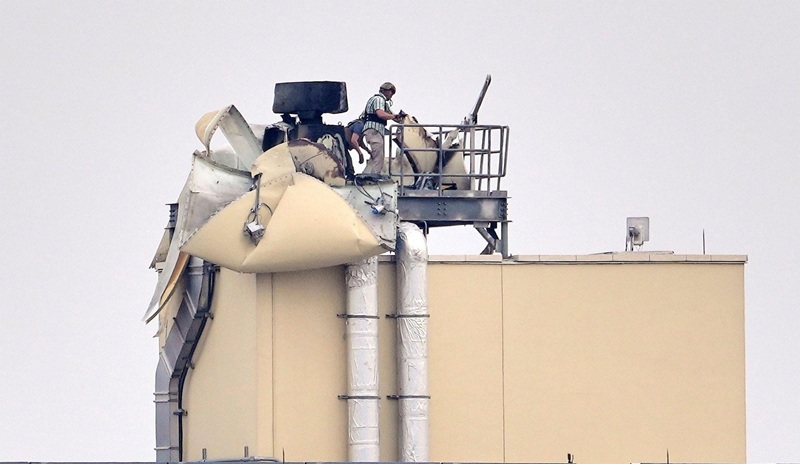
However, reports indicate that the loss or degradation of certain radar systems has reduced the effectiveness of these defenses, leaving the Arrow system to carry much of the burden.
Israel’s Interceptor Shortage
According to reports citing U.S. officials, Israel has informed Washington that its supply of long-range missile interceptors has been significantly depleted.
The shortage appears to stem from several factors:
- Israel reportedly entered the current conflict with limited interceptor stockpiles after earlier confrontations with Iran.
- Iran has launched large missile barrages, forcing Israel to expend interceptors rapidly.
- Some Iranian missiles are reportedly equipped with cluster munitions, increasing the complexity of interception.
U.S. officials said Washington had been aware of Israel’s limited interceptor capacity for months and had anticipated the possibility of shortages during a prolonged conflict.
Iran’s Missile Campaign
Iran’s response to U.S. and Israeli strikes has involved drone and ballistic missile attacks targeting Israel and regional U.S. bases.
These attacks have also affected neighboring countries, including Jordan, Iraq, and Gulf states hosting American military installations.
Some analysts believe Iran has adopted an asymmetric strategy, using relatively inexpensive drones and missiles to strain Israel’s more expensive interceptor-based defense systems.
Strategic Escalation Risks
When two nuclear-armed powers are involved in a conflict environment—directly or indirectly—strategic calculations become far more complex.
Israel is widely believed to possess nuclear weapons, though it maintains a policy of nuclear ambiguity, neither confirming nor denying its arsenal.
As missile attacks intensify and defensive resources become strained, some observers have raised concerns about the possibility of further escalation.
Debate in Washington Over the War’s Direction
The war has also sparked debate within U.S. political and policy circles.
Venture capitalist David Sacks, a technology advisor associated with President Donald Trump, warned that the conflict could spiral into a broader regional crisis if escalation continues.
Speaking on the All-In podcast, Sacks argued that the war may have already achieved its primary objective if Iran’s military infrastructure has been significantly degraded.
“This is a good time to declare victory and get out,” he said, suggesting that prolonging the war could create serious economic and geopolitical consequences.
However, Sacks also noted that some political factions favor expanding the conflict, potentially including ground operations or attempts at regime change in Iran.
Energy Infrastructure at Risk
Another major concern is the potential targeting of energy infrastructure across the Gulf region.
Iran has already exerted pressure on the Strait of Hormuz, one of the world’s most important oil shipping routes.
Analysts warn that further escalation could involve attacks on:
- Oil and gas facilities
- Tanker shipping routes
- Export terminals and pipelines
If such infrastructure were significantly damaged, global energy markets could experience severe disruption.
A Humanitarian Risk for the Gulf Region
Beyond energy infrastructure, some analysts warn about the potential vulnerability of desalination plants, which provide much of the freshwater supply for Gulf states.
If desalination facilities were damaged in a wider conflict, large populations across the region could face severe water shortages.
Such a scenario could create not only an economic crisis but also a humanitarian emergency affecting millions of people.
A War at a Critical Turning Point
The Iran–Israel conflict is now entering a phase where military, economic, and geopolitical risks are increasingly intertwined.
Missile defense pressures, energy security concerns, and the involvement of multiple regional actors are creating conditions where escalation could become difficult to control.
As the conflict continues, the central question facing policymakers is whether diplomatic pathways can emerge before the situation moves toward an even more dangerous stage.