Tuesday, April 7, 2026
Home Blog Page 135

China’s Coast Guard’s first entry into the Arctic Ocean, what it means?

0
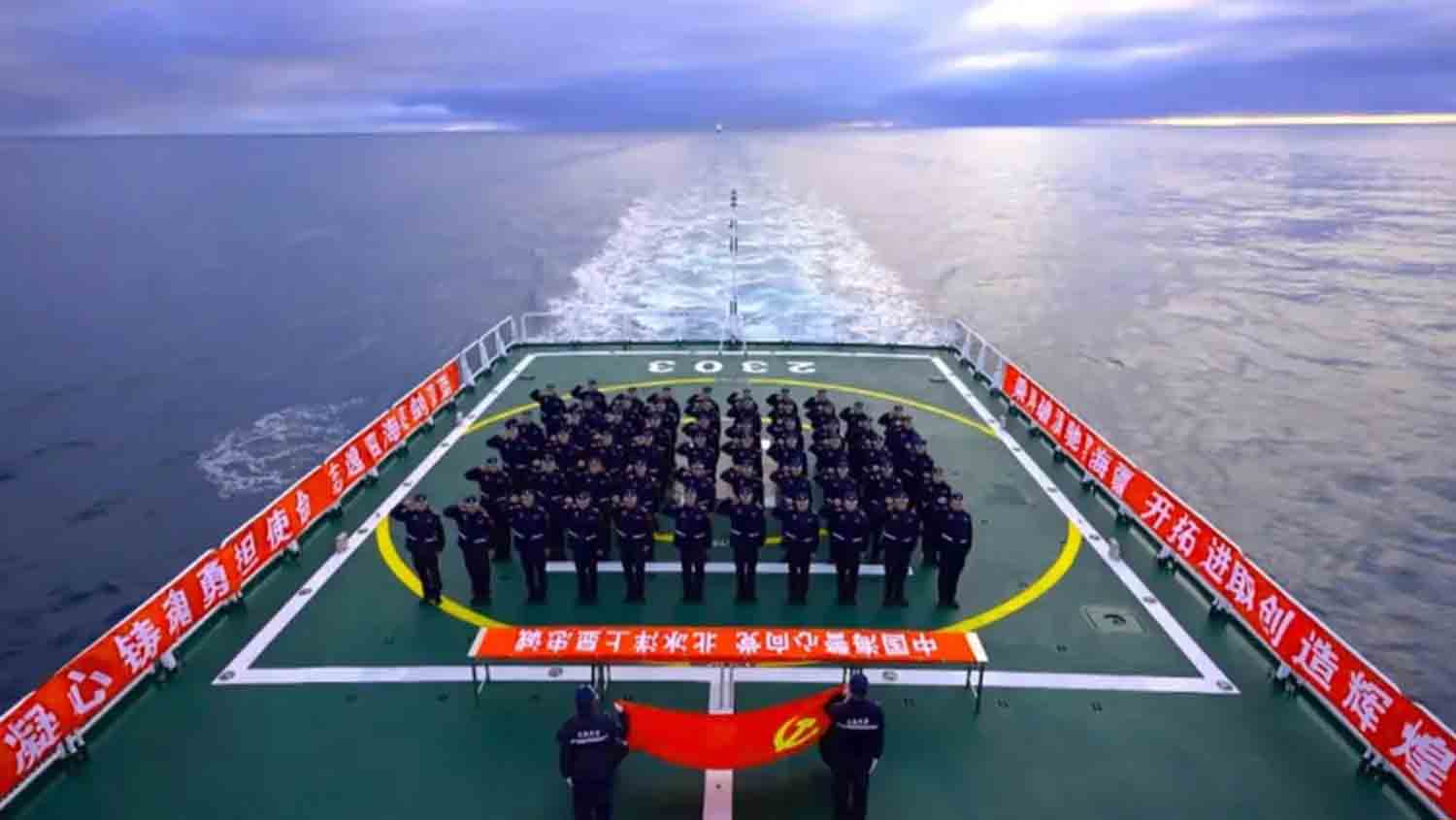
Members of the China Coast Guard stand in formation during a joint patrol with Russia that China says entered the Arctic Ocean.

China’s Coast Guard has announced its first entry into the Arctic Ocean as part of a joint patrol with Russia, marking a significant step in their collaborative efforts in a region where China aims to enhance its presence.

This announcement followed a report from the US Coast Guard, which observed four vessels from the Russian Border Guard and the Chinese Coast Guard in the Bering Sea, noting it was the furthest north they had ever seen Chinese ships.

According to a post on its official social media, the China Coast Guard (CCG) stated that the joint patrol “effectively expanded the scope of the coast guard’s ocean-going navigation” and assessed their capabilities “to conduct operations in unfamiliar waters.”

The CCG did not disclose the specific location of the patrol. A banner on one of the vessels in the accompanying images proclaimed, “China Coast Guard devoting its heart to the Party; demonstrating loyalty in the Arctic Ocean,” highlighting allegiance to China’s ruling Communist Party.

The Russian government has yet to officially confirm the patrol, which Chinese state media reported occurred “a few days ago.” Russian state news agency TASS referenced the CCG’s statement in its coverage of the event.

On Monday, the US Coast Guard (USCG) reported observing the four vessels from the Russian Border Guard and Chinese Coast Guard “transiting in formation in a northeast direction” within five miles of Russia’s Exclusive Economic Zone on Saturday.

The Bering Sea, located between Russia and Alaska, is part of the North Pacific Ocean and connects to the Arctic Ocean via the Bering Strait, a narrow channel that separates Asia from North America.

“This recent activity highlights the growing interest in the Arctic by our strategic competitors,” stated Rear Adm. Megan Dean, commander of the 17th Coast Guard District, in the USCG announcement.

The United States has expressed apprehensions regarding China’s increasing involvement and collaboration with Russia in the strategically and environmentally critical Arctic region, as both nations enhance their security and economic partnerships.

In July, US and Canadian forces intercepted Russian and Chinese bombers operating in tandem near Alaska for the first time. Additionally, their navies conducted joint operations in international waters off the Alaskan coast in both 2022 and 2023, as reported by the US military.

Last year, the China Coast Guard (CCG) and Russia’s Federal Security Service, which oversees its coast guard, reached an agreement to bolster their “maritime law enforcement cooperation.” Furthermore, China was invited to observe Russia’s “Arctic Patrol-2023” security exercises.

Experts suggest that this new patrol reflects a broader trend of collaboration aimed at sending a message to Washington, particularly in light of the US’s maritime activities in the South and East China Seas, which have long been a source of irritation for Beijing.

“The importance of the China Coast Guard operating further north than ever before indicates that China is expanding its Coast Guard operations into areas traditionally regarded by the US as its own territory,” stated Carl Schuster, a retired US Navy captain and former director of operations at the US Pacific Command’s Joint Intelligence Center.

“China is particularly indicating that the US Coast Guard is not the sole entity capable of operating within and near other nations’ Economic Exclusion Zones from their own territorial waters,” he added.

Arctic Aspirations

For several years, Beijing has aimed to expand its presence in the Arctic, positioning itself as a “near Arctic state” while enhancing its icebreaker and research capabilities in the area. The country has also made significant investments in Russian energy initiatives.

As one of the eight Arctic nations, Russia has traditionally been cautious about extending too much cooperation to China, given the strategic importance of the region to its own security and military interests.

However, analysts suggest that Moscow’s increasing dependence on China—its primary diplomatic and economic ally—following the conflict in Ukraine may be shifting this perspective.

In July, the US Department of Defense issued its first update to its Arctic strategy in five years, cautioning that the “growing cooperation” between Russia and China in the Arctic could potentially disrupt the region’s stability and alter the threat landscape.

Recent joint operations, such as the July patrol near Alaska, prompt inquiries into whether Russia’s emphasis on controlling access to the Arctic is becoming increasingly influenced by economic and political factors, according to Sophie Arts, a fellow with the German Marshall Fund of the US’s Geostrategy North team.

“Nonetheless, when considering Russia’s growing willingness to accommodate Chinese interests, it is essential to recognize the geographical context of these activities,” she noted, highlighting that the strategically remote nature of the patrol location indicates that “Russian priorities regarding access control and the maintenance of its defensive bastion remain significant.”

Andreas Østhagen, a senior researcher at the Fridtjof Nansen Institute in Norway, expressed doubt regarding the presence of Chinese vessels in the Arctic Ocean itself.

He pointed out that operations north of the Bering Strait typically necessitate ice-breaking capabilities and mentioned that the US Coast Guard did not report any ships entering the Bering Strait, which marks the beginning of the Arctic Ocean. CNN has sought comments from the USCG.

“While this may not directly involve the Arctic Ocean, it still pertains to the broader Arctic region. Activities off the coast of Alaska or within the Bering Sea reflect an ongoing trend of China asserting its presence in or near the Arctic,” he stated.

Economic Interests

The China Coast Guard operates as a component of the People’s Armed Police, which falls under the authority of the Central Military Commission. It has often been at the forefront of China’s initiatives to reinforce its territorial claims in the contested regions of the South China Sea.

For instance, the Philippines has consistently accused the China Coast Guard of aggressive actions against its fishing vessels and other ships, employing tactics such as water cannons and, in one instance, a “brutal assault” involving bladed weapons against Filipino forces in June.

Beyond demonstrating military strength, analysts suggest that Beijing is also focused on enhancing its collaboration with Russia and increasing its presence in the northern waters, where the coast guard may play a crucial role in safeguarding its economic interests in the future.

In its 2018 Arctic policy, China articulated its ambition for a “Polar Silk Road,” which aims to connect Asia and Europe by establishing shipping routes, including the Northern Sea Route that traverses the Arctic and extends to China. Currently navigable primarily during the summer and autumn months, this route is anticipated to become increasingly viable for international shipping as climate change continues to reduce sea ice.

According to the Centre for High North Logistics, associated with Norway’s Nord University, transit along the Northern Sea Route is expected to reach unprecedented levels of cargo by the end of the summer-autumn navigation season. As of September 30, approximately 95% of the cargo transported along this route originated from Russia and was destined for China, as reported recently.

The collaboration between coast guards is linked to China’s interests in maritime transport along certain segments of the Northern Sea Route, as noted by Østhagen. He emphasized that the initiation of such operations marks a significant advancement in the practical cooperation between the two nations in an Arctic or near-Arctic setting.

Furthermore, when considered alongside other recent joint initiatives, this development underscores China’s efforts to enhance its presence in the Arctic region and improve its operational capabilities in these northern latitudes.
Some potential responses Israel might consider to attack Iran

0
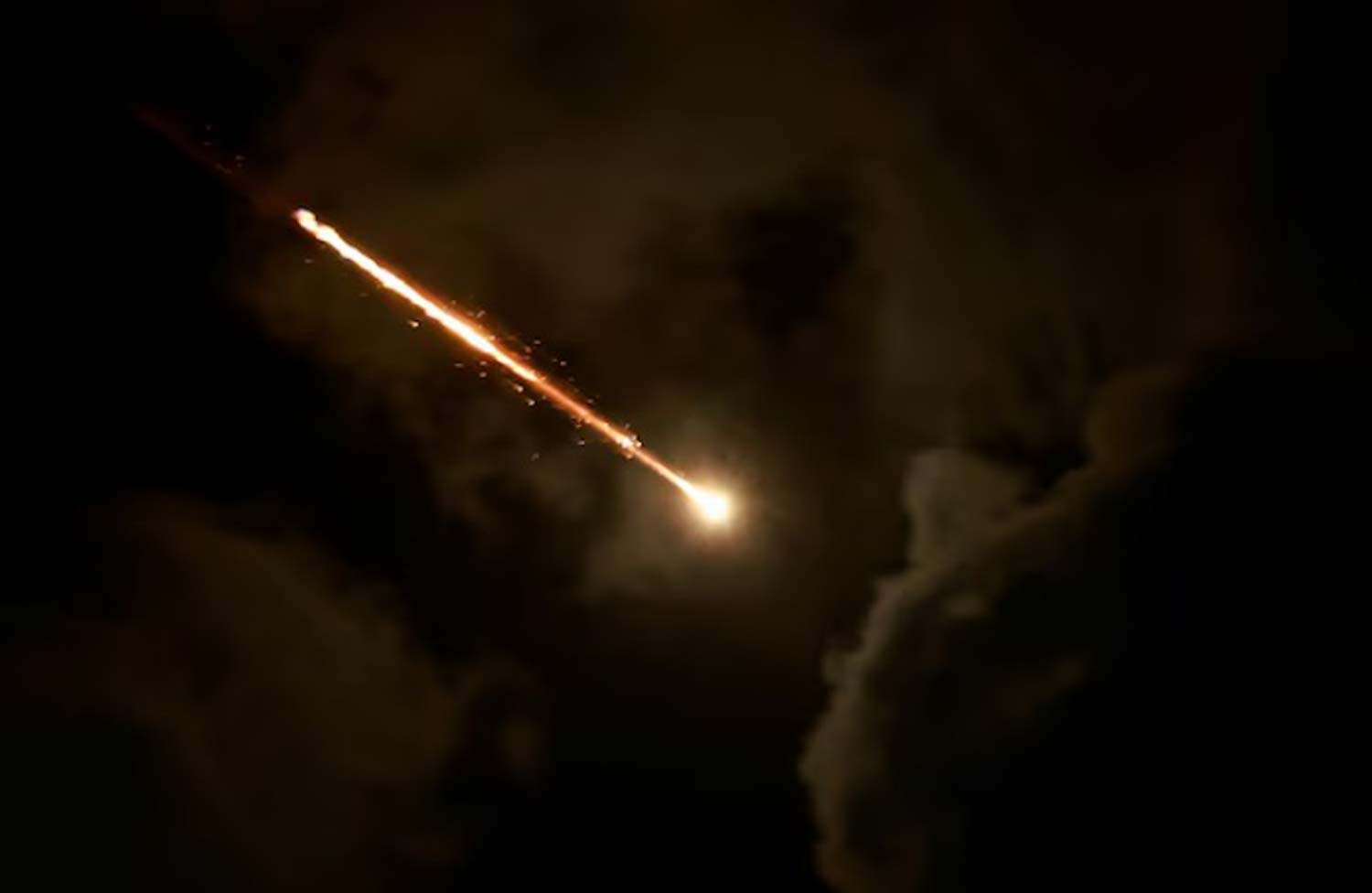
A projectile is seen in the sky after Iran fired a salvo of ballistic missiles, amid cross-border hostilities between Hezbollah and Israel, as seen from Tel Aviv, Israel.

Israel has vowed to retaliate following Iran‘s missile attack on Tuesday, which involved over 180 ballistic missiles and was largely intercepted by Israel’s air defense systems. Here are some potential responses Israel, with U.S. support, might consider.

TARGET IRAN’S MILITARY BASES

Analysts suggest that Israel is likely to respond by striking Iranian military bases, particularly those involved in the production of ballistic missiles similar to those used in the recent assault. Additionally, Israel may target Iranian air defense systems and missile launch sites.

The U.S. has accused Iran of providing short-range ballistic missiles to Russia for use in Ukraine, a claim both nations deny. Experts believe that targeting military installations would be viewed as a proportional response to Iran’s aggression.

STRIKE IRAN’S NUCLEAR SITES

Attacks on Iran’s nuclear facilities could hinder Tehran’s capacity to develop nuclear weapons. Iran’s nuclear program is dispersed across various sites, with some located underground.

However, a significant strike on its nuclear infrastructure could lead to severe repercussions, potentially prompting Iran to accelerate its nuclear weapons development. The U.S. has indicated it would not endorse such actions by Israel. Richard Hooker, a former U.S. Army officer and member of the National Security Council, noted that while an attack on Iran’s nuclear sites is a “distinct possibility,” it is not a certainty, as it could provoke a dramatic response from Iranian leadership.

Iran maintains that it has never pursued a nuclear weapons program. The IAEA and U.S. intelligence have determined that Iran had a coordinated nuclear weapons program until 2003, and experts warn that with the collapse of the 2015 nuclear agreement, Iran could produce sufficient weapons-grade uranium for a bomb within weeks.

ATTACK IRAN’S PETROLEUM PRODUCTION INFRASTRUCTURE

Israel may consider targeting Iran’s oil production infrastructure, which would significantly impact its economy. Such an action could lead Iran to retaliate by attacking oil facilities in Saudi Arabia and other Gulf nations, potentially causing a spike in fuel prices. This increase could become a critical issue in the upcoming U.S. elections on November 5, as fuel prices are a significant concern for voters.

David Des Roches, a former Department of Defense official now affiliated with the U.S. National Defense University’s Near East-South Asia Center, expressed skepticism that rising global oil prices would deter Israeli actions. He noted that Israel might perceive higher oil prices as advantageous for former President Donald Trump’s re-election efforts, especially given Prime Minister Benjamin Netanyahu’s recent alignment with Trump’s Republican Party over the Democrats.

ECONOMIC, CYBER OPTIONS

While a military response is deemed the most probable course of action, alternative strategies exist that do not involve direct military engagement. President Joe Biden has indicated plans to impose additional sanctions on Iran, building on existing measures that already restrict nearly all U.S. trade with the country, freeze its government assets in the U.S., and limit foreign assistance and arms sales.

Analysts suggest that Israel could also leverage its cyber capabilities in response to Iranian provocations. The recent cyber operation against Hezbollah in Lebanon highlighted the capabilities of Unit 8200, the Israel Defense Forces’ elite cyber warfare and intelligence unit, which Western security sources indicate played a role in orchestrating the attack.

Biden expressed skepticism about the likelihood of an “all-out war” in Middle East

0
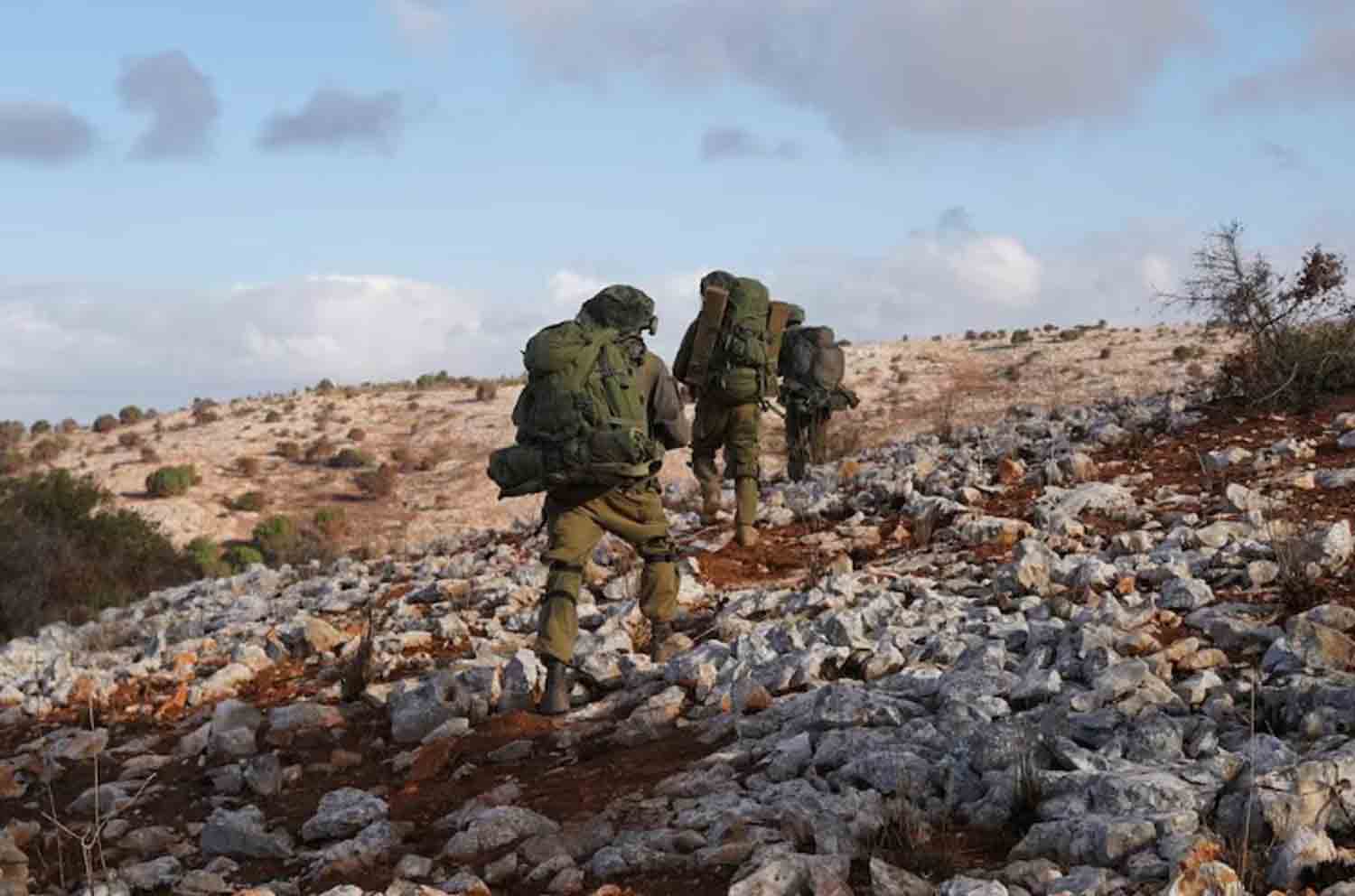
A handout image released on October 3, 2024 by the Israeli army says to show members of the Israeli army taking part in an operation in southern Lebanon.

U.S. President Joe Biden expressed skepticism about the likelihood of an “all-out war” in the Middle East, despite Israel considering its response to Tehran’s most significant attack on the nation. He emphasized the necessity of taking further steps to prevent a broader conflict, particularly as Israel conducted new airstrikes in Beirut against the Lebanese militant group Hezbollah.

When questioned by reporters in Washington on Thursday regarding his confidence in averting such a war, Biden likened it to predicting the weather, stating, “I don’t believe there is going to be an all-out war. I think we can avoid it. But there is still much work to be done.”

While the United States, the European Union, and other allies have urged for an immediate 21-day ceasefire in the Israel-Lebanon conflict, Biden noted that discussions were ongoing with Israel about potential responses to Tehran’s aggression, which could involve strikes on Iran’s oil facilities. “We’re discussing that,” he confirmed to reporters.

His remarks have led to a spike in global oil prices, as escalating tensions in the Middle East raise concerns among traders about possible supply disruptions.

Biden stated, “Nothing is going to happen today.” When later questioned about whether he was advising Israel against attacking Iran’s oil facilities, he emphasized that he would not engage in public negotiations. On Wednesday, the president made it clear that he would not endorse any Israeli military action against Iran’s nuclear facilities.

On Thursday, Israel’s UN ambassador, Danny Danon, informed CNN that the nation had “numerous options” for retaliation and would soon demonstrate its strength to Tehran. A U.S. official indicated that Washington believed Israel had not yet made a decision regarding its response to Iran.

In Beirut’s southern suburb of Dahiye, a Hezbollah stronghold, renewed airstrikes occurred near midnight on Thursday after Israel instructed residents in certain areas to evacuate, according to local residents and security sources. The airstrikes reportedly targeted Hezbollah official Hashem Safieddine, who is rumored to be the successor to the late leader Hassan Nasrallah, in an underground bunker, as reported by Axios journalist Barak Ravid, citing three Israeli officials. The status of Safieddine remains uncertain.

Israel’s military refrained from commenting on the situation. The Israeli government reported that Hezbollah launched approximately 230 rockets from Lebanon towards Israel on Thursday. Hezbollah claimed it aimed at what it referred to as Israel’s “Sakhnin base” for military industries located in Haifa Bay on the northern Mediterranean coast with a barrage of rockets. Later that evening, Hezbollah announced it also targeted Israel’s “Nesher base” in Haifa with a series of Fadi 2 rockets.

G7 URGES RESTRAINT

Israeli Prime Minister Benjamin Netanyahu has declared that Iran will face repercussions for the missile attack on Tuesday, with Washington pledging to collaborate with its longstanding ally to ensure Iran encounters “severe consequences.”

In response, Iranian President Masoud Pezeshkian, addressing an audience in Doha, stated on Thursday that Tehran is prepared to retaliate. “Any military aggression, terrorist act, or violation of our red lines will provoke a strong response from our armed forces,” he asserted.

Israel has been engaged in conflict with Hamas in the Gaza Strip for nearly a year and escalated its military presence in southern Lebanon on Tuesday following two weeks of intense airstrikes, amid a deteriorating situation that has involved Iran and poses risks for U.S. engagement.

The Group of Seven nations, which includes the U.S., the U.K., and other allies, condemned Iran’s missile strike on Tuesday and reiterated their support for Israel’s security. However, the group also called for restraint, advocating for a ceasefire in Gaza and an end to hostilities in Lebanon.

“A perilous cycle of attacks and retaliation threatens to escalate uncontrollably in the Middle East, which serves no one’s interests,” the statement read.

Qatar’s Emir, Sheikh Tamim bin Hamad Al-Thani, also called for serious efforts towards a ceasefire to halt what he described as Israel’s aggression.

Meanwhile, the chairman of the U.S. House of Representatives Foreign Affairs Committee urged the president on Thursday to expedite the delivery of weapons to Israel, including 2,000-pound bombs that have been delayed for months due to human rights concerns.

Representative Michael McCaul emphasized in a letter to President Biden, that these large munitions are crucial for operational effectiveness, as Hamas and Hezbollah are utilizing extensively fortified underground bunkers and tunnels.

17 ISRAELI SOLDIERS KILLED

Hezbollah has reported the death of 17 Israeli soldiers. In response to Hezbollah’s attacks during the Gaza conflict, Israel has stated that its military operations in Lebanon aim to facilitate the return of tens of thousands of its citizens who were forced to evacuate from the northern region.

According to Lebanese authorities, over 1.2 million individuals have been displaced due to Israeli strikes, with nearly 2,000 fatalities recorded since the onset of these attacks on Lebanon over the past year, the majority occurring in the last two weeks.

On Friday morning, Lebanon’s health ministry reported that 27 individuals were killed and 151 were injured in the previous day’s violence. Hezbollah claims to have thwarted multiple ground operations by Israeli forces through tactics such as ambushes and direct confrontations. The group asserts that it killed 17 Israeli military personnel during clashes in southern Lebanon on Thursday, based on information from its field and security sources. Israeli forces have not responded to this assertion.

Additionally, an Israeli airstrike reportedly resulted in the deaths of at least 18 people on Thursday in the Tulkarm refugee camp located in the occupied West Bank, according to the Palestinian health ministry, while Israel stated that it targeted a Hamas official in Tulkarm.

Arab states assured Tehran of its neutrality during the conflict with Israel

0
Sheikh Mansour bin Zayed Al Nahyan, UAE Vice President and Deputy Prime Minister received by Sheikh Abdullah bin Hamad Al Thani, Deputy Emir of the State of Qatar, at Doha International Airport, Qatar.

Gulf Arab nations aimed to convey their impartial stance regarding the ongoing conflict between Tehran and Israel during discussions held in Doha this week. This initiative was driven by apprehensions that an escalation in violence could jeopardize their oil infrastructure.

During the meeting, which included ministers from Gulf Arab states and Iranian representatives as part of a gathering of Asian countries hosted by Qatar, the focus of the dialogue was on de-escalation, the sources indicated.

On Tuesday, Iran executed its most significant offensive against Israel, claiming it was a response to the assassination of high-ranking Hamas and Hezbollah officials, as well as Israel’s military actions in Gaza and Lebanon. Tehran asserted that its offensive had concluded unless provoked further, while Israel vowed to retaliate decisively. According to a report from U.S. news outlet Axios, citing Israeli officials, Israel may consider targeting oil production facilities within Iran as a form of retaliation.

Urgent de-escalation is currently the primary focus of ongoing discussions, according to one source. The foreign ministries of Qatar, Iran, the UAE, Kuwait, and the Saudi government communications office have not yet provided a response to requests for comments.

While Iran has not issued direct threats against Gulf oil facilities, it has cautioned that any direct intervention by “Israel supporters” could lead to targeting their interests in the region.

Ali Shihabi, a Saudi commentator with close ties to the Royal Court, noted that Gulf states consider it improbable for Iran to attack their oil facilities. However, he mentioned that unofficial sources suggest Iran may be hinting at such possibilities, viewing it as a leverage point against the U.S. and the global economy.

Saudi Arabia, the leading oil exporter, has made strides toward political reconciliation with Tehran in recent years, contributing to a reduction in regional tensions, although challenges in their relationship persist.

Saudi Arabia has been cautious about the potential for an Iranian attack on its oil infrastructure since a 2019 incident at the Abqaiq refinery, which temporarily disrupted over 5% of the global oil supply. Iran has denied any involvement in that attack.

“The message from the GCC to Iran is clear: ‘please de-escalate,'” stated Shihabi, referencing the Gulf Cooperation Council, which includes the UAE, Bahrain, Saudi Arabia, Oman, Qatar, and Kuwait.

During an event in Doha, Iranian President Masoud Pezeshkian emphasized that Iran is prepared to respond and cautioned against remaining passive in the face of what he described as Israel’s “warmongering.”

“Any military aggression, terrorist act, or violation of our red lines will provoke a strong response from our armed forces,” he asserted.

Ukraine’s commander ordered an enhancement of defenses in eastern Donetsk region

0
Investigators work in the courtyard of a damaged multi-story residential building following an alleged Ukrainian drone attack in the course of Russia-Ukraine conflict, in Ramenskoye in the Moscow region, Russia

Ukraine‘s armed forces commander, General Oleksandr Syrskyi, announced on Thursday that he has ordered an enhancement of defenses in the eastern Donetsk region, following the withdrawal of Kyiv’s forces from the town of Vuhledar the previous day.

Despite a surprise incursion by Ukrainian forces into Russia’s western Kursk region in August, which was anticipated to hinder Russian advances, enemy troops continue to make gradual progress in various sectors of eastern Ukraine.

Syrskyi shared on social media that he is focusing on “one of the hottest front sectors” alongside the 25th Sicheslav Airborne Brigade. While he did not specify the exact location, this brigade is active in the Pokrovsk front, an area experiencing heightened Russian attacks.

“During my time with the brigade, I implemented several decisions aimed at bolstering the stability and effectiveness of our defense,” Syrskyi stated. As the conflict enters its second year, Ukrainian forces remain primarily on the defensive. On Wednesday, the Ukrainian military confirmed its withdrawal from Vuhledar, a coal-mining town that had withstood significant assaults since Russia’s invasion in 2022.

Ukraine’s eastern military command announced on Wednesday that it has decided to withdraw from Vuhledar to prevent encirclement by Russian forces and to “preserve personnel and military equipment.” This strategy has been a common tactic employed by Russia to gain control over various Ukrainian territories.

Currently, Russian troops occupy nearly 20% of Ukraine. President Vladimir Putin has stated that the main tactical objective for Moscow is to capture the entirety of the Donetsk and Luhansk regions.

Russian forces have been advancing westward at critical locations along approximately 150 km (95 miles) of the front line in the Donetsk region, with the logistics center of Pokrovsk being a significant target. In its latest battlefield report, Ukraine’s General Staff indicated that there were 142 combat engagements in the past day, with the majority occurring on the Pokrovsk front, where 29 clashes were recorded, and 27 on the Kurakhove front.

Ukraine’s eastern military command announced on Wednesday that it has decided to withdraw from Vuhledar to prevent encirclement by Russian forces and to “preserve personnel and military equipment.” This strategy has been a common tactic employed by Russia to gain control over various Ukrainian territories.

Currently, Russian troops occupy nearly 20% of Ukraine. President Vladimir Putin has stated that the main tactical objective for Moscow is to capture the entirety of the Donetsk and Luhansk regions.

Russian forces have been advancing westward at critical locations along approximately 150 km (95 miles) of the front in the Donetsk region, with the logistics center of Pokrovsk being a significant target. In its latest battlefield report, Ukraine’s General Staff indicated that there were 142 combat engagements in the past day, with the majority occurring on the Pokrovsk front, where 29 clashes were recorded, and 27 on the Kurakhove front.

Sergei Ryabkov says conflict between Russia and the West is unprecedented in history

0
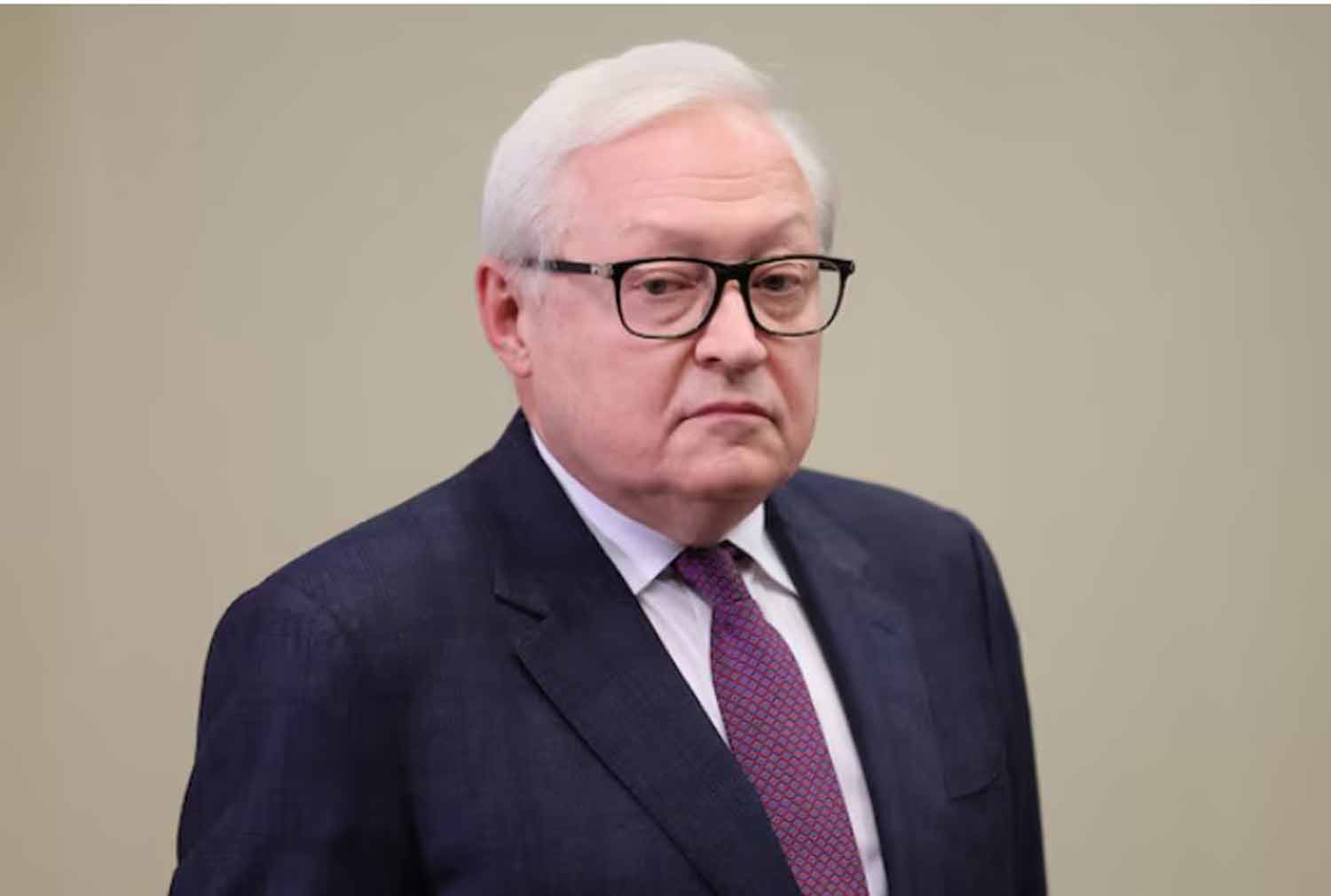
Deputy Foreign Minister of Russia Sergei Ryabkov

A senior Russian diplomat stated on Thursday that the ongoing conflict between Russia and the West regarding Ukraine is unprecedented in history, warning that any misstep could result in disaster. This comment was made in response to inquiries about parallels with the 1962 Cuban Missile Crisis.

The war in Ukraine, which has persisted for two and a half years and is the largest land conflict in Europe since World War II, has escalated tensions between Russia and the West. Russian officials assert that the situation is now entering its most perilous phase.

In the past, Russian diplomats have drawn comparisons to the 1962 crisis, a time when Cold War superpowers were believed to be on the brink of nuclear conflict due to Moscow’s covert deployment of missiles in Cuba. However, Deputy Foreign Minister Sergei Ryabkov emphasized to reporters in Moscow that the current circumstances are without historical precedent. He cautioned that the risk of an armed confrontation between nuclear powers should not be taken lightly.

He stated, “We are navigating uncharted military and political waters.” Ryabkov expressed that a misstep at this critical moment could lead to catastrophic outcomes, while also questioning whether Western leaders are capable of accurately evaluating the repercussions of their actions.

For weeks, Russia has cautioned the United States and its allies that permitting Ukraine to launch strikes deep into Russian territory using Western-supplied missiles would be viewed as a significant escalation by Moscow.

Ukrainian President Volodymyr Zelenskiy has been advocating for months for Kyiv’s allies to allow Ukraine to deploy Western missiles, including long-range U.S. ATACMS, into Russian territory to diminish Moscow’s capacity to conduct attacks. On September 12, President Vladimir Putin remarked that Western endorsement of such actions would signify “the direct involvement of NATO countries, the United States, and European nations in the conflict in Ukraine.”

The leader of the Kremlin has revised Russia’s nuclear policy, establishing a marginally reduced threshold for the use of nuclear weapons in reaction to various circumstances. In response, Zelenskiy has called on Western nations to ignore Russia’s declared “red lines,” a sentiment echoed by some of the United States’ allies.

However, Russia, recognized as the largest nuclear power globally, has labeled this approach as misguided.

Mark Rutte’s first official trip to the Ukraine as the head of NATO

0

NATO Secretary General Mark Rutte met with President Volodymyr Zelenskiy on Thursday to discuss the ongoing conflict in Ukraine and Kyiv’s “victory plan.” This visit marked Rutte’s first official trip to the Ukrainian capital since assuming his role as the head of the alliance.

During a joint press conference, Zelenskiy expressed his desire for Ukraine’s allies to intercept Iranian missiles and drones that Russia has been using in its assaults on Ukraine, similar to the actions taken by some of Israel’s allies in response to missile attacks from Tehran earlier this week.

Zelenskiy further urged allies to permit Ukraine to conduct deep strikes into Russian territory using the weaponry they provide, emphasizing that their hesitance is causing delays. He argued that enabling such strikes would significantly enhance Ukraine’s ability to disrupt Russian logistics and command structures. However, Ukraine’s allies have been cautious about this approach due to concerns over potential Russian retaliation. Rutte reiterated the commitment of the Western defense alliance to support Ukraine’s eventual membership.

Ukraine is now more aligned with NATO than at any previous time, and it will persist on this trajectory until it achieves membership in the alliance, he stated. Russia, which initiated its extensive invasion of Ukraine in February 2022, has consistently resisted Ukraine’s efforts to join the North Atlantic Treaty Organization.

On Tuesday, Rutte expressed robust support for Ukraine following his appointment as NATO chief, succeeding Jens Stoltenberg. Rutte, who was the Prime Minister of the Netherlands until earlier this year, was seen as a strong ally of Kyiv, having endorsed the transfer of Dutch F-16 fighter jets to Ukraine.

Hungary called the German ambassador to express discontent

0
The flags of the European Union, Hungary and Germany fly outside Berlin's chancellery in Berlin, Germany

Hungary’s Foreign Minister Peter Szijjarto called in the German ambassador on Thursday to express his discontent regarding her recent remarks, in which she encouraged Hungarian public figures to denounce actions she claimed were undermining the trust of Hungary’s NATO and EU partners.

In her speech, delivered to diplomats, NGOs, and Hungarian officials to commemorate German Unity Day on Wednesday, Ambassador Julia Gross stated, “Hungary is on a path that is leading it away from its friends.”

Szijjarto deemed these remarks “unacceptable,” asserting that the ambassador’s comments represented a serious intrusion into Hungary’s internal affairs and violated the country’s sovereignty. He shared his views on Facebook, emphasizing the inappropriateness of the intervention. Notably, senior government officials were absent from the event, which Szijjarto attended last year. The government has yet to provide a response regarding their absence.

Prime Minister Viktor Orban’s nationalist administration has consistently clashed with Hungary’s Western partners on various matters, particularly regarding its human rights and media freedom record, as well as its relatively strong economic relations with Russia.

Ambassador Gross pointed out that several actions have eroded Hungary’s credibility, including Orban’s initiative to promote peace in Ukraine, which involved discussions with Russian President Vladimir Putin in July without the support of other EU member nations.

Additionally, she expressed disapproval of the government’s behavior concerning the NATO membership of Finland and Sweden. After a prolonged postponement, Budapest ultimately approved Sweden’s NATO accession in February.

PRINCIPLE OF SOLIDARITY

Gross also referenced “comments made by individual politicians in the past week.”
While she did not provide further details, she previously noted on X that Germany and France had expressed concerns to Hungary regarding “recent unexpected remarks that undermine the principle of solidarity among allies.” This seemed to allude to statements from a senior aide to Orban, who suggested that Ukraine should not have resisted Russia’s invasion.

“I see many individuals here tonight who have consistently acted as bridge-builders,” Gross remarked. “Together, we must insist that what you have established should not be dismantled.”
Germany stands as Hungary’s largest trading partner and has been instrumental in its economy since the mid-1990s, with automotive manufacturers such as Audi, Daimler, Opel, and BMW investing billions of euros in the Central European nation.
According to data from the German-Hungarian Chamber of Industry and Commerce, Germany represented 26.3% of all Hungarian exports and 22.6% of all Hungarian imports in 2023.

Kim Yo Jong mocks military parade held in Seoul labeling it a “clown show”

0
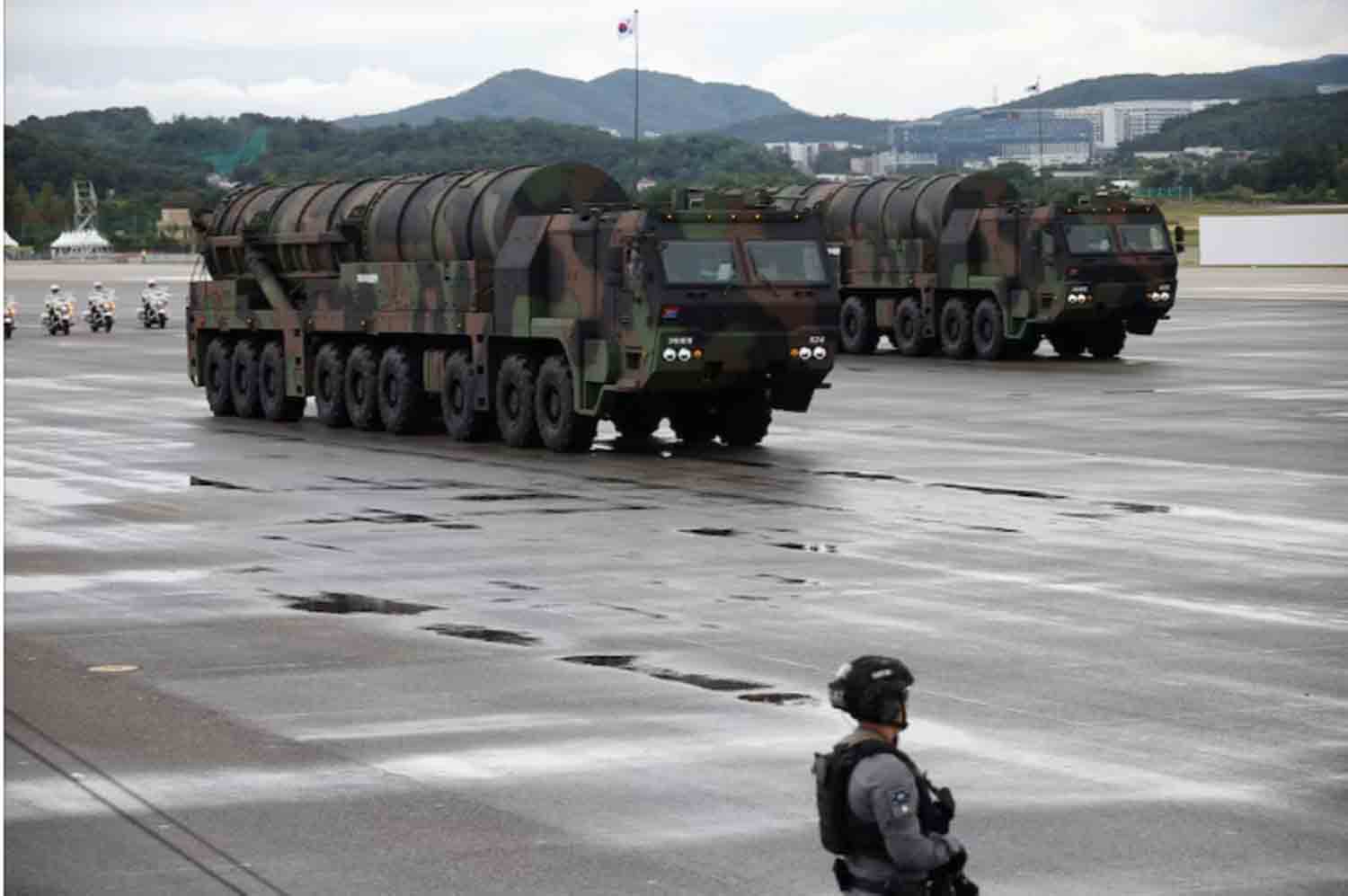
The Hyunmoo, surface-to-surface missile, march during a celebration to mark 76th anniversary of Korea Armed Forces Day, in Seongnam, South Korea

Kim Yo Jong, the influential sister of North Korean leader Kim Jong Un, criticized the military parade held in Seoul for Armed Forces Day this week, labeling it a “clown show” in a statement released by state media KCNA on Thursday. She dismissed the military capabilities showcased by South Korea and condemned the flyover of a U.S. B-1B bomber during the event.

“Who could speak of an ‘end of regime’ while flaunting such a cumbersome weapon?” Kim remarked, referring to South Korea’s display of the advanced Hyunmoo-5 missile, which has the capacity to carry an eight-ton warhead.

Military officials indicated that the parade was designed, in part, to demonstrate South Korea’s military strength as a deterrent against North Korea, which regularly conducts parades featuring intercontinental ballistic missiles.

In a speech prior to the parade, South Korean President Yoon Suk Yeol asserted that the use of nuclear weapons by Pyongyang would signify the end of its regime. The event at a Seoul air base showcased approximately 5,300 troops, 340 types of military equipment, and included aircraft flyovers. A smaller parade also occurred in downtown Seoul, attracting thousands of onlookers.

Houthi’s email to vessels in the Red Sea: Get ready for an assault

0

On a balmy spring evening in Athens, just before midnight, a senior executive at a Greek shipping firm discovered an alarming email in his personal inbox. The correspondence, which was also directed to the manager’s professional email, cautioned that one of the company’s ships navigating the Red Sea was in danger of an attack by the Iranian-backed Houthi militia from Yemen.

The Greek-operated vessel had breached a transit ban imposed by the Houthis by docking at an Israeli port and was warned it would be “directly targeted by the Yemeni Armed Forces in any area they deem appropriate,” according to the message, which was written in English.

“You bear the responsibility and consequences of including the vessel in the ban list,” the email stated, signed by the Yemen-based Humanitarian Operations Coordination Center (HOCC), an organization established in February to facilitate communication between Houthi forces and commercial shipping entities. Since November, the Houthis have executed nearly 100 attacks on vessels traversing the Red Sea, motivated by their support for Palestinians amid Israel’s ongoing conflict in Gaza. They have sunk two ships, captured another, and resulted in the deaths of at least four seafarers.

An email received at the end of May issued a warning regarding potential “sanctions” against the entire fleet of a company if a specific vessel continued to “violate the ban criteria and enter the ports of the usurping Israeli entity.” Both the executive and the company chose to remain anonymous for safety concerns. This warning was the initial communication in a series of over a dozen increasingly threatening emails sent to at least six Greek shipping firms since May, amid escalating geopolitical tensions in the Middle East, as reported by six industry insiders with direct knowledge of the correspondence and two with indirect knowledge.

Since the previous year, the Houthis have been launching missiles, deploying armed drones, and sending explosive-laden boats towards commercial vessels associated with Israeli, U.S., and UK interests. The email campaign, which has not been reported before, suggests that Houthi rebels are broadening their focus to include Greek merchant ships that have minimal or no ties to Israel. Notably, the threats have recently been directed at entire fleets for the first time, heightening the risks for vessels attempting to navigate the Red Sea.

An email sent in June from a Yemeni government domain to a Greek shipping company stated, “Your vessels have violated the directives of the Yemen Armed Forces. Consequently, penalties will be enforced on all ships belonging to your company… Best Regards, Yemen Navy.”

Yemen, strategically located at the entrance of the Red Sea, has been engulfed in civil conflict for several years. The Houthis seized control of the capital, Sanaa, in 2014, displacing the internationally recognized government. Earlier this year, the United States reinstated the Houthis on its list of terrorist organizations.

When approached by Reuters, Houthi representatives refrained from confirming the authenticity of the emails or offering further comments, citing the information as classified military data.

It remains unclear whether similar communications were sent to other international shipping firms. Greek-owned vessels, which constitute one of the largest maritime fleets globally, accounted for nearly 30% of the attacks attributed to Houthi forces up to early September, according to data from Lloyd’s List Intelligence, which did not clarify any connections to Israel.

In August, the Houthi militia, aligned with Iran’s Axis of Resistance coalition of anti-Israel groups, targeted the Sounion tanker, leaving it ablaze for weeks before it could be safely towed.

These assaults have led many shipping routes to divert significantly around Africa. Traffic through the Suez Canal has decreased from approximately 2,000 transits per month prior to November 2023 to about 800 in August, as reported by Lloyd’s List Intelligence.

Tensions in the Middle East escalated sharply on Tuesday when Iran launched over 180 missiles at Israel in response to the recent killings of militant leaders in Lebanon, including Hezbollah’s Sayyed Hassan Nasrallah last Friday.

NEW PHASE

The European Union’s naval force Aspides, which has successfully assisted over 200 vessels in navigating the Red Sea safely, reported a shift in the Houthis’ tactics during a private meeting with shipping companies in early September, as indicated by a document reviewed by Reuters.
In this document, distributed to shipping firms, Aspides noted that the Houthis’ choice to issue warnings to entire fleets signifies the onset of the “fourth phase” of their military operations in the Red Sea.
Aspides also recommended that ship owners deactivate their Automatic Identification System (AIS) transponders, which provide a vessel’s location and serve as a navigational tool for nearby ships, stating they must “turn it off or face the risk of being targeted.”
According to the same briefing, Aspides reported that the Houthis’ missile strikes achieved a 75% success rate against vessels utilizing the AIS tracking system, while 96% of attacks missed when the AIS was disabled.
Rear Admiral Vasileios Gryparis, the operational commander of Aspides, informed Reuters that the organization is aware of the emails and emphasized that any response should be approached with caution, advising companies to notify their security teams if contacted prior to departure.
Specifically, for the Humanitarian Operations Command Center (HOCC), the guidance is to refrain from responding to VHF communications and emails from the “Yemeni Navy” or the HOCC.
The Houthis initiated their email campaign in February, sending messages to shipowners, insurance firms, and the primary seafarers’ union from the HOCC.
The initial emails, two of which were reviewed by Reuters, warned the industry of a travel ban imposed by the Houthis on certain vessels, although they did not explicitly indicate an imminent attack.
Subsequent messages sent after May took on a more threatening tone.
At least two Greek-operated shipping companies that received these email threats have opted to cease operations through the Red Sea, according to two sources with direct knowledge of the situation, who requested anonymity for security reasons.

An executive from a third shipping company, which has also received a letter, indicated that they chose to cease operations with Israel to maintain access to the Red Sea route. “If safe passage through the Red Sea cannot be assured, companies must take action—even if it results in delayed delivery schedules,” stated Stephen Cotton, General Secretary of the International Transport Workers’ Federation, the primary union organization for seafarers, which received an email from HOCC in February. “The safety of the seafarers is at stake.”

The email campaign has heightened concerns among shipping firms. Insurance premiums for Western ship owners have already surged due to Houthi attacks, with some insurers halting coverage entirely, sources informed Reuters.

Conbulk Shipmanagement Corporation, based in Greece, has halted Red Sea operations following two attacks on its vessel, MV Groton, in August. “No Conbulk vessel is operating in the Red Sea. This decision is primarily about crew safety. When the crew’s safety is compromised, all discussions cease,” remarked Conbulk Shipmanagement CEO Dimitris Dalakouras at a Capital Link shipping conference in London on September 10.

Torben Kolln, managing director of the German container shipping company Leonhardt & Blumberg, noted that the Red Sea and the broader Gulf of Aden are considered “no go” zones for their fleet.

When contacted by Reuters, the companies did not provide comments regarding whether they had been affected by the Houthi email campaign.

Some companies continue to navigate the Red Sea due to binding long-term contracts with charterers or the necessity of transporting goods in that region. The Red Sea remains the quickest route for delivering goods to consumers in Europe and Asia.

The Houthis have not completely halted all maritime traffic, and the majority of ships owned by Chinese and Russian interests—whom they do not associate with Israel—can pass through without hindrance and at lower insurance rates.

We are providing assurance to vessels owned by companies that are not affiliated with the Israeli adversary, confirming their safety and freedom of movement, as well as the continuous operation of their AIS devices. This message was conveyed in an audio recording from a Houthi communication directed at ships in the Red Sea in September.

Britain relinquish sovereignty over the Chagos Islands to Mauritius

0

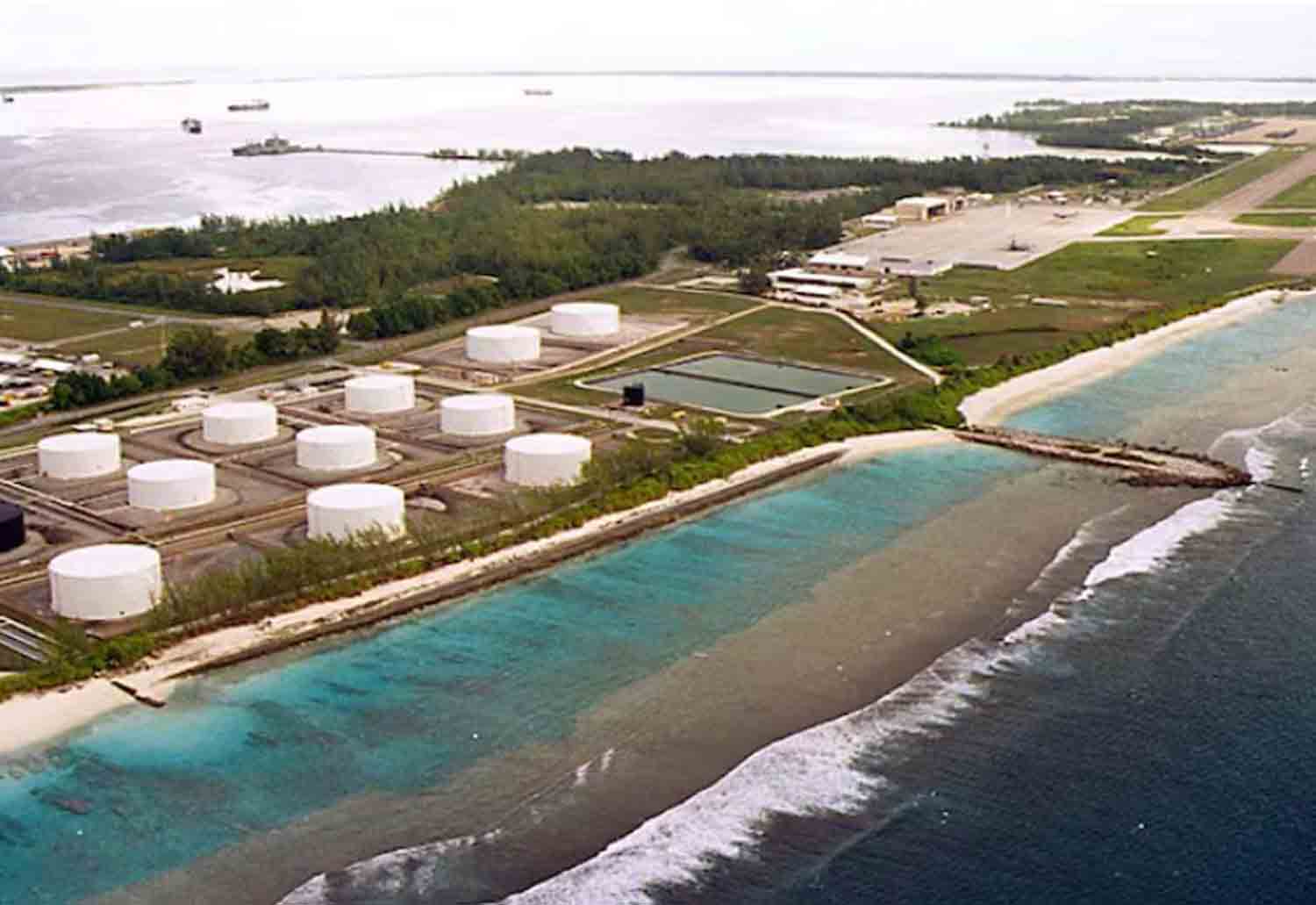
On Thursday, Britain announced its decision to relinquish sovereignty over the Chagos Islands to Mauritius. This agreement will facilitate the return of individuals displaced many years ago, while allowing the United Kingdom to maintain its military operations at the Diego Garcia base in collaboration with the United States.

The agreement ensures the continued operation of Diego Garcia, a strategically important military facility, while permitting Mauritius to resettle the remaining islands following the displacement of their original inhabitants.

British Foreign Minister David Lammy stated, “This government has inherited a situation where the secure, long-term operation of the Diego Garcia military base was jeopardized due to disputed sovereignty and ongoing legal disputes. Today’s agreement secures this essential military base for the future. It will enhance our role in promoting global security, eliminate the potential for the Indian Ocean to be exploited as a hazardous route for illegal migration to the UK, and solidify our enduring partnership with Mauritius.”

In 2019, the World Court ruled that Britain must relinquish its control over the islands, stating that it had unjustly compelled the local population to evacuate in the 1970s to accommodate a U.S. air base. In a collaborative announcement, both Britain and Mauritius indicated that the political agreement received backing and support from the United States and India.

South Sudan’s President has removed the nation’s long-serving intelligence chief

0

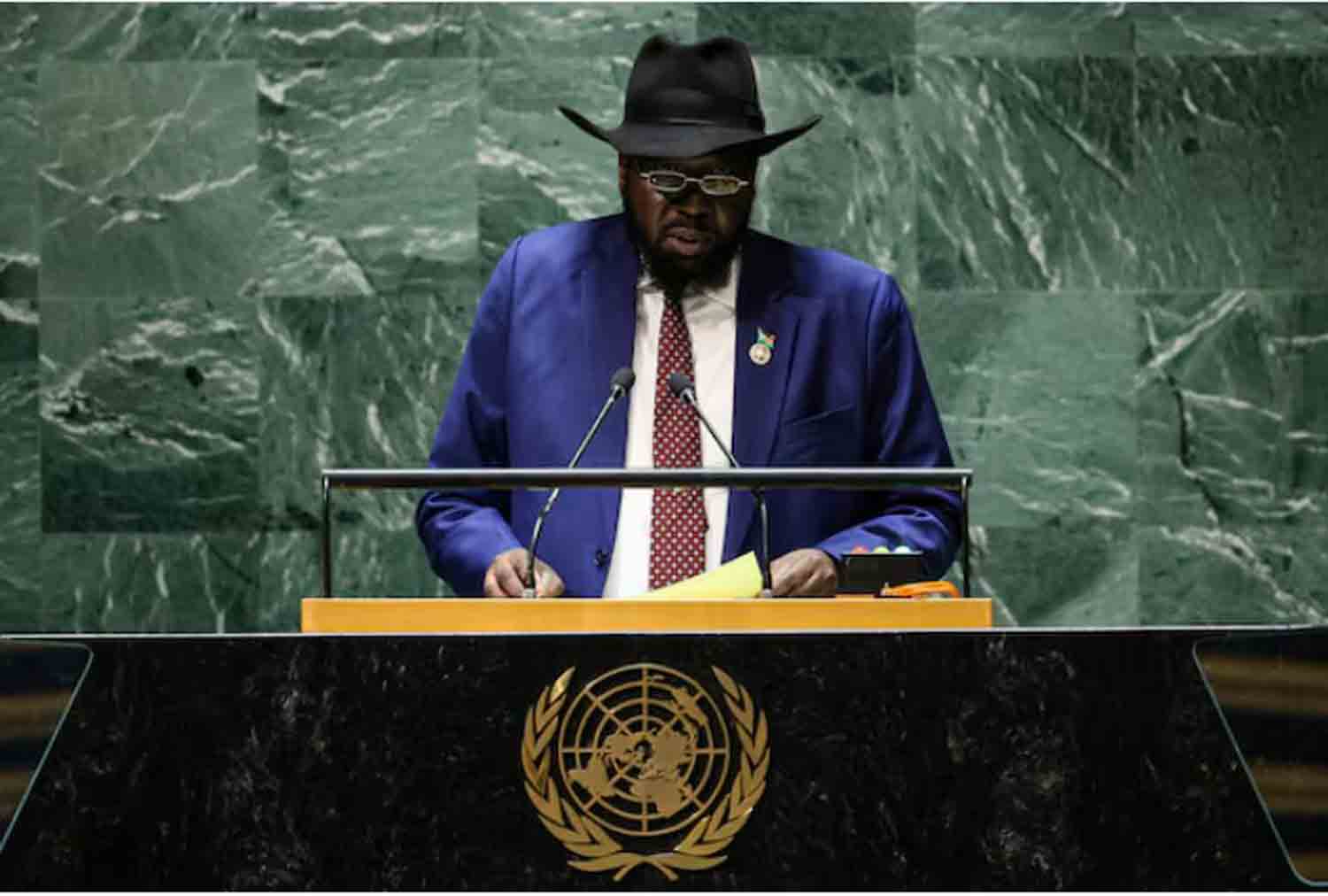
South Sudan’s President Salva Kiir has removed the nation’s long-serving intelligence chief, appointing a close associate in his place, as reported by the state broadcaster SSBC, referencing a presidential decree.

The ousting of Akol Koor Kuc, who has led the contentious internal security bureau of the National Security Service (NSS) since South Sudan’s independence from Sudan in 2011, follows the transitional government’s recent announcement of yet another delay in the electoral process.

Last month, Kiir’s administration declared a two-year extension of the transitional period and postponed elections for the second time, following a previous delay in 2022. This decision has faced criticism from the United States and other international stakeholders involved in the peace process of the country.

Attempts to reach the government spokesperson and the president’s office went unanswered. Human rights organizations, including Amnesty International and Human Rights Watch, have consistently raised concerns about the NSS’s significant power, highlighting its impunity in dealing with civil society and activists who oppose the government.

Analysts indicate that the recent dismissal of the intelligence chief, which was announced late Wednesday, signifies an ongoing power struggle within the upper echelons of the government.

“There has been considerable deliberation regarding the future of Akol Koor. The president is cautious about making hasty decisions that could jeopardize national security,” stated policy and security expert Boboya James in an interview with Reuters.

“With the peace agreement now extended, he is likely to seek to strengthen his position by appointing loyalists to key government roles,” James added.

The newly appointed intelligence chief, Akec Tong Aleu, is a trusted associate of President Kiir. Although South Sudan concluded five years of civil conflict in 2018, persistent disagreements between Kiir and his deputy Riek Machar—who led the rival factions during the war—continue to hinder the peace process.

Israel strikes Beirut, Iran cautions against remaining “silent” over Israel’s “warmongering”

0
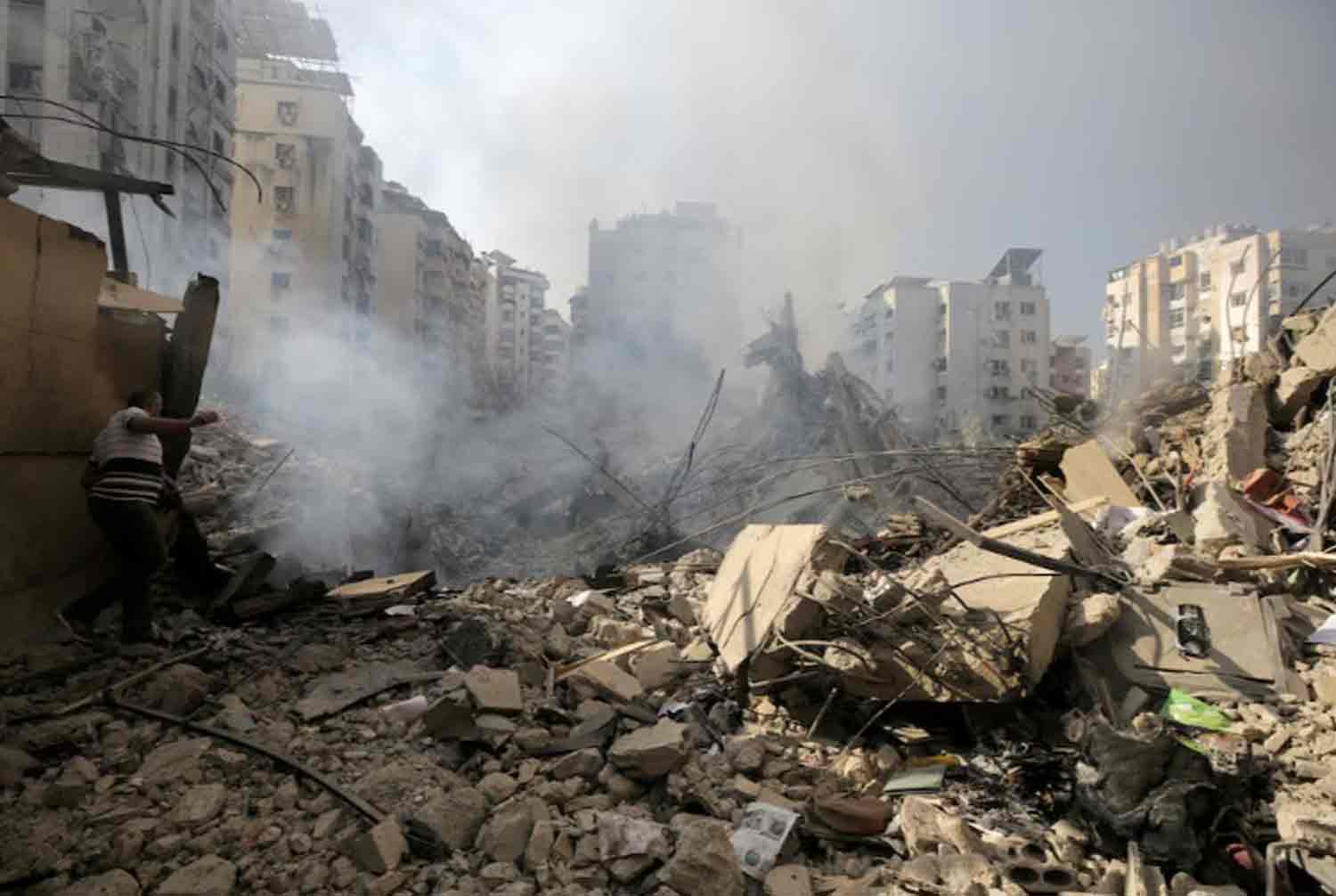
A man walks on the rubble of damaged buildings in the aftermath of Israeli air strikes on Beirut's southern suburbs, Lebanon

Israel’s military announced the elimination of 15 Hezbollah militants in southern Lebanon on Thursday, while Iranian President Masoud Pezeshkian cautioned against remaining “silent” in response to Israel‘s “warmongering,”. The strikes were reported to have targeted a municipal building in the town of Bint Jbeil, where the militants were believed to be operating.

In response, the Hezbollah-affiliated Islamic Health Authority reported that seven of its personnel, including two medical staff, lost their lives in the airstrike on Beirut.

Israel characterized the operation as a precise airstrike on the Lebanese capital. Witnesses reported a significant explosion, with a security source indicating that the target was a building in the Bachoura district, close to the parliament, marking the nearest Israeli strike to Beirut’s central downtown area.

According to Lebanese health officials, at least six individuals were killed and seven others injured. A photo circulating on Lebanese WhatsApp groups, which Reuters has not yet verified, depicted a severely damaged building with flames engulfing its first floor.

Another restless night in Beirut. The city trembles with the sound of explosions. There are no warning sirens. The future remains uncertain, filled with anxiety and fear, as expressed by U.N. special coordinator in Lebanon, Jeanine Hennis-Plasschaert, on X this Thursday.

Following Iran’s launch of over 180 missiles into Israel, Israel reported on Wednesday that eight soldiers lost their lives in ground combat in southern Lebanon as its military advanced into the northern neighbor.

Iran announced on Wednesday that its missile barrage—its largest assault on Israel to date—had concluded, unless provoked further, while both Israel and the United States vowed to retaliate forcefully.

Qatar’s Emir Sheikh Tamim bin Hamad Al-Thani urged for serious efforts towards a ceasefire to halt Israel’s “aggression” in Lebanon, asserting that lasting peace in the Middle East hinges on the establishment of a Palestinian state. He described the ongoing situation in the region as a “collective genocide” during the Asia Cooperation Dialogue summit in Doha, reiterating his country’s long-standing warnings about Israel’s “impunity.”

At the same summit, Iranian President Masoud Pezeshkian cautioned against remaining “silent” in response to Israel’s “warmongering,” stating, “Any military attack, terrorist act, or violation of our red lines will provoke a decisive response from our armed forces.”

Additionally, three Israeli missiles struck the southern suburb of Dahiyeh, where Hezbollah leader Hassan Nasrallah was killed last week, with loud explosions reported by Lebanese security officials.

HOUTHIS ATTACK TEL AVIV

The removal of Nasrallah significantly weakened Hezbollah, which he had transformed into Lebanon’s most powerful military and political entity, extending its influence throughout the Middle East and eliminating Iran’s most formidable proxy. In response to the ongoing conflict between Hamas and Israel in Gaza, Hezbollah, along with Iran’s other regional allies, including Yemen’s Houthis and various armed factions in Iraq, has initiated attacks across the region.

The Houthis have been actively targeting commercial vessels linked to Israeli, U.S., and UK interests since last year, employing missiles, armed drones, and explosive-laden boats. Recently, they claimed to have successfully struck Israel’s commercial hub, Tel Aviv, using drones. In response, Israel reported intercepting a suspicious aerial object in central Israel early Thursday morning.

The Israel Defense Forces (IDF) have advised residents of evacuated Lebanese villages to refrain from returning until further notice. “IDF operations are ongoing,” stated spokesperson Avichay Adraee on X on Thursday. According to Lebanese government figures, over 1,900 individuals have lost their lives and more than 9,000 have been injured in Lebanon due to nearly a year of cross-border hostilities, with the majority of casualties occurring in the last two weeks. Caretaker Prime Minister Najib Mikati noted that approximately 1.2 million Lebanese have been displaced as a result of Israeli assaults.

Over 300 individuals who have been displaced are currently seeking refuge in a nightclub in Beirut, a venue previously renowned for its extravagant parties. Staff members are now utilizing their guest-list clipboards to register those in need of shelter.

“We’re striving to remain resilient,” stated Gaelle Irani, formerly responsible for guest relations, as she took a moment to assist individuals in finding a place to stay. “It’s incredibly overwhelming and heartbreaking. This venue, which once served as a space for enjoyment, has transformed into a shelter, and we are committed to doing everything possible to support and assist those affected.”

On Wednesday, the Israeli military announced the involvement of regular infantry and armored units in ground operations in Lebanon. This development, alongside Iran’s missile strikes and Israel’s vow of retaliation, has heightened fears of a broader conflict in the oil-rich Middle East.

The inclusion of infantry and armored forces from the 36th Division, such as the Golani Brigade, the 188th Armored Brigade, and the 6th Infantry Brigade, suggests that the military operation is expanding beyond limited commando actions.

In response to the recent escalation on Tuesday, Western nations have begun formulating contingency plans to evacuate their citizens from Lebanon. However, no large-scale military evacuations have been initiated yet, although some countries are arranging charter flights as Beirut airport remains operational.

Emir of Qatar says ongoing crisis in Middle East constitutes a “collective genocide,”

0
Qatar's Emir Sheikh Tamim bin Hamad al-Thani

Qatar’s Emir Sheikh Tamim bin Hamad Al-Thani stated on Thursday that the ongoing crisis in the Middle East constitutes a “collective genocide,” emphasizing that his nation has consistently warned about Israel‘s “impunity.” He remarked, “It is abundantly clear that what is occurring is genocide, alongside the transformation of the Gaza Strip into an area uninhabitable for humans, setting the stage for displacement,” during his address at the Asia Cooperation Dialogue summit in Doha.

The Emir also denounced the Israeli airstrikes and military actions “against the fraternal Lebanese Republic.” Israel has vehemently rejected the allegations of committing genocide in Gaza, where it initiated an offensive a year ago following attacks by Hamas militants on southern Israeli towns, resulting in the deaths of 1,200 individuals and the abduction of over 250 hostages. According to health authorities in the Hamas-controlled region, more than 41,500 Gazans have lost their lives during the Israeli military campaign.

This week, Israel initiated a ground operation in Lebanon targeting the Iran-supported group Hezbollah, which has been launching attacks into Israel, claiming to act in solidarity with the Palestinian cause.

Ukrainian military targeted a Russian radar station with ATACMS ballistic missiles

0

The Ukrainian military announced on Thursday that it had used ATACMS ballistic missiles to target a Russian radar station, aiming to diminish Moscow’s capability “to detect, track and intercept aerodynamic and ballistic targets.” The military did not specify the timing of the strike or the location of the ‘Nebo-M’ radar station in its statement shared via the Telegram messaging app.

“The elimination of the Nebo-M radar will establish a favorable ‘air corridor’ for the effective deployment of Storm Shadow and SCALP-EG cruise missiles,” the statement indicated.

According to the Ukrainian military, Russia is believed to have 10 operational systems remaining, each valued at over $100 million. The United States provided long-range ATACMS missiles to Ukraine earlier this spring, with White House national security adviser Jake Sullivan noting that Ukraine had pledged to use the weapons solely within its own territory. Currently, Russian forces control approximately 18% of Ukraine’s land.

Ukrainian President Volodymyr Zelenskiy has been urging his allies for several months to permit Ukraine to utilize Western missiles, such as the long-range U.S. ATACMS and Britain’s Storm Shadow, to strike deep within Russia.

Following discussions with allies last month and Zelenskiy’s visit to the United States, Washington has not indicated any shift in its stance regarding Kyiv’s deployment of these long-range weapons against Russian targets.

Defence vs defense

0

Introduction to Defence and Defense


Defining the Terms

In the realm of language and spelling variations, the distinction between “defence” and “defense” has long been a subject of curiosity and debate. These two spellings, seemingly interchangeable yet regionally distinct, have sparked interest among language enthusiasts, scholars, and everyday users of English. This article delves into the nuances of “defence” and “defense,” exploring their historical origins, regional variations, legal and military contexts, linguistic considerations, and the impact of American English on global usage. By unraveling the complexities of these terms, we aim to shed light on the diversity and evolution of language, inviting readers to appreciate the richness of English language variations.

Introduction to Defence and Defense


Defining the Terms

When it comes to the words “defence” and “defense,” confusion often reigns supreme. Are they just different spellings of the same word, or is there more to it? Let’s dive in and unravel this linguistic mystery.

Purpose of the Article

The aim here is to shed light on the nuances between “defence” and “defense,” exploring their historical roots, regional variations, and specific contexts in legal and military realms. By the end, you’ll be armed with the knowledge to differentiate between the two confidently.

Historical Origins and Usage of “Defence” and “Defense”


Etymology of “Defence” and “Defense”

The journey of these words begins with their etymology. “Defence” traces back to Latin and Old French influences, while “defense” is rooted in medieval Latin. Despite their distinct paths, both words essentially mean the same thing – protection or resistance against harm.

Historical Usage in British English

In the realm of British English, “defence” reigns supreme. Its usage has been the norm for centuries, embodying the quintessential British flavor in spelling. From knights defending castles to barristers defending clients, the Brits have staunchly stuck to their linguistic guns.

Adoption and Evolution in American English

On the other side of the pond, Americans opted for a simpler spelling – “defense.” This streamlined version gained traction post-independence and has since become the standard in American English. Whether it’s defense attorneys in court or national defense policies, Americans have made it their own.

Regional Variations in Spelling and Usage


British English vs. American English

The age-old tale of “defence” versus “defense” symbolizes the broader divide between British and American English. While both sides understand each other just fine, these spelling discrepancies add a dash of linguistic spice to transatlantic conversations.

Canadian and Australian Usage

Let’s not forget our friends in Canada and Australia, who often find themselves straddling the line between British and American influences. Depending on the context, you might spot “defence” reminiscent of their British roots or “defense” hinting at American ties. It’s a delightful linguistic mix-up Down Under and up North.

Legal and Military Contexts of “Defence” and “Defense”


Legal Terminology and Implications

In legal realms, the choice between “defence” and “defense” can carry weight. While the difference may seem cosmetic, legal documents and arguments often stick to tradition, with British courts favoring “defence” and American courts opting for “defense.”

Military Applications and Strategies

When it comes to matters of national security and military tactics, “defence” and “defense” play vital roles. Whether it’s fortifying borders or devising strategic maneuvers, the choice of spelling may reflect broader cultural and historical ties within military institutions.

With a newfound understanding of the distinctions between “defence” and “defense,” you’re now well-equipped to navigate these linguistic waters with ease. Remember, whether you prefer the British flair of “defence” or the American simplicity of “defense,” it’s all about defending your choice with confidence!

Linguistic Considerations and Evolution of Spelling


Spelling Differences and Pronunciation

When it comes to the words “defence” and “defense,” the main distinction lies in their spelling. “Defence” is the preferred spelling in British English, while “defense” is more commonly used in American English. Despite this difference, both words are pronounced the same way, so you won’t be caught out saying them differently.

Standardization Efforts and Modern Trends

Over time, efforts have been made to standardize English spelling, but variations still exist due to historical influences and regional preferences. In modern usage, the choice between “defence” and “defense” often comes down to individual or regional conventions rather than strict adherence to one standard.

Impact of American English on Global Usage


Influence of American Media and Culture

American English, with its widespread influence through media, movies, and technology, has played a significant role in shaping global language trends. As a result, American spellings like “defense” have become increasingly prevalent in international contexts.

Globalization and Language Adaptation

In an increasingly interconnected world, languages constantly evolve and adapt to accommodate diverse influences. This fluidity allows for the incorporation of different spellings and pronunciations, showcasing the dynamic nature of language in response to global interactions.

Common Misconceptions and Frequently Asked Questions


Myths Surrounding “Defence” and “Defense”

One common misconception is that using “defence” or “defense” incorrectly can lead to misunderstandings. In reality, both spellings are widely recognized and understood, so the choice between them is a matter of personal preference or adherence to a specific style guide.

Clarifying Usage in Different Contexts

The context in which you are writing or speaking can often dictate whether “defence” or “defense” is more appropriate. While British English tends to favor “defence” in military or legal contexts, American English generally uses “defense” across all situations. Understanding these nuances can help you navigate the diversity of English language usage effectively.

Conclusion: Embracing the Diversity of Language

In the debate between “defence” and “defense,” the key takeaway is the richness and flexibility of language. Embracing variations in spelling and pronunciation allows us to appreciate the diverse linguistic tapestry that exists across different English-speaking regions. So whether you prefer “defence” or “defense,” remember that language is a living entity that continues to evolve and adapt, reflecting the dynamic nature of human communication.

Conclusion: Embracing the Diversity of Language


Appreciating Language Variations

In conclusion, the differences between “defence” and “defense” serve as a testament to the dynamic nature of language. While these variations may appear subtle, they reflect the historical, cultural, and regional influences that shape our linguistic landscape. By understanding and embracing these differences, we not only gain insight into the intricacies of English language usage but also celebrate the diversity and evolution of language itself. So, whether you prefer “defence” or “defense,” let us continue to explore, appreciate, and adapt to the rich tapestry of language variations that make communication a fascinating and ever-evolving journey.

Frequently Asked Questions


1. Are “defence” and “defense” completely interchangeable?


2. Why do British and American English differ in spelling these terms?


3. In legal contexts, does the choice between “defence” and “defense” matter?


4. How have digital communication and globalization impacted the usage of these terms?

Biden administration aims to synchronize its stance with Israel

0

The Biden administration aims to synchronize its stance with Israel regarding any potential reaction to Iran‘s aggression, while also acknowledging that the Middle East is in a precarious situation. A wider escalation could threaten both Israeli and U.S. interests, according to U.S. Deputy Secretary Kurt Campbell on Wednesday.

During a virtual event organized by the Carnegie Endowment for International Peace, Campbell reiterated the U.S. perspective that Iran’s actions are “deeply irresponsible” and emphasized the necessity for a “return message.”

“We understand that while a response is essential, we must also recognize that the region is teetering on a knife’s edge. There are significant concerns about a broader escalation or a prolonged conflict, which could lead to sustained hostility rather than isolated incidents, jeopardizing not only Israel but also our strategic interests,” Campbell stated.

The Middle East is on the verge of a potential regional conflict following Iran’s launch of over 180 missiles at Israel on Tuesday, marking the largest assault on the nation to date. This aggressive action has prompted strong retaliatory promises from both Jerusalem and Washington against Tehran.

Additionally, the Israeli military is engaged in fierce confrontations along its northern border with Hezbollah, an armed group based in Lebanon. On Wednesday, the Israeli forces suffered the loss of eight soldiers, marking the most significant casualties for Israel’s military on the Lebanon front in the past year amid ongoing border skirmishes with its Iranian-supported adversary.

Campbell described the missile strikes from Lebanon as “destabilizing” and cautioned against the risks of prolonged conflict with Lebanon. He emphasized the importance of supporting Israel’s defensive measures while expressing concerns regarding extensive ground operations in the region.


CIA has initiated a new campaign to recruit informants in China, Iran, and North Korea

0

The CIA of the United States has initiated a new campaign to recruit informants in China, Iran, and North Korea, building on what it describes as a successful recruitment strategy in Russia. The agency has made available guidelines in Mandarin, Farsi, and Korean across various platforms, including X, Facebook, Instagram, Telegram, LinkedIn, and the Dark Web, detailing secure methods for contacting them, according to a CIA spokesperson.

“Our initiatives have proven effective in Russia, and we aim to ensure that individuals in other authoritarian nations understand that we are receptive to their outreach,” the spokesperson stated, noting that the CIA is evolving in response to heightened state oppression and global surveillance.

A video in Mandarin uploaded to YouTube, which contains only written guidance, encouraged individuals to reach out to the CIA through its official website using reliable encrypted Virtual Private Networks (VPNs) or the TOR network. The message emphasized, “Your safety and wellbeing is our top priority.” It requested that individuals provide their names, locations, and contact information that do not link back to their true identities, along with any information that might be valuable to the CIA, while warning that replies are not guaranteed and may require time.

The CIA’s demand for intelligence has intensified as China enhances its collaboration with Russia and Iran while demonstrating its military capabilities in the region. Within the U.S. intelligence community, Russia, China, Iran, and North Korea are categorized as “hard targets,” indicating that their governments are particularly challenging to infiltrate.

Additionally, the U.S. faces complexities arising from Iran’s tensions with Israel, its nuclear ambitions, its increasing ties with Russia, and its backing of militant groups. North Korea’s nuclear weapons initiative also remains a focal point for U.S. intelligence, alongside concerns regarding alleged arms shipments from Pyongyang to Moscow in support of the conflict in Ukraine, a claim that both Moscow and Pyongyang refute.

The Russian and Chinese embassies in Washington, as well as Iran’s mission to the United Nations, did not provide immediate responses to inquiries. In 2022, the CIA initiated efforts to recruit Russian individuals by sharing Russian-language content on its social media platforms detailing secure methods to reach the agency, followed by the release of videos in 2023.


Three civilians killed in an Israeli airstrike on Damascus

0
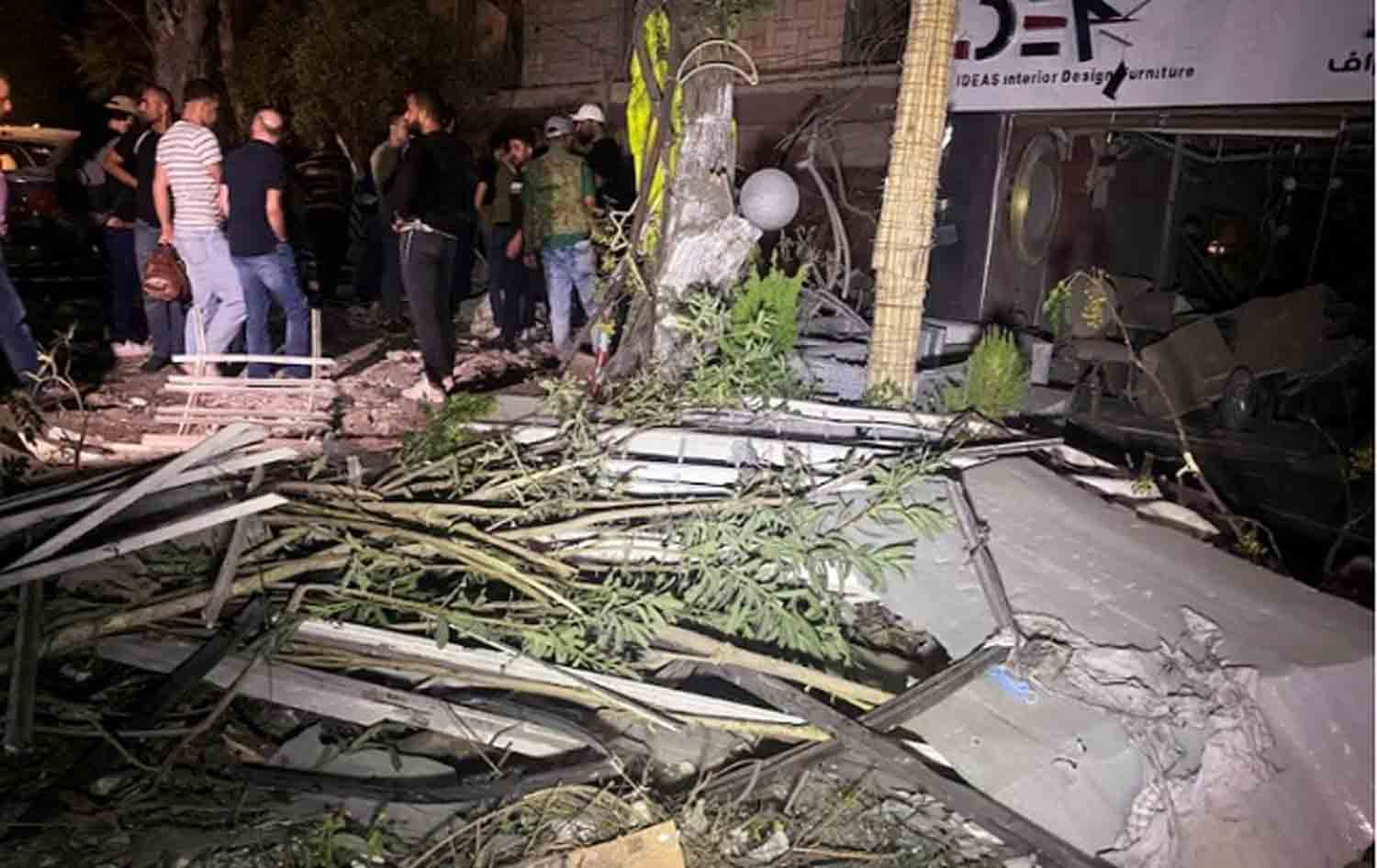
People gather near the site of an Israeli airstrike that targeted a residential building in the Mezzah suburb in western Damascus

Three civilians lost their lives and three others were injured in an Israeli airstrike on Damascus, Syria‘s capital, on Wednesday, according to a military source cited by the Syrian state news agency SANA.

The airstrike specifically targeted a residential structure in the Mezzah neighborhood of western Damascus.

Israel has been conducting operations against Iran-affiliated sites in Syria for several years, with an increase in such attacks following the October 7 assault by the Palestinian militant group Hamas on Israeli soil.

Khamenei cautioned Hassan Nasrallah to relocate

0
Boys scouts carry a picture of Hezbollah leader Sayyed Hassan Nasrallah

Iran’s Supreme Leader Ayatollah Ali Khamenei reportedly cautioned Hezbollah leader Syyed Hassan Nasrallah to evacuate Lebanon just days prior to his death in an Israeli airstrike. Khamenei is now expressing significant concern regarding Israeli infiltration within high-ranking government positions in Tehran, according to three Iranian sources.

Following the attack on Hezbollah’s booby-trapped devices on September 17, Khamenei dispatched an envoy to urgently advise Nasrallah to relocate to Iran. This warning was based on intelligence assessments indicating that Israeli agents had embedded themselves within Hezbollah and were plotting to assassinate him, as revealed by a senior Iranian official to Reuters.

The envoy was identified as Brigadier General Abbas Nilforoushan, a high-ranking commander of the Iranian Revolutionary Guards, who was present with Nasrallah in his bunker during the Israeli bombardment and also lost his life in the strike. Khamenei, who has been in a secure location within Iran since Saturday, ordered a retaliatory strike involving approximately 200 missiles to be launched at Israel on Tuesday, as confirmed by a senior Iranian official. This attack was a response to the fatalities of Nasrallah and Nilforoushan, according to a statement from the Revolutionary Guards.

The statement referenced the killing of Hamas Leader Ismail Haniyeh in Tehran in July, along with Israel’s military actions in Lebanon. Israel has not acknowledged its involvement in Haniyeh’s death. On Tuesday, Israel initiated what it termed a “limited” ground operation against Hezbollah in southern Lebanon. Neither Iran’s foreign ministry nor the office of Israeli Prime Minister Benjamin Netanyahu, which oversees the Mossad intelligence agency, responded to requests for comments.

The assassination of Nasrallah followed two weeks of targeted Israeli strikes that have dismantled weapons facilities, removed half of Hezbollah’s leadership council, and severely weakened its top military command. Concerns regarding the safety of Khamenei and a decline in trust within both Hezbollah and Iran’s leadership surfaced in discussions with ten sources for this report, highlighting a situation that could hinder the effective operation of Iran’s Axis of Resistance alliance, which comprises anti-Israel irregular armed groups.

Established in the 1980s with support from Iran, Hezbollah has consistently been the most powerful entity within the alliance. The current turmoil is complicating Hezbollah’s efforts to appoint a new leader, as there are concerns that ongoing infiltration could jeopardize the safety of any successor, according to four Lebanese sources.

Magnus Ranstorp, a Hezbollah specialist at the Swedish Defense University, remarked, “Essentially, Iran has lost its most significant investment over the past several decades,” referring to the substantial damage inflicted on Hezbollah, which he believes has weakened Iran’s ability to launch attacks along Israel’s borders.

“This has profoundly unsettled Iran. It highlights the extent of their infiltration: not only was Nasrallah targeted, but also Nilforoushan,” he noted, referring to a key military advisor to Khamenei. Ranstorp suggested that Hezbollah’s diminished military strength and leadership could lead Iran to revert to more frequent attacks on Israeli embassies and personnel abroad, similar to its actions prior to the emergence of its proxy forces.

IRAN INITIATES ARRESTS

The death of Nasrallah has led Iranian authorities to conduct a comprehensive investigation into potential infiltrations within their ranks, including the influential Revolutionary Guards and high-ranking security officials, according to a senior Iranian official. Their primary focus is on individuals who travel abroad or have family members residing outside of Iran, as noted by the first official.

Tehran has grown wary of certain Revolutionary Guards members who have been visiting Lebanon, the official stated. Concerns escalated when one of these individuals began inquiring about Nasrallah’s location and the duration of his stays in specific areas, the official added.

This individual, along with several others, has been apprehended following heightened alarm within Iran’s intelligence community. The suspect’s family had moved outside of Iran, although the official did not disclose the identities of the suspect or their relatives.

DISTRUST

A second official indicated that the assassination has fostered distrust between Tehran and Hezbollah, as well as within Hezbollah itself. “The trust that once unified everything has vanished,” the official remarked.
According to a third source close to Iran’s leadership, the Supreme Leader “no longer trusts anyone.”

Concerns had already been raised in Tehran and Hezbollah regarding potential Mossad infiltrations following the July assassination of Hezbollah commander Fuad Shukr in an Israeli airstrike at a discreet location in Beirut while he was meeting with an IRGC commander, as reported by two Hezbollah sources and a Lebanese security official. This incident was closely followed by the assassination of Hamas leader Haniyeh in Tehran.

In contrast to Haniyeh’s death, Israel openly acknowledged its involvement in the killing of Shukr, a relatively low-profile figure whom Nasrallah nonetheless recognized at his funeral as a pivotal character in Hezbollah’s history, having developed its most significant capabilities.

Shukr played a crucial role in the advancement of Hezbollah’s sophisticated weaponry, particularly precision-guided missiles, and oversaw the group’s operations against Israel over the past year, according to the Israeli military.

Concerns in Iran regarding Israeli infiltration into its upper echelons have persisted for years. In 2021, former Iranian president Mahmoud Ahmadinejad claimed that the leader of an Iranian intelligence unit tasked with targeting Mossad agents was, in fact, an operative for the Israeli agency. He informed CNN Turk that Israel had acquired sensitive documents related to Iran’s nuclear program, referencing a 2018 operation in which Israel seized a significant cache of classified documents concerning the program.

Additionally, in 2021, Yossi Cohen, Israel’s then outgoing spy chief, provided insights into the raid, revealing to the BBC that 20 non-Israeli Mossad agents participated in the operation to extract the archive from a storage facility.

Following the deadly explosions of pagers and walkie-talkies used by Hezbollah on September 17 and 18, Khamenei extended an invitation to Nasrallah to move to Iran. These attacks have been largely attributed to Israel, although the country has not formally acknowledged responsibility.

WARNING

Despite Tehran’s serious apprehensions about possible infiltrators within Hezbollah, Nasrallah reportedly felt secure and had complete trust in his close associates. Khamenei made a second attempt to communicate with Nasrallah through Nilforoushan last week, urging him to relocate to Iran for his safety. However, Nasrallah chose to remain in Lebanon.

In the aftermath of the pager explosions, several high-level meetings were convened in Tehran to address the safety of Hezbollah and Nasrallah, although the official declined to disclose the attendees. Concurrently, Hezbollah initiated a comprehensive investigation in Lebanon to identify and eliminate Israeli spies within its ranks, interrogating hundreds of members following the detonations, as reported by three sources to Reuters.

Sheikh Nabil Kaouk, a high-ranking official within Hezbollah, was overseeing the investigation, according to a Hezbollah source. The inquiry was reportedly advancing swiftly before an Israeli airstrike resulted in his death, occurring just one day after the assassination of Nasrallah. An earlier raid the previous week had targeted other senior Hezbollah leaders, some of whom were part of the investigation.

Kaouk had called in Hezbollah officials involved in logistics, as well as others who “participated, mediated, and received offers via pagers and walkie-talkies,” the source noted. Following the deaths of Nasrallah and other commanders, a “more thorough and extensive investigation” and subsequent purge were deemed necessary, the source added.

Ali al-Amin, editor-in-chief of Janoubia, a news outlet focused on the Shi’ite community and Hezbollah, reported that Hezbollah had detained hundreds for questioning in connection with the pager incidents.

Hezbollah is grappling with the aftermath of Nasrallah’s assassination in his fortified command center, astonished by the extent to which Israel infiltrated the organization, as indicated by seven sources. Mohanad Hage Ali, deputy research director at the Carnegie Middle East Center in Beirut, characterized the offensive as “the most significant intelligence breach by Israel” since Hezbollah’s establishment with Iranian support in the 1980s.

The recent escalation by Israel follows nearly a year of cross-border hostilities, which intensified after Hezbollah launched rocket attacks in solidarity with Hamas. The Palestinian group was responsible for the deaths of 1,200 individuals and the abduction of 250 hostages during an assault on Israel on October 7, 2023, according to Israeli reports. In response, Israeli actions in Gaza have resulted in over 41,000 Palestinian fatalities, as reported by the Gaza health ministry.

Loss of Trust

The Israeli military actions and the looming threat of further assaults on Hezbollah have hindered the Iranian-backed organization from arranging a nationwide funeral that would appropriately reflect Nasrallah’s religious and leadership stature, as reported by four sources familiar with internal discussions within Hezbollah.
“In these circumstances, no one can authorize a funeral,” one Hezbollah insider expressed, regretting that officials and religious figures are unable to step forward to honor the deceased leader properly.
Several commanders who lost their lives last week were interred quietly on Monday, with intentions to conduct a formal religious ceremony once the conflict subsides.
Hezbollah is considering the possibility of obtaining a religious edict to temporarily bury Nasrallah and hold an official funeral when conditions allow, according to the four Lebanese sources.
The organization has also refrained from naming a successor to Nasrallah, likely to prevent making the new leader a target for Israeli assassination, they noted.
“Choosing a new Secretary General could be perilous if Israel eliminates him shortly after,” Amin stated. “The group cannot afford to create further chaos by appointing someone only to have them killed.”