Saturday, June 6, 2026
Home Blog Page 134

Trump’s second term could have major implications for the Middle East

0

If his initial term in the White House serves as a guide, President-elect Donald Trump is expected to prioritize the Middle East in his upcoming agenda.

During his first four years, Trump made notable strides by choosing Saudi Arabia as the destination for his inaugural foreign visit, attempting to negotiate a “deal of the century” between Israelis and Palestinians, enhancing the regional integration of Israel, and significantly ramping up pressure on Iran.

However, the Middle East landscape has evolved considerably since he left office in 2021, and all regional stakeholders are closely observing how the new president will respond to these changes.

“Your historic return to the White House signifies a fresh start for America and a strong reaffirmation of the vital alliance between Israel and the United States. This is a tremendous victory!” Israeli Prime Minister Benjamin Netanyahu remarked on X on Wednesday.

Gulf Arab nations also expressed their support for the president-elect’s success. Saudi Arabia’s King Salman bin Abdulaziz Al Saud and Crown Prince Mohammed bin Salman extended their congratulations to Trump, while the United Arab Emirates stated: “the UAE and US are united by our enduring partnership based on shared ambitions for progress.”

In contrast, Iran downplayed the election’s implications, asserting that there is “no significant difference” in the identity of the US president, according to state media. Fatemeh Mohajerani, a spokesperson for the Iranian government, was quoted as saying that the “general policies of the US and Iran remain unchanged” following Wednesday’s election results.

Trump’s election might influence key players in the Middle East

Israel and the Palestinians

Analysts suggest that addressing the conflicts in Gaza and Lebanon, as well as fostering Israel’s integration into the Middle East, will likely be key priorities for the president-elect’s agenda.

Mustafa Barghouti, leader of the Palestinian National Initiative, noted that Netanyahu will encounter a president who is more assertive than previous administrations, stating, “I don’t believe Trump will accept the ongoing wars in their current form.” He also remarked that for Palestinians, the change in leadership may not significantly alter the situation, as both administrations have shown a strong bias in favor of Israel.

According to Alon Pinkas, a former Israeli diplomat, Trump is keen to avoid having these conflicts as pressing issues when he takes office on January 20.

“He will likely urge a swift resolution; he doesn’t want this on his agenda,” Pinkas explained, suggesting that Trump may encourage the Israeli prime minister to declare a victory and subsequently negotiate a settlement through intermediaries.

Throughout his campaign, Trump has not clarified his approach to the Israel-Hamas conflict should he be reelected, nor has he indicated how his policies would differ from those of his predecessor, Joe Biden. In April, Trump remarked that Israel should “finish what they started” and “get it over with fast,” expressing concern that it was “losing the PR war” due to the images emerging from Gaza.

According to Pinkas, Trump “couldn’t care less about the Palestinian issue.” During his first term, he refrained from endorsing the United States’ long-standing support for an independent Palestinian state, stating that he preferred a solution “that both parties like.”

Barghouti expressed concern that Trump might permit Israel to annex portions of the Israeli-occupied West Bank, which would effectively signal “the end of the two-state solution.”

During his initial term, Trump implemented several policies that favored Israel. In 2017, he officially recognized Jerusalem as Israel’s capital, a move that disrupted long-standing U.S. policy and international agreement. He also acknowledged Israel’s claim to the Golan Heights, territory it seized from Syria during the 1967 conflict.

Despite Trump’s assertions of being the most pro-Israel president in recent history and his claims of a close personal rapport with Netanyahu, their relationship has not always been amicable.

In 2021, after both had left office, Trump accused Netanyahu of disloyalty when the Israeli Prime Minister extended congratulations to Biden following his 2020 election victory.

Following Hamas’ attack on Israel on October 7 last year, Trump criticized both Netanyahu and Israeli intelligence for their lack of preparedness, asserting that such an attack would not have happened under his presidency.

Boaz Bismuth, a member of Israel’s Knesset representing Netanyahu’s Likud party, stated to CNN that Trump’s election arrives at an opportune moment, offering a chance to further the Abraham Accords as conflicts in Gaza and Lebanon are nearing resolution.

He noted that these accords, established during Trump’s first term and resulting in Israel normalizing relations with four Arab nations, have sidelined the aspirations for an independent Palestinian state.

Bismuth emphasized, “Once the conflict concludes, a significant reset in the Middle East will be necessary,” asserting that Trump is ideally positioned to facilitate a “new Middle East.”

Nadav Shtrauchler, a political strategist with close ties to Netanyahu, remarked that Trump’s election conveys a strong message to Israel’s adversaries in Iran.

Domestically, the Israeli prime minister may feel more empowered, especially following his recent dismissal of Defense Minister Yoav Gallant amid ongoing disputes regarding domestic issues and Israel’s military strategies.

Shtrauchler suggested that Netanyahu might reassess his strategies, noting that Trump’s unpredictability could lead to increased pressure on Israel to conclude the conflicts in Gaza and Lebanon, potentially shifting focus towards addressing the Iranian threat.

Iran faces a significant challenge in the coming four years, potentially the most critical since its establishment in 1979. Experts suggest that under Trump’s renewed scrutiny, a return to the “maximum pressure” campaign he previously implemented could lead to increased isolation and economic hardship for Tehran.

Despite Trump’s self-proclaimed expertise as a dealmaker, he struggled to limit Iran’s influence in the Middle East. His withdrawal from the 2015 nuclear agreement aimed at curbing Iran’s nuclear ambitions, coupled with the reimposition of sanctions and the assassination of Qasem Soleimani, the military leader overseeing Iran’s regional proxies, did not yield the desired results.

Iran

Since Trump’s departure from office in 2020, Iran has accelerated its uranium enrichment, boosted oil exports, intensified support for militant groups in the region, and set a concerning precedent by directly attacking Israel on two occasions.

As Israel continues to undermine Iran’s regional capabilities through strikes on its proxies, Iran is increasingly losing its deterrent power amid economic difficulties and widespread domestic unrest.

Ali Vaez, director of the Iran Project and senior adviser at the International Crisis Group, noted that the Islamic Republic appears vulnerable, facing formidable threats while 86-year-old Supreme Leader Ayatollah Ali Khamenei struggles to manage multiple crises simultaneously.

With the Middle East on the verge of a broader conflict and Iran threatening retaliation for recent Israeli attacks, there are fears that Trump’s potential election could embolden Netanyahu to target Iran’s nuclear facilities, a move the Biden administration has cautioned against.

There is a possibility that Trump may urge Netanyahu to take decisive action before he officially assumes office, which could lead to a significant increase in tensions during November and December. This scenario suggests that Israel might seek to capitalize on its position to undermine Iran and its network of militant groups prior to Trump’s inauguration, after which he could claim credit for fostering peace, according to Vaez.

However, this dynamic could shift if the Biden administration opts to restrict Israel’s capacity to escalate tensions in its remaining months in power. The U.S. has already initiated this process by sending a letter to Israel last month, warning of consequences if the humanitarian situation in Gaza does not improve.

A crucial element in Iran’s relationship with the incoming U.S. president will be Trump’s reaction to recent intelligence reports indicating that Tehran allegedly plotted to assassinate him—claims that Iran has labeled as “unsubstantiated and malicious.”

Vaez emphasized the need to differentiate between Trump as an individual and the Trump administration as a whole.

“Trump may be drawn to the challenge of outmaneuvering the Iranians in negotiations, viewing it as a definitive test of his skills in deal-making,” he stated, noting that during his first term, he was intrigued by the idea of negotiating with Iran.

In a tweet from 2020, Trump remarked, “Iran never won a war, but never lost a negotiation!”

Vaez pointed out that a resurgence of Trump’s “maximum pressure” strategy could coincide with a policy of “maximum support” for the Iranian populace, potentially aiming for regime change. He argued that this approach would likely hinder any prospects for the two nations to engage in negotiations.

“I doubt that anyone on (Trump’s) national security team would prioritize achieving a mutually beneficial agreement with the Iranian regime,” he concluded.

Saudi Arabia and the Gulf states

Gulf Arab states have maintained their engagement with Trump following his departure from office, anticipating a potential return. Analysts suggest that this strategy may yield positive outcomes for them.

During Trump’s initial term, the relationship between Saudi Arabia and the United States thrived. Notably, he made Riyadh his first foreign destination as president in 2017 and supported Crown Prince Mohammed bin Salman during the international backlash over the assassination of Washington Post journalist Jamal Khashoggi by Saudi operatives in 2018, a period when the Saudi heir faced significant global condemnation.

Hasan Alhasan, a senior fellow for Middle East policy at the International Institute for Strategic Studies in Bahrain, noted, “Gulf states highly value the opportunity to collaborate with a leader who shares their views and to foster relationships through personal interactions. This approach mirrors their dealings with other nations.”

Throughout Trump’s first term, Saudi Arabia and the UAE were involved in conflicts in Yemen, and their relations with Iran reached a historic low.

However, Gulf states have notably adjusted their foreign policies since then, choosing to reduce military engagements and seek rapprochement with former adversaries like Iran, while also diversifying their alliances in a world that is becoming increasingly multipolar, amid growing doubts regarding the US’s role in the Middle East.

Alhasan noted that there is a possibility of Trump returning to a maximum pressure approach regarding Iran, especially considering the improved relations between Iran and the Gulf states, which may lead to increased pressure from the US for compliance with this strategy.

Emerging middle powers like Saudi Arabia and the UAE may encounter difficulties in navigating their strengthened ties with China under a Trump administration. In recent years, these oil-rich nations have bolstered their trade and technological partnerships with China, despite the ongoing rivalry between Washington and Beijing.

Both Saudi Arabia and the UAE have been invited to join the BRICS coalition of developing countries, and Saudi Arabia has achieved dialogue partner status within the Shanghai Cooperation Organization (SCO), a security and economic alliance led by China.

Riyadh and Abu Dhabi have incorporated Chinese technology into critical infrastructure projects, and although they have committed to limiting China’s influence in their burgeoning artificial intelligence sectors, they have increasingly depended on Chinese expertise.

Alhasan expressed concern about whether the Trump administration will apply more pressure on Gulf states to reduce their ties with China in specific sectors. He also highlighted the potential for intensified tariff and trade conflicts under Trump, which could adversely affect Gulf exports.

Trump aims to enhance Israel’s integration within the Middle East but may encounter obstacles due to Saudi Arabia’s reluctance to normalize relations with Israel without a clear path to Palestinian statehood, which Israel has not provided.

Qatar, one of the first countries to congratulate Trump, has become crucial to US efforts in achieving a ceasefire in Gaza due to its connections with Hamas. However, these ties could become a liability under a Trump administration, according to Alhasan.

He remarked that there is likely concern regarding what a potential second term for Trump might entail.

Israeli Prime Minister unexpectedly dismissed defense minister

0
Israeli Defence Minister Yoav Gallant

Israeli Prime Minister Benjamin Netanyahu unexpectedly dismissed his widely supported defense minister, Yoav Gallant, on Tuesday, a decision that comes amid ongoing conflicts on several fronts in the region. This announcement triggered widespread protests throughout the country, including a large demonstration that brought central Tel Aviv to a standstill.

Netanyahu and Gallant have frequently clashed over the ongoing war in Gaza. However, Netanyahu had refrained from terminating Gallant’s position until now, as global attention was directed towards the U.S. presidential election. In his evening announcement, Netanyahu pointed to “significant gaps” and a “crisis of trust” as reasons for the change, appointing a long-time ally in Gallant’s place.

“During wartime, it is crucial to maintain complete trust between the prime minister and the defense minister,” Netanyahu stated. “Regrettably, while there was mutual trust and productive collaboration in the initial months of the campaign, that trust has deteriorated in recent months.”

Initially, Israel’s leadership appeared united in its response to Hamas’ attack on October 7, 2023. However, as the conflict has continued and expanded into Lebanon, significant policy disagreements have surfaced.

While Netanyahu advocates for sustained military action against Hamas, Gallant has adopted a more pragmatic stance, arguing that military efforts have established conditions conducive to a temporary diplomatic resolution that could facilitate the return of hostages held by the militant organization.

In a late-night press conference aired on national television, Gallant expressed his disagreements with Netanyahu on three critical matters: the necessity to eliminate controversial exemptions from military service for ultra-Orthodox men, the urgent requirement for a hostage agreement, and the establishment of an official commission to investigate the political and security failures surrounding the events of October 7, when Hamas militants invaded Israel, resulting in the deaths of 1,200 individuals and the abduction of 250 others. Israel estimates that approximately 100 hostages are still held captive, with around 65 of them believed to be alive.

Gallant emphasized that drafting ultra-Orthodox individuals is essential for both fairness and security, especially given the numerous challenges Israel currently faces.

He stated that a hostage agreement must be reached “as quickly as possible, while they are still alive,” asserting that there would be “no forgiveness” for any neglect in this matter. He also insisted that a thorough investigation into the October 7 incidents is crucial for the government to learn the necessary lessons. Netanyahu has dismissed calls for such an inquiry, arguing that it should only occur after the war concludes.

Gallant concluded his remarks by paying tribute to the soldiers serving in the military and those who have lost their lives in conflicts. He saluted as he departed from the podium.

Families of the hostages, along with tens of thousands participating in anti-government demonstrations, accuse Netanyahu of obstructing a deal to preserve his political power. His hard-line coalition partners have threatened to destabilize the government if he concedes to Hamas, increasing the likelihood of early elections amid declining public support for the prime minister.

“Firing Gallant in the middle of a war is an act of madness,” stated opposition leader Yair Lapid on X. “Netanyahu is compromising Israel’s security and the safety of Israeli soldiers for his own disgraceful political survival.”

The grassroots organization representing families of hostages stated that Gallant’s dismissal represents “a direct continuation of the ‘efforts’ to undermine the abductee agreement.”

Shortly after the announcement, thousands of demonstrators assembled in central Tel Aviv, obstructing the main highway and causing significant traffic disruptions. Many in the crowd waved blue and white Israeli flags, while others used whistles and drums to amplify their voices, gathering around several bonfires. In Jerusalem, several thousand individuals protested outside Netanyahu’s residence, with additional gatherings occurring throughout the city. Demonstrators also blocked roads in various locations across the nation, and Israeli television broadcasted footage of confrontations between police and protesters.

This dismissal occurs during a particularly sensitive period. Israeli forces remain entrenched in Gaza, more than a year after their invasion, which has resulted in the deaths of over 42,000 Palestinians, including a substantial number of civilians, and extensive destruction. Meanwhile, Israeli ground troops are continuing a month-long offensive against Hezbollah militants in Lebanon, with hundreds of Israeli soldiers reported killed in the ongoing conflict.

Additionally, Israel has engaged in confrontations with Iranian-backed factions in Iraq, Syria, and Yemen, while also bracing for potential retaliatory actions from Iran. Iran has pledged to respond to an Israeli strike that followed an Iranian missile attack on October 1, which was itself a retaliation for previous Israeli assaults on Iranian-affiliated targets.

China to unveil new stealth fighter jet J-35A

0
J-35AE fighter jet

China’s air force is preparing to officially unveil its new stealth fighter jet, the J-35A, providing observers with their first glimpse of a highly anticipated addition to the nation’s rapidly expanding military capabilities.

An image of the fighter was shared during a press conference held by the air force on Tuesday, and it is scheduled to be showcased at an air show in Zhuhai next week, according to officials.

The development of this jet is largely viewed as part of Beijing’s efforts to compete with the United States in terms of stealth fighter technology, as it seeks to modernize its military and assert its influence in Asia.

According to a report from a military-affiliated Chinese outlet, the J-35A is primarily designed for air combat operations but is also capable of conducting air-to-surface attacks.

If the aircraft enters operational service, it would position China as the second nation, following the United States, to possess two distinct types of stealth fighter jets, as noted by experts referenced in Chinese state media.

China’s J-20 stealth fighter was introduced into service in 2017, as reported at that time.

Stealth fighters are engineered to avoid detection by radar and other surveillance systems, allowing them to carry out missions without being noticed or intercepted.

According to Chinese military expert Li Li, speaking to state broadcaster CCTV, the J-35 is expected to be developed as a series and may eventually serve as carrier-based aircraft. This advancement would significantly enhance the overall capabilities of China’s maritime and aerial combat forces.

The introduction of this fighter comes on the heels of what analysts from Janes, a global open-source intelligence firm, have characterized as China’s reinforcement of its forward theater commands with additional J-20 aircraft.

Between July 2023 and June of this year, the People’s Liberation Army (PLA) Air Force has incorporated over 70 J-20s, raising its operational fleet to around 195, as reported by Janes earlier this year.

The timeline for the J-35A fighter’s entry into military service and its potential deployment locations remain uncertain.

The limited information available about the fighter thus far complicates comparisons with other stealth aircraft, such as the US F-22 and F-35.

Carl Schuster, a former director of operations at the US Pacific Command’s Joint Intelligence Center, indicated that the J-35A, which has been under development for over a decade, is likely designed for the PLA Navy.

“The J-35 had its first flight in 2021, but since it is based on an earlier prototype, it could enter production as early as next year,” Schuster noted, suggesting that the J-35A model has likely enhanced the previous design with more advanced engines.

China’s pursuit of stealth fighter technology has faced ongoing allegations of intellectual property theft from the US.

Beijing has firmly rejected these accusations, which gained attention following the 2015 release of documents by German magazine Der Spiegel, allegedly from NSA whistleblower Edward Snowden.

According to a Chinese military-affiliated source, the J-35A is a “new type of stealth fighter jet independently developed by the Aviation Industry Corporation of China (AVIC).”

The J-35A is not the only new technology set to be unveiled at the upcoming airshow in Zhuhai, scheduled for November 12 to 17.

Col. Niu Wenbo from the air force’s equipment department announced that the H-19 surface-to-air missile system and new “reconnaissance and strike” UAVs will also make their public debut.

Additionally, CCTV has reported that Russia’s Su-57 stealth fighter will participate in the airshow for the first time, alongside equipment from 49 different countries and regions.

What are the potential origins and locations for the outbreak of a third world war?

0

East Asia poses the most significant threat to global peace, with potential conflicts here being more intense and larger in scale than any that could arise in the Middle East or Europe.

In contrast to its challenges in Afghanistan and a mixed performance in Ukraine and the Middle East, the Biden administration has established a robust diplomatic legacy in Asia. It has created a network of security alliances aimed at deterring China and has achieved what has long been elusive: a rapprochement, if not a warm friendship, between historical rivals and key U.S. allies, South Korea and Japan.

Significant challenges await Joe Biden’s successor in this region. The magnitude of military forces positioned against one another in the northern Pacific is alarming. China is deepening its alliances with American adversaries, including North Korea and Russia, while making aggressive threats toward Taiwan and asserting stronger territorial claims in the South China Sea. The United States’ actions in other geopolitical arenas, particularly in Ukraine, will have repercussions in East Asia.

Despite the current circumstances, the strategy of the next U.S. administration is constrained by historical tensions. Japan and South Korea, both possessing formidable military capabilities—Japan recently initiating a significant military expansion—are burdened by longstanding disputes from the last century, which render their partnership precarious. It remains uncertain whether this alliance can endure, even as the threats compelling them to unite become increasingly severe.

Beyond the hills surrounding Seoul lies the most militarized area globally. The Demilitarized Zone (DMZ) separates this dynamic capital from a nuclear-armed North Korea, governed by an unpredictable leader, which weighs heavily on the minds of Koreans.

The perspective from Tokyo, just a short flight across the Sea of Japan, is equally concerning these days.

Russian military aircraft have been repeatedly violating the airspace along the country’s northwestern coast, highlighting the ongoing territorial dispute between Tokyo and Moscow over the Kuril Islands, which has persisted for nearly 80 years and leaves both nations in a technical state of war. Additionally, China contests Japan’s sovereignty over the Senkaku Islands to the south. In a notable first, Chinese military planes entered Japanese airspace in August. Furthermore, in September, Chinese and Russian naval vessels conducted joint exercises near Japanese waters. North Korea also regards Japan as an adversary, occasionally launching missiles over Japanese territory.

Japan is currently confronted by threats from North Korea, Russia, and China, creating a challenging security landscape, as noted by Minoru Kihara, Japan’s former defense minister, in a recent interview in Tokyo. He expressed a heightened sense of urgency given the frequency of these incidents occurring in such a short timeframe.

The conflict in Ukraine has had significant repercussions in Asia. Following Vladimir Putin’s invasion, Xi Jinping provided strong support for him against a united NATO, turning the European conflict into a litmus test for China’s aspirations as a superpower. Kihara emphasized that Japan is closely monitoring the growing alliance between China and Russia. The situation in Ukraine has also strengthened ties between Moscow and North Korea, with Kim Jong Un reportedly dispatching thousands of troops to assist in the conflict in exchange for military technology and other benefits.

” drinking buddies”

The term “drinking buddies” refers to the complex trilateral relationship involving Washington, Seoul, and Tokyo, which the United States has worked diligently to cultivate over the years.

Despite being bound by mutual defense treaties that date back more than 70 years and sharing common adversaries, South Korea and Japan have historically maintained a strained relationship. The legacy of Japan’s occupation of Korea during World War II, which included forced labor and sexual exploitation, has left deep scars. Although Japan has issued apologies and provided reparations, the issue remains a sensitive topic, contributing to ongoing political and military tensions.

Retired Admiral Jim Stavridis, who commanded a squadron of guided missile destroyers in the 1990s, recounted that during joint military exercises, it was necessary to keep Japanese and South Korean ships at a distance to avoid conflicts akin to “road rage” on the sea. This situation is reminiscent of a hypothetical scenario where France and Germany remained at odds post-World War II, which would have hindered the establishment of NATO or the European Union.

The Xi era in China has significantly influenced Japan’s perspective on security, with the situation in Ukraine serving as a recent catalyst for change.

Former Prime Minister Fumio Kishida, who resigned this autumn, expanded on a phrase popularized by his foreign minister: “First Ukraine, then Taiwan.” This statement implies that the conflict in Ukraine could foreshadow similar tensions in East Asia, with Kishida noting, “Ukraine may be the East Asia of tomorrow.” China, as Russia’s primary ally, is currently the only nation openly contesting the U.S.-led global order and possesses the capability to challenge it.

In response, Japan has announced plans to increase its defense budget from 1 percent to 2 percent of GDP by 2027. Since 2022, the budget has already risen by over 40 percent. Japan’s constitution permits only self-defense, leading to a historical neglect of military capabilities. However, former Prime Minister Shinzo Abe initiated a shift in the 2010s, enhancing Japan’s naval strength and modernizing its arsenal. Once the current expansion plans are fully implemented, Japan is projected to become the third-largest defense spender globally, following the U.S. and China, while Germany is scaling back its own defense spending initiatives.

Despite significant expenditures, Kihara, the former defense minister, noted that “China is surpassing Japan in defense budget increases and has four times our resources.” He emphasized the challenges Japan faces in addressing the threat from China independently.

South Korea emerges as a natural ally for Japan. Prime Minister Kishida expressed a willingness to strengthen ties, recognizing the necessity of allies to counter China’s influence. This shift was facilitated by the presidential election in March 2022, shortly after the invasion of Ukraine, which resulted in Yoon Suk Yeol assuming the presidency in Seoul.

In South Korea, political power alternates between left and right every five to ten years. The left typically advocates for reconciliation with North Korea and harbors animosity towards Japan. In contrast, Yoon, representing the right, adopted a more assertive stance and brought with him a genuine appreciation for Japan, rooted in his father’s experiences studying and teaching there.

Yoon had his first opportunity to engage with Kishida at the NATO summit in Madrid in July of that year. A former Korean official present at the meeting recalled, “Yoon embraced him,” which surprised Kishida. While Yoon is known for his outgoing nature, Kishida is more reserved. “Asian leaders typically don’t embrace unless they are communists,” the official noted.

What began as an awkward encounter evolved into a camaraderie that the former official described as akin to “drinking buddies.”

The United States had been seeking such an opportunity for years. Kurt Campbell, the deputy secretary of State, advocated for a strategy of rapprochement from Washington. This led to numerous trilateral meetings where the U.S. took a step back, allowing the other parties to engage in dialogue, as noted by Rahm Emanuel, the U.S. ambassador in Tokyo.

The situation is complex. Meetings between Korean and Japanese ministers on a one-on-one basis are quite rare. In fact, Korea’s defense minister had not visited Tokyo for 15 years prior to this July. If the Japanese defense chief travels to Seoul next year as scheduled, it will mark the first such visit in nine years. The United States is required to act as a mediator and advisor for both nations.

“History is history, brother,” Emanuel remarked. “It evokes strong emotions and influences psychological perspectives.”

He further noted, “The U.S. plays a crucial role in maintaining stability.”

During Japan’s G7 summit in Hiroshima in May 2023, Washington advocated for Korea’s inclusion. At the event, Yoon and Kishida, accompanied by their spouses, visited a memorial honoring the Korean victims of the 1945 atomic bombing, marking a significant moment and creating a memorable image.

The peak of the diplomatic engagement occurred during the Camp David summit in August of the previous year. Leaders Yoon, Kishida, and Biden celebrated the dawn of a new era and unveiled several agreements, including initiatives for missile data sharing and a significant military exercise. A senior official from the administration in Washington, who preferred to remain unnamed, remarked, “This is a moment that requires full commitment in the region.”

Emanuel emphasized, “When there is trust in us and in the president, the expectation is to exceed the minimum requirements. They ventured beyond their usual limits. In a world rife with conflict and resentment, history has the potential to influence the present and future. Camp David demonstrated that dialogue and diplomacy can shape what lies ahead.”

Emanuel further stated, “The objective now is to embed this approach into the very fabric of governmental operations.”

Partners, not allies

The reality is that this rapprochement is far from being finalized. Leaders in Seoul and Tokyo express a cautious outlook at best.

“I’m quite pessimistic,” remarked a senior Japanese official who requested anonymity to discuss the situation. The Koreans “oscillate between extremes.” Yoon’s critics have labeled him a traitor to Japan, heavily scrutinizing him over the rapprochement.

Another official from the foreign ministry in Tokyo recalled visits to Seoul leading up to the Camp David summit. “During negotiations, they would express their anger over historical grievances, and once the meeting concluded, they would say, ‘no hard feelings, let’s go for drinks’,” this official noted. “The following day, the cycle would repeat. It’s a reflection of the domestic political pressures they face.”

In Korea, this issue transcends mere partisan politics. Distrust is deeply rooted and spans generations.

While Korea has consented to joint naval and aerial exercises, Japanese forces are not welcome on Korean territory. “We prefer to have them stationed elsewhere,” quipped a senior Korean official.

When asked if Japan could be considered an ally, this official hesitated before responding, “I don’t think so. Partner is sufficient.”

The ongoing contentious issues revolve around Korean demands for reparations and additional apologies. The Japanese maintain that these matters have already been resolved and prefer to avoid Korea’s complicated internal politics.

The situation is complex. Korea’s enthusiasm for the rapprochement may wane with President Yoon’s exit from office. However, Japan’s own political landscape is similarly burdened by historical issues, which complicates its ability to forge stronger ties with Korea and other Asian nations wary of China’s ascent.

Japan’s resurgence in defense policy in the 21st century stands in stark contrast to its former wartime ally, Germany. However, there exists another, less flattering comparison. Ian Buruma, in his book “Wages of Guilt: Memories of War in Germany and Japan,” notes that many elements that once drew the Japanese to Germany—such as Prussian authoritarianism, romantic nationalism, and pseudo-scientific racial theories—have persisted in Japan while becoming outdated in Germany.

Buruma further observes that no Japanese leader has ever publicly apologized for historical transgressions in the manner that Willy Brandt did in the Warsaw ghetto.

The Liberal Democratic Party (LDP), which has dominated Japanese politics for nearly all of the past six decades and is likely to maintain its influence despite recent electoral setbacks, has a prominent nationalist faction. Each morning, trucks equipped with loudspeakers and flags deliver nationalist rhetoric outside LDP headquarters.

These historical grievances might have been resolved long ago. The United States shares some responsibility for this situation, having opted to allow the Japanese emperor to retain his position as head of state in exchange for renouncing his divine right to rule, thereby permitting Japan’s military to retain its flags and symbols. In contrast, Germany underwent a thorough denazification process.

The Yasukuni Shrine, located in central Tokyo near the imperial palace, commemorates Japan’s war dead, including 14 individuals convicted of war crimes during World War II. The shrine features a large museum that presents Japan’s wartime history with a sense of reverence, showcasing models of kamikaze aircraft and submarines. The exhibits suggest that Japan was engaged in a struggle against Western imperialism in Asia, akin to a Berlin museum that would display Nazi flags and honor Nazi leaders.

When an LDP politician visits Yasukuni Shrine, it provides an opportunity for Koreans and Chinese to voice their grievances. On August 15, the 79th anniversary of Japan’s surrender, Defense Minister Kihara made the visit. He expressed no remorse, stating that “those who had sacrificed should be given tribute” and noted that his own family members worship there. He remarked, “It is unfortunate that this has been politicized.”

Avoid labeling it as an Asian NATO

These two neighboring countries, despite their awkward relationship, rely on each other, and it is crucial for America that they find common ground to effectively respond to the challenges posed by China.

The security concerns in the region are likely to intensify. Should Beijing follow through on its threats and succeed, the fall of Taiwan would represent a significant economic and political setback for the U.S., potentially destabilizing the entire Asian landscape. Furthermore, the resurgence of Russia in the area and the escalating threat from North Korea add to the complexity. Meanwhile, the ongoing war in Ukraine continues to unfold, with its outcome potentially influenced by events in the U.S. on Tuesday.

The diplomatic efforts by the Biden administration over the past few years in East Asia aim to establish a robust military presence and foster interconnected alliances, akin to a regional version of NATO, with China positioned similarly to the former Soviet Union. However, it cannot be labeled as NATO, as countries like South Korea prefer not to formalize alliances with Japan. For Japan to resemble Germany, it would need to assume an equal partnership with the United States and other nations.

The United States is not prepared to revisit the postwar security arrangement that has kept Japan in a state of limited military development. Prime Minister Shigeru Ishiba previously contemplated the idea of an Asian NATO and the potential revision of the status of forces agreement with the U.S., but he quickly retracted this notion shortly after taking office in late September.

U.S. officials consider these political matters to be distractions. Nevertheless, significant changes are already underway. The region has been increasing its military spending, surpassing Europe in defense expenditures a decade ago. As defense budgets rise, Japan faces challenges due to its declining population, which restricts its capacity to expand its military personnel. The funding is being allocated towards acquiring hundreds of American long-range Tomahawk missiles, advanced missile defense systems, and unmanned defense technologies. According to Matt Pottinger, former deputy national security adviser in the Trump administration, Japan’s navy could play a crucial role in effective deterrence regarding Taiwan. Japan is also keen on developing weapons collaboratively with the U.S. and training its forces in the United States.

Earlier this year, the United States elevated the commander of its forces in Japan from a two-star to a three-star general and committed to establishing a new command and control center. Emanuel described this initiative as “the largest change in our force structure” and “the most significant action we have taken here in 60 years.”

Additional incremental steps are being considered. The three nations are discussing the establishment of some foundational elements for their trilateral relationship, potentially including a secretariat, though this would not equate to a revival of NATO.

The wartime history in East Asia appears to resonate more strongly and is more pertinent to future dynamics than that of Europe. Naturally, Beijing capitalizes on this sentiment. The Chinese government has successfully instilled animosity toward Japan in younger generations. A tragic incident occurred in September when a 10-year-old Japanese boy was fatally stabbed while walking to school in Shanghai, coinciding with the anniversary of Japan’s invasion of China, marking yet another attack on Japanese individuals in the region.

Beijing possesses additional leverage against both South Korea and Japan, as both nations are significantly intertwined with China economically. This economic connection has been utilized by Beijing to exert pressure on them.

Despite the United States’ desire to strengthen its relationships with these countries, Japan and South Korea are likely to prioritize their reliance on Washington for assurances regarding American influence and commitment to their respective security.

“Beijing aims to convey the message that the U.S. is incapable of supporting its treaty allies in the region, while also sending a warning to Taiwan, attempting to depict the U.S. as a superficial ally,” Pottinger stated. “Xi has convinced himself that America is in an irreversible decline, believing that China and its allies will create a world filled with disorder.”

What Putin seeks from the U.S. election

0
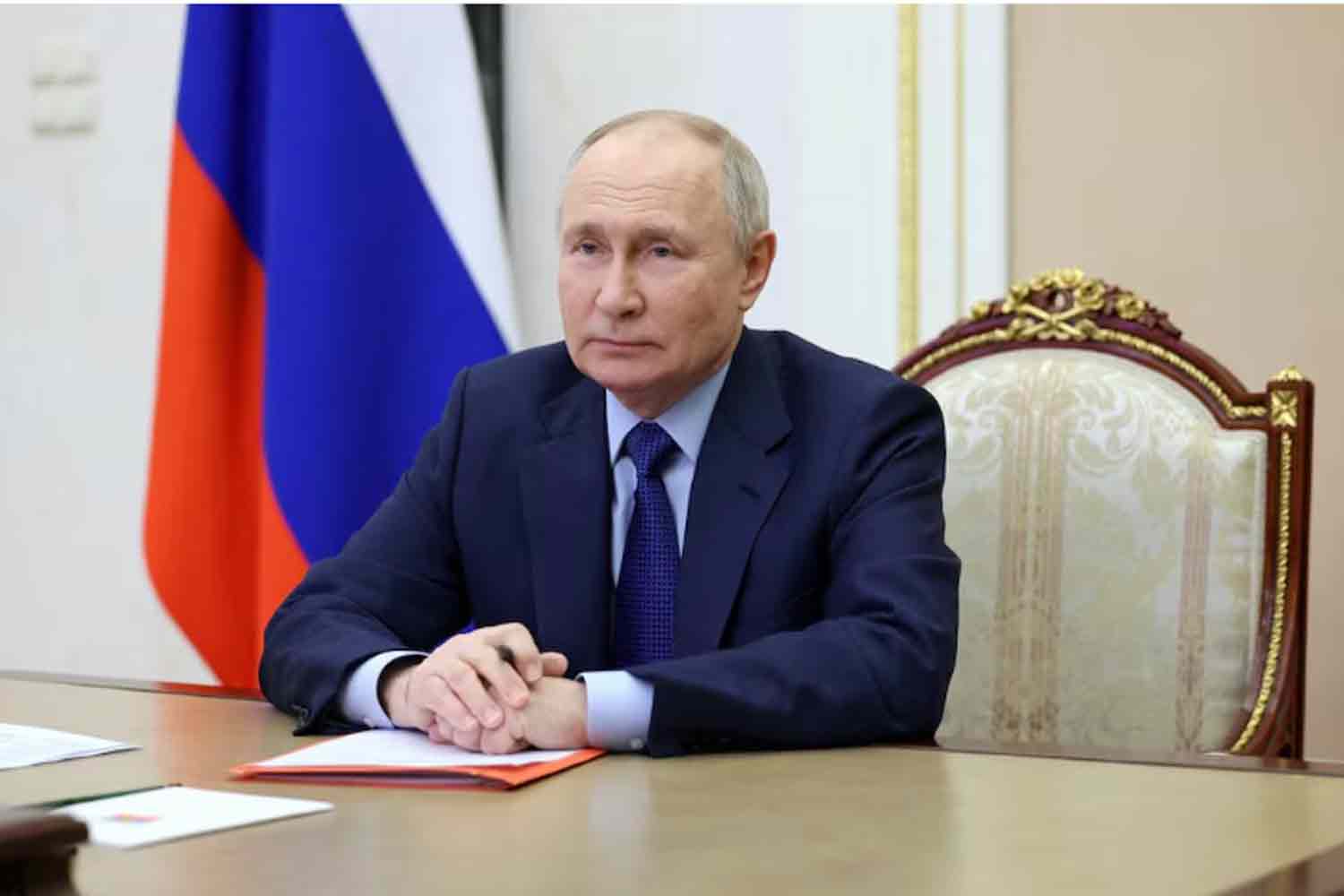
Russian President Vladimir Putin chairs a meeting

When Donald Trump secured the presidency in 2016, celebrations erupted in Moscow.

Fast forward eight years, through two elections and a full-scale invasion of Ukraine, the initial excitement has faded, replaced by a mix of disappointment and a sense of schadenfreude.

While it may be commonly believed that the Kremlin longs for Trump’s return, the truth is that neither of the potential future presidents is likely to fulfill all of Moscow’s desires.

Starting with Trump: since his initial campaign, he has garnered a certain admiration from Moscow. Specifically, Russian President Vladimir Putin appreciates Trump’s evident admiration for him.

“Putin is a short, vain man,” remarks Nina Khrushcheva, a professor at The New School in New York and the great-granddaughter of former Soviet Premier Nikita Khrushchev.

“The Kremlin enjoys that the tall, wealthy Trump is completely in awe of Putin,” she continued. “This dynamic gives Putin an advantage.”

Although Trump’s strongman image and ostentatious persona may not appeal to the more conservative elements in Western Europe, the Russian elite is quite familiar with extravagant displays of wealth and autocratic leadership.

Moreover, Trump’s conspiratorial mindset aligns with a pervasive belief among many Russians, perpetuated by their leaders and media, that ordinary Americans are under the control of a deep state.

The Kremlin’s primary interest in Trump lies in his position on Ukraine. The Republican nominee has vowed to resolve the conflict in a single day, likely by compelling Kyiv to concede territory. His running mate, JD Vance, is a staunch opponent of further aid to Ukraine.

Abbas Gallyamov, a former Kremlin speechwriter, stated, “Putin is in urgent need of a victory. A prolonged conflict that he cannot win undermines his legitimacy.”

However, there are challenges associated with Trump. Moscow experienced this during his initial term when he failed to fulfill his commitments, particularly regarding the improvement of relations with Russia and the lifting of Western sanctions related to the annexation of Crimea and the situation in eastern Ukraine.

Now, nearly eight years later, as Putin’s brief invasion plan extends into its third year, there is skepticism in Moscow that even a pro-Kremlin president could alleviate Washington’s animosity.

Dmitry Medvedev, deputy chairman of Russia’s security council, expressed on Telegram, “The election will not alter anything for Russia, as the candidates embody the bipartisan agreement that our nation must be defeated.”

He dismissed Trump’s statements about ending the conflict and fostering a positive relationship with Russia as “trivialities.”

“He cannot bring an end to the war. Not in a day, not in three days, not in three months. And if he genuinely attempts to do so, he could end up like the new JFK,” Medvedev remarked.

Russia’s Foreign Minister Sergey Lavrov remarked earlier this week that regardless of the election outcome, there is little expectation for a shift in America’s stance towards Russia.

In a notable response, Russian Deputy Foreign Minister Sergei Ryabkov addressed former President Trump’s recent assertion that he was close to achieving a nuclear disarmament agreement with Moscow and Beijing during his first term. Ryabkov firmly stated, “No, this does not correspond to reality.”

Additionally, there is Vice President Kamala Harris, who received a sardonic endorsement from Putin in September. During a panel at the Eastern Economic Forum in Vladivostok, Putin referred to President Joe Biden as “our favorite, if you can call it that,” at an event aimed at promoting investment in Russia’s eastern regions. After Biden exited the race, Putin indicated that Russia would follow the Democratic president’s suggestion to “support” Harris, commenting on her “expressive and infectious laugh,” which drew laughter from the audience.

Gallyamov, a former Kremlin speechwriter, dismissed Putin’s remarks as a typical KGB tactic intended to benefit Trump. However, Krushcheva suggested that there might be some truth in them. She noted that while Trump’s promise of a quick resolution to the Ukraine conflict, potentially granting territory to Moscow, may not align with Putin’s goals, the Russian leader has made the war central to his legacy and will continue it as long as he deems necessary.

Harris could potentially contribute to maintaining a status quo that Moscow perceives as advantageous, especially as Western resolve appears to wane in the face of Russia’s ongoing aggression. As a representative of the U.S. foreign policy establishment, Harris serves as both a counterpoint to Putin and a rationale for his prolonged conflict against what he terms “American hegemony.”

The Kremlin appears to have a vested interest in the upcoming election, regardless of its preferences between the two candidates. U.S. intelligence and technology experts have accused Russia of perpetuating the dissemination of deep-fake videos and other forms of disinformation aimed at swaying the electoral process.

Much of this content seems to target the Democratic side; for instance, one outlandish claim suggested that Harris had killed an endangered rhino in Zambia. However, the overarching goal seems to be to erode public confidence in the electoral process as a whole. Russian state media has characterized the lead-up to the election as a mix of a circus and a battleground.

If the Kremlin were to participate in the voting process, it is highly likely that it would favor chaos, division, and a sense of disillusionment regarding American democracy.

Currently, it appears to have a strong opportunity to achieve this outcome.

Wellington Koo says Taiwan must show the new U.S. president its commitment to self-defense

0

Taiwan must demonstrate its resolve to defend itself regardless of the outcome of the U.S. presidential election on November 5, stated Defence Minister Wellington Koo on Tuesday as the election campaign neared its conclusion.

Republican candidate Donald Trump, who is in a tight race with Democratic Vice President Kamala Harris, has made remarks during his campaign suggesting that Taiwan should contribute financially for its protection and has accused the island of appropriating American semiconductor business.

Taiwan, which operates as a democracy but is regarded by China as part of its territory, has experienced ongoing military pressure from Beijing over the last five years, including four significant rounds of military exercises in the past two years.

Koo emphasized to reporters outside parliament that it is crucial for the next U.S. president to recognize Taiwan’s commitment to self-defense and the significance of Taiwan’s economic security and strategic geopolitical role.

He reiterated the government’s strategy to continually enhance its self-defense capabilities.

“We aim to uphold regional peace and stability in the Taiwan Strait, showcasing Taiwan’s value in terms of economic security and its strategic geopolitical importance, so that the global community can appreciate Taiwan’s critical role,” Koo remarked when asked if he was concerned that a new Trump administration might neglect the island.

An internal security memo from Taiwan, reviewed by Reuters, indicates that China has recently intensified its propaganda efforts, aiming to incite concerns that the island could become a “sacrificial piece” due to potential shifts in U.S. support following the upcoming election.

The memo emphasized that, irrespective of the election results, there is a growing consensus on the importance of supporting Taiwan.

China’s Taiwan Affairs Office, which suggested last week that a Trump presidency could lead to Taiwan being “discarded,” has not yet responded to requests for comment.

Although the United States remains Taiwan’s primary international ally and arms supplier despite the lack of formal diplomatic relations, Taiwan has prioritized the development of its own defense capabilities, including missiles and submarines.

Unlike Japan and South Korea, Taiwan does not have a formal defense agreement with the United States, as Washington ended its previous treaty with Taipei in 1979 when it shifted diplomatic recognition to Beijing.

Nonetheless, some Taiwanese military personnel, including F-16 fighter pilots, receive training in the United States, and the Taiwanese government has acknowledged the presence of a small number of U.S. forces on the island for training purposes.

As the U.S. election nears, Taiwan has observed an increase in Chinese military activities, including long-range air force drills conducted by China in the Pacific, which have passed through airspace to the south of the island. Taiwan enjoyed significant support from the Trump administration between 2017 and 2021, including arms sales, which have continued under President Joe Biden’s administration.

North Korea launched 7 short-range ballistic missiles

0
People watch a TV broadcasting a news report on North Korea firing missiles that flew 400 km after lifting off at around 7:30 a.m. from Sariwon, just south of the capital Pyongyang, at a railway station in Seoul, South Korea, November 5, 2024.

North Korea launched a minimum of seven short-range ballistic missiles on Tuesday from its east coast, as reported by Japan’s defense minister. This action occurred shortly after Pyongyang criticized military exercises conducted by its adversaries and just hours prior to the U.S. election.

Kim Jong Un‘s sister denounced the joint drills involving the United States, Japan, and South Korea in a statement released by the state media outlet KCNA.

According to Japan’s Defence Minister Gen Nakatani, the missiles reached an altitude of 100 km (62 miles) and traveled a distance of 400 km before landing outside Japan’s exclusive economic zone in the ocean.

The missiles were launched around 7:30 a.m. on Tuesday (2230 GMT on Monday) from the area near Sariwon in North Hwanghae Province, as reported by South Korea’s Joint Chiefs of Staff.

In response to the missile launches, the United States is maintaining close consultations with South Korea, Japan, and other regional partners while actively monitoring the situation, according to the U.S. military.

This latest missile launch follows North Korea‘s recent test of a significant new solid-fuel intercontinental ballistic missile known as Hwasong-19, occurring just hours before the commencement of voting in the U.S. presidential election.

Yang Moo-jin, president of the University of North Korean Studies in Seoul, stated, “If the ICBM was intended for the United States, the latest ballistic missiles are directed at South Korea.”

He elaborated, “This is a direct response to the joint air exercises conducted by South Korea, the U.S., and Japan. Indirectly, it serves to showcase their military capabilities just before the U.S. presidential election.” Yang also interpreted this as an attempt to divert global attention from the criticism surrounding North Korea’s troop deployment to Russia.

On Tuesday, North Korean state media KCNA reported that Kim Yo Jong, the influential sister of leader Kim Jong Un, denounced the recent military drills by the U.S., Japan, and South Korea, labeling them as threats that validate North Korea’s nuclear enhancements.

The missile launch followed an unexpected meeting between Russian President Vladimir Putin and North Korea’s foreign minister, Choe Son Hui, on Monday. During this surprise encounter at the Kremlin, the two leaders shook hands for an extended period, raising concerns in the West about the potential involvement of North Korean troops in the Ukraine conflict alongside Russia.

Additionally, on Monday, the U.S. criticized Russia and China at the U.N. Security Council for “shamelessly protecting” North Korea, which has been increasingly violating U.N. sanctions by advancing its ballistic missile, nuclear, and weapons of mass destruction programs.

South Korean Defence Minister Kim Yong-hyun remarked late last month that North Korea is likely to amplify its military presence around the U.S. presidential election period, potentially through intercontinental missile tests or nuclear tests.

Israel has officially notified the UN of its termination of relations with UNRWA

0

Israel has formally informed the United Nations of its decision to terminate the agreement that has governed its relationship with the United Nations Relief and Works Agency for Palestine Refugees in the Near East (UNRWA) since 1967, as stated by the country’s foreign ministry on Monday.

Recently, the Israeli parliament enacted legislation prohibiting UNRWA from operating within Israel and restricting cooperation between Israeli authorities and the agency, which delivers aid and educational services to millions of Palestinians in the occupied West Bank and Gaza.

Israel has consistently criticized UNRWA, which was established following the 1948 war that coincided with the founding of the state of Israel. The country has accused the agency of harboring anti-Israel sentiments and argues that it exacerbates the conflict by keeping Palestinians in a state of perpetual refugee status.

Since the onset of the Gaza conflict in October of the previous year, Israel has also claimed that UNRWA has been significantly infiltrated by Hamas in Gaza, alleging that some of its personnel participated in the October 7 attack on Israel.

The recent legislation has raised concerns among the United Nations and several of Israel’s Western allies, who worry it may exacerbate the already critical humanitarian crisis in Gaza, where Israel has been engaged in conflict with Hamas militants for the past year. The legislation does not specifically address operations in the Palestinian territories or other regions.

Israel’s U.N. Ambassador, Danny Danon, stated that despite the substantial evidence presented to the U.N. regarding Hamas’s infiltration of UNRWA, the organization has failed to take action on this issue.

While the legislation does not explicitly prohibit UNRWA’s activities in the West Bank and Gaza—areas recognized by international law as occupied by Israel—it is expected to significantly hinder its operations in these regions.

This has caused considerable concern among humanitarian organizations and many of Israel’s allies. The Israeli foreign ministry indicated that activities by other international organizations would be increased, and plans would be made to sever ties with UNRWA while enhancing alternatives to its services.

EU and South Korea urge the withdrawal of North Korean forces from Russia’s conflict in Ukraine

0

South Korea and the European Union issued a joint condemnation on Monday regarding North Korea‘s provision of weaponry to Moscow, calling for the withdrawal of North Korean troops deployed to support Russia in its ongoing conflict with Ukraine.

This statement came during the inaugural “Strategic Dialogue” meeting held in Seoul, shortly after concerns were raised by Washington and Seoul about North Korea’s military assistance to Russia.

In their joint declaration, EU foreign policy chief Josep Borrell and South Korean Foreign Minister Cho Tae-yul denounced North Korea’s “illegal arms transfers to the Russian Federation for use in its aggression against Ukraine.”

They called for an immediate cessation of this “illegal military cooperation” and the withdrawal of North Korean forces. Borrell also engaged with South Korean Defence Minister Kim Yong-hyun.

“Russia’s aggression against Ukraine poses an existential threat,” Borrell remarked in a post on X, accompanied by a photo of his handshake with Kim. “The Republic of Korea is uniquely positioned to comprehend this threat. We stand united in our support for Ukraine and I urged them to enhance their efforts.”

The two nations have established a security and defense partnership that encompasses 15 areas, including cyber security and disarmament. In response to a question last week about the possibility of Seoul supplying weapons to Ukraine due to North Korea’s support for Russia, Cho indicated that all potential scenarios are being evaluated.

While South Korea has supplied non-lethal assistance to Ukraine, such as mine clearance equipment, it has declined requests for weaponry.

Seoul anticipates that North Korea will receive military and civilian technology from Moscow as it strives to launch a spy satellite and enhance its missile capabilities. Recently, North Korea demonstrated its military strength by testing a large new solid-fuel intercontinental ballistic missile known as Hwasong-19. U.S. Secretary of State Antony Blinken mentioned last week that Washington expects North Korean troops stationed in Russia’s Kursk region, which has been partially occupied by Ukraine, to soon engage in combat against Ukrainian forces.

During discussions in Moscow on Friday, North Korean Foreign Minister Choe Son Hui expressed her nation’s support for Russia until it secures victory in Ukraine.

A Trump victory could create a ‘buy-the-dip’ opportunity in European defense

0

A victory for Donald Trump in the presidential election is generally perceived as favorable for European defense stocks, particularly due to his indications of reducing U.S. military assistance in the area and pressuring NATO allies to allocate 2% or more of their GDP towards defense expenditures. However, if he were to win and act on his commitments to swiftly conclude the conflict in Ukraine, the defense sector could experience increased volatility.

JPMorgan has recommended that clients take precautions against potential short-term downturns as the November 5 election approaches.

Significance of this situation

The significance of this situation cannot be overstated. Analysts predict that a ceasefire in Ukraine may lead to substantial drops in defense stock prices. However, investors are poised to capitalize on this high-growth sector by acquiring shares at reduced prices. Since Russia’s invasion of Ukraine in 2022, stocks of Germany’s Rheinmetall, Sweden’s Saab, and Italy’s Leonardo have surged by 230-360%. Similarly, France’s Thales and the UK’s BAE Systems have experienced increases of 70% and 100%, respectively, during the same timeframe.

Analysis of the Situation

Citi estimates suggest that the prospect of Washington facilitating peace in Ukraine may lead to an initial decline of as much as 20% in European defense stock prices. The U.S. bank interprets a potential victory for Kamala Harris as a means of maintaining the current situation. Additionally, there is the possibility of increased capital inflows, which could bolster any future market rally. According to Morgan Stanley’s investor positioning data, 72% of global funds currently lack exposure to the European defense sector.

Key Quote

Rob Hansen, a portfolio manager at Vontobel and an investor in Rheinmetall, stated in New York, “The announcement of a ceasefire in Ukraine will likely trigger a significant market pullback. However, that day will present an excellent opportunity to invest in these companies. The defense sector is experiencing sustained structural growth.”

Israel’s attacks on Iran have sparked interest in air-launched ballistic missile technology

0

Israel’s strategic deployment of air-launched ballistic missiles in its airstrikes against Iran is likely to attract attention from other nations considering similar capabilities, particularly as most major powers have opted for cruise missiles and glide bombs instead. The Israel Defense Forces reported that their operation on October 26 successfully targeted Iranian missile production facilities and air defense systems through a series of three coordinated strikes. Analysts noted that satellite imagery indicated the strikes hit structures previously associated with Iran’s nuclear program.

Tehran employs a wide array of anti-aircraft systems to protect these sites, according to Justin Bronk, an expert in airpower and technology at the Royal United Services Institute in London. While cruise missiles are more vulnerable to sophisticated, integrated air defense systems, ballistic missiles present a different challenge. They are typically launched from known locations and have limited maneuverability during flight.

Experts highlight that advanced air-launched ballistic missiles, such as the Rampage developed by Israel Aerospace Industries, circumvent the limitations faced by ground-based ballistic missiles and air-launched cruise missiles, which rely on small wings for extended range and altitude maintenance.

Jeffrey Lewis, director of the East Asia Nonproliferation Program at the James Martin Centre for Nonproliferation Studies at the Middlebury Institute of International Studies in California, stated, “The primary benefit of an air-launched ballistic missile (ALBM) compared to an air-launched cruise missile (ALCM) is its superior speed in overcoming defenses. However, the issue of accuracy appears to have been largely addressed.”

Ground-launched ballistic missiles, which Iran has employed in attacks against Israel this year and which have been utilized by both Ukraine and Russia since the onset of Russia’s invasion in 2022, are prevalent in the military inventories of numerous nations. Cruise missiles are also widely available.

The flexibility of launch points for ALBMs, as they are deployed from aircraft, provides significant advantages for strike planners. Uzi Rubin, a senior researcher at the Jerusalem Institute for Strategy and Security and a key figure in the development of Israel’s missile defense systems, noted, “The benefit of air-launching is that these missiles can be deployed from various directions, making it more challenging to defend against them.”

While these weapons are not impervious to air defense systems—evidenced by the successful interceptions of Russia’s Khinzhal missiles by Lockheed Martin’s Patriot PAC-3 systems in Ukraine—many nations, including the United States and the United Kingdom, explored the potential of ALBMs during the Cold War. Currently, only Israel, Russia, and China are known to actively deploy these systems.

The U.S. has conducted tests on a hypersonic ALBM, the Lockheed Martin AGM-183, but it did not receive funding for the 2025 fiscal year. Given its extensive inventory of cruise missiles and other long-range strike capabilities, the U.S. has shown limited interest in pursuing ALBMs. A U.S. Air Force official, who requested anonymity, indicated that ALBMs are not part of current Air Force operations.

Raytheon’s SM-6 missile, originally designed for air defense, has been adapted for air-to-air and surface-to-surface operations, and has also undergone testing as an air-launched anti-ship weapon, according to a senior U.S. defense technical analyst who requested anonymity due to the sensitive nature of the information. The analyst noted that during tests, the missile successfully hit a small land target simulating the center of mass of a destroyer, although the SM-6 is not officially designated for air-to-ground attacks.

A defense industry executive, speaking on the condition of anonymity due to the delicate nature of the topic, remarked that since air-launched ballistic missiles (ALBMs) combine guidance systems, warheads, and rocket motors, many nations with precision weaponry already possess the capability to develop such systems. “This represents an innovative approach to utilizing a common set of technologies and components, transforming them into a highly effective new weapon that enhances their capabilities and options at a cost-effective price,” the executive stated.

Myanmar’s military leader will make his first visit to China since taking power

0
Myanmar's junta chief Senior General Min Aung Hlaing presides over an army parade on Armed Forces Day in Naypyitaw, Myanmar.

Myanmar’s junta leader, Min Aung Hlaing, is set to visit China this week to participate in regional summits, as reported by state media on Monday. This marks his first trip to the significant neighboring country since he took control following a coup in 2021.

Since the coup, Myanmar has experienced significant turmoil, particularly in regions bordering China, where an armed resistance movement has allied with established ethnic minority militias to gain control over substantial areas from the military regime.

Min Aung Hlaing will take part in the Greater Mekong Subregion summit and the Ayeyawady-Chao Phraya-Mekong Economic Co-operation Strategy (ACMECS) meetings, along with discussions with representatives from Cambodia, Laos, and Vietnam on November 6 and 7 in Kunming, according to MRTV. The report indicated that he will engage in talks with Chinese officials to strengthen bilateral relations and explore opportunities for economic and developmental collaboration across various sectors.

The decline of the Myanmar military, exacerbated by significant advances made by anti-junta forces following a surprise offensive last October, has raised concerns in China. In response, China has restricted access to certain border areas and suspended critical imports to regions controlled by rebels, according to Reuters.

China’s interests in Myanmar are substantial, encompassing vital oil and gas pipelines that traverse the nation and a proposed deep-sea port in the Bay of Bengal. Additionally, Beijing relies on imports of rare earth minerals from Myanmar for its automotive and wind energy industries.

“Whether he is visiting to garner additional support from China or to face increased pressure, the outcome is detrimental for the populace,” stated David Mathieson, an independent analyst monitoring the situation in Myanmar. “China has clearly indicated its backing for the State Administration Council and its electoral transition strategy,” he added, referring to the junta led by Min Aung Hlaing.

The junta initiated a nationwide census last month to facilitate an election scheduled for next year, despite lacking control over significant portions of the country and having dissolved numerous political parties. According to Myanmar state media, Beijing has pledged technical assistance and support to the junta for both the census and the upcoming election, following a meeting between Chinese Foreign Minister Wang Yi and Min Aung Hlaing in Naypyidaw,

Myanmar’s capital. This meeting has been interpreted by some critics as an endorsement of the junta by Beijing, leading activists in the conflict-ridden nation to express their frustration with China’s position, viewing it as an obstacle to their pursuit of democracy.

Indonesia and Russia hold joint military training exercises in Java Sea

0

Naval forces from Indonesia and Russia commenced their inaugural joint military training exercises in the Java Sea on Monday, according to the Indonesian navy. Analysts interpret this development as a reflection of Indonesia’s openness to establishing relationships with various nations.

This collaborative effort aligns with the recent commitment made by Indonesia’s newly inaugurated President Prabowo Subianto to strengthen defense ties with Russia, as part of his broader strategy to engage with multiple countries while adhering to Indonesia’s longstanding non-alignment foreign policy.

The exercises are scheduled to occur in the Java Sea, close to Surabaya, east of Jakarta, from November 4 to 8, following the arrival of four Russian warships on Sunday, as reported by navy spokesperson I Made Wira Hady Arsanta Wardhana. “These joint drills represent the realization of an international partnership between the Indonesian and Russian navies, which has consistently been positive,” Wardhana stated, without disclosing additional specifics regarding the nature of the exercises.

A representative from the Russian delegation stated that the purpose of the exercise was to facilitate knowledge exchange between the two navies. The Russian embassy in Jakarta has not yet responded to a request for comment. Sergey Tolchenov, Russia’s ambassador to Indonesia, mentioned in a recent interview with the Russian state news agency TASS that these drills represent the “first large-scale naval exercises between Russia and Indonesia.”

Analysts suggest that these exercises indicate Indonesia’s increasing openness to forming relationships with various nations. “This could imply that Indonesia is eager to collaborate with everyone,” noted Yohanes Sulaiman, a professor of international relations. He also pointed out that there are still uncertainties regarding Prabowo’s overarching foreign policy strategy, suggesting that the drills might serve as a demonstration of Russia’s continued alliances. Prabowo referred to Russia as his “great friend” during his visit to Moscow in July.

Indonesia has conducted military exercises in collaboration with various nations. Since 2006, it has organized the annual “Super Garuda Shield” drills alongside the United States, with the 2024 iteration involving more than 4,500 personnel and spanning a duration of two weeks.

Putin is unlikely to negotiate, regardless of the U.S. election outcome

0
Russian President Vladimir Putin chairs a meeting

Russia’s Putin is closely monitoring U.S. policy developments.

This was the message conveyed by Ukrainian President Volodymyr Zelensky during a press conference in Kyiv last week when asked about Moscow’s readiness to engage in negotiations. He stated, “It hinges on the elections in the United States.”

Should Kamala Harris be elected, she is anticipated to largely uphold the Biden administration’s policies, which have been favorable towards Ukraine, despite some areas of contention, such as the deployment of Western weaponry for strikes deep within Russian territory.

In stark contrast, Donald Trump has indicated that he would withdraw support for Ukraine’s military efforts, asserting that he could resolve the conflict “in one day.” The peace plan proposed by his vice-presidential candidate, JD Vance, bears a striking resemblance to the demands put forth by Putin.

American foreign policy stands at a pivotal moment, yet analysts caution that this may not lead to significant advancements in peace talks.

This is largely due to the absence of any indications that Russia is prepared to engage in negotiations, irrespective of the outcome of the presidential election.

Thomas Graham, a Russian foreign policy expert and distinguished fellow at the Council on Foreign Relations, stated, “It remains uncertain what [Trump] believes he can achieve or what leverage he possesses at this moment, but I doubt it will be a swift process.”

Experts suggest that a decrease in U.S. aid could lead to significant shifts on the battlefield.

Regardless of who becomes president, Putin is likely to take advantage of what he perceives as political instability in the United States, as well as “cracks in Western unity,” Graham informed CNN.

These fractures might manifest through a Trump administration’s potential reduction of U.S. aid and a diminished role in NATO, or through a divided U.S. Congress, among other elements. Additionally, financial strains on European allies and divisions within NATO, particularly with pro-Russian governments in countries like Hungary and Slovakia, contribute to this situation.

Graham further noted, “Without Western unity and a clear demonstration that the West and Ukraine share a common vision for their objectives, Putin has no incentive to alter his actions in Ukraine at this time.”

Experts contend that the complexity of the war extends beyond a straightforward negotiation between Moscow and Kyiv, framing it as a larger conflict between Russia and the West.

According to John Lough, an associate fellow in the Russia and Eurasia Program at Chatham House, “For Putin, Ukraine serves merely as a tool to achieve the broader goal of diminishing U.S. influence in global affairs.”

Lough added that when Trump’s advisors clarify the situation, particularly regarding China’s crucial role in supporting Russia’s ongoing military efforts, Trump may find himself less inclined to support Putin. He cautioned that any concessions made could be interpreted by Beijing as a sign of U.S. weakness, which contradicts Trump’s assertive stance on the threat posed by China.

Attritional warfare is benefiting Putin

Ukraine is currently outnumbered, and Putin seems willing to endure significant casualties. NATO reports indicate that over 600,000 Russian soldiers have been killed or injured.

“The enemy is reinforcing its forces to push the Ukrainian Armed Forces out of the Kursk region at any cost,” stated Oleh Shiryaev, commander of the 225th Separate Assault Battalion engaged in Ukraine’s unexpected incursion across the Russian border. “Russia’s primary advantage in this conflict is its troop numbers—these are substantial assaults and offensive maneuvers. They are executing this strategy across all sections of the frontline.”

In the Zaporizhzhia region, another commander from the Security Service of Ukraine remarked, “By deploying a large number of personnel as expendable resources, they aim to establish a presence in the contested areas of the front.” The officer, who requested anonymity and goes by the call sign “Bankir,” meaning accountant, informed CNN that a sophisticated network of fortifications in Zaporizhzhia is aiding Ukraine in defending its positions.

However, Kyiv recognizes that this alone is insufficient. On Wednesday, Ukraine’s Parliament voted to prolong martial law and the draft for an additional 90 days, with plans to mobilize an extra 160,000 individuals, as announced by the National Security Council.

Ukrainian servicemen interviewed by CNN highlighted that Russia possesses several advantages, including a vast array of drones, high-cost aircraft, and a greater number of vehicles, which facilitate operations during the challenging muddy conditions of fall and winter.

According to these servicemen, Ukraine requires additional support for both its infantry and its supply of equipment.

“We have ammunition, but as our artillery units often remind us, it is never sufficient,” stated Vitaliy Milovidov, spokesman for the 15th Brigade National Guard, who is currently engaged in combat in the eastern Donetsk region, where Russian forces are steadily advancing.

Should a potential Trump administration decide to reduce US aid, Ukraine would find itself increasingly outmatched.

In response, European countries are working urgently to boost ammunition production for Ukraine to mitigate any setbacks that might arise from a decrease in US support.

However, even if US policy remains consistent, it seems that Kyiv’s Western allies are not prepared to provide the level of resources necessary for significant advancements on the battlefield.

Chatham House’s Lough expressed, “I suspect this situation will persist, potentially at a diminished intensity, but over an extended period. A Harris administration would certainly not abandon the Ukrainians; however, it would significantly challenge their determination and willingness to sustain this protracted conflict.”

This is why Putin’s approach seems designed to undermine the morale of the Ukrainian populace.

Russia has consistently targeted civilians and civilian infrastructure, severely damaging Ukraine’s energy grid. This has intensified the hardships faced by ordinary Ukrainians, who are now confronted with a winter lacking adequate heating and water.

Experts indicate that while the Ukrainian population is undoubtedly fatigued, they do not seem inclined to capitulate. Following the horrific mass killings in Bucha and Mariupol, the cruel treatment of Ukrainian prisoners in Russian custody, and the forced deportation of Ukrainian children, they are acutely aware of the harsh realities of Russian occupation.

Meanwhile, Zelensky continues to seek support from both political parties. He remarked on Thursday that if Trump aims to compel Ukraine to concede everything for a deal with Russia, he believes that outcome is unattainable.

Australia terminated a multi-billion dollar military satellite project with Lockheed Martin

0

Australia has terminated a multi-billion dollar military satellite initiative with Lockheed Martin, as announced by the Department of Defence on Monday. The military will now redirect its efforts towards developing a multi-orbit system.

Last year, Lockheed Martin Australia was selected as the preferred bidder for the Geostationary Earth Orbit (GEO) satellite communications system, which was intended to establish Australia’s first sovereign-controlled satellite communication network across the Indo-Pacific region.

The Department of Defence confirmed the cancellation of the single orbit satellite project with Lockheed Martin in its statement. It noted that due to advancements in space technologies and the changing landscape of threats in space since the project’s inception, a single orbit GEO-based satellite communications system would not align with strategic priorities. Consequently, Australia will focus on enhancing its multi-orbit capabilities to bolster the resilience of the Australian Defence Force.

In a recent radio interview with the Australian Broadcasting Corporation, Prime Minister Anthony Albanese stated that although Australia’s defence budget is on the rise, his administration is focusing on prioritizing its acquisitions.

When the Lockheed Martin project was unveiled last year, officials described it as a “multi-billion dollar” agreement; however, the Defence statement released on Monday did not specify the value of the cancelled project.

Orban says Europe must reconsider its support for Ukraine if Donald Trump is re-elected

0

Hungarian Prime Minister Viktor Orban stated on Sunday that Europe must reconsider its support for Ukraine if Donald Trump is re-elected as president of the United States, emphasizing that the continent cannot shoulder the burdens of the war independently.

Orban, who is against military assistance to Ukraine, believes that Trump aligns with his perspective and would pursue a peace agreement for Ukraine. He expressed his support for Trump, the Republican candidate, to defeat Democratic candidate Kamala Harris in the upcoming U.S. election.

“We in Europe must understand that if America elects a pro-peace president, which I firmly believe is possible based on the current trends, then Europe cannot continue to adopt a pro-war stance,” Orban remarked.

He noted that the situation in Ukraine will be a key topic during the upcoming meetings of European leaders in Budapest, which will include a session of the European Political Community and a more informal gathering of EU leaders.

Europe cannot shoulder the weight of the conflict independently, and should the United States pivot towards peace, we too must adjust our approach, which will be the focus of our discussions in Budapest, Orban stated.

There is growing anxiety in Europe regarding how the results of the U.S. election might influence the situation in Ukraine and the overall security of the continent.

Orban’s close relationship with Russia and his resistance to providing support for Ukraine have drawn criticism from Brussels.

In July, Hungary’s foreign minister, Peter Szijjarto, expressed that the Hungarian government views Trump as a potential “opportunity for peace” in Ukraine.

Orban mentioned in July that his team was collaborating with Trump’s advisors on family and migration policies. On Thursday, he reached out to Trump to extend his best wishes ahead of the upcoming election.

Taiwan sees rising Chinese military activity as the US election nears

0

Taiwan’s defense ministry reported on Sunday that it had identified 35 Chinese military aircraft, comprising fighters and bombers, heading south towards the island as part of exercises in the Pacific. This marks the second consecutive day of such sightings.

China regards Taiwan, which operates under a democratic government, as part of its territory, despite strong opposition from Taipei. The Chinese military frequently conducts operations in the air and waters surrounding the island to assert its sovereignty claims.

China’s defense ministry did not provide a response regarding these missions, which come just days before the U.S. presidential election on Tuesday. The United States is legally obligated to supply Taiwan with defensive capabilities, and recent arms sales, including a $2 billion missile system announced last month, have provoked anger from Beijing. According to Taiwan’s defense ministry, as of 9 a.m. (0100 GMT) on Sunday, it had detected 37 Chinese military aircraft, including J-16 fighters, nuclear-capable H-6 bombers, and drones.

A total of 35 aircraft were reported to have flown to Taiwan’s southwest, south, and southeast regions, entering the Western Pacific for long-range training exercises, according to the ministry. The ministry also indicated that it had deployed its own forces to monitor the situation.

On Saturday, the ministry announced that China had conducted another “joint combat readiness patrol” involving warships and aircraft in proximity to Taiwan.

Last month, China conducted extensive military exercises around Taiwan, which it characterized as a warning against “separatist actions,” prompting criticism from both the Taiwanese and U.S. governments.

Beijing has expressed strong disapproval of Taiwan President Lai Ching-te, who assumed office in May, labeling him a “separatist.” Lai maintains that only the people of Taiwan have the authority to determine their future and has consistently proposed discussions with Beijing, only to be met with rejection.

United States to deploy B-52 bombers, destroyers to the Middle East

0
B-52 Stratofortress

The United States announced on Friday its plans to deploy B-52 bombers, fighter jets, refueling aircraft, and Navy destroyers to the Middle East as part of a strategic realignment of military resources, coinciding with the impending departure of the Abraham Lincoln carrier strike group from the region.

According to a Pentagon statement, these deployments are expected to occur over the coming months and highlight the adaptability of U.S. military operations globally.

“Should Iran, its allies, or its proxies take this opportunity to target American personnel or interests in the region, the United States will take all necessary actions to protect our people,” stated Pentagon spokesperson Air Force Major General Patrick Ryder.

Over the past year, the U.S. has maintained as many as two aircraft carriers in the Middle East amid escalating tensions following the onset of the Israel-Hamas conflict in October 2023.

The withdrawal of the Lincoln will result in a temporary gap in aircraft carrier presence until another is deployed to the region. This latest adjustment in U.S. military forces comes in the wake of direct confrontations in October between Israel and Iran. Israel is currently engaged in conflict with Iran-backed Hamas in Gaza and Hezbollah in Lebanon, and has conducted strikes in Yemen in response to attacks from Iran-aligned Houthi fighters.

The United States has committed to supporting Israel against potential attacks and ensuring the safety of U.S. forces in the Middle East, who have faced assaults from Iran-backed groups in Syria, Iraq, Jordan, and off the coast of Yemen.

Israel’s military claims its strategic goals in Lebanon and Gaza are met; will Netanyahu agree to a ceasefire?

0
A handout image released on October 3, 2024 by the Israeli army says to show members of the Israeli army taking part in an operation in southern Lebanon.

Israel’s military leaders are increasingly indicating that the nation has reached its military objectives in Lebanon and Gaza, suggesting it is now time for political negotiations to take place.

This development coincides with statements from Lebanon’s prime minister, who has indicated that a ceasefire between Hezbollah and Israel may be on the horizon. Additionally, both candidates for the upcoming American presidency have expressed their desire to avoid having the conflicts in Gaza and Lebanon dominate their agendas upon taking office.

During a meeting with officers in northern Gaza, where one of the military’s most intense operations is underway since last year’s invasion, the Chief of the General Staff, Herzi Halevi, made a notable suggestion that the military operations in both regions should come to a close. He remarked, “In the north, there’s a possibility of reaching a sharp conclusion,” referring to the conflict with Hezbollah in Lebanon. Regarding Gaza, he noted, “if we take out the northern Gaza Brigade commander, it’s another collapse…. I don’t know what we’ll encounter tomorrow, but this pressure brings us closer to more achievements.”

The definition of what those achievements should entail remains a topic of significant debate.

Israeli Prime Minister Benjamin Netanyahu has consistently asserted his commitment to achieving “absolute victory.” However, his defense minister and long-time political rival, Yoav Gallant, has expressed skepticism regarding this objective. In August, during a private meeting of a parliamentary committee, he described the notion of “absolute victory” in Gaza as “nonsense,” as reported by Israeli media.

Gallant’s critical perspective on Netanyahu’s war aims was formalized earlier this week when he allegedly sent a confidential memo to the prime minister and his cabinet, indicating that the war had deviated from its intended path.

He stated, “The current situation in which we operate, without a valid compass and without updated war objectives, undermines the management of the campaign and cabinet decisions,” according to Israel’s Channel 13.

In his memo, Gallant emphasized that Israel should focus on securing the release of remaining hostages, eliminating any military threats from Hamas, and fostering civilian governance. This approach significantly contrasts with the current, more ambitious goal of dismantling Hamas’ military and governance structures.

CNN reached out to the Israeli defense ministry for comments regarding the memo, but a spokesperson for the prime minister chose not to respond.

Lebanon’s caretaker Prime Minister Najib Mikati expressed optimism on Wednesday regarding the possibility of a ceasefire between Hezbollah and Israel, suggesting it could be reached “within the next few hours or days.” This statement followed his discussions with US envoy Amos Hochstein, who arrived in the region on Thursday.

For the past month, Israel has conducted an extensive bombing campaign across Lebanon, resulting in the death of Hezbollah’s elusive leader, Hassan Nasrallah. In his remarks, Mikati noted that Hezbollah appears to be shifting its stance, no longer insisting that its conflict with Israel must end only after the situation in Gaza is resolved. This change could facilitate a ceasefire even while the Gaza conflict continues.

A source familiar with the Israeli government’s perspective told CNN, “There is currently a desire to exit the war in Lebanon while we are still in a favorable position.”

Israeli Defense Minister Yoav Gallant stated that both Hamas and Hezbollah have been rendered ineffective as Iranian proxies. “These two organizations, Hamas and Hezbollah, which were developed over the years as a long arm against the State of Israel, are no longer a viable tool for Iran,” Gallant remarked during a memorial service on Sunday. He emphasized the importance of fulfilling moral obligations to bring captives home, acknowledging the difficult compromises that may be necessary.

Netanyahu has maintained a resolute stance. As the Knesset, Israel’s parliament, reconvened this week, the prime minister reiterated his ambitious objectives, suggesting that he is not inclined to reach a resolution in the near future: “The absolute victory is an orderly and consistent work plan that we fulfill step by step,” he stated.

At the same time, indirect negotiations between Israel and Hamas are taking place in Qatar for the first time in two months. Netanyahu’s office announced on Monday that if a limited proposal—such as a brief ceasefire in exchange for the release of hostages—were presented, “the Prime Minister would accept it on the spot.” However, a source familiar with the discussions informed CNN that Netanyahu remains unwilling to provide any definitive commitments toward a larger agreement to conclude the conflict.

According to another official acquainted with the negotiations, “The most important war goal has not been achieved, which is bringing the hostages home. Gaza will not end until the hostages are home.”

Russia has questioned the UN on why North Korea shouldn’t aid them if the West is backing Ukraine

0
The United Nations Security Council meets on the escalation in fighting in Lebanon between Israel and Hezbollah during the United Nations General Assembly at U.N. headquarters in New York.

Russia’s representative to the United Nations raised concerns on Wednesday regarding the lack of support from its allies, such as North Korea, in its conflict with Ukraine, especially in light of Western nations asserting their right to assist Kyiv.

During a Security Council meeting, Vassily Nebenzia encountered strong opposition from representatives of the United States, Britain, South Korea, Ukraine, and others, who accused Russia of breaching U.N. resolutions and the foundational U.N. Charter by deploying troops from North Korea (DPRK) to aid its efforts.

“Supporting an act of aggression that fundamentally contravenes the principles of the U.N. Charter is unlawful,” stated South Korea’s U.N. Ambassador Joonkook Hwang. “Any actions related to the DPRK’s troop deployment to Russia constitute clear violations of several U.N. Security Council Resolutions.”

According to U.S. Defense Secretary Lloyd Austin, approximately 10,000 North Korean troops are already stationed in eastern Russia, and it is anticipated that they will be utilized in combat operations in Russia’s Kursk region, which borders Ukraine.

Nebenzia stated that Russia’s military cooperation with North Korea does not breach international law. Russia has not refuted the presence of North Korean forces in the conflict it has been conducting in Ukraine since February 2022.

“Even if all the claims made by our Western counterparts regarding the collaboration between Russia and North Korea are accurate, why do the United States and its allies insist on the flawed notion that they have the right to support the Zelenskiy administration while denying similar rights to Russian allies?” Nebenzia remarked.

In response, Ukraine’s U.N. Ambassador Sergiy Kyslytsya asserted, “None of the nations providing aid to Ukraine are subject to Security Council sanctions.” He further stated, “Accepting support from North Korea, which is fully sanctioned, constitutes a blatant violation of the U.N. Charter.

The deployment of DPRK troops to assist Russia’s aggressive actions against Ukraine is a clear infringement of international law.” North Korea has been under U.N. Security Council sanctions since 2006, with these measures being progressively intensified over the years to prevent the advancement of its nuclear weapons and ballistic missile programs.

North Korea has not confirmed the deployment of troops to Russia, but stated that any such action would align with international law.

North Korea’s U.N. Ambassador Song Kim informed the council, “If Russia’s sovereignty and security are threatened by ongoing aggressive actions from the United States and the West, and if it is deemed necessary to respond, we will make an appropriate decision.”

He added, “Pyongyang and Moscow are in close communication regarding mutual security and the evolving situation.”

In contrast, U.S. Deputy Ambassador Robert Wood issued a warning to North Korean leader Kim Jong Un, stating, “If DPRK troops were to enter Ukraine in support of Russia, they would undoubtedly return in body bags. I strongly advise Chairman Kim to reconsider engaging in such reckless and perilous actions.”