Thursday, April 9, 2026
Home Blog Page 22

After Venezuela Shock, Latin America Reassesses U.S. Power and Its Political Future

0

The dramatic U.S. action in Venezuela has triggered one of the most profound political reckonings in Latin America in decades. With the removal of Venezuelan President Nicolás Maduro, Washington has signaled a return to a more forceful, interventionist posture—one that many governments across the hemisphere believed belonged to the past.

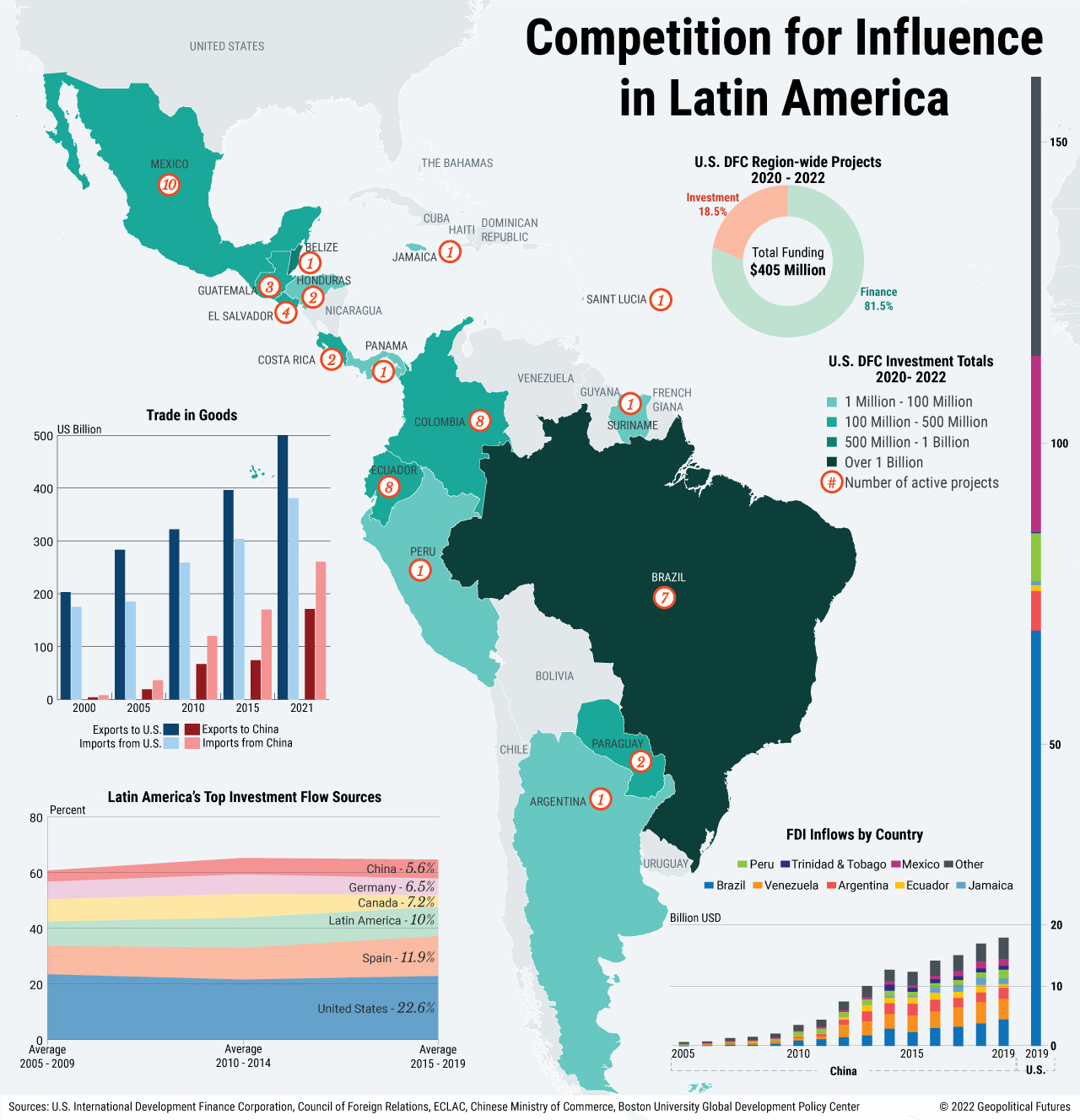
For Latin America, the event is not just about Venezuela. It has reopened old historical memories, reshaped diplomatic calculations, and injected a sense of uncertainty into regional politics, particularly regarding the future role of the United States under President Donald Trump.
Image

The Immediate Political Mood: Shock, Silence, and Unease

Across Latin America, the initial reaction to the Venezuela operation was marked less by celebration and more by caution. Even governments that have long opposed Maduro refrained from openly endorsing the U.S. action. The prevailing mood among political elites has been one of strategic silence, reflecting concern about precedent rather than sympathy for Caracas.

In countries such as Colombia, Brazil, Chile, and Mexico, officials emphasized sovereignty, non-intervention, and regional stability. Colombian President Gustavo Petro, while critical of Maduro in the past, warned against unilateral actions that could destabilize the continent. Mexico reiterated its traditional doctrine of non-intervention, while Brazil called for diplomatic mechanisms to guide any political transition in Venezuela.

Public opinion across the region is deeply divided. Some sectors, frustrated with authoritarianism and economic collapse in Venezuela, quietly welcomed Maduro’s removal. Others, shaped by decades of U.S. interventions, viewed the action as a dangerous revival of imperial politics.

The U.S. Role: From Partner to Enforcer?

For much of the 21st century, the United States publicly emphasized partnership, multilateralism, and democracy promotion in Latin America. The Venezuela operation, however, has revived an older image of Washington as a regional enforcer willing to act unilaterally when its security or strategic interests are threatened.

The Trump administration framed the move as part of a broader campaign against drug trafficking and “narco-states,” arguing that Venezuela had become a hub for transnational crime. This framing has since expanded to include sharp warnings to other governments, notably Colombia, signaling that Washington may increasingly link domestic drug production and security issues to foreign policy pressure.

For many Latin American leaders, this approach blurs the line between legitimate security cooperation and coercive diplomacy.

Regional Reactions: Between Fear and Hedging

Governments

Most governments are now recalibrating their positions. Rather than openly confronting Washington, many are opting for hedging strategies:

  • Strengthening regional forums to manage crises internally
  • Diversifying diplomatic and economic ties beyond the U.S.
  • Avoiding rhetoric that could invite direct confrontation

Even long-standing U.S. partners are quietly reassessing the risks of overdependence.

Societies

Among the public, the Venezuela action has reignited debates about sovereignty, democracy, and external influence. Younger generations, less tied to Cold War narratives, are split—some support decisive action against authoritarian regimes, while others fear a cycle of instability and foreign domination.

Long-Term Effects on Latin American Politics

1. Revival of Sovereignty Politics

Expect a renewed emphasis on national sovereignty in political discourse. Leaders across the ideological spectrum are likely to frame domestic legitimacy around resistance to external pressure, especially from Washington.

2. Fragmentation of the Left

The Latin American left is now more divided than at any point in recent memory. While some progressive leaders distance themselves from Maduro, they are equally unwilling to endorse U.S. intervention. This internal tension could reshape left-wing coalitions and electoral strategies.

3. Reduced Trust in U.S. Guarantees

Even allies may question whether U.S. support comes with unpredictable costs. This could reduce cooperation on sensitive issues such as security, intelligence sharing, and migration over the long term.

4. Greater Space for Extra-Regional Actors

China, Russia, and other external powers may benefit indirectly. As Latin American states seek diplomatic and economic balance, they may deepen ties with non-Western partners—not out of ideology, but as insurance against unilateral pressure.

Strategic Analysis: A Turning Point, Not an Isolated Event

The Venezuela operation should be understood as a turning point rather than a single episode. It signals a U.S. willingness to reassert dominance in the Western Hemisphere at a time of global competition and domestic political polarization.

For Washington, the risk is clear: short-term tactical gains may produce long-term strategic losses if trust erodes across the region. For Latin America, the challenge lies in navigating between confronting authoritarianism and preserving autonomy.

The region’s political mood today is defined by uncertainty—an uneasy awareness that the rules of engagement with the United States may have fundamentally changed.

After Venezuela Strike, Trump Targets Colombia With Cocaine Accusations and Warning to President Petro

0

U.S. President Donald Trump has escalated tensions with Colombia after issuing a blunt warning to Colombian President Gustavo Petro, accusing Colombia of producing cocaine that is being trafficked into the United States.

Speaking to reporters in remarks that quickly reverberated across Latin America, Trump said Petro “better watch his ass,” doubling down on claims that cocaine production in Colombia continues unabated. The comments came just days after Washington’s dramatic action in Venezuela, where the U.S. announced the capture and removal of President Nicolás Maduro, an operation the Trump administration justified by citing alleged narco-terrorism links.

Fact Check: What Is Known

Trump’s statement is authentic and has been reported by multiple international outlets. However, while Colombia is widely recognized as the world’s largest producer of cocaine, there is no publicly available evidence that the Colombian state or President Petro personally oversees or directs cocaine production, as Trump’s remarks implied.

Colombia’s cocaine economy is primarily driven by non-state criminal organizations, including dissident guerrilla groups and transnational cartels. The Colombian government maintains that it continues counter-narcotics operations, even as Petro has criticized the decades-long U.S.-led “war on drugs” as ineffective.

Why Venezuela Matters

The warning to Colombia cannot be separated from the Venezuela context. The Trump administration has repeatedly framed left-wing governments in the region as complicit in drug trafficking. In Venezuela, U.S. officials have long accused elements of the state of facilitating cocaine transit routes, allegations Maduro has consistently denied.

With Maduro removed, Washington’s rhetoric has widened to include neighboring governments seen as politically aligned with Caracas. Colombia and Venezuela share a long, porous border that has historically been used by armed groups and traffickers, making Bogotá a central player in any regional anti-drug strategy.

Potential Scenarios Ahead

1. Diplomatic Escalation:
Trump’s language risks straining U.S.–Colombia relations, historically one of Washington’s closest partnerships in Latin America. Bogotá may respond by hardening its diplomatic tone or seeking regional support against what it views as U.S. overreach.

2. Policy Pressure on Bogotá:
Washington could increase pressure through aid conditionality, sanctions, or public criticism, demanding tougher coca-eradication and interdiction measures.

3. Regional Realignment:
If tensions deepen, Colombia could look to diversify its international partnerships, strengthening ties with regional blocs or extra-regional powers to balance U.S. pressure.

4. Security Cooperation — With Limits:
Despite harsh rhetoric, both countries may ultimately preserve intelligence and counter-narcotics cooperation, recognizing their mutual interest in limiting cartel power and cross-border crime.

Analysis

Trump’s warning reflects a broader shift toward coercive diplomacy, where drug trafficking allegations are used not only as a law-enforcement issue but as a geopolitical tool. While Colombia’s cocaine production remains a serious challenge, conflating criminal networks with elected governments risks undermining cooperation and regional stability.

For Latin America, the message is clear: Washington’s post-Venezuela posture is more confrontational, and leaders perceived as resisting U.S. security priorities may face public and political pressure.

Trump Says US Will Take Control of Venezuela’s Oil, Invite American Firms to Revive Industry

0

US President Donald Trump said on Saturday that Washington will take control of Venezuela’s vast oil reserves and invite major American energy companies to invest billions of dollars to rebuild the country’s long-neglected oil industry.

Speaking at a news conference at his Mar-a-Lago residence in Florida, Trump said the United States would temporarily operate Venezuela’s government and energy sector, describing the country’s oil infrastructure as “badly broken” after years of mismanagement.

“We’re going to have our very large United States oil companies — the biggest anywhere in the world — go in, spend billions of dollars, fix the oil infrastructure and start making money for the country,” Trump said.

Venezuela holds an estimated 303 billion barrels of proven crude reserves, roughly one-fifth of the world’s total, according to the U.S. Energy Information Administration. Despite this enormous resource base, the country currently produces only about 1 million barrels per day, accounting for less than 1% of global oil output.

Production has collapsed sharply over the past decade. Output is less than half of what Venezuela produced before former president Nicolás Maduro took office in 2013 and less than a third of the roughly 3.5 million barrels per day pumped before the socialist government consolidated power.

Analysts say international sanctions, economic collapse, chronic underinvestment and years of poor maintenance have crippled the sector. Venezuela’s state-owned oil company PDVSA has acknowledged that much of its pipeline network has not been modernized in decades, estimating that restoring production to peak levels would require at least $58 billion in investment.

“For oil markets, this has the potential to be a historic development,” said Phil Flynn, senior market analyst at the Price Futures Group. “The Maduro government — and before it, Hugo Chávez — effectively ransacked Venezuela’s oil industry.”

Any US-led revival, however, is expected to take years. Even if international access were fully restored immediately, experts caution that Venezuela lacks the infrastructure, skilled workforce and capital needed for a rapid turnaround.

Oil markets were largely unmoved over the weekend, with futures closed and prices already under pressure from oversupply concerns. OPEC has increased production, while global demand has softened amid persistent inflation and slower economic growth.

US crude briefly rose above $60 per barrel earlier this year when the Trump administration began seizing oil from Venezuelan vessels, but prices have since slipped back to around $57. Analysts say Venezuela’s limited current output means any short-term impact on prices is likely to be modest.

“Psychologically, this could give oil prices a small boost,” Flynn said, “but Venezuela’s oil can be replaced by a combination of global producers.”

Venezuela’s crude is primarily heavy, sour oil, which requires specialized equipment and advanced refining capacity. While this type of oil is harder to process, it is particularly valuable for producing diesel, asphalt and industrial fuels—products that remain in tight global supply.

The United States, the world’s largest oil producer, mostly pumps light, sweet crude, which is better suited for gasoline production. Many US refineries, however, were originally designed to process Venezuelan heavy crude and operate more efficiently when supplied with it.

“If US companies are allowed to return and rebuild the Venezuelan oil sector, this could eventually be a game-changer for global energy markets,” Flynn said, while cautioning that such benefits would likely materialize only over the long term.

Bob McNally, president of the Washington-based Rapidan Energy Group, said any price impact would likely be “modest” unless the situation in Venezuela deteriorates into widespread unrest.

“The key question is how quickly a pro-US Venezuela could realistically increase production,” McNally said. “Perception may race ahead of reality. Venezuela could be a huge deal—but not for five to ten years.”

Trump, meanwhile, dismissed Venezuela’s current oil industry as “a total bust,” arguing that American investment could unlock its vast potential if stability is maintained and reconstruction proceeds as planned.

Shifting Sands in the Gulf: Yemen, Saudi Strategy, and the New Middle East Power Balance

0
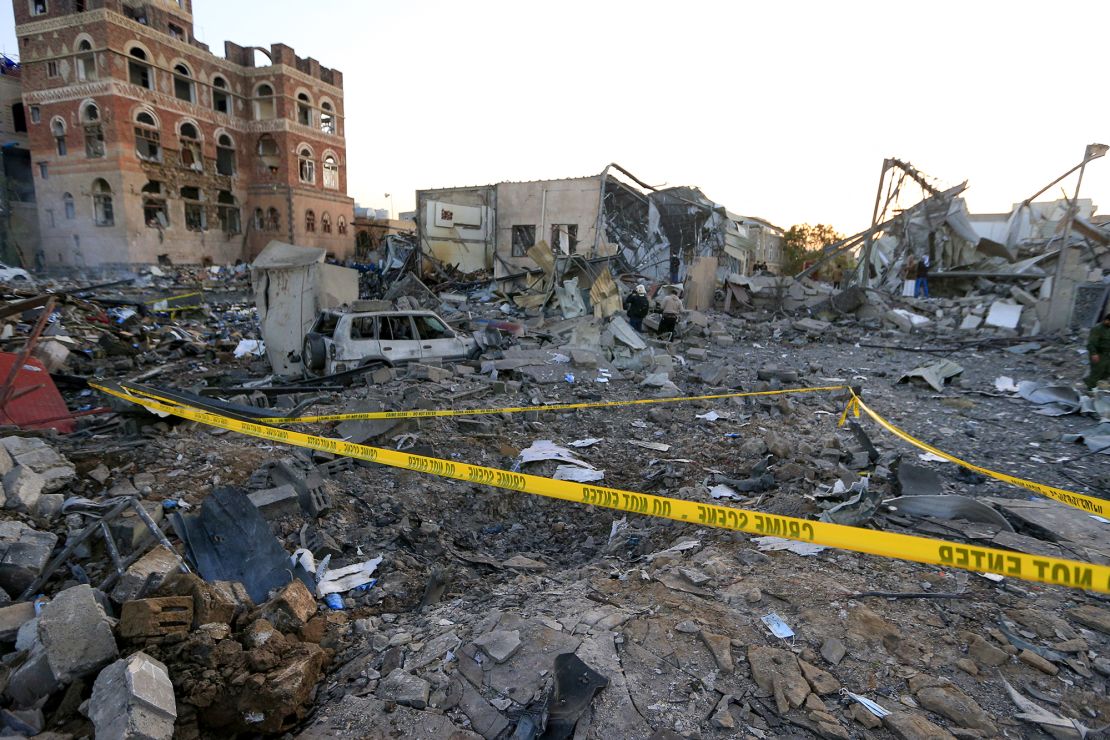
Smoke rises after Israeli strikes near Sanaa airport, in Sanaa, Yemen.

Over the past few years, the Middle East has witnessed profound shifts in its economic, political, and security dynamics. The gradual weakening of American influence, coupled with China’s expanding diplomatic and economic footprint, has altered long-standing power equations across the Gulf. Most notably, the restoration of diplomatic ties between Saudi Arabia and Iran—and Saudi Arabia’s evolving defence cooperation with Pakistan—have reshaped the region’s geopolitical landscape, triggering new alignments and recalibrations from Yemen to the Red Sea.

These changes came sharply into focus on Tuesday when the Saudi Air Force targeted two vessels carrying military equipment en route from the Emirati port of Fujairah to Mukalla in southern Yemen. According to coalition spokesperson Major General Turki al-Maliki, the shipments were intended to reinforce the UAE-backed Southern Transitional Council (STC) in Hadramawt and al-Mahra, a move Riyadh viewed as inflaming Yemen’s internal conflict rather than stabilising it.

Within 24 hours of the airstrikes, and on the instructions of Yemen’s Presidential Leadership Council (PLC) chairman Rashad al-Alimi, the United Arab Emirates agreed to withdraw its forces from Yemen, averting a potential confrontation with Saudi Arabia. Yet the episode exposed deeper contradictions—spanning oil markets, regional security, and geopolitical ambitions—stemming from the advance of the STC’s separatist agenda in southern Yemen.

The latest bout of tension also reflects broader regional undercurrents. In November, misreporting surrounding talks in Washington between Saudi Crown Prince Mohammed bin Salman and US President Donald Trump on the Sudan crisis contributed to diplomatic unease. At the same time, Saudi Arabia’s ambitious social, political, and economic reforms—particularly the construction of the futuristic NEOM city on the Gulf of Aqaba—have been perceived by smaller Gulf states as a challenge to their economic and strategic interests.

This perception was underscored by claims from a Houthi commander that Emirati intermediaries had encouraged attacks on NEOM. Within this context, the UAE-backed STC’s renewed push to re-establish an independent southern Yemeni state has disrupted peace talks between the Houthis and the PLC, effectively dragging Saudi Arabia back toward a conflict it had been seeking to exit.

Yemen has remained embroiled in civil war since 2015, pitting the Iran-aligned Houthi movement against the internationally recognised government and a constellation of rival armed groups. Although the STC is formally opposed to the Houthis and nominally part of the PLC, it has simultaneously pursued its long-standing objective of southern secession. As a result, Yemen today remains fragmented, with power divided primarily among the PLC, the STC, and the Houthis.

The STC itself was formed on 11 May 2017 following mass protests in Aden against the dismissal of its leader, Aidarus al-Zubaidi, who later joined the PLC. Its declared aim is the restoration of an independent South Yemen, which existed between 1967 and 1990. With Emirati backing, the STC consolidated control over Aden and expanded its influence across much of the south, even while agreeing—at least formally—to power-sharing arrangements with the recognised government.

Recent STC attacks on parts of oil-rich Hadramawt, including areas around the presidential palace in Seiyun, have further destabilised the situation and threatened to give the Yemen conflict a new and dangerous direction. The PLC, established in 2022 after former president Abdrabbuh Mansur Hadi transferred his powers to an eight-member council, was intended to manage Yemen’s political and security transition and advance negotiations toward a permanent ceasefire. However, deep internal rivalries since 2022 have significantly weakened the council’s effectiveness.

The Houthi movement—formally known as Ansar Allah—continues to control Sana’a and much of northern and north-western Yemen, including areas along the Saudi border. Strengthened by the turmoil following the Arab Spring and later by regional rivalries, the Houthis fought a Saudi-led coalition for years before the conflict largely froze after the Saudi-Iran rapprochement in 2022.

In November 2023, the Houthis began targeting military and civilian vessels they claimed were supplying Israel, framing their actions as pressure to halt what they described as atrocities in Gaza. Subsequent US airstrikes on Houthi targets reinvigorated lobbying by anti-Houthi factions—particularly the STC—for American backing in a renewed push to divide Yemen. Despite reports that Washington and Abu Dhabi discussed options, including operations around the port of Hodeidah, there has been little meaningful movement on the ground.

Crucially, Saudi Arabia has shown little appetite to re-enter a full-scale war against the Houthis. After years of costly conflict, Riyadh and the Houthis agreed to a truce in 2022, leaving the future of the Yemeni government and other anti-Houthi groups uncertain. In the current global context, Western powers—including the US and Israel—may find it increasingly difficult to identify reliable regional proxies in Yemen.

Following its defence agreement with Pakistan, Saudi Arabia’s enhanced military posture has further deterred regional actors from joining any adventurism against Riyadh—whether in Yemen or along the Gulf of Aden. The result is a Middle East in flux: one where old certainties are fading, new power centres are emerging, and unresolved conflicts like Yemen remain deeply entangled in the shifting balance of regional and global interests.

Trump Says US Will Temporarily ‘Run’ Venezuela After Maduro’s Capture, Eyes Machado for Leadership Transition

0
President-elect Donald Trump speaks at Turning Point USA's AmericaFest in Phoenix, Arizona, U.S.

US President Donald Trump said on Saturday that the United States will temporarily administer Venezuela following the capture and removal of Venezuelan President Nicolás Maduro, as Washington considers a political transition that could involve opposition leader María Corina Machado.

Speaking at a press conference from his Mar-a-Lago residence in Florida, Trump said the US would assume control of Venezuela in the immediate aftermath of what he described as a “large-scale” American military operation that rocked Caracas with explosions and aircraft activity.

“We’re going to run the country until such time as we can do a safe, proper and judicious transition,” Trump told reporters. “We don’t want to repeat the same situation we’ve had for decades. We are not going to let that happen again.”

Trump did not provide a timeline for how long the US-led transitional period would last, saying the focus was on stability, security and preventing another leadership outcome that would not serve the interests of the Venezuelan people.

“We want peace, liberty and justice for the great people of Venezuela,” he said, adding that millions of Venezuelans living in the United States want to return to their homeland. “We can’t take a chance on somebody else taking over Venezuela who doesn’t have the good of the people in mind.”

The US president said Maduro and his wife had been captured and transferred to the United States, where they now face terrorism and drug trafficking charges. Washington has long accused Maduro of running a so-called “narco-state” and undermining democratic institutions.

Trump described the military operation in Caracas as unprecedented in scale and effectiveness, claiming US forces carried out coordinated air, land and sea strikes to overwhelm Venezuelan defenses.


“This was one of the most stunning, effective and powerful displays of American military might and competence in American history,” Trump said. “It was an assault like people have not seen since World War II.”

According to Trump, all major Venezuelan military capabilities were neutralized during the operation. He said no American service members were killed and no US military equipment was lost.

The president also warned that the United States remains prepared to launch a second, larger military strike if necessary, though he suggested it would likely not be required due to what he called the overwhelming success of the initial operation.

“We assumed a second wave might be necessary,” Trump said. “But the first attack was so successful that we probably don’t have to do a second.”

Trump said the goal of the operation was to bring “dictator Maduro to justice” and create conditions for a peaceful political transition in Venezuela, with Washington now assessing potential leadership options, including the role Machado could play in a post-Maduro era.

Yemen Escalation Splits Gulf Allies as Saudi-Backed Forces Push Out UAE-Backed Separatists

0
firefighter works to extinguish a fire at a power station following Israeli airstrikes in Sanaa, Yemen.

The United Arab Emirates on Saturday voiced deep concern over a sharp escalation in Yemen, after Saudi-backed government forces moved into areas seized last month by UAE-backed southern separatists, triggering the most serious rift in years between the two Gulf allies.

The fast-moving crisis has fractured the coalition supporting Yemen’s internationally recognised government and opened an open feud with the Southern Transitional Council (STC), which is backed by the UAE and seeks independence for southern Yemen.

Territorial Gains and Rapid Escalation

Saudi-backed forces said they had taken control of key locations in Hadramout, Yemen’s largest province, which stretches along the Saudi border and holds strategic and economic importance. On Saturday, witnesses reported that government troops had entered parts of Mukalla, the provincial capital.

The Saudi-backed governor of Hadramout said authorities would allow safe passage for STC fighters withdrawing from Mukalla and eastern areas toward Aden, aiming to prevent further bloodshed.

Image

UAE Calls for Restraint, Dialogue

In a statement, the UAE urged all Yemeni parties to exercise restraint and prioritise dialogue to preserve security and stability, signalling concern over the widening split among anti-Houthi forces.

The appeal came just hours after the STC announced plans to hold a referendum on independence within two years, its clearest move yet toward reviving a separate South Yemen state.

STC Accuses Riyadh-Backed Factions

The STC called on regional and international leaders to intervene against what it described as a “Saudi-backed military escalation” in Hadramout and Mahra provinces. It accused northern Islamist factions — an apparent reference to the Islah party within the recognised government — of targeting civilians and critical infrastructure, claims that could not be independently verified.

Air Travel Disrupted, Blockade Claims

The crisis has also disrupted civilian life. Aden airport, the main transport hub for areas outside Houthi control, has been closed since Thursday following a dispute over new flight restrictions imposed by the recognised government on routes involving the UAE.

Both the STC and Saudi Arabia have blamed each other for the suspension. The STC said southern Yemen was effectively under a land, sea and air blockade.

Political Efforts to Defuse the Crisis

Overnight, Rashad al-Alimi, head of Yemen’s Presidential Council, said he had asked Saudi Arabia to host a forum aimed at resolving the “southern issue” and bringing all factions to the table.

The leadership of the internationally recognised government — including ministers affiliated with the STC — has since relocated from Aden to Saudi Arabia, which views the southern separatist push as a direct security threat.

Strategic Stakes and Regional Fallout

Yemen occupies a critical geostrategic position between Saudi Arabia and the Bab al-Mandeb strait, a vital shipping route linking Europe and Asia. The STC has long been part of the recognised government and the anti-Houthi coalition, making the current confrontation particularly destabilising.

The crisis marks the deepest split in decades between Saudi Arabia and the UAE, former close allies whose differences on Yemen and broader regional security have increasingly diverged. Analysts say the dispute could spill over into other arenas, including energy diplomacy, as both countries attend an upcoming OPEC meeting on output policy.
Image

From Seizure to Secession Bid

The confrontation began early last month when STC forces suddenly seized large swathes of territory, including Hadramout, briefly asserting control over most of the former South Yemen, which merged with the north in 1990.

Earlier this week, Saudi Arabia bombed a base in Hadramout and demanded that all remaining UAE forces leave Yemen, calling their presence a red line for its security. The UAE subsequently complied.

The STC’s declaration of a two-year transition leading to an independence referendum now signals a decisive push toward secession, raising fears of renewed fragmentation in an already war-torn country.

Trump Claims U.S. Captured Venezuela’s President Maduro After Major Military Strike

0

U.S. President Donald Trump said on Saturday that American forces carried out a large-scale military strike inside Venezuela and captured President Nicolás Maduro, who he claimed had been removed from the country along with his wife.

In a post on Truth Social, Trump wrote that the United States had “successfully carried out a large-scale strike against Venezuela and its leader, President Nicolás Maduro,” adding that Maduro had been taken into custody and flown out of the country.

There was no immediate confirmation of the claim from the Venezuelan government or independent international sources.

Image

An Extraordinary Claim With No Immediate Verification

If confirmed, the operation would mark the most direct U.S. military intervention in Latin America since the 1989 invasion of Panama, when Washington ousted military ruler Manuel Noriega. However, analysts cautioned that Trump’s statement represents an extraordinary claim that has yet to be corroborated by the Pentagon, U.S. allies, or multilateral organisations.

At the time of reporting, the U.S. Department of Defense had not issued a public statement, and Venezuelan state media had not acknowledged Maduro’s capture.

Venezuela Rejects U.S. Claims, Warns Against Foreign Troops

Venezuela’s Defence Minister Vladimir Padrino released a video statement rejecting what he described as foreign military aggression, saying Venezuela would resist the presence of foreign troops on its soil.

Padrino alleged that U.S. attacks carried out in the early hours of the morning struck civilian areas, and said authorities were compiling information on possible casualties, including dead and injured civilians. No independent verification of these claims was immediately available.

Image

Long-Running U.S.–Venezuela Confrontation

Washington has for years accused Maduro of presiding over a “narco-state,” election fraud, and human rights abuses, while imposing sweeping economic sanctions aimed at isolating his government.

Maduro, who came to power in 2013 following the death of Hugo Chávez, has consistently rejected the accusations, arguing that the United States seeks to control Venezuela’s vast oil reserves, the largest proven reserves in the world.
The reported operation comes amid heightened tensions following recent U.S. strikes and intelligence activity linked to Venezuela, though officials have previously stopped short of openly endorsing regime-change through direct military action.

Image

What Is Known — and What Remains Unclear

Claimed by the U.S. president:

  • A large-scale U.S. strike inside Venezuela
  • The capture and removal of President Nicolás Maduro

Not independently confirmed:

  • Maduro’s detention or location
  • The scale, targets, or legal basis of the operation
  • Casualty figures or extent of damage

Diplomats and security analysts say confirmation from multiple official and international sources will be critical before assessing the full implications.

Potential Regional and Global Fallout

If substantiated, the capture of a sitting head of state by U.S. forces would have major consequences for international law, regional stability, energy markets, and U.S. relations across Latin America. Several governments in the region are expected to seek urgent consultations at international forums if events escalate.

PAF Tests Indigenous ‘Taimoor’ Air-Launched Cruise Missile with 600km Strike Range

0

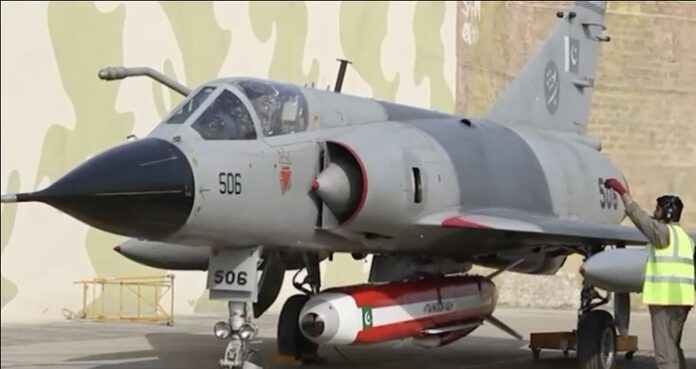
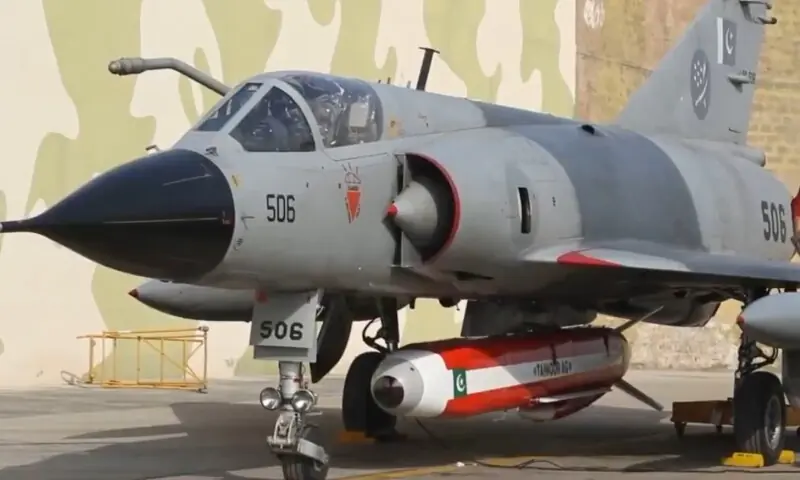
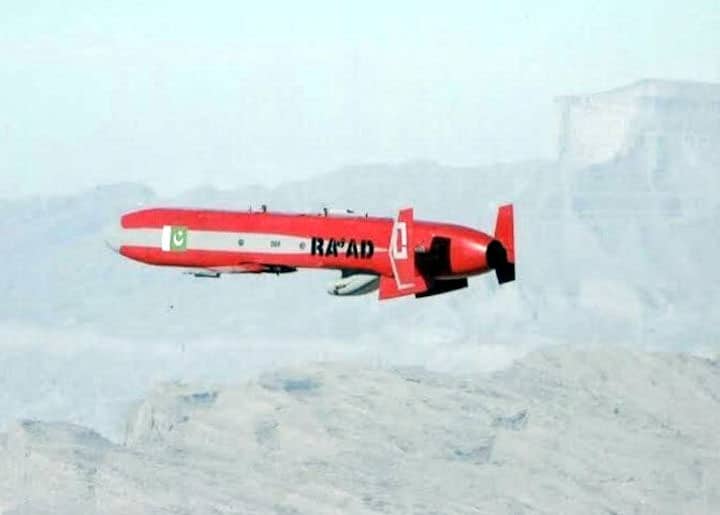
The Inter-Services Public Relations on Tuesday announced that the Pakistan Air Force has successfully conducted the flight test of the indigenously developed Taimoor Weapon System, marking a major milestone in Pakistan’s aerospace and defence capabilities.

According to the ISPR statement, Taimoor is an air-launched cruise missile (ALCM) capable of engaging both land and sea targets with high precision at a range of up to 600 kilometres. The missile carries a conventional warhead and is designed to significantly enhance the Pakistan Air Force’s long-range strike capability.

Image


Advanced Features and Operational Role

The Taimoor cruise missile is equipped with a state-of-the-art navigation and guidance system, enabling it to conduct precision strikes while flying at very low altitudes. This terrain-hugging flight profile allows the missile to evade hostile air-defence and missile-defence systems, increasing its survivability in contested environments.

Defence analysts note that the successful test strengthens Pakistan’s conventional deterrence, offering the PAF greater operational flexibility and the ability to hold high-value targets at risk from extended stand-off distances.


Boost to Indigenous Defence Capability

The successful flight test highlights the technical maturity and innovation achieved by Pakistan’s defence industry, reflecting sustained progress toward self-reliance in advanced weapon systems. Senior officers of the Pakistan Armed Forces witnessed the launch, alongside scientists and engineers who played a key role in the development of the missile.

Officials say the programme demonstrates Pakistan’s growing capacity to design, integrate and test sophisticated precision-guided munitions using indigenous expertise.

Image


Air Chief Congratulates Scientists and PAF Team

Chief of Air Staff Zaheer Ahmed Baber Sidhu, NI (M), HJ, congratulated the scientists, engineers and PAF personnel involved in the project, praising their professionalism and dedication.

The Air Chief said such achievements underscore Pakistan’s resolve to achieve technological self-sufficiency and maintain a credible conventional deterrent amid an evolving regional security environment. He reaffirmed the PAF’s commitment to operational readiness, technological superiority and the defence of national security interests.


Regional Context

The test comes at a time of heightened focus on long-range precision strike systems across South Asia, where air-launched cruise missiles are increasingly viewed as critical tools for deterrence and rapid response. Military observers say systems like Taimoor add depth to Pakistan’s strike options while reinforcing its emphasis on conventional — rather than strategic — deterrence.

U.S. Confirms Strikes Inside Venezuela as Explosions Rock Caracas, Maduro Declares Emergency

0
Pedestrians run after explosions were heard in Caracas, Venezuela

The United States has carried out military strikes inside Venezuela, a U.S. official told Reuters early Saturday, confirming a dramatic escalation in tensions between Washington and Caracas. The official, speaking on condition of anonymity, did not provide details on targets, weapons used, or the duration of the operation.

Venezuelan President Nicolás Maduro responded by declaring a state of emergency, accusing the United States of a “very serious military aggression” after multiple explosions and aircraft-like sounds were reported across the capital, Caracas. Residents in several districts reported temporary power outages, while social media videos showed flashes in the night sky and the sound of low-flying aircraft.

Image

U.S. Media Confirm American Involvement

U.S. media outlets CBS News and Fox News cited unnamed officials in the Trump administration confirming that U.S. forces were responsible for the strikes. Neither outlet provided operational specifics, and the Pentagon had not issued a public statement at the time of reporting.

A senior U.S. official told Reuters only that the operation was ongoing, declining to elaborate further.

Venezuela Accuses U.S. of Striking Civilian and Military Sites

In a strongly worded statement, the Venezuelan government said it “rejects, repudiates and denounces before the international community the extremely serious military aggression perpetrated by the current government of the United States of America against Venezuelan territory and people.”

Venezuelan authorities alleged that both civilian and military locations were hit, though no independent verification of specific targets or casualty figures was immediately available. Emergency services were placed on high alert across Caracas and surrounding areas.

Image

Regional Reaction: Colombia Calls for Urgent UN Meeting

Colombian President Gustavo Petro condemned what he described as “missile” attacks on Caracas and called for immediate international action.

“At this moment they are bombing Caracas,” Petro wrote on X. “Alert everyone — they have attacked Venezuela. They are bombing with missiles. The United Nations and the Organization of American States must meet immediately.”

Petro did not provide evidence for his assertions and did not specify the source of his information. He has previously criticised Washington’s pressure campaign against Caracas.

Broader Context: U.S.–Venezuela Tensions

The reported strikes come amid years of deteriorating relations between the United States and Venezuela, marked by sanctions, diplomatic isolation, and accusations by Washington of narcotics trafficking and organised crime links involving Venezuelan networks. The Trump administration has repeatedly vowed to intensify pressure on Maduro’s government, while ruling out — and at times hinting at — direct military options.

In recent months, U.S. officials have spoken openly about targeting drug trafficking infrastructure and transnational criminal groups linked to Venezuela, though it remains unclear whether the current strikes are connected to counternarcotics operations, security objectives, or broader strategic aims.

Image

What Is Known — and What Is Not

Confirmed:

  • A U.S. official acknowledged American strikes inside Venezuela.
  • Multiple explosions and aircraft sounds were reported in Caracas.
  • President Maduro declared a state of emergency.

Unconfirmed:

  • Exact targets and weapons used.
  • Casualty figures or extent of damage.
  • Whether strikes focused on military, security, or criminal infrastructure.

What Comes Next

Diplomats expect urgent discussions at regional and international forums if the situation escalates further. Markets and neighbouring governments are closely watching developments for signs of wider instability in northern South America.

As of early Saturday, both sides appeared to be escalating their rhetoric, with the risk that further military or political steps could follow.

Explosion Hits Indian Army Camp Near Joshimath; Ammunition Accident Suspected, Probe Underway

0
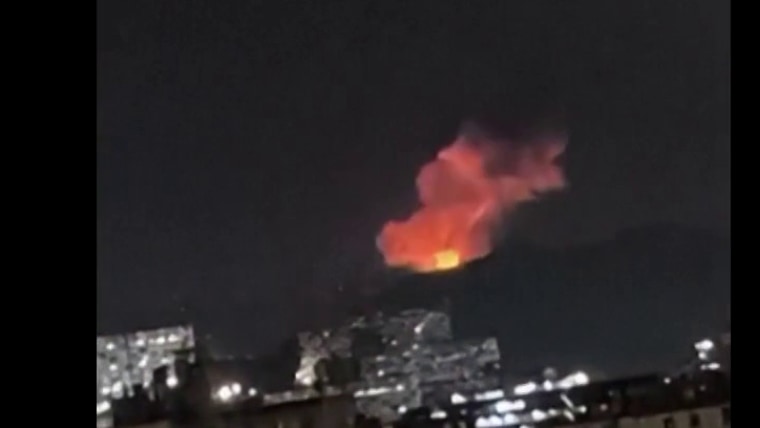
A massive fire broke out in a store located inside an Army camp on the Auli Road in Joshimath, Chamoli district of Uttarakhand.

A major explosion followed by a fire was reported at an Indian Army installation near Joshimath in the northern Indian state of Uttarakhand, triggering emergency response measures and raising concerns about ammunition safety in high-altitude military zones.

According to initial and unofficial reports, the blast may have been caused by the accidental detonation of expired or improperly stored rockets or ammunition. However, Indian authorities have not yet issued an official statement confirming the exact cause, and a formal investigation is said to be underway.

What Is Confirmed So Far

  • A powerful explosion occurred inside or near an Indian Army facility in the Joshimath area.
  • The blast was followed by a fire, visible from surrounding localities.
  • Emergency teams were deployed to contain the blaze and secure the area.
  • There is no official confirmation yet regarding casualties or material losses.

Officials have urged caution against speculation until technical assessments are completed.

Speculation Around Ammunition Handling

Some defence observers and local sources have suggested the explosion could be linked to ammunition or rocket storage, possibly involving old or expired ordnance. Such incidents, while rare, have occurred globally when aging munitions degrade due to temperature fluctuations, humidity, or storage issues — conditions common in high-altitude Himalayan regions.

At this stage, there is no verified evidence that the blast was linked to operational deployment or external threats.

Why Joshimath Is Militarily Sensitive

Joshimath lies close to India’s northern frontier and serves as a key logistics and deployment hub for forces operating in mountainous terrain. The wider Uttarakhand region supports multiple artillery and rocket units tasked with high-altitude warfare preparedness.

Defence analysts note that the area hosts a mix of artillery and rocket regiments, but caution that the presence of such units does not imply operational activity related to current tensions unless officially stated.

Units Typically Deployed in the Region (Context)

Open-source defence records indicate that India’s Central Command includes several artillery and rocket formations suited for mountainous operations, including:

  • 841 Rocket Regiment — Equipped with Pinaka and Grad-21 (Agnibaan) systems, designed for area saturation and long-range fire support in difficult terrain.
  • Medium Artillery Regiments — Operating M777 Ultra Light Howitzer, which are specifically chosen for regions like Joshimath and Pithoragarh due to their helicopter-lift capability.
  • Other Rocket Units — Including formations such as the 551 and 1812 Rocket Regiments, which provide heavy fire support to mountain brigades.

Important clarification:
There is no official confirmation that any specific regiment or weapons system was involved in the explosion.

No Confirmation of External or China-Related Link

Claims circulating on social media suggesting the blast was connected to preparations against China along the Line of Actual Control (LAC) are unverified.
So far, no Indian military or government source has linked the incident to operational planning, external threats, or cross-border tensions.

Defence experts stress that accidental explosions at ammunition facilities are usually investigated as safety and logistics issues, not strategic or combat-related events.

What Happens Next

  • A technical inquiry is expected to examine storage conditions, safety protocols, and the age of munitions at the site.
  • Findings will determine whether the explosion resulted from negligence, material failure, or environmental factors.
  • The Army is likely to review ammunition handling procedures in high-altitude depots once the investigation concludes.

Trump’s ‘Peace Through Strength’: Inside the Surge of U.S. Military Operations Worldwide in 2025

0
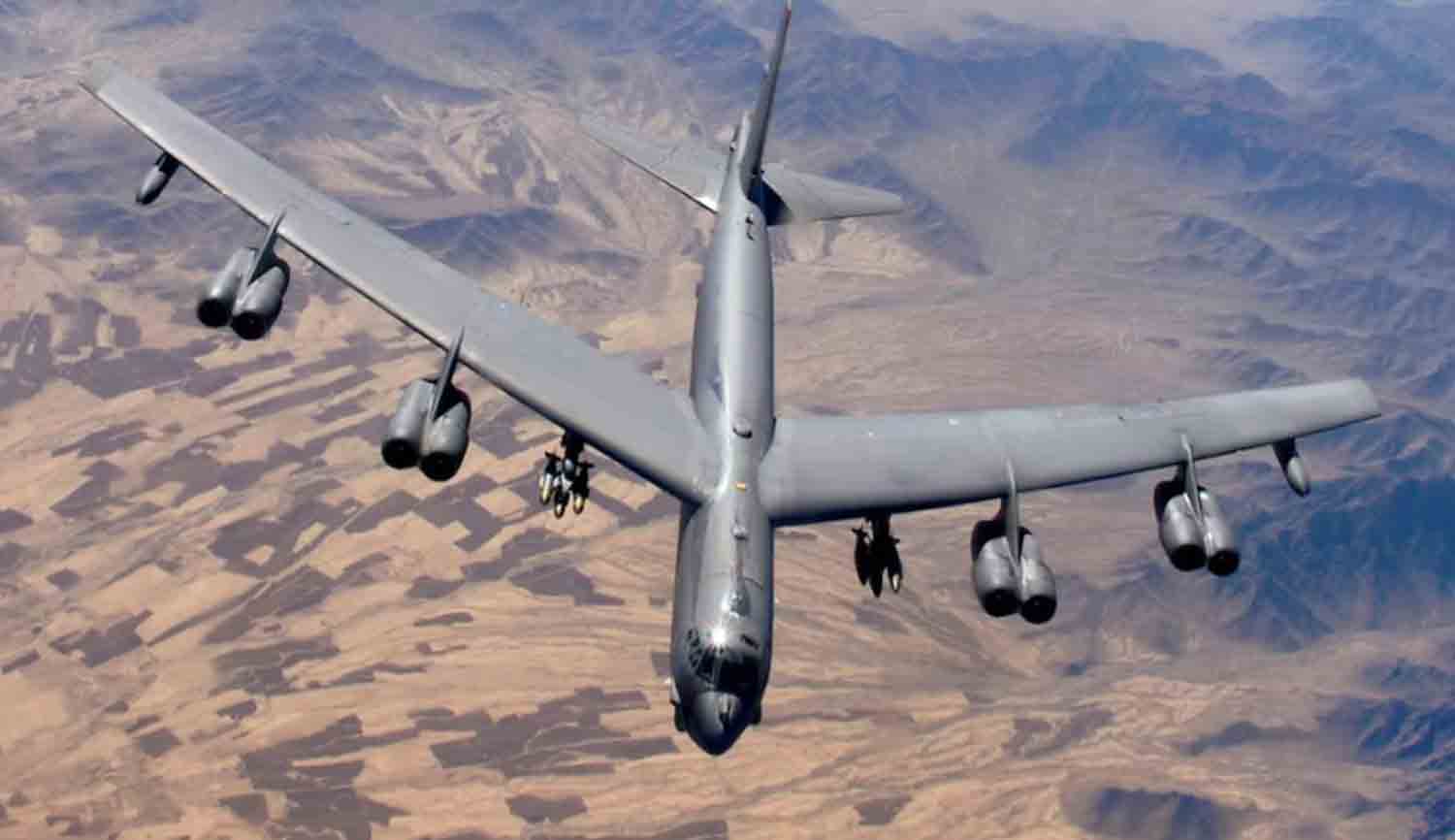
B-52 Stratofortress

Since returning to the White House, U.S. President Donald Trump has overseen a rapid and wide-ranging expansion of American military activity overseas, authorising strikes across the Middle East, Africa and the Caribbean within the first year of his second term.

Despite branding himself a “peace president,” Trump has framed the surge in military action as an extension of his long-standing doctrine of “peace through strength.” Speaking at his January inaugural ball, Trump said America’s success would be judged not only by wars it wins, but by conflicts it avoids, adding that his “proudest legacy will be that of a peacemaker and unifier.”

In practice, 2025 has marked one of the most active years for U.S. overseas military operations in recent history.

Somalia: Renewed Campaign Against ISIS

February 1 — ongoing

The first major strike of Trump’s second term targeted Islamic State affiliates in Somalia.
U.S. Defense Secretary Pete Hegseth said the operation aimed to degrade ISIS’s capacity to plan and execute attacks against U.S. interests, allies and civilians.

The campaign has continued throughout the year, signalling a sustained U.S. counterterrorism posture in East Africa.

Iraq: Senior ISIS Leader Killed

March 13

A U.S.-led coalition strike in Iraq’s Anbar Province killed Abdallah Makki Muslih al-Rifai, described by Iraqi authorities as ISIS’s second-highest-ranking leader.
Iraq’s prime minister called al-Rifai “one of the most dangerous terrorists in Iraq and the world,” underscoring the strike’s symbolic and operational importance.

Image

Yemen: Costly Air Campaign Against Houthis

March 15 – May 6

In mid-March, the Trump administration launched an intensive air campaign against Iran-backed Houthi rebels in Yemen. According to the Pentagon, targets included command centres, air-defence systems and facilities used to manufacture and store advanced weapons.

The operation employed JASSM long-range cruise missiles, JSOW glide bombs and Tomahawk missiles, surpassing $1 billion in costs within its first month.
The campaign ended on May 6 following an Oman-brokered ceasefire.

Iran: Bunker-Buster Strike on Nuclear Sites

June 22

In one of the most dramatic military actions of 2025, Operation Midnight Hammer saw seven B-2 stealth bombers fly from Missouri to strike Iran’s heavily fortified nuclear facilities.

The bombers dropped 30,000-pound GBU-57 Massive Ordnance Penetrators on Fordo and Natanz, while a U.S. Navy submarine launched more than a dozen Tomahawk missiles at Isfahan.
Trump declared the mission had achieved “total obliteration” of Iran’s enrichment capability, a claim Tehran strongly disputed.
Pentagon assessments later suggested Iran’s nuclear programme may have been set back by up to two years.

Image

Caribbean and Eastern Pacific: War on Drug Cartels

September 2 — ongoing

Since September, U.S. forces have carried out lethal maritime strikes in the Caribbean Sea and eastern Pacific as part of a sweeping counternarcotics campaign targeting drug trafficking linked to Venezuela.

Trump has described the deployment as the “largest armada ever assembled in the history of South America,” vowing that the operation would expand further.
At least 106 people have reportedly been killed in strikes on suspected drug-smuggling vessels.

Syria: Retaliatory Strikes Against ISIS

December 19

Trump ordered Operation Hawkeye Strike after a terrorist attack in Syria killed two U.S. soldiers and a civilian American interpreter.
According to U.S. Central Command, American fighter jets, attack helicopters and artillery struck more than 70 suspected ISIS targets across central Syria.

The operation was named after Iowa’s “Hawkeye State,” honouring the fallen soldiers.

Nigeria: Christmas Day Airstrikes

December 25

On Christmas Day, Trump announced U.S. airstrikes against ISIS targets in Nigeria, saying the action was taken to protect Christian communities he claimed were facing mass violence.

The operation involved more than a dozen Tomahawk cruise missiles launched from a U.S. Navy vessel in the Gulf of Guinea and was coordinated with Nigerian forces. Trump later said the timing was deliberate, calling it a “Christmas present.”

Venezuela: First Known Strike Inside the Country

December — ongoing

In December, U.S. intelligence agencies reportedly carried out a drone strike on a coastal facility in Venezuela — the first known U.S. attack inside the country since Washington escalated pressure on President Nicolás Maduro.

The strike allegedly targeted infrastructure used by the Tren de Aragua criminal network to store and prepare narcotics for shipment.

A ‘Peace President’ or Force-First Doctrine?

Trump’s supporters argue the operations demonstrate decisive leadership and deterrence, while critics say the scale and pace of strikes contradict his peacemaker image. What is clear is that 2025 has repositioned U.S. military power as a central tool of Trump’s foreign policy — even as he insists the ultimate goal remains avoiding larger wars.

Lockheed Martin Secures $142.6m Contract to Sustain UAE’s THAAD Missile Defense Batteries

0

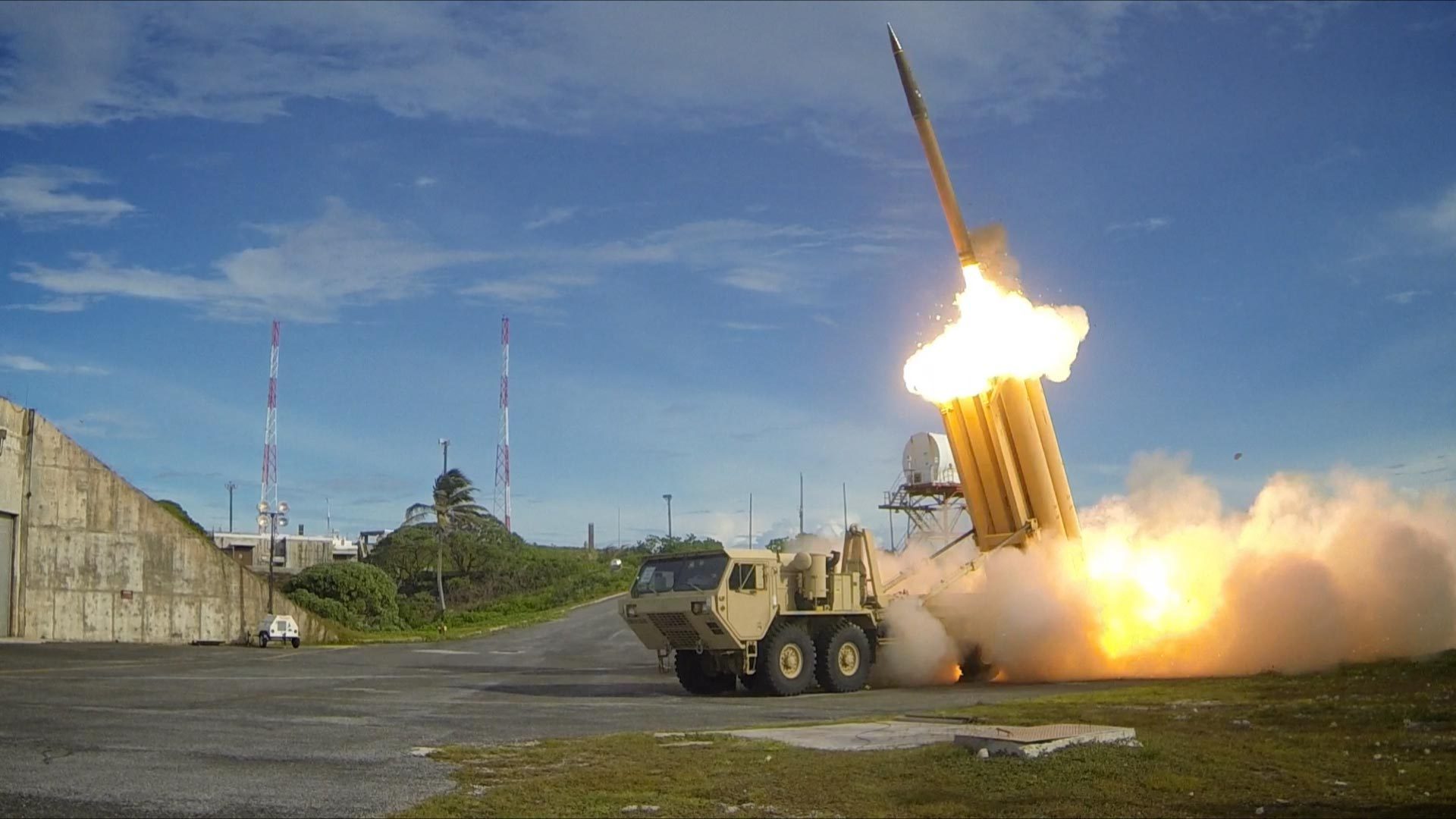
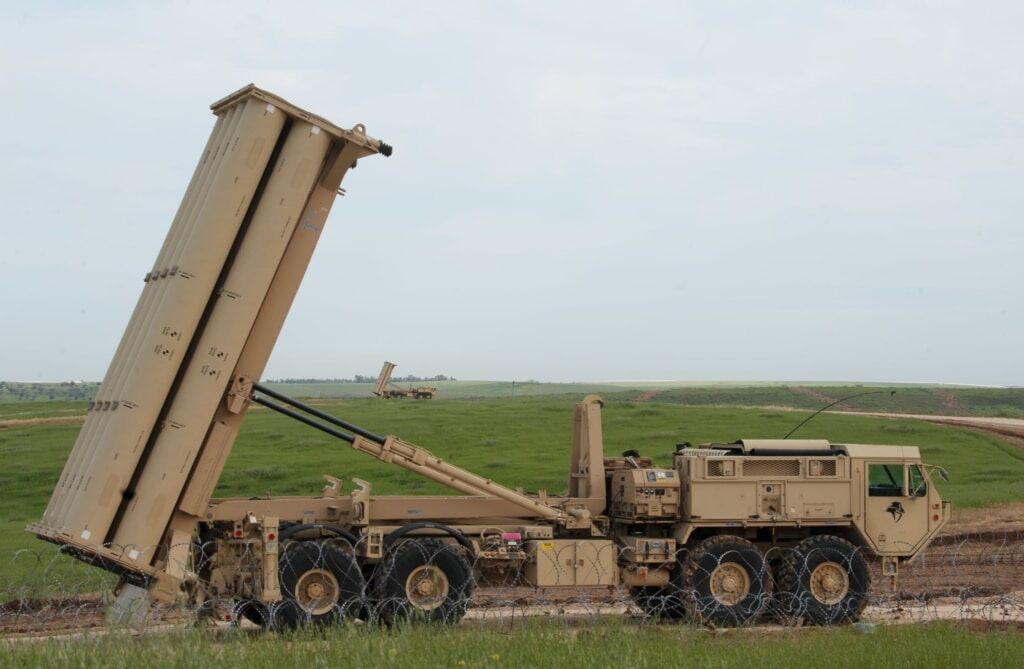
The United States Missile Defense Agency has awarded Lockheed Martin Space a $142.6 million contract modification to continue operations, maintenance, and sustainment support for two Terminal High Altitude Area Defense (THAAD) batteries operated by the United Arab Emirates, according to an official contract announcement.

The non-competitive modification—designated P00073—falls under an existing Foreign Military Sales (FMS) case for the UAE and increases the total contract value to $876.7 million. The contracting activity is managed by the Missile Defense Agency from Huntsville, Alabama, under contract HQ0147-19-C-5001.

Image

Scope of Work: Sustainment Through 2028

The contract modification provides comprehensive support to keep the UAE’s THAAD batteries fully mission-ready. The scope includes:

  • Operations, maintenance, and logistics management
  • Maintenance of a logistics product database
  • Training support for operators and maintainers
  • Missile and ground repair and return activities
  • Hardware and software development and sustainment
  • Hardware-in-the-loop testing capabilities
  • Engineering services and missile field surveillance
  • Country-specific specialty engineering for the FMS customer

Work will be performed across multiple locations, including sites in the UAE and U.S. facilities in Sunnyvale, California; Grand Prairie, Texas; Camden, Arkansas; Huntsville and Anniston, Alabama; and Troy, Alabama. The performance period runs from January 2026 through August 2028, with $142.62 million in UAE FMS funds obligated at the time of award. One offer was solicited and received.

THAAD’s Role in Regional Missile Defense

Terminal High Altitude Area Defense is a U.S.-developed missile defense system designed to intercept short-, medium-, and intermediate-range ballistic missiles during their terminal phase using hit-to-kill technology. THAAD is a cornerstone of U.S. and allied ballistic missile defense architectures and is operated by the U.S. military and a small number of international partners.

Image

A Decade of THAAD Operations in the UAE

The UAE recently marked ten years since receiving its first THAAD battery, becoming the Missile Defense Agency’s first FMS customer and the system’s first international operator. Lockheed Martin delivered the first battery in October 2015, positioning THAAD as a core element of the UAE’s missile defense posture.

At the time of delivery, the UAE already operated Patriot PAC-3 air and missile defense systems. Integrating THAAD created a layered defense architecture designed to counter a broad spectrum of ballistic missile threats.

Why Sustainment Matters

Defense officials note that sustained readiness for complex missile defense systems requires continuous logistics, engineering, and software support. The latest modification is intended to ensure system availability, interceptor readiness, and seamless integration with other air and missile defense assets in the UAE’s inventory.

Trump Warns Iran Over Protest Crackdown as Economic Unrest Spreads Nationwide

0

U.S. President Donald Trump issued a stark warning to Iran on Friday, saying the United States would intervene if Iranian authorities “shoot and violently kill peaceful protesters,” as nationwide demonstrations over economic hardship intensified.

In a post on Truth Social, Trump said the United States was “locked and loaded and ready to go,” a phrase that underscored the gravity of Washington’s warning amid growing reports of casualties during clashes between protesters and security forces.

Image

Protests Turn Deadly Amid Economic Collapse

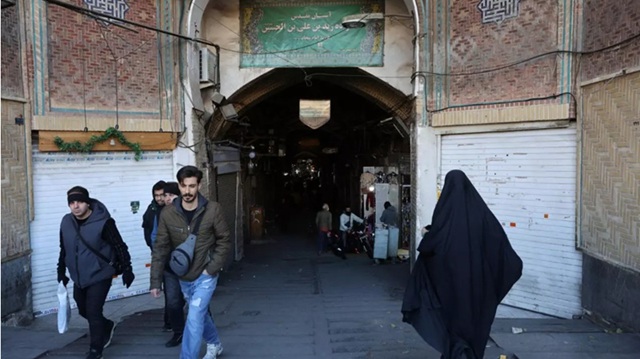
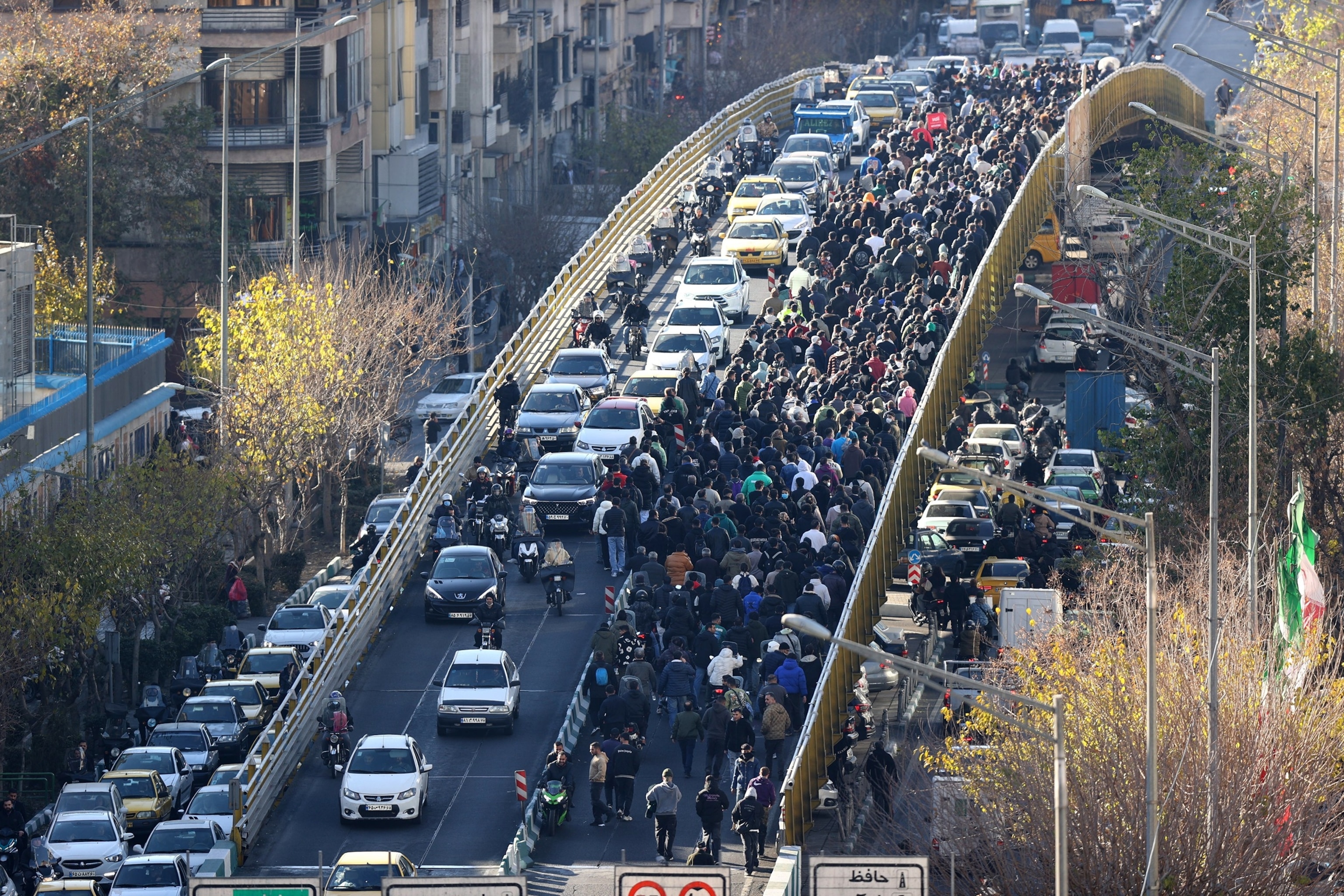
The warning followed the deaths of several people as Iran’s largest protests in three years escalated across multiple provinces. What began earlier this week as demonstrations by shopkeepers over a sharp currency slide and soaring prices has rapidly evolved into broader unrest, drawing in students, workers and urban residents angered by declining living standards.

Image

Security forces have responded with force in several cities, according to local reports and activist networks, marking a significant escalation in the state’s handling of the protests.

Roots of the Crisis: Inflation, Currency Slide and Sanctions

Iran’s economy has been under sustained pressure for years, battered by high inflation, currency depreciation and restricted access to global markets. The current unrest comes amid another sharp fall in the rial, which has driven up the cost of food, fuel and basic goods, intensifying public frustration.

Much of the economic strain traces back to 2018, when the United States reimposed sweeping sanctions after withdrawing from the international nuclear agreement with Iran during Trump’s first term. Since then, Iran has struggled to stabilise its economy despite periodic talks aimed at easing tensions.

Trump’s Warning and Strategic Signalling

Trump’s comments signal a more confrontational posture at a moment of heightened instability inside Iran. While the statement did not outline specific actions, analysts say such language serves both as a deterrent message to Iranian authorities and as a signal to domestic and regional audiences that Washington is closely monitoring developments.

U.S. administrations have historically faced criticism for strong rhetoric not matched by action, making Trump’s phrasing—particularly “locked and loaded”—notable for its bluntness.

Iran’s Likely Response and Regional Implications

Tehran has not publicly responded to Trump’s remarks, but Iranian leaders have routinely rejected external warnings as interference in internal affairs. Any perception of foreign involvement could harden the state’s response to protests while fuelling nationalist rhetoric.

Regionally, escalating unrest in Iran raises concerns about spillover effects, energy market volatility and renewed confrontation between Tehran and Washington at a time when the Middle East is already grappling with multiple crises.

What Comes Next

Much will depend on whether protests continue to spread and whether Iranian security forces intensify their response. For now, Trump’s warning adds an international dimension to what began as a domestic economic protest movement, raising the stakes for both Tehran and Washington.

Drone Crash Near Maidan Shahr: Heron-Like UAV Wreckage Raises Questions, No Official Confirmation

0

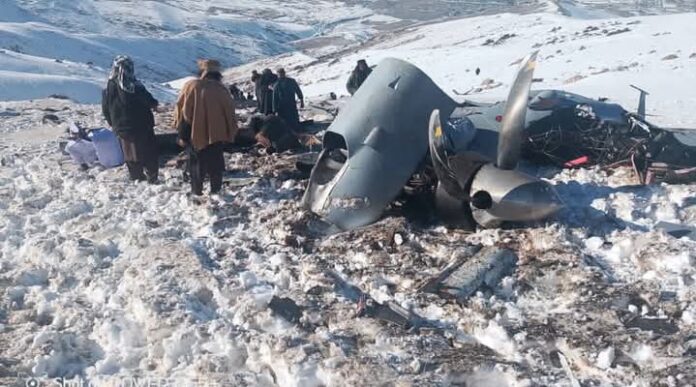
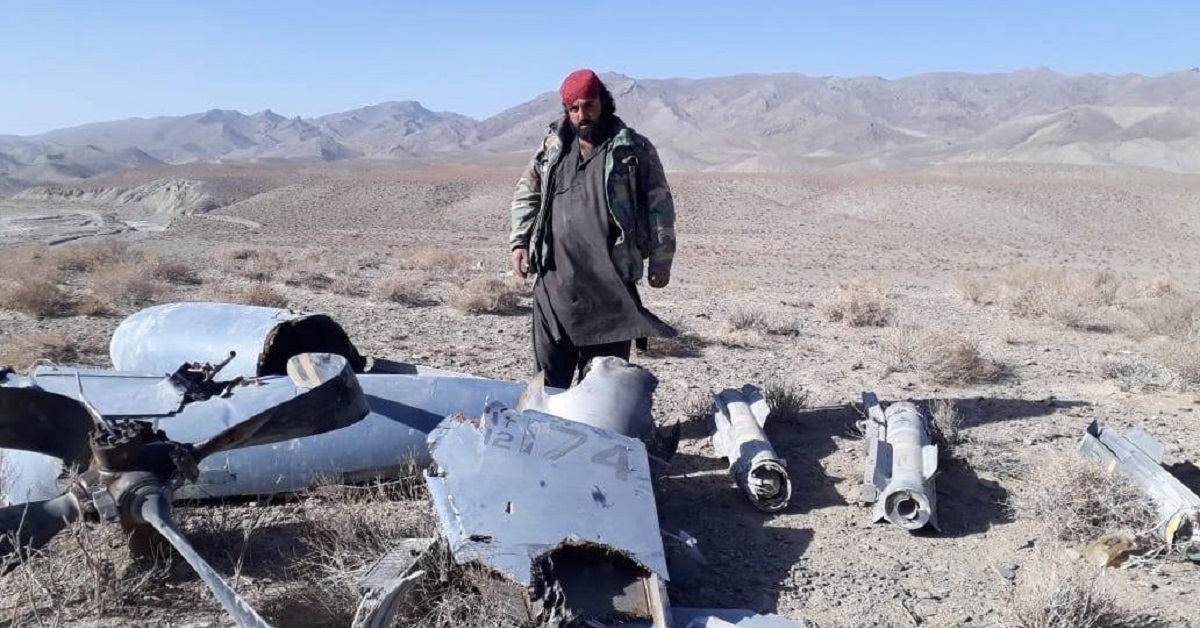
A drone crashed on the outskirts of Maidan Shahr, the provincial capital of Maidan Wardak, local residents and preliminary visuals indicate. It remains unclear whether the aircraft was a drone or another type of unmanned system, and which country it belongs to, as no official source has yet confirmed its origin or operator.

Visuals circulating on social media show wreckage resembling an Israeli-manufactured Heron unmanned aerial vehicle (UAV), a long-endurance surveillance drone made by Israel Aerospace Industries. The Heron is capable of medium-altitude flight and is operated by a number of countries worldwide, including Israel and India.

What the Visuals Suggest — But Don’t Confirm

Images shared online showing the crashed aircraft have been likened to the Heron series, a medium-altitude long-endurance drone known for reconnaissance missions. However:

  • No official Afghan government, military, or international statement has verified the identity of the aircraft.
  • Such aerial wreckage could resemble multiple UAV types without definitive markings visible in current footage.

Important: Independent verification is not yet available, and analysts caution against assuming ownership based solely on visual similarity.

Image

Israel-Made Heron UAV: Who Operates It?

The Heron series (also known as Machatz-1) is produced by Israel and widely used for intelligence, surveillance, and reconnaissance.

Confirmed operators include:

  • Israel Defence Forces
  • Indian Air Force
  • Other international customers

Therefore, while the drone could resemble a Heron model, its mere appearance does not prove which state operated it at the time of the crash.

India’s Use of Israeli Drones

India has a documented history of operating Israeli-made Heron UAVs with its armed forces, and has even pursued expanded drone capabilities in cooperation with Israel.

There are confirmed instances where similar drones operated by India have been involved in crashes or emergency landings — such as a Heron UAV making an unscheduled descent in Rajasthan during a training mission, officially attributed to a technical malfunction.

However, no official confirmation links India to the aircraft that crashed in Afghanistan.

Unverified Claims vs. Confirmed Facts

Some online reports and social media posts have made additional claims, including:

  • The drone was delivered to Afghanistan as “humanitarian aid” and later used in military operations.
  • The crash highlights India’s role in destabilizing the region.

These assertions are not supported by verifiable evidence from credible media or independent sources. There is no documented record that Israeli drones were exported under a “humanitarian aid” label to India in 2025 for military use, nor is there confirmation that the crashed aircraft is connected to any such program.

Why Verification Is Essential

In conflict-affected regions or areas with competing narratives:

  • Visual resemblance alone is insufficient proof of aircraft origin or operator.
  • Official attribution typically requires markings, transponder logs, military statements, or forensic analysis.

Until such confirmation is made public by a credible authority — such as the Afghan government, international monitoring organization, or the alleged operator — any claims about ownership remain speculative.

Key Takeaways

  • A drone-like aircraft crashed near Maidan Shahr, Afghanistan; details remain unverified.
  • Visual indicators suggest resemblance to an Israeli-made Heron UAV, which India also operates, but no official confirmation exists.
  • Claims about delivery under humanitarian aid or India’s regional destabilisation role are not substantiated by verified sources.

Monitoring for Updates

News outlets, defence analysts, and regional monitoring organizations are continuing to investigate and verify:

  • The exact model of the crashed aircraft
  • Possible operator identity
  • Flight history prior to the crash
  • Official responses from relevant governments

As more verified information becomes available, this report will be updated accordingly.

Missiles, Mediation Myths and Narrative Warfare: Inside the India–Pakistan Crisis of May 2025

0
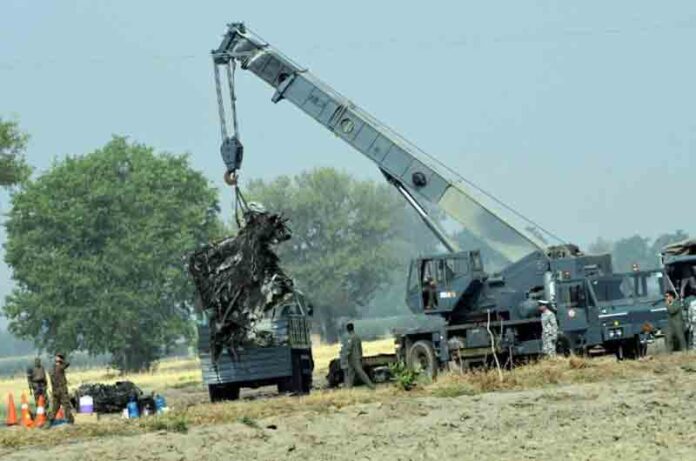
Retrieving wreckage of Indian Rafale fighter jet reportedly shot down by Pakistan in Aklian, Bathinda.

At the most volatile moment of the May 2025 India–Pakistan confrontation, Pakistani missile salvos struck multiple Indian Air Force bases, sharply escalating risks between two nuclear-armed rivals. As fears of uncontrolled escalation mounted, unverified reports began circulating online alleging that India had discreetly reached out to China, requesting Beijing to urge Pakistan to halt further attacks.

These claims spread rapidly across social media and commentary platforms but were never substantiated by official disclosures or confirmed by major international media outlets.

Why the Allegation Gained Traction

The narrative gained credibility because it appeared consistent with battlefield realities. Pakistan’s missile campaign was notable for its scale, precision, and tempo, placing sustained pressure on Indian airpower infrastructure and compressing decision-making timelines in New Delhi.

Under such conditions, analysts argue, it would not have been implausible for India to explore additional crisis-stabilisation channels beyond established bilateral mechanisms, particularly in a missile-driven conflict where escalation thresholds are reached quickly.

China’s Perceived Leverage Over Pakistan

Speculation was amplified by China’s long-standing strategic influence over Pakistan. Decades of military-industrial cooperation, intelligence coordination, economic integration, and diplomatic alignment have created a perception that Beijing possesses leverage over Islamabad unmatched by other external actors.

This perception—whether accurate or overstated—played a central role in sustaining the mediation narrative, even in the absence of concrete evidence.

India’s Official Rejection of Third-Party Mediation

Indian officials repeatedly and unequivocally denied the allegation. New Delhi maintained that the ceasefire resulted from direct communication between the two countries’ Directors General of Military Operations after Pakistan initiated contact on May 10.

India reiterated its long-standing doctrine that disputes with Pakistan are resolved bilaterally, rejecting any notion of third-party involvement as incompatible with its strategic autonomy.

Information Warfare and the Power of Speculation

Although unsupported by verifiable sources, the persistence of the claim highlighted how modern conflicts are increasingly shaped by information warfare alongside kinetic military action.

Missile-heavy exchanges compress political decision space, leaving limited opportunities to signal restraint once military momentum is established. In such environments, perceptions of external leverage can influence escalation behaviour even when mediation does not formally occur.

China’s Mediation Narrative Goes Public

Months later, the controversy resurfaced when Chinese Foreign Minister Wang Yi publicly asserted that Beijing had “mediated tensions between Pakistan and India,” framing the May 2025 episode as part of China’s broader effort to promote regional peace.

Chinese state-aligned outlets echoed the claim, while Pakistan publicly thanked China for its “constructive role,” reinforcing entrenched perceptions of Sino-Pakistani strategic alignment during periods of acute regional instability.

India Pushes Back to Preserve Strategic Autonomy

India’s response was swift, public, and deliberate. Former foreign ministry spokesperson Arindam Bagchi reiterated that India’s position was unchanged: issues with Pakistan are strictly bilateral, with no room for third-party mediation.

The rebuttal was aimed not only at Beijing but also at international and domestic audiences, ensuring that perceptions of strategic dependence did not take root.

Strategic Motives Behind China’s Claim

Analytically, China’s mediation narrative serves multiple objectives. It projects Beijing as a responsible global powerbroker, dilutes U.S. diplomatic primacy in South Asian crisis management, and retrospectively legitimises China’s deep involvement in Pakistan’s military modernisation and warfighting ecosystem.

During the conflict, reports suggested that China assisted Pakistan through satellite reconnaissance support and adjustments to air-defence radar architectures, enhancing situational awareness and strike accuracy—actions consistent with the long-standing “all-weather” partnership between the two countries.

Missile Warfare and the Changing Escalation Calculus

Militarily, the May 2025 confrontation marked a decisive shift in South Asian conflict dynamics. Missile warfare—rather than air-to-air combat—became the central driver of escalation.

Pakistan’s deliberate targeting of Indian Air Force installations reflected a doctrinal emphasis on degrading airpower at its source, paralysing sortie generation without deep manned-aircraft penetration. The strikes exposed vulnerabilities in India’s layered air-defence architecture, particularly against saturation attacks combining ballistic missiles, cruise missiles, and electronic countermeasures.

Compressed Decision-Making and Nuclear Risk

Missile-centric warfare dramatically compresses decision-making timelines, forcing leaders to assess damage, intent, and escalation risk in minutes rather than hours. This compression heightens the danger of miscalculation, especially when missile launches could be misinterpreted as precursors to nuclear use.

In this context, the alleged search for external stabilising channels becomes strategically intelligible, even if officially denied by all parties involved.

Narrative Power as a Strategic Weapon

Beyond physical damage, the crisis unfolded across the information domain. Claims of mediation, vulnerability, and leverage became strategic tools shaping perceptions of resolve and dependence.

Social media accelerated this dynamic, allowing unverified assertions to reach global audiences faster than official rebuttals. Such perception battles can subtly alter escalation dynamics by influencing assumptions about red lines, external backing, and willingness to compromise.

Implications for South Asia and Beyond

The fallout from May 2025 extended beyond India and Pakistan. The crisis reinforced South Asia’s centrality within an increasingly multipolar security order, where regional conflicts intersect with great-power competition.

For India, the episode accelerated efforts to harden critical infrastructure and diversify defence partnerships. For Pakistan, it validated investments in missile forces and strategic alliances. For the wider international community, it underscored the acute risks posed by missile-heavy regional conflicts in the nuclear age.

Conclusion: Control of Narratives, Control of Escalation

The May 2025 India–Pakistan crisis demonstrated that in contemporary South Asian confrontations, control over the diplomatic and informational narrative has become nearly as consequential as control over the battlefield itself.

As the region moves forward, stability will depend less on declaratory doctrines and more on resilience, disciplined communication, and tightly managed escalation control in an era where missiles—and narratives—travel faster than diplomacy.

Xi Jinping Calls for Strong Start to China’s 15th Five-Year Plan, Hails ‘Solid Progress’ in 2025

0
Chinese President Xi Jinping

Chinese President Xi Jinping has called for concrete and focused efforts to launch China’s 15th Five-Year Plan (2026–2030), saying the country must build on what he described as “solid and tangible progress” achieved in 2025.

In his New Year message delivered on Wednesday evening, Xi said 2026 would mark the beginning of a new planning cycle and stressed that “a successful venture should start with a good plan.” He urged officials and citizens to set clear goals, boost confidence and push ahead with high-quality development, deeper reforms and wider opening-up.

“We should focus on our goals and tasks, build momentum, and press forward steadily,” Xi said.

Reviewing 2025 Achievements

Xi described 2025 as a milestone year that concluded China’s 14th Five-Year Plan (2021–2025). He said the country had met its major economic and social development targets, with gains in economic strength, scientific and technological capacity, national defence and overall comprehensive power.

Calling the year “extraordinary,” Xi pointed to major national commemorations, including the 80th anniversary of China’s victory in the War of Resistance Against Japanese Aggression and the World Anti-Fascist War. He said these events helped consolidate national unity and reinforce China’s long-term development goals.

The Chinese president highlighted innovation-driven growth, saying China had emerged as one of the world’s fastest-advancing economies in terms of innovation capability. He also noted rising public engagement with culture, museums and intangible heritage, which he said reflected a strengthening of China’s cultural confidence.

“No issue concerning the people is too small,” Xi said, stressing that improving everyday living standards remained central to governance. “When the hum of daily happiness fills every household, the nation will continue to grow stronger.”

Global Engagement and Governance

Xi said China continued to “embrace the world with open arms” in 2025. He cited new climate commitments, updated Nationally Determined Contributions, and Beijing’s promotion of global initiatives on development, security, civilisation and governance.

China, he said, would continue to work with other countries to promote global peace, development and a more equitable international governance system.

Taiwan, Hong Kong and Party Governance

On cross-strait relations, Xi reiterated Beijing’s long-standing position that reunification with Taiwan was “a historical trend that cannot be stopped,” while emphasising shared cultural and familial ties across the Taiwan Strait.

He also reaffirmed commitment to the “one country, two systems” framework for Hong Kong and Macao, pledging continued support for their long-term stability and integration into national development.

Xi underlined the role of the Communist Party of China, saying strong party leadership and strict self-governance were essential to China’s future. He pointed to continued anti-corruption efforts and institutional reforms aimed at improving governance standards.

Focus on the 15th Five-Year Plan

Earlier on Wednesday, Xi also addressed a New Year gathering hosted by the Chinese People’s Political Consultative Conference (CPPCC), urging its members to focus consultations on shaping and implementing the 15th Five-Year Plan.

Presiding over the event, CPPCC chairman Wang Huning was joined by other senior leaders, including Li Qiang, Zhao Leji, Cai Qi, Ding Xuexiang, Li Xi and Han Zheng.

Xi urged the entire party and the Chinese people to unite more closely in the coming years and continue advancing what he described as “Chinese modernisation” with stability and long-term planning.

Army Chief Asim Munir Reaffirms Focus on Balochistan’s Development, Warns Against Foreign-Backed Violence

0

Pakistan’s Chief of Army Staff and Chief of Defence Forces Field Marshal Syed Asim Munir on Monday underscored the strategic and economic importance of Balochistan, reaffirming the military’s commitment to supporting the province’s development while countering militancy and external interference.

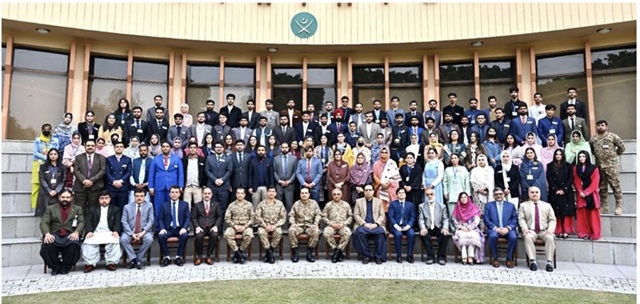
According to a statement issued by Inter-Services Public Relations (ISPR), the army chief was speaking during an interaction with participants of the 18th National Workshop on Balochistan at General Headquarters (GHQ). The workshop focused on Balochistan’s socio-economic challenges, development prospects and its broader strategic significance for Pakistan.

Addressing the participants, Field Marshal Munir praised the resilience, patriotism and sacrifices of the people of Balochistan, describing the province as central to Pakistan’s long-term prosperity and regional connectivity. He highlighted ongoing federal and provincial initiatives aimed at improving living standards, stressing that a people-centric development model was essential to unlocking Balochistan’s vast economic potential.

The army chief also acknowledged the role of civil society and academia, particularly in countering misinformation and propaganda. He said constructive civic engagement was critical for sustainable development and urged stakeholders to reject narrow political agendas in favour of long-term stability and inclusive growth for the province.

On the security front, Field Marshal Munir said that Indian-sponsored proxies continued attempts to foment violence and hinder development in Balochistan. He reiterated that such efforts would be firmly countered, adding that Pakistan’s security forces would continue operations to eliminate terrorism and restore lasting peace in the province.

Reaffirming Pakistan’s broader security posture, the army chief said any violation of the country’s territorial integrity—whether direct or indirect—would draw a decisive response. He stressed that the Pakistan Armed Forces remained fully committed to safeguarding citizens and ensuring national stability.

The session concluded with an interactive question-and-answer segment, during which participants sought clarity on development priorities, security challenges and the military’s role in supporting governance and socio-economic uplift in Balochistan.

India Announces Large-Scale Air Force Drills Near Pakistan Border in January; Airspace Closed for NOTAM-Led Exercise

0
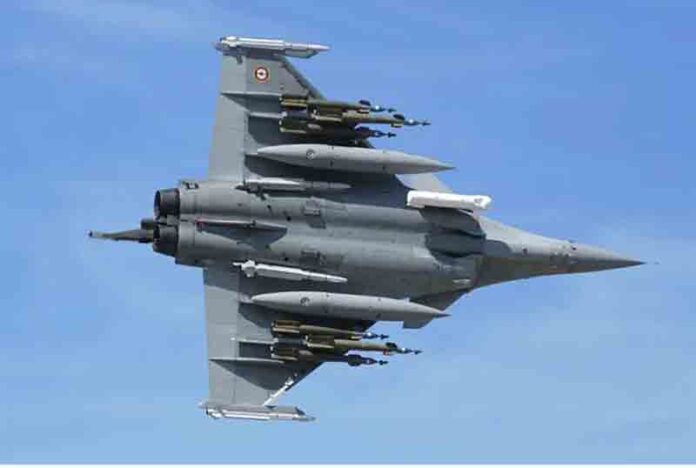
Rafale fighter

India’s Indian Air Force has announced large-scale aerial exercises along its western border near Pakistan, issuing a Notice to Airmen (NOTAM) that will restrict airspace and suspend international flights over the exercise area on January 20–21, 2026, according to multiple news reports.

The restricted zone covers portions of Gujarat, including areas close to the Arabian Sea, Sir Creek, and regions near Rajkot and Ahmedabad—a strategic sector on India’s southern border with Pakistan where military sensitivity is high.

According to the announcements, the exercise will involve India’s frontline fighter jets, including Rafale, Sukhoi-30MKI, Jaguar and other combat aircraft. The drills are expected to include high-speed sorties, aerial combat manoeuvres and potentially simulated live-fire or bombing exercises to enhance operational training.

Image

Airspace Closure and Flight Disruption

The Civil Aviation Authority’s NOTAM instructs that international civilian flights will be rerouted or suspended in affected air corridors during the two-day period to ensure safety and deconfliction with military aircraft operations. Earlier alerts suggest the NOTAM may also apply on additional dates such as January 6–7 in preparation for the main exercise.

Routine Training or Signalling?

Indian defence sources cited in local media describe the exercise as part of routine preparedness training, emphasising that such drills are commonly held to maintain operational readiness of combat units. However, the proximity of the drills to Pakistan’s border and the inclusion of advanced combat aircraft have attracted regional attention.

Observers note that while military exercises do not necessarily signal immediate escalation, transparency and communication are critical to reduce misperceptions, particularly in sensitive border regions where airspace restrictions and frequent notifications can be interpreted in different ways.

Context of Ongoing Military Activities

This announcement follows several other Indian military exercises in 2025, including tri-service field drills near the western front and northeastern border areas, as part of regular operational training cycles. Past military notifications have similarly used NOTAMs to manage airspace and safety during complex aerial activities.

CFR Report Identifies Key Conflicts to Watch in 2026, Highlighting Ukraine, Middle East and Venezuela Risks

0
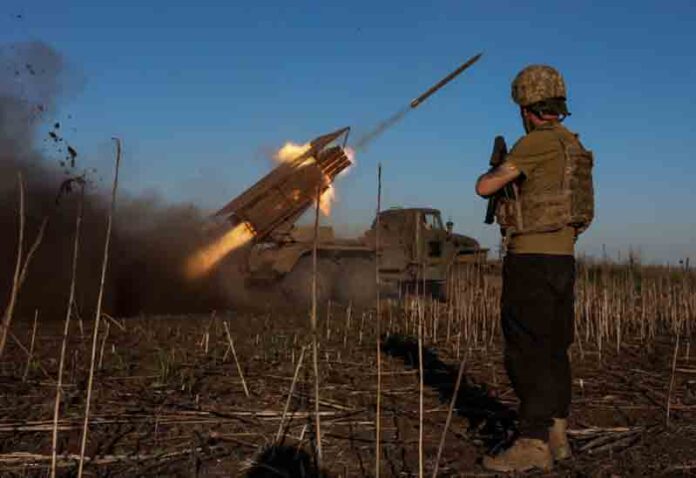
Ukrainian service members of the 25th Sicheslav Airborne Brigade fire a BM-21 Grad multiple rocket launch system towards Russian troops near the frontline town of Pokrovsk, amid Russia's attack on Ukraine, in Donetsk region, Ukraine.

A new annual conflict risk assessment by the Council on Foreign Relations (CFR) has highlighted a range of geopolitical flashpoints likely to shape global instability in 2026, with experts warning that the world continues to grow more violent and disorderly. The report, based on responses from U.S. foreign policy analysts and officials, ranks potential conflict scenarios by their likelihood and potential impact on global stability and U.S. interests. (Council on Foreign Relations)

The “Conflicts to Watch in 2026” survey, prepared by CFR’s Center for Preventive Action, is based on polling roughly 620 experts from government, academia, and policy circles who assessed 30 plausible conflict-related contingencies for the coming year.

Top-Ranked Risks for 2026

The report’s risk assessment matrix places several conflict scenarios in the highest category for both likelihood and impact:

  • An escalation in the Russia–Ukraine war, especially through expanded attacks on infrastructure and population centers.
  • Renewed fighting in the Gaza Strip, driven by increasing clashes between militants and security forces.
  • Growing unrest in the West Bank over political and territorial tensions.
  • U.S. military operations in Venezuela against transnational criminal groups, with potential effects on the Maduro government.
  • Widespread political violence and popular unrest in the United States, tied to heightened polarization and public security deployments.

Several other contingencies are ranked as having high impact but varying likelihood, including renewed armed conflict between Iran and Israel, disruptive cyberattacks on critical infrastructure, and intensified great-power tensions involving China, Russia and North Korea.

Regional Conflict Risks

The survey also assesses conflicts with moderate likelihood and impact. These include potential escalations of civil war in Sudan, violent clashes in Haiti, and ongoing insecurity in Somalia and the Horn of Africa. Other noted concerns cover fragile situations in the Sahel, northeastern Nigeria, Myanmar, and renewed violence in Cameroon.

Shifts from Prior Assessments

Compared with the 2025 survey, certain conflict risks were removed or reprioritized. The possibility of widespread conflict in Afghanistan did not make the 2026 list, while growing violence in other regions, such as political instability in Ecuador and new insurgencies in Cameroon, were included. The risk of a South China Sea confrontation remains of strategic concern but was rated lower in likelihood for 2026.

Conflict Prevention Focus

For the first time, the CFR survey also identifies opportunities for preventive action. Experts highlighted scenarios where the United States and international partners might bolster peace efforts, such as supporting efforts to prevent mass atrocities in Sudan or strengthening state institutions in fragile contexts.

Global Context

The CFR’s findings reflect expert concern that the number of armed conflicts is higher than at any point since World War II’s aftermath, with interstate tensions and internal instability both contributing to a disorderly global security environment.

The report aims to help policymakers anticipate and mitigate conflict drivers before they escalate, underscoring the importance of early warning and engagement.

India Conducts Test of Indigenous Pralay Missile Amid Regional Security Focus

0
India tests Pralay missile.

India has conducted a test of the Pralay missile, an indigenously developed, solid-fuel, quasi-ballistic missile, as part of ongoing evaluations of its conventional strike capabilities, according to official statements from New Delhi.

The test was carried out from a designated range on India’s eastern coast under the supervision of the Defence Research and Development Organisation (DRDO), which described the launch as part of routine development and validation trials. Indian authorities said the missile followed its planned trajectory and met key test objectives, including accuracy and system reliability.

Image

What is the Pralay Missile?

The Pralay missile is a short-range, surface-to-surface system designed for conventional battlefield use. It uses solid propellant and follows a quasi-ballistic flight path, meaning it can manoeuvre during flight to complicate interception by missile defence systems.

According to publicly available information, Pralay has a reported range of roughly 150 to 500 kilometres and is intended to carry conventional warheads. Indian officials have previously said the missile is meant to provide the armed forces with additional options for precision strikes against tactical and operational targets.

Context of the Test

The launch comes amid broader efforts by India to expand domestic defence production and reduce reliance on foreign suppliers, in line with its “Make in India” and “Aatmanirbhar Bharat” initiatives. Over the past decade, India has tested and inducted several indigenous missile systems, while also continuing to import and co-develop platforms with international partners.

Defence analysts note that such tests are not unusual and are typically conducted as part of phased development programmes. However, missile testing in South Asia is often closely watched due to the region’s history of military tensions and the presence of nuclear-armed states.

Image

Regional Implications

While Indian officials framed the test as a technical milestone, regional observers stress that missile developments on the subcontinent tend to have wider security implications. Pakistan and China, both of which closely monitor Indian missile activity, have previously called for restraint and confidence-building measures to prevent escalation.

Experts also point out that the Pralay missile does not alter the strategic nuclear balance in the region, as it is positioned as a conventional system rather than a nuclear delivery vehicle. Confirmation of its operational role, deployment doctrine and command arrangements would be critical in assessing its long-term impact.

Next Steps

The DRDO is expected to conduct additional trials before the system is considered for large-scale induction into the Indian armed forces. Such processes typically involve user trials by the military, refinements based on performance data, and eventual decisions by India’s defence acquisition authorities.

For now, analysts view the test as part of India’s incremental approach to missile development, rather than a dramatic shift in regional military dynamics.