Saturday, June 6, 2026
Home Blog Page 21

U.S. Airpower Surges Toward the Middle East as Washington Weighs Military Options on Iran

0
F-35 jet lands on the USS Carl Vinson aircraft carrier during the Rim of the Pacific (RIMPAC) military exercises about 100 miles south of Oahu, Hawaii, U.S.

A substantial surge of American air and naval power is moving toward the Middle East, reinforcing U.S. forces already positioned in the region as President Donald Trump weighs military options alongside renewed diplomatic engagement with Iran. Open-source flight tracking and official confirmations indicate the most intense phase yet of a U.S. force “plus-up,” involving advanced combat aircraft, surveillance platforms, and additional naval assets.

Image

A broad airpower movement eastward

Online tracking data shows F-22 Raptor, F-16 Fighting Falcon, E-3 Sentry, and at least one U-2 Dragon Lady either crossing the Atlantic or newly positioned in Europe en route to the Middle East. According to tracking data, at least a dozen F-22s departed Langley Air Force Base in Virginia, likely transiting through the UK before continuing onward, although U.S. Central Command has declined to comment on specific movements.

This pattern mirrors previous pre-conflict deployments, particularly ahead of Operation Midnight Hammer, when F-22s transited east days before participating in strikes against Iranian nuclear facilities.

Fighters, sensors, and command-and-control

The mix of aircraft points to preparation for sustained, complex operations rather than a short-duration contingency. F-22 Raptors provide air dominance and suppression of enemy air defenses, while F-16s can be tasked with both defensive counter-air missions against drones and missiles and offensive strike roles.

The arrival of E-3 Sentry aircraft at RAF Mildenhall enhances airborne command-and-control capacity, enabling wide-area tracking of aircraft, cruise missiles, and drones. Meanwhile, the U-2 offers high-altitude intelligence, surveillance, and reconnaissance, as well as acting as a communications bridge between fifth-generation platforms such as the F-22 and F-35A Lightning II.

Image

Jordan as a central hub

Eighteen F-35A fighters have already departed RAF Lakenheath for Muwaffaq Salti Air Base in Jordan, which has become a focal point for U.S. tactical aviation in the region. These aircraft previously played a critical role in penetrating and suppressing Iranian air defenses during Midnight Hammer, often serving as the first assets into contested airspace and the last to withdraw.

The growing concentration of aircraft at Muwaffaq Salti—including Strike Eagles, Growlers, A-10s, MQ-9 Reapers, and special operations aircraft—underscores the scale of the buildup, even as Jordan publicly states it would not allow its airspace to be used for an attack on Iran.

Image

Naval reinforcement in parallel

The air surge is matched at sea. A seventh USS Pinckney has entered the U.S. Central Command area, bringing the total number of U.S. surface combatants in or near the region to around a dozen. These include the Abraham Lincoln Carrier Strike Group and additional Arleigh Burke-class destroyers in both the CENTCOM and Mediterranean theaters.

The USS Gerald R. Ford Carrier Strike Group is now operating in the 6th Fleet area, providing additional flexibility with carrier-based F/A-18E/F Super Hornets, EA-18G Growlers, and F-35C fighters. Subsurface assets, including nuclear-powered submarines, are also believed to be present, though their locations are not disclosed.

Iranian response and regional tension

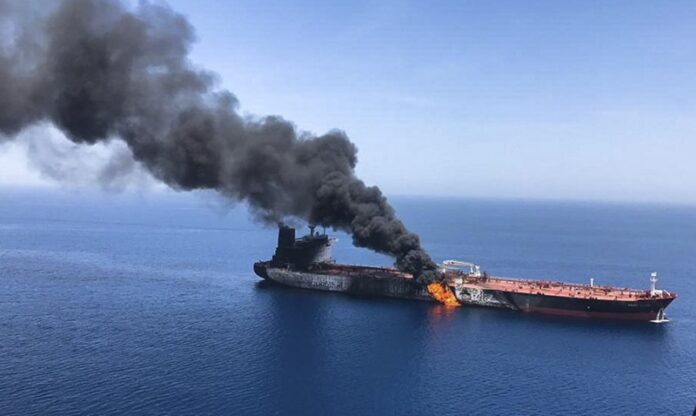
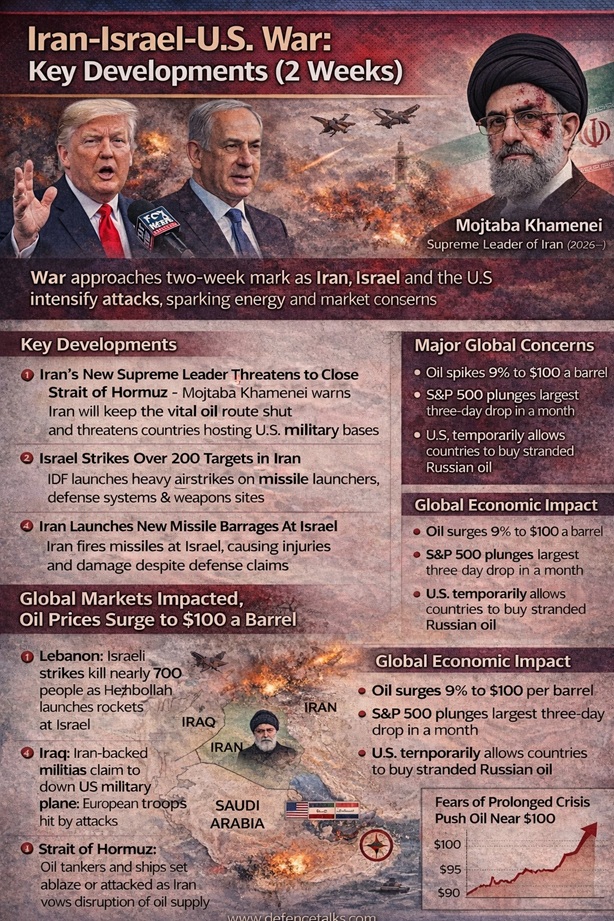
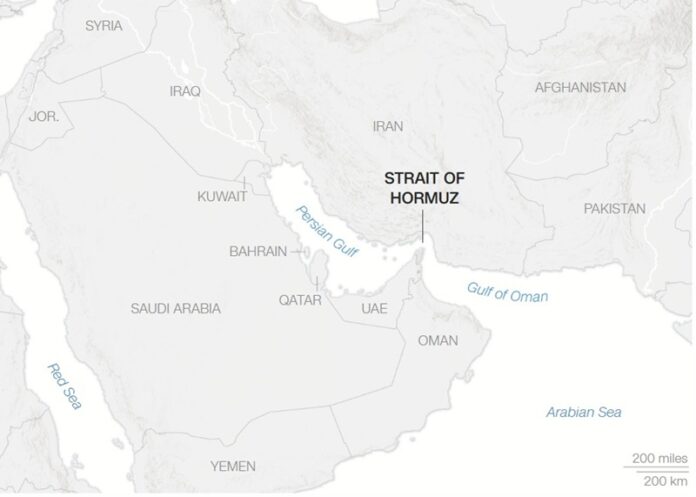
As U.S. forces reposition, Iran’s Islamic Revolutionary Guard Corps has announced live-fire exercises in and around the Strait of Hormuz, a critical maritime chokepoint through which roughly one-fifth of global crude oil shipments pass. Iranian state media report the use of anti-ship cruise missiles, drones, and submarines during the drills, while Supreme Leader Ayatollah Ali Khamenei issued warnings directed at U.S. warships.

Image

Diplomacy alongside deterrence

The military buildup coincides with indirect U.S.–Iran negotiations in Switzerland, mediated by Oman. Iranian officials have described the talks as constructive, though substantive gaps remain over Iran’s nuclear program and Washington’s demands. Notably, similar diplomatic timelines preceded Midnight Hammer, when a decision on military action was deferred even as forces quietly assembled.

Assessment

Taken together, the scale and composition of U.S. deployments now visible align closely with what would be expected ahead of a major, sustained air campaign rather than a limited strike. While no decision to attack Iran has been announced, the concentration of high-end airpower, command-and-control assets, and naval firepower significantly expands Washington’s military options—and strengthens the credibility of deterrence as negotiations continue.

Saudi Arabia’s KAAN Fighter Talks With Turkey Complicate U.S. F-35 Calculus

0
KAAN fifth-generation fighter jet.

Saudi Arabia’s exploratory engagement with Turkey over potential participation in the KAAN next-generation fighter programme has added a new layer of complexity to already delicate U.S.–Gulf defence dynamics. According to officials and analysts cited in recent reporting, Riyadh’s parallel talks with Ankara are being closely watched in Washington, where concerns are growing that diversification toward Turkish platforms could dilute U.S. leverage at a sensitive moment in negotiations over the F-35 Lightning II.

A dual-track Saudi strategy

Current and former U.S. officials interpret Saudi outreach on KAAN as calibrated leverage rather than a wholesale strategic pivot. Riyadh continues negotiations for an initial tranche of up to 48 F-35 aircraft—potentially worth tens of billions of dollars—while simultaneously exploring deeper industrial participation in Turkey’s fighter programme. The approach reflects a broader effort to secure greater autonomy in maintenance, spare parts, and limited co-production, consistent with Saudi Arabia’s Vision 2030 localisation agenda.

Why KAAN matters to Riyadh

The KAAN programme, led by Turkish Aerospace Industries, represents Turkey’s bid to field a sovereign fifth-generation combat aircraft after its 2019 exclusion from the F-35 consortium. The twin-engine platform achieved its maiden flight in February 2024 and is designed for air superiority, strike, and electronic warfare missions, with an emphasis on low observability and sensor fusion.

For Saudi Arabia, the appeal extends beyond performance metrics. Turkish officials have signalled openness to co-development structures, industrial participation, and intellectual property exposure—areas where U.S. fifth-generation sales are traditionally more restrictive. Reports suggest Riyadh is evaluating procurement of up to 100 KAAN aircraft, a scale that would make Saudi Arabia a consequential partner rather than a conventional buyer.

U.S. concerns and leverage calculus

In Washington, the KAAN discussions are viewed through the lens of strategic influence. The Trump administration framed the November 2025 approval of F-35 sales to Saudi Arabia as part of a historic defence understanding, and officials now question what unmet needs are driving Riyadh toward Turkish alternatives. Intelligence assessments warning of espionage risks around advanced platforms in the Gulf further complicate the picture.

From the U.S. perspective, Saudi investment in KAAN could weaken the political signalling value of American exclusivity and set a precedent for other Gulf states to negotiate harder on technology transfer and sovereignty conditions.

Regional and industrial implications

Saudi–Turkish discussions are unfolding against improving bilateral ties since 2021, reinforced by high-level visits and defence framework agreements. Potential cooperation beyond KAAN—including drones and air defence systems—suggests a wider industrial dialogue rather than a single-platform negotiation.

Regionally, the prospect of additional fifth-generation platforms entering Gulf inventories carries implications for Israel’s qualitative military edge, a principle embedded in U.S. law, and for Iran’s threat perceptions. At the same time, Turkey’s defence exports—reported at $5.5 billion in 2025—underscore Ankara’s ambition to emerge as a top-tier aerospace supplier.

F-35 versus KAAN: not a binary choice

Analysts caution that the Saudi calculus should not be framed as a zero-sum contest between the F-35 and KAAN. A hybrid outcome—combining near-term acquisition of a mature U.S. platform with longer-term co-development of a Turkish fighter—remains technically feasible. Such a model would reshape interoperability, training, and supply chains in ways unprecedented for the Gulf.

Outlook

The Saudi–Turkey KAAN talks illustrate a structural shift in global defence markets, where advanced fighter procurement is inseparable from industrial policy, geopolitical hedging, and alliance management. Whether Riyadh ultimately secures improved F-35 terms, joins KAAN as a partner, or pursues both tracks, the episode signals that affluent defence consumers now wield greater bargaining power—and are increasingly willing to use it.

USAF F-22 Raptors Return to the Middle East, Repeating Pre-Midnight Hammer Deployment Pattern

0
F-22 Raptor

U.S. Air Force F-22 Raptor stealth fighters have again been deployed to the Middle East, according to open-source flight monitoring and regional reporting, echoing a familiar operational pattern observed ahead of earlier high-intensity contingencies. Notably, a similar F-22 forward deployment occurred four days before Operation Midnight Hammer, reinforcing the aircraft’s role as a leading indicator of shifts in U.S. airpower posture.

While U.S. Central Command has not released detailed public statements on the latest movement, the timing and repetition of F-22 deployments suggest a deliberate recalibration of deterrence and air dominance assets rather than a routine rotation.

Patterned deployment, not an anomaly

The F-22 has historically been surged into the Middle East during periods of elevated threat perception, particularly when airspace control, force protection, or rapid escalation management is required. Deploying the aircraft days ahead of major operations allows commanders to establish air superiority, conduct defensive counter-air missions, and quietly signal readiness without overt escalation.

The reappearance of F-22s in the region today mirrors this precedent, indicating that U.S. planners may be reinforcing options rather than reacting to an immediate crisis.

Why the F-22 matters in this context

The F-22 Raptor remains the U.S. Air Force’s premier air-dominance platform. Its combination of low observability, supercruise capability, advanced sensors, and data fusion enables it to operate deep inside contested airspace while maintaining a decisive edge against both aircraft and integrated air defense systems.

Beyond its combat role, the F-22 functions as a force-multiplier, cueing other assets, sharing targeting data, and shaping the air battle before it becomes visible. This makes its deployment as much about shaping the battlespace as about deterrence.

Strategic signaling and deterrence logic

Deploying F-22s ahead of or alongside other U.S. assets sends a calibrated message to both allies and adversaries. For partners, it signals commitment and reassurance. For potential adversaries, it complicates planning by raising the cost of escalation and narrowing windows of opportunity.

The earlier deployment prior to Midnight Hammer demonstrated how quietly positioned air-dominance assets can underpin subsequent operations without public fanfare. Today’s redeployment appears consistent with that same logic.

Regional context

The latest movement comes amid sustained regional volatility, including persistent drone and missile threats, heightened air defense alertness, and increased U.S. and allied force posture across the Middle East. In such an environment, air superiority is a prerequisite for virtually all other military options, making the F-22 a natural choice for early positioning.

What this does — and does not — indicate

As with previous surges, the presence of F-22s does not by itself confirm an impending operation. The aircraft are frequently deployed as a preventative measure, designed to deter escalation, protect high-value assets, and preserve decision-space for political and military leadership.

However, the repetition of the deployment pattern—particularly in light of its timing before Midnight Hammer—suggests that U.S. planners are again prioritizing flexibility, dominance, and strategic ambiguity.

Outlook

  1. Absent official confirmation, details of basing, numbers, and mission profiles are likely to remain undisclosed. What is clear is that the F-22’s return to the Middle East reflects a conscious adjustment in U.S. airpower posture, leveraging stealth and air dominance to quietly shape the regional balance without overt escalation.

India–France Deepen Strategic Ties as Modi, Macron Inaugurate H125 Helicopter Assembly Line

0
H125 Light Utility Helicopter

Prime Minister Narendra Modi and French President Emmanuel Macron addressed a joint press interaction in Mumbai following the virtual inauguration of the H125 Light Utility Helicopter final assembly line at Vemagal, Karnataka. The facility, established by Tata Airbus, marks a significant step in expanding India–France defence and industrial cooperation.

The leaders digitally unveiled the assembly line for the H125, underlining the growing depth of the bilateral partnership. Prime Minister Modi described the project as a reflection of strong mutual confidence, noting that helicopters manufactured in India would also be supplied to global markets. He highlighted the platform’s ability to operate at extreme altitudes, including conditions comparable to those near Mount Everest.

A manufacturing milestone with global intent

The H125 assembly line represents a shift from buyer–seller dynamics toward co-production and export-oriented manufacturing. By integrating Indian industrial capacity with French aerospace expertise, the project aligns with India’s broader ambitions to scale advanced manufacturing while embedding itself in global supply chains.

Modi described France as one of India’s oldest strategic partners, adding that the scope of cooperation between the two countries has no defined ceiling. The helicopter programme, he said, reinforces trusted defence ties while supporting domestic capability development.

Elevating the strategic partnership

President Macron echoed the emphasis on trust and ambition, characterising the bilateral relationship as “remarkable and unique.” He said both sides had agreed to elevate engagement, announcing a decision to grant the relationship a “Special Strategic Partnership” status—signalling intent to broaden cooperation across defence, technology, and industry.

New platforms for innovation and skills

Alongside defence manufacturing, the leaders announced several institutional initiatives aimed at long-term collaboration. These include an Indo-French Centre for AI in Health, an Indo-French Centre for Digital Science and Technology, and a National Centre of Alliance for Skilling in Aeronautics. Modi framed these initiatives as future-oriented platforms designed to link industry, academia, and startups rather than stand-alone institutes.

Cooperation in critical minerals, biotechnology, and advanced materials was also highlighted as essential amid global uncertainty, with Modi describing the partnership as a stabilising force that combines “France’s expertise and India’s scale” to develop trusted technologies.

Shared outlook in geopolitics and multilateralism

Macron underscored shared principles in geopolitics and multilateral engagement, pointing to cooperation in the Indo-Pacific, the India–Middle East–Europe Economic Corridor, artificial intelligence, and the International Solar Alliance. He reiterated a commitment to the rule of law and a vision of “a world without hegemony.”

People-to-people ties and historical context

Marking the India–France Year of Innovation, Modi emphasised strengthening people-to-people connections across defence, clean energy, space, and emerging technologies. He also recalled historical links between the two nations, including Marseille’s association with Indian soldiers during World War I, while reaffirming joint commitments to counter-terrorism, peace, dialogue, and multilateralism.

Concluding his fourth official visit to India, Macron expressed confidence in the trajectory of ties, stating that both countries “have a lot to give to the world.” Taken together, the helicopter assembly line and the accompanying initiatives point to a partnership that is becoming more industrially grounded, technologically expansive, and strategically aligned.

Russian Tu-214PU Airborne Command Post Flies to Tehran, Signaling Deepening Moscow–Tehran Coordination

0
Russian Tu-214PU Airborne Command Post

The departure of flight RSD420, a Tupolev Tu-214PU airborne command post operated by Russia’s elite Rossiya Special Flight Squadron, from Moscow to Tehran on 16 February has drawn attention across diplomatic and security circles. The flight originated from Vnukovo International Airport and landed at Imam Khomeini International Airport, a route and aircraft choice that suggest a deliberate geopolitical signal rather than a routine transport movement.

Why the Aircraft Choice Matters

The Tu-214PU is not a conventional VIP aircraft. Designed as a Punkt Upravleniya (command post), it functions as a hardened airborne headquarters, capable of sustaining executive-level command, control, and communications during national emergencies. Its use for the Moscow–Tehran flight immediately elevates the significance of the mission beyond standard diplomatic engagement.

Analysts note that such platforms are typically reserved for moments of heightened strategic sensitivity, when secure communications, survivability, and continuity-of-government capabilities are essential.

Strategic Context: Moscow–Tehran Alignment

The flight comes amid deepening Russia–Iran coordination following the signing of a 20-year Comprehensive Strategic Partnership Treaty in January 2025. While the agreement stops short of a formal mutual defense clause, it institutionalizes cooperation across military-technical, intelligence, and economic domains.

Within this context, the dispatch of a flying command post to Tehran reinforces perceptions that bilateral engagement has moved beyond transactional wartime necessity toward structured, long-term strategic alignment.

Capabilities of the Tu-214PU

The Tu-214PU is engineered to operate as a mobile command-and-control node in contested environments. Its configuration includes encrypted satellite communications, secure data links, electromagnetic shielding, and redundancy designed to function even under high-intensity conflict conditions, including nuclear contingencies.

Powered by twin PS-90A turbofan engines, the aircraft offers a range exceeding 7,000 kilometers, allowing it to support extended missions while acting as an airborne relay for strategic messaging across multiple theaters.

Flight Path and Operational Signals

The aircraft’s routing over the Caspian Sea—avoiding potentially hostile or congested airspace—underscores the sensitive nature of the mission. Open-source tracking data shows the flight cruising at high altitude with stable speed, consistent with government and military special-mission profiles rather than civilian or commercial traffic.

Such routing choices are common for flights involving senior officials, intelligence chiefs, or presidential envoys, reinforcing the assessment that the visit involved high-level consultations.

Regional and Global Implications

The arrival of a Russian airborne command post in Tehran coincides with intensified regional military posturing, including expanded U.S. deployments in the broader Middle East. Against this backdrop, the flight serves both practical and symbolic functions: enabling secure consultations while signaling executive-level commitment to coordination.

For Washington and allied capitals, the move highlights ongoing concerns about technology transfer, intelligence cooperation, and the strategic depth of the Moscow–Tehran relationship. For regional actors, it reinforces the perception of an emerging Eurasian alignment operating within a multipolar security framework.

A Signal, Not a Declaration

While the facts confirm the aircraft type, route, and timing, the precise agenda of the visit remains undisclosed. As with similar movements, analytical caution is warranted in separating verifiable data from inferred intent.

Nonetheless, the use of a Tu-214PU—rather than a standard diplomatic transport—suggests that the engagement carried weight at the highest levels of state decision-making.

Outlook

The RSD420 mission is best understood as part of a broader pattern of calibrated signaling rather than an isolated event. It reflects a partnership that is deepening but remains pragmatic, shaped by shared interests, external pressure, and strategic hedging on both sides.

As regional tensions persist, such high-visibility yet low-disclosure deployments will continue to play an outsized role in shaping perceptions of alignment and intent across the Middle East and beyond.

USAF U-2 “DRAGON 51” Leaves RAF Fairford, Reportedly Repositioning Toward the Middle East

0
DRAGON 51, a USAF U-2 Dragon Lady

Open-source aviation monitoring reports indicate that a United States Air Force U-2 Dragon Lady operating under the call sign DRAGON 51 has departed RAF Fairford and is repositioning toward the Middle East. As of now, no official confirmation has been issued by the U.S. Air Force, but the movement is consistent with established deployment patterns for high-altitude intelligence assets.

Strategic Context of the Movement

RAF Fairford has long functioned as a forward operating hub for specialized U.S. Air Force aircraft transiting between Europe and operational theaters further east. The base regularly supports bomber task forces and high-end reconnaissance deployments, offering secure infrastructure and favorable access routes.

The reported repositioning of a U-2 from Fairford toward the Middle East suggests a routine reallocation of intelligence, surveillance, and reconnaissance (ISR) resources in response to evolving regional requirements rather than an exceptional or unprecedented move.

Why the U-2 Dragon Lady Still Matters

Despite its Cold War origins, the U-2 Dragon Lady remains one of the most capable high-altitude ISR platforms in active service. Operating above 70,000 feet, the aircraft provides a near-space vantage point that allows wide-area surveillance with high resolution and persistence.

Modern U-2S variants are equipped with modular sensor suites that can include advanced electro-optical and infrared imagery systems, synthetic aperture radar for all-weather ground mapping, and sophisticated signals-intelligence payloads. These systems allow the aircraft to collect imagery intelligence (IMINT), electronic intelligence (ELINT), and communications intelligence (COMINT) during a single sortie, with data often relayed to commanders in near real time.

Image

Likely Mission Focus in the Middle East

If DRAGON 51 is indeed repositioning toward the Middle East, its tasking is likely to center on persistent theater-level intelligence collection. Typical U-2 missions in the region have included monitoring military movements, tracking air and missile activity, observing maritime traffic, and mapping electronic emissions from radar and communications systems.

Such missions are particularly valuable during periods of heightened uncertainty, when commanders require continuous situational awareness beyond what satellites or unmanned systems alone can provide.

What the Deployment Does — and Does Not — Signal

Movements of U-2 aircraft are best understood as indicators of intelligence posture rather than direct signals of imminent military action. The U.S. Air Force routinely rotates ISR assets to areas where information demand increases, and similar deployments have occurred during past regional crises without leading to kinetic escalation.

That said, the presence of a U-2 does underline the strategic importance of the region at a given moment, ensuring that U.S. and allied decision-makers have access to detailed, timely intelligence.

Outlook

Unless formally acknowledged by U.S. military authorities, details of DRAGON 51’s mission and destination are likely to remain limited. However, additional aircraft movements, public affairs releases, or satellite imagery may provide further clarity in the coming days.

For now, the reported departure from RAF Fairford appears to represent a quiet but meaningful adjustment in U.S. ISR force positioning—one aimed at reinforcing intelligence coverage rather than making a public strategic statement.

India, Israel Near Major Defence Deal to Boost IAF Long-Range Precision Strike Capabilities

0

India and Israel are reported to be in the final stages of, or to have informally concluded, a major defence procurement package valued at approximately $8.6–8.7 billion, focused on advanced precision-guided munitions and long-range air-launched strike systems for the Indian Air Force (IAF).

While neither New Delhi nor Jerusalem has issued a formal public confirmation, multiple defence and business media reports in mid-February 2026 indicate that the agreement has received high-level approval and is approaching contractual finalisation.

If concluded as reported, the deal would elevate Israel to India’s second-largest defence supplier, behind France, underscoring the depth of the bilateral military partnership.

Image

Focus on Standoff and Precision Strike

The reported package centres on expanding India’s ability to conduct long-range, high-precision strikes while keeping manned aircraft outside heavily defended airspace. According to defence-focused reporting citing Forbes India as the primary source, the systems under discussion include:

  • SPICE-1000 precision-guidance kits from Rafael Advanced Defense Systems, which convert conventional bombs into electro-optical/GPS-guided weapons designed to operate in contested electronic warfare environments.
  • Rampage air-to-surface missiles, developed by Elbit Systems, offering supersonic speed and an estimated range of around 250 km for rapid, time-sensitive strikes.
  • Air-launched LORA (Long-Range Artillery) missiles from Israel Aerospace Industries, with reported ranges up to roughly 400 km, providing a quasi-ballistic standoff option against high-value targets.
  • Ice Breaker cruise missiles, also from Rafael, a long-range (around 300 km) precision weapon optimised for all-weather, low-signature operations.

Collectively, these systems would significantly broaden the IAF’s menu of strike options across different target sets and threat environments.

Integration With Existing IAF Fleets

A key attraction of the reported package is compatibility with India’s existing frontline aircraft, including the Sukhoi Su-30MKI, MiG-29, and Rafale.

This approach avoids the need for new platforms while markedly enhancing combat effectiveness, allowing India to extract greater value from its current fighter inventory through networked, standoff strike capabilities.

Image

Strategic and Procurement Context

The reported agreement aligns with India’s broader shift toward precision-centric, network-enabled warfare, influenced by lessons from recent conflicts where survivability, electronic resilience, and long-range targeting have proven decisive.

It also reflects New Delhi’s ongoing diversification away from heavy reliance on Russian defence supplies, driven by geopolitical uncertainty, supply-chain risks, and the desire for faster technology refresh cycles.

Approvals are said to have moved through India’s Defence Acquisition Council, chaired by Defence Minister Rajnath Singh, placing the deal within established procurement frameworks rather than an emergency or off-cycle purchase.

Make in India and Technology Transfer

Several reports suggest that negotiations include discussions on technology transfer and local manufacturing, consistent with India’s “Make in India” defence policy. While details remain unclear, potential co-production or assembly of selected systems could strengthen domestic industrial capacity while preserving access to Israeli design expertise.

Israel has historically been more flexible than many suppliers on joint development and customisation, a factor that has helped sustain its strong position in India’s defence market.

Caveats and What Remains Unconfirmed

Despite the breadth of reporting, important uncertainties remain. There has been no official announcement from India’s Ministry of Defence or the Israeli government, and descriptions of the deal range from “approved” to “on the verge of finalisation.” Minor discrepancies in valuation appear linked to currency conversions rather than substantive differences.

As of mid-February 2026, the package should therefore be understood as media-reported but not formally announced, with scope for adjustments before contract signing.

A Quiet but Significant Shift

If concluded broadly as described, the deal would mark one of the most consequential upgrades to the IAF’s strike arsenal in recent years. Rather than focusing on new aircraft, it prioritises reach, precision, and survivability—attributes increasingly central to airpower in contested environments.

In strategic terms, the reported agreement highlights how India is leveraging trusted partnerships to accelerate capability gains, while reshaping its air combat doctrine around standoff effects rather than platform-centric solutions.

U.S. Adjusts Air and Naval Posture Near Middle East as Iran Tensions Persist

0

Recent movements of U.S. military aircraft and naval assets have drawn renewed attention to Washington’s force posture in the Middle East, reflecting heightened readiness amid persistent tensions with Iran. While online reports have framed these deployments as precursors to imminent military action, available open-source and official information points instead to deterrence, flexibility, and contingency positioning, rather than an announced or scheduled operation.

Aircraft Movements From Europe

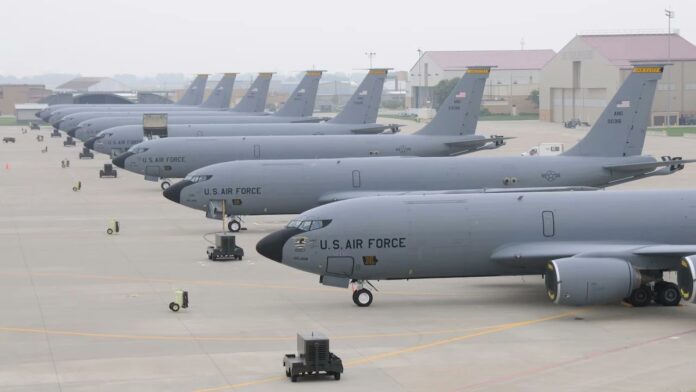
The United States Air Force has been observed repositioning air assets from Europe toward the broader Middle East theater. Aircraft movements transiting through RAF Lakenheath include aerial refueling platforms and fifth-generation fighters, consistent with reinforcing long-range airpower and sustainment capacity.

Such movements are not unusual during periods of elevated regional tension. RAF Lakenheath routinely serves as a forward hub for rotational deployments, training, and onward movement into U.S. Central Command’s area of responsibility.

What Is Known—and What Is Not

Open-source tracking and defense reporting confirm that U.S. air assets in Europe include a mix of F-35A Lightning II, F-15, and F-22 aircraft, supported by KC-135 Stratotanker refueling aircraft. These forces provide a flexible pool that can be repositioned for a range of missions, from reassurance and deterrence to intelligence support and rapid response.

However, there is no official confirmation that all aircraft stationed at Lakenheath are being redeployed, nor that current movements represent anything beyond selective rotations and posture adjustments. Large basing inventories often fluctuate without implying a wholesale drawdown or imminent employment.

Intelligence and High-Value Asset Positioning

Reports of an RC-135 Rivet Joint signals intelligence aircraft repositioning within the region have also circulated. Such aircraft are routinely moved to optimize coverage, survivability, and access to contested electromagnetic environments. Relocating high-value intelligence platforms away from potential threat envelopes is a standard precautionary measure during periods of uncertainty, rather than a definitive indicator of impending conflict.

Naval Presence and Maritime Deterrence

In parallel with air movements, the United States Navy maintains a robust maritime posture in and around the Middle East. The presence of multiple carrier strike groups, destroyers, and submarines provides layered air defense, strike capability, and sea control.

Naval deployments serve as a visible signal of commitment to freedom of navigation and regional stability, while also giving policymakers a spectrum of options short of direct confrontation.

Strategic Context

The current posture adjustments occur against a backdrop of ongoing regional instability, maritime security concerns, and unresolved disputes involving Iran’s missile forces, naval activity, and broader regional influence. U.S. and allied deployments are designed to manage risk, reassure partners, and preserve escalation control, rather than to telegraph a specific operational decision.

Historically, similar force movements have preceded diplomacy, de-escalation, or prolonged standoffs, underscoring that readiness does not equate to inevitability.

Bottom Line

Verified information indicates that the United States is reinforcing and fine-tuning its air and naval posture around the Middle East. These steps enhance deterrence and operational flexibility but do not, on their own, confirm plans for imminent military action. As in past crises, force positioning remains a tool for signaling and preparedness—one that keeps options open while political and strategic calculations continue.

Iran Launches ‘Smart Control’ Naval Drills in Strait of Hormuz as U.S. Fleet Presence Intensifies

0
Iran Launches ‘Smart Control’ Naval Drills in Strait of Hormuz as U.S. Fleet Presence Intensifies

Iran’s Islamic Revolutionary Guard Corps Navy (IRGC Navy) has launched a large-scale maritime exercise in the Persian Gulf titled “Smart Control of the Strait of Hormuz,” underscoring Tehran’s continued focus on managing escalation risks—and leverage—in one of the world’s most critical energy chokepoints.

Iranian state television reported that the drills began on Monday under the supervision of IRGC Commander-in-Chief Mohammad Pakpour, and are designed to test naval security plans and responses to potential threats in and around the Strait of Hormuz. Broadcast footage showed IRGC Navy helicopters launching sorties, with officials indicating that the exercise would continue over several hours.

What “Smart Control” Signals

According to Iranian media, the exercise scenario examines reciprocal military actions in response to perceived security threats, with an emphasis on command-and-control, readiness, and rapid response. The “smart control” framing suggests a focus on selective, calibrated actions—using surveillance, fast reaction forces, and layered responses—rather than overt attempts to close the strait outright.

This aligns with Iran’s long-standing approach in the Hormuz corridor: maintaining the capability to disrupt or harass shipping while avoiding steps that would trigger immediate, large-scale retaliation.

Operational Elements and Likely Focus Areas

While Tehran has not released a detailed order of battle, past IRGC Navy exercises in the area typically integrate:

  • Fast attack craft and swarming tactics
  • Naval aviation, including helicopters for surveillance and targeting
  • Coastal sensors and command nodes
  • Boarding and interception drills against notional targets

Such elements are optimized for asymmetric maritime operations in confined waters, where geography and traffic density favor smaller, agile forces.

Timing and Regional Context

The exercise comes amid heightened regional tension and a visible U.S. naval concentration around the Gulf. Open-source force tracking and official U.S. statements indicate that the United States Navy currently has an unusually large share of its deployed fleet operating across Middle Eastern combatant commands.

Following the Atlantic transit of the Gerald R. Ford Carrier Strike Group, the United States is positioned to operate two aircraft carriers, roughly 15 destroyers, and several submarines in the broader theater. Collectively, this force can field hundreds of Tomahawk Land Attack Missiles (TLAMs) and provides sustained air and missile defense coverage.

Analysts estimate that close to one-third of the U.S. Navy’s deployed forces are now oriented toward contingencies linked to Iran and regional stability, a posture intended to deter escalation while preserving freedom of navigation.

Deterrence Messaging on Both Sides

For Tehran, the “Smart Control” exercise serves multiple purposes:

  • Domestic signaling of readiness and resolve
  • Regional messaging that Iran retains escalation options short of war
  • External deterrence, reminding adversaries that Hormuz remains within Iran’s operational envelope

For Washington and its partners, the expanded naval presence communicates a counter-message: that any attempt to significantly disrupt shipping or threaten coalition forces would be met with rapid, overwhelming response.

Why the Strait Still Matters

Roughly one-fifth of globally traded oil transits the Strait of Hormuz, making even limited disruptions economically consequential. As a result, exercises in the area—particularly those emphasizing “control” or “security management”—are closely watched by energy markets, insurers, and regional governments.

Despite periodic rhetoric, Iran has historically avoided sustained closure of the strait, opting instead for episodic pressure calibrated to political objectives. The current drill appears consistent with that pattern.

Controlled Escalation, Not Closure

There is no indication from official Iranian statements that the exercise aims to block shipping. Instead, the emphasis on readiness testing and scenario rehearsal points to controlled escalation management, rather than a shift toward outright interdiction.

In strategic terms, the drill highlights a familiar dynamic in the Gulf: Iran rehearses its ability to complicate maritime operations, while the United States and its allies demonstrate the capacity to keep the corridor open. Neither side appears to be seeking a decisive confrontation—but both are clearly preparing for one if deterrence fails.

China Integrates Hypersonic Anti-Ship Missiles on Conventional Submarines, Signaling Shift in Undersea Warfare

0
YJ-19 hypersonic anti-ship cruise missile

The People’s Liberation Army Navy (PLAN) has reportedly integrated the YJ-19 hypersonic anti-ship cruise missile onto its Type 039B (Yuan-class) diesel-electric submarines, signaling a notable shift in China’s approach to non-nuclear undersea strike capabilities. If confirmed in routine fleet deployment, the move would represent the first known instance of hypersonic weapons being fielded on conventionally powered submarines.

A Quiet but Significant Capability Step

Chinese state-linked reporting and naval commentary indicate that the YJ-19 has been accepted for service aboard the Type 039B Yuan-class submarines equipped with air-independent propulsion (AIP). While Beijing has not released technical details or imagery confirming live firings from submerged platforms, the reported acceptance suggests the missile has passed integration and handling evaluations rather than remaining a purely experimental concept.

The development is notable less for its publicity than for what it implies about China’s confidence in marrying advanced propulsion, guidance, and thermal management technologies with the constraints of conventional submarine operations.

Tube-Launched Hypersonics and Fleet Scalability

A key aspect of the YJ-19 is its reported compatibility with standard 533-millimeter (21-inch) torpedo tubes. This design choice would allow the missile to be deployed without major hull modifications, enabling retrofitting across existing submarine classes. Beyond the Type 039B, this potentially includes later Type 039C variants and, over time, other conventional platforms in the PLAN inventory.

Such an approach favors scalability and rapid force-wide adoption, turning hypersonic strike from a niche capability into a more routine element of undersea warfare—at least in regional contexts where diesel-electric submarines operate close to contested waters.

From Supersonic to Hypersonic Underwater Strike

The YJ-19 is assessed to be an air-breathing, scramjet-powered missile capable of sustained speeds above Mach 5, positioning it as a successor to the supersonic YJ-18 family. While exact range and flight profiles remain undisclosed, the transition from supersonic to hypersonic anti-ship weapons significantly compresses defender reaction times and complicates interception, particularly when combined with the stealth and ambiguity of submarine launch platforms.

For surface forces, the challenge lies not only in intercepting a hypersonic missile, but in detecting, tracking, and localizing the launch platform in time to respond.

Strategic Implications at Sea

If operationally deployed as described, the YJ-19 would alter the risk calculus for carrier strike groups and high-value naval assets operating within reach of Chinese coastal and near-sea waters. Conventional submarines, already difficult to detect, would gain a weapon capable of threatening large surface combatants at extreme speed without resorting to nuclear propulsion or strategic-level systems.

This reinforces China’s broader emphasis on anti-access and area-denial strategies, where layered missile capabilities—launched from land, surface ships, aircraft, and now potentially conventional submarines—work together to constrain an adversary’s freedom of maneuver.

Regional and Export Considerations

The development also carries implications beyond the PLAN. The Type 039B design forms the basis of the Hangor-class submarines being constructed for the Pakistan Navy, with deliveries expected to begin in the mid-2020s. While there is no official confirmation that export variants would receive hypersonic weapons, regional observers note that advanced Chinese missile technologies have historically filtered to close partners over time.

Even the possibility of such integration adds a new dimension to undersea deterrence dynamics in the Indian Ocean region, particularly given Pakistan’s focus on sea-denial rather than power projection.

Part of a Broader Hypersonic Portfolio

The reported YJ-19 integration fits within a wider Chinese effort to field hypersonic systems across multiple domains. Alongside ship-launched weapons such as the YJ-21 and other emerging missile families, the undersea dimension points to a deliberate attempt to normalize hypersonic strike as a standard naval capability rather than an exceptional one.

Incremental Change, Strategic Weight

As with many Chinese military developments, the lack of detailed disclosure makes definitive assessment difficult. However, even incremental integration of hypersonic missiles onto conventional submarines carries disproportionate strategic weight. It suggests a future maritime environment where speed, surprise, and multi-axis launch options increasingly favor the offense.

For regional navies and extra-regional forces alike, the reported YJ-19 deployment is less about a single missile and more about the steady erosion of traditional assumptions surrounding undersea warfare and missile defense at sea.

Russia Drills Bal Coastal Missiles in Kaliningrad, Highlighting Baltic Sea Deterrence

0
Bal missile system

On 16 February 2026, Russia’s Baltic Fleet conducted a coastal missile exercise in the Kaliningrad region using the Bal coastal defense system, simulating strikes against hostile surface vessels in the Baltic Sea. While framed as routine combat training, the drill underscores Moscow’s sustained focus on shore-based anti-ship capabilities in one of Europe’s most strategically sensitive maritime theaters.

According to official fleet statements, the exercise involved full deployment procedures, electronic missile launches, rapid relocation after simulated strikes, and the use of unmanned aerial vehicles for surveillance and force protection. Together, these elements highlight how Russia envisions coastal missile units operating in a high-threat, intelligence-saturated environment.

Mobility and “Shoot-and-Scoot” Emphasis

During the drill, missile units redeployed from permanent bases to designated firing areas along the Kaliningrad coast. Crews practiced transitioning from march to combat readiness, opening firing positions, conducting pre-launch checks, and executing simulated engagements. Following these notional strikes, units rapidly changed positions, reinforcing a “shoot-and-scoot” concept designed to reduce exposure to counter-fire and aerial reconnaissance.

Camouflage, concealment, and movement in difficult terrain were emphasized throughout the exercise, reflecting the assumption that coastal missile forces would operate under continuous observation by NATO intelligence, surveillance, and reconnaissance assets in the Baltic region.

The Bal System and Its Role

The Bal coastal missile system (Russian designation 3K60, NATO code SSC-6 Sennight) is a core element of Russia’s shore-based anti-ship arsenal. Mounted on high-mobility 8×8 chassis, a typical Bal battery includes command and control vehicles with surface-search radar and multiple transporter-erector-launchers, each capable of carrying eight Kh-35 family anti-ship cruise missiles.

The subsonic Kh-35 is a sea-skimming missile guided by inertial navigation with active radar homing in its terminal phase. Depending on the variant and targeting support, reported ranges extend from roughly 120 kilometers to over 250 kilometers. From positions along the Kaliningrad coastline, this allows Bal units to cover significant portions of the central and southern Baltic Sea, including key sea lines of communication.

Layered Coastal Defense in Kaliningrad

Bal does not operate in isolation. In Kaliningrad, it is typically integrated into a broader coastal defense architecture that includes surveillance radars, air-defense systems, and other missile assets such as the Bastion-P system armed with longer-range and higher-speed anti-ship missiles. This layered approach enables Russian forces to threaten a spectrum of surface targets, from logistic shipping to high-value naval combatants, at varying ranges.

The combination of mobility, salvo-firing capability, and overlapping coverage is intended to complicate any adversary’s ability to operate freely near the Russian coastline, particularly in confined waters such as the Baltic Sea.

Drones and Networked Protection

A notable feature of the February exercise was the explicit integration of unmanned aerial vehicles. Drones were used for surveillance and positional security, reflecting a growing emphasis on networked protection of high-value missile assets. By enhancing situational awareness and detecting potential reconnaissance or special-forces threats, UAVs are becoming an increasingly important component of coastal missile unit survivability.

This focus mirrors broader trends in modern warfare, where even traditionally static or ground-based systems are now embedded in sensor and information networks to counter precision strike and loitering munition threats.

Strategic Signaling in the Baltic

Kaliningrad’s geographic position—separated from mainland Russia and bordered by NATO members Poland and Lithuania—gives any military activity there an inherent signaling dimension. Bal batteries deployed along its coast can threaten shipping routes leading to Polish and Lithuanian ports and influence maritime access used to reinforce NATO’s eastern flank.

In this context, exercises like the February drill serve a dual purpose. On one level, they are routine training events focused on readiness, deployment discipline, and coordination. On another, they signal that Russia continues to prioritize the combat readiness of its coastal missile forces in the Baltic, even as its armed forces remain heavily engaged elsewhere.

Routine Training, Enduring Message

The latest Bal exercise illustrates how standard training cycles and strategic messaging intersect in the Baltic security environment. While no live missiles were fired, the rehearsal of the full kill chain—from movement and deployment to simulated engagement and rapid relocation—reinforces the credibility of Russia’s coastal deterrent posture.

For regional observers, the drill is a reminder that any future crisis in the Baltic Sea would unfold under the shadow of mobile, radar-guided anti-ship missiles based in Kaliningrad, capable of shaping access to one of Europe’s most contested maritime frontiers.

F-35 Software Sovereignty Debate Exposes New Fault Lines in Allied Airpower

0
F-35 Lightning II

Remarks by a senior Dutch defence official have triggered an unusually blunt debate within NATO and beyond: who ultimately controls the software brain of the world’s most advanced fighter aircraft? The comments have reframed long-standing concerns about dependence, autonomy, and alliance trust in the era of software-defined warfare.

A Remark That Broke the Taboo

The debate was catalysed when a Dutch defence official publicly suggested that European operators could theoretically “jailbreak” the F-35 Lightning II, drawing an analogy that instantly resonated across defence ministries. The statement was not a technical briefing but a political signal—acknowledging that software access, rather than airframe ownership, now defines operational sovereignty.

While no intent to modify aircraft was declared, the language itself marked a departure from the traditionally cautious tone allied governments adopt when discussing U.S.-controlled defence systems.

Why Software Control Matters

The F-35’s combat advantage rests less on stealth shaping than on its software ecosystem. Millions of lines of code manage sensor fusion, electronic warfare, weapons employment, and threat recognition. Central to this system are Mission Data Files (MDFs), which allow the aircraft to identify, prioritise, and counter specific radar and missile threats.

These files are generated and updated primarily through U.S.-managed facilities. Without regular refresh cycles, survivability in contested airspace degrades over time, regardless of airframe performance. For foreign operators, this creates a structural dependency that cannot be mitigated through maintenance or pilot training alone.

The Dutch Case: Capability Without Autonomy

The Netherlands has fully transitioned from the F-16 to the F-35A, making the aircraft the sole backbone of its combat aviation. More than 40 aircraft have already been delivered, with additional units arriving through 2028. This concentration amplifies risk: any disruption to software updates directly affects air policing, quick-reaction alert duties, and NATO deployments.

As a Level 2 partner in the programme, the Netherlands invested heavily in development and industrial participation. Yet, like most partners, it lacks independent authority over mission software. The result is a paradox—deep integration into the programme paired with constrained unilateral control.

Alliance Dependency in a Software-Defined Battlespace

The F-35 programme was originally sustained through the Autonomic Logistics Information System (ALIS), later replaced by the cloud-based Operational Data Integrated Network (ODIN). While ODIN improves efficiency and data handling, it preserves a U.S.-centric governance model for updates, cybersecurity, and configuration management.

This structure underpins interoperability, but it also means that software sovereignty is effectively pooled—managed centrally rather than nationally. The Dutch remarks reflect growing unease with this balance, particularly as Europe accelerates rearmament in response to Russia and seeks assured readiness timelines.

Not All Partners Are Equal

Israel remains the sole exception within the F-35 enterprise. Its F-35I “Adir” operates with indigenous avionics and modified software pathways, following protracted negotiations that secured a level of autonomy unmatched by other operators. The precedent demonstrates that greater control is technically possible—but politically difficult and strategically selective.

For most allies, any attempt to bypass onboard protections would confront encrypted secure-boot systems, hardware root-of-trust safeguards, and legal constraints under U.S. export-control law. The issue, therefore, is less about feasibility and more about leverage.

Europe’s Broader Recalibration

The controversy feeds into a wider European reassessment of airpower sovereignty. Indigenous sixth-generation programmes such as FCAS and GCAP are increasingly framed not just as capability projects, but as mechanisms to reclaim control over algorithms, mission data, and update authority.

Several European states have publicly debated the long-term financial and strategic implications of F-35 participation, citing sustainment costs and “black box” software constraints. Coordination among European F-35 operators to explore shared mitigation pathways suggests a gradual, collective response rather than unilateral defiance.

Implications Beyond Europe

The software sovereignty question resonates equally in the Indo-Pacific. Operators such as Japan, Australia, South Korea, and Singapore face scenarios where rapid threat evolution would demand continuous mission-data updates. In a crisis, delays in cryptographic keys or software releases could constrain operational tempo without any overt political signal.

Israel’s model shows that negotiated autonomy is achievable, but only with industrial depth and strategic leverage. For others, the debate reinforces the need to invest in parallel indigenous platforms and data-generation capabilities.

A Strategic Question, Not a Technical One

Despite the provocative metaphor, Dutch officials have also acknowledged that the F-35 remains highly capable even without immediate upgrades. This underscores that the “jailbreak” remark was less a call to action than a warning about structural dependence.

The episode highlights a defining issue of modern alliance warfare: in an era where code determines combat relevance, sovereignty has shifted from hangars and depots to encrypted servers and classified databases.

The F-35 debate is therefore not about sabotage or separation, but about renegotiating trust, control, and responsibility within alliances built for a pre-digital age.

YFQ-42A Flight Validates Modular Autonomy as U.S. Air Force Advances Collaborative Combat Aircraft

0
YFQ-42A

On February 12, 2026, General Atomics Aeronautical Systems (GA-ASI) announced that its YFQ-42A Collaborative Combat Aircraft (CCA) prototype completed a semi-autonomous flight lasting more than four hours, following the integration of autonomy software developed by Collins Aerospace.

According to the company, the sortie validated the aircraft’s compatibility with the United States Air Force Autonomy Government Reference Architecture (A-GRA), a framework intended to enable modular, third-party autonomy integration without modifying certified flight-critical systems. Commands issued from a ground control station were executed as planned, with the aircraft maintaining stable flight and completing assigned mission tasks under supervised autonomy.

From Platform-Centric to Software-Defined

The significance of the test lies less in the duration of the flight than in the architecture it validated. A-GRA is designed to separate safety-critical flight controls from higher-level mission autonomy, allowing autonomy software to be added, replaced, or upgraded without recertifying the entire aircraft. This approach aims to reduce long-term program risk and prevent dependence on a single autonomy provider.

By demonstrating that Collins Aerospace’s Sidekick software could operate within this framework, the U.S. Air Force is signaling a shift toward competitive and interchangeable autonomy, rather than tightly coupled, proprietary solutions. In effect, aircraft such as the YFQ-42A are being positioned as software-defined combat nodes, where mission capability evolves primarily through code rather than structural redesign.

Leveraging Existing Uncrewed Aviation Experience

Technically, the YFQ-42A builds on GA-ASI’s experience with jet-powered uncrewed aircraft, particularly the MQ-20 Avenger lineage and the broader Gambit family of designs. The platform is optimized for high subsonic flight, internal payload carriage, and digital flight controls developed from the outset to accommodate autonomy layers.

Previous demonstrations—including autonomous takeoff and landing—had already indicated a mature flight management system. The recent four-hour sortie extends that confidence to mission-level autonomy, showing that onboard systems can reliably exchange data with external autonomy software while maintaining predictable aircraft behavior.

Scaling Through Common Architectures

The test also reinforces GA-ASI’s broader manufacturing strategy, which emphasizes developing multiple mission variants from a common core airframe. This concept was previously demonstrated with the XQ-67A, and the YFQ-42A represents an air-to-air focused evolution of that approach.

If successful, this model could allow the U.S. Air Force to field families of Collaborative Combat Aircraft tailored to sensing, electronic warfare, decoy operations, or strike missions—without designing each platform from scratch. Open autonomy architectures are central to making such scalability economically and operationally viable.

Implications for Future Air Combat

Collaborative Combat Aircraft are expected to operate alongside crewed fighters such as the F-35 Lightning II and future Next Generation Air Dominance platforms, assuming roles that are either too risky or too resource-intensive for piloted aircraft alone. In contested environments where communications may be degraded, autonomy will be required to manage sensing, prioritization, and maneuvering with limited human input.

In this context, the February 2026 flight represents a step toward a force structure where software agility becomes as important as airframe performance. Hardware provides endurance and survivability; autonomy determines how effectively those attributes are translated into combat effect.

An Incremental Flight With Strategic Weight

While the sortie itself may appear incremental, it highlights a broader transition underway in U.S. airpower planning. The successful integration of third-party autonomy onto the YFQ-42A suggests that plug-and-play combat autonomy is moving from concept to practical application. The next test will be whether such architectures can perform reliably under contested electromagnetic conditions and complex tactical scenarios.

For now, the flight indicates that the U.S. Air Force’s vision of modular, rapidly adaptable uncrewed wingmen is no longer confined to design studies—it is beginning to take shape in the air.

Rafale, HAL, and the Atmanirbhar Gap: What India’s Fighter Procurement Reveals

0

The public denial issued by Hindustan Aeronautics Limited (HAL) over media reports on Rafale production terms is more than a routine clarification. It exposes deeper structural ambiguities—and contradictions—within India’s defence procurement system, particularly its professed commitment to self-reliance under the Atmanirbhar Bharat framework.

HAL has stated unambiguously that it has received no official communication from the Ministry of Defence or from Dassault Aviation regarding any agreement that would see Rafale fighters produced at HAL facilities. This directly contradicts weeks of reporting that portrayed localization levels, delivery schedules, and production splits as settled facts.

Policy by Leakage, Not Process

India’s fighter acquisition history increasingly reflects a pattern where policy direction is inferred through media leaks rather than formal institutional signaling. The Rafale case appears to follow the same trajectory: selective disclosures, politically convenient timelines, and premature certainty about outcomes that procurement agencies themselves say have not been finalized.

This approach weakens accountability. If production terms, localization percentages, and delivery milestones can circulate publicly without confirmation from the country’s principal aerospace manufacturer, it raises questions about who is actually steering procurement decisions—the services, the bureaucracy, or political leadership operating outside established mechanisms.

Atmanirbhar in Name, Ad Hoc in Practice

The Rafale debate also underscores a persistent tension within India’s self-reliance agenda. Atmanirbhar Bharat emphasizes indigenous production, industrial depth, and institutional capability-building. Yet, in practice, localization remains selective, fragmented, and negotiable, rather than systematic.

Despite HAL being India’s primary combat aircraft manufacturer, Rafale-related industrial work has been routed instead to Tata Advanced Systems Limited, which will assemble fuselage sections under Dassault’s supervision. While private-sector participation is not inherently problematic, the absence of HAL from this ecosystem raises uncomfortable questions:

  • Is HAL being bypassed due to capacity concerns—or policy convenience?
  • Does Atmanirbhar Bharat prioritize industrial sovereignty, or merely assembly-line localization?

If India’s flagship aerospace PSU is not central to one of its most expensive fighter programs, the credibility of long-term self-reliance claims becomes harder to sustain.

Rafale as a Shortcut Strategy

Reports suggesting that India may abandon the long-running MRFA competition in favor of a direct Rafale buy reinforce perceptions of procurement fatigue and strategic shortcutting. While operational logic—fleet commonality, training efficiency, and faster induction—is often cited, the strategic cost is substantial.

A direct Rafale expansion would effectively nullify a decade of competitive evaluation, sidelining alternative platforms and reinforcing a trend where urgency replaces competition. This may deliver aircraft faster, but it does little to strengthen domestic design competence, bargaining leverage, or technology absorption.

Strategic Silence, Institutional Risk

HAL’s denial does not necessarily mean negotiations are stalled. It more likely indicates that terms remain politically sensitive and institutionally unresolved. However, repeated episodes of premature disclosure followed by official pushback erode confidence in India’s procurement governance.

Atmanirbhar Bharat cannot be sustained through opacity, selective localization, or parallel decision-making structures. Without transparent sequencing—policy approval, industrial alignment, and contractual clarity—India risks turning self-reliance into a slogan rather than a system.

The Larger Question

The Rafale issue is no longer just about numbers, delivery schedules, or localization percentages. It is about whether India’s defence procurement model can reconcile:

  • Strategic urgency with procedural integrity
  • Political signaling with industrial reality
  • Self-reliance rhetoric with institutional empowerment

Until those tensions are resolved, Rafale will remain not just a fighter aircraft—but a case study in the limits of India’s Atmanirbhar ambition.

Pakistan Quietly Tests Indigenous High-Speed Target Drone, Strengthening Air-Defence Training Capability

0
high-speed target drone developed by AvRID

Pakistan has quietly advanced its indigenous unmanned aviation capabilities with the successful testing of a high-speed target drone developed by AvRID (Aviation Research, Innovation and Development). The test, revealed through brief but clear launch footage in mid-February 2026, highlights a growing emphasis on locally designed systems intended to support air-defence training, missile testing, and realistic threat simulation.

The footage shows a jet-powered drone launched via a large pneumatic rail system in a desert environment, underscoring Pakistan’s continued investment in self-reliant aerospace technologies rather than headline-grabbing combat platforms.

A Quiet Test with Strategic Weight

The test became public through a social media post by Amir Husain, who noted that the pneumatic launcher appeared larger than previous variants. While limited in duration, the clip confirms iterative progress rather than experimentation, suggesting a programme that has moved well beyond proof-of-concept.

Unlike armed UAVs designed for combat roles, high-speed target drones are critical force enablers. They allow air-defence units, radar operators, and missile crews to train against fast, manoeuvring targets that replicate hostile aircraft or cruise-missile profiles—capabilities increasingly relevant in modern air warfare.

AvRID, NASTP and the Indigenous Push

AvRID operates under the umbrella of the Pakistan Aeronautical Complex and is now integrated into the National Aerospace Science & Technology Park (NASTP). This structure links government, industry, and academia, creating a pipeline for indigenous aerospace development that prioritises reduced foreign dependency.

The high-speed target drone fits squarely within this framework, complementing other initiatives such as advanced weapons testing ranges and manned-unmanned teaming concepts that are shaping Pakistan’s future air-combat doctrine.

Evolution of the High-Speed Target Drone Programme

Pakistan’s work on jet-powered target drones dates back several years, with early test launches publicly acknowledged around 2019. Since then, successive trials—reported in 2022, 2023, and late 2025—have demonstrated gradual improvements in launch infrastructure, reliability, and performance envelopes. The February 2026 test appears to build on these milestones, pointing to a mature and repeatable system rather than a one-off demonstration.

The visible scaling of the pneumatic launcher may indicate accommodation for heavier drones, higher launch energy, or extended operational profiles, all of which are relevant for modern air-defence training scenarios.

Image

Inferred Capabilities and Role

While official specifications remain undisclosed, the drone is assessed to be jet-powered and capable of sustained high-subsonic speeds. Its primary role is to serve as a realistic target for surface-to-air missile systems, radar calibration, and anti-aircraft gunnery. Such platforms are far more cost-effective than using manned aircraft for training, while offering repeatability and lower operational risk.

The system’s design also aligns with broader trends in unmanned operations, including autonomy and potential integration into more complex training scenarios involving multiple aerial targets.

Strategic and Industrial Implications

From a strategic perspective, the programme enhances Pakistan’s air-defence readiness by enabling frequent, realistic training against high-speed threats. Industrially, it reflects a shift from assembly and adaptation toward full-cycle indigenous design and testing—an important distinction for long-term sustainability.

Although unlikely to attract the attention reserved for combat drones or fighter aircraft, the high-speed target drone represents a foundational capability. It strengthens Pakistan’s defence ecosystem, supports domestic industry, and reinforces a quiet but consistent trajectory toward aerospace self-reliance.

Iran’s Mi-28NE Night Hunter Enters Service, Quietly Transforming Regional Rotary-Wing Warfare

0
Mi-28NE Night Hunter

High-resolution imagery that surfaced in mid-February 2026 has conclusively confirmed that the Mil Mi-28NE Night Hunter has entered operational service with Iranian Army Aviation. Photographs captured during daylight functional check flights over western Tehran and inside the perimeter of Mehrabad Airport show freshly applied Iranian pixel camouflage, clear national insignia, and fully exposed sensor and defensive systems—leaving little doubt about the platform’s status or configuration.

Full-Standard Configuration Confirmed

The clarity of the imagery allows analysts, for the first time, to definitively identify the mast-mounted N025ME millimetre-wave radar above the main rotor hub, a ball-type electro-optical/infrared targeting turret beneath the nose, and multiple turrets of the L370V28 Vitebsk directional infrared countermeasures (DIRCM) suite. These features confirm that Iran has not received a downgraded export variant, but a 2018-standard Mi-28NE closely aligned with the domestic Mi-28NM baseline.

Closing a Long-Standing Capability Gap

The Mi-28NE’s arrival addresses a structural weakness that has shaped Iranian Army Aviation for decades. Sanctions constrained Tehran to incremental upgrades of legacy platforms, limiting night-fighting performance, sensor fusion, and survivability in infrared-threat environments. The Night Hunter introduces a modern, all-weather “hunter-killer” capability able to operate after dark and survive in MANPADS-saturated battlespaces.

Embedded in a Broader Russia–Iran Modernisation Drive

Iranian officials acknowledged the helicopter acquisition in late 2023 as part of a wider force-modernisation package that also includes Sukhoi Su-35 fighters and Yak-130 aircraft. From Tehran’s perspective, the deal reflects defensive modernisation under sanctions pressure; from Moscow’s standpoint, it demonstrates a deepening military-technical relationship framed as compliant with international norms.

Image

Performance Optimised for Iranian Operating Conditions

Powered by twin VK-2500 engines, the Mi-28NE offers strong hot-and-high performance well suited to Iran’s arid climate and elevated terrain. Composite five-bladed rotors improve hover efficiency and responsiveness, while enhanced dust-filtration systems address long-standing engine and sensor degradation issues in sandy environments.

Sensors and Survivability at the Core

The helicopter’s defining feature—the mast-mounted N025ME radar—provides 360-degree situational awareness while allowing terrain-masked operations, exposing only the radar dome above cover. This is complemented by a modern EO/IR targeting turret and helmet-mounted cueing systems that shorten engagement timelines. The Vitebsk self-defence suite integrates radar and laser warning receivers, ultraviolet missile-approach sensors, and laser-based DIRCM, significantly improving survivability against infrared-guided threats.

Armament and Cost-Effectiveness

A chin-mounted 30 mm 2A42 cannon provides accurate suppressive fire, while stub wings support a wide range of munitions, including Ataka or Khrizantema-VM anti-tank guided missiles, rockets, limited air-to-air missiles, and conventional bombs. With an estimated unit cost of USD 18–20 million, the Mi-28NE represents a relatively economical yet transformative force multiplier within Iran’s constrained defence budget.

Regional and Strategic Implications

For Israel, the United States, and Gulf states, the appearance of modern Russian attack helicopters in Iranian service complicates assumptions about low-altitude air dominance, particularly in scenarios involving littoral operations or proxy conflicts. For Russia, the deployment offers revenue, leverage, and a live demonstration of export-grade hardware under combat-relevant conditions. For Iran, it signals a decisive shift from sanctions-era improvisation toward structured, networked modernisation.

A Quiet but Decisive Shift

With the Night Hunter now visibly airborne over Tehran, the images circulating globally represent more than confirmation of an arms transfer. They mark the operational debut of a modern, night-optimised attack helicopter under Iranian command—quietly but decisively recalibrating the rotary-wing balance across the Middle East.

U.S. Quietly Courts Bangladesh With Defence Alternatives to China

0
MQ-9-Sea-Guardian.jpg

According to reporting by Reuters, the United States is preparing to offer Bangladesh a package of American and allied defence systems as alternatives to Chinese military hardware .
The emphasis, however, is not on announcing a specific deal. Instead, Washington appears focused on signalling strategic availability—leaving room for Dhaka to explore options without committing publicly or prematurely.

Political Transition Shapes the Timing

The outreach coincides with a period of political uncertainty in Bangladesh following the collapse of Sheikh Hasina’s government in August 2024 and ahead of general elections expected to bring a new coalition to power. For Washington, the transition offers a narrow window to influence early policy direction, particularly on defence procurement and economic openness.

U.S. officials have stressed they will work with whichever government emerges, suggesting continuity of engagement rather than a personality-driven approach .

China’s Expanding Defence Footprint

Reuters framed the U.S. move against China’s growing military presence in Bangladesh, including a defence agreement linked to a drone manufacturing facility near the Indian border and discussions with Pakistan over acquiring JF-17 Thunder fighter jets, a platform jointly developed with China .

From Washington’s perspective, such acquisitions risk locking Bangladesh into Chinese-origin defence ecosystems that shape logistics, training, and doctrine for decades—an outcome the United States is clearly seeking to counter, albeit quietly.

Defence Ties Linked to Economic Confidence

A notable feature of the U.S. message is its coupling of security cooperation with economic signalling. U.S. Ambassador Brent T. Christensen described “commercial diplomacy” as a priority, noting that American firms are watching closely for policy cues indicating that Bangladesh’s next government is “open for business” .

The linkage suggests Washington sees defence alignment not as a standalone objective, but as part of a broader framework encompassing investment climate, regulatory predictability, and long-term economic reform.

Humanitarian Pressures as a Security Factor

The Reuters report also highlighted the humanitarian dimension shaping U.S. thinking. The United States remains the largest donor to the Rohingya refugee response, even as chronic funding shortfalls have forced ration cuts and school closures in recent years .

For U.S. policymakers, instability in Cox’s Bazar is not peripheral; it is a persistent stressor with implications for internal security and governance in Bangladesh.

What Is Not Yet Confirmed

Crucially, Reuters did not identify any specific aircraft, missile systems, radars, or air defence platforms under consideration. Any discussion of particular capabilities therefore remains analytical inference rather than reported fact.

This restraint is telling. The United States appears less interested in promoting individual platforms than in offering an integrated, interoperable pathway that could gradually reduce Bangladesh’s reliance on Chinese defence supply chains.

Constraints on Any Strategic Shift

Any move toward Western defence systems would confront significant constraints: higher acquisition costs, demanding training pipelines, strict export controls, and long-term sustainment requirements. For Bangladesh, the central question is not platform performance on paper, but whether the state can finance and institutionalize such capabilities over decades.

These realities explain Washington’s careful tone. Defence realignment, U.S. officials seem to acknowledge, cannot be separated from fiscal capacity, governance reform, and policy continuity.

A Test of Intent, Not a Pivot

What emerges from the Reuters reporting is not evidence of an imminent realignment, but a test of intent on both sides. The United States is signalling readiness to engage more deeply—on defence, economics, and humanitarian stability—if Bangladesh’s next government demonstrates a willingness to diversify its strategic choices.

Rather than a dramatic pivot away from China, the situation points to a quieter recalibration. Whether Bangladesh treats this moment as leverage in great-power competition or as the start of a longer-term strategic adjustment will become clearer only after the political transition is complete.

PNS KHAIBAR’s Eastern Mediterranean Deployment Signals Growing Pakistan–Türkiye Naval Interoperability

0
PNS KHAIBAR

The newly commissioned PNS KHAIBAR, during its maiden voyage from Türkiye to Pakistan, conducted a port visit to Aksaz Naval Base and participated in Exercise TURGUTREIS-XIII alongside units of the Turkish Navy.

While routine in form, the deployment carries broader strategic significance. It highlights the expanding operational relationship between the Pakistan Navy and its Turkish counterpart at a time when maritime security, sea-lane protection, and coalition interoperability are gaining renewed importance across connected theatres.

Technical Profile: PNS KHAIBAR

Category Details
Class / Type Guided Missile Frigate
Navy Pakistan Navy
Builder ASFAT / Turkish shipbuilding industry
Place of Construction Türkiye
Commissioning Period 2024–2025 (recently commissioned)
Displacement ~3,000–3,200 tons (full load, estimated)
Length ~113 meters
Propulsion Combined Diesel and Gas (CODAG) configuration
Maximum Speed ~29 knots
Operational Range ~5,700 nautical miles
Crew Complement ~120–130 personnel
Primary Role Multi-role surface combatant (ASuW, AAW, ASW)
Surface Warfare Anti-ship missile capability
Air Defence Surface-to-air missile system (point/area defense)
Anti-Submarine Warfare Hull-mounted sonar, torpedoes
Aviation Facilities Flight deck and hangar for one naval helicopter
Command & Sensors Modern combat management system, 3D radar, EW suite
Interoperability Designed for NATO-standard communications and data links

Editorial Note (Optional for Web Use)

Specifications reflect open-source reporting and may vary as systems are integrated and upgraded during early service life.

Naval Diplomacy at Aksaz

During the port call, the Commanding Officer of PNS KHAIBAR met the Turkish Southern Sea Area Commander, where discussions focused on strengthening bilateral naval cooperation and contributing to regional stability through coordinated maritime activity.

Senior Turkish naval leadership, including the Southern Sea Area Commander and the Commander of Aksaz Naval Base, later visited PNS KHAIBAR. Such reciprocal engagements are a standard feature of professional naval diplomacy, reinforcing trust, procedural familiarity, and command-level communication between partner fleets.

Exercise TURGUTREIS-XIII: Interoperability in Practice

Following the port visit, PNS KHAIBAR joined Exercise TURGUTREIS-XIII, a bilateral Pakistan–Türkiye naval drill conducted with the Turkish Navy’s TCG HEYBELIADA and a Turkish Naval Forces SH-70 helicopter.

The exercise included a range of sea evolutions designed to rehearse joint maritime operations, including maneuvering, communications coordination, and aviation-ship integration. These activities are central to improving tactical interoperability, particularly between navies operating different platforms but aligned doctrines.

Such drills also allow newly commissioned ships like PNS KHAIBAR to validate crew proficiency and systems performance in a multinational environment early in their operational life cycle.

Coordinated Patrol in the Eastern Mediterranean

Upon completion of the exercise, PNS KHAIBAR and TCG HEYBELIADA conducted a Coordinated Patrol (CORPAT) in the Eastern Mediterranean. While limited in duration, such patrols serve multiple functions: they demonstrate shared situational awareness, reinforce freedom of navigation norms, and contribute to a visible naval presence in a strategically sensitive maritime space.

For Pakistan Navy, participation in a CORPAT outside its immediate region reflects an increasingly outward-looking posture and an emphasis on operating seamlessly with trusted partners beyond the Indian Ocean.

Strategic Context: A Maturing Naval Partnership

Pakistan–Türkiye naval cooperation has steadily deepened over the past decade, encompassing shipbuilding collaboration, training exchanges, and recurring bilateral exercises. Deployments such as PNS KHAIBAR’s maiden voyage underscore a transition from symbolic engagement to routine operational cooperation.

From an analytical perspective, the significance lies less in the scale of the exercise and more in its consistency. Regular interaction builds shared procedures, aligns command cultures, and lowers coordination costs in future multinational or coalition settings.

Conclusion

PNS KHAIBAR’s participation in Exercise TURGUTREIS-XIII and a coordinated patrol in the Eastern Mediterranean illustrates how bilateral naval partnerships are increasingly expressed through sustained, professional engagement rather than episodic gestures.

As maritime security challenges grow more interconnected across regions, such deployments reflect Pakistan Navy’s intent to operate credibly with capable partners, while Türkiye continues to position itself as a central naval interlocutor linking the Mediterranean, Black Sea, and wider maritime domains.

China’s Type 095 Nuclear Attack Submarine Signals a New Phase in Undersea Power Projection

0
Type 095 Nuclear Attack Submarine

China has launched what analysts assess to be the first Type 095 (09V) nuclear-powered attack submarine at Bohai Shipbuilding Heavy Industry in Huludao, marking a significant inflection point in the evolution of the People’s Liberation Army Navy undersea force. Satellite imagery from early February 2026 confirms that the platform is not a further refinement of the Shang-class lineage but a clean-sheet, third-generation SSN designed for sustained blue-water operations .

Initial assessments misidentified the hull as another Type 093B. Higher-resolution optical and radar imagery, however, revealed distinct proportions, hull geometry, and beam expansion consistent with a new class. These features collectively indicate a platform engineered to prioritise acoustic discretion, endurance, and vertical strike capacity.

Image

From Incremental Improvement to Generational Shift

With an estimated submerged displacement between 9,000 and 10,700 tonnes, the Type 095 enters the heavyweight SSN category. This places it in the same general class as the most capable Western and Russian attack submarines, underscoring China’s transition from incremental upgrades toward a qualitatively superior undersea combatant.

Analysts note that the Type 095 represents a generational architecture, not an evolutionary step. The hull form, internal volume, and aft geometry point toward a design optimised for noise reduction, survivability, and multi-mission flexibility—attributes that historically defined the gap between Chinese submarines and their Western counterparts.

Propulsion, Acoustics, and Survivability

One of the most consequential indicators is the apparent integration of a pump-jet propulsor, inferred from the absence of a visible skewback propeller and the shape of the stern section. Pump-jet propulsion significantly reduces cavitation and broadband noise, particularly at patrol speeds, aligning the Type 095 with contemporary best practices in acoustic suppression.

Open-source technical assessments suggest the use of advanced machinery isolation systems, including free-floating raft concepts referenced in Chinese technical literature since the late 2010s. Combined with a wider pressure hull and expanded internal isolation, these measures are designed to minimise structure-borne vibration and reduce detectability across a wide frequency spectrum .

Sensors and Strike Capacity

Imagery indicates an open compartment aft of the sail configured for a vertical launch system (VLS) array. While the layout resembles that of the Type 093B, analysts assess that the Type 095 may support a larger number of cells, reinforcing its role as a strike-capable platform rather than a purely traditional hunter-killer submarine.

Open-source estimates suggest VLS capacity ranging from 12 to potentially more than 20 cells, enabling carriage of land-attack and anti-ship cruise missiles. The submarine is expected to retain six 533-mm torpedo tubes for heavyweight torpedoes and anti-submarine weapons, preserving core SSN functions while adding layered strike options .

The most strategically significant prospect is the future integration of hypersonic anti-ship missiles, which would transform the Type 095 into a platform capable of holding high-value surface units at risk over extended ranges, dramatically compressing adversary decision and response timelines.

Image

Industrial Momentum Behind the Platform

The Type 095’s emergence must be understood in the context of China’s submarine industrial base. Bohai Shipbuilding Heavy Industry has delivered seven to eight Type 093B submarines since 2022, a production tempo unmatched globally. Expanded infrastructure—including multiple covered construction halls and dedicated launch facilities—suggests an ecosystem calibrated for serial nuclear submarine production .

This industrial momentum contrasts with constraints facing Western shipyards, where workforce limitations and cost growth have slowed SSN output. The visibility of the Type 095 launch, identified rapidly through commercial satellite imagery, also reflects Beijing’s confidence in the maturity of the design.

Strategic Implications in the Indo-Pacific

The arrival of the Type 095 adds a new variable to undersea deterrence dynamics across the Indo-Pacific. As competition intensifies around Taiwan, the South China Sea, and critical sea lanes, a quieter, longer-ranged, and more heavily armed Chinese SSN complicates anti-submarine warfare planning for regional and extra-regional navies.

China now operates approximately 32 nuclear-powered submarines, excluding future ballistic-missile boats. The Type 095 signals a narrowing of the qualitative gap that once favoured Western fleets and reinforces Beijing’s intent to contest undersea dominance beyond its near seas .

Conclusion

The launch of the Type 095 is not simply the addition of another hull to China’s fleet. It represents the culmination of a decade-long effort to align doctrine, industrial capacity, and technology around undersea warfare as a central pillar of maritime power.

If serial production proceeds as expected, the Type 095 is likely to become the backbone of China’s attack submarine force through the 2030s, reshaping operational assumptions across the Indo-Pacific. In an environment where silence confers advantage, the strategic resonance of this platform will extend far beyond its physical presence beneath the waves .

Saudi–Pakistan Defense Talks in Riyadh Highlight Regional Stability and Emerging Gaza Peace Diplomacy

0
Field Marshal Syed Asim Munir, Chief of Army Staff and Chief of Defence Forces (CDF) of Pakistan, called on Khalid Bin Salman, Minister of Defence, Kingdom of Saudi Arabia.

Saudi Arabia’s Defense Minister Prince Khalid bin Salman held talks in Riyadh with Pakistan’s Chief of Army Staff and Chief of Defence Forces, Field Marshal Asim Munir, focusing on bilateral defense cooperation and broader regional and global security issues.

In a statement posted on X, Prince Khalid said the meeting reaffirmed the strength of Saudi-Pakistani relations and the strategic defense partnership between the two countries, adding that discussions covered joint efforts to promote peace and security in line with shared interests.

The engagement reflects long-standing military cooperation between Saudi Arabia and Pakistan, including regular strategic consultations, training cooperation, and defense coordination.

Regional Context: Gaza and Ongoing Diplomatic Engagements

The meeting took place amid intensified regional diplomacy linked to the conflict in Gaza. Since the escalation of hostilities, multiple regional and international actors have been engaged in discussions aimed at de-escalation, humanitarian access, and exploring political pathways toward stability.

Saudi Arabia has emerged as an active diplomatic interlocutor in these efforts, maintaining contacts with a range of regional and international partners. Rather than a single formal mechanism, the current approach has centered on continuous consultations, bilateral meetings, and coordinated diplomatic outreach.

Pakistan has consistently supported calls for a ceasefire, civilian protection, and humanitarian relief for Gaza through diplomatic channels, aligning its position with international humanitarian principles.

International Political Signals

The Riyadh discussions also unfolded against the backdrop of wider international political activity. U.S. political leader Donald Trump has in recent weeks held meetings and outreach with representatives of several countries, which regional observers see as part of broader political engagement related to Middle East stability.

While these contacts are political in nature, regional capitals continue to closely track U.S. political dynamics, given their potential influence on future diplomatic initiatives and mediation efforts concerning Gaza and the wider region.

Strategic Significance of Saudi–Pakistan Engagement

Analysts note that high-level Saudi–Pakistan defense engagements increasingly serve a dual purpose: reinforcing bilateral military ties while also providing a forum for discreet discussions on wider regional security challenges.

The emphasis on “global peace and security” in the Saudi defense minister’s remarks suggests that both sides view their partnership within a broader strategic and diplomatic context, particularly at a time of heightened regional uncertainty.

Conclusion

The Riyadh meeting between Prince Khalid bin Salman and Field Marshal Asim Munir reflects sustained Saudi–Pakistan defense cooperation at a moment of active regional diplomacy. While no formal peace structure related to Gaza has been announced, the continued pattern of meetings and consultations highlights an effort by key regional partners to contribute to stability through measured, ongoing diplomatic engagement.

As diplomatic activity surrounding Gaza continues across multiple capitals, Saudi–Pakistan coordination remains a notable element in the broader regional security landscape.