Saturday, April 11, 2026
Home Blog Page 29

Pakistan’s Power Play: Anti-Taliban Summit Signals Standoff with Kabul

0

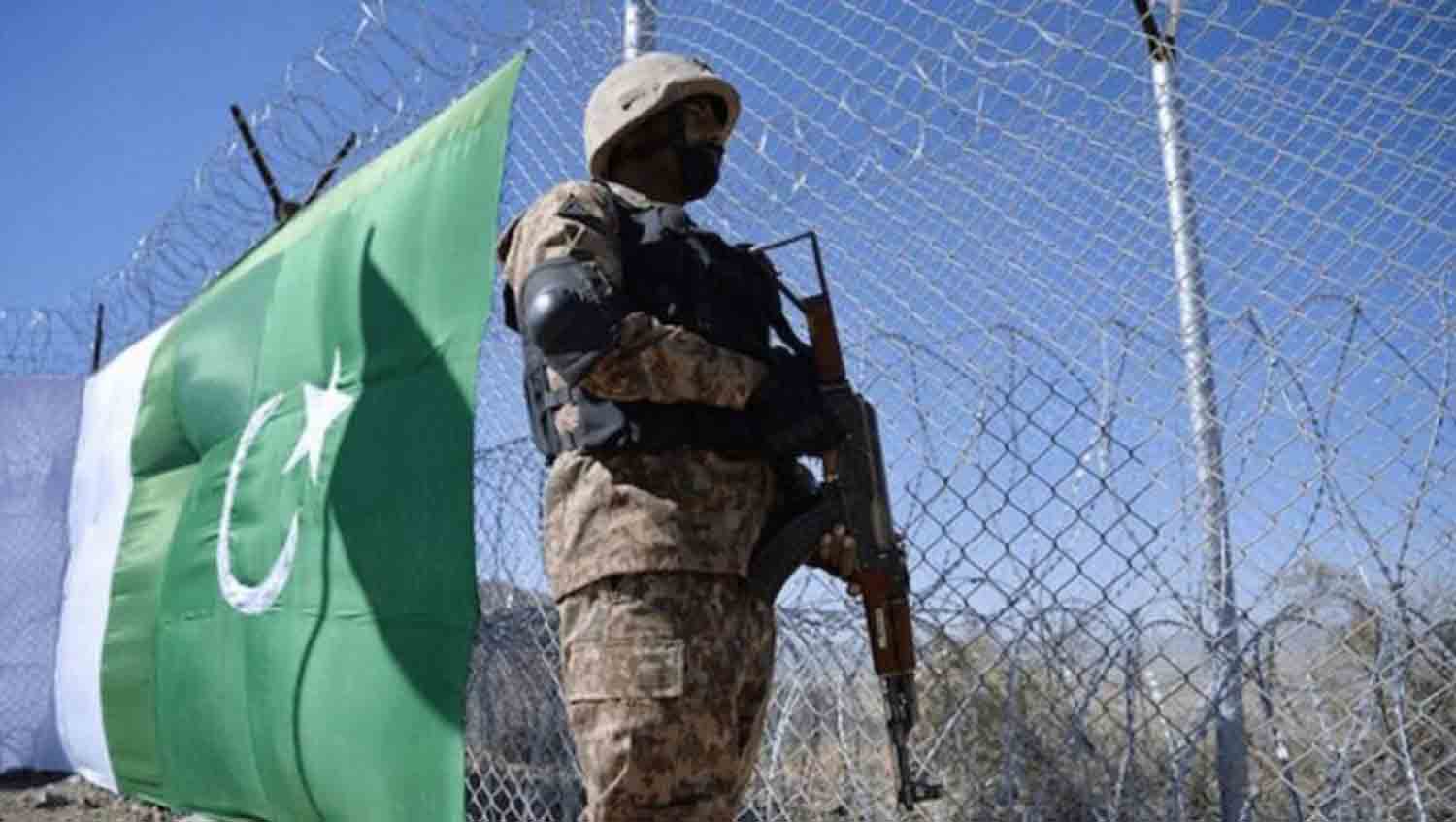
Pakistan is set to host a pivotal meeting of anti-Taliban Afghan exiles on August 25 and 26, 2025, in Islamabad, a move signaling heightened tensions with the Taliban-led government in Afghanistan. Announced by former U.S. Ambassador to Afghanistan Zalmay Khalilzad on X, the conference will unite civil society representatives and former jihadists advocating for the removal of the current Afghan regime. Khalilzad labeled Pakistan’s decision “very foolish and provocative,” warning that it could exacerbate the “significant lack of trust and cooperation” between the two nations and risks backfiring.

A Strategic Message to Kabul

Afghan journalist Sami Yousafzai, also on X, revealed that Pakistan, frustrated with the Taliban’s inaction against the Tehreek-e-Taliban Pakistan (TTP), is inviting two factions: civil society members and anti-Taliban political leaders, including figures from the National Resistance Front (NRF) led by Ahmad Massoud. Potential attendees include Ustad Mohaqiq, Qanuni, Ustad Sayyaf, and Pashtun leaders. Yousafzai noted that Pakistan aims to send a clear message to Kabul: Islamabad has multiple strategies to counter the Taliban’s support for terrorist groups like the TTP, which has intensified attacks on Pakistani soil.

This summit follows a similar gathering in Tehran four months ago, attended by Massoud and others, indicating a regional push to consolidate anti-Taliban opposition. Pakistan initially scheduled the meeting for June 25, 2025, then postponed it to July 25 before settling on the current dates. Yousafzai suggested Pakistan is planning two additional similar events, underscoring its intent to maintain pressure on the Taliban.

Regional Dynamics and Diplomatic Efforts

Pakistan’s hosting of the summit reflects its growing frustration with the Afghan Taliban, whom Islamabad accuses of ignoring two decades of support during the Taliban’s insurgency. Pakistan has faced international criticism and the burden of hosting millions of Afghan refugees, only to see the Taliban permit TTP operations from Afghan territory. The TTP’s escalating attacks, including a December 2024 ambush in South Waziristan that killed 16 Pakistani soldiers, have fueled Pakistan’s discontent.

Ahead of the summit, a trilateral meeting involving the foreign ministers of Pakistan, Afghanistan, and China is scheduled for August 20, 2025, in Kabul. This diplomatic effort will test whether the Taliban responds to Pakistan’s concerns about the TTP. Pakistan continues to advocate for positive relations but has adopted a more assertive stance, bolstered by strengthening ties with the U.S. and regional players like China, which shares concerns about militancy in Afghanistan.

The Role of the Afghan Opposition

The NRF, led by Ahmad Massoud, has urged Pakistan to collaborate on fostering regional peace and stability. Pakistan’s engagement with the NRF and other opposition groups marks a shift from its historical support for the Taliban, as it seeks leverage against Kabul. However, this move risks further straining ties with the Taliban and could inflame anti-Pakistan sentiment in Afghanistan, particularly over the disputed Durand Line.

Implications and Challenges

Pakistan’s summit is a high-stakes gamble to pressure the Taliban into addressing the TTP issue. While it signals Islamabad’s willingness to engage anti-Taliban factions, it may deepen mistrust and escalate tensions. The upcoming trilateral meeting will be critical in determining whether diplomacy can ease the standoff or if Pakistan’s provocative approach will lead to further regional instability. As Pakistan observes the Taliban’s response, the outcome will shape the future of Afghanistan-Pakistan relations and the broader South Asian security landscape.

Alaska Summit: A Diplomatic Spectacle or a Strategic Stalemate? Analyzing the Trump-Putin Talks

0

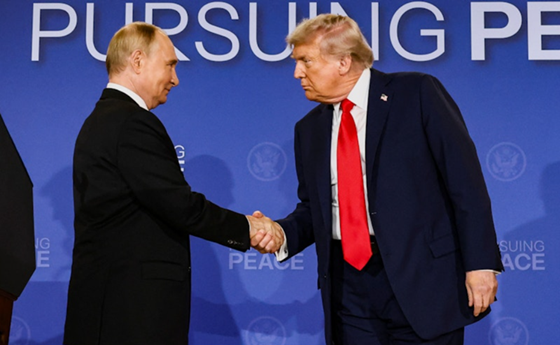
The Trump-Putin summit on August 15, 2025, at Joint Base Elmendorf-Richardson in Anchorage, Alaska, was billed as a bold step toward resolving the Russia-Ukraine war. With fighter jets overhead, a red-carpet welcome, and the symbolic backdrop of a former Russian territory, the meeting captured global attention. Yet, nearly three hours of talks between U.S. President Donald Trump and Russian President Vladimir Putin yielded no ceasefire, no concrete agreements, and raised more questions than answers. This analysis dissects the strategic motivations, geopolitical implications, and underlying dynamics of the summit, exploring why it fell short of its lofty ambitions and what it reveals about the current state of U.S.-Russia relations, Ukraine’s precarious position, and the broader global order.

Strategic Motivations: A Game of Optics and Power

The summit was a calculated move for both leaders, each leveraging the event to advance distinct agendas. For Putin, the Anchorage meeting was a diplomatic coup. Since Russia’s 2022 invasion of Ukraine, Putin has faced Western isolation, compounded by an International Criminal Court arrest warrant. Being welcomed on U.S. soil with military honors and a private ride in Trump’s armored limousine, “the Beast,” was a propaganda victory. Russian state media hailed the summit as a “historic” return to the global stage, portraying Putin as a statesman capable of engaging the U.S. president directly. By securing this platform without conceding on Ukraine or softening demands—such as control over Donetsk, Luhansk, Zaporizhzhia, and Kherson—Putin reinforced his domestic image as a resolute leader while signaling to non-Western allies (e.g., China, India) that Russia remains a global player.

Trump’s motivations were equally strategic but rooted in domestic and international posturing. Campaigning on ending the Russia-Ukraine war “in 24 hours,” Trump used the summit to project himself as a dealmaker capable of succeeding where others failed. The choice of Alaska, a U.S. military base with historical ties to Russia, underscored American strength while nodding to bilateral history (Alaska’s 1867 purchase for $7.2 million). By hosting Putin, Trump aimed to differentiate himself from traditional Western leaders, whom he has criticized for escalating tensions with Russia. His dismissal of the 2016 election interference probe as a “hoax” alongside Putin and suggestions of a future Moscow meeting were designed to appeal to his base, which favors a less confrontational Russia policy. However, the absence of a tangible deal risked undermining his narrative, exposing the gap between his rhetoric and diplomatic reality.

Geopolitical Implications: A Fractured Transatlantic Alliance

The summit’s most significant geopolitical fallout was its impact on Ukraine and the transatlantic alliance. The exclusion of Ukrainian President Volodymyr Zelenskyy was a deliberate choice, reflecting Trump’s belief that direct U.S.-Russia talks could bypass Kyiv. This move alarmed Ukraine and European allies, who feared a deal imposing unfavorable terms, such as territorial concessions or neutrality pledges. Zelenskyy’s post-summit remarks underscored this concern: “The war continues, and it is precisely because there is neither an order nor a signal that Moscow is preparing to end this war.” His absence, coupled with Trump’s vague references to “land swaps,” suggested a willingness to prioritize U.S.-Russia dialogue over Ukraine’s sovereignty, a stance that could erode trust in U.S. leadership.

European leaders expressed skepticism about the summit’s prospects. Czech Foreign Minister Jan Lipavsky, for instance, questioned Putin’s commitment to peace, noting Russia’s continued attacks on Ukrainian civilian infrastructure during the talks. The lack of transparency—evidenced by a brief, 12-minute joint press conference with no questions—further fueled distrust. Analysts argue that Trump’s approach risks fracturing NATO unity, as European nations reliant on U.S. support for Ukraine’s defense question whether Washington will pressure Kyiv into a settlement that favors Russia. This dynamic plays into Putin’s broader strategy of exploiting divisions within the West, weakening the collective resolve that has sustained Ukraine’s resistance since 2022.

Tactical Maneuvering: Putin’s Stalling vs. Trump’s Urgency

The summit revealed a stark contrast in the leaders’ tactical approaches. Putin’s strategy was one of strategic patience. By emphasizing “root causes” of the conflict—such as NATO expansion and Ukraine’s Western alignment—he deflected pressure for immediate concessions while maintaining Russia’s battlefield momentum. Russian forces reportedly advanced in Donetsk during the talks, suggesting Putin used the summit to buy time, projecting openness to dialogue without altering his maximalist demands. His proposal for future talks in Moscow further indicates a desire to prolong negotiations, potentially weakening Western support for Ukraine as war fatigue grows.

Trump, conversely, appeared driven by urgency. His campaign promise to swiftly end the war created domestic pressure for a quick win. By hosting Putin early in his second term, Trump sought to deliver a high-profile diplomatic achievement. Yet, his failure to secure a ceasefire or even a preliminary framework exposed the limits of his approach. Trump’s threats of “severe consequences”—such as secondary sanctions on Russia’s oil buyers like China and India—were not acted upon, suggesting a reluctance to escalate economic pressure post-summit. His openness to territorial adjustments, while vague, hinted at a willingness to compromise in ways that could alienate Ukraine and its supporters. This mismatch in timelines—Putin’s long game versus Trump’s need for immediate results—underscored the summit’s stalemate.

Symbolic and Economic Subtexts: Alaska and Beyond

The choice of Alaska was laden with symbolic and economic significance. Beyond its historical Russian connection, Alaska’s Arctic location highlighted shared U.S.-Russia interests in a region holding 13% of global oil and 30% of natural gas reserves. Putin’s aides emphasized potential cooperation in Arctic development, trade, and space, suggesting a broader agenda to reset bilateral ties. For Trump, this aligned with his “America First” economic priorities, as Arctic resources could bolster U.S. energy dominance. However, these discussions remained aspirational, overshadowed by the immediate failure to address the Ukraine crisis.

The summit’s optics—red carpets, fighter jet flyovers, and the “Pursuing Peace” slogan—were designed to project progress but masked underlying tensions. Putin’s arrival in a Russian-made Aurus limousine and the leaders’ private ride in “the Beast” were choreographed to convey equality and personal rapport. Yet, these gestures did little to bridge substantive divides, as Putin’s insistence on addressing NATO’s role and Trump’s focus on a quick ceasefire remained irreconcilable.

Public and Expert Sentiment: A Polarized Reception

Public and expert reactions to the summit reflect deep polarization. A Pew Research Center survey conducted prior to the summit indicated that 59% of Americans lacked confidence in Trump’s Russia policy, with 33% believing he favored Russia excessively. On X, opinions were sharply divided: some users hailed Trump’s initiative as a “power move” to end the war, while others decried it as a “symbolic humiliation” for Ukraine, given Zelenskyy’s exclusion. Expert analyses, such as those in The Independent, leaned critical, with one pundit asserting, “Putin clearly won,” citing his diplomatic gains without concessions. Others noted that Trump’s domestic audience might view the summit favorably as a bold departure from establishment policies, even if it yielded no results.

Long-Term Outlook: A Path to Moscow or a Dead End?

The summit’s lack of concrete outcomes raises questions about its place in the broader trajectory of U.S.-Russia relations. Putin’s suggestion of a follow-up meeting in Moscow signals an intent to sustain dialogue, potentially on his terms. For Trump, the absence of a deal risks domestic and international criticism, particularly if Ukraine faces pressure to accept unfavorable terms. The exclusion of Zelenskyy and NATO allies underscores the need for their inclusion in future talks to ensure legitimacy and alignment with Western interests.

Analysts suggest Putin will continue leveraging diplomacy to stall while pursuing military gains, exploiting Trump’s desire for a legacy-defining deal. Trump, in turn, faces a delicate balancing act: maintaining his “peace president” image without alienating allies or conceding too much to Russia. The summit’s failure to deliver immediate results highlights the complexity of resolving a war rooted in irreconcilable visions of European security. Without Ukraine’s active participation and a clear U.S. strategy to counter Putin’s intransigence, the Alaska summit may be remembered as a diplomatic spectacle rather than a turning point.

Conclusion

The Trump-Putin summit in Alaska was a high-stakes gamble that delivered symbolic wins but no substantive progress. Putin emerged with enhanced legitimacy and no concessions, while Trump’s dealmaker image took a hit amid a lack of tangible outcomes. The exclusion of Ukraine and vague talk of “land swaps” strained transatlantic trust, while Putin’s stalling tactics highlighted his strategic advantage.

As the Russia-Ukraine war continues, the summit underscores the challenges of reconciling personal diplomacy with geopolitical realities. Whether it paves the way for further talks or remains a footnote in U.S.-Russia relations depends on Trump’s next moves and whether Ukraine’s voice is finally heard.

Pakistan’s FATAH-IV cruise missile intensifies the South Asian missile development competition

0

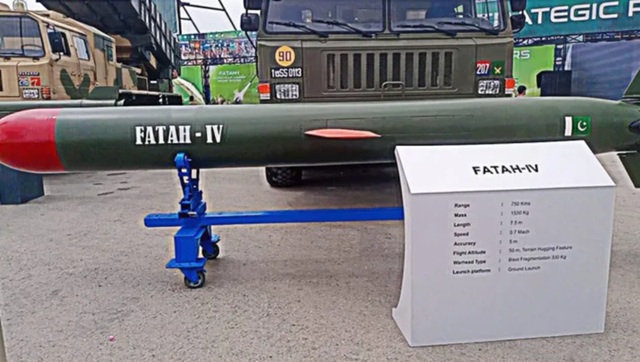
Pakistan has surprised regional defense observers by introducing the FATAH-IV, a next-generation subsonic ground-launched cruise missile engineered to penetrate deep into adversarial territory with unmatched accuracy and survivability.

The missile’s public introduction during Pakistan’s Independence Day festivities at Jinnah Stadium, Islamabad, was not merely a demonstration of national pride—it served as a calculated display of strength intended to convey to New Delhi that Islamabad is narrowing the precision-strike gap. With a range of 750 kilometers, an accuracy of within five meters, and a 330-kilogram high-explosive warhead, the FATAH-IV is designed to eliminate high-value, mobile, or fortified targets well beyond Pakistan’s borders without escalating to a nuclear confrontation.

Traveling at 0.7 Mach and weighing 1,530 kilograms, the missile utilizes a low-altitude, terrain-following flight path—flying just 50 meters above ground level—to evade detection by most conventional radar systems until moments before impact. This capability for low-level penetration, combined with precision guidance, renders the FATAH-IV a powerful weapon against enemy command centers, airbases, logistics hubs, and integrated air defense systems.

Strategic signal to India

Pakistan’s introduction of the FATAH-IV is broadly viewed as a measured strategic signal to India, particularly following the two nations’ increasing missile deployments and recent military maneuvers along the Line of Control (LoC) and in the Indian Ocean Region (IOR). Military analysts indicate that New Delhi, adhering to its trend of competitive procurement, is likely to announce or reveal a comparable long-range precision-strike system in the near future—potentially utilizing the Nirbhay subsonic cruise missile program or a modified version of the BrahMos.

The unveiling of the FATAH-IV—set against the backdrop of escalating tensions in Kashmir and India’s growing defense collaboration with the United States and France—highlights Islamabad’s determination to sustain strategic balance in both deterrence and conventional strike capabilities.

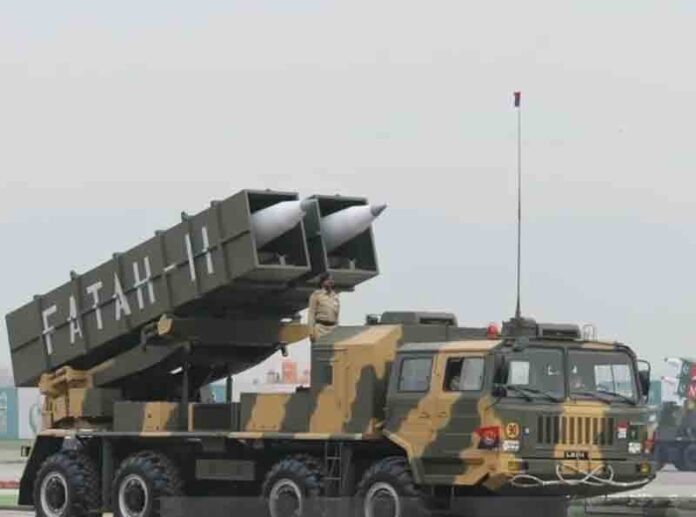
The FATAH-IV is mounted on a Chinese Taian TA5450 8×8 high-mobility truck, which carries three missiles in sealed, ready-to-launch canisters. This selection of launch platform provides significant strategic mobility, enabling Pakistan to swiftly relocate its cruise missile batteries to evade pre-emptive strikes and to introduce uncertainty into enemy targeting cycles.

In contemporary missile strategy, such mobility greatly improves survivability while facilitating shoot-and-scoot tactics that lessen vulnerability to counter-battery fire and pre-launch detection. The canisterized launch system of the missile also guarantees quick deployment, minimal setup time, and the capacity to remain in a constant state of readiness for both planned and retaliatory strikes.

In contrast to the earlier FATAH-I and FATAH-II—short-range ballistic missile systems utilized during recent confrontations in Kashmir—the FATAH-IV signifies a significant advancement into the domain of precision land-attack cruise missiles (LACMs). While the FATAH-I and II were crafted for high-volume, short-range saturation attacks, the FATAH-IV offers a standoff capability, enabling Pakistan to strike targets without risking its launch assets to enemy counterstrikes.

Its introduction signifies a purposeful expansion of Pakistan’s missile arsenal from conventional ballistic systems to versatile, survivable, and reusable cruise missile platforms. Defense analysts observe that the development of the FATAH-IV reflects global patterns where modern militaries are increasingly prioritizing cruise missiles for precision strikes, survivability, and adaptability in high-threat scenarios.

High-value attacks without breaching the nuclear threshold

The FATAH-IV is positioned strategically between tactical battlefield missiles and strategic nuclear-capable systems, enhancing the Babur cruise missile family—Pakistan’s main nuclear-capable LACM. While the Babur can be equipped with both conventional and nuclear warheads, the FATAH-IV is specifically designed for conventional precision strikes, enabling Pakistan to carry out high-value attacks without breaching the nuclear threshold.

By incorporating such systems into its arsenal, Islamabad effectively broadens its flexible response options in any escalation scenario, providing military planners with additional tools for controlled, proportional retaliation. The Pakistan Army has already shown its readiness to utilize conventionally armed missiles in active combat. In May, amid intense clashes with Indian forces, Pakistan reportedly deployed FATAH-I and FATAH-II systems—potentially alongside other short-range missile types—against Indian positions. The FATAH-IV now provides a significantly greater range, allowing Pakistan to target strategic locations in mainland India, including airbases in Punjab, command headquarters in Haryana, and logistical hubs deep within Rajasthan, without needing to position launchers near contested borders.

Penetrating Indian defence

India’s air defense network—centered around the Russian S-400 Triumf system and enhanced by domestic Akash NG and Israeli Barak-8 interceptors—poses a significant challenge to any incoming attack. Nevertheless, the FATAH-IV’s low radar cross-section, terrain-hugging design, and capability to approach from unpredictable angles significantly diminish the effectiveness of such defenses. In a real conflict situation, coordinated launches of FATAH-IVs, along with decoy drones and electronic warfare tactics, could overwhelm or blind air defense radars, creating opportunities for subsequent strikes by aircraft or other missile systems.

Doctrinal change in missile strategy

The introduction of the FATAH-IV indicates a doctrinal change in Pakistan’s missile strategy—from deterrence through potential retaliation to proactive, high-precision conventional combat operations. This change mirrors a wider trend in contemporary warfare, where long-range precision strike systems are utilized to weaken an opponent’s combat capabilities before direct engagement occurs.

Comparable to Western cruise missiles

By deploying a missile that can evade defenses and target critical nodes with little warning, Pakistan acquires a means to disrupt India’s operational tempo, logistics, and command continuity during the crucial initial hours of a conflict. Although the precise details of the FATAH-IV’s guidance system remain classified, defense analysts speculate that it utilizes a hybrid navigation system that combines inertial navigation systems (INS), satellite navigation (likely BeiDou and GPS), and possibly terrain contour matching (TERCOM) for accurate low-altitude flight. Its 5-meter circular error probable (CEP) is comparable to Western cruise missiles such as the U.S. Tomahawk Block IV, positioning it among the most precise systems in South Asia’s missile arsenal.

This level of accuracy results in a reduced number of missiles required to neutralize a target, facilitating a more efficient utilization of limited resources and complicating the defense strategies of adversaries.

Global proliferation of cruise missiles on the rise

The unveiling of Pakistan’s FATAH-IV occurs at a moment when the global proliferation of cruise missiles is on the rise. China has already deployed the CJ-10 series, India is working on extended-range versions of the BrahMos, and Iran has showcased both land-attack and anti-ship cruise missiles in actual combat scenarios.

In this context, the FATAH-IV provides Pakistan with a weapon that not only fortifies its military stance against India but also boosts its reputation as a regional missile power.

However, for advocates of global arms control, this advancement raises alarms regarding the diminishing thresholds of conventional warfare and the growing reliance on precision-strike systems in politically unstable areas.

While Pakistan is currently concentrating on domestic deployment, the FATAH-IV—or a modified export version—might eventually attract interest from allied countries in search of cost-effective precision-strike solutions.

Potential buyers could include Middle Eastern nations confronting asymmetric threats or Southeast Asian countries aiming to enhance their anti-access/area denial (A2/AD) capabilities. If combined with indigenous or Chinese targeting technologies, such an export could further amplify Pakistan’s defense-industrial reach beyond South Asia.

Arms race in South Asia

The FATAH-IV marks a significant advancement in Pakistan’s capacity to project power and influence the operational landscape well before any ground forces are deployed. It transcends being just a technological achievement; it signifies a doctrinal shift—evolving Pakistan’s missile capabilities from primarily serving as deterrents to becoming nimble, precision-strike tools that can incapacitate an enemy’s combat infrastructure within the initial moments of a conflict.

With a reach of 750 kilometers, it ensures that no vital Indian military facility in the northern, central, or even parts of the eastern theatre is safe from its targeting, compelling New Delhi to reassess its airbase distribution, logistics hubs, and command bunker placements. The FATAH-IV’s survivability—anchored in its mobility, terrain-following flight capabilities, and reduced radar visibility—establishes it as a constant threat that India’s integrated air defense system cannot overlook, necessitating the allocation of substantial resources for missile interception and early warning systems.

From an operational perspective, it provides Islamabad with a standoff strike capability that can disrupt troop mobilization, paralyze aerial operations, and cut off supply routes without crossing nuclear thresholds, thereby maintaining control over escalation while still delivering strategic damage. Regionally, its deployment accelerates the ongoing precision-strike arms race in South Asia, where cruise missiles, UAV swarms, and long-range guided rockets are set to play a dominant role in the early stages of any conflict.

Furthermore, it conveys to other regional players—such as China, Iran, and the Gulf states—that Pakistan is establishing itself as a sophisticated cruise missile power, capable of both homegrown innovation and operational integration comparable to more technologically advanced military forces.

As India considers its response—whether by increasing its BrahMos stockpile, hastening the Nirbhay initiative, or acquiring new foreign systems—both countries risk entering a self-reinforcing cycle of missile modernization that could alter the military equilibrium of the subcontinent for years to come. In this new landscape, the initial strike in a South Asian conflict is more likely to originate from low-flying, terrain-concealing missiles like the FATAH-IV, which can strike unexpectedly, hit with remarkable accuracy, and leave defenders in disarray. Ultimately, the FATAH-IV is not merely another component of Pakistan’s military capabilities—it serves as a strategic tool aimed at shifting the dynamics of warfare, providing Islamabad with both a psychological and operational edge in a region where the line between deterrence and destruction becomes increasingly blurred.

Sudarshan Chakra: India’s 2035 Quest for an Unbreakable Defense Shield

0
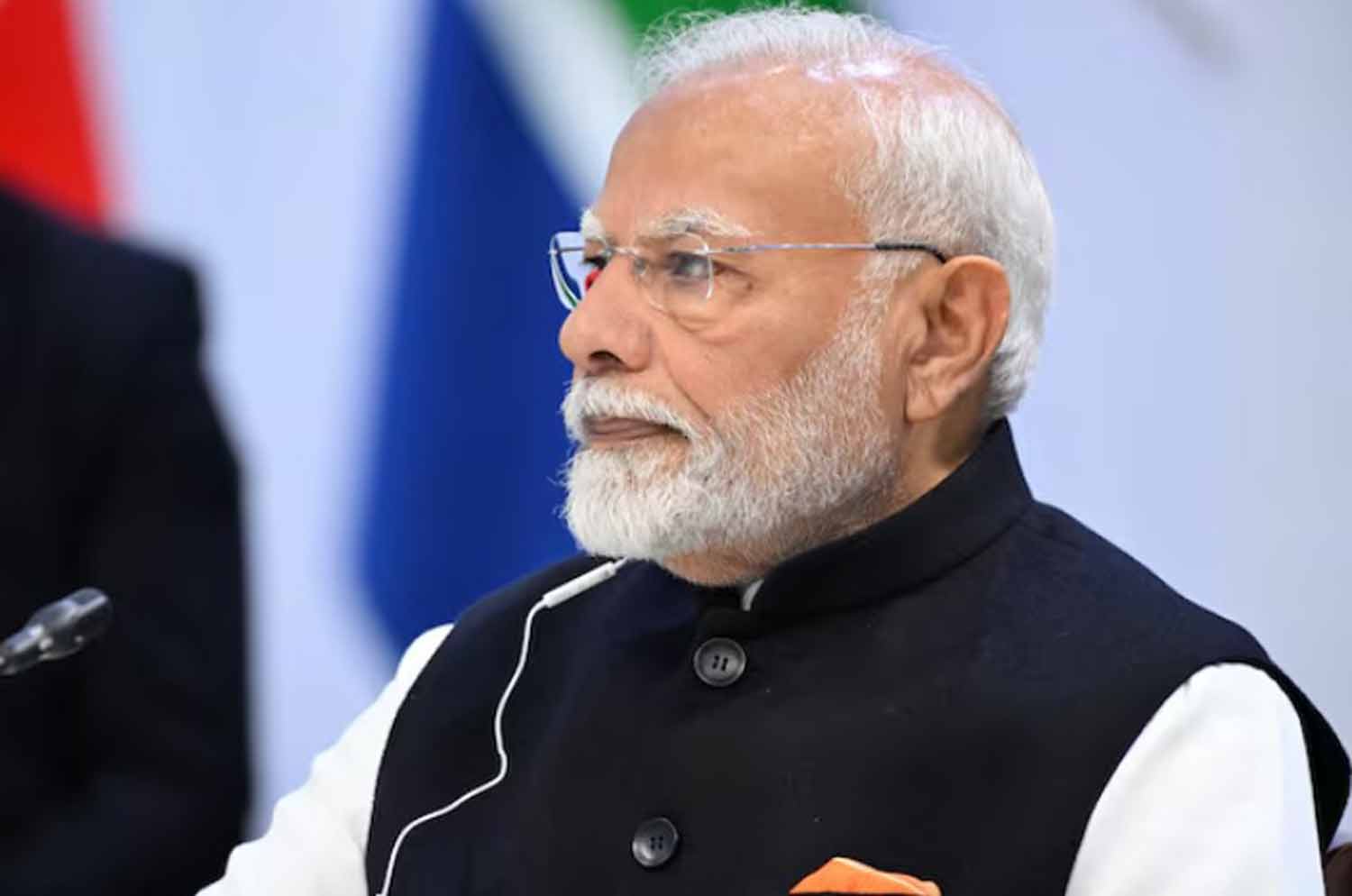
Indian Prime Minister Narendra Modi attends the narrow format meeting of the BRICS summit in Kazan.

India’s Prime Minister Narendra Modi, in his Independence Day address on August 15, 2025, announced Mission Sudarshan Chakra, a strategic initiative to develop a comprehensive, indigenous air-defense system by 2035. This “national security shield” aims to protect India’s military, civilian, and strategic infrastructure, including railway stations, hospitals, and religious sites, from evolving threats such as missiles, drones, and other aerial attacks. The mission draws inspiration from Lord Krishna’s mythological weapon, the Sudarshan Chakra, symbolizing precision, power, and the ability to neutralize threats and strike back.

Context

Geopolitical and Security Environment

Recent Tensions with Pakistan: The announcement comes in the wake of heightened tensions with Pakistan. Modi claimed that this operation showcased India’s technological prowess and self-reliance, setting the stage for a more robust defense framework.

Regional Threats: Beyond Pakistan, India faces security challenges from China, particularly along the Line of Actual Control (LAC). The need for a modern, multi-layered defense system is driven by the evolving nature of warfare, including cyber threats, drone attacks, and missile-based assaults.

Global Strategic Dynamics: Modi’s speech highlighted India’s resistance to external pressures, such as U.S. trade tariffs and demands to open agricultural markets, signaling a broader push for strategic autonomy.

Global Benchmarks

Comparison to Israel’s Iron Dome: Experts suggest Mission Sudarshan Chakra may be modeled on Israel’s Iron Dome. However, India’s system is envisioned to be broader, integrating AI-driven surveillance, precision targeting, and offensive capabilities tailored to India’s unique security needs.

Challenges

Jet Engine Development: Modi’s call for indigenous fighter jet engines highlights a critical gap. The Kaveri engine project, initiated in 1989, remains incomplete despite ₹2,035 crore in expenditure, illustrating the complexity of developing advanced propulsion systems. Delays in technology transfer agreements, such as with GE Aerospace for the Tejas Mark 2, underscore reliance on foreign expertise.

R&D Timelines: Developing a multi-layered defense shield integrating AI, precision targeting, and offensive capabilities within a decade is ambitious. Similar systems, like Israel’s Iron Dome, required decades of iterative development and significant investment.

Cybersecurity Integration: Protecting civilian infrastructure (e.g., hospitals, railway stations) requires robust cybersecurity measures, an area where India is still building capacity.

High Costs: Developing a system as sophisticated as Sudarshan Chakra will require substantial investment in R&D, manufacturing, and testing. For comparison, Israel’s Iron Dome development involved billions of dollars, with ongoing costs for maintenance and upgrades.

Global Trade Pressures: U.S. tariffs on Indian goods (25-50% as of August 2025) could strain India’s economy, potentially diverting resources from defense projects.

Supply Chain Risks: Dependence on critical minerals and components for advanced systems remains a challenge, despite progress in semiconductor manufacturing.

Scale and Coverage: Protecting a vast country like India, with diverse terrain and population centers, requires a scalable and resilient system. Ensuring nationwide coverage by 2035 is a logistical challenge.

Interoperability: Integrating new systems with existing platforms (e.g., S-400, BrahMos) and ensuring coordination across the Army, Navy, and Air Force will require significant effort.

Maintenance and Upgrades: A system of this scale will need continuous upgrades to counter evolving threats, requiring long-term commitment and expertise.

Regional Sensitivities: The mission’s announcement amid tensions with Pakistan and criticism of the Indus Waters Treaty could escalate regional tensions۔

Public Expectations: High-profile announcements raise expectations. Any delays or setbacks, as seen with the Kaveri engine project, could lead to public and political criticism.

Risks and Mitigation

Technological Risks: The complexity of integrating AI, surveillance, and offensive systems requires sustained R&D investment. Collaborations with global partners (e.g., Israel for missile defense expertise) could accelerate progress without compromising self-reliance.

Economic Risks: High costs could strain India’s budget, especially amid global trade challenges.

Geopolitical Risks: Aggressive rhetoric against Pakistan and the suspension of the Indus Waters Treaty could escalate tensions.

Execution Risks: India’s history of delays in projects like Kaveri suggests execution challenges. Clear timelines, accountability mechanisms, and regular progress reviews are essential.

Comparative Perspective

Israel’s Iron Dome: The Iron Dome’s success lies in its ability to intercept short-range rockets with high accuracy. However, India’s Sudarshan Chakra aims for broader coverage, including long-range missiles and drones, it has to address a larger geographical and population scale.

U.S. THAAD and Patriot Systems: These systems offer advanced missile defense but are expensive and rely on U.S. technology. India’s focus on indigenous development avoids such dependencies but requires significant technological leaps.

China’s Defense Systems: China’s rapid advancements in missile defense and hypersonic weapons highlight the competitive landscape. India needs balance speed, innovation, and cost to keep pace.

Conclusion

Mission Sudarshan Chakra is an ambitious and strategically significant initiative that aligns with India’s goals of self-reliance, technological advancement, and robust national security. However, challenges in technology development (e.g., jet engines), high costs, and the need for nationwide coverage pose significant hurdles. Achieving the 2035 timeline will require sustained investment, public-private collaboration, and effective project management.

Trump’s Arctic Bargain: Trading Alaska’s Riches for Peace with Putin

0
Ukraine's President Volodymyr Zelensky (R) meets with US President Donald Trump (L) on the sidelines of Pope Francis' funeral at St. Peter's Basilica at the Vatican.

In a stunning diplomatic maneuver, U.S. President Donald Trump is reportedly preparing to offer Russian President Vladimir Putin access to Alaska’s vast reserves of rare earth minerals and natural resources as part of a high-stakes bid to secure a ceasefire in the ongoing Russia-Ukraine war.

The proposal, detailed in an August 13, 2025, report by The Telegraph, has sparked intense debate, with critics calling it a dangerous concession to Moscow and supporters viewing it as a pragmatic step toward ending a conflict now in its third year.

Set to unfold at a summit on August 15, 2025, at Joint Base Elmendorf-Richardson in Anchorage, Alaska, this audacious plan raises critical questions about U.S. sovereignty, geopolitical strategy, and the future of Ukraine. Below, we delve into the specifics of the proposal, its strategic implications, and the polarized reactions it has provoked.

The Proposal: A Transactional Approach to Peace

According to The Telegraph, Trump’s offer centers on economic incentives designed to persuade Putin to halt Russia’s military campaign in Ukraine. The key components include:

1. Access to Alaskan Resources:

– The proposal reportedly grants Russia access to untapped oil, gas, and rare earth mineral reserves in the Bering Strait, a strategically vital region separating Alaska from Russia’s Chukotka Peninsula. The Bering Sea and adjacent Chukchi Sea are estimated to hold 13% of the world’s undiscovered oil reserves and significant gas deposits, making them a lucrative prize. Joint exploration or resource-sharing agreements in these areas could bolster Russia’s Arctic ambitions while offering the U.S. economic benefits.

– Rare earth minerals, critical for technologies like electric vehicle batteries and renewable energy systems, are also part of the deal. Alaska’s mineral wealth, including deposits of lithium, cobalt, and rare earth elements, could be leveraged to sweeten the offer.

2. Control Over Ukrainian Minerals:

– The plan includes allowing Russia to access lithium and other rare earth mineral deposits in Ukrainian territories currently under its control, such as parts of Donetsk and Zaporizhzhia. Ukraine holds approximately 10% of global lithium reserves, with two major deposits in Russian-occupied areas. These resources are vital for the global transition to green energy, making them a significant bargaining chip.

– This aspect of the proposal has drawn sharp criticism, as it appears to reward Russia’s territorial gains, potentially undermining Ukraine’s sovereignty and international efforts to isolate Moscow.

3. Sanctions Relief for Russia’s Aviation Sector:

– Trump is considering easing U.S. sanctions on Russia’s aviation industry, which has been crippled since 2022 due to Western restrictions on spare parts and maintenance for its fleet of over 700 Boeing and Airbus aircraft. Lifting these sanctions could provide Russia with economic relief while benefiting U.S. manufacturers like Boeing, aligning with Trump’s “America First” economic agenda.

– This move would also address Russia’s growing federal budget deficit, which is 4.4 times higher than last year, compounded by labor shortages and soaring interest rates.

4. Summit Logistics:

– The summit, scheduled for August 15, 2025, will take place at Joint Base Elmendorf-Richardson, a military installation in Anchorage chosen for its proximity to the Bering Strait and symbolic significance in U.S.-Russia Arctic relations.

– Trump has signaled plans for a potential follow-up meeting with both Putin and Ukrainian President Volodymyr Zelensky to advance peace negotiations, emphasizing Kyiv’s inclusion in any final agreement.

– The White House has remained tight-lipped, stating it does not comment on “deliberative conversations that may or may not be happening,” leaving the proposal’s specifics unconfirmed.

Strategic Context: A High-Risk Diplomatic Play

The proposal reflects Trump’s transactional approach to foreign policy, leveraging economic incentives to achieve geopolitical goals. The Russia-Ukraine war, which began in February 2022, has reached a stalemate, with devastating human and economic costs. Ukraine’s counteroffensive has stalled, and Russia faces mounting economic pressures, making both sides potentially open to negotiation. Trump’s strategy appears to exploit Russia’s vulnerabilities while offering concessions that align with his domestic economic priorities.

The Bering Strait’s strategic importance cannot be overstated. As Arctic ice melts, the region is becoming a focal point for resource extraction and navigation routes, with Russia already producing 80% of its gas output from Arctic fields. Joint U.S.-Russia exploration in the Chukchi Sea could reshape Arctic geopolitics, but it risks escalating tensions with other Arctic nations like Canada and Norway. Meanwhile, offering Russia access to Ukrainian minerals raises ethical and legal questions, as it could legitimize Moscow’s territorial gains.

Trump has paired his incentives with a warning of “very severe consequences” if Putin rejects the deal, suggesting a dual strategy of carrot and stick. This approach contrasts with his earlier campaign rhetoric, which promised harsher sanctions on Russia, highlighting the complexity of his diplomatic calculus.

Geopolitical and Economic Implications

The proposal carries far-reaching implications for global alliances, resource competition, and U.S. domestic politics:

1. U.S. Sovereignty and Arctic Competition:

– Critics argue that granting Russia access to Alaskan resources undermines U.S. sovereignty and strengthens Moscow’s position in the Arctic, a region of increasing strategic importance. Former GOP Representative Adam Kinzinger, in a post on X, called the plan “a betrayal of American interests,” warning that it could cede critical assets to a rival power.

– The Arctic is a contested space, with the U.S., Russia, Canada, and other nations vying for control over resources and shipping routes. Allowing Russia a foothold in Alaskan waters could shift the balance of power, potentially alienating allies like Canada, which shares maritime boundaries in the region.

2. Ukraine’s Sovereignty and Global Precedent:

– Offering Russia control over Ukrainian lithium deposits has sparked outrage among Ukraine’s supporters. President Zelensky has insisted that any peace deal excluding Kyiv would produce “dead solutions,” emphasizing the need for security guarantees and territorial integrity.

– Critics warn that the proposal sets a dangerous precedent, signaling that territorial aggression can be rewarded with economic concessions. This could embolden other authoritarian regimes, undermining the rules-based international order.

3. Economic Trade-Offs:

– For Russia, access to Alaskan resources and sanctions relief could alleviate economic pressures, including a ballooning budget deficit and reliance on Chinese support. However, it risks entrenching Russia’s dependence on resource exports, a long-term economic vulnerability.

– For the U.S., the deal could boost domestic industries, particularly aviation and mining. Recent U.S. agreements with Ukraine and Kazakhstan for mineral supplies suggest a broader strategy to secure critical resources, with Alaska’s reserves as a potential bargaining chip.

4. Domestic and International Backlash:

– Public reaction in the U.S. has been polarized, with thousands expected to protest in Anchorage before the summit. Social media platforms like X have amplified criticism, arguing that the proposal oversteps presidential authority and warning of a “sellout” of Ukraine.

– European allies, particularly the U.K., have expressed cautious support for a deal that ends the war without appearing to reward Russia. However, Ukraine’s insistence on being part of negotiations complicates the path forward.

Challenges and Feasibility

The proposal’s feasibility remains uncertain. Key challenges include:

Legal and Political Hurdles: U.S. presidents lack unilateral authority to allocate state resources like Alaska’s minerals, which would require congressional approval and coordination with Alaska’s state government. Governor Mike Dunleavy has not publicly commented, and the proposal’s specifics remain unverified.

Ukrainian Resistance: Zelensky’s firm stance against deals that exclude Kyiv suggests that any agreement bypassing Ukraine could collapse. Ukraine’s allies, including NATO members, are likely to demand robust security guarantees, such as NATO membership or permanent troop deployments.

Russian Intentions: Putin’s willingness to negotiate is unclear. While Russia’s economic struggles provide leverage, Moscow may view the proposal as a sign of Western weakness, demanding further concessions.

Public and Congressional Opposition: The plan’s unpopularity, reflected in X posts and planned protests, could pressure Congress to block any resource-sharing agreements. Bipartisan criticism, including from figures like Kinzinger, underscores the political risks.

Expert and Public Perspectives

Analysts like Andreas Østhagen from the Fridtjof Nansen Institute note that Anchorage is a logical venue for Arctic-focused talks, given its proximity to the Bering Strait. However, they caution that joint exploration would require delicate negotiations to avoid escalating U.S.-Russia tensions. On X, sentiment is overwhelmingly negative, with users questioning the strategic wisdom of ceding resources to a geopolitical adversary.

Conclusion: A Risky Bet on Peace

Trump’s reported offer to Putin represents a bold, if controversial, attempt to end the Russia-Ukraine war through economic incentives. By leveraging Alaska’s mineral wealth and Ukrainian resources, the proposal seeks to exploit Russia’s economic vulnerabilities while advancing U.S. interests. However, it risks alienating allies, undermining sovereignty, and setting a precedent for rewarding aggression.

As the August 15 summit approaches, the world watches to see whether Trump’s gamble will yield peace or provoke further conflict. The outcome will depend on Putin’s response, Ukraine’s inclusion, and the ability to navigate domestic and international backlash.

Trump and Putin’s Alaska Gambit: A High-Stakes Summit to End the Ukraine War?

0
President Donald Trump and President Vladimir Putin.

On August 15, 2025, the icy landscapes of Alaska will host a historic summit between U.S. President Donald Trump and Russian President Vladimir Putin, a meeting charged with the potential to reshape the Russia-Ukraine war—now grinding through its third year since Russia’s 2022 invasion.

The choice of Alaska, a former Russian territory sold to the U.S. in 1867, is laden with symbolism: for Putin, a nod to Russia’s imperial past; for Trump, a bold assertion of American dominance on home soil. But with Ukrainian President Volodymyr Zelenskyy excluded and European allies wary, the summit risks becoming a diplomatic tightrope walk, balancing Trump’s promise of peace against the realities of Putin’s ambitions.

Here’s what’s at stake, what the leaders want, and whether a deal is even possible.

The Stakes: A War-Weary World Watches

The Russia-Ukraine conflict has claimed tens of thousands of lives, displaced millions, and disrupted global energy and food markets. Russia occupies roughly 18% of Ukraine’s territory, including parts of Donetsk, Luhansk, Zaporizhzhia, and Kherson, while Ukraine’s recent battlefield losses—Russia gained 6,000 km² since 2023—have weakened its negotiating position.

Trump, now over 200 days into his term, faces pressure to deliver on his campaign pledge to end the war “within 24 hours,” a promise that looks increasingly ambitious with his approval rating at 38%. Putin, meanwhile, sees the summit as a chance to break his diplomatic isolation and cement territorial gains, leveraging Russia’s economic resilience and nuclear clout.

The exclusion of Ukraine is a glaring issue. Zelenskyy has called negotiations without Kyiv “dead decisions,” warning they undermine peace and echo historical betrayals like the 1945 Yalta Conference. European leaders, including EU High Representative Kaja Kallas, insist on Ukraine’s territorial integrity, making any deal without Kyiv’s consent a potential fracture point for NATO unity.

What Each Leader Wants?

Trump’s Playbook: Trump is wielding economic leverage, threatening secondary sanctions on nations like India and China for buying Russian oil, which funds Putin’s war machine. Recent moves, like 50% tariffs on Indian imports, signal his willingness to play hardball. Domestically, he needs a win to shore up support, with only 64% of his base approving his Ukraine policy. He’s floated “land swapping” as a solution, calling it “complicated” but feasible, and may push for a ceasefire to avoid deeper U.S. involvement while opening Arctic energy deals for American firms.

Putin’s Endgame: For Putin, the summit is a propaganda victory, restoring his global stature after years of isolation. He seeks to legitimize Russia’s control over annexed regions and secure Ukraine’s neutrality to block NATO expansion. Territorial swaps—ceding small areas in Sumy or Kharkiv for Donbas strongholds like Slavyansk—could be on the table, alongside economic relief from sanctions. Putin’s battlefield momentum gives him little incentive to compromise, but he may offer a temporary truce to buy time.

Ukraine’s Red Lines: Zelenskyy demands full restoration of Ukraine’s 1991 borders, including Crimea, and ironclad security guarantees. Ukraine’s constitution bans territorial concessions without a referendum, and public sentiment fiercely opposes ceding land. Kyiv’s drone strikes and battlefield innovations show resilience, but without U.S. military aid, its leverage is waning.

Possible Outcomes: Deal or Deadlock?

The summit could yield several scenarios, each with profound implications:

1. Ceasefire with Territorial Swaps:

Putin might propose Ukraine cede parts of Donetsk and Luhansk for a halt in offensives elsewhere. Trump’s openness to “land swapping” suggests he could entertain this, but Ukraine’s rejection—backed by its constitution and European allies—makes it unlikely. Such a deal risks alienating NATO and emboldening Putin for future aggression, as over a third of peace agreements since 1975 have collapsed.

2. Temporary Ceasefire:

A freeze along current lines could be a face-saving compromise, allowing Trump to claim progress and Putin to pause without conceding gains. Zelenskyy has noted Russia’s openness to a ceasefire, but without security guarantees, it’s a shaky truce that could let Russia regroup. This scenario is moderately likely but lacks legitimacy without Ukraine’s involvement.

3. No Deal:

If Putin demands maximalist terms—like annexing four regions and Ukraine’s neutrality—and Trump refuses to pressure Kyiv, talks could collapse. Trump has signaled he’s ready to walk away, as he did with North Korea’s Kim Jong Un. This is the most likely outcome given the wide gap between Russia’s demands and Ukraine’s red lines, potentially leading to escalated U.S. sanctions or arms support for Ukraine.

4. Side Deals on Nuclear or Arctic Issues:

The summit could pivot to broader issues like nuclear arms control or Arctic resource development, with 13% of global oil reserves at stake. While tempting, this risks sidelining Ukraine and appearing as appeasement, with low likelihood given Putin’s focus on territorial gains.

Risks and Realities

The summit carries significant risks. Excluding Ukraine and Europe could fracture NATO unity and evoke a “Yalta 2.0” betrayal, strengthening authoritarian narratives globally. Putin gains a propaganda boost simply by attending, and any deal rewarding aggression could set a precedent for conflicts in places like Taiwan or the Baltics. Trump risks domestic backlash if the summit echoes the criticized 2018 Helsinki meeting, while his sanctions on allies like India could disrupt global trade and strain partnerships.

Putin’s history of breaking ceasefires, like the Minsk agreements, suggests any deal is a tactical pause, not a resolution. Trump’s belief in personal rapport with Putin may underestimate Russia’s strategic deception, while Ukraine’s resilience and Europe’s resolve limit his room to maneuver. A deal without Kyiv’s consent is likely to unravel, leaving the war unresolved and Trump’s legacy at risk.

A Path Forward

For a sustainable outcome, Trump must include Ukraine and NATO allies in follow-up talks, potentially through a trilateral summit. Announcing a major weapons package or tougher sanctions post-summit could strengthen Ukraine’s hand and deter Russian advances. Any ceasefire needs robust monitoring, prisoner repatriation, and reconstruction funds from frozen Russian assets. Focusing on Arctic or nuclear deals risks diluting the urgency of Ukraine’s plight and should be avoided. If Putin stonewalls, Trump must be prepared to walk away, using the summit to refine U.S. strategy rather than forcing a flawed agreement.

Conclusion: A Summit on Thin Ice

The Trump-Putin Alaska summit is a high-stakes gamble with long odds for a lasting Ukraine peace deal. Putin’s battlefield gains and economic resilience give him leverage, while Trump’s domestic pressures and Ukraine’s exclusion complicate the path to agreement. A temporary ceasefire or deadlock is most likely, but any deal must prioritize Ukraine’s sovereignty and NATO unity to avoid destabilizing the global order. As the world watches, the summit’s outcome will test Trump’s dealmaking prowess, Putin’s strategic calculus, and the resilience of international alliances in a fractured world.

Operation Sindoor Fizzles or Strategic Masterstroke? Indian Air Force Bets Big on Long-Range Missiles

0
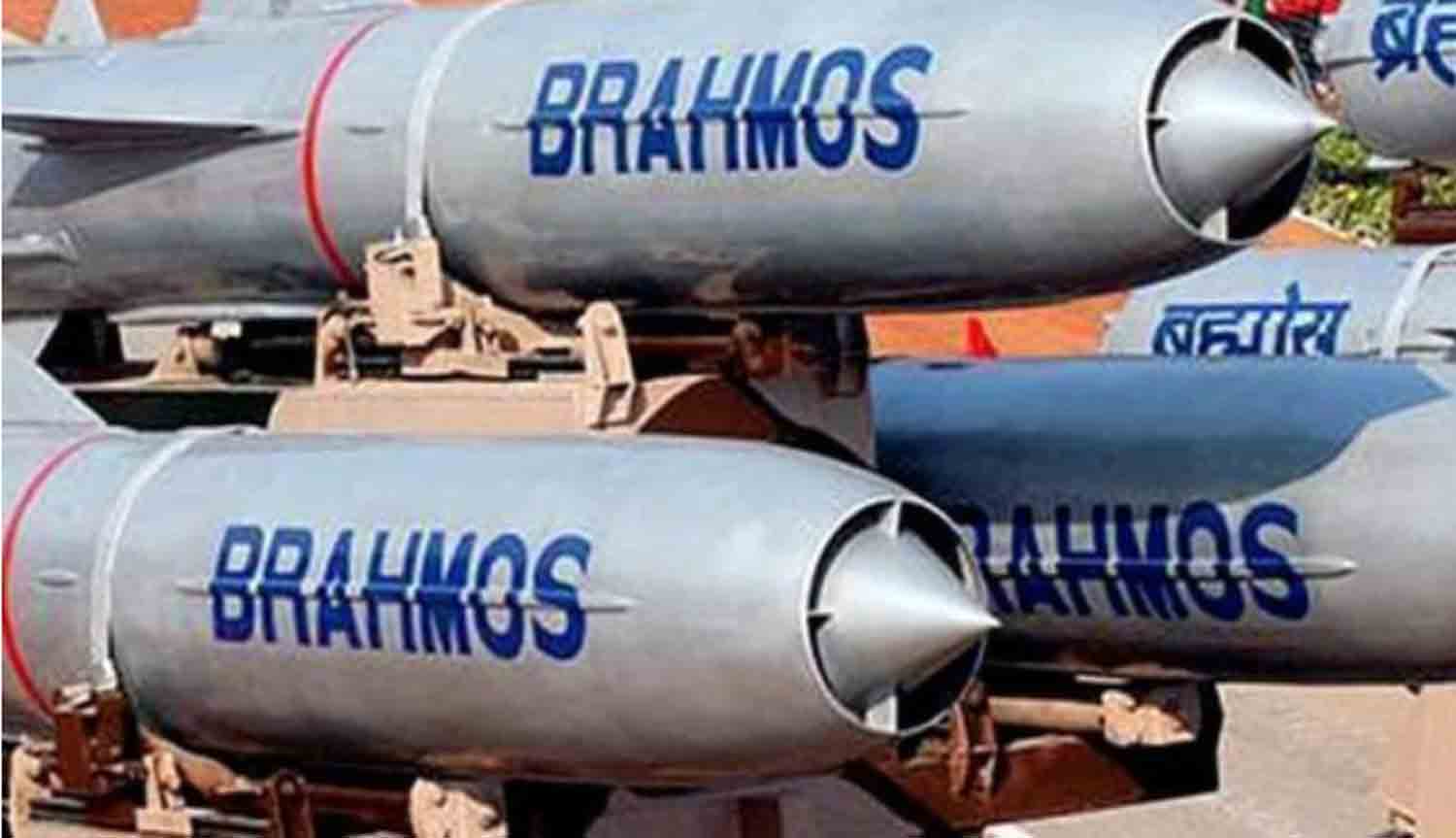
Brahmos missile

Following the unsuccessful Operation Sindoor and the loss of six aircraft, the Indian Air Force (IAF) is focusing on enhancing its long-range missile capabilities. This initiative aims to create a surface-to-surface and air-to-air missile system with a range exceeding 200 km, thereby bolstering the air defense framework with precision strike abilities.

The Pakistan Army’s deployment of advanced stand-off weapons—munitions launched from a distance to bypass enemy defenses—was pivotal in Operation Marka-e-Haq. India’s pride, the Russian-made S-400 missile defense system, along with the Rafale aircraft, also did not succeed in this operation. PL-15 missiles launched from Pakistan’s J-10 aircraft achieved a record by downing a Rafale from 200 km away in a stand-off position.

Additionally, Pakistan’s Fatah missiles targeted Indian airbases, radars, and command and control centers, highlighting the critical role of long-range munitions in contemporary warfare. The Indian military’s losses emphasized the necessity for a more extensive arsenal of long-range missiles to address emerging threats from Pakistan and China.

The failure of Operation Sindoor, coupled with insights gained from the ongoing Russia-Ukraine conflict, highlights the significance of standoff capabilities, layered air defense, and the integration of electronic warfare (EW). Consequently, the Indian Air Force is expediting its missile modernization efforts.

Strategic Imperatives Driving the Expansion

The IAF’s missile expansion is driven by several key factors:

1. Regional Threat Dynamics:

Pakistan: The operation revealed Pakistan’s reliance on advanced air defense systems like the HQ-9 and the deployment of PL-15E air-to-air missiles with a range exceeding 200 km (previously underestimated at 150 km). This necessitates missiles that can outrange and outmaneuver Pakistani defenses.

China: The growing China-Pakistan-Turkey defense axis, coupled with China’s deployment of advanced PL-15 missiles and HQ-9B/C systems, poses a significant threat along India’s northern borders. The IAF seeks parity or superiority in long-range engagements.

Two-Front Scenario: India’s defense strategy must account for simultaneous threats from Pakistan (western front) and China (northern front), requiring versatile, multi-platform missile systems.

2. Lessons from Modern Warfare: – The Russia-Ukraine conflict has highlighted the efficacy of stand-off weapons, mobile air defenses, and EW in countering sophisticated adversaries. Operation Sindoor reinforced these lessons, particularly the need for precision strikes from beyond enemy air defense ranges.

Gaps in India’s EW capabilities, such as dedicated EW aircraft and secure data links, were evident during the operation, prompting a broader push for multi-domain integration.

3. Self-Reliance and Global Standing:

– The Atmanirbhar Bharat (self-reliant India) initiative emphasizes indigenous defense production. The IAF’s expansion plan balances local R&D with selective foreign acquisitions to reduce dependency while meeting immediate operational needs.

– India’s defense production reached a record Rs 1,50,590 crore in FY 2024-25, reflecting a robust industrial base to support missile development.

Key Missile Systems in the Expansion Plan

The IAF’s missile arsenal expansion focuses on air-to-ground, air-to-air, and surface-to-air systems, with an emphasis on ranges exceeding 200 km. Below is a detailed breakdown of the systems involved:

1. BrahMos Supersonic Cruise Missile

Overview:

A joint Indo-Russian venture, the BrahMos missile is a cornerstone of India’s stand-off capabilities. With a speed of Mach 2.8 and a range of 290–400 km.

Expansion Plans: – The IAF and Indian Navy have placed large-scale orders for air-launched and ship-based variants. A new production facility in Lucknow, inaugurated in May 2025, aims to produce 80–100 missiles annually, with plans to scale up to 150 BrahMos-NG units.

BrahMos-NG: This next-generation variant, weighing 1,290 kg (compared to 2,900 kg for the current model), is designed for multi-platform deployment, including lighter aircraft like the LCA Tejas. It will allow Su-30 MKI jets to carry multiple missiles, enhancing firepower.

Strategic Role: The missile’s versatility and precision make it ideal for targeting enemy air bases, command centers, and naval assets. Its integration with Veer-class warships strengthens India’s maritime strike capabilities.

2. Astra Air-to-Air Missile

Overview: The indigenous Astra Mk-1, with a range of 80–110 km, has been integrated with the LCA Tejas and Su-30 MKI, but the IAF seeks variants with ranges exceeding 200 km to counter adversaries like China’s PL-15.

Expansion Plans

– The Defence Research and Development Organisation (DRDO) is developing Astra Mk-2 and Mk-3, aiming for ranges of 150–200 km and beyond. These variants will feature advanced guidance systems and improved propulsion for long-range engagements.

– The IAF is prioritizing Astra’s integration across its fleet, including Rafale and MiG-29 aircraft, to ensure a robust air-to-air combat capability.

Strategic Role

Extended-range Astra missiles will provide the IAF with a competitive edge in beyond-visual-range (BVR) engagements, critical for air superiority in contested airspace.

3. Russian R-37 Missile

Overview:

The R-37, a Russian air-to-air missile with a 200+ km range, is under consideration for acquisition. Known for its hypersonic speed (Mach 6) and ability to engage high-value targets like AWACS and ELINT platforms, it complements India’s existing arsenal.

Expansion Plans

– The IAF is evaluating the R-37 for integration with Su-30 MKI and MiG-29 aircraft, leveraging Russia’s long-standing defense partnership with India.

– The missile’s acquisition is seen as a stopgap measure while DRDO develops indigenous long-range solutions like the Astra Mk-3.

Strategic Role

The R-37 will enhance India’s ability to neutralize high-value airborne threats, such as Pakistan’s Saab 2000 Erieye AEW&C or China’s KJ-500, at extended ranges.

4. Air LORA Missile

Overview:

The Israeli-developed Air LORA, a 400-km range air-launched ballistic missile (ALBM), was inspired by the Rampage missile (250 km range). Capable of carrying a 570 kg warhead, it is designed to destroy hardened targets like command centers, airfields, and air defense units.

Expansion Plans

– The IAF plans to integrate Air LORA with Su-30 MKI jets, which can carry up to four missiles, significantly boosting strike capacity.

– A partnership with Bharat Electronics Limited (BEL) will facilitate local manufacturing under the Make in India initiative, reducing costs and enhancing self-reliance.

Challenges

Integration with Rafale jets faces hurdles due to France’s reluctance to share source codes, limiting compatibility to Russian and indigenous platforms.

Strategic Role

Air LORA’s long range and precision make it ideal for deep-strike missions, enabling the IAF to target enemy infrastructure while remaining outside the reach of air defenses.

5. Air Defense Systems

S-400 Triumf: – Overview: India claims S-400, with a 400 km kill range, was a game-changer in Operation Sindoor. It forced Pakistani jets to operate at low altitudes or deep within their territory.

Expansion Plans: India has received three of five contracted S-400 squadrons, with the remaining two expected by 2026. The IAF is pushing for two additional squadrons to bolster its air defense network.

Strategic Role: The S-400 provides a robust shield against aircraft, missiles, and UAVs, enhancing India’s deterrence against both Pakistan and China.

Project Kusha

Overview: An indigenous long-range surface-to-air missile (LRSAM) system with a 400 km range, Project Kusha aims to complement the S-400. However, delays in development have raised concerns about India’s reliance on foreign systems.

Expansion Plans: The IAF has urged DRDO to expedite the project, with a target operational date in the late 2020s.

Strategic Role: Once operational, Project Kusha will form a critical component of India’s layered air defense, reducing dependency on imported systems.

Akash Missile

Overview: The indigenous Akash system (25–30 km range) was used to intercept UAVs and airborne threats during Operation Sindoor.

Expansion Plans: The IAF is scaling up Akash deployments to create a dense air defense network, particularly along the western and northern borders.

Strategic Role: Akash serves as a cost-effective, locally produced solution for countering low-altitude threats, including drones and cruise missiles.

Procurement and Modernization Roadmap

The IAF has presented a comprehensive roadmap to the Ministry of Defence, outlining its modernization priorities:

1. Missile Acquisitions

– A $7.64 billion deal approved in 2025 includes 110 air-launched BrahMos missiles, 87 heavy-duty drones, and other precision-guided munitions.

– Additional orders for Air LORA, R-37, and extended-range Astra missiles are under negotiation, with a focus on balancing cost and capability.

2. Platform Enhancements

– The IAF is pushing for additional Rafale jets and fifth-generation fighters, such as the AMCA (Advanced Medium Combat Aircraft), to serve as platforms for advanced missiles.

– Su-30 MKI and MiG-29 aircraft will remain the backbone of missile integration due to their compatibility with Russian and indigenous systems.

3. Electronic Warfare and Data Links

– Operation Sindoor exposed the need for dedicated EW aircraft and secure data links to coordinate multi-domain operations. The IAF is exploring options like the Embraer EMB-145I for enhanced EW capabilities.

4. Indigenous R&D

– Increased funding for DRDO projects like Astra, BrahMos-NG, and Project Kusha aligns with the Atmanirbhar Bharat initiative. However, delays in indigenous programs have prompted interim reliance on foreign systems.

Challenges and Public Discourse

Despite the ambitious scope of the expansion, several challenges remain:

1. Integration Issues

– Integrating advanced missiles like Air LORA and Rampage with Rafale jets is hindered by France’s reluctance to share source codes, forcing reliance on Russian platforms like Su-30 MKI.

– Compatibility issues with foreign systems underscore the need for indigenous solutions with open architectures.

2. Cost and Sustainability

– The high cost of advanced systems like the S-400 and Air LORA, coupled with maintenance expenses, has sparked debate on defense spending. Public discourse on platforms like X emphasizes the need for transparency in procurement processes.

3. R&D Delays

– Delays in Project Kusha and other DRDO programs have raised concerns about over-reliance on foreign suppliers, prompting calls for accelerated indigenous development.

4. Operational Gaps

– The lack of dedicated EW aircraft and robust data links limits the IAF’s ability to conduct seamless multi-domain operations. Addressing these gaps is critical for future conflicts.

Strategic Implications

The IAF’s missile arsenal expansion is a strategic response to a volatile regional security environment. By prioritizing long-range precision strike and air defense capabilities, India aims to achieve the following:

Deterrence Against Pakistan and China

Extended-range missiles like BrahMos, Air LORA, and Astra ensure India can strike deep into enemy territory while remaining outside the reach of air defenses. The S-400 and Project Kusha provide a robust shield against retaliatory strikes.

Two-Front Readiness

The expansion prepares the IAF for a potential two-front conflict, with versatile systems deployable across western and northern borders.

Global Power Projection

By combining indigenous advancements with selective foreign acquisitions, India is positioning itself as a formidable defense power, capable of influencing regional stability.

Self-Reliance

The emphasis on BrahMos-NG, Astra, and Project Kusha aligns with India’s goal of reducing dependency on foreign suppliers, bolstering its defense-industrial base.

Conclusion

The enhancement of the Indian Air Force’s missile capabilities following Operation Sindoor marks a crucial advancement in India’s defense modernization efforts. In the wake of Operation Sindoor’s shortcomings, the Indian Air Force aims to establish a robust collection of long-range air-to-ground, air-to-air, and surface-to-air missiles. Systems such as BrahMos, Astra, Air LORA, R-37, S-400, and Project Kusha demonstrate a well-rounded strategy to address both immediate operational requirements and long-term self-sufficiency. Despite facing challenges related to integration, costs, and research and development, the Indian Air Force’s strategic plan positions India to effectively address regional threats while underscoring its commitment to global strategic autonomy.

Pakistan Unveils Army Rocket Force Command: A Bold Strike Toward Regional Dominance

0

On August 14, 2025, during Pakistan’s 78th Independence Day celebrations, Prime Minister Shehbaz Sharif announced the establishment of the Army Rocket Force Command at a grand ceremony in Islamabad’s Jinnah Sports Stadium. The event, also marking the “Marka-e-Haq” (Battle for Truth), celebrated Pakistan’s victory over India in a four-day conflict in May 2025.

The announcement of this new military command signals a transformative step in Pakistan’s defense strategy, enhancing its conventional and strategic capabilities to counter regional threats, particularly from India.

Details of the Army Rocket Force Command

The announcement was made amidst a display of national pride, with a military parade featuring the Pakistan Army, Navy, Air Force, Punjab Rangers, Frontier Corps, and Special Service Group (SSG) Commandos, complemented by a flypast of fighter jets and an exhibition of equipment used in the “Marka-e-Haq” at Shakarparian Parade Ground. Attendees included President Asif Ali Zardari, Chief of Army Staff Field Marshal Syed Asim Munir, senior civilian and military leaders, and foreign dignitaries from allies such as China, Saudi Arabia, Türkiye, and Azerbaijan.

PM Sharif also unveiled a digital memorial for the “Battle for Truth,” highlighting contributions across Army, Air Force, Navy, Cyber, and Space domains, underscoring Pakistan’s multi-domain warfare ambitions.

The Army Rocket Force Command is envisioned as a specialized branch equipped with cutting-edge technology, designed to manage Pakistan’s growing arsenal of guided rockets, ballistic missiles, and cruise missiles. While specific details about its structure remain limited, it is likely to operate under the National Command Authority (NCA), chaired by the Prime Minister, with the Strategic Plans Division (SPD), led by a three-star general, serving as its secretariat. This mirrors the organizational framework of Pakistan’s existing Strategic Forces Command (SFC), which oversees nuclear and conventional missile systems across the Army, Navy, and Air Force, with the Army Strategic Forces Command (ASFC) alone employing 12,000–15,000 personnel.

The new command is expected to integrate and expand upon existing missile units, potentially absorbing assets like the Fatah-series Guided Multi-Launch Rocket Systems (GMLRS), ballistic missiles (e.g., Shaheen-III, Ghauri), and cruise missiles (e.g., Babur, Ra’ad). PM Sharif emphasized its role in enabling Pakistan to “strike from all directions,” suggesting a focus on mobile, precise, and long-range systems capable of targeting enemy infrastructure deep within hostile territory.

The announcement framed the command as a direct response to India’s aggression in the May 2025 conflict, where Sharif stated Pakistan “reduced India’s pride to dust.”

 Importance of the Army Rocket Force Command

The establishment of the Army Rocket Force Command marks a pivotal moment in Pakistan’s military modernization, with far-reaching implications for regional security and global geopolitics:

1. Enhanced Regional Deterrence:

The command strengthens Pakistan’s ability to counter India’s military advancements, particularly its Cold Start Doctrine and Integrated Battle Groups (IBGs), which aim for rapid, limited incursions into Pakistani territory. By deploying systems like the Fatah-II, with a 400 km range and high precision, Pakistan can target Indian airbases, radar installations, and logistics hubs, disrupting operational plans before they materialize. This creates a “denial” capability, shrinking the space for conventional conflict below the nuclear threshold.

2. Strategic Balance:

India’s acquisition of advanced systems like the S-400 air defense system and BrahMos cruise missile has shifted the regional balance. The Rocket Force Command counters this by offering cost-effective, domestically produced systems capable of saturating defenses and striking deep targets. Fatah-II’s low radar cross-section and maneuverability make it challenging for even advanced defenses to intercept.

3. Global Defense Market Ambitions:

Pakistan’s showcase of the Fatah-II at the World Defense Show 2024 in Saudi Arabia highlighted its growing defense industry. The Rocket Force Command positions Pakistan as a potential exporter of rocket technology, strengthening ties with allies like China, Türkiye, and Middle Eastern nations. This aligns with PM Sharif’s economic vision under the “Charter of Stability,” which has reduced inflation to 5% and interest rates to 11%.

4. National Unity and Morale:

The announcement, tied to the “Marka-e-Haq” narrative, reinforces Pakistan’s resilience and military prowess. By celebrating a swift victory over India and unveiling a high-tech command, the government aims to boost national pride and unity, especially in the context of recent economic recovery and diplomatic successes, such as US President Donald Trump’s role in securing a ceasefire.

5. Doctrinal Evolution:

The command reflects a shift from massed artillery barrages to precision-guided, deep-strike capabilities. This aligns with modern warfare trends, where rapid, high-impact strikes can disrupt enemy operations without escalating to all-out war. It also complements Pakistan’s existing nuclear deterrence, providing a conventional layer to its strategic arsenal.

Intent Behind the Establishment

The creation of the Army Rocket Force Command is driven by multiple strategic objectives:

1. Countering India’s Aggression:

PM Sharif’s speech explicitly linked the command to Pakistan’s response to India’s actions in May 2025, described as a “failed attempt” to undermine Pakistan. The command aims to deter future aggression by enabling precise, long-range strikes that disrupt India’s operational tempo, targeting critical infrastructure like airfields, command centers, and supply lines.

2. Strengthening Deterrence:

By integrating conventional and nuclear-capable systems, the command enhances Pakistan’s deterrence posture. Sharif reiterated that Pakistan’s nuclear arsenal is defensive, but the Rocket Force Command adds a credible conventional deterrent, reducing reliance on nuclear escalation in limited conflicts. Systems like the Babur-3 submarine-launched cruise missile ensure a second-strike capability, reinforcing strategic stability.

3. Cost-Effective Modernization:

Unlike expensive air or naval platforms, rocket systems like Fatah-II are relatively affordable, domestically produced, and easier to maintain. This allows Pakistan to modernize its forces without matching India’s platform-for-platform spending, addressing resource constraints while maintaining operational effectiveness.

4. Geopolitical Projection:

The announcement, made in the presence of key allies, signals Pakistan’s growing military and technological prowess. It strengthens strategic partnerships, particularly with China, which may provide technological support given similarities to its People’s Liberation Army Rocket Force (PLARF). The command also positions Pakistan as a regional power capable of influencing outcomes in conflicts like Kashmir and Palestine, as Sharif emphasized.

5. Psychological Warfare:

The ability to conduct deep strikes creates uncertainty for adversaries, forcing them to divert resources to protect rear areas. The “Marka-e-Haq” narrative amplifies this psychological impact, portraying Pakistan as a resilient nation capable of defeating a larger adversary.

Capabilities of the Army Rocket Force Command

The Army Rocket Force Command leverages Pakistan’s existing missile and rocket systems, with the following capabilities:

1. Rocket and Missile Systems:

Fatah-Series: The Fatah-I (140 km range) and Fatah-II (400 km range) are guided GMLRS with a Circular Error Probable (CEP) of less than 10–50 meters, using INS/GPS guidance for high precision. Fatah-II can carry high-explosive warheads to target airbases, radar sites, and munitions depots, with a low radar cross-section to evade defenses.

Ballistic Missiles: The Shaheen-III (2,750 km range), Ghauri, Ghaznavi, Abdali, and Nasr (70 km, tactical nuclear-capable) provide strategic and tactical options for both conventional and nuclear strikes.

Cruise Missiles: The Babur (ground and submarine-launched, 450–700 km) and Ra’ad (air-launched) offer flexibility across land, sea, and air domains, with stealth features to penetrate defenses.

2. Mobility and Survivability:

The command employs mobile 8×8 tactical vehicles for “shoot-and-scoot” operations, enabling rapid deployment and relocation to avoid counter-battery fire or airstrikes. This enhances survivability against India’s air superiority and reconnaissance capabilities.

3. Precision and Saturation:

The command can execute salvo strikes, combining rockets, cruise missiles, and loitering munitions to overwhelm air defenses like India’s S-400. Fatah-II’s precision allows surgical strikes on high-value targets, while saturation attacks ensure penetration of layered defenses.

4. Command, Control, Communication, and Intelligence (C4I):

The command likely leverages the SPD’s existing C4I infrastructure, ensuring seamless coordination across domains. Integration with Pakistan’s emerging cyber and space capabilities, as highlighted in the “Battle for Truth” memorial, enhances situational awareness and targeting accuracy.

5. Indigenous Production:

Systems like Fatah-II, developed by Global Industrial & Defence Solutions (GIDS), reflect Pakistan’s growing self-reliance in defense manufacturing. This reduces dependence on foreign suppliers like China, though technical collaboration may continue.

6. Operational Reach:

With Shaheen-III’s 2,750 km range and Fatah-II’s 400 km range, the command can target strategic locations across India, including the Andaman and Nicobar Islands, and potentially beyond, as speculated in some analyses (e.g., Israel). This extends Pakistan’s strategic footprint.

Strategic and Operational Analysis

1. Strategic Implications:

The Army Rocket Force Command shifts Pakistan’s military doctrine toward proactive, precision-guided strikes, reducing reliance on nuclear escalation for deterrence. It undermines India’s assumptions of rear-area safety, forcing it to bolster air defenses and accelerate programs like BrahMos-II and Pinaka Mk-II. However, this risks escalating the regional arms race, as India may respond with further modernization, potentially destabilizing South Asia.

2. Operational Feasibility:

Integrating existing systems under a unified command is practical, given the SPD’s experience with the SFC. The Fatah-series, already operational, provides a ready foundation, while ballistic and cruise missiles add strategic depth. However, scaling to a large-scale rocket force requires significant investment in production, training, and infrastructure, which could strain Pakistan’s economy despite recent improvements.

3. Regional Dynamics:

The command challenges India’s operational planning by enabling deep strikes that disrupt logistics and command nodes. It also strengthens Pakistan’s position within regional alliances, particularly with China, which may view the command as a counterweight to India’s alignment with the US and Quad. Middle Eastern allies like Saudi Arabia may see Pakistan as a reliable defense partner, boosting export potential.

4. Geopolitical Risks:

The high-profile announcement, tied to a narrative of defeating India, may invite scrutiny from global powers, particularly the US, over missile proliferation concerns. Pakistan must navigate diplomatic channels carefully to avoid sanctions, especially given its emphasis on nuclear deterrence as defensive. Sharif’s acknowledgment of Trump’s ceasefire role suggests an effort to maintain Western goodwill.

5. Challenges and Limitations:

Economic Constraints: Sustaining a high-tech rocket force requires significant funding, which could compete with domestic priorities despite economic gains (e.g., 5% inflation, 11% interest rates).

Technological Maturity: While Fatah-II and Shaheen-III are advanced, achieving aspirational goals like a 5,000 km-range rocket force demands breakthroughs in propulsion and guidance systems.

Cybersecurity: Sharif’s reference to “digital terrorism” highlights the need for robust cybersecurity to protect C4I systems from hacking or disruption, especially given India’s growing cyber capabilities.

Training and Integration: A new command requires extensive training to ensure interoperability across Army, Navy, and Air Force units, as well as integration with cyber and space domains.

Broader Implications

The Army Rocket Force Command positions Pakistan as a formidable regional player, capable of projecting power through precision and reach. It aligns with PM Sharif’s vision of a “strong, prosperous, and united Pakistan,” leveraging military modernization to complement economic recovery. The command’s emphasis on indigenous systems like Fatah-II underscores Pakistan’s technological progress, reducing reliance on foreign suppliers and enhancing strategic autonomy.

However, the command’s establishment risks escalating tensions with India, particularly if perceived as lowering the threshold for conventional conflict. India’s response—potentially accelerating its own missile programs or deepening alliances with the US—could lead to a destabilizing arms race. Pakistan must balance its military ambitions with diplomatic efforts to maintain stability, especially given its reliance on allies like China and Saudi Arabia for economic and technical support.

Globally, the command enhances Pakistan’s stature as a defense exporter and strategic partner, particularly in the Muslim world. Its ability to strike deep targets and integrate multi-domain capabilities (land, sea, air, cyber, space) positions it as a modern, adaptable force. Yet, the command’s success hinges on Pakistan’s ability to sustain investment, counter adversary defenses, and navigate geopolitical pressures.

Conclusion

The Army Rocket Force Command, announced by Prime Minister Shehbaz Sharif on August 14, 2025, marks a strategic leap for Pakistan’s military. By consolidating advanced rocket and missile systems under a dedicated command, Pakistan aims to enhance deterrence, counter India’s military edge, and project power regionally and globally.

With systems like Fatah-II and Shaheen-III, the command offers precision, mobility, and multi-domain integration, reflecting Pakistan’s evolving defense doctrine. However, its success depends on overcoming economic, technological, and diplomatic challenges, while managing the risks of regional escalation.

As Pakistan celebrates its Independence Day and “Marka-e-Haq,” the Rocket Force Command symbolizes a bold step toward a stronger, self-reliant future.

Zapad-2025: Belarus and Russia’s Nuclear War Games Rattle NATO’s Nerves

0

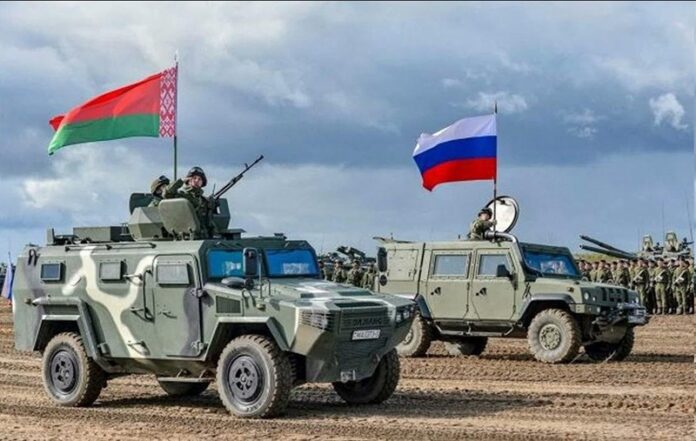
On September 12-16, 2025, Belarus and Russia will conduct the Zapad-2025 military exercises, a significant joint operation that includes rehearsals for deploying nuclear-capable Oreshnik missiles. These drills, centered near Borisov in Belarus’s Minsk region, mark a new chapter in the deepening military alliance between Minsk and Moscow.

Coming at a time of heightened tensions with NATO and ongoing Russian aggression in Ukraine, the exercises underscore the strategic importance of nuclear deterrence in the Russia-Belarus “Union State” framework.

Strategic Importance of Zapad-2025

The Zapad-2025 exercises are more than routine military drills; they represent a deliberate escalation in Russia and Belarus’s strategic posture, with far-reaching implications:

1. Nuclear Deterrence and Power Projection:

– Belarusian Defense Minister Viktor Khrenin has described nuclear weapons as a “key element of strategic deterrence.” The inclusion of the Oreshnik missile, an intermediate-range hypersonic system capable of carrying nuclear warheads, signals to NATO and the West that both nations are prepared to counter perceived threats with overwhelming force.

– The exercises simulate the deployment of tactical nuclear weapons, which, while less destructive than strategic nuclear arsenals, could still cause catastrophic damage. Russian President Vladimir Putin has noted that even tactical nuclear weapons surpass the destructive power of those used in Hiroshima and Nagasaki, emphasizing their role as a credible threat.

– By showcasing advanced weaponry and nuclear readiness, Russia and Belarus aim to deter NATO’s military buildup along their borders and discourage further Western support for Ukraine, particularly the use of long-range weapons against Russian targets.

2. Strengthening the Russia-Belarus Alliance:

– The drills reinforce the “Union State,” a political and military framework binding Russia and Belarus. Since Russia’s 2022 invasion of Ukraine, Belarus has served as a critical staging ground, hosting Russian troops and missile systems. The deployment of Russian tactical nuclear weapons in Belarus, formalized in 2023, is a cornerstone of this partnership.

– Belarusian President Alexander Lukashenko has framed these weapons as a guarantee of national security, citing a mutual defense pact with Russia. The exercises test the interoperability of Russian and Belarusian forces, ensuring seamless coordination in a potential nuclear scenario.

– For Russia, the drills demonstrate its ability to extend its nuclear umbrella to allies, reinforcing Moscow’s influence over Minsk and signaling to other potential partners that it remains a global power.

3. Regional Security Dynamics:

– Conducted near Borisov, less than 100 miles from NATO’s eastern flank (Poland, Lithuania, Latvia), the exercises are a direct challenge to the alliance. These countries, already wary of Russian military activity in Belarus and Kaliningrad, view the drills as provocative, particularly given Russia’s revised nuclear doctrine, which lowers the threshold for nuclear use.

– The Oreshnik missile, with a range of up to 2,000 miles and hypersonic capabilities, extends Russia’s ability to strike targets across Europe, including NATO capitals and military bases, from Belarusian soil. This capability heightens concerns about a potential escalation in the region.

– The exercises also respond to NATO’s own large-scale drills, such as those in Poland involving 34,000 troops, which Russia and Belarus cite as evidence of Western “militarization” along their borders.

4. Global Nuclear Risks:

– The exercises occur against the backdrop of a fraying global nuclear arms control regime. With only one major U.S.-Russia nuclear treaty remaining, the risk of miscalculation or unintended escalation is higher than at any point since the Cold War.

– The deployment of tactical nuclear weapons in a battlefield context, as rehearsed in Zapad-2025, raises the specter of a limited nuclear exchange escalating into a broader conflict, particularly given the proximity of NATO forces and the ongoing war in Ukraine.

Geopolitical Context

The Zapad-2025 exercises are deeply rooted in the current geopolitical environment, shaped by the following factors:

1. Russia’s Revised Nuclear Doctrine:

– In late 2024, Russia updated its nuclear doctrine to lower the threshold for nuclear weapon use, citing Western support for Ukraine—particularly permissions for Kyiv to strike Russian territory with long-range weapons—as a direct threat. The Zapad-2025 drills operationalize this doctrine, testing Russia’s ability to deploy nuclear weapons in a conflict scenario.

– The inclusion of the Oreshnik missile, which was used against Ukraine in November 2024, underscores Russia’s willingness to integrate new nuclear-capable systems into its arsenal, signaling a shift toward a more assertive nuclear posture.

2. The War in Ukraine:

– Belarus has played a pivotal role in Russia’s war against Ukraine, providing territory for troop movements, missile launches, and logistics since February 2022. The exercises are partly a response to Western actions, such as NATO’s approval for Ukraine to use long-range weapons against Russian targets and discussions about deploying Western troops to Ukraine.

– Ukrainian President Volodymyr Zelenskyy has warned that Russia’s nuclear posturing, including the Oreshnik deployment, aims to intimidate the West and disrupt peace negotiations, particularly those involving U.S. President Donald Trump. Zelenskyy has described the missile as a tool to “scare the world” and undermine Ukraine’s position.

3. Tensions with NATO:

– Russia and Belarus frame the exercises as a defensive response to NATO’s military buildup, including exercises in Poland and the Baltic states. NATO’s increased presence, driven by fears of Russian aggression, has prompted Moscow and Minsk to counter with their own show of force.

– Lukashenko has dismissed accusations of offensive intent, calling them “complete nonsense,” but NATO’s monitoring of the drills reflects deep concerns about their implications for regional stability.

4. Domestic and Regional Posturing:

– For Lukashenko, the exercises bolster his domestic legitimacy, portraying him as a leader safeguarding Belarus under Russia’s nuclear protection. This is critical amid ongoing domestic unrest following the disputed 2020 election.

– For Russia, the drills reinforce its image as a great power capable of challenging NATO and supporting allies.

 Why Now? The Timing of Zapad-2025

The scheduling of the exercises, just before a planned August 15, 2025, meeting between Putin and Trump in Alaska, is no coincidence. Several factors explain the timing:

1. Leverage in Peace Negotiations:

– The drills are a strategic maneuver to strengthen Russia’s position in negotiations over Ukraine. Putin has demanded a ceasefire that includes Ukraine’s withdrawal from contested regions, a condition Zelenskyy warns could embolden further Russian aggression.

– By showcasing nuclear capabilities, Russia and Belarus aim to pressure the U.S. and its allies into concessions, particularly on limiting military aid to Ukraine and scaling back NATO’s presence in Eastern Europe.

2. Countering Western Actions:

– The exercises respond to specific Western moves, including NATO’s approval for Ukraine to strike Russian targets and the alliance’s own large-scale drills. Russia and Belarus view these as escalatory, justifying their nuclear posturing as a necessary countermeasure.

– The Oreshnik missile’s planned deployment in Belarus by late 2025, following its use in Ukraine, reflects a broader strategy to counter Western technological and military advancements.

3. Testing New Capabilities:

– The Oreshnik missile, which entered serial production in 2025, is a relatively new addition to Russia’s arsenal. The exercises provide an opportunity to test its integration into joint operations, ensuring that Russian and Belarusian forces can deploy it effectively.

– The drills also allow for the refinement of command-and-control structures for nuclear operations, critical for ensuring operational readiness in a crisis.

4. Geopolitical Signaling:

– The timing, just before the Putin-Trump summit, sends a clear message to the U.S. and NATO: Russia and Belarus are prepared for escalation if their demands are not met. This aligns with Putin’s broader strategy of using nuclear threats to shape Western policy, as seen in earlier exercises in 2024 and his public statements on Russia’s nuclear capabilities.

Implications and Risks

The Zapad-2025 exercises carry significant risks and implications for regional and global security:

1. Provocation vs. Deterrence:

– While Russia and Belarus claim the drills are defensive, their nuclear focus and proximity to NATO borders are inherently provocative. This aligns with Russia’s pattern of using nuclear rhetoric to intimidate adversaries, as seen in previous Zapad exercises (e.g., 2017, 2021) and Putin’s repeated warnings about nuclear escalation.

– NATO’s response, including heightened surveillance and potential counter-drills, could escalate tensions, creating a cycle of provocation and counter-provocation.

2. Risk of Miscalculation:

– The exercises, particularly the nuclear component, increase the risk of miscalculation. A misinterpretation of the drills’ intent by NATO or Ukraine could lead to unintended escalation, especially given Russia’s lowered nuclear threshold and the volatile situation in Ukraine.

– The presence of nuclear-capable systems in Belarus, a frontline state, raises the stakes, as any incident could rapidly involve NATO members.

3. Impact on Peace Negotiations:

– The drills could complicate U.S.-Russia talks, as they reinforce Russia’s hardline stance and signal a willingness to escalate if negotiations falter. Trump’s push for a quick resolution to the Ukraine conflict may face resistance from both Russia, emboldened by its nuclear posturing, and Ukraine, wary of concessions under pressure.

4. Long-Term Regional Dynamics:

– The exercises exacerbate tensions with NATO’s eastern members, who may push for increased alliance deployments, potentially leading to a broader arms race in the region.

– For Ukraine, the drills underscore the ongoing threat from Belarus, which could serve as a launchpad for further Russian aggression, complicating Kyiv’s defense strategy.

Conclusion

The Zapad-2025 exercises, with their focus on nuclear-capable Oreshnik missiles, represent a calculated escalation by Russia and Belarus to assert their military power and influence Western policy. Rooted in the context of the Ukraine war, NATO’s expansion, and Russia’s revised nuclear doctrine, the drills are both a deterrence mechanism and a geopolitical tool.

Their timing, just before a critical U.S.-Russia summit, underscores their role in shaping negotiations over Ukraine. However, the nuclear dimension and proximity to NATO borders heighten the risk of miscalculation, making Zapad-2025 a pivotal moment in the ongoing standoff between East and West.

As the world watches, careful diplomacy and restraint will be essential to prevent these exercises from sparking a broader crisis.

India’s Potential Su-57 Acquisition and Pakistan’s J-35 Deal: A Shifting Geopolitical Chessboard in South Asia

0
J-35A stealth aircraft

In a rapidly evolving South Asian security landscape, India’s potential acquisition of Russia’s fifth-generation Su-57 fighter jet and Pakistan’s reported deal for China’s J-35 stealth fighter are poised to reshape regional power dynamics. These developments, set against the backdrop of deepening China-Pakistan defense ties and India’s strategic balancing act, carry profound geopolitical implications.

India’s Su-57 Consideration: A Strategic Pivot

India’s interest in the Russian Su-57, a stealth-capable, multirole fighter, comes as a response to regional threats and delays in its indigenous Advanced Medium Combat Aircraft (AMCA) program, which is not expected to be operational until the mid-2030s. The Su-57, offered with full technology transfer and co-production, aligns with India’s “Atmanirbhar Bharat” initiative for self-reliance in defense.

Its compatibility with India’s Russian-heavy air fleet, including the Su-30 MKI, and the ability to integrate indigenous missiles like the Astra and Rudram, make it an attractive interim solution. The deal’s appeal is further enhanced by Russia’s reported willingness to provide source code access, enabling India to customize the platform and advance its own fifth-generation fighter development.

However, the Su-57’s acquisition is not without challenges. Concerns over its reliability, Russia’s constrained production capacity due to Western sanctions, and servicing issues with existing Russian platforms like the Su-30 MKI could deter India. Moreover, the Su-57’s stealth capabilities, while advanced, are considered less robust than those of the U.S. F-35, raising questions about its long-term viability against emerging threats.

U.S. Reaction to India’s Su-57 Move

The United States is likely to view India’s potential Su-57 acquisition with concern, as it signals a continued reliance on Russian military hardware at a time when Washington is pushing New Delhi to align with Western defense systems. The U.S. has actively promoted the F-35 as an alternative, but India’s rejection of this offer—citing strategic autonomy and the F-35’s restrictive technology-sharing policies—has strained bilateral ties.

U.S. officials, such as Commerce Secretary Howard Lutnick, have previously urged India to reduce its military purchases from Russia, reflecting Washington’s broader strategy to counter Moscow’s influence in Asia.

A U.S. response could include diplomatic pressure, such as warnings about India’s role in the Quad (U.S., India, Japan, Australia) or its alignment in the Indo-Pacific strategy to counter China. Economic measures, like the 25% tariffs reportedly influencing India’s Su-57 consideration, could escalate tensions. However, the U.S. is likely to avoid harsh measures like sanctions under the Countering America’s Adversaries Through Sanctions Act (CAATSA), as it did with India’s S-400 purchase, given India’s critical role as a counterweight to China. Instead, Washington may push for increased defense cooperation, offering alternative systems like advanced air defense platforms or joint production of less sensitive technologies to maintain influence.

Security concerns also loom large. The U.S. fears that integrating Russian systems like the Su-57 could compromise interoperability with Western platforms and risk intelligence leaks, particularly if India seeks to combine Russian and U.S. technologies. This could further delay or derail potential F-35 sales, as Washington remains cautious about sharing sensitive technology with nations operating Russian hardware.

Pakistan’s J-35 Deal: China’s Strategic Gambit

Parallel to India’s Su-57 deliberations, Pakistan’s reported acquisition of 40 Chinese J-35 stealth fighters marks a significant leap in its airpower capabilities. The J-35, developed by Shenyang Aircraft Corporation, is a fifth-generation multirole fighter with advanced stealth, AESA radar, and compatibility with long-range PL-15 and PL-17 missiles. Reports indicate that Pakistan’s deal, potentially accelerated for delivery as early as August 2025, is backed by Chinese financial incentives, including a 50% discount, reflecting Beijing’s strategic intent to bolster Islamabad as a counterweight to India. Pakistani pilots are already training in China, signaling a fast-tracked integration process.

However, recent reports suggest uncertainty, with Pakistan’s Defense Minister Khawaja Asif dismissing the J-35 deal as “media speculation” on August 12, 2025. This denial contrasts with earlier confirmations from Pakistani officials and reports of pilot training, raising questions about economic constraints or a strategic pivot toward U.S. systems like the F-16 Block 70.

Pakistan’s economic challenges, compounded by IMF loan conditions، may have prompted this hesitation. Despite this, the prevailing sentiment on X and defense analyses suggest the deal remains likely, with China’s commitment to Pakistan’s airpower modernization undeterred.

China’s role in this deal is a calculated move to challenge India’s regional dominance and cement its influence in South Asia. By equipping Pakistan with the J-35, Beijing not only enhances its ally’s deterrence but also positions the J-35 as a competitive alternative to Western fighters in the global arms market. This marks China’s first export of a fifth-generation fighter, signaling its ambition to rival U.S. and Russian dominance in advanced military aviation.

Geopolitical Implications

The simultaneous pursuit of the Su-57 by India and the J-35 by Pakistan underscores a deepening arms race in South Asia, with significant implications for regional stability and global alignments.

1. South Asian Arms Race:

– Pakistan’s J-35 acquisition, if finalized, would give it a 12-14 year advantage in stealth capabilities over India, which lacks a fifth-generation fighter until the AMCA’s induction. The J-35’s low radar cross-section (reportedly 0.001 square meters, comparable to the F-35) and networked warfare capabilities could challenge India’s air superiority, particularly in beyond-visual-range combat. India’s current fleet, including Rafale and Su-30 MKI, lacks stealth, making it vulnerable to the J-35’s first-strike potential.

– India’s potential Su-57 acquisition would counter this threat. However, the Su-57’s higher radar cross-section compared to the J-35 or F-35 could limit its effectiveness in contested environments. The deal would also strengthen India-Russia ties, ensuring continued access to Russian technology and support amid Western sanctions.

2. China-Pakistan Strategic Alignment:

– The J-35 deal reflects China’s broader strategy to pressure India on multiple fronts, leveraging Pakistan to dilute India’s air superiority. This aligns with China’s growing J-20 fleet (approximately 300 units) and its development of sixth-generation fighters, signaling a long-term challenge to India’s northern and western borders.

– Reports suggest that China’s support for Pakistan is part of a broader geopolitical strategy, potentially exploiting tensions between India and the U.S. over tariffs and defense alignments. However, these claims remain inconclusive, and China’s primary aim appears to be countering India’s partnerships with the U.S. and France.

3. U.S.-India Relations and the Quad:

– India’s Su-57 move could strain U.S.-India relations, as it signals a preference for Russian over Western systems. This may weaken the Quad’s cohesion, as the U.S. seeks a unified front against China. However, India’s strategic autonomy ensures it will continue engaging with the U.S. to balance China, potentially through joint exercises or alternative defense deals.

– The U.S. may respond by offering advanced air defense systems or accelerating technology transfers to India, aiming to offset the J-35 threat and maintain influence in New Delhi.

4. India’s Defense Self-Reliance:

– The Su-57’s technology transfer would accelerate India’s AMCA program, fostering indigenous capabilities in stealth, radar, and avionics. This aligns with India’s goal of becoming a global aerospace power, potentially enabling future exports of AMCA components. In contrast, the J-35 deal offers Pakistan limited industrial benefits.

– India’s response to the J-35 threat may also include upgrading its Rafale and Su-30 MKI fleets, enhancing air defense systems like the S-400, and expanding space-based surveillance to counter stealth aircraft.

5. Regional Stability and Global Arms Market:

– The J-35 and Su-57 acquisitions could escalate tensions, potentially triggering a regional arms race.

– Globally, China’s J-35 export and Russia’s Su-57 offer challenge U.S. dominance in the fifth-generation fighter market. China’s discounted deal and Russia’s technology transfer set precedents that could attract other non-aligned nations, reshaping global defense alignments.

Conclusion

India’s potential acquisition of the Su-57 and Pakistan’s reported J-35 deal represent a critical juncture in South Asia’s geopolitical landscape. The U.S. is likely to respond with diplomatic and economic pressure to steer India toward Western systems, while avoiding severe measures to preserve the strategic partnership.

Pakistan’s J-35 acquisition, backed by China, threatens India’s air superiority, prompting New Delhi to counter with the Su-57 and accelerated indigenous programs. The interplay of these developments underscores a broader contest between U.S., Russian, and Chinese influence in the region with India and Pakistan as key players in a high-stakes arms race.

Trump Faces EU Leaders in Tense Video Clash Over Ukraine’s Fate Before Putin Summit

0
President Donald Trump speaks at an event to sign the Laken Riley Act, legislation requiring the detention of immigrants living in the U.S. illegally who are accused of theft, at the White House, in Washington, U.S.

On August 13, 2025, U.S. President Donald Trump participated in a virtual summit with European leaders and Ukrainian President Volodymyr Zelenskyy, organized by German Chancellor Friedrich Merz. The call was a strategic move ahead of Trump’s scheduled meeting with Russian President Vladimir Putin in Alaska on August 15, 2025, to discuss the Russia-Ukraine war. Below are the details, outcomes, and analyses based on available information.Details of the Video Call

  • Participants: The summit included leaders from Germany (Friedrich Merz), France (Emmanuel Macron), the UK (Keir Starmer), Finland (Alexander Stubb), Italy (Giorgia Meloni), Poland (Donald Tusk), Ukraine (Volodymyr Zelenskyy), as well as EU representatives (Ursula von der Leyen) and NATO chief Mark Rutte. U.S. Vice President JD Vance also joined.
  • Structure: The call was structured in phases:
    • 2:00 p.m. (CET): European leaders, Zelenskyy, and NATO discussed strategy.
    • 3:00 p.m. (CET): Trump and Vance joined for a one-hour discussion.
    • 4:30 p.m. (CET): The “Coalition of the Willing” (Germany, UK, France, and other Ukraine supporters) held a follow-up call.
  • Agenda: The discussions focused on:
    • Pressuring Russia to agree to a ceasefire.
    • Addressing territorial claims, particularly Trump’s suggestion of “land swaps” between Ukraine and Russia.
    • Security guarantees for Ukraine to prevent further Russian aggression.
    • The sequencing of potential peace talks to ensure Ukraine’s inclusion.

      Context and Objectives

  • European Concerns: European leaders were alarmed by Trump’s upcoming meeting with Putin, fearing that a U.S.-Russia deal could sideline Ukraine and Europe, potentially forcing Ukraine to cede territory (e.g., Donbas) to Russia. They emphasized that “international borders must not be changed by force” and that Ukraine must be central to any peace process.
  • Zelenskyy’s Position: Zelenskyy rejected ceding Donbas, arguing it would serve as a Russian “springboard” for further offensives. He advocated for stronger sanctions on Russia and a full ceasefire without territorial concessions.
  • Trump’s Stance: Trump described the call as a “listening exercise” to gather ideas before his Putin meeting, downplaying expectations of an immediate breakthrough. He reiterated his goal of ending the war quickly, hinting at possible “land swaps” but without clear details on what Russia might concede.
  • Merz’s Role: The German Chancellor organized the call to ensure European voices were heard, stressing that territorial decisions could not be made “over the heads of Europeans and Ukrainians.” He urged Trump to impose tougher sanctions on Russia’s banking sector and trading partners.

    Outcomes

  • No Concrete Agreements: The call did not produce specific agreements, serving primarily as a platform for European leaders and Zelenskyy to lobby Trump. It underscored European unity behind Ukraine and their insistence on Kyiv’s inclusion in peace talks.
  • Reaffirmation of Principles: EU leaders issued a statement emphasizing Ukraine’s right to self-determination and the inviolability of international borders. They welcomed Trump’s peace efforts but stressed that any deal must involve Ukraine and respect its sovereignty.
  • Preparatory Steps: The call set the stage for further coordination, with European leaders planning to meet again before a special European Council meeting to discuss EU defense and Ukraine.
  • Zelenskyy’s Diplomatic Push: Zelenskyy, in Berlin during the call, reported having over 30 conversations with world leaders that week, signaling intense diplomatic efforts to counter potential U.S.-Russia unilateralism.

    Analyses

  • European Anxiety: The call reflected deep European concerns about being marginalized in U.S.-Russia negotiations. Trump’s openness to “land swaps” and his administration’s Kremlin-receptive rhetoric (e.g., describing the war as something that “broke out” rather than an unprovoked invasion) heightened fears of a deal unfavorable to Ukraine and European security.
  • Trump’s Motivations: Some analysts suggest Trump’s approach is driven by a desire for a high-profile diplomatic win, potentially prioritizing speed over substance. His ego and campaign promise to end the war “in 24 hours” may influence his push for quick resolutions, even if it means pressuring Ukraine to make concessions.
  • Ukraine’s Leverage: Ukraine’s position is precarious, as it relies heavily on Western support. Zelenskyy’s insistence on sanctions and a ceasefire without territorial losses aims to strengthen Kyiv’s negotiating position, but Europe’s limited leverage over Trump complicates this.
  • Geopolitical Implications: The call highlighted a shift from the unified U.S.-EU stance under the Biden administration. Trump’s willingness to engage Putin directly, coupled with comments from his team questioning Europe’s security commitments, suggests a fracturing of transatlantic unity. This could embolden Russia to pursue further aggression if a weak deal is struck.
  • Symbolic Venue: The choice of Alaska for the Trump-Putin summit raised concerns, as it could allow Putin to frame territorial concessions as historically precedented (e.g., Russia’s sale of Alaska to the U.S.). This added to European unease about the optics and substance of the upcoming talks.
    Conclusion
The August 13, 2025, video call was a critical diplomatic effort by European leaders and Zelenskyy to influence Trump’s approach to the Russia-Ukraine war before his meeting with Putin. While it reinforced European unity and Ukraine’s resolve, it yielded no binding outcomes, leaving uncertainty about Trump’s next moves. The call underscored tensions in transatlantic relations and the challenges of balancing peace efforts with Ukraine’s sovereignty.

Syrian Foreign Minister’s Visit to Türkiye Signals New Chapter in Bilateral Relations

0
A Syrian opposition flag flies above a market square in central Aleppo.
On August 13, 2025, Syrian Foreign Minister Asaad Hassan al-Shaibani arrived in Ankara for a historic visit, marking the first official trip by a Syrian foreign minister to Türkiye since the onset of the Syrian civil war in 2011. This high-profile diplomatic engagement follows Turkish Foreign Minister Hakan Fidan’s visit to Damascus on August 7, 2025, and comes in the wake of the dramatic collapse of Bashar al-Assad’s regime in December 2024.
With speculations swirling about a potential security agreement, refugee repatriation plans, and broader regional realignments, Shaibani’s visit has sparked intense interest. Social media platforms, particularly X, are abuzz with claims of “something cooking” in Türkiye-Syria relations, including unverified reports of Turkish military bases in Syria.
Here is a detailed analysis of the visit’s context, objectives, and implications and regional dynamics.

Background

A Shifting Syrian Landscape

The Syrian civil war, which began in 2011, severely strained relations between Türkiye and Syria. Türkiye, a staunch supporter of Syrian opposition groups, hosted nearly three million Syrian refugees, maintained a military presence in northern Syria to counter Kurdish militias it deems terrorists, and played a pivotal role in regional negotiations like the Astana process.
The Assad regime’s fall in December 2024, following a rapid offensive by opposition forces led by Hayat Tahrir al-Sham (HTS), marked a turning point. The establishment of a transitional government under President Ahmad al-Sharaa opened the door for diplomatic reengagement with regional powers, including Türkiye.
Shaibani, appointed foreign minister on December 21, 2024, has been at the forefront of Syria’s efforts to rebuild its international relations. His recent diplomatic tour, which included visits to Saudi Arabia, the UAE, Qatar, Jordan, and Russia, reflects the new Syrian administration’s ambition to reintegrate into the regional and global order. Türkiye, with its strategic interests in Syria—ranging from border security to refugee management—has emerged as a critical partner in this process.
Fidan’s Damascus visit, where he met Sharaa and Shaibani, set the stage for today’s talks, with discussions focusing on counter-terrorism, Syrian reconstruction, and tensions with Israel.

The Visit: Context and Objectives

Shaibani’s visit to Ankara is a reciprocal gesture following Fidan’s trip and underscores the urgency of addressing shared challenges in the post-Assad era. The Turkish Foreign Ministry confirmed the visit but provided no detailed agenda, leaving room for speculation about the topics under discussion. Based on recent developments, statements, and regional trends, the following objectives are likely central to the talks:

  1. Security and Military Cooperation

    • Context: Türkiye has long prioritized countering Kurdish militias, particularly the YPG, which it equates with the PKK, a designated terrorist organization. The transitional Syrian government, led by HTS, shares an interest in stabilizing Syria and preventing separatist movements.
    • Speculation: Posts on X, claim that Türkiye and Syria are negotiating a security and military agreement, potentially involving Turkish military bases in strategic locations like Palmyra, Homs Tiyas, and Aleppo’s Menagh airbase. Some posts also suggest Türkiye could assist in reforming the Syrian army.
    • Analysis: A formalized defense pact would align with Türkiye’s goal of securing its southern border and limiting the influence of Kurdish forces in northern Syria. It could also serve Syria’s interest in countering external threats, such as Israeli airstrikes, which have targeted Syrian military infrastructure. However, these claims remain unverified, and establishing new Turkish bases would be a sensitive issue, potentially provoking reactions from Russia, Iran, or Israel. During Fidan’s Damascus visit, counter-terrorism cooperation was a key topic, suggesting that security discussions are a priority but may focus on joint operations rather than permanent bases.
    • Implications: A security agreement could reshape regional dynamics, strengthening Türkiye’s influence in Syria while bolstering the transitional government’s legitimacy. However, it risks complicating Syria’s relations with other powers, particularly Russia, which maintains its own military presence in Syria.
  2. Refugee Repatriation

    • Context: Türkiye hosts approximately 2.8 million Syrian refugees, a significant domestic issue that has fueled political and social tensions. The fall of Assad has raised hopes for repatriation, as Türkiye seeks to create conditions for safe and voluntary returns.
    • Speculation: Shaibani’s acknowledgment of Türkiye’s support for Syrians over the past 14 years, suggests refugee issues are a key agenda item. Türkiye may push for commitments from Syria’s transitional government to stabilize areas for returnees.
    • Analysis: Repatriation requires security guarantees, infrastructure rebuilding, and political stability in Syria. Türkiye could offer technical or economic assistance to facilitate returns, potentially tied to reconstruction projects in northern Syria, where it already exerts influence. The easing of U.S. sanctions on Syria, reported in early 2025, may enable international funding for such efforts.
    • Implications: Successful repatriation would alleviate domestic pressure in Türkiye and strengthen bilateral ties. However, challenges remain, including ensuring safe conditions in Syria and addressing the concerns of refugees wary of returning under a new, untested government.
  3. Reconstruction and Economic Cooperation

    • Context: Syria’s infrastructure lies in ruins after years of war, and the transitional government is seeking international support for rebuilding. Türkiye, with its construction expertise and geographic proximity, is well-positioned to contribute.
    • Speculation: Discussions in Damascus included Syrian reconstruction, and Shaibani’s visit may advance these talks, potentially involving trade agreements or energy cooperation. Türkiye’s recent dispatch of a power ship to Syria, signals practical steps toward addressing Syria’s immediate needs.
    • Analysis: Economic cooperation could include Turkish investment in rebuilding schools, hospitals, and energy infrastructure in northern Syria, areas under Türkiye’s de facto control. Such efforts would enhance Türkiye’s regional influence and create economic opportunities for Turkish firms. For Syria, Turkish support could accelerate recovery and signal to other nations that the transitional government is a viable partner.
    • Implications: Economic collaboration could lay the foundation for long-term stability in Türkiye-Syria relations, but it depends on Syria’s ability to secure broader international funding and navigate competing interests from Arab states and Russia.
  4. Regional Stability and Countering External Threats

    • Context: Syria faces ongoing challenges from Israeli airstrikes targeting military sites and concerns about residual Iranian and Russian influence. Türkiye, wary of regional instability, seeks to ensure Syria does not become a battleground for proxy conflicts.
    • Speculation: Shaibani’s visit may address Syria-Israel tensions, with Türkiye potentially mediating or advocating for de-escalation. Reports suggest Türkiye could limit Israeli operations in Syria as part of a defense agreement.
    • Analysis: Türkiye and Syria share an interest in stabilizing the region, particularly in preventing Kurdish separatism and external interventions. Shaibani’s recent visit to Moscow, where he discussed Russian support for Syrian sovereignty, indicates a multi-pronged approach to securing international backing. Türkiye’s role in the Astana process positions it as a potential broker in regional security talks.
    • Implications: Aligning Türkiye and Syria on security issues could reduce the risk of escalation with Israel and strengthen Syria’s position against external pressures. However, Türkiye must balance its NATO commitments and relations with Russia and Iran, which complicates its role.
  5. Political Normalization and Governance

    • Context: The transitional Syrian government is navigating a delicate process of establishing legitimacy, drafting a new constitution, and preparing for elections. Türkiye, with its history of supporting Syrian opposition groups, has a stake in shaping this process.
    • Speculation: Shaibani’s emphasis on inclusive governance and constitutional amendments suggests discussions on Syria’s political future. Türkiye may offer support for the transitional process, potentially in exchange for assurances on Kurdish containment.
    • Analysis: Türkiye’s experience in the Astana talks and its influence over Syrian opposition factions make it a key player in supporting a stable, non-hostile government in Damascus. Shaibani’s visit could involve negotiations on Türkiye’s role in international forums or guarantees that the new Syrian government aligns with Turkish interests.
    • Implications: A stable Syrian government that cooperates with Türkiye could enhance regional security and facilitate refugee returns. However, disagreements over governance models or the role of HTS could create tensions.

Speculations and Unverified ClaimsThe phrase “something is cooking,” popularized by an X post from @ragipsoylu , captures the intrigue surrounding Shaibani’s visit. Social media speculation, particularly about Turkish military bases or a comprehensive security pact, reflects the high stakes of the talks. However, these claims lack official confirmation and should be approached with caution.

Establishing new Turkish bases in Syria would be a bold move, requiring agreement from Syria’s transitional government and likely provoking reactions from Russia, which maintains bases like Tartus and Hmeimim, or Israel, which closely monitors Syrian military developments.
Similarly, while reforming the Syrian army with Turkish assistance is plausible, it would require significant coordination and international approval, given Syria’s complex geopolitical landscape.

Regional and International Implications

Shaibani’s visit signals a potential realignment in the Middle East, with Türkiye positioning itself as a central player in Syria’s post-Assad transition. A strengthened Türkiye-Syria partnership could counterbalance the influence of Iran and Russia, both of which have lost leverage since Assad’s fall.
For Syria, closer ties with Türkiye offer access to economic and security support, crucial for rebuilding and stabilizing the country. However, the transitional government must navigate competing interests from Arab states, Russia, and Western powers, all of whom have stakes in Syria’s future.
The visit also has implications for Türkiye’s domestic politics. President Recep Tayyip Erdoğan faces pressure to address the refugee crisis, and progress on repatriation could bolster his government’s standing.

Additionally, Türkiye’s role in Syria could enhance its regional clout, particularly within NATO, where it seeks to assert its strategic autonomy.Challenges and RisksSeveral challenges could complicate the outcomes of Shaibani’s visit:

  • Kurdish Issue: Disagreements over the YPG and other Kurdish groups could strain negotiations, as Syria’s transitional government may prioritize national unity over Türkiye’s security concerns.
  • Regional Rivalries: Russia and Iran, both with historical ties to Syria, may view Türkiye’s growing influence with suspicion, potentially leading to diplomatic friction.
  • Domestic Syrian Dynamics: The transitional government’s ability to deliver on promises, such as refugee returns or reconstruction, depends on its internal cohesion and ability to govern effectively.
  • Verification of Agreements: Speculative claims about military bases or defense pacts require official confirmation to assess their feasibility and impact.

The visit of Syrian Foreign Minister Asaad Hassan al-Shaibani to Türkiye on August 13, 2025, represents a pivotal moment in the evolving relationship between Ankara and Damascus. Coming on the heels of Assad’s ouster and amidst Syria’s efforts to rebuild its international standing, the visit underscores shared interests in security, refugee repatriation, and reconstruction.

While speculations about a transformative security agreement or Turkish military bases capture attention, they remain unconfirmed, and the talks are likely focused on practical steps to stabilize Syria and strengthen bilateral ties.

The outcomes of this visit could reshape regional dynamics, positioning Türkiye as a key partner in Syria’s transition while addressing pressing domestic and strategic priorities. As discussions unfold behind closed doors, the international community will watch closely for signs of a new chapter in Türkiye-Syria relations.


NATO’s Delicate Dance: Balancing Ukraine’s Sovereignty with Trump’s Summit Gambit

0
Recent remarks by NATO Secretary General Mark Rutte have sparked heated debate, with some claiming the alliance is softening its stance on Ukraine by acknowledging Russia’s de-facto control over parts of its territory.
This interpretation, amplified by posts on X, misreads NATO’s position and overlooks the broader context of the upcoming Trump-Putin summit. Far from capitulating, NATO is navigating a complex diplomatic landscape with a pragmatic approach that upholds Ukraine’s sovereignty while confronting the realities of Russia’s occupation.
Rutte’s statement, made during an ABC News interview on August 10, 2025, clarified that any recognition of Russia’s control would be “effectual” rather than legal—a critical distinction. NATO has not wavered in its rejection of Russia’s illegal annexations in Crimea, Donetsk, Luhansk, Kherson, and Zaporizhzhia. Instead, Rutte’s comments signal a willingness to engage in ceasefire talks that account for the current battlefield without legitimizing Moscow’s claims.
This is not a retreat but a strategic acknowledgment of the need for negotiations to end the bloodshed, with Ukraine’s voice at the forefront.
The Trump-Putin summit, set for August 15 in Alaska, looms large over this discourse. President Trump’s decision to host Putin has raised eyebrows, especially given Ukraine’s exclusion from the talks. Kyiv, understandably, is alarmed, with President Volodymyr Zelenskyy dismissing any deal made without Ukraine as “stillborn.”
European allies share this unease, fearing Trump’s deal-making instincts might prioritize a quick resolution over Ukraine’s long-term security. Yet Rutte has defended the summit as a chance to test Putin’s sincerity, emphasizing that NATO will continue arming Ukraine and ensuring its inclusion in future negotiations.
Critics on X, have seized on Rutte’s words to claim a “significant shift” in NATO’s stance. This is an overreach. NATO’s commitment to Ukraine’s sovereignty, territorial integrity, and eventual membership remains ironclad, backed by billions in military aid and coordinated support through its Wiesbaden command.
Rutte’s pragmatism echoes historical precedents, like the West’s de-facto acknowledgment of Soviet control over the Baltics without legal recognition. It’s a diplomatic tightrope, not a betrayal.The real test lies in Trump’s summit. His talk of “territorial swaps” and pressure tactics, like tariff hikes on India’s Russian oil imports, suggests a willingness to play hardball. But his exclusion of Ukraine risks alienating allies and emboldening Putin, whose demands—Ukraine abandoning NATO aspirations and ceding territory—clash with NATO’s principles.
Rutte’s challenge is to hold the line, ensuring that any ceasefire respects Ukraine’s agency and avoids rewarding Russian aggression.NATO’s position is not a shift but a balancing act: supporting Ukraine’s fight while preparing for talks that reflect the war’s grim realities.
As the Trump-Putin summit unfolds, the alliance must remain vigilant, ensuring Kyiv’s voice is heard and its sovereignty preserved. The path to peace is fraught, but NATO’s resolve to stand by Ukraine must not falter.

Israel-Iran Tensions Escalate: Will Another War Erupt Before December?

0
A projectile is seen in the sky after Iran fired a salvo of ballistic missiles, amid cross-border hostilities between Hezbollah and Israel, as seen from Tel Aviv, Israel.


The claim that Israel is likely to start another war with Iran before December 2025, as referenced in a Foreign Policy article, suggests a significant escalation in the long-standing tensions between the two nations. Below is a detailed analysis based on available information, including the context provided by the referenced Foreign Policy article and other sources, while critically examining the narrative and considering multiple perspectives.

Context and Background

The Israel-Iran rivalry has been characterized by decades of hostility, rooted in ideological differences, regional power struggles, and concerns over Iran’s nuclear program. Historically, this conflict has played out through proxy wars, cyberattacks, assassinations, and covert operations, often referred to as a “shadow war.” However this rivalry escalated into direct military confrontation in June 2025, with Israel launching “Operation Rising Lion” on June 13, 2025, targeting Iran’s nuclear and military infrastructure. Iran retaliated with missile and drone strikes, marking a shift from covert to overt warfare.

The Foreign Policy article argues that Israel is likely to initiate another military engagement with Iran before December 2025, potentially as early as late August. This claim is attributed to Trita Parsi, a noted analyst, and is based on Israel’s strategic calculations and the current geopolitical environment.

Details and Drivers of Potential Conflict

Several factors contribute to the likelihood of another Israel-Iran war before December 2025, as outlined below:
  1. Israel’s Strategic Objectives:

    1. Nuclear Threat: Israel views Iran’s nuclear program as an existential threat. The June 2025 strikes targeted key nuclear facilities like Natanz, but the fortified Fordow site reportedly remains intact. Israel’s inability to neutralize Fordow without U.S. assistance (due to the need for specialized bunker-buster munitions like the GBU-57) may prompt further action if Israel perceives Iran is advancing toward nuclear weapons capability.
    2. Weakened Iranian Proxies: Israel’s recent military actions against Iran’s allies, such as Hezbollah in Lebanon and Hamas in Gaza, have weakened Iran’s regional influence. This creates a strategic window for Israel to press its advantage against Iran directly, especially if it believes Iran’s military capabilities are degraded.
    3. Regime Change Ambitions: Some analyses suggest Israel’s actions aim not only to halt Iran’s nuclear program but also to destabilize the Iranian regime, potentially leading to its collapse or a shift toward a more moderate government.

Iran’s Response and Capabilities:

    1. Iran’s retaliation in June 2025, codenamed “Operation True Promise III,” involved launching over 150 ballistic missiles and 100 drones against Israel, causing civilian casualties and damage. Despite this, Iran’s air defenses and military infrastructure were significantly degraded, limiting its conventional response options.
    2. Iran retains asymmetric capabilities, including proxy militias (e.g., Houthis in Yemen, Iraqi militias) and potential cyberattacks or terrorism. However, its weakened proxies and lack of strong backing from allies like Russia and China may constrain its ability to escalate significantly.
      • Some sources suggest Iran may consider accelerating its nuclear program as a deterrent, especially if it perceives an existential threat. This could provoke further Israeli strikes.
  1. U.S. Involvement and Political Dynamics:

    • The U.S. has so far limited its role to defensive support, intercepting Iranian missiles and drones aimed at Israel, but has declined direct offensive involvement. However, Israel’s request for U.S. assistance to target Fordow could draw the U.S. deeper into the conflict if approved.
    • Domestic U.S. politics complicates the situation. Polls indicate 60% of Americans oppose U.S. involvement in an Israel-Iran war, and there is significant bipartisan concern about escalation, with figures like Senator Rand Paul and Representative Thomas Massie opposing U.S. military engagement. The Trump administration faces pressure from its MAGA base to avoid another Middle East war, which could influence its stance.
      1. Regional and Global Implications:

        • Energy Markets: The conflict has already driven oil prices up by over 7%, with risks of further spikes if Iran disrupts the Strait of Hormuz or attacks Gulf energy infrastructure. Such actions could lead to global economic consequences, including a potential recession if oil prices reach $150 per barrel.
        • Geopolitical Shifts: A weakened Iran could shift the regional balance of power toward Israel and its Gulf allies. However, a destabilized Iran risks internal unrest or a power vacuum, potentially fueling extremism or secessionist movements.
        • China and Russia: Both powers have called for de-escalation but have provided limited material support to Iran. Their restrained response may embolden Israel and the U.S. to pursue aggressive strategies, as neither Russia (focused on Ukraine) nor China (lacking regional military projection) appears willing to counter directly.
        • Scenarios and Likelihood

      The Foreign Policy article’s assertion aligns with several scenarios outlined in other analyses:
      1. Ongoing Israeli Bombardment (65% Likelihood):

        • Israel continues targeted strikes to degrade Iran’s military and nuclear capabilities, with limited U.S. involvement beyond defensive support and equipment supply. This scenario assumes Israel achieves its objectives within weeks or months, potentially leading to an uneasy truce. Historical precedents include Israel’s 1981 strike on Iraq’s Osirak reactor and 2007 strike on Syria’s nuclear facility.
        • This is the most likely scenario, as it aligns with Israel’s demonstrated air superiority and intelligence dominance, allowing it to sustain operations without triggering a broader war.
      2. Iranian Retaliation and Escalation (25% Likelihood):

        • Iran escalates through proxy attacks, cyberattacks, or attempts to disrupt the Strait of Hormuz. This could unify its population against external aggression and force greater U.S. involvement, though Iran’s weakened state makes this riskier.
        • Posts on X suggest Iran is planning a preemptive strike, which could precipitate another Israeli assault if credible threats emerge.
      3. Diplomatic Resolution (10% Likelihood):

        • Iran capitulates, agreeing to dismantle its nuclear program and curb proxy activities in exchange for sanctions relief. However, this is unlikely due to the regime’s need to maintain domestic legitimacy and the U.S. and Israel’s reluctance to offer concessions to a weakened Iran.

      Critical Analysis

      While the Foreign Policy article suggests a high likelihood of conflict before December 2025, several factors warrant caution:

      • Timing and Triggers: The article’s claim of a potential war by late August or before December lacks specific triggers beyond Israel’s strategic window and Iran’s weakened state. Without clear evidence of an imminent Iranian threat (e.g., a nuclear breakout), Israel may face international backlash for initiating another unprovoked strike.
      • U.S. Constraints: The Trump administration’s reluctance to engage directly, driven by domestic opposition and strategic commitments elsewhere (e.g., Ukraine, Indo-Pacific), may deter Israel from actions requiring U.S. support, such as targeting Fordow.
      • Iran’s Calculations: Iran’s regime has historically prioritized survival over escalation. A suicidal escalation, such as closing the Strait of Hormuz, is unlikely unless the regime faces imminent collapse.
      • Speculative Nature: The Foreign Policy claim, echoed on X, relies on speculative analysis rather than concrete evidence of planned Israeli operations. Posts on X also highlight conflicting narratives, with some suggesting Iran may preemptively strike, which could alter the dynamics.
      • The timing of Israel’s June 2025 strikes, just before U.S.-Iran nuclear negotiations, suggests an intent to derail diplomacy, potentially increasing the likelihood of further Israeli action if diplomatic avenues remain closed.                                      

      Conclusion

      The likelihood of another Israel-Iran war before December 2025, as suggested by Foreign Policy, is plausible but not certain. Israel’s strategic advantage, driven by its military superiority and Iran’s weakened proxies, creates an opportunity for further strikes, particularly if Iran’s nuclear program advances or if Israel perceives a chance to destabilize the regime.
      However, domestic U.S. opposition, Iran’s restrained response options, and the lack of strong international backing for Iran may limit escalation. The most probable scenario involves continued Israeli strikes with limited U.S. involvement, though the risk of miscalculation leading to broader conflict remains.

A Chinese defense analyst called India’s claim of downing six Pakistani jets ‘absurd’

0
Pakistani Air Force's Chengdu J-10C fighter

Operation Sindoor is facing a credibility crisis, evolving into one of the most notable post-conflict information confrontations in South Asian military history. Chinese defense strategist Cheng Xizhong has initiated a thorough and relentless critique of India’s recent assertion that it shot down six Pakistani aircraft in May.

Cheng, a former military diplomat and senior UN observer, characterized the Indian announcement as mere “self-amusement,” directly challenging the foundation of New Delhi’s narrative — the glaring lack of verifiable evidence.

India’s Air Chief Marshal Amar Preet Singh stated that Indian forces, protected by the Russian-made S-400 Triumf air defense system, had destroyed “five fighters and one large aircraft” belonging to the Pakistan Air Force during intense aerial confrontations.

According to the Indian narrative, the destruction of airborne command post incapacitated Pakistan’s real-time battle management capabilities at a crucial moment in the operation. However, Cheng dismissed these claims as “comical, implausible, and unconvincing,” pointing out that over three months had elapsed without a single image of wreckage, no radar or telemetry data, and no independent satellite verification.

He also highlighted private acknowledgments from senior Indian officials regarding substantial losses, which may include frontline multirole fighters, during engagements primarily characterized by beyond-visual-range (BVR) missile confrontations that were determined long before the opposing pilots came within visual range.

Cheng contended that without undeniable physical proof of Pakistani losses, India’s narrative risks being perceived internationally as a meticulously orchestrated strategic deception aimed at bolstering domestic morale rather than a genuine account of combat.

This dispute over kill claims exemplifies the larger battle for information supremacy across the Indo-Pacific region. In contemporary airpower, success is no longer gauged solely by the number of airframes destroyed, but by the credibility, speed, and transparency with which those kills can be substantiated. In this case, Pakistan’s rapid technical disclosures have positioned it in a more credible stance than India, which has yet to provide even remnants of wreckage from the aircraft it asserts to have shot down.

India now faces a challenge that extends well beyond safeguarding export opportunities for its own indigenous and co-produced systems. The credibility of its deterrent posture against Pakistan and China hinges on the belief that its air defenses are impenetrable and that its pilots can match or surpass the capabilities of any regional adversary. Cheng’s dismantling of the Indian assertion, along with Pakistan’s counter-narrative, directly undermines that belief during a time of increased border tensions on both the western and eastern fronts.

The clashes in May took place against a backdrop of maximum readiness, with both air forces operating in a fully mobilized state. Pakistan’s deployment of the J-10CE was specifically designed for long-range missile engagements, utilizing the PL-15E’s range to compel Indian fighters and support aircraft into defensive positions. India’s operational debut of the S-400 in combat was intended to showcase its capability to enforce a no-fly zone deep within Pakistani territory.

However, Cheng argues that the battlefield outcomes present a different narrative — one that is considerably less flattering to Indian air defense capabilities. If confirmed, the destruction of S-400 batteries would have significant implications for the global perception of Russian-made air defense systems, many of which are stationed in NATO-adjacent countries and in unstable regions like the Middle East.

The situation would also motivate competing militaries to intensify their offensive electronic warfare, stand-off weaponry, and saturation strike strategies aimed at neutralizing such defenses early in a conflict.

The events in May reinforced a doctrinal transformation already in progress in contemporary air combat — BVR engagements now dominate the kill chain, rendering maneuver-based dogfighting increasingly uncommon in peer-level conflicts.

Missiles like the PL-15E, when combined with AESA radar, sophisticated electronic warfare systems, and secure high-speed datalinks, facilitate a coordinated strike package capable of dismantling an opposing force before it can mount an effective response.

Cheng perceives Pakistan’s achievements as evidence that its air force has attained a high level of integrated capability, while India continues to encounter challenges in fully synchronizing its platforms, sensors, and weapon systems under contested conditions.

The credibility clash is now resonating in procurement discussions from Jakarta to Cairo, with defense planners scrutinizing the May conflict for insights on which systems are genuinely combat-credible.

The eventual interpretation of these occurrences could influence billions of dollars in future fighter and missile contracts and significantly affect the regional balance of airpower.

For New Delhi, the strategic challenge is two-fold — to maintain operational readiness and to restore confidence in its official combat narratives.

Without concrete evidence of Pakistani losses, there is a risk that this incident will be added to the extensive list of disputed air combat claims, remembered more for political narratives than for battlefield truth.

Cheng’s involvement ensures that the dispute remains active, placing India in the difficult position of either providing proof or facing the perception of fabricating a victory.

The struggle for narrative control has now entered a new phase, with Pakistan issuing a direct and unprecedented challenge — a Joint Aircraft Inventory Audit.

This proposal aims to have both nations fully disclose their air fleet inventories for independent international inspection, allowing for a comparison of operational figures before and after the conflict to confirm actual attrition.

The audit proposal is not merely symbolic; it represents a strategic maneuver in the information domain intended to place the onus of proof directly on New Delhi. Should India decline, it risks being perceived globally as reluctant to validate its assertions. Conversely, if it agrees, it may confront the uncomfortable reality regarding the true impact of Operation Sindoor.

From Pakistan’s viewpoint, consenting to such an audit would portray it as the more transparent participant in the South Asian airpower landscape, potentially transforming the post-conflict narrative from defensive denial to proactive verification. Additionally, this proposal paves the way for a groundbreaking approach to post-conflict transparency in a region where unverified combat claims have historically gone unchallenged.

Unverified reports already indicate some reluctance within Indian defense circles regarding the allowance of comprehensive inspections of the Rafale fleet by manufacturer audit teams. There is ongoing speculation that at least one Rafale was lost during the initial hours of the operation — a loss that, if confirmed in a joint audit, would represent the first Rafale combat kill in the region. Such a finding would raise significant questions about IAF pilot training standards, operational strategies, and maintenance protocols for India’s most advanced fighter platform.

In the harsh environment of regional air combat, where future conflicts could be resolved in mere days or even hours, credibility serves as a strategic asset just as much as the missiles carried by a fighter. Thus, Operation Sindoor has transcended being merely a military event — it has become a critical test of transparency, narrative control, and the future of deterrence in South Asia.

Pakistan’s aircraft audit challenge presents a dilemma for India

0
Retrieving wreckage of Indian Rafale fighter jet reportedly shot down by Pakistan in Aklian, Bathinda.

In a significant escalation of information warfare in South Asia, Pakistan has presented a bold challenge to India—requesting a mutually verified Joint Aircraft Inventory Audit to reveal what it claims are fabricated assertions regarding Pakistani losses during the intense four-day aerial confrontations of Operation Sindoor in May. If accepted, this proposal would necessitate both countries to allow independent international verification of their entire air fleet inventories, comparing the number of operational aircraft before and after the conflict to ascertain the true extent of combat attrition.

Recently, India announced that its forces had destroyed five Pakistani fighter jets along with a Pakistan Air Force (PAF) Airborne Early Warning and Control (AEW&C) aircraft, allegedly employing long-range surface-to-air missiles during the operation. These assertions included what is claimed to be the longest-range surface-to-air engagement in South Asian history, reportedly occurring at around 300 kilometers.

Pakistan has rejected these claims as implausible and strategically unconvincing, maintaining that not a single PAF aircraft was lost during Operation Sindoor. Instead, Pakistan contends that it inflicted significant losses on the Indian Air Force (IAF), claiming to have destroyed six Indian fighter jets, neutralized S-400 air defense systems, downed several unmanned aerial vehicles, and incapacitated multiple forward airbases in the initial days of the conflict.

The demand for a Joint Aircraft Inventory Audit goes beyond a mere public relations maneuver—it represents a precisely calculated action within the strategic information arena.

Should India decline, such a refusal might be viewed globally as an implicit acknowledgment of exaggerated claims on the battlefield. Conversely, if India consents, the audit could expose discrepancies between official narratives and verifiable information, which may undermine the credibility of its airpower story.

From Pakistan’s viewpoint, this presents a chance to rebrand itself as the transparent player in the airpower competition of South Asia, shifting the narrative from defensive responses to proactive verification. Furthermore, the proposal encourages the involvement of international observers in a process that could establish a benchmark for military transparency in post-conflict scenarios within a region where war claims have often remained unverified.

There is already speculation regarding the hesitance of Indian officials to allow comprehensive inspections of their Rafale fleet by audit teams from the manufacturer in the aftermath of the conflict.

International defense sources have indicated that at least one Rafale may have been lost during the initial hours of Operation Sindoor. If this is validated through a joint inventory assessment, it would signify the first combat loss of a Rafale in the region, prompting inquiries into the training standards of IAF pilots, maintenance procedures, and the overall combat readiness of India’s most advanced fighter aircraft.

The Indian Air Force (IAF) targeted several locations deep within Pakistani territory, utilizing precision-guided munitions, loitering drones, and stand-off missiles in the initial strike. In response, Pakistan executed integrated air defense operations and precision retaliatory attacks, engaging in prolonged aerial confrontations over disputed airspace.

Both nations assert significant aerial triumphs, yet the lack of independent verification has obscured the truth amid the chaos of war. Pakistan asserts that during the operation, it successfully shot down six IAF aircraft, including key assets from the Su-30MKI and Rafale fleets. Furthermore, it claims to have destroyed S-400 Triumf long-range air defense systems—platforms regarded as the cornerstone of India’s strategic air defense network.

The Pakistan Air Force’s (PAF) integrated strategy, combined beyond-visual-range missile strikes, electronic warfare suppression, and network-centric coordination among fighters, Airborne Early Warning and Control (AEW&C) aircraft, and ground-based radar systems. If validated, these claimed outcomes would signify one of the most decisive air defense operations in recent South Asian history.

India’s narrative heavily emphasizes the alleged destruction of a Pakistani AEW&C platform at extreme range by an S-400 battery. The loss of such a resource, if accurate, would temporarily impair the PAF’s battle management network, diminishing its capacity to coordinate intercepts and direct air combat assets in real-time. Pakistan firmly denies this incident, asserting that all AEW&C aircraft remained operational throughout the conflict and continued post-mission sorties without interruption.

Pakistan’s post-conflict approach has been to take control of the narrative by ensuring full transparency, conducting technical briefings, and providing radar imagery, wreckage analyses, and verified combat footage to foreign defense attachés and media representatives.

Global intelligence evaluations and various independent analysts have indicated that several Indian aircraft were reportedly lost, indirectly bolstering Pakistan’s stance. Consequently, the suggested joint audit serves as both a public relations strategy and a test of strategic credibility.

Potential Outcomes of the Joint Audit Demand

Should the audit take place under international supervision, various possible outcomes could significantly alter the regional strategic equilibrium:

Credibility Shift — Validation of Pakistani assertions would greatly change the perception of IAF’s operational readiness, affecting its reputation among global arms suppliers and strategic allies.

Procurement Urgency — Confirmed Indian losses might hasten the acquisition timelines for additional fighter jets, missile systems, and force enhancers, while also raising concerns regarding platform survivability and crew training.

Deterrence Effect — A change in perceived combat capability would influence the deterrence strategies of both nations, especially in contested airspace along the Line of Control and over the Arabian Sea.

Information Warfare Advantage — A confirmed victory for Pakistan would provide Islamabad with a significant advantage in the regional information conflict, influencing both domestic morale and foreign policy power.

Diplomatic Consequences — India’s refusal to engage could be exploited diplomatically, depicted as a reluctance to allow impartial verification of its claims.

Beyond the aerial confrontations, the conflict had a significant economic effect. Pakistan’s decision to close its airspace to Indian flights for several weeks resulted in considerable revenue losses for regional aviation routes. At the same time, the IAF had to redistribute its resources across various airbases to prevent concentrated losses—an operational burden that could affect readiness in other areas.

Both countries are involved in a relentless information war, each aiming to assert superiority while undermining the other’s narrative. In a nuclear context, the risk of strategic miscalculation increases when unverified claims from the battlefield serve as the foundation for public posturing and military strategies.

By centering the discussion on verifiable military records, Pakistan’s audit proposal highlights the necessity for fact-based conflict evaluations—a rarity in the subcontinent’s extensive history of disputed war narratives.

The audit challenge has ramifications that extend well beyond Operation Sindoor. If accepted, it could set a precedent for post-conflict transparency initiatives between nuclear-armed adversaries, potentially easing tensions in future disputes by establishing a factual basis for loss evaluations.

If declined, the rejection itself becomes a strategic data point—one that Islamabad can leverage in multilateral defense and diplomatic discussions to assert that its counterpart’s claims lack substantiation.

In contemporary conflict, controlling the narrative can be as crucial as controlling the battlefield. Verified combat outcomes affect not only deterrence strategies but also procurement agreements, alliance dynamics, and the morale of military forces and civilian populations.

Thus, Pakistan’s joint audit challenge serves as both a military confidence strategy and a psychological operations initiative aimed at shifting the momentum in its favor.

Regardless of whether India accepts or rejects the proposal, the challenge has already prompted a re-evaluation of the post-Sindoor dialogue. The discussion now extends beyond Indian assertions of long-range kills and PAF attrition to encompass issues of verification, transparency, and credibility.

The response to Pakistan’s challenge—whether through acceptance, rejection, or extended silence—will influence not only the historiography of Operation Sindoor but also the forthcoming chapter in South Asia’s airpower competition.

Indian Air Force Strength in 2025:

The Indian Air Force (IAF) continues to be one of the largest and most proficient aerial forces globally, yet it is confronted with increasing capability gaps due to a shortage of squadrons and aging equipment.

As per the World Directory of Modern Military Aircraft (WDMMA), India has a total of 1,716 aircraft in its air force inventory, which includes 532 combat aircraft, 498 helicopters, 282 transport aircraft, and 374 trainers. Additionally, the IAF operates six aerial refueling tankers and approximately 14 special mission platforms, including AEW&C, ELINT, and maritime patrol aircraft.

Rumors of 34,000 NATO Troops Near Ukraine: Fact-Checking the Hype Around Poland’s Military Moves

0

The claim that 34,000 Polish and NATO troops are being deployed near the Ukraine border appears to stem from a mix of unverified reports and recent military activities in the region. Based on available information, there is no definitive evidence confirming a deployment of exactly 34,000 troops specifically near the Ukraine border at this time. However, the rumor likely draws from credible developments, such as planned military exercises and ongoing NATO activities in Poland, which have been amplified and distorted through social media and certain news outlets. Here’s a breakdown of the situation, the origins of the rumor, and potential motives behind its spread:

Is the Claim True?

Partial Basis in Reality: A post on X from August 9, 2025, referenced “multiple sources” claiming that over 34,000 Polish and NATO troops are being deployed near the borders of Ukraine, Belarus, and the Russian exclave of Kaliningrad. Additionally, a report from tass.com mentions that approximately 34,000 troops from Poland and other NATO countries are set to participate in the *Iron Defender-2025* military exercises in Poland, scheduled for early 2025. These exercises are likely contributing to the narrative of a large troop deployment near Ukraine.

No Specific Deployment Confirmed: While NATO and Polish forces are active in the region, particularly near Rzeszów-Jasionka Airport (a key hub for military aid to Ukraine), there is no corroborated evidence of a 34,000-troop deployment specifically positioned near the Ukraine border for purposes other than exercises. Recent reports indicate smaller, targeted deployments, such as 100 Norwegian soldiers stationed at Rzeszów to secure aid transfers until Easter 2025, alongside NASAMS air defense systems and F-35 jets.

U.S. Troop Repositioning: The U.S. has announced plans to reposition troops from Jasionka, Poland, to other sites within the country, with Polish and NATO forces (including Norwegian, German, and British troops) taking over responsibilities at this key logistics hub. This shift may have fueled perceptions of large-scale troop movements.

Why Are These Rumors Widespread?

Several factors contribute to the spread of this rumor:

1. Geopolitical Tensions:

The ongoing Russia-Ukraine conflict, now in its third year, keeps the region on edge. Poland’s proximity to Ukraine and its role as a primary conduit for Western military aid (up to 95% of aid to Ukraine passes through Jasionka) make any military activity in Poland highly visible and ripe for speculation.

2. Social Media Amplification:

Platforms like X can rapidly spread unverified claims. The August 9 post by @onlydjole, for instance, framed the 34,000-troop figure as part of a broader narrative of NATO escalation, which resonates with audiences skeptical of Western intentions. Such posts gain traction due to their alarming tone and lack of immediate fact-checking.

3. Planned Military Exercises:

The *Iron Defender-2025* exercises, involving 34,000 troops, provide a factual basis that can be misconstrued as a combat deployment rather than a routine NATO drill. Exercises like these are often publicized, and their scale can be exaggerated or misinterpreted as preparations for conflict.

4. Historical Context:

Poland has hosted significant NATO forces since Russia’s 2022 invasion of Ukraine, including U.S. troops (approximately 10,000 permanently stationed) and additional deployments during crises. Past deployments, such as the 5,000 U.S. troops sent in 2022, lend credibility to claims of large-scale movements, even if the specifics are inaccurate.

Motives Behind the Rumors

The spread of such rumors can be attributed to a mix of intentional and unintentional motives:

1. Russian Information Warfare:

Russia has a history of using disinformation to portray NATO as an aggressor, sowing fear and division among Western allies. Claims of massive troop deployments near Ukraine could be amplified to justify Russian military actions or to deter NATO from further supporting Ukraine. The Russian Foreign Ministry’s response to NATO activities, such as Maria Zakharova’s warnings about U.S. bases in Poland, suggests an effort to frame NATO’s presence as provocative.

2. Domestic Political Agendas:

In Poland, political figures like Jarosław Kaczyński have referenced discussions about NATO troop deployments to Ukraine, which could fuel speculation about broader military plans. Such statements, even if historical, can be repurposed to suggest imminent action. Opposition groups or populist voices in Poland and elsewhere may also use these rumors to critique government or NATO policies.

3. Fear and Sensationalism:

The public’s heightened sensitivity to escalation in the Russia-Ukraine conflict makes sensational claims about troop movements highly shareable. Media outlets and social media users may exaggerate or misreport exercises like *Iron Defender-2025* to attract attention, inadvertently spreading misinformation.

4. Strategic Signaling by NATO:

NATO’s visible military presence, including air policing missions and deployments of advanced systems like NASAMS and F-35s, is intended to deter Russia. However, this visibility can be spun by critics or adversaries as evidence of aggressive intent, feeding narratives of escalation.

Critical Perspective

While the *Iron Defender-2025* exercises and NATO’s ongoing presence in Poland provide a factual basis for troop-related discussions, the specific claim of 34,000 troops being deployed near the Ukraine border appears to be an exaggeration or misinterpretation of these activities. The U.S. repositioning of forces away from Jasionka, coupled with Polish and NATO leadership taking over, suggests a reduction in direct U.S. involvement rather than a massive buildup.

Russia’s disinformation campaigns likely amplify these rumors to portray NATO as a threat, while domestic and international actors may exploit the narrative for political or attention-driven purposes.

Conclusion

The claim of 34,000 Polish and NATO troops being deployed near Ukraine is not fully substantiated but likely originates from the announced *Iron Defender-2025* exercises and ongoing NATO activities in Poland.

The rumor’s spread is driven by geopolitical tensions, social media amplification, and misinterpretations of routine military exercises. Motives include Russian disinformation, domestic political posturing, and the sensational appeal of escalation narratives.

Trump-Putin Alaska Summit: Ukraine Faces Setback as Talks Exclude Kyiv

0
President Donald Trump and President Vladimir Putin.

The planned Trump-Putin meeting in Alaska on August 15, 2025, has sparked significant concern and analysis regarding its implications for Ukraine, particularly in the context of the ongoing Russia-Ukraine war. Below is a detailed analysis of why this summit is perceived by some as a potential defeat for Ukraine.

Context and Background

Summit Announcement: U.S. President Donald Trump announced a meeting with Russian President Vladimir Putin in Alaska to discuss a potential ceasefire in the Russia-Ukraine war, which has been ongoing since Russia’s full-scale invasion in February 2022. This marks the first U.S.-Russia presidential summit since June 2021.

Proposed Terms: Reports indicate Russia has floated a ceasefire proposal that includes significant territorial concessions from Ukraine, particularly in the Donbas region and possibly Crimea, alongside demands for Ukraine to abandon NATO membership aspirations and for Western sanctions to be lifted.

Exclusion of Ukraine: Ukrainian President Volodymyr Zelenskyy is not scheduled to attend the Alaska meeting, raising concerns that decisions affecting Ukraine’s sovereignty might be made without its direct input.

Symbolic Location: Alaska, once Russian territory sold to the U.S. in 1867, is a symbolically charged venue. Its proximity to Russia (55 miles across the Bering Strait) and its non-membership in the International Criminal Court (ICC), which has an arrest warrant against Putin, make it a practical and strategic choice.

Why the Summit Is Seen as a Defeat for Ukraine

1.Exclusion from Negotiations:

Ukraine Sidelined: The absence of Zelenskyy at the summit is a critical concern. Ukrainian and European leaders have expressed alarm that decisions about Ukraine’s territory and sovereignty could be made without Kyiv’s participation, reminiscent of historical agreements like the 1945 Yalta Conference, where major powers decided the fate of smaller nations.

Zelenskyy’s Stance: Zelenskyy has firmly rejected territorial concessions, emphasizing that Ukraine’s constitution prohibits ceding land to occupiers. He has warned that any deal excluding Ukraine would lead to “dead solutions,” undermining peace efforts.

Implications: Experts argue that excluding Ukraine risks presenting Kyiv with a fait accompli, which could weaken its negotiating position and sovereignty. This approach aligns with Putin’s strategy to deal directly with the U.S., bypassing Ukraine and European allies.

2. Territorial Concessions:

Russian Demands: Russia’s ceasefire proposal reportedly involves Ukraine ceding large parts of the Donbas region, much of which is already occupied, and potentially recognizing Russia’s 2014 annexation of Crimea. Such concessions would be a significant blow to Ukraine’s sovereignty and territorial integrity.

Trump’s Position: Trump has hinted at a deal involving “swapping of territories,” suggesting a willingness to entertain Russia’s demands. This contrasts sharply with Ukraine’s position, which seeks to regain its 1991 borders, even if through diplomatic means over time.

CNN’s Analysis: CNN describes the summit as signaling a “slow defeat” for Ukraine, noting that Russia’s battlefield advances, particularly around Donetsk cities like Pokrovsk and Kostyantynivka, put Kyiv in a weak negotiating position. Ceding these areas could lead to Russian troops entering major cities without fighting, further eroding Ukraine’s control.

3. Strategic Advantage for Russia:

Putin’s Leverage: Russia’s recent military gains, including near-encirclement of key Ukrainian cities, give Putin confidence going into the summit. His international isolation has been mitigated by economic ties with countries like India and China, which have reportedly encouraged diplomacy but also provide Russia with leverage against U.S. sanctions.

Symbolic Victory: Hosting Putin in Alaska, a former Russian territory, grants him a symbolic win and a platform to legitimize his position, despite being an international pariah due to the ICC warrant. Critics, including former U.S. officials like John Bolton, argue this elevates Putin’s global standing.

Long-Term Goals: Putin’s demands extend beyond territory to include Ukraine’s neutrality (no NATO membership) and lifting Western sanctions. These align with his broader aim of subordinating Ukraine, akin to Belarus’s relationship with Russia, which would undermine Ukraine’s independence.

4. Trump’s Approach and Domestic Pressures:

Negotiation Style: Trump’s dealmaking approach, rooted in his real estate background, may prioritize a quick resolution over Ukraine’s long-term interests. Critics worry he could be swayed by Putin’s historical narratives or promises, leading to concessions that favor Russia.

Domestic Context: Trump faces domestic challenges, including low approval ratings (38% per a recent poll) and backlash over issues like the Epstein case. The summit could be a diversion to bolster his image as a peacemaker, potentially at Ukraine’s expense. His interest in a Nobel Peace Prize adds further incentive to secure a deal, even if it compromises Ukrainian sovereignty.

Leverage and Sanctions: While Trump has threatened secondary sanctions on countries buying Russian oil (e.g., 25% tariffs on India), he has not consistently followed through, suggesting a reluctance to fully confront Moscow. This weakens his leverage against Putin, who may exploit Trump’s eagerness for a deal.

Potential Outcomes and Implications

Best-Case Scenario for Ukraine: A least-bad outcome, as described by Thomas Graham, would involve freezing current battle lines without de jure recognition of Russian control, coupled with robust U.S. and European security guarantees and continued military/financial support. This would preserve Ukraine’s sovereignty and potential EU integration, though NATO membership might be off the table.

Worst-Case Scenario: A deal that formalizes Russian control over Donbas and Crimea, excludes Ukraine from NATO, and lifts sanctions could devastate Kyiv’s position. It would legitimize Russia’s aggression, weaken Ukraine’s sovereignty, and potentially embolden future Russian adventurism, including against NATO members.

European and Ukrainian Resistance: Zelenskyy’s insistence on a referendum for territorial changes and European leaders’ support for Ukraine’s sovereignty could complicate any U.S.-Russia agreement. European allies, wary of a Yalta-like deal, may push back against decisions made without their input.

Long-Term Risks: Experts warn that any concessions to Putin could signal weakness, encouraging further aggression. A temporary ceasefire without addressing Putin’s long-term goal of controlling Ukraine might merely delay conflict.

Critical Considerations

Historical Parallels: The summit’s exclusion of Ukraine echoes historical instances where great powers decided smaller nations’ fates, raising ethical and strategic concerns about legitimizing Russia’s aggression.

Battlefield Realities: Russia’s slow but steady advances in Donbas give Putin a stronger hand, making Ukraine’s military position precarious. This reality pressures Kyiv to consider compromises, though Zelenskyy remains steadfast against territorial concessions.

U.S. Policy Consistency: Trump’s mixed signals—threatening sanctions but not fully enforcing them—suggest a lack of coherent strategy, which Putin may exploit. His administration’s focus on domestic issues and personal legacy could overshadow Ukraine’s needs.

Global Implications: A deal favoring Russia could weaken Western unity, embolden authoritarian regimes, and destabilize European security, particularly if NATO’s role is diminished. Conversely, a balanced agreement could strengthen U.S. leadership, though this seems less likely given current dynamics.

Conclusion

The Trump-Putin summit in Alaska is widely seen as a potential defeat for Ukraine due to the exclusion of Kyiv from negotiations, Russia’s demand for significant territorial concessions, and Putin’s strategic advantages on the battlefield and diplomatically.

While Trump aims to broker peace, his approach risks prioritizing a quick deal over Ukraine’s sovereignty, potentially legitimizing Russia’s gains and weakening Western resolve.

For Ukraine, the best hope lies in robust U.S. and European support to freeze the conflict without formal concessions, but the absence of Zelenskyy and the symbolic weight of the Alaska venue tilt the scales toward Russia.

The summit’s outcome will hinge on Trump’s ability to resist Putin’s narrative and maintain pressure, but current analyses suggest a challenging road ahead for Ukraine.

Modi Faces Trump’s Tariff Threats: Can He Steer India Through U.S. Tensions and Domestic Challenges?

0
Indian Prime Minister Narendra Modi attends the narrow format meeting of the BRICS summit in Kazan.

Tensions between India and the United States have escalated in 2025, primarily driven by trade disputes, India’s energy and defense ties with Russia, and diplomatic disagreements. Based on recent developments, here’s an analysis of the current situation and potential future actions signaled by U.S. President Donald Trump, as well as their implications.

Current Sources of Tension

Trade Disputes and Tariffs:

Trump has imposed a 25% tariff on Indian imports, effective August 7, 2025, with an additional 25% penalty, bringing the total to 50%, due to India’s continued purchase of Russian oil.

Trump has criticized India’s high tariffs on U.S. goods, calling them “strenuous and obnoxious” and citing a $46 billion trade deficit. He argues India’s protectionist policies limit U.S. market access, particularly in agriculture and dairy.

India has responded by emphasizing its national interests, particularly protecting its agriculture and small businesses, and called the tariffs “unfair, unjustified, and unreasonable.”

Trade talks have stalled, with Trump indicating no further negotiations until the tariff issue is resolved.

India’s Ties with Russia:

India’s significant increase in Russian oil imports (35–40% of its total crude imports in 2024, up from 0.2% pre-2022) has drawn Trump’s ire, as he accuses India of funding Russia’s war in Ukraine.

India’s longstanding defense relationship with Russia, including reliance on Russian military equipment, further frustrates the U.S., which sees it as undermining Western sanctions.

India defends its energy and defense procurements as driven by market factors and national security, emphasizing its “steady and time-tested” partnership with Russia.

Diplomatic Frictions:

Trump’s claim of brokering a ceasefire between India and Pakistan in May 2025 has been met with rebuttals from India, which insists the truce was bilateral and rejects third-party mediation on Kashmir.

The U.S. warming ties with Pakistan, including hosting Pakistan’s army chief Asim Munir and a deal to develop Pakistan’s oil reserves, has raised concerns in New Delhi.

Trump’s critical rhetoric, including calling India’s economy “dead” and mocking its strategic choices, has strained the personal rapport he once shared with Indian Prime Minister Narendra Modi.

BRICS and Strategic Autonomy:

Trump views India’s participation in BRICS as “anti-United States” and an “attack on the dollar,” particularly due to India’s alignment with Russia and China in the group.

India’s policy of strategic autonomy, prioritizing relations with multiple nations including Russia and Iran, clashes with U.S. expectations of alignment against China and Russia.

Trump’s “More to Come” – Potential Future Actions

Trump’s statements, particularly his Truth Social posts and public remarks, suggest further escalation if India does not meet U.S. demands. Here are potential actions he might take, based on his rhetoric and policy patterns:

Higher Tariffs:

  • Trump has threatened to “substantially raise” tariffs beyond the current 50%, potentially targeting a broader range of Indian exports like pharmaceuticals, textiles, or IT services, which are critical to India’s economy.
  • He has floated tariffs as high as 100% on countries buying Russian oil unless Russia agrees to a Ukraine peace deal by early August 2025, though this deadline has passed without resolution.
  • Such tariffs could significantly impact India’s GDP growth, with estimates suggesting a 0.4–0.8% reduction if sustained for a year, and could disrupt manufacturing goals.

Sanctions or Secondary Sanctions:

  • Trump may impose secondary sanctions on Indian entities involved in Russian oil or arms trade, targeting refiners like Reliance Industries or Nayara Energy, which handle significant Russian crude imports.
  • Sanctions could extend to financial institutions or defense firms, though this risks alienating a key U.S. partner in countering China.
  • Freezing or Limiting Trade Talks:Trump has already indicated a halt to trade negotiations until the tariff dispute is resolved, potentially delaying or canceling a hoped-for comprehensive trade deal.
  • This could jeopardize initiatives like the Catalyzing Opportunities for Military Partnership, Accelerated Commerce & Technology (COMPACT) arrangement.

Diplomatic Pressure and Regional Realignment:

  • Continued U.S. engagement with Pakistan, such as developing its oil reserves or expanding military cooperation, could be used to pressure India, Trump has mockingly suggested Pakistan might sell oil to India.
  • Trump might push India to reduce ties with Russia and Iran, leveraging U.S. influence in forums like the Quad (U.S., India, Japan, Australia), potentially threatening India’s role if it doesn’t comply.

Immigration and Visa Restrictions:

  • Trump’s focus on immigration could lead to stricter H-1B visa policies, impacting Indian IT professionals and companies reliant on U.S. contracts, a sector critical to India’s $250 billion services export industry.
  • Reports of harsh treatment of Indian deportees in the U.S. have already sparked domestic backlash in India, which could worsen if policies tighten.

Implications and India’s Response

Economic Impact: The 50% tariffs threaten India’s export-driven sectors (e.g., leather, textiles, jewelry), with Moody’s warning of a 0.3% GDP growth slowdown and Morgan Stanley estimating up to 0.8%.

Geopolitical Shift: Trump’s actions may push India closer to China and Russia, as evidenced by recent high-level Indian diplomatic engagements with Beijing despite border tensions.

Strategic Autonomy: India remains defiant, with Modi emphasizing protection of farmers and energy security. New Delhi is likely to pursue diplomacy, with a U.S. trade delegation visit planned for August 25, 2025, as a potential de-escalation point.

Domestic Sentiment: Indian leaders and analysts express disappointment, with some calling U.S.-India ties at their lowest since the 1990s. However, India is urged to “play the long game” and negotiate calmly.

Critical Perspective

While Trump’s rhetoric and tariffs aim to pressure India into aligning with U.S. interests, they risk backfiring by undermining a strategic partnership critical for countering China in the Indo-Pacific.

India’s strategic autonomy and economic imperatives (e.g., affordable Russian oil) make compliance unlikely, and U.S. actions may inadvertently strengthen India’s ties with BRICS nations.

Conclusion

The growing tension stems from trade imbalances, India’s Russia ties, and diplomatic missteps, with Trump’s “more to come” likely involving higher tariffs, sanctions, or immigration restrictions.

Pakistan’s Rising Geopolitical Role: Connecting South Asia, Central Asia, and U.S. Strategic Interests

0
COAS Aim Munir met with Chairman Joint Chiefs of Staff, General Dan Caine.

To analyze the regional situation and connect the events involving Pakistan’s Chief of Army Staff (COAS) Field Marshal Syed Asim Munir’s White House visit in June 2025, the C5+1 nations’ army chiefs meeting at GHQ Rawalpindi, the Armenia-Azerbaijan peace agreement, and Munir’s subsequent U.S. visit in August 2025, we need to consider the geopolitical, military, and diplomatic implications.

These events reflect Pakistan’s growing strategic relevance, U.S. foreign policy priorities, and shifting regional dynamics in South Asia, Central Asia, and the Caucasus.

1. Asim Munir’s White House Visit (June 2025)

Field Marshal Asim Munir’s meeting with U.S. President Donald Trump at the White House on June 18, 2025, was a significant diplomatic event, marking the first time in decades that a Pakistani military leader met a U.S. president without civilian leadership present. The closed-door meeting focused on regional security, counterterrorism, Pakistan-India tensions, and the Iran-Israel conflict. Key points include:

Context and Symbolism: The White House setting, rather than the Pentagon, signaled U.S. recognition of Pakistan’s military as a central power in its foreign policy, reflecting pragmatic engagement with Pakistan’s institutional realities. Trump praised Munir for his role in de-escalating India-Pakistan tensions. Munir’s reported suggestion that Trump be nominated for a Nobel Peace Prize for averting escalation underscores Pakistan’s diplomatic alignment with U.S. interests.

Discussion Points: The agenda included counterterrorism cooperation (e.g., Pakistan’s capture of Mohammad Sharifullah, a planner of the 2021 Kabul airport bombing), Pakistan’s stance on the Iran-Israel war, and potential trade deals, including access to Pakistan’s oil reserves. Trump’s imposition of a 19% tariff on Pakistani goods (down from 29%) suggests economic negotiations were also in play.

Regional Implications: The visit highlighted Pakistan’s role as a regional stabilizer, particularly in managing tensions with India and navigating ties with Iran and China. Munir’s balanced stance—supporting Iran but endorsing U.S.-led de-escalation—reflects Pakistan’s delicate diplomatic tightrope. The absence of civilian leaders underscored the military’s dominance in Pakistan’s foreign policy, a point of contention domestically but a pragmatic choice for U.S. engagement.

2. C5+1 Nations’ Army Chiefs Meeting at GHQ Rawalpindi

The C5+1 framework includes the five Central Asian states (Kazakhstan, Uzbekistan, Turkmenistan, Kyrgyzstan, Tajikistan) plus the United States. A meeting of their army chiefs at Pakistan’s General Headquarters (GHQ) in Rawalpindi, indicates Pakistan’s growing engagement with Central Asia and the U.S. in a military context. This event occurred in the context of broader regional security discussions, around the same period as General Michael Kurilla’s visit to Pakistan, where he received the Nishan-e-Imtiaz.

Strategic Significance: The C5+1 meeting at GHQ reflects Pakistan’s strategic positioning as a bridge between South Asia, Central Asia, and the U.S. Central Asia is critical for energy resources, trade routes (e.g., China-Pakistan Economic Corridor), and counterterrorism efforts, particularly against groups like Daesh-Khorasan. Pakistan’s hosting of such a meeting underscores its military’s role in regional security coordination, leveraging its geographic proximity and historical ties with Central Asian states.

U.S.-Pakistan Military Ties: General Kurilla’s description of Pakistan as a “phenomenal partner” in counterterrorism during a U.S. Congress hearing in June 2025 highlights the deepening U.S.-Pakistan military collaboration. The C5+1 meeting likely focused on shared security challenges, such as terrorism and regional stability, aligning with U.S. Central Command’s (CENTCOM) priorities in the region.

Regional Implications: The meeting signals Pakistan’s ambition to expand its influence in Central Asia, potentially as a counterbalance to India’s growing ties with the region (e.g., through the Shanghai Cooperation Organisation). It also reflects U.S. efforts to counter Chinese and Russian influence in Central Asia by engaging Pakistan as a regional partner.

3. Armenia-Azerbaijan Peace Agreement (August 2025)

On August 8, 2025, U.S. President Trump hosted a trilateral summit with Azerbaijan’s President Ilham Aliyev and Armenia’s Prime Minister Nikol Pashinyan, resulting in a historic peace agreement to resolve their 35-year conflict. The accord, described as a U.S.-brokered deal, aimed to end hostilities and foster regional stability in the Caucasus.

U.S. Role: The agreement reflects Trump’s emphasis on positioning himself as a “President of peace,” as stated by Secretary of State Rubio. The U.S. leveraged its diplomatic influence to mediate, potentially to counter Russian and Turkish dominance in the Caucasus and secure a geopolitical win.

Regional Implications: The peace deal stabilizes the South Caucasus, a critical region for energy pipelines (e.g., Baku-Tbilisi-Ceyhan) and trade routes connecting Europe and Asia. It reduces the risk of conflict spillovers affecting neighboring regions, including Central Asia and South Asia, where Pakistan has interests.

4. Asim Munir’s Second U.S. Visit (August 2025)

Munir’s second visit to the U.S. in less than two months, reported on August 7–10, 2025, involved attending the CENTCOM change-of-command ceremony in Tampa, where General Michael Kurilla retired and Admiral Brad Cooper assumed command. Munir also met General Dan Caine, Chairman of the Joint Chiefs of Staff, and engaged with the Pakistani diaspora.

Purpose and Activities: Munir praised Kurilla’s contributions to U.S.-Pakistan military ties and expressed confidence in continued collaboration with Cooper. Discussions with Caine focused on mutual professional interests and regional security, with Munir inviting Caine to Pakistan. His diaspora engagement emphasized Pakistan’s economic potential and encouraged investment.

Geopolitical Context: The visit followed heightened India-U.S. tensions over trade tariffs and India’s rejection of foreign influence in its Pakistan ceasefire. Munir’s frequent U.S. engagements suggest Pakistan is capitalizing on these tensions to strengthen its strategic partnership with Washington, positioning itself as a reliable ally in a volatile region.

Regional Implications: The visit reinforces Pakistan’s role in U.S. strategic calculations, particularly in counterterrorism and regional stability. Munir’s meetings with defense chiefs from friendly nations indicate broader coalition-building efforts.

Connecting the Dots: Regional Situation Analysis

These events collectively highlight Pakistan’s pivotal role in a complex geopolitical landscape, with implications for South Asia, Central Asia, and the broader U.S. foreign policy framework:

1. Pakistan’s Strategic Positioning:

– Munir’s White House visit and subsequent U.S. trip underscore Pakistan’s military as a primary interlocutor in U.S.-Pakistan relations, reflecting Washington’s pragmatic engagement with Rawalpindi over Islamabad. This dynamic strengthens Pakistan’s leverage in regional security but raises concerns about civil-military imbalances domestically.

– The C5+1 meeting at GHQ positions Pakistan as a key player in Central Asian security, aligning with U.S. efforts to counter China and Russia. Pakistan’s military diplomacy complements its economic ambitions, such as the China-Pakistan Economic Corridor (CPEC), while expanding its regional influence.

– Munir’s balanced stance on Iran and India reflects Pakistan’s attempt to navigate competing alliances, maintaining ties with the U.S., China, and Iran while managing tensions with India.

2. U.S. Foreign Policy Priorities:

– The U.S. is leveraging Pakistan’s military to address regional challenges, including counterterrorism, India-Pakistan tensions, and the Iran-Israel conflict. Munir’s capture of Sharifullah and cooperation with CENTCOM strengthens Pakistan’s case for renewed U.S. military aid.

– The Armenia-Azerbaijan peace deal demonstrates Trump’s focus on high-profile diplomatic wins, potentially to offset tensions with allies like India over trade policies. Pakistan’s alignment with U.S. mediation efforts (e.g., on Iran) aligns with this broader strategy.

The C5+1 engagement reflects U.S. efforts to secure influence in Central Asia, using Pakistan as a partner to counterbalance China’s Belt and Road Initiative and Russia’s regional dominance.

3. South Asia and India-Pakistan Dynamics:

– India’s Operation Sindoor and the subsequent ceasefire, attributed by Trump to Munir’s restraint, highlight Pakistan’s role in preventing escalation. However, India’s insistence on bilateral resolution and rejection of foreign mediation (e.g., by Trump) underscores ongoing tensions.

– The U.S.’s engagement with Munir, especially amid strained India-U.S. relations over trade tariffs, suggests Washington is hedging its bets by strengthening ties with Pakistan to balance India’s regional influence.

– Pakistan’s military diplomacy, including the C5+1 meeting, may also aim to counter India’s growing ties with Central Asian states, positioning Pakistan as a regional security hub.

4. Central Asia and Caucasus Linkages:

– The Armenia-Azerbaijan peace deal stabilizes a region critical for energy and trade routes, indirectly benefiting Pakistan’s ambitions to connect South and Central Asia via CPEC.

– The C5+1 meeting at GHQ aligns with U.S. and Pakistani interests in securing Central Asia against terrorism and geopolitical competition, reinforcing Pakistan’s role as a connector between regions.

5. Counterterrorism and Regional Stability:

– Pakistan’s cooperation with the U.S. on counterterrorism, exemplified by the Sharifullah capture, strengthens its strategic partnership with Washington. This aligns with the C5+1 framework’s focus on regional security, particularly against groups like Daesh-Khorasan.

– Munir’s diaspora engagement emphasizes economic stability, which is critical for Pakistan to sustain its military and diplomatic initiatives amid domestic challenges.

Critical Perspective

While the U.S. engagement with Munir reflects strategic pragmatism, it risks reinforcing Pakistan’s military dominance over civilian governance, potentially undermining democratic institutions. The narrative of Trump brokering an India-Pakistan ceasefire is contested by India, which insists on bilateral resolution, suggesting U.S. claims may be exaggerated for diplomatic leverage.

The Armenia-Azerbaijan deal, while a U.S. success, may face implementation challenges given historical animosities and external influences (e.g., Russia, Turkey).

Pakistan’s growing role in Central Asia via C5+1 is promising but constrained by its domestic instability and economic challenges, which could limit its regional ambitions.

Conclusion

The interconnected events—Munir’s White House visit, the C5+1 meeting, the Armenia-Azerbaijan peace agreement, and Munir’s second U.S. visit—illustrate Pakistan’s rising strategic importance in a volatile region.

The U.S. is leveraging Pakistan’s military to address counterterrorism, regional stability, and geopolitical competition, while Pakistan is positioning itself as a bridge between South Asia, Central Asia, and global powers.

However, tensions with India, domestic civil-military dynamics, and the complexities of Central Asian and Caucasian geopolitics pose challenges. These developments reflect a broader U.S. strategy to secure influence in critical regions, with Pakistan as a key, albeit complex, partner.