Saturday, June 6, 2026
Home Blog Page 28

Iran Warns Neighbours Hosting U.S. Troops of Retaliation as Tensions Rise Over Possible U.S. Intervention

0
3rd Khordad air defence system, Iran

Iran has issued a stark warning to neighbouring countries hosting United States military forces, saying their territories could become targets if Washington intervenes in Iran amid ongoing protests. The warning, conveyed by a senior Iranian official to Reuters, underscores a sharp escalation in regional tensions as uncertainty grows over potential U.S. action.

According to multiple diplomats, some U.S. personnel have been advised to temporarily leave key military facilities in the Middle East, including the Al Udeid Air Base in Qatar, which serves as the forward headquarters of U.S. Central Command (CENTCOM). Diplomats described the move as a “posture change” rather than a full evacuation, noting that there were no visible signs of a large-scale troop withdrawal similar to the one seen before last year’s Iranian missile strikes.

An Israeli official, citing an internal assessment, said U.S. President Donald Trump has decided to intervene in Iran, though the scope and timing of such action remain unclear. Israeli sources also confirmed that Prime Minister Benjamin Netanyahu’s security cabinet was briefed on the risks of regime instability in Iran and the possibility of U.S. military involvement. Israel fought a 12-day conflict with Iran last year, with U.S. forces joining toward the end.

The senior Iranian official said Tehran has directly warned countries including Saudi Arabia, the United Arab Emirates, Turkey, and Qatar that U.S. military bases on their soil would be considered legitimate targets if Washington attacks Iran. Tehran has also urged U.S. allies in the region to restrain Washington and prevent further escalation.

Diplomatic engagement has meanwhile stalled. The Iranian official confirmed that direct contacts between Iran’s Foreign Minister Abbas Araqchi and U.S. Special Envoy Steve Witkoff have been suspended, reflecting the deteriorating diplomatic climate. Iranian state media reported that senior Iranian officials, including security chief Ali Larijani, held urgent calls with counterparts in Qatar, the UAE, and Turkey to convey Iran’s position.

Araqchi told UAE Foreign Minister Sheikh Abdullah bin Zayed that calm currently prevailed inside Iran and that Tehran remained determined to defend its sovereignty against any foreign interference. However, independent verification has been difficult due to an internet blackout inside Iran, which has severely restricted the flow of information.

Key U.S. Military Bases Under Scrutiny

Iran’s warnings have renewed attention on the extensive U.S. military footprint across the Middle East:

  • Al Udeid Air Base, Qatar: The largest U.S. base in the region, hosting around 10,000 troops and serving as CENTCOM’s forward headquarters. A new regional air and missile defence coordination cell was established here earlier this year.
  • Bahrain: Home to the U.S. Navy’s Fifth Fleet, overseeing operations across the Gulf, Red Sea, Arabian Sea, and parts of the Indian Ocean.
  • Kuwait: Hosts Camp Arifjan, Ali Al Salem Air Base, and Camp Buehring, key hubs for U.S. Army operations and deployments into Iraq and Syria.
  • United Arab Emirates: Al Dhafra Air Base near Abu Dhabi supports U.S. Air Force missions, including intelligence and reconnaissance operations.
  • Saudi Arabia: U.S. forces, including Patriot and THAAD air defence systems, are stationed at Prince Sultan Air Base south of Riyadh.
  • Iraq: Ain Al Asad Air Base and Erbil Air Base support U.S. and NATO missions; Ain Al Asad was previously targeted by Iranian missiles in 2020.
  • Jordan: Muwaffaq al Salti Air Base hosts U.S. air expeditionary forces conducting regional missions.
  • Turkey: Incirlik Air Base, jointly operated with Turkey, houses U.S. personnel and nuclear assets and plays a role in regional coalition operations.

Rising Risk of Regional Escalation

With U.S. President Trump publicly encouraging Iranians to continue protesting and declaring that “help is on the way,” Tehran appears determined to raise the costs of any intervention by threatening a broader regional response. Analysts warn that even limited U.S. military action could rapidly widen into a multi-front confrontation, drawing in U.S. allies and destabilizing an already volatile Middle East.

As diplomatic channels narrow and military postures shift, the situation remains highly fluid, with regional capitals bracing for the possibility of further escalation.

Dassault’s Rafale Production Rate vs. Global Demand: Why India’s 114-Jet Order Could Stretch Deliveries to 2036

0
Rafale Marine [Rafale M] fighter

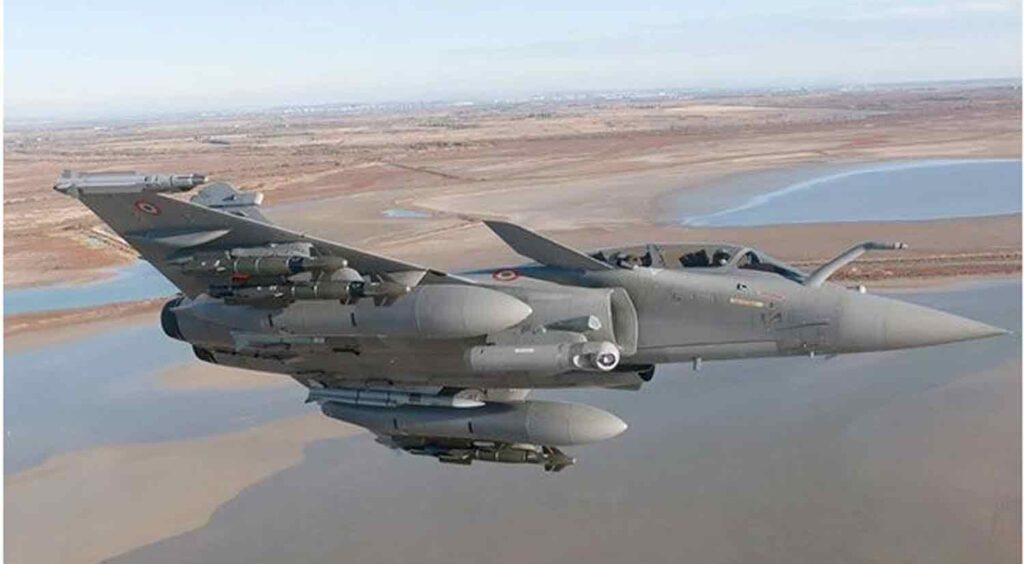
In 2025, French aerospace manufacturer Dassault Aviation delivered a record 26 Rafale fighter jets, surpassing its previous year’s output and demonstrating steady growth in production capacity. However, with a backlog totaling around 220 Rafale aircraft at the end of 2025, the company faces a substantial challenge to keep pace with global demand, especially if a large Indian order of about 114 jets materializes.

Current Production and Backlog

In 2025, Dassault Aviation delivered 26 Rafale jets—15 for export customers and 11 for the French Air and Space Force—up from 21 Rafales delivered in 2024. Despite this increased output, the company’s backlog of 220 Rafales remains high, reflecting strong international demand from existing and new customers.

At the current production rate—roughly two jets per month—the existing backlog represents nearly a decade of work for Dassault, even before accounting for potential new orders.

India’s Potential Mega Order

New Delhi is reportedly in advanced discussions to procure 114 additional Rafale fighter jets to modernize the Indian Air Force under a planned defense acquisition program. If this order is finalized and added to the current schedule, the backlog could swell to around 334 aircraft, extending the timeline for deliveries well into the late 2030s unless production is increased significantly.

Currently, India has already signed multiple Rafale deals with France, including a $7.4 billion deal for 26 Rafales for its navy, expected to be delivered by 2030.

Production Ramp-Up Plans

Dassault has indicated plans to increase its Rafale production rate in the coming years. Reports suggest the company aims to eventually build up to three to four aircraft per month, with even higher rates possible as investment and supply chain capacity improve.

This strategic ramp-up is essential given the aircraft’s growing popularity. Since the start of the program, more than 533 Rafales have been ordered worldwide by France and several export customers, with hundreds still pending delivery.

Demand Outpacing Supply

Despite efforts to scale production, demand continues to outpace supply. Export contracts from countries such as Egypt, Qatar, Greece, Croatia, the UAE, Indonesia, and Serbia have helped expand Rafale’s global footprint, yet also placed strain on Dassault’s manufacturing line.

To meet both existing backlog and potential large orders like India’s, Dassault and its partners will need to significantly boost industrial capacity, streamline supply chains, and potentially establish localized production or assembly facilities. Recent industry discussions have even floated the idea of expanding production outside France to keep up with demand.

Conclusion

At its current pace of around 26 Rafales delivered annually, Dassault Aviation could take over a decade to clear the existing backlog, even before fulfilling potential mega-orders like India’s 114 jets. Unless production is accelerated substantially, key customers could face delivery timelines stretching into the mid-2030s. The coming years will be pivotal for Dassault as it balances delivery commitments with ambitious plans to ramp up output.

Iran Finds Little Support From China as Protests Grow and Economy Slips Further

0
Iranian President Masoud Peshkeshian shakes hands with Chinese President Xi Jinping during a meeting in Beijing.

As nationwide protests persist and economic pressures deepen, Iran is discovering that its much-touted strategic partnership with China offers far less support than Tehran once anticipated. A recent Wall Street Journal report highlights how Beijing has largely stayed on the sidelines, even as Iran grapples with inflation, currency depreciation, and rising public discontent.

Iran’s economic crisis has become increasingly visible. The Iranian rial has lost significant value, inflation remains elevated, and purchasing power has eroded across large segments of society. These conditions have fueled recurring street protests, driven primarily by economic hardship, unemployment, and frustration with governance. Despite these pressures, Tehran has received no meaningful economic bailout or political backing from Beijing.

This cautious Chinese approach contrasts sharply with expectations created after Iran and China signed a 25-year comprehensive cooperation agreement in 2021. Iranian officials promoted the deal as a strategic breakthrough that would unlock billions of dollars in Chinese investment across energy, infrastructure, and transportation. Years later, however, most promised projects remain unrealized or limited in scope.

The reasons are largely strategic. China continues to prioritize stable relations with the United States, the European Union, and energy-rich Gulf states. Deeply engaging with Iran—particularly during a period of unrest—would expose Chinese firms and financial institutions to secondary U.S. sanctions. As a result, Beijing has restricted its engagement to low-profile oil imports and selective trade arrangements that minimize political and legal risk.

Crucially, the Iran–China relationship is not a formal alliance. It is transactional and interest-based, rather than ideological. China benefits from discounted Iranian oil and regional leverage, but it has little incentive to underwrite Iran’s economy or intervene diplomatically during moments of internal crisis. When domestic protests rise or fiscal pressures intensify, Beijing’s support remains limited and carefully calibrated.

For Iran, this reality underscores the limits of its “Look East” strategy. Reliance on China as a counterweight to Western sanctions has not translated into economic stabilization or diplomatic protection. With Beijing unwilling to step in decisively, Tehran faces mounting pressure to manage its economic and social challenges largely on its own.

As protests continue and economic indicators remain fragile, the gap between Iran’s expectations of China and the actual scope of Chinese support is becoming increasingly clear—reshaping assumptions in both the Middle East and Western capitals about the true resilience of the Iran–China partnership.

Indian Army Chief Pushes for Rocket–Missile Force, Citing Pakistan and China

0

India’s Army Chief Upendra Dwivedi has publicly argued for the establishment of a dedicated rocket–missile force, saying evolving battlefield realities now require closer integration of rockets and missiles to achieve strategic and operational impact.

Speaking about India’s future force structure, General Dwivedi said rockets and missiles have become increasingly intertwined in modern warfare, noting that both systems can deliver decisive effects when employed together. He described the creation of a rocket–missile force as “the need of the hour.”

Regional Drivers: Pakistan and China

The Indian Army chief explicitly linked the proposal to regional developments, pointing out that Pakistan has already established a rocket force and that China has long operated a dedicated missile-centric force structure.

According to defence analysts, these references underline New Delhi’s concern about maintaining credible deterrence and conventional strike options in a region where long-range precision fires are becoming central to military planning.

Expanding Rocket Ranges

General Dwivedi highlighted recent progress in India’s rocket artillery capabilities, stating that the Pinaka system has been tested successfully to a range of 120 kilometres. He added that additional contracts have already been signed to explore extended ranges of up to 150 kilometres.

Looking further ahead, he said India is examining the possibility of increasing rocket ranges to between 300 and 450 kilometres, signalling a major expansion in stand-off strike capability.

Missiles as Part of the Same Strike Ecosystem

In his remarks, the army chief also referenced India’s existing missile programmes, underscoring that rockets and missiles should be viewed as part of a single strike ecosystem rather than separate domains.

Military planners note that such integration would allow the Indian Army to deliver rapid, precise, and scalable firepower across different ranges, bridging the gap between traditional artillery and strategic missile forces.

Shift in Indian Army Doctrine

The statement reflects a broader doctrinal shift within the Indian Army toward long-range precision fires, networked targeting, and deterrence by denial. A dedicated rocket–missile force would centralise command, improve coordination, and potentially mirror structures already adopted by regional rivals.

While no timeline or organisational details were announced, the remarks suggest that discussions on restructuring India’s long-range firepower capabilities are gaining momentum at the highest levels of military leadership.

Regional Implications

Analysts say the proposal could have significant implications for South Asian strategic stability, particularly if India accelerates development of longer-range rocket systems. Any move toward a formal rocket–missile force is likely to be closely watched in Islamabad and Beijing, given the existing security dynamics in the region.

Pakistan’s 2025 FARA Filing Outlines Security, Trade and Economic Agenda for Resetting U.S. Relations

0

A lobbying disclosure filed in Washington in May 2025 under the U.S. Foreign Agents Registration Act (FARA) outlines Pakistan’s proposed framework for renewing bilateral relations with the United States, focusing on counter-terrorism cooperation, trade and investment, financial modernization, and regional geopolitics.

The filing was submitted by Squire Patton Boggs, which states that it is acting as a registered agent on behalf of the Pakistan government. The materials were received by the U.S. Department of Justice’s FARA Registration Unit on May 15, 2025 .

Outreach to U.S. Officials

The document includes correspondence from Paul W. Jones, now an adviser at Squire Patton Boggs, to a U.S. State Department official. In the email, the firm explicitly acknowledges its status as a registered foreign agent and seeks feedback on a one-page outline titled “A Renewed Pakistan–United States Relationship” .

The communication also requests engagement on U.S. policy perspectives, including discussion related to the Financial Action Task Force (FATF).

Security and Counter-Terrorism Cooperation

Security cooperation is a central theme of the filing. The document states that Pakistan is prepared to “double down” on counter-terrorism cooperation with the United States.

It specifically references Pakistan’s role in arresting and expelling to the U.S. the individual responsible for the Abbey Gate ISIS attack, which killed 13 American soldiers. The filing notes that this action was publicly acknowledged by U.S. President Donald Trump in a March 2025 address to a joint session of Congress .

The document further states that Pakistan is prepared to:

  • Do more with the United States against ISIS
  • Assist in retrieving U.S. military weapons and equipment left behind in Afghanistan that are now being used to destabilize Pakistan
  • Seek greater U.S. collaboration against the Pakistani Taliban (TTP), which the 2025 U.S. DNI Annual Threat Assessment cited as a potential threat

No claims beyond these statements appear in the filing.

Trade, Investment and Market Access

On the economic front, the filing emphasizes Pakistan’s recognition of fair global trade and its willingness to help balance trade with the United States.

It states that Pakistan is prepared to:

  • Purchase significantly more U.S. exports, including agricultural and energy products
  • Lower tariffs on U.S. goods
  • Facilitate large U.S. investments through the Special Investment Facilitation Council (SIFC), jointly chaired by Pakistan’s prime minister and army chief

The document notes that Pakistan’s goods trade surplus with the U.S. is under US$3 billion, arguing that trade could be quickly balanced .

Critical Minerals and Strategic Resources

The filing highlights Pakistan’s extensive reserves of copper, lithium, cobalt, nickel, and rare earth elements, describing them as valued in the trillions of dollars.

Pakistan proposes a bilateral critical minerals agreement with the United States, framing it as beneficial to U.S. national security and Pakistan’s economic development, particularly in the context of strategic supply chains .

Financial Modernization and Reform

Pakistan’s largely cash-based economy is described as “poised for digitization,” offering opportunities for U.S. fintech and broadband companies.

The filing references:

  • Commitments to taxation, energy, and state-owned enterprise reforms
  • Improvements in Pakistan’s macroeconomic outlook
  • A recent sovereign credit rating upgrade discussed during Finance Minister Muhammad Aurangzeb’s April 2025 visit to Washington

Geopolitical Positioning

Politically, the document stresses that Pakistan seeks a bilateral relationship with the United States that stands on its own merits, not dependent on U.S. relations with neighboring countries.

It states that Pakistan’s relationship with China does not inhibit offering economic and counter-terrorism opportunities to the U.S., and that U.S.–India relations should not constrain stronger U.S.–Pakistan ties. The filing also references Pakistan’s actions against Iranian-backed terrorist separatists and calls for further coordination with Washington .

Why the Filing Matters

FARA filings are disclosure documents and do not imply misconduct. However, they provide a rare, official record of how foreign governments present their priorities to U.S. policymakers.

This 2025 filing offers a detailed snapshot of Pakistan’s strategic messaging in Washington at a time of shifting regional security dynamics and evolving U.S. global priorities.

Trump’s Hard-Power Doctrine Jolts Global Order, Leaving Allies Uneasy and Rivals Alert

0
President Donald Trump speaks at an event to sign the Laken Riley Act, legislation requiring the detention of immigrants living in the U.S. illegally who are accused of theft, at the White House, in Washington, U.S.

President Donald Trump has launched the new year with a series of aggressive foreign policy moves that are reverberating across the globe, unsettling allies and emboldening rivals while challenging the rules-based international order the United States helped build after World War II.

In recent weeks, Trump has overseen the removal of Venezuela’s leadership, openly vowed to control the country’s vast oil reserves, and warned that other Latin American states could face similar military action. He has also revived talk of annexing Greenland, even suggesting force could be used, while cautioning Iran that U.S. strikes remain an option.

A Return to Raw Power Politics

Trump’s actions signal a return to overt power politics and spheres of influence, a concept many believed had faded from modern diplomacy. Analysts say his approach reflects a reworked version of the 19th-century Monroe Doctrine—sometimes described by critics as a “Donroe Doctrine”—prioritizing U.S. dominance in the Western Hemisphere.

“Everyone expected Trump to return with bluster,” said Brett Bruen, a former Obama-era foreign policy adviser. “But this bulldozing of the pillars that have long undergirded international stability is happening at an alarming pace.”

Trump has already demonstrated a willingness to use military force, including the June bombing of Iranian nuclear facilities and a January strike that precipitated regime change in Venezuela. Despite campaigning on avoiding new wars under an “America First” banner, he has signaled readiness for further interventions, particularly in Latin America.

Allies Uneasy, Rivals Watching Closely

The shift has left many U.S. allies scrambling to adjust. European leaders, already anxious about Washington’s long-term commitment to defending Ukraine against Russia, have reacted sharply to Trump’s focus on Greenland—an autonomous territory of Denmark, a fellow NATO member.

German President Frank-Walter Steinmeier warned of a “breakdown of values,” cautioning against a world order devolving into what he described as a “den of robbers.” Danish Prime Minister Mette Frederiksen has said that any U.S. attempt to seize Greenland would spell the end of the transatlantic alliance.

In response to Washington’s posture, some European officials have floated the idea of NATO deployments in the Arctic, while accelerating efforts to strengthen Europe’s own defence industry as a hedge against unpredictable U.S. policy.

Asia and Latin America React

Trump’s actions have also stirred unease in Asia. Japanese and South Korean lawmakers warned that the use of force in Venezuela could normalize changing the status quo through military power. Some Japanese politicians have even publicly questioned whether long-term reliance on U.S. security guarantees remains viable.

In Latin America, reactions have been more muted, reflecting political and economic dependence on Washington. Mexico criticized the use of force but stopped short of escalating the dispute, while Brazil and other regional powers are reportedly weighing closer ties with China to balance U.S. pressure.

Oil, Influence, and Accusations of Neo-Imperialism

Trump’s emphasis on Venezuela’s oil reserves has fueled accusations of neo-imperialism. While Washington has left parts of the existing power structure intact, U.S. officials have pressed for preferential access for American companies—an approach critics say undermines international norms on sovereignty.

The White House has defended the strategy as a necessary restoration of American influence, arguing that rivals in Beijing, Moscow, Havana, and Tehran have taken note of U.S. resolve.

Alexander Gray, a former Trump adviser now at the Atlantic Council, said the Venezuela operation is likely the opening move in a broader reassessment of U.S. interests in the hemisphere.

Implications for the Global Order

Experts warn that Trump’s disregard for international legal frameworks could encourage Russia and China to pursue more coercive actions against their neighbors. Russian commentators have openly framed the Venezuela episode as proof that international law has been supplanted by force.

Chinese analysts, meanwhile, note that Trump’s acceptance of great-power spheres of influence could indirectly benefit Beijing, particularly in disputes over Taiwan and influence in the Global South.

What Comes Next

Trump has signaled that his assertive posture may extend beyond the Western Hemisphere. Even as fallout from Venezuela continues, he has threatened possible military action in Iran amid mass protests challenging clerical rule.

“We may have to act,” Trump told reporters aboard Air Force One, underscoring a presidency increasingly defined by the use—or threat—of unilateral power.

As governments worldwide recalibrate, a central question remains: whether Trump’s reshaping of U.S. foreign policy marks a temporary rupture or a lasting transformation of the global order.

China Rejects Indian Objections, Defends CPEC and Pakistan Border Agreement

0
Chinese Foreign Ministry spokesperson Mao Ning

China on Monday firmly rejected Indian media claims questioning border issues and the China-Pakistan Economic Corridor (CPEC), stating that the territory where infrastructure development is taking place “belongs to China” and that Beijing is fully within its rights to carry out construction on its own land.

Responding to questions from Indian outlets, Chinese Foreign Ministry spokesperson Mao Ning said there was “nothing wrong” with China undertaking infrastructure projects in the area, stressing that such activities fall entirely under China’s sovereignty.

1960s China–Pakistan Boundary Agreement Reaffirmed

Mao Ning recalled that China and Pakistan signed a formal boundary agreement in the 1960s, under which the border between the two countries was mutually agreed and demarcated. She described the settlement as a legitimate exercise of sovereign rights by two independent states, emphasizing that it remains legally valid.

Chinese officials have repeatedly stated that the agreement was concluded through negotiations and mutual consent, and that it provides a clear legal framework governing the China-Pakistan border.

CPEC Framed as Economic, Not Political

Addressing criticism of the China-Pakistan Economic Corridor, Mao said the initiative is an economic cooperation project aimed at promoting regional development, improving connectivity, and enhancing the livelihoods of local populations.

She stressed that CPEC focuses on infrastructure, energy, and trade, and should not be politicized. According to Beijing, the corridor is designed to benefit Pakistan’s economy while supporting regional integration under China’s broader connectivity initiatives.

China’s Position on Kashmir Unchanged

Mao also clarified that neither the China-Pakistan boundary agreement nor CPEC affects China’s long-standing position on the Kashmir dispute. She said Beijing’s stance remains consistent and unchanged, underlining that CPEC does not prejudice claims or positions related to Kashmir.

China has traditionally maintained that the Kashmir issue is a historical dispute that should be resolved peacefully through dialogue between the parties concerned, in accordance with relevant United Nations resolutions.

Background: India’s Objections

India has repeatedly objected to CPEC projects, arguing that parts of the corridor pass through territory it claims. India maintains that infrastructure activity in these areas violates its sovereignty, a position China and Pakistan have consistently rejected.

Beijing’s latest comments reflect its continued diplomatic backing for Pakistan and its refusal to accept Indian objections to China-Pakistan bilateral arrangements.

Strategic Significance

Analysts note that China’s firm language signals a desire to insulate CPEC from regional disputes and to prevent external actors from influencing bilateral economic cooperation with Pakistan. The statement also comes amid heightened geopolitical competition in South Asia and growing scrutiny of major infrastructure projects.

For Islamabad, China’s reiteration of support reinforces the political and strategic foundations of CPEC, which remains a flagship component of Pakistan-China relations.

Iran Cripples Starlink Nationwide, Setting a Global Precedent in Information Warfare

0
Starlink logo is seen on a smartphone in front of displayed Ukrainian flag in this illustration.

Iran has effectively disabled Starlink satellite internet across large parts of the country, marking a historic escalation in state-led information warfare and setting a global precedent for the vulnerability of commercial satellite networks during internal political crises.

The shutdown unfolded as anti-government protests intensified across Tehran, Mashhad, Isfahan, and more than 190 cities. On January 8, 2026, Iranian authorities activated a coordinated digital suppression campaign that combined a nationwide terrestrial internet blackout with advanced electronic warfare measures aimed specifically at satellite-based connectivity.

Unprecedented Scale of Digital Suppression

Iranian digital-rights expert Amir Rashidi, Director of Digital Rights and Security at the Miaan Group, described the operation as unprecedented.

“I have been monitoring internet access in Iran for 20 years, and I have never seen anything like this,” Rashidi said, underscoring the scale and sophistication of the attack.

Independent technical analysis revealed that Iranian jamming operations initially disrupted around 30 percent of Starlink traffic. Within hours, disruption levels surged beyond 80 percent, rendering satellite connectivity unreliable and fragmented, particularly in protest-heavy urban areas.

First Verified National-Scale Starlink Disruption

This marks the first confirmed case of a nation-state successfully neutralising Starlink at a national level during an internal political crisis, challenging the long-held assumption that low-Earth-orbit satellite constellations guarantee uncontrollable access to information.

Engineers described the resulting connectivity as a “patchwork” of intermittent access—partial functionality in some rural areas, but near-total blackouts in major cities—indicating targeted, precision jamming rather than indiscriminate shutdowns.

How Iran Disabled Satellite Internet

Security analysts say Iran relied on military-grade electronic warfare systems, flooding GPS frequencies with high-power interference. This prevented Starlink terminals from accurately determining their position, a requirement for locking onto fast-moving satellites.

By disrupting GPS timing, geolocation, and beam-forming synchronisation, Iranian systems severed satellite links without requiring cooperation from SpaceX or Starlink operators.

These techniques mirror electronic warfare capabilities Iran has previously used against drones and precision-guided munitions, including during its 2025 confrontation with Israel, now repurposed for domestic population control.

Economic Impact of Iran’s Internet Blackout

The digital shutdown has imposed heavy economic costs. According to Simon Migliano, head of research at Top10VPN, Iran is losing approximately US$1.56 million per hour due to internet disruption.

With connectivity reduced to roughly one percent of normal levels, small businesses, online payments, logistics platforms, and digital services have been disproportionately affected—deepening strain on an economy already under sanctions and inflationary pressure.

Despite the losses, authorities selectively maintained access for government and security institutions, revealing a calculated strategy to preserve regime functionality while paralysing civil society.

Why Starlink Became a Security Target

Starlink had emerged as a critical tool for Iranian protesters. Thousands of smuggled terminals allowed activists to bypass state-controlled networks, livestream crackdowns, coordinate demonstrations, and transmit footage to international audiences.

During earlier shutdowns in 2022 and 2025, Starlink exposed the limits of Iran’s traditional internet “kill switch,” convincing security planners that satellite connectivity represented a structural vulnerability rather than a manageable nuisance.

By January 2026, neutralising Starlink had become a strategic priority aimed at collapsing the final layer of protest resilience.

Global Implications for Satellite Security

Iran’s success has sent shockwaves through global defence and technology communities. The operation demonstrates that commercial satellite networks are not immune to state-level electronic warfare, blurring the line between civilian infrastructure and military targets.

For countries increasingly reliant on satellite internet—whether for civilian communications, disaster response, or military command and control—the Iranian precedent raises urgent questions about resilience in contested electromagnetic environments.

Western governments, including the United States, have voiced support for digital freedom in Iran, but the episode highlights a growing gap between political intent and the technical ability to protect satellite connectivity from hostile interference.

A New Era of Digital Sovereignty

Iran’s nationwide Starlink disruption redefines digital sovereignty as control over the electromagnetic spectrum rather than regulation or legislation alone. It signals a future where information dominance depends not only on bandwidth and coverage, but on a state’s capacity to deny, disrupt, or control access at scale.

As authoritarian governments study Iran’s approach, the assumption that space-based internet guarantees freedom of information is rapidly eroding—reshaping the strategic calculus of both protest movements and military planners worldwide.

Indonesia’s Defence Minister Meets Pakistan’s Army Chief, Pledges Expanded Defence Cooperation

0

Indonesia’s Defence Minister, Sjafrie Sjamsoeddin (Retd), on Monday called on Syed Asim Munir, Chief of Army Staff (COAS) and Chief of Defence Forces (CDF), at the General Headquarters (GHQ) in Rawalpindi, underscoring growing defence engagement between Pakistan and Indonesia.

According to the Inter-Services Public Relations, the meeting focused on issues of mutual interest, evolving regional and global security dynamics, and the exploration of concrete avenues to further enhance bilateral defence cooperation.


Discussions highlighted the importance of strengthening institutional linkages between the armed forces of both countries, expanding professional military education and training exchanges, and deepening collaboration in the defence industrial sector. Officials noted that such cooperation is increasingly relevant as both countries face complex security challenges ranging from terrorism and maritime security to emerging non-traditional threats.

The Indonesian defence minister praised the professionalism of the Pakistan Armed Forces and acknowledged their sacrifices in the fight against terrorism. He also expressed Jakarta’s strong desire to broaden defence ties with Pakistan across multiple domains, including training, joint exercises, defence production, and technology cooperation.

Pakistan and Indonesia share a long history of friendly relations rooted in common values, shared perspectives on regional stability, and cooperation within multilateral forums. Defence ties between the two countries have steadily expanded in recent years, with Pakistan emerging as a key defence partner for Indonesia, particularly in the areas of military training and defence exports.

Defence analysts note that Pakistan’s growing defence industrial base—including aircraft, naval platforms, and land systems—offers Indonesia cost-effective options for military modernisation, while Indonesia’s experience in maritime security and archipelagic defence presents opportunities for knowledge-sharing and joint initiatives.

During the meeting, Field Marshal Asim Munir reaffirmed Pakistan’s commitment to building a strong, enduring, and forward-looking defence relationship with Indonesia. He emphasised that cooperation would continue to be guided by mutual respect, shared strategic interests, and a common desire to contribute to regional and global peace and stability.

The engagement reflects Pakistan’s broader defence diplomacy efforts aimed at strengthening ties with key partners in Southeast Asia, while Indonesia continues to diversify its defence partnerships amid shifting regional security dynamics.

Germany’s Arctic Sentry Plan Highlights NATO Strains as U.S. Hardens Arctic Posture

0
NATO logo and flag

Germany is preparing to initiate a new NATO joint mission known as “Arctic Sentry,” aimed at monitoring and protecting security interests in the Arctic, including Greenland, according to Bloomberg. The proposal comes at a time of growing strategic uncertainty within the alliance, marked by increasingly assertive U.S. rhetoric and visible disagreements among NATO members over burden-sharing and escalation risks.

The mission would be modeled on NATO’s Baltic Sentry, which focuses on surveillance and protection of critical infrastructure in the Baltic Sea. German officials see the Arctic as the next frontline where climate change, resource access, and great-power competition are converging rapidly.

U.S. Threats and a Hardening Strategic Tone

The timing of Germany’s initiative is notable. Washington has recently issued sharper warnings about defending Western interests in the Arctic, including explicit references to military readiness and deterrence against Russia and China. U.S. officials have framed the Arctic as a core national security priority, citing threats to undersea cables, early-warning systems, and emerging sea lanes.

These statements have unsettled some European allies, who fear that an increasingly confrontational U.S. posture could drag NATO into escalatory dynamics in a region traditionally managed through low-tension governance frameworks. Several diplomats privately acknowledge concerns that U.S. pressure is narrowing Europe’s strategic autonomy within the alliance.

Greenland’s Rising Strategic Value

Greenland’s importance has grown sharply due to its location between North America and Europe and its role in missile warning, space surveillance, and Arctic logistics. The United States maintains a long-standing military presence there, making the territory central to U.S. homeland defense.

However, Washington’s repeated public emphasis on Greenland’s strategic value—combined with past U.S. political statements questioning European stewardship of Arctic security—has amplified sensitivities among European NATO members, particularly Denmark and Germany.

UK, France, and the Push for a European Role

British officials are reportedly negotiating with counterparts in France and Germany on the possible deployment of troops, naval vessels, and aviation assets to Greenland as part of Arctic Sentry. These discussions reflect a broader European effort to assert a more coordinated role in Arctic security rather than relying solely on U.S.-led initiatives.

For London and Paris, participation would reinforce their status as key European military actors, while for Berlin it would mark another step away from its traditionally restrained defense posture.

NATO Unity Under Strain

While NATO officials publicly emphasize unity, the Arctic debate has exposed underlying fractures within the alliance. Some members support a stronger, permanent NATO footprint in the High North, while others favor limited, surveillance-focused missions to avoid provoking Russia.

Germany’s Arctic Sentry proposal appears designed as a compromise—structured, multinational, and defensive—seeking to institutionalize NATO’s presence without committing to permanent force deployment. Still, analysts note that even limited missions can become politically contentious if U.S. strategy shifts toward coercive signaling.

Russia and China Watching Closely

Any NATO expansion in the Arctic is expected to be closely monitored by Russia, which considers the region central to its nuclear deterrent and economic future. China, though not an Arctic state, has declared itself a “near-Arctic stakeholder” and has expanded scientific and commercial activity in the region.

European officials argue that failing to coordinate Arctic security now would leave NATO reacting later under far worse conditions—possibly on U.S. terms alone.

Strategic Implications

Arctic Sentry highlights a deeper challenge facing NATO: balancing deterrence with alliance cohesion. As the United States adopts a more openly confrontational tone, European allies are increasingly seeking structured, multilateral frameworks that prevent unilateral escalation while still addressing real security risks.

Whether Arctic Sentry becomes a symbol of renewed NATO coordination—or another arena of internal disagreement—will depend on how Washington, Berlin, and other allies reconcile their diverging threat perceptions in the High North.

China Confirms First Combat Victory of Export J-10CE Fighter, Boosting Global Market Appeal

0
Pakistani Air Force's Chengdu J-10C fighter

China has officially confirmed that its export-oriented J-10CE multirole fighter jet achieved its first combat success in May, shooting down multiple opposing aircraft during aerial combat without suffering any losses. The confirmation marks a significant milestone for China’s defence aviation industry and is expected to boost the aircraft’s credibility on the global arms market.

The announcement was made by the State Administration of Science, Technology and Industry for National Defense, which oversees China’s military-industrial development and arms exports. While the agency did not disclose the location of the engagement or the identities of the opposing aircraft, it described the encounter as a real-world validation of the J-10CE’s combat effectiveness.


The J-10CE is the export variant of China’s J-10C, a single-engine, fourth-plus-generation fighter equipped with an active electronically scanned array (AESA) radar, modern electronic warfare systems, and compatibility with advanced beyond-visual-range air-to-air missiles. Beijing has promoted the aircraft as a cost-effective alternative to Western fighters, combining modern sensors and weapons with comparatively lower acquisition and operating costs.

Chinese analysts say the confirmed combat performance strengthens Beijing’s claim that the J-10CE is not merely a theoretical or parade-ground platform, but a mature system capable of surviving and prevailing in contested air combat environments. Unlike test flights or exercises, real combat engagements are widely viewed in the global arms market as the most credible measure of a fighter’s effectiveness.

The announcement comes amid intensifying competition in the international fighter jet market, where combat-proven platforms often enjoy a decisive advantage in export campaigns. Aircraft such as the F-16, Rafale, and Su-35 have historically leveraged combat records to secure foreign sales, and China appears keen to position the J-10CE in a similar category.

Although Beijing has not released operational details, defence observers note that a “no-loss” outcome suggests effective integration of sensors, pilot training, command-and-control support, and missile performance. It also indicates that the aircraft was likely employed within a broader air defence or air combat network rather than operating in isolation.

The confirmation is expected to enhance the J-10CE’s appeal among countries seeking to modernize their air forces without relying on Western suppliers or navigating political restrictions attached to U.S. or European defence exports. China has increasingly marketed the J-10CE to regions including South Asia, the Middle East, and parts of Africa, where demand for advanced but affordable combat aircraft remains strong.

From Beijing’s perspective, the announcement also serves a strategic signalling purpose. By publicly acknowledging combat success, China underscores the growing maturity of its aerospace industry and its ability to field—and export—systems capable of performing under real combat conditions.

At the same time, analysts caution that the lack of detailed disclosure leaves unanswered questions about the operational context, the quality of the adversary aircraft, and the broader strategic circumstances of the engagement. Even so, the confirmation alone represents a notable shift in China’s messaging, moving from theoretical capability claims to asserted battlefield results.

Iran Keeps U.S. Channels Open as Trump Weighs Military and Diplomatic Options Amid Protests

0

Iran said on Monday that it is keeping diplomatic communication channels open with the United States, even as President Donald Trump considers possible responses to a violent crackdown on nationwide protests—one of the most serious challenges to clerical rule since the 1979 Islamic Revolution.

Trump said on Sunday that Washington may meet Iranian officials and that he is in contact with opposition figures, while simultaneously increasing pressure on Tehran. He warned that the United States could take action, including military steps, in response to violence against protesters.

Iranian authorities confirmed that direct communication remains active between Foreign Minister Abbas Araqchi and U.S. special envoy Steve Witkoff, with messages exchanged when necessary. Tehran also continues to rely on Switzerland as a traditional intermediary.


Iran’s foreign ministry spokesperson said that while ideas have been exchanged, contradictory signals from Washington raise doubts about U.S. seriousness. Araqchi, speaking to foreign diplomats in Tehran, said Iran is prepared for war but remains open to dialogue, underscoring what officials describe as Tehran’s long-standing willingness to negotiate.

The unrest, which began on December 28 over soaring prices and economic hardship, has since evolved into open calls for the downfall of Iran’s clerical leadership. Rights group HRANA said it has verified the deaths of 490 protesters and 48 security personnel, with more than 10,600 arrests. Iranian authorities have not released official figures, and independent verification has been hindered by an internet blackout imposed since Thursday.

Trump said Iran had reached out to negotiate over its nuclear programme, months after United States and Israel bombed Iranian nuclear sites during a 12-day conflict in June. Speaking to reporters aboard Air Force One, Trump said a meeting was being arranged but warned that the U.S. might act before talks take place.

A U.S. official said Trump was due to meet senior advisers to review options, which reportedly include military strikes, cyber operations, expanded sanctions, and online support for anti-government voices. Analysts caution that military action could be highly risky, as key Iranian military and security installations are located near densely populated areas.

Iranian Parliament Speaker Mohammad Baqer Qalibaf warned Washington against what he called a miscalculation, saying any attack on Iran would make U.S. bases, ships, and Israeli territory legitimate targets.

Despite the strong rhetoric, Iran remains weakened by last year’s conflict and by setbacks suffered by regional allies such as Hezbollah since the October 7, 2023 attacks on Israel. Senior Iranian military commanders were also killed during the June war, reducing Tehran’s regional leverage.

Iranian authorities accused the U.S. and Israel of fomenting unrest and called for nationwide rallies condemning what they described as terrorist actions. State television broadcast large funeral processions for slain security personnel and pro-government demonstrations across several cities.

Araqchi said the situation inside Iran is under control, blaming what he described as terrorist elements for escalating violence in an attempt to invite foreign intervention. Authorities declared three days of national mourning for those killed, whom state media described as martyrs.

While protests have exposed deep public resentment—particularly toward the powerful Islamic Revolutionary Guard Corps, whose economic interests span oil, construction, and telecommunications—analysts remain sceptical about the likelihood of regime collapse.

Former U.S. diplomat and Iran expert Alan Eyre said the establishment is likely to survive the unrest, though significantly weakened, noting the continued cohesion of Iran’s elite and the absence of an organised opposition.

China’s J-20A and J-20S Signal a Shift Toward Sensor-Centric, Command-Driven Airpower

0

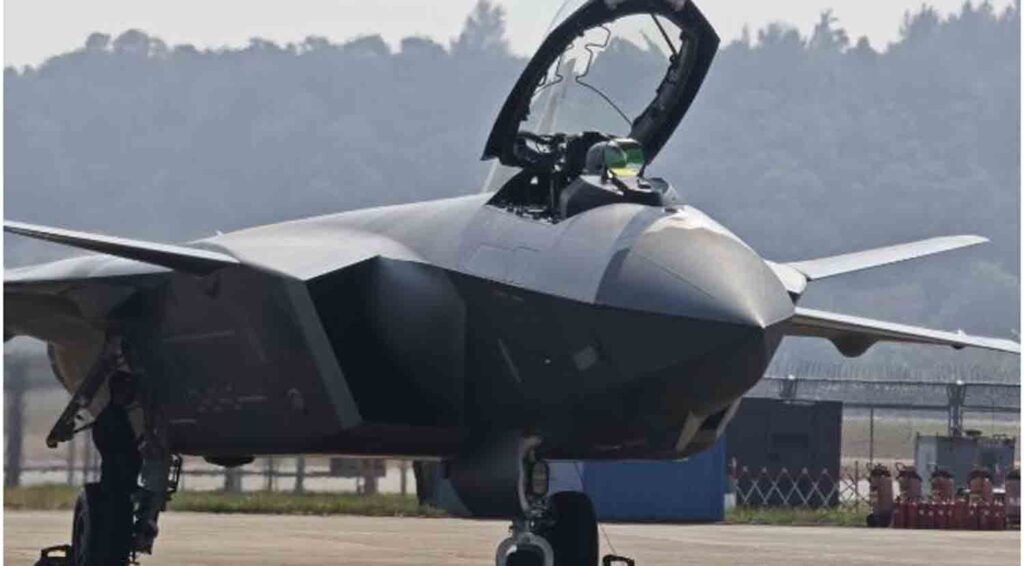
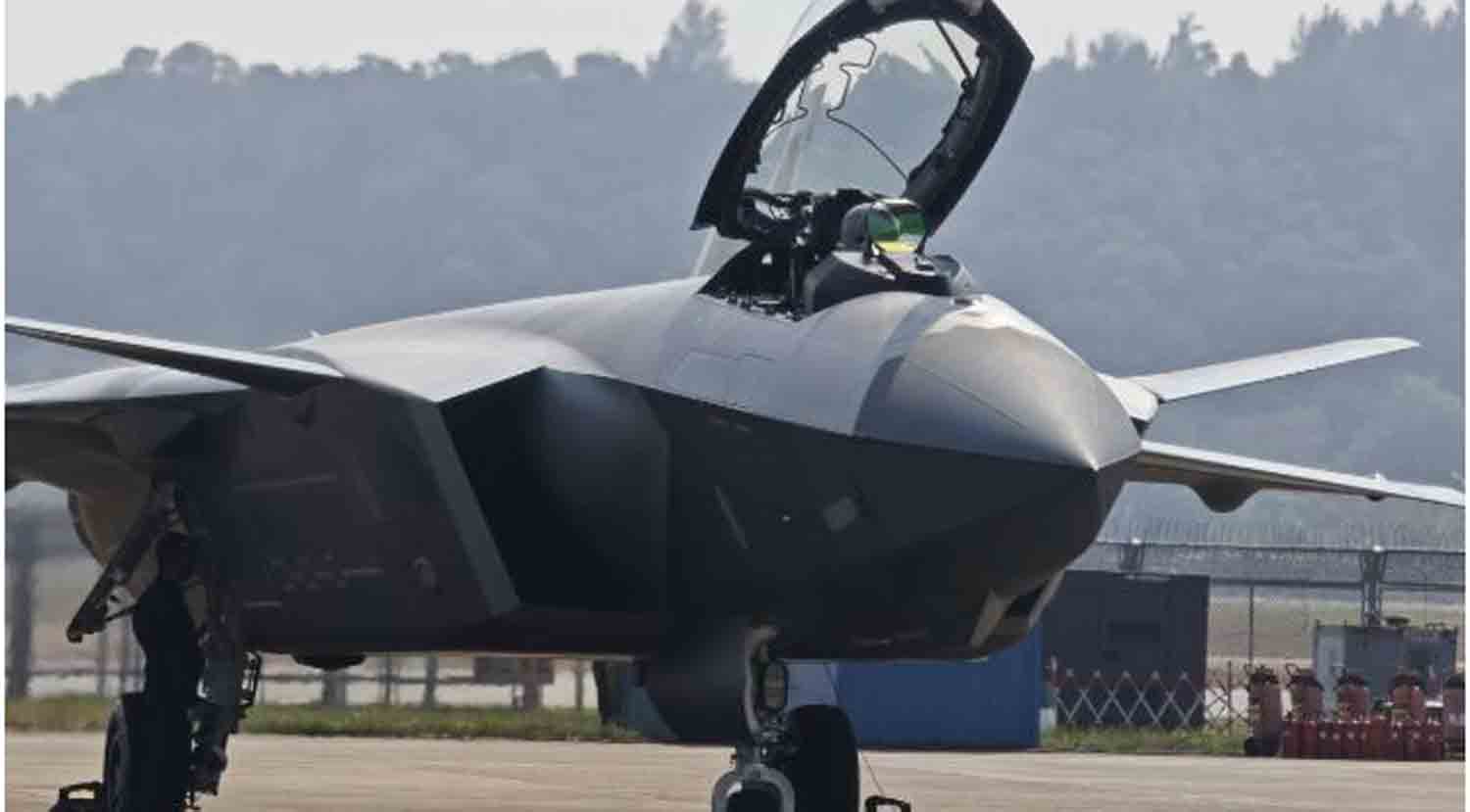
The public unveiling of China’s upgraded J-20A and twin-seat J-20S stealth fighters on the 15th anniversary of the J-20’s maiden flight marks more than a routine modernization milestone. It reflects a deliberate recalibration of China’s fifth-generation airpower doctrine, combining technological refinement with strategic signalling aimed at reshaping air dominance narratives in the Indo-Pacific.

Chinese official media confirmed that the aircraft made their first public appearance during China’s V-Day military parade on September 3, 2025. The formation—one J-20S, two J-20As, and two baseline J-20s flying in an arrow-shaped echelon—was itself a message, underscoring the emphasis of the People’s Liberation Army Air Force on integrated stealth mass rather than individual platform performance.

From Deterrence Symbol to Doctrine-Driving Platform

China Central Television described the J-20A as an upgraded variant designed to serve as a spearhead for future air combat operations. This framing implicitly confirms that the J-20 family has transitioned from an early deterrence asset into a mature, doctrine-shaping combat system.

The “A” designation signals that the aircraft is no longer experimental. Instead, it represents a platform entering a sustained modernization cycle aligned with evolving operational concepts, including long-range interception, persistent presence, and networked warfare.

Aerodynamic Refinement and Supercruise Priorities

Military analyst Zhang Xuefeng emphasized that the J-20A’s visible airframe changes are functional rather than cosmetic. A raised section at the junction between the canopy and fuselage smooths airflow, reducing drag and minimizing separation during high-speed flight.

According to Zhang, this refinement directly supports sustained supersonic cruise, placing the J-20A firmly within the global fifth-generation trend where endurance at speed matters more than short-range maneuverability. The smoother canopy-fuselage blending also reflects a shift away from pilot-centric visibility toward aerodynamic efficiency and systems integration.

Internal Growth, Range, and Strategic Flexibility

Beyond aerodynamics, the raised rear canopy section introduces valuable internal volume. Zhang noted that this space can accommodate new equipment, additional fuel, or future systems, directly linking airframe geometry to combat radius and endurance.

In the vast Indo-Pacific battlespace—defined by long distances and contested access—such internal growth capacity translates into strategic flexibility rather than marginal performance gains. It also enables the integration of advanced electronic warfare modules, improved cooling architectures, and power-hungry sensors without compromising low observability.

Sensor-Centric Cockpit and Doctrinal Shift

Military commentator Fu Qianshao highlighted that the J-20A’s evolution extends well beyond its exterior. He argued that the aircraft must have received comprehensive internal upgrades, including avionics and sensors, to justify its new designation.

Fu pointed out that reduced reliance on traditional pilot line-of-sight visibility indicates a deeper doctrinal shift. In modern air combat, fused sensor data, distributed networks, and beyond-visual-range engagements have eclipsed the naked eye as the primary source of situational awareness.

This allows cockpit geometry to be optimized for stealth, structural efficiency, and systems integration rather than human visual constraints, reinforcing the aircraft’s role as a sensor-driven combat node.

Propulsion, Weight Growth, and Sustained Performance

Structural and systems upgrades inevitably introduce additional weight, raising questions about propulsion performance. Fu acknowledged this trade-off but suggested that the J-20A could be equipped with more powerful engines to offset mass growth.

Enhanced propulsion would not only preserve supercruise capability but potentially extend it—improving acceleration, missile kinematics, and survivability in high-threat environments. Increased onboard power generation would also support advanced sensors, electronic warfare systems, and future high-energy applications.

This balance between mass, power, and endurance suggests an effort to avoid the performance stagnation that has historically constrained some stealth platforms.

J-20S: Command, Control, and Manned–Unmanned Teaming

The introduction of the twin-seat J-20S represents a significant expansion of the J-20 family. China becomes the first country to field a fifth-generation stealth fighter explicitly optimized for tactical command, control, and manned–unmanned teaming roles.

State media described the J-20S as possessing strong medium- and long-range air superiority capabilities, precision strike potential, advanced electronic warfare functions, and enhanced situational awareness. Zhang characterized the aircraft as capable of forward tactical command, likening it to a “playmaker” that orchestrates engagements rather than merely executing them.

This positions the J-20S as a key node in a broader kill-web architecture, integrating manned fighters, unmanned systems, and off-board sensors across domains.

Conclusion: A Long-Term Air Superiority System

Taken together, the debut of the J-20A and J-20S confirms that China is no longer treating the J-20 as a transitional or symbolic capability. Instead, it is being refined into a long-term air superiority system optimized for endurance, information dominance, and high-intensity operations in a sensor-saturated battlespace.

The emphasis on aerodynamic efficiency, internal growth, propulsion upgrades, and command-centric roles reflects a clear intent: to shape engagement conditions before kinetic contact occurs and to contest air dominance on China’s terms across the Western Pacific.

Why the Absence of U.S. Aircraft Carriers in the Middle East Is Reshaping Deterrence as Iran Faces Internal Crisis

0
A crew member works on the deck of the USS Carl Vinson aircraft carrier during an earlier maritime exercise in the Philippine Sea.

The complete absence of United States Navy aircraft carrier strike groups from the Middle East in early January 2026 marks a rare and strategically significant shift in American power projection. According to the U.S. Naval Institute (USNI) News Fleet and Marine Tracker, no U.S. carrier was operating within the U.S. Fifth Fleet’s area of responsibility as of January 5—an unusual development in one of the world’s most volatile security regions.

This gap in carrier presence comes at a particularly sensitive moment, as Iran experiences its most serious internal unrest since the 1979 Islamic Revolution. Nationwide protests, triggered by economic collapse, hyperinflation, and political repression, have evolved into open challenges to regime authority, raising the risk of miscalculation between Tehran and Washington.

President Donald J. Trump has publicly linked potential U.S. military involvement to the Iranian regime’s use of lethal force against protesters. On January 9, he warned that if Iranian authorities begin killing civilians “as they have in the past,” the United States would intervene. Such rhetoric carries heightened significance given the absence of forward-deployed carrier-based airpower, traditionally a cornerstone of U.S. crisis response.

Why Carrier Strike Groups Matter

Carrier strike groups are not symbolic deployments. They function as self-contained combat ecosystems, capable of sustained air operations, electronic warfare, maritime security, and precision strikes without reliance on host-nation bases. For decades, continuous or near-continuous carrier presence in the Persian Gulf, Arabian Sea, and Red Sea underpinned U.S. deterrence against Iran, allowing Washington to manage escalation while limiting exposure of fixed regional bases.

The current absence constrains U.S. response options. It compresses decision-making timelines and increases reliance on land-based forces that are both politically sensitive and more vulnerable to Iran’s expanding missile, drone, and proxy capabilities. This shift reflects not a routine deployment cycle, but a deeper structural strain between U.S. global commitments and finite naval capacity.

Where the Carriers Have Gone

The redistribution of U.S. naval power is driven by competing priorities. The USS Gerald R. Ford, the Navy’s most advanced aircraft carrier, has been deployed to the Caribbean under Operation Southern Spear, supporting U.S.-led operations following the January 3, 2026 capture of Venezuela’s former leader Nicolás Maduro.

At the same time, the USS Abraham Lincoln is operating in the Indo-Pacific, patrolling the Philippine Sea and South China Sea amid rising Chinese naval assertiveness. Other carriers remain tied to forward-deployed commitments in Japan or are undergoing maintenance and decommissioning preparation, limiting surge capacity.

As a result, the Persian Gulf, Red Sea, and Arabian Sea are currently without organic carrier-based airpower—a condition not seen in more than two years and a sharp departure from the sustained carrier presence maintained after the October 2023 Hamas attack on Israel.

Strategic and Operational Risks

From a force-planning perspective, the carrier gap reflects prioritization of near-peer competition in the Indo-Pacific and hemispheric contingencies over Middle Eastern crisis response. However, this recalibration intersects dangerously with Iran’s domestic instability.

Without carriers in theatre, U.S. military options against Iran become riskier and more visible. Redeploying a carrier from the Indo-Pacific would take days and would be immediately detected through open-source intelligence, eliminating strategic surprise and giving Iran time to disperse assets and activate air defenses.

Washington would instead rely on land-based bombers and fighters operating from bases such as Diego Garcia or Al Udeid in Qatar—assets that lack the persistence, flexibility, and survivability of carrier-based aviation and remain exposed to missile and drone attacks.

Iran’s Internal Crisis and Escalation Dynamics

Iran’s unrest has intensified rapidly since late December 2025. Protests initially sparked by the collapse of the rial and inflation exceeding 40 percent have expanded into nationwide demonstrations demanding regime change. By mid-January, reported casualties exceeded 100, despite internet shutdowns and mass arrests.

Strikes by oil workers and reports of defections among lower-ranking security personnel have further threatened regime cohesion. In this environment, any U.S. military action would likely be interpreted in Tehran as an existential threat rather than limited coercion, increasing the risk of an unrestrained response.

Iran retains significant retaliatory capabilities, including thousands of ballistic missiles, armed drones, naval assets capable of disrupting the Strait of Hormuz, and a network of regional proxies. Without carrier strike groups, defending U.S. bases, shipping, and energy infrastructure becomes more challenging.

Global and Economic Implications

The strategic implications extend well beyond the Middle East. Any disruption to shipping through the Strait of Hormuz—which carries roughly 20 percent of global oil supplies—could trigger sharp spikes in energy prices, destabilizing global markets.

Energy-importing economies in Asia would be particularly vulnerable, facing higher import costs, currency pressure, and inflationary stress. Geopolitically, the carrier vacuum also creates space for Russia and China to deepen their engagement with Tehran through diplomatic, intelligence, and military cooperation.

A Strategic Inflection Point

The absence of U.S. carrier strike groups in the Middle East reflects a broader strategic realignment under President Trump, emphasizing the Indo-Pacific and Western Hemisphere over sustained Middle Eastern presence. While this posture may reduce the likelihood of immediate escalation, it also erodes long-standing deterrence assumptions built on visible U.S. naval dominance.

As Iran’s internal crisis deepens and global naval resources remain stretched, the Middle East has become a testing ground for the limits of American maritime power in an era of simultaneous crises—where perception, timing, and miscalculation carry increasingly high stakes.

Zojila Tunnel: A Pakistan-Focused Security View of Kashmir–Ladakh Connectivity

0

India’s nearly 9-kilometer Zojila Tunnel under the Zojila Pass is designed to keep the Kashmir–Ladakh road open year-round. While framed as a civilian logistics fix, the project carries security implications that Pakistan must assess carefully, given the tunnel’s proximity to sensitive sectors near the Line of Control (LoC) and historic flashpoints such as Kargil.

Image


What Changes—and What Does Not

What changes:

  • Seasonal disruption is reduced. Ground movement between the Kashmir Valley and Ladakh becomes more predictable.
  • Logistics continuity improves. Fuel, rations, and routine rotations can proceed without winter shutdowns.

What does not:

  • Force balance remains constrained by terrain. High altitude, narrow approaches, and weather still limit rapid massing.
  • Geopolitical fundamentals are unchanged. Infrastructure alone does not alter deterrence dynamics or political disputes.

Pakistan’s Security Perspective

From Pakistan’s viewpoint, the tunnel’s relevance is logistical, not transformational.

1) Western Sector Logistics

The tunnel primarily stabilizes India’s ground supply reliability toward Kargil-adjacent areas during winter. This:

  • Reduces reliance on airlift in cold months
  • Improves predictability of routine movements
    It does not by itself enable sudden large-scale offensives, which would still face terrain, surveillance, and escalation constraints.

2) Early-Warning and Transparency

Because the tunnel supports steady, routine traffic, it may actually increase observability of patterns over time. Persistent movement tends to produce regular signatures, aiding monitoring rather than masking activity.

3) Limited Crisis Acceleration

In crises, mobilization speed depends on multiple corridors, staging areas, and weather windows. A single tunnel lowers winter friction but does not remove bottlenecks across the broader mountain network.

LoC Stability and Risk Management

Historically, winter closures reduced accidental encounters by limiting movement. Year-round access:

  • Increases day-to-day activity
  • Raises the importance of communication mechanisms and confidence-building measures to prevent miscalculation

For Pakistan, this underscores the need to maintain de-escalation channels and calibrated responses rather than mirror infrastructure races.

Image

China Factor—Indirect, Not Direct

While Ladakh also relates to India–China tensions, the Zojila corridor:

  • Serves the western axis more than eastern Ladakh
  • Has indirect effects on overall posture by improving sustainment, not deployment scale

Pakistan’s assessment should therefore remain sector-specific, avoiding overgeneralization.

Net Assessment

  • Operational effect: Smoother winter logistics for India on the Kashmir–Ladakh road.
  • Strategic effect: Incremental, not decisive.
  • Risk profile: Manageable with monitoring, transparency, and crisis-management tools.

In short, the tunnel reduces uncertainty created by weather, but it does not rewrite the strategic map.

Conclusion

From a Pakistan-focused security lens, the Zojila Tunnel is best seen as a logistics stabilizer rather than a game-changer. It modestly improves year-round sustainment on a sensitive route, while leaving broader balances, deterrence, and escalation thresholds largely intact.

Prudent policy lies in measured assessment, enhanced monitoring, and sustained diplomatic and military communication—rather than alarmism.

Pakistan, US Begin Inspired Gambit–2026 Counter-Terrorism Exercise at NCTC Pabbi

0

The 13th Pakistan–United States bilateral joint exercise, Inspired Gambit–2026, commenced on January 9, 2026, at the National Counter Terrorism Centre, according to a press release issued by Inter Services Public Relations (ISPR).

The two-week-long exercise is being conducted in the counter-terrorism (CT) domain and involves professional contingents from the Pakistan Army and the United States Army.

Officials from both sides attended the opening ceremony, marking the formal start of the annual bilateral engagement.

Focus on Urban Warfare and Counter-Terrorism Operations

Inspired Gambit–2026 is designed to enhance mutual understanding, interoperability, and operational coordination between the two forces through the exchange of counter-terrorism experiences.

Key focus areas of the exercise include:

  • Urban warfare and close-quarter battle techniques
  • Advanced marksmanship and room-clearing drills
  • Joint planning and execution of CT operations
  • Understanding operational doctrines and best practices

The training aims to refine tactics, techniques, and procedures required to operate effectively in complex and high-threat counter-terrorism environments.

Strategic Importance of NCTC Pabbi

The National Counter Terrorism Centre at Pabbi is Pakistan Army’s premier CT training facility, established after years of operational experience in countering militancy. It regularly hosts international military delegations and joint exercises, reflecting Pakistan’s recognized expertise in counter-terrorism operations.

Holding Inspired Gambit–2026 at NCTC underscores Pakistan’s role as a key partner in global counter-terrorism efforts.

Broader Context of Pakistan–US Military Cooperation

The Inspired Gambit series forms part of a longstanding Pakistan–US military-to-military engagement, focused on:

  • Counter-terrorism cooperation
  • Professional military education and training
  • Experience-sharing from real-world operations

Despite fluctuations in broader political relations, both countries have continued to engage through focused, domain-specific military cooperation, particularly in counter-terrorism and regional security.

Strengthening Capacity Against Evolving Threats

According to ISPR, such joint exercises are vital for:

  • Addressing evolving security challenges
  • Enhancing professional military standards
  • Improving the ability of both forces to operate jointly

The exercise also helps build trust, communication, and coordination between the two armies at the tactical level.

Commitment to Regional and Global Stability

Inspired Gambit–2026 reflects the continued commitment of Pakistan and the United States to collaborative efforts aimed at peace and stability, particularly in regions affected by terrorism and asymmetric threats.

The exercise is expected to conclude later this month with a closing ceremony and joint evaluation of operational outcomes.

Pakistan to Raise Somaliland Issue at Emergency OIC Meeting After Israel’s Recognition

0

Pakistan’s Deputy Prime Minister and Foreign Minister Ishaq Dar is scheduled to attend an extraordinary meeting of the Council of Foreign Ministers of the Organization of Islamic Cooperation (OIC) in Jeddah on Saturday, as Muslim countries coordinate a response to **Israel’s reported recognition of Somaliland.

The move has triggered widespread condemnation across the Islamic world, with concerns that it undermines the sovereignty and territorial integrity of Somalia.

Why the OIC Called an Emergency Session

The emergency meeting follows Israel’s announcement last month regarding Somaliland—a self-declared region that broke away from Somalia in 1991 but has never been recognized by any United Nations member state.

Somalia’s federal government in Mogadishu, along with regional and international bodies, sharply criticized the development, warning that it could destabilize the Horn of Africa and violate established principles of international law.

According to the OIC, the extraordinary session aims to:

  • Coordinate a unified position among Muslim states
  • Reaffirm unwavering support for Somalia’s sovereignty and territorial integrity
  • Review the political and legal implications of Israel’s move

Pakistan’s Position

Pakistan has strongly condemned the development, describing it as an attempt by Israel to undermine Somalia’s unity and territorial integrity.

In a statement issued by Pakistan’s Foreign Office in Islamabad, officials confirmed that Ishaq Dar traveled to Saudi Arabia late Friday to participate in the conference.

“The OIC emergency session will address the implications of Israel’s recognition of the so-called Somaliland region of the Federal Republic of Somalia,” the statement said.

“During the session, the Deputy Prime Minister/Foreign Minister will share Pakistan’s position on the issue of Somaliland.”

Joint Muslim World Condemnation

Earlier this week, the OIC formally announced the emergency meeting, stressing that it would reinforce collective support for Somalia under international law and relevant OIC resolutions.

On Thursday, Pakistan joined other Muslim countries in issuing a joint statement condemning the visit of Israeli Foreign Minister Gideon Saar to Somaliland, calling it a violation of Somalia’s sovereignty.

Saar’s visit on January 6 followed international media reports claiming Israel had contacted Somaliland authorities regarding the possible resettlement of Palestinians displaced from Gaza—a development that heightened alarm across the Muslim world.

Diplomacy on the Sidelines

In addition to addressing the Somaliland issue, Ishaq Dar is expected to hold bilateral meetings with foreign ministers of other OIC member states on the sidelines of the conference. These discussions are likely to focus on:

  • Regional security
  • Middle East developments
  • Broader international cooperation

Broader Implications

The Somaliland controversy comes amid heightened geopolitical tensions in the Middle East and Africa, where questions of recognition, sovereignty, and forced displacement remain deeply sensitive.

For Pakistan and other OIC members, the issue is viewed not only through a regional lens but also as part of a broader challenge to international norms and the rights of Muslim nations.

Conclusion

Pakistan’s participation in the emergency OIC meeting underscores Islamabad’s diplomatic engagement on issues affecting the Muslim world. As the OIC seeks a coordinated response, the outcome of the Jeddah meeting could shape collective diplomatic and political action in the coming weeks.

Pakistan Navy Demonstrates Missile, Drone and Unmanned Capabilities in North Arabian Sea Exercise

0

The Pakistan Navy has demonstrated a high level of operational readiness and combat preparedness during a comprehensive naval exercise conducted in the North Arabian Sea, according to a press release issued by Inter Services Public Relations (ISPR).

The exercise reflected the Navy’s evolving doctrine, integrating conventional firepower with unmanned and autonomous systems, in line with the demands of modern maritime warfare.

Successful Live Firing of LY-80(N) Air Defence Missile

A key highlight of the exercise was the successful live firing of the LY-80(N) Surface-to-Air Missile (SAM) from a Vertical Launching System (VLS) at extended range.

  • The missile accurately engaged and neutralized an aerial target
  • The firing validated the long-range air defence capability of Pakistan Navy’s modern combat platforms
  • The drill confirmed the Navy’s ability to counter aerial threats, including aircraft, drones, and stand-off weapons

This capability is considered vital amid the growing use of air-launched and unmanned threats in maritime conflict zones.

Precision Strike with Loitering Munition

The exercise also featured the successful engagement of surface targets using Loitering Munition (LM)—a capability increasingly central to contemporary naval warfare.

  • The LM demonstrated high accuracy and target discrimination
  • Surface targets were successfully destroyed
  • The system showcased Pakistan Navy’s ability to conduct precision strikes with minimal risk to manned platforms

Loitering munitions offer a flexible option for surveillance, targeting, and rapid engagement, particularly in contested maritime environments.

Breakthrough in Autonomous Naval Operations

In a significant technological milestone, the Pakistan Navy conducted successful open-sea trials of an Unmanned Surface Vessel (USV).

The trials validated the USV’s:

  • High-speed performance
  • Extreme maneuverability
  • Precision navigation
  • Weather resilience and mission endurance

The USV was described as a low-risk, high-impact force multiplier, capable of operating with stealth and agility similar to a tactical interceptor—underscoring Pakistan Navy’s growing emphasis on autonomous and unmanned maritime systems.

Senior Leadership Observes Exercise

The exercise was witnessed by Commander Pakistan Fleet, who observed the operational employment of advanced naval systems across multiple warfare domains.

Chief of the Naval Staff Admiral Naveed Ashraf praised the officers and men of Pakistan Navy for their professionalism, high morale, and operational competence.

He reaffirmed Pakistan Navy’s unwavering resolve to ensure the seaward defence of Pakistan, protect maritime trade routes, and safeguard national maritime interests under all circumstances.

Strategic Context

The demonstration comes at a time of:

  • Increasing militarization of the Indian Ocean Region
  • Rising use of drones and unmanned systems in naval conflict
  • Greater emphasis on layered air and missile defence at sea

By integrating missiles, loitering munitions, and autonomous platforms into a single operational framework, Pakistan Navy signaled its readiness to meet current and emerging maritime security challenges.

Conclusion

The North Arabian Sea exercise highlighted Pakistan Navy’s transition toward network-centric, technology-driven maritime warfare. The successful employment of advanced missiles, unmanned systems, and precision strike capabilities reinforces the Navy’s preparedness to defend Pakistan’s maritime frontiers and contribute to regional stability.

Turkey Seeks Entry Into Saudi–Pakistan Defense Axis, Reshaping Regional Power Balance

0

Turkey is seeking to join a growing defense alignment between Saudi Arabia and nuclear-armed Pakistan, according to a Bloomberg report citing officials familiar with the discussions.

If realized, the move would mark a significant strategic realignment, potentially altering the balance of power in the Middle East while strengthening defense cooperation across the Islamic world.

Image

What Is the Saudi–Pakistan Defense Understanding?

While not a formal NATO-style alliance, Saudi Arabia and Pakistan have maintained deep military and security ties for decades, including:

  • Pakistani troop deployments for Saudi internal and external security
  • Joint military exercises and training programs
  • Close intelligence cooperation
  • Longstanding strategic dialogue on regional threats

Pakistan’s status as the only Muslim-majority nuclear power gives this relationship a unique strategic weight, even though Islamabad has consistently stated it does not extend its nuclear umbrella to other states.

Why Turkey Wants In

Turkey’s interest reflects a convergence of strategic, political, and industrial goals.

1. Expanding Strategic Influence

Under President Recep Tayyip Erdoğan, Turkey has pursued a more assertive foreign policy, seeking:

  • Greater influence in the Middle East
  • Strategic autonomy from Western security structures
  • Leadership in Muslim-world defense cooperation

Joining a Saudi–Pakistan security framework would place Ankara at the center of a new multipolar security bloc.

2. Defense Industry Synergy

Turkey has emerged as a major defense exporter, supplying:

  • Drones
  • Armored vehicles
  • Naval platforms

Pakistan and Turkey already cooperate on projects such as:

  • Naval modernization
  • Aerospace collaboration
  • Joint production and technology transfer

Saudi Arabia’s vast defense budget makes trilateral cooperation economically and strategically attractive.

3. Shared Security Concerns

All three countries face overlapping challenges:

  • Regional instability
  • Missile and drone threats
  • Terrorism and non-state actors
  • Shifting US and Western security priorities

A trilateral framework could improve interoperability, intelligence sharing, and coordinated responses.

Image

Why This Matters for the Middle East

A Turkey–Saudi–Pakistan defense alignment could:

  • Reduce reliance on Western-led security architectures
  • Create a parallel security axis alongside existing blocs
  • Complicate regional calculations for rivals

It also comes at a time when Saudi Arabia is diversifying its defense partnerships and Turkey is recalibrating ties with both Gulf states and NATO allies.

Pakistan’s Strategic Calculus

For Pakistan, deeper trilateral cooperation offers:

  • Enhanced diplomatic leverage
  • Defense-industrial growth opportunities
  • Reinforcement of its role as a key security partner in the Muslim world

Islamabad, however, is likely to proceed cautiously to avoid:

  • Provoking regional escalation
  • Being drawn into Middle Eastern rivalries

Is This a Formal Alliance?

At this stage, officials stress that discussions are exploratory, not treaty-based. Any arrangement is expected to focus on:

  • Defense cooperation
  • Joint exercises
  • Training and technology sharing

Rather than collective defense commitments.

The Bigger Picture

The potential entry of Turkey into a Saudi–Pakistan defense framework reflects a broader global trend: middle powers building flexible, interest-based security partnerships as traditional alliances face strain.

If institutionalized, this axis could become one of the most influential non-Western security alignments of the coming decade.

Conclusion

Turkey’s reported bid to join the Saudi–Pakistan defense understanding signals more than routine diplomacy. It highlights the emergence of a new strategic geometry—one shaped by regional ambitions, defense autonomy, and shifting global power structures.

Whether this evolves into a formal alliance or remains a strategic partnership, its implications will be felt well beyond the Middle East.

JF-17 Thunder’s Engine Revolution: Why Pakistan Is Replacing RD-93 with WS-13E

0
Pakistan’s JF-17 Simulator Transfer to Bangladesh Signals Strategic Shift

The JF-17 Thunder, jointly developed by Pakistan and China, is entering a critical phase of its evolution. As modern air combat demands greater power, reliability, and political autonomy, Pakistan is preparing to replace the Russian RD-93 engine with China’s WS-13E turbofan in future variants.

This move signals more than a routine upgrade—it reflects Pakistan Air Force’s (PAF) intent to eliminate foreign leverage, reduce lifecycle costs, and future-proof its frontline fighter fleet.

RD-93 vs WS-13E: The Engine Shift Explained Simply

At the heart of the JF-17’s transformation is the engine—its most critical component.

What the RD-93 Delivered

The RD-93 served as a dependable powerplant during the JF-17’s early years, enabling rapid induction and operational maturity. However, its limitations are now increasingly evident:

  • Political constraints tied to Russian re-export approval
  • Shorter service life and frequent overhauls
  • Higher maintenance workload

What the WS-13E Brings

Image

The WS-13E is designed to overcome these challenges:

  • Higher thrust for improved acceleration and payload
  • Longer engine life, reducing downtime
  • Lower maintenance requirements
  • Zero third-party export restrictions

For Pakistan, this translates into greater control, reliability, and combat readiness.

Why Pakistan Is Moving Away from Russian Engines

Strategic Autonomy Comes First

Russia’s requirement for export clearance on RD-93 engines has long posed a strategic risk. Any disruption—political or diplomatic—could affect fleet availability or export deals.

By adopting the WS-13E, Pakistan gains:

  • Full sovereignty over production and upgrades
  • Faster export approvals for JF-17 customers
  • Reduced exposure to sanctions or geopolitical pressure

A Performance Boost for JF-17 Block III

The engine upgrade is particularly critical for JF-17 Block III, which introduces:

  • AESA radar
  • Advanced electronic warfare systems
  • Modern beyond-visual-range (BVR) missiles

These systems increase aircraft weight and power demand. The WS-13E provides the thrust margin needed to support them without sacrificing agility or range.

Why WS-13E Is Ready Now—but Wasn’t Before

Early WS-13 variants faced developmental hurdles, including vibration control and material fatigue. Over time, China addressed these issues through:

  • Improved metallurgy
  • Extensive ground and flight testing
  • Design refinements focused on durability

The WS-13E represents a mature and operationally viable solution, cleared for frontline service.

What This Means for Pakistan Air Force

Image

Operational Impact

  • Better high-altitude performance
  • Improved hot-weather operations
  • Higher aircraft availability rates

Economic Impact

  • Lower lifecycle and maintenance costs
  • Reduced dependence on foreign spares
  • Streamlined logistics

Export Impact

  • Politically risk-free sales
  • Greater appeal to developing air forces
  • Stronger long-term support guarantees

Will Older JF-17s Get the New Engine?

  • Block I & II: Expected to continue with RD-93
  • Block III & future production: Likely WS-13E-powered
  • Retrofitting older airframes remains technically possible but not confirmed

The Bigger Picture

The RD-93-to-WS-13E transition underscores Pakistan’s broader defense strategy: indigenization, autonomy, and sustainability. As air warfare becomes more technologically demanding, control over core systems like engines is no longer optional—it is essential.

Conclusion

The JF-17’s engine upgrade is a turning point. By shifting to the WS-13E, Pakistan Air Force strengthens its operational independence, enhances combat performance, and ensures the JF-17 remains relevant in an increasingly competitive fighter landscape.

For Pakistan, this is not just an upgrade—it’s a strategic recalibration.