Sunday, April 12, 2026
Home Blog Page 34

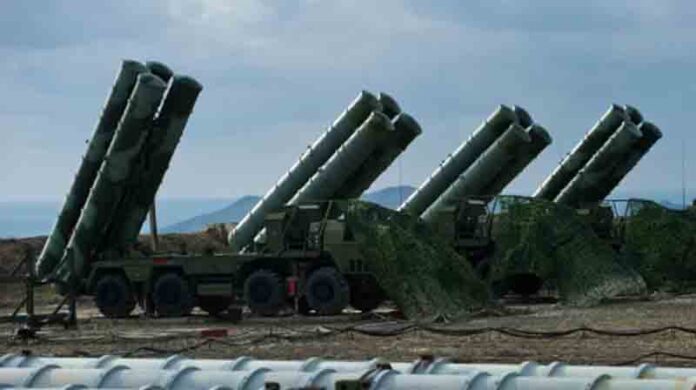
Reports suggest India’s S-400 missile defense system has been destroyed, with Indian media confirming the operator’s death

0

Recent reports suggest that Pakistan may have successfully targeted an S-400 system in India. A local Hindi news outlet, ‘India First‘, has identified an Indian S-400 operator who was reportedly killed during the latest conflict between India and Pakistan. However, there is a notable inconsistency: while Pakistan claims to have struck the S-400 in Indian Punjab, the operator is said to have been killed near the Line of Control (LoC) due to fire from Pakistani forces, according to information relayed to his family by the Indian military.

This raises suspicions, as it seems unlikely that India would have an S-400 positioned so close to the LoC that it could be targeted in such a manner. Additionally, there are conflicting reports regarding the operator’s affiliation, with some suggesting he was part of the Border Security Force (BSF), despite photographs showing him not in BSF uniform. Indian sources have also confirmed that he was indeed part of the army.

A video segment from the same Hindi news outlet corroborates that the operator was involved with the S-400 system. Furthermore, it was reported that Army personnel Rambabu Kumar Singh, hailing from Siwan district in Bihar, was martyred late Monday evening. He was operating India’s air defense system, the S-400, when he was shot by the Pakistani army around 1:30 PM. Following his injury, he was taken to the hospital, where his family and the village learned of his martyrdom late that evening, leading to widespread grief and silence in the community.

Rambabu Singh, a soldier from Vasilpur village in the Hariharpur Panchayat of Barharia block in Siwan district, was the son of the late Ramvichar Singh, a former deputy chief of the same Panchayat. His brother, Akhilesh Singh, is a logo pilot in Hazaribagh, Jharkhand, while his wife resides in Dhanbad, Jharkhand.

Subhash Chandra Sharma, Rambabu’s father-in-law, mentioned that he operated India’s S 400 air defense system. He reported for duty in Jammu and Kashmir on April 10. On Monday, around 1:30 PM, the Army Headquarters informed that he had been shot, and subsequently, it was confirmed that he had been killed.

His wife, Anjali Singh, has yet to be notified of his death. His father-in-law noted that although he was stationed in Jodhpur, he was deployed to Jammu and Kashmir due to escalating tensions between India and Pakistan, where he was killed. The day before his death, at around 10 AM, Rambabu spoke with Anjali and appeared to be in good health. He had been married for approximately four months.

China Accelerates J-35A Transfer to Pakistan, Shifting Regional Power Dynamics

0
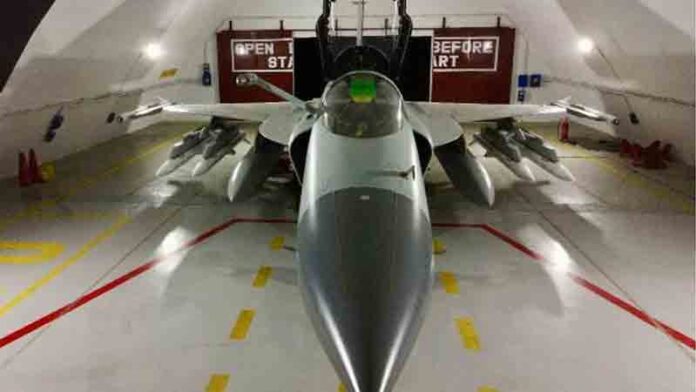
J-35A stealth aircraft

Pakistan’s historic decision to acquire up to 40 units of the Chinese fifth-generation stealth fighter J-35A marks a significant transformation in the airpower dynamics of South Asia, positioning the Pakistan Air Force (PAF) to potentially surpass its longstanding adversary India for more than a decade.

Retired PAF Air Commodore Zia Ul Haque Shamshi noted that the introduction of the J-35A fleet will grant Pakistan a ’12 to 14-year’ lead in stealth fighter capabilities over India’s existing air fleet. He pointed out that India is unlikely to deploy a fifth-generation combat aircraft within that period, thereby providing Pakistan with a strategic edge in the region.

The J-35A, created by Shenyang Aircraft Corporation, is China‘s second fifth-generation stealth fighter following the J-20 ‘Mighty Dragon,’ but it is specifically designed for export to key allies like Pakistan. The PAF expressed interest in the J-35A last year, with Pakistan Air Chief Marshal Zaheer Ahmed Baber Sidhu announcing at an official event that the stealth aircraft would soon be integrated into the PAF’s fleet. ‘Discussions regarding the acquisition of the J-35A have taken place, and the fighter will be incorporated into the Pakistan Air Force shortly,’ the air chief stated, suggesting an expedited induction process.

Recent reports also suggest that Beijing is hastening the delivery timeline for the J-35A, with the first aircraft possibly arriving in Pakistan as soon as 2025—significantly earlier than the previously anticipated two-year period.

This urgency highlights China’s increasing strategic partnership with Pakistan in response to rising tensions in the Indo-Pacific region, emphasizing its goal to counterbalance India’s expanding military relationships with the United States and France.

Reports indicate that Pakistan has sent its initial group of fighter pilots to China for training on the J-35A platform, signaling that the agreement has progressed beyond mere planning. The J-35A features a stealth design, sophisticated avionics, internal weapon bays, and likely network-centric capabilities, making it a significant asset for penetrating contested airspace and executing precision strikes and air superiority operations.

Although the J-20 is China’s premier stealth aircraft, its export is restricted due to fears of technology transfer, similar to the U.S. policy on F-22 Raptor exports, positioning the J-35A as China’s primary stealth export fighter. This aircraft is anticipated to be capable of carrier operations, likely designed for deployment on China’s future aircraft carriers, aligning it with the U.S. F-35C and F-35B variants. With an estimated maximum takeoff weight (MTOW) raised to 28,000 kg and powered by twin WS-19 engines producing 12 tonnes of thrust each, the J-35A is projected to offer impressive performance at both high and low altitudes.

Each of the two internal bays can accommodate two medium-range air-to-air missiles, like the PL-15, ensuring a stealthy armament profile while keeping a minimal radar cross-section. The aircraft is also equipped with several external hardpoints for attaching precision-guided munitions, anti-ship missiles, and tactical strike weapons, tailored to mission requirements.

The J-35A’s introduction is anticipated to gradually replace Pakistan’s outdated F-16 and Mirage 5 fleets with a platform that delivers advanced survivability, lethality, and sensor integration. Pakistan’s advancement in stealth technology coincides with India’s reliance on 4.5-generation fighters such as the Su-30MKI and Rafale, which, while formidable, lack stealth features and comprehensive fifth-generation systems integration.

With China deploying the J-20 and Pakistan preparing to introduce the J-35A, India may confront a potential two-front airpower imbalance, prompting significant concerns within its defense sector. This transition may compel India to accelerate its delayed Advanced Medium Combat Aircraft (AMCA) initiative or pursue external fifth-generation options, although none are presently available for export from the U.S. or Russia.

The acquisition of the J-35A by Pakistan not only enhances its deterrent capabilities against India but also signifies China’s wider ambitions to penetrate the global stealth fighter market, especially in light of increasing Western export restrictions. China has even set up a specialized export office to promote the J-35A to potential international clients—an unprecedented step in Beijing’s military aviation diplomacy.

In contrast to the J-20, which is reserved for the PLAAF, the J-35A serves as China’s cost-effective alternative to the F-35, offering multirole capabilities and power projection through allied networks.

For Pakistan, the J-35A represents more than just a fighter jet; it embodies technological equality, geopolitical messaging, and a transformation in future air strategies, enabling deeper, more lethal, and stealthier operations in high-threat scenarios. The introduction of the J-35A will not only signify a technological advancement but also a strategic shift in the airpower equilibrium of South Asia, with implications for conflict escalation, deterrence strategies, and regional arms races within the Indo-Pacific region.

As of May 2025, the Pakistan Air Force (PAF) boasts a strong and varied fleet, reflecting its strategic alliances and changing defense requirements, operating around 1,399 aircraft, making it the seventh-largest air force in the world by fleet size.

Trump’s proposal to join Russia-Ukraine peace talks ignites diplomatic efforts

0
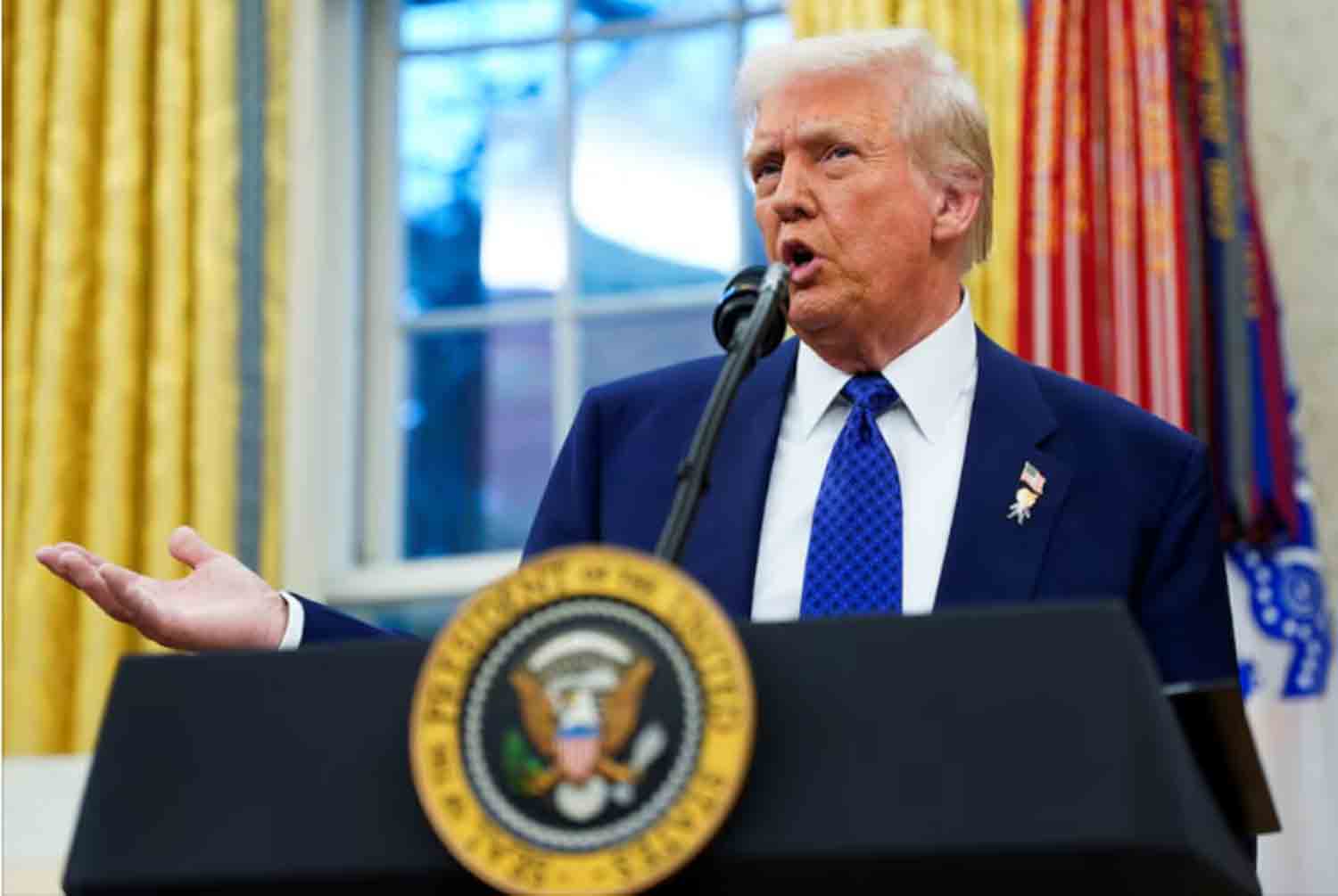
U.S. President Donald Trump speaks, on the day of Tulsi Gabbard's swearing in ceremony as Director of National Intelligence, in the Oval Office at the White House in Washington, D.C.

The proposal by U.S. President Donald Trump to participate in the upcoming Ukraine-Russia peace negotiations has sparked a wave of diplomatic activity, as nations from Europe to the Middle East explore potential solutions to the most lethal conflict in Europe since World War II. On Sunday, Russian President Vladimir Putin suggested direct discussions with Ukraine, and following Trump’s public encouragement for Ukrainian President Volodymyr Zelenskiy to agree, Zelenskiy responded affirmatively, insisting that Putin should attend in person.

In an unexpected turn on Monday, Trump, who is scheduled to visit Saudi Arabia, the United Arab Emirates, and Qatar this week, expressed his willingness to join the Ukraine-Russia talks in Istanbul, a city that bridges Europe and Asia. ‘I have numerous meetings planned, but I was contemplating actually flying over there. It’s a possibility if I believe progress can be made, but we need to finalize it,’ Trump remarked before embarking on his second international trip since beginning his second term in January. ‘Don’t underestimate Thursday in Turkey,’ he added.

Following Trump’s proposal, U.S. Secretary of State Marco Rubio engaged in discussions with European officials, including the foreign ministers of Britain and France, as well as the EU’s foreign policy chief, regarding a potential ceasefire in Ukraine. Ukrainian Foreign Minister Andrii Sybiha also participated in the call alongside his German and Polish counterparts.

Meanwhile, Russian Foreign Minister Sergei Lavrov held discussions with Turkish Foreign Minister Hakan Fidan. The Kremlin has consistently expressed gratitude to China, Saudi Arabia, the United Arab Emirates, and Qatar for their mediation efforts.

Since February 2022, when Putin deployed thousands of troops into Ukraine, the conflict has resulted in the deaths of hundreds of thousands of soldiers and has led to the most serious confrontation between Russia and the West since the Cuban Missile Crisis in 1962.

Last year, Reuters reported that Putin was open to negotiating a ceasefire with Trump, but Moscow, feeling strong in the conflict, has ruled out any significant territorial concessions and demands that Kyiv abandon its ambitions.

draft agreement from 2022

Following Trump’s suggestion for Zelenskiy to consider Putin’s proposal for discussions, the Ukrainian leader expressed his readiness to meet Putin in Istanbul. However, the Kremlin has not confirmed whether Putin will attend. Kremlin spokesperson Dmitry Peskov stated on Monday, ‘We are dedicated to earnestly seeking a long-term peaceful resolution.’ Before further inquiries could be made regarding the talks, Peskov concluded, ‘That’s all. I’ve shared everything I can about this matter.’ The Kremlin has frequently referenced a draft agreement from 2022 that was negotiated between Russia and Ukraine shortly after the onset of the Russian invasion.

According to this draft, Ukraine would need to commit to permanent neutrality in exchange for international security assurances from the five permanent members of the U.N. Security Council: Britain, China, France, Russia, and the United States. If Zelenskiy and Putin, who openly express disdain for one another, were to meet on Thursday, it would mark their first in-person encounter since December 2019.

Ukraine and its European partners have informed Russia that it must accept an unconditional 30-day ceasefire starting Monday or face new sanctions, although the Kremlin has stated it will not respond to ultimatums.

Russian forces currently control nearly one-fifth of Ukraine, including all of Crimea, most of Luhansk, and over 70% of the Donetsk, Zaporizhzhia, and Kherson regions, according to Russian estimates. While Russia continues to make progress, albeit at a slower pace than in 2024, both sides have reported ongoing fighting along the front lines, although some believe the discussions in Istanbul could provide an opportunity to halt the violence.

Konstantin Kosachev, the head of the international affairs committee in the Federation Council, Russia’s upper parliamentary house, stated in an interview with Izvestia published on Tuesday that discussions between Moscow and Kyiv could progress beyond the level achieved in 2022. He expressed confidence that if the Ukrainian delegation arrives at the negotiations prepared to forgo ultimatums and seek mutual understanding, significant advancements could be made, as reported by Izvestia.

Senior NATO official confirmed that the U.S. has not begun moving its military forces from Europe to Asia

0

One month prior to the Hague summit, NATO‘s leading military official stated that there are currently no signs indicating that the United States will withdraw its forces from the alliance’s defense strategies to redeploy them to the Indo-Pacific region.

Nevertheless, Adm. Giuseppe Dragone, who leads NATO’s senior military board, emphasized the necessity for the alliance to prepare for a potential shift in U.S. focus away from Europe. ‘A crucial aspect would be to plan for that in advance,’ Dragone remarked regarding any alterations in U.S. military positioning. ‘This would enable the alliance to adapt and recalibrate.’ The admiral, who assumed his role in January, made these comments during a visit to Washington alongside other NATO leaders to engage with Pentagon officials, including Vice Chairman of the Joint Chiefs of Staff Adm. Christopher Grady.

In recent months, the Pentagon has highlighted the threat posed by China, overshadowing the risks associated with Russia, which is now over three years into its invasion of Ukraine.

A draft U.S. defense strategy, parts of which were leaked in March, heavily referenced a report from the Heritage Foundation authored by a current senior Pentagon policy official. This document suggested that the U.S. should pinpoint its forces allocated to NATO defense plans that could also serve to deter a potential invasion of Taiwan. Consequently, the Pentagon would reposition those units closer to Asia, compelling European nations to bridge the gap.

Dragone mentioned that he had not yet received confirmation regarding the Pentagon’s implementation of those plans, but he indicated that European nations might eventually compensate for the reduction of some U.S. military forces in the region, which includes air defense systems, electronic warfare capabilities, strategic airlift, and drones.

Following the onset of the war in Ukraine, NATO member countries have increased their defense budgets, with 22 out of 32 members now meeting the 2% of GDP benchmark. U.S. President Donald Trump has consistently argued that this figure is insufficient, advocating for a 5% target. NATO Secretary General Mark Rutte has reportedly proposed a new defense spending target of 3.5%, with an additional 1.5% allocated for other security-related initiatives, to be presented at the Hague Summit in June.

Dragone confirmed that this allocation is under discussion, although he was less clear about the timeline for its implementation or the specific purposes for the additional funding. ‘The final goal will be 3.5 plus 1.5, depending on their decisions, but the method of achieving it should be a national responsibility,’ Dragone stated. ‘I believe NATO should remain adaptable and strive for realism, even if it requires assertiveness.’

Italy, Dragone’s home country, is among the 10 NATO members that do not meet the 2% defense spending threshold, allocating only 1.49% of its GDP to defense in 2024. Prime Minister Georgia Meloni asserted in April that Italy would achieve the necessary target this year. These budget increases must also align with the military expansion that Russia has undertaken during the conflict in Ukraine, as it adjusts its economy to endure significant losses in both equipment and personnel.

Dragone noted that Russia is reportedly losing between 1,000 and 1,200 troops daily on the front lines but will continue to rebuild its military force, even if a peace agreement is reached. At a minimum, he suggested that Russia would aim to restore its military capabilities to pre-war levels from 2022, despite its failure to accomplish its objectives during the invasion. The quickest timeline for Russia to regain that strength could be three years, although a more realistic estimate would be five to seven years, according to Dragone.

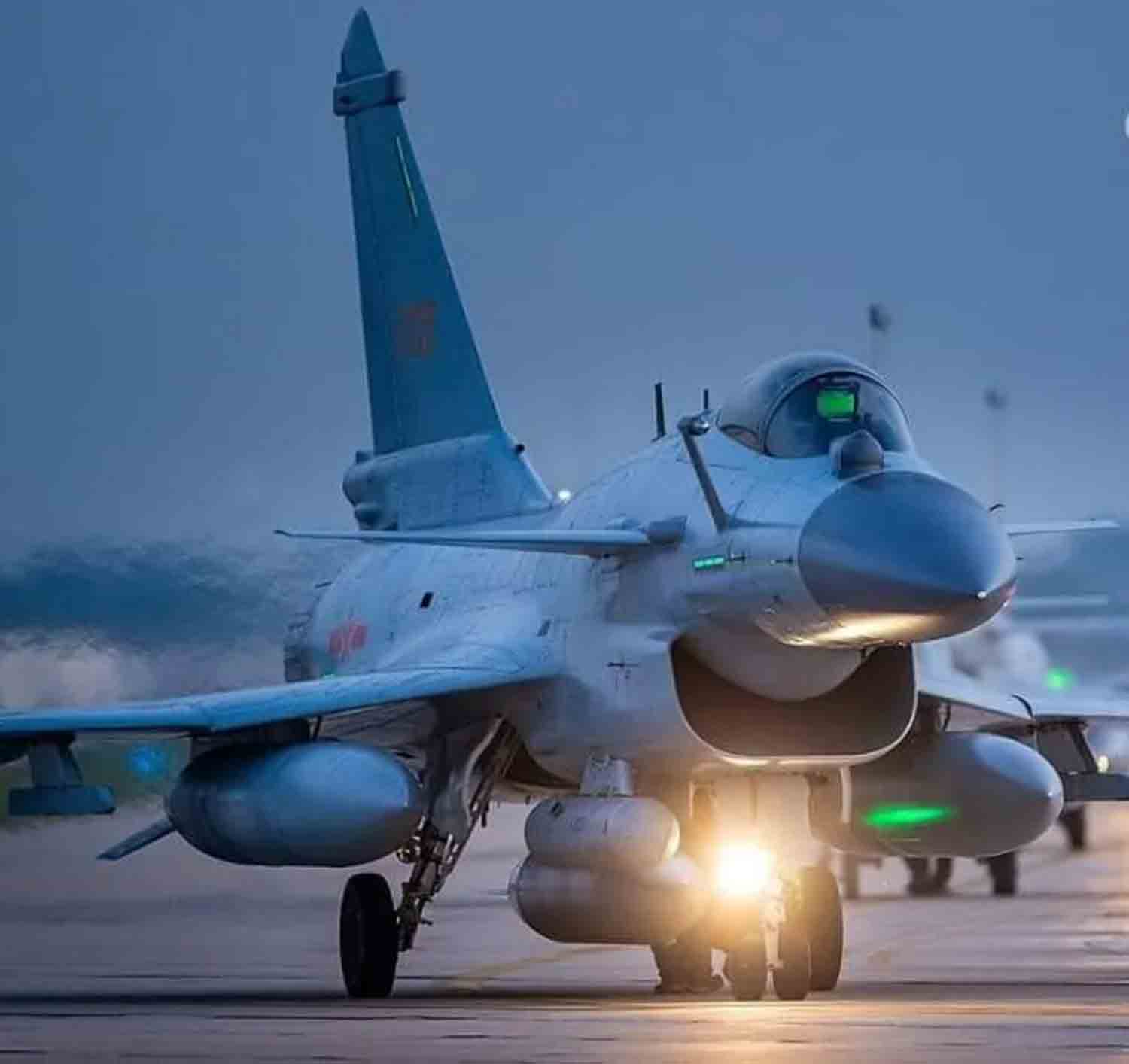
China promotes the J-10 as a substitute for the F-16

0
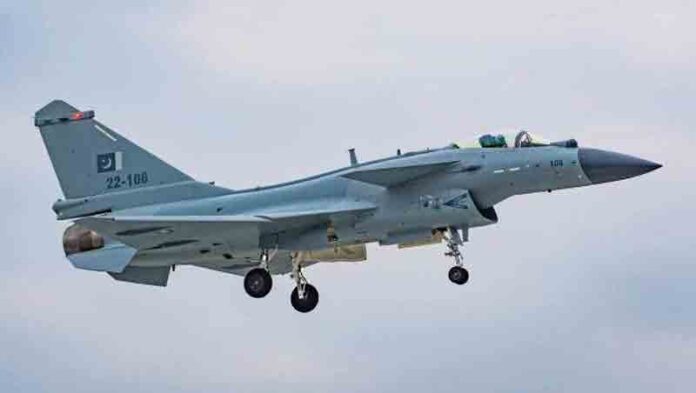
J-10C fighter

The J-10 fighter jet, China’s newest fourth-generation multirole aircraft, is quickly becoming a rival to the U.S.-made F-16. In contrast to the F-16, which has long represented American geopolitical power across numerous air forces from Iraq to Taiwan, China markets the J-10 as part of a comprehensive strategy that emphasizes system-wide integration rather than just upgrades to individual platforms.

Chinese defense experts assert that the J-10 does not merely mimic the capabilities of advanced Western fighters like the F-16V in aspects such as radar detection, beyond-visual-range combat, and avionics integration. Rather, it embodies a distinct military philosophy that prioritizes self-sufficiency from Western logistics and command frameworks. Pakistan’s choice to procure the J-10 highlights this transition.

Faced with U.S. limitations on F-16 upgrades and a strategic pivot towards supplying India with the exclusive F-21 variant, Islamabad found Beijing’s offer to be both technically viable and politically favorable. Unlike traditional arms sales where the aircraft is the primary focus and support systems are secondary, the J-10 is provided as a comprehensive solution—including integrated command and control systems, missile capabilities, and electronic warfare elements.

This approach facilitates quicker operational readiness and diminishes dependence on U.S.-led intelligence and maintenance networks. It shifts the focus from merely selling hardware to delivering a combat-ready solution customized to local requirements.

Crucially, this indicates a transformation in the definition of a contemporary air force. While Western strategies typically envision a lengthy institutional development spanning ten years or more, China’s proposal suggests a leapfrogging strategy—particularly when integrated with platforms such as the JF-17 Block III.

Collectively, they create a modular and scalable airpower solution that is attainable for mid-tier military forces. Presently, the J-10C is not just a successful export; it represents China’s challenge to Western supremacy in airpower benchmarks and a calculated effort to redefine the operational framework.

Pakistani military asserts that UK engines are used in Israeli drones operated by India

0

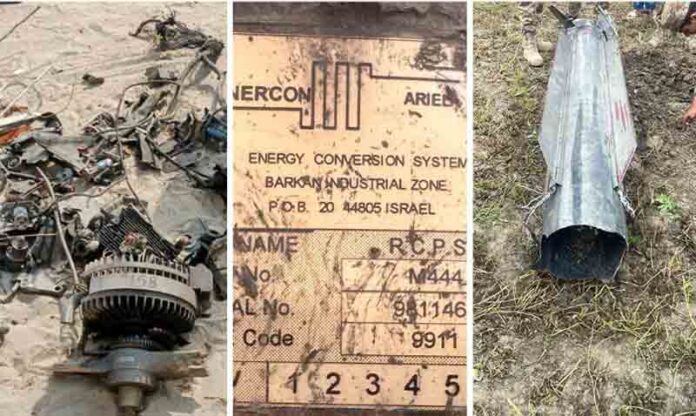
Israeli drones launched by India into Pakistani airspace last week were powered by engines manufactured in Britain, as reported by media sources citing the military of Pakistan. Late last week, international media shared a photograph of an undamaged engine retrieved from a drone that the Pakistani military had shot down.

This engine bears distinct manufacturer markings indicating it was made by UAV Engines Ltd, a company based in the UK. An official from the Indian government confirmed on Thursday that at least one Israeli drone launched by India was intercepted by Pakistan, which claimed on Friday to have downed a total of 77 such drones.

India deployed various models, including the Harop suicide drone from Israel Aerospace Industries (IAI) and the SkyStriker suicide drone from Elbit Systems, Israel’s largest defense contractor.

The Express Tribune reported on Friday that the Pakistani military acknowledged that some of the downed drones were equipped with engines from UAV Engines Ltd. The engine featured in the circulated image is identified as the AR731, recognized for having the highest power-to-weight ratio among rotary engines globally. The photograph corresponds with the specifications and image of the model listed on UAV Engines Ltd’s official website.

The firm, situated in the village of Shenstone in Staffordshire, UK, operates as a subsidiary of Israel’s Elbit Systems. An official from the Indian government indicated on Thursday that some drones deployed into Pakistan were provided to the Indian military by the Adani Group, a multinational corporation established by Indian billionaire Gautam Adani, which shares a production line with Elbit.

Recently circulated video footage depicts a young Pakistani boy carrying an engine, reportedly recovered from a drone, which appears to be a model from UAV Engines Ltd.

A user manual from UAV Engines Ltd, published approximately ten years ago, states that the company supplies Israel Aerospace Industries, among others. However, more recent manuals have not disclosed the companies that UAV Engines Ltd currently supplies. The UK’s Department for Business and Trade has refrained from commenting on the matter.

This development follows criticism directed at the UK’s business secretary, Jonathan Reynolds, by Labour backbench MPs last week after he suggested that Britain should not hesitate to sell arms to India. Labour MP Kim Johnson expressed her concerns to The Independent, stating, ‘I find the business secretary’s comments deeply troubling. You cannot voice concern over escalating tensions in Kashmir while simultaneously suggesting we should ‘not be squeamish’ about selling arms to one side of the conflict.’

Labour MP Jon Trickett emphasized that Britain must refrain from worsening the already precarious situation in the subcontinent by providing arms. He noted that supplying weapons to one side in a conflict contradicts our national interests and could lead to severe diplomatic repercussions from the opposing party.

However, on Saturday, Pakistani Prime Minister Shehbaz Sharif expressed gratitude to the UK and other nations for their roles in achieving a ceasefire between India and Pakistan. Over the past decade, India has procured military equipment valued at $2.9 billion from Israel, which includes radars, surveillance and combat drones, and missiles.

Concurrently, the UK government is facing intense scrutiny from human rights organizations regarding its arms exports to Israel. A report released last Wednesday, based on Israeli import statistics, indicated that a variety of UK-manufactured military products, including components for F-35 fighter jets, have continued to be exported to Israel despite the British government halting 30 arms export licenses in September.

This week, the Department for Business and Trade is also confronting a high court challenge initiated by the Palestinian human rights organization Al-Haq concerning Britain’s provision of F-35 components to Israel. Following four days of intense shelling and unprecedented aerial attacks from both sides, India and Pakistan reached a ceasefire agreement on Saturday.

India, Pakistan military operations chiefs hold talks, Indian army says

0
City view during the blackout, after India's strikes in Muzaffarabad, in Pakistan-administrated Kashmir.

As New Delhi’s airports reopened and stocks in both nations increased after a ceasefire that halted days of fierce warfare last week, the Indian army reported that the military operations chiefs of India and Pakistan had a phone conversation Monday.
The Indian army reported that Sunday was the first quiet night along their border in recent days, with no reports of explosions or projectiles being fired overnight.


U.S. President Donald Trump declared a truce on Saturday after four days of fierce gunfire in which the nuclear-armed arch-enemies used drones and missiles to strike each other’s military installations, killing dozens of people.
Trump claimed on Monday that commerce was a “major reason” why the nations ceased fighting and that the leaders of India and Pakistan were “unwavering” and that the United States “helped a lot.”
“We are planning to trade extensively with India and Pakistan. At the moment, we are talking with India. Negotiations with Pakistan will shortly begin,” he declared.
While India, which is against outside intervention in its conflicts with Pakistan, has remained silent on Washington’s actions, Pakistan has expressed gratitude to the United States for mediating the truce.

According to Indian broadcaster CNN-News18, which cited senior government sources, the truce was the main topic of discussion among the military operations chiefs. It stated that restrictions placed on one another by the nations, such as trade suspension and border closures, were still in effect.
The Indian army promised to release the specifics of the negotiations shortly. A request for response was not immediately answered by the Pakistani military’s media unit.
At 8 p.m. (1430 GMT), Indian Prime Minister Narendra Modi was scheduled to speak to the country. According to local media, he would discuss the strikes on “terrorist camps” in Pakistan that started the military war last week.
Modi has refrained from discussing the strikes and fighting in public.
Following an attack by Islamist militants in Indian Kashmir last month that claimed the lives of 26 persons, India announced on Wednesday that it had commenced attacks on nine “terrorist infrastructure” facilities in Pakistan and Pakistani Kashmir. This marked the start of the military conflict. Pakistan was blamed for the strike by New Delhi.

Islamabad demanded an impartial probe and denied any connection to the crime. It said that Wednesday’s targets were civilian locations.
Both Muslim Pakistan and Hindu-majority India claim the entire Himalayan territory of Kashmir, yet they only control a portion of it.
Regarding what it described as its neighbor’s ceasefire violations the day before, India’s military sent a “hotline” message to Pakistan on Sunday, indicating that New Delhi intends to respond to any additional similar occurrences, according to a senior Indian army officer.
A military spokesperson for Pakistan denied any infractions.

Air Marshal A.K. Bharti, India’s director general of air operations, told a media briefing that “all our military bases and systems continue to stay completely operational notwithstanding some minor damage.”
The Airports Authority of India said in a statement that the 32 airports it had closed during the fighting were open for civil operations on Monday. A few schools were still shuttered.
On Saturday, Pakistan reopened its airways.
Shortly after the announcement, a Reuters witness reported that tourists were barred from entering an airport in the border city of Amritsar.
Although the situation was not as dire as in the northern city of Jammu, Dharmendra Singh, 34, a driver in the Sikh-holy city, said there was no panic among the populace.
He remarked, “It is fantastic to see the city come back to its glory… it is over now.”

According to Tradeweb data, the value of Pakistan’s foreign bonds increased significantly, rising by up to 5.7 cents in the dollar.
The International Monetary Fund approved the first review of its $7 billion program and a new $1.4 billion loan late Friday.
The benchmark share index for Pakistan.India’s blue-chip Nifty 50 index ended Monday’s strongest session since February 2021 with a 3.8% gain, while the KSE closed up 9.4%.

China, which also controls a small portion of Kashmir, is eager to keep in touch with both of its neighbors and play a “constructive role in forging a comprehensive and enduring ceasefire” and preserving peace, according to the foreign ministry in Beijing.
Pakistan claims it simply offers moral, political, and diplomatic support to Kashmiri separatists, while India accuses it of being responsible for the 1989-starting insurgency in its portion of Kashmir.
Despite the ceasefire, several people in the area were still worried.
Padam, a passenger on a train from Jammu to New Delhi, remarked, “It is still worrisome.”
“I am afraid because there have been explosions around Jammu. Padam, who chose not to reveal his second name, continued, “I will remain in Delhi until I am certain that the deal is binding on Pakistan.”

Indian and Pakistani military authorities will talk on the next course of action.

0
Indian Border Security Force personnel stand guard near the India-Pakistan Wagah border post.

Following their most intense fighting in almost thirty years, a truce has brought quiet to the border, and on Monday, the military operations chiefs of India and Pakistan will debate what lies next for the nuclear-armed neighbors.
After some early ceasefire violations, there were no reports of explosions or projectiles overnight. The Indian Army said Sunday was the first quiet night along the border in recent days, though some schools are still shuttered.


Following four days of fierce firing, diplomacy, and pressure from Washington, U.S. President Donald Trump ordered a truce in the Himalayan region on Saturday.
According to a top Indian army commander, India’s military flagged New Delhi’s intention to respond to any more ceasefire violations by sending a “hotline” communication to Pakistan on Sunday regarding the previous day’s transgressions.
A military spokesperson for Pakistan denied any infractions.
The director generals of military operations from both sides will meet Monday at 1200 hours (0630 GMT), according to a statement released by India’s foreign ministry on Saturday.

Regarding the plans for a call, Pakistan has not spoken.
After India accused Pakistan of an attack that killed 26 tourists, the bitter rivals used drones and missiles to target each other’s military installations, killing dozens more civilians.
Pakistan has demanded an impartial inquiry and refutes the charges.
Islamabad has claimed that the nine “terrorist infrastructure” facilities in Pakistan and Pakistani Kashmir that India claimed to have struck on Wednesday were actually civilian locations.
Trump’s offer to mediate the Kashmir dispute with India has been welcomed by Islamabad, which has thanked Washington for supporting the ceasefire. However, New Delhi has not responded to questions about U.S. involvement in the truce or neutral site negotiations.
India has refused the intervention of any third party and maintains that conflicts with Pakistan must be settled exclusively by the neighbors.
Both Muslim Pakistan and Hindu-majority India claim the entire Himalayan territory of Kashmir, yet they only control a portion of it.

In the face of growing wreckage and international scrutiny, India continues to deny the loss of five fighter aircraft.

0
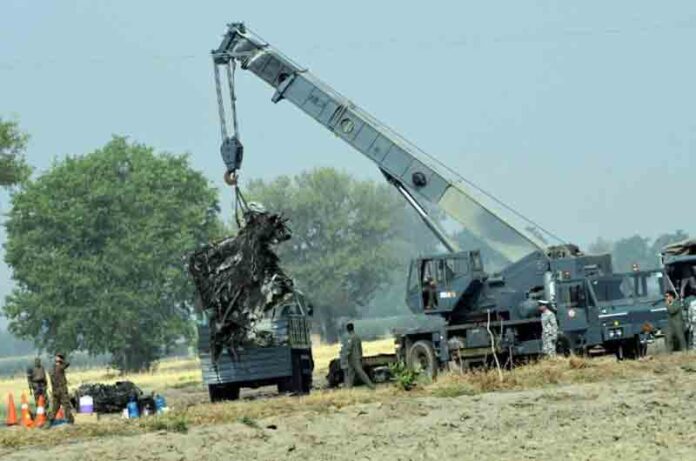
Retrieving wreckage of Indian Rafale fighter jet reportedly shot down by Pakistan in Aklian, Bathinda.

Political and military establishment of India continues to openly deny the loss of five fighter aircraft, including three of its most sophisticated Dassault Rafale jets, that were shot down by the Pakistan Air Force in a series of high-stakes aerial engagements over the subcontinent, despite mounting and increasingly indisputable evidence.

Even as visible evidence of wreckage thought to be from a downed Rafale comes from Punjab’s Bathinda area, New Delhi continues to defiantly reject these losses despite accumulating videos, photographic documentation, and eyewitness accounts.
Recently, debris from what looks to be an IAF Rafale fighter was found in Aklian hamlet, close to Goniana Mandi, which is within range of frontline Indian Air Force facilities and only 80 kilometers from the Pakistani border. These photographs have been making the rounds on the internet.


The collision and post-crash combustion consistent with a high-speed shootdown are confirmed by video footage that has been widely circulated on social media platforms. It clearly shows what appears to be the engine casing and nozzle components of a Rafale aircraft.


Villagers found wreckage bearing the serial number “BS-001,” which is believed to match a Rafale aircraft from the IAF’s fleet—more precisely, the early-delivery batch integrated into No. 17 “Golden Arrows” Squadron at Ambala Air Force Station—which provided conclusive visual proof.

It is more likely that the aircraft had either just taken off or was returning when it was hit by Pakistani air defenses or air-to-air missile systems—possibly the PL-15 or SD-10B carried aboard PAF’s JF-17 Block III or J-10C jets—given the crash site’s proximity to a significant IAF Rafale base.
According to local Indian media, which cited eyewitnesses, the fighter jet was seen flying abnormally low before crashing into a nearby wheat field. Witnesses said they heard a loud sonic boom just before the accident.
According to Bathinda district officials, a secondary explosion caused by leftover fuel or munitions occurred as people approached the debris, killing one civilian and wounding another.

Indian security officials launched quick-response search efforts after several eyewitnesses reported that the pilot had safely ejected and was later observed landing by parachute in Ganga village, which is about 4 to 5 kilometers from the crash site.

Air Marshal A.K. Bharti, a senior official in the Indian Air Force, responded cryptically when asked to directly address the claims of losing five fighter aircraft, including three French-made Rafales: “Losses are part of warfare.” Bharti declined to provide any details.

Although the Ministry of Defence in New Delhi has not formally confirmed it, many regional defense analysts interpret Bharti’s well-crafted response as a tacit acknowledgment, confirming their concerns that India sustained many combat losses in a short period of time.
In addition to the Rafale losses, Pakistani officials also asserted that they shot down a MiG-29 and a Su-30MKI, two important parts of India’s multirole fleet that were used extensively during Operation Sindoor.
More images and videos of wreckage thought to be from a Su-30MKI fighter in the Akhnoor region of Jammu have now appeared online, but Indian officials have not responded to these reports or confirmed them.
In defiance of local eyewitness reports and social media evidence showing at least one pilot ejecting close to Ganga village, Air Marshal Bharti maintained during the same news event that all IAF pilots had “returned safely” to their bases.
Additionally, Bharti said that “there is no wreckage of Pakistani aircraft on Indian land” since Indian planes had effectively intercepted and prevented Pakistani jets from entering Indian airspace.
He said, “We shot down multiple Pakistani aircraft,” although the Indian side has not provided any tangible proof to support the claim, such as debris, flight data, or pilot capture.

In contrast, the Pakistan Air Force has categorically denied any aircraft losses, claiming that its fighters returned unharmed from every operation. To date, no verified open-source or satellite intelligence has refuted this claim.
The first-ever combat loss of the Rafale platform worldwide was recorded when CNN’s chief national security correspondent Jim Sciutto wrote on his verified account that senior French intelligence sources confirmed that “at least one Indian Rafale fighter jet was shot down by Pakistan.” This could be a game-changer.
French authorities are reportedly looking into whether more than one Rafale was destroyed in the battle, which might have a significant effect on India’s strategic airpower doctrine and Dassault Aviation’s export reputation, according to CNN.


CNN also stated that senior U.S. intelligence officials determined that at least one Indian fighter was successfully eliminated by a Pakistani SAM or BVR missile system during India’s Operation Sindoor airstrike into Pakistani territory.
The precise missile system employed has not been revealed by U.S. officials, although potential options include the sophisticated PL-15 BVR missiles fired from PAF J-10C aircraft or the Chinese-made LY-80/HQ-16 medium-range SAM.
India, which in 2016 agreed to purchase 36 Rafale fighters from France’s Dassault Aviation for €7.8 billion, finished receiving the aircraft by the end of 2022 and deployed them to two frontline squadrons: No. 17 “Golden Arrows” at Ambala and No. 101 “Falcons” at Hasimara, close to the Chinese border.

The IAF Rafale fleet is one of the most deadly platforms in the area thanks to its cutting-edge Thales Spectra electronic warfare suite, SCALP cruise missiles for deep attack, and Meteor beyond-visual-range air-to-air missiles.
India furthered its commitment to Rafale on April 28, 2025, when it signed a $7.4 billion deal with France to purchase 26 Rafale Marine planes, including four twin-seat and 22 single-seat models, to be installed on the Indian Navy’s aircraft carrier INS Vikrant.
With deliveries expected to be completed by 2030, this agreement is the first sale of the Rafale Marine variant overseas and includes extensive packages including weaponry, pilot training, and long-term maintenance.
India’s Rafale fleet is currently based out of two extremely important airbases:
1. Ambala Air Force Station (Haryana): This installation, which houses No. 17 “Golden Arrows,” is less than 220 kilometers from the Pakistani border and serves as the mainstay of India’s western air defense.
2. Hasimara Air Force Station (West Bengal): This installation, which is home to No. 101 “Falcons,” offers the potential to quickly deploy in response to threats originating from the China-Bhutan border.
The purported downing of several Indian fighters, including the state-of-the-art Rafale, casts doubt on India’s claim of aerial superiority and may also indicate a change in the balance of airpower in South Asia, particularly if Pakistan has actually deployed sophisticated electronic warfare and missile systems more successfully than previously thought.

Trump’s expectations for a deal on Kashmir test India’s diplomatic ambitions.

0

With a prod from the United States, India and Pakistan have retreated from the verge of full-scale conflict; but, observers warned that President Donald Trump‘s offer to mediate the Kashmir dispute now poses a serious challenge to New Delhi’s ambitions as a world diplomatic force.
India’s quick ascent to the fifth-largest economy in the world has increased its self-assurance and influence internationally, where it has been crucial in resolving regional crises like the earthquake in Myanmar and the economic collapse of Sri Lanka.
However, the dispute with Pakistan over Kashmir, which erupted in recent days with airstrikes, drone attacks, and missile exchanges that resulted in the deaths of at least 66 people, hits a delicate spot in Indian politics.

Future chances for violence in Kashmir may be determined by how India navigates the diplomatic needle, claiming its own interests in the conflict while embracing Trump on subjects like trade. This will mostly depend on domestic politics.

“The truce calls for further extensive negotiations, which India is probably not interested in. It will be difficult to uphold,” said Washington-based South Asia analyst Michael Kugelman.

Late on Saturday, the two governments accused one another of grave violations, demonstrating how shaky the truce still is.

Kugelman pointed out that the ceasefire was “cobbled together quickly” during the height of tensions.

Trump declared on Sunday that “I am going to enhance commerce, greatly, with both of these wonderful nations” after the truce.

Since the crisis started, Indian Prime Minister Narendra Modi has refrained from making any public remarks about it.

Kashmir is not negotiable, least of all by a third-party mediator, as India views it as an essential component of its territory. Both India and Pakistan claim full and partial sovereignty over the picturesque Himalayan region, and have fought two wars and many more battles over what India claims is an insurgency supported by Pakistan. Pakistan disputes that it supports insurgency.

Indian defense analyst Brahma Chellaney stated, “By consenting to abort under U.S. pressure… just three days of military operations, India is directing international attention to the Kashmir conflict, not to Pakistan’s cross-border terrorism that precipitated the crisis.”
As the neighbors engaged in frequent fighting over Kashmir, the West viewed India and Pakistan primarily in the same way for decades following their separation in 1947. In recent years, that has altered, in part because of India’s economic growth, while Pakistan’s economy slowed to less than a tenth of India’s size.
However, many Indians have taken offense at Trump’s suggestion to try to resolve the Kashmir issue and U.S. Secretary of State Marco Rubio’s announcement that India and Pakistan would begin discussing their more general issues at a neutral location.

While India has denied that a third party was involved in the truce, claiming that the two sides independently agreed to it, Pakistan has expressed gratitude to Trump on multiple occasions for his offer on Kashmir.

The strategic goals of New Delhi’s Wednesday missile firing into Pakistan, which it claimed was reprisal for an attack on tourists in Kashmir last month that killed 26 persons, are already being questioned by analysts and Indian opposition parties. It accused Pakistan of being behind the strike, a claim Islamabad refuted.

Compared to his predecessors, Modi demonstrated a far greater willingness to take risks by shooting missiles deep into Pakistan. However, the abrupt halt to hostilities exposed him to infrequent domestic criticism.

Former lawmaker Swapan Dasgupta of Modi’s Hindu nationalist Bharatiya Janata Party claimed that “Trump unexpectedly emerged out of nowhere and announced his verdict” was one of the reasons why the ceasefire had not been warmly received in India.

The primary opposition Congress party joined in, calling on the government to provide an explanation for the “ceasefire announcements made from Washington, D.C.”
A spokesman for Congress, Jairam Ramesh, questioned, “Have we opened the doors to third-party mediation?”

Even though the fighting has ceased, there are still some issues of contention in the relationship that will try India’s resolve and could lead it to take a more assertive stand.
The Indus Waters Treaty, which India halted last month but which provides a crucial source of water for many of Pakistan’s agriculture and hydroelectric plants, is the country’s top concern, according to Pakistani diplomats and government officials.

Former foreign minister and current head of the government-supporting People’s Party of Pakistan, Bilawal Bhutto Zardari, stated that “Pakistan would not have consented (to a ceasefire) without U.S. pledges of a broader conversation.”

A wide deal would be required to end the cycle of brinksmanship over Kashmir, according to Moeed Yusuf, the former national security advisor for Pakistan.

He explained, “Because the fundamental problems still exist, and every six months, a year, two years, or three years, something like this occurs and suddenly you are again at the edge of war in a nuclear environment.”

Fourth Type 075 amphibious vessel from China has been observed in the water

0
Type 075 amphibious assault ship, China

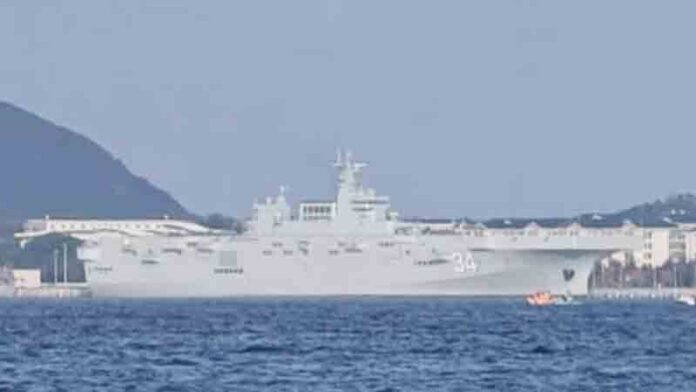
A recently shared image on social media has highlighted China‘s naval aspirations, featuring the fourth Type 075 amphibious assault ship, provisionally named Hubei, as it navigates open waters during what seems to be sea trials.

This event, noted in early May 2025, indicates that the vessel is approaching operational readiness with the People’s Liberation Army Navy, thereby enhancing China’s capacity to project power throughout the Indo-Pacific. Built at the Hudong-Zhonghua Shipyard in Shanghai, this ship exemplifies Beijing’s swift naval expansion, raising concerns about its strategic objectives and the implications for the United States and its allies.

This achievement, while cloaked in China’s typical secrecy, emphasizes an increasing ability to perform intricate amphibious operations, which could alter regional security dynamics. The Type 075, frequently likened to the U.S. Navy’s Wasp-class amphibious assault ships, is a powerful platform intended to facilitate various military operations, ranging from troop landings to humanitarian efforts.

With a full load displacement estimated between 35,000 and 40,000 tons, it ranks among the largest of its type worldwide. Its spacious flight deck can support up to 30 helicopters, including the Z-20 naval variant and the Z-8 transport helicopter, allowing for swift air asset deployment. The ship’s well deck accommodates air-cushioned landing craft and amphibious vehicles, capable of ferrying around 900 marines and their gear to shore. This capability enables the Type 075 to carry out extensive amphibious assaults, a vital aspect of China’s military strategy in contested areas such as the South China Sea and the Taiwan Strait.

The vessel’s sensor systems and armament significantly improve its operational flexibility. Featuring the Type 346A radar, a dual-band system akin to those utilized on China’s Type 052D destroyers, the Type 075 offers sophisticated air and surface monitoring capabilities. For its defense, it is equipped with two HQ-10 short-range surface-to-air missile systems and two H/PJ-11 close-in weapon systems, each comprising a 30mm Gatling-style gun designed to intercept missiles and small boats.

Although there are unverified reports about the possible integration of anti-ship missiles like the YJ-83, there is no public evidence confirming this capability. The ship’s electronic warfare systems, while not fully detailed, are thought to incorporate jamming and decoy technologies to safeguard against missile threats.

Collectively, these features render the Type 075 a formidable platform, capable of operating in high-threat scenarios alongside China’s expanding fleet of destroyers and aircraft carriers.

China’s naval modernization efforts have been unyielding, with the Type 075 program showcasing its shipbuilding capabilities. The first ship of this class, Hainan, was commissioned in April 2021, followed by Guangxi and Anhui in 2022 and 2023, respectively. The fourth vessel, which has been observed in trials, is anticipated to join the fleet by late 2025, barring any significant delays.

Posts on X, including one from user @gaofrank75 on May 10, 2025, assert that the Hubei has already been commissioned, although there is no official confirmation from Beijing to validate this claim.

The swift construction timeline—less than a year from launch to trials for the fourth ship—reflects China’s wartime-like shipbuilding efficiency, as noted by analysts who compare it to U.S. production during World War II. This rapid pace not only highlights industrial capability but also indicates strategic urgency, as China aims to establish dominance in its adjacent seas and beyond.

Amphibious assault ships have historically been crucial in military operations, from the D-Day landings in Normandy to the Falklands War, where their capacity to launch land forces from the sea was vital. The Type 075 continues this tradition, evolving to meet the requirements of contemporary warfare. Equipped with helicopters and landing craft, it allows for swift troop deployment, while its command-and-control systems enhance coordination with other naval forces, including the Type 055 destroyer and the Fujian aircraft carrier.

In a potential conflict over Taiwan, the Type 075 could transport marines to beaches or captured ports, with air support from carrier-based J-15 fighters. Likewise, in the South China Sea, it could assist in operations to reinforce or capture contested islands, such as those in the Spratly chain, where China has established militarized outposts.

The design of the ship is influenced by Western models but features unique Chinese innovations. In contrast to the U.S. Wasp-class, which displaces approximately 40,500 tons and accommodates a combination of helicopters and F-35B jets, the Type 075 does not include fixed-wing aircraft but offers advantages in cost and production speed. While the Wasp-class provides greater versatility in air operations due to its capability to deploy short-takeoff vertical-landing aircraft, the Type 075’s emphasis on helicopter-based assaults is more aligned with China’s regional strategic objectives.

In contrast, the Russian Kuznetsov-class is a hybrid carrier with limited amphibious capabilities, making it a less relevant comparison. The closest competitor to the Type 075 may be Japan’s Izumo-class, which, although smaller at 27,000 tons, is being upgraded to accommodate F-35Bs, reflecting a regional shift towards adaptable naval platforms. China’s naval strategy, often characterized as an ‘anti-access/area denial’ (A2/AD) approach, utilizes vessels like the Type 075 to deter or delay U.S. and allied involvement in regional conflicts.

By deploying several Type 075s alongside Type 055 destroyers and Type 054A frigates, China can establish layered defenses that complicate access to contested waters. The ships’ capability to function within distributed task forces, supported by satellite and drone reconnaissance, enhances their survivability and operational effectiveness. During exercises in the South China Sea in 2023, the Hainan showcased its ability to coordinate helicopter landings and small-boat operations, simulating potential real-world scenarios.

These drills highlight China’s aim to integrate its amphibious fleet into a comprehensive networked warfare framework, where data links and real-time intelligence are crucial for operational success. The introduction of the fourth Type 075 aligns with China’s broader naval expansion, which includes the Type 076, a larger amphibious assault ship launched in December 2024. Named Sichuan, the Type 076 features an electromagnetic catapult system, potentially enabling it to operate fixed-wing drones or light aircraft, marking a significant advancement over the capabilities of the Type 075.

A Bloomberg report indicates that Sichuan’s 40,000-ton displacement and sophisticated features enable it to serve as a hybrid between an amphibious vessel and a light aircraft carrier, showcasing China’s intent to redefine conventional naval roles. The ongoing development of the Type 076 at the same Shanghai shipyard implies that China aims not merely to imitate Western designs but to achieve technological dominance in naval warfare.

The strategic ramifications of China’s expanding amphibious fleet are significant, particularly for the United States and its allies in the Indo-Pacific region. Countries like Japan, Australia, and the Philippines, which have territorial or maritime disputes with China, are under heightened pressure as Beijing’s naval capabilities grow. The Type 075’s capacity to project power onto land poses a threat to smaller island nations and U.S. forward bases, including those in Okinawa and Guam.

In response, the U.S. Navy has made it a priority to counter amphibious threats through strategies such as the Marine Corps’ Expeditionary Advanced Base Operations concept, which envisions agile, mobile units capable of disrupting enemy landings. Furthermore, initiatives like the AUKUS partnership, which includes the provision of nuclear-powered submarines to Australia, are designed to counterbalance China’s numerical superiority in surface vessels. However, challenges persist for China’s amphibious aspirations, as operating four Type 075s necessitates substantial logistical support, including trained personnel, maintenance facilities, and supply chains capable of sustaining extended deployments.

Analysts are raising concerns about whether China’s naval infrastructure can match its shipbuilding capacity, especially in high-intensity conflicts where attrition rates may be significant.

The Falklands War serves as a warning, illustrating the logistical challenges faced by Britain’s task force despite the smaller scale of the conflict.

Additionally, the Type 075’s dependence on helicopters renders it susceptible to advanced air defenses, such as those utilized by Taiwan or U.S. forces, which could incapacitate its landing operations before troops can disembark.

Meanwhile, the U.S. Navy is actively advancing its capabilities; the USS Preble, a destroyer outfitted with the HELIOS laser weapon, conducted tests in 2024 aimed at countering unmanned aerial vehicles, a potential risk to amphibious vessels like the Type 075.

A report in February 2025 noted that the 60-kilowatt laser can blind drone sensors, providing a cost-effective defense against swarms targeting significant naval assets. These developments underscore the ongoing technological arms race in the Pacific, where both sides are striving to exploit each other’s weaknesses.

The U.S. also holds a numerical advantage in aircraft carriers, operating 11 compared to China’s three, although China’s carrier program, including the nuclear-powered Type 004, is advancing swiftly. The evolution of the Type 075 signifies a broader shift in naval warfare, emphasizing the importance of versatility and integration.

Unlike the specialized carriers of the Cold War, contemporary ships are required to fulfill multiple functions, ranging from power projection to disaster response. China’s focus on enhancing its amphibious capabilities reflects its strategic transition from a continental to a maritime power, a shift that commenced with the acquisition of the Liaoning carrier in 1998.

The vessel, initially a Soviet structure acquired from Ukraine, signified the inception of China’s aircraft carrier initiative, which now encompasses the conventionally powered Shandong and Fujian. Although the Type 075 may not be as prestigious as a carrier, it plays a vital role in China’s ambition to assert control over its maritime boundaries and counter U.S. supremacy in the Pacific.

The impending completion of the fourth Type 075 raises important questions regarding China’s industrial capabilities and their ramifications for global security. The Hudong-Zhonghua Shipyard, a division of the China State Shipbuilding Corporation, has proven its capacity to manufacture sophisticated warships at a speed that outpaces its Western rivals. A 2023 update on X highlighted that the fourth Type 075 was launched in less than a year, a success attributed to China’s centralized planning and extensive industrial resources. This level of efficiency stands in stark contrast to U.S. shipbuilding, which often encounters delays and budget overruns, as evidenced by the Littoral Combat Ship program.

While the U.S. retains technological superiority in areas such as stealth and cyber warfare, China’s production capabilities pose a significant challenge to the Pentagon’s ability to sustain a forward presence in Asia. As the Hubei prepares to join its sister vessels, its significance in China’s naval strategy will be increasingly examined. The ship’s trials, conducted in the waters near Shanghai, serve as a public affirmation of China’s determination to dominate its adjacent seas and extend its influence well beyond.

For the United States, the challenge lies not only in matching China’s fleet size but also in formulating strategies that capitalize on the Type 075’s weaknesses, whether through advanced weaponry, cyber tactics, or unconventional approaches. The Indo-Pacific remains a battleground of fierce rivalry, and the introduction of another Type 075 amplifies the stakes.

Ultimately, the fourth Type 075 signifies more than just a vessel; it reflects China’s aspiration to establish itself as a formidable maritime power. Its capacity to transport troops, helicopters, and landing craft to far-off locations provides Beijing with strategic options that were unavailable a decade ago, ranging from the occupation of contested islands to dissuading U.S. involvement in a Taiwan crisis.

However, the ship’s real influence will hinge on China’s capability to incorporate it into a unified naval force, a challenge that demands more than just advanced materials and technology. For U.S. decision-makers, the critical issue is whether existing defense strategies—focused on aircraft carriers and advanced fighter jets—can evolve to address a scenario where amphibious operations could determine the results of future conflicts.

As China’s naval capabilities expand, will the U.S. and its allies muster the determination to respond to this emerging challenge, or will they find themselves unprepared in an increasingly dynamic strategic environment?

What level of success does the dismantling of India’s S-400 air defense system represent for Pakistan?

0

On Saturday, the military of Pakistan announced that it had successfully targeted and destroyed an Indian S-400 air defense system in Adampur, situated in the Jalandhar district of Punjab, India.

The airstrike, reportedly executed using hypersonic missiles launched from JF-17 fighter jets, was characterized as a precise operation that neutralized one of India‘s most advanced air defense systems, valued at around $1.5 billion. This claim, reported by ChinaDaily and attributed to a statement from the Inter-Services Public Relations (ISPR), the media branch of the Pakistan Armed Forces, signifies a notable escalation in the ongoing tensions between the two nuclear-armed nations.

The operation, named ‘Bunyanul Marsoos,’ was initiated in response to what Pakistan describes as ongoing Indian provocations, targeting several high-value military sites across India. The S-400 Triumf, developed by Russia’s Almaz-Antey, is considered one of the most advanced air defense systems globally. It can engage targets at distances of up to 400 kilometers and altitudes of 30 kilometers, designed to counter a variety of aerial threats, including fighter jets, drones, cruise missiles, and ballistic missiles.

India secured its first S-400 units through a $5.43 billion agreement with Russia in 2018, with deliveries commencing in 2021. The system’s deployment in Punjab, a strategically vital area near the Pakistan border, was aimed at enhancing India’s air defense capabilities against potential threats from its western neighbor.

The radar systems of the S-400, including the 91N6E Big Bird, deliver extensive surveillance capabilities, while its missile arsenal, featuring the 48N6E3 and 40N6E, ensures a multi-layered defense against various threats. Its capacity to monitor up to 100 targets at once and engage 36 simultaneously makes it a powerful tool in contemporary warfare.

If Pakistan’s assertion of neutralizing such a system is confirmed, it would significantly undermine India’s defense strategy. As per the ISPR announcement cited by ChinaDaily, the airstrike was carried out using precision-guided hypersonic munitions launched from the JF-17 Thunder, a lightweight, multirole fighter jet developed collaboratively by Pakistan’s Pakistan Aeronautical Complex and China’s Chengdu Aircraft Industry Group. Since its introduction in 2007, the JF-17 has been a vital component of Pakistan’s air force, intended to replace the older Mirage and F-7 aircraft. With a top speed of Mach 1.6 and a combat radius of around 1,350 kilometers, the aircraft boasts advanced avionics, including the KLJ-7A active electronically scanned array radar, which improves its long-range target detection and engagement capabilities.

The platform’s adaptability allows it to carry various munitions, such as air-to-air missiles, precision-guided bombs, and, as claimed in this operation, hypersonic missiles. The deployment of hypersonic missiles in this airstrike is particularly significant, as these weapons can travel at speeds greater than Mach 5, designed to bypass conventional air defense systems due to their rapid speed, agility, and low-altitude flight paths.

Although Pakistan has not officially revealed the exact type of hypersonic missile employed, military experts believe it may be a version of a domestically produced or Chinese-supplied system. As a crucial ally of Pakistan, China has made notable advancements in hypersonic technology, exemplified by systems such as the DF-ZF hypersonic glide vehicle and the YJ-21 missile.

A report from the Center for Strategic and International Studies in 2024 highlighted that China’s progress in hypersonic weaponry has surpassed that of the United States and Russia in specific aspects, especially regarding deployment readiness. Should Pakistan have incorporated this technology into its JF-17 platform, it would represent a significant enhancement of its offensive capabilities.

The target of the airstrike, Adampur, is the site of a major Indian Air Force base, situated roughly 100 kilometers from the Pakistan border. This base is home to squadrons of Sukhoi Su-30 MKI fighters and serves as a vital center for India’s air operations in the northern region. The destruction of an S-400 system at such a strategically important site would not only undermine India’s air defense network but also convey a powerful message regarding Pakistan’s capacity to conduct deep strikes into Indian territory.

Military analysts, as reported by China’s Xinhua news agency, indicated that the loss of an S-400 unit could have significant repercussions for India’s air defense strategy, particularly in the Punjab and Jammu and Kashmir areas, where tensions with Pakistan are most pronounced.

The operation is set against a backdrop of increased tensions between India and Pakistan, which have a long-standing history of conflict primarily driven by territorial disputes, especially concerning the Kashmir region.

Pakistan’s Operation Bunyanul Marsoos seems to be a direct response to Indian missile strikes, with the ISPR indicating that the operation aimed at multiple Indian military targets to address what it termed India’s aggressive stance. If confirmed, the destruction of the S-400 system would represent the most significant outcome of Pakistan’s counteroffensive.

The global community has raised alarms regarding the intensifying conflict. On May 9, 2025, TIME reported that Gulf nations, including Saudi Arabia and Iran, have intervened to mediate, addressing a diplomatic void created by the United States’ diminished involvement in South Asian disputes. The participation of regional powers highlights the worldwide ramifications of a potential India-Pakistan clash, especially considering both countries’ nuclear arsenals.

The Stockholm International Peace Research Institute estimates that India has around 164 nuclear warheads, while Pakistan has approximately 170, making any escalation a significant concern for international security.

From a technological standpoint, the reported destruction of an S-400 system brings to light the vulnerabilities of even the most sophisticated air defense systems. The S-400 is designed for redundancy and mobility, with its components mounted on wheeled chassis for quick redeployment. However, its success relies on effective integration with other defense systems, such as India’s Akash missile system and Barak-8 surface-to-air missiles.

A 2023 analysis by the RAND Corporation pointed out that advanced air defense systems like the S-400 are particularly susceptible to saturation attacks or precision strikes aimed at their radar and command units. Pakistan’s deployment of hypersonic missiles, which are challenging to intercept due to their speed and trajectory, may have taken advantage of these weaknesses.

In comparison, the air defense systems of various countries exhibit different levels of effectiveness. For example, the United States’ Patriot PAC-3 system is specifically designed to intercept ballistic missiles, yet it has a shorter operational range compared to the S-400. Israel’s David’s Sling and Arrow systems are tailored for medium- and long-range threats, respectively, while China’s HQ-9 and Russia’s S-500 systems serve as direct rivals to the S-400.

The reported success of Pakistan’s airstrike may lead India to reevaluate its dependence on the S-400 and hasten the development of domestic systems such as the Advanced Air Defence missile. Additionally, the wider geopolitical landscape is important to consider. Pakistan’s military collaboration with China has intensified in recent years, with joint initiatives like the JF-17 and the China-Pakistan Economic Corridor reinforcing their strategic alliance.

China’s advancements in hypersonic technology, highlighted in a July 2024 report by kaldata.com, may have provided Pakistan with access to advanced weaponry. On the other hand, India’s defense relationships with Russia, the United States, and Israel have broadened its military capabilities but have also complicated its strategic positioning. The potential loss of an S-400 unit could put a strain on India-Russia relations, especially if the system’s effectiveness is viewed as lacking.

As developments continue, the global community is looking for independent verification of Pakistan’s assertions. Satellite imagery, open-source intelligence, and comments from Indian officials will be essential in validating the destruction of the S-400 system.

The airstrike in Adampur, regardless of its verification status, underscores the fragile power dynamics in South Asia. For the United States, which aims to uphold strategic alliances with both India and Pakistan, this incident complicates efforts to foster regional stability. The escalation serves as a stark reminder of the challenges that advanced military technologies present when wielded by competing nations.

As India and Pakistan confront this latest crisis, global attention is focused on the situation, recognizing that the implications reach well beyond the borders of Punjab. Will this incident signify a pivotal moment in the India-Pakistan rivalry, or will it lead to renewed attempts at de-escalation? Only time will reveal the outcome.

China expresses concern over escalating India-Pakistan tensions and vows to play a ‘constructive role’

0
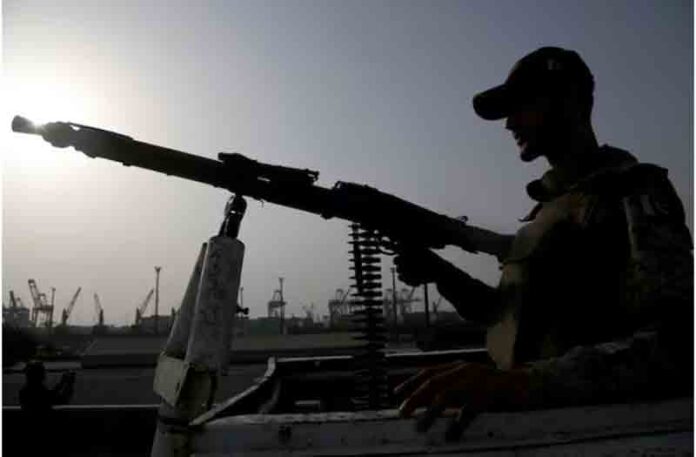
A paramilitary trooper mans a gun atop a vehicle as he keeps guard during a media tour of the Karachi Port, Pakistan.

China has expressed significant concern regarding the rising tensions between India and Pakistan, pledging to take a proactive role in promoting de-escalation.

A spokesperson from China’s Foreign Ministry stated on Saturday that the nation is closely monitoring the situation and is alarmed by the increasing hostilities. They urged both nations to focus on the greater goal of peace and stability, to exercise calm and restraint, and to seek a political resolution through peaceful dialogue.

The spokesperson emphasized that preventing further escalation is essential for the fundamental interests of both countries, beneficial for regional peace and stability, and meets the expectations of the international community. China is prepared to continue its constructive involvement in this matter. Given its geographical proximity to both nations, China has consistently advocated for calm and restraint in light of the potential for conflict. The Foreign Ministry expressed regret and concern following India’s recent military actions against Pakistan and Pakistan-administered Kashmir.

Foreign Minister Wang Yi reaffirmed support for Pakistan during a phone conversation with his counterpart, highlighting China’s role as an ‘ironclad friend’ to Pakistan. Pakistan is regarded as China’s ‘all-weather strategic partner’ and plays a crucial role in the Belt and Road Initiative, a major global infrastructure project led by Chinese President Xi Jinping.

Furthermore, China is the primary supplier of arms to Pakistan, providing 81% of its weapon imports over the last five years.

Top US diplomat offered assistance for mediation in call with Pakistani army chief

0
Secretary of State, Sen. Marco Rubio testifies during his Senate Foreign Relations confirmation hearing at Dirksen Senate Office Building.

On Friday, US Secretary of State Marco Rubio engaged in a conversation with Pakistani Army Chief Asim Munir, during which he proposed US mediation, as stated in a release from the State Department.

Rubio emphasized the importance of both parties seeking avenues for de-escalation and extended an offer of US support to initiate constructive discussions aimed at preventing future conflicts.

This marks the first instance of US assistance being offered in his communications with officials from Pakistan or India.

G7 countries encourage India and Pakistan to engage in direct discussions

0
A paramilitary trooper mans a gun atop a vehicle as he keeps guard during a media tour of the Karachi Port, Pakistan.

The Group of Seven (G7) major nations called for maximum restraint from both India and Pakistan on Friday, urging them to engage in direct dialogue amid escalating tensions between the two nuclear-capable neighbors.

Global powers have expressed concern over the recent intensification of the long-standing India-Pakistan conflict. Following airstrikes and missile attacks by India on Pakistan on Wednesday, both nations have experienced daily clashes resulting in numerous casualties.

Among the G7 nations, the U.S. has been in regular communication with both India and Pakistan in recent days, advocating for de-escalation; however, Vice President JD Vance remarked on Thursday that a war between the two countries would be “none of our business.”

In recent years, India has been viewed as a key ally by Western nations in countering China’s growing influence, while Pakistan, although a U.S. ally, has seen its significance wane since Washington’s withdrawal from Afghanistan in 2021.

In a statement issued by Canada, the foreign ministers of Canada, France, Germany, Italy, Japan, the U.S., Britain, and the European Union expressed their strong condemnation of a militant attack on April 22 that resulted in 26 fatalities in India-administered Kashmir.

India has attributed the attack to Pakistan, which has denied the allegations and called for an impartial investigation. The G7 statement emphasized the need for immediate de-escalation and encouraged both nations to pursue direct dialogue for a peaceful resolution.

Pakistan initiates a military campaign targeting several key installations in India

0
Smoke rises after a blast on the outskirts of Jammu city

On early Saturday, Pakistan initiated the military operation ‘Bunyan Marsoos’—translated as Iron Wall—targeting various strategic installations in India. According to security sources, seven locations were struck, including the significant Pathankot air base, Udhampur air base, and Gujarat air base, as well as the Rajasthan air base and a BrahMos storage facility.

This operation was a response to Indian missile attacks that impacted several sites within Pakistan. Late Friday, India launched missiles at three air bases in Pakistan; however, a military spokesperson confirmed that all Pakistan Air Force (PAF) assets remained unharmed.

Lieutenant General Ahmed Sharif Chaudhry, Director General of Inter Services Public Relations (ISPR), stated at a press conference that India targeted the Nur Khan base in Rawalpindi, Murid base in Chakwal, and Shorkot air base with air-to-ground missiles.

He assured that, by the grace of Allah Almighty, all PAF assets are secure and cautioned India to expect a strong retaliation, asserting, ‘Now just wait for our response.’ The DG ISPR also noted that India had launched missiles and drones into Afghanistan, emphasizing that India’s arrogance was contributing to regional instability.

Lieutenant General Ahmed Sharif Chaudhry, reported that India has launched six ballistic missiles, with one hitting Udhampur and the other five landing near Amritsar.

During a late-night press briefing, he indicated that these missiles were fired from Udhampur, raising concerns that India may be targeting its own citizens, particularly the Sikh minority, which is perplexing. The Sikh community appears to be under threat, and these strikes have sparked serious concerns regarding the Indian government’s motives.

In a separate media briefing, Lt. Gen. Chaudhry noted that India has also targeted Pakistan Air Force (PAF) airbases; while most ballistic missiles were intercepted by air defenses, a few managed to breach them, though initial assessments indicate no damage to PAF aircraft. He highlighted that the PAF successfully detected the electronic signatures of each missile at launch and identified their intended targets.

Furthermore, he mentioned that India has conducted missile and drone strikes against Afghanistan, a neighboring ally. Following the missile attack on its own territory in Indian Punjab, India seems to be attempting to instigate chaos in the region and beyond as part of a broader, malicious agenda.

He assured the people of Pakistan that their armed forces remain vigilant and ready to respond to any acts of aggression from India. These reckless actions by India reveal its increasing paranoia, which intensifies with each defeat. However, no level of aggression can diminish the resilient spirit of the Pakistani people. Rather than weakening us, these disgraceful actions only reinforce Pakistan’s resolve and unity. The desperation of India is akin to a ticking time bomb—its paranoia and failures will continue to escalate, he concluded.

What strategies enabled Pakistan to successfully down five Indian aircraft? What errors did India commit?

0
J-10C fighter

In their inaugural real-world air combat operation, the Pakistan Air Force (PAF) J-10C fighters, equipped with Chinese-manufactured Beyond Visual Range (BVR) missiles and operating under complete radio and radar silence, successfully executed an ambush that resulted in the downing of three Indian Air Force Rafale jets. This operation, characterized as a textbook ambush, also led to the loss of a Mirage 2000, a Su-30MKI, and a MiG-29 by India, with investigators retrieving Russian-made K-36DM ejection seats from the crash sites, confirming the involvement of these aircraft.

In a bold and unprecedented statement, Pakistan’s Foreign Minister Ishaq Dar asserted that the PAF had successfully shot down five Indian Air Force (IAF) fighter jets, including three advanced Rafales, utilizing Chinese-built J-10C fighters armed with PL-15E beyond-visual-range air-to-air missiles (BVRAAMs). “The much-publicized Rafale jets performed poorly, and Indian pilots demonstrated significant incompetence,” Dar remarked. “Our forces had the capability to take down 10 or 12 aircraft, but there was a strict directive to engage only those that fired first,” he added.

Importantly, the Rafales were intercepted and destroyed nearly 100 kilometers within Indian airspace, while the Pakistani fighters remained within their own borders throughout the engagement, indicating a strategic shift towards stand-off air superiority.

Analysis of the wreckage confirmed that the Indian aircraft were downed by Chinese-made PL-15E beyond-visual-range (BVR) air-to-air missiles, an export variant of the PL-15 with a range of up to 145 kilometers. The full-strength PL-15, exclusively utilized by the People’s Liberation Army Air Force (PLAAF), is believed to have a range of 200 to 300 kilometers depending on launch conditions such as altitude and speed. Capable of reaching speeds close to Mach 5, the PL-15 family employs active radar homing in the terminal phase, providing exceptional accuracy even against maneuvering or jamming targets.

Indian Rafales were reportedly on their way to deploy Storm Shadow/SCALP cruise missiles—stealthy deep-strike munitions with a combat range exceeding 550 kilometers—when they were intercepted. Sources indicate that the Rafales were equipped solely with the infrared-guided variant of the MICA missile, which has a range of 60 kilometers, while the longer-range radar-guided version (80 km) was not included in the mission. Indian crews may have mistakenly believed that their distance from the border provided safety, underestimating the potential for a long-range strike using advanced BVR missiles from Pakistani airspace.

The PAF J-10Cs maintained complete radar and radio silence throughout the operation, utilizing real-time guidance from airborne early warning and control (AEW&C) systems, including the Swedish Saab 2000 Erieye and the Chinese ZDK-03 Karakoram Eagle. As of 2025, the Pakistan Air Force operates nine Saab 2000 Erieye AEW&C aircraft equipped with AESA radars capable of detecting aerial targets at ranges up to 450 kilometers and securely sharing this information across the battlefield.

Additionally, the PAF acquired four ZDK-03 AEW&C aircraft between 2011 and 2015, based on the Shaanxi Y-8F600 airframe and outfitted with Chinese-developed radar systems. These AEW&C platforms transmitted targeting information to the J-10Cs via encrypted datalinks, allowing the fighters to remain electronically silent while maintaining comprehensive situational awareness. In contemporary military aviation, achieving total radar and radio silence entails completely disabling an aircraft’s radar and communication systems to evade detection by enemy sensors or electronic intelligence units.

Radar silence prevents radar warning receivers (RWRs) from detecting electromagnetic emissions, while radio silence hinders interception of voice or data communications like Link 16, enhancing deep-strike survivability. This electromagnetic stealth enabled PAF fighters to remain undetected until their weapons were deployed, at which point the AEW&C aircraft guided the missiles mid-course. In the last 20 to 30 kilometers of their flight, the PL-15E’s onboard X-band radar seeker activated, locking onto targets with deadly accuracy.

The Indian Rafales, despite their RBE2 AESA radar boasting a theoretical detection range of 200 kilometers, were unable to identify the incoming threat. Analysts largely attribute this failure to the PAF jets operating at very low altitudes, utilizing the mountainous terrain to remain below the Indian radar horizon and exploit blind spots. While some of India’s aircraft losses can be linked to tactical errors or inadequate threat assessment, this incident highlights a significant shift in modern air combat. It illustrates that air superiority is no longer determined solely by the platforms involved, but rather by the capacity to detect first, engage first, and communicate swiftly within a networked battlefield.

Contemporary air combat is primarily a contest for information dominance, where success relies on the seamless integration of sensors, weapon systems, and command nodes through real-time, high-bandwidth data links. Achieving victory now depends less on raw speed or maneuverability, and more on sustained situational awareness, coordinated beyond-visual-range (BVR) engagements, and the capability to operate discreetly within contested electromagnetic environments.

In December 2021, Pakistan officially confirmed its acquisition of J-10C fighter jets from China, a move interpreted as a direct counter to India’s introduction of the Rafale. The initial delivery of six jets took place on March 4, 2022, and they were integrated into No. 15 Squadron ‘Cobras’ at Minhas Air Base the following week. Originally ordered in a batch of 25, there are indications that the J-10C fleet may expand, with discussions underway to potentially increase the total to 60 aircraft.

Featuring AESA radar, sophisticated electronic warfare systems, and long-range missile capabilities, the J-10C represents a significant advancement for Pakistan, establishing itself as a vital component of the Pakistan Air Force’s strategy for achieving regional air dominance.

Experts believe the tensions between Pakistan and India could indicate a clash of Chinese and Western military technologies

0
JF-17 fighter equipped with PL-15 very long-range air-to-air missiles

The intensifying conflict between India and Pakistan may provide the world with its first significant insight into the performance of advanced Chinese military technology in comparison to Western equipment, leading to a notable increase in Chinese defense stocks. Shares of AVIC Chengdu Aircraft surged by 40% this week after Pakistan deployed AVIC-manufactured J-10C jets to down Indian fighter jets, including the advanced French Rafale, during an aerial confrontation on Wednesday.

India has yet to respond to Pakistan’s assertions or confirm any losses of aircraft. When questioned about the role of Chinese jets, a spokesperson for China’s Foreign Ministry stated on Thursday that he was not aware of the situation.

Nevertheless, as Pakistan’s main arms supplier, China is likely observing closely to assess the performance of its weapon systems in actual combat scenarios. As a rising military superpower, China has not engaged in a significant war for over forty years. However, under the leadership of Xi Jinping, it has rapidly modernized its military, investing heavily in the development of advanced weaponry and state-of-the-art technologies, while also extending this modernization effort to Pakistan, which has long been regarded by Beijing as its ‘ironclad brother.’

In the last five years, China has accounted for 81% of Pakistan’s arms imports, as reported by the Stockholm International Peace Research Institute (SIPRI). These imports encompass advanced fighter jets, missiles, radar systems, and air-defense technologies, which experts believe would be crucial in any military confrontation between Pakistan and India.

Additionally, some weapons produced in Pakistan have been co-developed with Chinese companies or utilize Chinese technology and expertise. ‘This transforms any conflict between India and Pakistan into a practical testing ground for Chinese military exports,’ stated Sajjan Gohel, the international security director at the Asia-Pacific Foundation, a London-based think tank.

Furthermore, the Chinese and Pakistani armed forces have participated in increasingly complex joint exercises across air, sea, and land, including combat simulations and crew-swapping drills. ‘Beijing’s enduring support for Islamabad—through military hardware, training, and now a growing emphasis on AI-driven targeting—has subtly altered the tactical landscape,’ remarked Craig Singleton, a senior fellow at the US-based Foundation for Defense of Democracies. ‘This situation transcends a mere bilateral conflict; it offers insight into how Chinese defense exports are influencing regional deterrence.’

The recent escalation in tensions between India and Pakistan, particularly following an attack on tourists in Kashmir, highlights a significant geopolitical shift in the region, where China is increasingly challenging American dominance.

Since gaining independence from Britain in 1947, India and Pakistan have engaged in three wars over Kashmir. During the Cold War, India received support from the Soviet Union, while the US and China backed Pakistan. Today, a new phase of great-power competition overshadows the enduring conflict between these nuclear-armed nations.

Despite its historical stance of nonalignment, India has strengthened its ties with the US, as various American administrations have sought to position India as a strategic counterbalance to China. India has significantly increased its defense acquisitions from the US and its allies, such as France and Israel, while decreasing its dependence on Russian military supplies. Conversely, Pakistan has fortified its relationship with China, designating it as its ‘all-weather strategic partner’ and actively participating in Xi Jinping’s Belt and Road Initiative.

Data from SIPRI indicates that in the late 2000s, the US and China each accounted for approximately one-third of Pakistan’s arms imports. However, in recent years, Pakistan has ceased purchasing American weaponry, opting instead for Chinese arms. Siemon Wezeman, a senior researcher at SIPRI, pointed out that while China has been a key arms supplier to Pakistan since the mid-1960s, its current preeminence is largely due to the withdrawal of US support. Over a decade ago, the US accused Pakistan of insufficient action against ‘terrorists,’ including Taliban operatives, which compounded Washington’s frustrations regarding Islamabad’s nuclear program.

The United States has identified India as a viable partner in the region, leading to a significant reduction in military support for Pakistan. Consequently, China’s arms supply to Pakistan has notably increased, positioning China as Pakistan’s primary ally. China has expressed disapproval of India’s military actions against Pakistan, urging for calm and restraint. Prior to the recent tensions, Chinese Foreign Minister Wang Yi reaffirmed China’s commitment to Pakistan during a phone conversation, labeling it as Pakistan’s ‘ironclad friend.’

With Pakistan primarily equipped by China and India obtaining over half of its military supplies from the US and its allies, any potential conflict between these two nations could represent a clash of Chinese and Western military capabilities.

Following a surge in hostilities after the tragic killing of 26 predominantly Indian tourists in Indian-administered Kashmir, India executed missile strikes early Wednesday, targeting what it described as ‘terrorist infrastructure’ in both Pakistan and Pakistan-administered Kashmir. Analysts suggest that these strikes were carried out using India’s French-manufactured Rafale and Russian-made Su-30 fighter jets.

Pakistan has proclaimed a significant triumph for its air force, asserting that five Indian fighter jets – including three Rafales, a MiG-29, and a Su-30 – were downed by its J-10C fighters during a one-hour confrontation involving 125 aircraft at distances exceeding 160 kilometers (100 miles).

Salman Ali Bettani, an international relations expert at Quaid-i-Azam University in Islamabad, remarked that this incident is now regarded as the most intense air-to-air combat between two nuclear-armed countries. He noted that this engagement marks a significant advancement in the operational deployment of sophisticated Chinese-origin systems. While India has not confirmed any losses, a source from the French Defense Ministry indicated that at least one of India’s latest and most advanced warplanes – a French-manufactured Rafale fighter jet – was lost during the conflict.

Bilal Khan, founder of the Toronto-based defense analysis firm Quwa Group Inc., stated that if this loss is verified, it suggests that Pakistan’s weapon systems are at least on par with contemporary offerings from Western Europe, particularly France.

Despite the lack of official validation and concrete evidence, Chinese nationalists and military enthusiasts have taken to social media to celebrate what they perceive as a victory for Chinese-made military technology. Consequently, shares of China’s state-owned AVIC Chengdu Aircraft, the manufacturer of Pakistan’s J-10C fighter jets, surged 17% on the Shenzhen exchange on Wednesday, prior to Pakistan’s foreign minister asserting that the jets had been utilized to down Indian aircraft. The company’s shares experienced an additional 20% increase on Thursday.

The J-10C represents the most recent iteration of China’s single-engine, multirole J-10 fighter, which was introduced to the Chinese air force in the early 2000s. With enhanced weaponry and avionics, the J-10C is categorized as a 4.5-generation fighter, comparable to the Rafale but positioned below 5th-generation stealth aircraft like China’s J-20 and the US F-35. In 2022, China supplied the initial batch of the J-10CE, its export variant, to Pakistan, as reported by state broadcaster CCTV. This aircraft is now the most sophisticated fighter jet in Pakistan’s inventory, alongside the JF-17 Block III, a lightweight 4.5-generation fighter co-developed by Pakistan and China.

The Pakistan Air Force (PAF) also maintains a larger fleet of American F-16s; however, these F-16s remain in an early-2000s configuration, significantly lagging behind the upgraded models currently available from the US. In contrast, the Chinese-manufactured J-10CEs and JF-17 Block IIIs are equipped with modern technologies, including active electronically scanned array (AESA) radars. According to Khan, while the F-16s remain a crucial asset for any PAF-led response, they are not the primary or essential component.

Senior Colonel (ret) Zhou Bo, a senior fellow at Tsinghua University’s Center for International Security and Strategy in Beijing, noted that if J-10Cs were indeed utilized to down French-made Rafales, it would significantly enhance confidence in Chinese weaponry. Zhou remarked that such an event would certainly attract attention, especially considering that China has not engaged in warfare for over forty years, potentially leading to a substantial increase in Chinese arms sales on the global stage.

The United States continues to be the leading arms exporter globally, representing 43% of worldwide weapon sales from 2020 to 2024, as reported by SIPRI. This figure is over four times that of France, which holds the second position, followed by Russia. China is in fourth place, with a significant portion of its arms exports directed towards Pakistan. Defense analyst Khan from Toronto noted that if the downing is verified, it could significantly enhance China’s defense sector, attracting interest from nations in the Middle East and North Africa that typically lack access to advanced Western technology. With Russia’s position weakened due to its invasion of Ukraine, it is likely that China is intensifying efforts to penetrate Moscow’s traditional markets, such as Algeria, Egypt, Iraq, and Sudan, to secure substantial sales.

Experts from Pakistan and China suggest that the J-10Cs utilized by the Pakistan Air Force are probably equipped with the PL-15, China’s most sophisticated air-to-air missile, which boasts a reported range of 200-300 kilometers (120-190 miles) beyond visual range. The export variant has a reduced range of 145 kilometers (90 miles). Recently, amid escalating tensions, the Pakistan Air Force released a three-minute video highlighting its warplanes, featuring the JF-17 Block III armed with PL-15 missiles, which were described as ‘PAF’s potent punch.’

Antony Wong Dong, a military observer based in Macau, commented that from China’s viewpoint, this serves as a significant promotional tool, stating, ‘It will astonish even countries like the United States — just how formidable is its adversary, really? This is a critical consideration for all nations contemplating the purchase of fighter jets, as well as for China’s regional competitors, who must reassess how to confront this new reality.’

Some analysts suggested that, if India’s reported losses are accurate, they may be attributed more to inadequate strategies and planning by the Indian Air Force rather than advancements in Chinese weaponry. Singleton, an analyst at the Foundation for Defense of Democracies, stated, ‘If the reports of India losing several jets are confirmed, it would cast significant doubt on the IAF’s preparedness, beyond just its equipment. While the Rafales are advanced, effective warfare relies on integration, coordination, and survivability, not merely on high-profile acquisitions.’

Additionally, it remains unclear what intelligence India had regarding the PL-15. For example, if India assumed that Pakistan only had access to the shorter-range export variant, Indian aircraft may have operated in exposed regions. Furthermore, engagement rules might have restricted Indian pilots from initiating fire or retaliating against Pakistani aircraft, as noted by Fabian Hoffman, a defense policy research fellow at the University of Oslo. In such scenarios, Indian miscalculations could have made Pakistani weaponry appear more formidable, as Hoffman discussed in his blog.

International armed forces to analyze the India-Pakistan aerial combat

0
Pakistani Air Force's Chengdu J-10C fighter

The recent aerial engagement involving Chinese-manufactured Pakistani jets and French-made Indian Rafale fighters is expected to attract significant attention from military analysts seeking valuable insights that could provide advantages in future confrontations. According to two U.S. officials who spoke to Reuters, a Chinese-made Pakistani fighter jet successfully downed at least two Indian military aircraft on Wednesday, representing a potential significant achievement for Beijing’s advanced fighter technology.

This incident presents a unique opportunity for military experts to evaluate the effectiveness of pilots, aircraft, and air-to-air missiles in real combat scenarios, allowing them to enhance their own air force strategies. Analysts noted that the real-time deployment of sophisticated weaponry will be scrutinized globally, particularly by China and the United States, both of which are bracing for possible conflicts over Taiwan or in the broader Indo-Pacific area.

A U.S. official, who requested anonymity, indicated a strong belief that Pakistan employed the Chinese-made J-10 aircraft to engage Indian fighter jets with air-to-air missiles. Discussions on social media have highlighted the performance of China’s PL-15 air-to-air missile in comparison to the Meteor missile, developed by the European consortium MBDA. However, there has been no official verification of the use of these weapons.

Douglas Barrie, a senior fellow for military aerospace at the International Institute for Strategic Studies, remarked that air warfare communities in China, the U.S., and several European nations will be keenly interested in gathering accurate information regarding tactics, techniques, procedures, and the effectiveness of the equipment used. Barrie emphasized the significance of this encounter, stating, ‘You have arguably China’s most capable weapon against the West’s most capable weapon, if indeed it was being carried; we don’t know that.’ He also noted that the French and Americans would likely be looking for similar intelligence from India.

The PL-15 poses a significant challenge, drawing considerable attention from the U.S. military, according to a defense industry executive.

information remains ambiguous

Analysts and industry insiders noted that key information remains ambiguous, particularly regarding the Meteor’s deployment and the extent of pilot training. Analysts emphasized the importance of distinguishing technical performance from operational realities.

Byron Callan, a defense expert and managing partner at Capital Alpha Partners, stated, ‘There will be evaluations of what is effective and what is not, but we must also consider the complexities of warfare.’ He added that U.S. arms manufacturers are receiving ongoing insights into the performance of their products in the Ukraine conflict, and similarly, India‘s European suppliers are likely experiencing the same.

He suggested that Pakistan and China are probably exchanging similar intelligence. If the PL-15 performs as claimed or exceeds expectations, it would be of great interest to the Chinese.

A defense industry insider from a Western nation utilizing the Meteor noted that an online image of a seeker seemed to show a missile component that had failed to hit its target. There are mixed reports regarding whether Pakistan possesses the domestic variant of the PL-15 from the Chinese air force or the lower-range export model introduced in 2021.

Barrie, an expert on the missile, expressed his belief that Pakistan most likely has the export version. A Western industry source refuted assertions that the rocket-powered PL-15 has a longer range than the air-breathing Meteor but conceded that its capabilities ‘might be more impressive than previously assumed.’ The Meteor’s range has not been officially disclosed. ‘Currently, it’s impossible to make any assessments. Our knowledge is quite limited,’ the industry source remarked.

The PL-15 has garnered significant attention from the West due to its impressive range and performance over the years. Its introduction is viewed as a clear indication that China has advanced beyond its previous dependence on Soviet-era technology. In response to the PL-15’s capabilities, particularly its beyond-visual-range performance, the United States is developing the AIM-260 Joint Advanced Tactical Missile through Lockheed Martin, reflecting a shift in Western strategies towards China.

Meanwhile, European countries are considering a mid-life upgrade for the Meteor missile, which, according to the specialist publication Janes, may include enhancements in propulsion and guidance, although analysts note that progress has been sluggish.

In March, U.S. President Donald Trump awarded Boeing a contract to produce the most advanced fighter jet for the U.S. Air Force, expected to feature stealth technology, sophisticated sensors, and state-of-the-art engines.

US officials report a Chinese-made jet from Pakistan downed two Indian fighter planes

0
Pakistani Air Force's Chengdu J-10C fighter

A Pakistani fighter jet, manufactured in China, successfully shot down at least two Indian military aircraft on Wednesday, according to two US officials who spoke to Reuters. This event signifies a significant achievement for Beijing’s advanced fighter technology.

One US official, who requested anonymity, expressed strong confidence that Pakistan utilized the Chinese-made J-10 aircraft to fire air-to-air missiles at Indian jets, resulting in the downing of at least two.

Another official noted that one of the Indian aircraft shot down was a French-made Rafale. The Indian government has not confirmed the loss of any aircraft, instead asserting that it conducted successful operations within Pakistan.

In France, representatives from Rafale manufacturer Dassault Aviation and the MBDA consortium, which produces the Meteor missile, were unavailable for comment due to a public holiday.